Dedication
For every child who has ever wondered if God sees them.
He does. He always has.
A Note to Parents and Teachers
The Sunday Story Children's Bible retells the stories of Scripture — from Genesis to Revelation — in simple, honest language for children aged 7 to 12.
We haven't hidden the hard parts. We believe children can handle truth when it is told with care — and that the Bible's most difficult moments often carry its most important lessons. Every story stays faithful to Scripture. Every illustration brings the biblical world to life in a warm, vivid style designed to feel familiar and safe to young readers.
This book is meant to be read together — on Sunday mornings, on long car rides, at bedtime, and in the quiet moments when a child asks the big questions. Let them ask. The Bible has answers.
Read it. Talk about it. Let it become your family's story.
How This Book Works
The Story — told in simple words at an 8-year-old reading level.
The Verse — the actual Bible reference so you can go deeper.
The Picture — look at it together. Let it open the conversation.
What's Inside
This Children's Bible covers the whole story of Scripture — from Genesis to Revelation — organized by book, in order.
The Old Testament
Genesis · Exodus · Leviticus · Numbers · Deuteronomy · Joshua · Judges · Ruth · 1 & 2 Samuel · 1 & 2 Kings · 1 & 2 Chronicles · Ezra · Nehemiah · Esther · Job · Psalms · Proverbs · Ecclesiastes · Song of Solomon · Isaiah · Jeremiah · Lamentations · Ezekiel · Daniel · Hosea · Joel · Amos · Obadiah · Jonah · Micah · Nahum · Habakkuk · Zephaniah · Haggai · Zechariah · Malachi
The New Testament
Matthew · Mark · Luke · John · Acts · Romans · 1 & 2 Corinthians · Galatians · Ephesians · Philippians · Colossians · 1 & 2 Thessalonians · 1 & 2 Timothy · Titus · Philemon · Hebrews · James · 1 & 2 Peter · 1, 2 & 3 John · Jude · Revelation
"Turn the page. The story begins."

In the Beginning
In the very beginning, before there were any stars in the sky or oceans on the earth, before there were any mountains, animals, or people, there was God. The world had not been made yet. There was no sound, no colour, no light. Only deep, dark water, stretching out forever with nothing in it. But God’s Spirit was there, moving gently over the water, like a soft wind brushing across the waves. And in the quiet of that very beginning, God was about to do something no one had ever done before. He was about to speak the whole world into being.
“In the beginning, God created the heavens and the earth.”
GENESIS 1:1

Let There Be Light
Then God spoke for the very first time. He said, “Let there be light.” And just like that, in an instant, light appeared! It spread out across the darkness, warm and golden, pushing back the shadows. God looked at the light and saw that it was good. So He separated the light from the darkness. He called the light “day,” and He called the darkness “night.” The first morning and the first evening had come and gone. That was the very first day in the whole history of the world.

The Sky Above
On the second day, God spoke again. This time, He made a great open space, high above the waters, and He called it “sky.” God divided the waters that were below the sky from the waters that floated above it, like clouds drifting through the air. The sky stretched out wide and tall, with plenty of room for birds to fly one day, and for the sun, moon, and stars to shine. God watched the sky take its place above the world, and the second day came to an end.

Land, Sea, and
Green Growing Things
On the third day, God gathered all the waters together into one place, so that dry land could rise up and appear. He called the dry ground “earth,” and He called the gathered waters “seas.” Then God said, “Let the earth burst with plants, grass, and trees!” And all at once, green grass spread across the hills, flowers bloomed in every colour, and fruit trees grew heavy with sweet fruit, each one able to make seeds for more trees to grow after it. God looked at the earth, covered in green and colour and life, and He saw that it was good.

Sun, Moon, and Stars
On the fourth day, God filled the sky with light in a brand new way. He made a great, bright light to shine during the day — the sun, warm and golden. And He made a softer, gentler light to glow at night — the moon, along with stars scattered like glitter across the dark sky. These lights would mark the days and the nights, the seasons, and the years to come, so that everyone on earth would always know when to work and when to rest. God set them in place, high above the world, and He saw that it was good.

Creatures of the
Sea and Sky
On the fifth day, God turned His attention to the waters and the sky, and He filled them with life. He said, “Let the seas be full of living creatures, and let birds fly above the earth, across the open sky.” And suddenly the oceans came alive! Giant whales swam through the deep, schools of silver fish darted through the waves, and every kind of sea creature filled the waters. Birds of every colour took to the sky, soaring and swooping and singing. God blessed them and told them, “Grow in number, and fill the seas and the sky.” And God saw that it was good.
Animals and the
First People
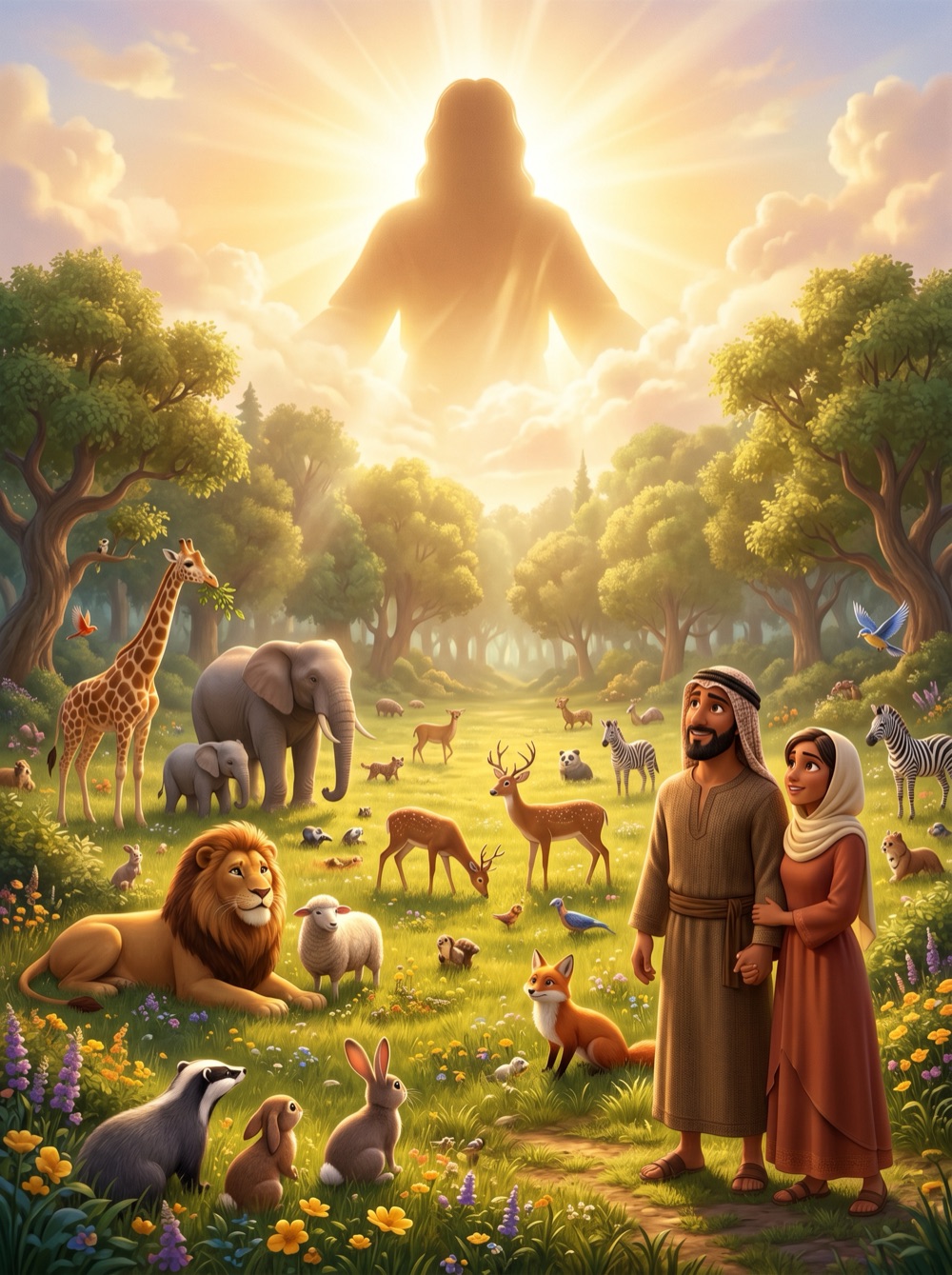
On the sixth day, God filled the land with even more life. Lions and elephants, sheep and goats, rabbits, deer, and every creature that walks or creeps upon the ground — each one made in its own kind. Then God said something different from anything He had said before. “Let us make people, in our image, to be like us.” So God created the first man and the first woman, and He made them like Himself — able to think, to love, to choose, and to care for everything He had made. They would watch over the earth and all its animals, walking through the world God had built just for them.

Very Good
God blessed the man and the woman and said to them, “Have a big family, fill the earth, and take good care of it. Watch over all the animals, the birds, and every living creature.” Then He gave them fruit and plants to eat, and He gave green plants to all the animals too, so that everyone would have enough. When the sixth day came to an end, God looked at everything He had made. The sky and the seas. The land and the trees. The sun, the moon, and the stars. The fish, the birds, the animals, and the people. And God saw that it was very good. The world was finished, and it was beautiful, exactly as He meant it to be.

A Beautiful Garden
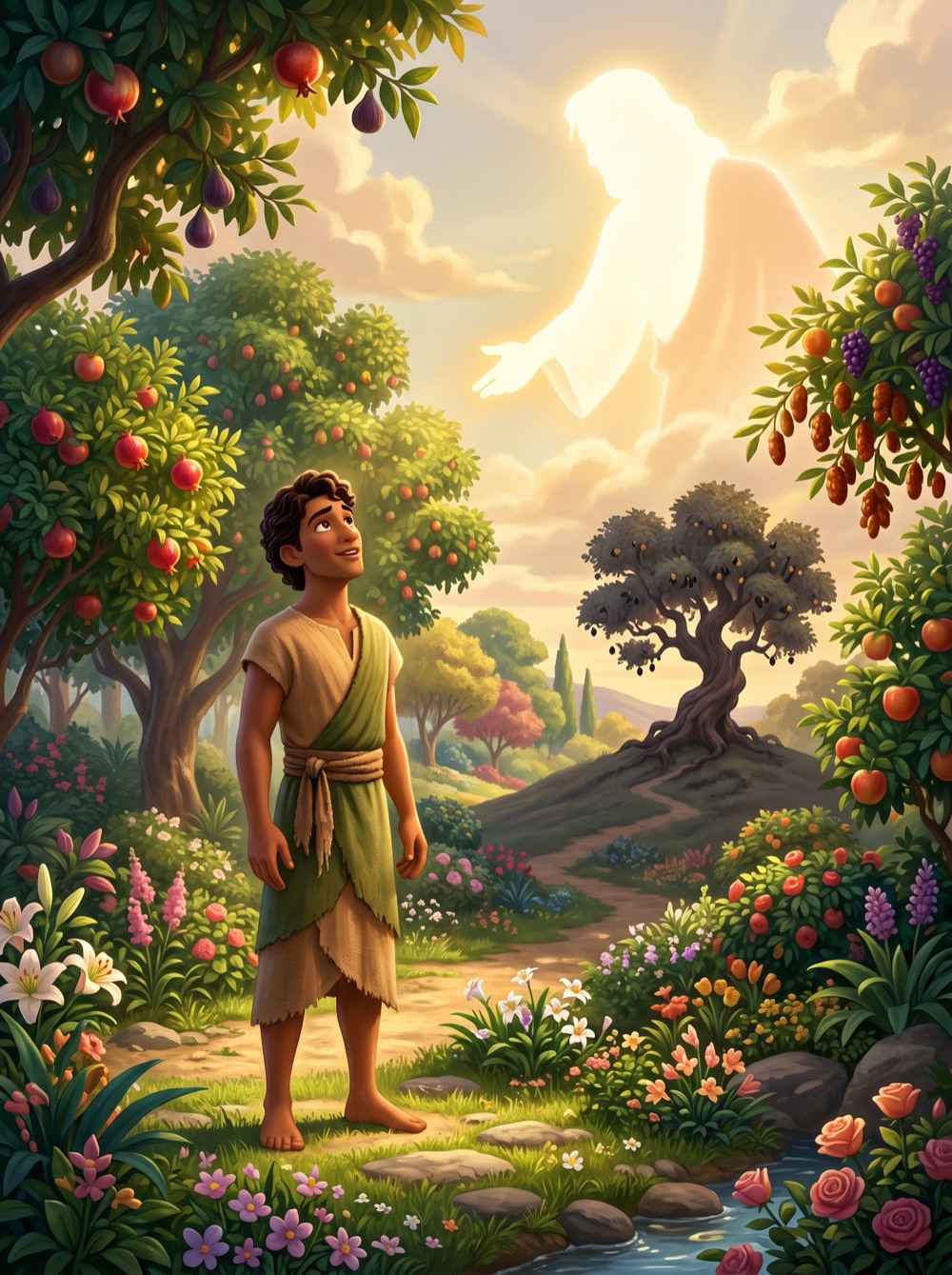
God made a garden. It was called Eden. Big trees grew there, full of yummy fruit. Flowers bloomed in every color. Soft green grass covered the ground. A river ran right through the middle of the garden. It split into four smaller rivers, and the water flowed past the trees and the flowers. Everything in the garden was green and bright and good. God looked at it and smiled. But He wasn't finished yet. He wanted someone special to live there.
"The LORD God planted a garden eastward, in Eden, and there he put the man whom he had formed."
GENESIS 2:8

A Man Made From Dust
God knelt down by the ground. He picked up some dust in His hands. Then He began to shape it, just like you might shape clay. Slowly, the dust became arms. Then legs. Then a face. It looked like a man, but it was not alive yet. So God leaned close and breathed into him. Air filled the man's lungs. His eyes opened. He took his first breath, and he was alive! God named him Adam. He was the very first person God ever made.
One Simple Rule
God took Adam by the hand and walked him through the garden. "Look at all of this," God said. "It is yours to enjoy." Adam saw trees full of fruit everywhere he looked. "You may eat fruit from any tree you want," God told him. Then God pointed to one tree in the middle of the garden. "Except this one tree, right here. Do not eat from that one." It was just one simple rule. Every other tree, every other fruit, was a gift just for Adam.

Naming the Animals
One by one, God brought the animals to Adam. First came a tall giraffe. Then a roaring lion. Then elephants, and rabbits, and birds that sang from the trees. Adam looked at each animal and gave it a name, the very first name it ever had. He had so much fun! He laughed and played with them all afternoon. But when the sun began to set, Adam felt something new. He looked around at all the animals, and he noticed that not one of them was quite like him. He was still alone.

A New Friend
God looked at Adam and said, "It is not good for you to be alone." So God made Adam fall into a deep sleep. While Adam slept, God gently took one of his ribs. God used it to make someone brand new, someone who could be Adam's best friend. When Adam woke up, he opened his eyes. There she was, standing in the soft garden light. Adam had never felt so happy. Her name was Eve.

The First Family
Adam looked at Eve and smiled a big smile. "She is part of me," he said. God had made Adam and Eve to be together. They were husband and wife, the very first family in the whole world. They lived together in the beautiful garden. They walked among the trees. They took care of the animals. Every evening, they talked with God as He walked through the garden. They were happy. They were safe. They had nothing to be afraid of.

The Sneaky Snake
A snake lived in the garden too. He was sneakier than any other animal. One day, the snake found Eve standing near the one tree God said not to eat from. "Did God really say you can't eat from ANY tree?" the snake asked. His voice sounded smooth and tricky. Eve told him, "We can eat from every tree, except this one." The snake just smiled. He was about to tell a big, big lie.
"The serpent was more subtle than any animal of the field which the LORD God had made."
GENESIS 3:1

One Bite
"You won't really get hurt," the snake said. "God is just keeping something from you." Eve looked at the fruit. It looked so good. She reached out, picked it, and took a bite. Then she gave some to Adam too, and he ate it. The moment they did, everything felt different. For the very first time, they felt something new. They felt ashamed.

Hiding From God
Adam and Eve felt scared. They grabbed leaves and covered themselves up. Then they ran and hid in the trees. That evening, God came walking through the garden, just like always. "Where are you?" God called out. Adam stepped out slowly. "We heard you coming," he said. "We were scared, so we hid." God already knew what happened. He felt sad. But He still came looking for them.

What Happened?
God asked Adam and Eve what they did. Adam said, "Eve gave me the fruit." Eve said, "The snake tricked me." Both of them were telling the truth. But something had changed. The world would feel harder now. People might hurt each other's feelings sometimes. But even though God felt very sad, He still loved Adam and Eve. He always would.

A Promise of Hope
God told the snake that one day, someone special would come. That someone would beat evil forever. It was the very first promise of a Savior, planted right on the saddest day. God also told Adam and Eve that life outside the garden would be harder. There would be work to do, and some hard days too. But God's promise was still true: one day, someone would come to make everything right again.

God Still Cared
Even after what happened, God still took care of Adam and Eve. He made warm clothes for them out of animal skin. He gently helped them put the clothes on. It was a small, kind thing to do on a hard day. It showed that even when people make mistakes, God never stops loving them. He never left them. A new chapter was just beginning.

Leaving the Garden
The day came for Adam and Eve to leave the garden of Eden. As they walked toward the gate, they turned back one more time. They looked at the tall trees and the flowing river. Life outside the garden would be different now. But God's love went with them, every single step. And far away in the future, His promise was already coming true. A Savior was on the way.
Two Brothers
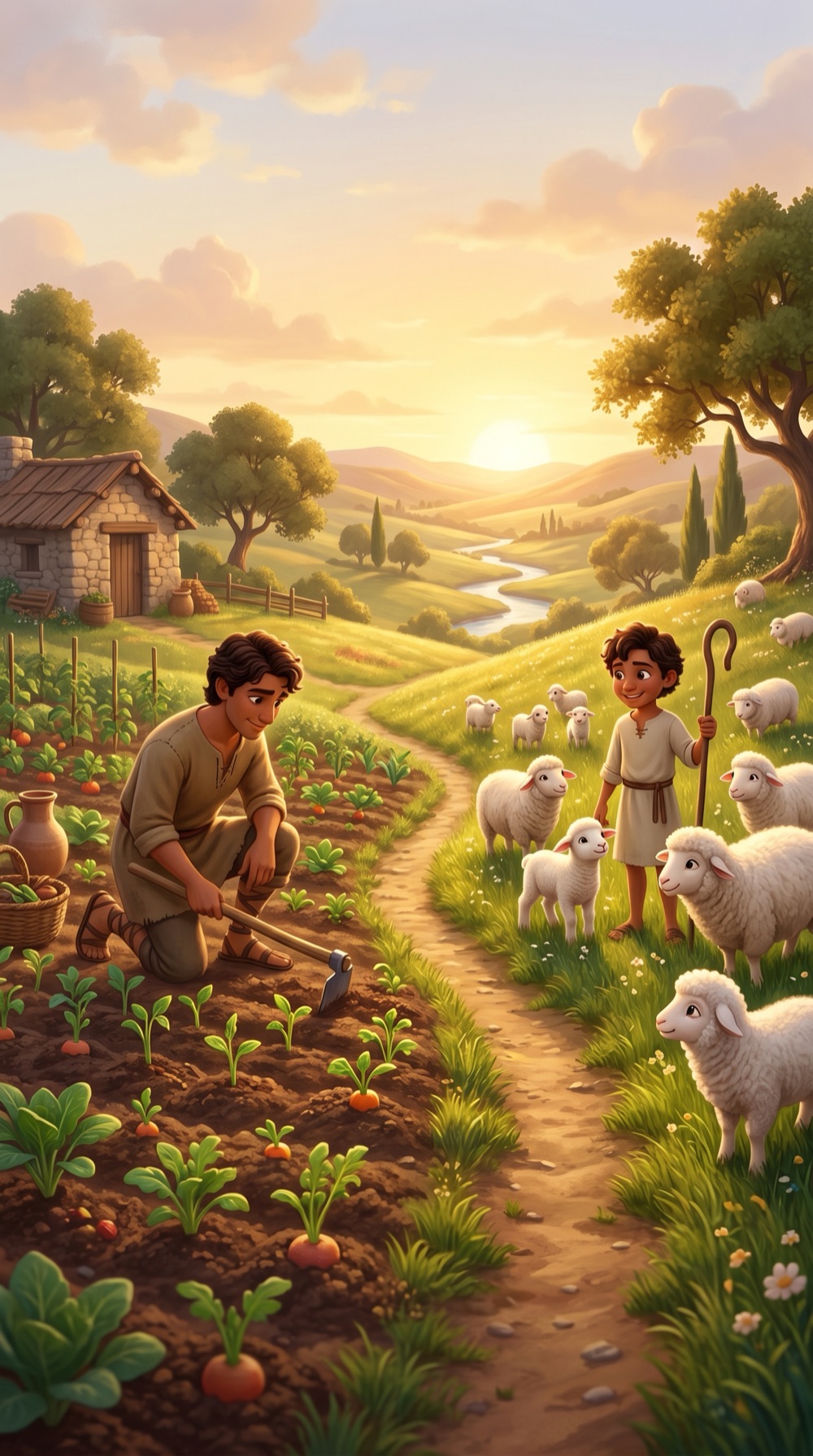
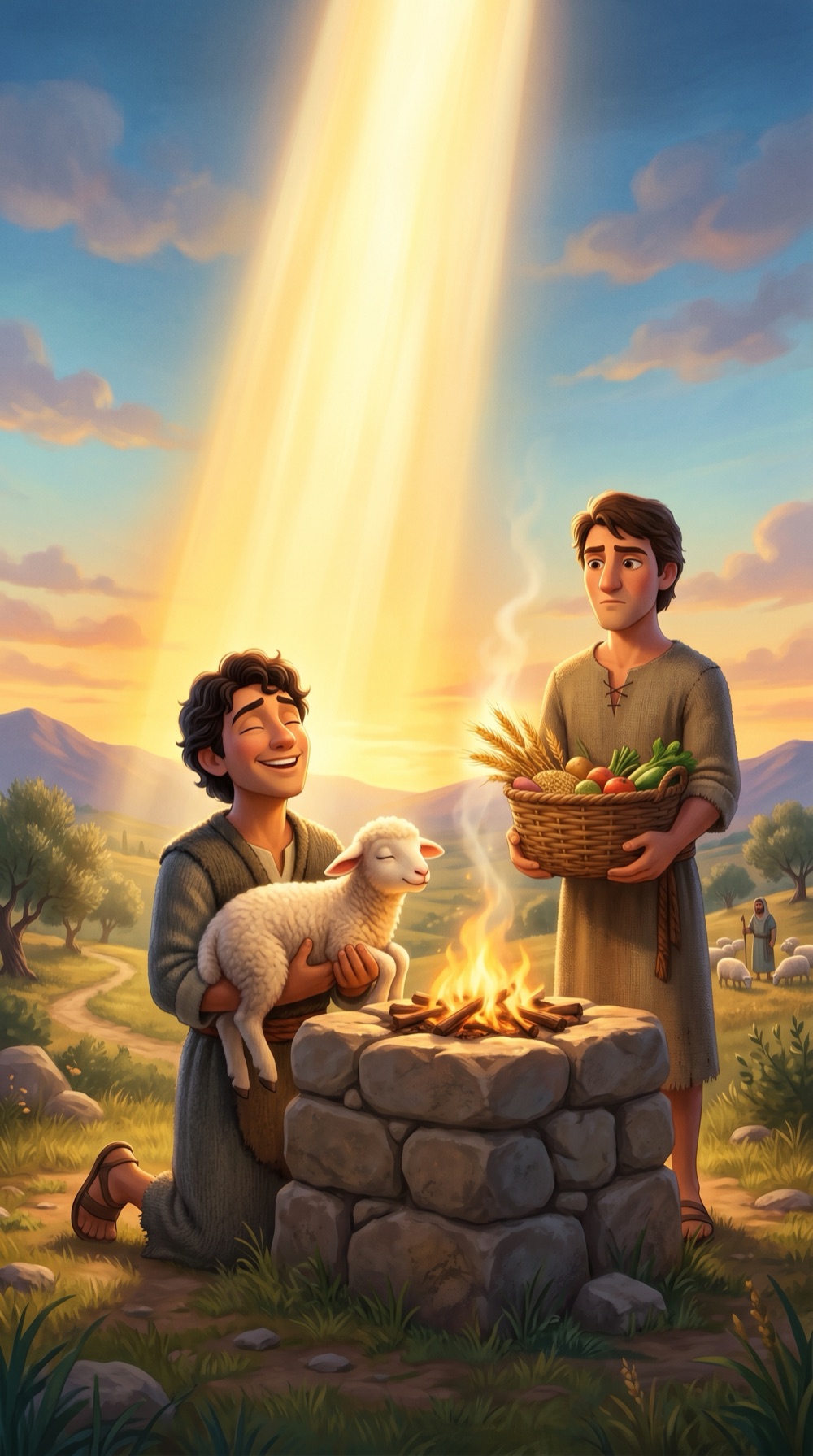
Adam and Eve had two sons. The older one was named Cain. He worked the soil and grew crops. The younger one was named Abel. He took care of sheep. Both brothers had important jobs, and both of them knew about God, because their parents had told them everything.
"Abel was a keeper of sheep, but Cain was a tiller of the ground."
GENESIS 4:2
Two Gifts
One day, the brothers brought gifts to God. Abel chose his very best lamb and gave it with a happy heart. But Cain didn't bring his best crops — he just brought whatever was easy. God was pleased with Abel's gift. But Cain's gift made God sad, because Cain hadn't given his best.

A Warning for Cain
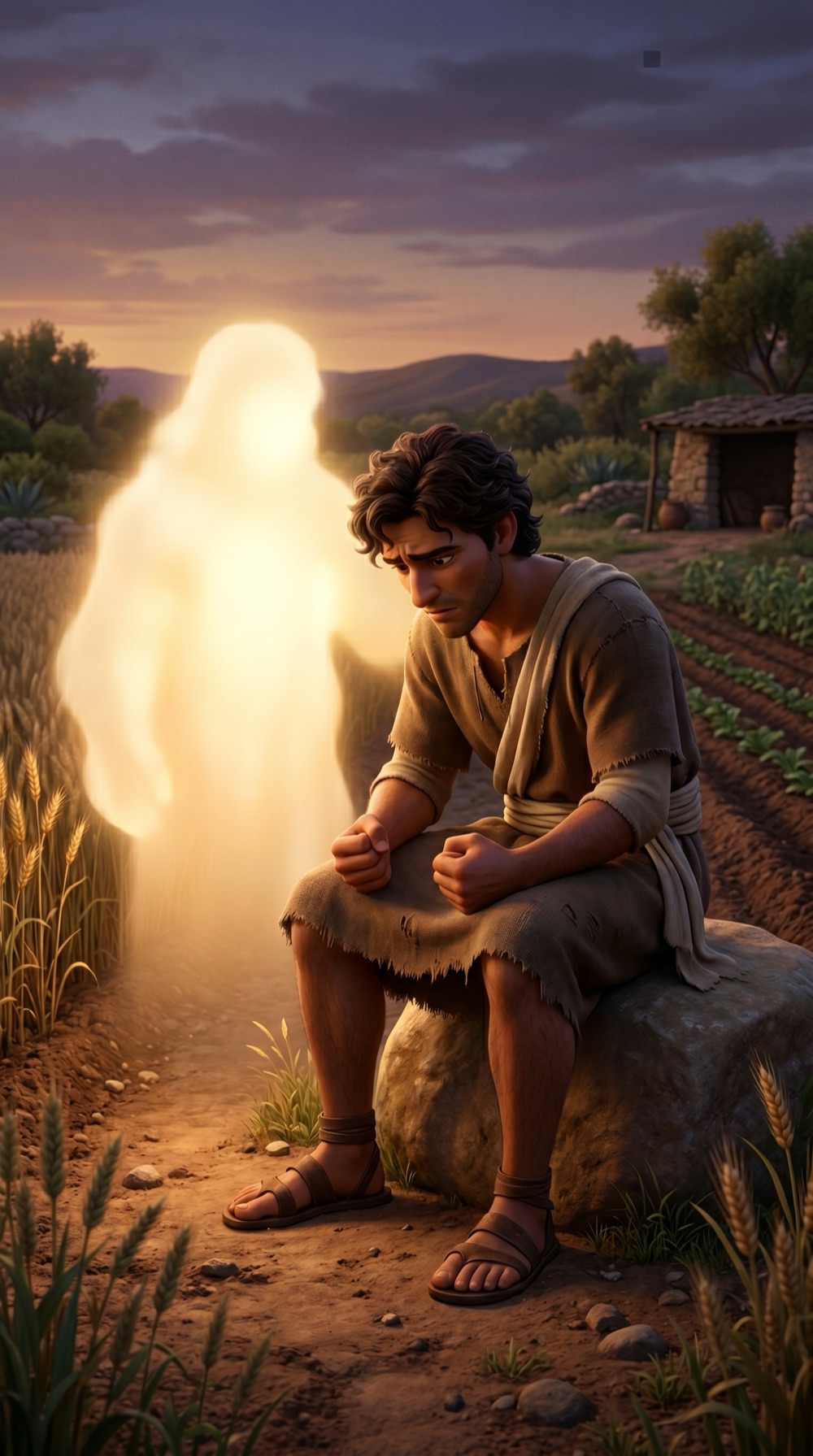
Cain became angry. His face grew dark with jealousy. God spoke to him gently. "Why are you angry?" God asked. "If you do what is right, you will be glad. But watch out — sin is waiting at your door, like an animal ready to pounce. You must not let it win."
A Very Bad Choice
Cain didn't listen to God's warning. His anger grew bigger and bigger inside him. One day, out in the fields, Cain made the worst choice anyone had ever made. He hurt his brother Abel, and Abel died. The first sin had led to the very first death.

"Where Is Your Brother?"
God came to Cain and asked, "Where is your brother Abel?" Cain lied. "I don't know," he said. "Am I supposed to watch over him?" But God already knew the truth. "What have you done?" God said. "Your brother's blood cries out to me from the ground."

Cain Is Sent Away
Because of what Cain did, God told him he could no longer farm the land or stay near his family. Cain would have to wander far away. Cain was afraid. But even then, God still protected him and put a mark on him so no one else would harm him.

Life Continues
Cain went away and started a family far from Eden. Back home, God gave Adam and Eve another son. They named him Seth. Even after such a sad and terrible day, God's plan for His people was not over. Life — and God's love — continued on.

A Long, Long Family Line
After Adam and Eve, their family began to grow. They had sons and daughters, and those children grew up and had children of their own. Years and years passed. This is the story of Adam's family line — all the way down to a very important man named Noah.
"This is the book of the generations of Adam."
GENESIS 5:1

Many Years, Many Sons
Back then, people lived for a very long time — hundreds and hundreds of years! Each father had sons. Each son grew up, had sons of his own, and grew old. One generation passed the story of God down to the next, all the way down the family line.

Enoch Walks With God
One man in this family line was different. His name was Enoch. The Bible says Enoch "walked with God" — he loved God so much that he stayed close to Him every single day, like a son walking beside his father wherever he goes.

Enoch Disappears
Then something amazing happened. The Bible says Enoch "was not, for God took him away." Enoch didn't die like everyone else. God simply took him straight to heaven, because Enoch loved God so much and walked so closely with Him.
The Oldest Man Who Ever Lived
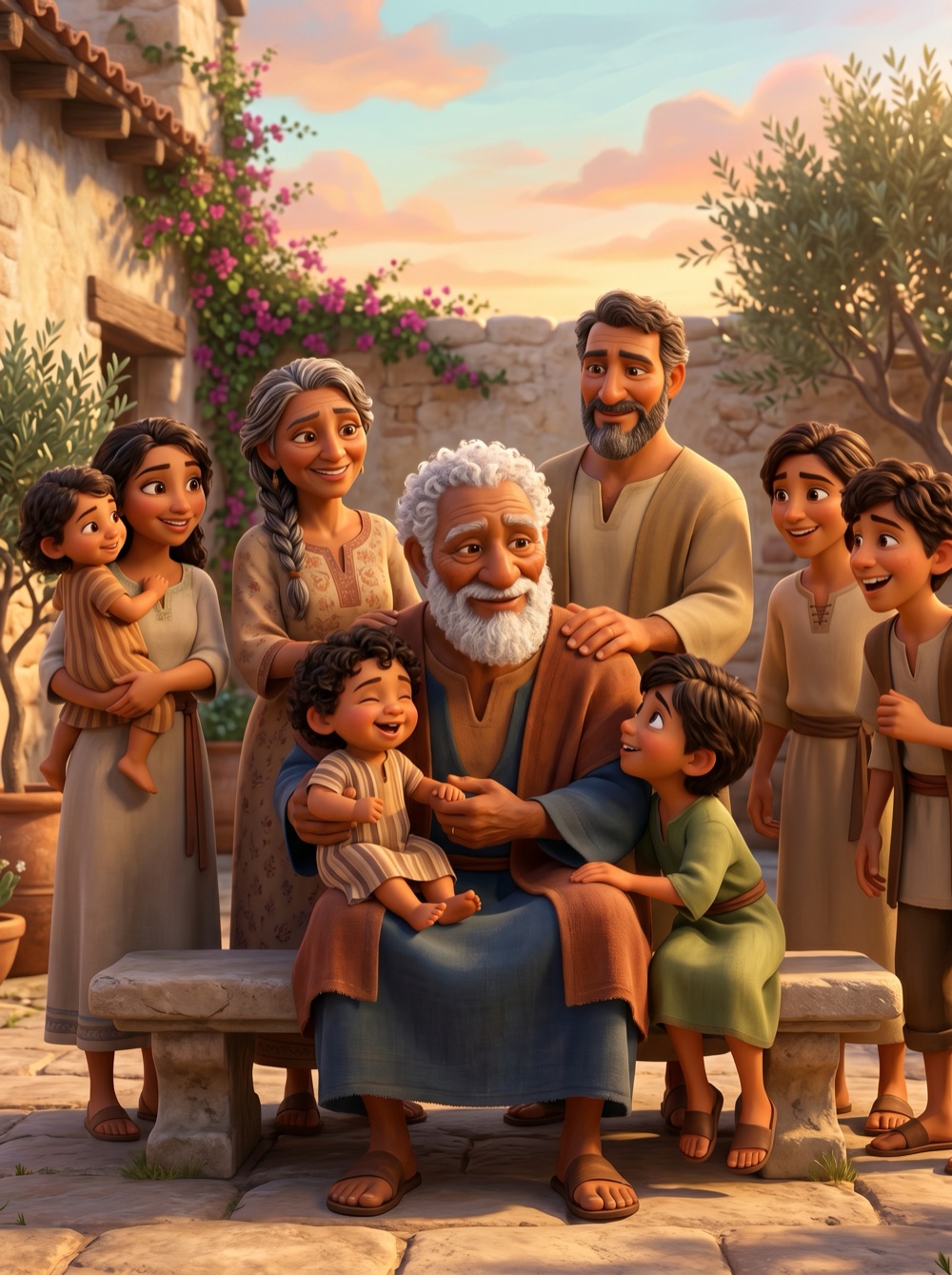
Enoch's son was named Methuselah. He lived longer than anyone else in the entire Bible — 969 years! Can you imagine being that old? Methuselah's long life was a reminder of how differently people lived in those very early days.

Noah Is Born
Many years later, down this same family line, a baby boy was born. His name was Noah. No one knew it yet, but Noah was going to grow up to do something that would save every kind of animal — and his whole family — from a great flood.
A World Gone Wrong
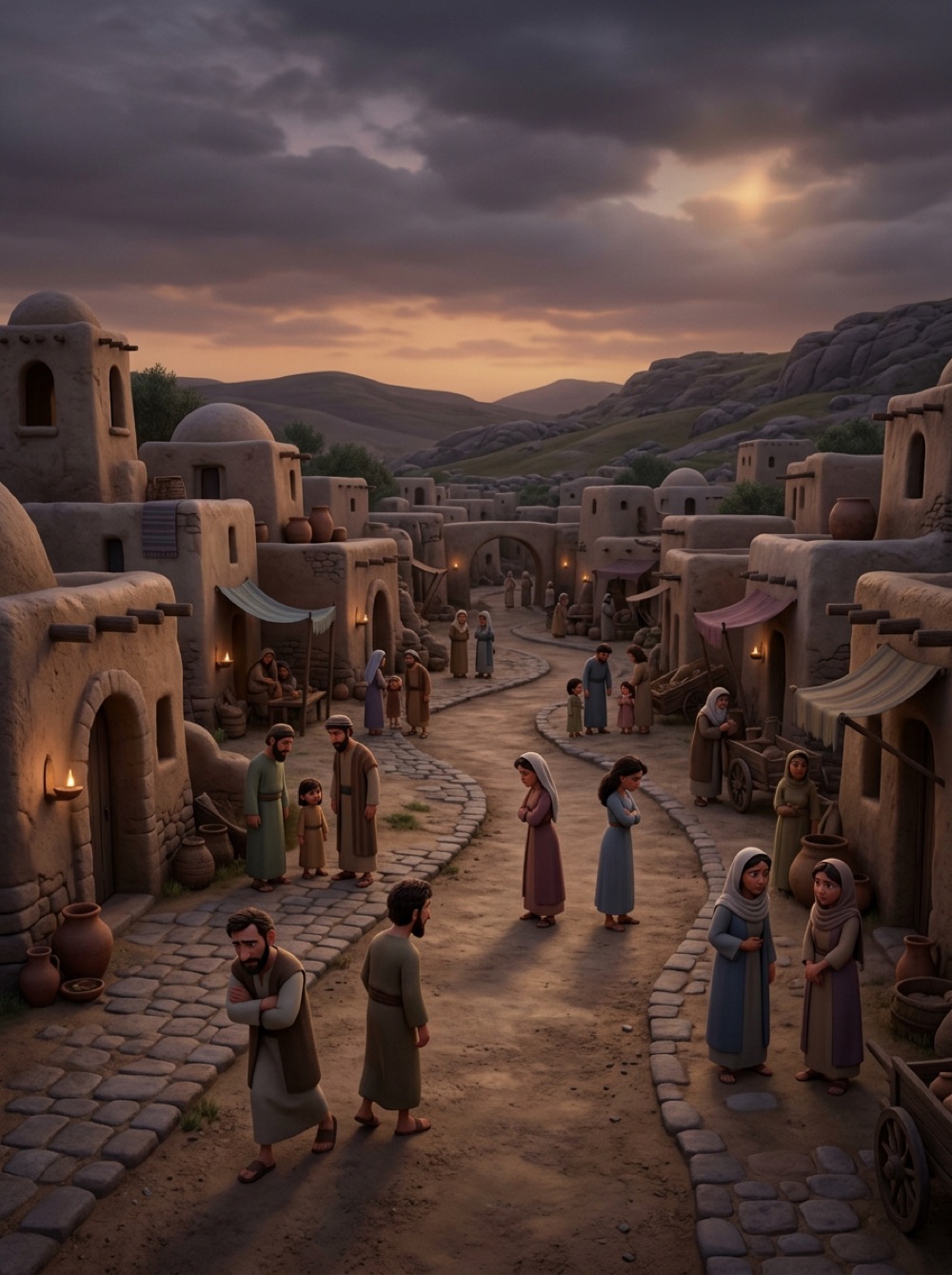
Many years passed, and more and more people filled the earth. But something sad happened. People stopped caring about God. They became selfish and unkind, and the whole world grew full of wrongdoing. God looked at the earth, and His heart was filled with sadness.
"The LORD saw that the wickedness of man was great on the earth."
GENESIS 6:5
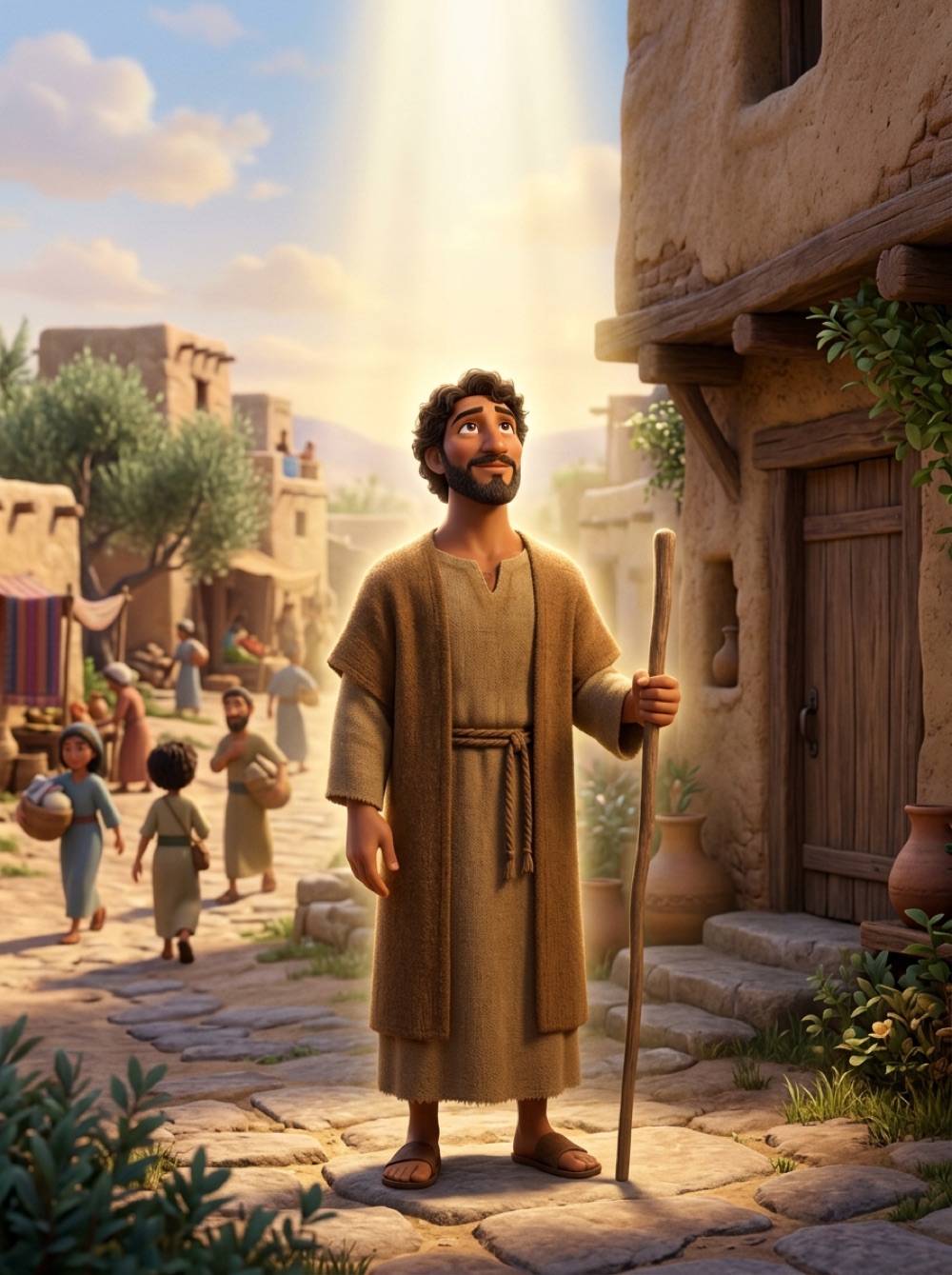
One Good Man
But there was one man who was different. His name was Noah. Noah loved God and tried to do what was right, even when no one around him did. God looked at Noah and saw a good man living in the middle of a very bad world.
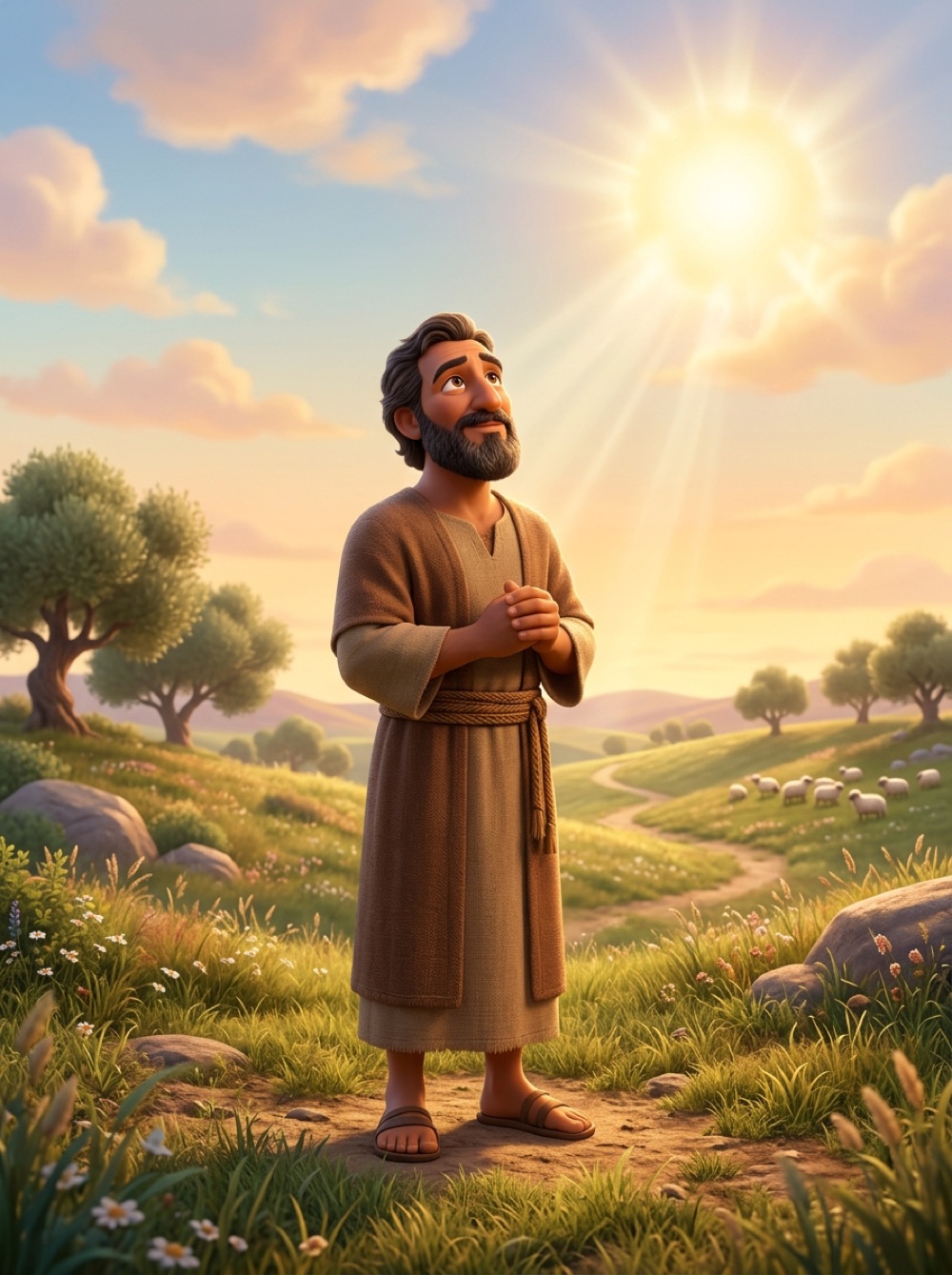
God's Plan
God told Noah that a great flood was coming to wash away all the wrongdoing on earth. But God had a plan to keep Noah safe. "Build a boat," God said. "A very big boat, called an ark. I will save you, your family, and two of every kind of animal."
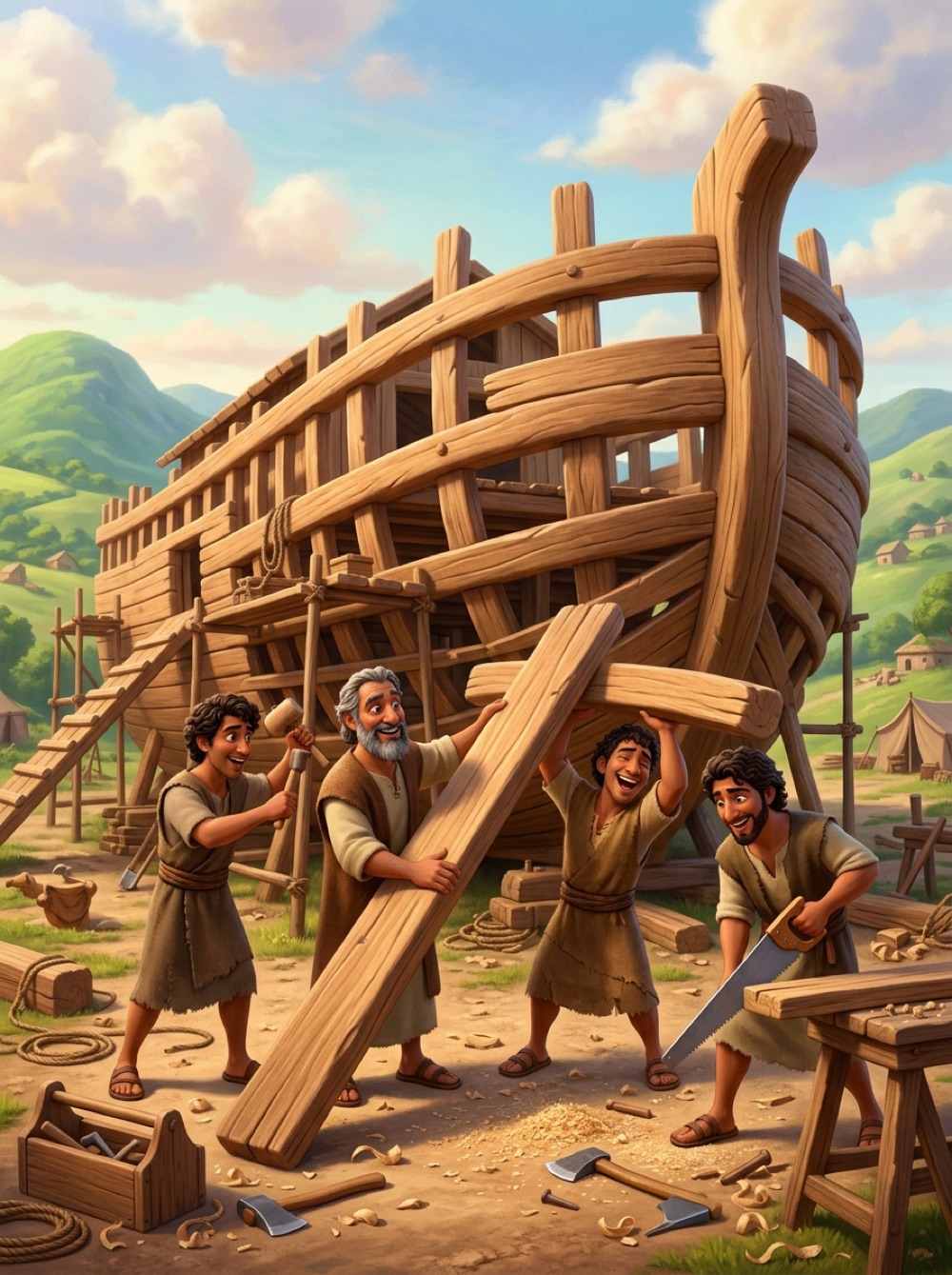
Building the Ark
Noah did exactly what God said. He gathered wood and began to build. The ark was enormous — as long as a football field and as tall as a four-story building! It took Noah many years to build it, and the whole time, he trusted that God's plan was good.

Two By Two
When the ark was finished, animals began to come from everywhere — lions and rabbits, elephants and birds, every kind of creature God had made. They came two by two, just like God had said, ready to be kept safe inside the enormous boat.
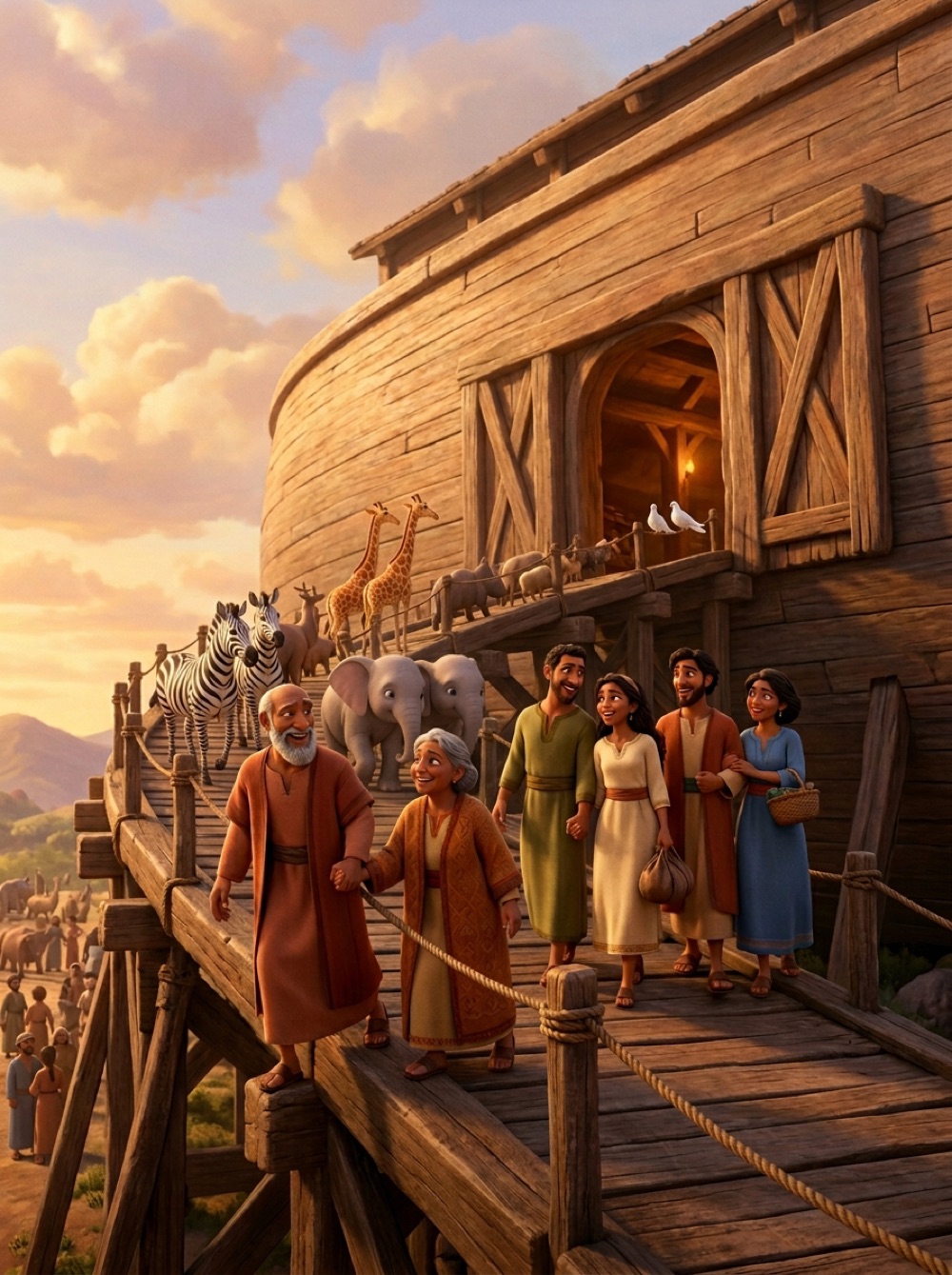
Everyone Goes In
Noah's whole family climbed aboard the ark — Noah, his wife, his sons, and their wives. Then, animal by animal, every creature followed them in. Soon the ark was full of every kind of living thing, safe and ready.

The Door Is Shut
Then God Himself shut the door of the ark, sealing Noah and his family safely inside. A few days later, rain began to fall from the sky. It was the beginning of the great flood — but Noah and everyone with him were safe inside, just as God had promised.

The Rain Begins
Just as God had said, rain began to fall. It rained and rained, for forty whole days and forty whole nights. Water rose higher and higher, covering the hills and the trees. But inside the ark, Noah and his family and all the animals were safe and dry.
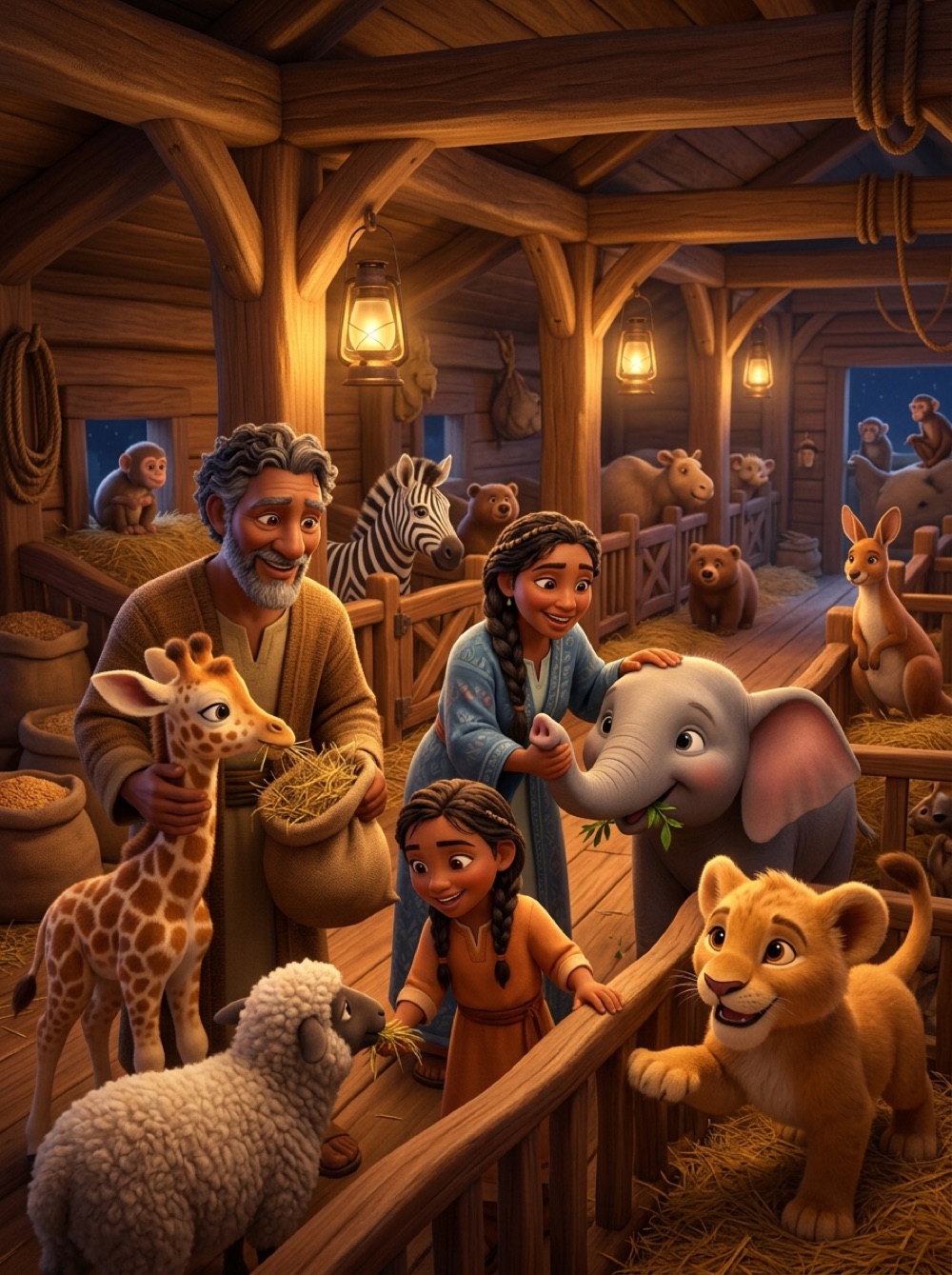
Safe Inside
Outside, the whole world disappeared under the water. But inside the ark, it was warm and full of life. Noah cared for every animal, his family worked together, and even though the world outside had changed forever, the ark kept everyone inside safe, just like God promised.
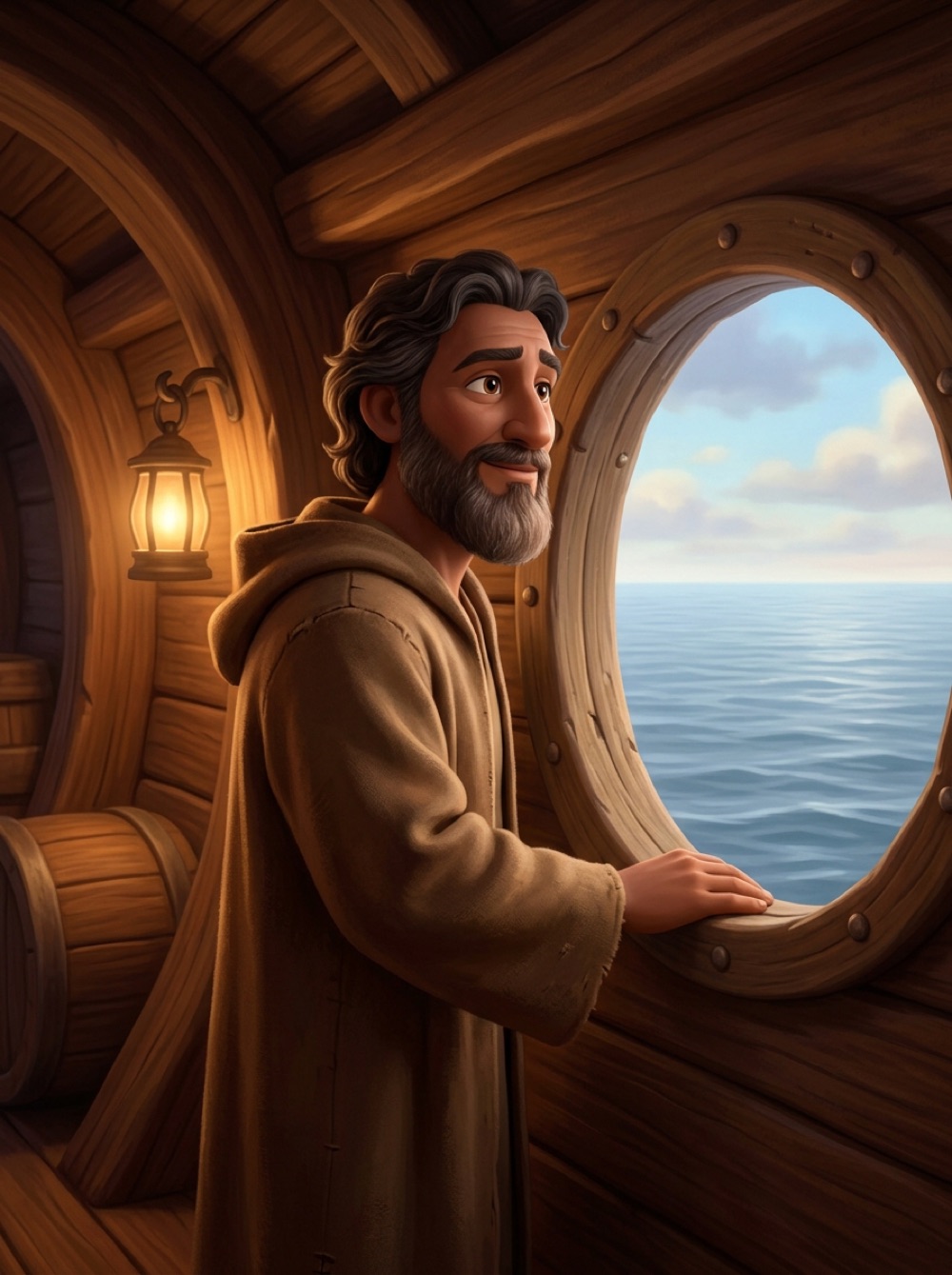
The Waiting
Days turned into weeks, and weeks turned into months. The ark floated quietly on the water, with no land in sight anywhere. It would have been easy to feel scared or impatient. But Noah trusted God, and he waited, just like God asked him to.
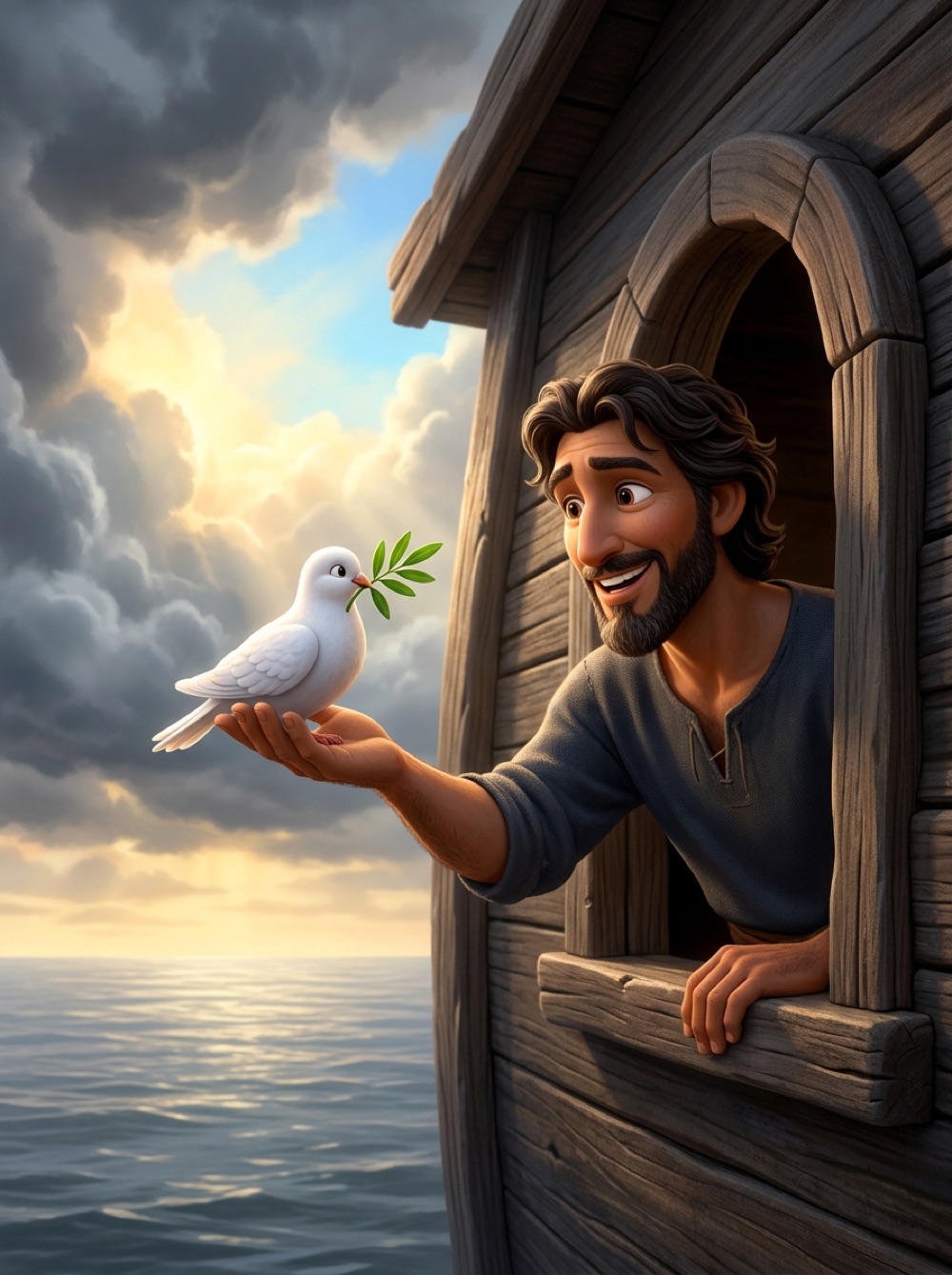
The Dove and the Olive Branch
After many months, Noah sent out a dove to see if the water had gone down. The first time, the dove found nowhere to land and flew back. But the second time, the dove returned holding a fresh olive leaf in its beak. Dry land was finally near!

Dry Land at Last
Slowly, the water went down and down, until one day, the top of a mountain appeared. The ark had come to rest on solid ground. After so many months on the water, Noah and his family finally saw dry land again.
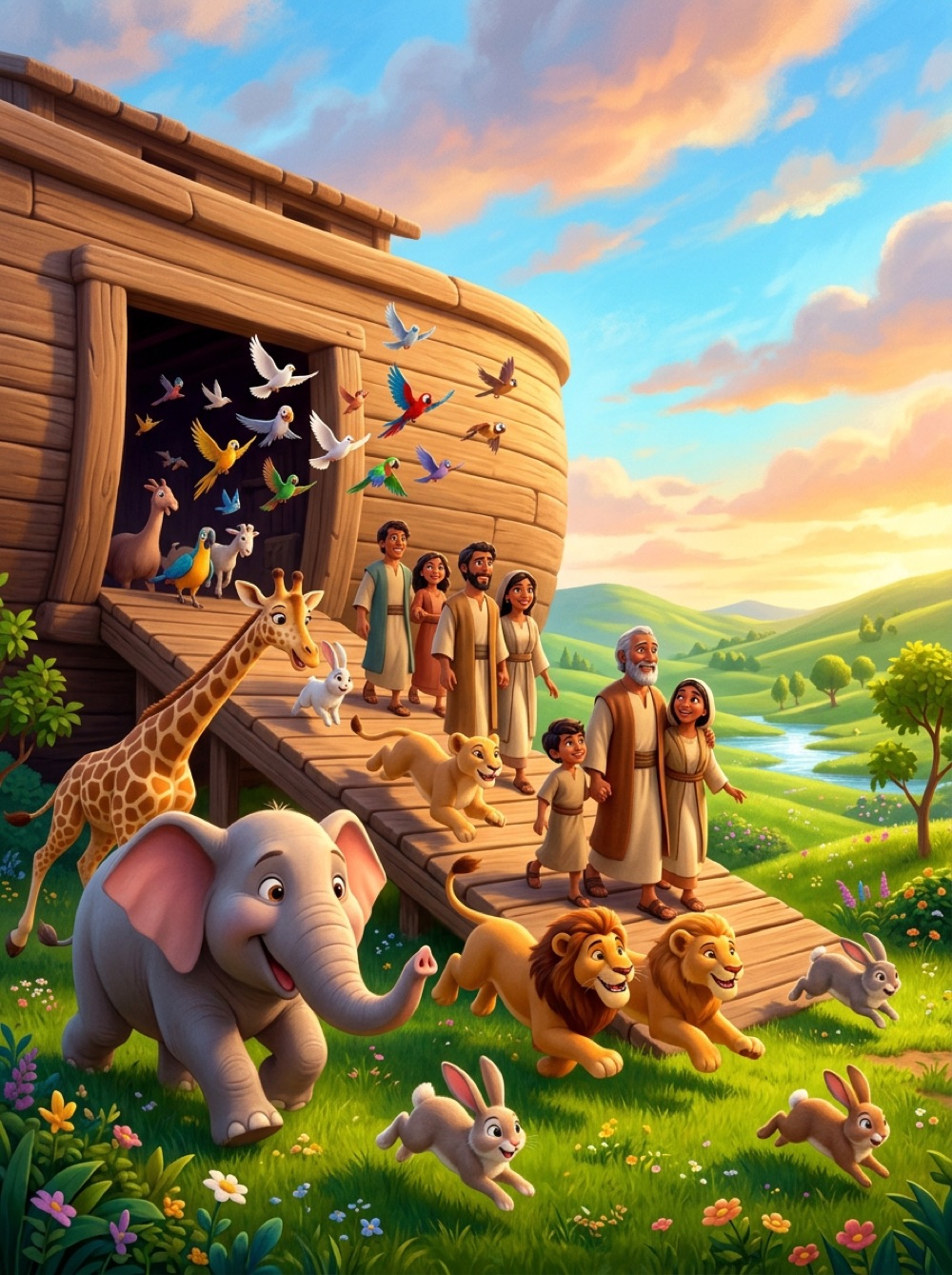
Everyone Comes Out
God told Noah it was finally time. The door of the ark opened, and one by one, every animal walked, ran, hopped, and flew out into the fresh, new world. Noah and his family stepped out too, grateful and amazed at the bright world God had saved them for.

The Rainbow Promise
Noah built an altar and thanked God for keeping his family safe. God made a beautiful promise that day. He placed a rainbow in the sky and said He would never send a flood like that again. Every time anyone saw a rainbow, they would remember God's promise.
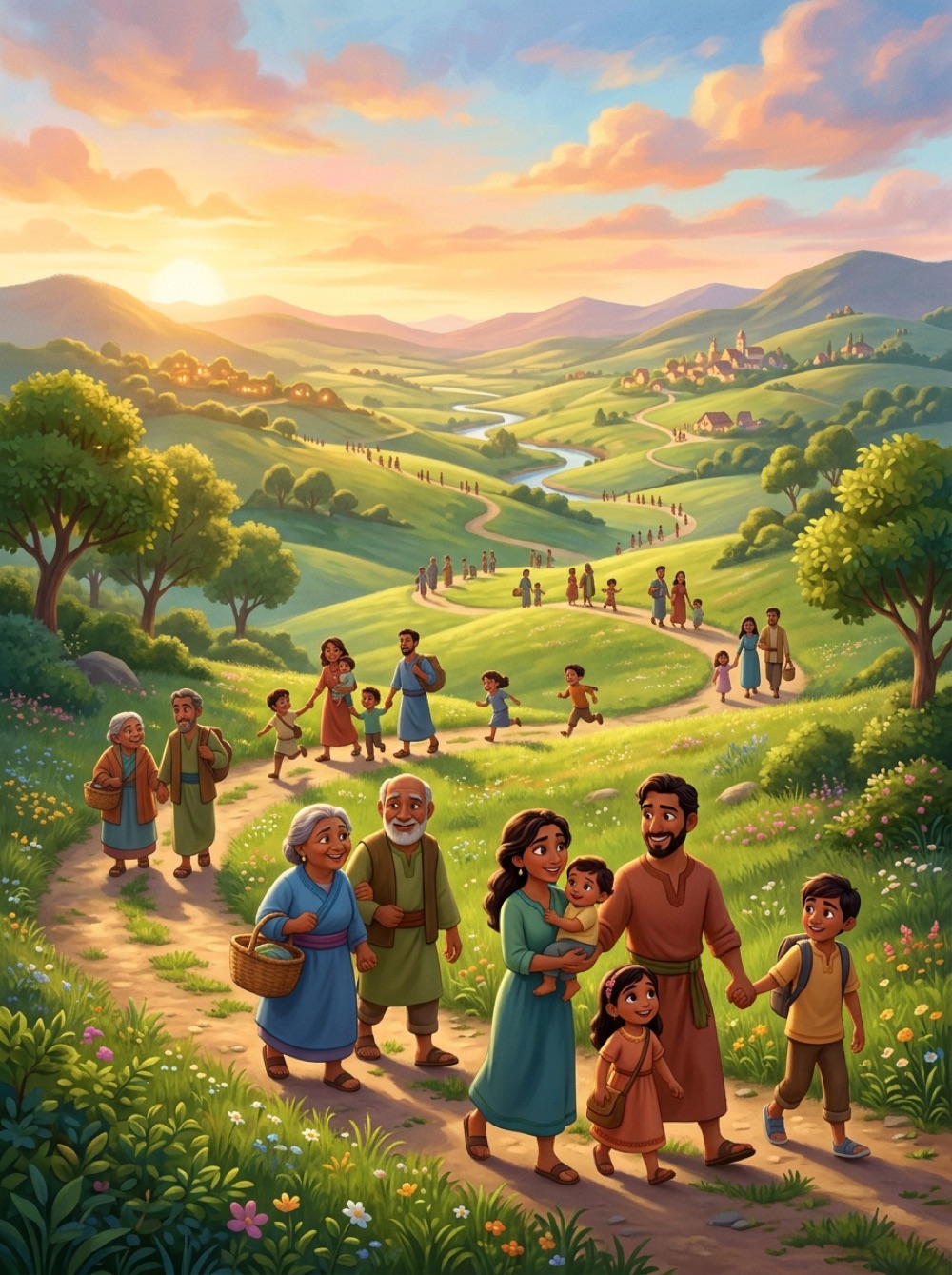
Noah's Family Grows
After the flood, Noah's sons — Shem, Ham, and Japheth — grew up and had families of their own. Their children had children, and over many years, these families grew into whole nations of people, spreading out to live in different parts of the world.
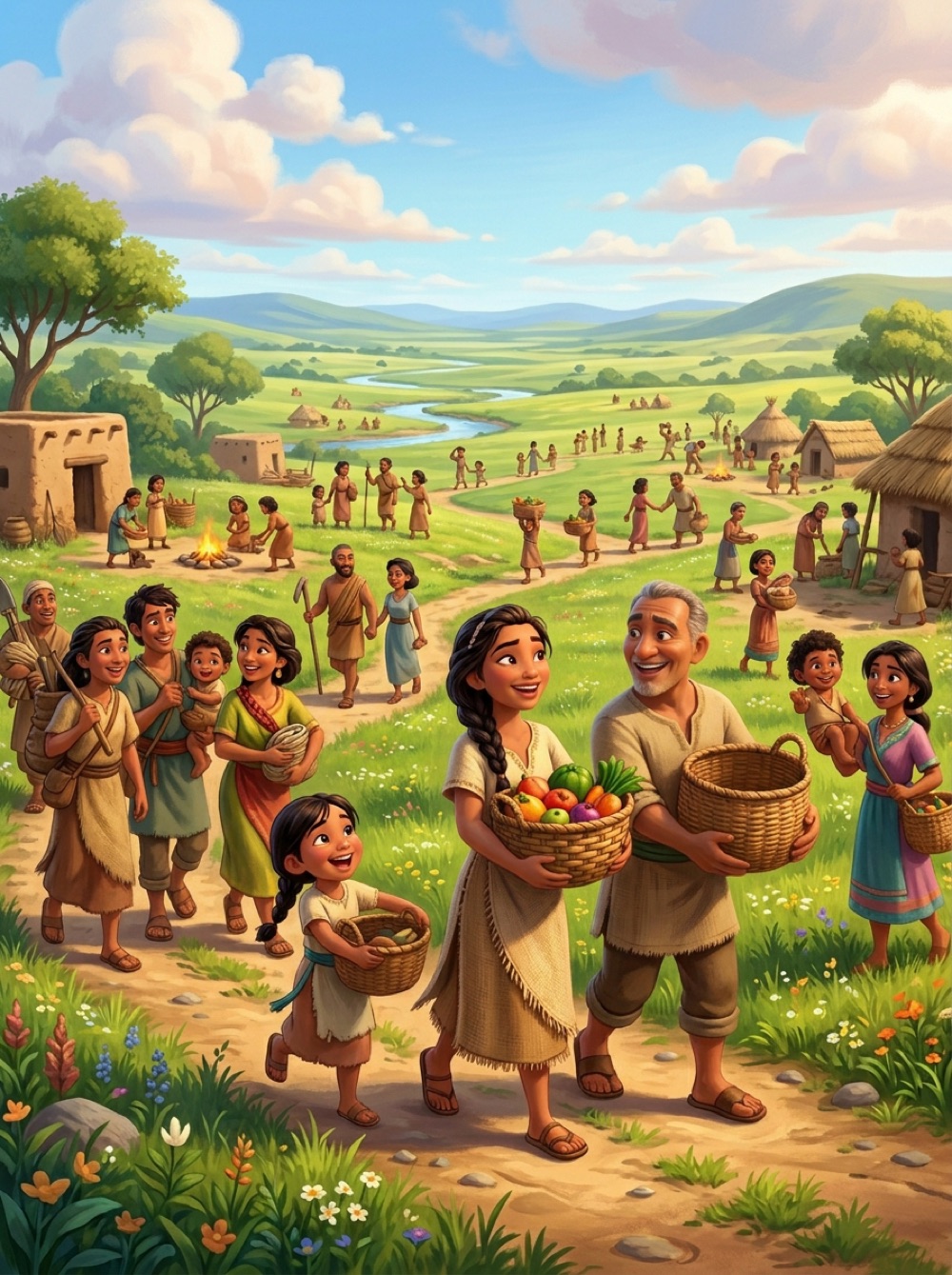
One Language, One People
Long ago, everyone on earth spoke the very same language. As the people traveled, they found a wide plain and decided to settle there together. They worked well as one big team, because they could all understand each other perfectly.
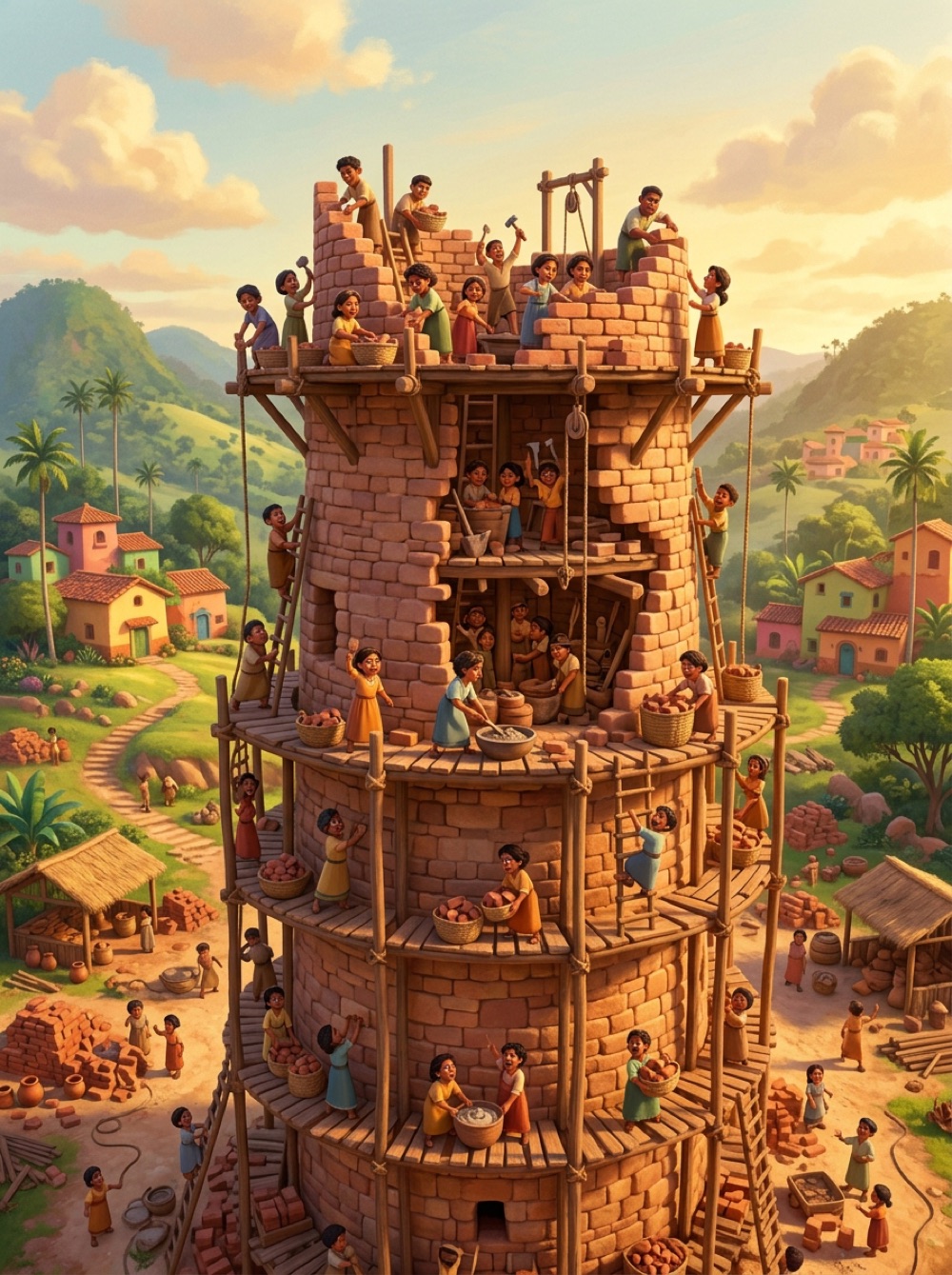
Let's Build a Tower
The people had a big idea. "Let's build a city," they said, "with a tower so tall it reaches the sky! Then we'll be famous, and everyone will remember our name forever." They began stacking bricks higher and higher, working together to make themselves great.
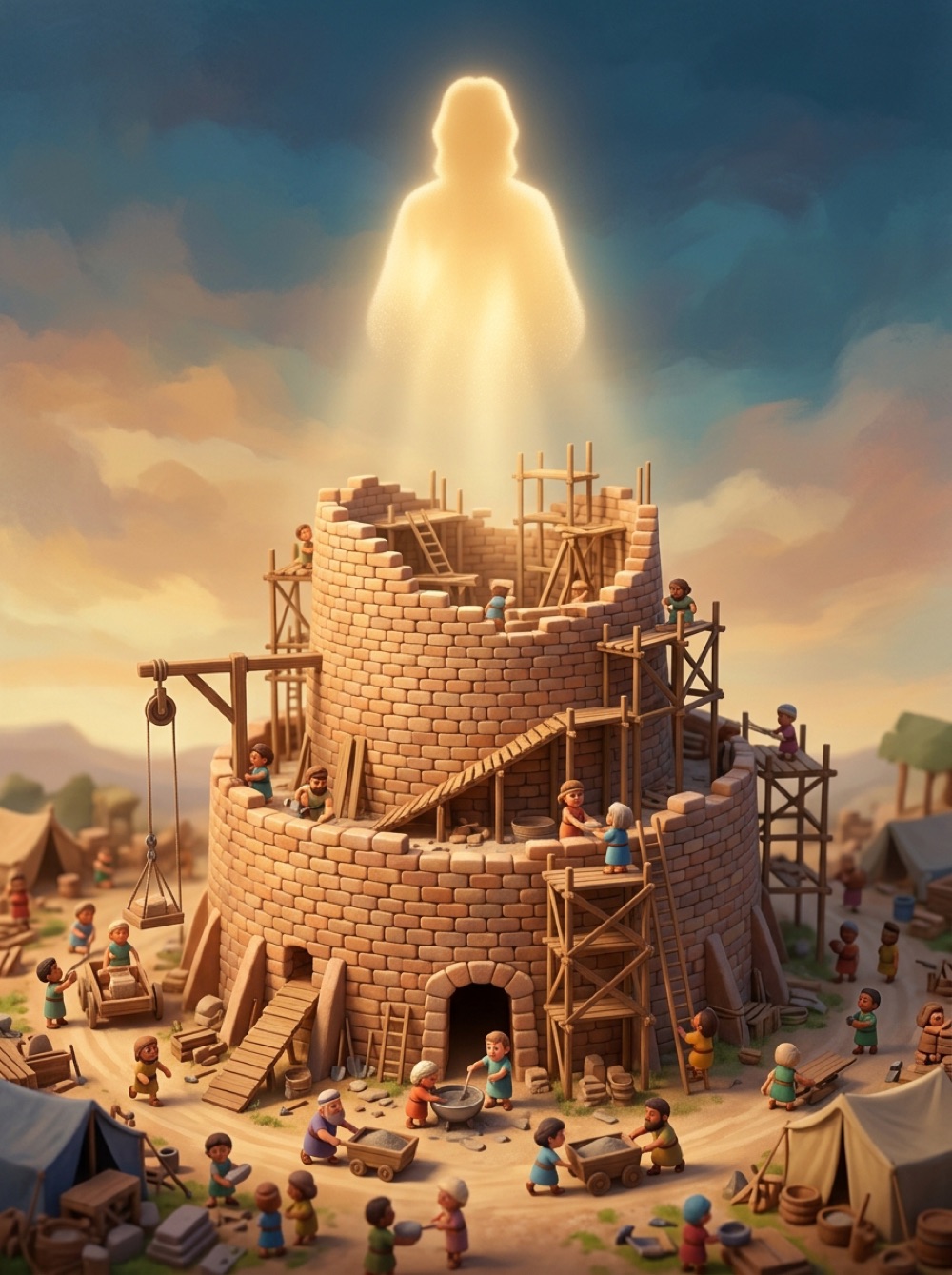
God Sees Their Pride
God saw the tower and saw what was really in the people's hearts. They didn't want to honor God — they wanted to make themselves look big and important, without Him. God knew that if they kept going, their pride would only cause more trouble.
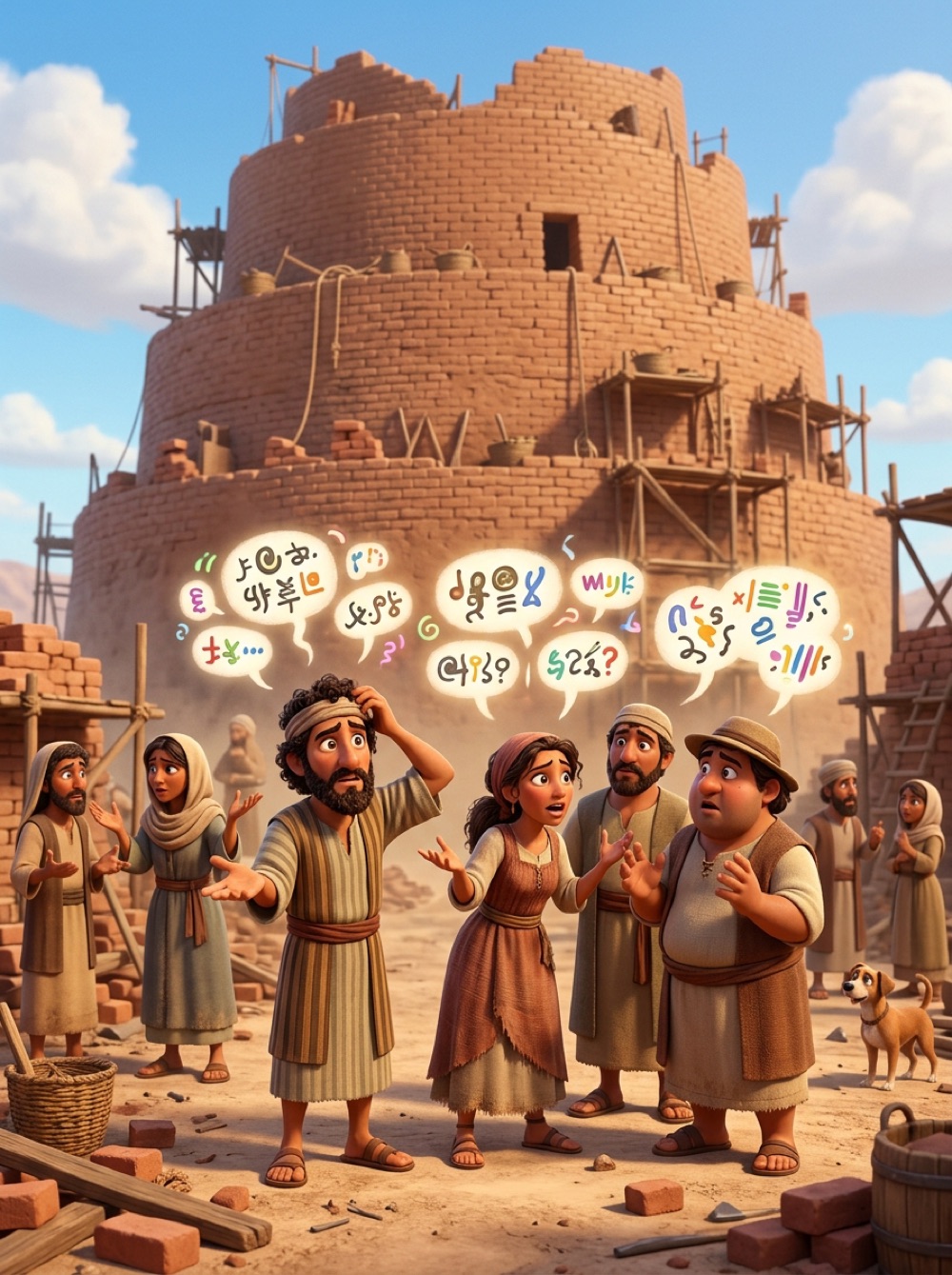
Many Languages
So God did something surprising. He gave the people different languages, so suddenly no one could understand their neighbors anymore! The builders called out to each other, but the words came out all mixed up and confusing. Without being able to understand one another, they couldn't finish their tower.
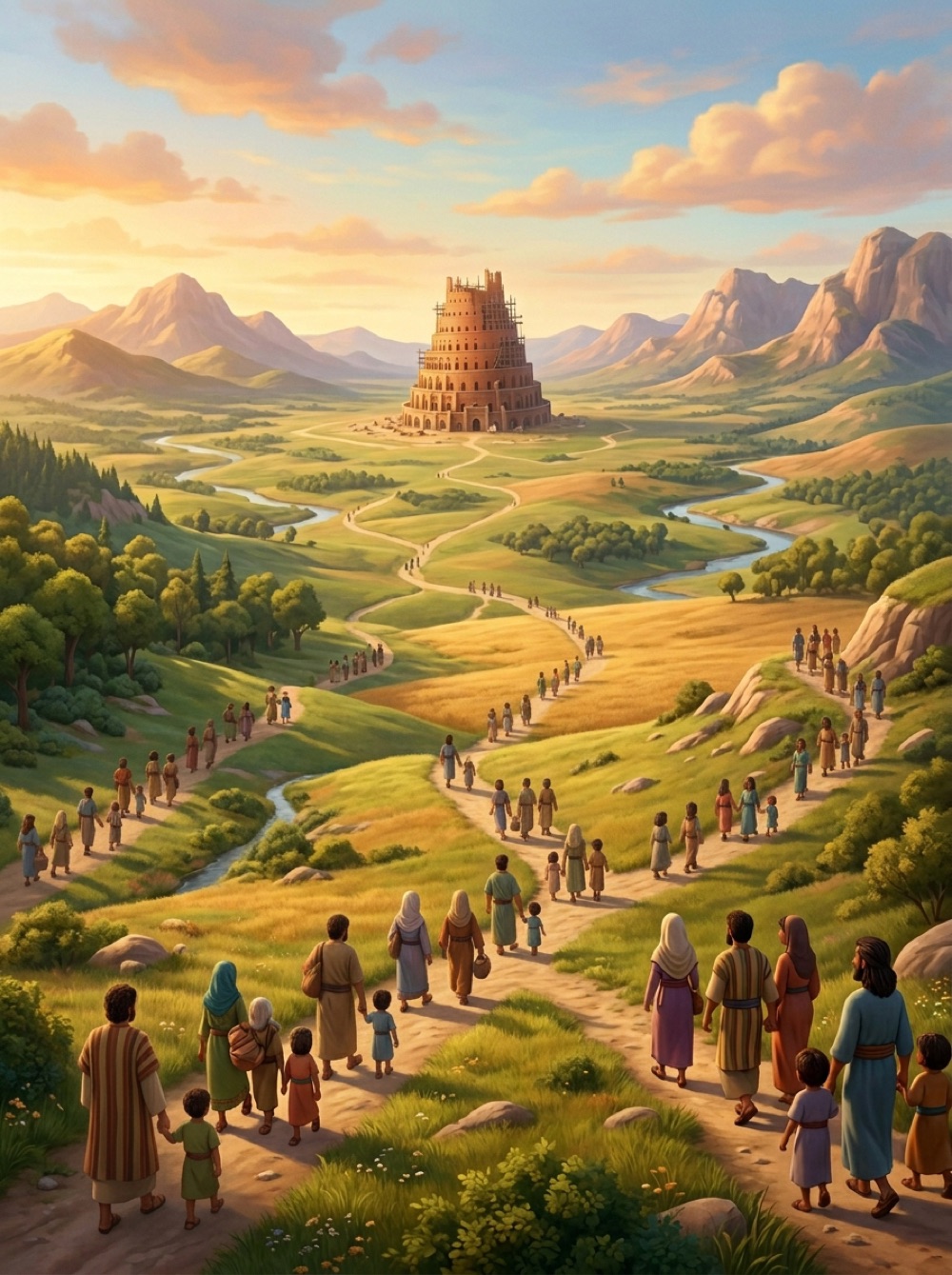
Scattered Across the Earth
The unfinished tower was left behind, and the people split into groups, each speaking their own new language. They spread out across the earth, settling in different lands. That's why, even today, people all over the world speak so many different languages.
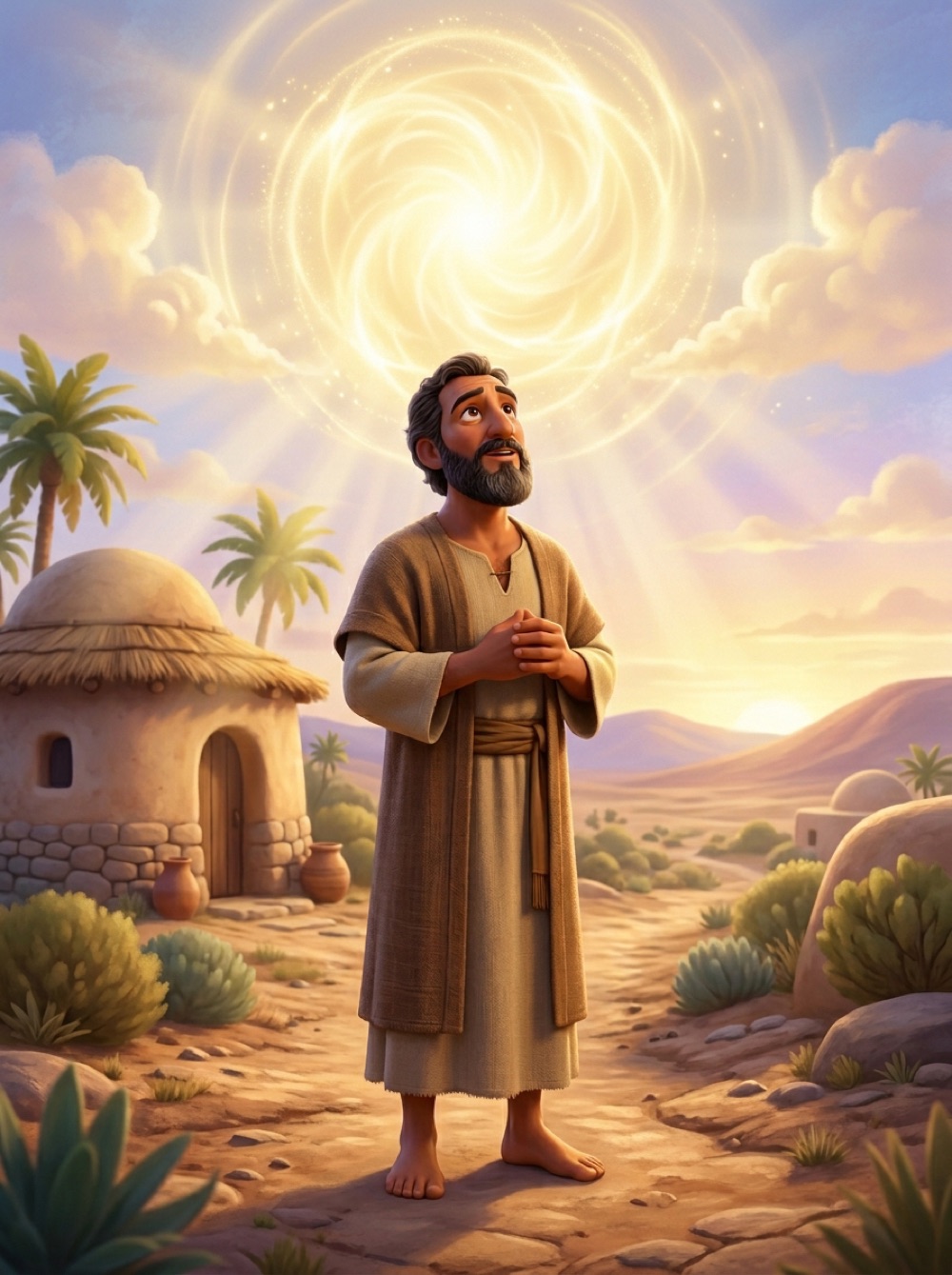
God Calls Abram
In a land called Haran lived a man named Abram. One day, God spoke to him with an enormous promise. "Leave your home," God said, "and go to a new land I will show you. I will make you into a great nation, and through you, I will bless the whole world."
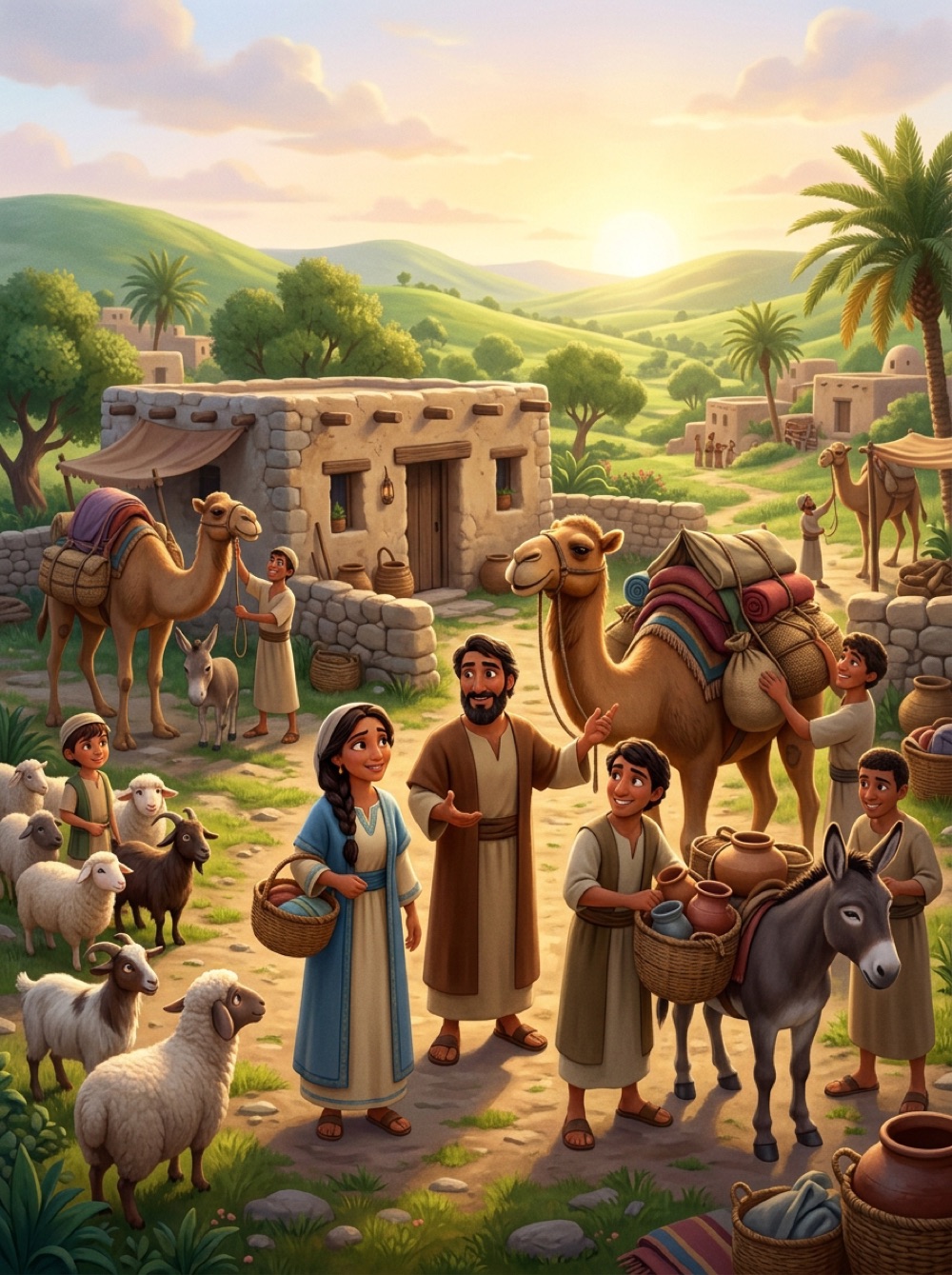
Leaving Everything Behind
Abram didn't know exactly where he was going. But he trusted God, so he packed up everything — his wife Sarai, his nephew Lot, his servants, his animals, and all his belongings — and set out on a long journey toward a land he had never seen.
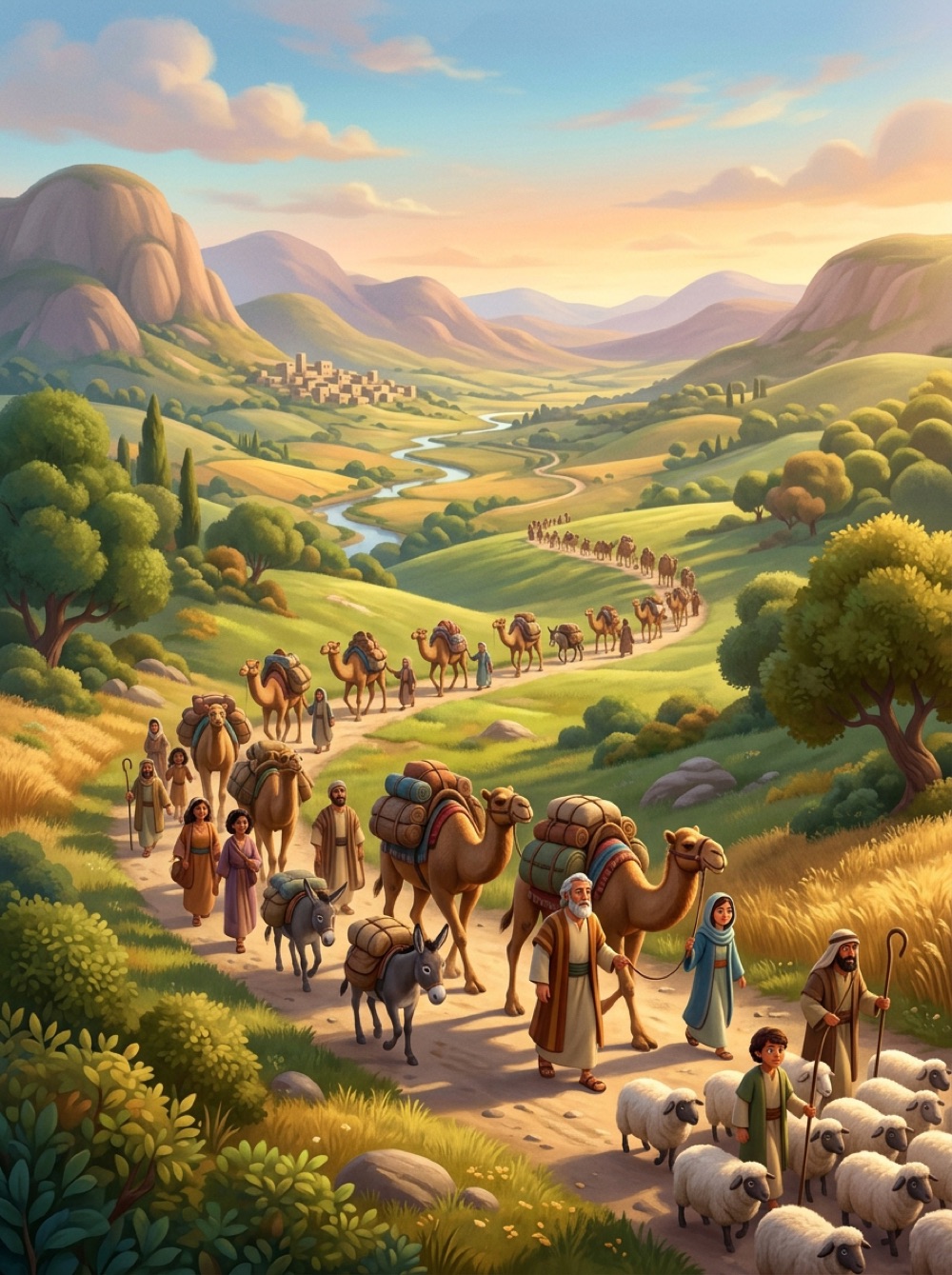
The Journey to Canaan
Abram and his family traveled for many days, crossing rivers and hills, leading their animals and carrying their tents. Finally, they arrived in a land called Canaan. It was the land God had promised to show them.
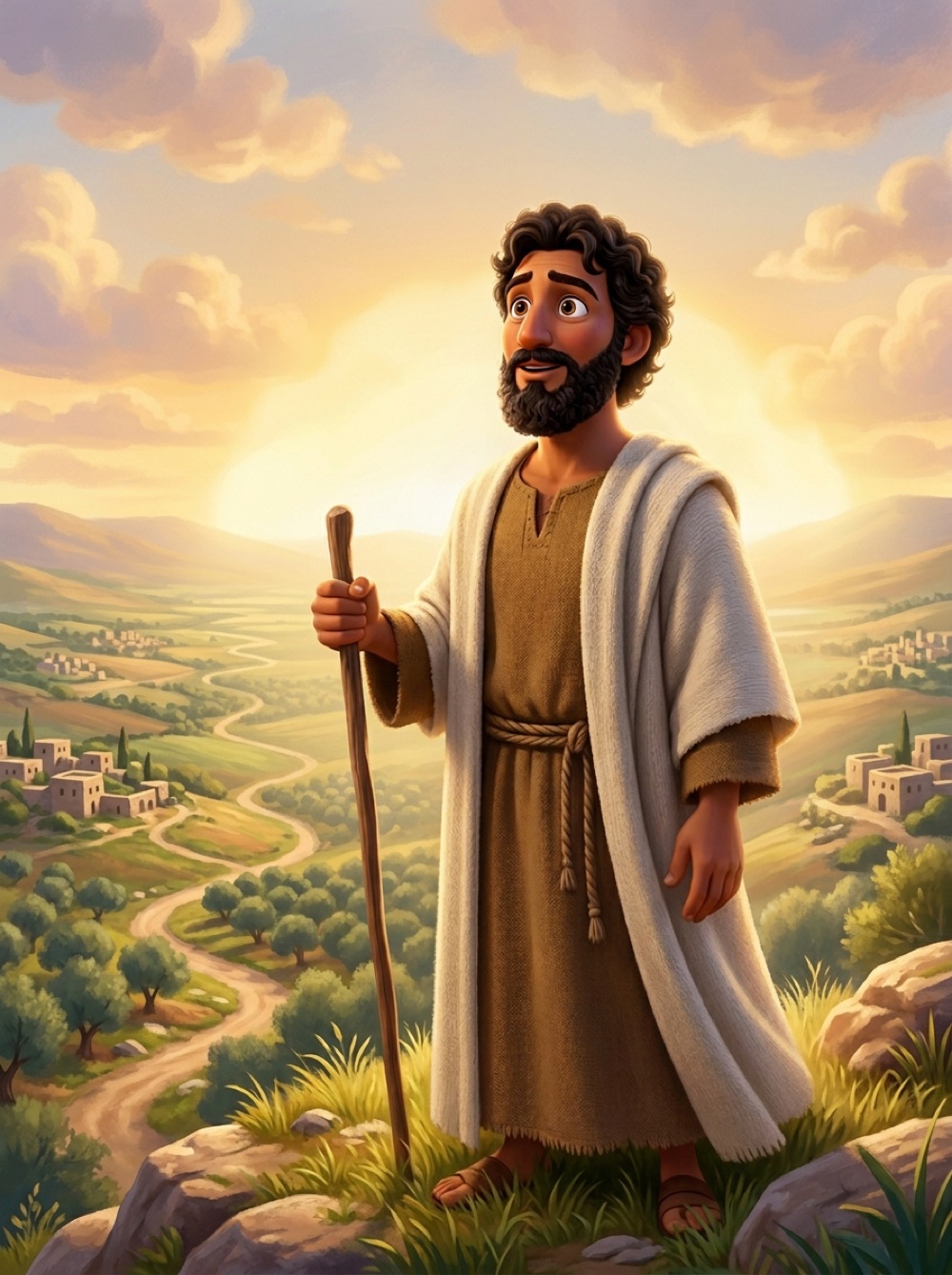
God's Promise Repeated
While Abram stood in this new land, God spoke to him again. "This is the land I will give to you and your family," God said, "for many, many generations to come." Abram looked out over the hills, trying to imagine just how big God's promise really was.
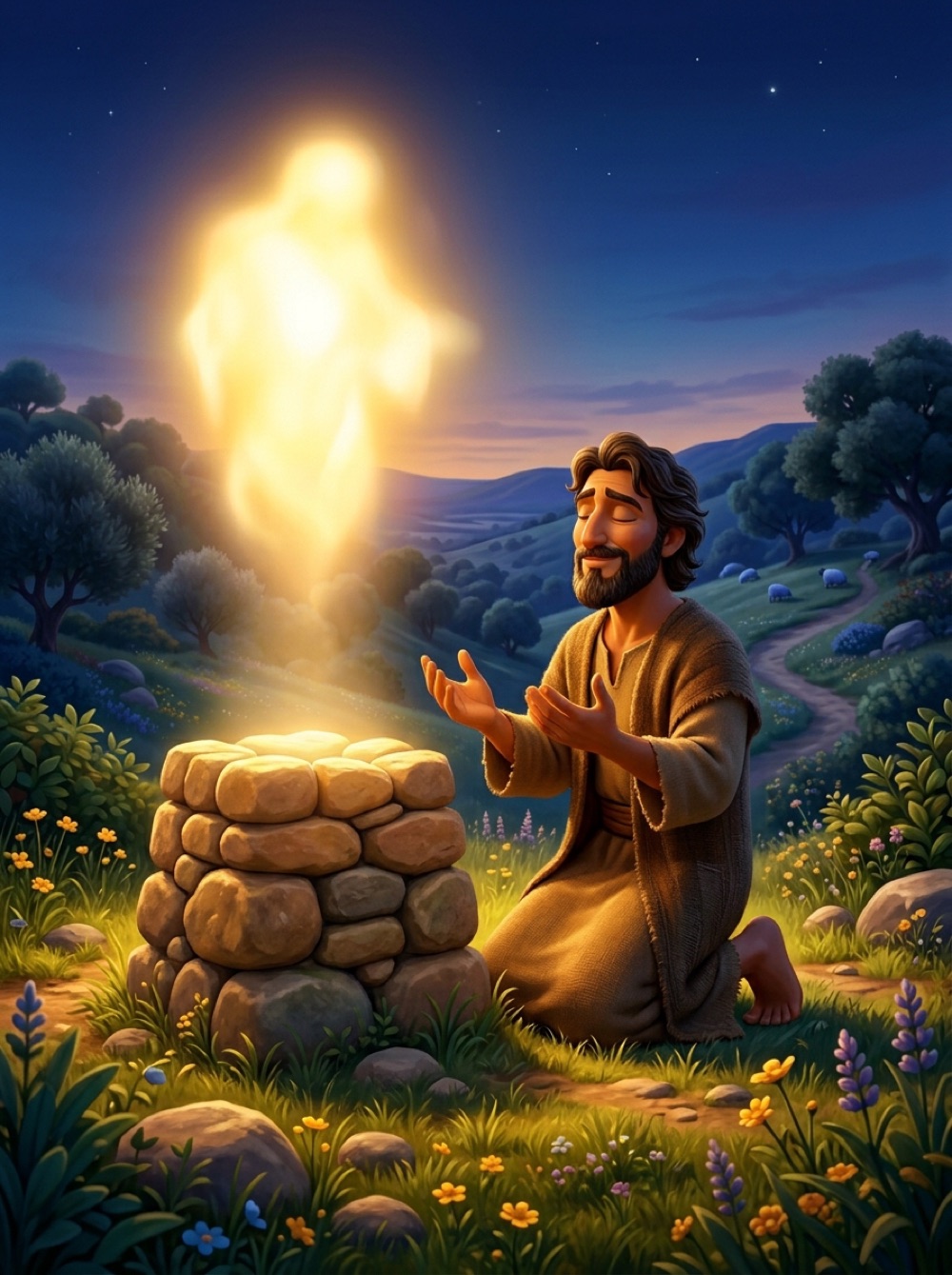
An Altar of Thanks
Abram built an altar right there to thank God for His promise. He didn't have any proof yet that everything would come true — no land of his own, no children. But Abram chose to trust God, and that trust was the beginning of an incredible story.
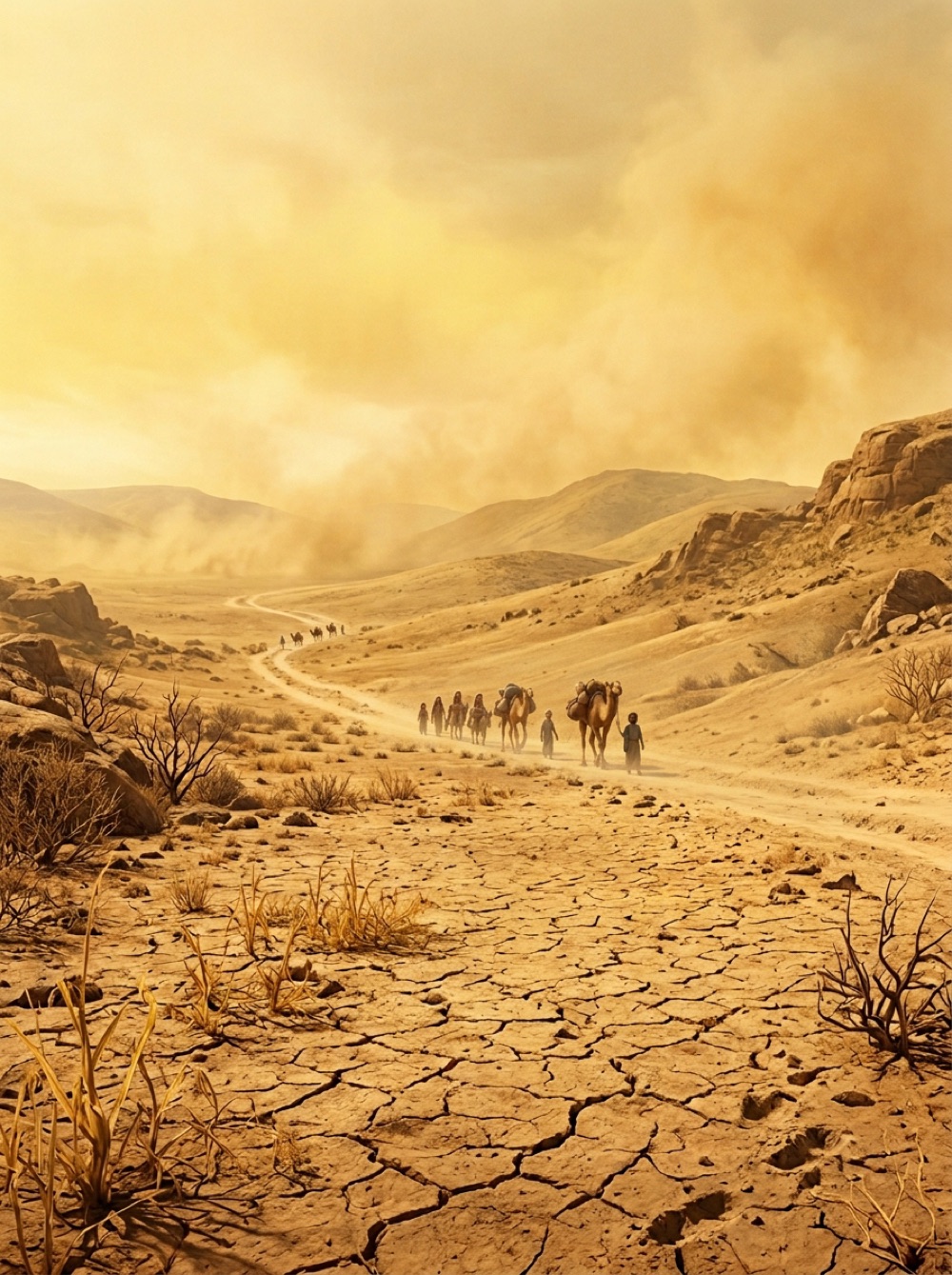
A Famine Strikes
After some time in Canaan, a terrible famine struck the land. There was no food growing anywhere. So Abram took his household south to Egypt, where the famine hadn't reached, hoping to find food until the hard times passed.
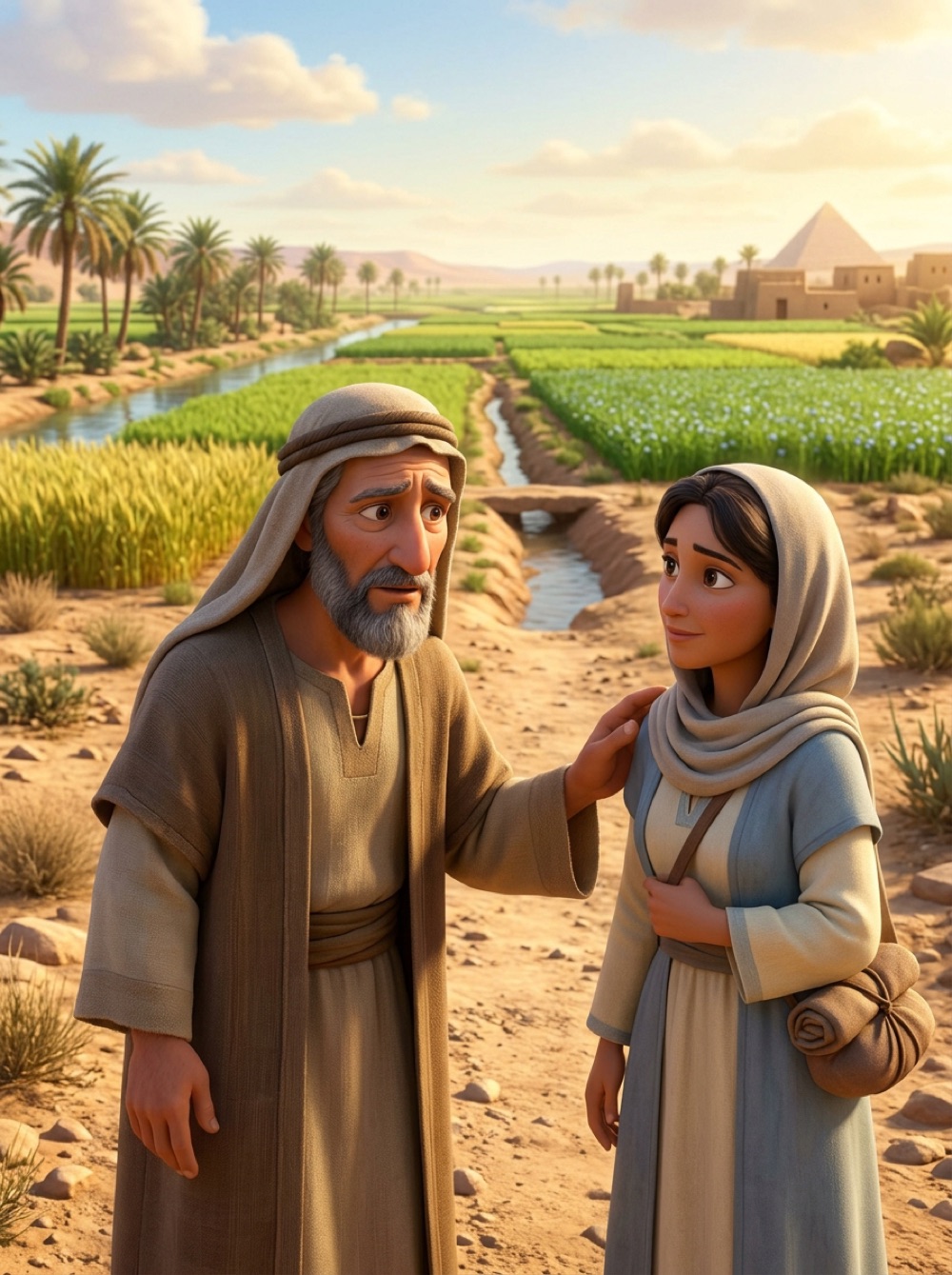
Abram's Fear
Abram was afraid. He worried that the powerful king of Egypt might hurt him because Sarai was so beautiful. So Abram told a lie — he said Sarai was only his sister, not his wife. Even good men like Abram sometimes let fear push them into doing the wrong thing.
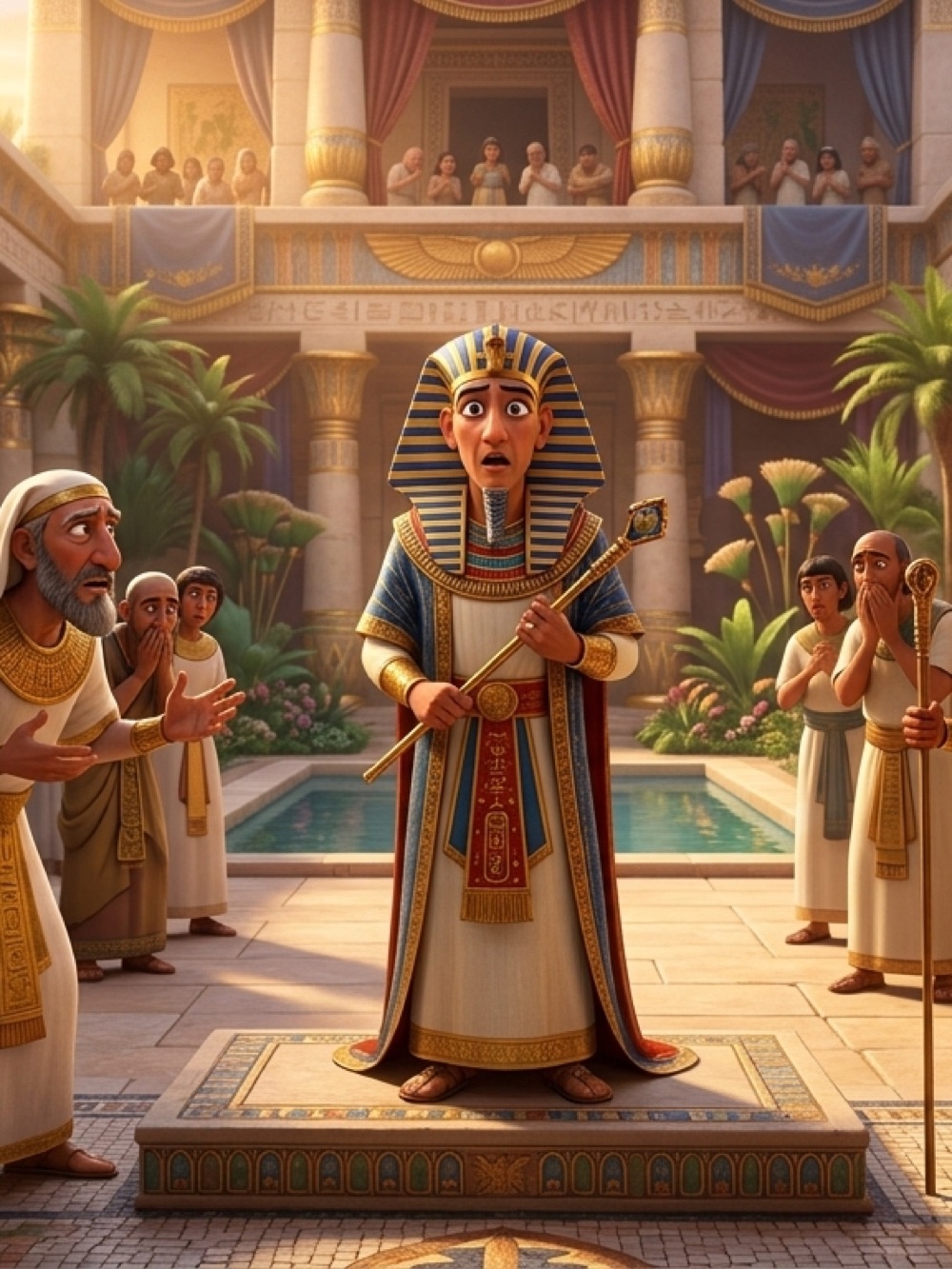
Trouble in Pharaoh's House
Because of Abram's lie, Sarai was brought into Pharaoh's palace. But God protected her. Trouble fell on Pharaoh's household, and Pharaoh soon discovered the truth — that Sarai was actually Abram's wife. Pharaoh was upset that he had been deceived.
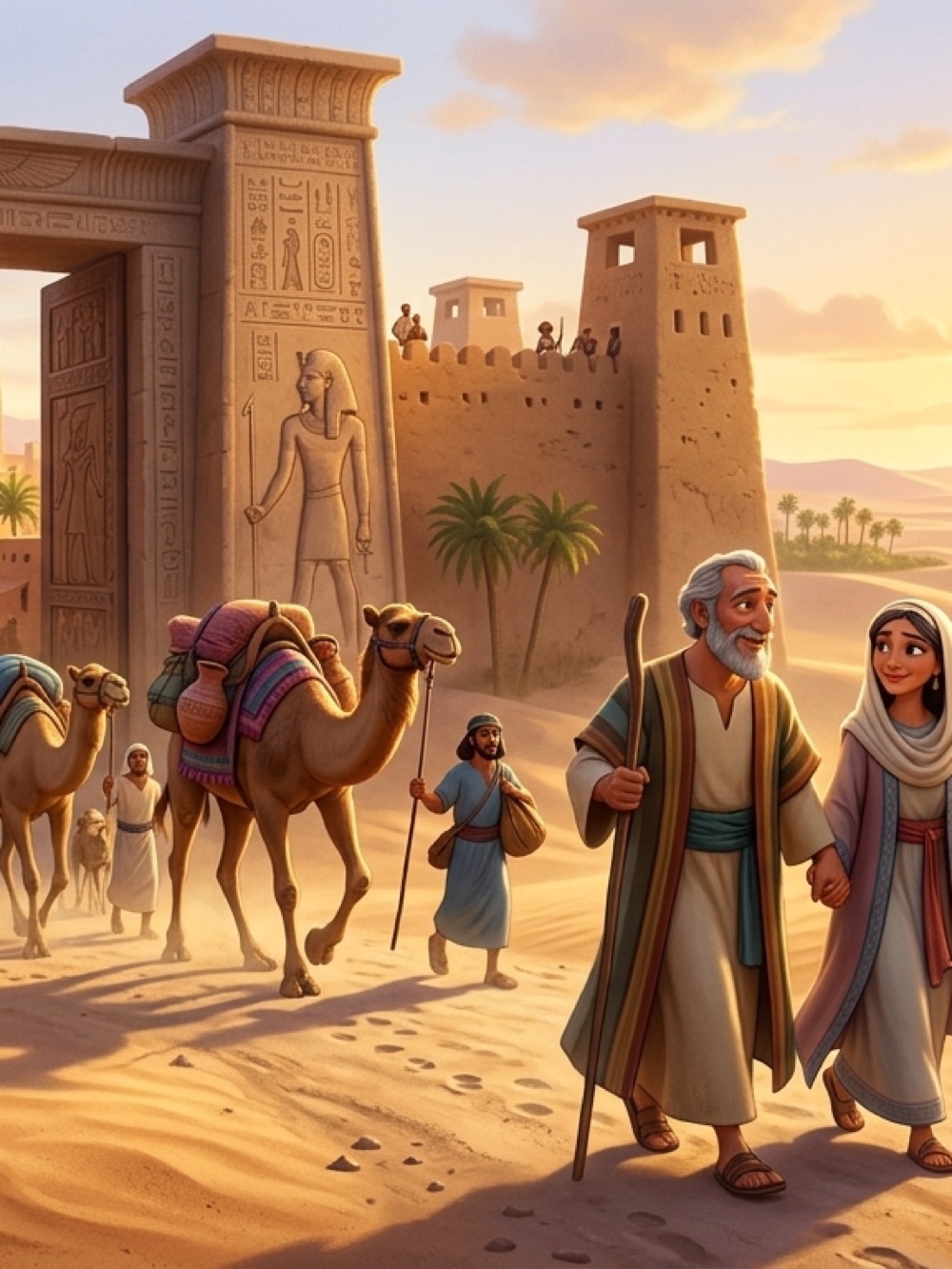
Sent Away Safely
Pharaoh sent Abram, Sarai, and all their household out of Egypt. Even though Abram had made a mistake by lying, God still kept Sarai safe and still kept His promise to Abram. God's plans don't fall apart just because people aren't perfect.
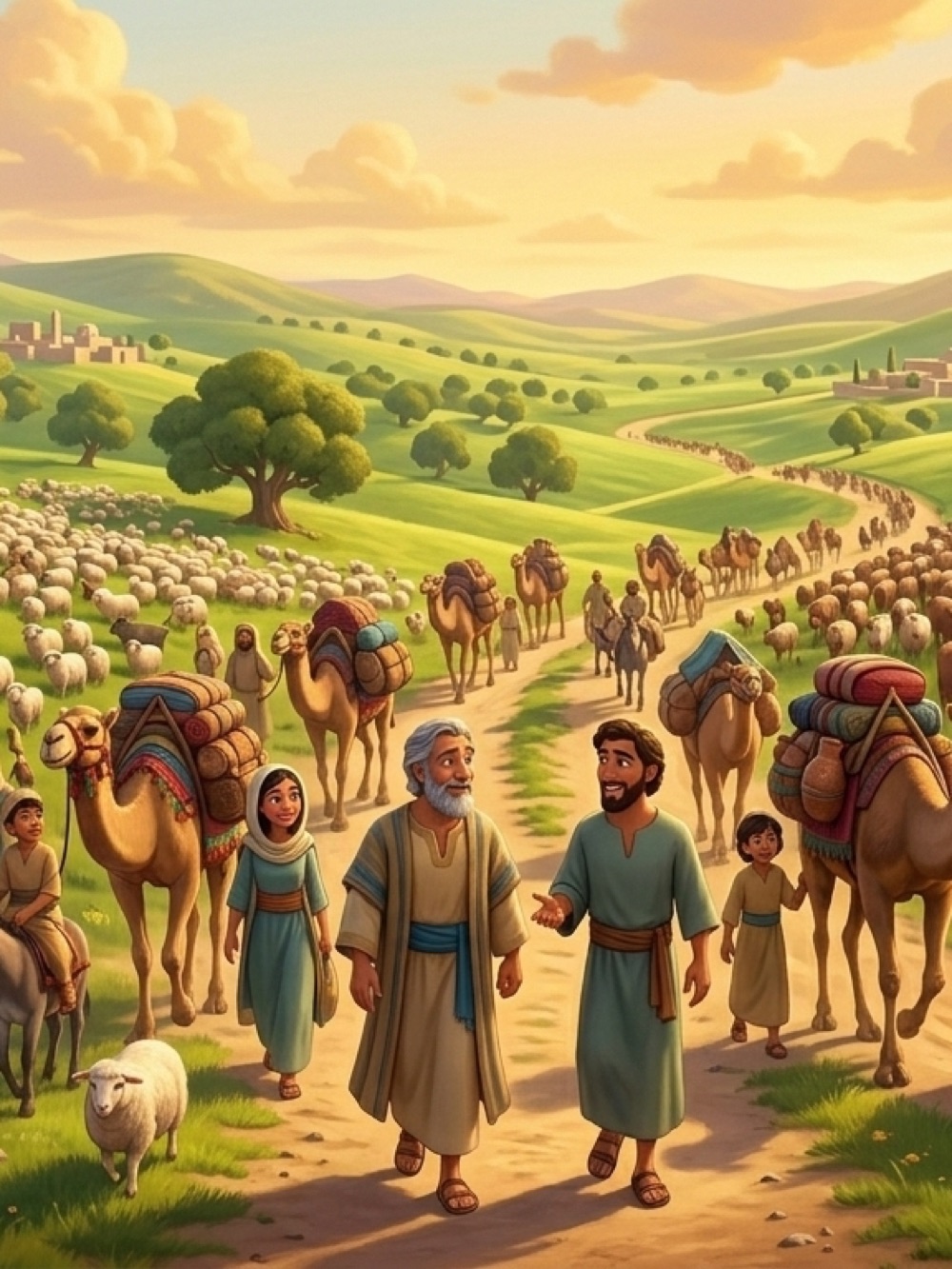
Back in Canaan
Abram and his family left Egypt and returned to Canaan. They came back even wealthier than before, with more sheep, goats, and cattle than ever. Abram's nephew Lot traveled with him too, and his flocks and herds had also grown large.
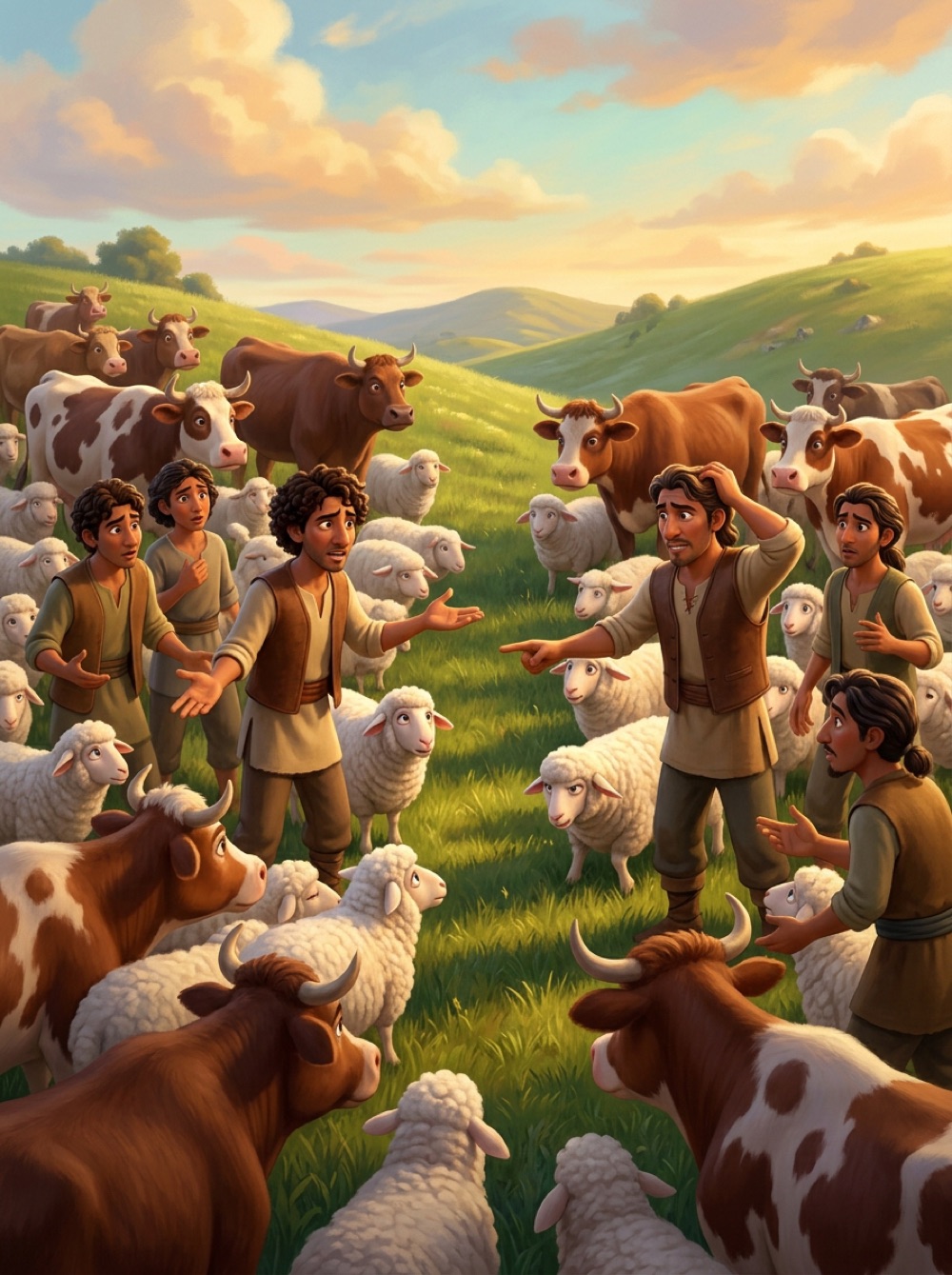
Not Enough Room
With so many animals between them, Abram and Lot's herdsmen started arguing. There just wasn't enough grass and water in one place for all their flocks. The arguing grew worse, and Abram knew something needed to change before it caused real trouble between families.
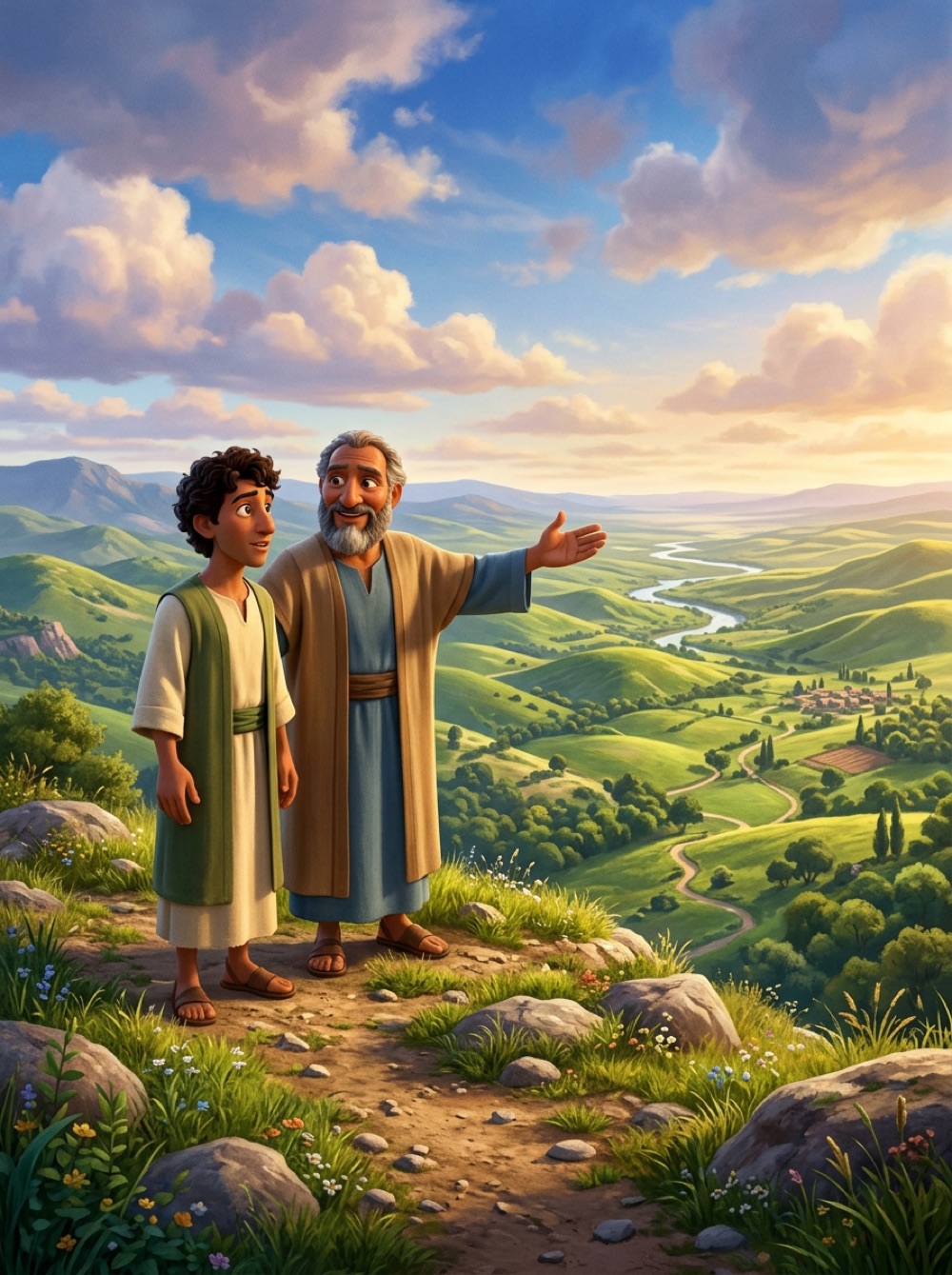
Abram's Generous Choice
Abram went to Lot and said, "Let's not let our families fight over land. The whole country is here in front of us — you choose where you'd like to go, and I'll go the other way." Abram could have chosen first, but he let Lot decide.
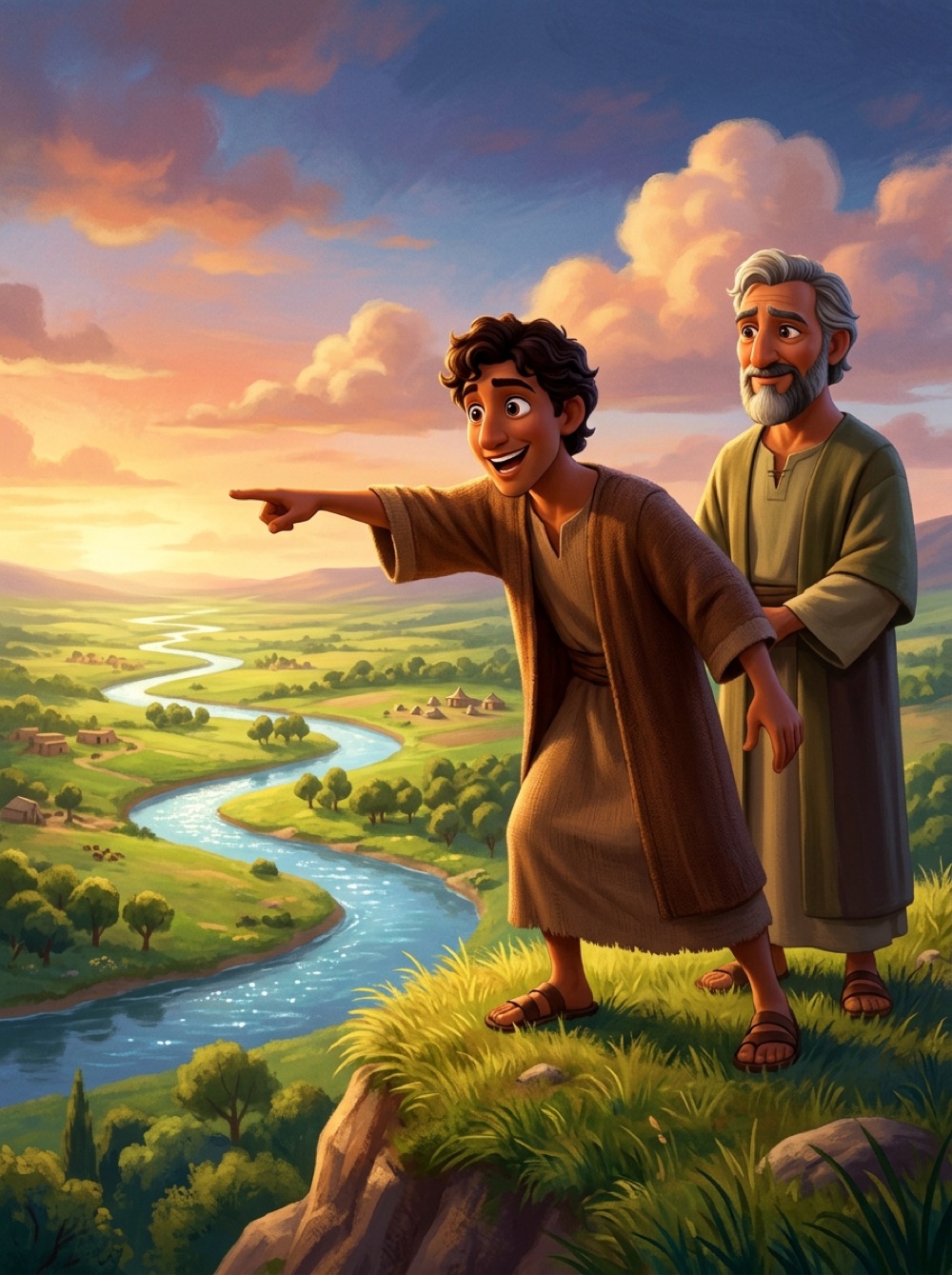
Lot Chooses the Valley
Lot looked out and saw a lush, green valley near a city called Sodom, full of good water and grass. He chose to settle there. Abram stayed behind in the hill country of Canaan, trusting that God would take care of him, even with the smaller share of land.
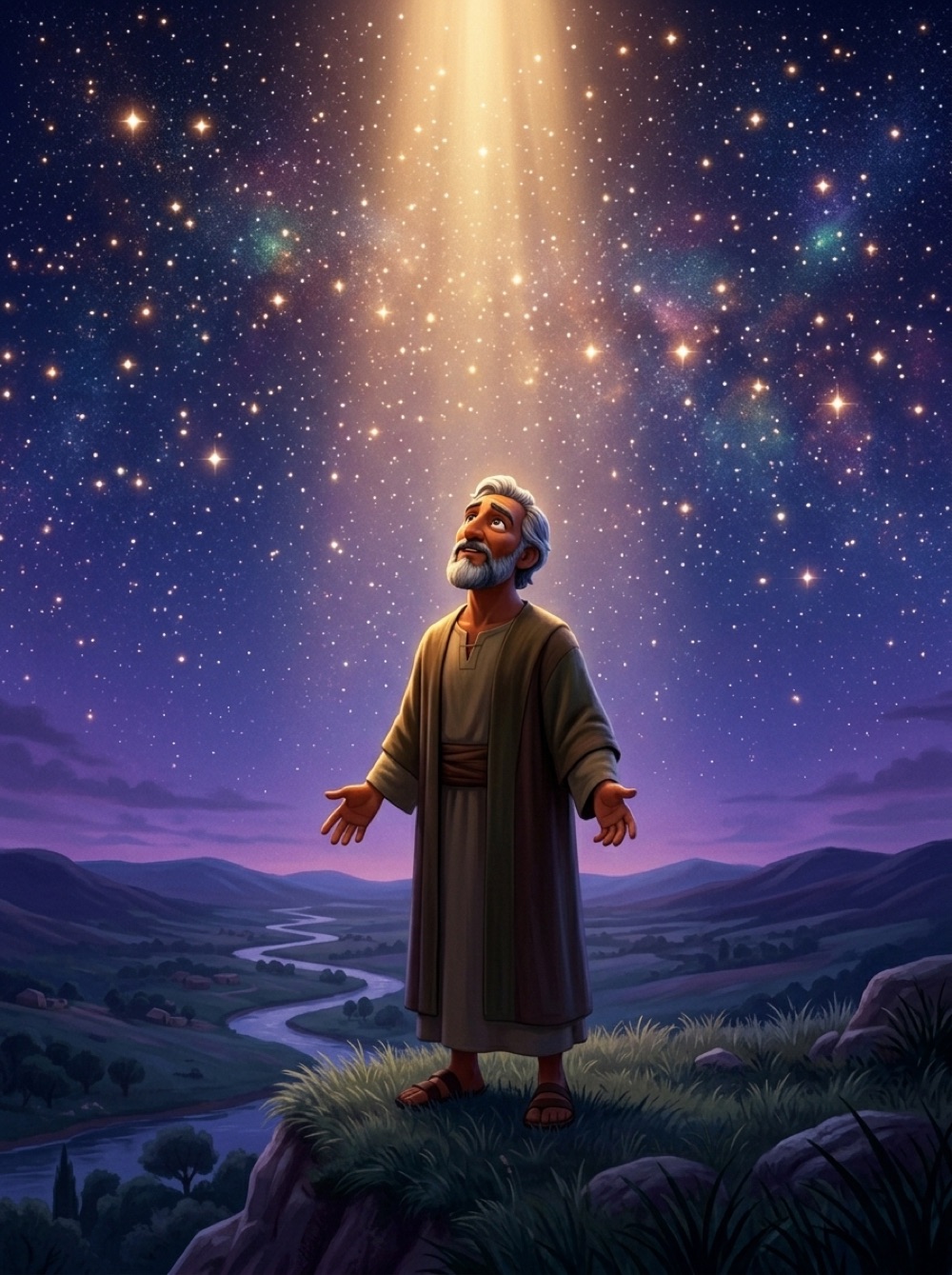
God's Promise Grows Bigger
After Lot left, God spoke to Abram again. "Look all around you," God said. "All this land will belong to your family forever. And your children will become as many as the dust of the earth — too many to count!" Abram's generosity hadn't cost him anything after all.
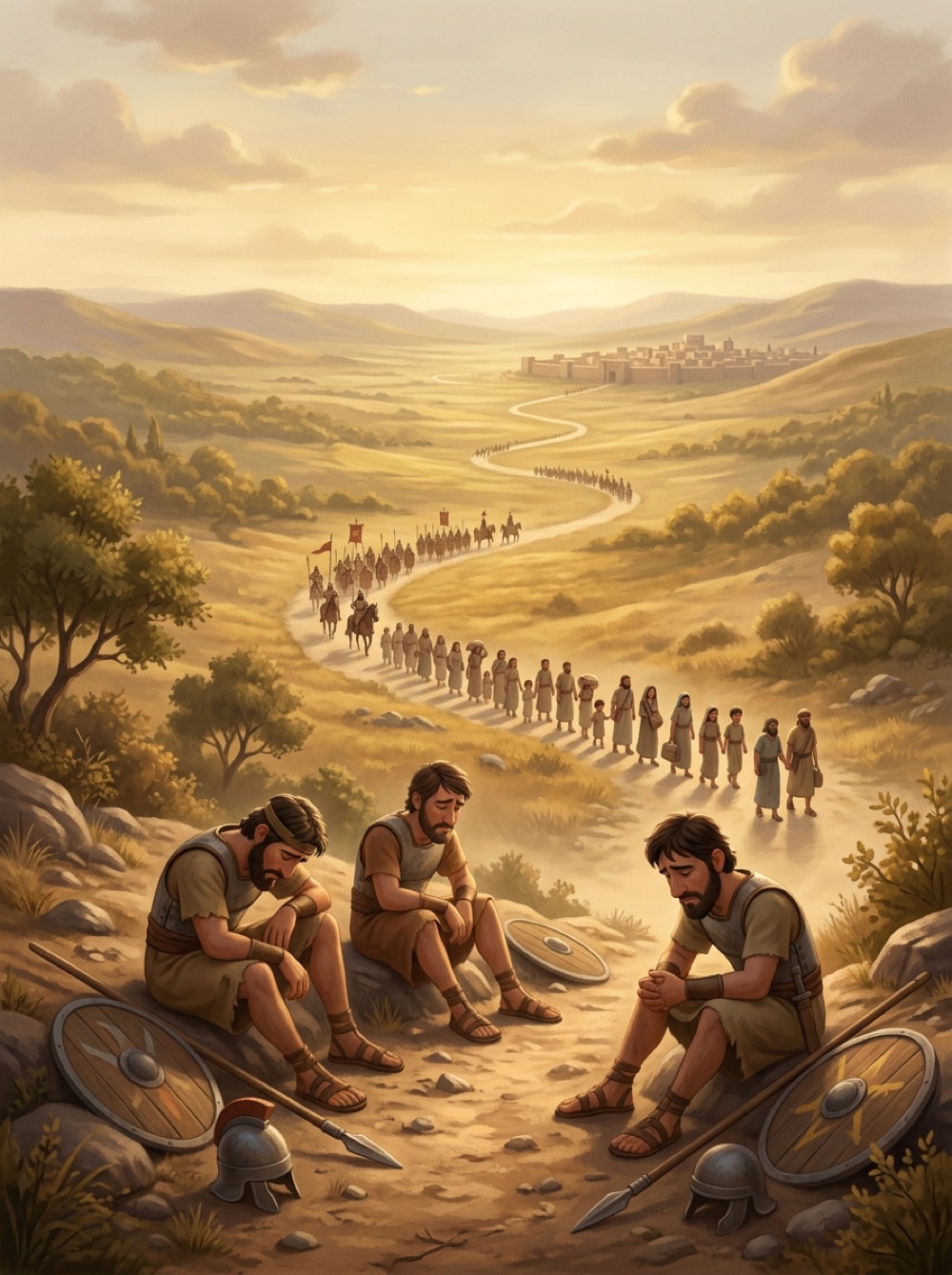
War in the Valley
Four powerful kings went to war against five other kings in the valley near Sodom. The four kings won the battle. They took everything — food, belongings, and people. Lot, who lived near Sodom, was captured and taken away along with everything he owned.
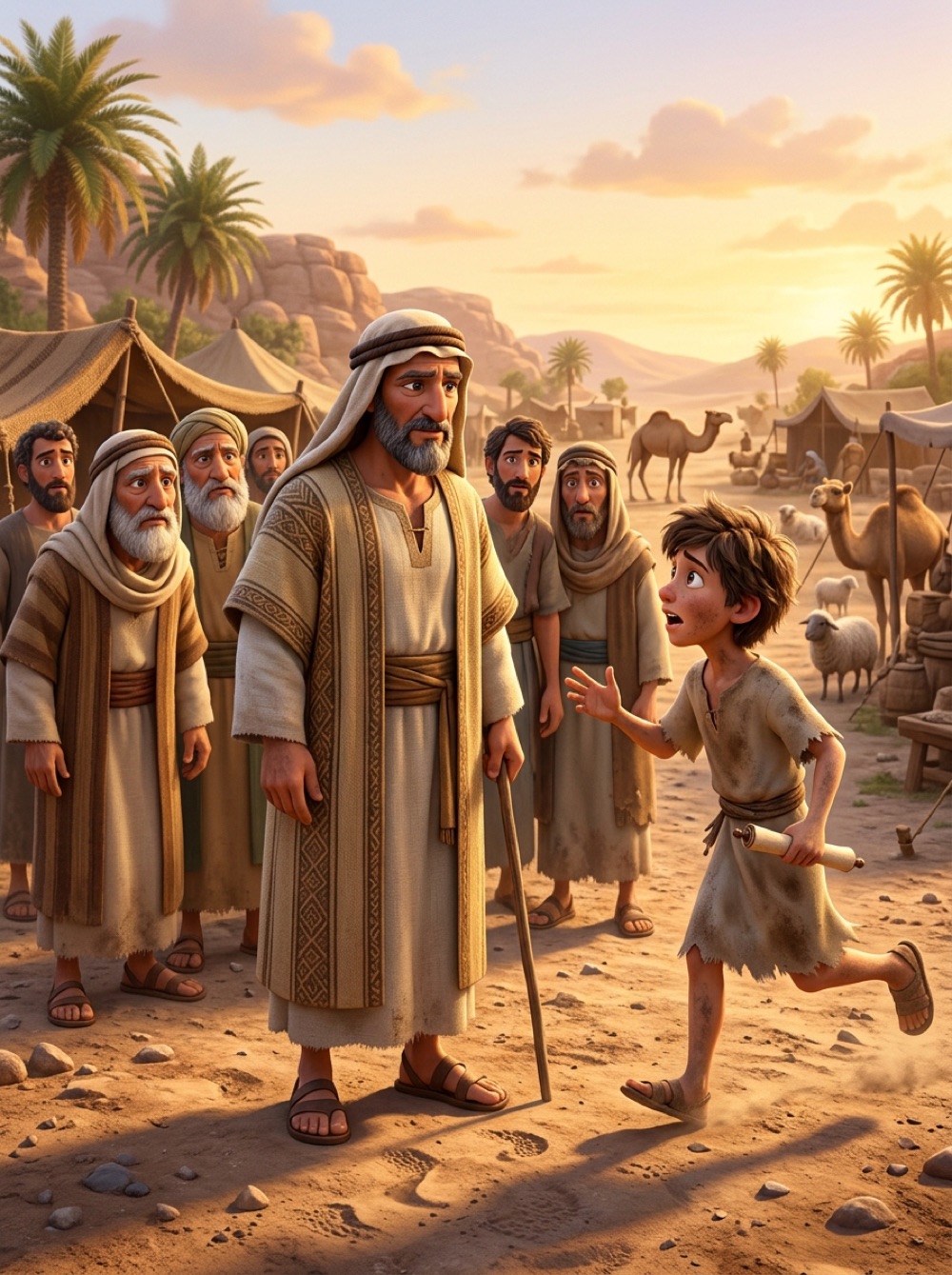
Abram Hears the News
A man who had escaped ran to Abram with the terrible news. "Lot has been captured!" Abram didn't hesitate. Even though the kings who took Lot were powerful and had large armies, Abram gathered his men and went after them straight away.
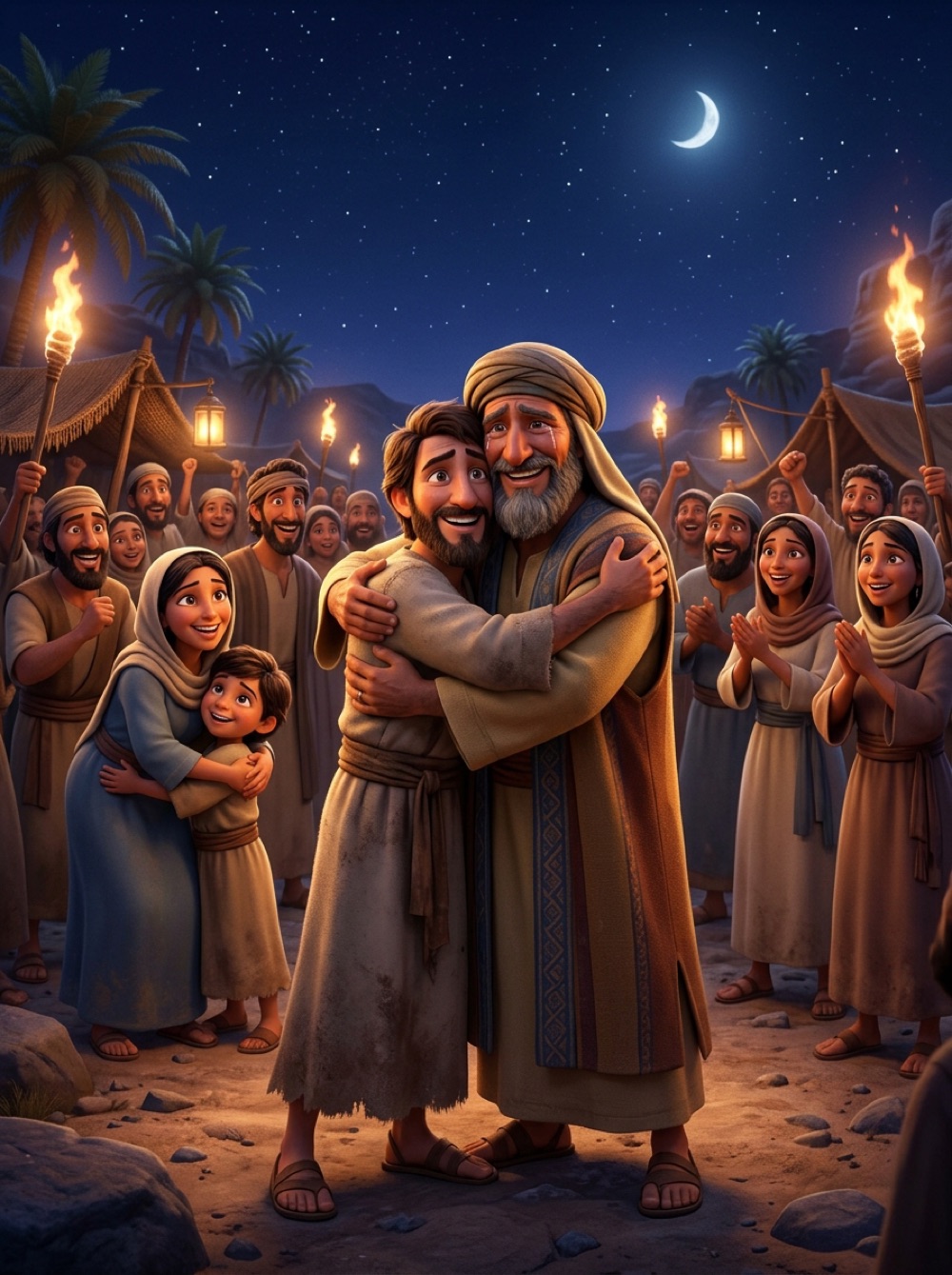
Abram Rescues Lot
Abram moved quickly and bravely. He and his men chased the four kings and caught up with them at night. They rescued Lot, his family, and everyone else who had been taken. They also brought back all the belongings and food that had been stolen.
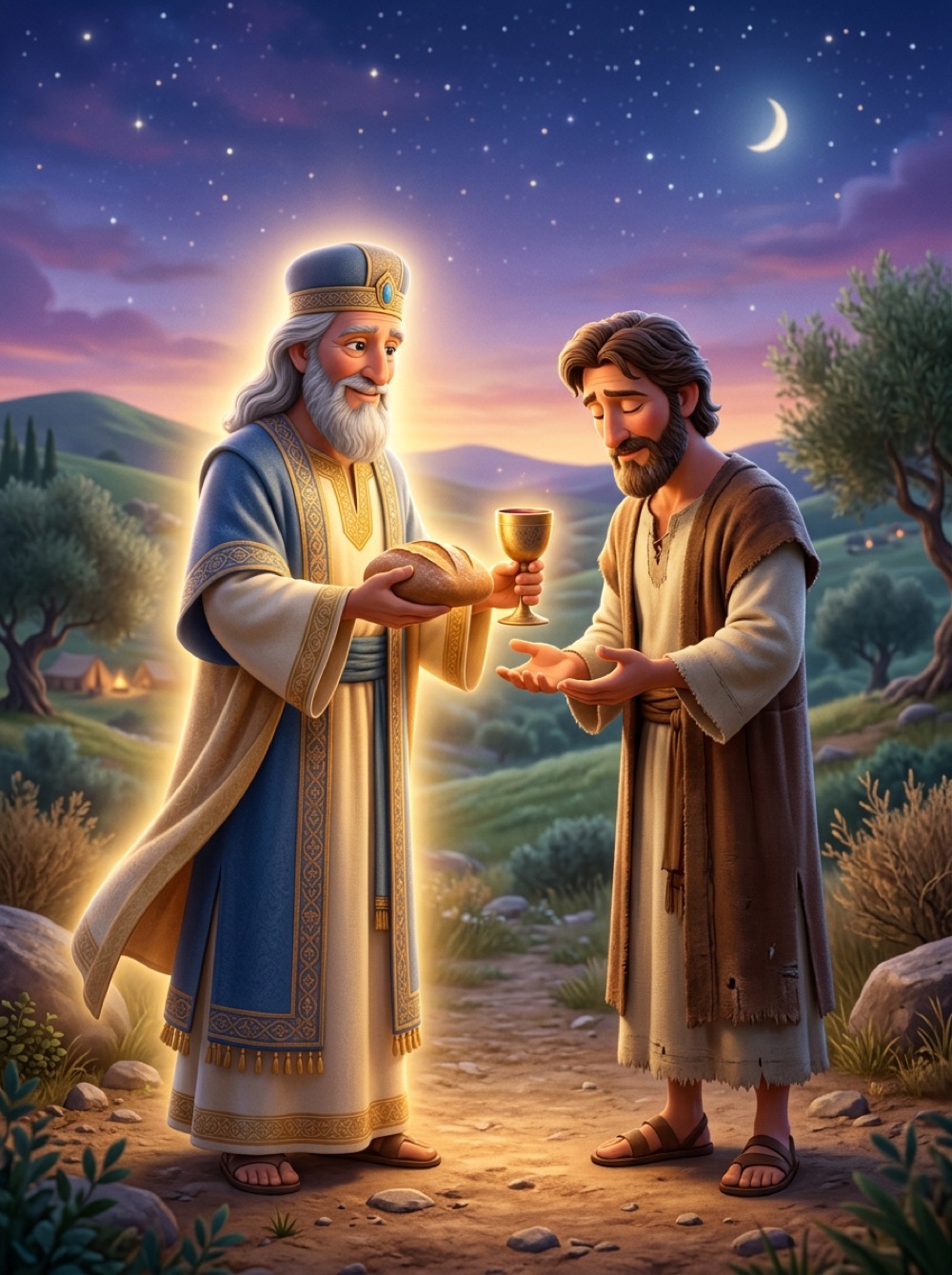
The Mysterious Priest
On the way home, a mysterious king and priest named Melchizedek came out to meet Abram. He brought bread and wine, and he blessed Abram in God's name. Melchizedek was a reminder that God had people who honored Him even in unexpected places.
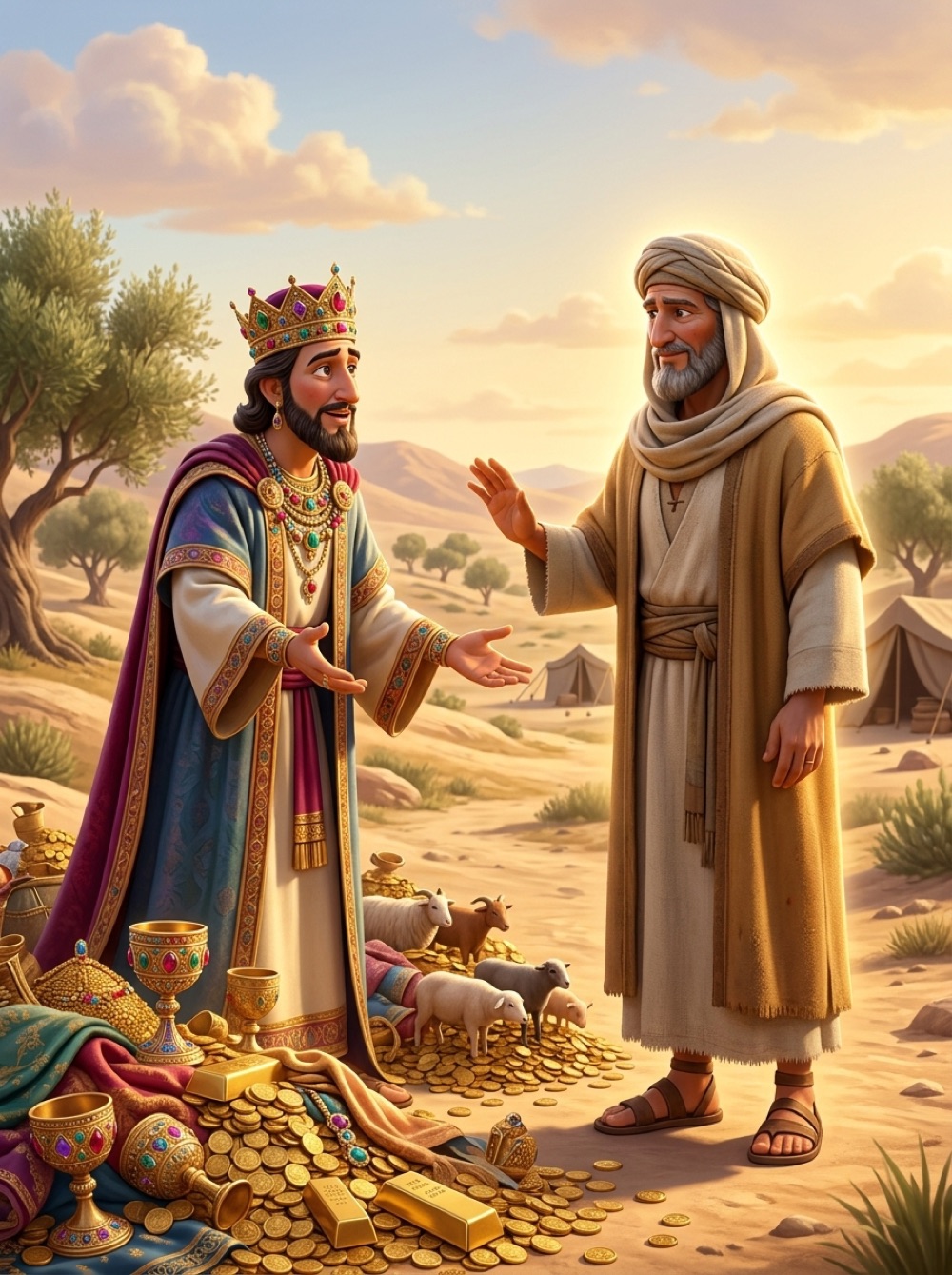
Abram Refuses the Reward
The king of Sodom offered Abram all the recovered treasure as a reward. But Abram said no. "I will not take anything that belongs to you," he said. "I don't want anyone to say they made Abram rich. Only God gets that credit." Real generosity doesn't keep score.
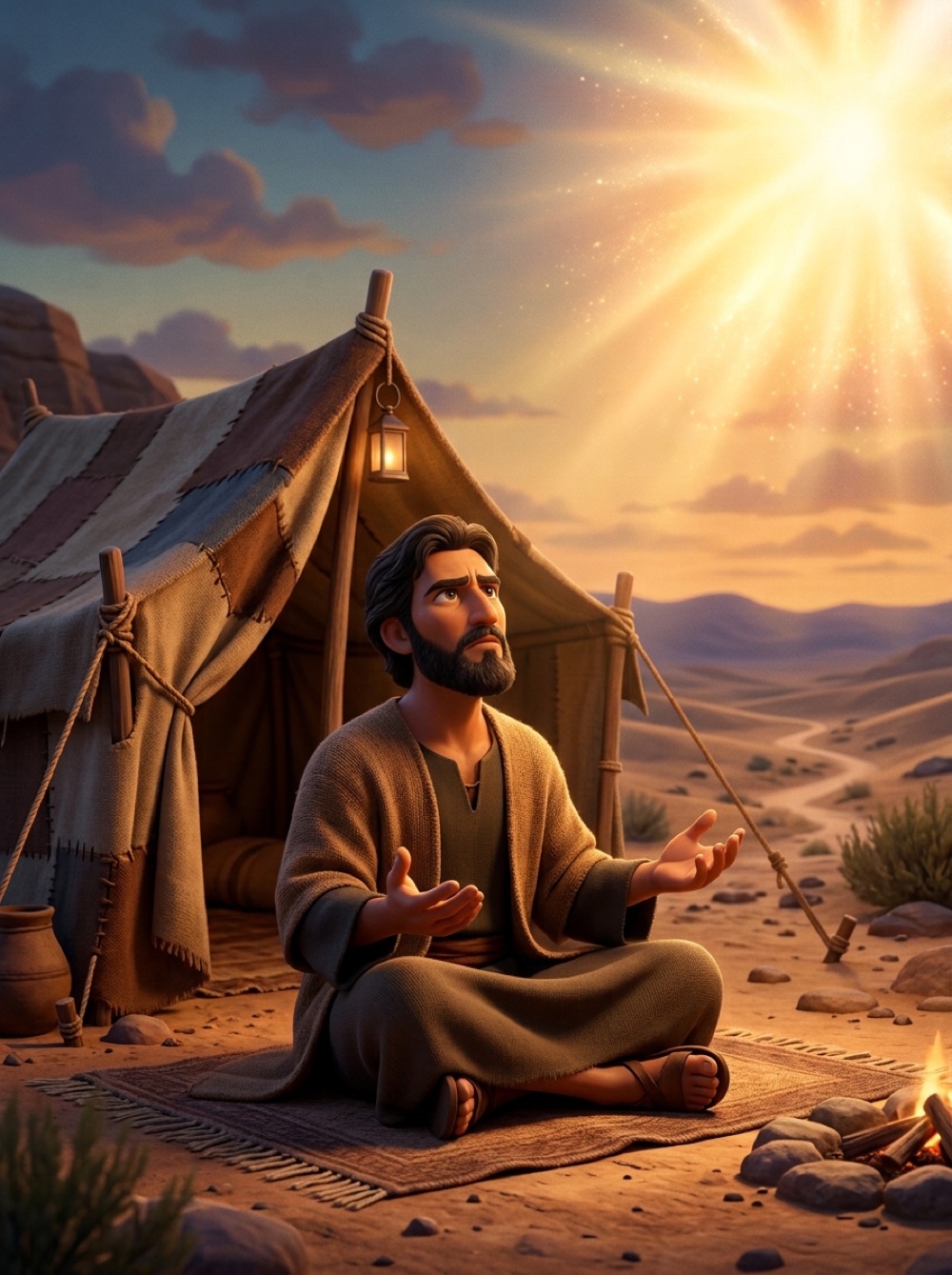
Abram's Honest Question
After the battle, God spoke to Abram again. "Do not be afraid, Abram. I am your reward." But Abram had an honest question sitting heavy in his heart. "God," he said, "you keep promising me a family — but I don't even have one child yet. How will this work?"

Count the Stars
God took Abram outside into the night and said, "Look up. Count the stars — if you can." Abram looked up at the sky full of thousands of stars, too many to count. "That," said God, "is how many people will come from your family one day."
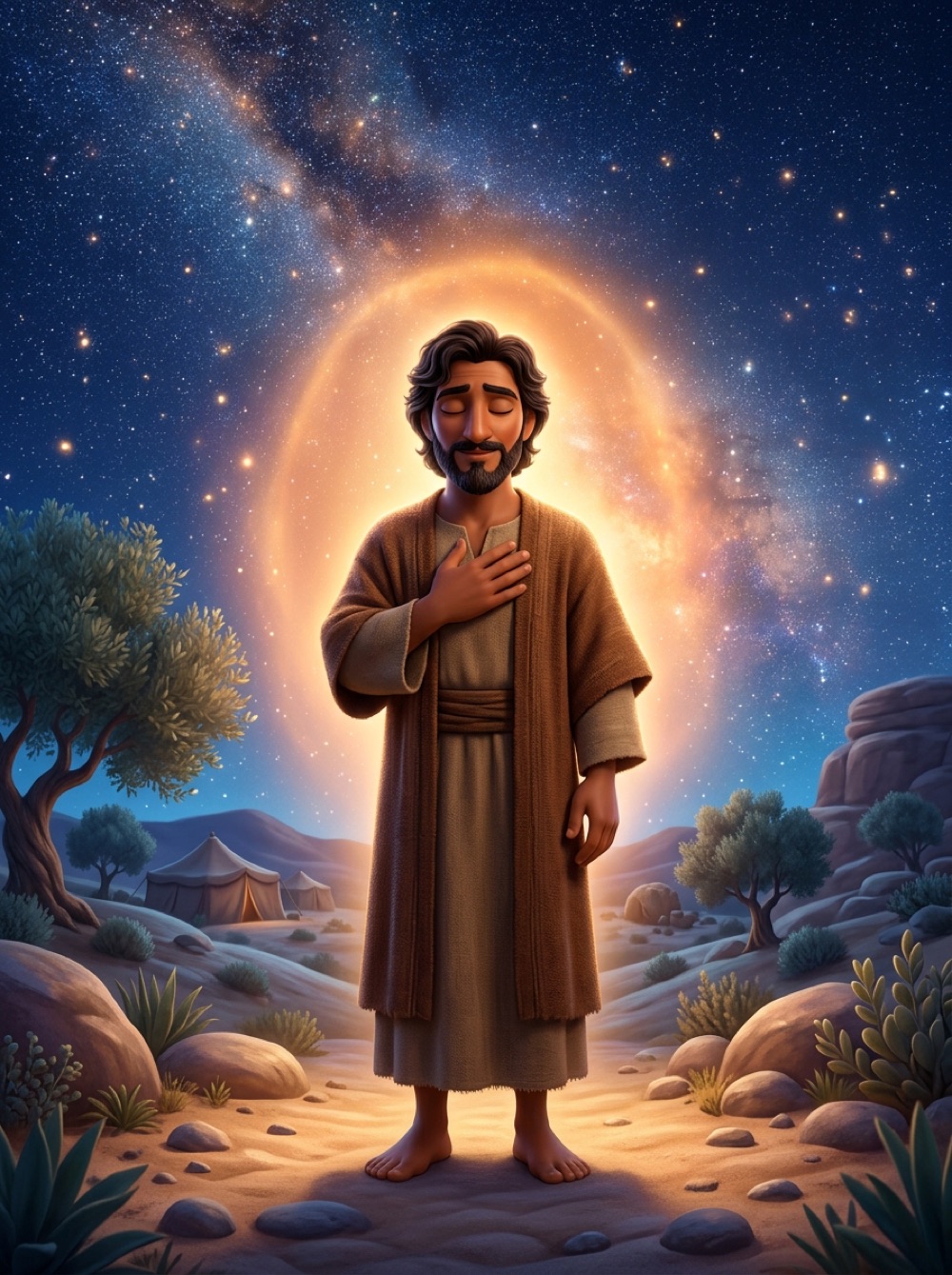
Abram Believed God
Abram had no children. He was old. The promise seemed impossible. But Abram chose to believe God anyway. And the Bible says something important right here — God looked at Abram's faith and called it righteousness. Trusting God, even when it's hard, is one of the most important things a person can do.
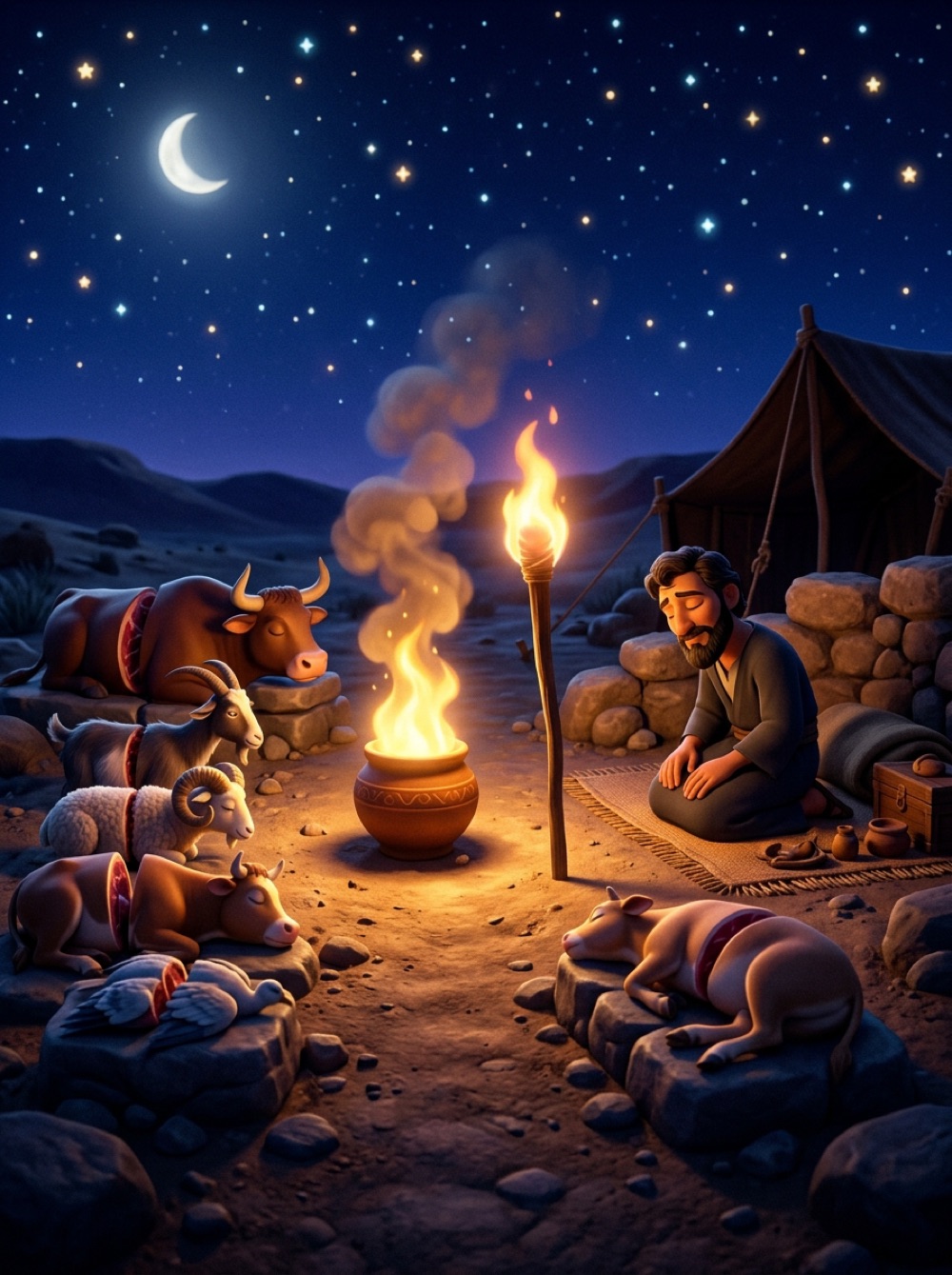
The Covenant Is Sealed
God made a formal covenant — a serious, unbreakable promise — with Abram that night. As darkness fell, a smoking fire pot and a blazing torch passed between the animals of the offering, sealing God's promise. This land, God said, will belong to your family. I promise.
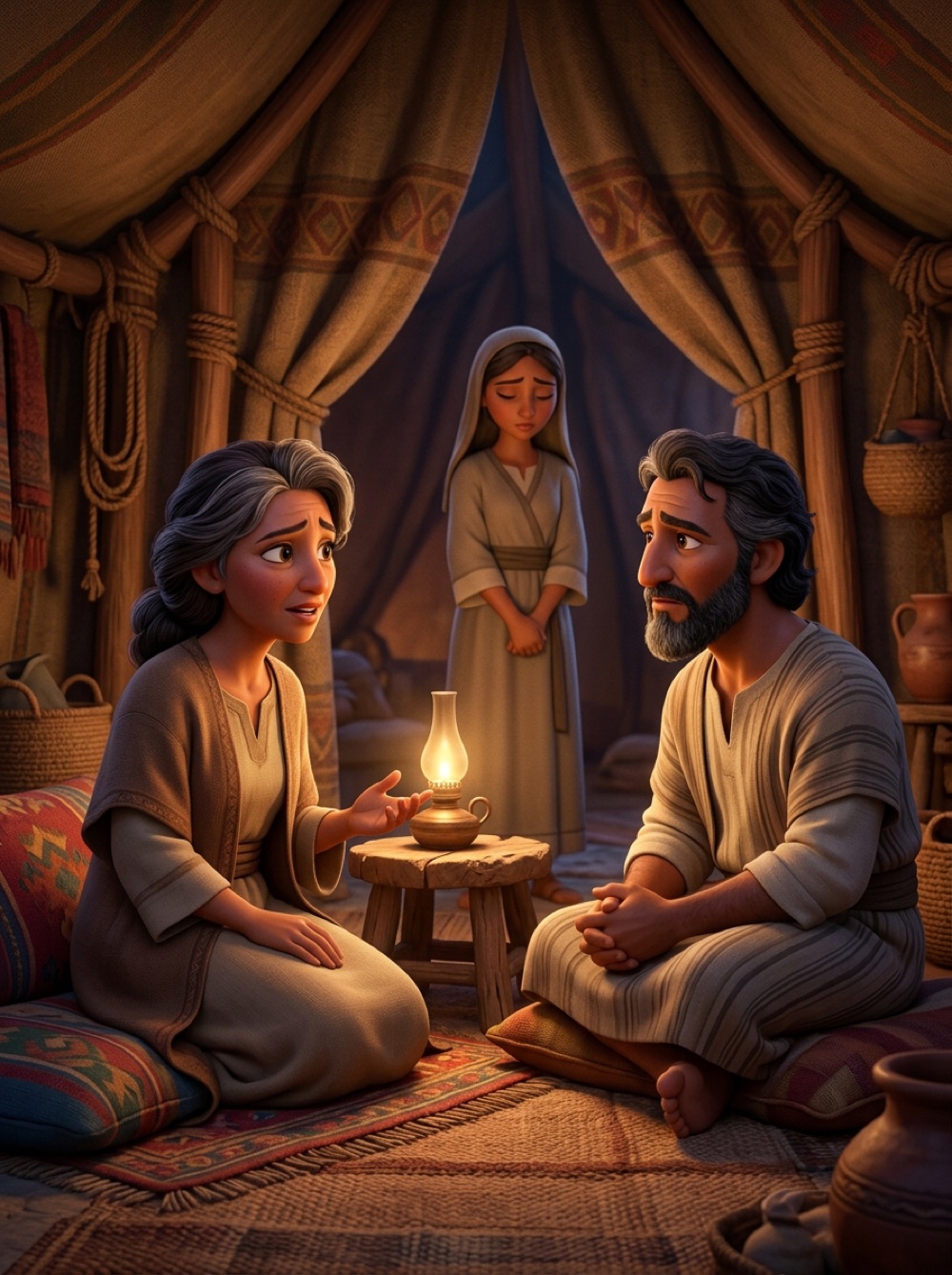
Sarai's Impatient Plan
Years passed, and Sarai still had no children. The waiting was hard. So Sarai came up with her own plan — she told Abram to have a child with her servant Hagar instead. It seemed like a solution. But trying to rush God's plan rarely ends the way we hope.
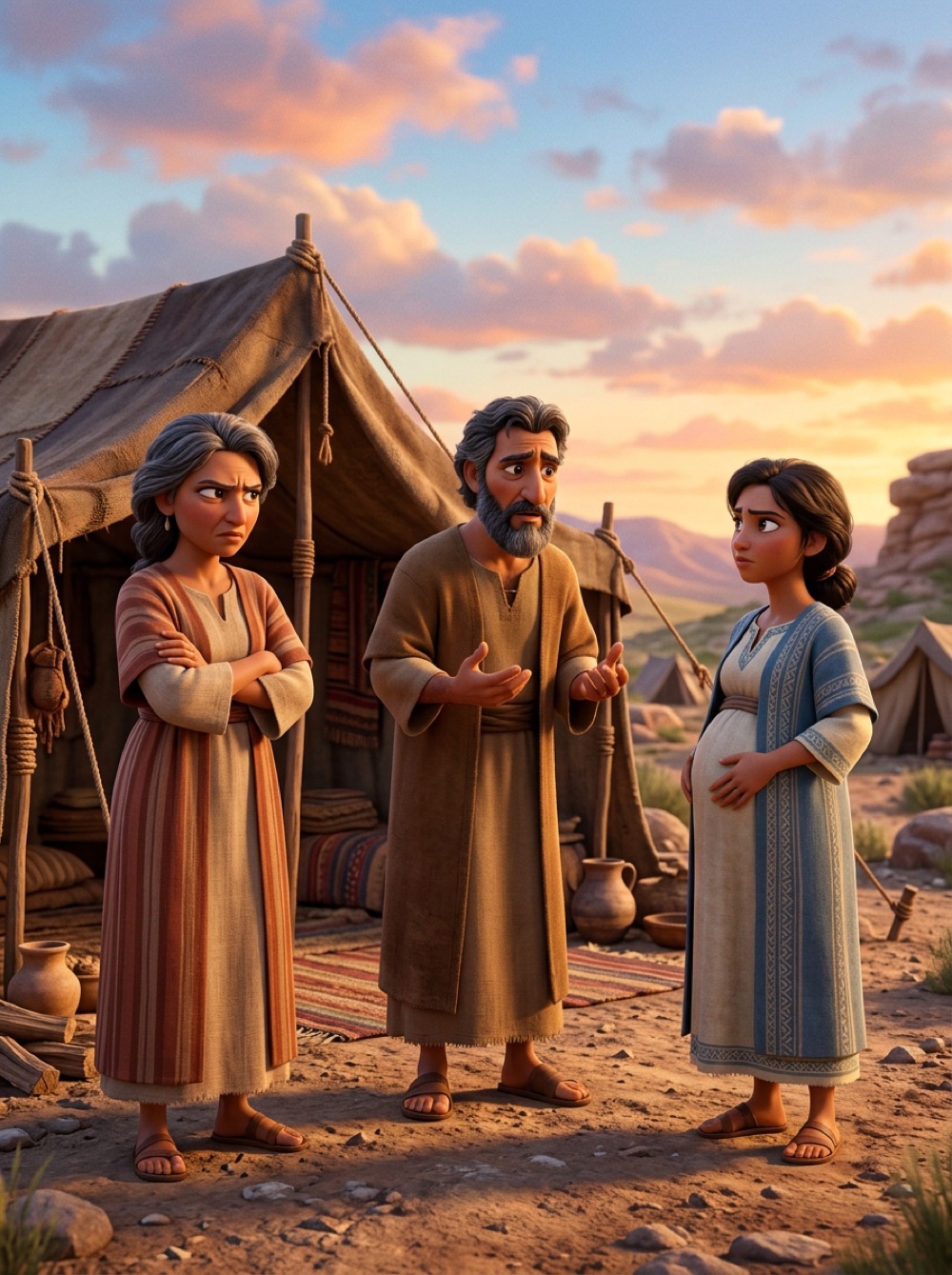
Trouble in the Household
Hagar became pregnant, and suddenly things got complicated. Hagar began to look down on Sarai, and Sarai felt hurt and angry. She blamed Abram for the mess. The household that had been peaceful was now full of tension — because the plan had been theirs, not God's.

Hagar Runs Away
Sarai treated Hagar so harshly that Hagar ran away into the desert, alone and afraid. She was far from home, pregnant, and had nowhere to go. It looked like no one cared what happened to her. But God saw her — and God always sees the forgotten.
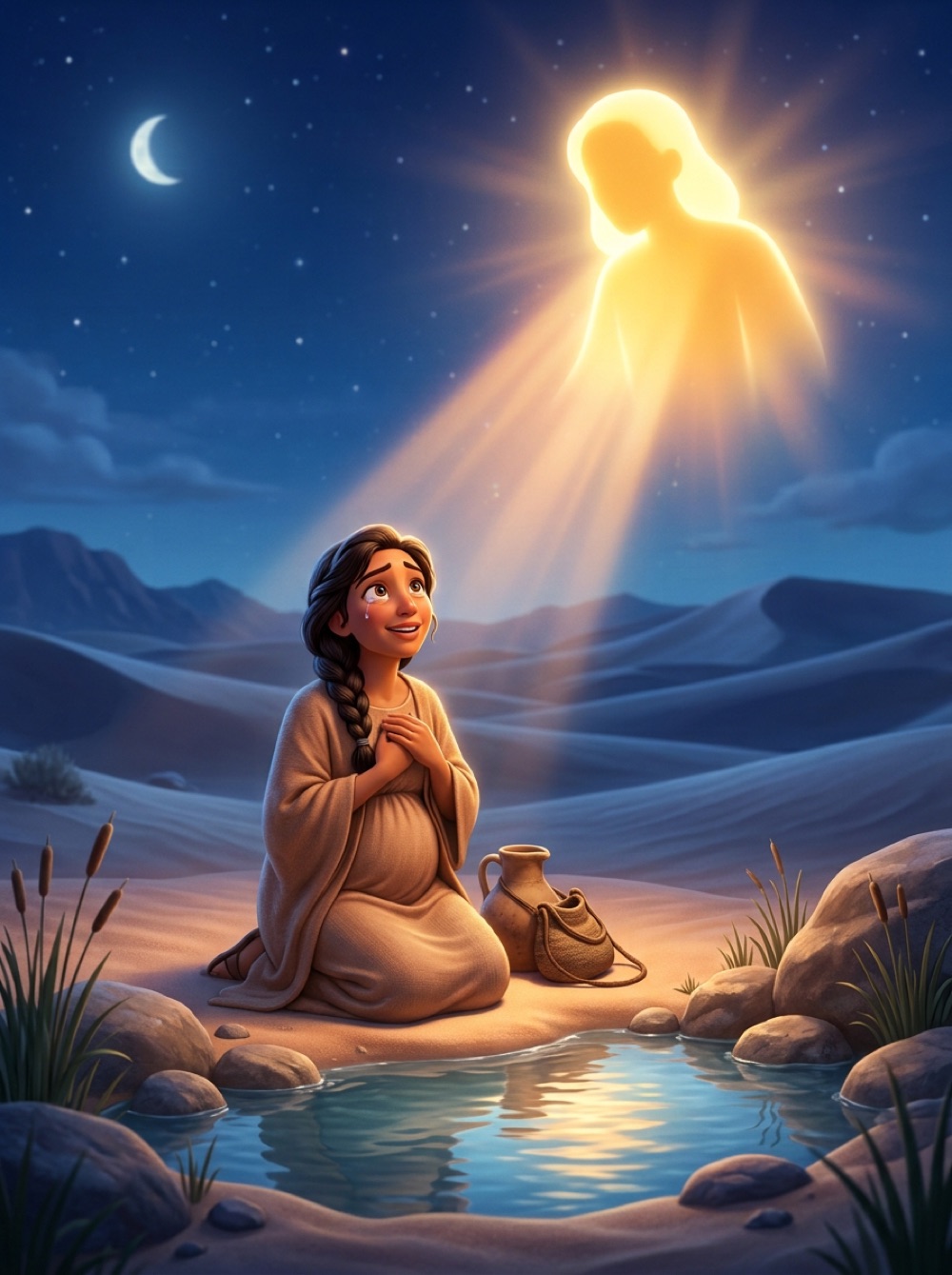
God Sees Hagar
An angel of God found Hagar by a spring of water in the desert. "Where have you come from, and where are you going?" the angel asked. Then God made Hagar a promise too — her son would be born and his name would be Ishmael, which means "God hears." God had not forgotten her.

The God Who Sees Me
Hagar was amazed. She gave God a new name that day — El Roi, which means "the God who sees me." Even a servant girl alone in the desert mattered to God. She returned home, and Ishmael was born just as God had promised.

New Names, New Promise
When Abram was ninety-nine years old, God appeared to him again. "I am God Almighty," He said. "Walk faithfully with me." Then God changed Abram's name to Abraham, which means "father of many nations," and changed Sarai's name to Sarah. New names for a new chapter.

A Sign of Belonging
God asked Abraham and his household to carry a special sign — a mark on their bodies — to show that they belonged to God and were part of His covenant family. It was a serious commitment, a way of saying: we are God's people, and we choose to be.

Sarah Will Have a Son
Then God said something that made Abraham fall on his face laughing — not from disbelief, but from sheer amazement. "Sarah, your wife, will have a son." Abraham was a hundred years old. Sarah was ninety. But God said his name would be Isaac, and it would happen exactly as promised.

Abraham Obeys Immediately
That very same day, Abraham did everything God had asked. He didn't wait, didn't argue, didn't ask for more time. He simply obeyed. When God speaks clearly, Abraham had learned, the right response is to move — and move quickly.
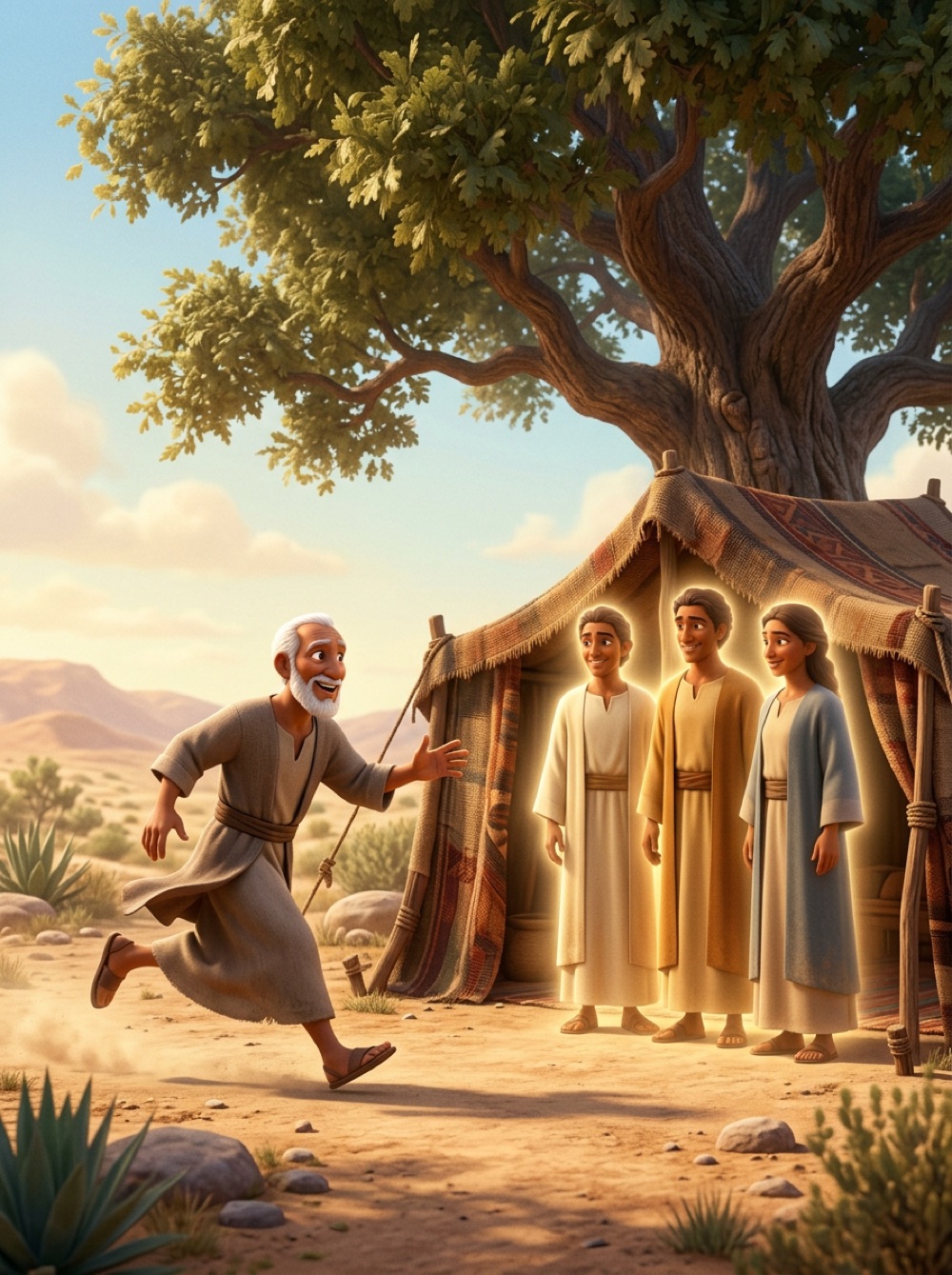
Three Visitors
One hot afternoon, Abraham was resting at his tent when three strangers appeared nearby. Abraham jumped up and ran to meet them. "Please stay and rest," he said. "Let me bring you water and food." Abraham didn't know it yet, but these were no ordinary visitors.
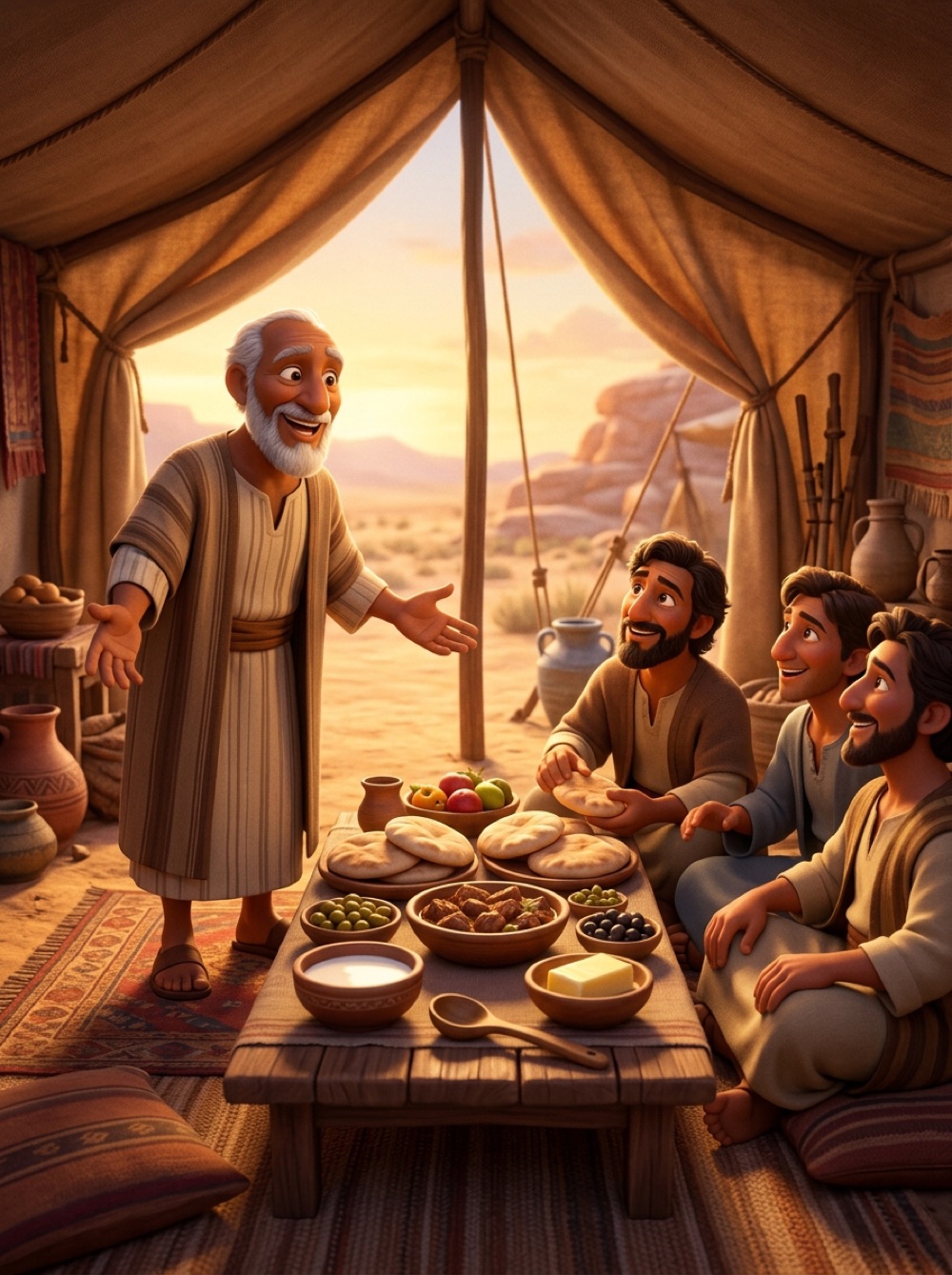
Abraham's Generous Welcome
Abraham rushed to get the best food he had — fresh bread, tender meat, milk, and butter. He set it all before his guests and stood nearby while they ate, making sure they had everything they needed. Abraham treated strangers like honored guests. That kind of welcome matters to God.
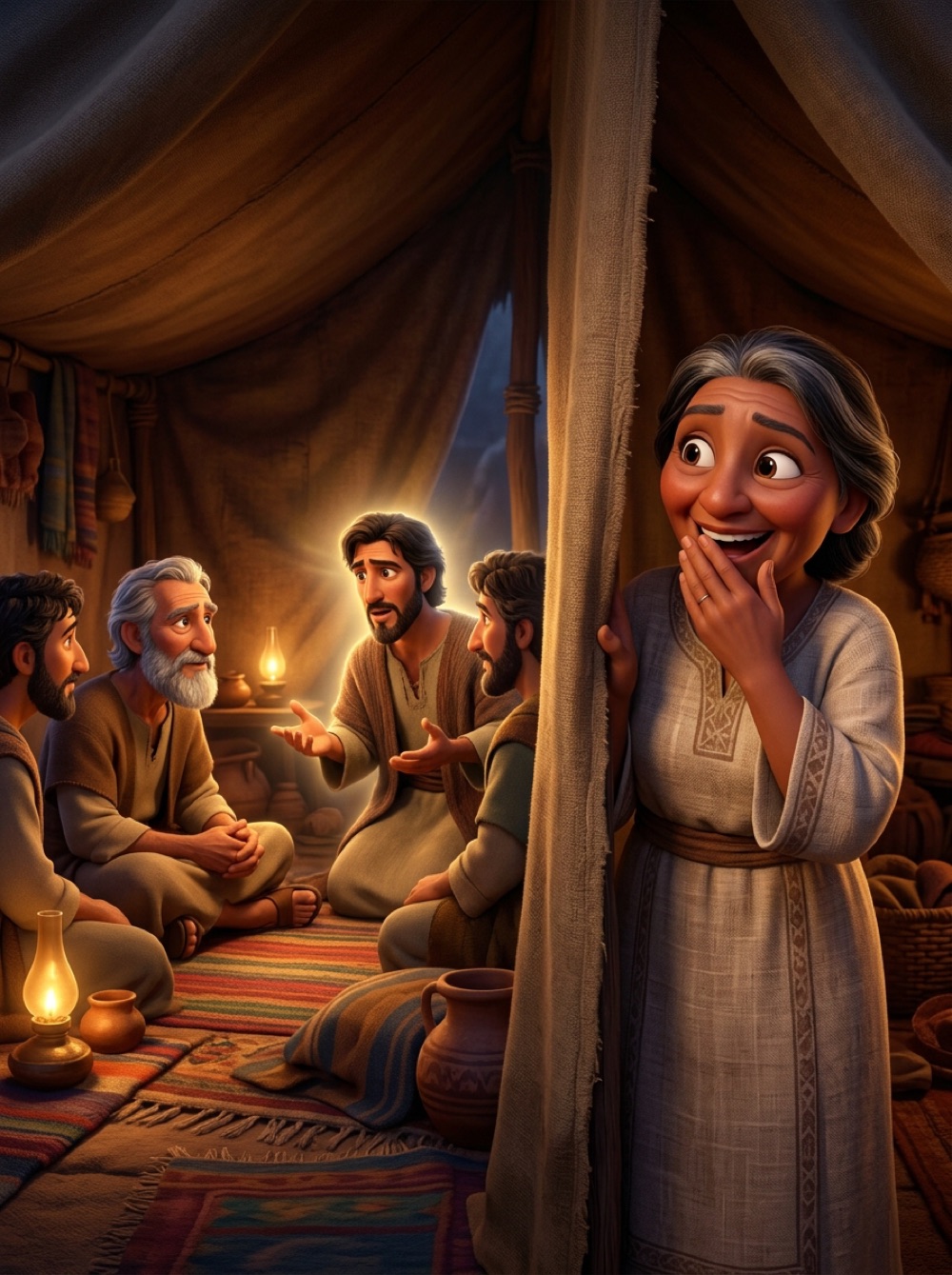
Sarah Laughs
One of the visitors asked, "Where is your wife Sarah?" Then he said something astonishing: "By this time next year, Sarah will have a son." Sarah was listening from inside the tent. She was ninety years old — and she laughed quietly to herself. It seemed impossible.
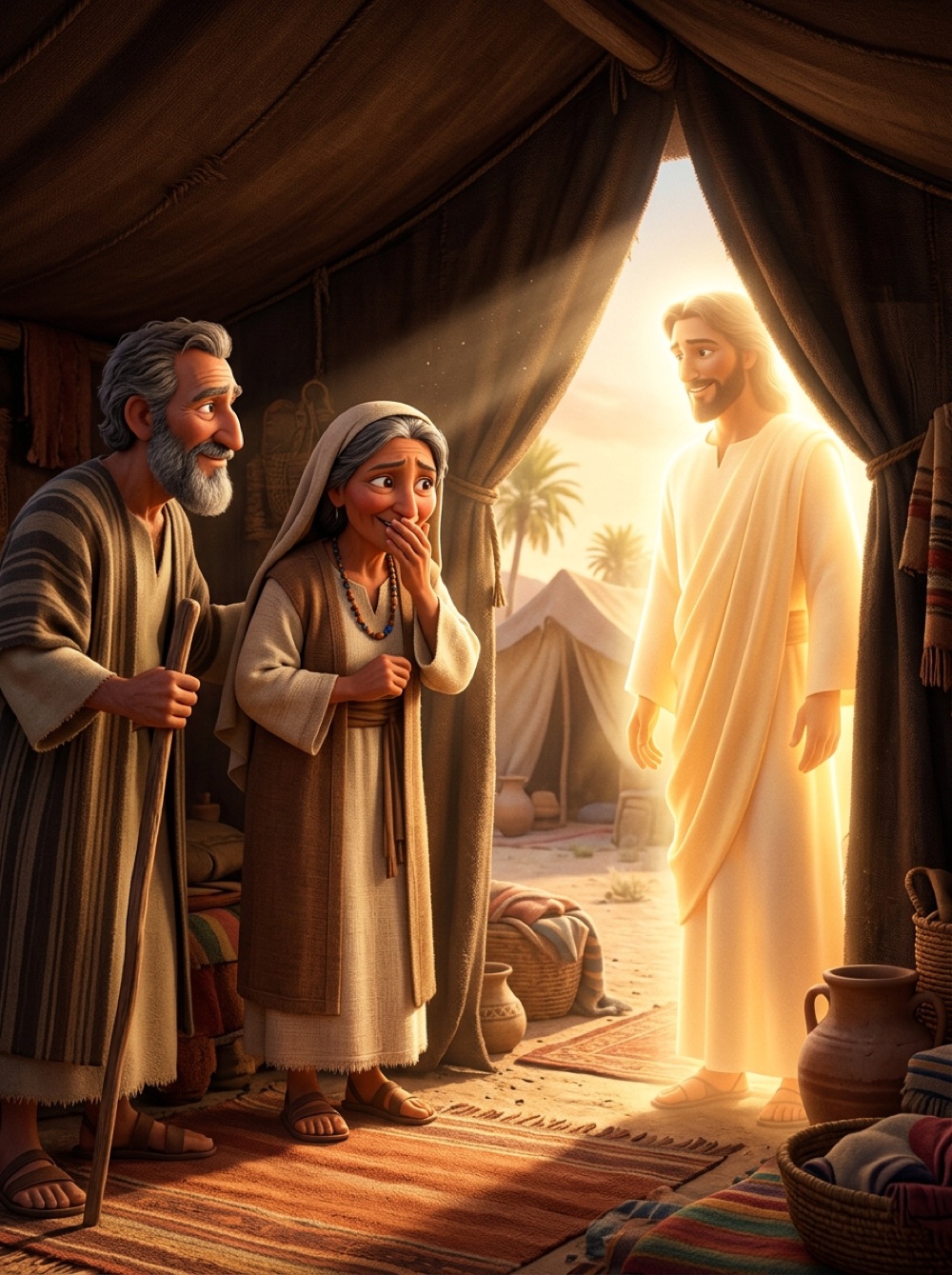
Is Anything Too Hard for God?
God heard Sarah laugh and asked Abraham, "Why did Sarah laugh? Is anything too hard for God?" Sarah was startled — she denied it, saying she hadn't laughed. But God said simply, "You did laugh." And then the visitors got up and left, heading toward Sodom.
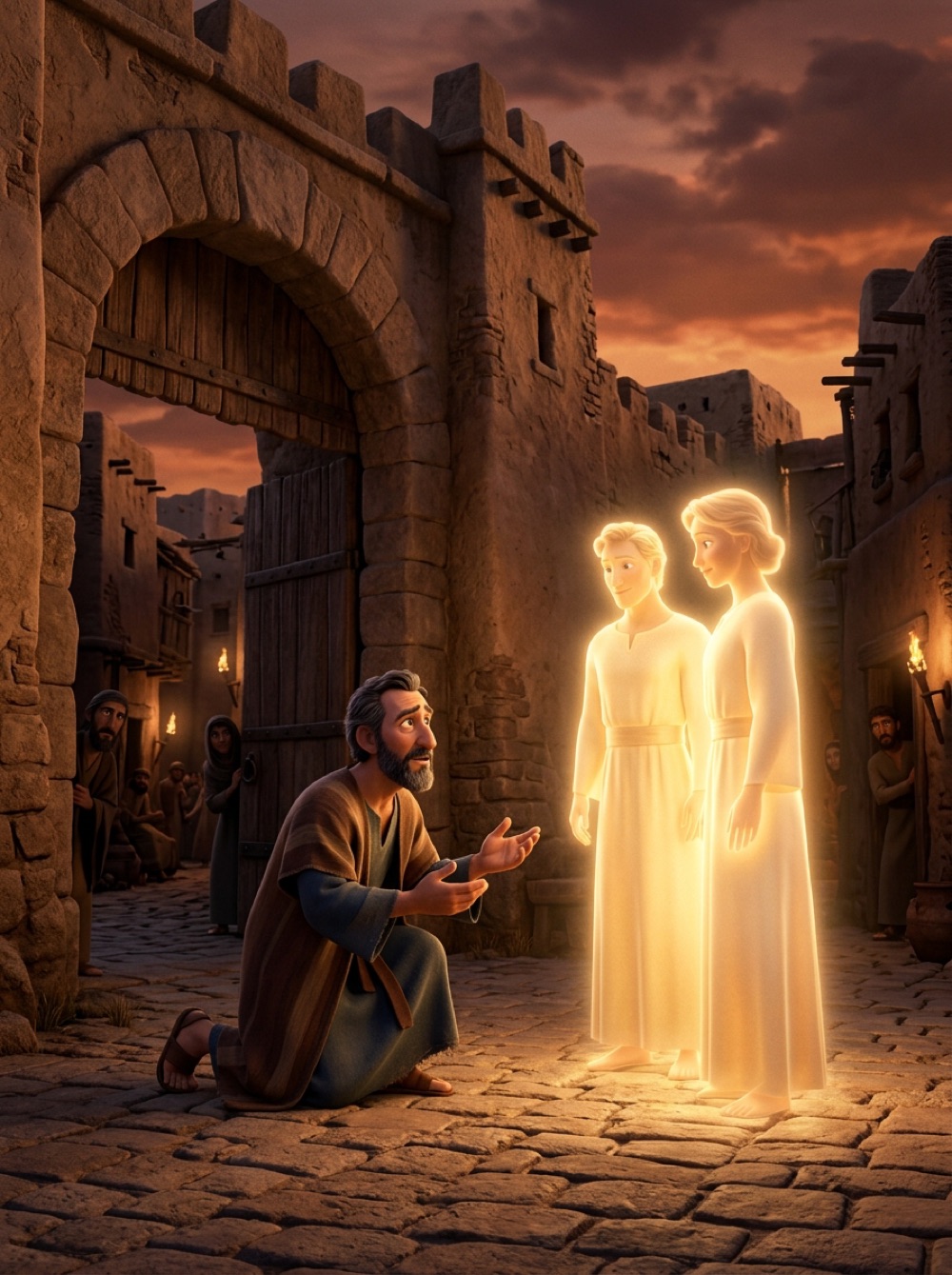
Angels in Sodom
Two of the visitors were actually angels, and they went to the city of Sodom, where Lot lived. Lot met them at the gate and begged them to stay at his house for the night, keeping them safe from the dangerous people of the city.
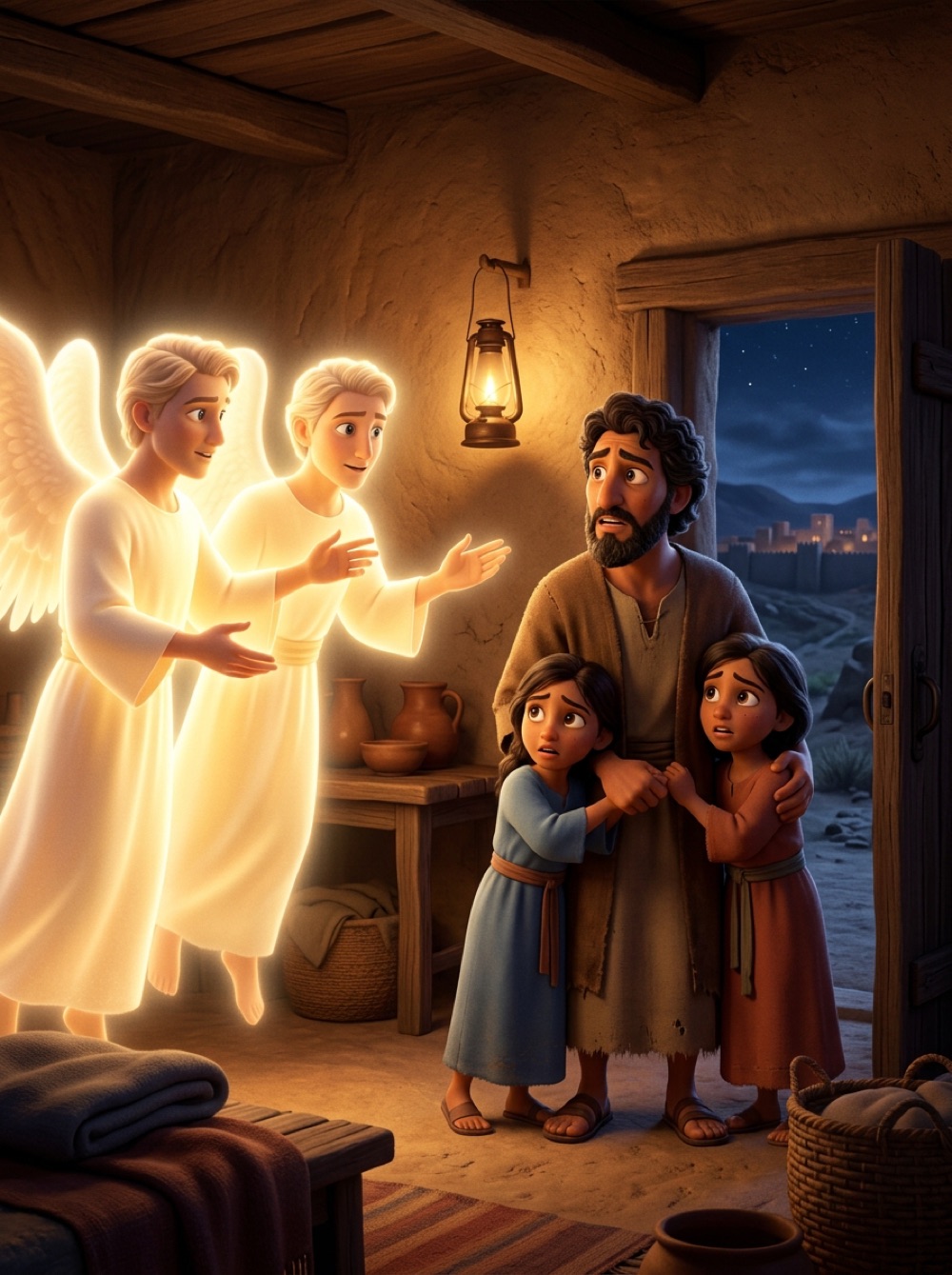
Time to Leave
The angels told Lot the truth: God was going to destroy Sodom because the people there had been doing terrible things for a very long time, and they had refused to change. "Get your family and go," the angels said urgently. "Leave now. Don't look back."
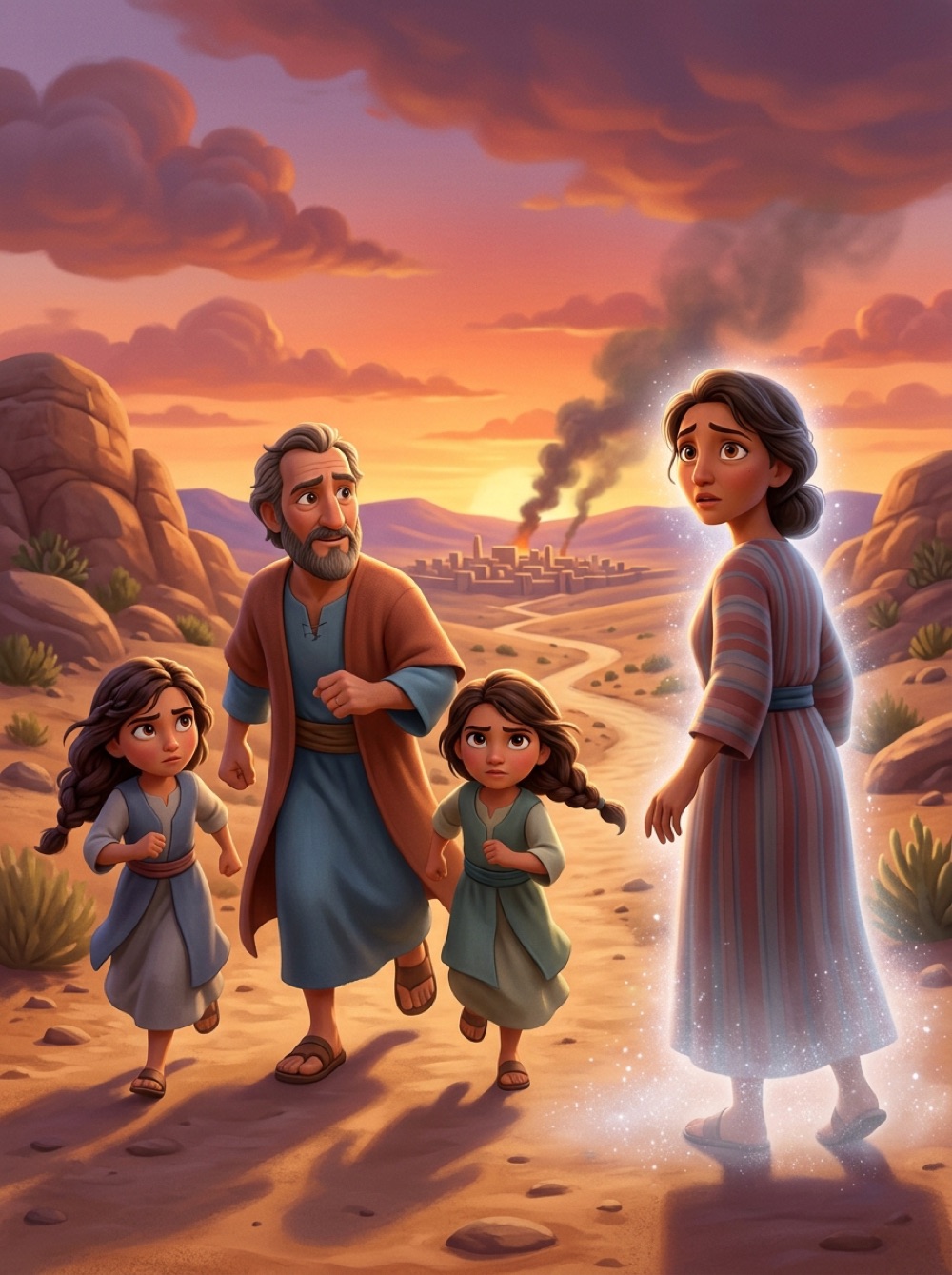
Run and Don't Look Back
Lot, his wife, and his two daughters ran as fast as they could out of the city. The angels had given them one clear instruction: don't look back. But Lot's wife couldn't help herself. She stopped and looked back at the city — and she turned into a pillar of salt.
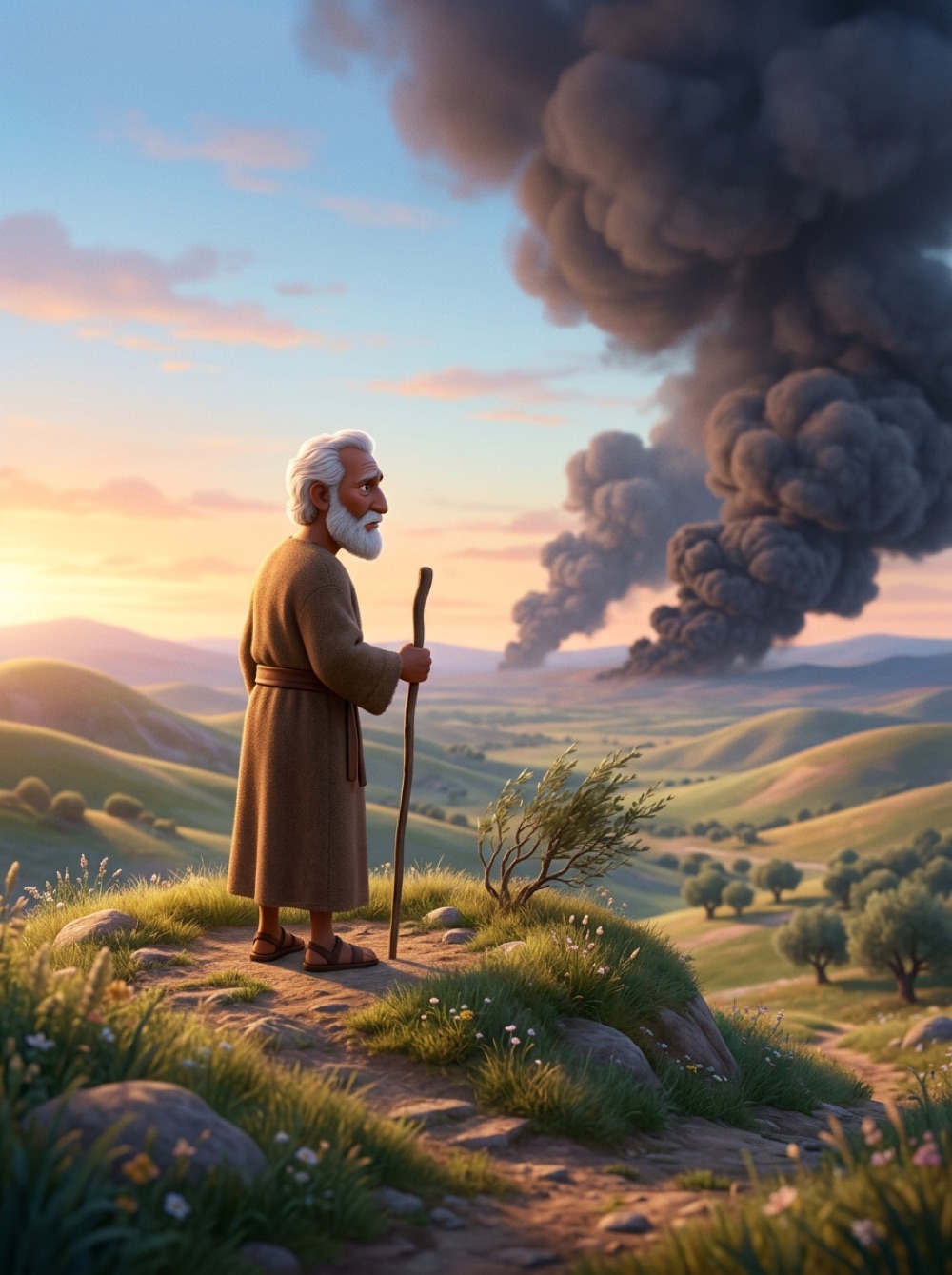
Sodom Is Destroyed
God rained fire and burning ash down on Sodom and the cities nearby, and they were completely destroyed. Abraham watched the thick smoke rising from far away. It was a serious reminder that God takes wrongdoing seriously — and that His warnings are always worth listening to.
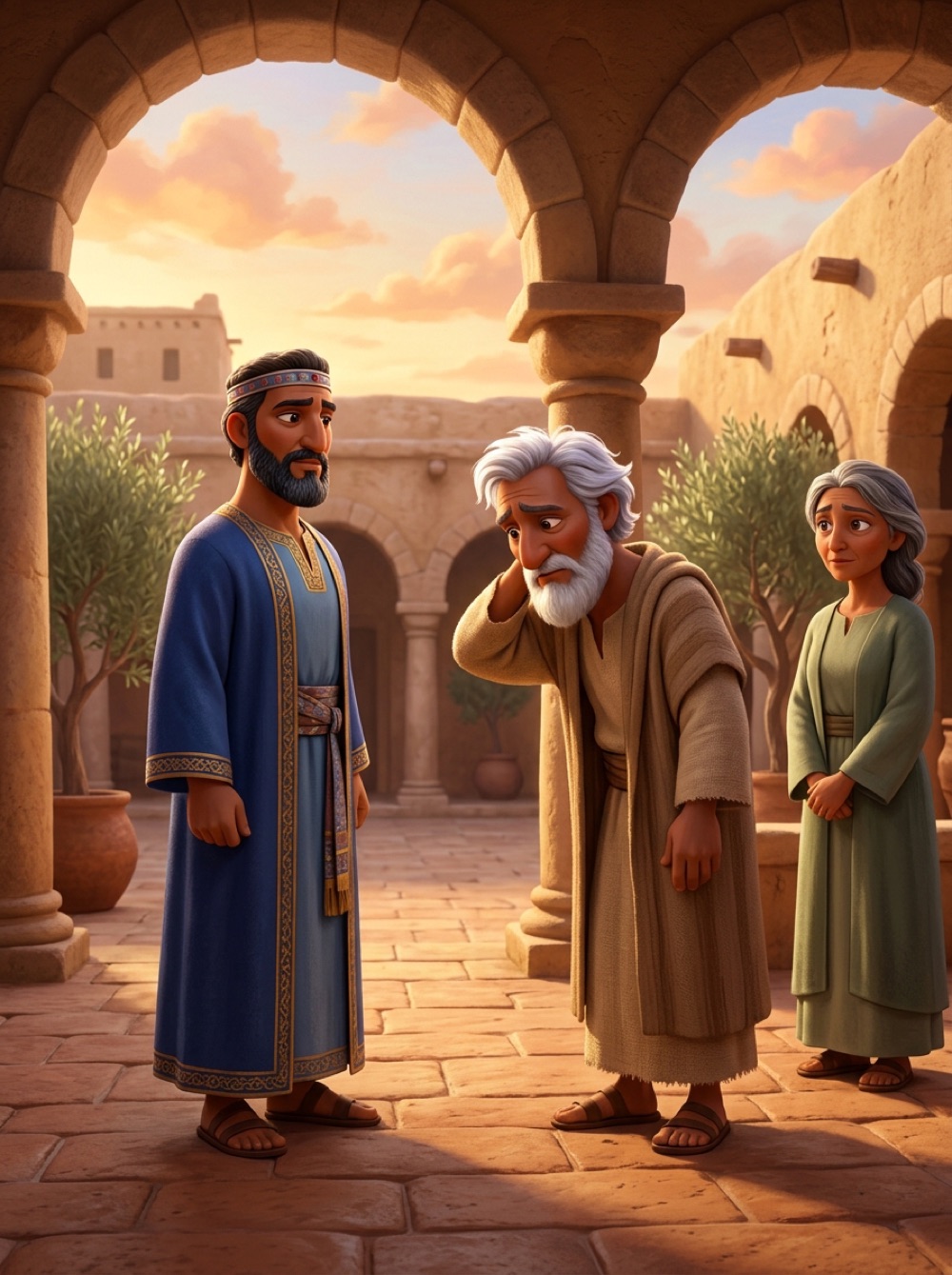
Abraham Makes the Same Mistake
Abraham traveled to a new region and made the same mistake he had made in Egypt — he told King Abimelech that Sarah was his sister, not his wife. Once again, fear made Abraham lie. But once again, God protected Sarah and corrected the situation before real harm could happen. God's patience with Abraham was extraordinary.

Isaac Is Born
Then it happened. Just as God had promised, Sarah became pregnant and gave birth to a son. Abraham was one hundred years old. Sarah was ninety. They named the baby Isaac, which means "laughter" — because after all the years of waiting, joy had finally arrived.
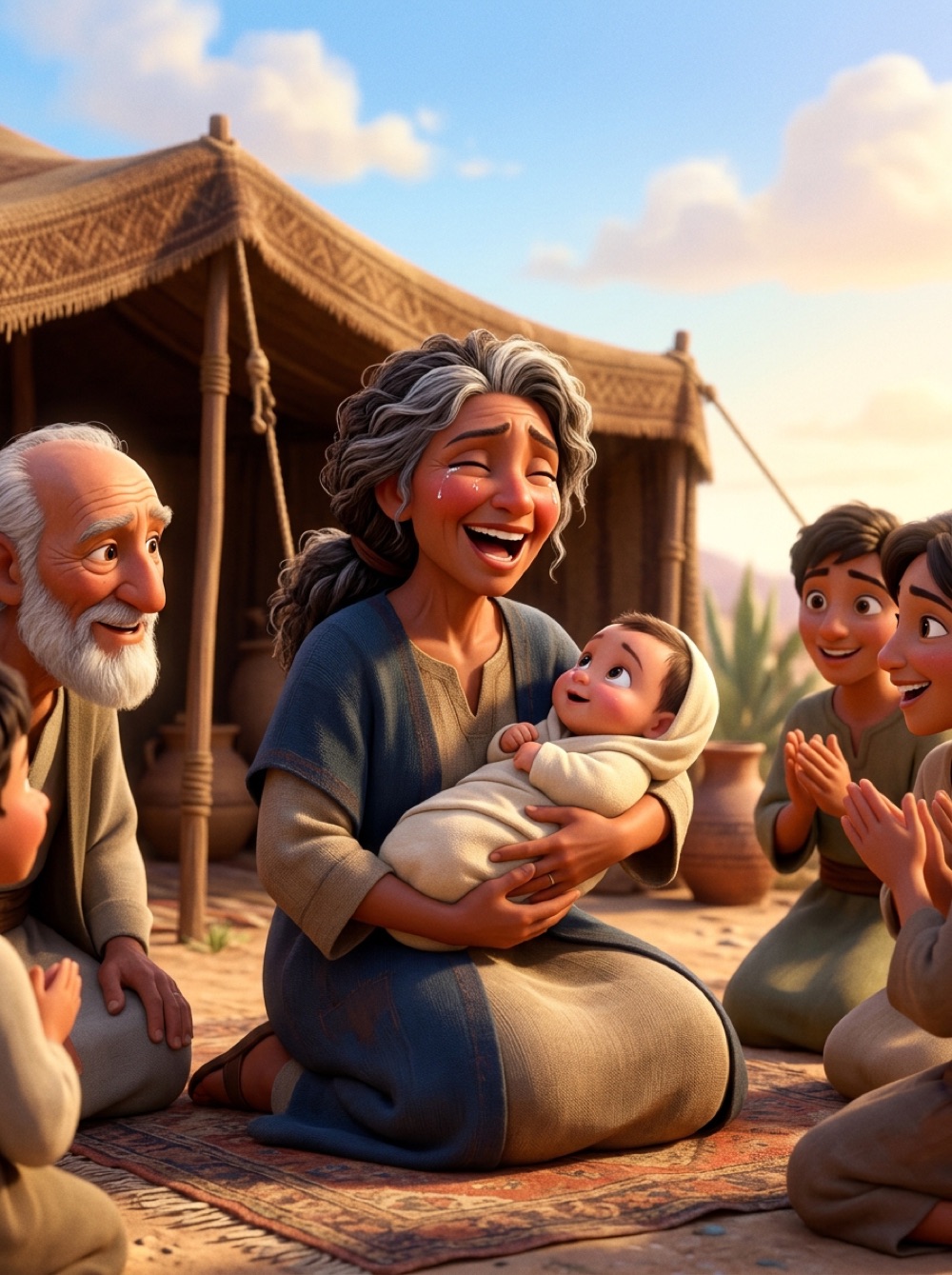
Sarah's Joy
Sarah held her baby boy and laughed — but this time it was a completely different laugh. Not the quiet disbelieving laugh from inside the tent. This was pure, overwhelmed, can't-quite-believe-it joy. "God has brought me laughter," she said, "and everyone who hears about this will laugh with me."
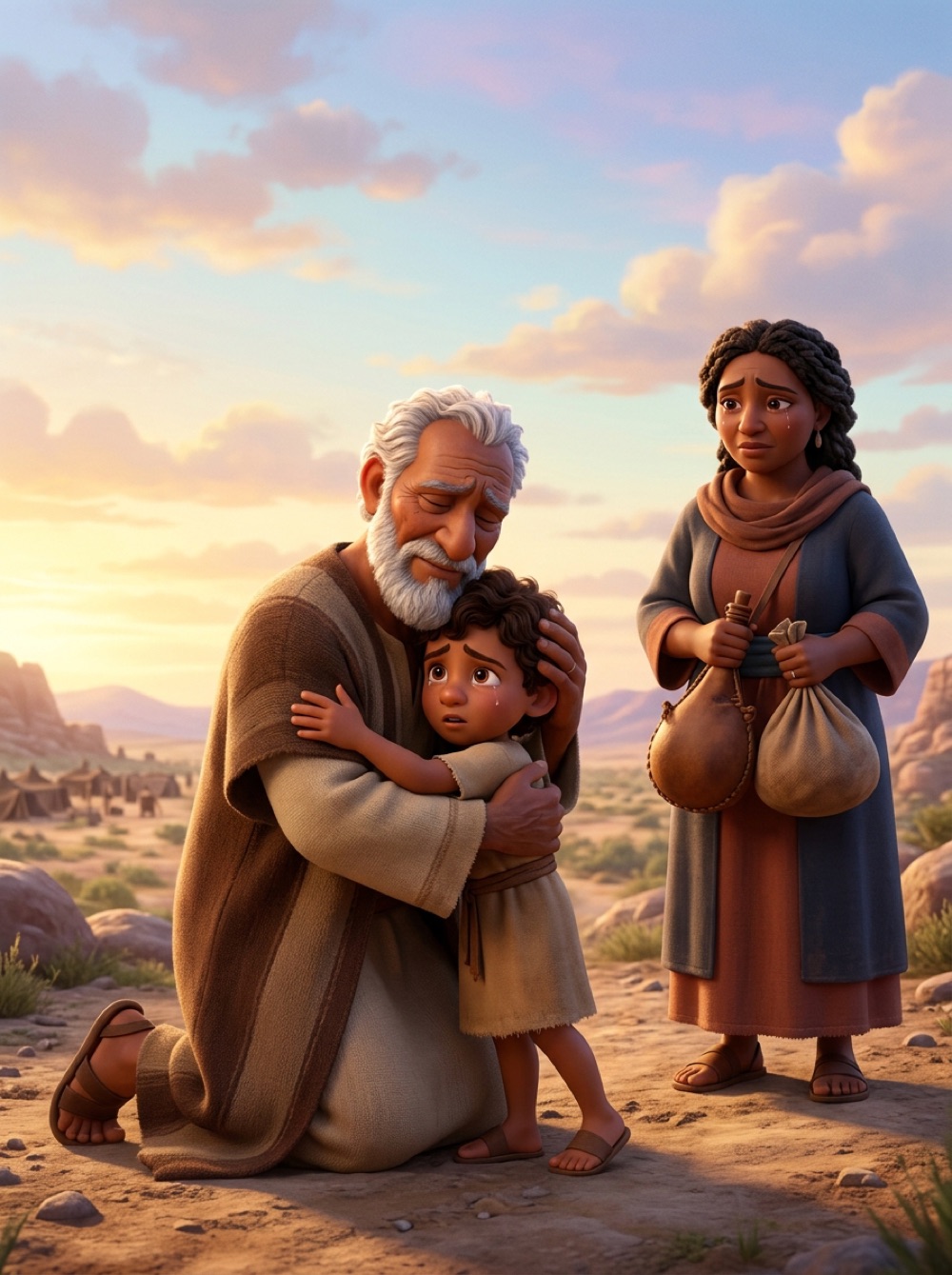
Hagar and Ishmael Are Sent Away
As Isaac grew, tension rose between Sarah and Hagar. Sarah asked Abraham to send Hagar and Ishmael away. It broke Abraham's heart — Ishmael was his son too. But God told Abraham to trust Him. "I will take care of Ishmael," God promised. "He will become a great nation too."
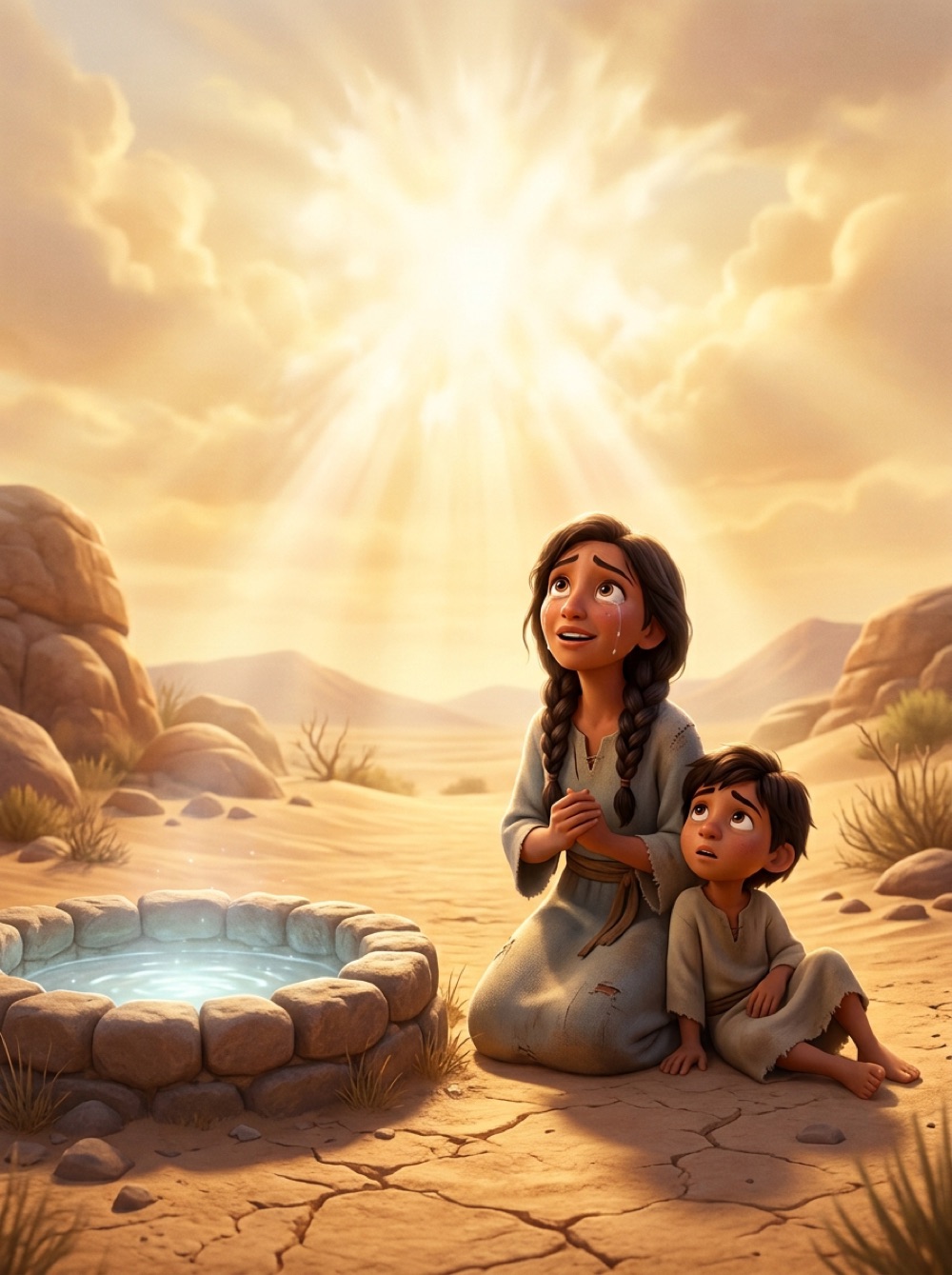
God Provides for Hagar Again
Hagar and Ishmael wandered in the desert until their water ran out. Hagar sat down and wept, certain they would die. But God heard Ishmael crying and called out to Hagar. "Do not be afraid," God said — and opened her eyes to see a well of water right nearby.
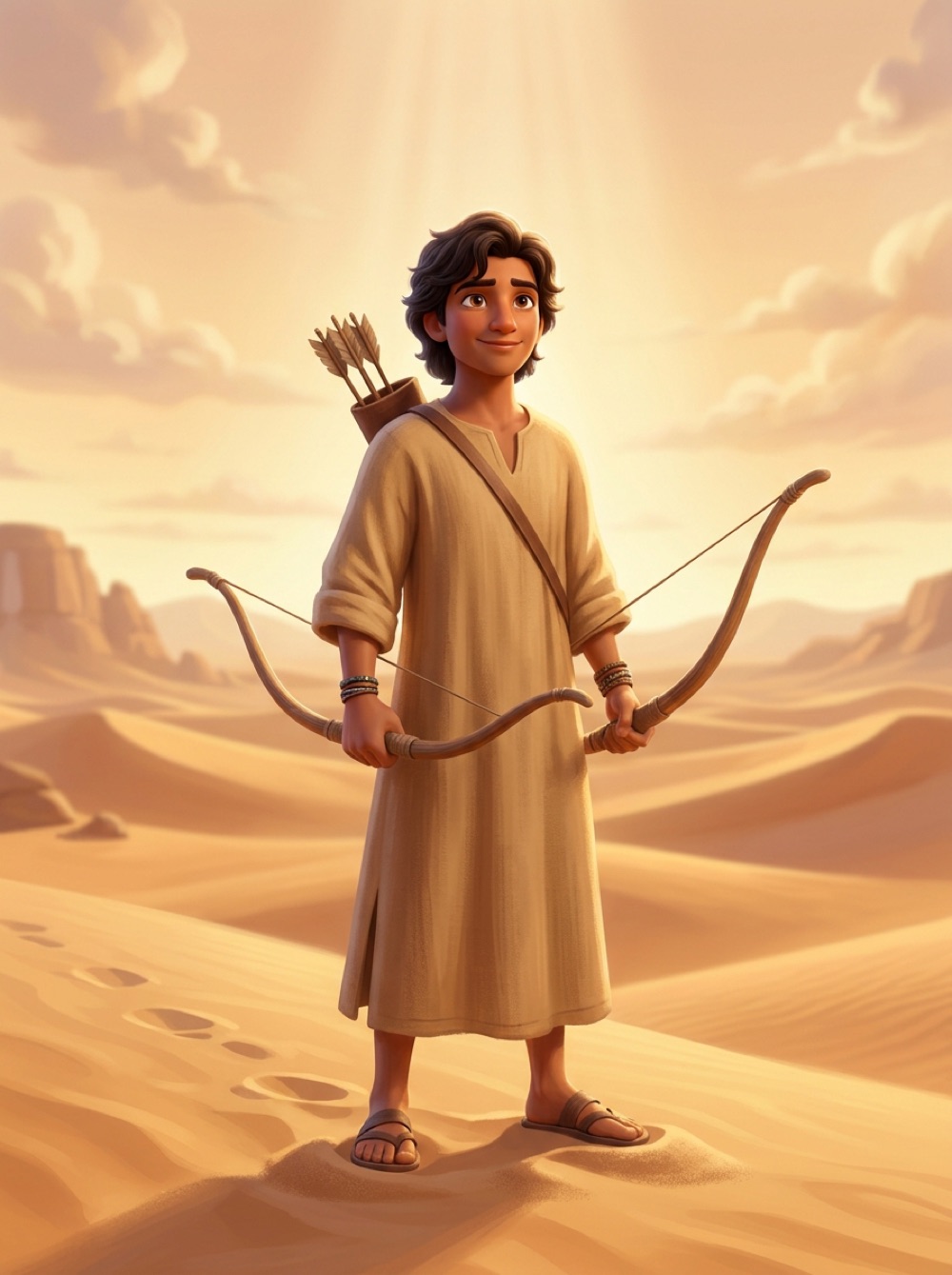
God Was With the Boy
Ishmael grew up in the desert, and God was with him. He became a skilled archer and built a life of his own. God had made a promise about Ishmael too — and God keeps every promise He makes, to every person He makes them to.
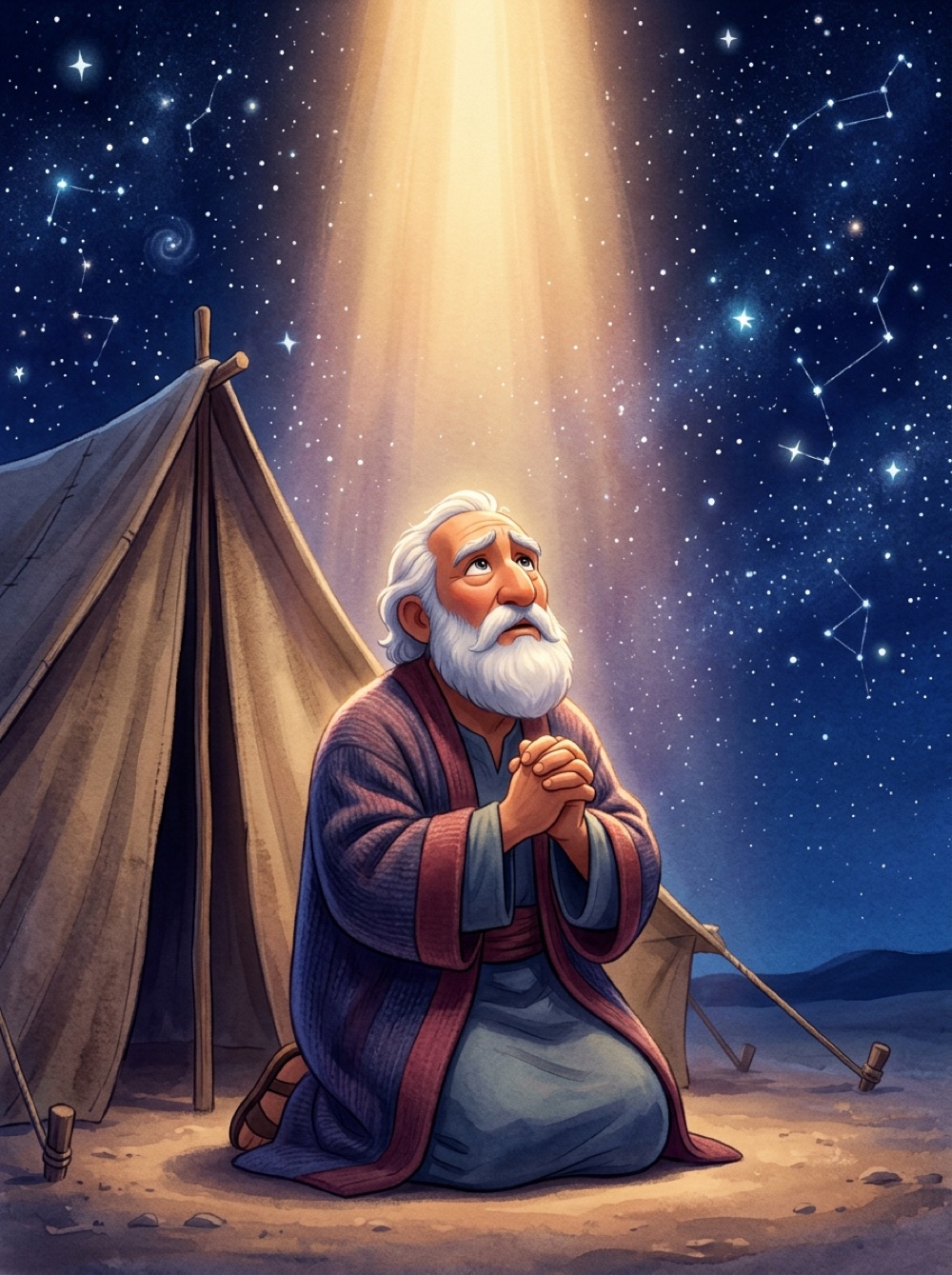
The Hardest Test
One day God called out to Abraham, and Abraham answered, "Here I am." Then God said something that must have felt like a knife to Abraham's heart. "Take your son Isaac — the son you love — and go to the mountain I will show you. Offer him there as a sacrifice to me."
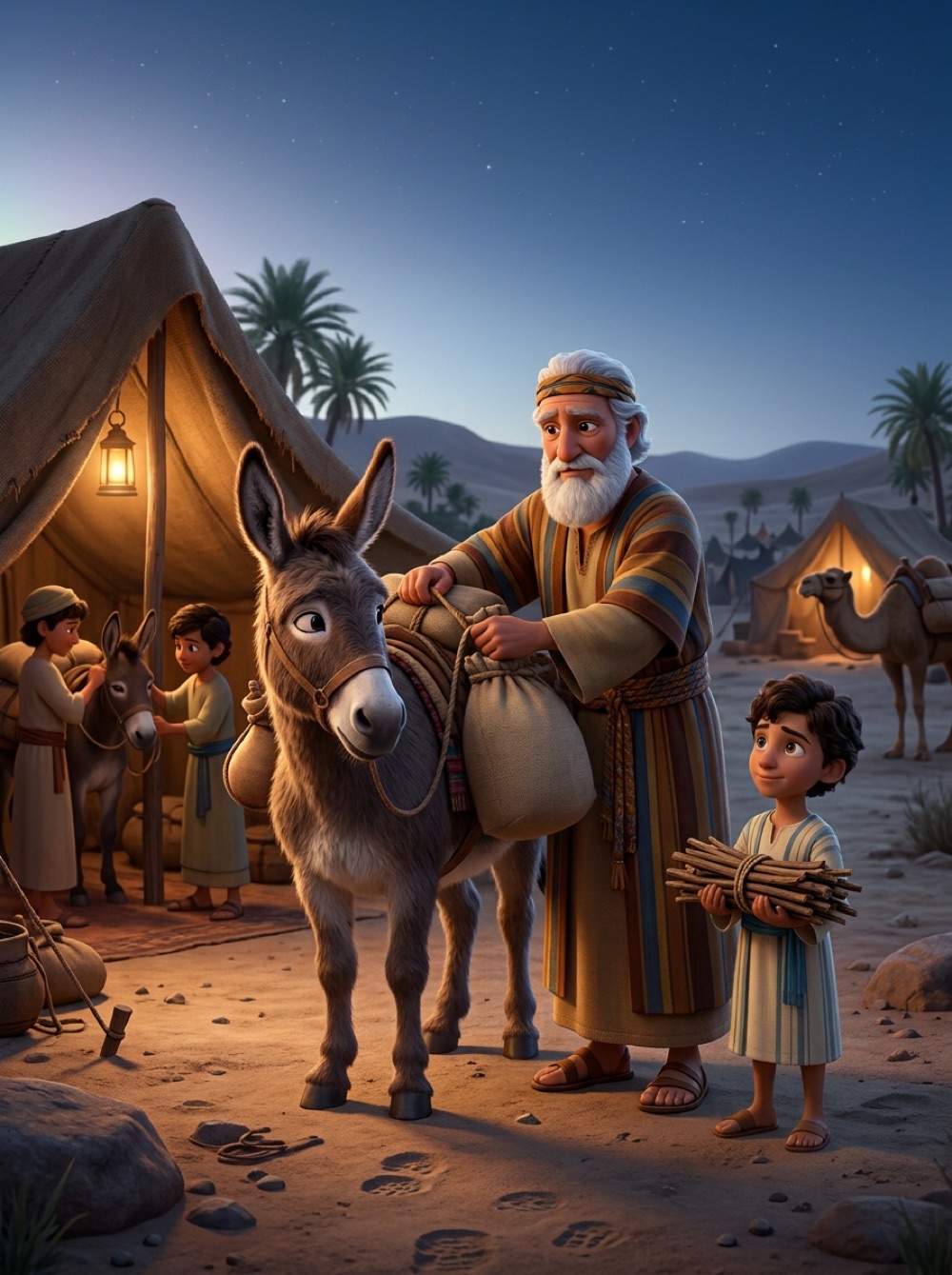
Abraham Obeys Again
Abraham got up early the next morning. He didn't argue. He didn't bargain. He packed wood, took two servants and Isaac, and set out for the mountain God had named. Whatever was happening, Abraham had learned one thing deeply — God could be trusted completely.

Just the Two of Them
On the third day, Abraham saw the mountain ahead. He told his servants to wait with the donkey. Then he said something remarkable — "The boy and I will go up and worship, and then we will come back to you." Abraham believed God would somehow make it right.
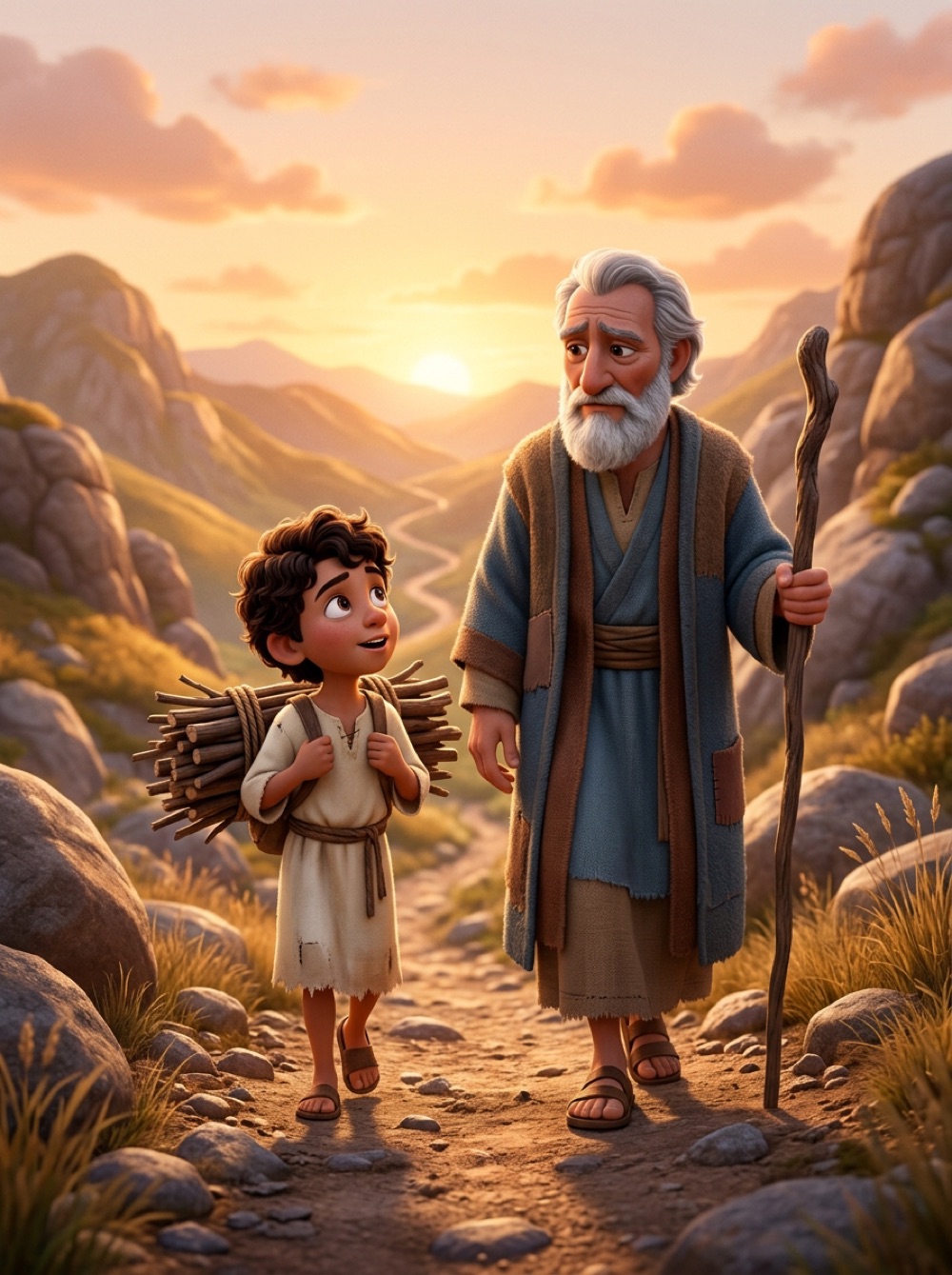
Isaac's Question
As they walked up the mountain together, Isaac carried the wood and Abraham carried the fire. Isaac looked around and asked quietly, "Father, we have the wood and the fire — but where is the lamb for the offering?" Abraham answered simply, "God Himself will provide the lamb, my son."
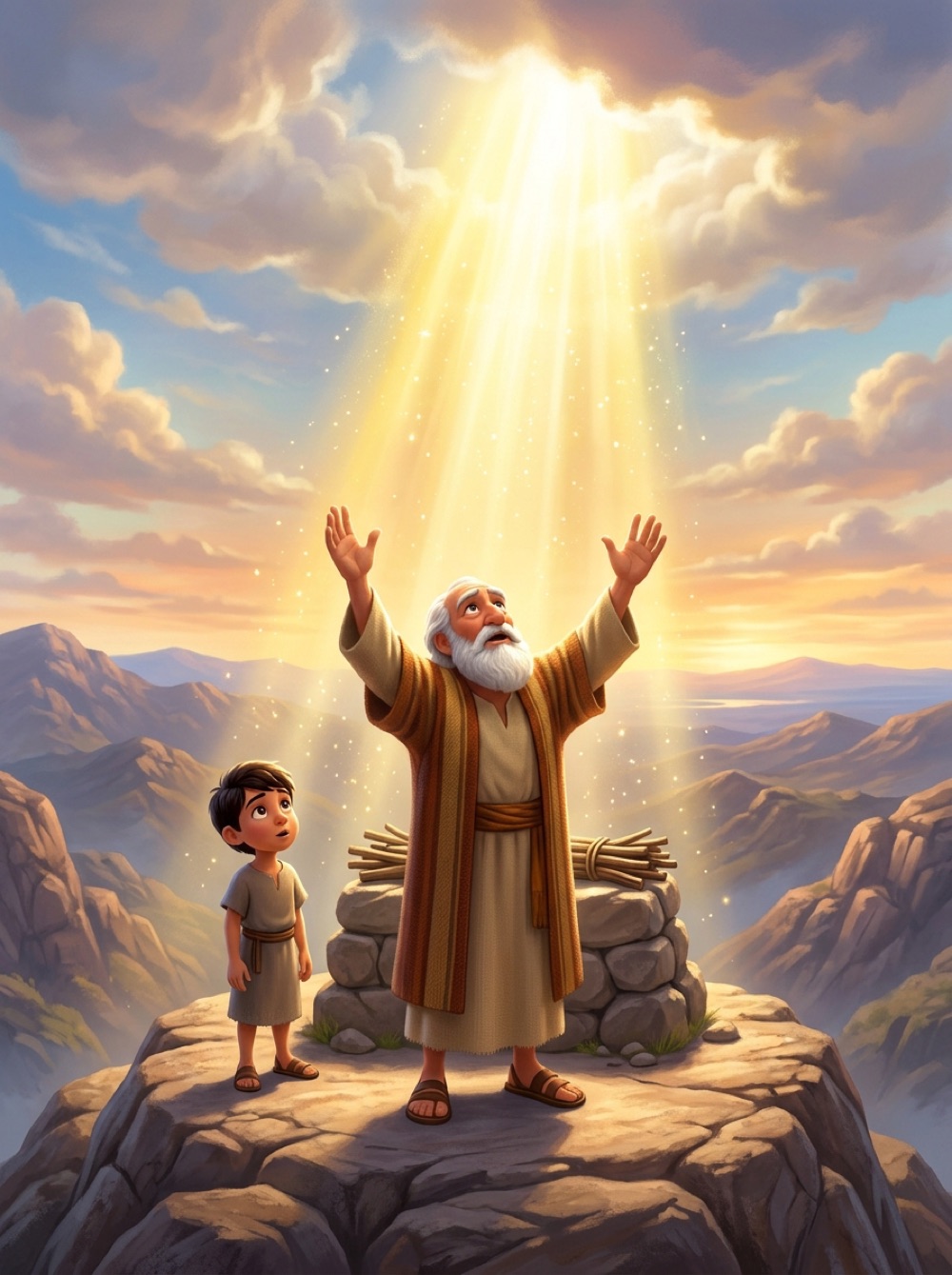
God Stops Abraham
Abraham built the altar and laid Isaac on it. He raised his hand — and in that moment, God called out from heaven. "Abraham! Abraham! Stop. Do not harm the boy. Now I know that you truly trust me — you held nothing back from God, not even your beloved son."
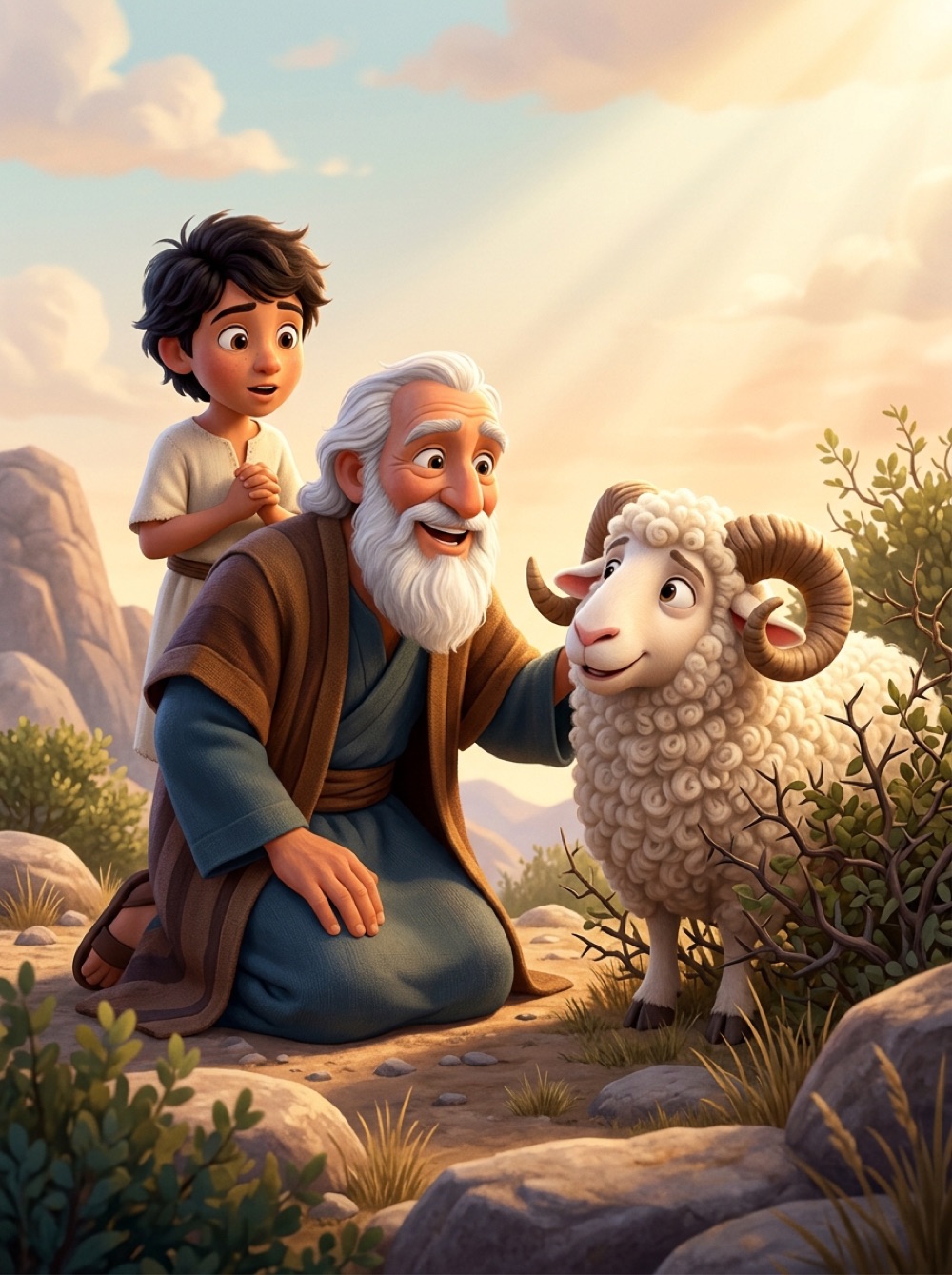
The Ram in the Thicket
Abraham looked up and saw a ram caught by its horns in a nearby bush. God had provided the offering. Abraham took the ram and offered it in place of Isaac. He named that place "The Lord Will Provide" — because on that mountain, God had done exactly that.

The Promise, One More Time
God spoke to Abraham again from heaven. "Because you did not hold back your son, I will bless you beyond measure. Your descendants will be as many as the stars in the sky and the sand on the seashore. Through your family, every nation on earth will be blessed." Abraham had passed the greatest test.
Sarah Dies
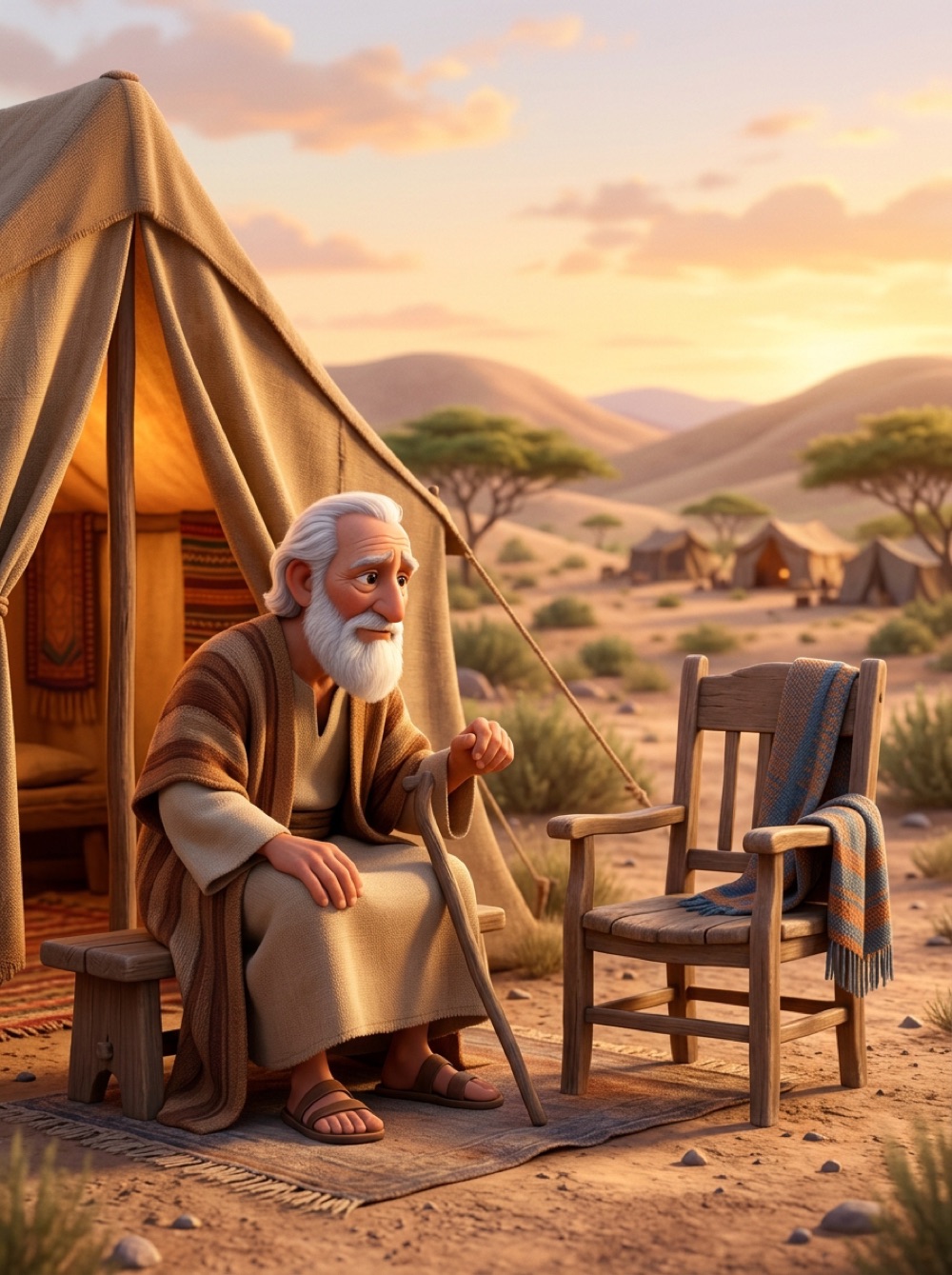
Sarah lived to be one hundred and twenty-seven years old. When she died, Abraham wept for her. She had walked every step of the journey with him — from Haran to Canaan, through Egypt, through the long years of waiting, all the way to holding Isaac in her arms. She had been faithful to the end.
A Resting Place
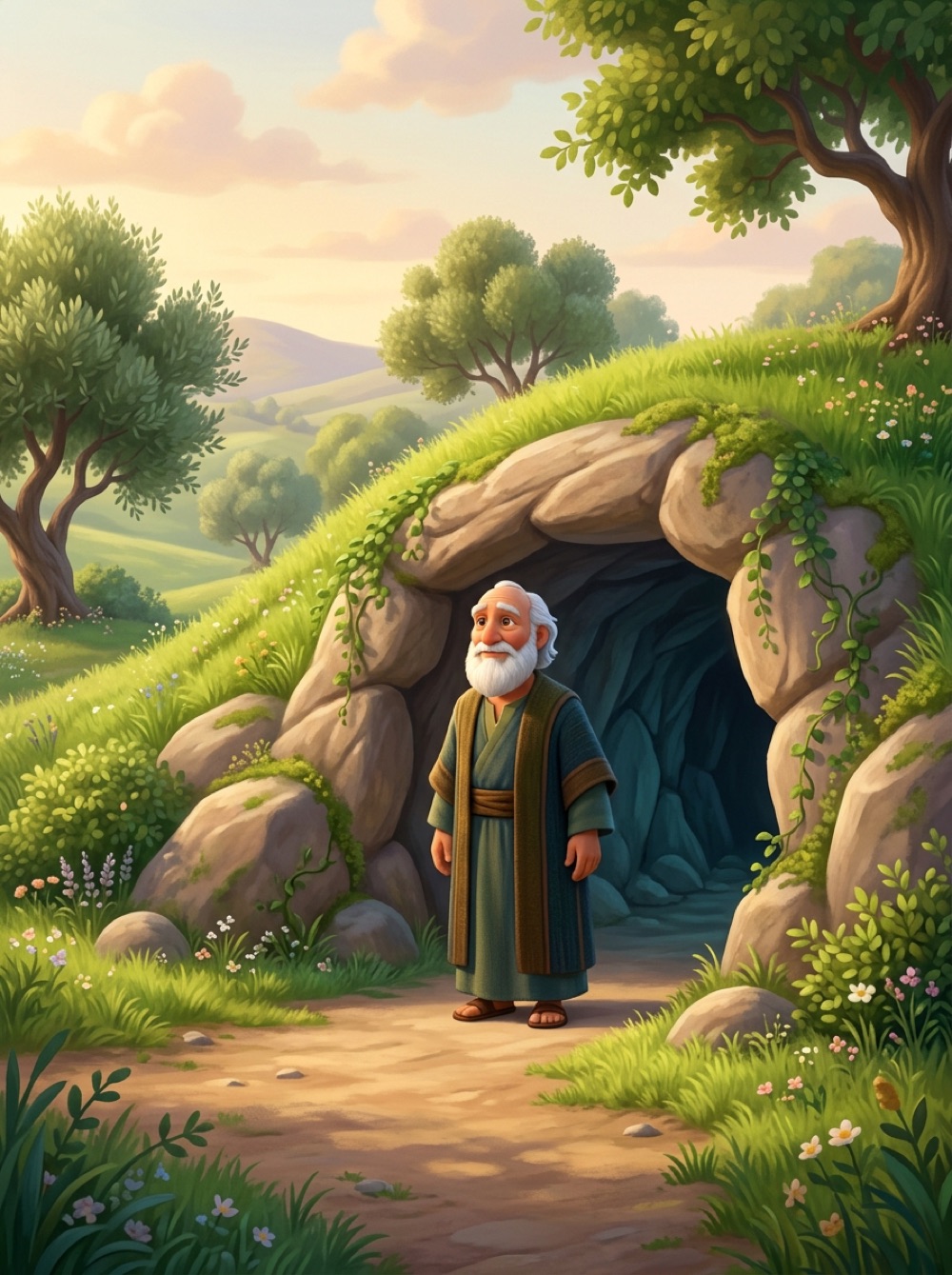
Abraham bought a field with a cave in it to bury Sarah. He paid the full price for it, refusing to take it as a gift. This small piece of land was the first part of Canaan that actually belonged to Abraham's family — a quiet but real beginning of the promise coming true.
A Wife for Isaac
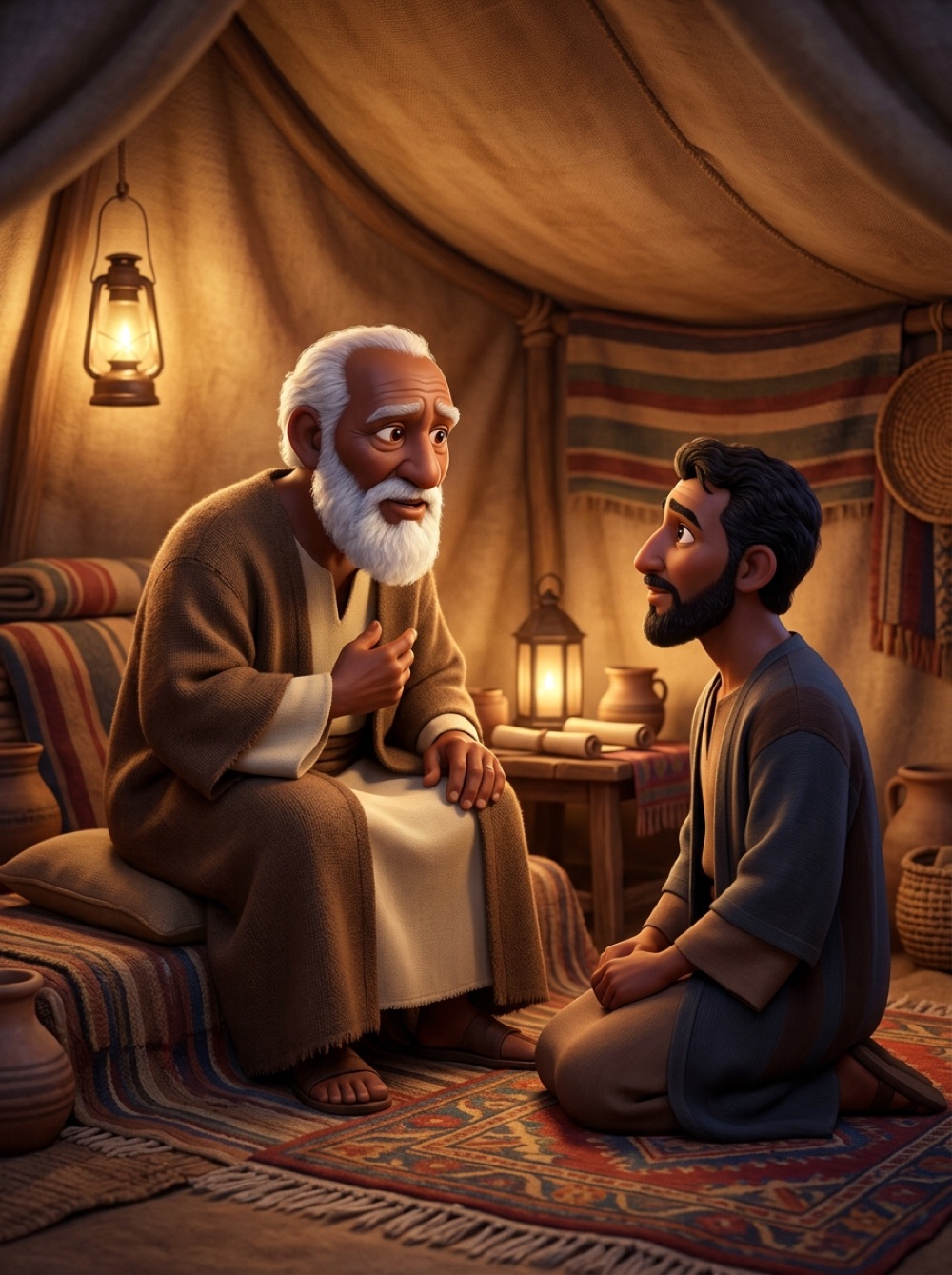
Abraham was old, and his son Isaac still had no wife. So Abraham called his most trusted servant and gave him an important mission. "Go back to the land where I grew up," he said, "and find a wife for my son Isaac from among my own family there."
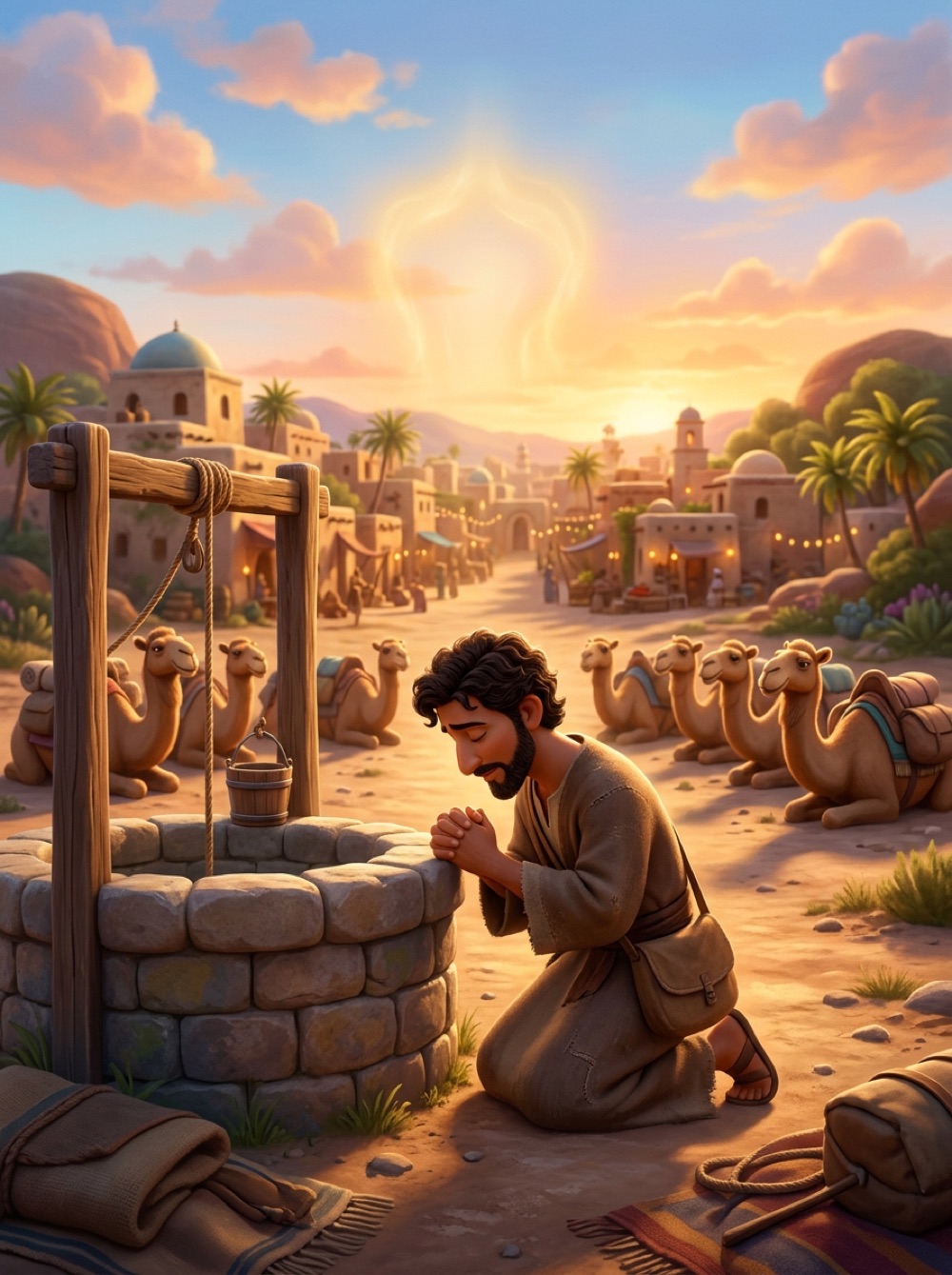
The Servant's Prayer
The servant traveled far with ten camels loaded with gifts. When he arrived at the town well, he stopped and prayed. "Lord, show me which young woman is the right one for Isaac. Let her be the one who offers water to me and to my camels too." It was a specific, trusting prayer.
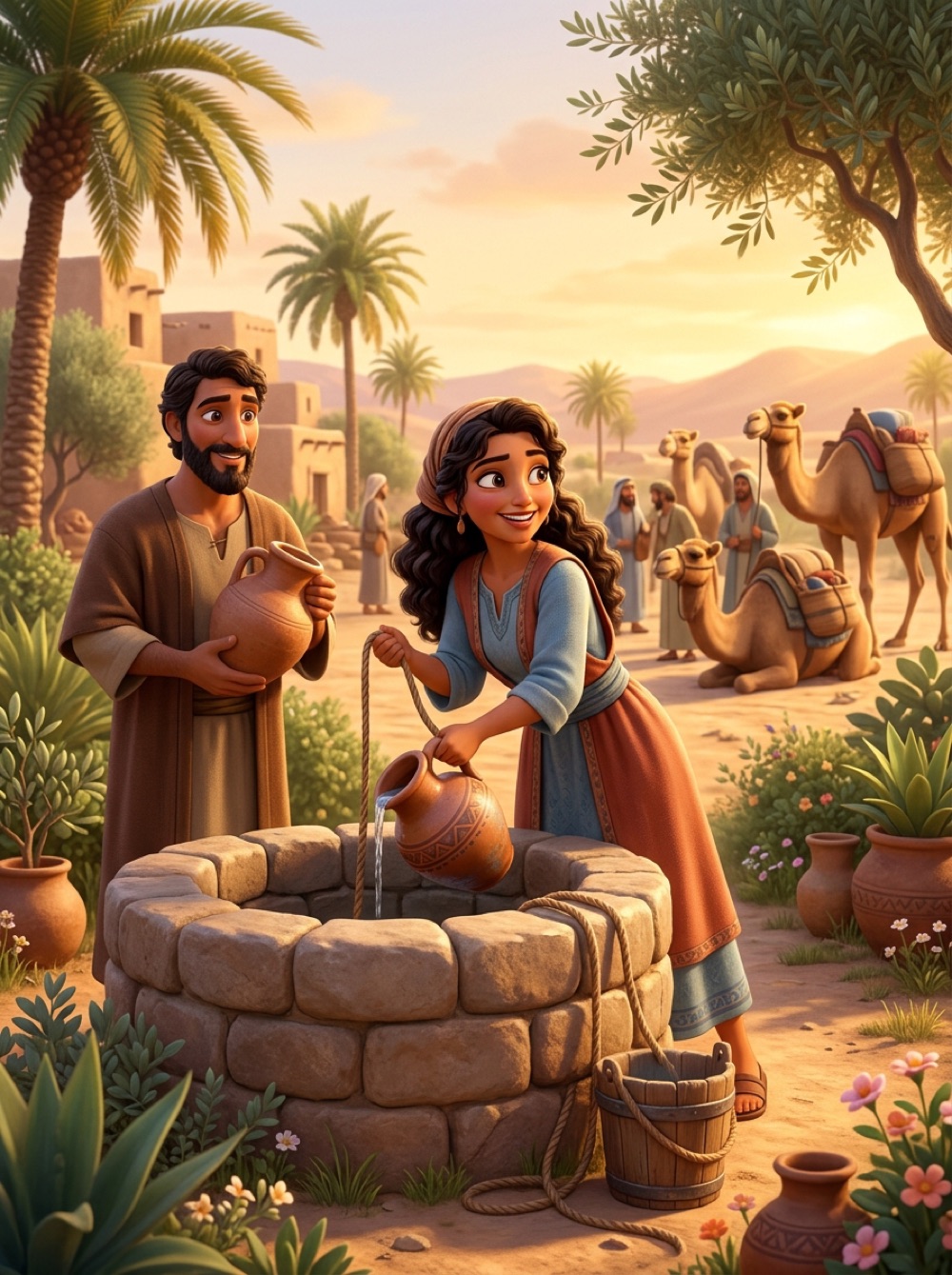
Rebekah at the Well
Before the servant had even finished praying, a young woman named Rebekah came to the well to draw water. She was kind and hardworking, with a warm and generous spirit. The servant asked her for water — and she gave him some, then offered to water all ten of his camels too.
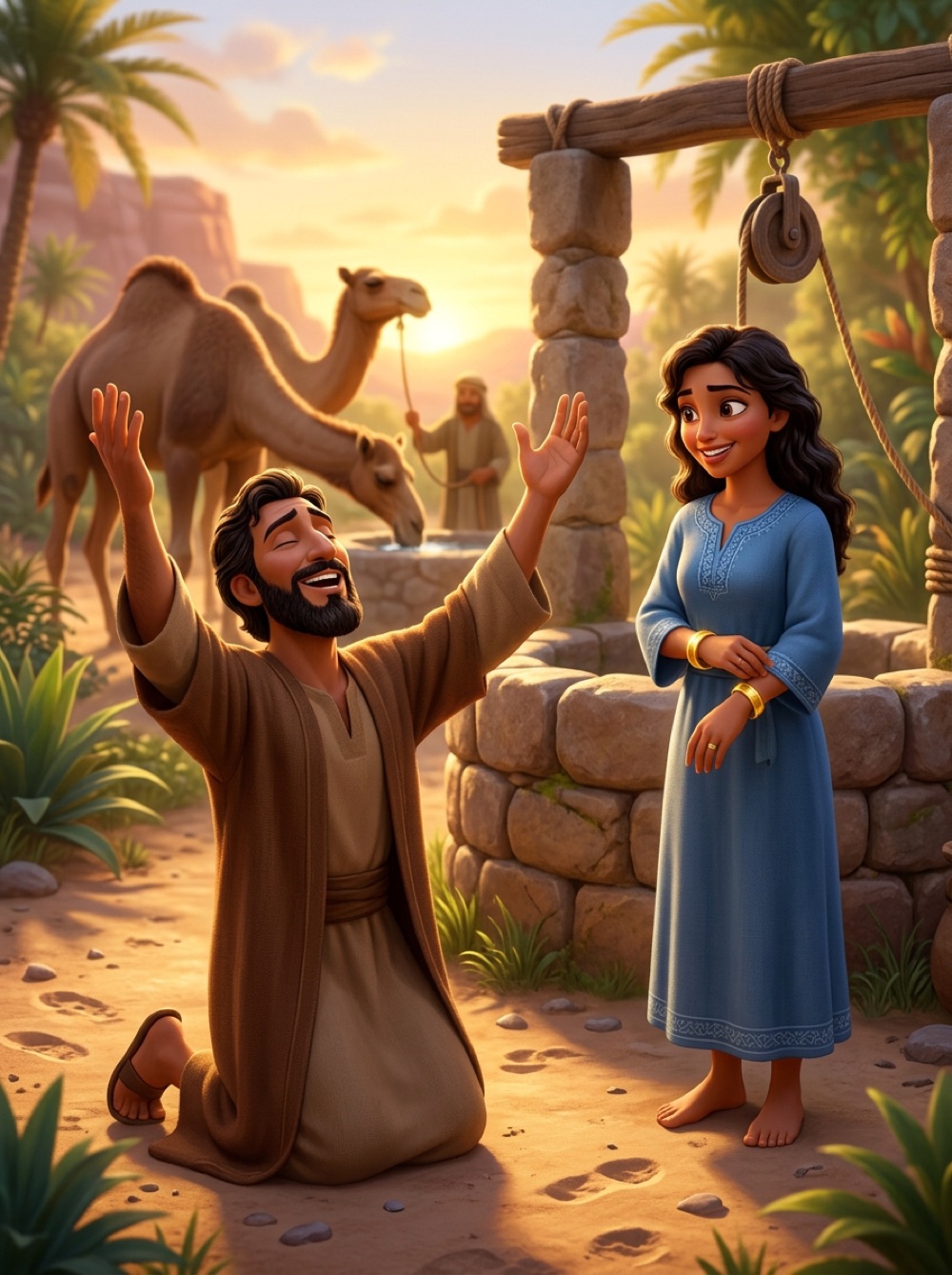
God's Perfect Timing
The servant watched in amazement as Rebekah watered all ten camels without being asked twice. He gave her gold jewelry as a gift and asked whose daughter she was. When she answered, the servant bowed his head and worshipped God right there at the well. God had answered before he had even finished asking.
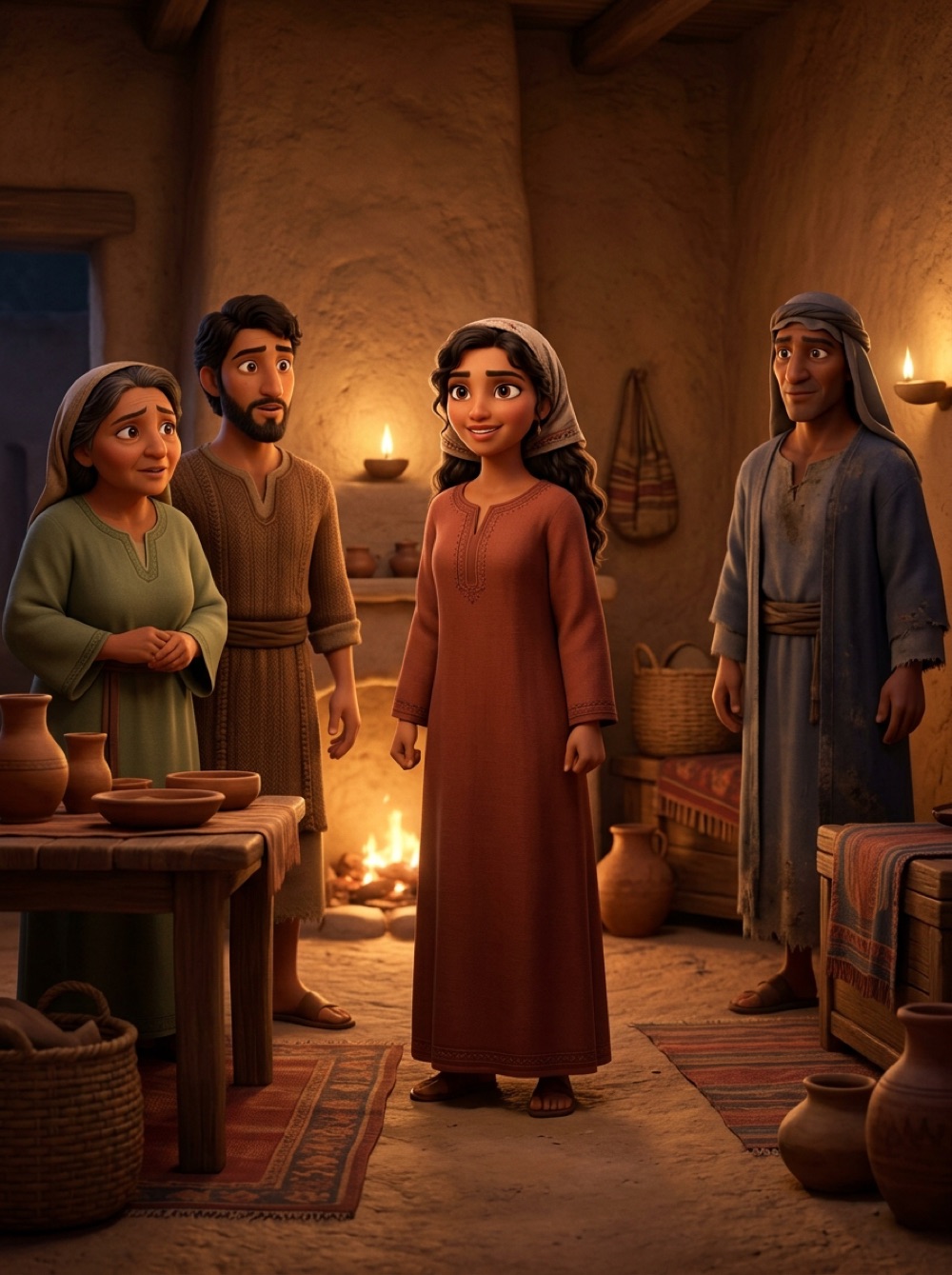
Rebekah Says Yes
The servant told Rebekah's family everything — the mission, the prayer, the camels, the perfect timing. Her family listened and said, "This is clearly from God. Take Rebekah." Then they asked Rebekah herself. She could have said no and stayed home. But Rebekah said simply, "I will go."
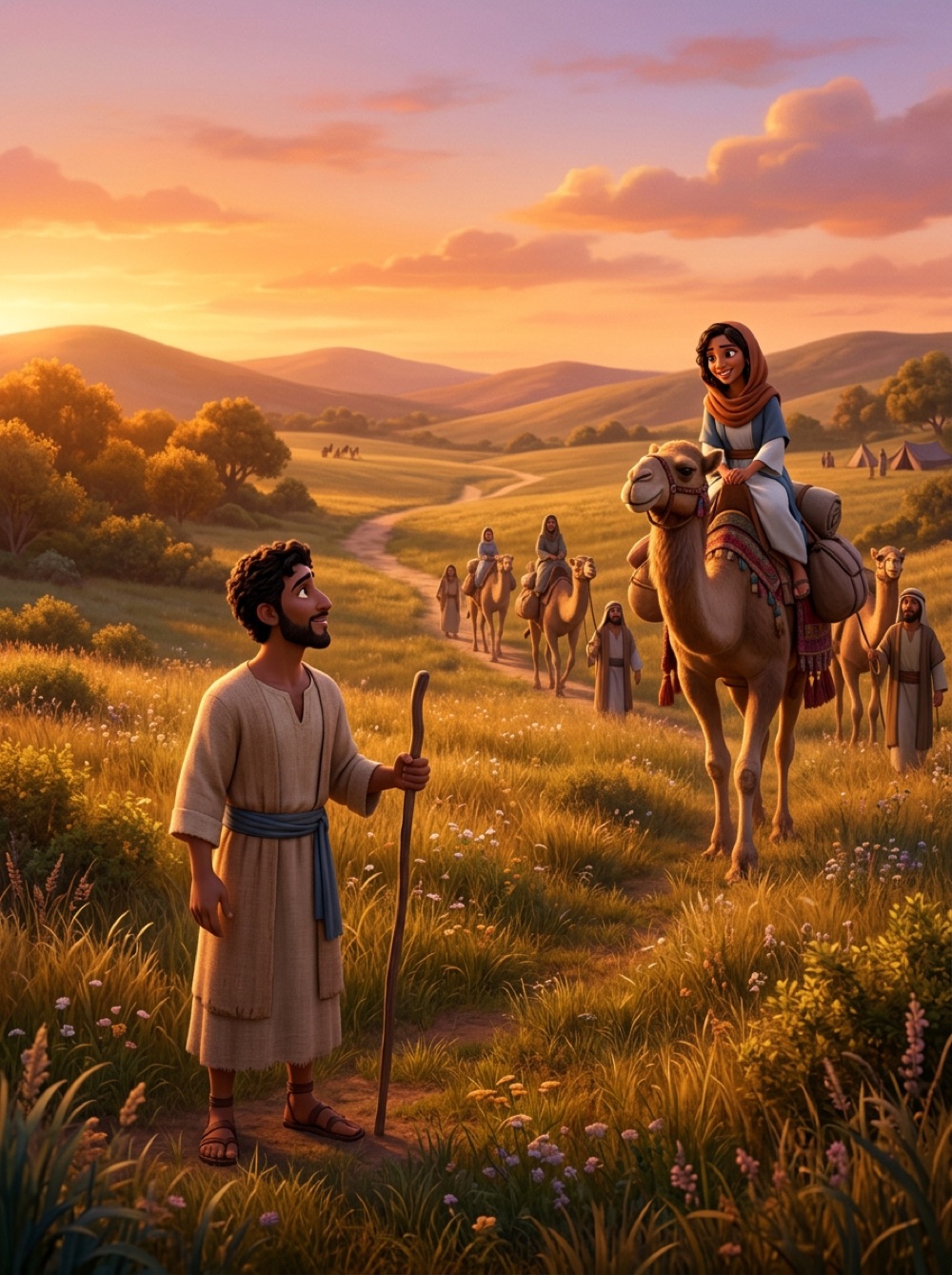
Isaac and Rebekah
Isaac was walking in the fields at evening when he saw the camels coming in the distance. Rebekah saw him too and asked who he was. When she heard it was Isaac, she covered her face with her veil. Isaac welcomed her into his family, and he loved her. And Isaac was comforted after his mother's death.
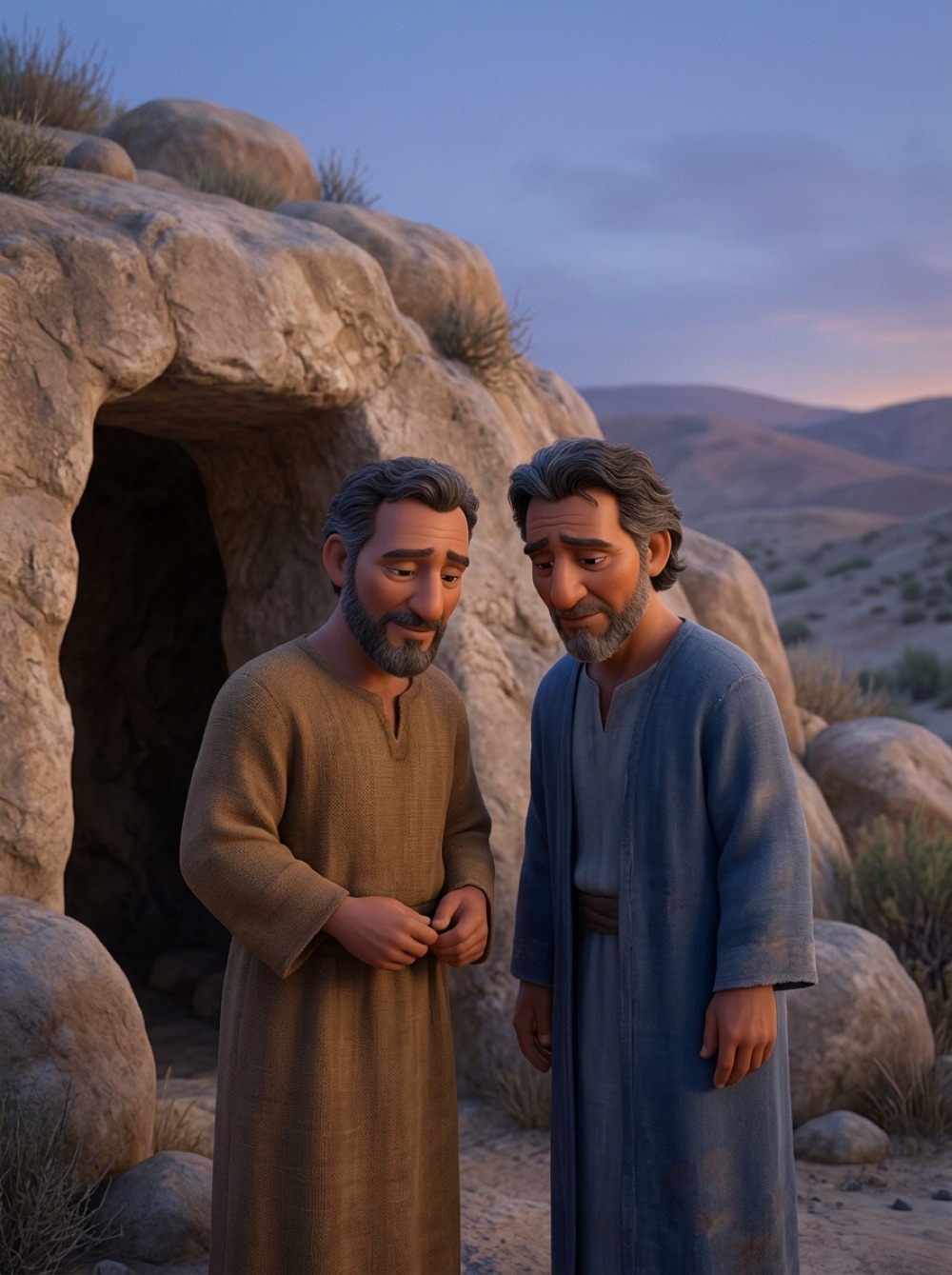
Abraham's Long Life Ends
Abraham lived to be one hundred and seventy-five years old. When he died, his sons Isaac and Ishmael buried him together beside Sarah in the cave he had bought in Canaan. He had trusted God with everything — his home, his family, his future — and God had kept every single promise.

Twin Boys
Isaac and Rebekah waited many years for children of their own. Isaac prayed for his wife, and God answered. Rebekah became pregnant with twins — two boys who seemed to be wrestling even before they were born. God told Rebekah that these two boys would become two great nations.

Esau and Jacob
The first baby born was red and covered in hair. They named him Esau. Right behind him came his brother, grabbing Esau's heel as if already trying to get ahead. They named him Jacob. Esau grew up to love hunting outdoors. Jacob was quieter, preferring to stay close to home.

A Bowl of Soup
One day Esau came home from hunting, exhausted and starving. Jacob had just made a pot of lentil soup. "Give me some of that soup!" Esau said. Jacob saw an opportunity. "Trade me your birthright first," he said. The birthright meant being the firstborn son — with all its honor and blessing.

Esau's Terrible Trade
"What good is a birthright if I'm dying of hunger?" Esau said — and he traded away his birthright for a single bowl of soup. It was the worst trade anyone ever made. Esau had something precious and permanent, and he gave it up for something that would be gone in minutes.
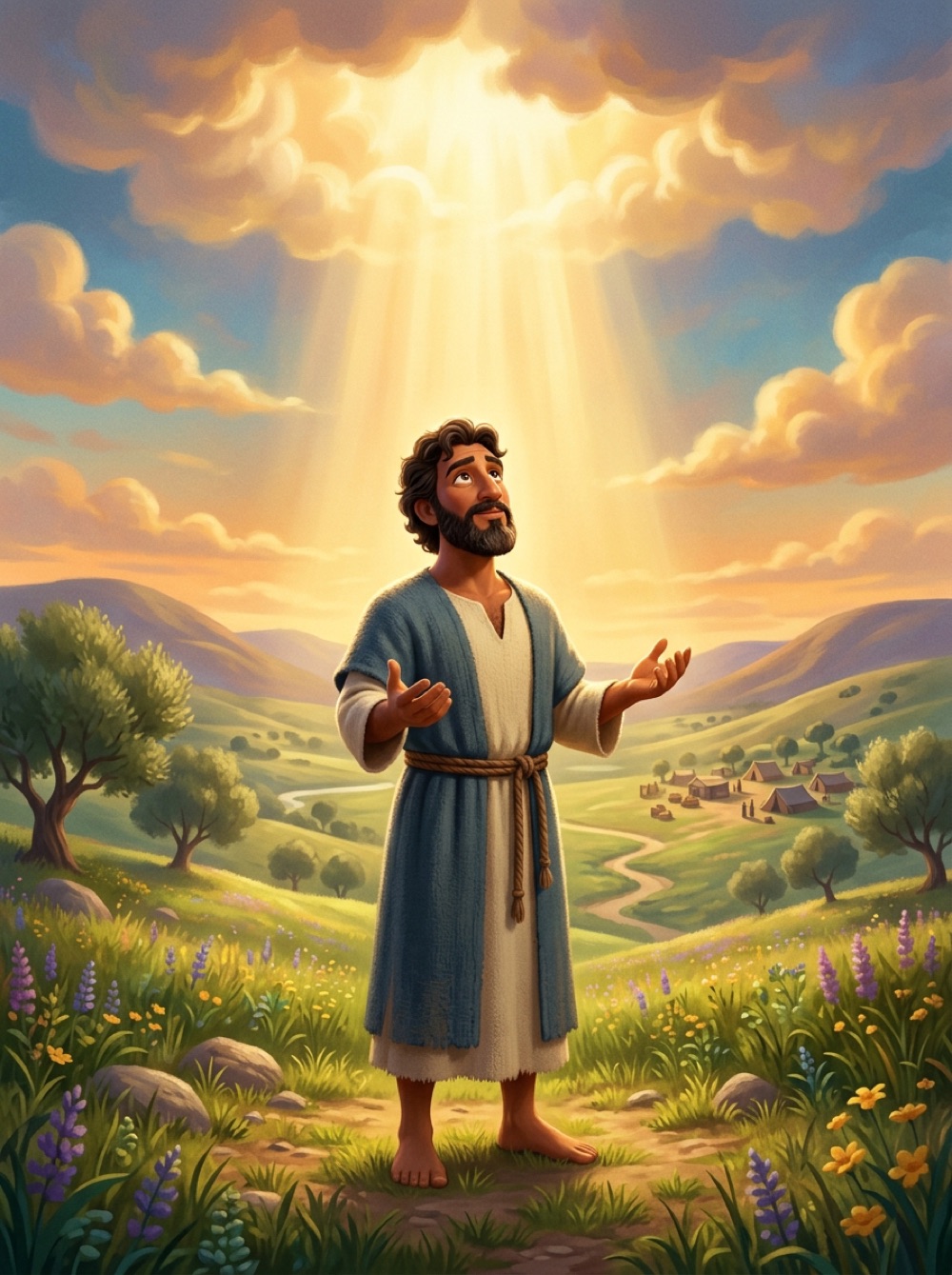
Isaac Walks the Same Road
A famine came, and Isaac stayed in Canaan as God instructed. God reaffirmed the same promise He had made to Abraham — this land, this family, this blessing. But Isaac also repeated his father's mistake, telling the same lie about his wife to protect himself. God was patient with Isaac too, just as He had been with Abraham. Some lessons take a generation to fully learn.
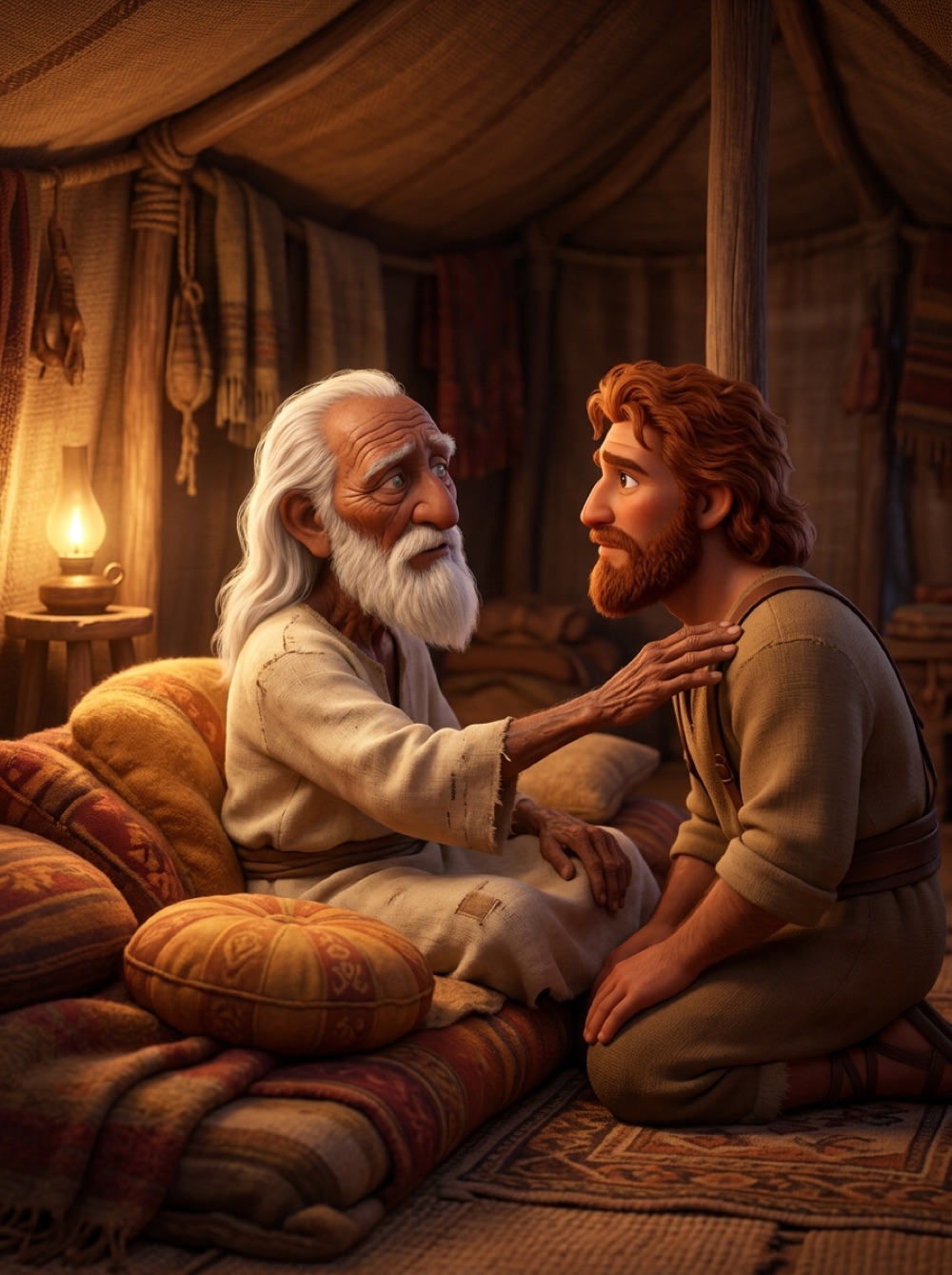
Isaac's Fading Sight
Isaac grew very old and his eyes became so weak he could barely see. He called his oldest son Esau to him. "I am old and may die soon," he said. "Go hunt some wild game and make me a meal I love. Then I will give you my blessing before I die."
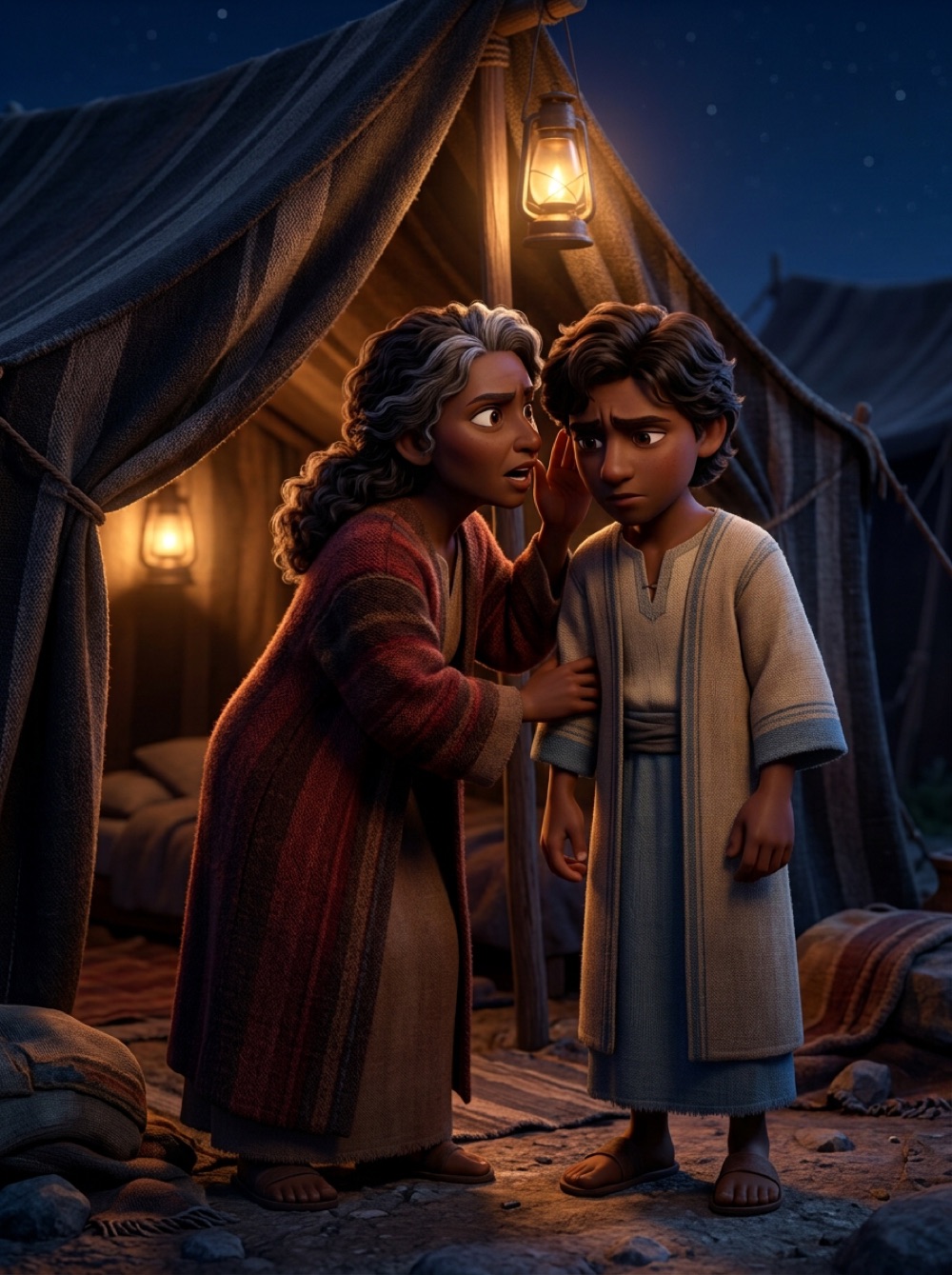
Rebekah's Plan
Rebekah had been listening. She loved Jacob more than Esau, and she wanted the blessing for him. She pulled Jacob aside quickly. "I have a plan," she said. "Do exactly what I tell you." It was a plan that would work — but it would cost the whole family more than they expected.
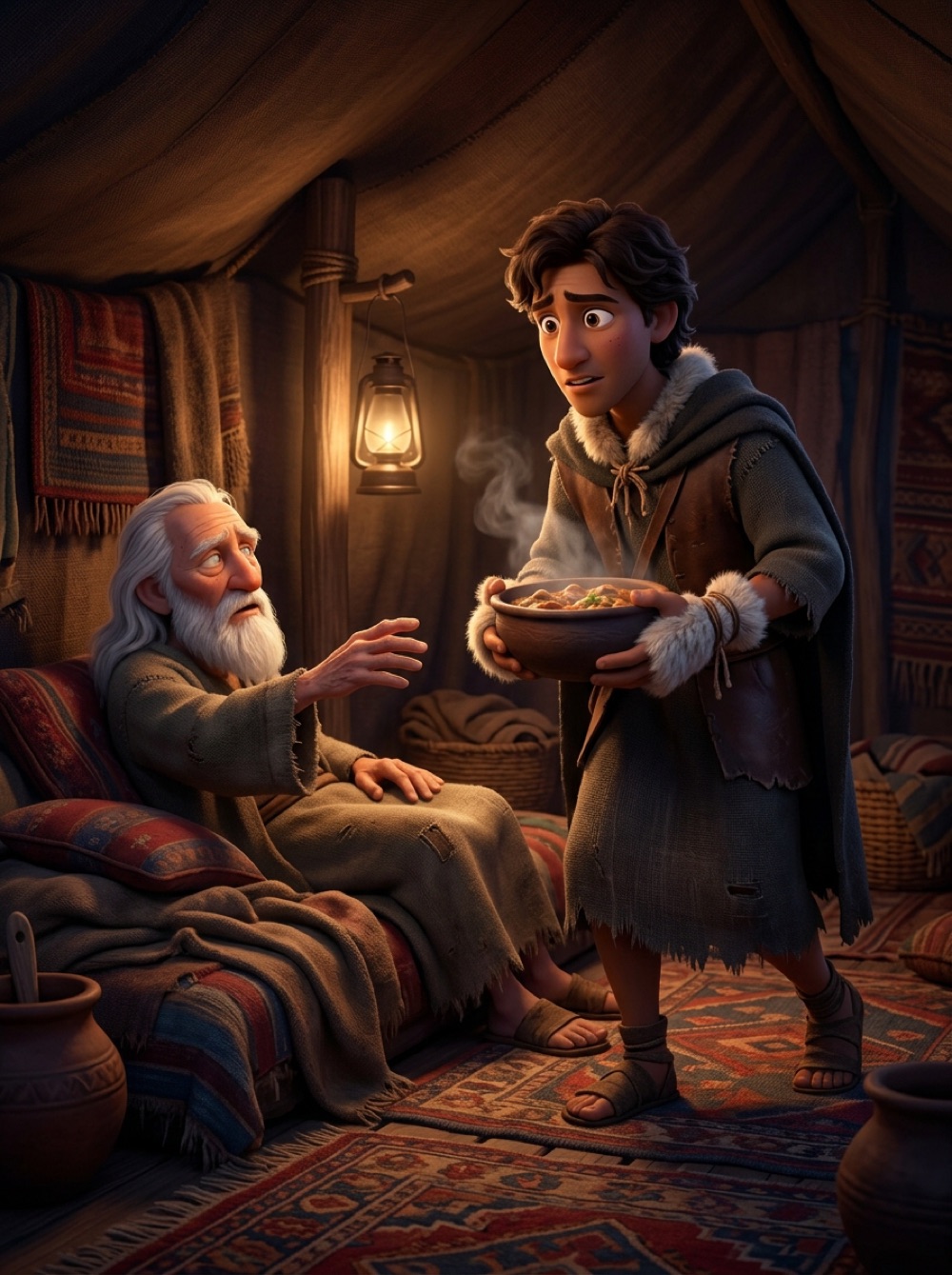
Jacob in Disguise
Rebekah cooked a meal just the way Isaac loved it. Then she dressed Jacob in Esau's clothes and put goat skin on his hands and neck so he would feel hairy like Esau. Jacob carried the food in to his father, pretending to be someone he was not.
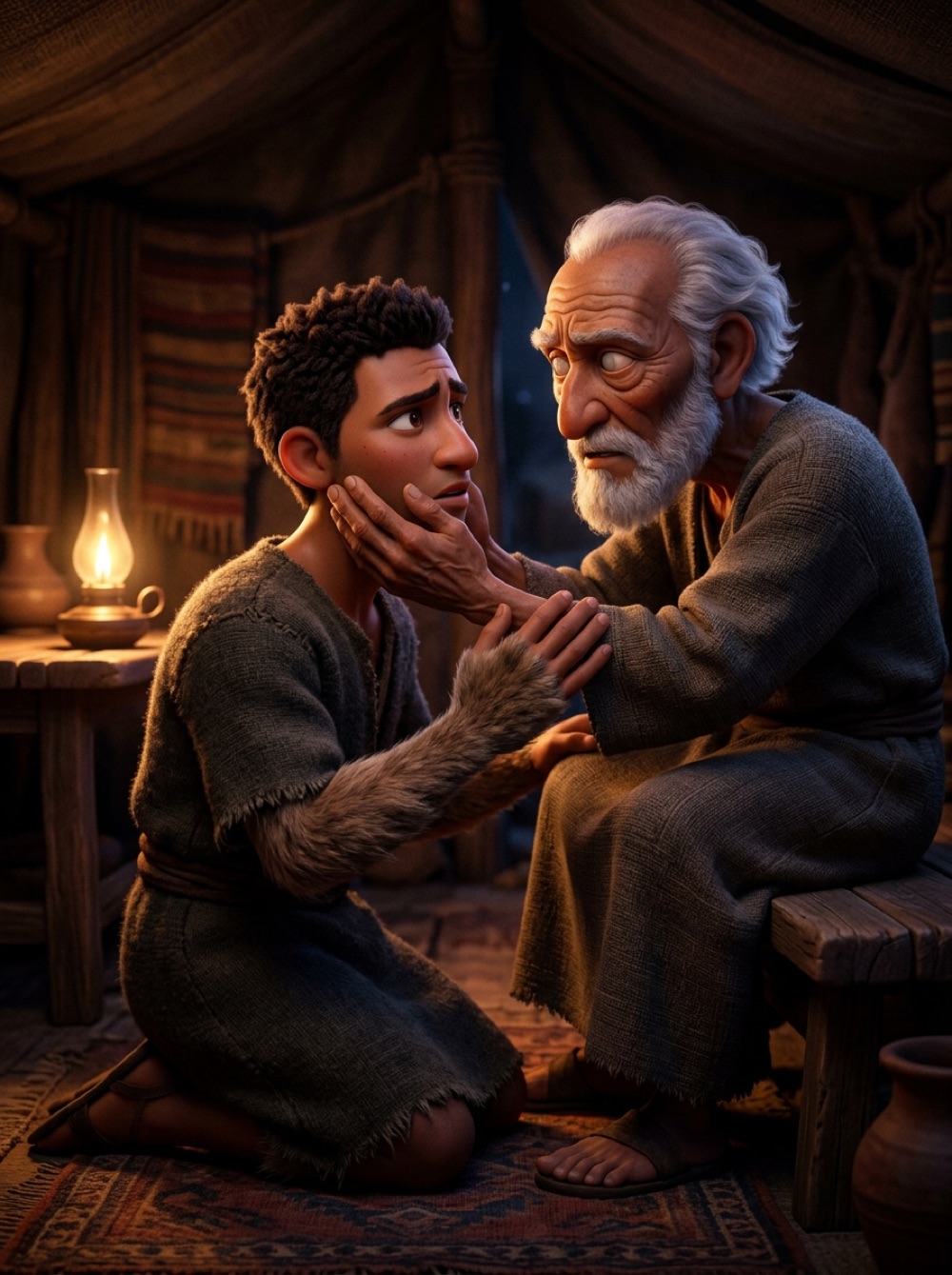
Are You Really Esau?
Isaac was suspicious. "Come closer," he said. "You sound like Jacob, but you feel like Esau." He touched Jacob's hands — and felt the goat skin. Then he asked directly, "Are you really my son Esau?" Jacob looked his blind father in the face and lied. "I am," he said.
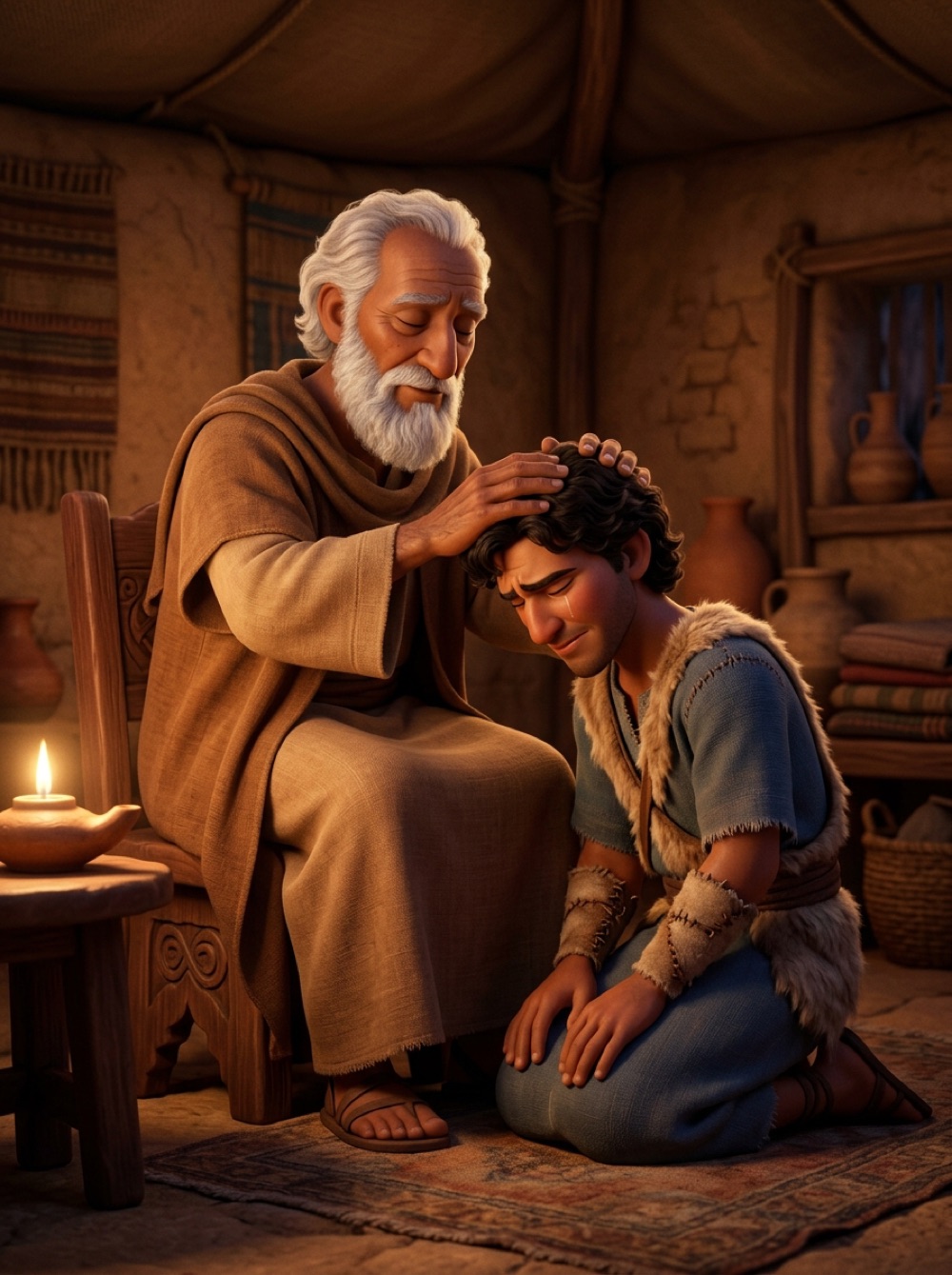
The Blessing Is Given
Isaac believed him and gave Jacob the firstborn's blessing — the most important blessing a father could give. He blessed him with abundance, leadership, and the promise passed down from Abraham. The words, once spoken, could not be taken back. What Jacob had stolen was now his — but so was the weight of how he got it.
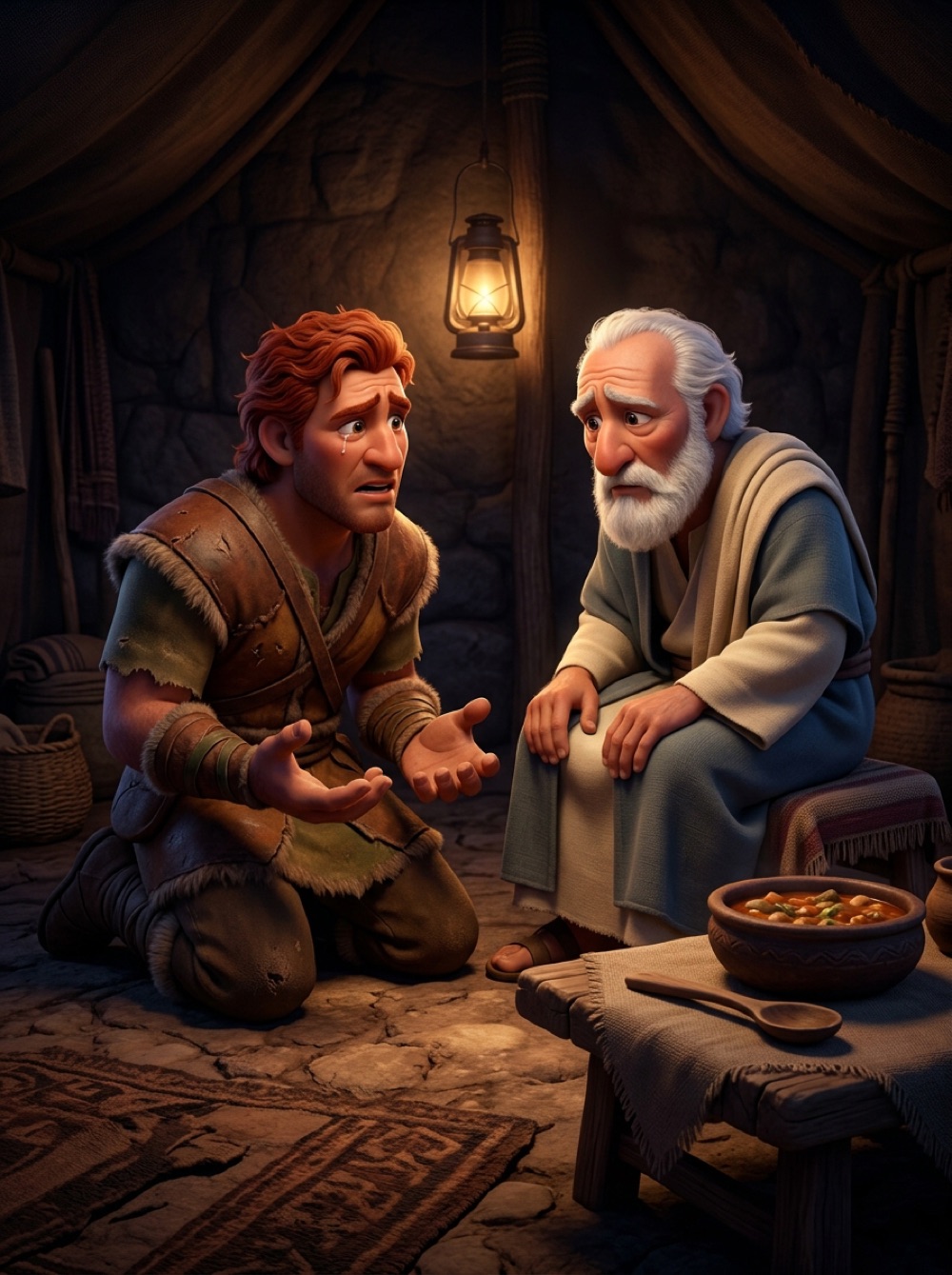
Esau's Broken Heart
Esau came home from hunting and made his father's meal. When he brought it in, both he and Isaac realized the terrible truth. Esau let out a cry so loud and so painful it shook the tent. "Bless me too, Father!" he begged. But the blessing was already gone. Esau wept bitterly.
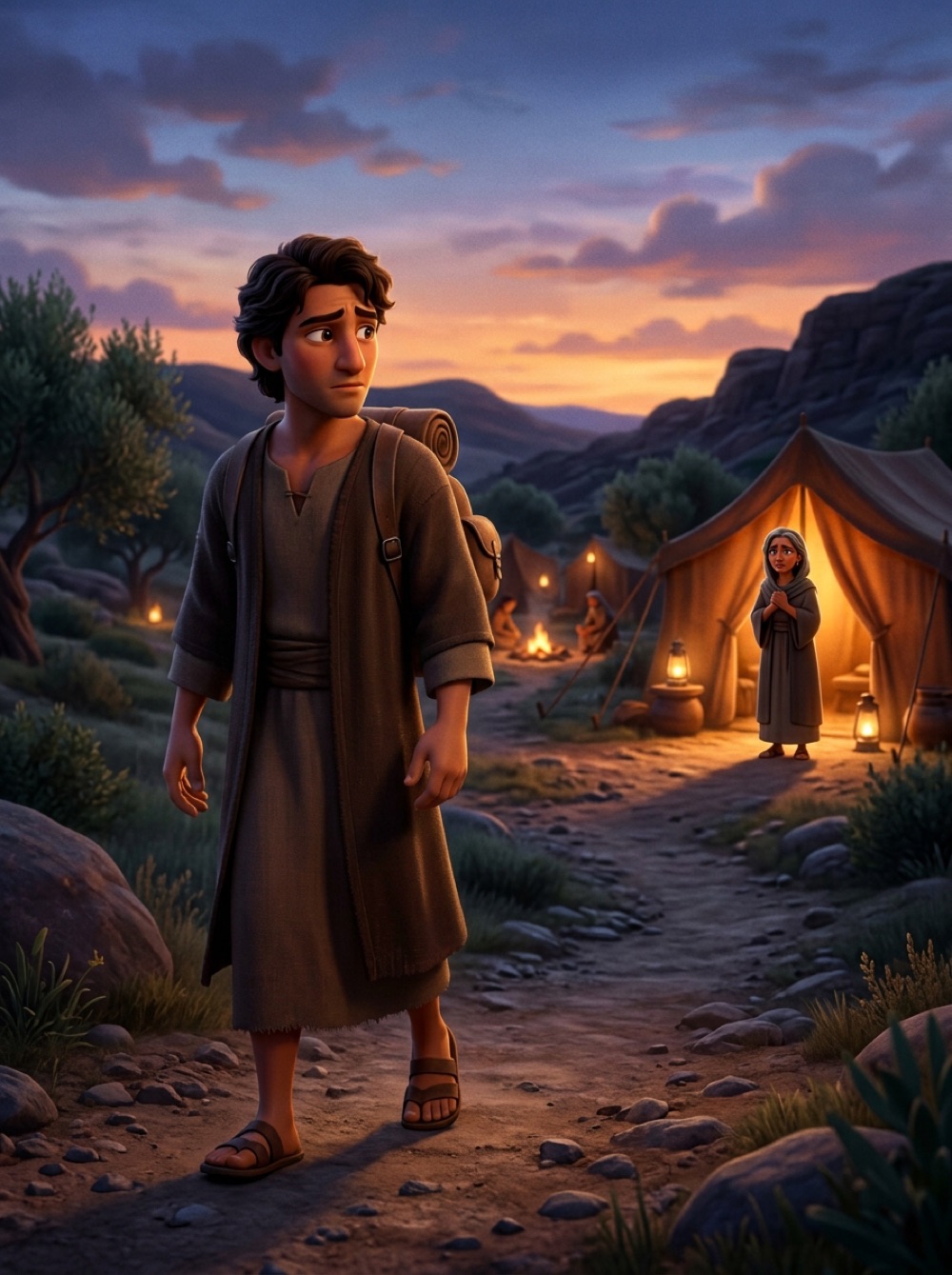
Jacob Must Run
Esau's grief turned to rage. He made up his mind — when his father died, he would kill Jacob. When Rebekah heard this, she told Jacob to run to her brother Laban's house far away. The family that had conspired together was now torn apart. Deception always costs more than it appears to.

Jacob Leaves Home
Jacob left home alone, running from Esau's anger, carrying nothing but what he could take on his back. He had gained his father's blessing — but lost his family, his home, and his brother's trust to get it. Some victories feel more like losses when you're walking away alone.

A Dream of Heaven
That night Jacob stopped to sleep, using a stone as a pillow. He dreamed of a stairway stretching from the earth all the way up to heaven, with angels going up and coming down on it. And at the top stood God, speaking directly to him.
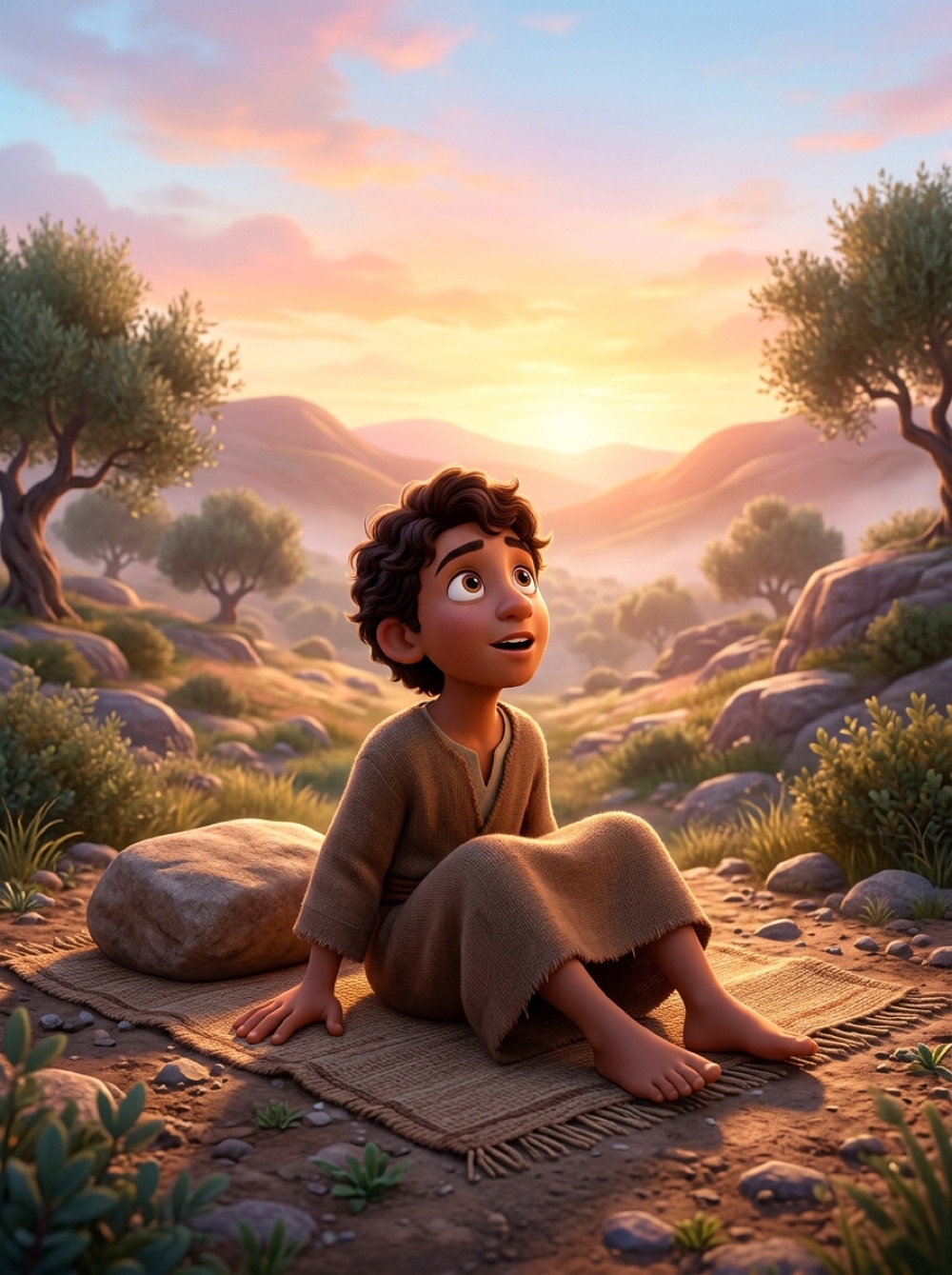
God Finds Jacob Anyway
God spoke to Jacob in the dream. "I am the God of Abraham and Isaac. I will give you this land. Your family will spread across the earth. And I am with you wherever you go — I will not leave you until I have done everything I have promised." God came to Jacob even when Jacob was running away.
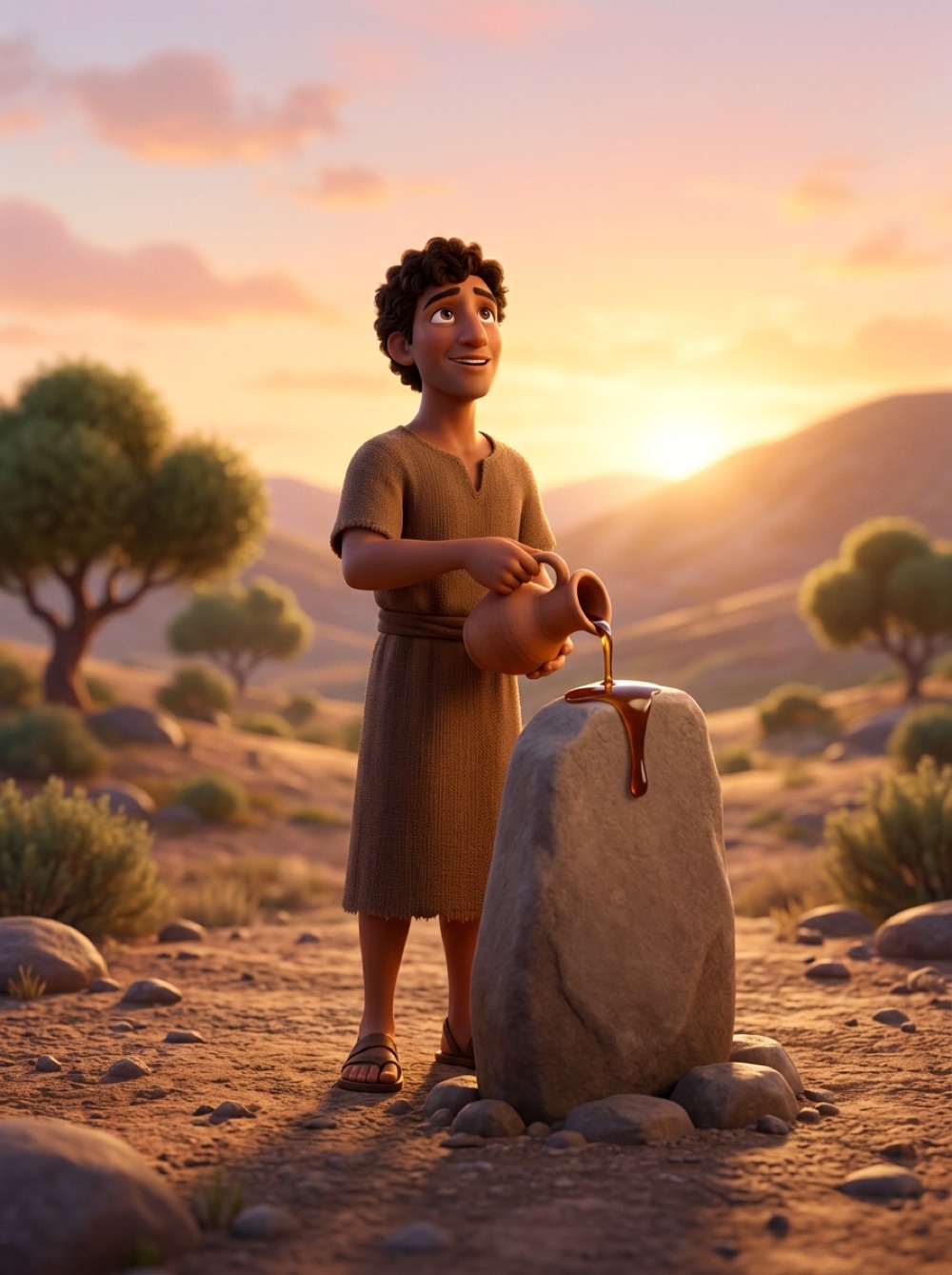
The Stone Becomes an Altar
Jacob woke up trembling. "God is in this place," he said, "and I didn't even know it." He took the stone he had slept on, stood it up as a pillar, and poured oil on it as an act of worship. He named the place Bethel — which means "house of God."

Jacob Meets Rachel
Jacob continued his journey and arrived at a well where shepherds were gathered. A young woman named Rachel came to water her father's sheep. When Jacob saw her, he rolled the heavy stone off the well to help her — and wept with relief. He had found his family's people at last.
Seven Years for Rachel
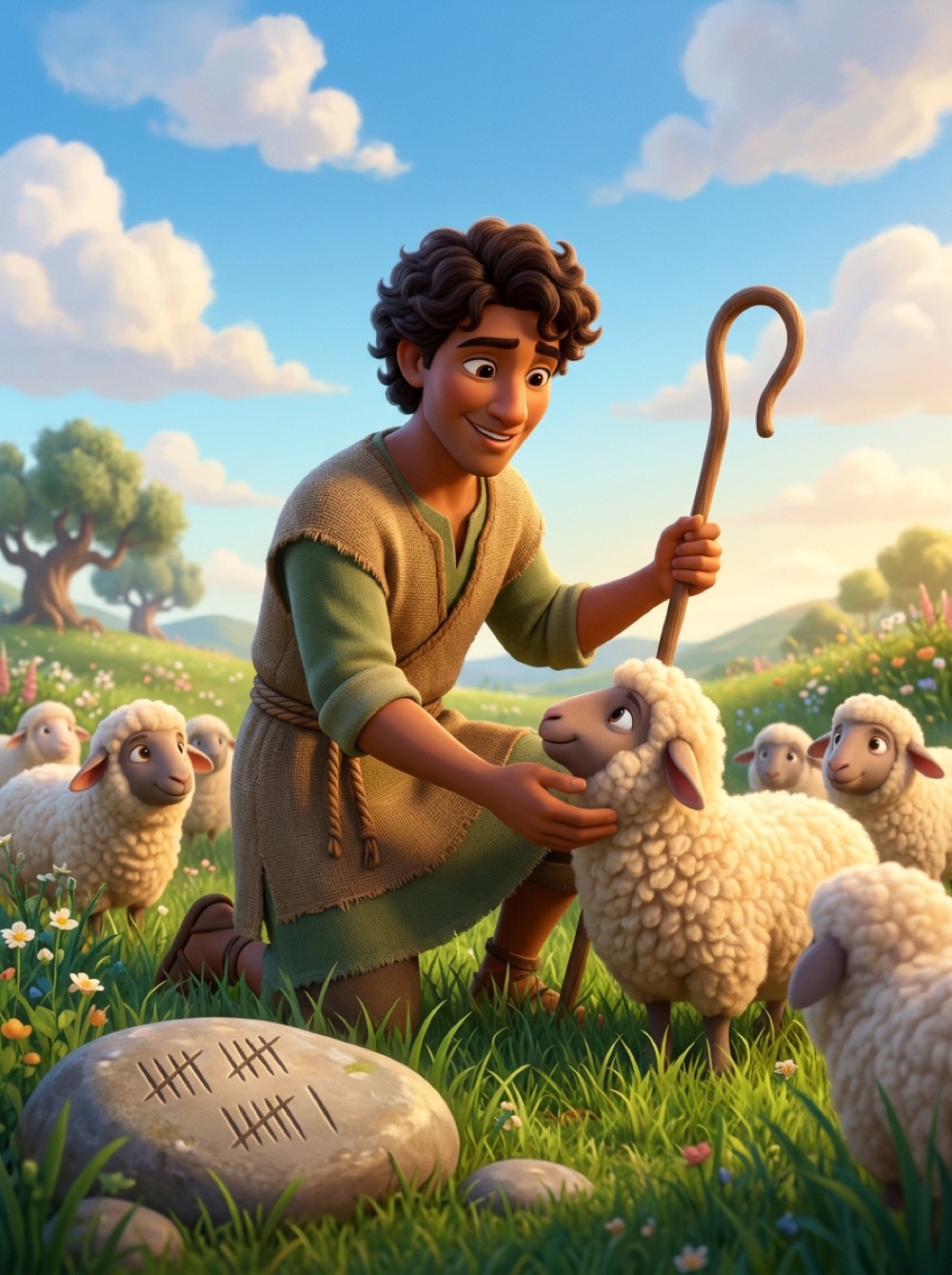
Rachel's father was Laban — Rebekah's brother, Jacob's uncle. Jacob loved Rachel deeply and asked to marry her. Laban said yes, on one condition: Jacob had to work for him for seven years first. Jacob agreed. The Bible says the seven years felt like only a few days because of how much he loved her.
The Deceiver Gets Deceived
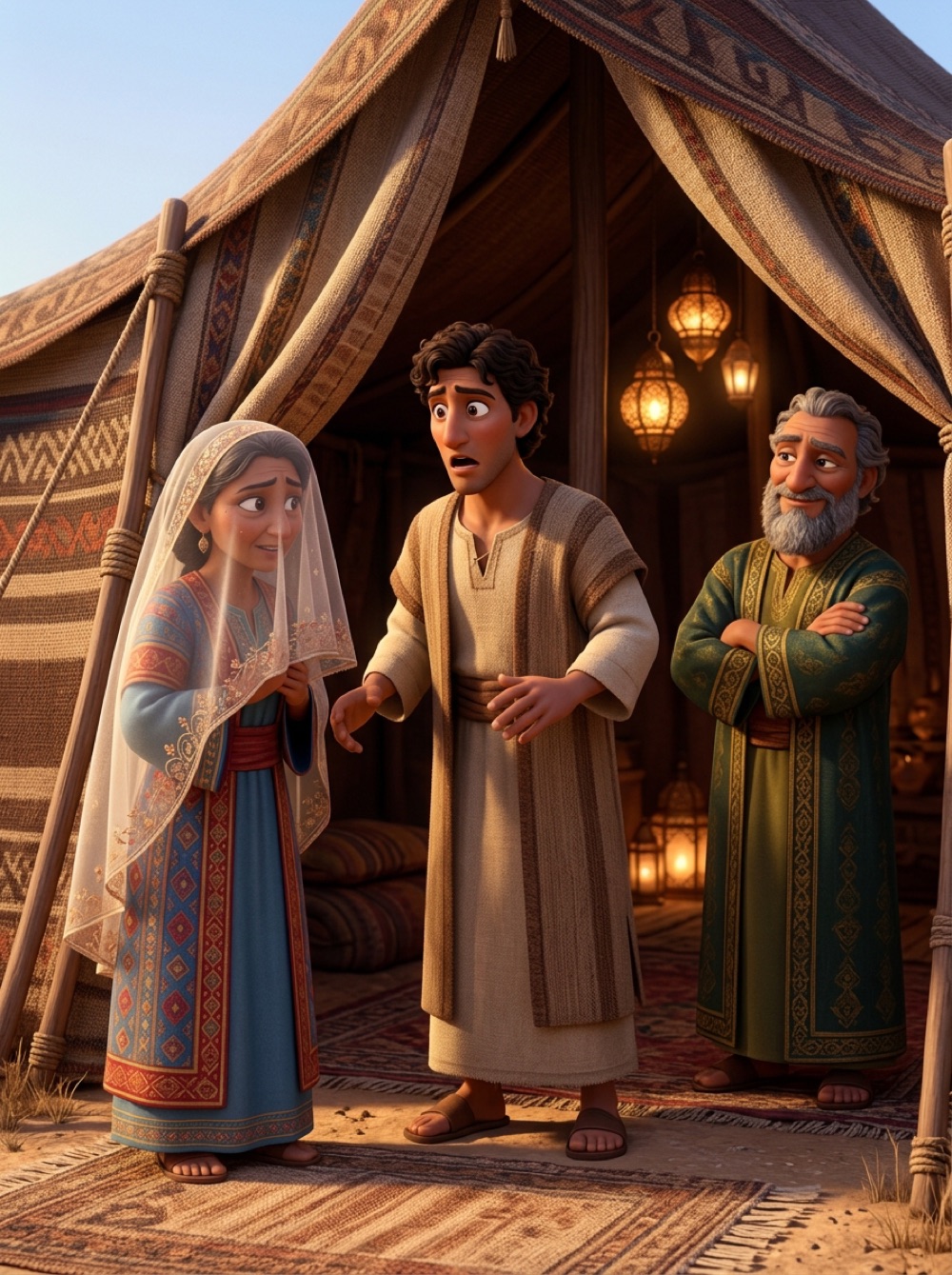
When the seven years were up, Laban threw a wedding feast — but switched Rachel for her older sister Leah without Jacob knowing. Jacob woke up the next morning and discovered the trick. He had spent his whole life deceiving others. Now he knew exactly how it felt.

Seven More Years
Laban offered Jacob Rachel as well — but only if Jacob worked another seven years. Jacob loved Rachel too much to walk away. He agreed to seven more years of work. What Jacob had tried to shortcut his whole life — blessing, love, belonging — kept asking him to be patient and earn it honestly.
A House Full of Children
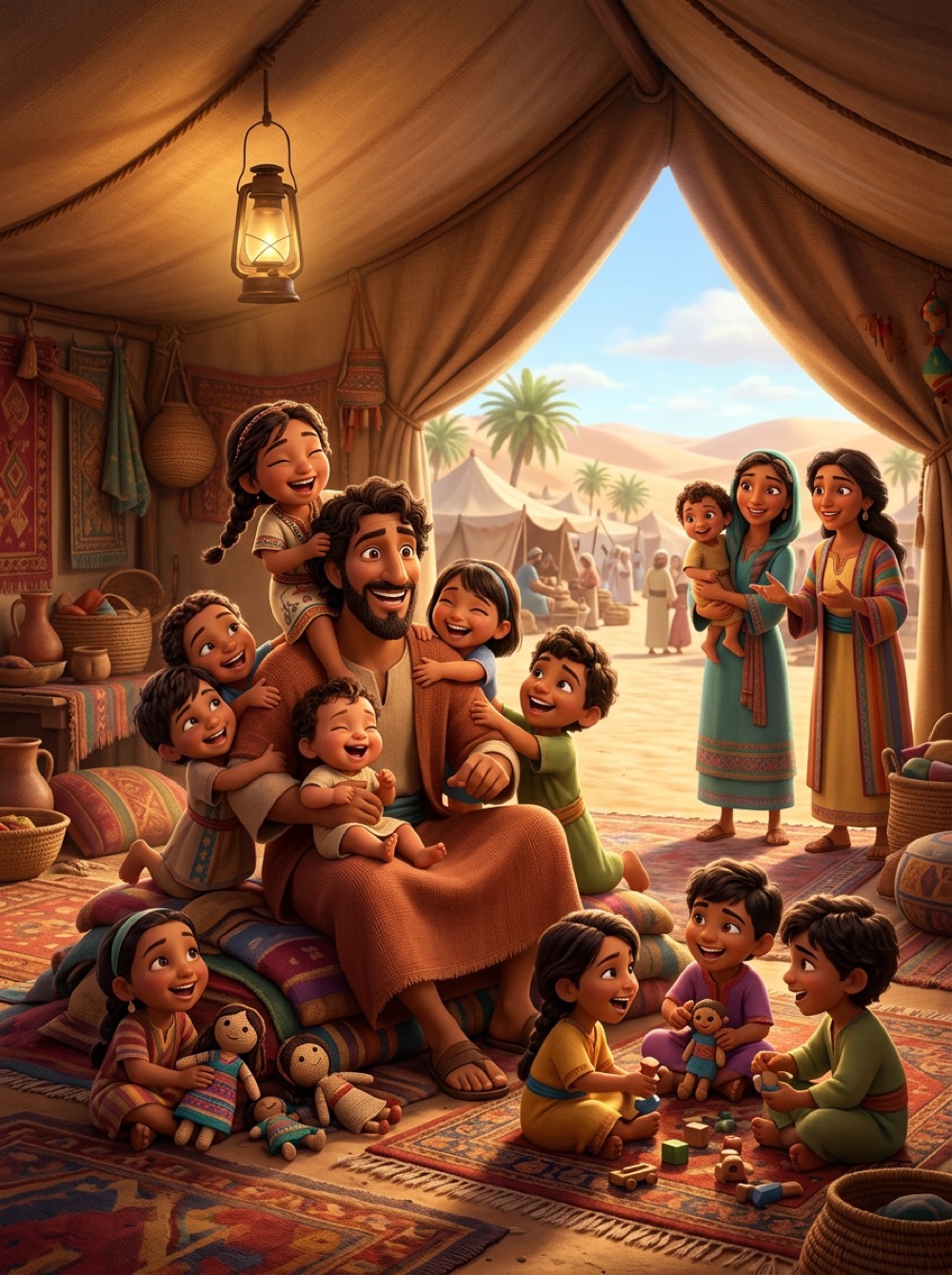
Over the years, Jacob's family grew large. Leah had children. Rachel eventually had children too. Jacob also had sons through Leah and Rachel's servants. Twelve sons in total would eventually be born to Jacob — and one daughter. These twelve sons would one day become the twelve tribes of Israel.
Time to Go Home
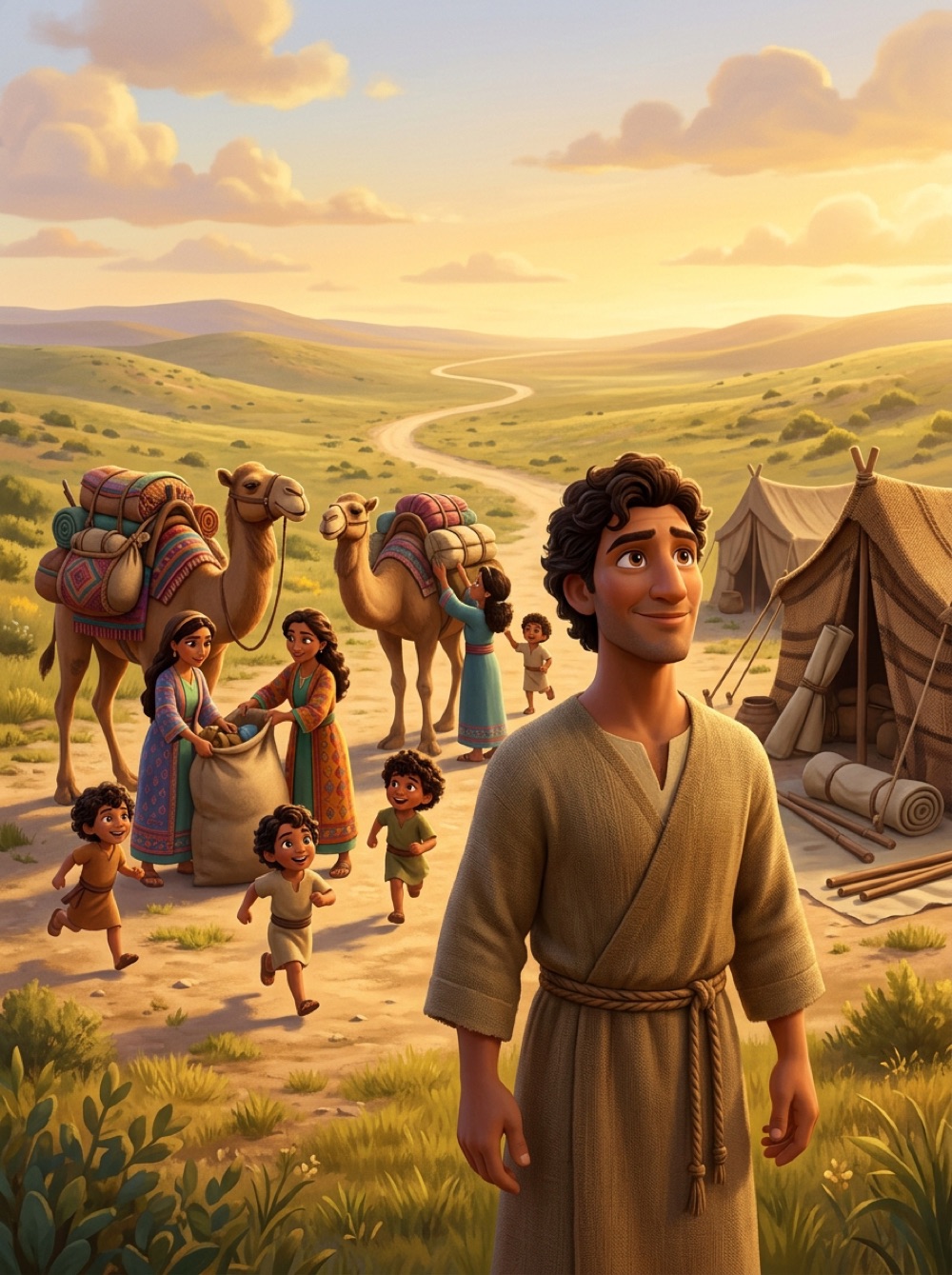
After many years, God told Jacob it was time to return to Canaan. Laban had changed — he kept moving the goalposts on Jacob's wages, cheating him again and again. But God had prospered Jacob anyway. Jacob gathered his wives, his children, his flocks, and quietly slipped away while Laban was away.
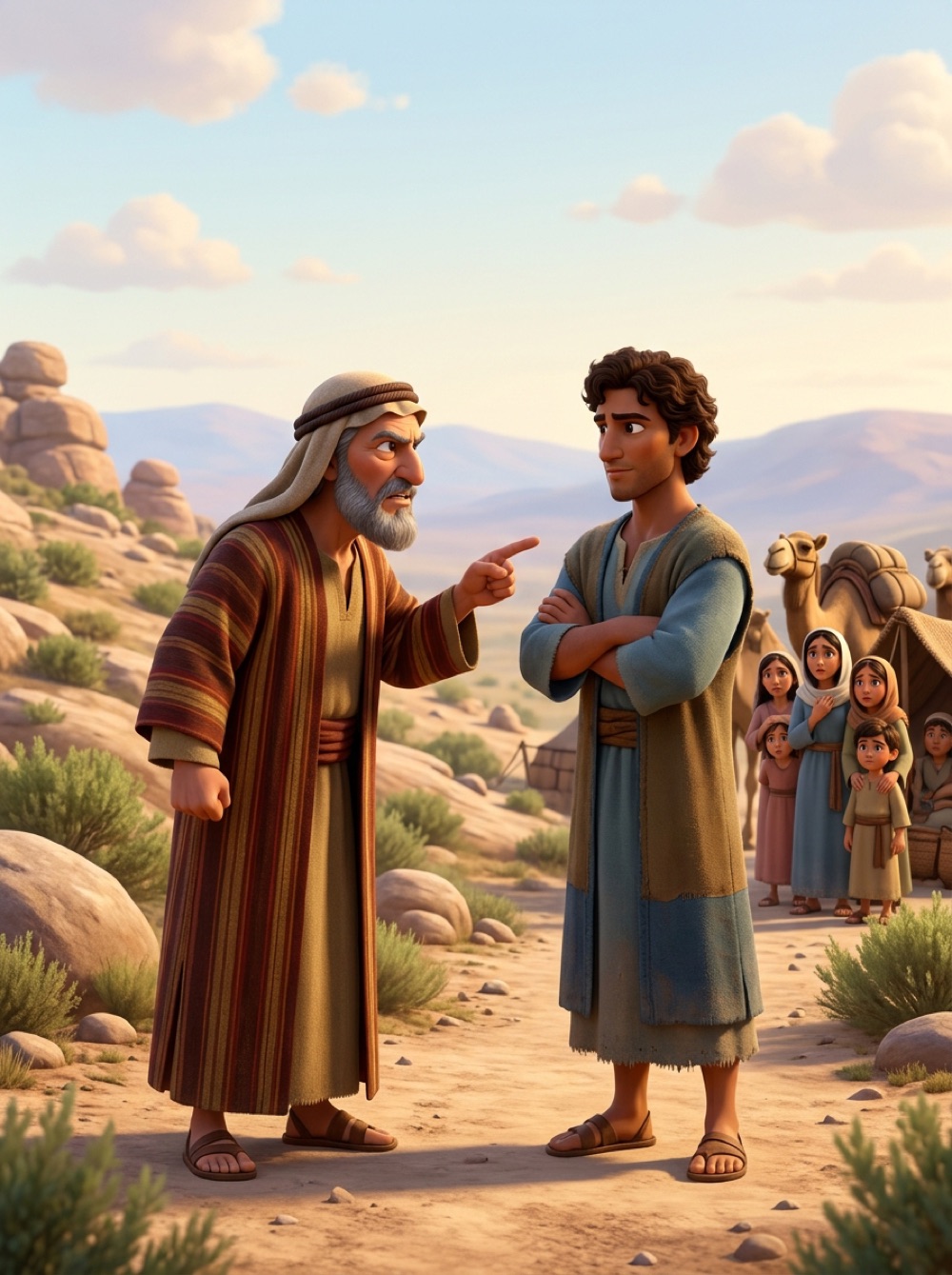
Laban Catches Up
Laban chased Jacob for seven days and caught up with him in the hill country. He was angry. But God had warned Laban in a dream the night before not to harm Jacob. So instead of a fight, they talked — and eventually made a peace agreement, setting up a pile of stones as a witness between them.
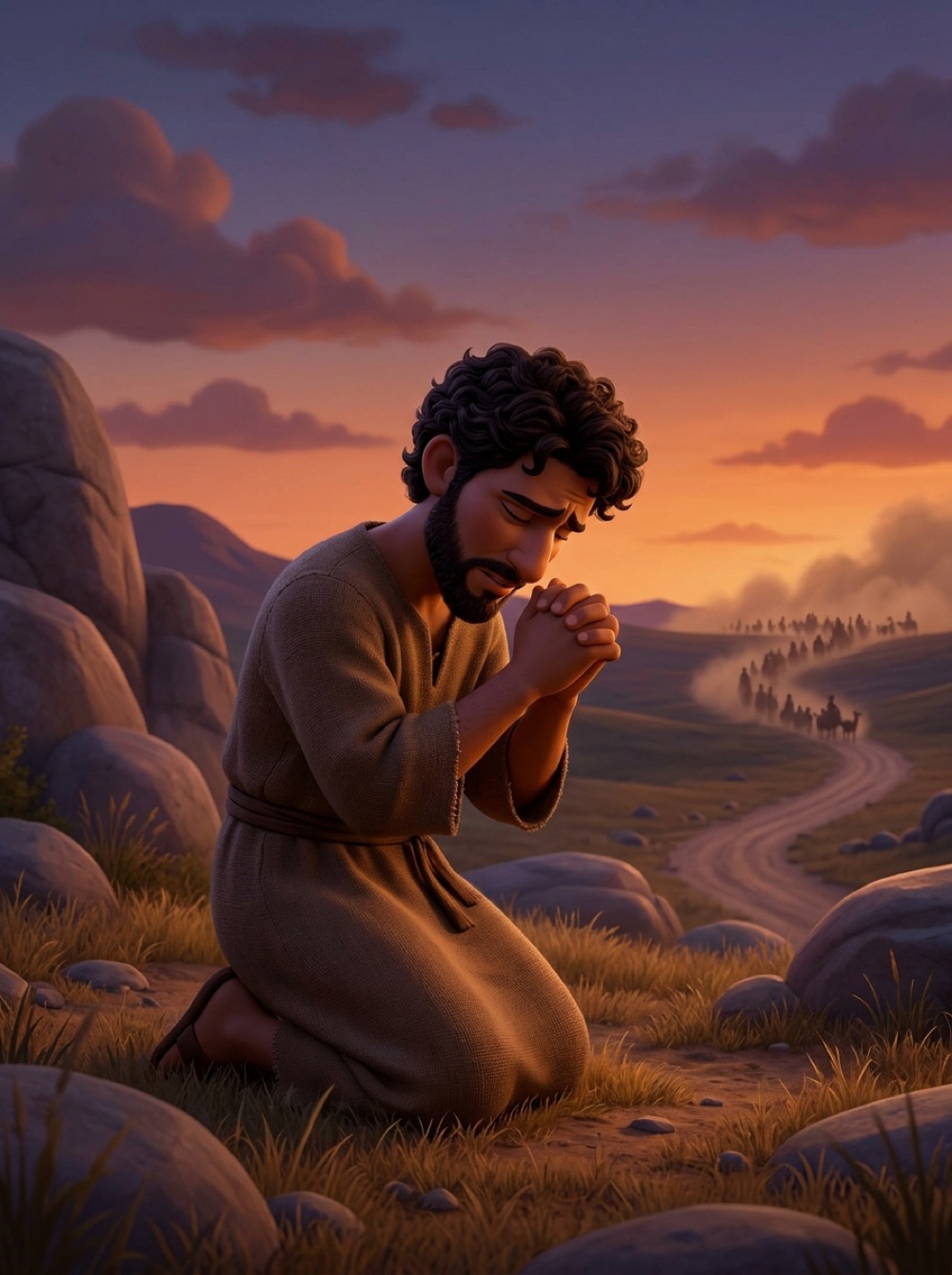
Fear of Esau
As Jacob got closer to home, he sent messengers ahead to his brother Esau. They came back with alarming news — Esau was coming to meet him with four hundred men. Jacob was terrified. The past he had run from for twenty years was walking straight toward him.

Jacob's Honest Prayer
Jacob prayed one of the most honest prayers in the whole Bible. "God, I am not worthy of any of the kindness you have shown me. I left home with nothing but a walking stick, and now I have two large camps. Please save me from my brother Esau. I am afraid."
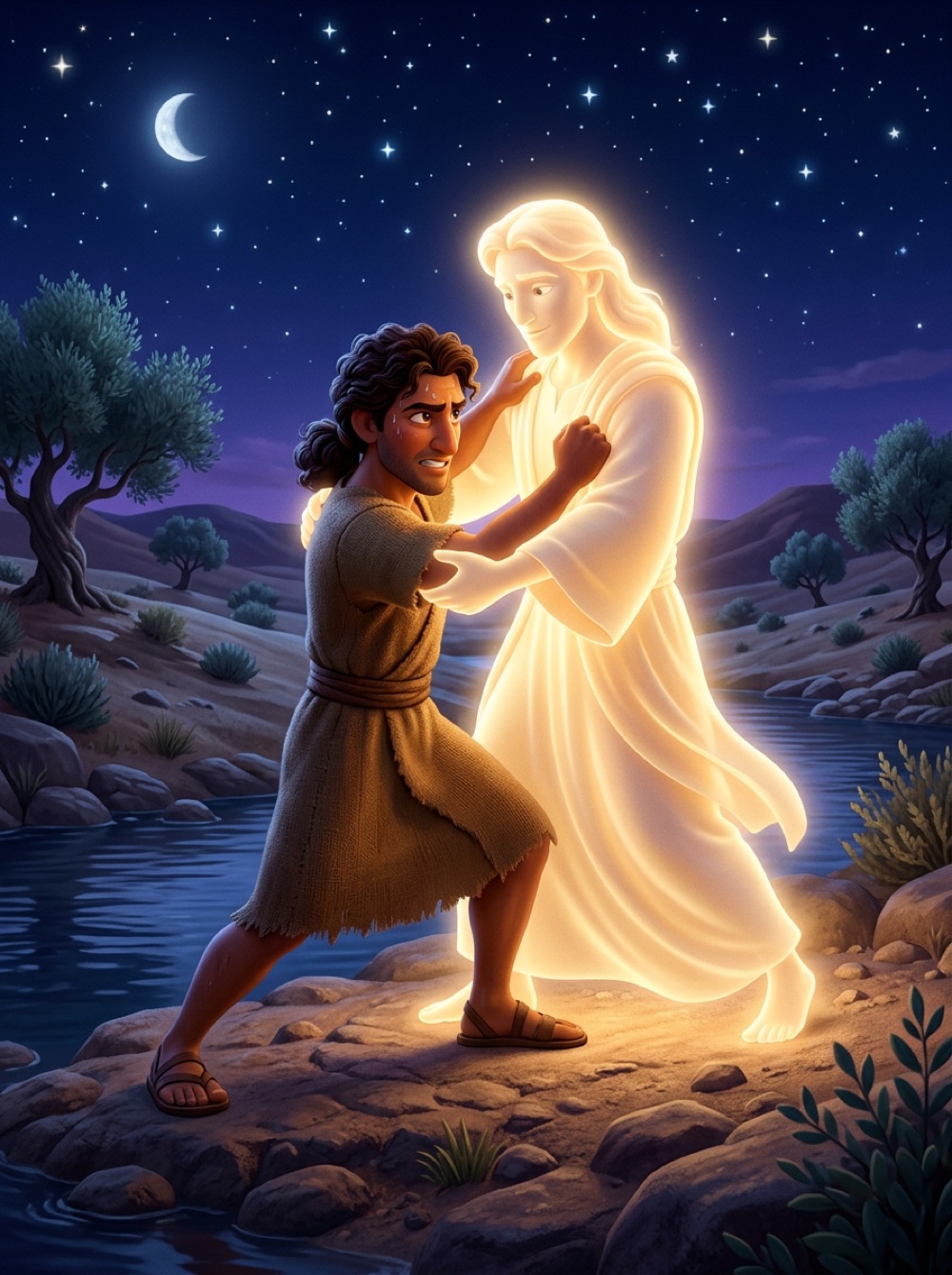
Wrestling With God
That night, alone by the river, a man appeared and wrestled with Jacob until daybreak. Jacob held on through the whole night and would not let go. As dawn came, the man touched Jacob's hip and put it out of joint — but Jacob still would not release him. "I will not let you go," Jacob said, "unless you bless me."
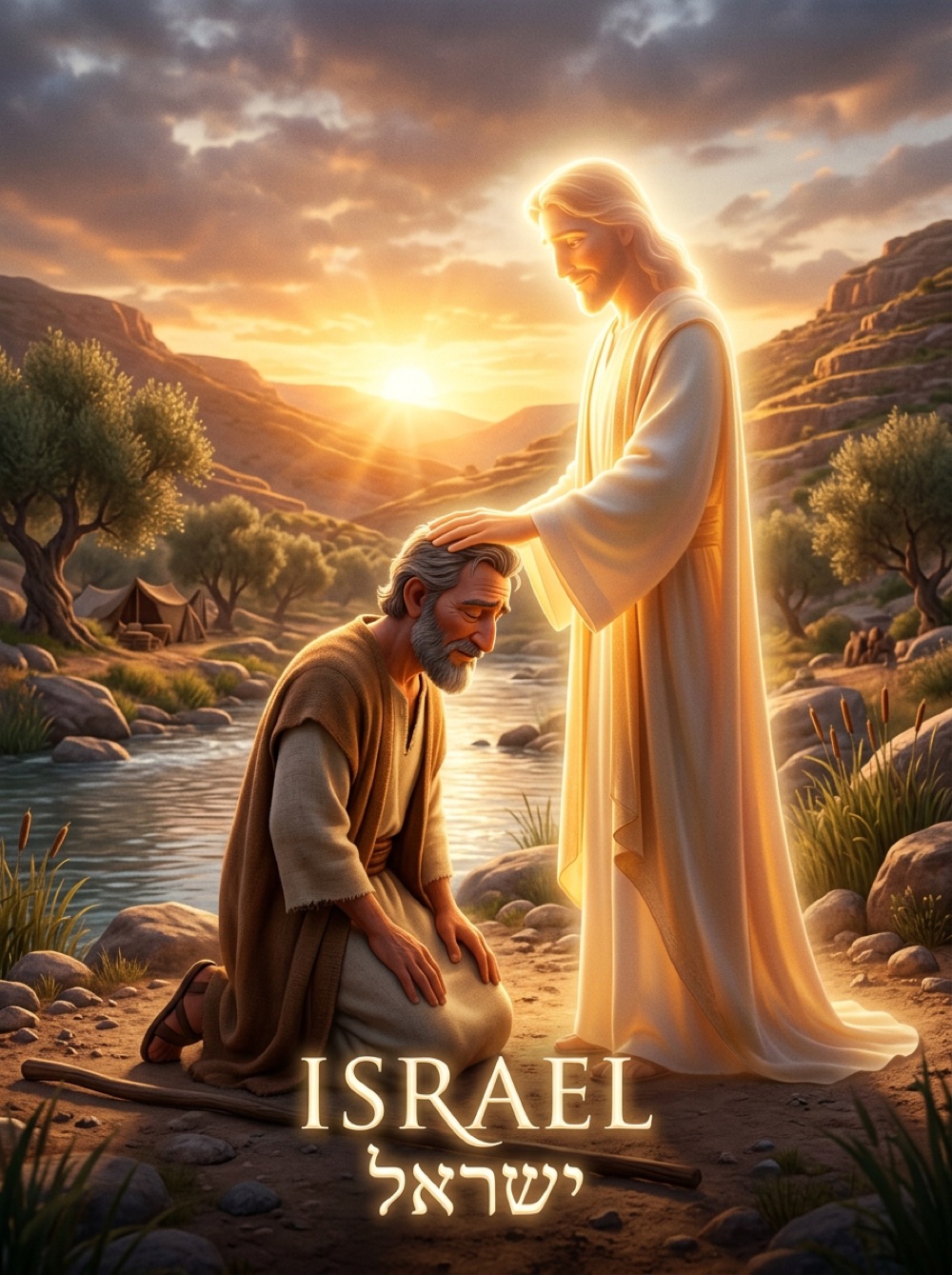
A New Name
"What is your name?" the man asked. "Jacob," he answered — the name that meant grabber, schemer, deceiver. "Your name will no longer be Jacob," the man said. "It will be Israel — because you have struggled with God and with people, and you have overcome." Jacob had finally stopped running and started holding on.
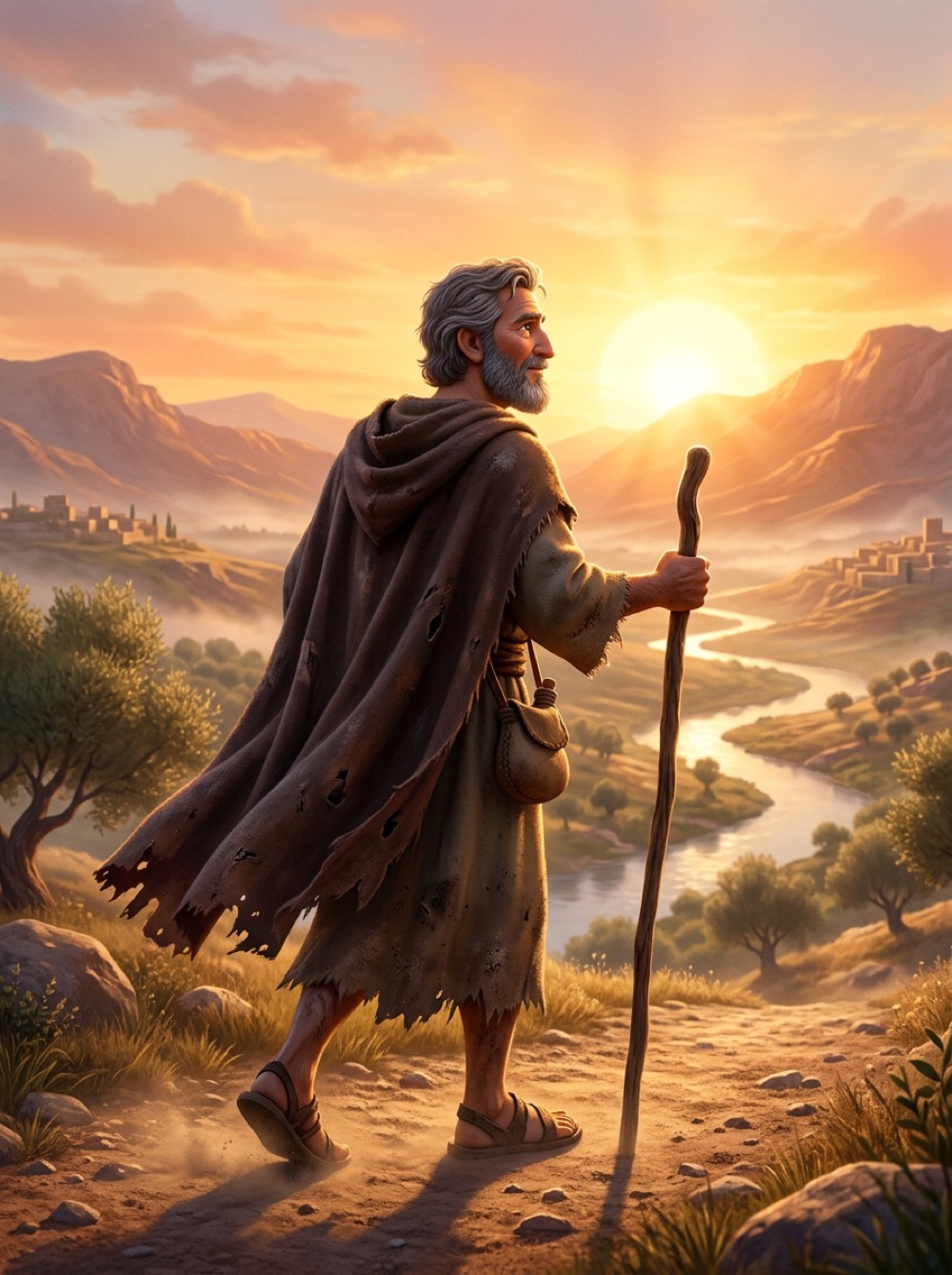
The Sun Rises on a Changed Man
Jacob limped away from that place as the sun rose, his hip injured from the wrestling. But he had a new name, a new blessing, and something he had never had before — he had met God face to face and survived. Everything that came next would be different because of that night.
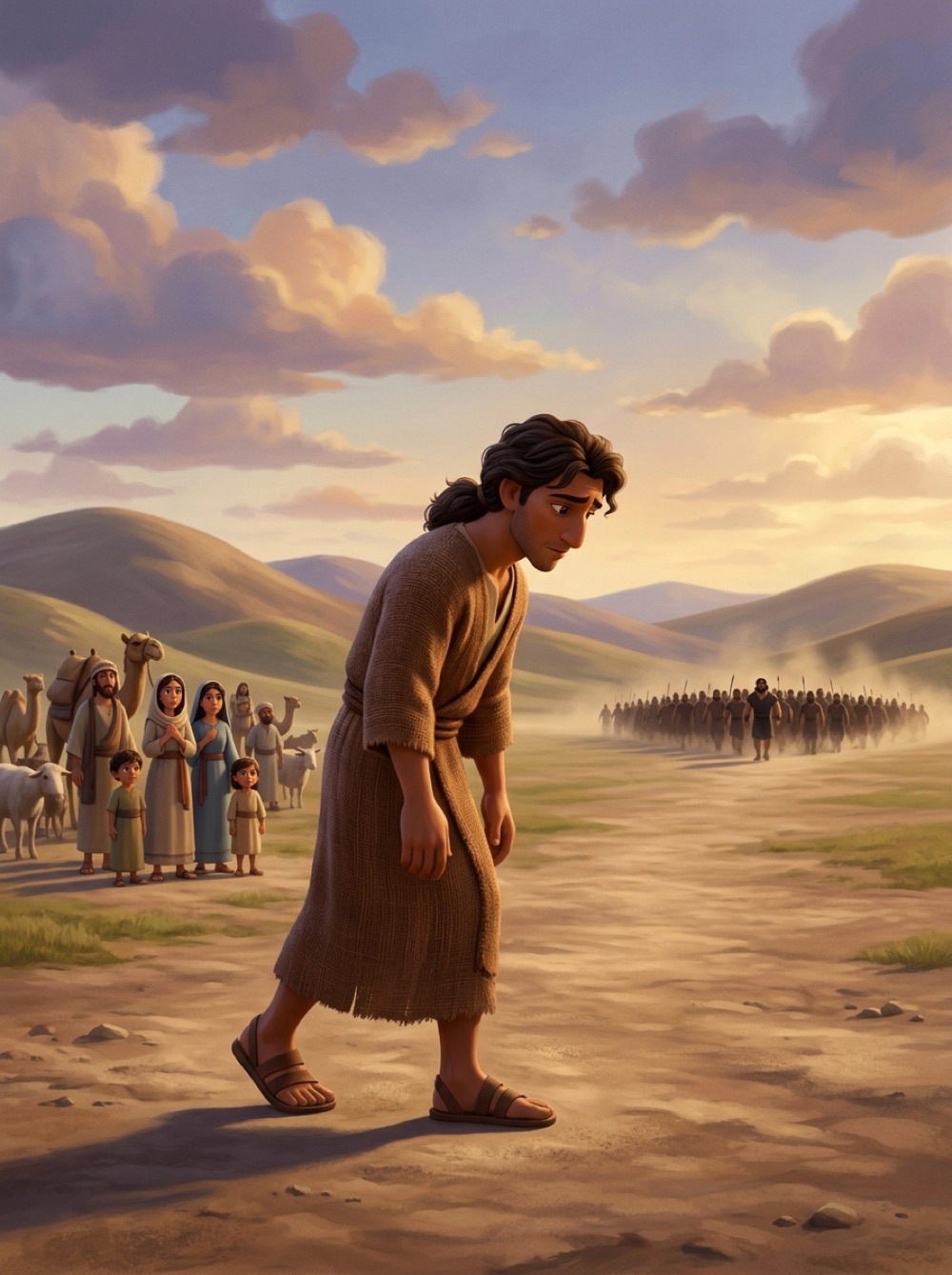
Jacob Sees Esau Coming
Jacob looked up and saw Esau coming with his four hundred men. He arranged his family behind him and walked ahead to meet his brother. With every step, twenty years of guilt, fear, and regret walked with him. He bowed to the ground seven times as he approached.
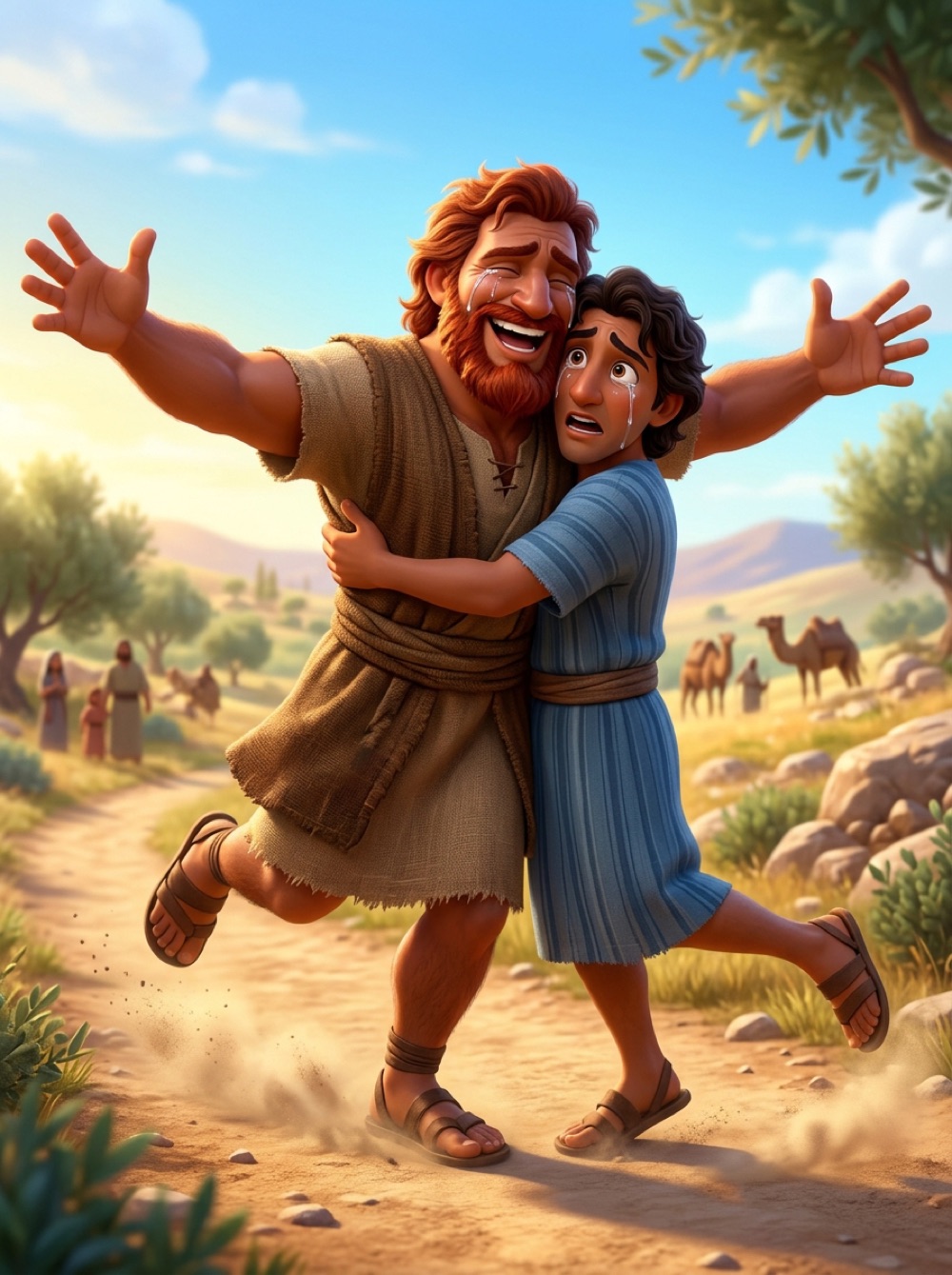
Esau Runs to His Brother
But Esau didn't wait. He ran. He threw his arms around Jacob and held him. He kissed him. And both brothers wept. No speech, no conditions, no list of grievances first. Just a brother running toward a brother. It was the most unexpected thing Jacob had ever seen.
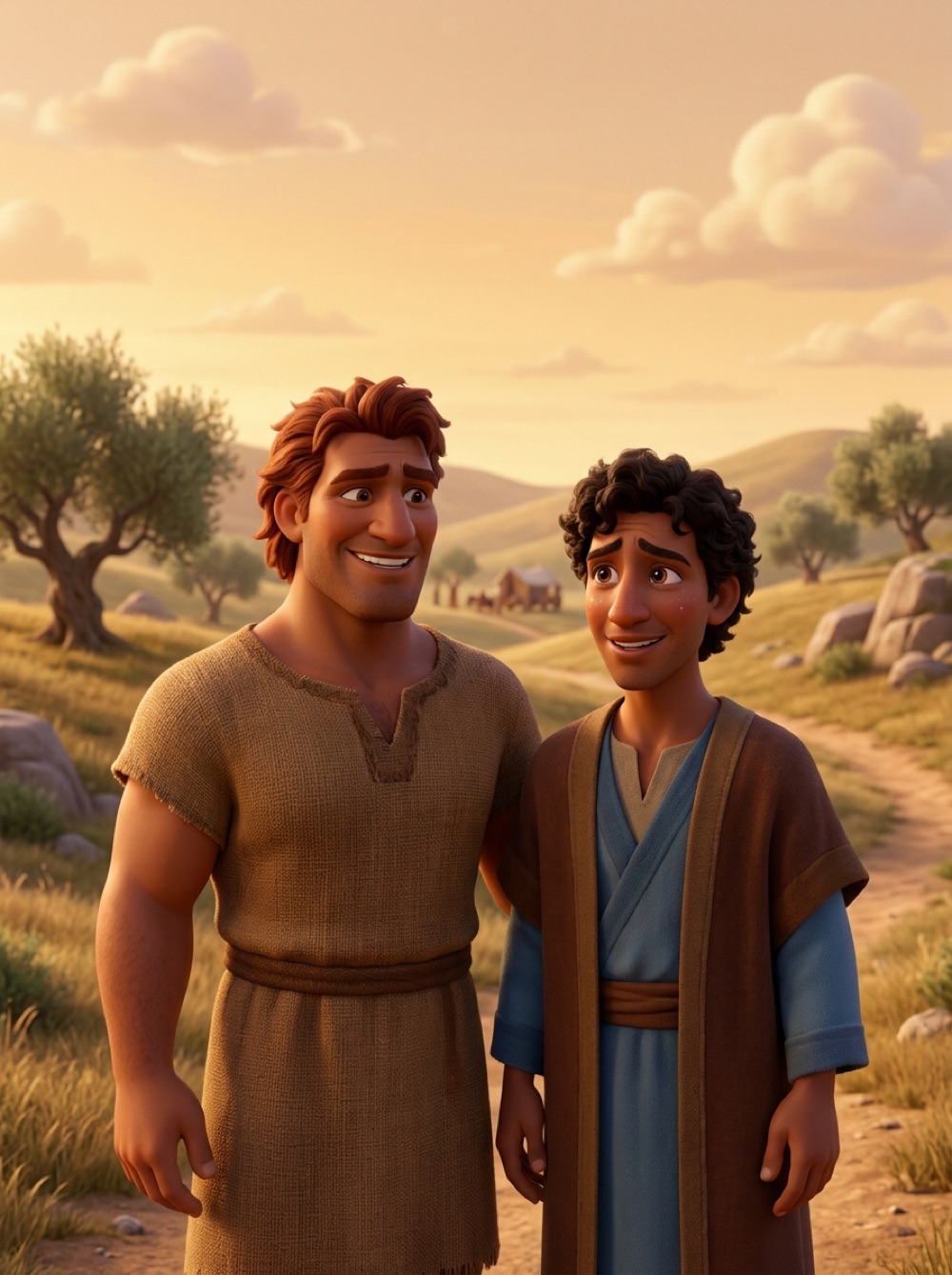
Forgiveness Looks Like This
Jacob told Esau, "Seeing your face is like seeing the face of God — because you have received me with such kindness." Esau tried to refuse Jacob's gifts, saying he already had enough. But Jacob insisted. Real reconciliation doesn't keep score. It gives generously and receives with open arms.
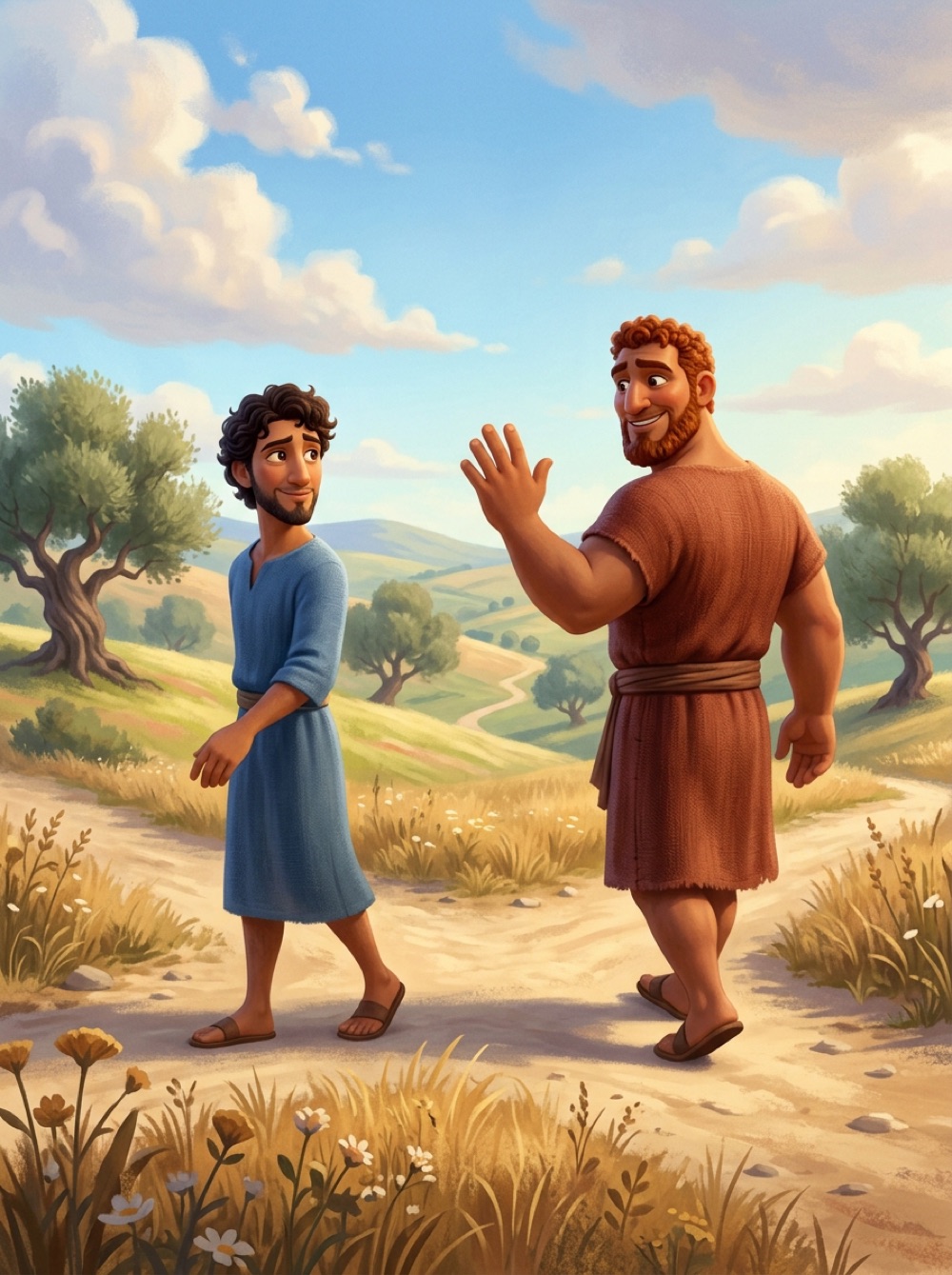
Two Brothers, Two Roads
After their reunion, Esau returned to his land and Jacob settled in Canaan. They had gone separate ways years ago in bitterness. Now they parted in peace. God had done something neither brother could have managed on his own — He had turned the worst chapter of their story into one of the best.
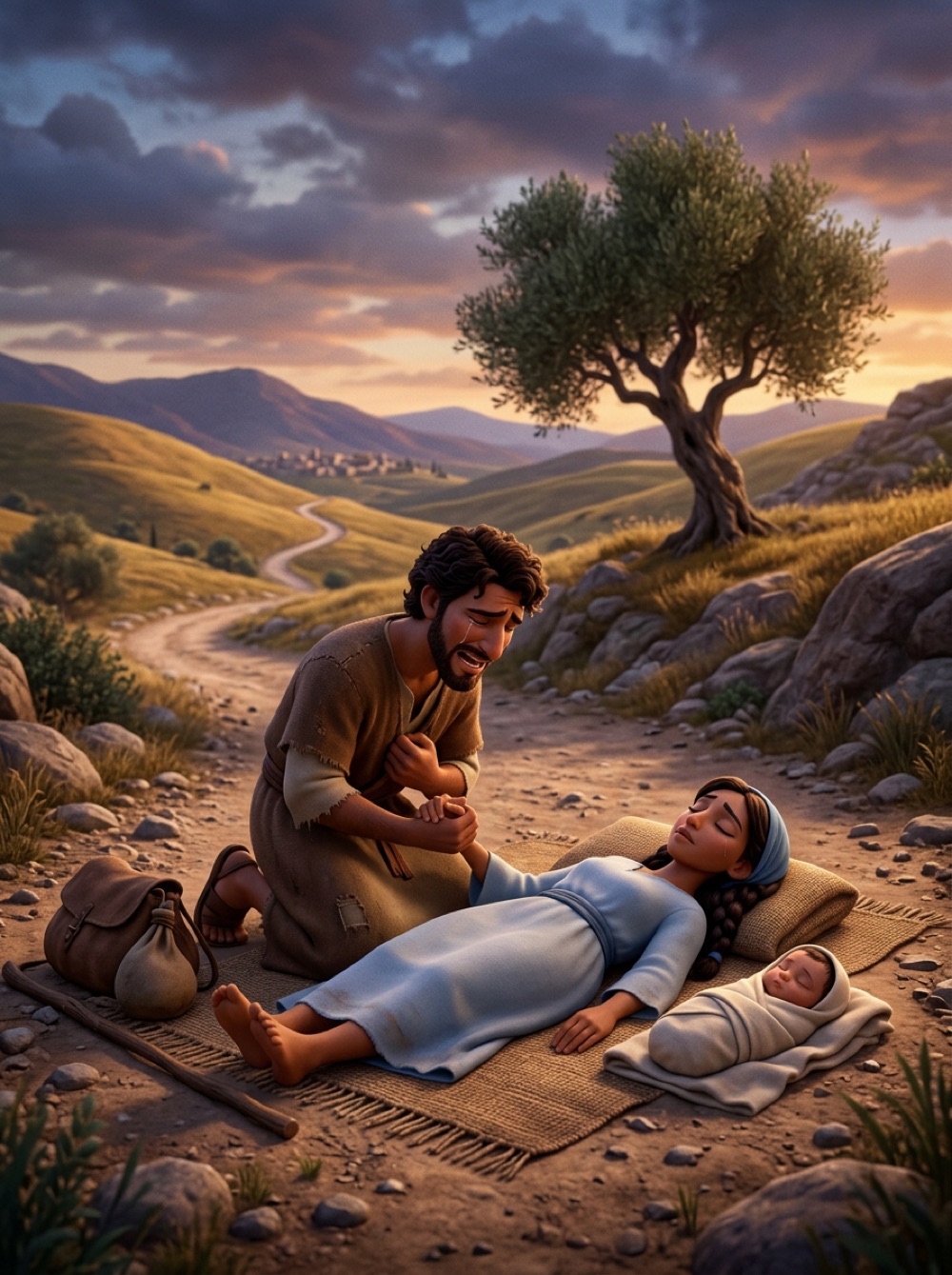
Trouble and Loss
Difficult things happened to Jacob's family in the years that followed. His daughter Dinah was wronged by a man in the land, and two of his sons made choices in anger that brought grief and shame on the whole family. Jacob's heart was heavy. But God had not forgotten him.
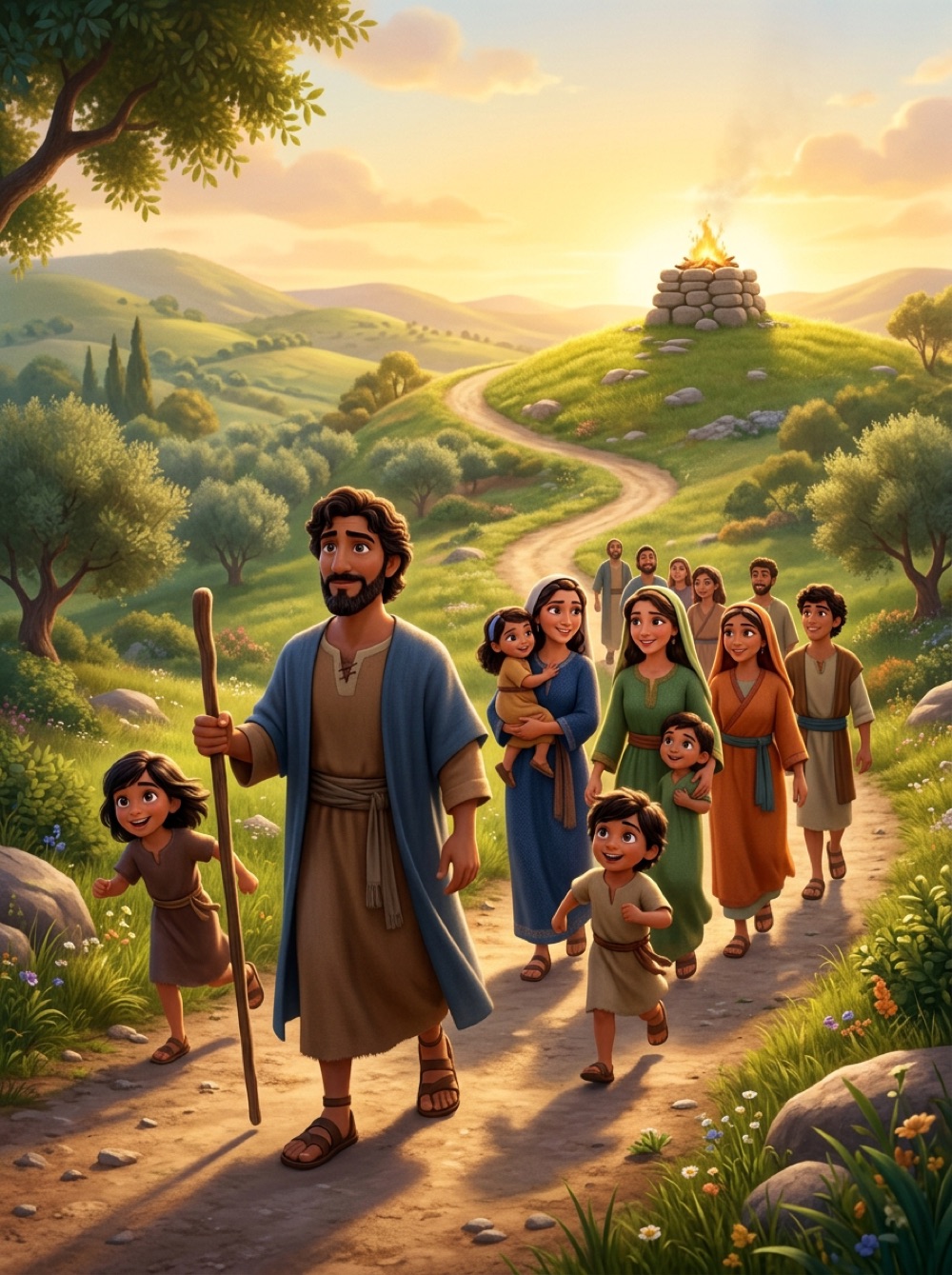
Return to Bethel
God told Jacob to go back to Bethel — the very place where he had dreamed of the stairway to heaven all those years ago, running from Esau with nothing but a stone for a pillow. Jacob gathered his household, put away every foreign idol they had collected, and went back to worship God.
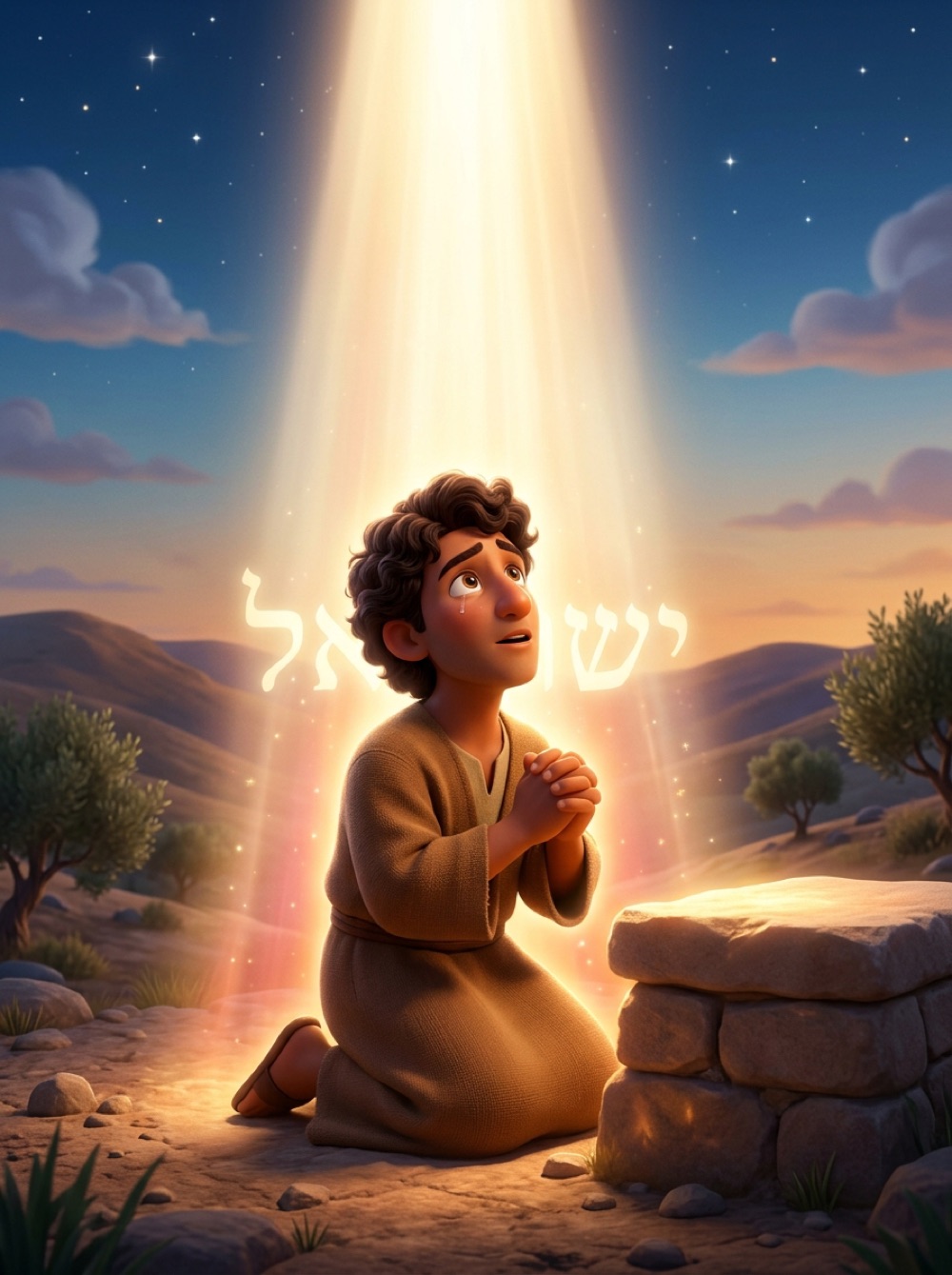
God Confirms the New Name
At Bethel, God appeared to Jacob again and confirmed everything. "Your name is Jacob — but you will be called Israel." The promise made to Abraham and Isaac now rested fully on Jacob. A great nation would come from him. Kings would come from him. And this land would belong to his family.
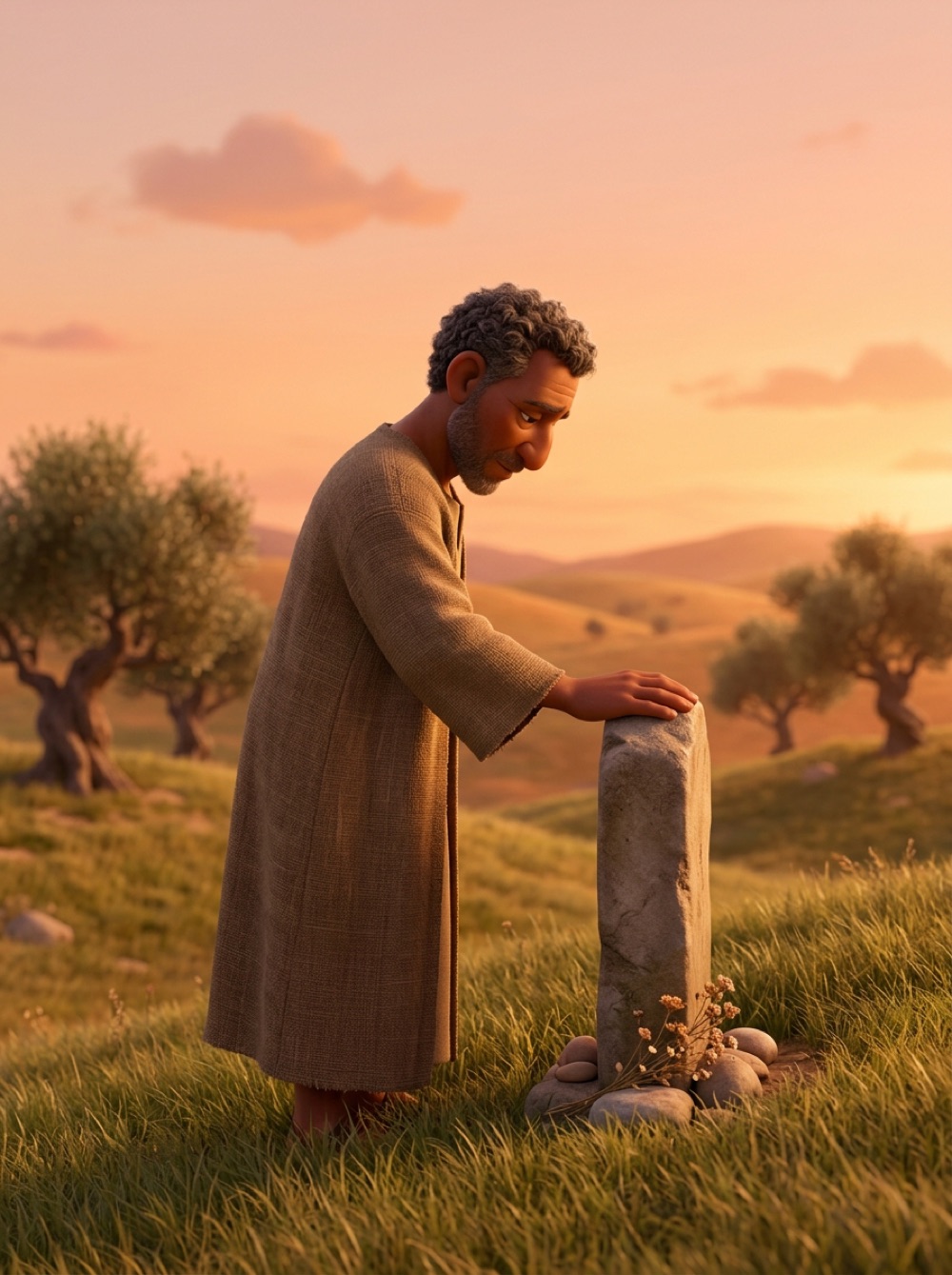
Rachel Dies
On the road from Bethel, Rachel went into labor with her second son. The birth was hard, and Rachel did not survive it. With her last breath she named the baby Ben-Oni — but Jacob called him Benjamin, which means "son of my right hand." Jacob buried Rachel there, and wept for her.
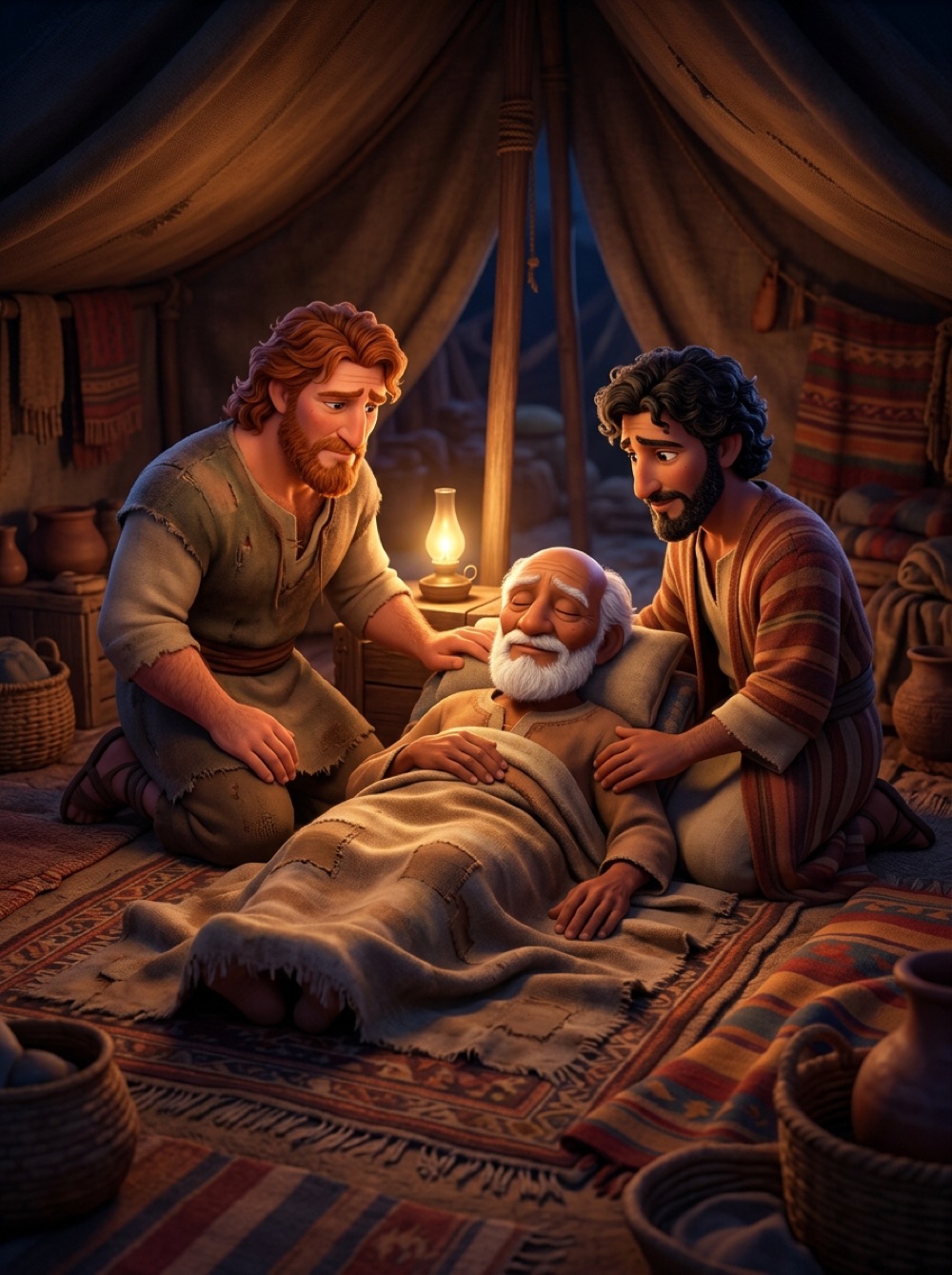
Isaac Dies
Jacob finally came home to his father Isaac in Hebron. Not long after, Isaac died at the age of one hundred and eighty years. Just like with Abraham, both sons came together to bury him — Esau and Jacob, side by side. Isaac had walked faithfully with God his whole long life.
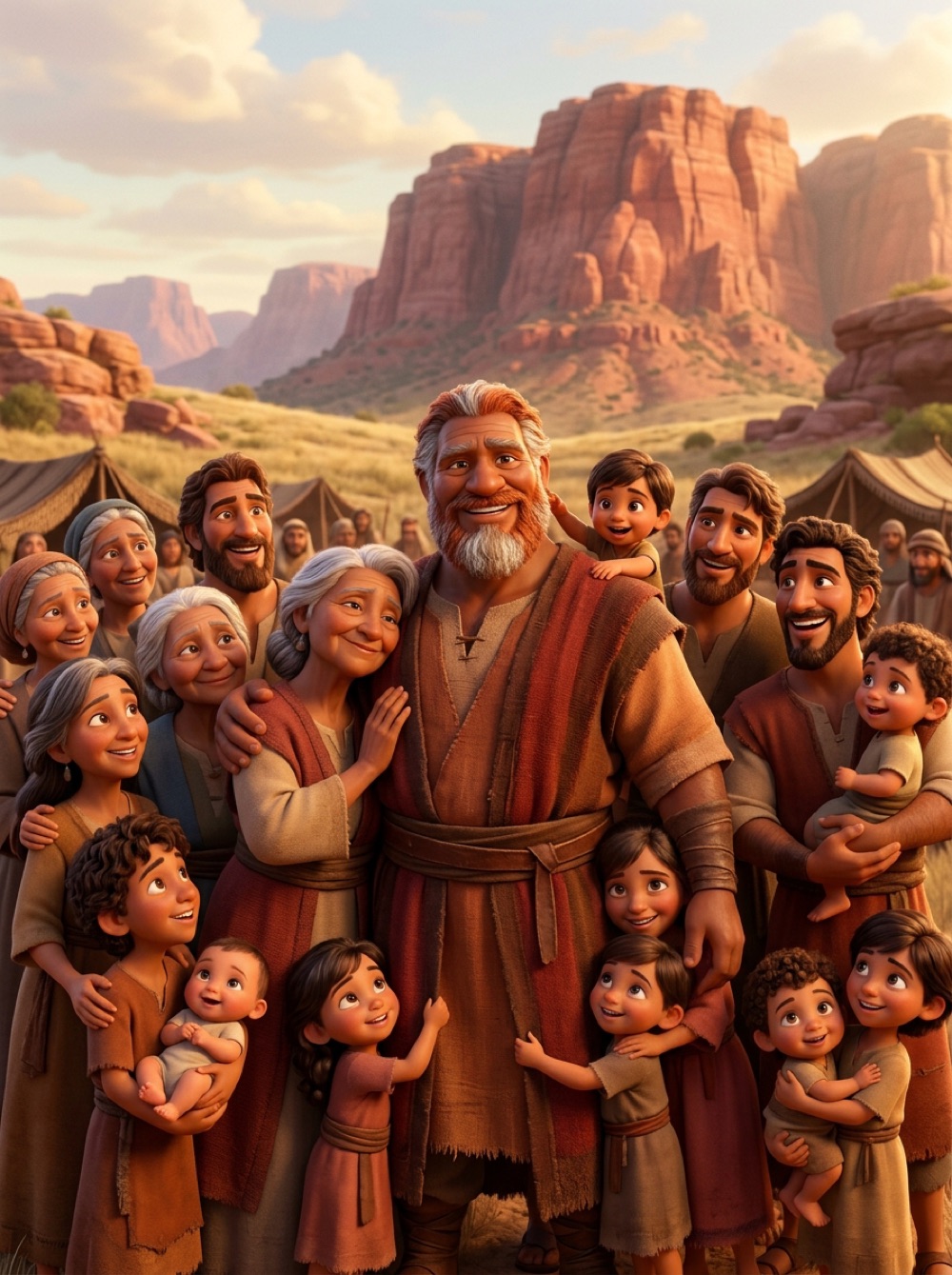
Esau's Family Grows
Esau — also called Edom — settled in the hill country to the east with his wives, his children, and his large flocks. His family grew into a whole nation of its own. God had kept His word about Ishmael. He kept it about Esau too. Every branch of this family was known to God.
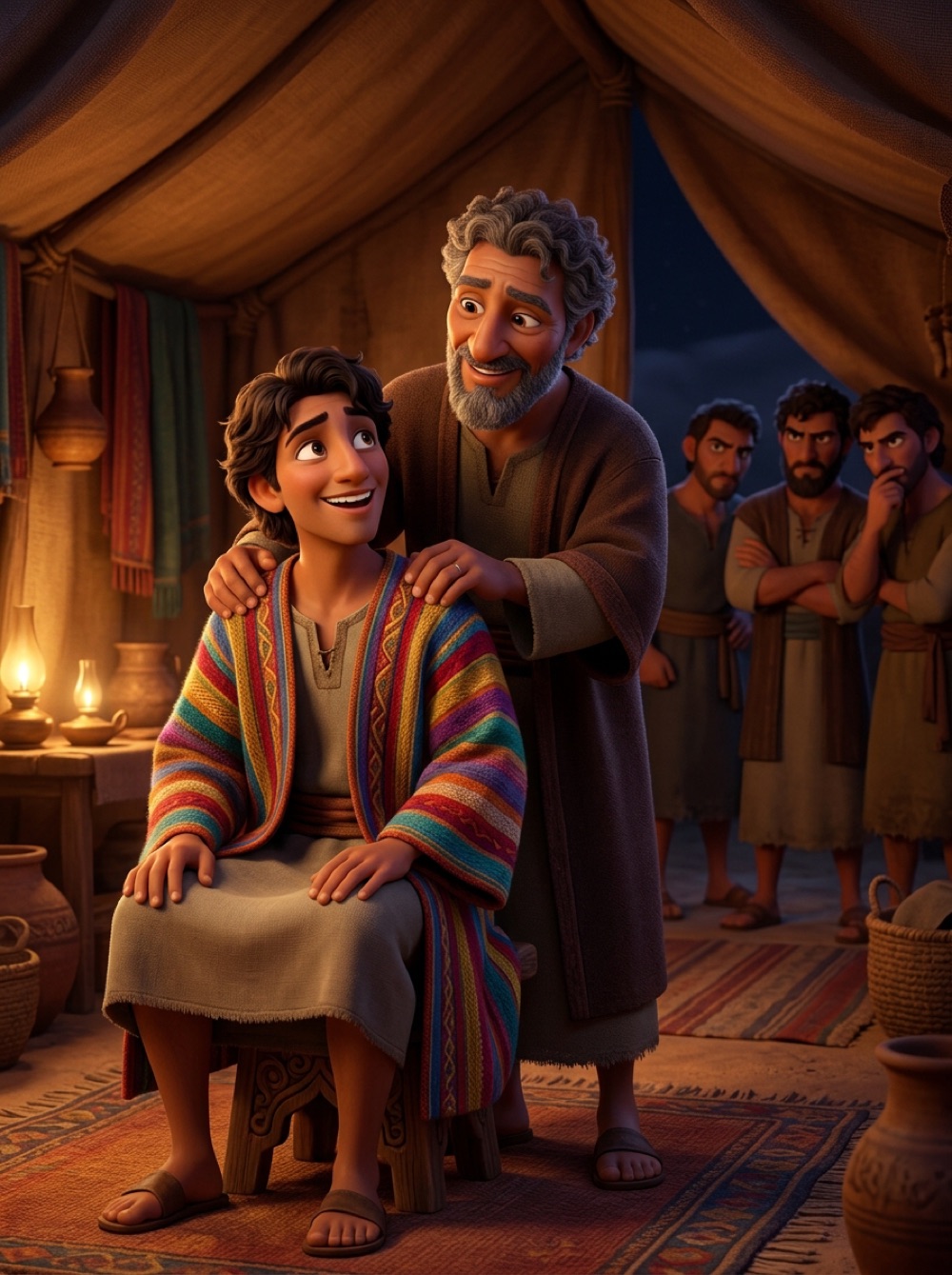
Jacob's Favourite Son
Jacob had twelve sons, but he loved Joseph most of all — because Joseph had been born to him in his old age, and because Rachel, his beloved wife, had been Joseph's mother. Jacob gave Joseph a beautiful coat of many colors. His brothers noticed. And they were not happy about it.

Joseph's Dreams
Joseph had two vivid dreams, and he told his brothers both of them. In the first, their sheaves of grain bowed down to his. In the second, the sun, moon, and eleven stars all bowed down to him. His brothers heard the dreams and their jealousy turned into something darker.

The Brothers' Plot
One day Jacob sent Joseph out to check on his brothers in the fields. The brothers saw him coming from far away — and began to plot against him. "Here comes the dreamer," they said. By the time Joseph reached them, they had already decided what they were going to do.

Thrown Into the Pit
The brothers grabbed Joseph, stripped off his beautiful coat, and threw him into an empty pit. Then they sat down to eat — while their brother called out from the ground below. Reuben, the oldest, wanted to rescue him later. But before he could, the others made an even worse decision.

Sold
A group of traders passed by on their way to Egypt. Judah had an idea — "Let's not kill him. Let's sell him." So they pulled Joseph up from the pit and sold him to the traders for twenty pieces of silver. Joseph was taken away to Egypt — a slave, alone, and far from home.
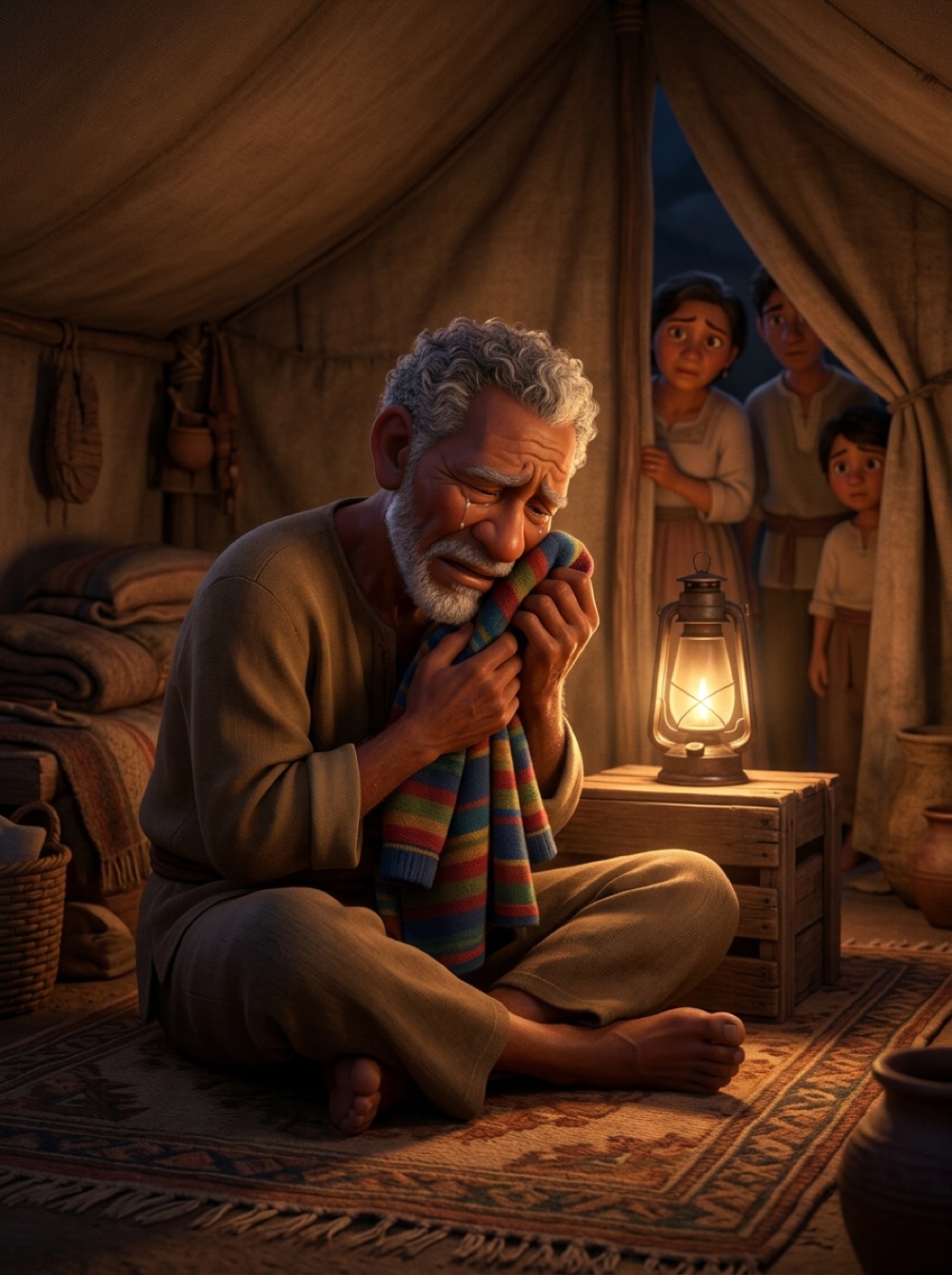
A Father's Grief
The brothers dipped Joseph's coat in goat's blood and brought it to their father. Jacob recognized it immediately. He tore his clothes and wept. He refused to be comforted. "I will mourn for my son until I die," he said. The brothers had lied — and watched their father break.
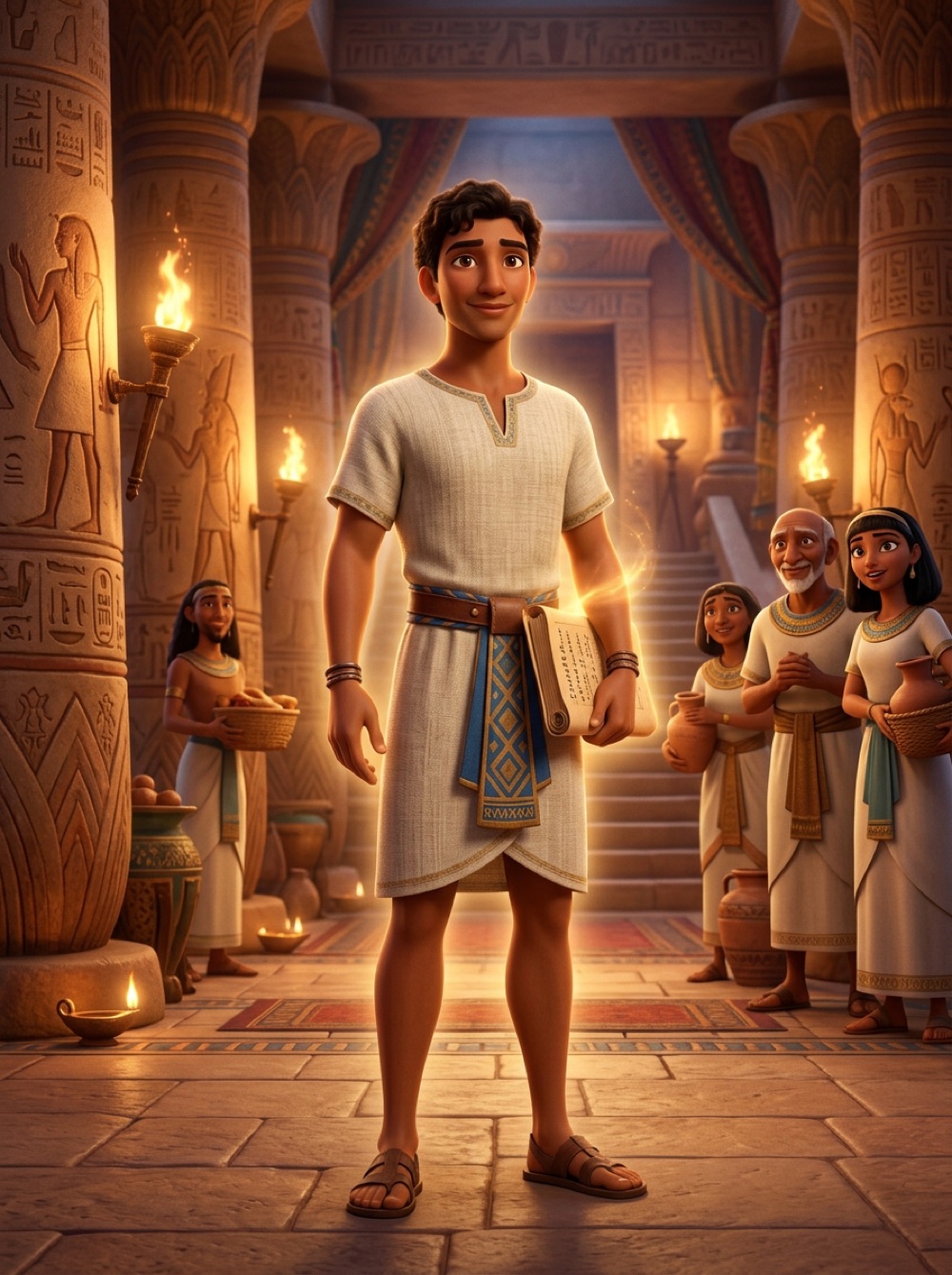
God Had Not Forgotten Joseph
Joseph arrived in Egypt as a slave, sold to a man named Potiphar. He had lost his coat, his freedom, his family, and his home. Everything had been taken from him by the people who should have protected him most. But the Bible says this quietly: God was with Joseph.
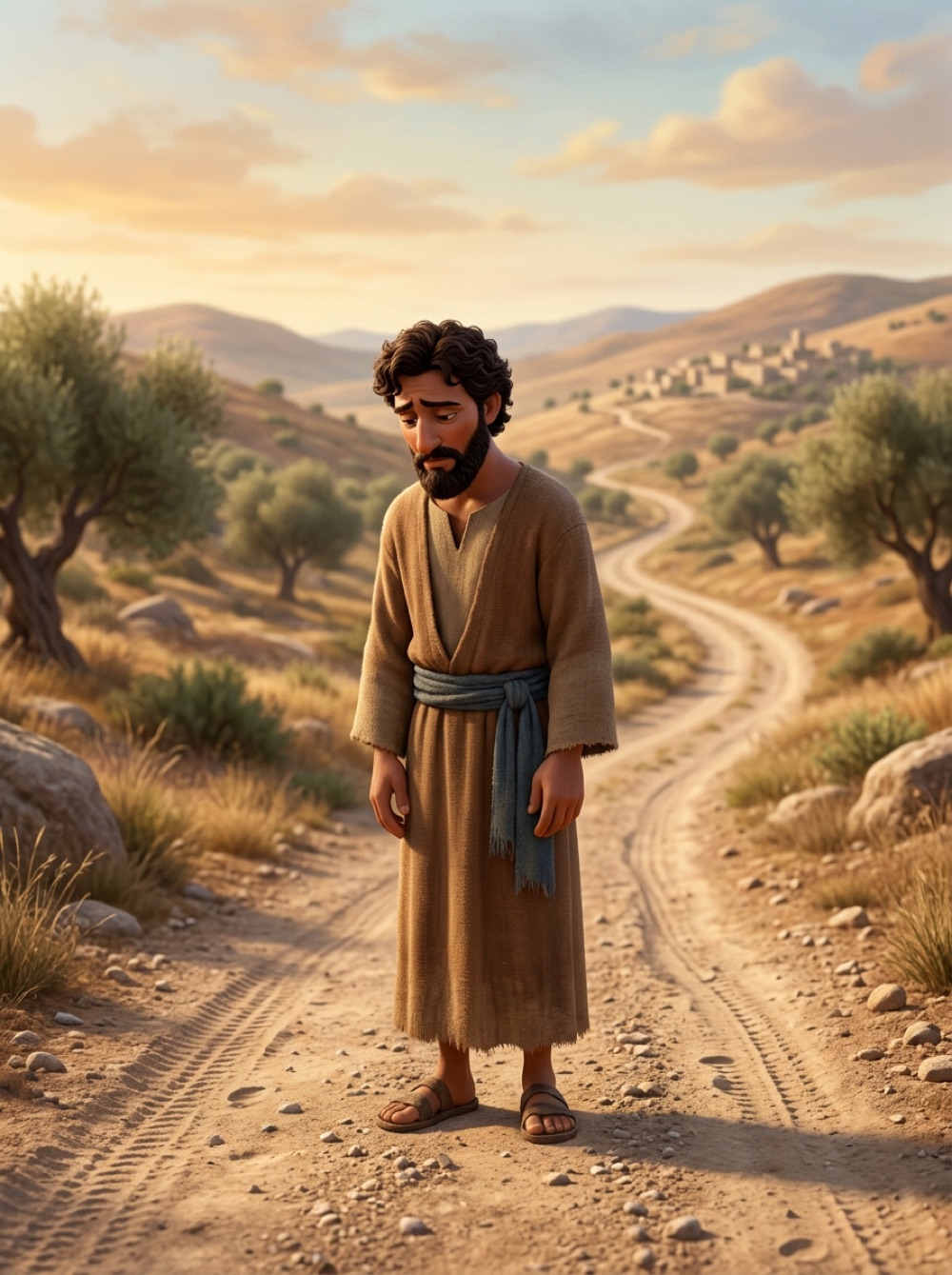
Judah's Detour
While Joseph was in Egypt, his brother Judah made serious mistakes of his own — breaking promises to his family and acting dishonestly. When the truth came out, Judah was exposed and had to face what he had done. God was watching every branch of this family, not just Joseph's story.
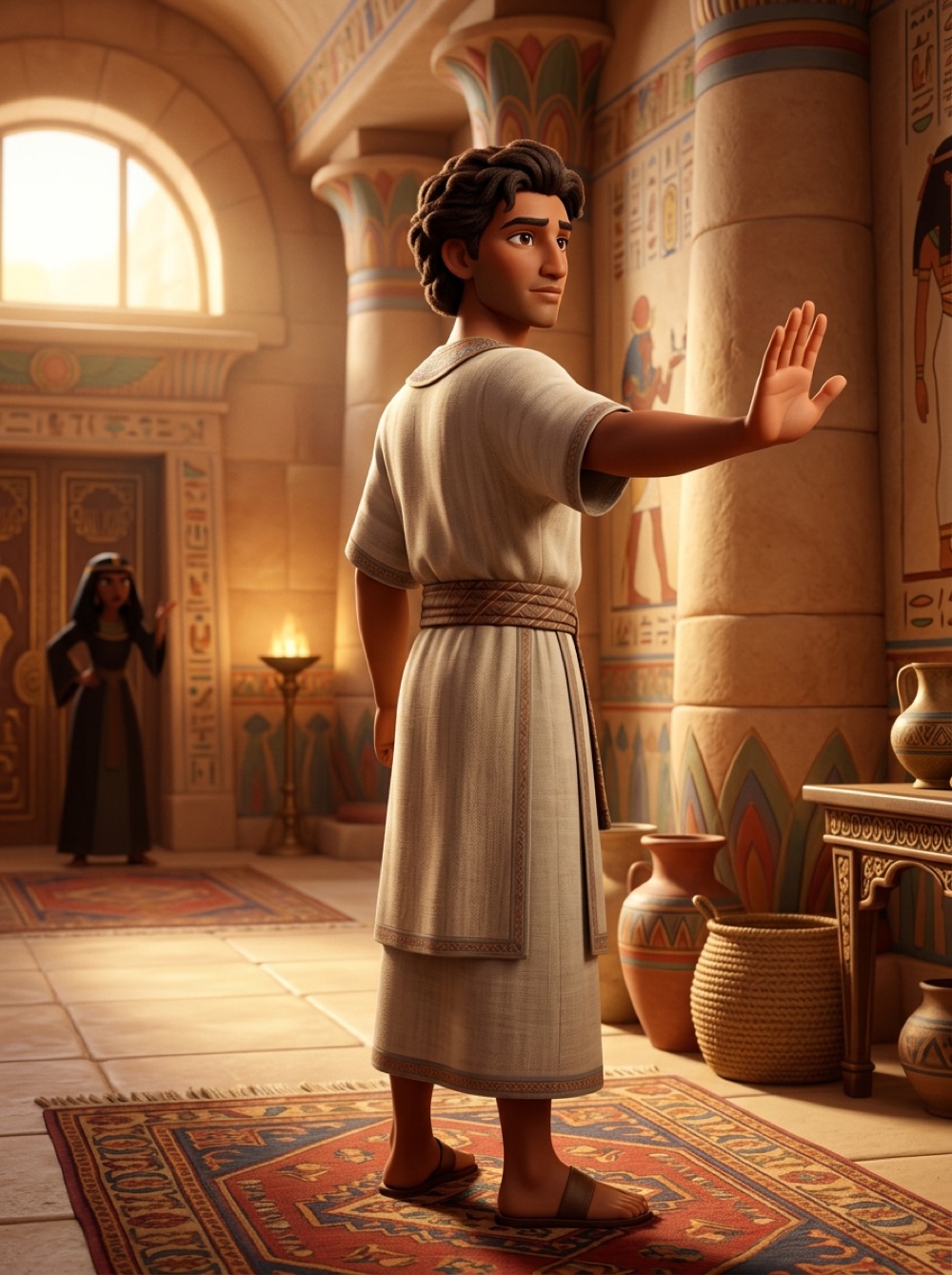
Joseph Chooses Right
Joseph worked hard for Potiphar, and God blessed everything he touched. Potiphar trusted him completely. But Potiphar's wife wanted Joseph to do something wrong — something that would betray his master and dishonor God. Day after day she pressured him. Day after day Joseph said no.
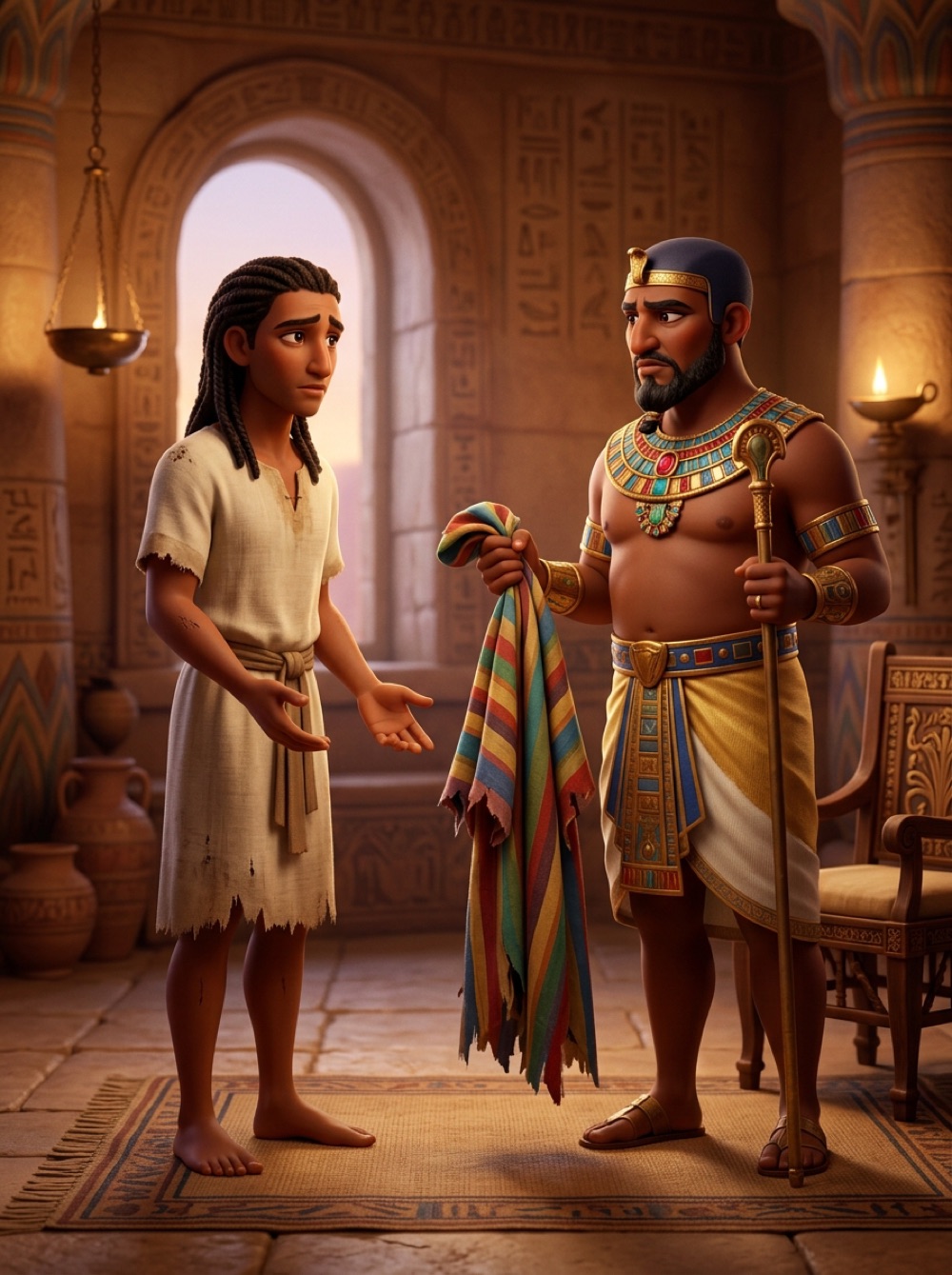
Falsely Accused
One day Potiphar's wife grabbed Joseph's robe as he ran from her. When Potiphar came home, she used the robe as false evidence and lied — saying Joseph had attacked her. Potiphar believed his wife and threw Joseph into prison. Joseph had done everything right — and still ended up in a cell.
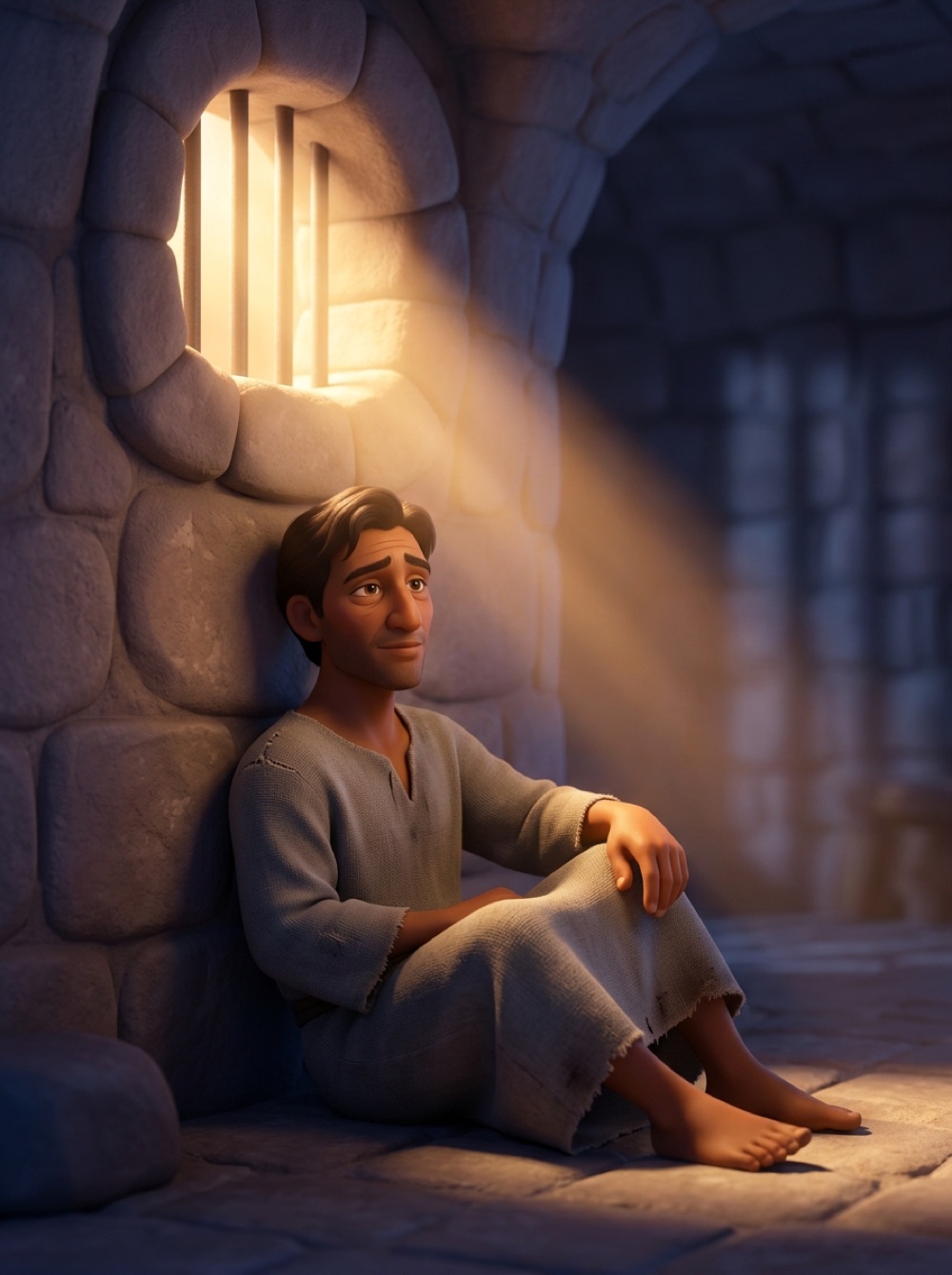
Even in Prison, God Was There
The prison door shut behind Joseph. He had lost his position, his reputation, and his freedom — all because he had refused to do wrong. But the Bible says something important: God was with Joseph in that prison. He showed him kindness and caused the prison warden to trust him completely.
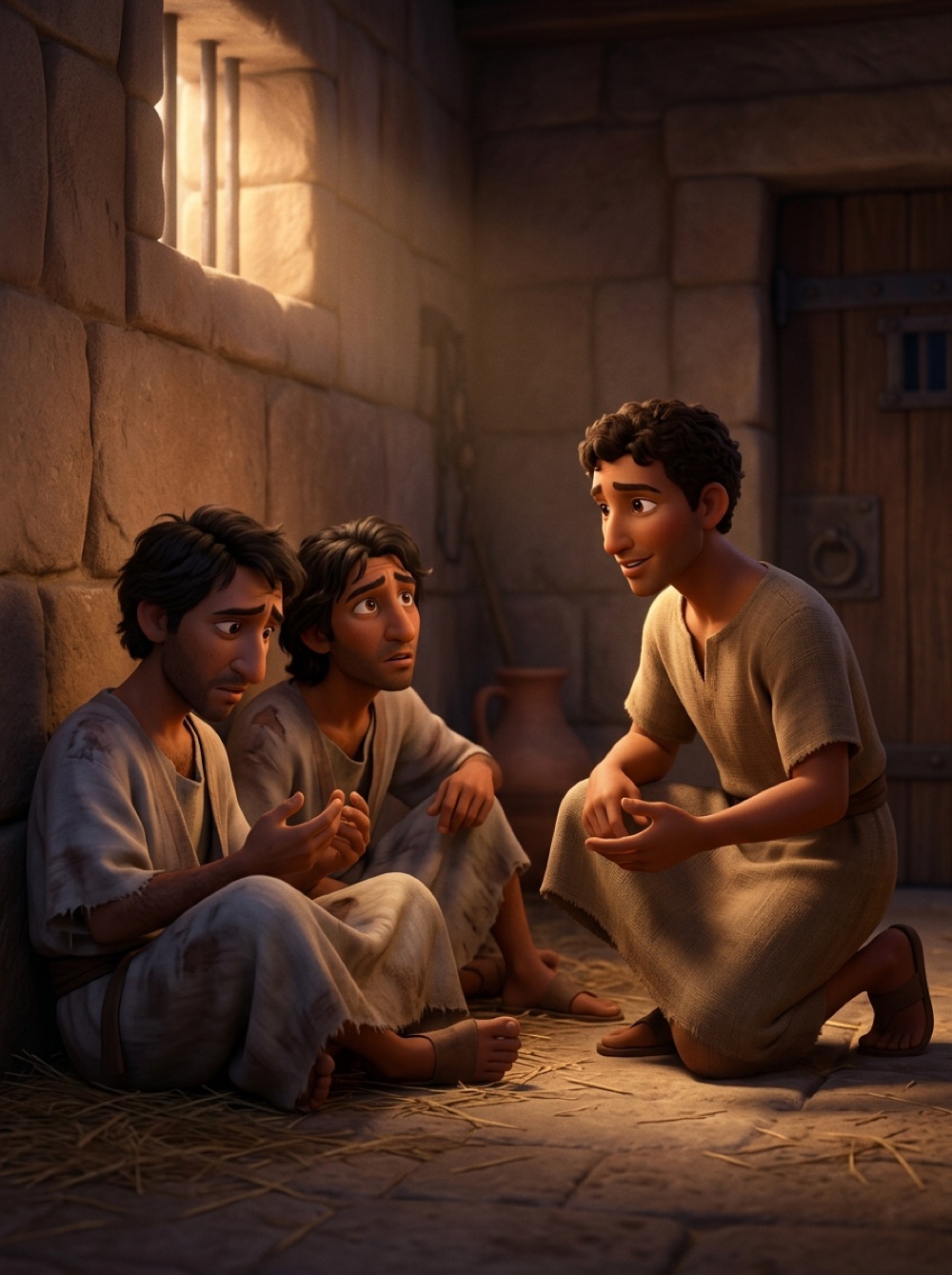
Two Prisoners, Two Dreams
Two of Pharaoh's officials were thrown into the same prison as Joseph — his chief cupbearer and his chief baker. One night both men had strange, vivid dreams that troubled them deeply. In the morning Joseph found them looking worried. "Tell me your dreams," he said. "Interpretations belong to God."
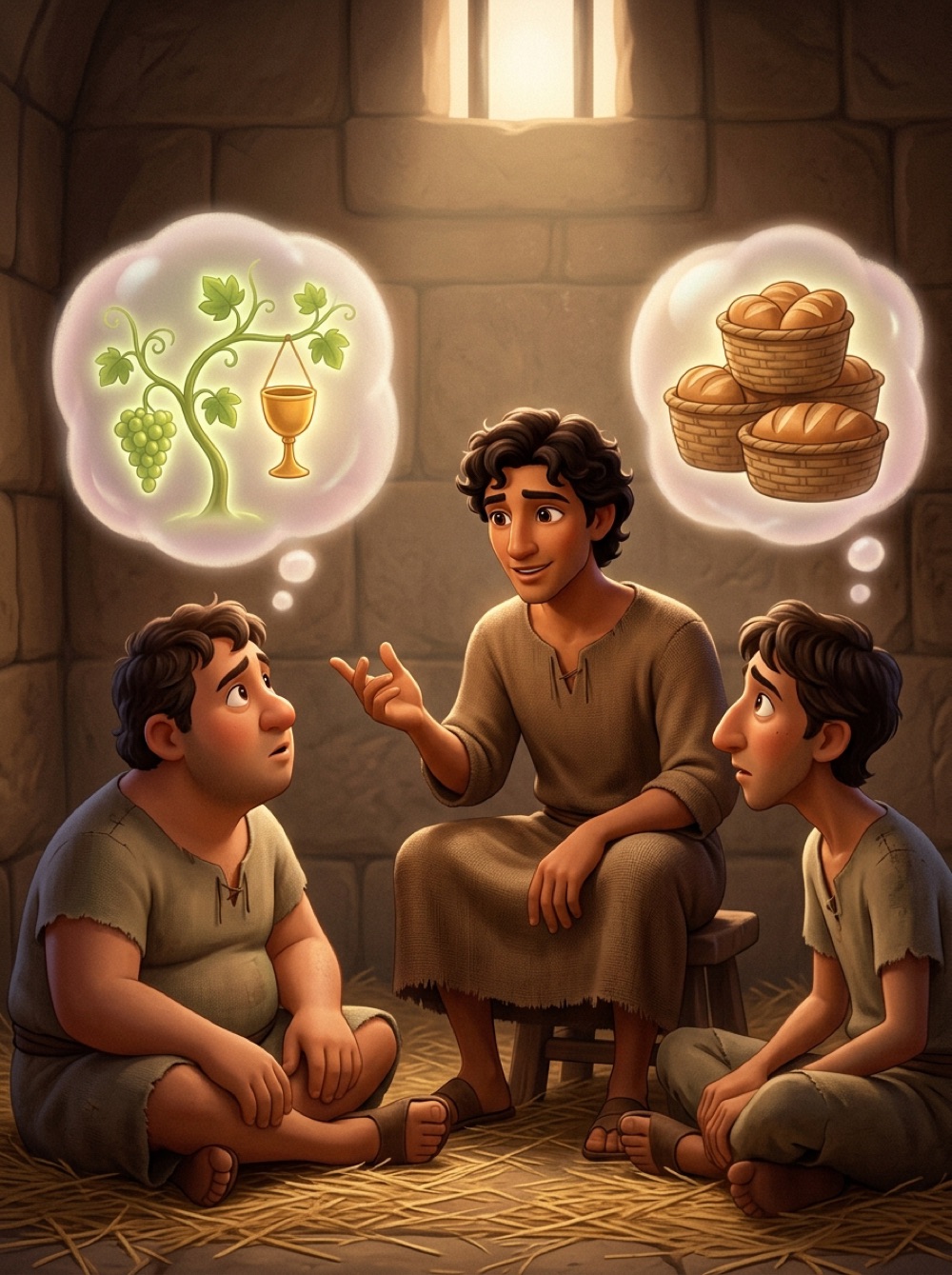
Joseph Interprets the Dreams
Joseph listened carefully and gave each man God's interpretation. Good news for the cupbearer — in three days he would be restored to his position. Hard news for the baker — in three days things would not go well for him. Everything happened exactly as Joseph had said.

Forgotten
Before the cupbearer left prison, Joseph asked him one thing. "Please remember me to Pharaoh. I was taken from my home and put in this prison for something I didn't do." But when the cupbearer was restored to his place in the palace — he forgot all about Joseph. Two more years passed.
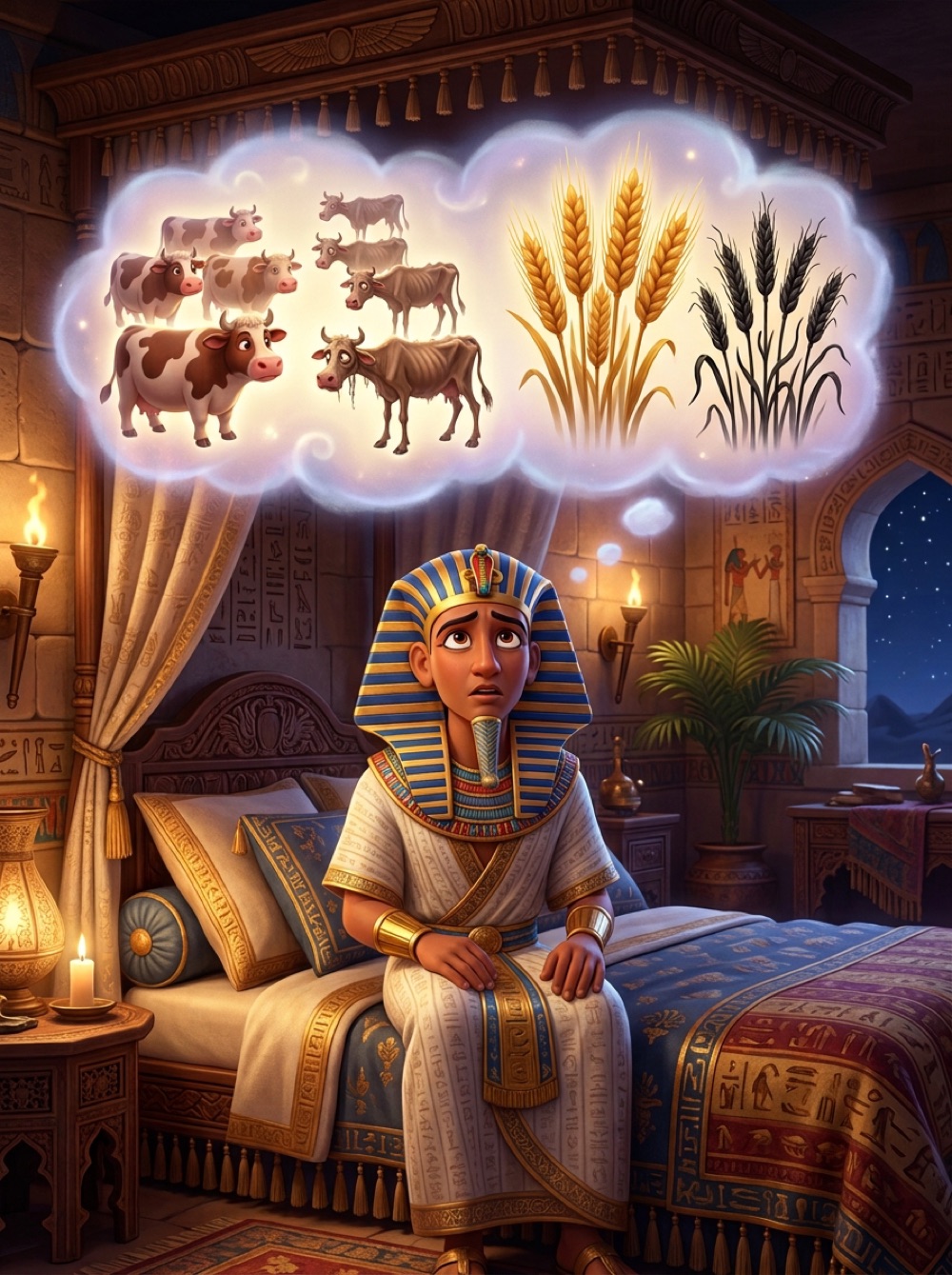
Pharaoh's Troubling Dreams
Two years later, Pharaoh himself had two disturbing dreams. In the first, seven fat healthy cows were swallowed by seven thin, ugly cows. In the second, seven full heads of grain were swallowed by seven thin, scorched ones. Pharaoh woke up shaken — and none of his wise men could explain the dreams.
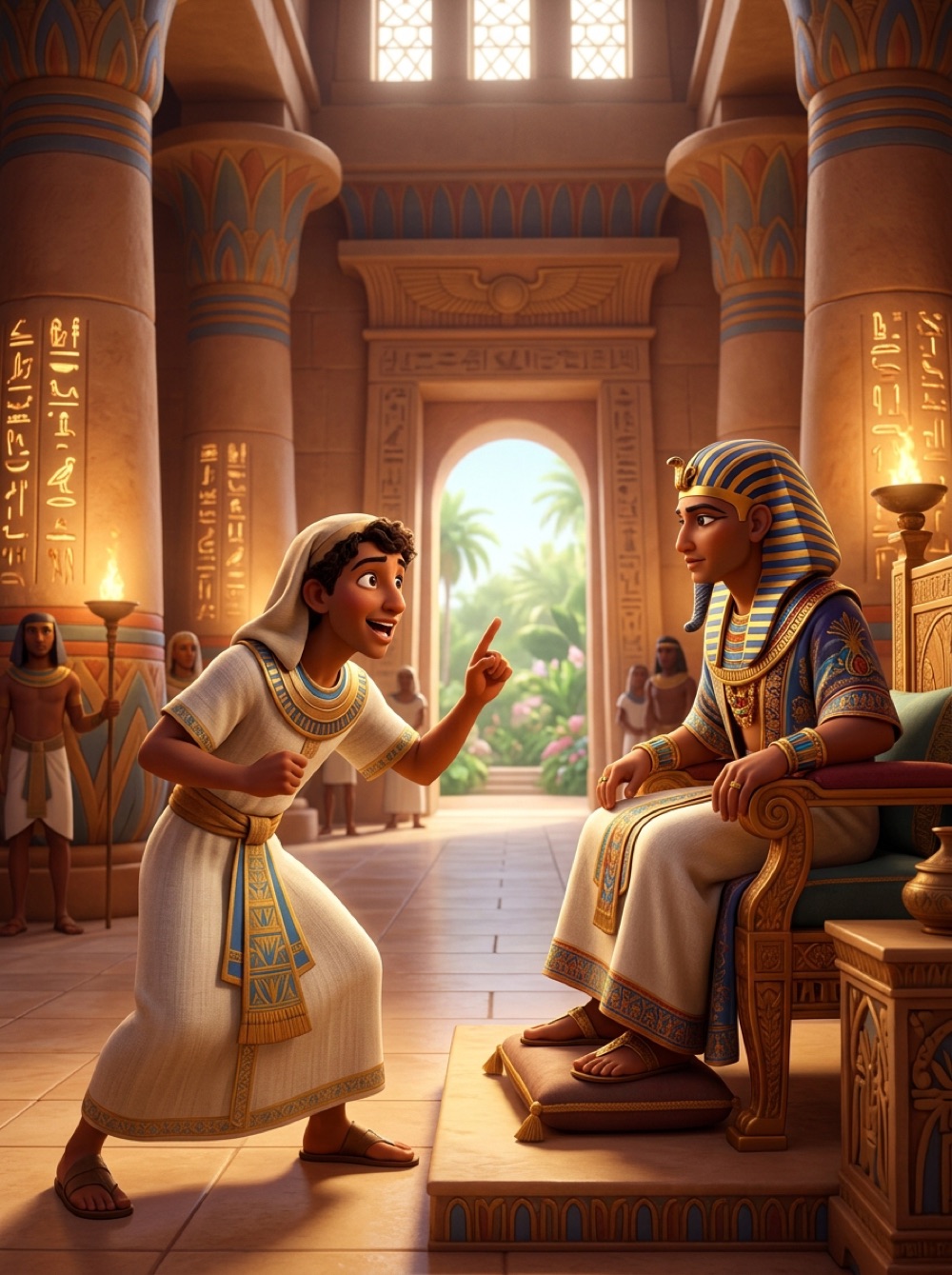
The Cupbearer Remembers
Finally the cupbearer remembered Joseph. "There is a young Hebrew man in prison," he told Pharaoh, "who interpreted my dream perfectly two years ago." Pharaoh sent for Joseph immediately. Joseph shaved, changed his clothes, and stood before the most powerful man in the world.
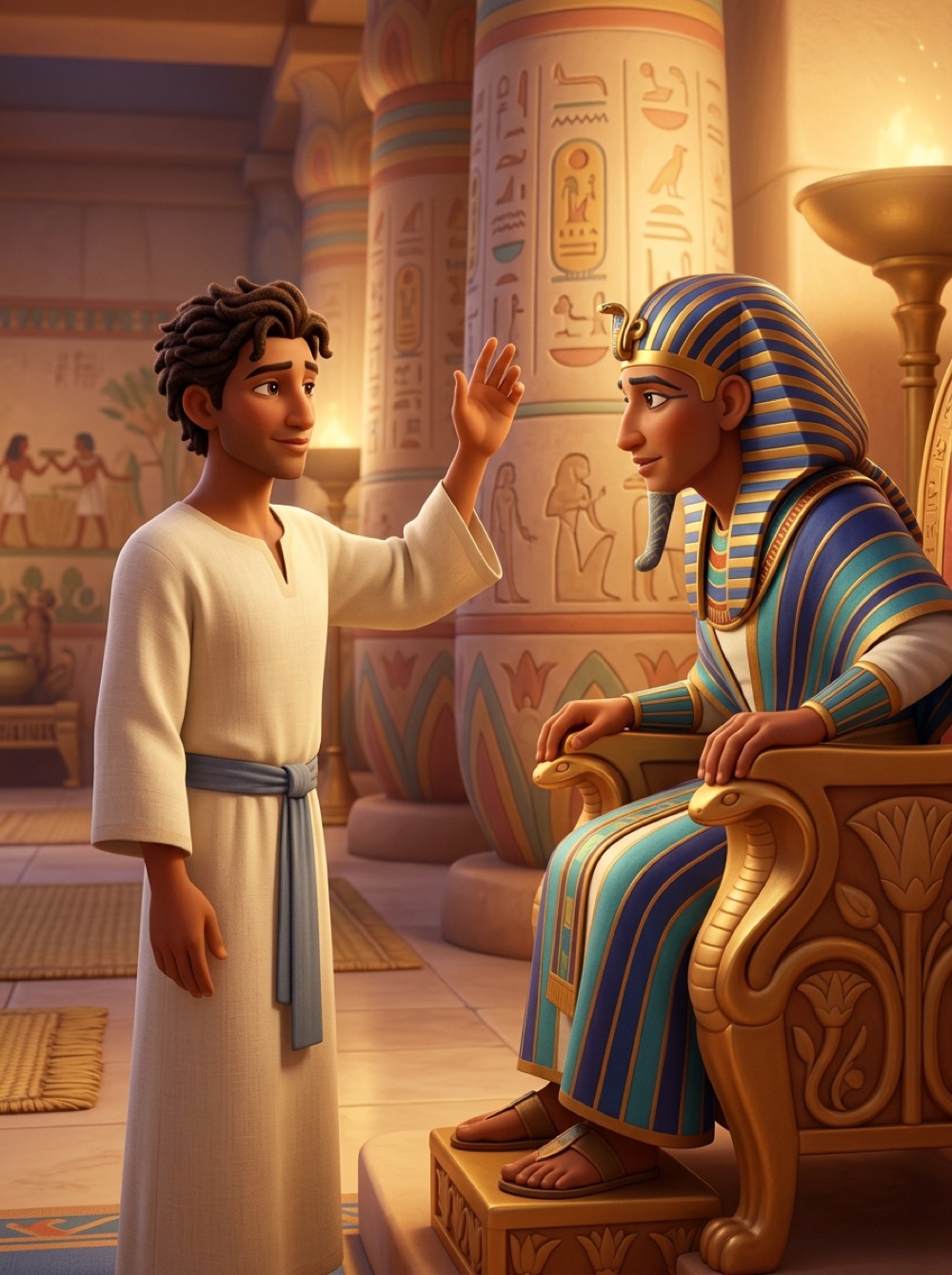
God Will Give Pharaoh the Answer
Pharaoh told Joseph both dreams. Joseph listened, then answered clearly. "I cannot interpret dreams — but God can, and God will give Pharaoh the answer." Then he explained: seven years of plenty were coming to Egypt, followed by seven years of severe famine. The two dreams meant the same thing — and it was certain.
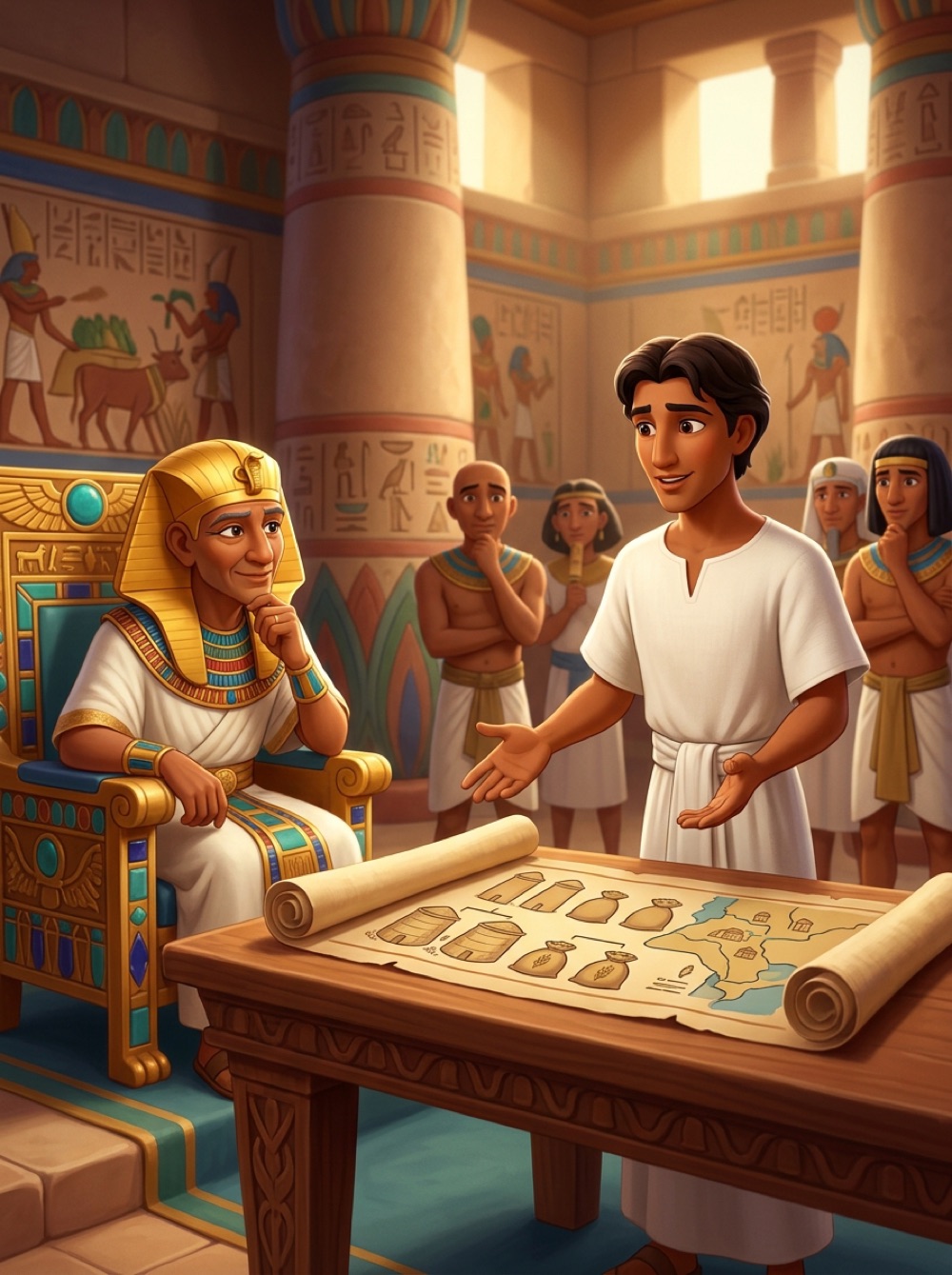
Joseph's Wise Plan
Joseph didn't just give the interpretation — he gave Pharaoh a plan. "Find a wise man and put him in charge of storing one fifth of all crops during the seven good years. Then when the famine comes, Egypt will have enough." Pharaoh looked at his officials and asked, "Can we find anyone wiser than this man?"
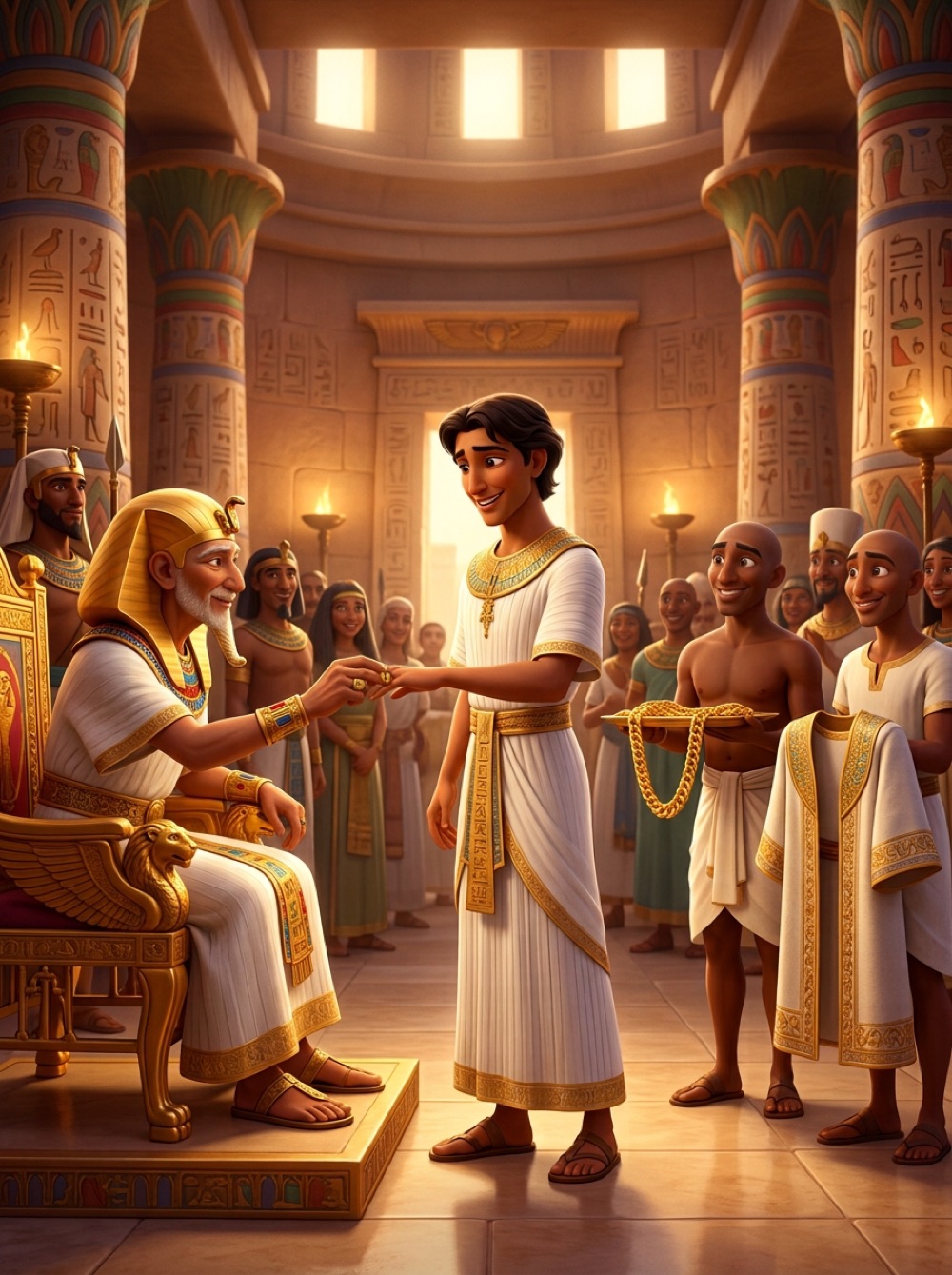
From Prison to Palace
Pharaoh put his own signet ring on Joseph's finger. He dressed him in fine robes and placed a gold chain around his neck. He gave Joseph a chariot and made him second in command over all of Egypt. The boy who had been thrown in a pit by his brothers now ruled a nation.
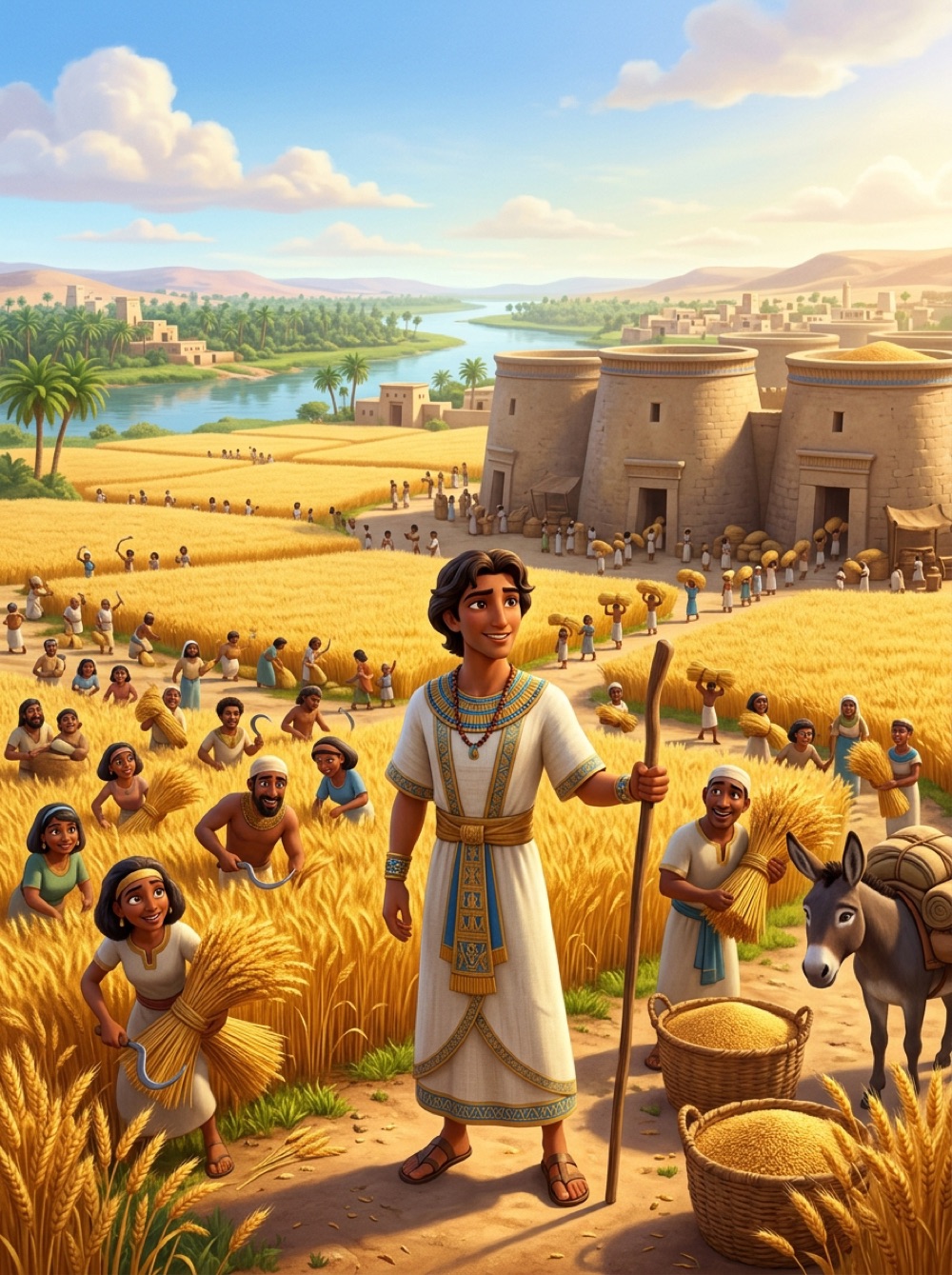
Seven Years of Plenty
Just as God had said, seven years of extraordinary harvests came to Egypt. Joseph traveled the land collecting and storing grain in enormous quantities — so much grain it was like the sand of the sea, too much to count. He stored up more than anyone thought possible, preparing for what was coming.
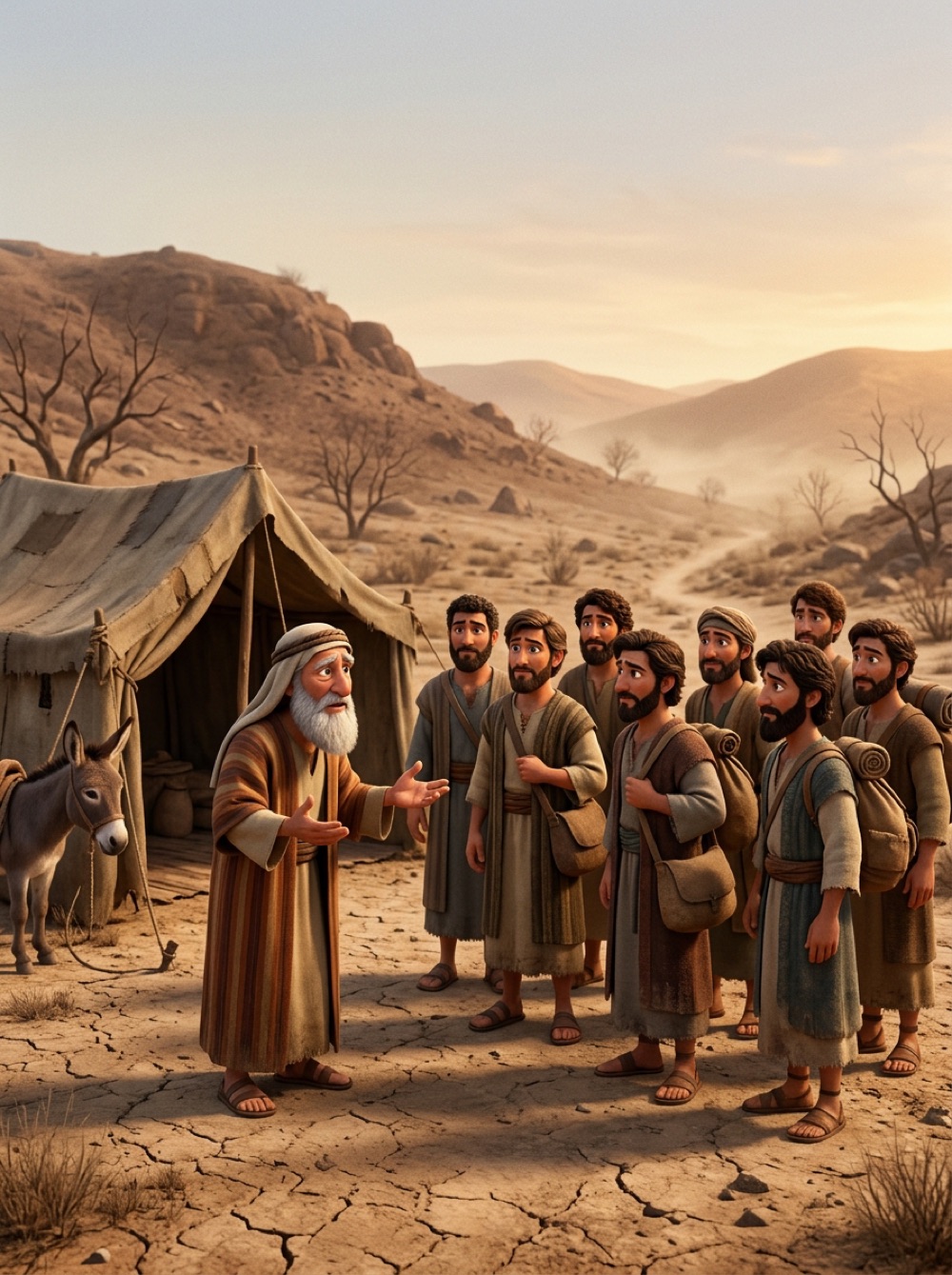
The Famine Reaches Canaan
Then the seven years of famine arrived — and it reached far beyond Egypt, all the way to Canaan where Jacob and his family lived. When Jacob heard there was grain in Egypt, he sent ten of his sons to buy food. He kept Benjamin, the youngest, at home — afraid to lose him too.
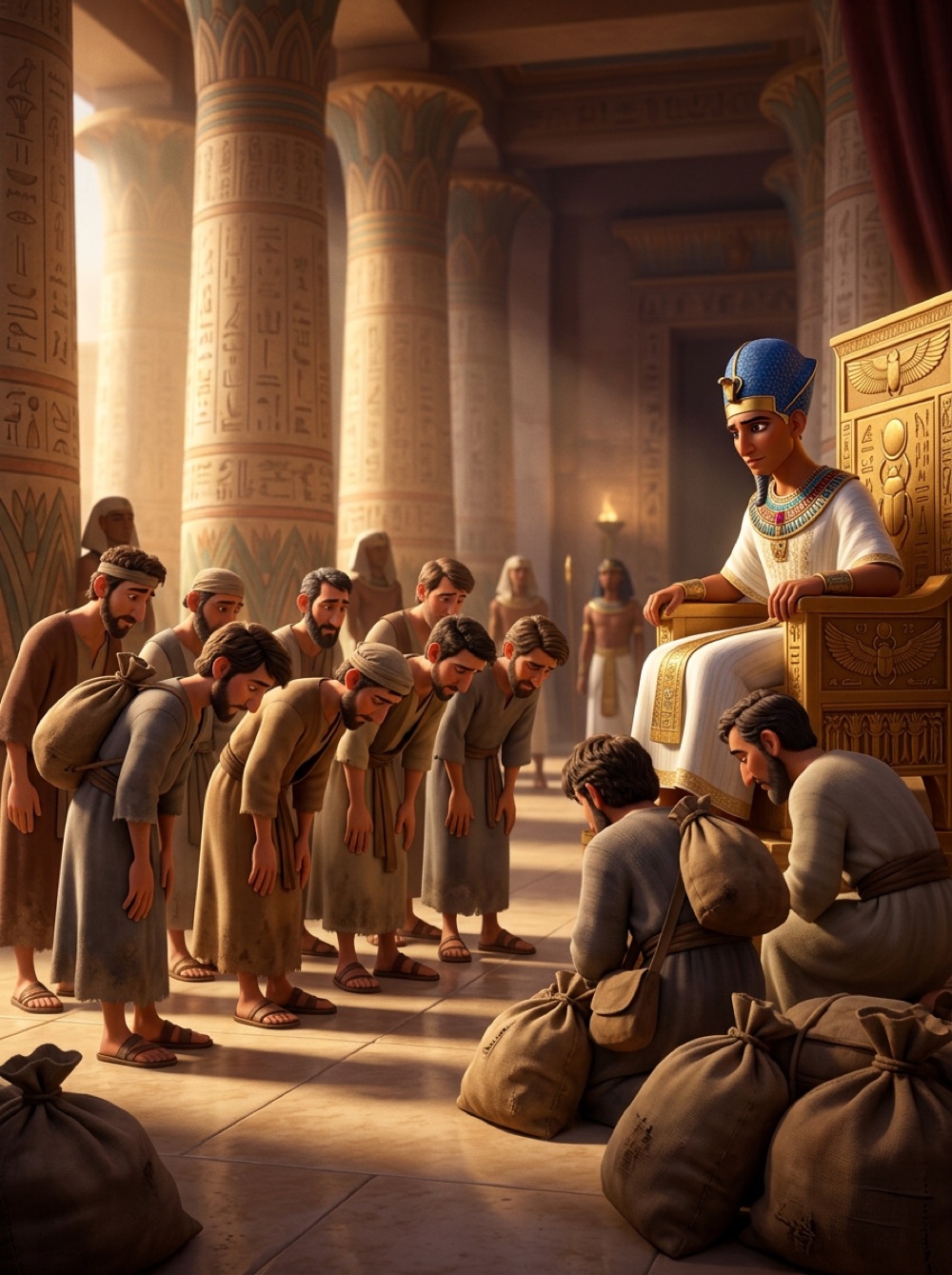
Brothers Before the Governor
The ten brothers arrived in Egypt and bowed down before the governor who controlled the grain supply. They had no idea they were bowing before their brother Joseph. Joseph recognized them immediately — but said nothing. He spoke through an interpreter and treated them like strangers.
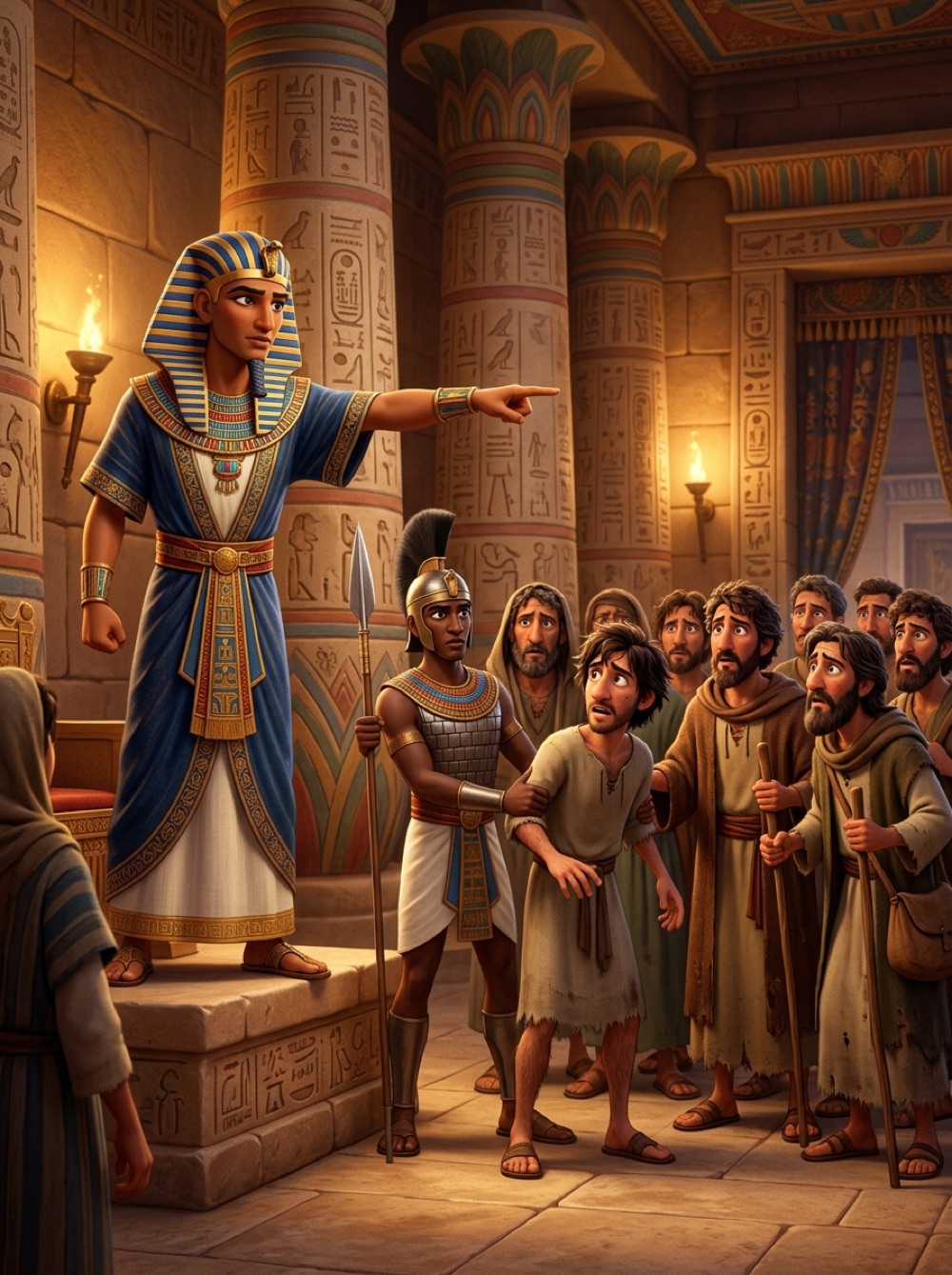
Joseph Tests His Brothers
Joseph accused them of being spies. He put them in prison for three days — letting them feel a small taste of what he had lived for years. On the third day he kept Simeon as a hostage and sent the others home with grain, on one condition: they must return with their youngest brother Benjamin.
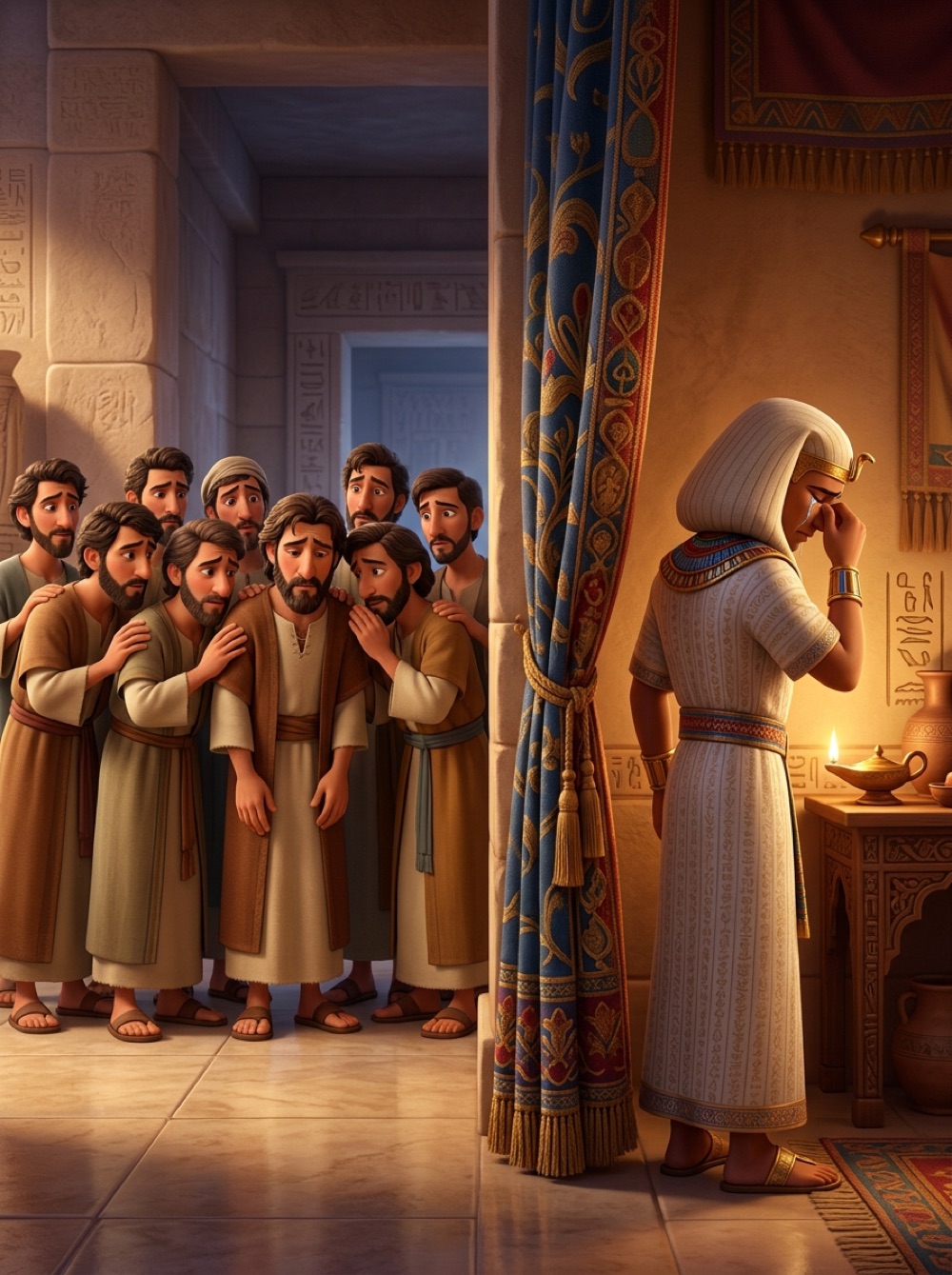
The Brothers Remember Their Sin
On the road home the brothers said to each other, "This is happening because of what we did to Joseph. We saw his distress and ignored him. Now we are being paid back." They didn't know Joseph had understood every word — because he had stepped away to weep in private.
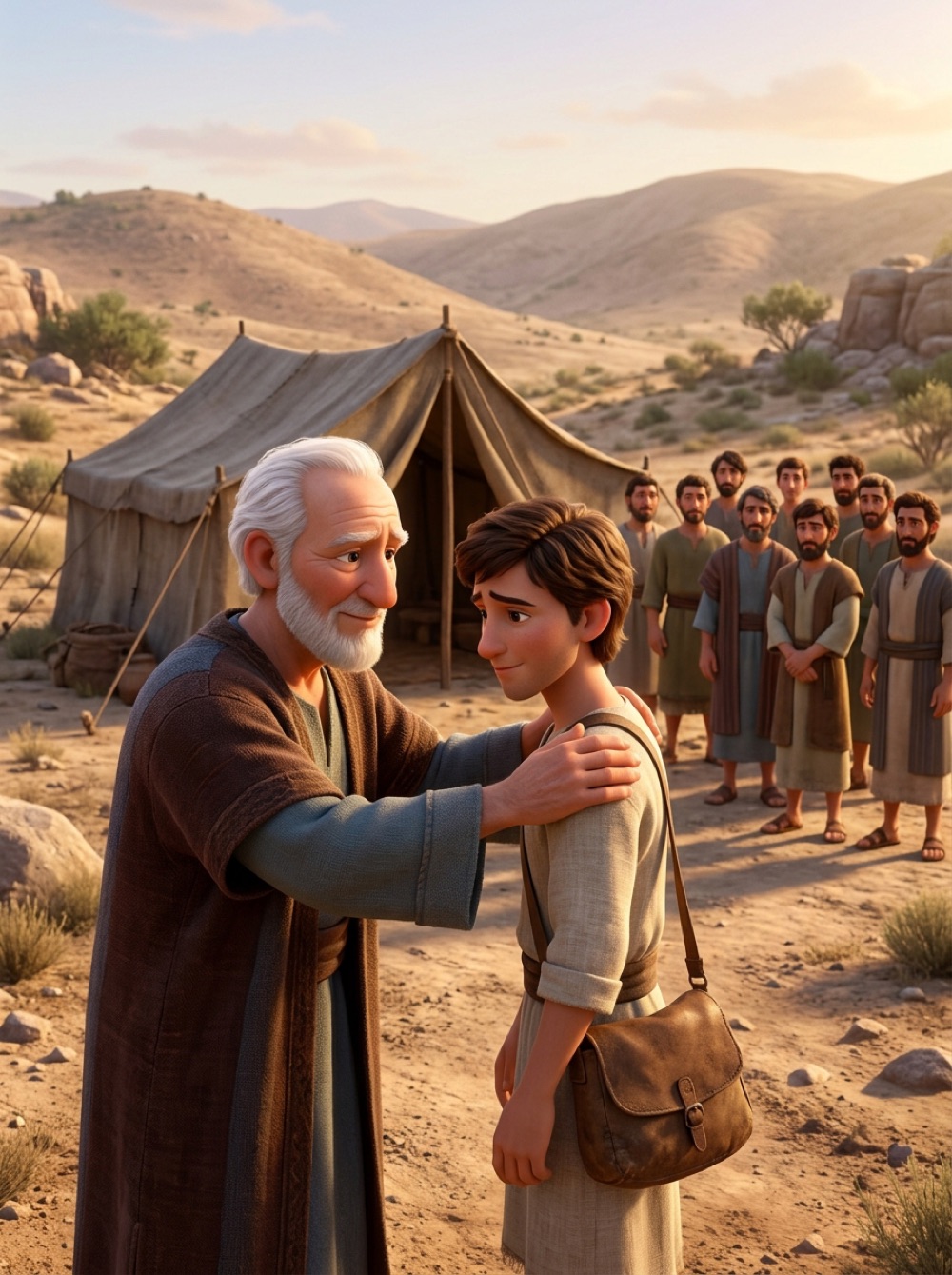
Benjamin Must Go
The grain ran out and the family needed to return to Egypt. But Simeon was still held there, and the governor had demanded Benjamin. Jacob refused for a long time — he could not bear to risk losing another of Rachel's sons. But eventually the famine left him no choice. Benjamin went with his brothers.
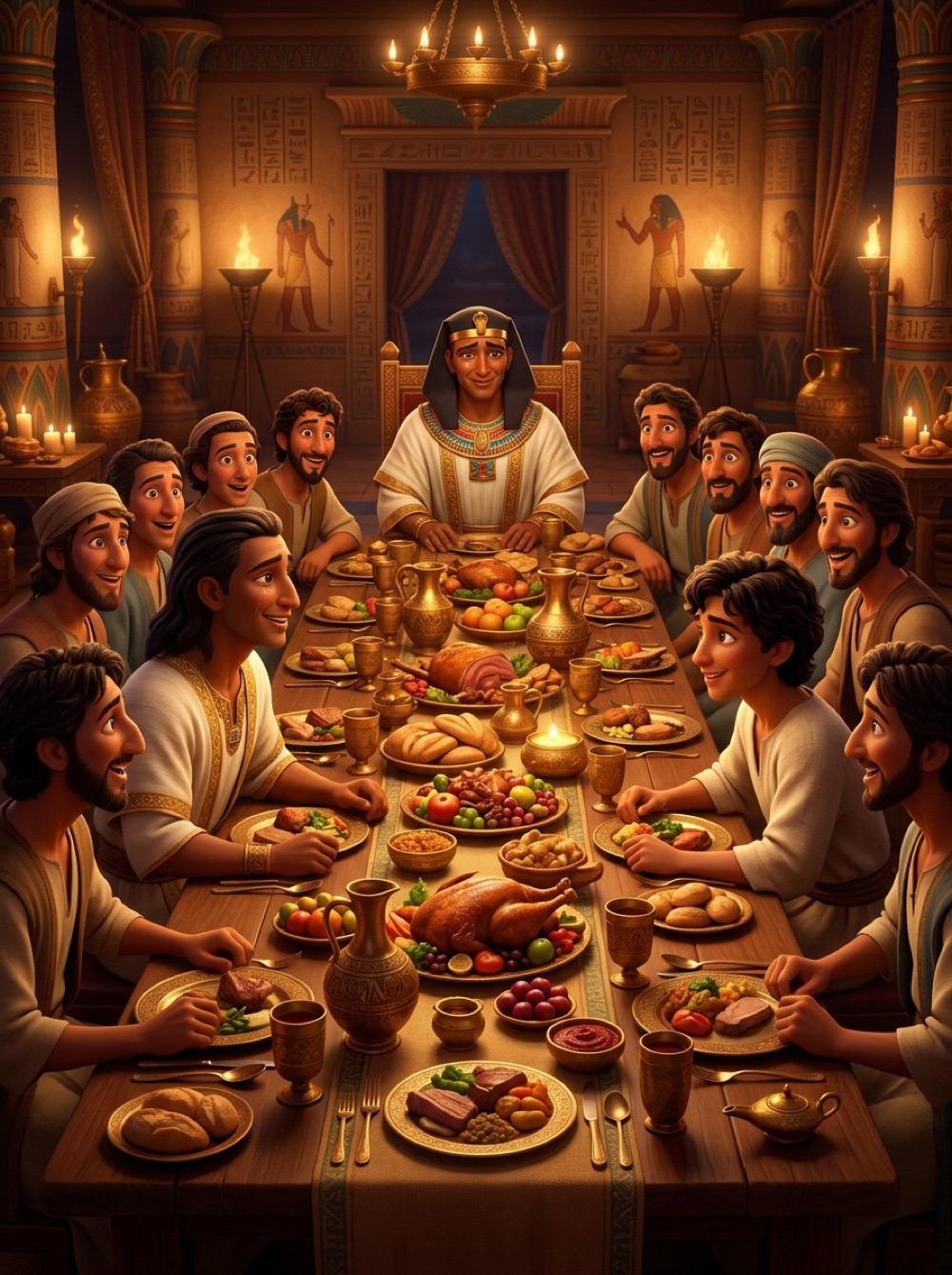
Joseph Sees Benjamin
When Joseph saw Benjamin — his only full brother, Rachel's other son — he had to leave the room. He went to his private quarters and wept. Then he washed his face, composed himself, and came back out. He seated his brothers at the table, and Benjamin's portion was five times larger than everyone else's.
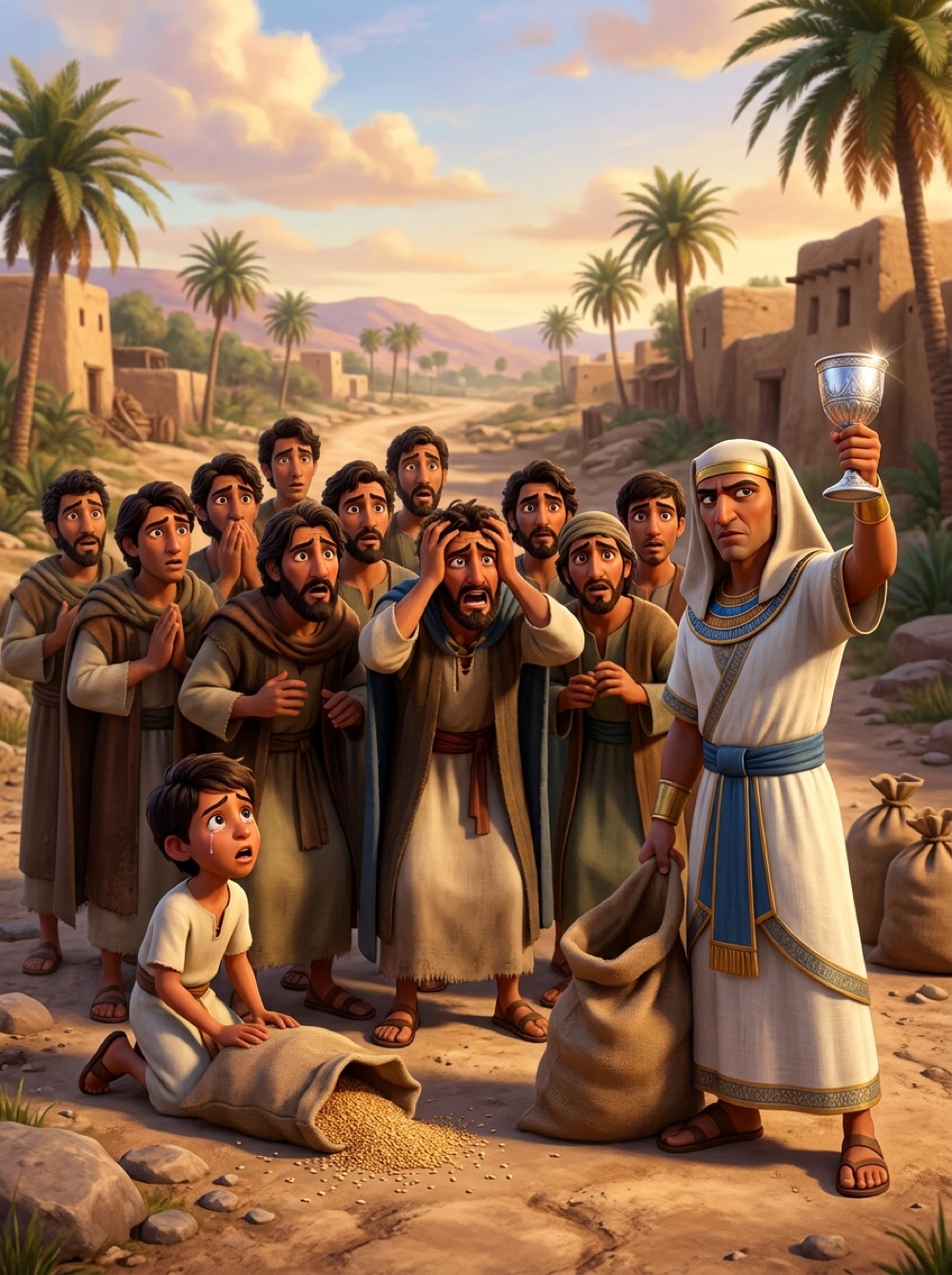
The Silver Cup
Joseph had his silver cup hidden inside Benjamin's sack before the brothers left Egypt. Then he sent his steward after them. The steward caught up and searched every sack — and found the cup in Benjamin's. The brothers tore their clothes in despair and turned back to face the governor.
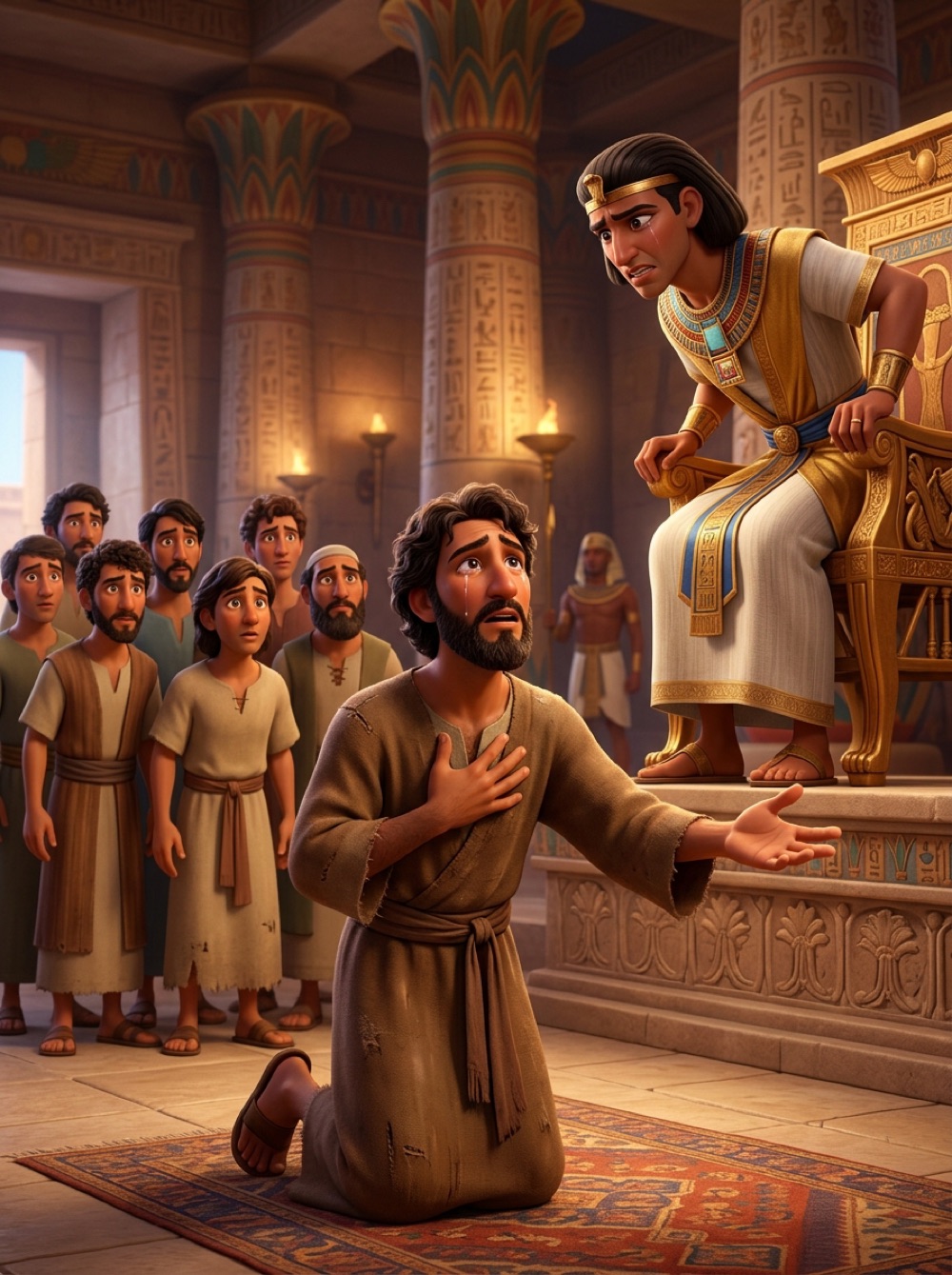
Judah Steps Forward
Back before Joseph, it was Judah who spoke. He told the whole story — their father's grief, Benjamin being the last of Rachel's sons, how Jacob would die if Benjamin didn't come home. Then Judah said something no one expected. "Please — take me as your slave instead. Let the boy go home to his father."
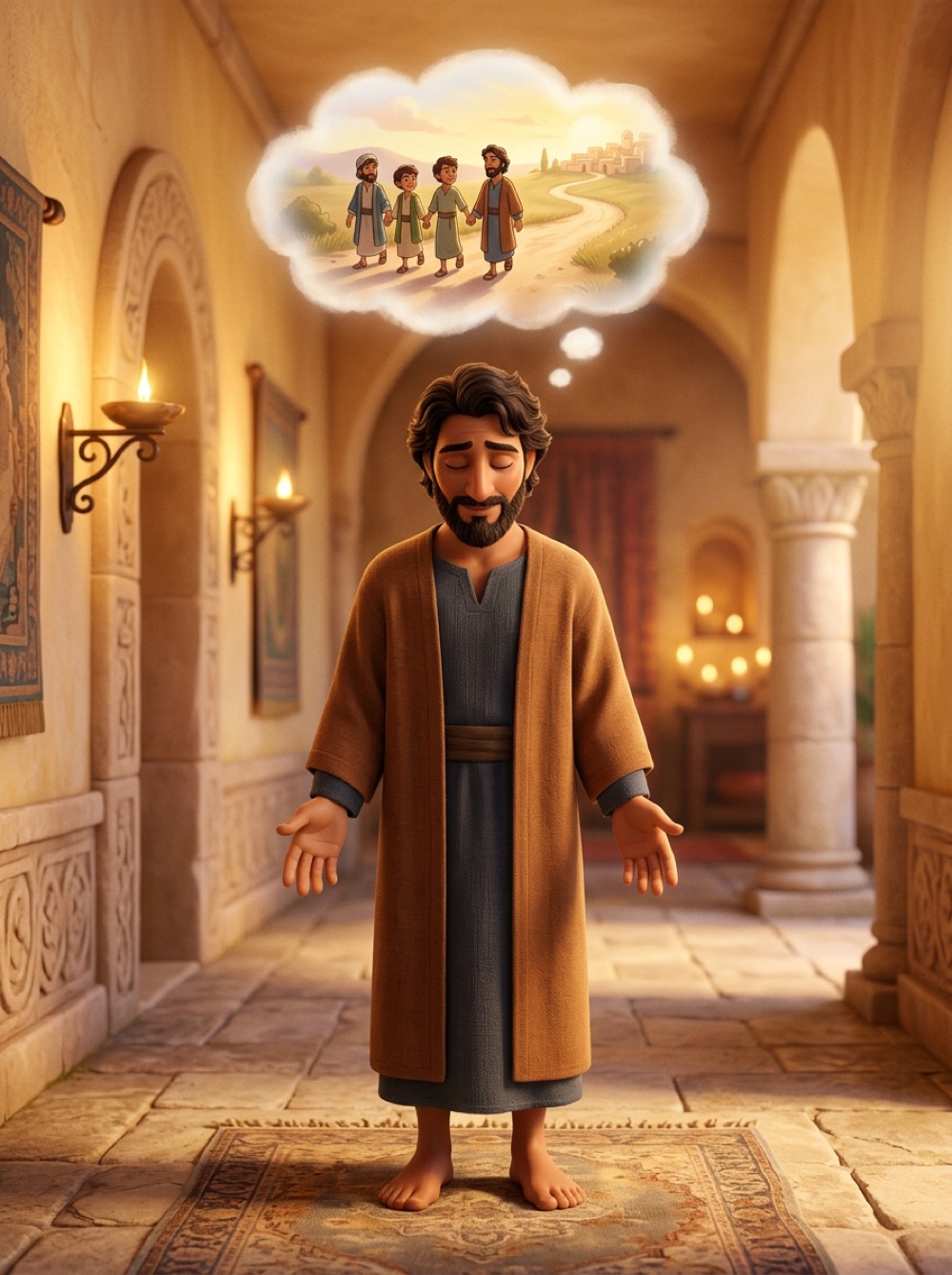
The Brother Who Changed
This was the same Judah who had suggested selling Joseph for silver all those years ago. Now he was offering himself as a slave to save his brother. Joseph watched and listened to every word. The test was over. His brothers had changed. Judah had changed most of all.
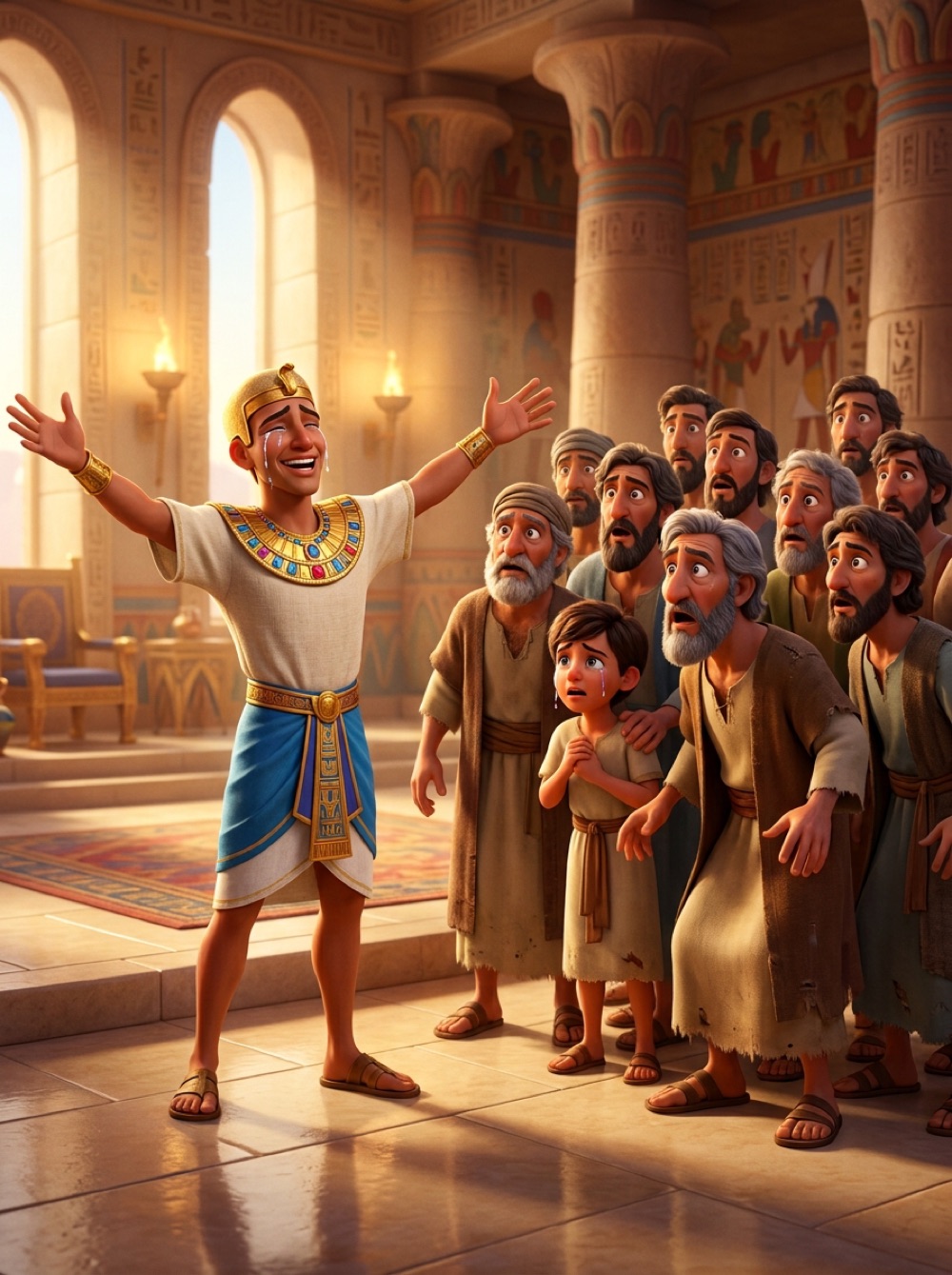
I Am Joseph
Joseph could not hold himself back any longer. He sent every Egyptian out of the room. Then, alone with his brothers, he wept so loudly that people heard it through the palace walls. He looked at his brothers and said three words that changed everything. "I am Joseph."
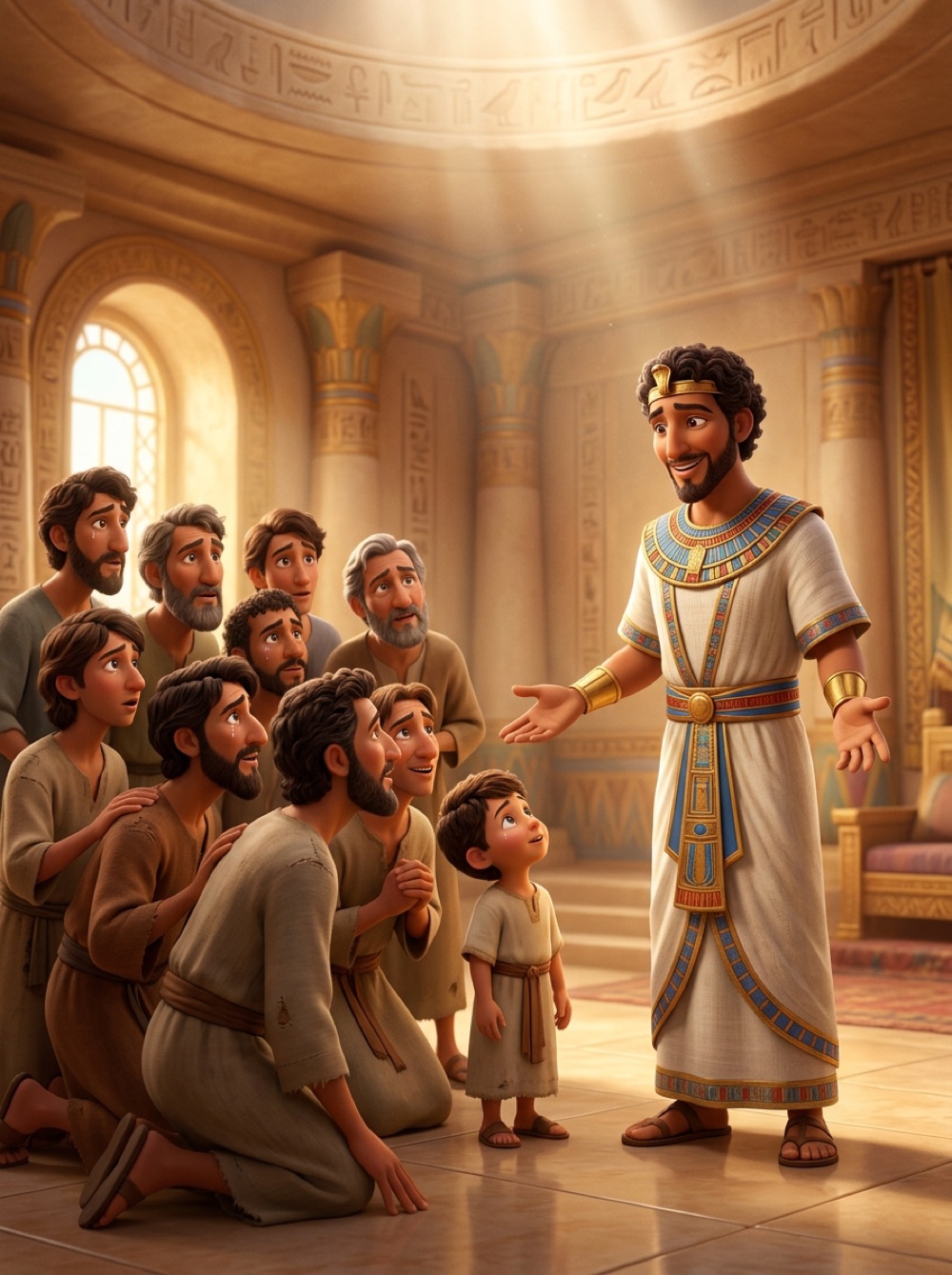
God Meant It for Good
His brothers couldn't speak. They stood frozen with shock and fear. But Joseph said, "Don't be afraid. Don't be angry with yourselves for selling me. It was not really you who sent me here — it was God. He sent me ahead to save lives." Joseph had found the meaning inside the worst thing that ever happened to him.
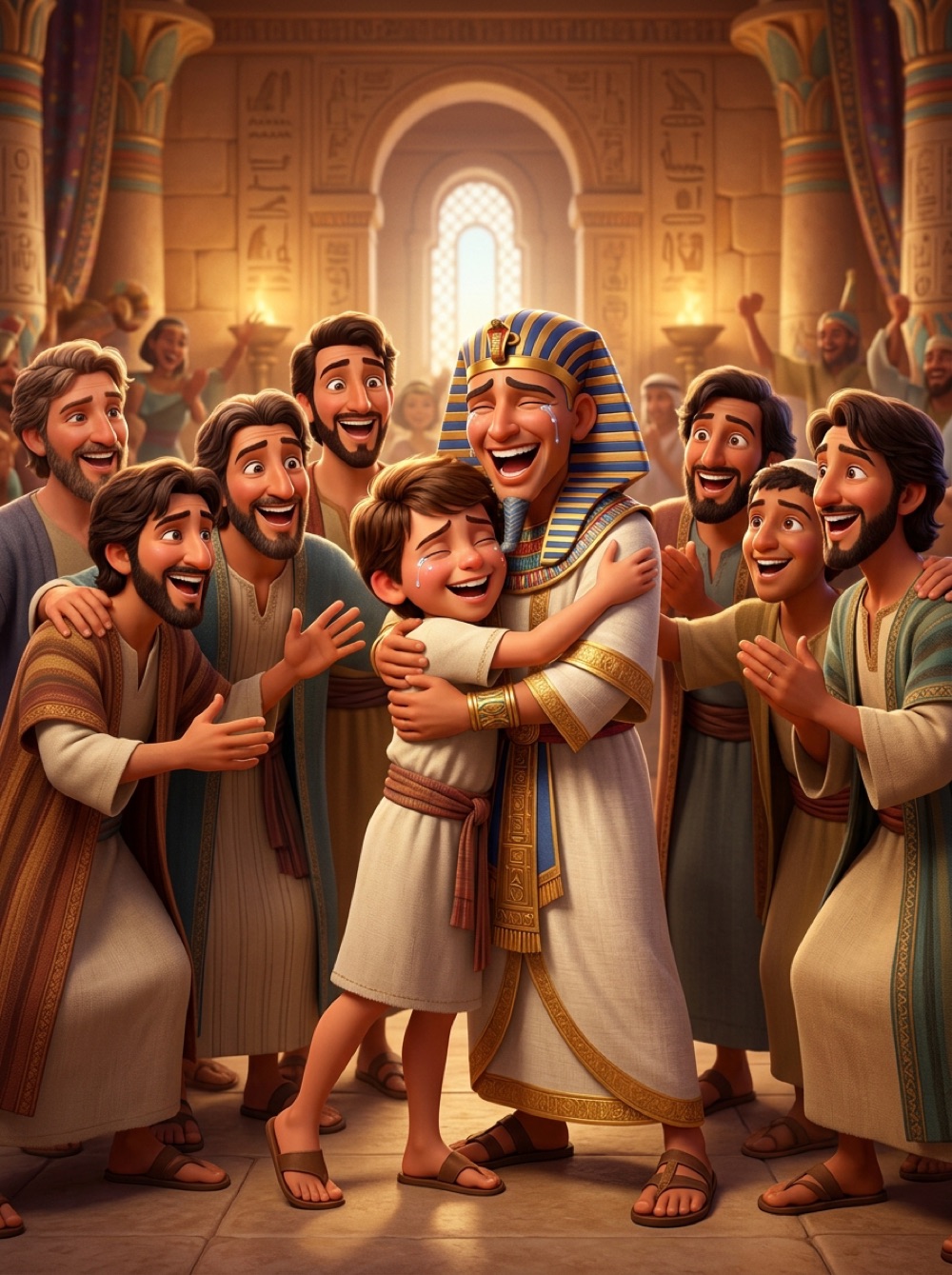
Go and Get My Father
Joseph held his brother Benjamin and wept. Then he embraced each of his brothers, weeping over them too. Twenty years of pain, loneliness, prison, and distance dissolved in that room. "Go quickly," Joseph said, "and bring my father here. There are still five years of famine left — I want my whole family with me."
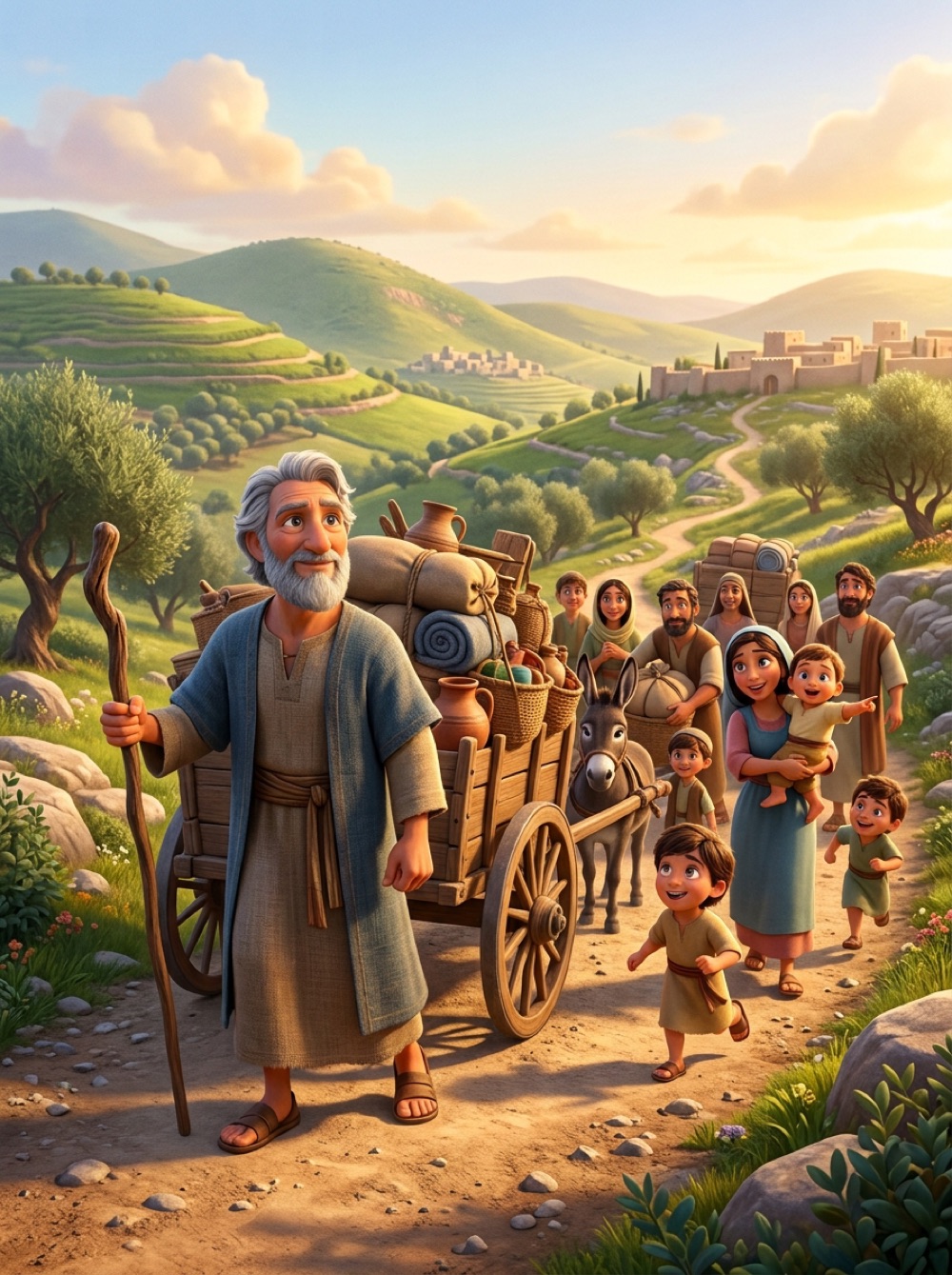
Jacob Sets Out for Egypt
When Jacob heard that Joseph was alive and ruling Egypt, his heart nearly stopped. He couldn't believe it — until he saw the wagons Joseph had sent. Then something long-dead came alive in him again. He gathered everything and set out for Egypt to see his son before he died.

God Speaks at the Border
On the way to Egypt, God spoke to Jacob one more time. "Do not be afraid to go to Egypt. I will go with you, and I will bring your family back from there one day." Even at the end of his life, crossing into a foreign land, God was still with Jacob — still keeping every promise.
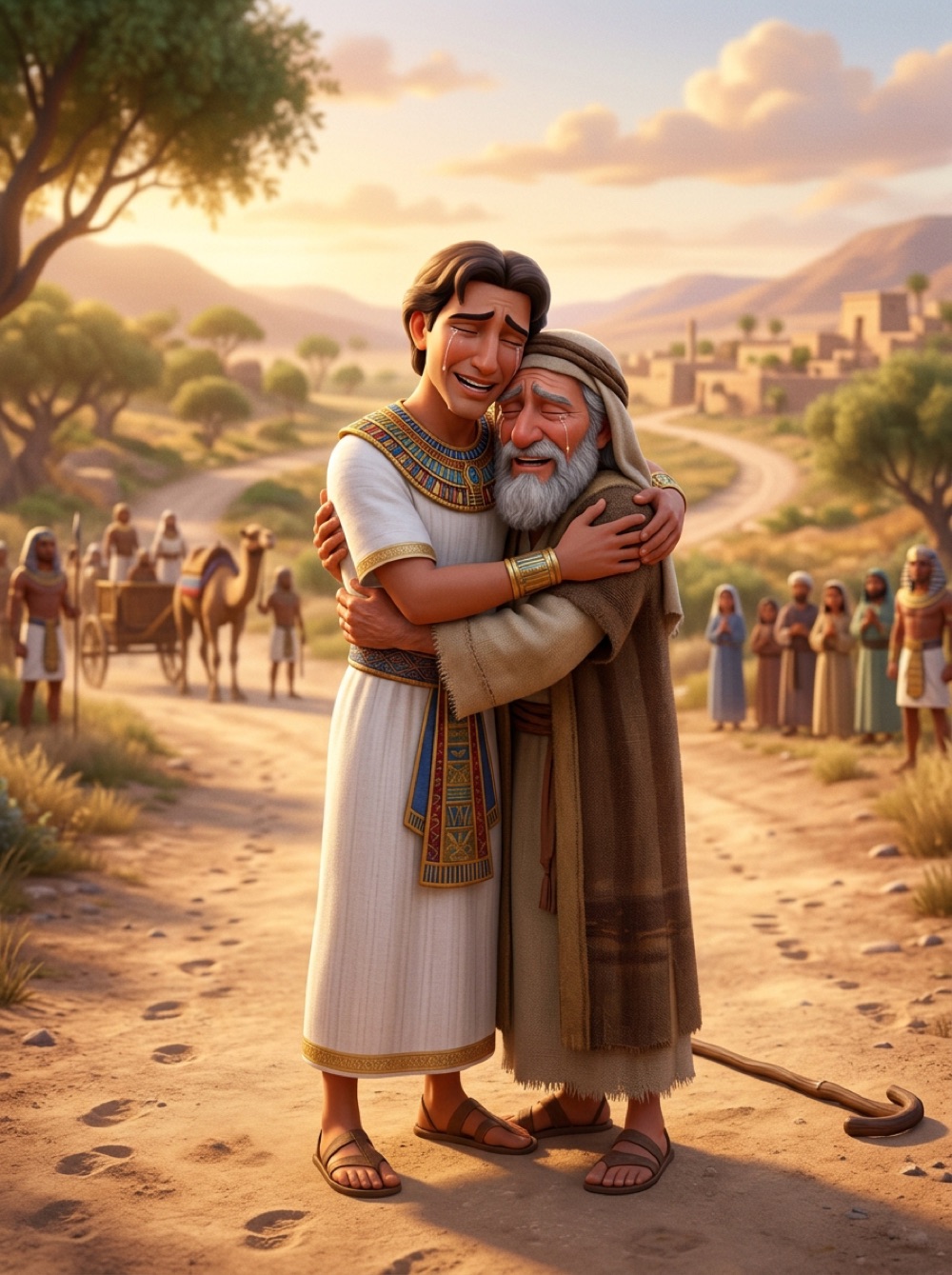
Father and Son
Joseph rode his chariot out to meet his father. When he saw Jacob, he threw his arms around him and wept for a long time. Jacob held his son and said, "Now I am ready to die — because I have seen your face and you are still alive." Twenty-two years. Joseph was found.
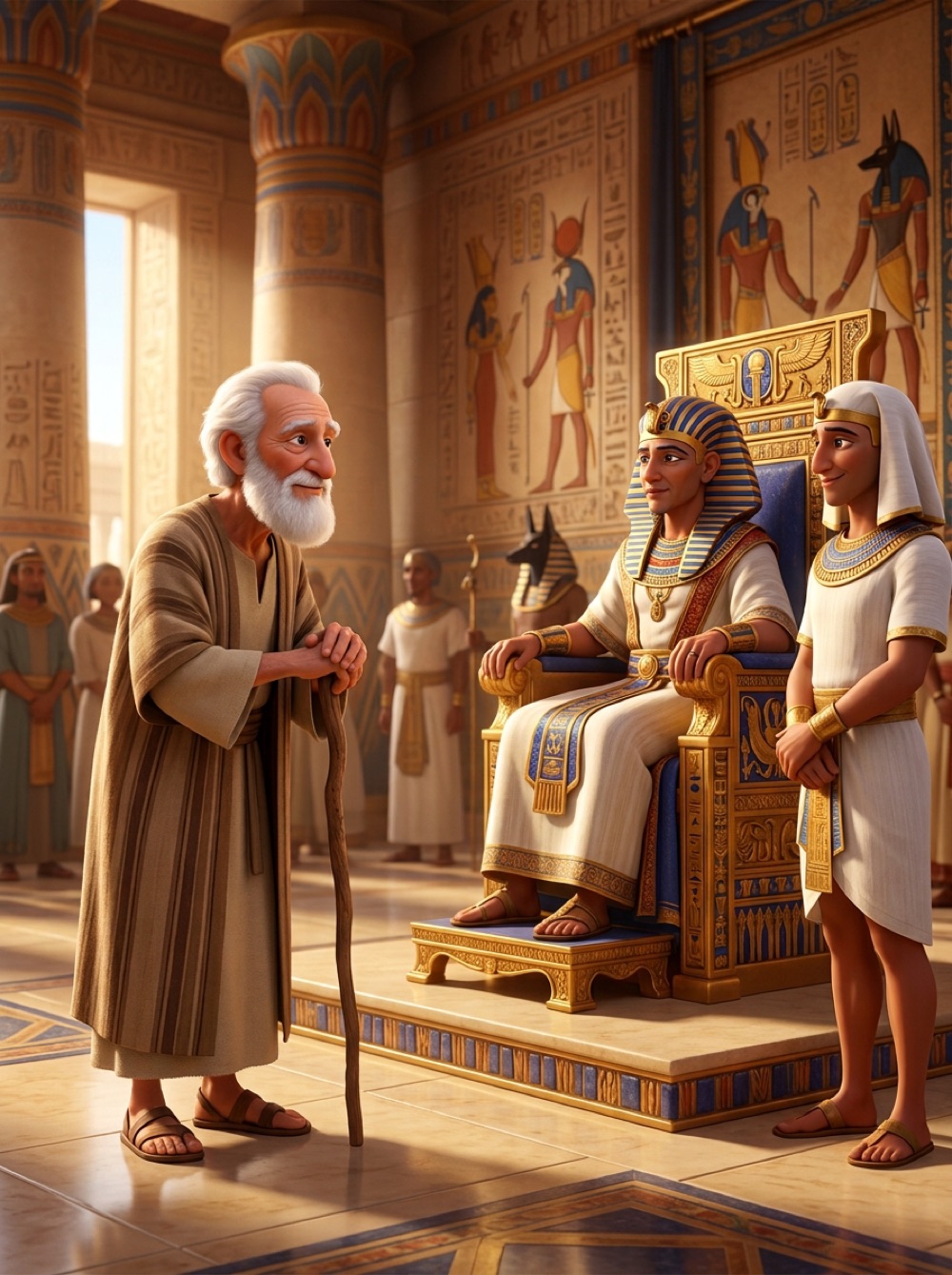
Jacob Before Pharaoh
Joseph brought his father Jacob to stand before Pharaoh. Pharaoh asked Jacob how old he was. Jacob answered, "The years of my life have been one hundred and thirty — few and hard, not nearly as long as my fathers." Even before a king, Jacob spoke plainly and honestly about his life.
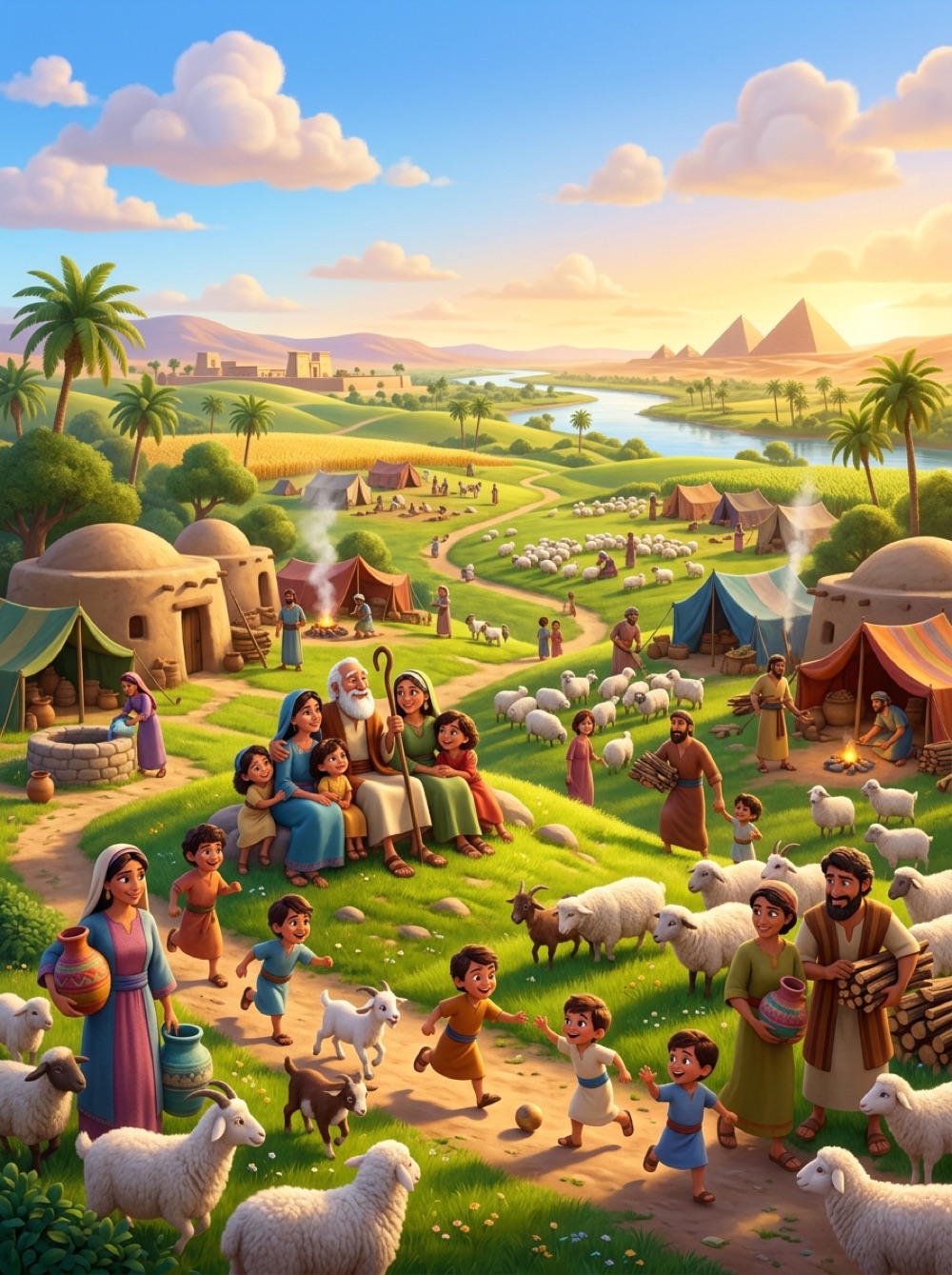
Settled in Goshen
Pharaoh gave Jacob's family the best land in Egypt — the region of Goshen, with rich pastures for their flocks. Joseph provided food for his father, his brothers, and all their households through the remaining years of famine. The family that had been torn apart was together again, provided for and at peace.

Jacob Blesses Joseph's Sons
When Jacob was old and close to death, Joseph brought his two sons — Manasseh and Ephraim — to receive their grandfather's blessing. Jacob crossed his hands deliberately, placing his right hand on Ephraim the younger rather than Manasseh the firstborn. Joseph tried to correct him. But Jacob said, "I know what I am doing."
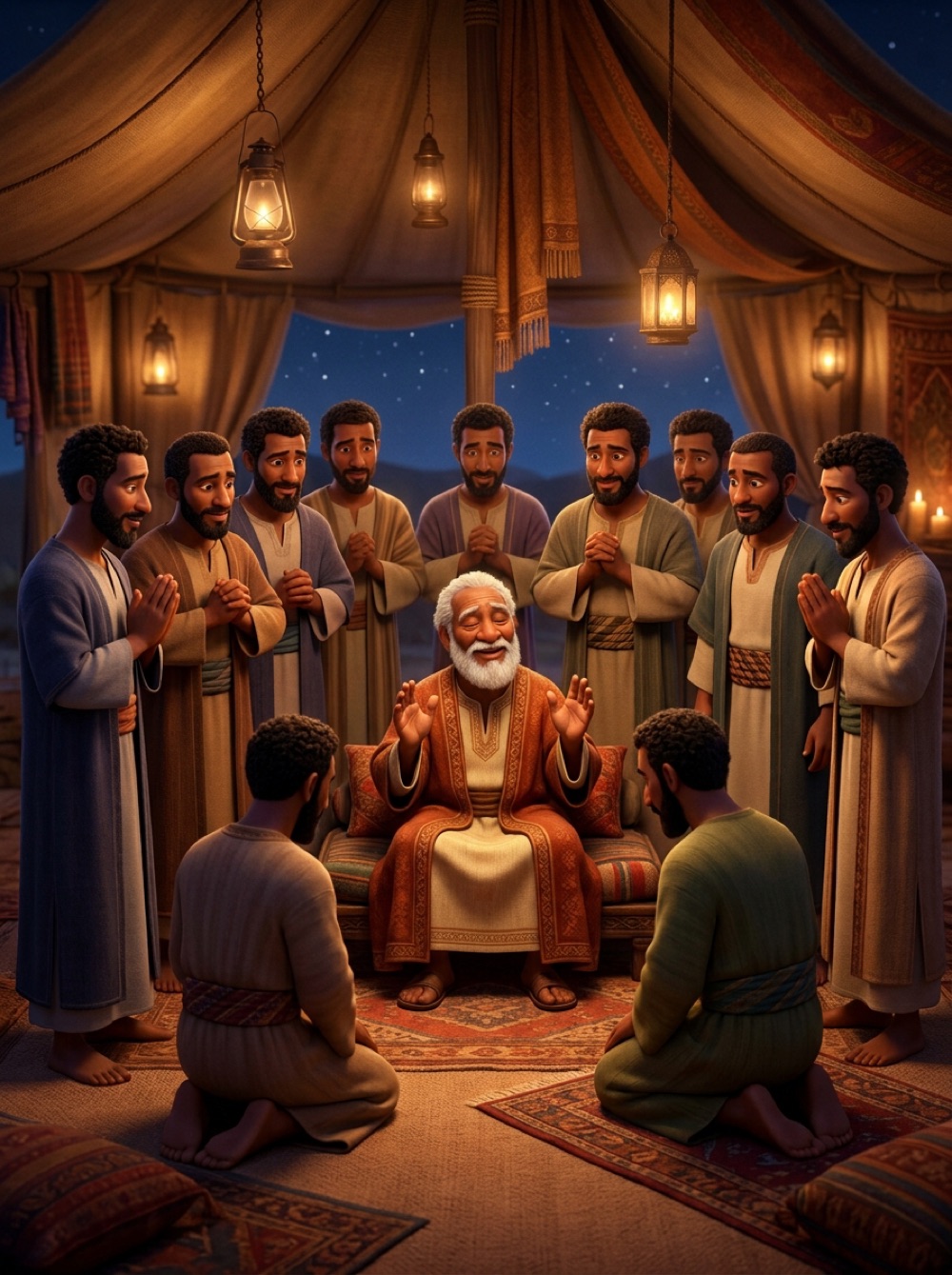
A Blessing for Every Son
Jacob called all twelve sons together and blessed each one with words that looked far into their future — describing what each family line would become. Some blessings were full of honor. Some carried hard truths. Jacob looked at his whole messy, complicated, loved family and spoke over every one of them before he died.
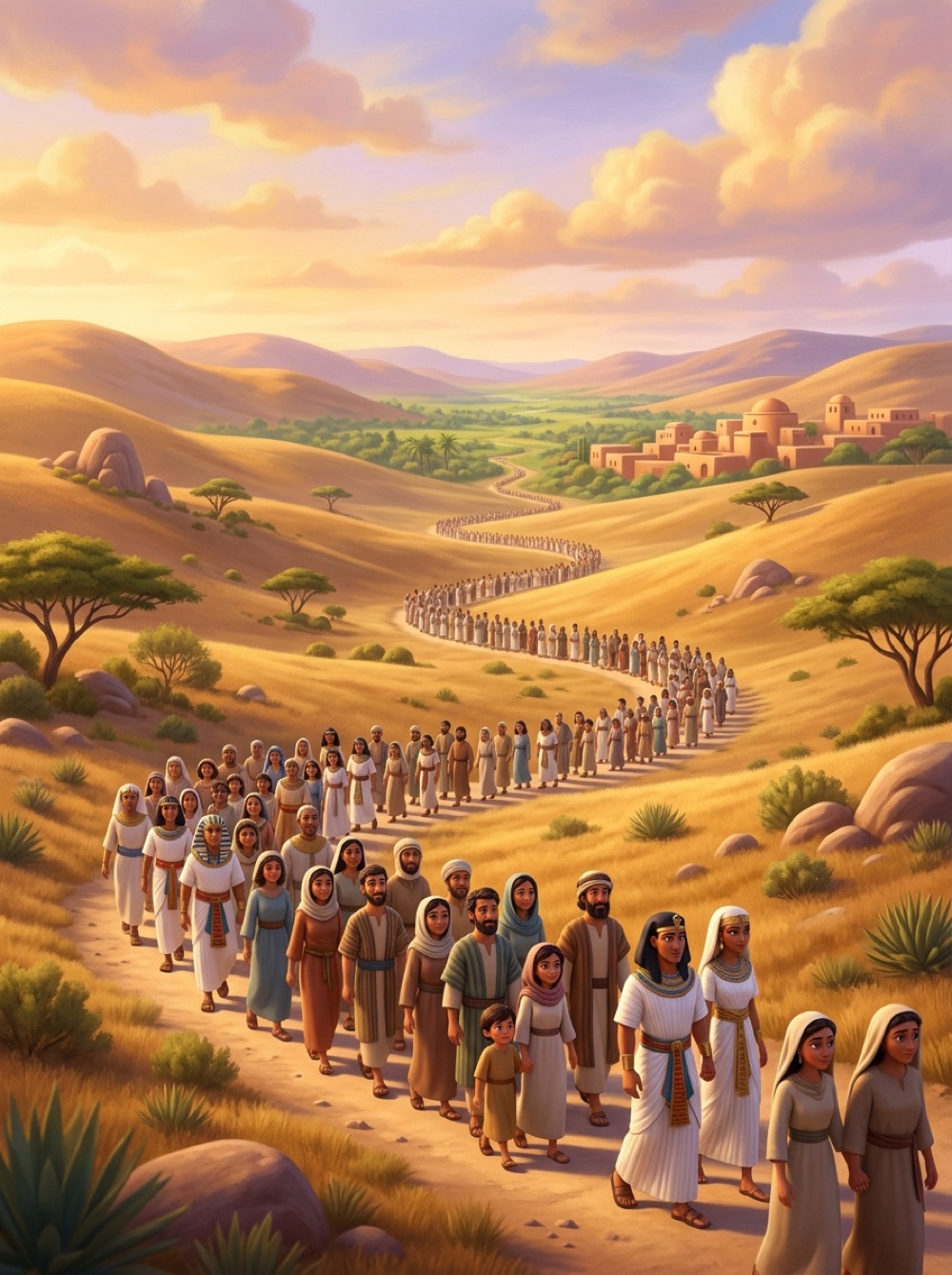
Jacob Dies in Egypt
Jacob died in Egypt at the age of one hundred and forty-seven years. Joseph wept over his father and honored him with a burial procession all the way back to Canaan — to the cave Abraham had bought, where Abraham, Sarah, Isaac, Rebekah, and Leah were all buried. The whole journey home to rest.
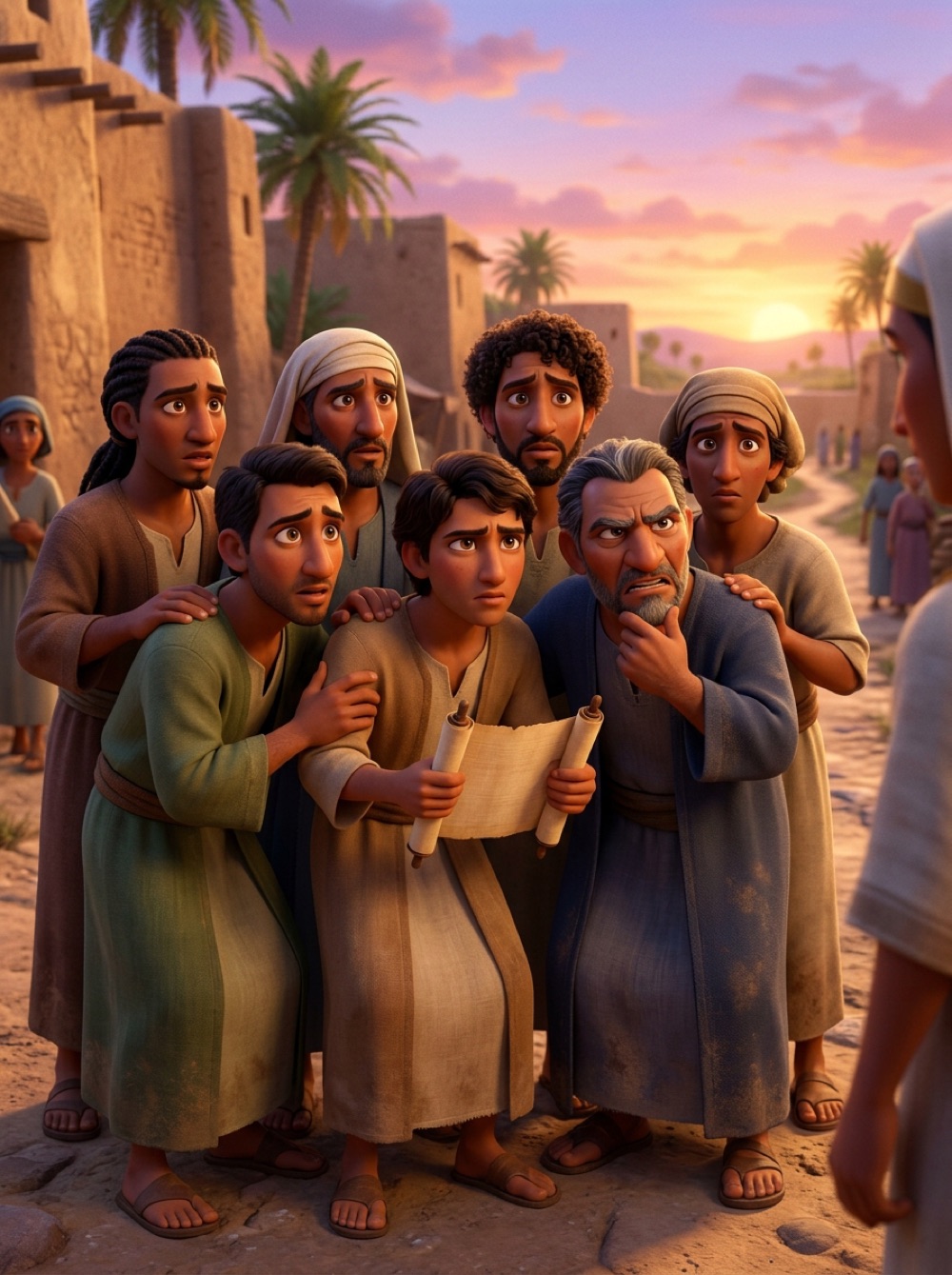
The Brothers' Fear
After Jacob died, the brothers panicked. "What if Joseph has been waiting all this time — and now that our father is gone, he takes his revenge?" They sent a message to Joseph begging for forgiveness. When Joseph heard it, he wept again. Not from anger — from sorrow that his brothers still didn't understand.
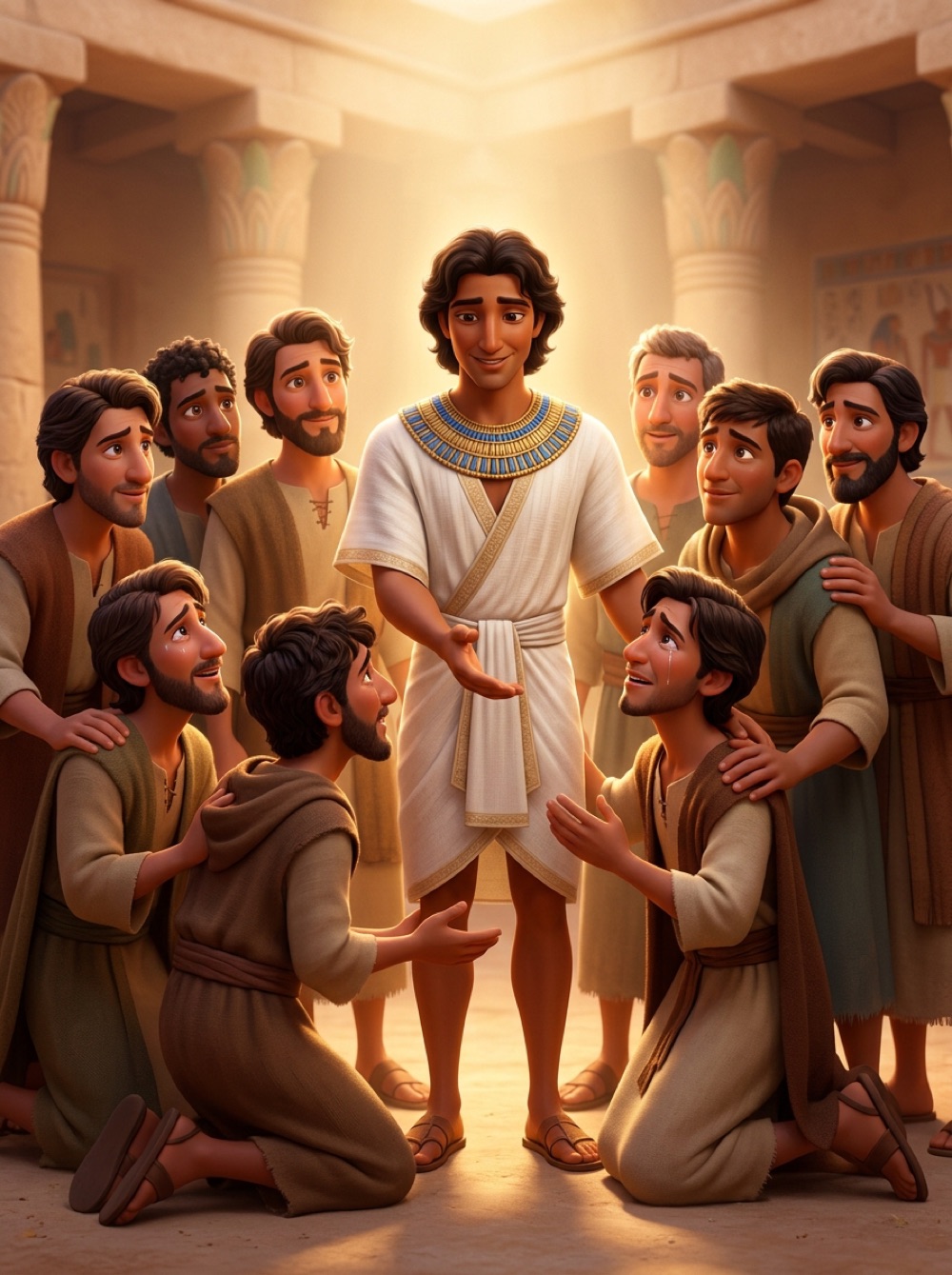
You Meant Evil. God Meant Good.
Joseph said to his brothers, "Don't be afraid. Am I in the place of God? You meant to do evil to me — but God meant it for good. He used what you did to save many lives. So don't be afraid. I will provide for you and your children." He spoke kindly to them and reassured them.
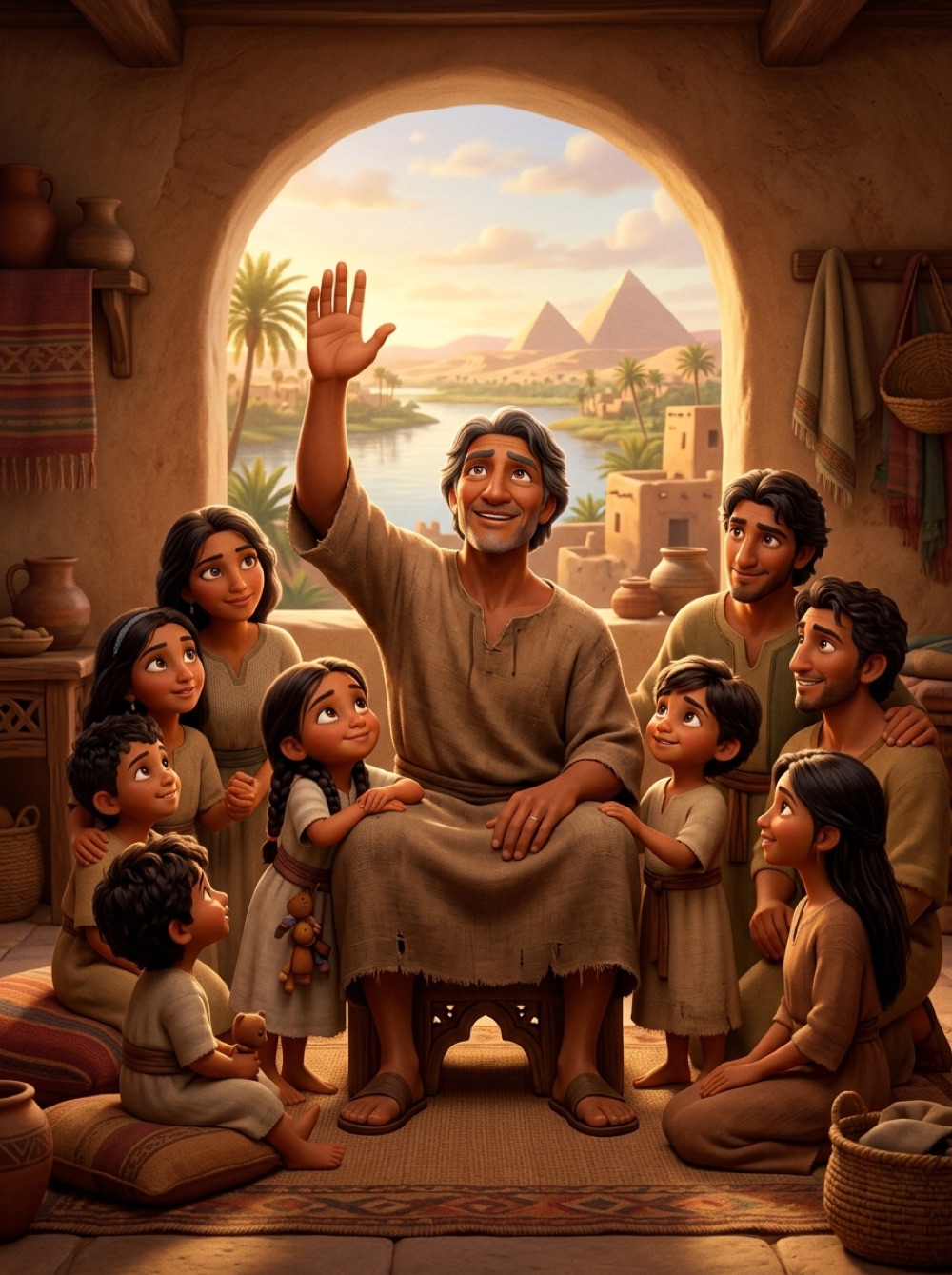
Joseph's Final Promise
Joseph lived to be one hundred and ten years old. Before he died, he told his family, "God will surely come to help you and lead you out of Egypt back to the land He promised Abraham, Isaac, and Jacob." Then he made them promise — when that day comes, carry my bones home with you.

The End of the Beginning
Genesis ends here — but the story is far from over. God had taken one family from nothing to something extraordinary. Through lies and loss, famine and prison, betrayal and forgiveness, God's plan had never stopped moving forward. Every promise He made to Abraham was still alive. The best chapters were still ahead.
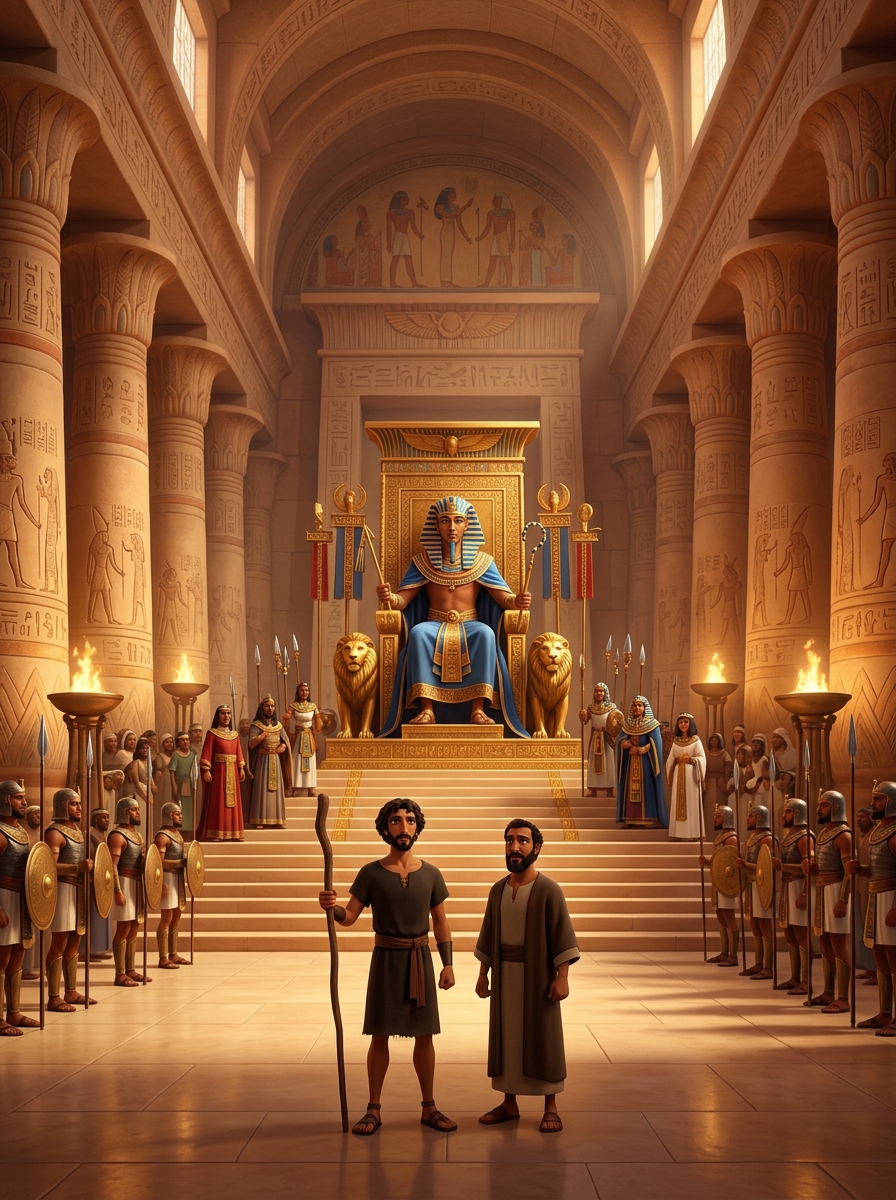
Let My People Go
Moses and Aaron walked into Pharaoh's palace and stood before the most powerful man in the world. "This is what the God of Israel says," they told him. "Let my people go." Pharaoh looked at them and said something that showed exactly who he was. "Who is the Lord? I don't know Him — and I will not let Israel go."
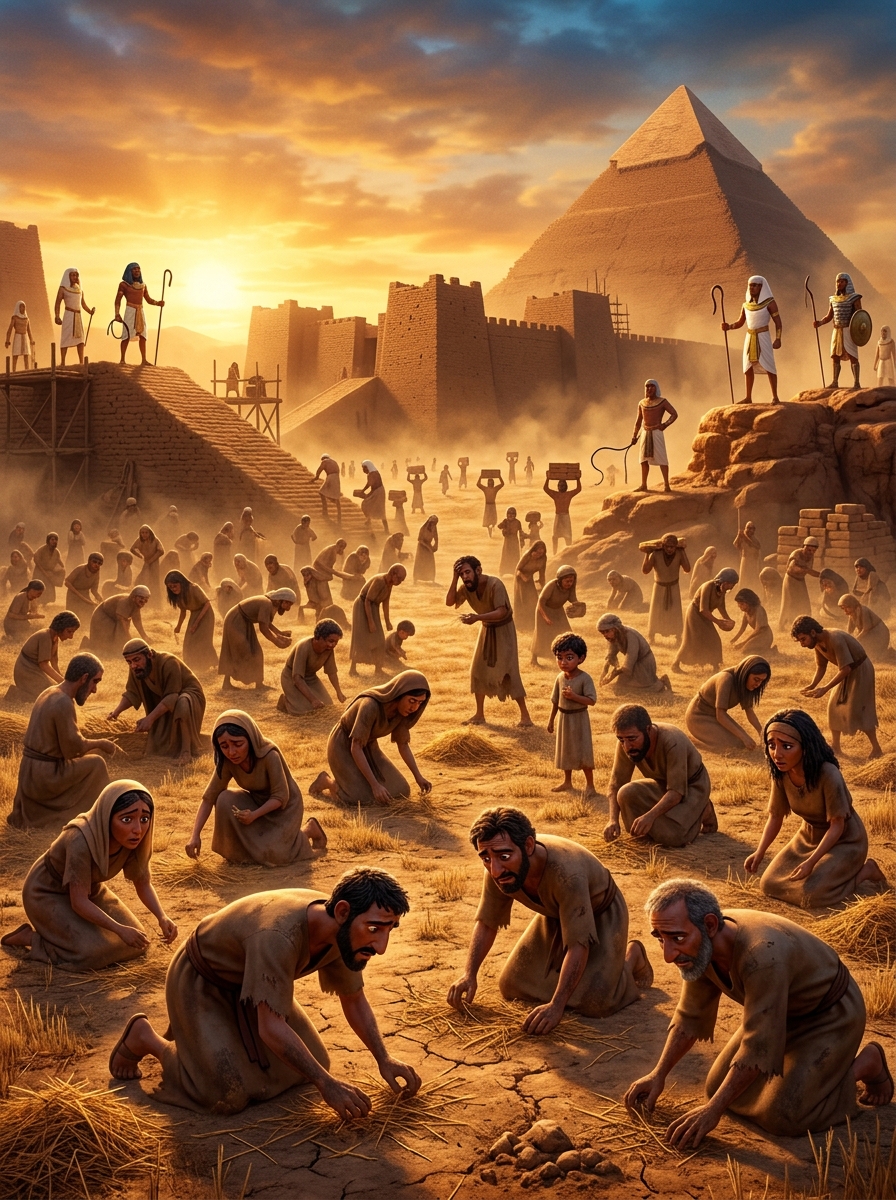
Pharaoh Makes Things Harder
Pharaoh was angry. He decided to punish the Israelites for the request. Before, he had given them straw to make bricks. Now he stopped giving them straw — but still demanded the same number of bricks every day. The people had to scatter across the fields searching for straw while working just as hard as before.
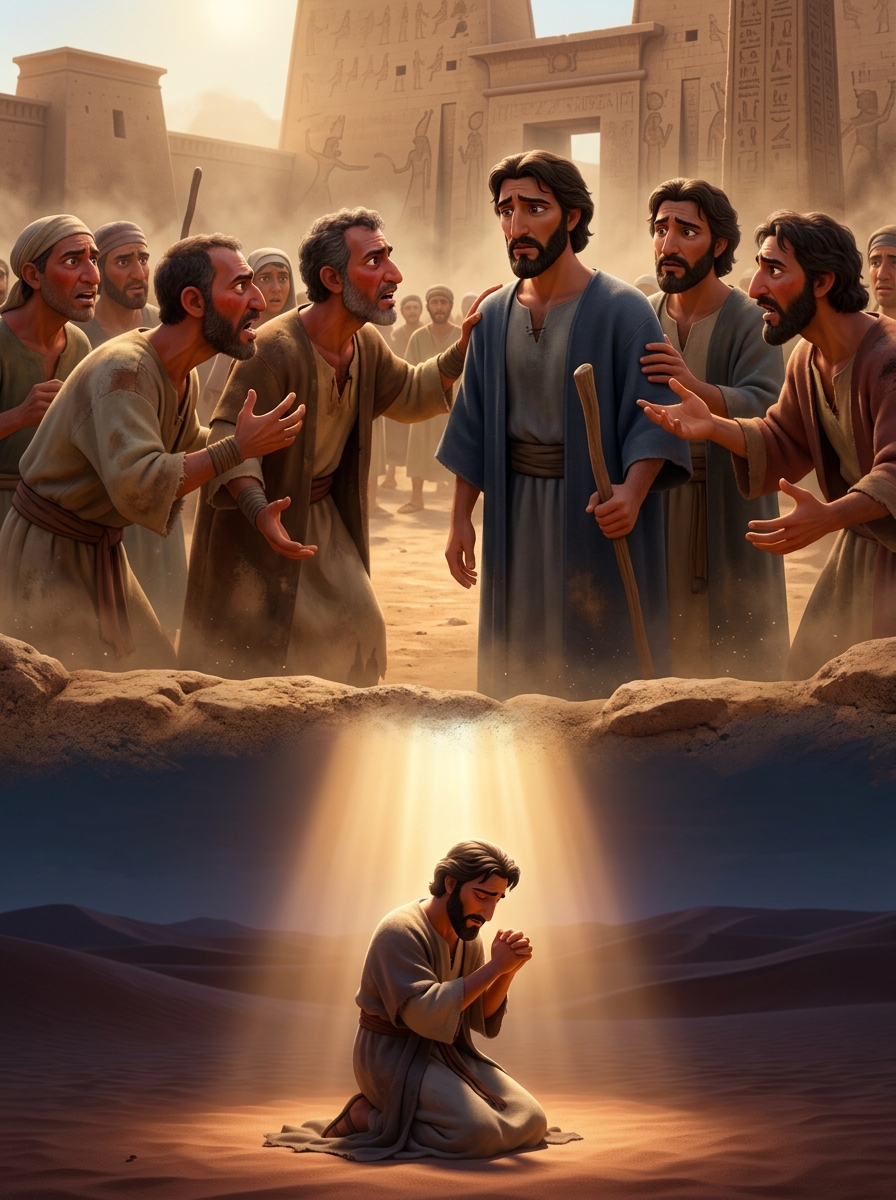
The People Turn on Moses
The Israelite foremen came to Moses and Aaron furious. "You have made things worse for us," they said. "You have given Pharaoh a reason to kill us." Moses went straight to God with their complaint. "Lord, why have you brought trouble on your people? Why did you send me? Nothing has gotten better — it has only gotten worse."
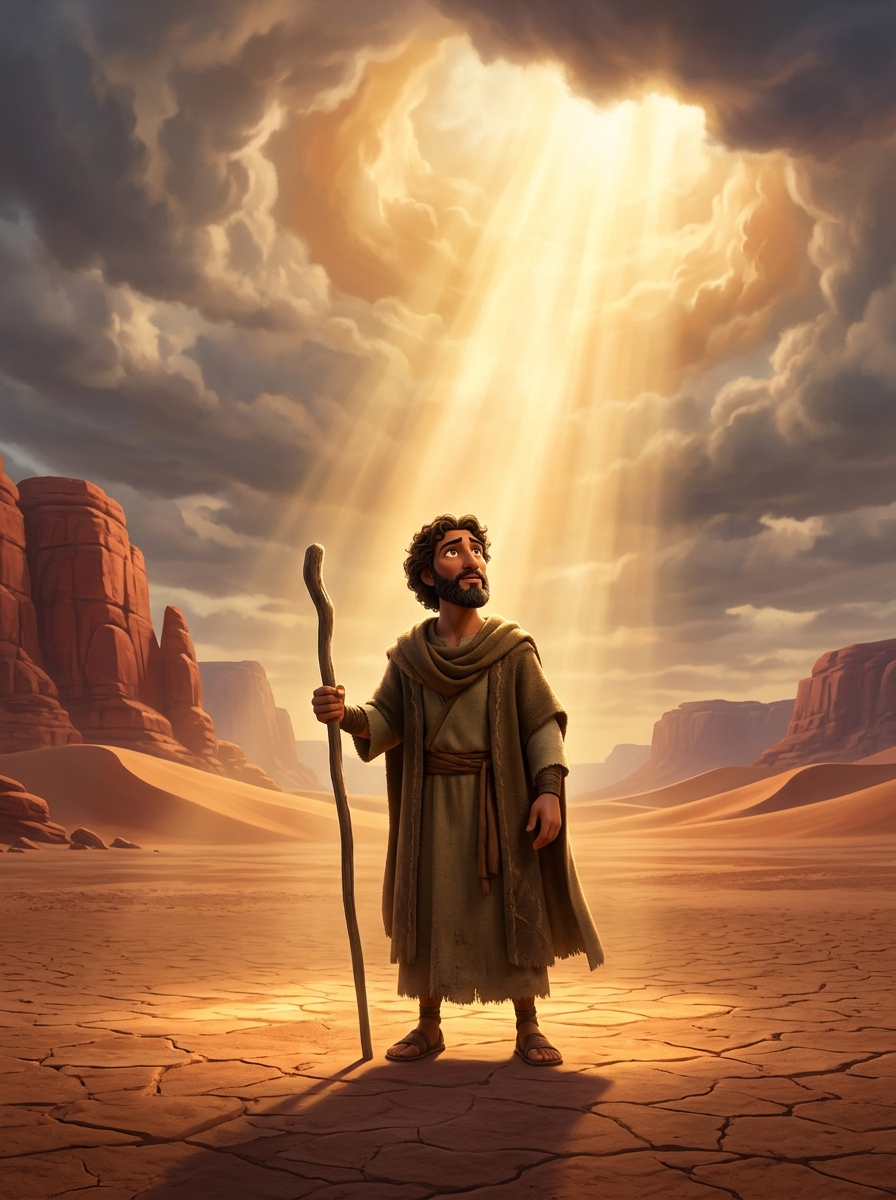
God's Answer to Moses
God answered Moses clearly. "Now you will see what I will do to Pharaoh. Because of my mighty hand, he will let them go. Because of my mighty hand, he will drive them out of his land." When God seems slow, He is not stuck. He is building toward something bigger than anyone can see yet.
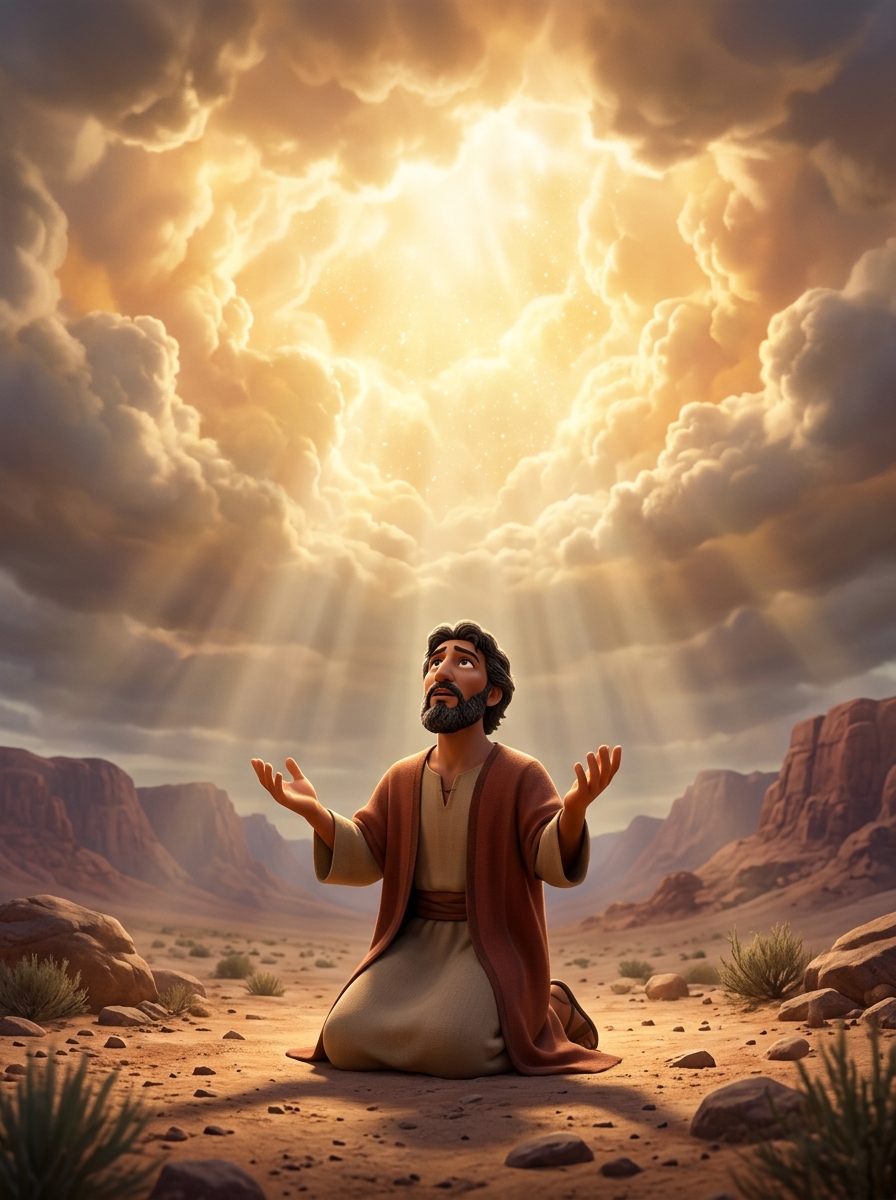
I Am the Lord
God spoke His name again — I AM THE LORD. He reminded Moses of every promise He had made to Abraham, Isaac, and Jacob. "I have heard the groaning of the Israelites. I remember my covenant. I will bring you out. I will free you. I will redeem you. I will take you as my own people. I will be your God."
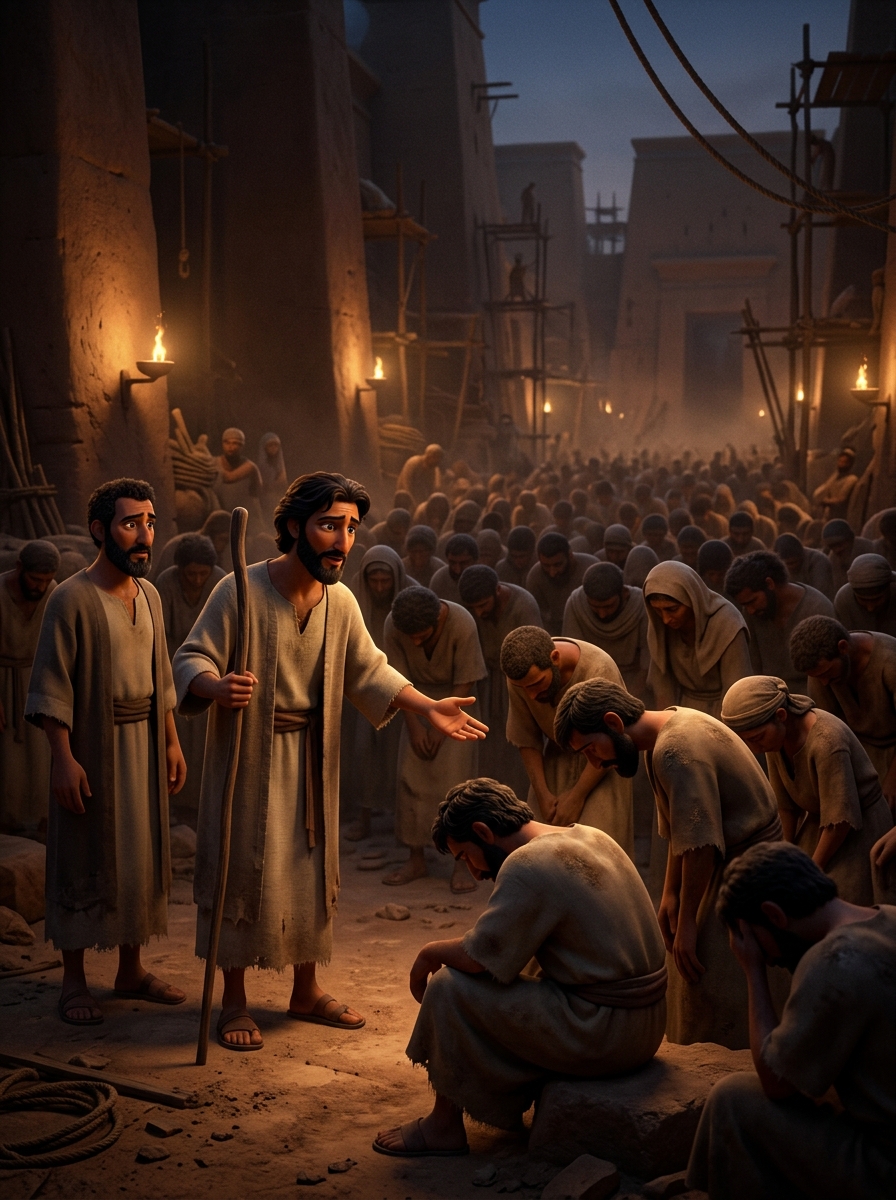
But They Would Not Listen
Moses told the Israelites everything God had said. But they could not hear it anymore. Their spirits were broken from years of cruel slavery and a situation that had just gotten worse instead of better. Sometimes pain makes it hard to hear even the best news. God understood — and kept moving forward anyway.
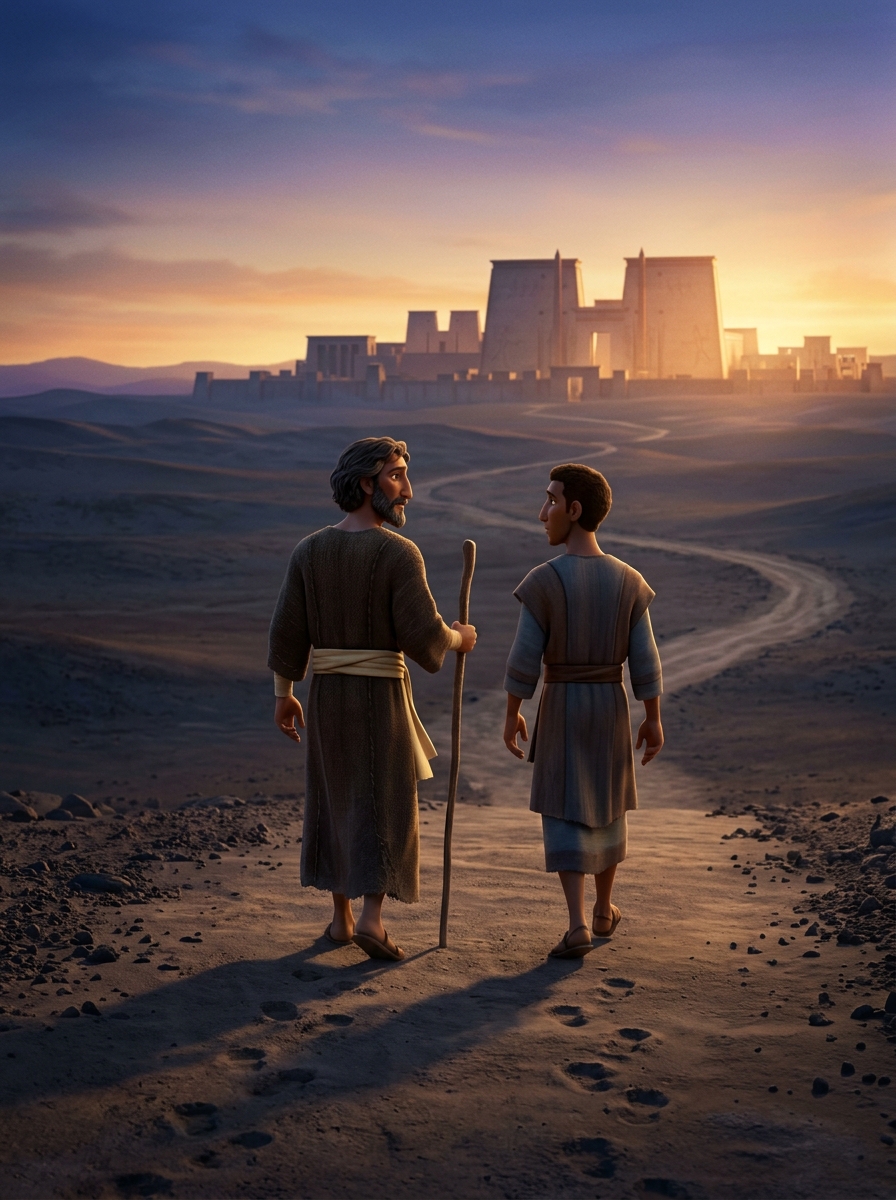
Go Back to Pharaoh
God told Moses to go back to Pharaoh again. Moses resisted. "I couldn't even get the Israelites to listen to me — why would Pharaoh listen? I am a poor speaker." But God's instruction didn't change. Sometimes the call stays the same even when the results are discouraging. Moses and Aaron went back.
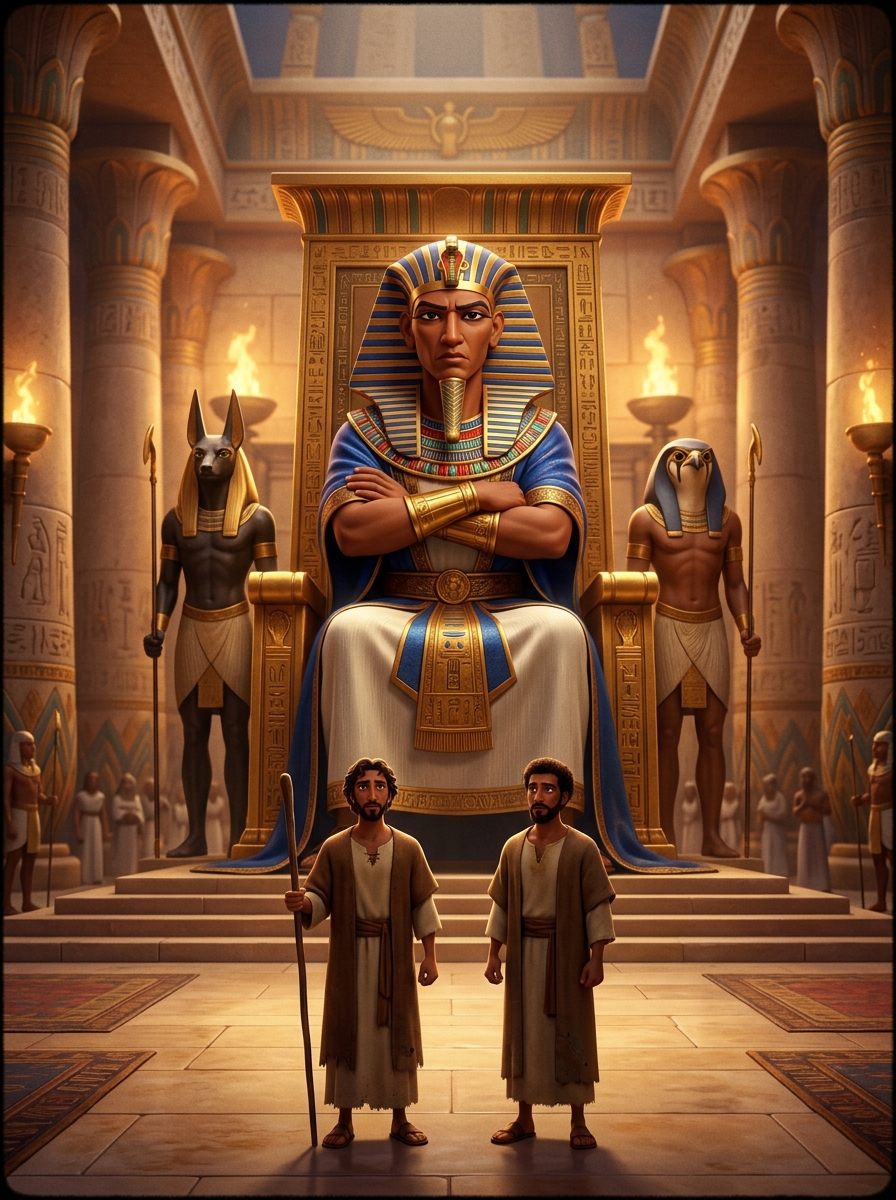
Pharaoh's Heart Was Hard
God warned Moses that Pharaoh would not listen easily. His heart was hard — stubborn and proud, unwilling to bend even when the evidence was clear. God told Moses that through Pharaoh's stubbornness, God's power would be displayed for all of Egypt and all the world to see. Sometimes the hardest hearts become the most dramatic stages for God's work.
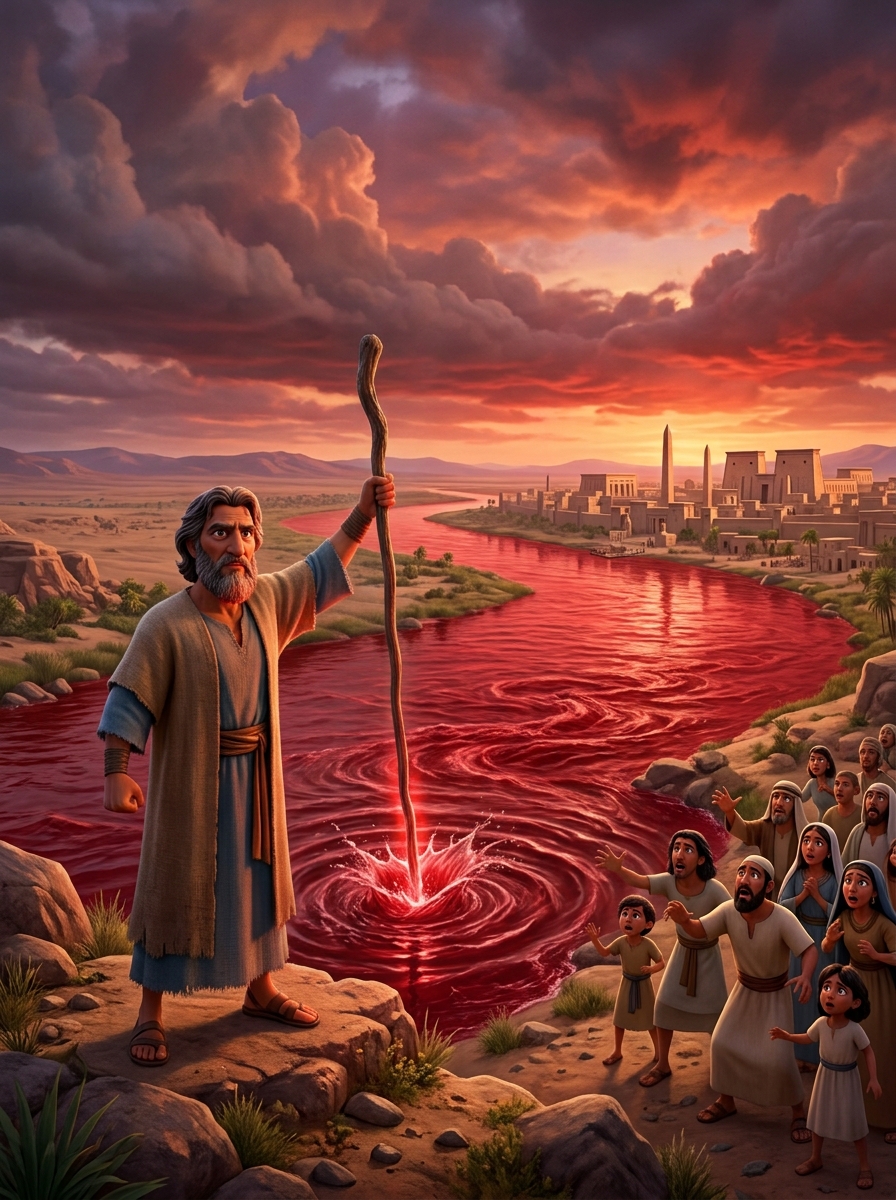
Plague One — Water to Blood
Aaron struck the Nile River with his staff, and the water turned to blood. Every river, canal, and pool in Egypt turned red. The fish died. The water smelled terrible. The Egyptians had to dig beside the river just to find drinking water. The Nile — Egypt's most sacred river — had become useless.
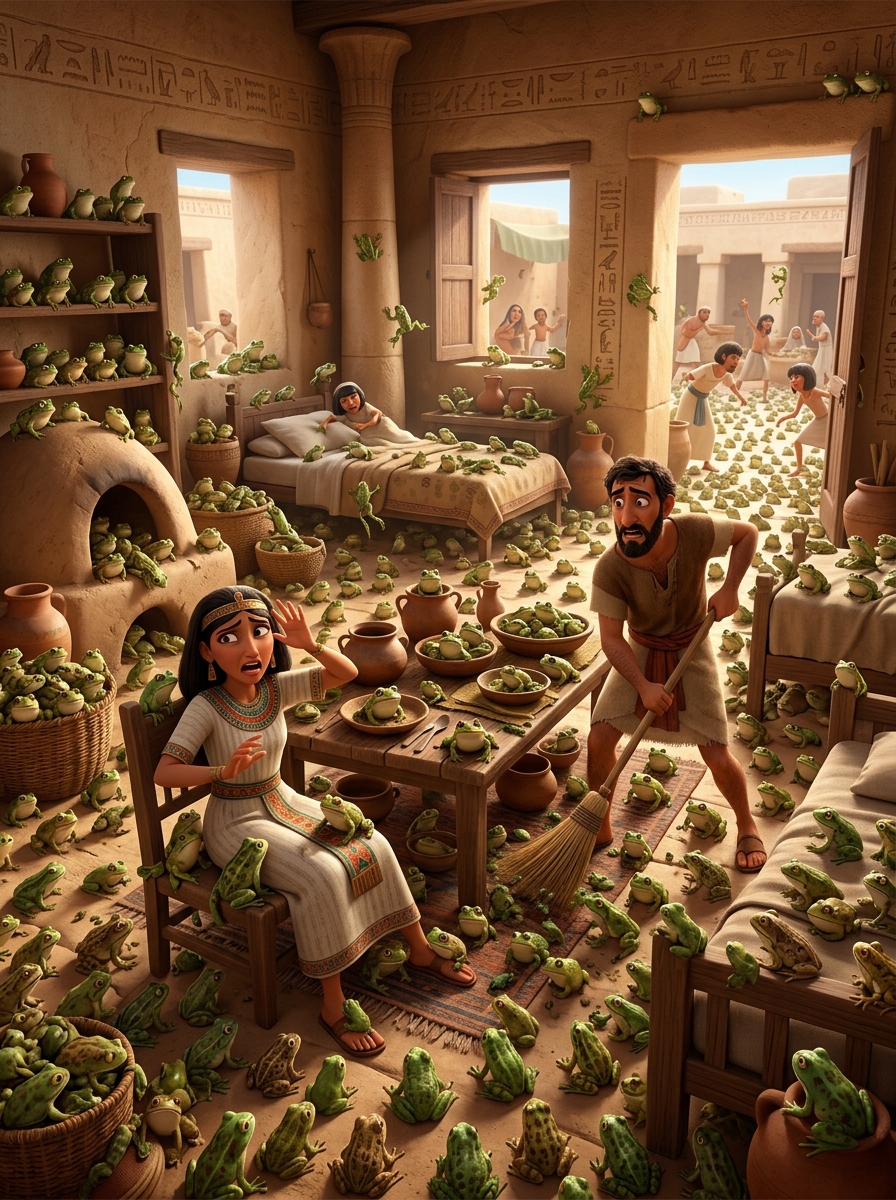
Plague Two — Frogs
Aaron stretched his staff over the waters and frogs came up and covered the whole land of Egypt. They were everywhere — in the palace, in the bedrooms, in the ovens and kneading bowls, on the beds, on the people. Pharaoh called Moses and said, "Pray for the frogs to go away and I will let your people go." But when the frogs died, Pharaoh changed his mind again.
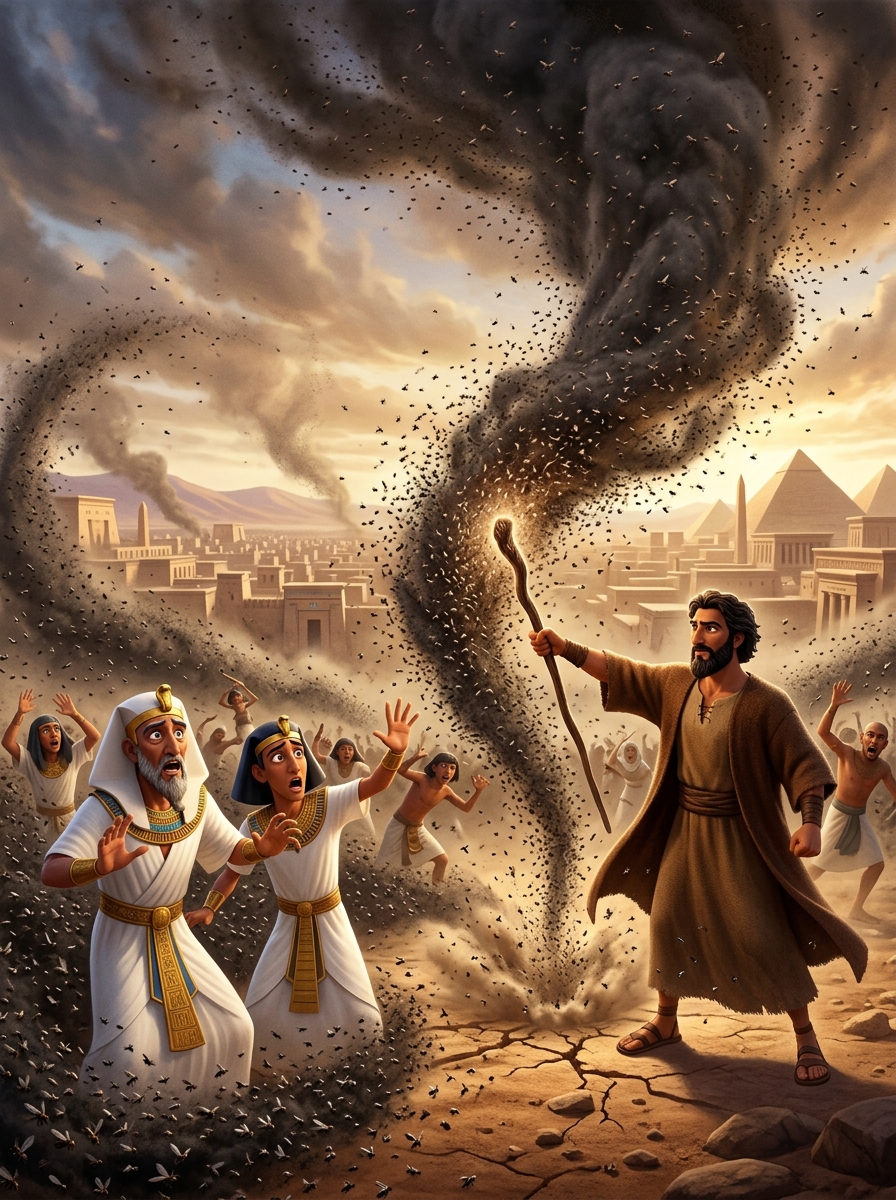
Plague Three — Gnats
Aaron struck the dust of the ground with his staff and gnats came up and covered every person and animal in Egypt. Even Pharaoh's own magicians couldn't copy this plague. They told Pharaoh, "This is the finger of God." But Pharaoh's heart stayed hard and he would not listen — just as God had said.
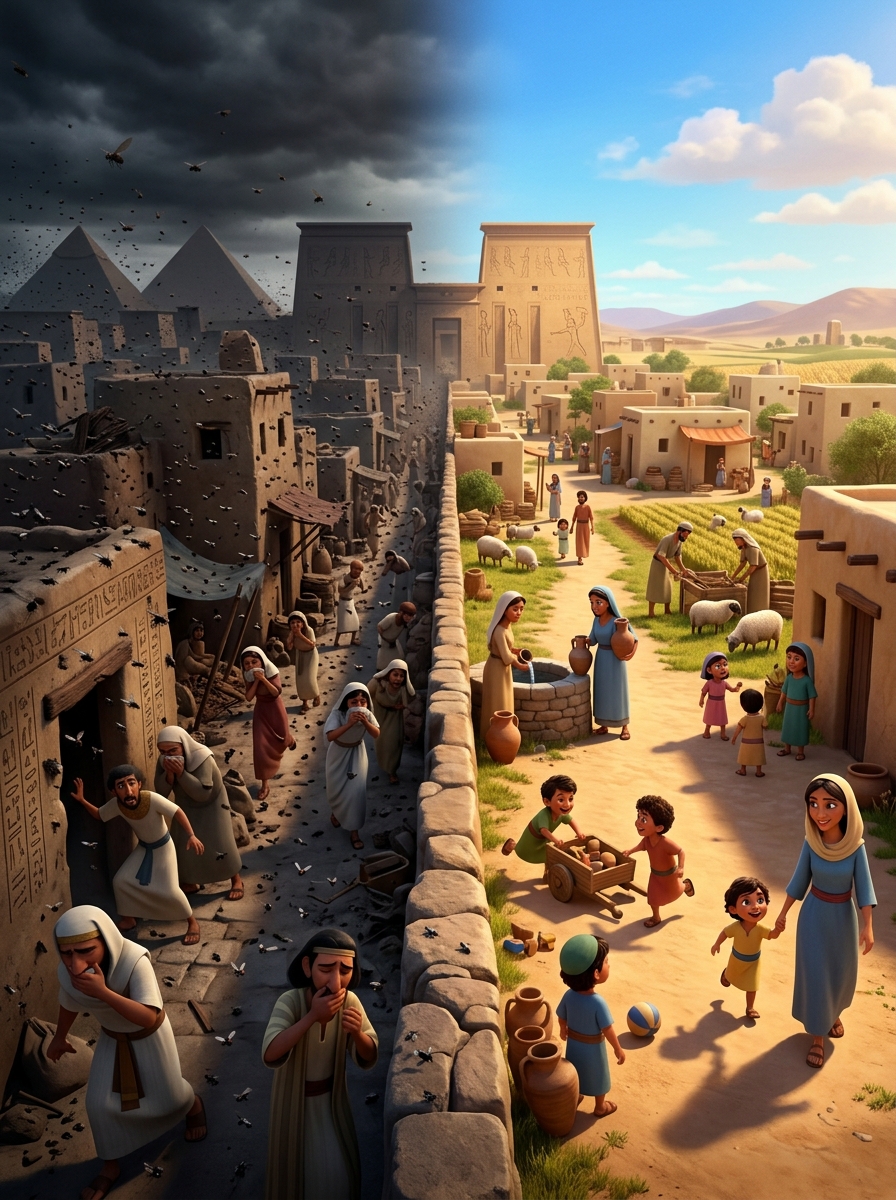
Plague Four — Flies
Dense swarms of flies poured into Pharaoh's palace and into every Egyptian home. The whole land was ruined by flies. But God made a clear distinction this time — no flies appeared in Goshen, where the Israelites lived. The plagues were aimed precisely. God's people were being protected while Egypt suffered.
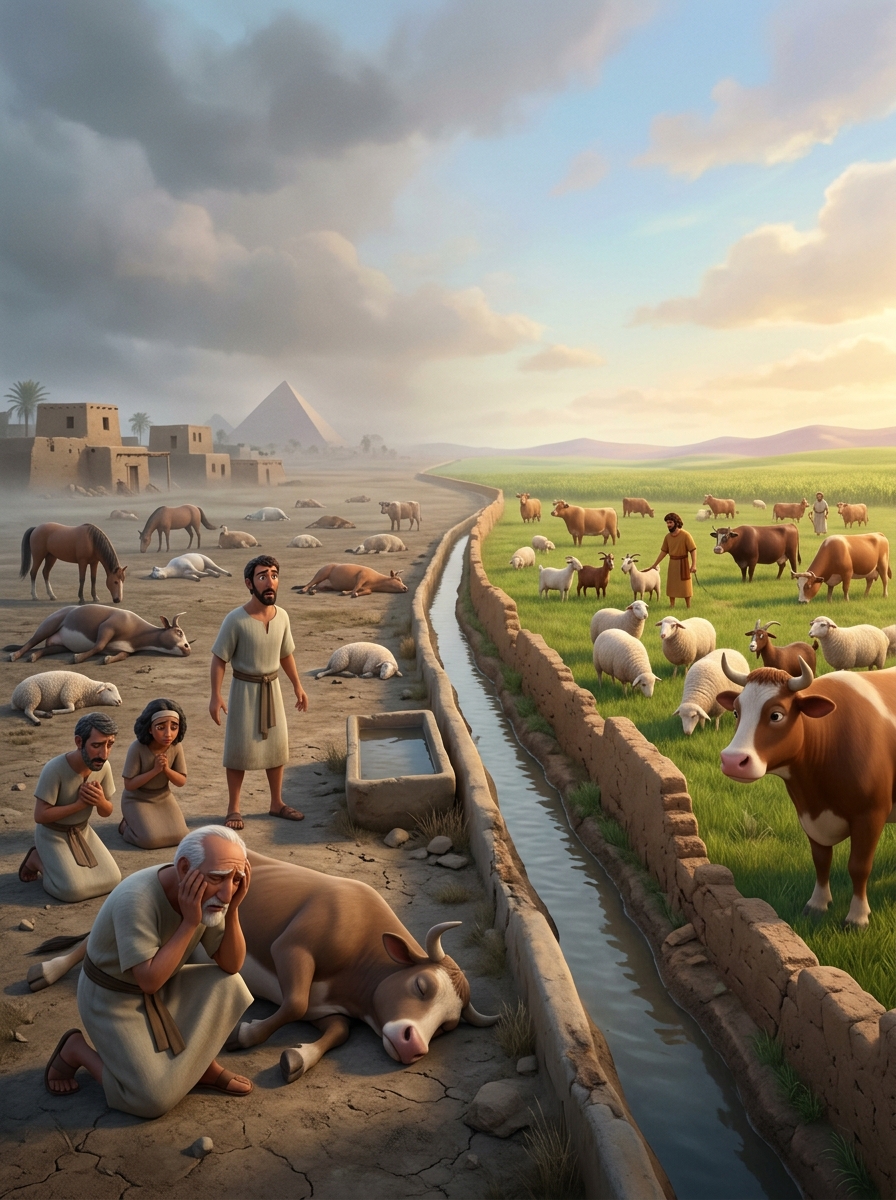
Plague Five — Livestock Disease
God sent a severe disease on all of Egypt's livestock — horses, donkeys, camels, cattle, sheep, and goats. They all died. But not one animal belonging to the Israelites died. Pharaoh sent people to check — and it was true. Not one Israelite animal was lost. But still Pharaoh's heart was hard. He would not let the people go.
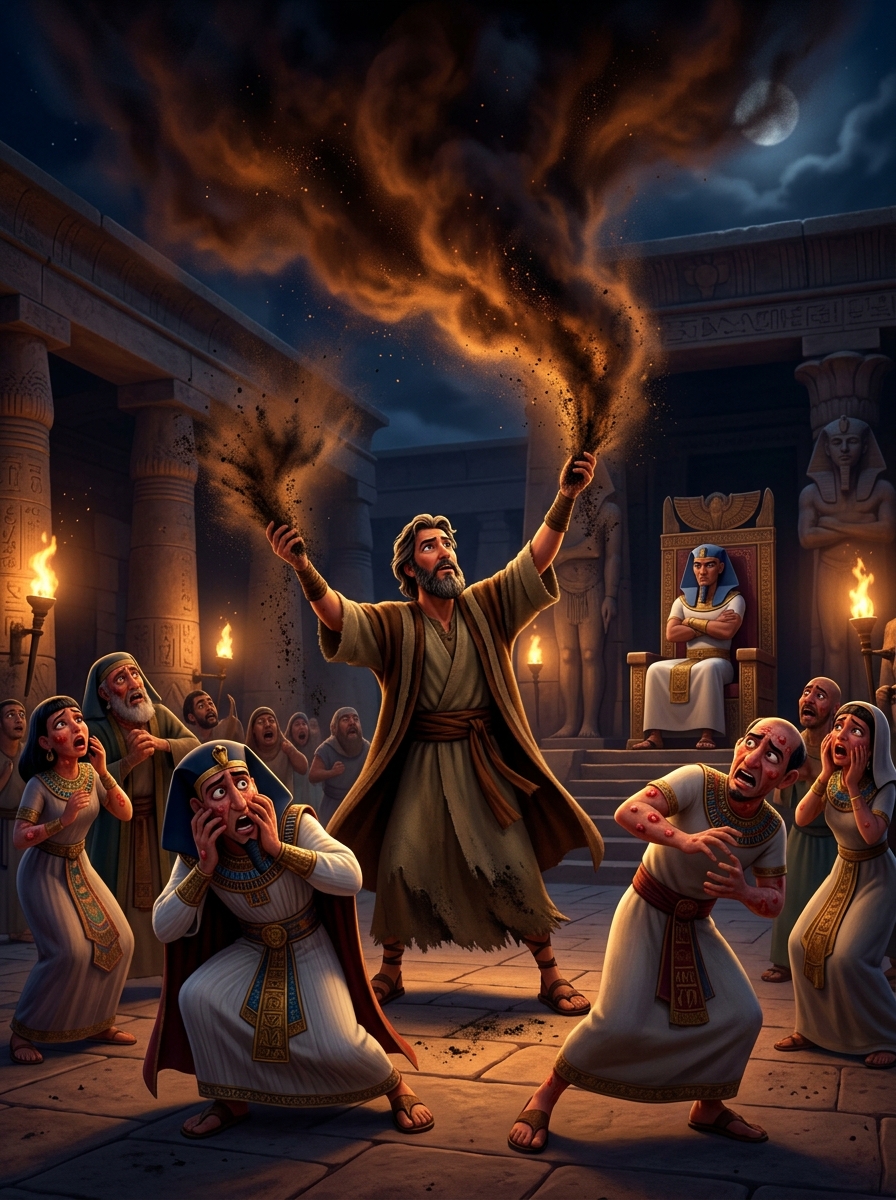
Plague Six — Boils
Moses took handfuls of soot from a furnace and threw it into the air in front of Pharaoh. It became fine dust that spread over all of Egypt, causing painful boils to break out on every Egyptian person and animal. Even Pharaoh's magicians could not stand before Moses because of their boils. But Pharaoh's heart stayed hard.
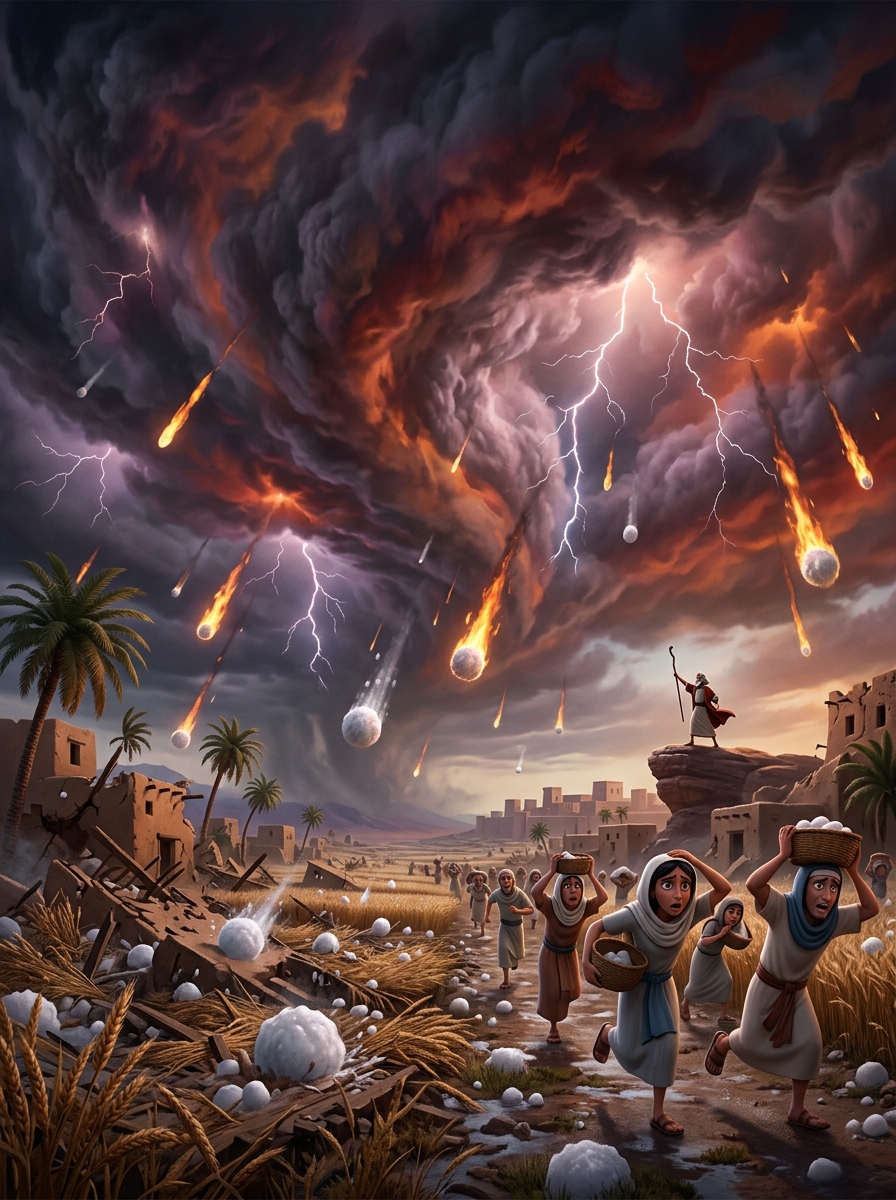
Plague Seven — Hail
God warned Egypt this time before the plague arrived — telling them to bring their livestock inside. Some Egyptians listened and protected their animals. Others ignored the warning. Then Moses stretched his staff toward heaven and God sent the worst hailstorm Egypt had ever seen — hail mixed with fire, thundering across the land, destroying crops and breaking trees.
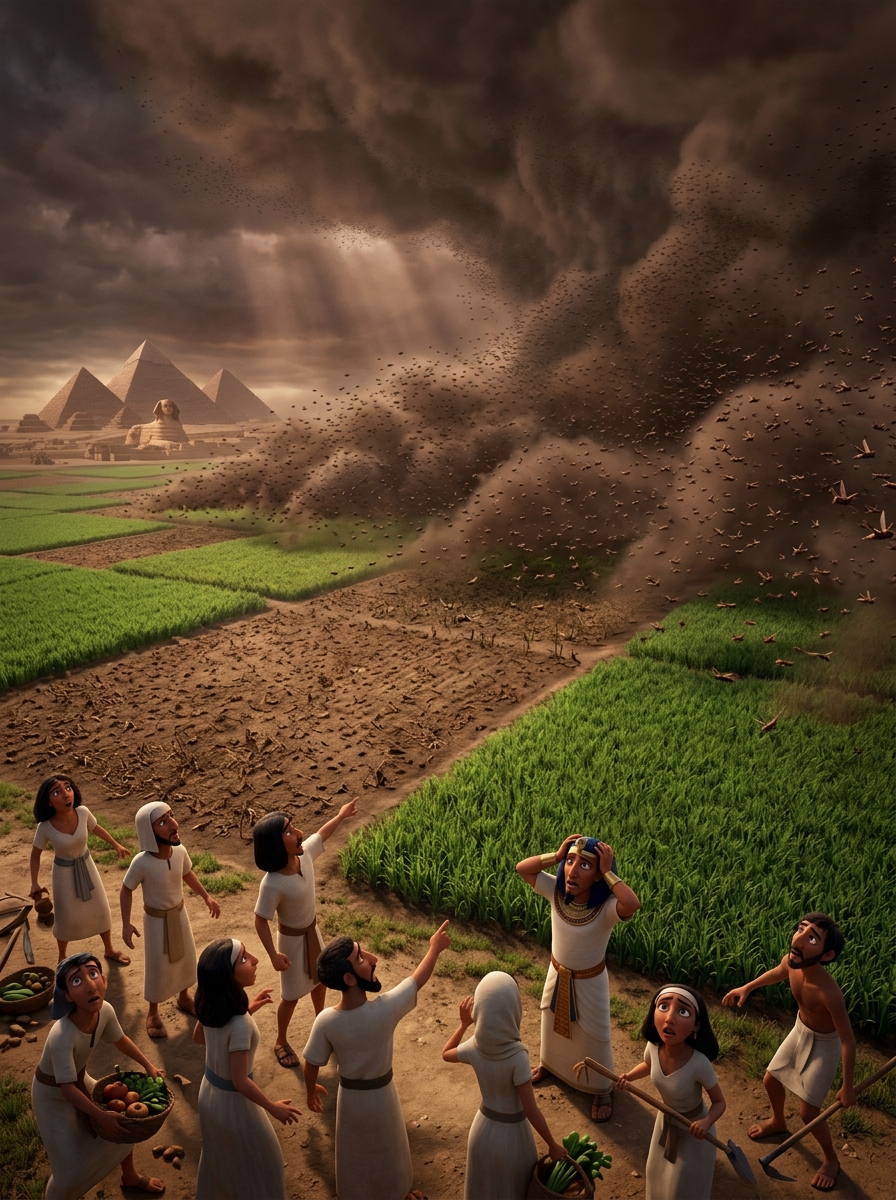
Plague Eight — Locusts
Moses stretched his staff over Egypt and God sent an east wind blowing all night. By morning, locusts had invaded the whole country — more than anyone had ever seen before. They covered the ground until it was black, and ate every plant and every remaining crop that the hail had not destroyed. Nothing green was left anywhere in Egypt.
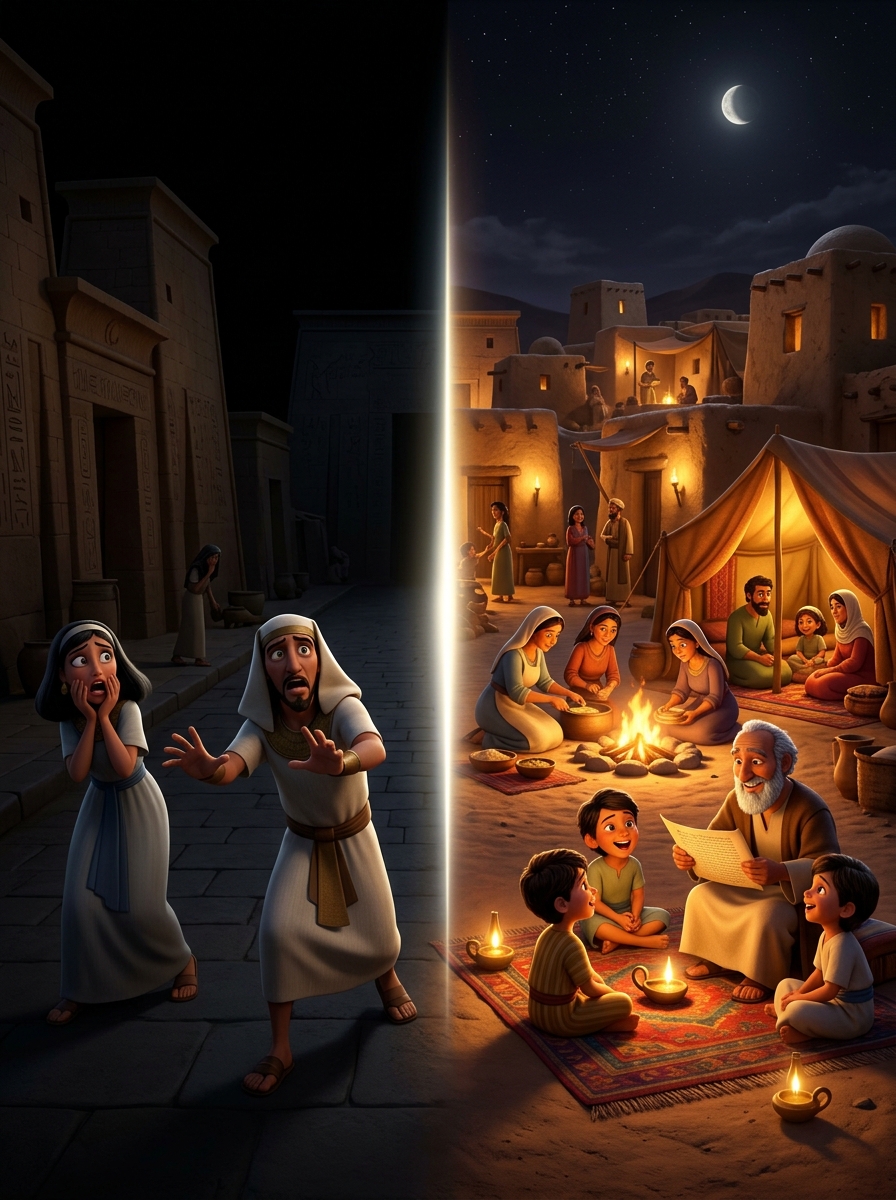
Plague Nine — Darkness
Moses stretched his hand toward the sky and thick darkness covered all of Egypt for three days. It was so dark that no one could see anyone else or move from where they were. But all the Israelites had light in their homes. Pharaoh called Moses and said he would let the people go — but tried to keep their flocks behind. Moses said no. Pharaoh exploded with rage.
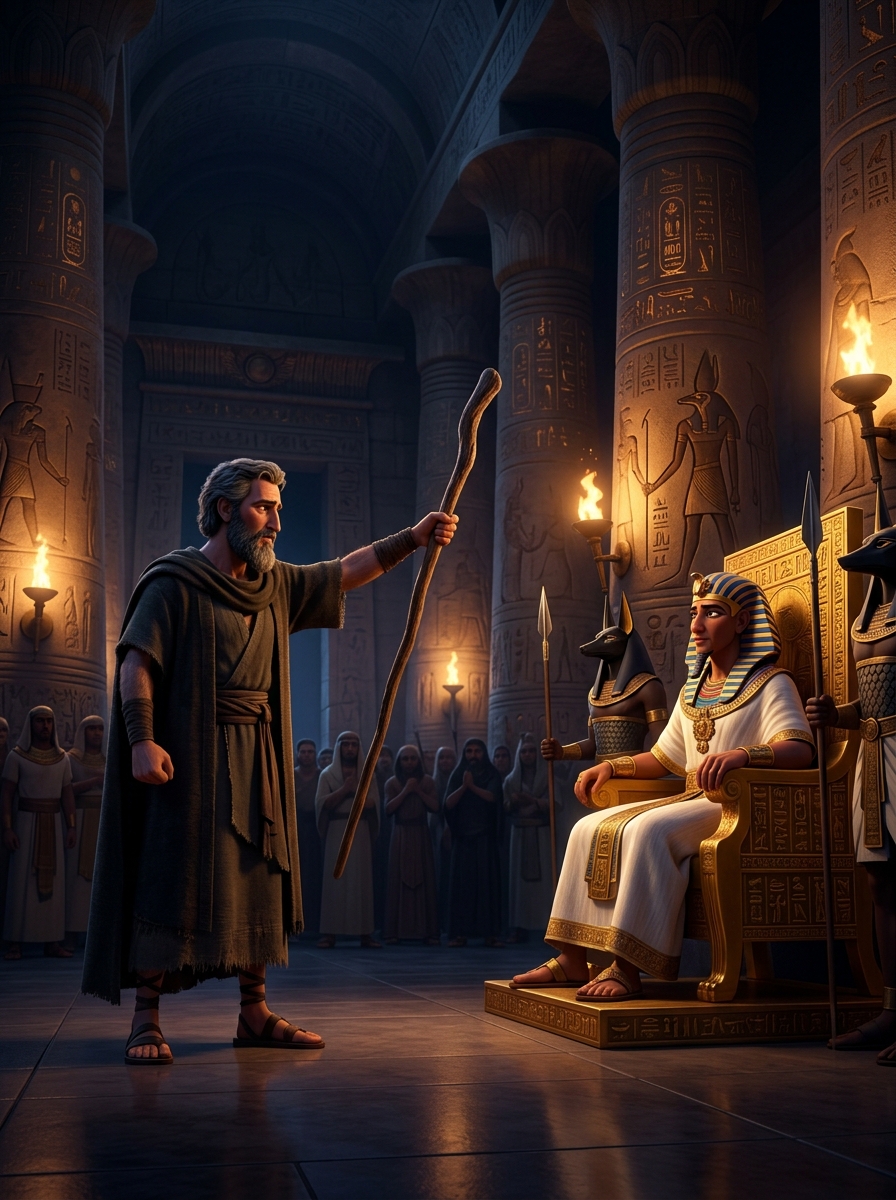
One More Plague
God told Moses there was one more plague coming — and after this one, Pharaoh would not just let them go, he would drive them out. Moses went to Pharaoh with the most serious warning yet. "This is what God says: at midnight, every firstborn son in Egypt will die — from Pharaoh's firstborn on his throne to the firstborn of every family."
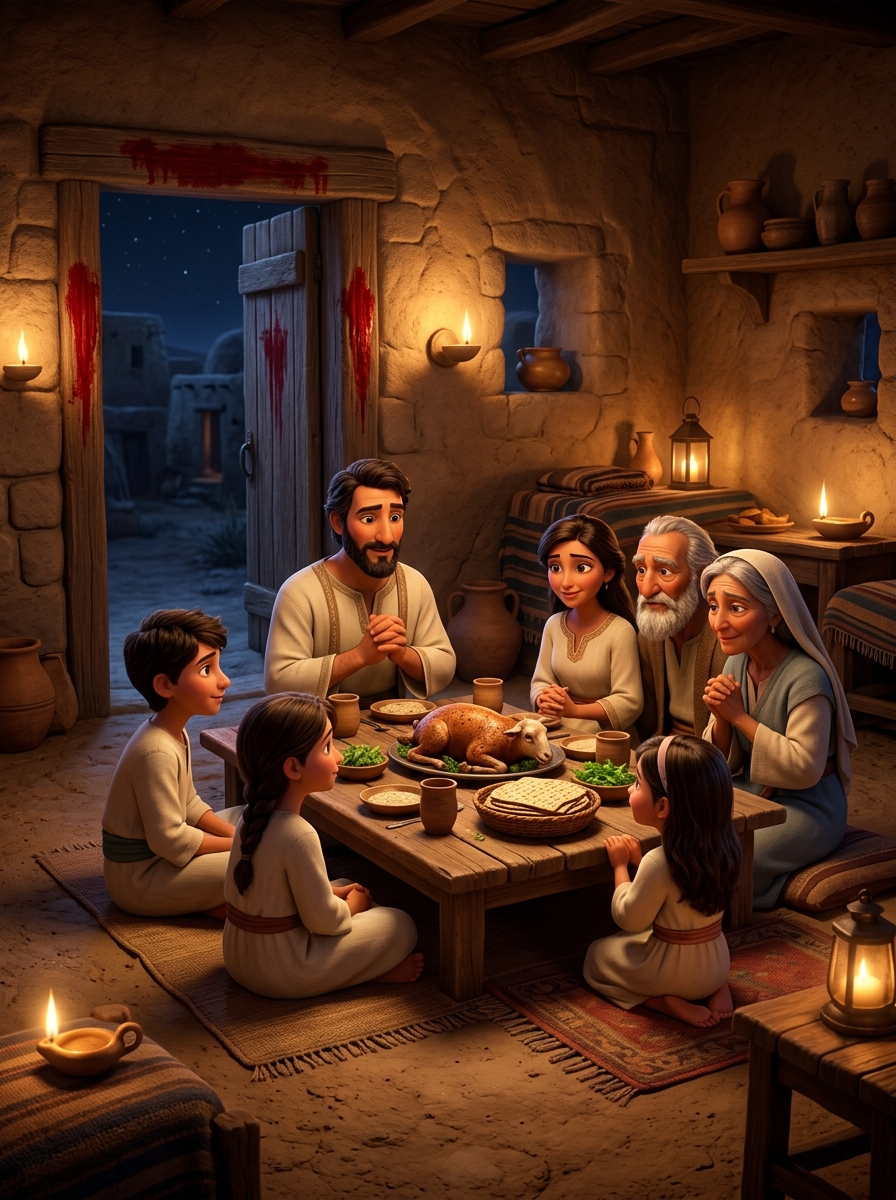
The Passover Lamb
God gave the Israelites careful instructions. Each family was to take a perfect lamb, kill it at twilight, and spread its blood on the doorframes of their homes. When God passed through Egypt that night, He would see the blood on the door and pass over that house. The blood of the lamb would protect everyone inside.
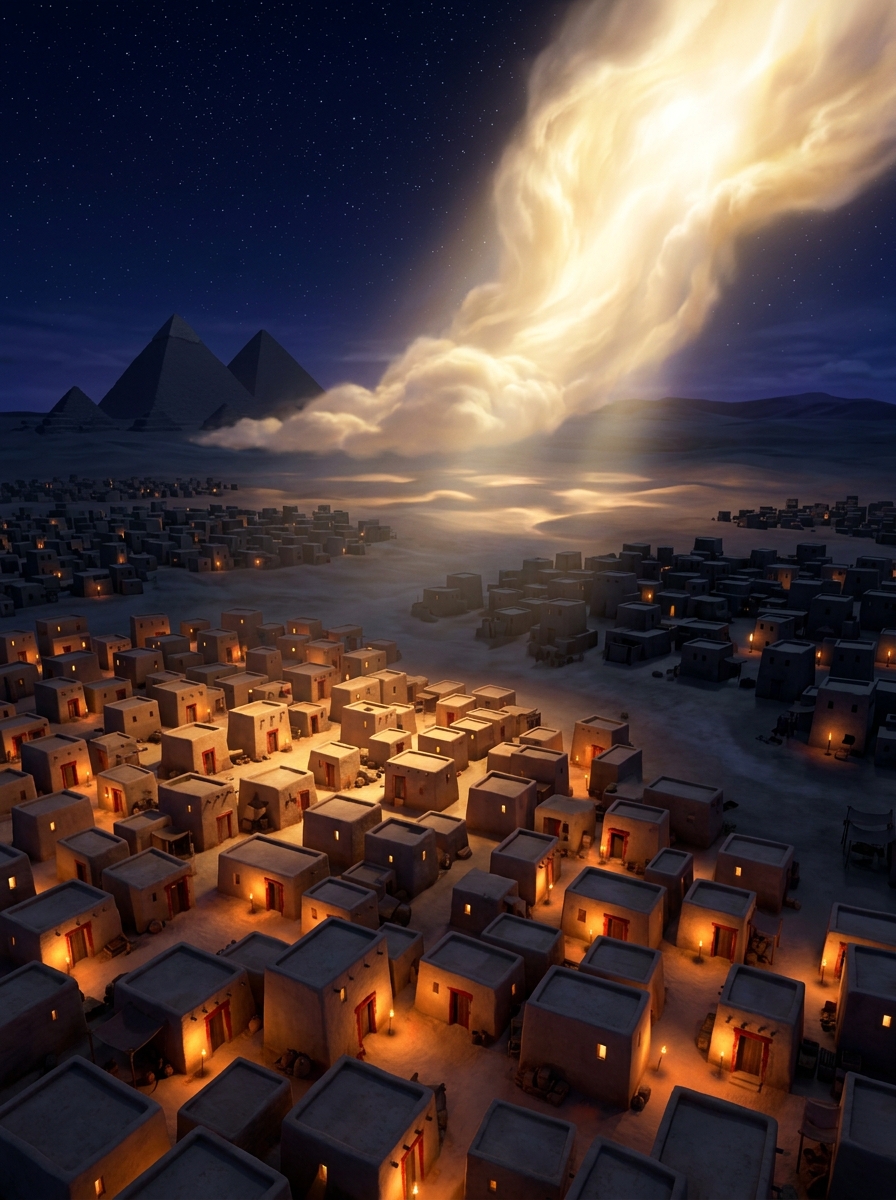
The Night of the Passover
At midnight God moved through Egypt. In every Egyptian home, the firstborn son died — from the palace of Pharaoh to the humblest house. But wherever the Israelites had put the blood of the lamb on their doorframes, the angel of death passed over. Not one Israelite home lost a child that night.
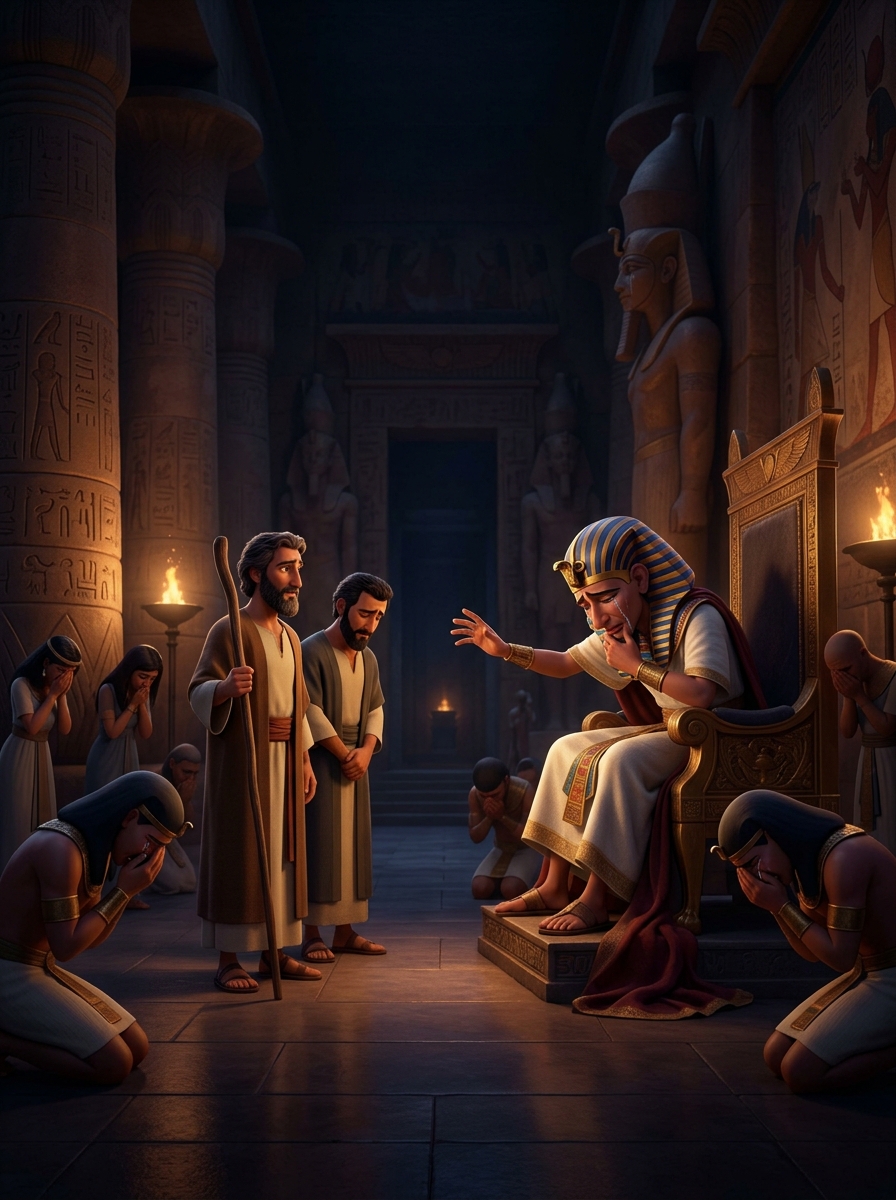
Egypt's Grief
Pharaoh got up in the night — and a great cry rose across all of Egypt. There was not a single house without someone who had died. Pharaoh called for Moses and Aaron immediately. "Get out," he said. "Take your people. Take your flocks. Take everything. And go." Ten plagues later, Egypt finally let God's people go.
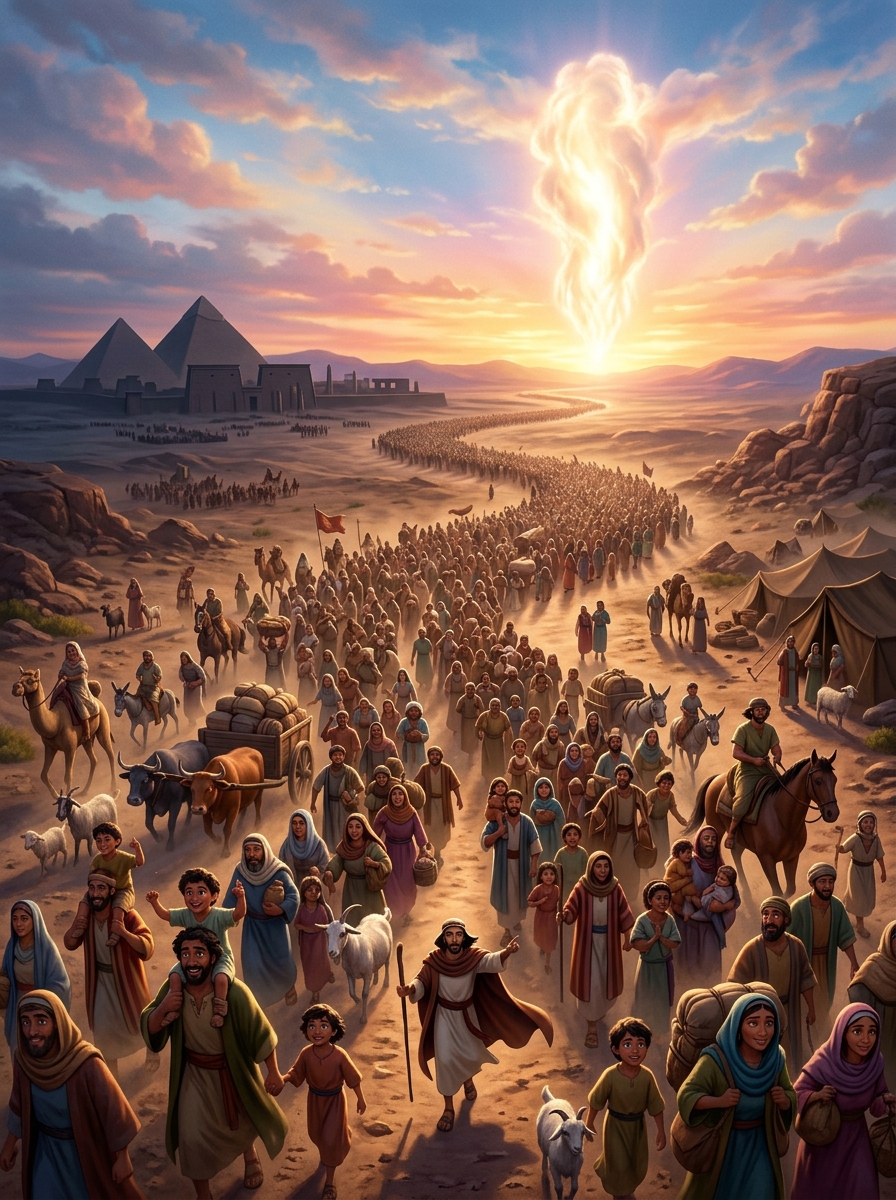
The Israelites Leave Egypt
The Israelites left in a hurry — so fast their bread dough had no time to rise. They carried their belongings on their shoulders, their unleavened bread wrapped in cloth. About six hundred thousand men, plus women and children, walked out of Egypt that night. After four hundred and thirty years of slavery, God's people were finally free.
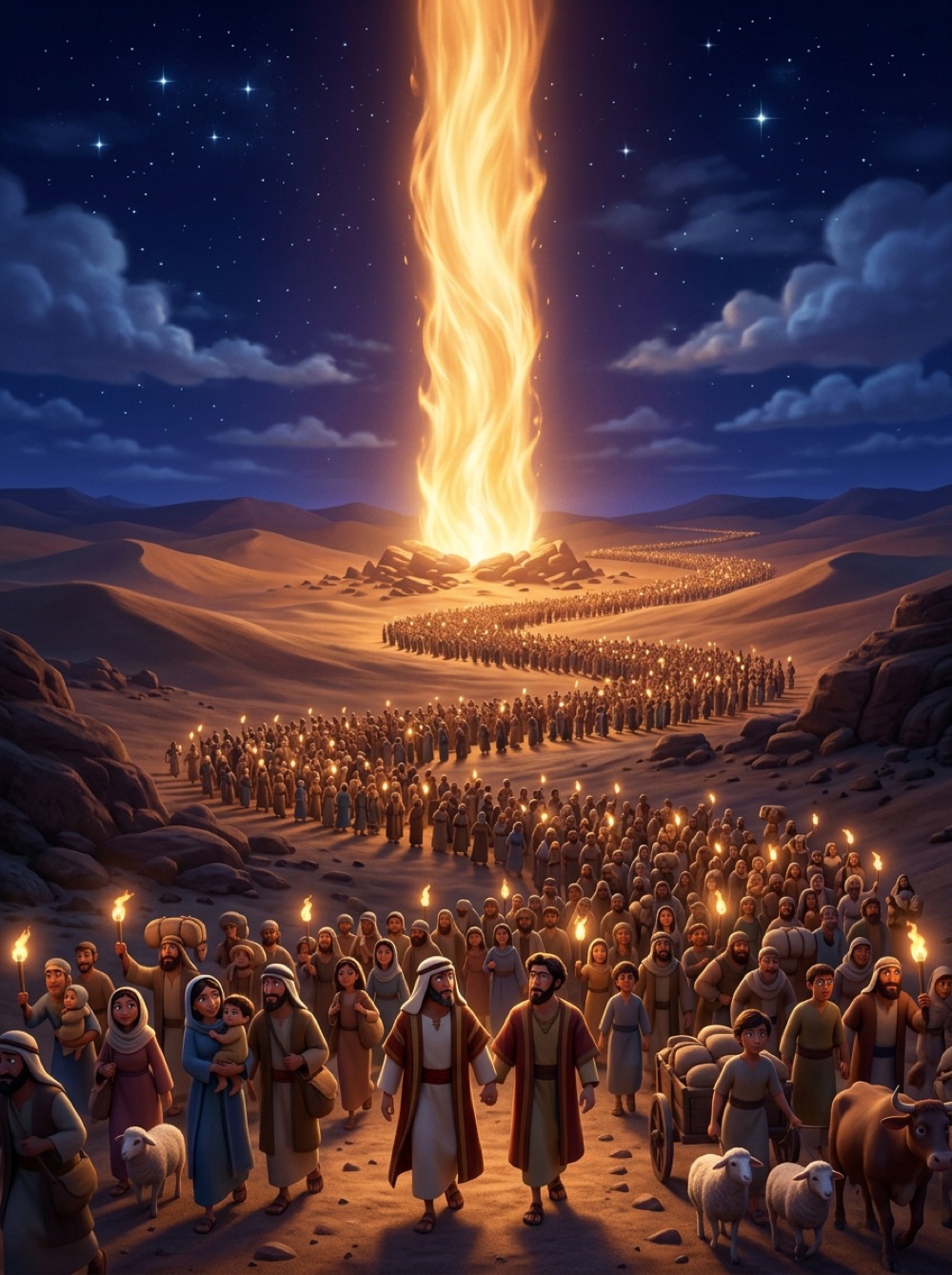
God Leads the Way
God did not lead the Israelites along the shortest road. Instead He took them through the desert toward the Red Sea. And He went with them every step — as a pillar of cloud during the day to guide their path, and a pillar of fire at night to give them light. They never had to walk in darkness or wonder which way to go.
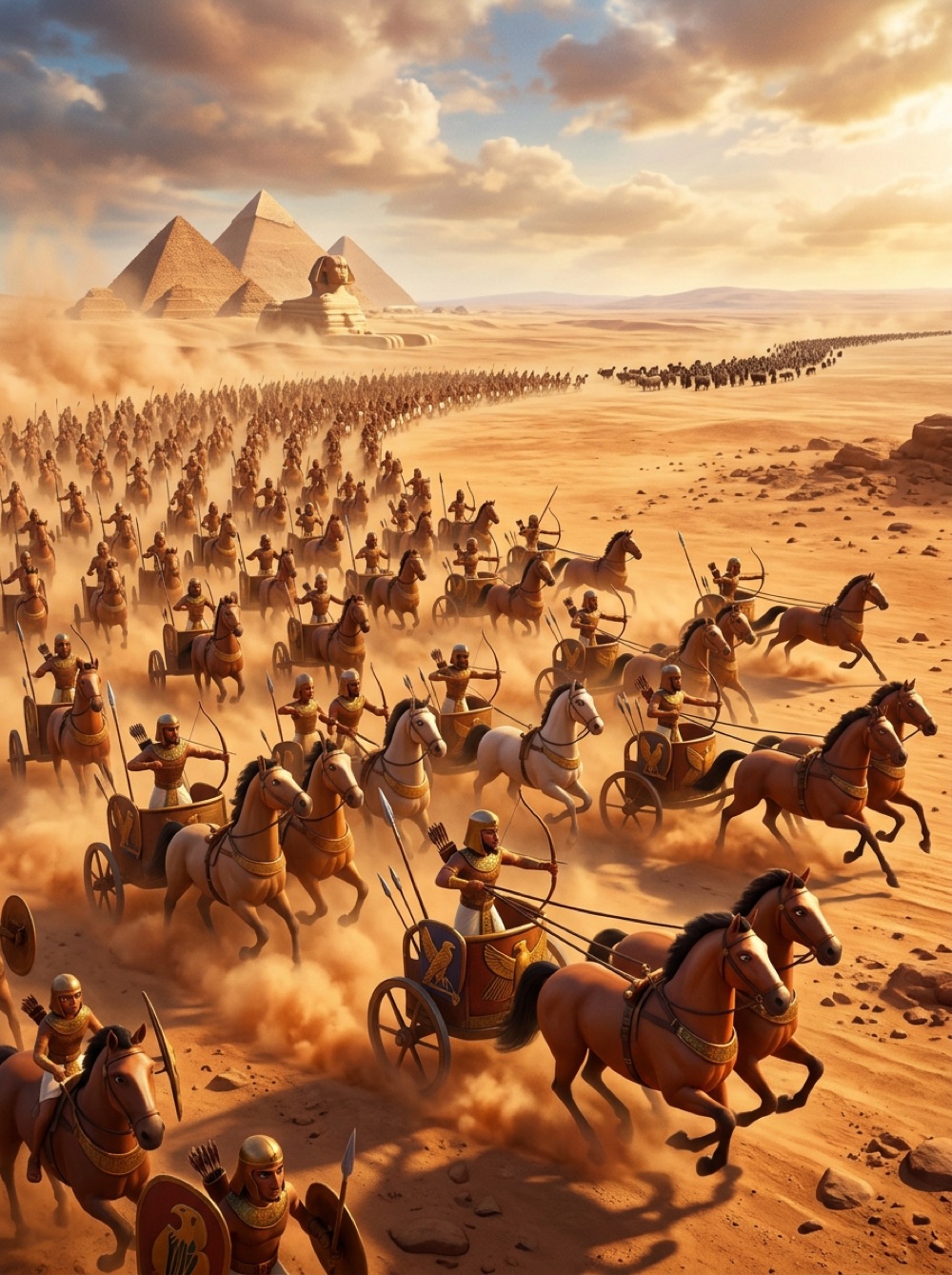
Pharaoh Changes His Mind
Back in Egypt, Pharaoh changed his mind again. "What have we done — letting Israel go?" He gathered his army — six hundred of his best chariots plus all the other chariots of Egypt — and chased after the Israelites. The people looked up and saw the Egyptian army coming. They were terrified.
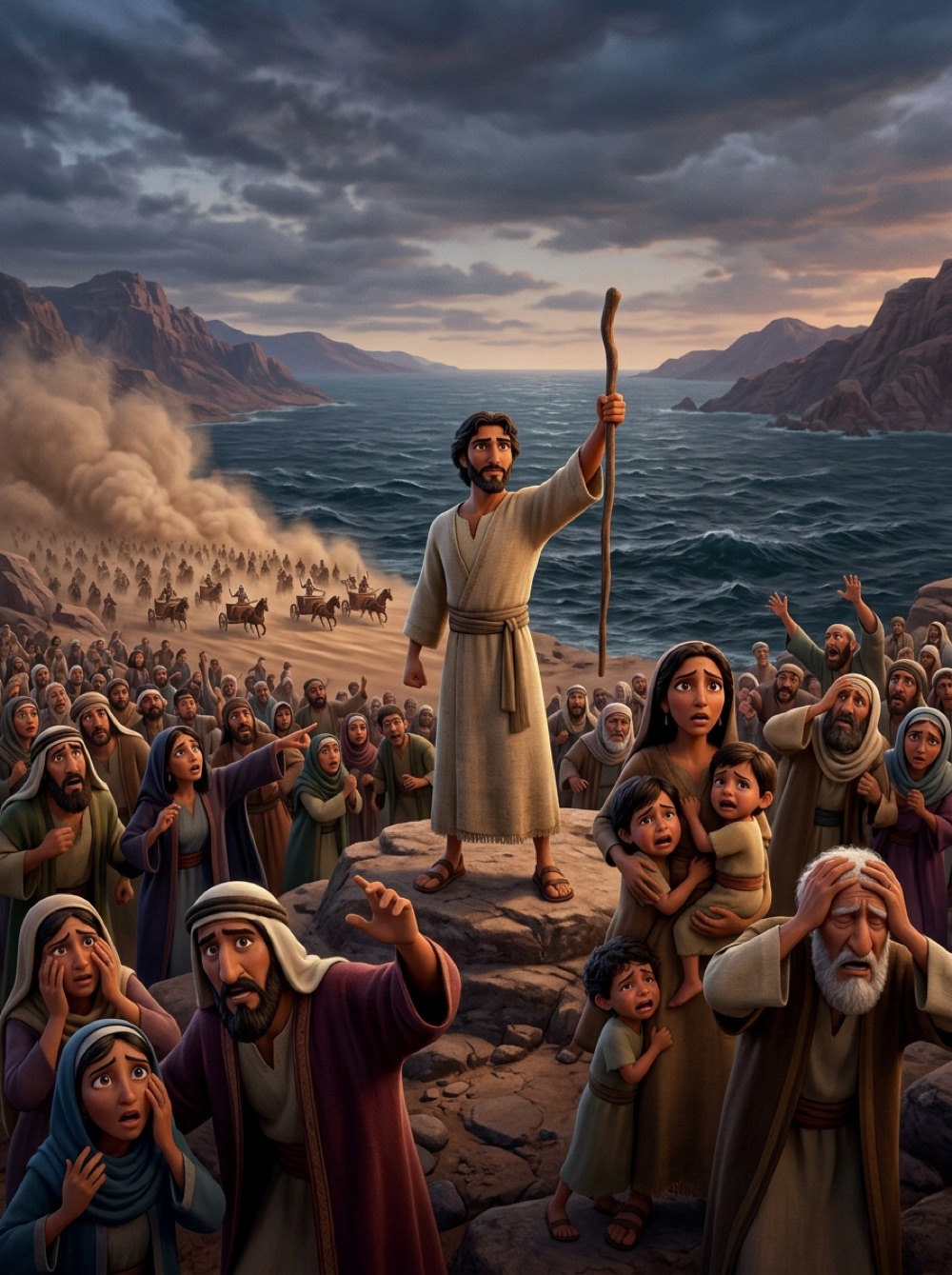
Trapped at the Sea
The Israelites were trapped — the Red Sea in front of them, Pharaoh's army behind them. They cried out to Moses in fear and anger. "Was there no room in Egypt to bury us? Why did you bring us here to die?" Moses answered them with some of the most powerful words in the Bible. "Do not be afraid. Stand firm. God will fight for you today."

The Sea Divides
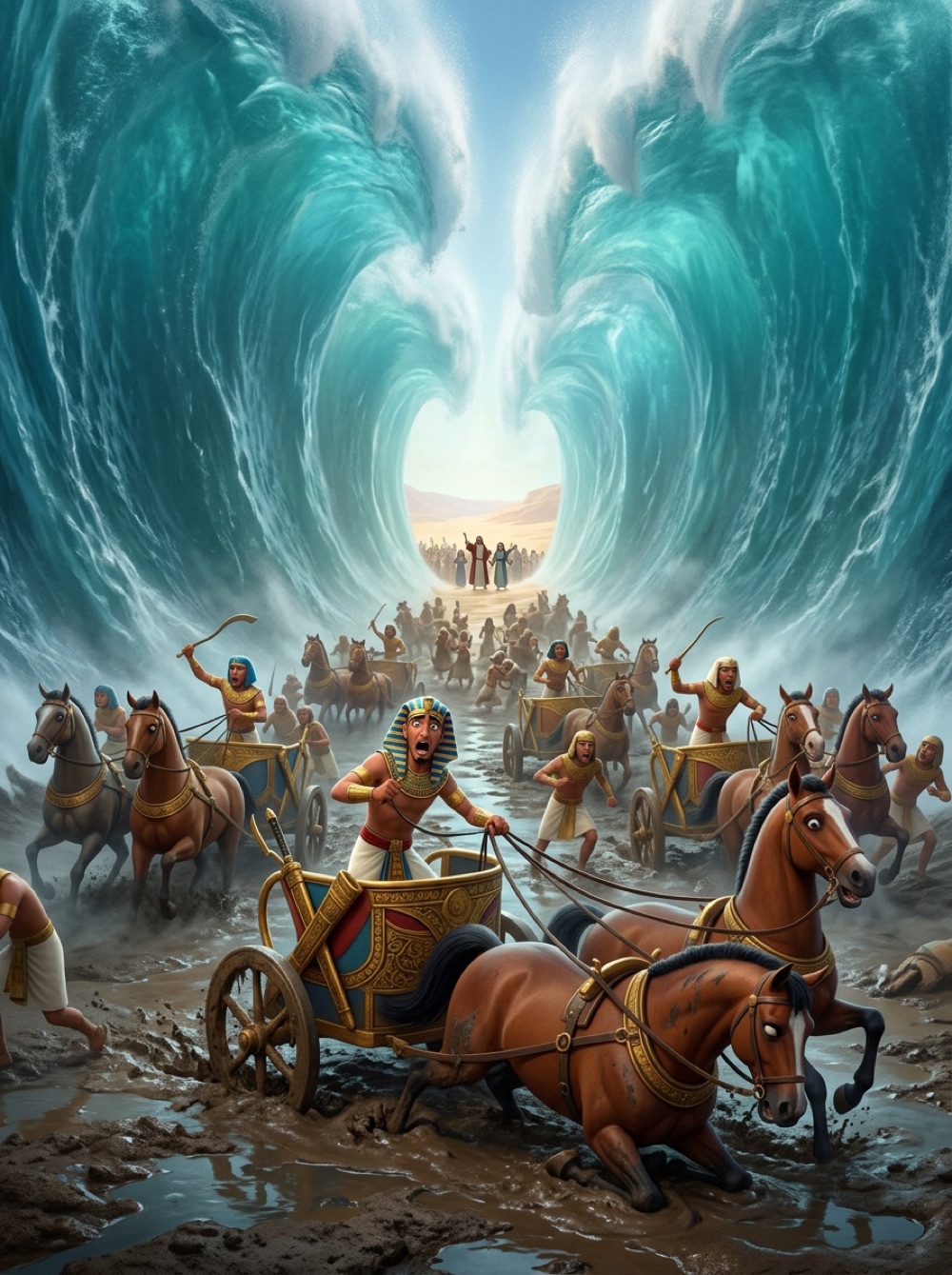
Moses stretched his staff over the sea. God sent a strong east wind that blew all night — and the water divided. The Israelites walked through the middle of the sea on dry ground, with walls of water standing tall on their left and their right. The most impossible escape anyone had ever seen was happening in real time.
Pharaoh's Army Follows
The Egyptian army followed the Israelites into the middle of the sea. But God threw the army into confusion — He jammed their chariot wheels so they drove with difficulty. "Let us flee from Israel," the Egyptians said. "God is fighting for them against us." But it was too late to turn back.
The Waters Return
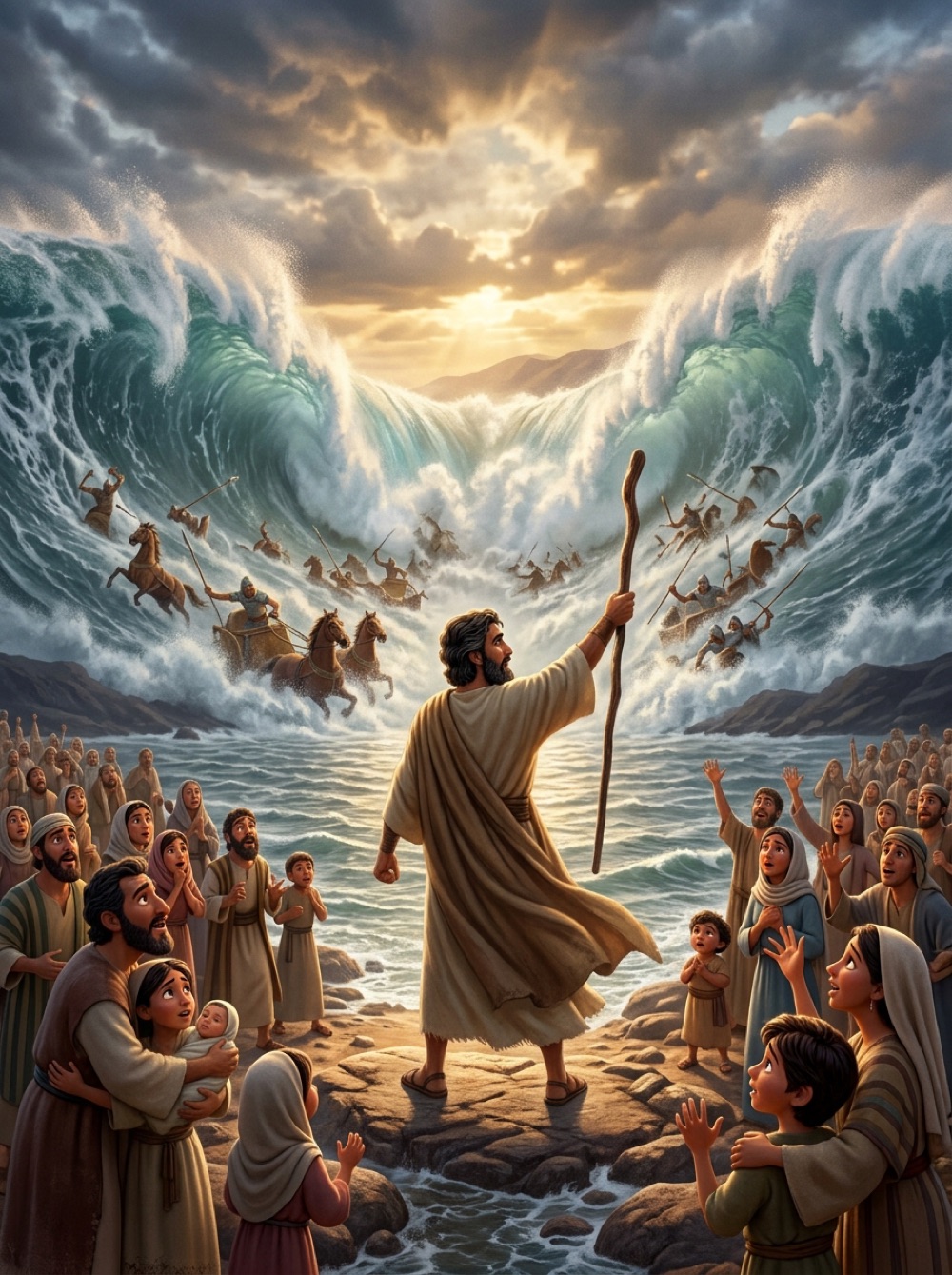
When the last Israelite reached the other side, Moses stretched his hand over the sea again. The water returned and covered the chariots and the entire army of Pharaoh that had followed them into the sea. Not one of them survived. The Israelites saw the power of God that day — and they feared Him and trusted in Him.
The Song of Moses
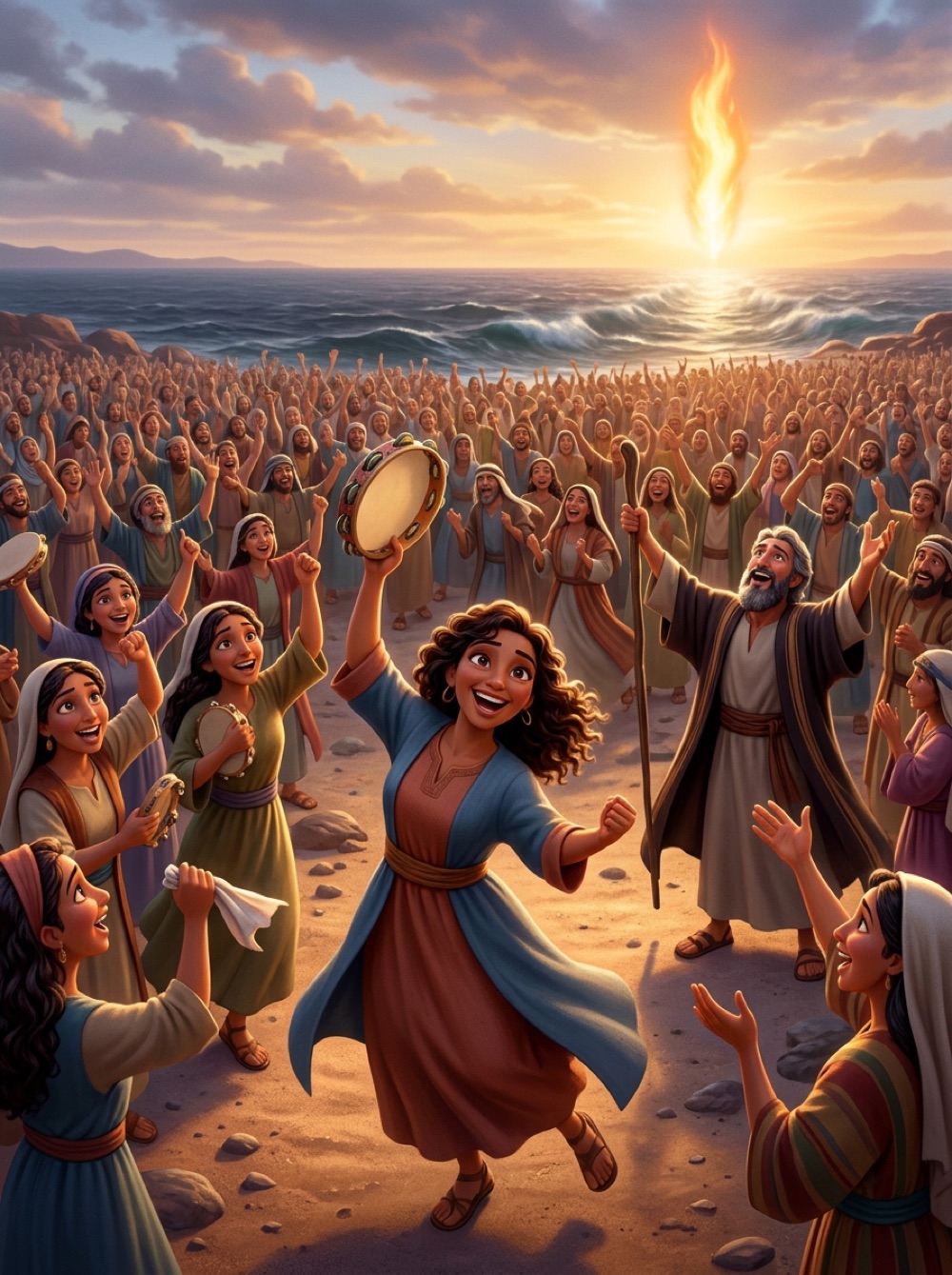
Then Moses and the Israelites sang a song to God — one of the oldest songs in the entire Bible. "I will sing to the Lord, for He is highly exalted. The Lord is my strength and my defence. He has become my salvation." Miriam, the sister of Moses, took a tambourine and led all the women in singing and dancing. God had saved them and they couldn't stop celebrating.
Hungry in the Desert
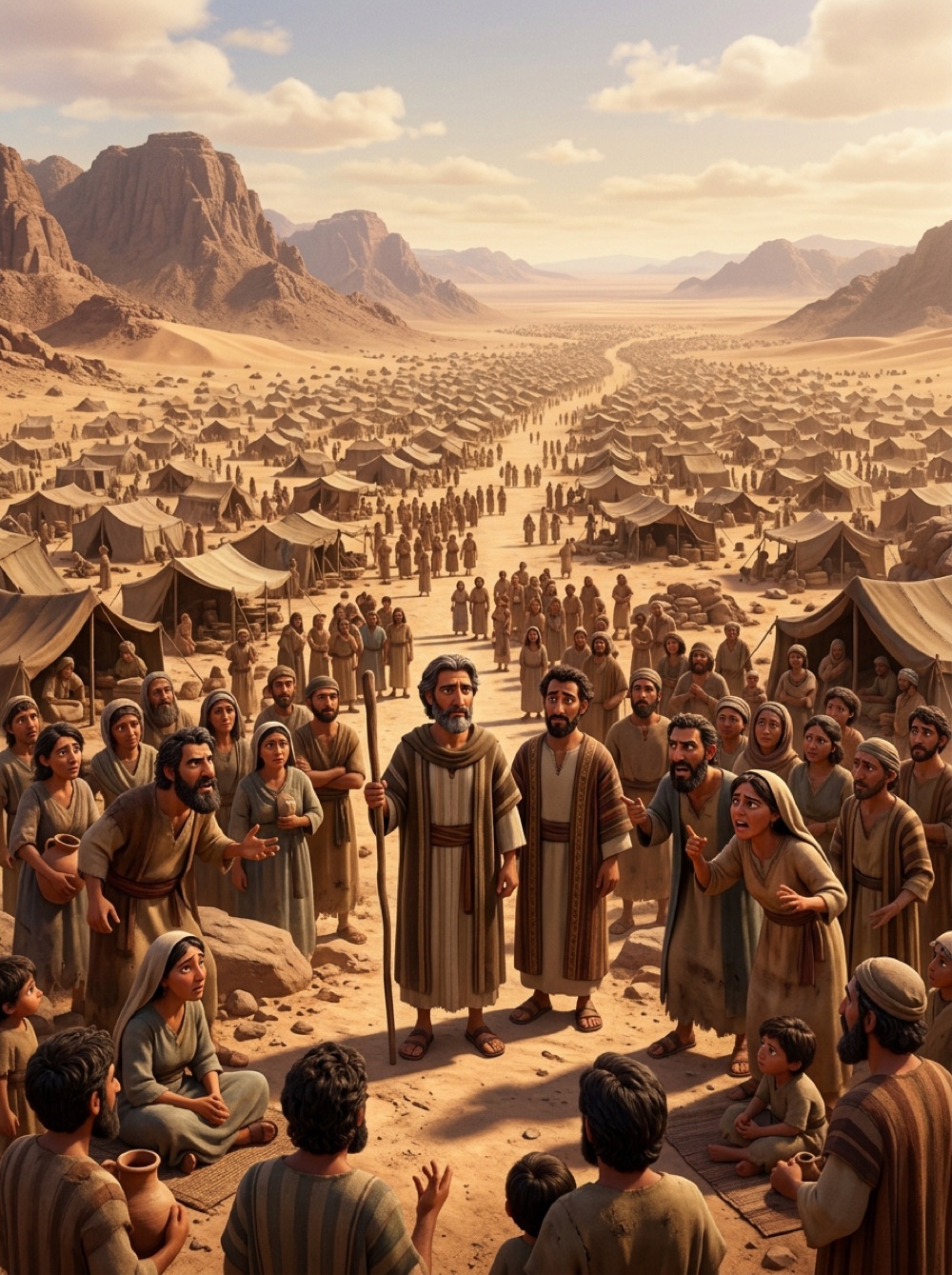
The celebration didn't last long. Six weeks into the desert journey the Israelites ran out of food and began complaining bitterly. "We wish we had stayed in Egypt," they said. "At least there we had food to eat." They had watched God part the Red Sea — and now they doubted He could feed them. God was patient with them anyway.
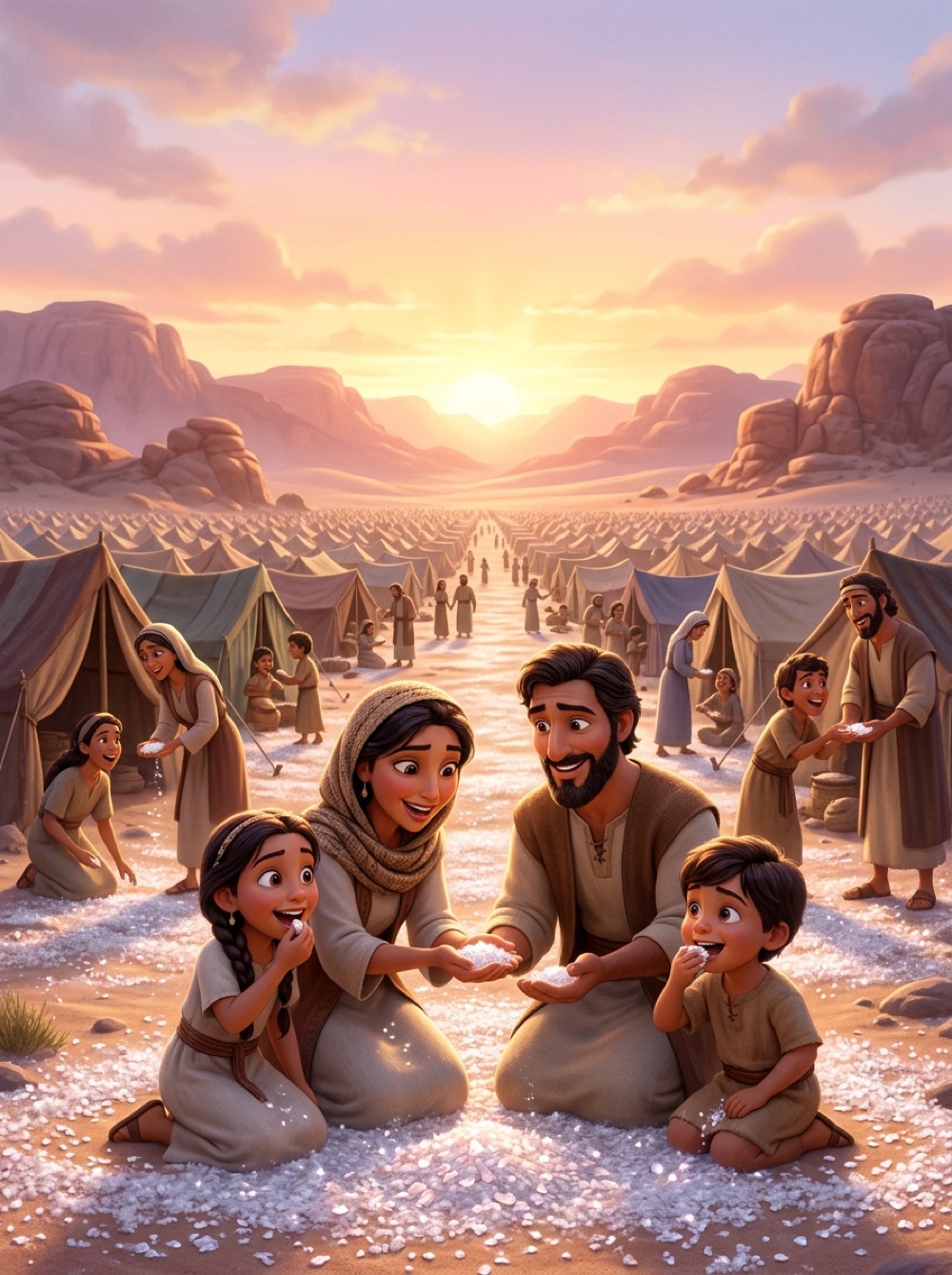
Bread From Heaven
God told Moses He would rain down bread from heaven every morning. The people were to gather just enough for each day — no storing it up, no hoarding. On the sixth day they could gather double, because the seventh day was a day of rest. Every morning a thin white flaky substance covered the ground like frost. The people called it manna — which means "what is it?"
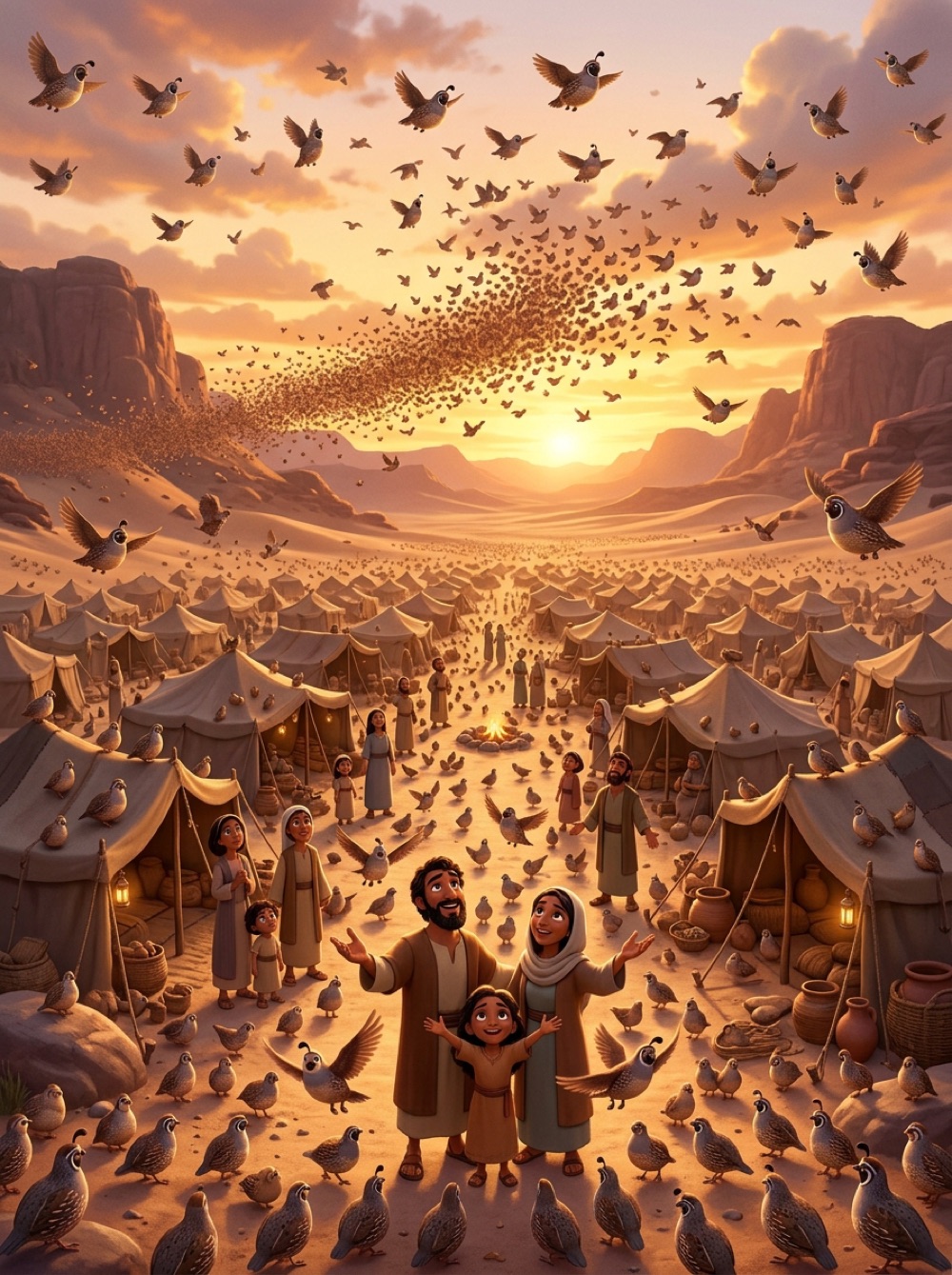
Quail at Evening
That evening God sent quail — birds that flew in and covered the camp so the people had meat to eat. Every morning manna. Every evening quail. God was providing exactly what His people needed, exactly when they needed it — day after day after day in the desert. His provision never ran out.
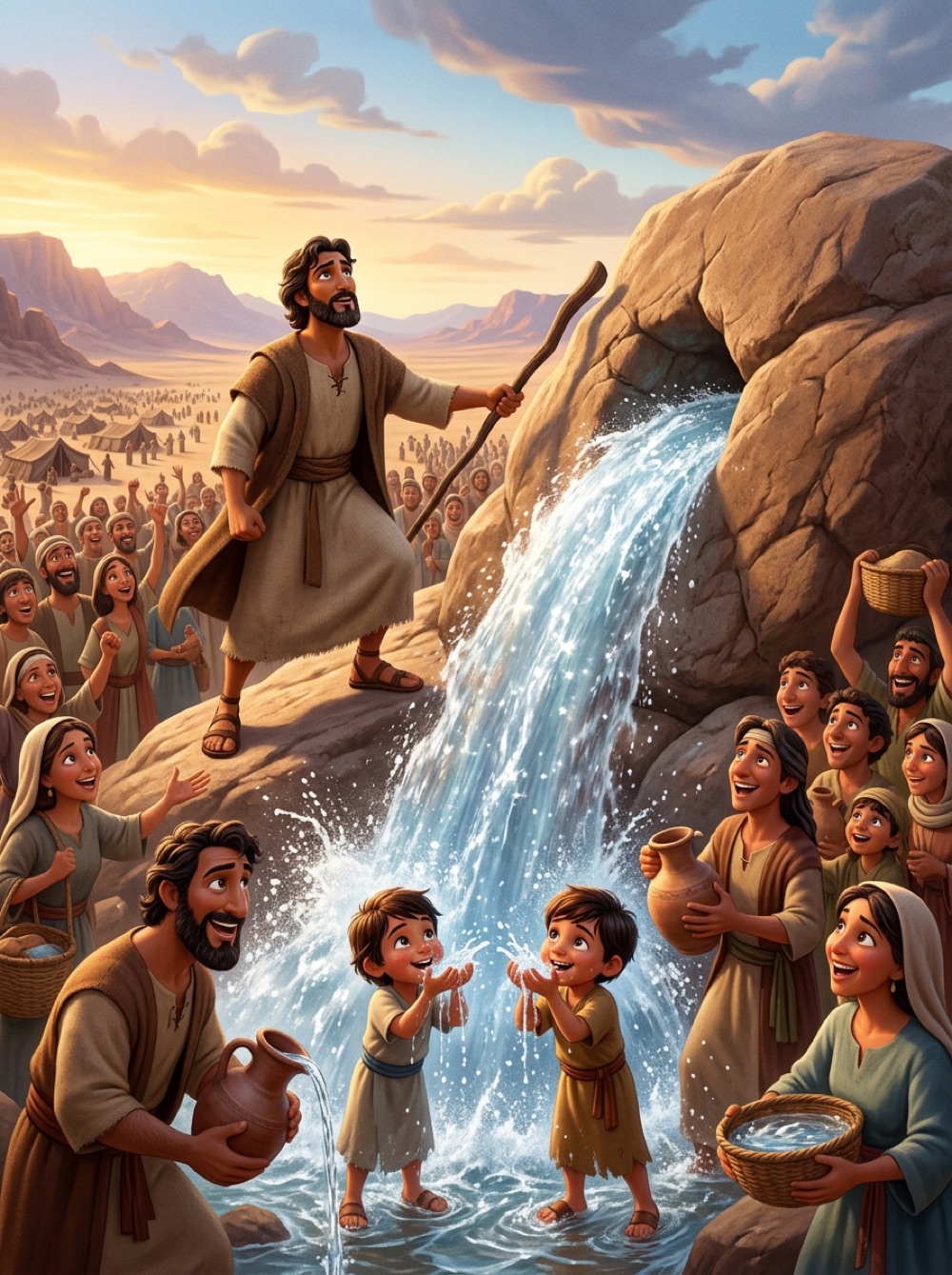
Water From the Rock
The Israelites camped at a place with no water and quarreled with Moses again. "Give us water or we will die." Moses cried out to God — "What do I do with these people? They are almost ready to stone me." God told Moses to strike a particular rock with his staff. Water poured out of the solid rock, enough for the whole camp to drink.
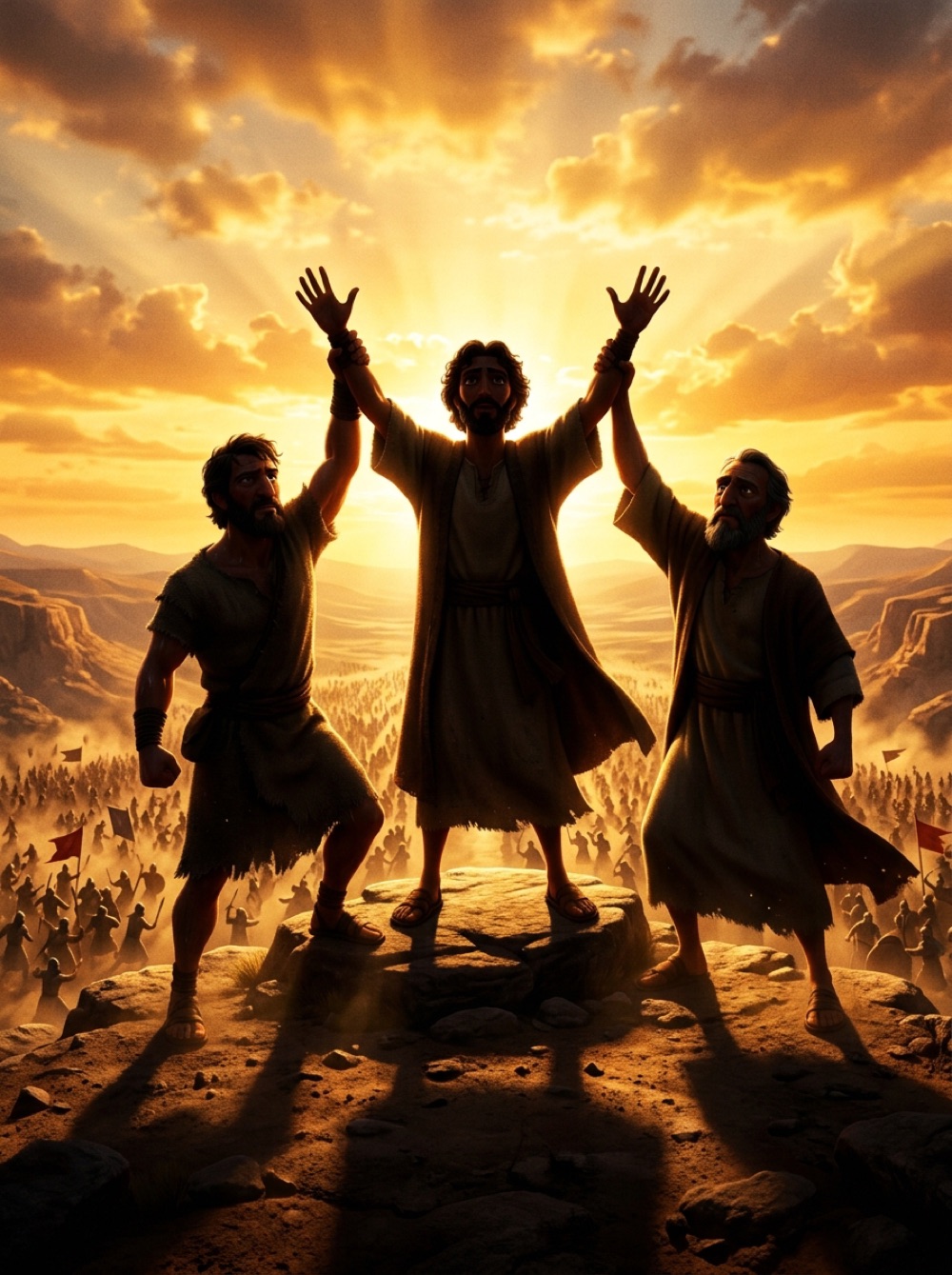
Moses Holds Up His Hands
A group called the Amalekites attacked Israel in the desert. Joshua led the Israelite fighters while Moses stood on a hill with his staff raised toward heaven. When Moses held his hands up, Israel was winning. When he lowered them, the battle turned. So Aaron and Hur stood on either side of Moses, holding his hands up until sunset. Israel won.
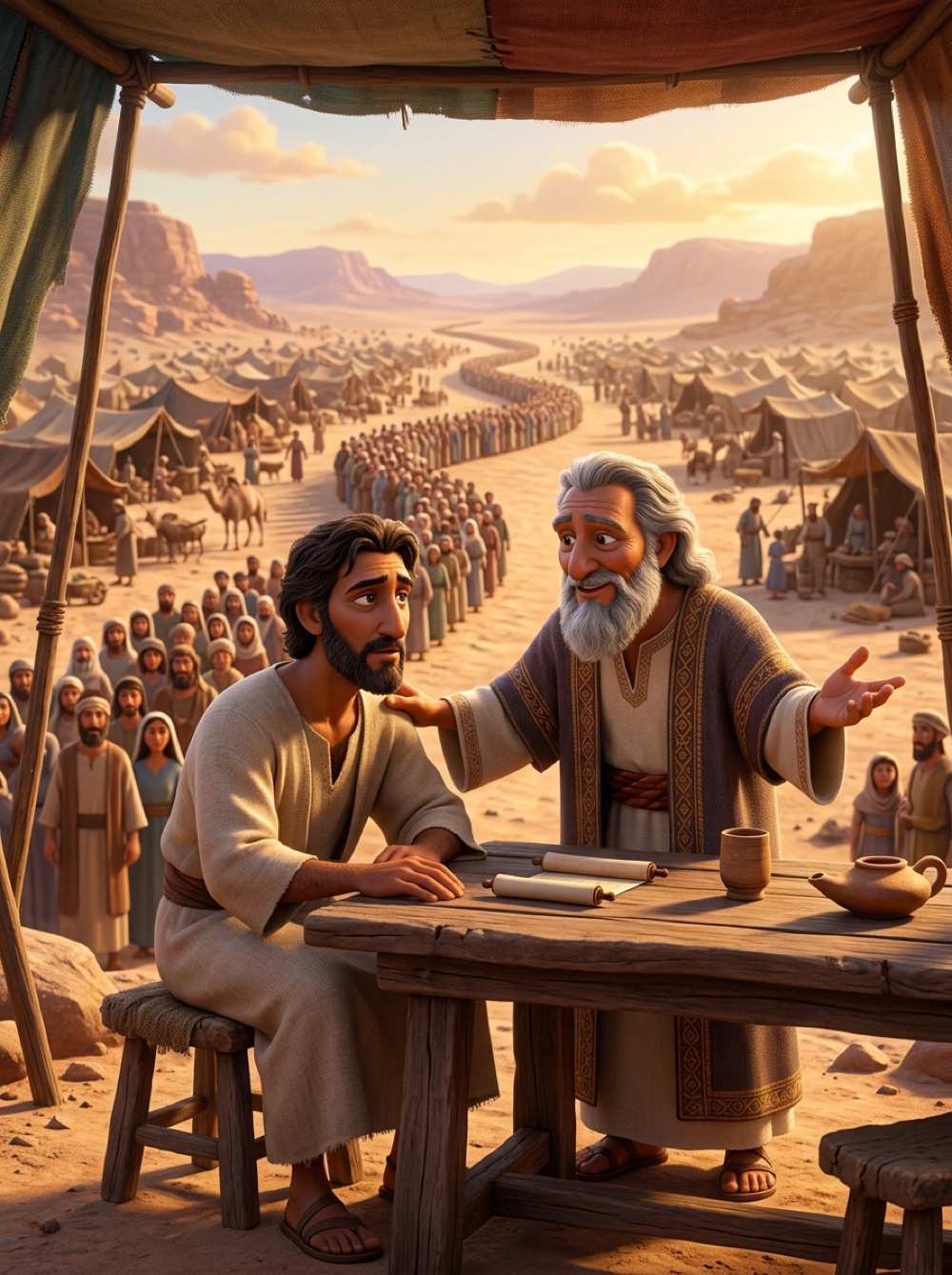
Jethro's Wise Advice
Moses' father-in-law Jethro came to visit and watched Moses work from morning to evening — judging disputes for thousands of people all by himself. "This is not good," Jethro said. "You will wear yourself out. You cannot do this alone." He advised Moses to appoint capable leaders to handle smaller cases. Even the greatest leaders need wise people around them.

God Comes Down to the Mountain
Three months after leaving Egypt, the Israelites reached Mount Sinai. God called Moses up the mountain and gave him a message for the people. "You have seen what I did to Egypt and how I carried you on eagles' wings to bring you to myself. If you obey me fully, you will be my treasured possession — a kingdom of priests, a holy nation."
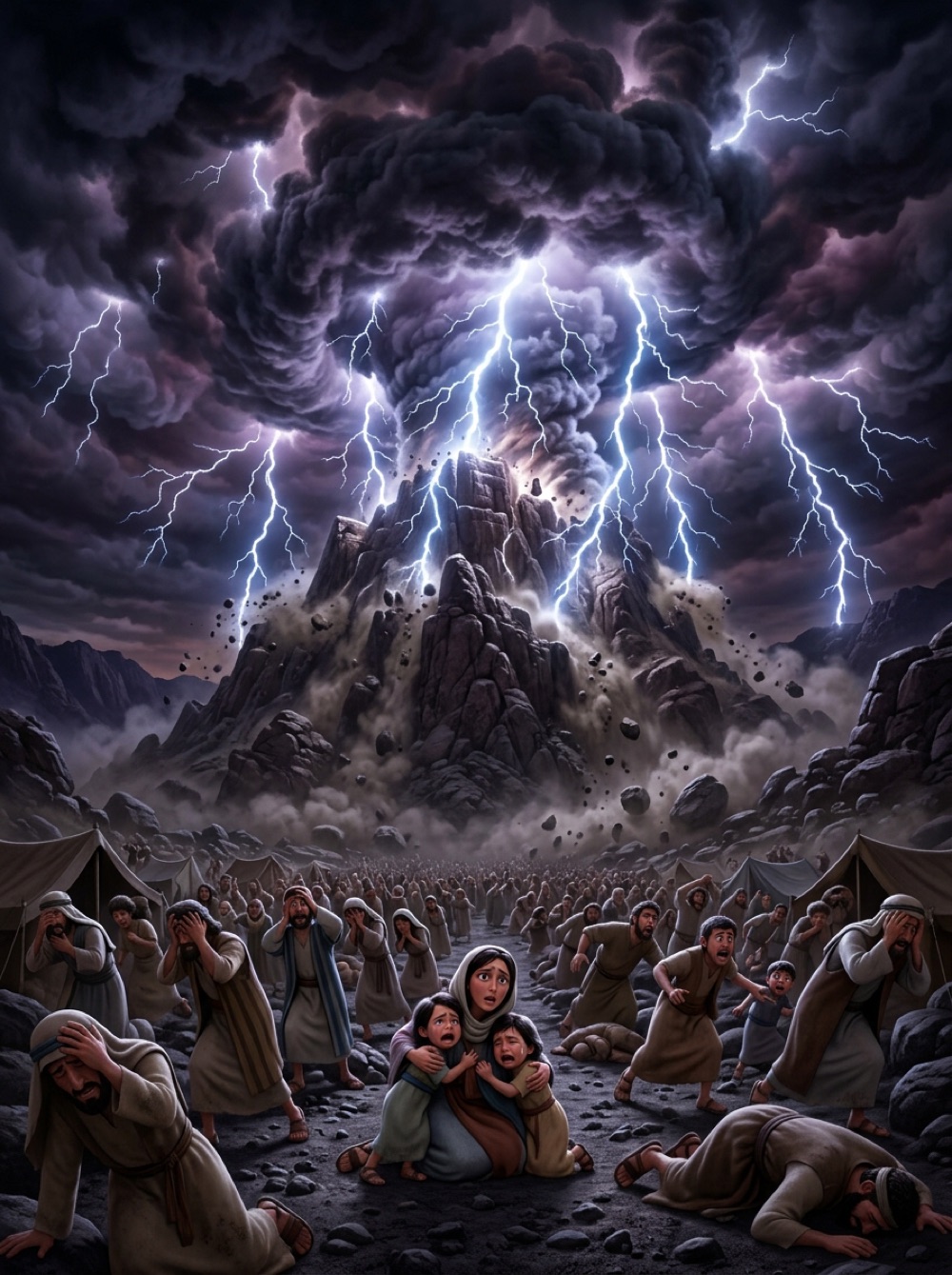
Thunder, Lightning, and Thick Cloud
On the third day, Mount Sinai was covered in thick smoke because God descended on it in fire. The whole mountain trembled. Thunder roared. Lightning flashed. A thick cloud covered the peak and a trumpet blast grew louder and louder until the whole camp trembled with it. God was making clear that what was about to happen was unlike anything that had ever happened before.
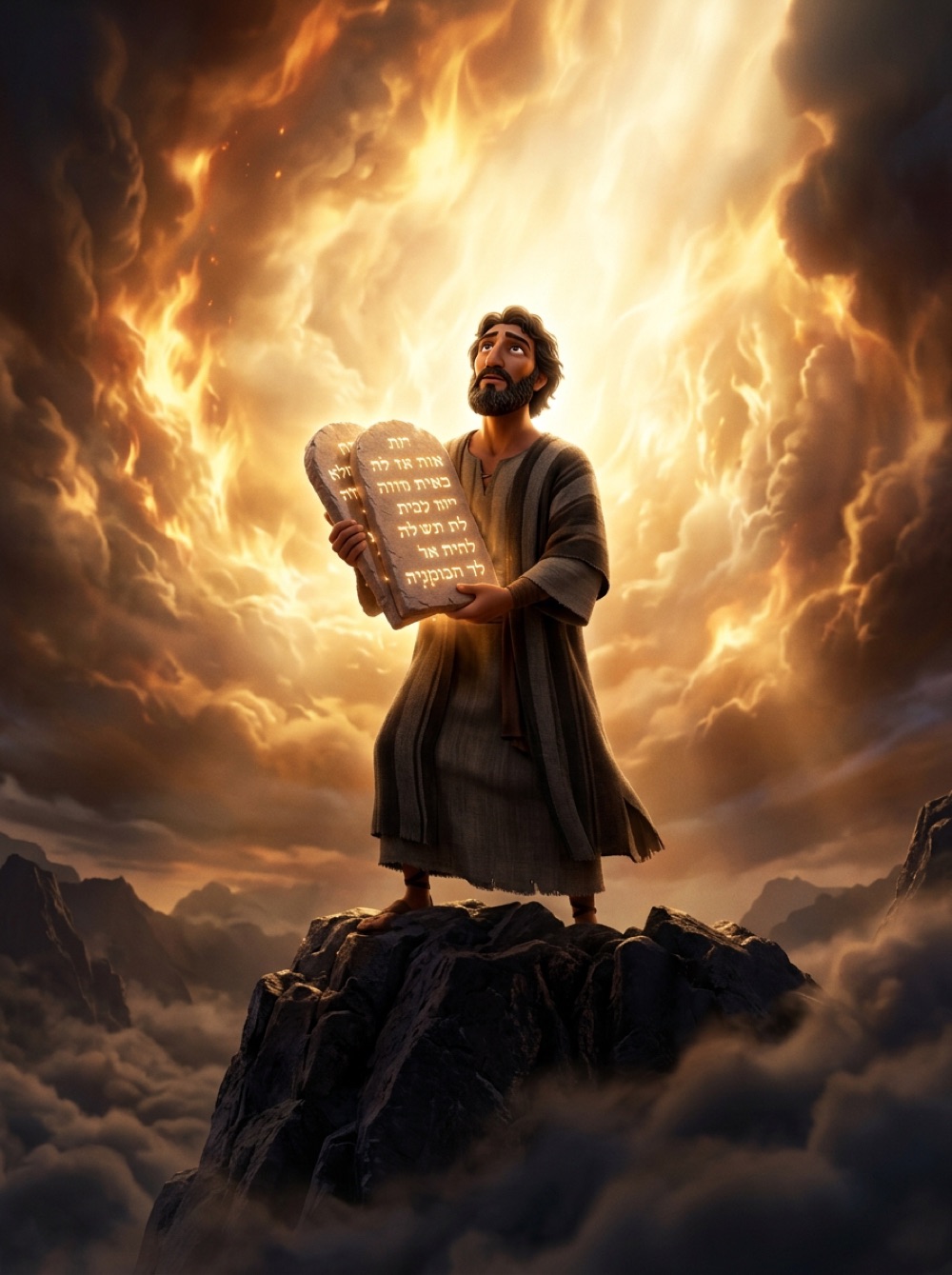
The Ten Commandments — Part One
God spoke all these words from the mountain. You shall have no other gods before me. You shall not make idols or bow down to them. You shall not misuse the name of the Lord. Remember the Sabbath day and keep it holy — six days to work, the seventh day to rest, just as God rested on the seventh day of creation.
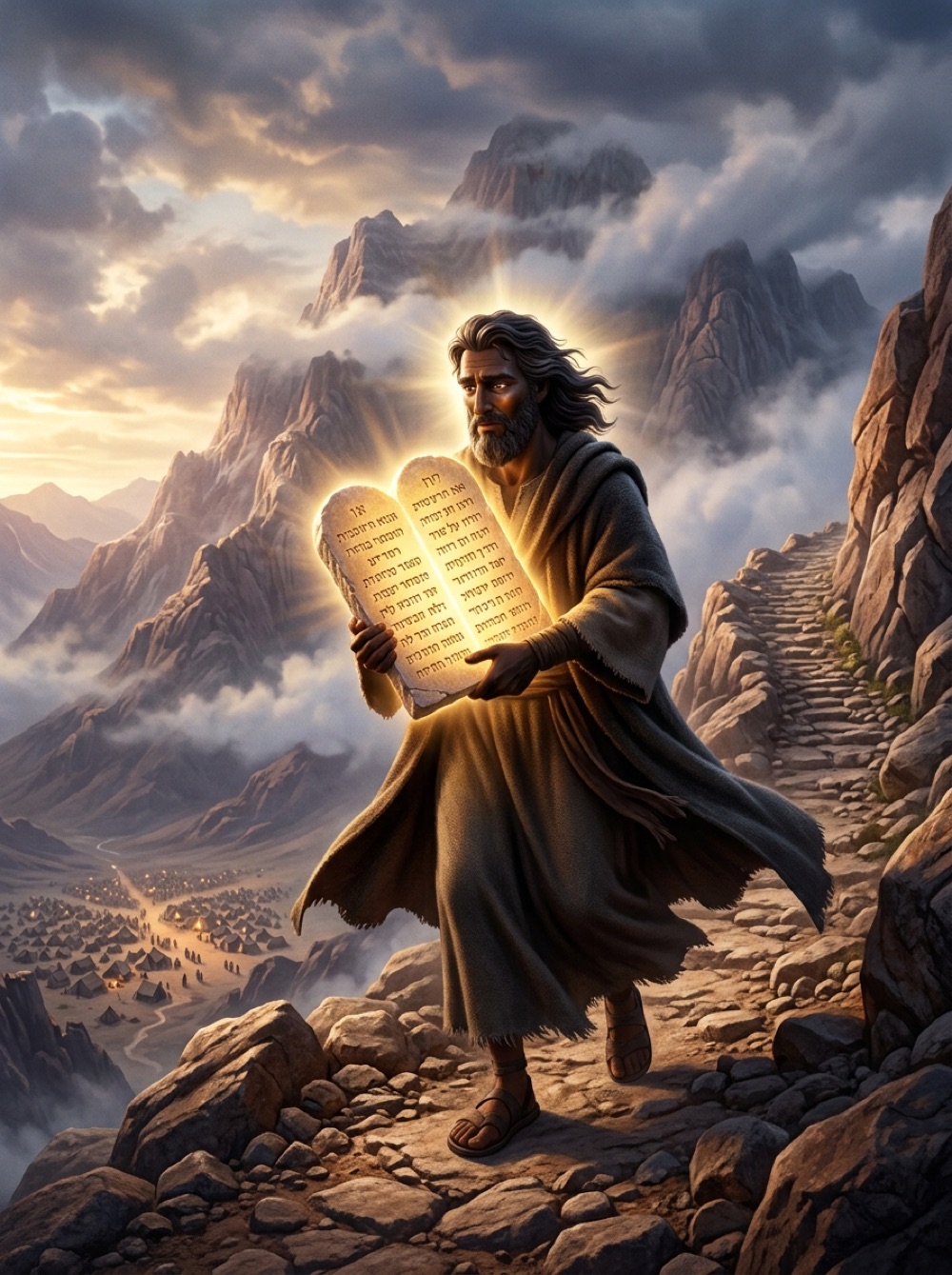
The Ten Commandments — Part Two
God continued. Honor your father and your mother. You shall not murder. You shall not be unfaithful to your husband or wife. You shall not steal. You shall not lie about your neighbor. You shall not wish for things that belong to someone else. Ten commandments — not suggestions. The foundation of how God's people were to live with Him and with each other.
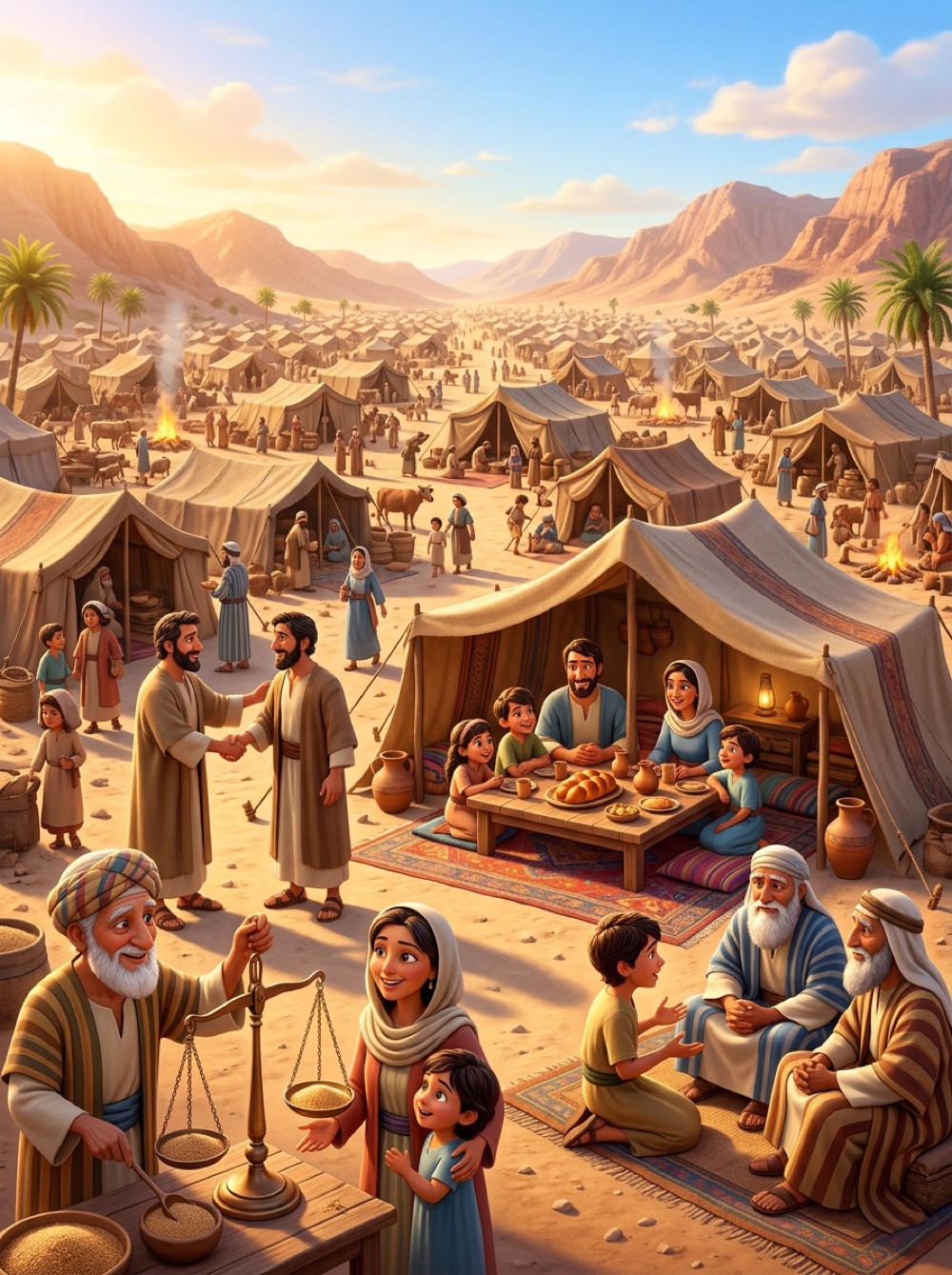
Rules for Living Together
God gave Moses many more detailed laws and instructions — how to treat servants fairly, how to handle disputes between neighbors, how to care for the poor and the stranger, how to observe the festivals, and how to keep justice in the community. The heart behind every rule was the same: love God completely, and treat every person with fairness and dignity.
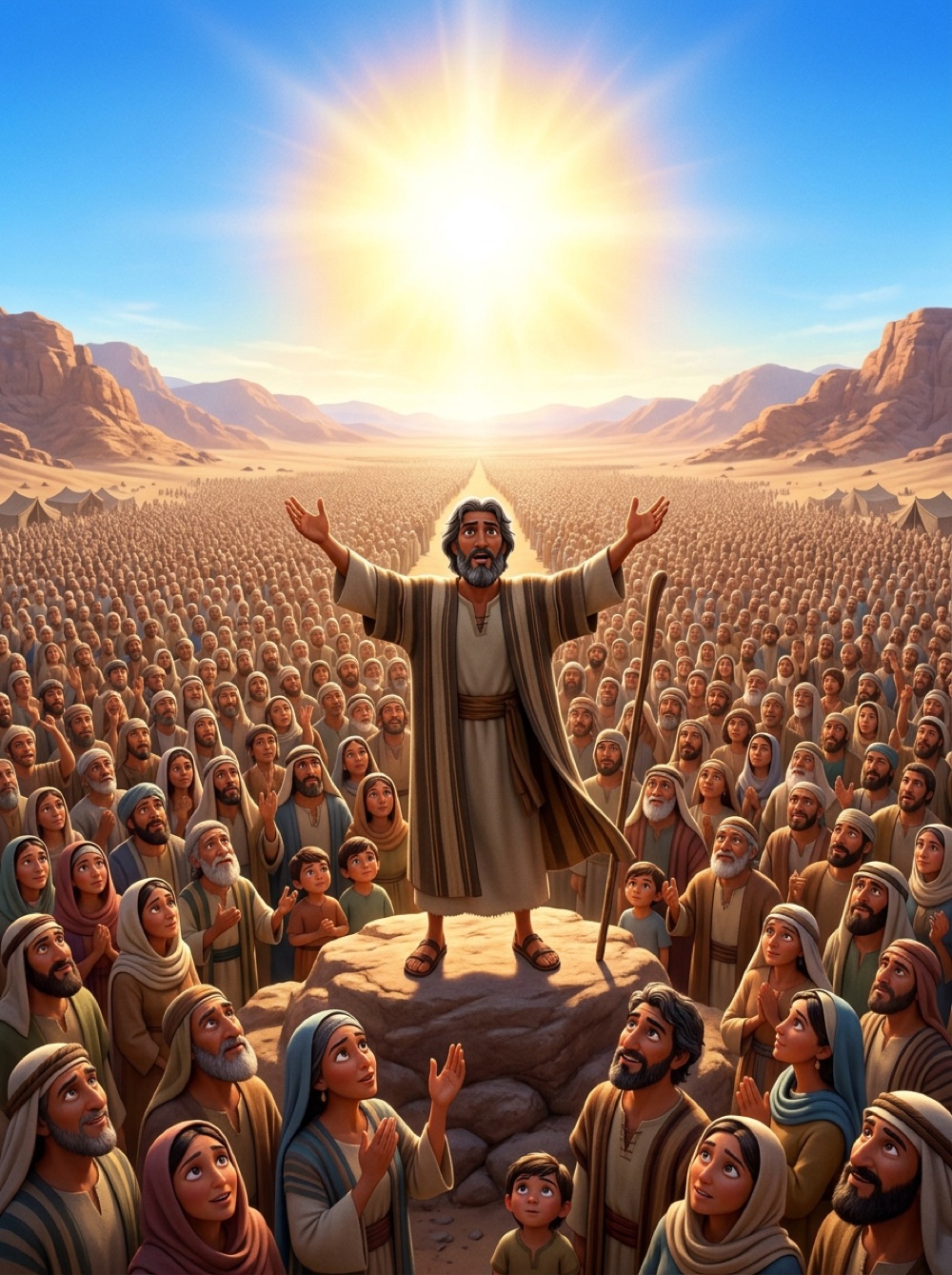
The Covenant Is Confirmed
Moses read all of God's words to the people. They answered together — "Everything God has said we will do." Moses sprinkled the blood of the covenant on the people and said, "This is the blood of the covenant that God has made with you." Then Moses went up the mountain — into the cloud where God was — and stayed there forty days and forty nights.
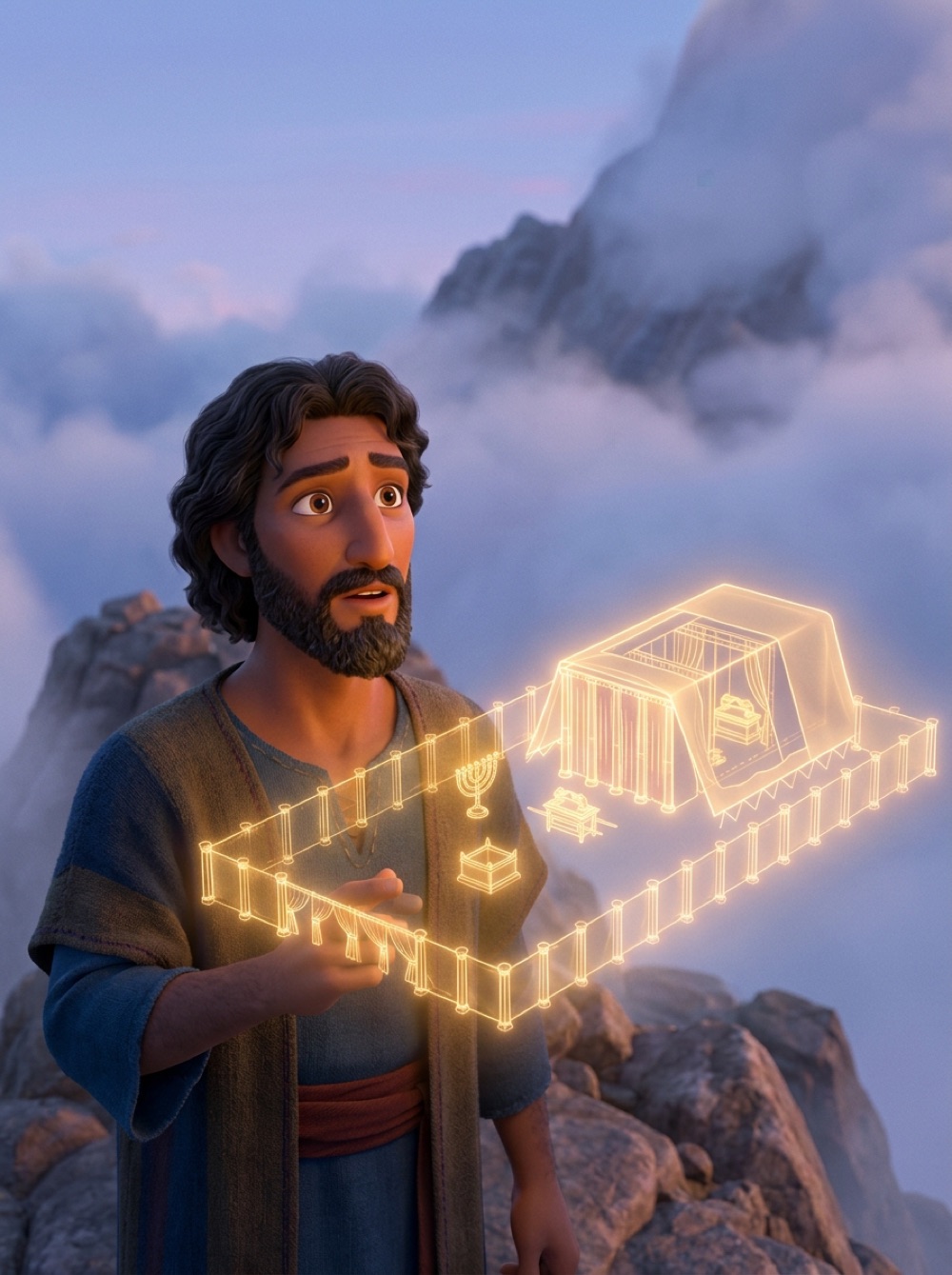
Build Me a Dwelling Place
Up on the mountain, God gave Moses detailed instructions for building a special tent — a Tabernacle — where God's presence would dwell among His people as they traveled through the desert. Every measurement, every material, every piece of furniture was specified carefully. God wanted to live close to His people. The Tabernacle was the house He designed for Himself.
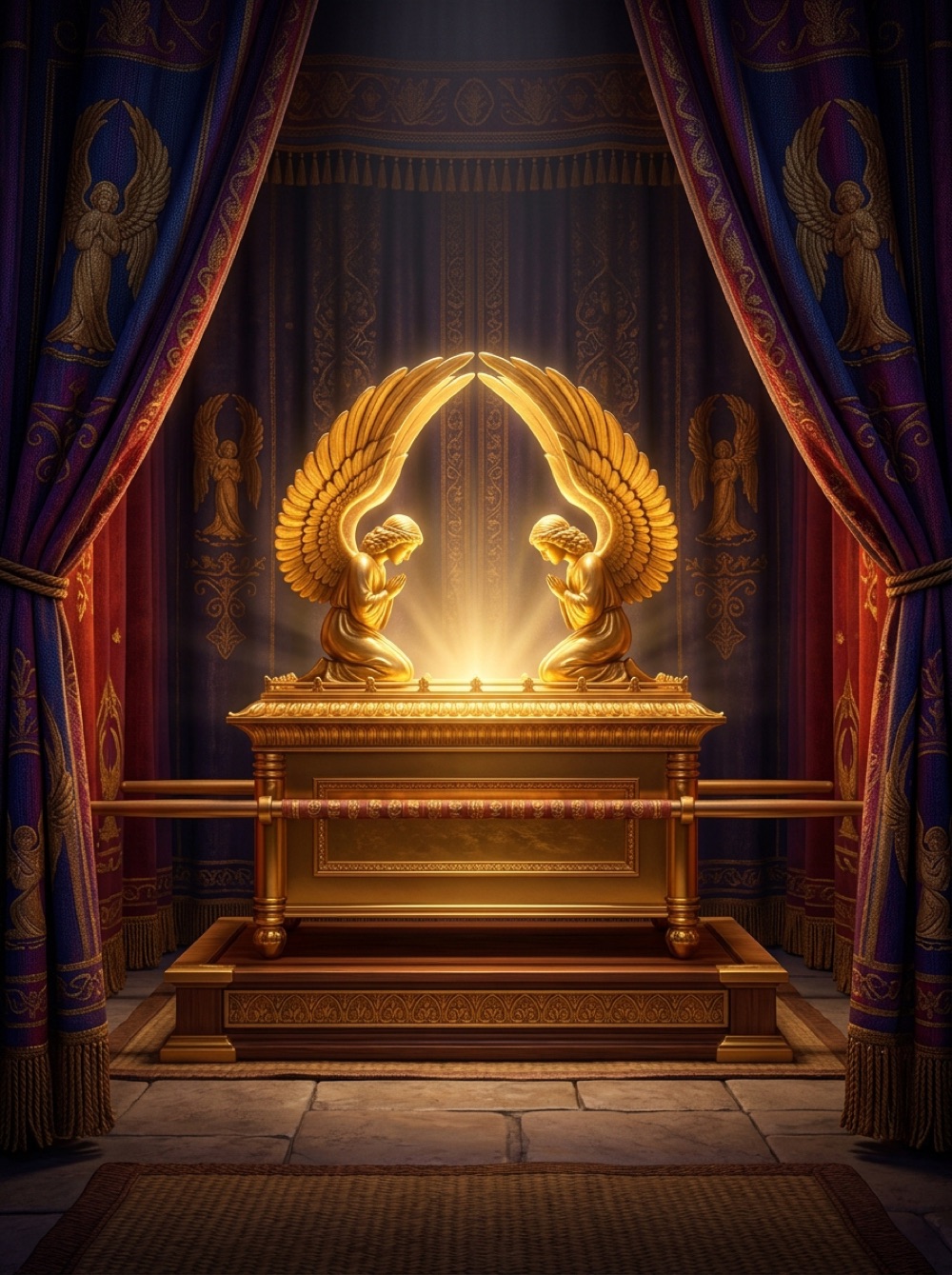
The Ark of the Covenant
The most sacred piece of furniture inside the Tabernacle was the Ark of the Covenant — a beautiful golden box that would hold the stone tablets of the Ten Commandments. On top of the Ark was the mercy seat, where God's presence would rest between two golden cherubim with wings spread wide. It was the closest point between heaven and earth.
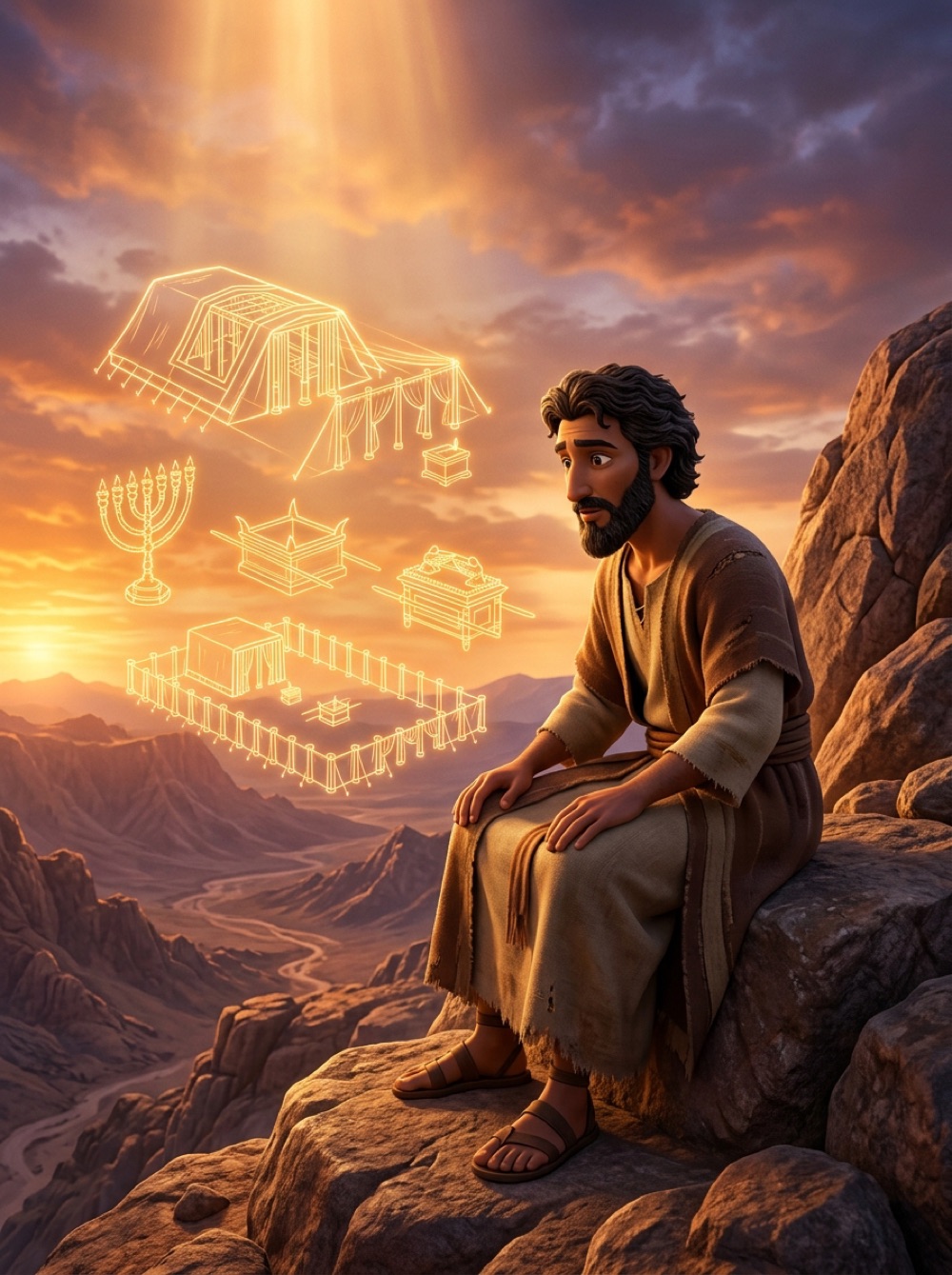
Everything God Specified
God gave Moses detailed instructions for every part of the Tabernacle — the altar, the courtyard, the lampstand, the priestly robes, and the special oils and incense used in worship. Every measurement and every material was specified carefully. God was not vague about how He wanted to be approached. He cared deeply about every detail of His dwelling place.

Filled With God's Spirit
God told Moses He had chosen a man named Bezalel and filled him with the Spirit of God — giving him skill, ability, and knowledge in all kinds of craftsmanship. Bezalel could work with gold, silver, bronze, stone, and wood. God equips the people He calls. The Tabernacle would be built by someone specifically gifted by God for the task.
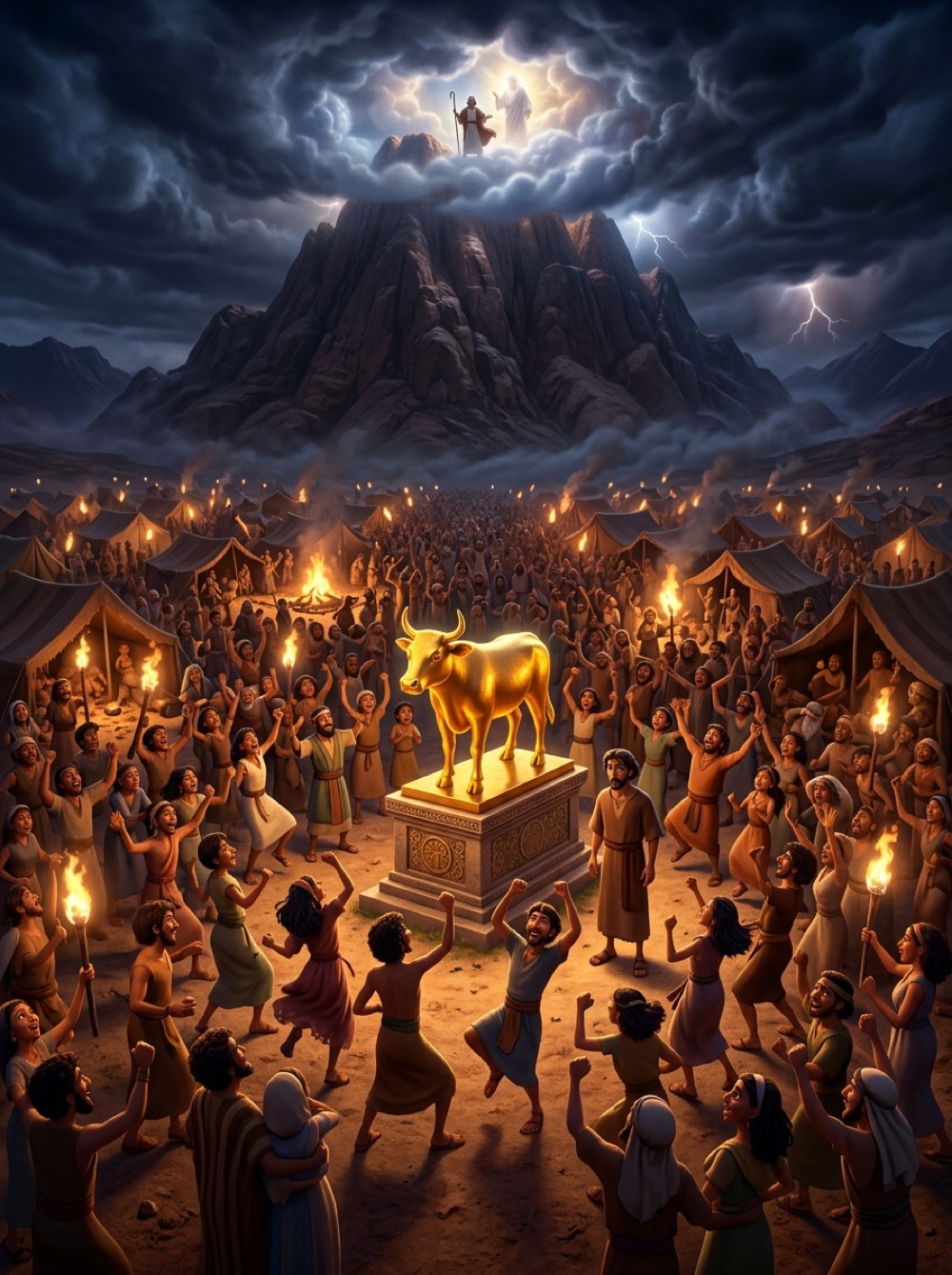
The Golden Calf
Moses had been on the mountain for forty days. The people grew restless and went to Aaron. "Make us gods to lead us," they said. "We don't know what happened to Moses." Aaron collected their gold jewelry and melted it down, shaping it into a golden calf. "This is your god who brought you out of Egypt," they said — and they celebrated wildly. They had forgotten everything God had done in forty days.
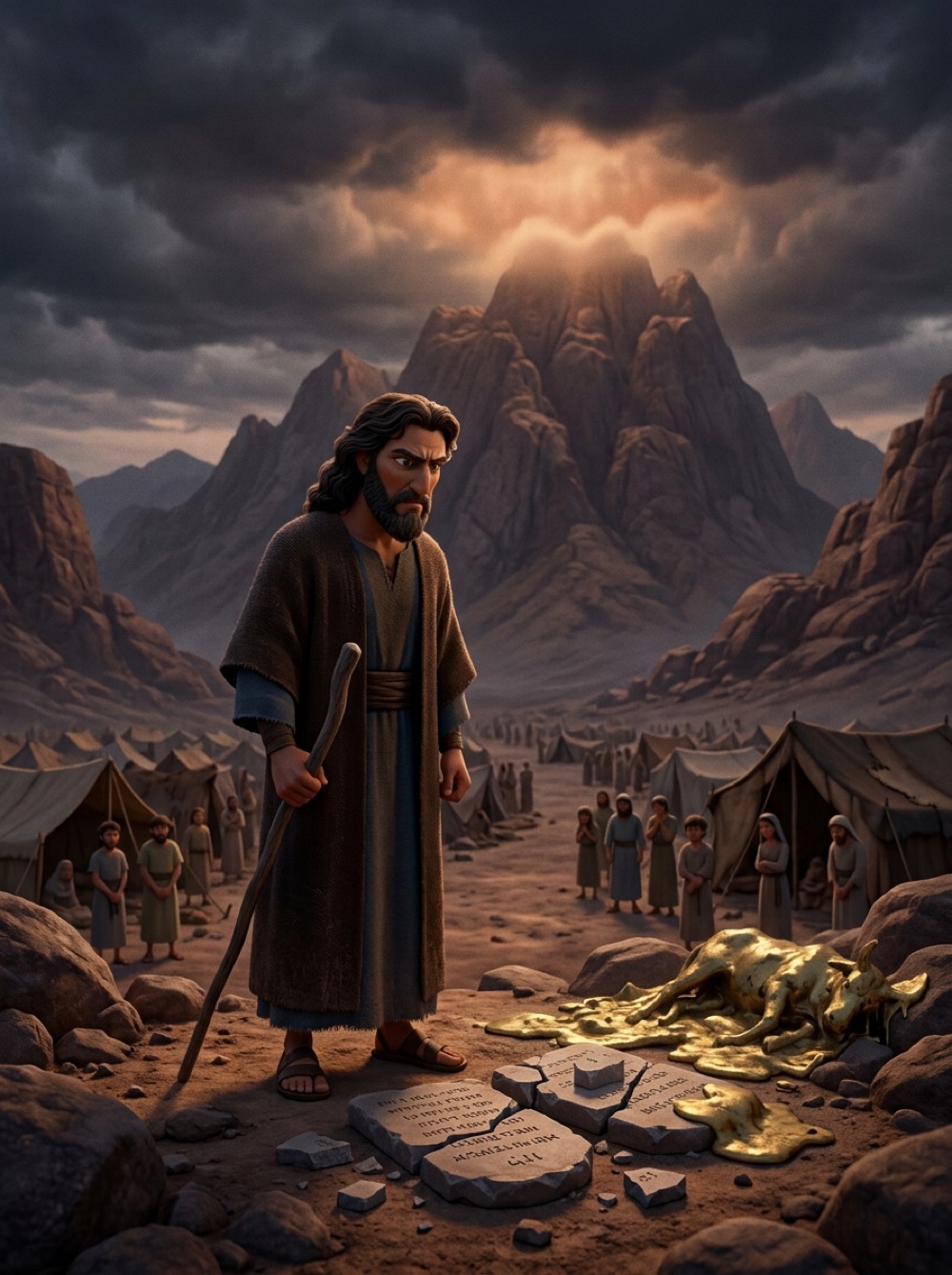
Moses' Anger and God's Judgment
God told Moses what was happening below and His anger burned. Moses came down the mountain carrying the two stone tablets — and when he saw the golden calf and the celebration, he threw the tablets to the ground and they shattered. He destroyed the calf. Then God's judgment fell on those who had led the rebellion. It was a terrible, sobering day — the cost of turning away from God so quickly after everything He had done.
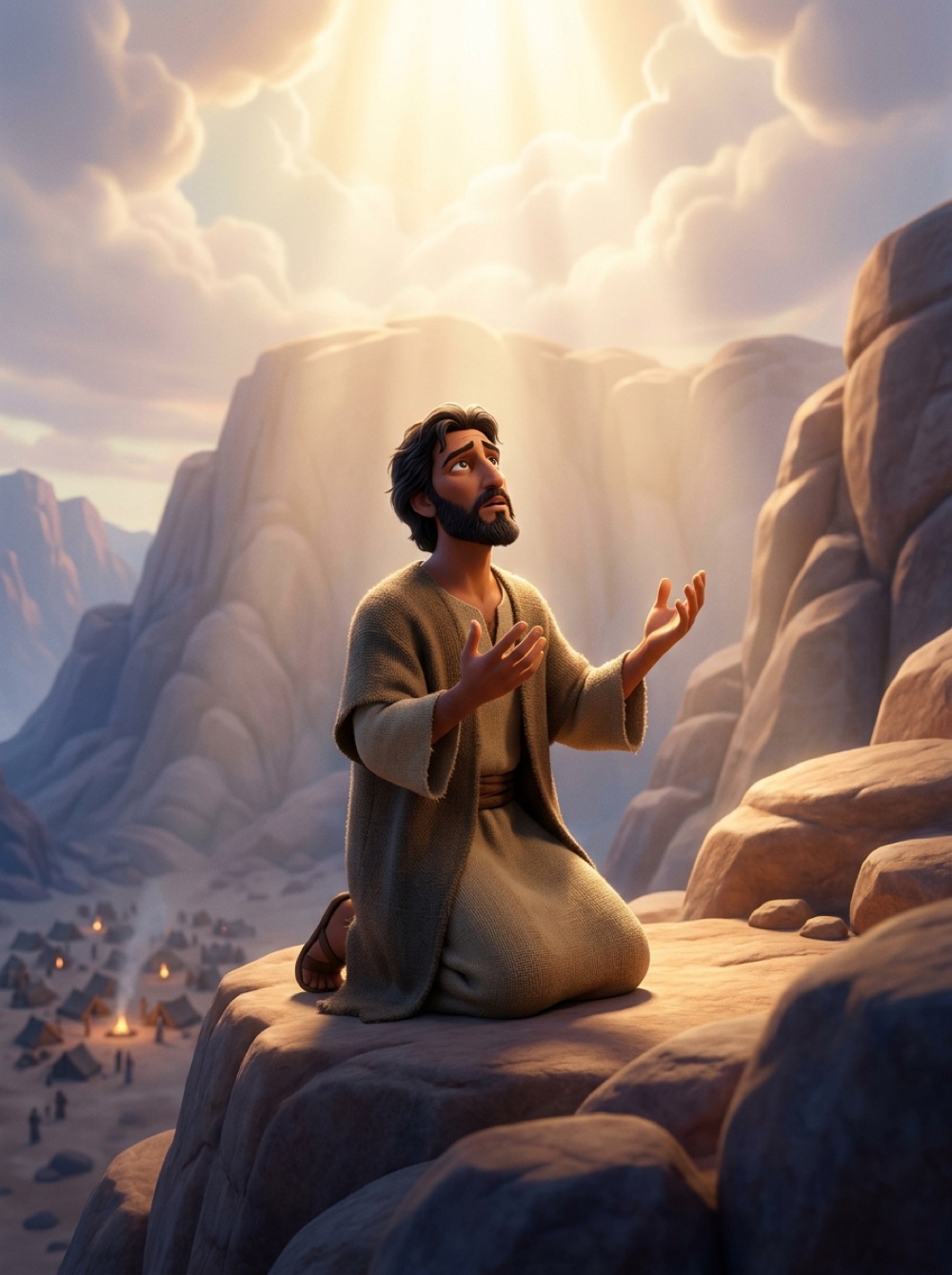
Moses Pleads for the People
After the disaster of the golden calf, Moses went back to God and interceded for the people. "Please forgive their sin," he said. "If you won't — then blot me out of your book too." Moses was willing to be destroyed alongside his people rather than leave them behind. God heard Moses. He would not abandon Israel — but He would not pretend what happened didn't matter either.
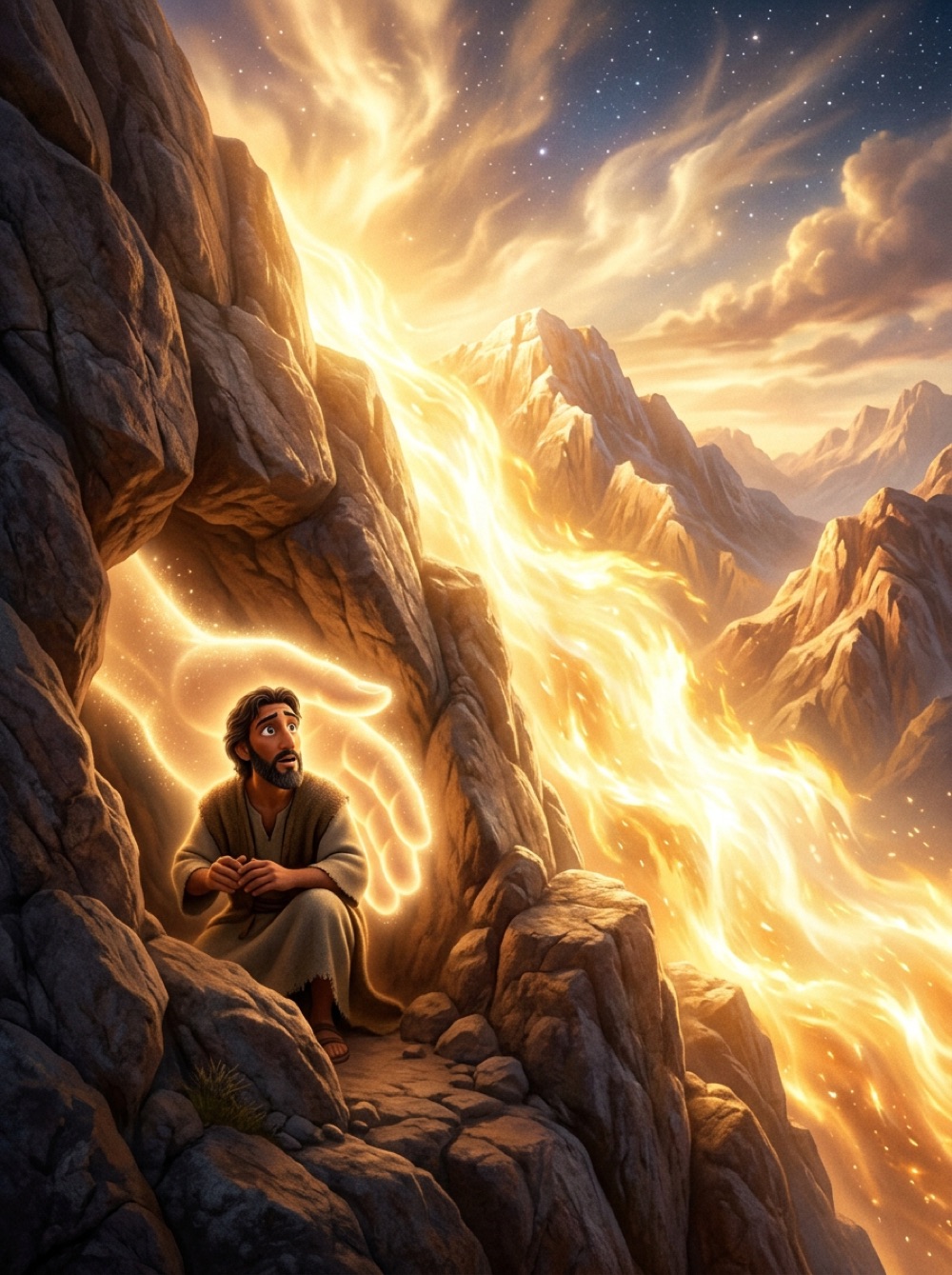
Show Me Your Glory
Moses made the most extraordinary request anyone had ever made to God. "Show me your glory." God answered, "I will cause all my goodness to pass before you, and I will proclaim my name before you." But God also said, "You cannot see my face — no one can see my face and live." God placed Moses in a cleft of the rock and covered him with His hand as His glory passed by.
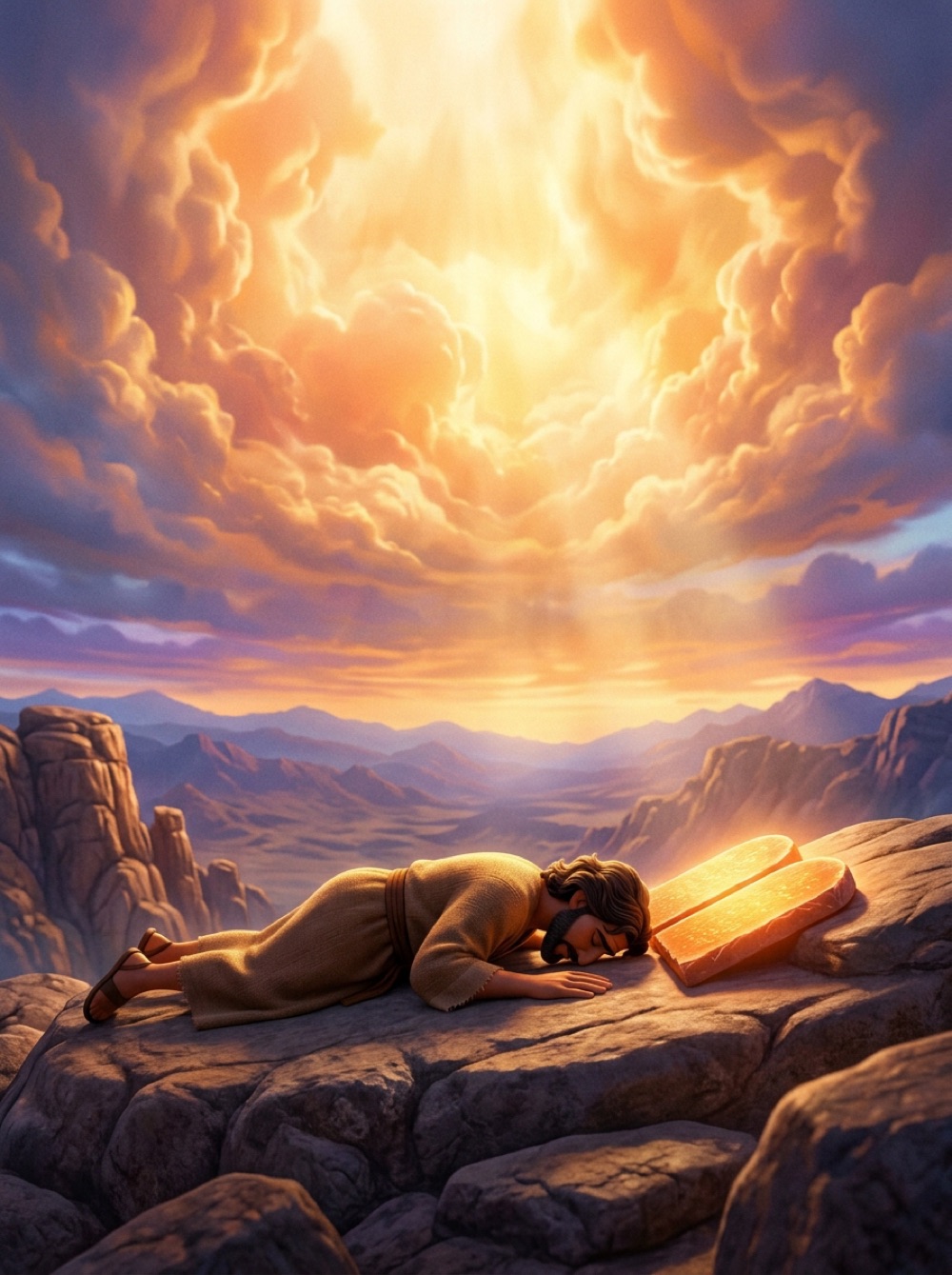
New Tablets, Renewed Covenant
God told Moses to cut two new stone tablets — replacements for the ones Moses had smashed. Moses went back up the mountain and God proclaimed His name as He passed before him. "The Lord, the Lord, the compassionate and gracious God, slow to anger, abounding in love and faithfulness." Moses bowed immediately and worshipped. God renewed His covenant with Israel.
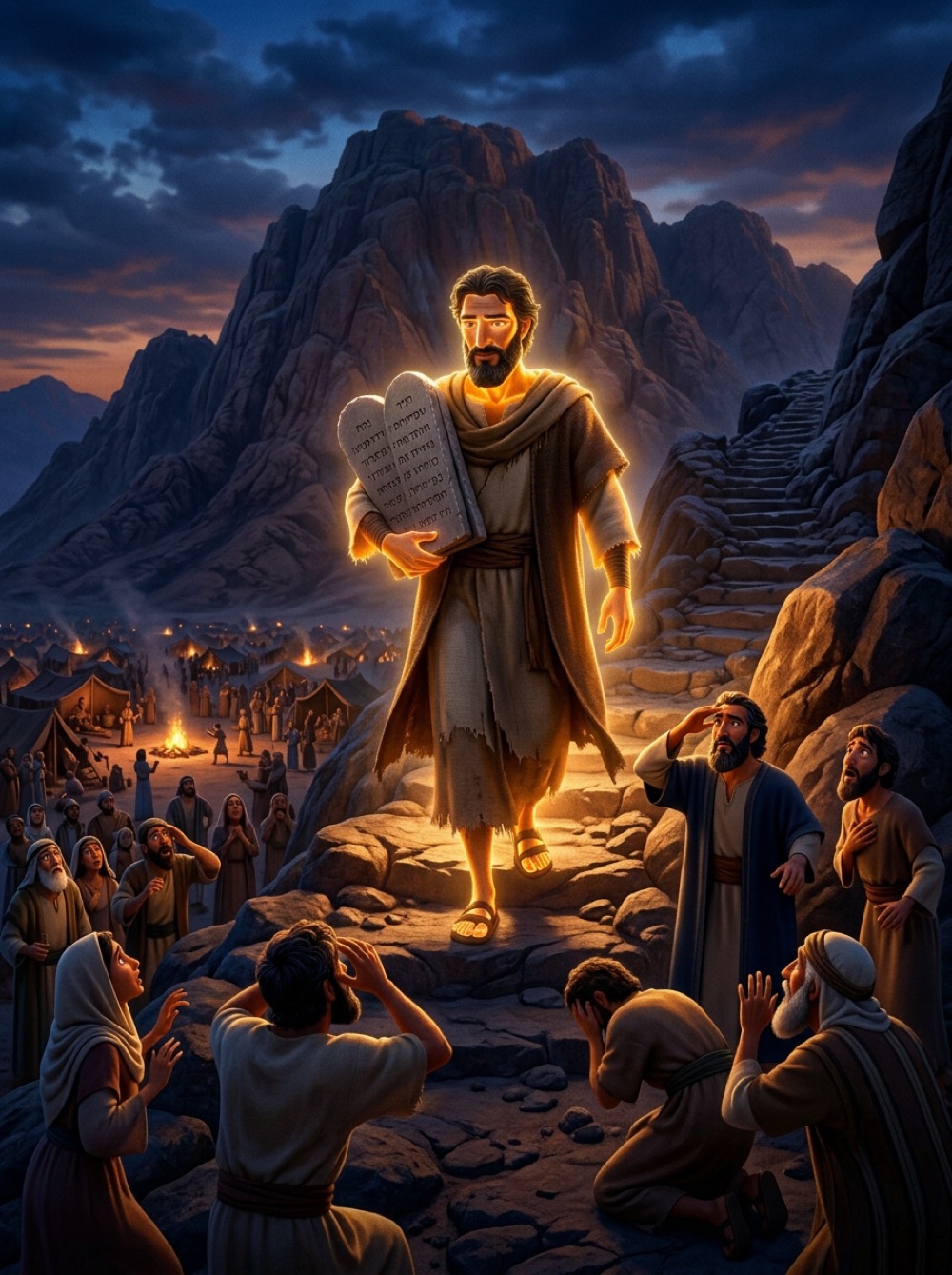
Moses' Face Glowed
When Moses came down from the mountain the second time, he didn't know that his face was radiant — glowing with light because he had been speaking with God. Aaron and the Israelites were afraid to come near him when they saw it. Moses had to wear a veil over his face when speaking to the people. Spending time with God changes a person — sometimes visibly.
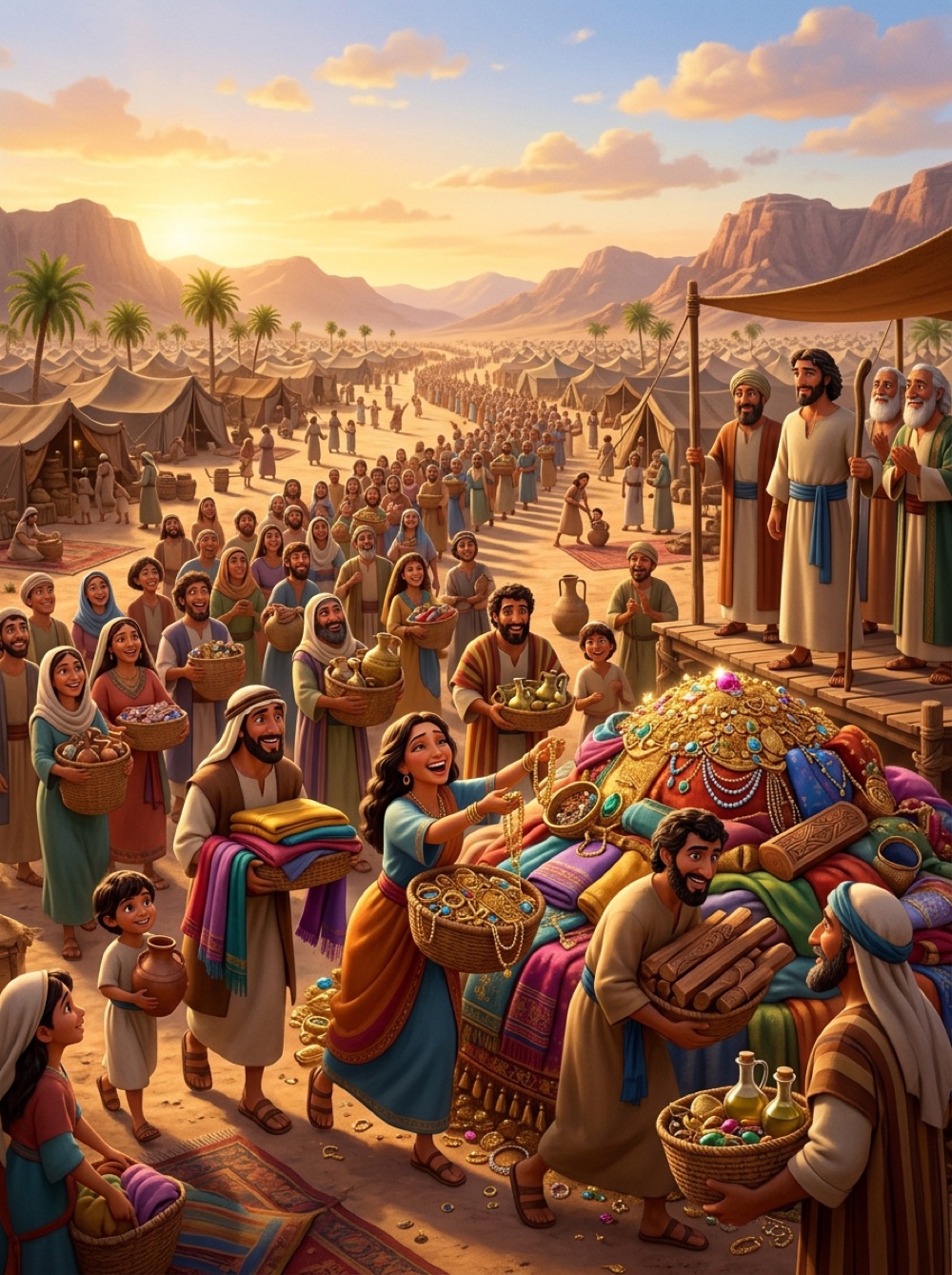
The People Give Generously
Moses told the people everything God had instructed about the Tabernacle. Then he asked for voluntary offerings — gold, silver, fabric, wood, oil, spices. The people responded with more than was needed. They kept bringing until Moses had to tell them to stop. Everyone whose heart moved them gave — and there was more than enough. Generous hearts always have enough to give.
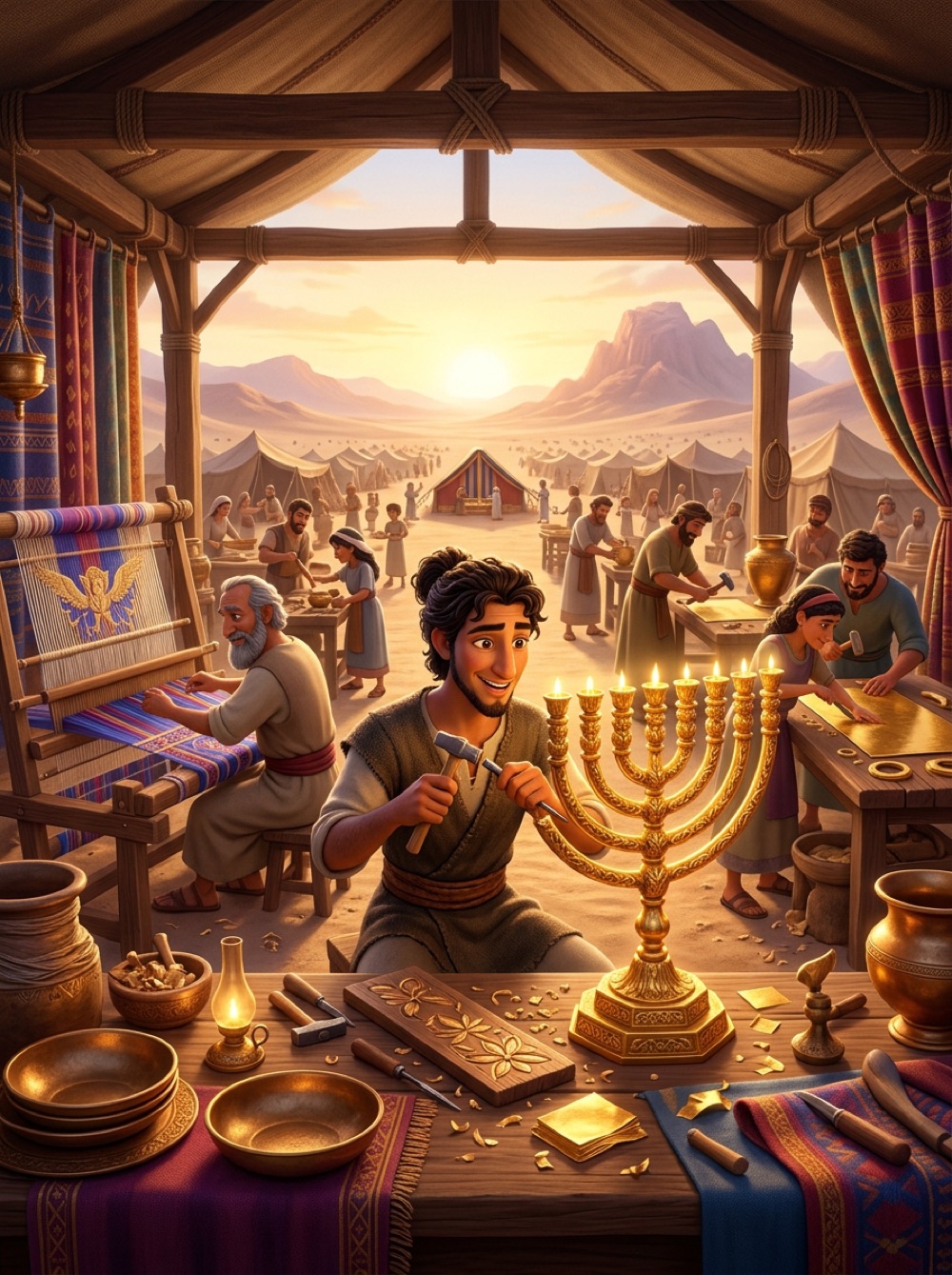
Skilled Hands at Work
Bezalel and his team of skilled craftsmen got to work. They made everything exactly as God had instructed — the Ark, the lampstand, the altar, the courtyard, the priestly robes — every piece built with care and precision. When it was all finished, Moses inspected everything. It had all been made exactly as God had commanded. And Moses blessed them.
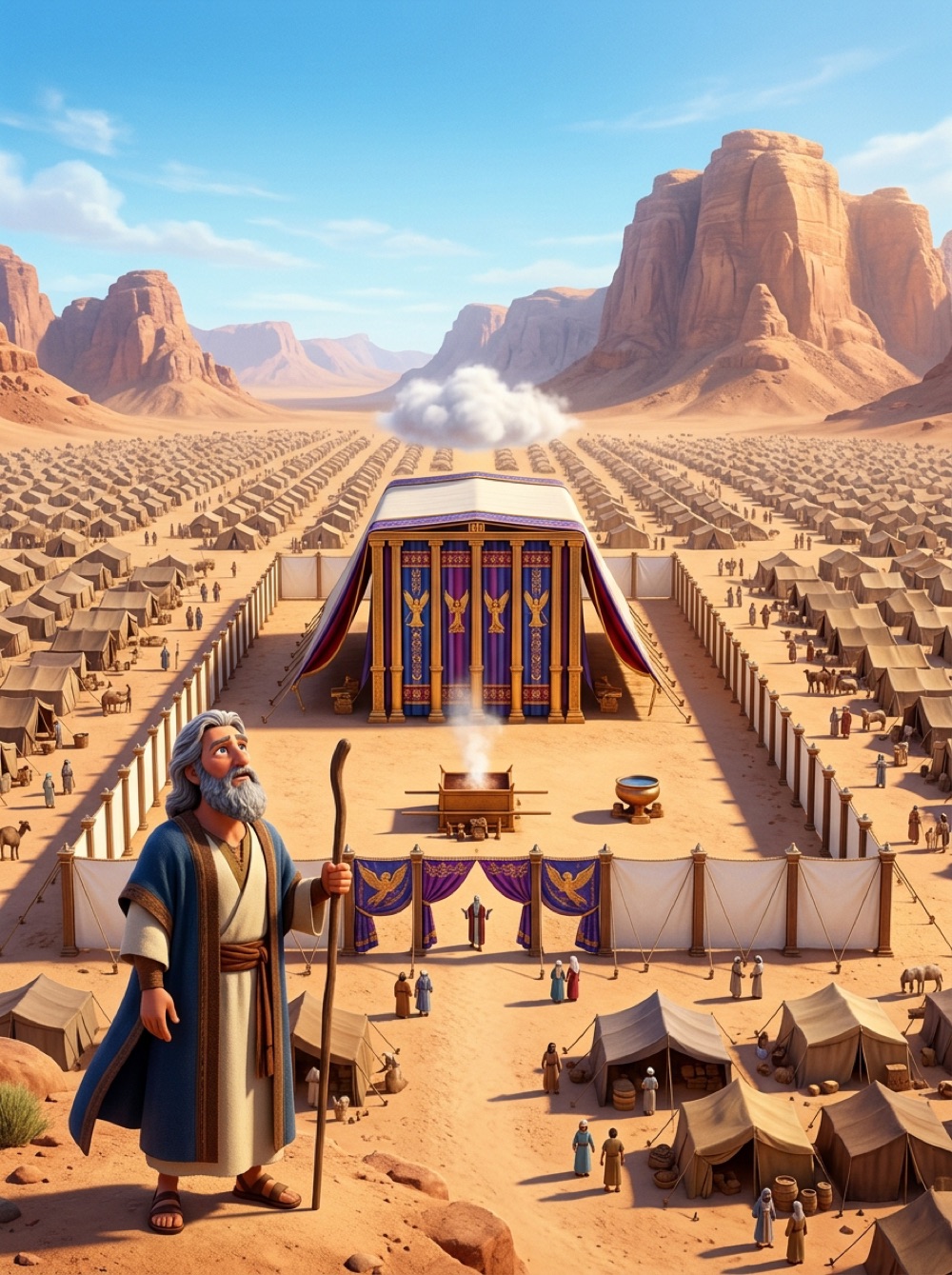
The Tabernacle Is Set Up
On the first day of the first month of the second year, Moses set up the Tabernacle. He placed the Ark inside, hung the curtain, set up the furniture, arranged everything exactly as God had commanded. Every piece in its place. Every detail honored. The dwelling place of God among His people was ready.
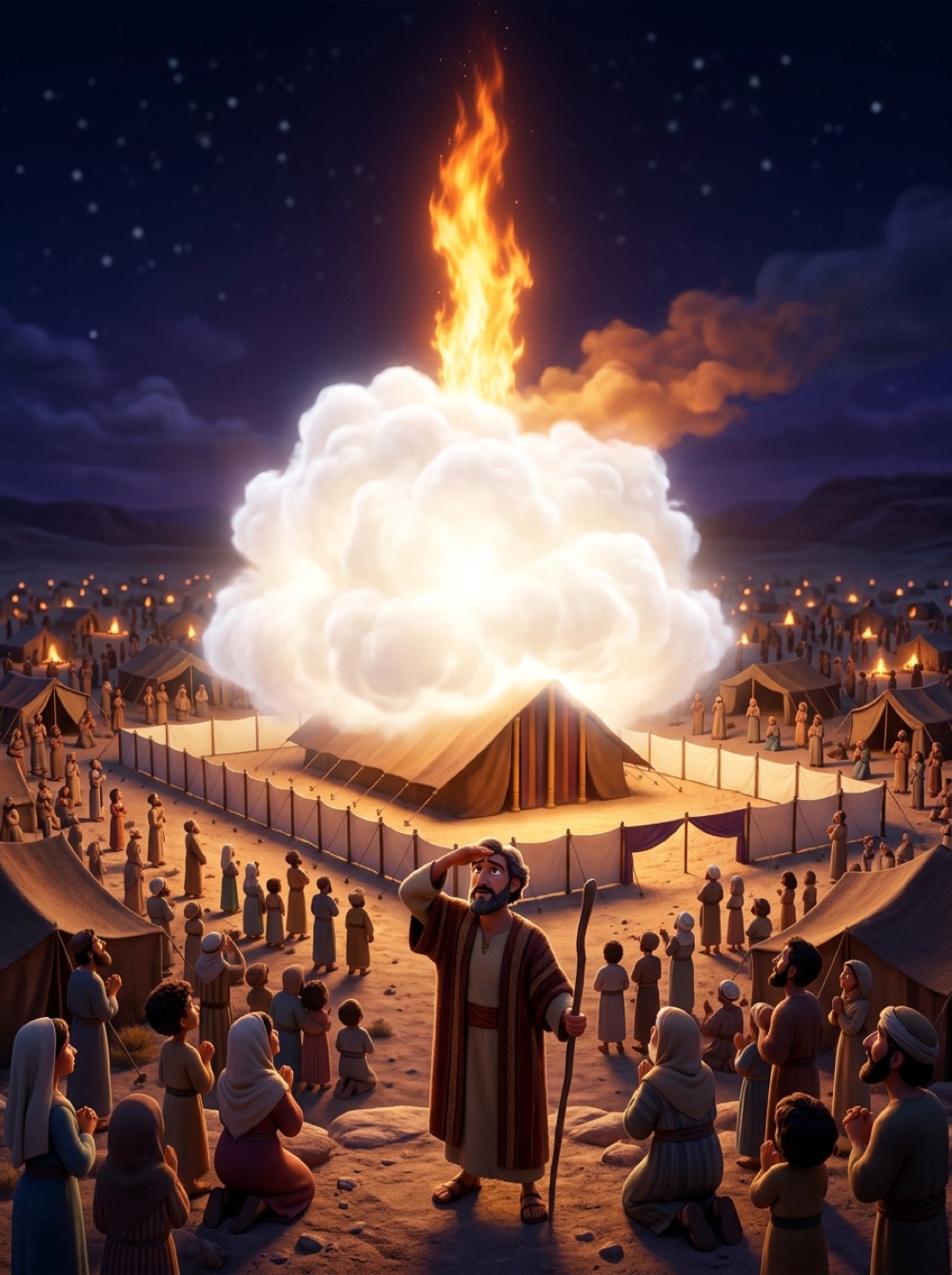
The Glory of the Lord
Then the cloud covered the tent of meeting — and the glory of the Lord filled the Tabernacle. Moses could not enter because the cloud had settled on it and God's glory was so overwhelming it filled every corner. When the cloud lifted, the Israelites would set out. When it stayed, they remained camped. God was with them — present, leading, never leaving. Exodus ends here. But the journey was just beginning.
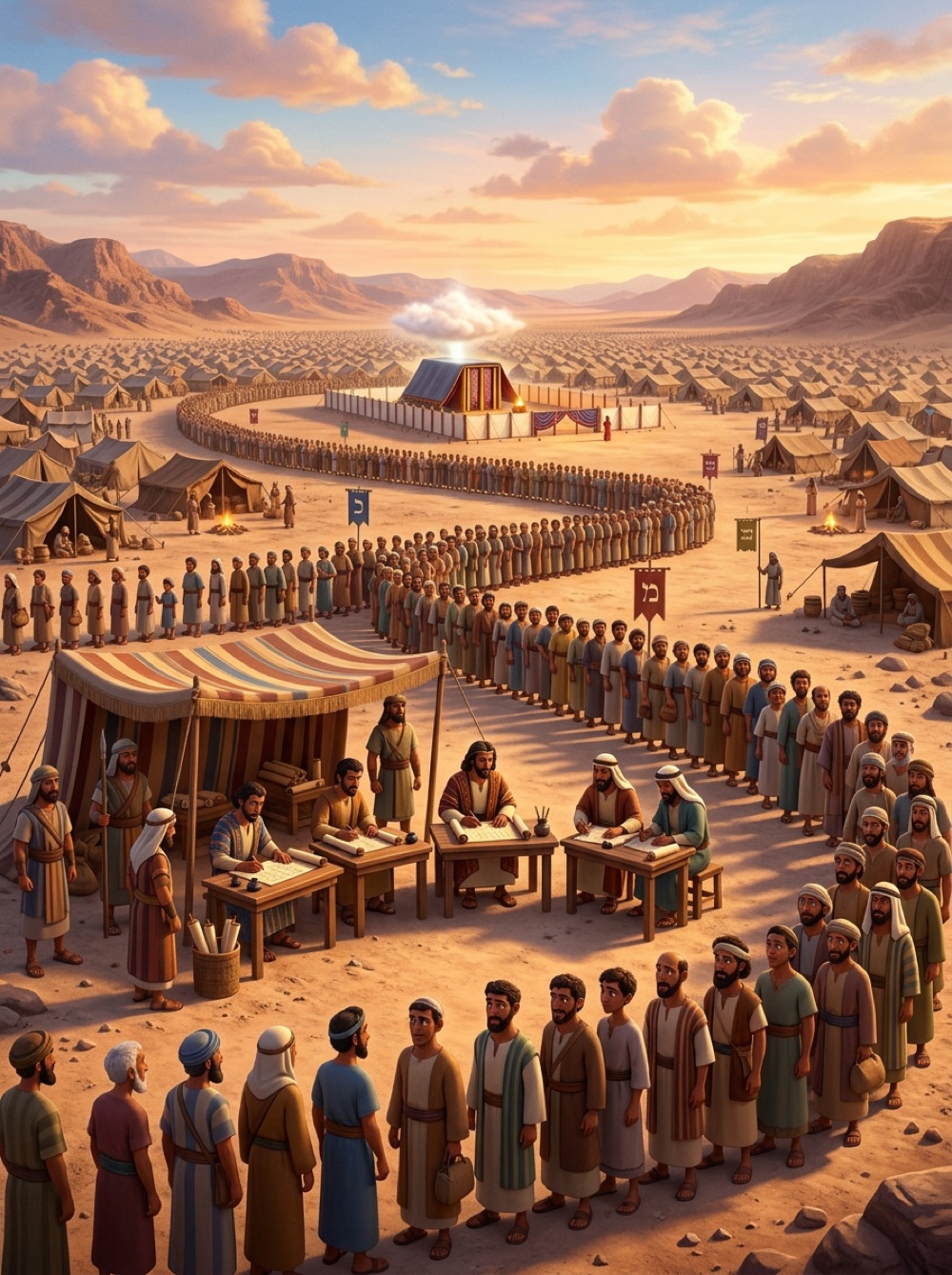
Counting God's People
Before Israel left Sinai, God told Moses to count all the men old enough to fight — one from each of the twelve tribes. The total came to over six hundred thousand men, not counting women, children, or the Levites who served at the Tabernacle. God knew every name in that number. Not one person was lost in the count.
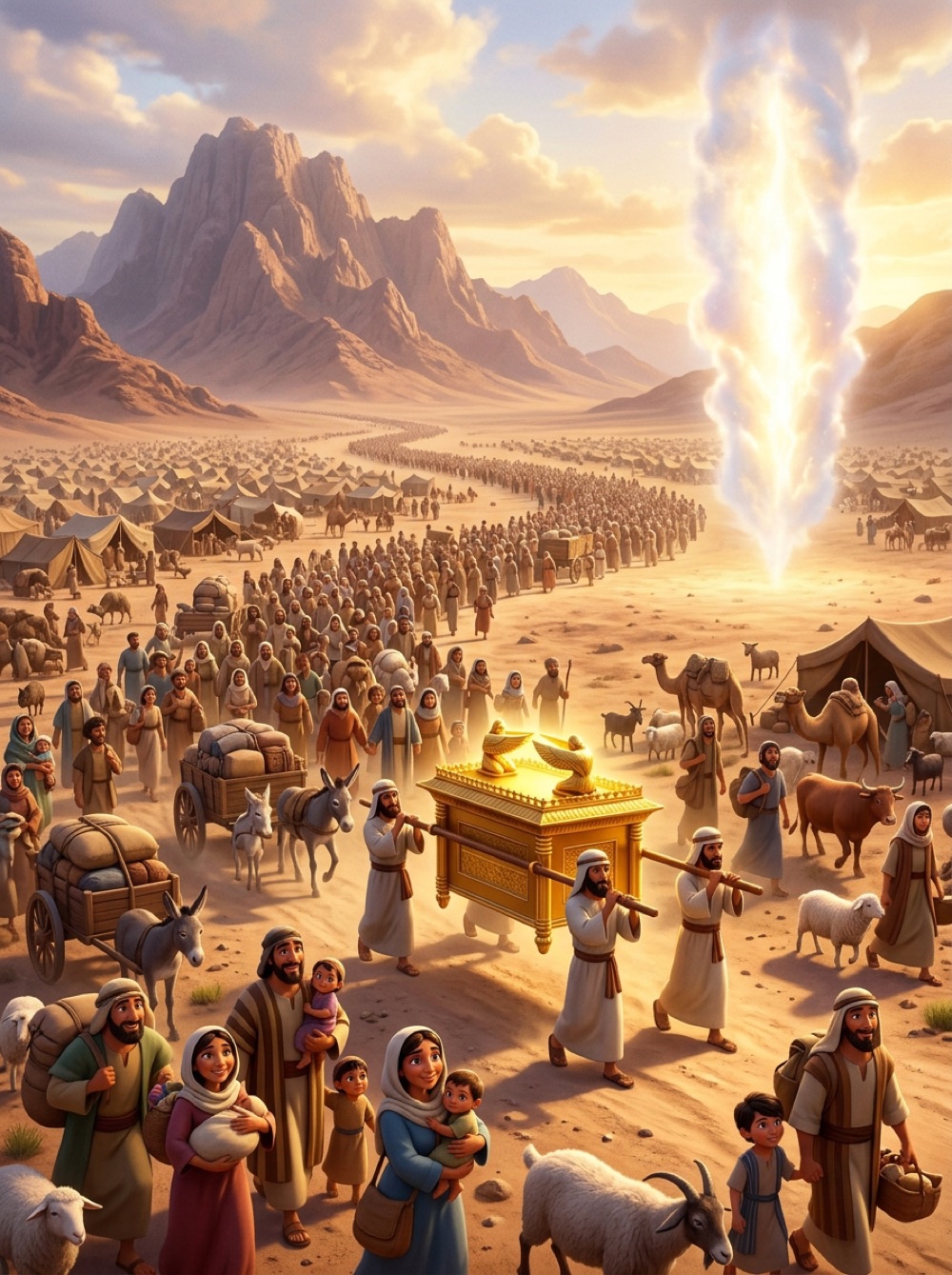
Leaving Sinai
After almost a year at Sinai, the cloud lifted from the Tabernacle and Israel set out into the desert. The ark of the covenant went ahead of them and Moses prayed as they moved — "Rise up, Lord, and let your enemies be scattered." After a year of receiving God's law, it was time to move toward the land God had promised.
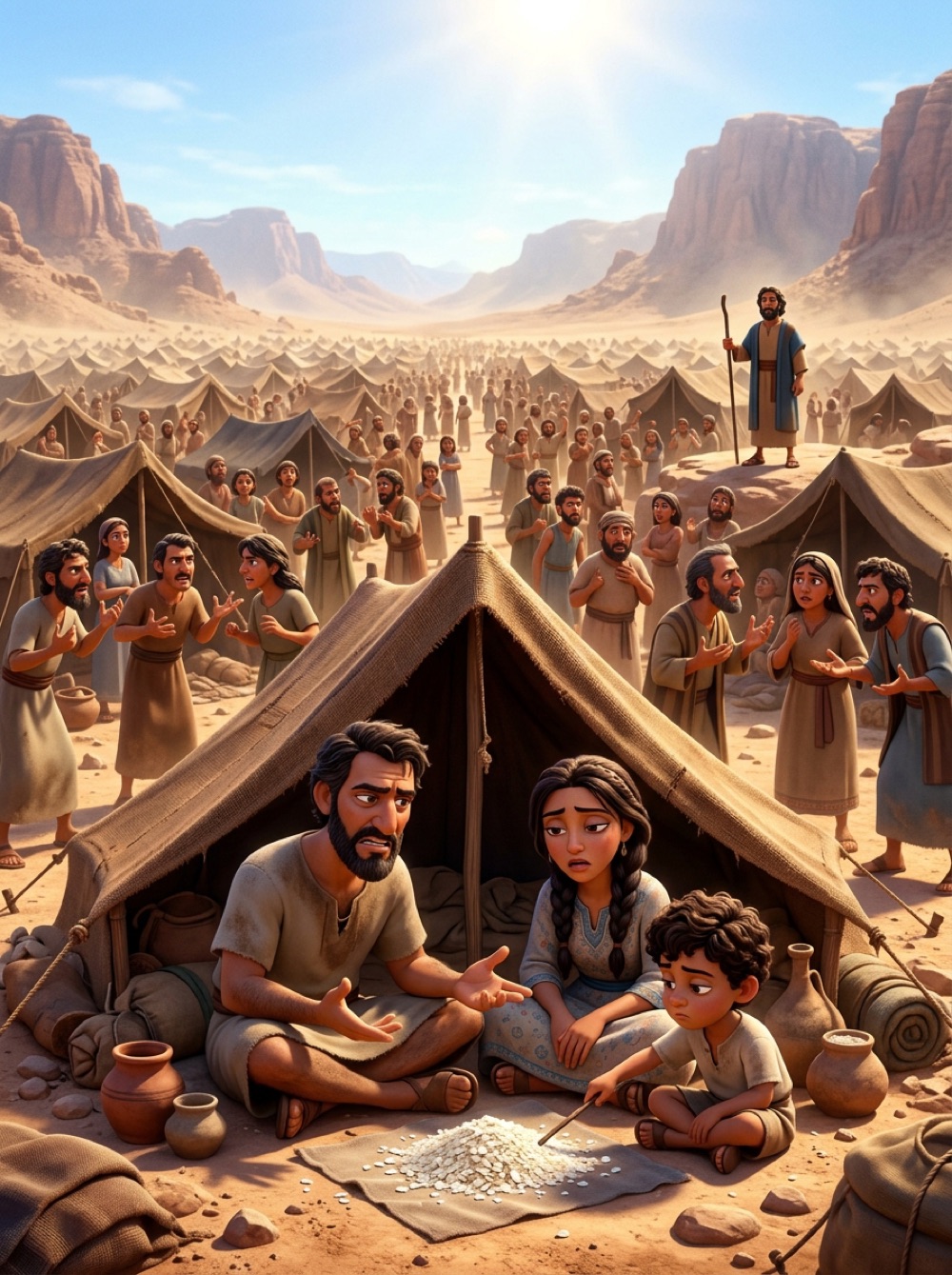
Complaining Again
It didn't take long for the complaining to start again. The Israelites got tired of manna and cried out for meat. They remembered the food of Egypt — fish, cucumbers, melons, leeks, onions, and garlic. "We never see anything but this manna," they said. They had forgotten slavery so completely that Egypt was starting to sound good again.
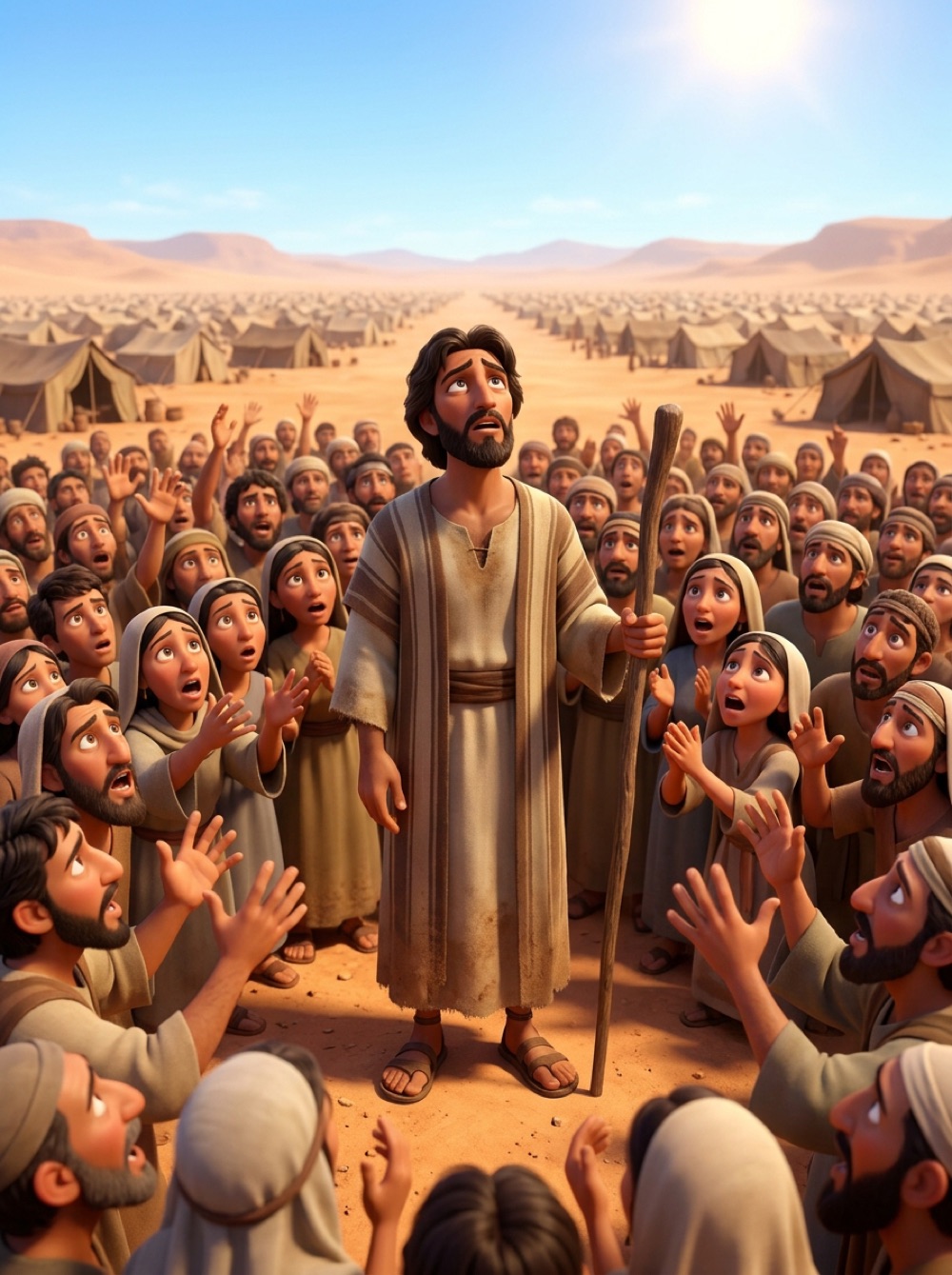
Moses Is Overwhelmed
The complaining wore Moses down completely. He went to God and said something shockingly honest. "Why have you put the burden of all these people on me? I cannot carry all of them alone — it is too heavy for me. If this is how you are going to treat me, just kill me now." God didn't rebuke him. He gave him seventy elders to share the load.
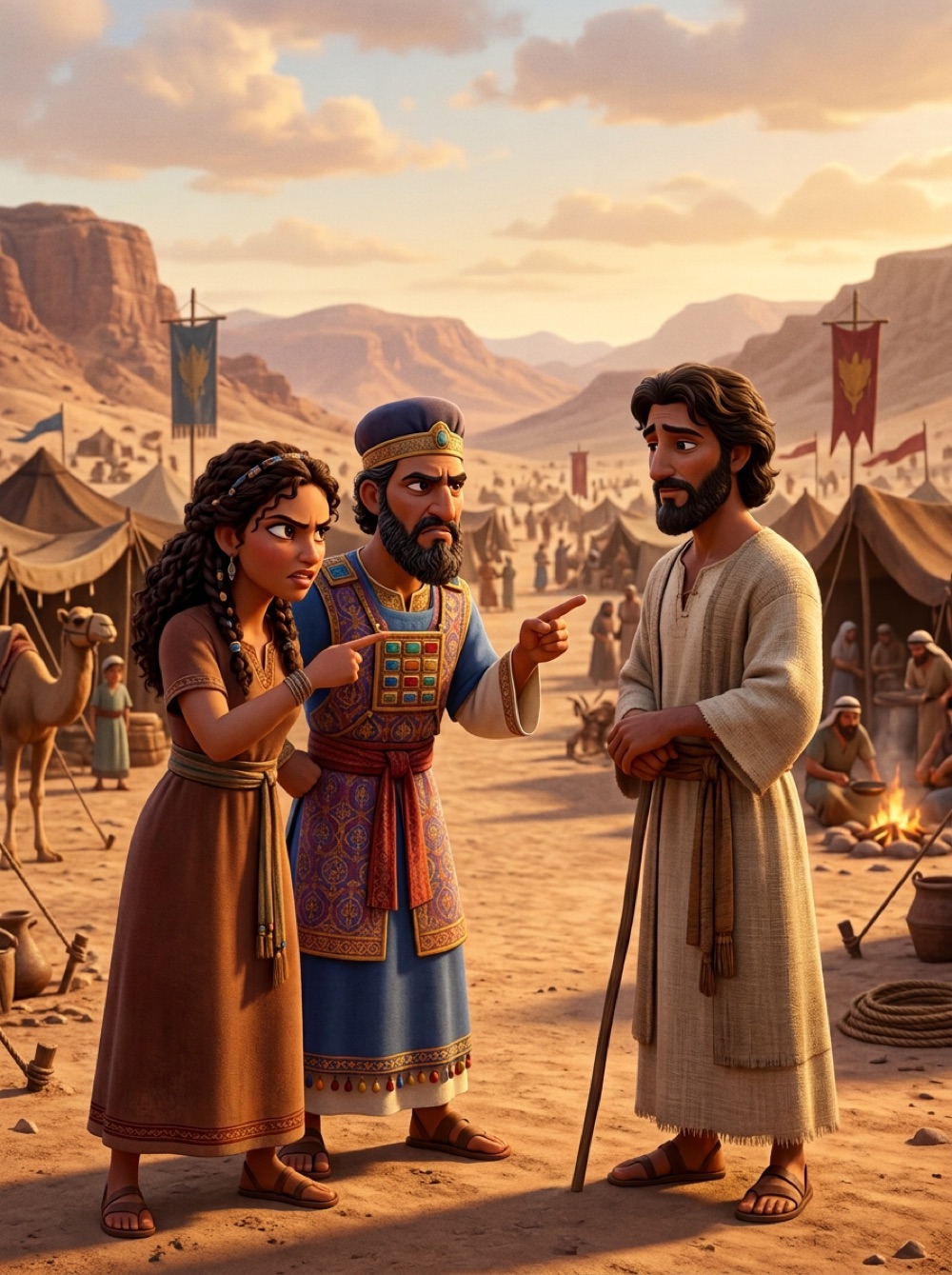
Miriam and Aaron Challenge Moses
Miriam and Aaron began to speak against Moses — first about his wife, then about his authority. "Has God only spoken through Moses?" they said. "Hasn't He also spoken through us?" God heard it and was angry. He called all three of them to the Tabernacle and made clear that Moses was not like any other prophet. Then Miriam was struck with leprosy — white as snow.
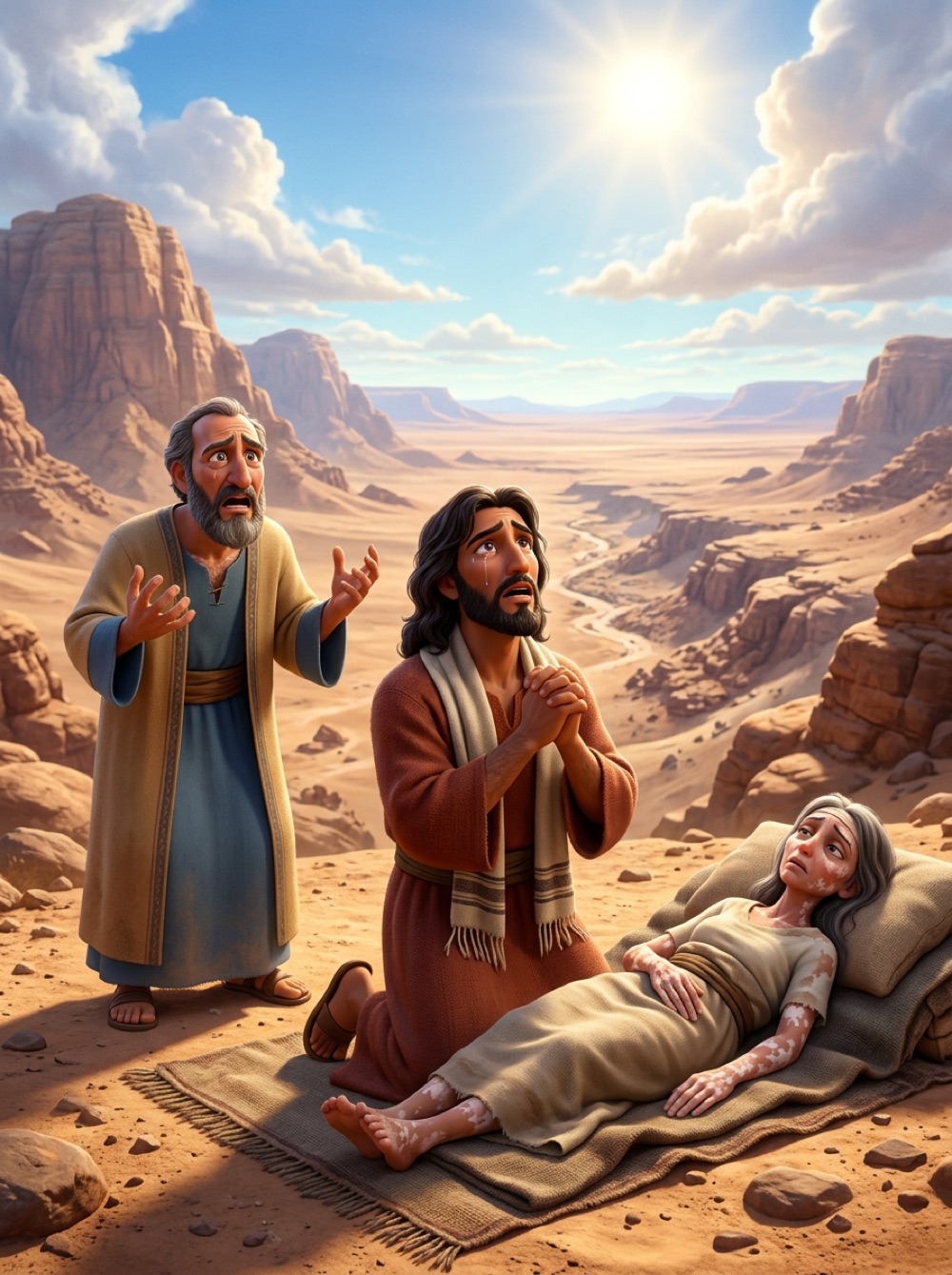
Moses Prays for His Sister
Aaron looked at Miriam and cried out to Moses in horror. Moses immediately cried out to God — "Please God, heal her." God said Miriam would be healed but would need to stay outside the camp for seven days. The whole Israelite nation waited for her to return before moving on. Moses had every reason to be bitter — and chose intercession instead.
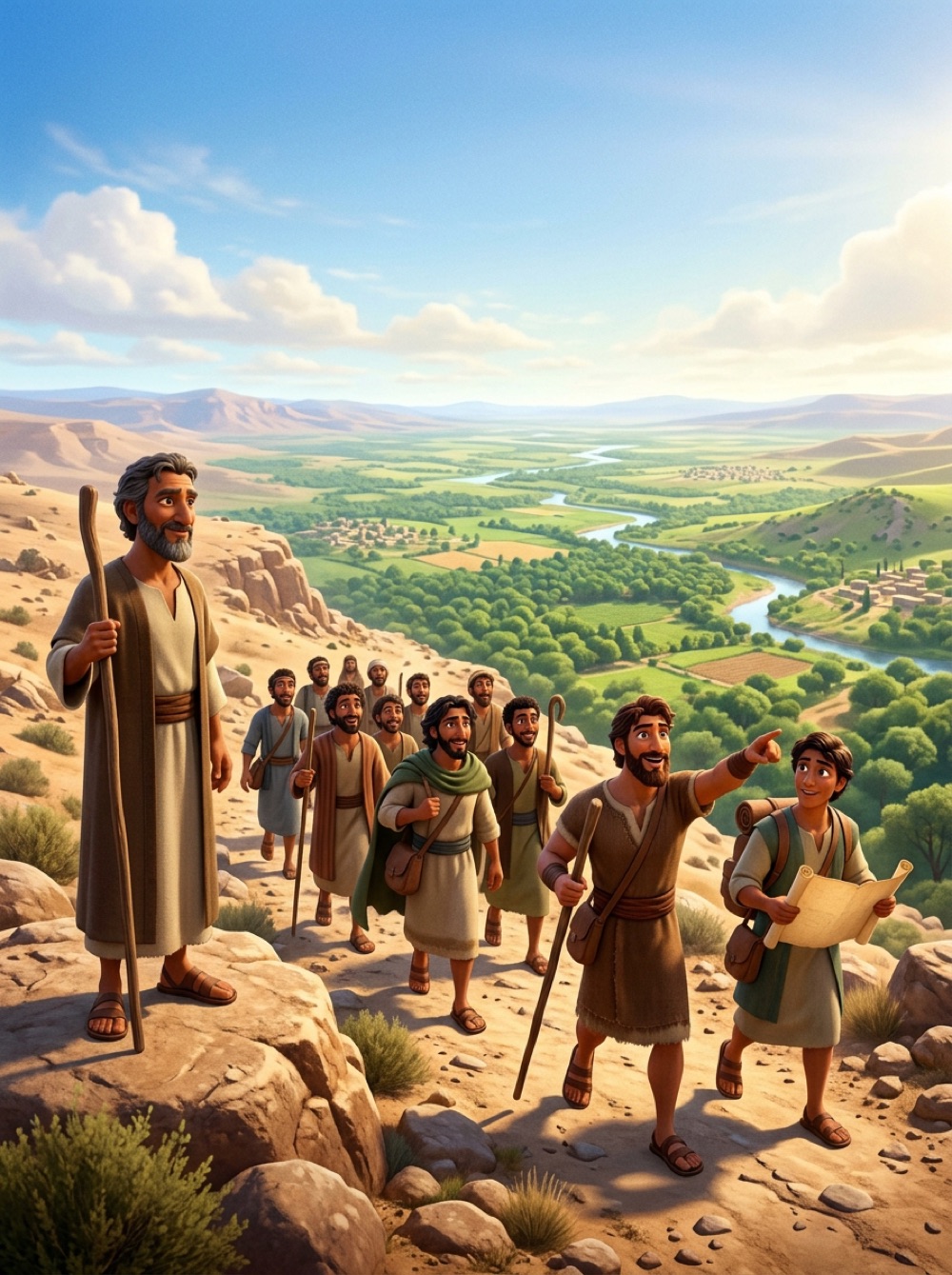
Twelve Spies Sent In
The Israelites reached the border of Canaan — the land God had promised Abraham centuries ago. God told Moses to send twelve spies, one from each tribe, to explore the land. They were gone for forty days, traveling the length and breadth of Canaan, gathering information about the people, the cities, and the land itself.
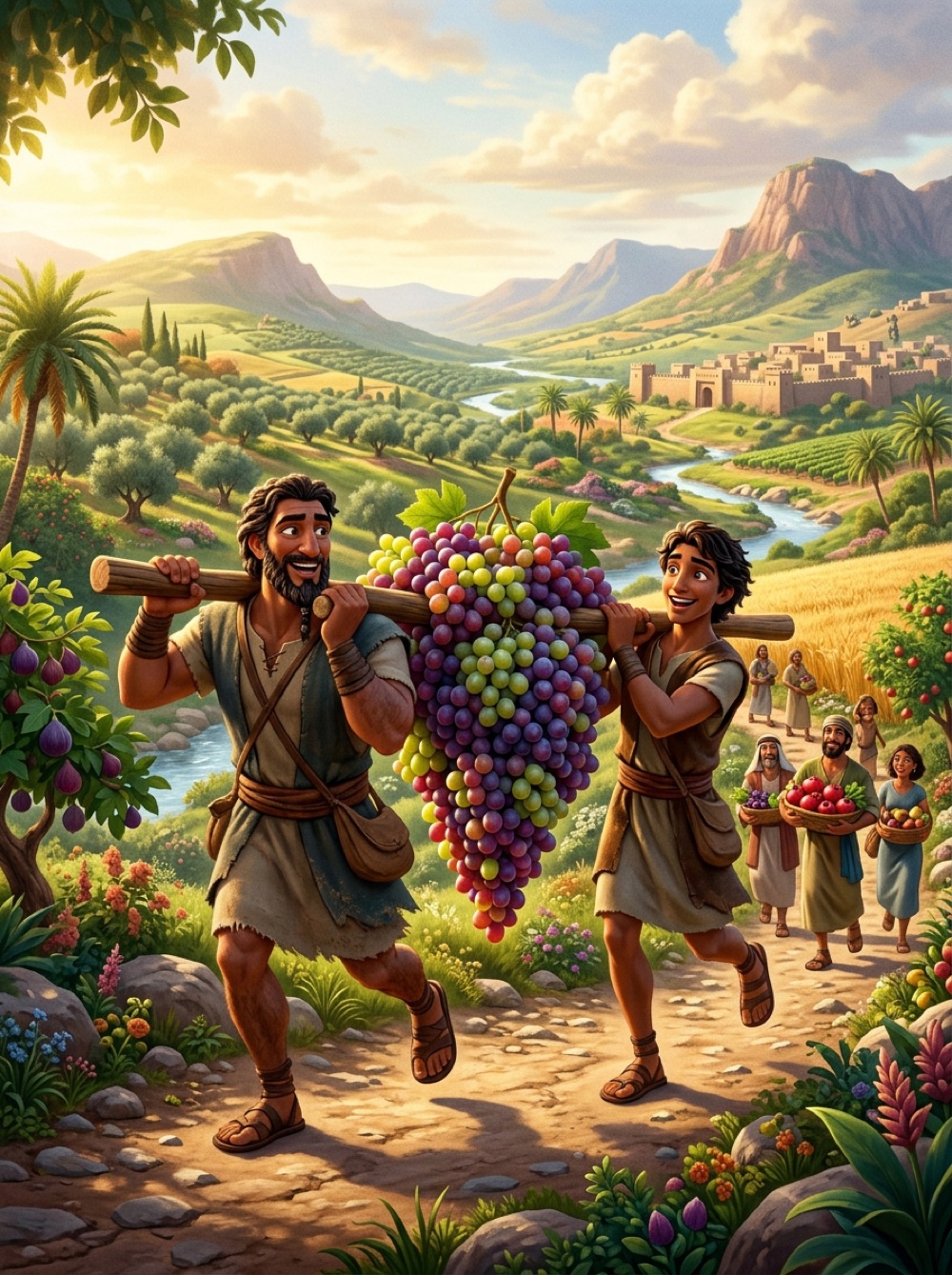
A Land Flowing With Milk and Honey
The spies came back carrying an enormous cluster of grapes on a pole between two men, plus pomegranates and figs. "The land truly flows with milk and honey — and here is its fruit," they said. The land was exactly as God had described. There was no doubt about the destination. The doubt was about whether God could get them there.
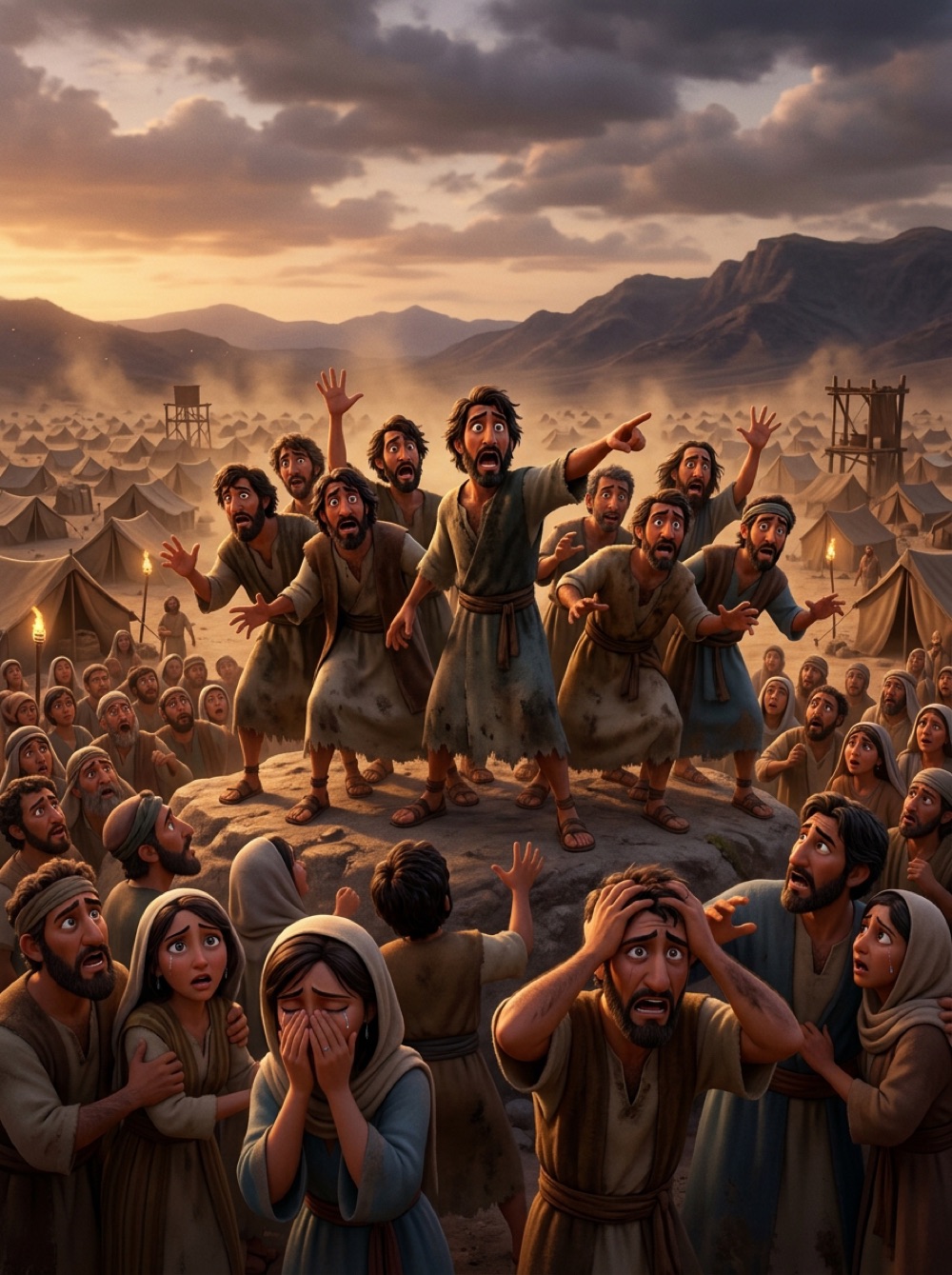
The Bad Report
Ten of the twelve spies were too afraid. "The people who live there are powerful," they said. "Their cities are enormous and heavily fortified. We saw giants — we felt like grasshoppers next to them." Fear turned the truth into a lie. The land was exactly what God said. The people forgot that God was bigger than any giant.
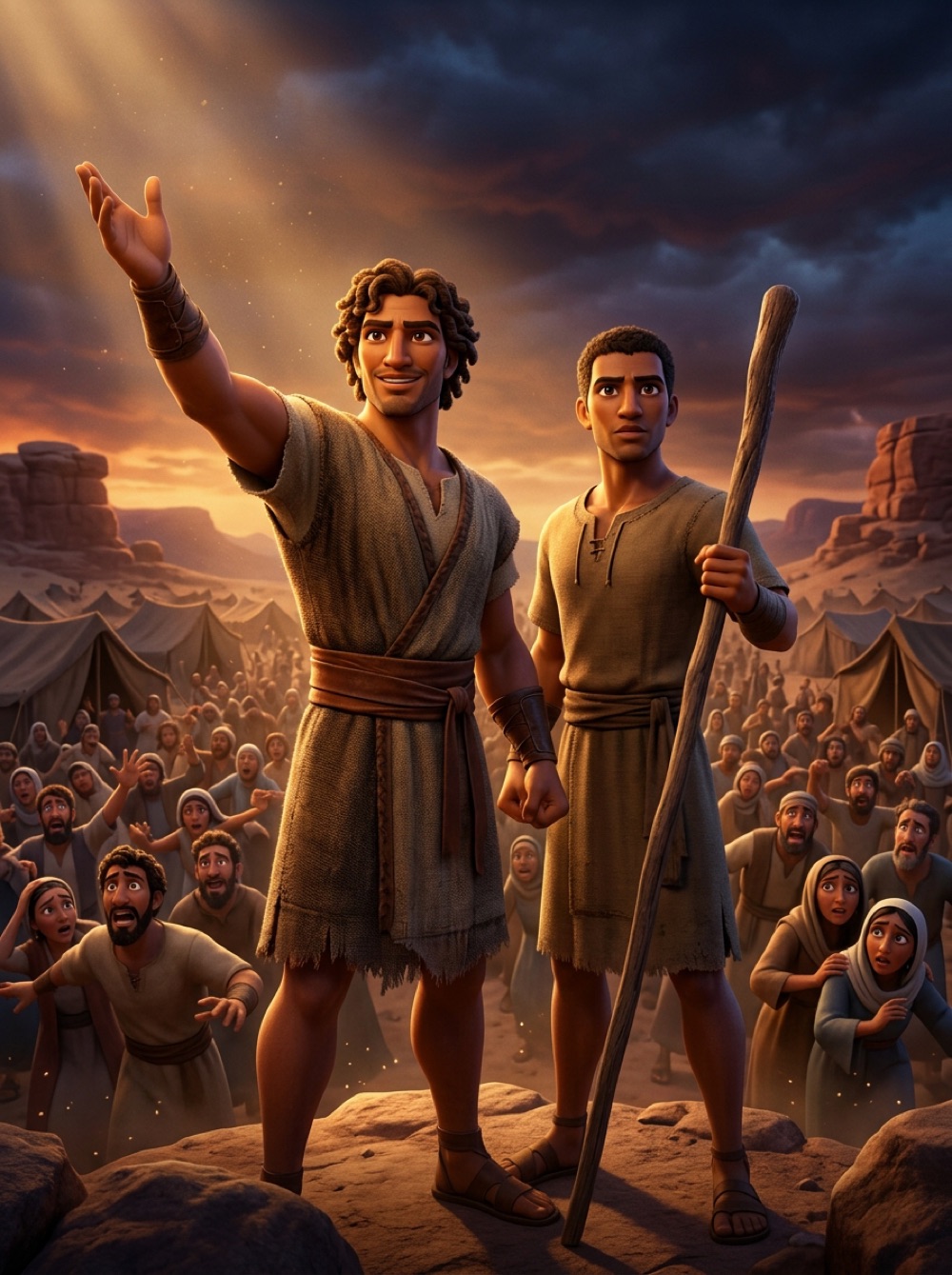
Caleb and Joshua Stand Alone
Two of the twelve spies saw things differently. Caleb and Joshua tore their clothes in grief at the people's reaction and said, "The land is wonderful. If God is pleased with us He will bring us into it. Do not be afraid of the people there — God is with us. Their protection is gone. Do not rebel against God." The crowd wanted to stone them.
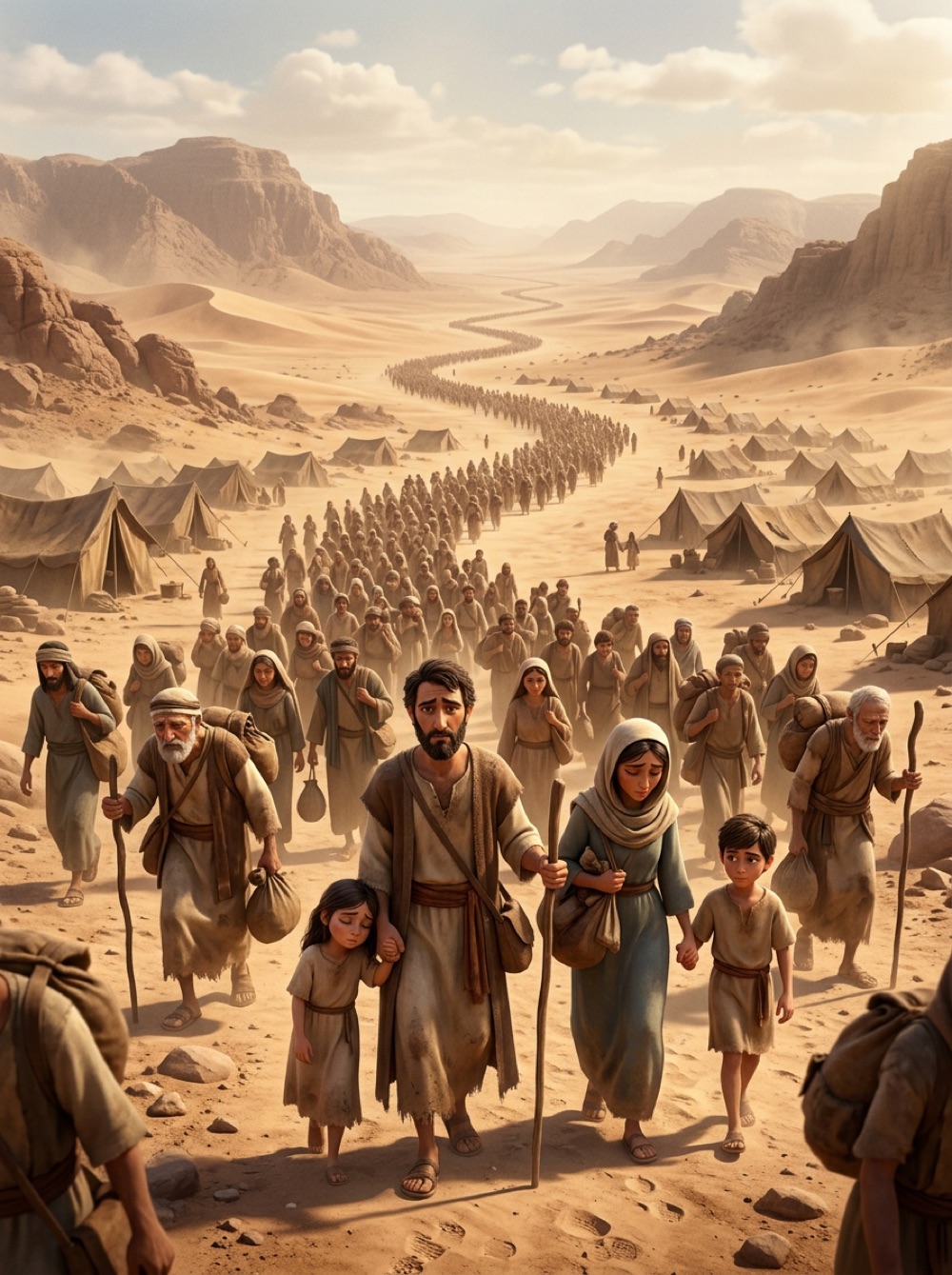
Forty Years in the Desert
God's patience reached its limit. This generation had seen miracle after miracle — the plagues, the Red Sea, the manna, the water from the rock — and still they refused to trust Him. God declared that this generation would not enter the promised land. For forty years they would wander in the desert — one year for each day the spies had been in the land.
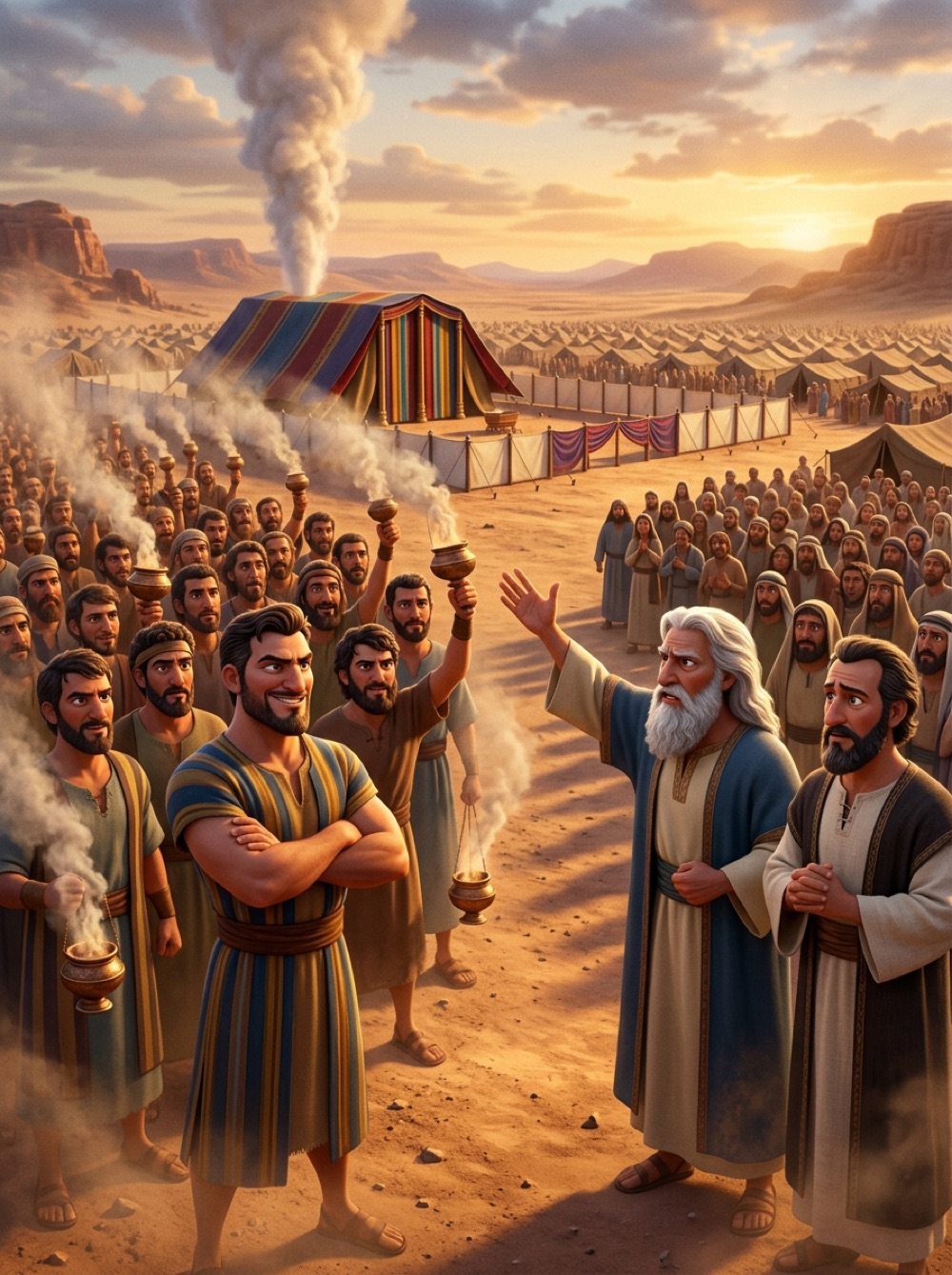
Korah's Rebellion
A man named Korah led a rebellion against Moses and Aaron, bringing two hundred and fifty Israelite leaders with him. "You have gone too far," they told Moses and Aaron. "The whole community is holy — who do you think you are to set yourselves above everyone else?" Moses fell face down. Then God settled the argument in a way no one forgot.
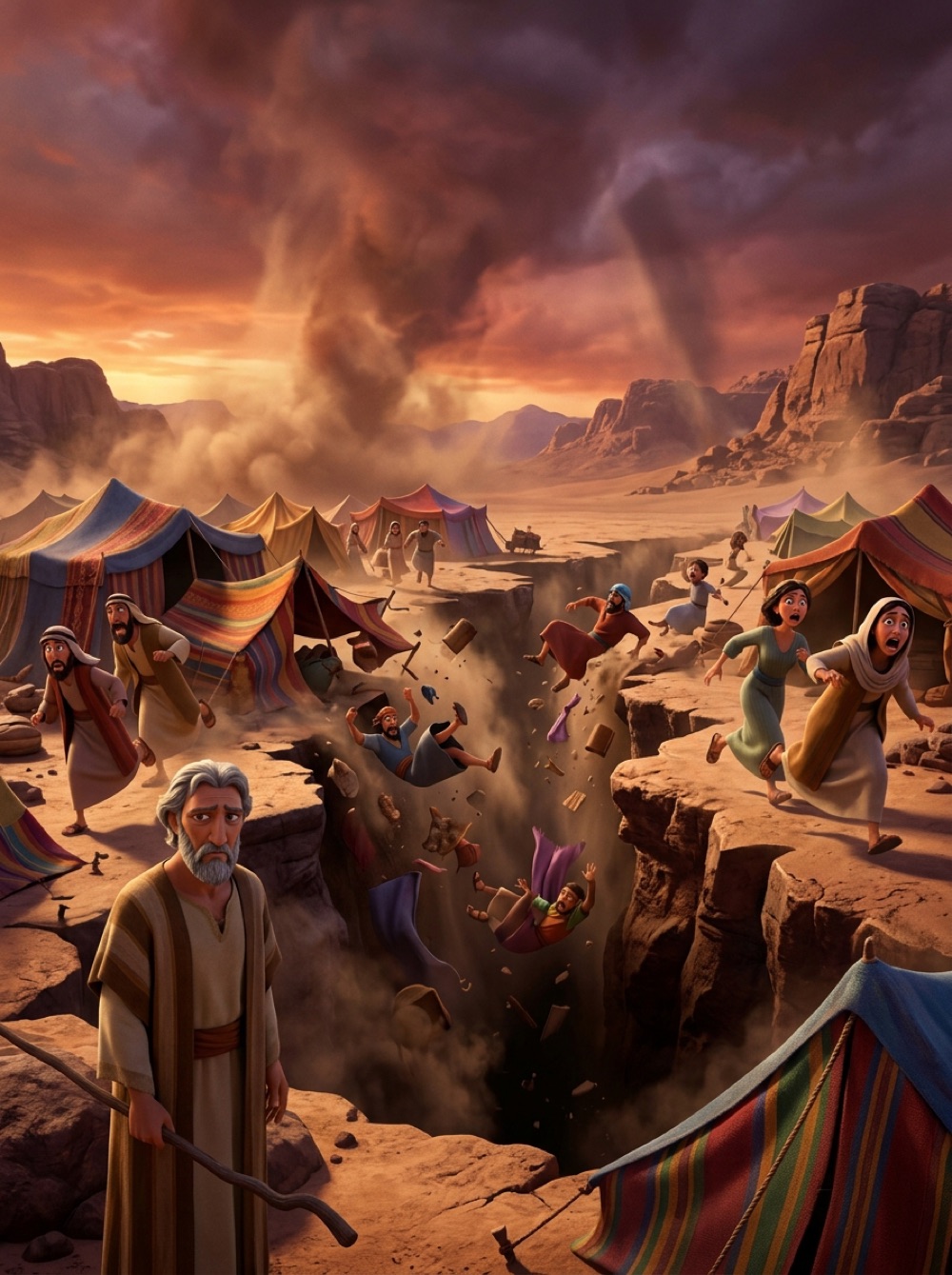
The Ground Opens Up
God told Moses to have the whole community move away from the tents of Korah and his followers. Then the ground opened up and swallowed Korah and everyone with him — and fire came out from God and consumed the two hundred and fifty men who had joined the rebellion. It was a terrifying reminder that God's appointments are not up for a vote.
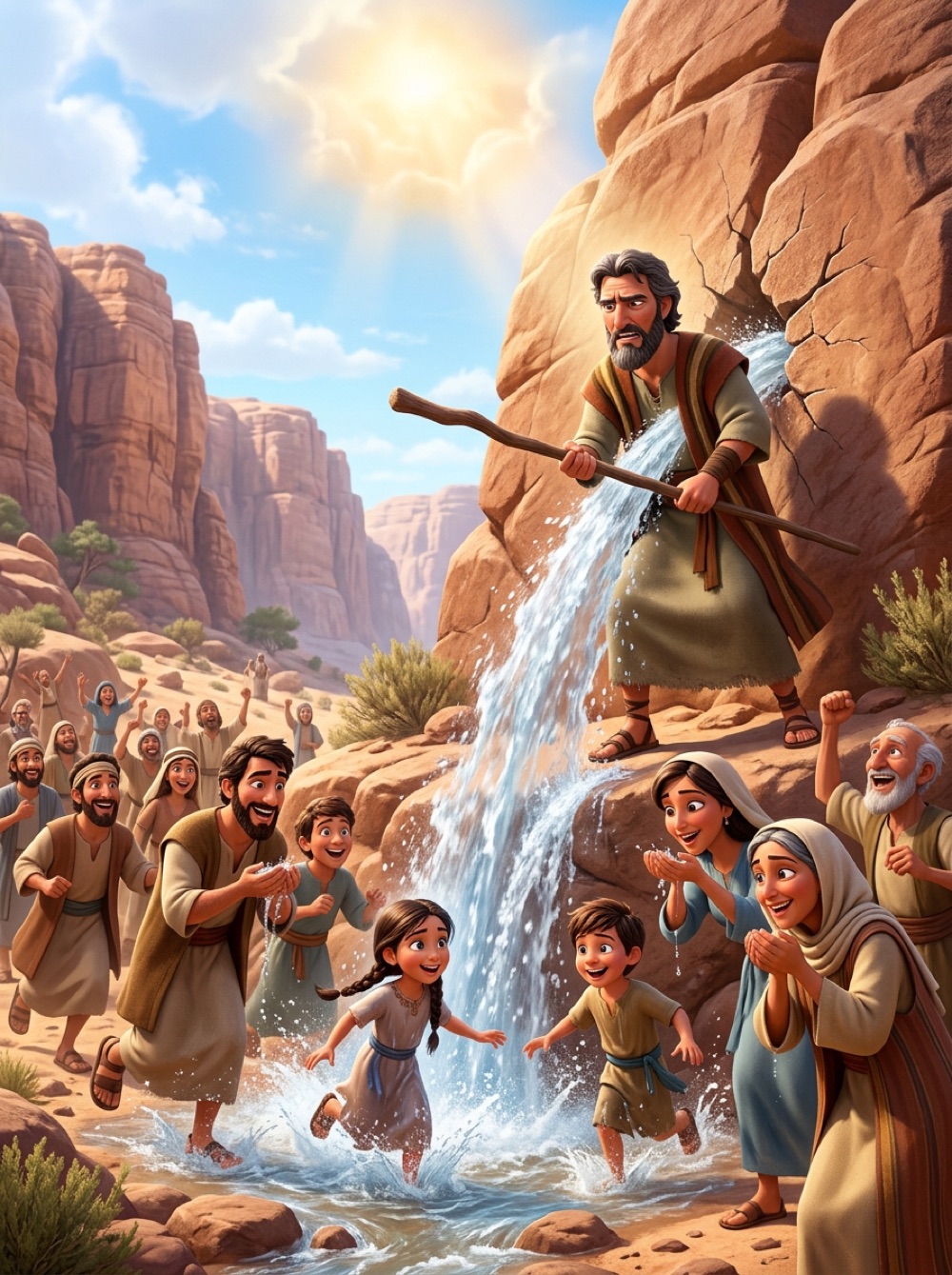
Moses Strikes the Rock
The people had no water again and quarreled bitterly with Moses. God told Moses to speak to the rock and water would come out. But Moses was angry. Instead of speaking to it he struck the rock twice with his staff — and water still came out. But God said to Moses and Aaron, "Because you did not trust me enough to honor me before the people, you will not lead them into the promised land."
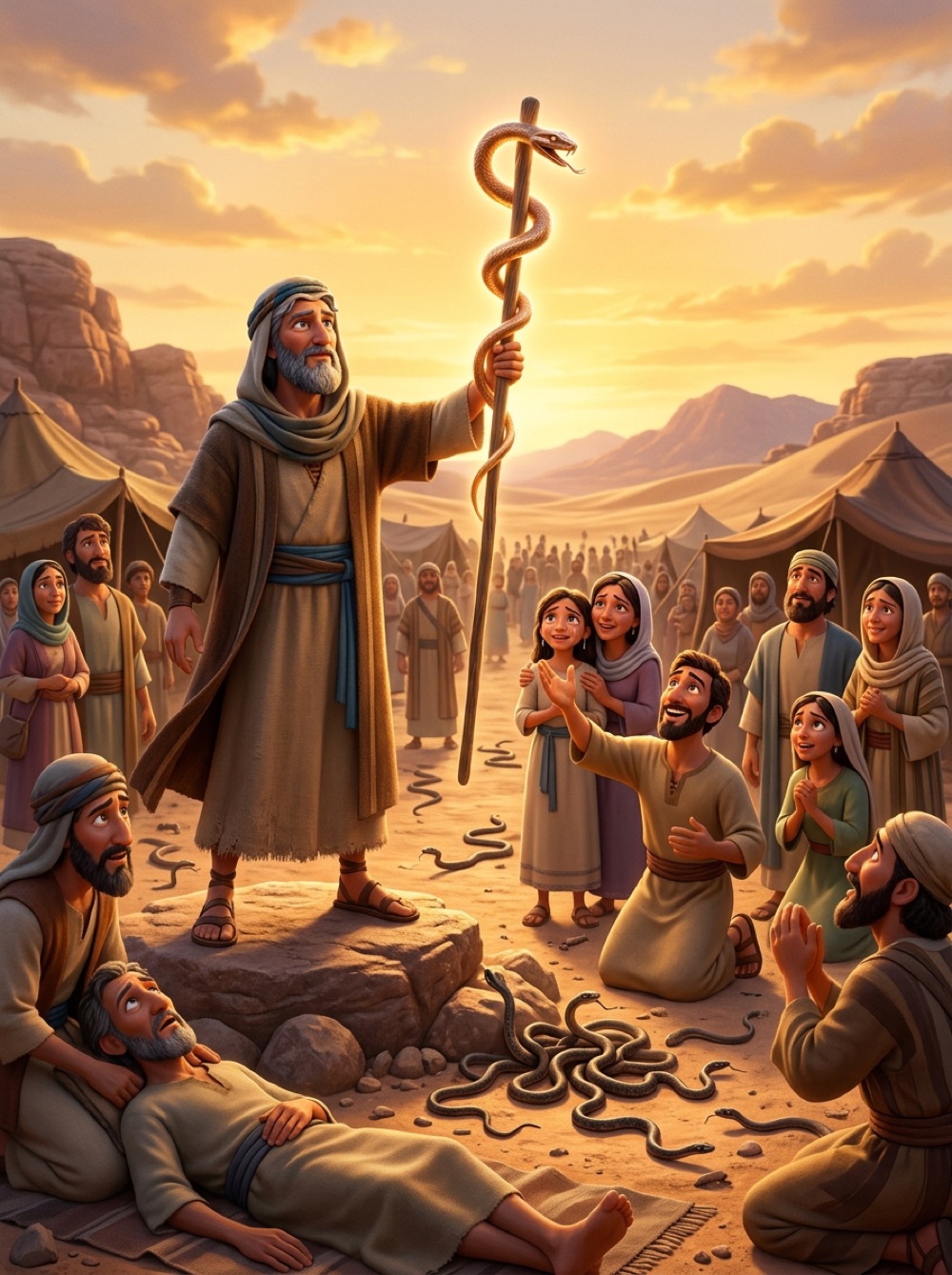
The Bronze Snake
The people complained again — this time against God and Moses both. "Why have you brought us out of Egypt to die here? There is no bread, no water, and we detest this terrible food." God sent venomous snakes among them and many people died. The people came to Moses, admitted their sin, and asked him to pray. God told Moses to make a bronze snake and put it on a pole — anyone who had been bitten and looked at it would live.
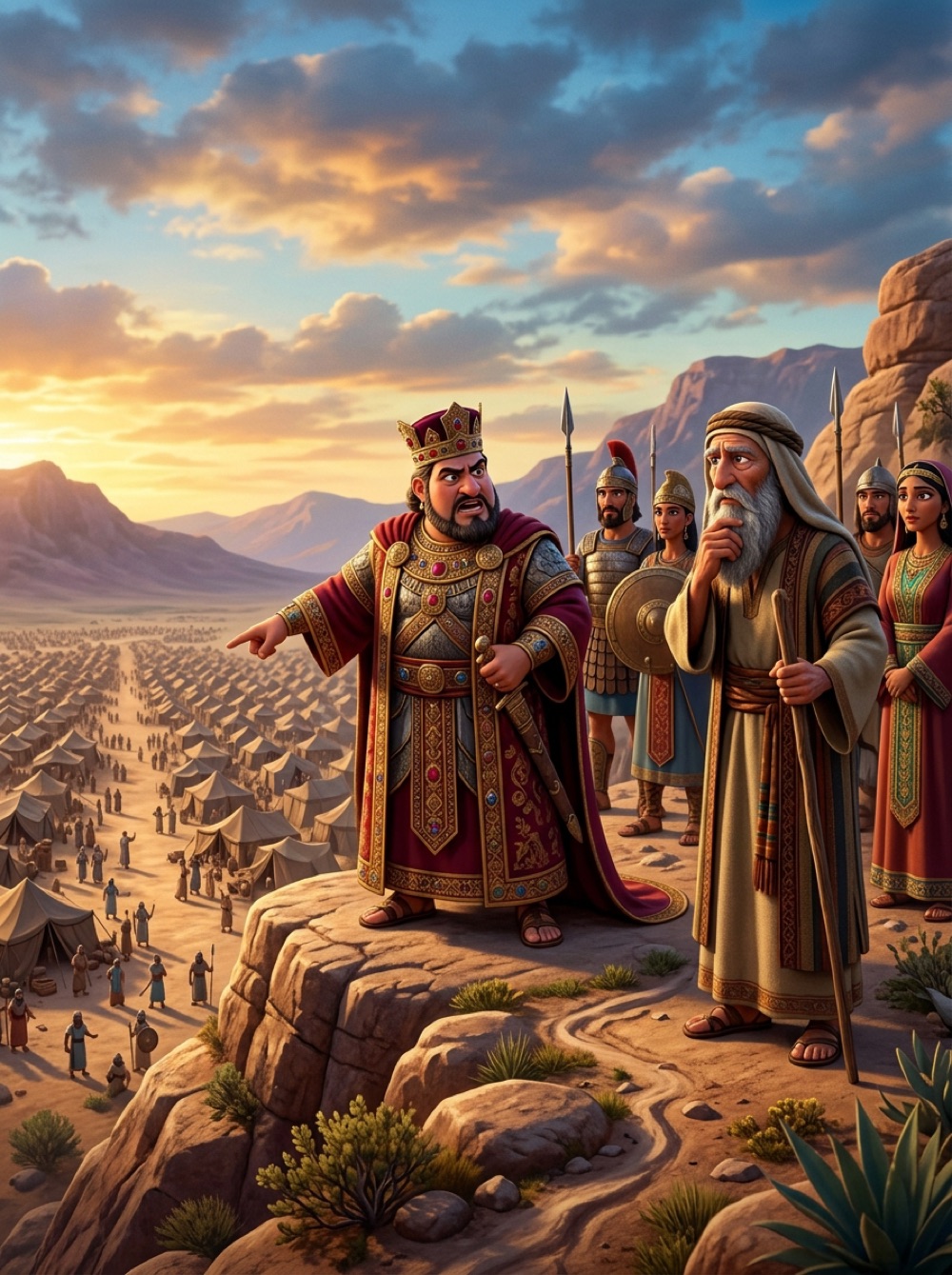
Balaam Is Hired to Curse Israel
A king named Balak was terrified of Israel and hired a prophet named Balaam to come and curse them. God warned Balaam not to go. Balaam tried to go anyway. On the road, his donkey stopped three times — because the donkey could see an angel of God standing in the way with a sword, even though Balaam could not.
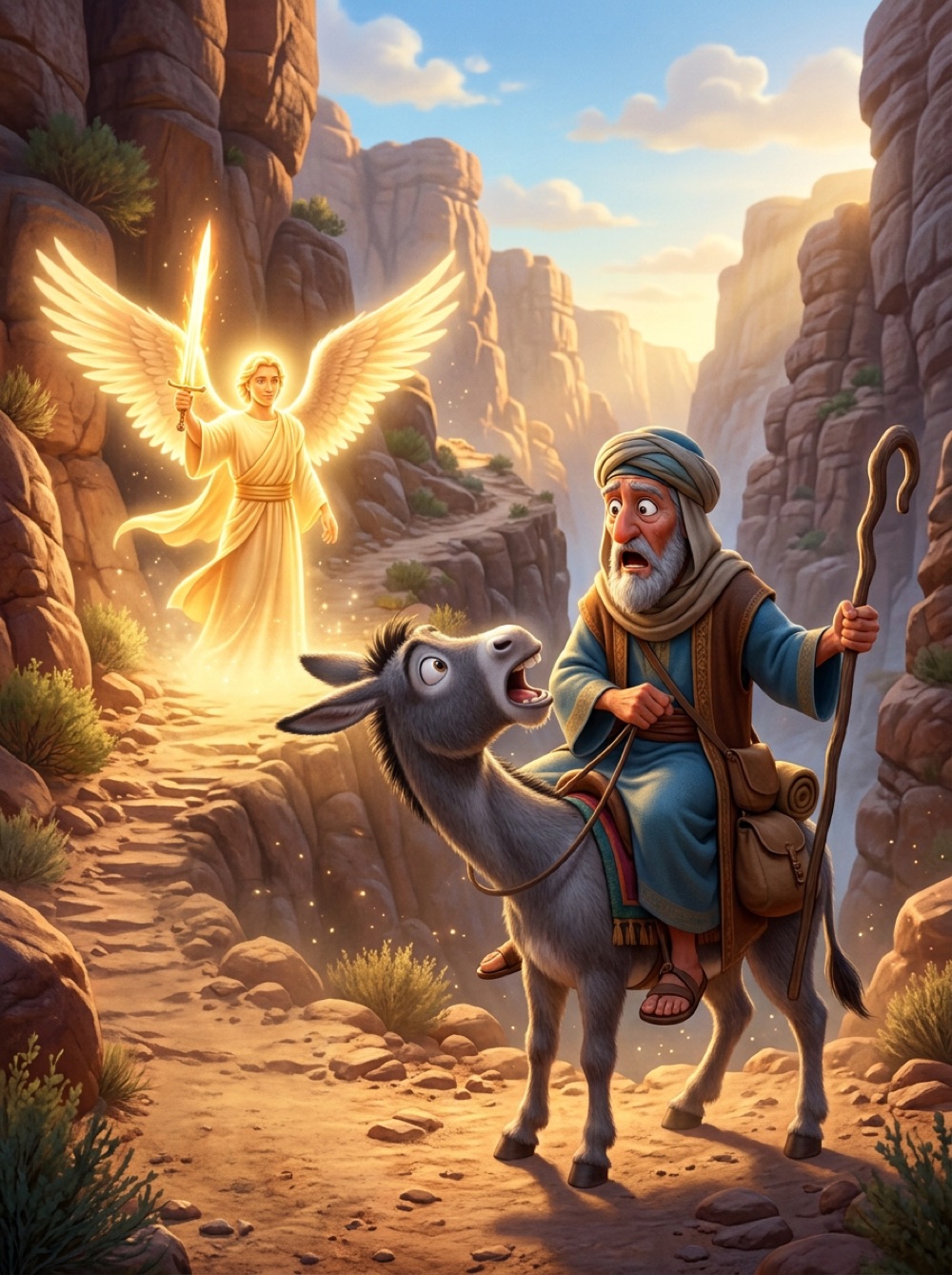
The Donkey Speaks
Balaam beat his donkey three times for stopping. Then God opened the donkey's mouth. "What have I done to you that you have beaten me three times?" the donkey said. Then God opened Balaam's eyes and he saw the angel standing in the road with a sword raised. Balaam fell face down. The donkey had seen more clearly than the prophet.
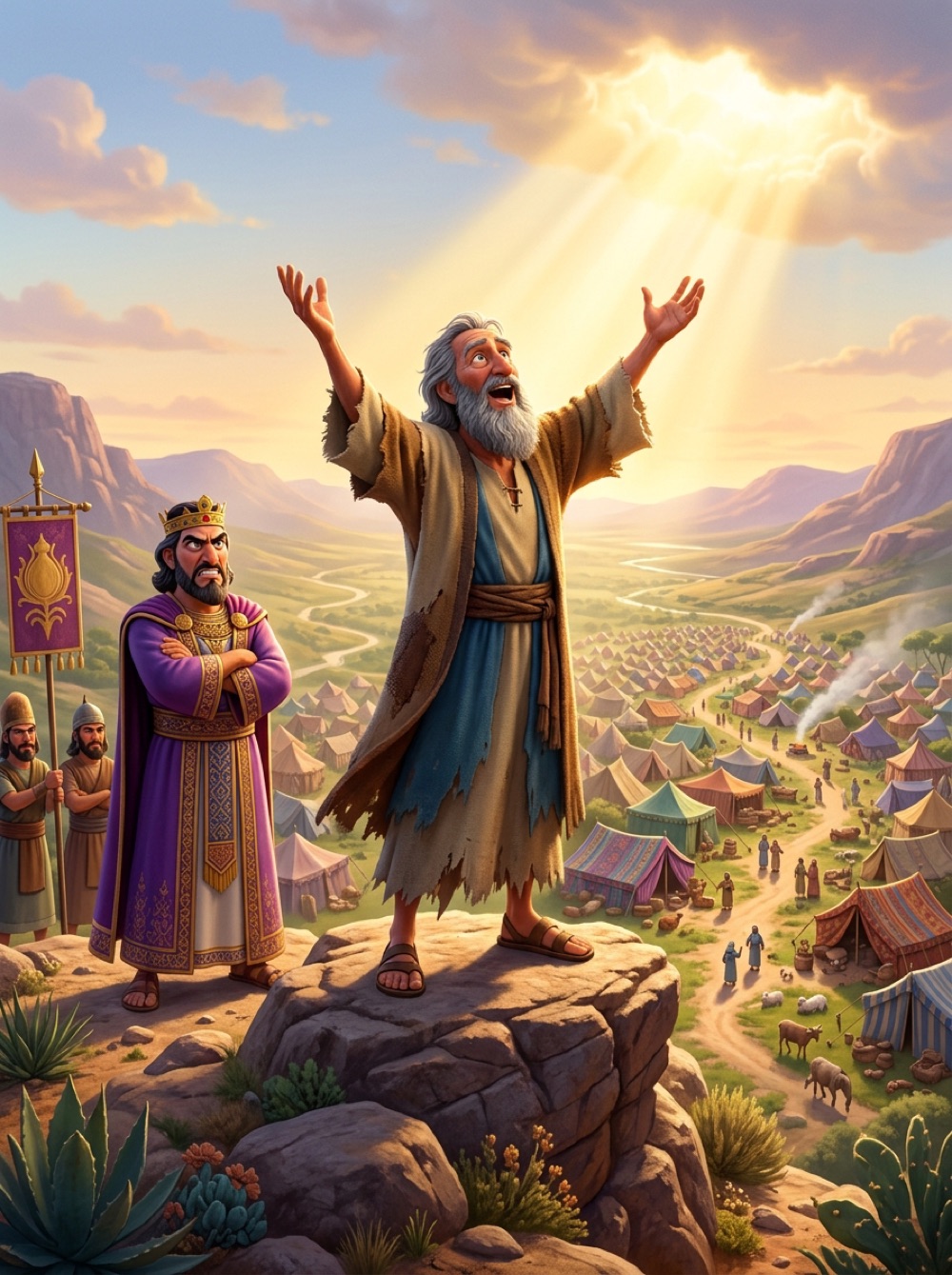
Balaam Blesses Instead of Cursing
Balaam went with Balak but could not curse what God had blessed. Three times Balak brought him to overlook the Israelite camp, and three times Balaam opened his mouth to curse — and only blessings came out. "How can I curse those whom God has not cursed?" he said. No weapon formed against God's people could prosper when God had determined to bless them.
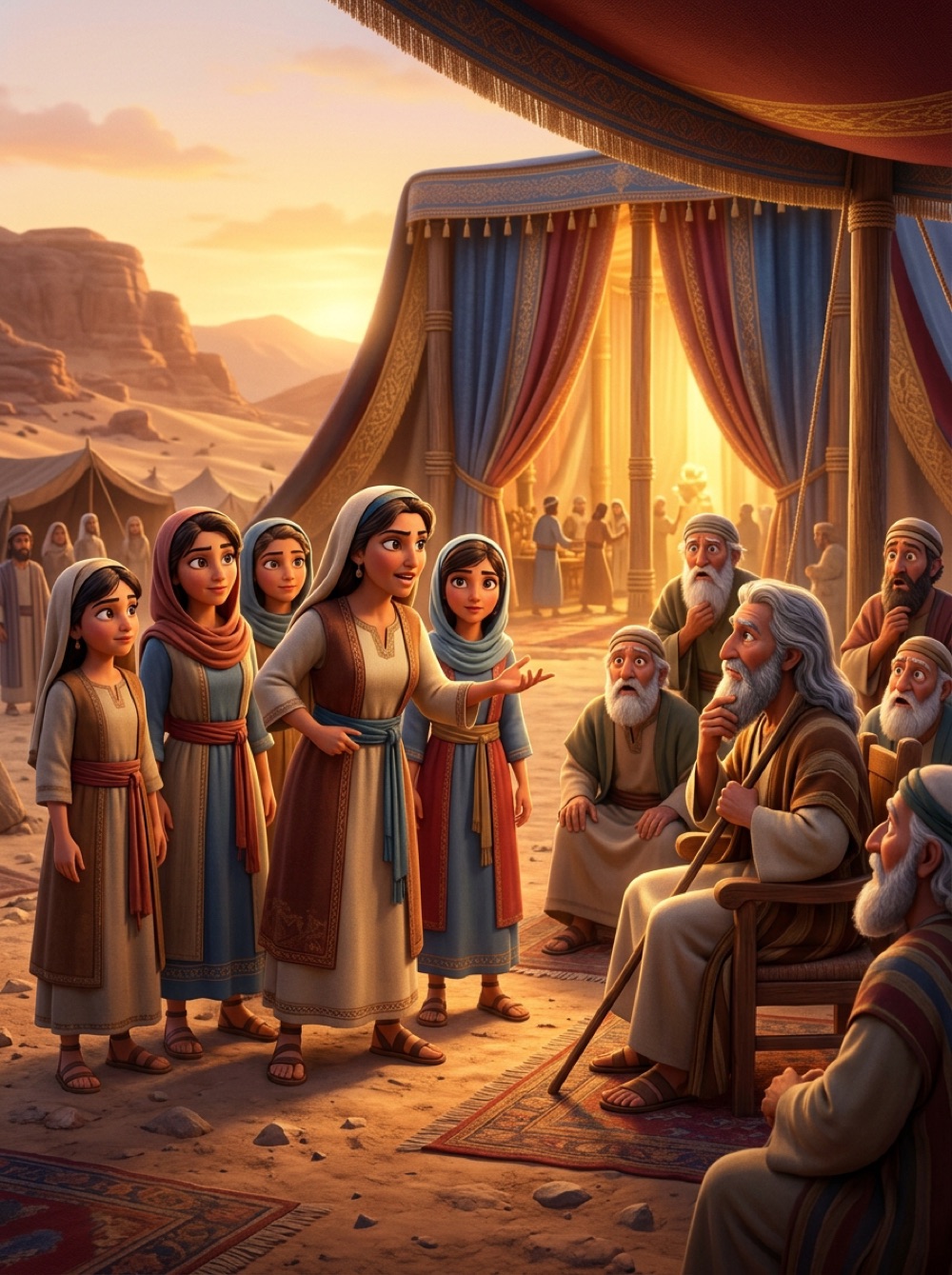
Zelophehad's Daughters
A man named Zelophehad had died in the desert leaving five daughters and no sons. Under the existing rules, his daughters would inherit nothing. They went boldly before Moses, the leaders, and the whole assembly and made their case. "Why should our father's name disappear because he had no sons? Give us property." Moses brought their case to God — and God said they were right.
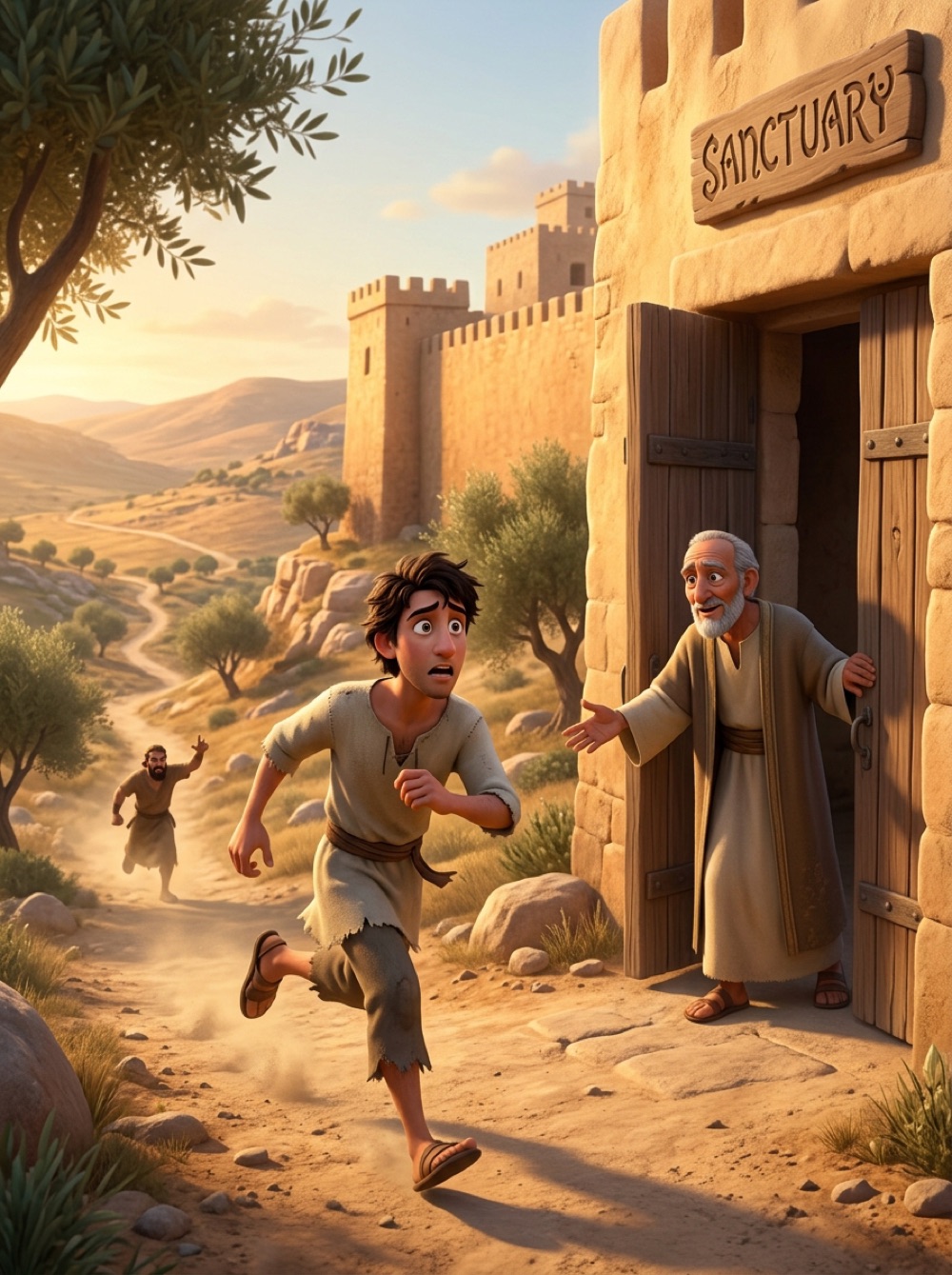
Cities of Refuge
God told Moses to set aside six cities of refuge throughout the land — places where someone who had accidentally caused another person's death could flee to be safe and receive a fair hearing. God cared about justice and about protecting the innocent. Even in a legal system, mercy had a place — a safe space for those who needed protection while the truth was found out.
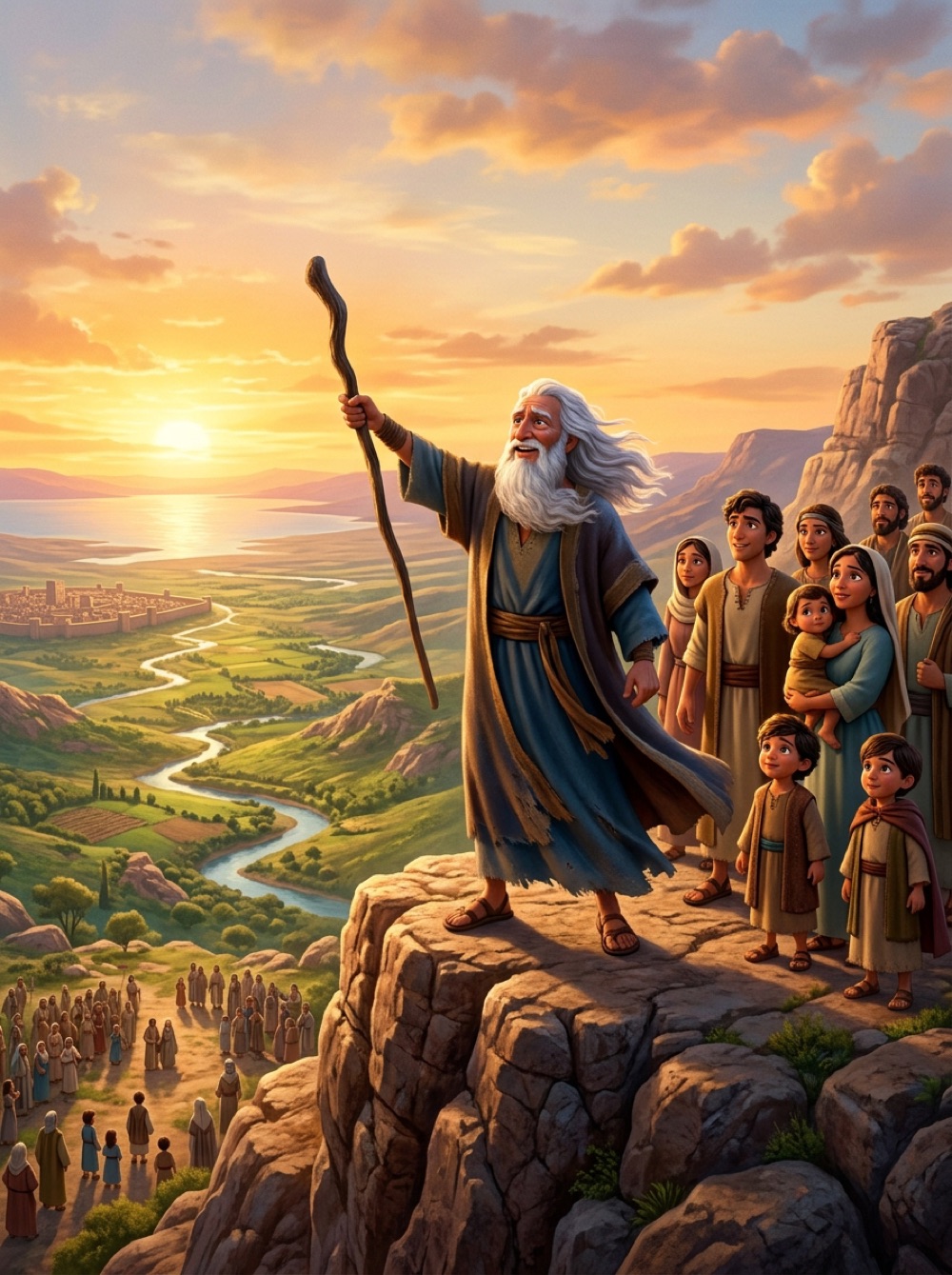
Forty Years Later
The forty years of wandering came to an end. The generation that had refused to trust God had passed away in the desert, just as God had said. Now their children — who had been born in the wilderness — stood on the edge of the promised land. Moses was old. The land was ahead. God's promise was still alive after forty years of waiting.
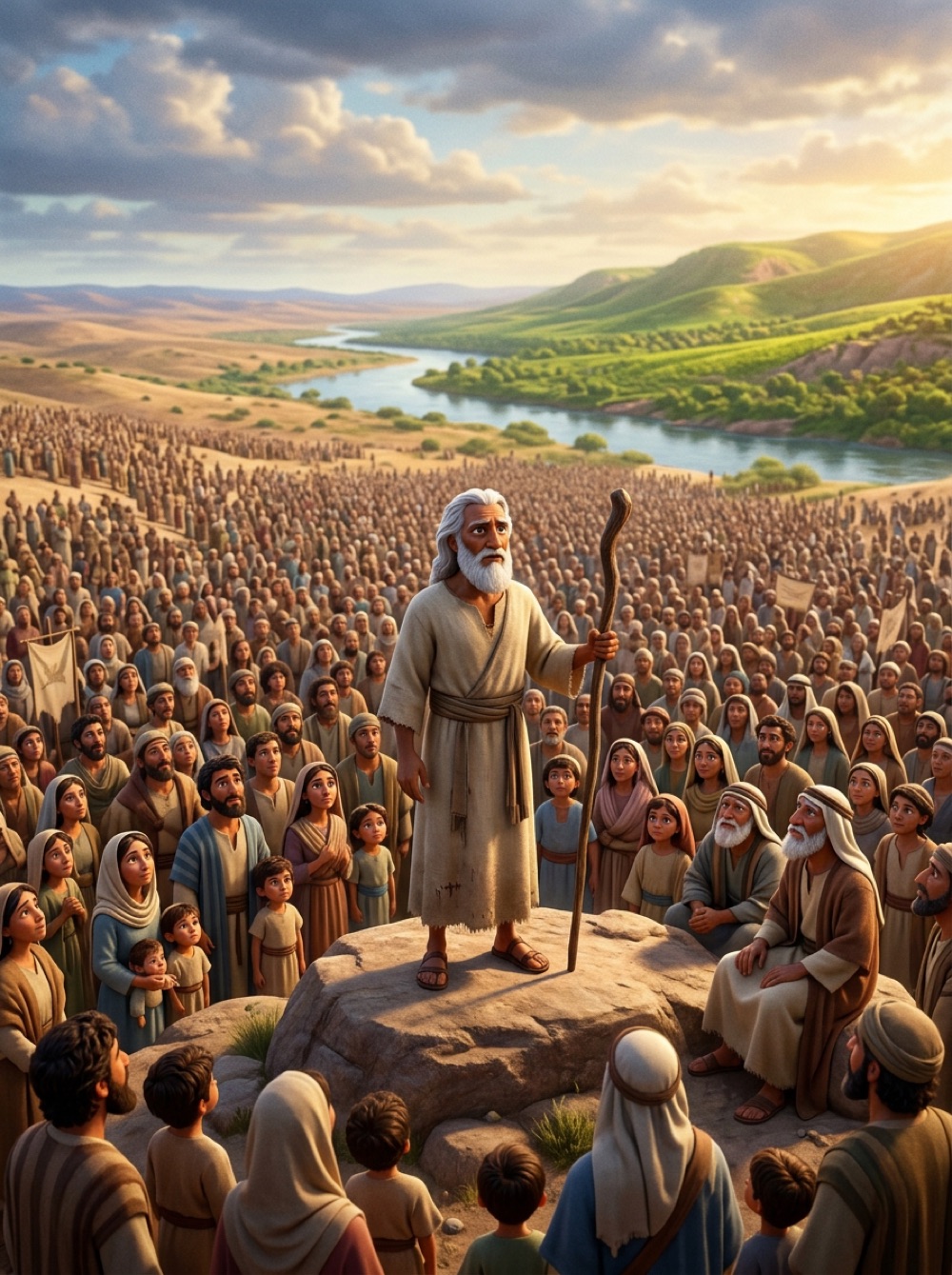
Moses Remembers the Journey
Moses gathered all Israel and began to speak. He was one hundred and twenty years old. He knew he would not cross the Jordan into the promised land. So he told the whole story one more time — the journey from Egypt, the plagues, the Red Sea, the mountain, the manna, the spies, the forty years. "Remember what God did," he said. "Remember everything."
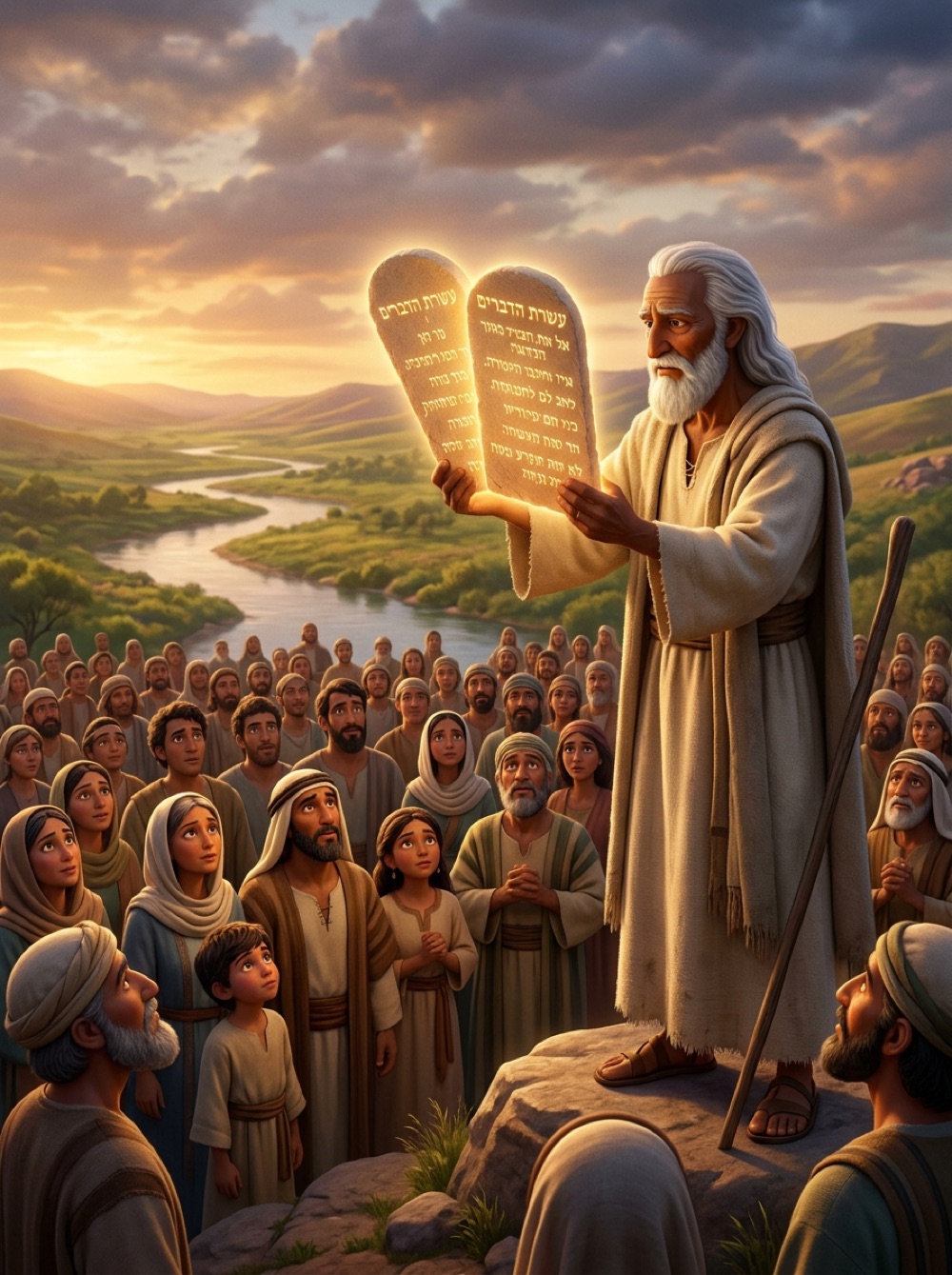
The Commandments Again
Moses repeated the Ten Commandments to the new generation — because most of them had been children or not yet born when God first gave them at Sinai. The commandments hadn't changed. God hadn't changed. The need to hear them, remember them, and live by them hadn't changed either. Some things are worth saying twice — or as many times as it takes.
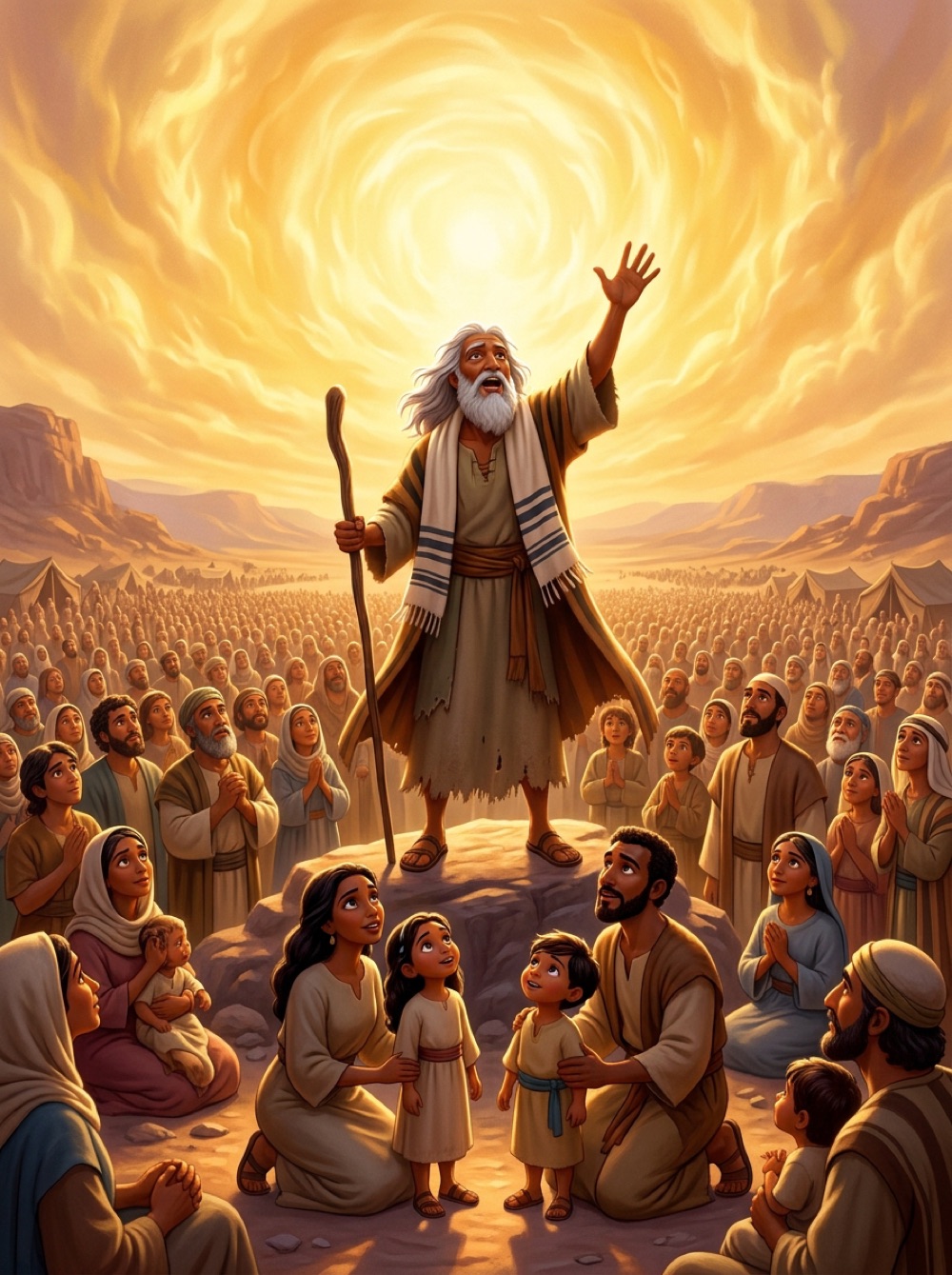
The Shema
Then Moses said the most important words in the entire Old Testament. "Hear, O Israel — the Lord our God, the Lord is one. Love the Lord your God with all your heart and with all your soul and with all your strength." These words were to be on their hearts, taught to their children, talked about at home and on the road, when they lay down and when they got up. Everything else flowed from this.
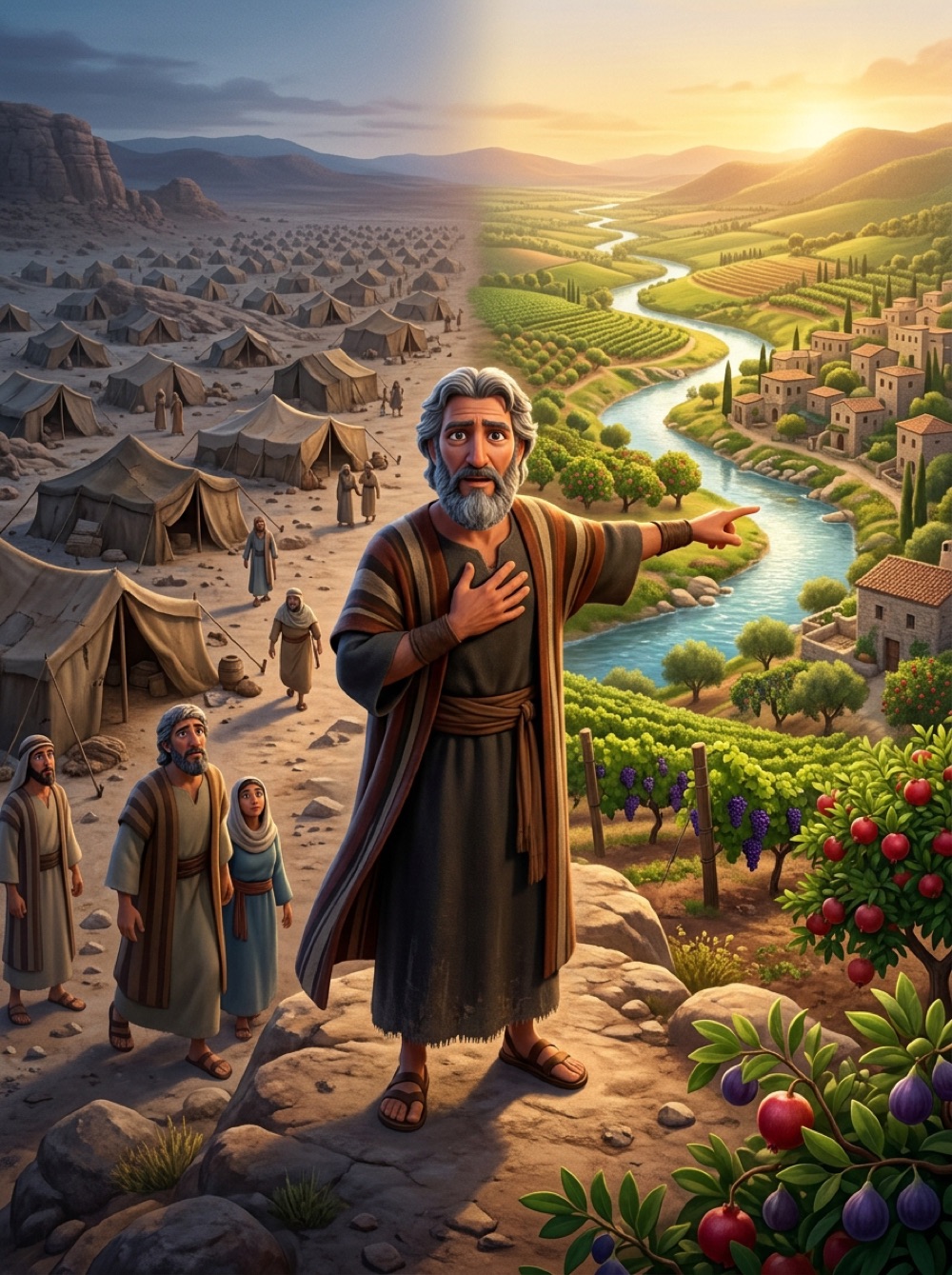
Don't Forget When Life Gets Good
Moses gave the people a warning for when they finally entered the good land — when the houses were built and the food was plentiful and the wells were dug and the vineyards were growing. "Be careful that you don't forget the Lord your God who brought you out of Egypt." Prosperity has a way of making people forget. The warning was as important as the promise.
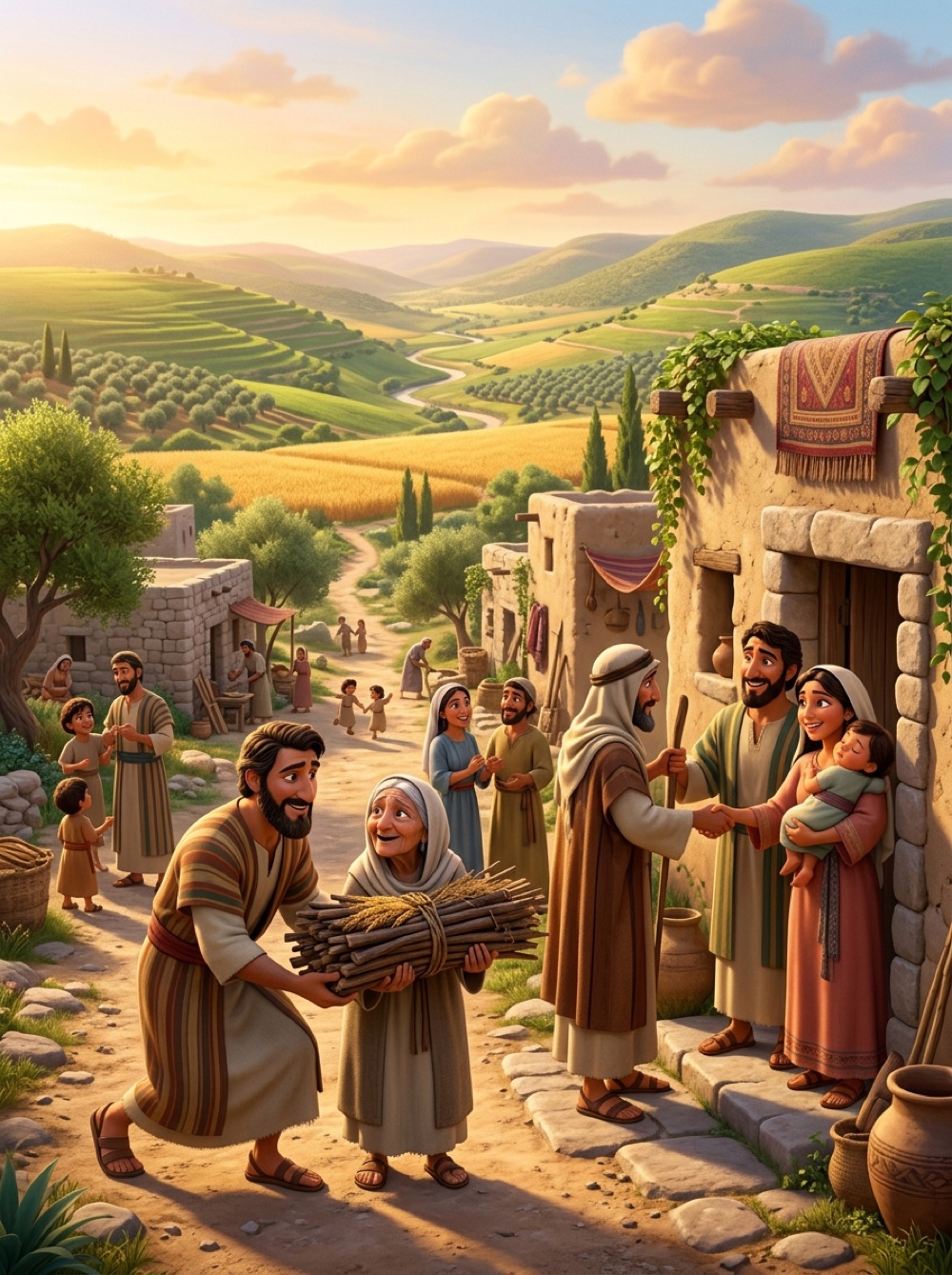
Instructions for the New Land
Moses gave the people detailed instructions for life in Canaan — how to worship, how to treat each other, how to care for the poor, how to handle justice, how to celebrate the festivals God had given them. One command stood out above the rest: "Do not take advantage of a foreigner, a widow, or an orphan. Remember that you were once slaves in Egypt — and God heard your cry."
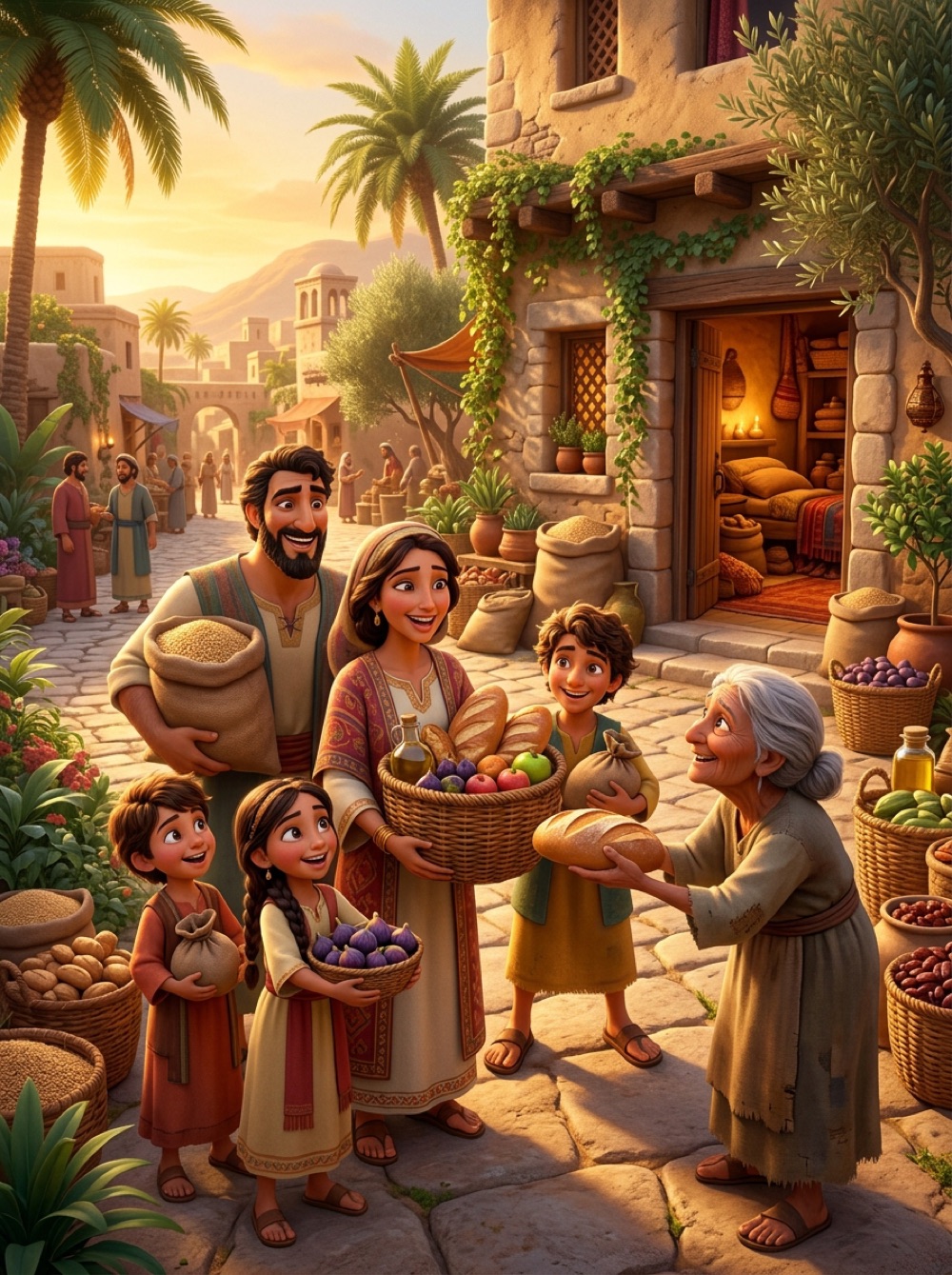
Give Generously
God gave Israel a clear instruction about money and generosity. "If anyone is poor among your people, do not be hardhearted or tightfisted. Give generously and do so without a grudging heart — because of this God will bless you in all your work." God's economy has always been simple: what you give away, He gives back.
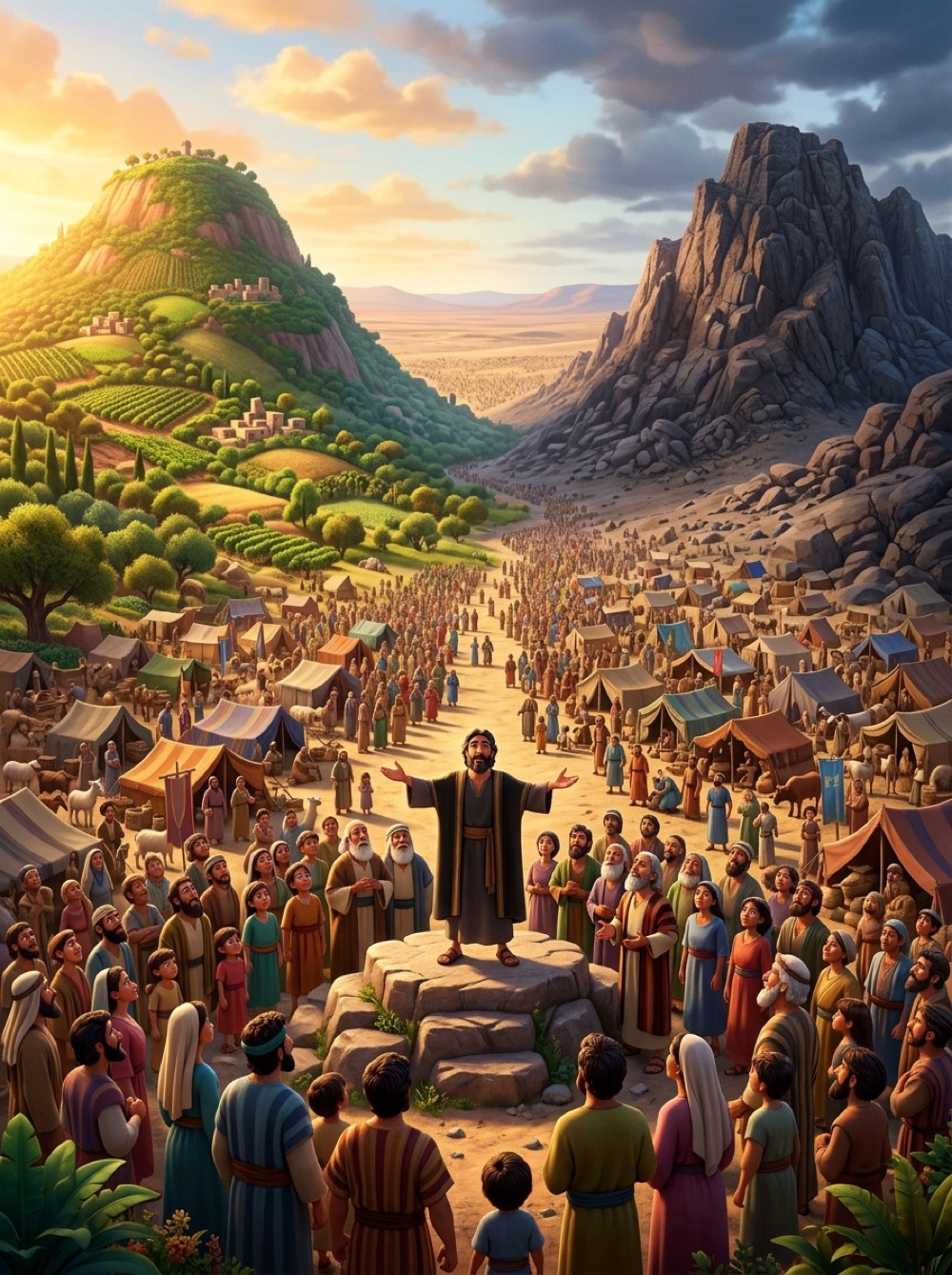
Blessings and Curses
Moses set before the people two mountains — Mount Gerizim for blessings and Mount Ebal for curses. The choice was simple and serious. Obey God and walk in His ways — and blessings would follow in every part of life. Turn away from God and follow other gods — and the consequences would be equally real. The choice was always theirs to make.
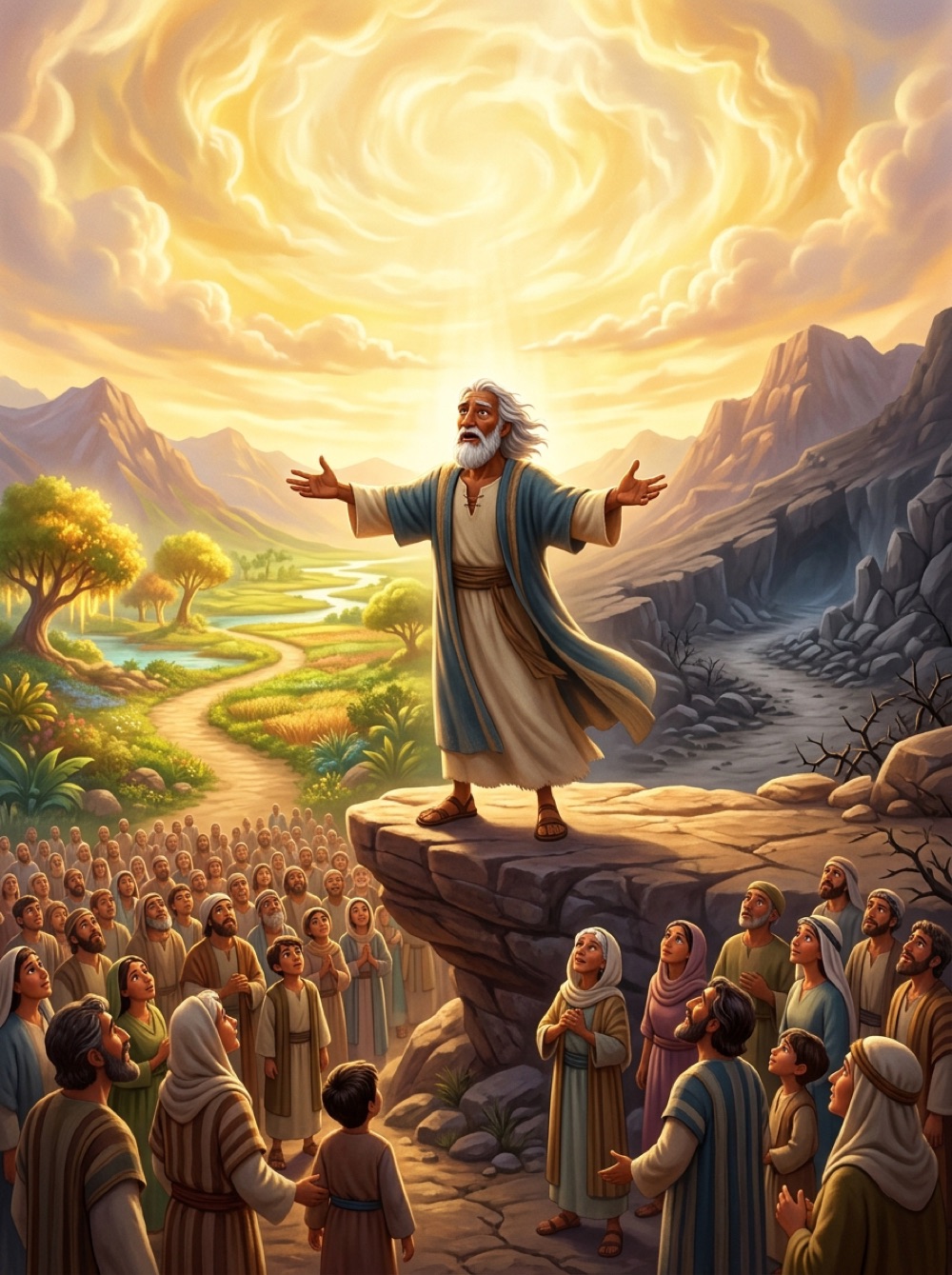
Choose Life
Moses put the clearest choice anyone has ever been offered before the people. "I set before you today life and prosperity, death and destruction. Choose life — so that you and your children may live. Love the Lord your God, listen to His voice, and hold fast to Him. For the Lord is your life." It was not a complicated offer. It was the simplest one in the world.
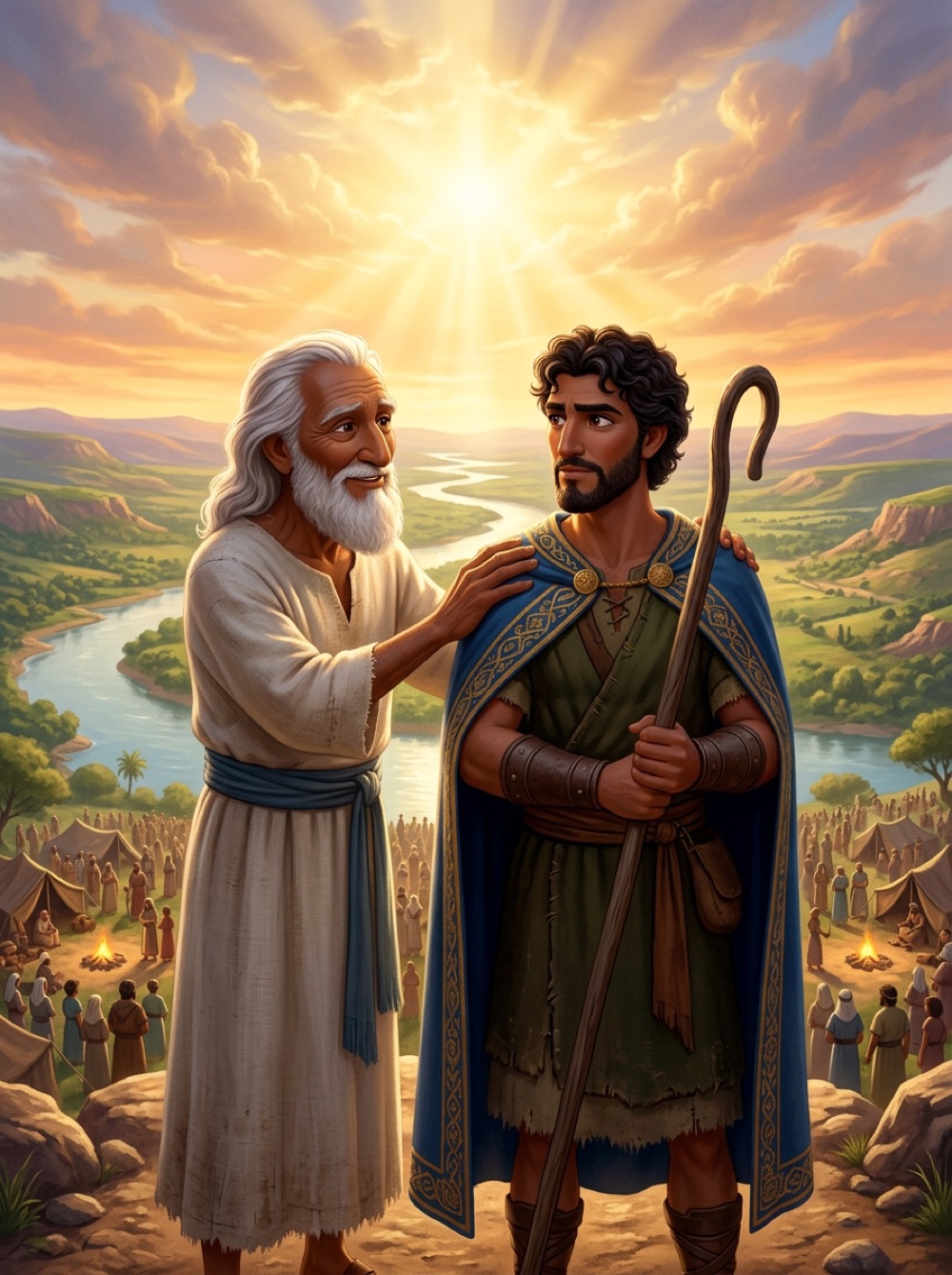
Joshua Takes Over
Moses called Joshua before all of Israel and commissioned him as the new leader. "Be strong and courageous," Moses said. "Do not be afraid or terrified — because the Lord your God goes with you. He will never leave you nor forsake you." Then God Himself confirmed Joshua's appointment. The same God who had been with Moses would be with Joshua.
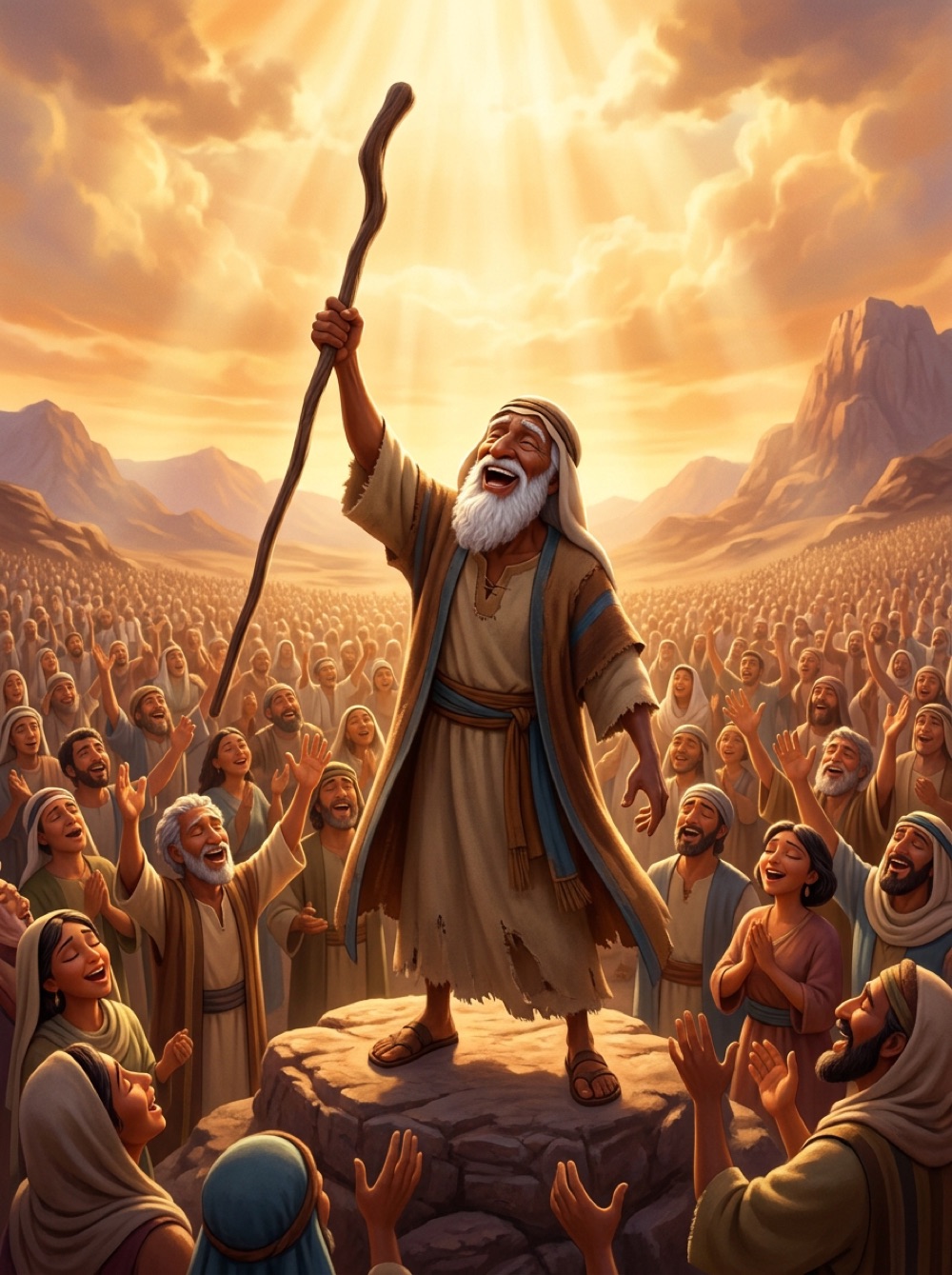
Moses' Song
Moses composed a song and taught it to all Israel — a song that told the whole story of God's faithfulness and Israel's tendency to wander. "He is the Rock," Moses sang. "His works are perfect and all His ways are just. A faithful God who does no wrong — upright and just is He." The song was meant to be remembered long after Moses was gone.
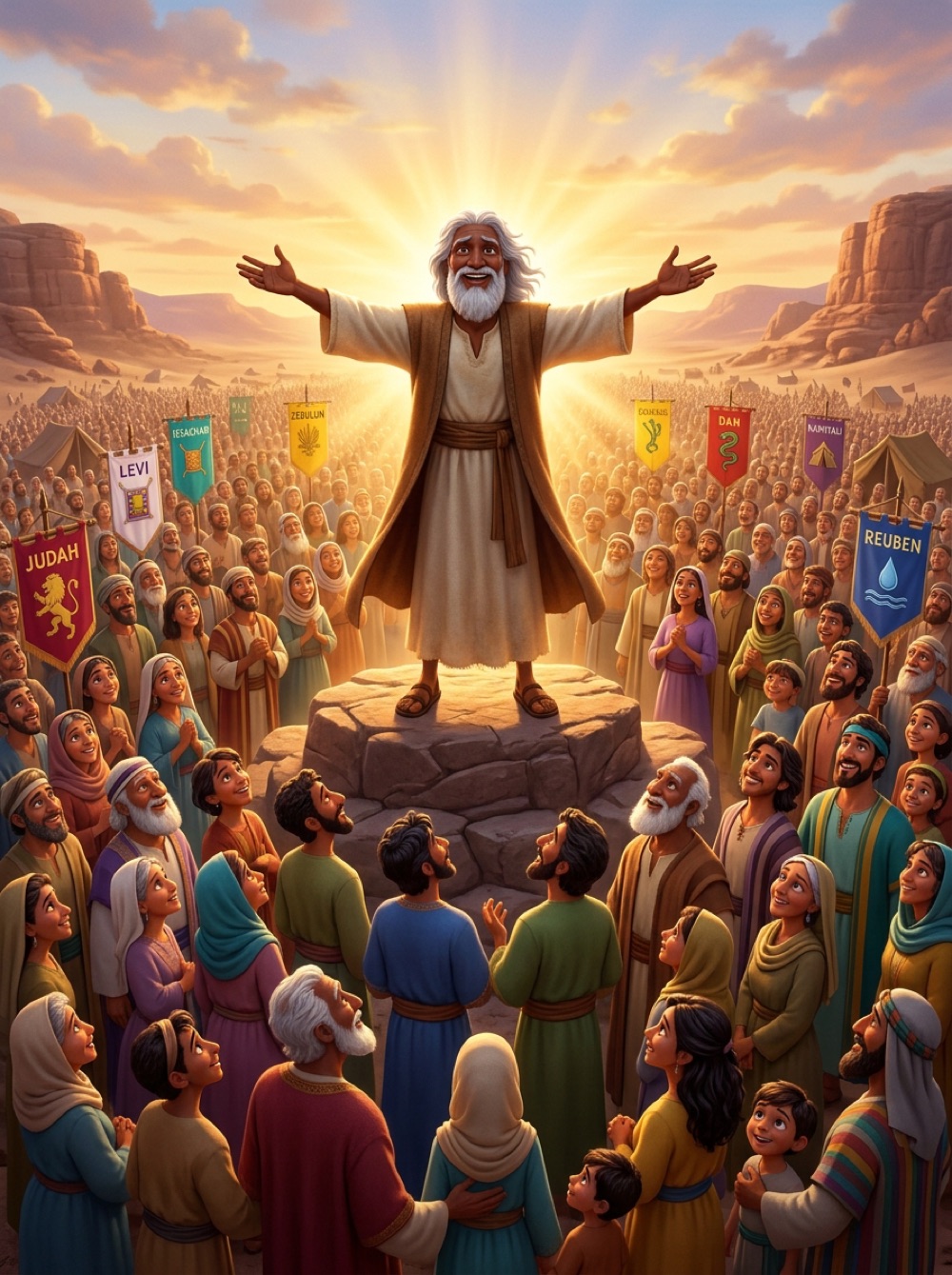
A Blessing for Every Tribe
Before he died, Moses blessed each of the twelve tribes of Israel — just as Jacob had done before him. Each tribe received words that looked into their future and named what God had in store for them. Then Moses said something over all of them together: "There is no one like the God of Israel — who rides across the heavens to help you."
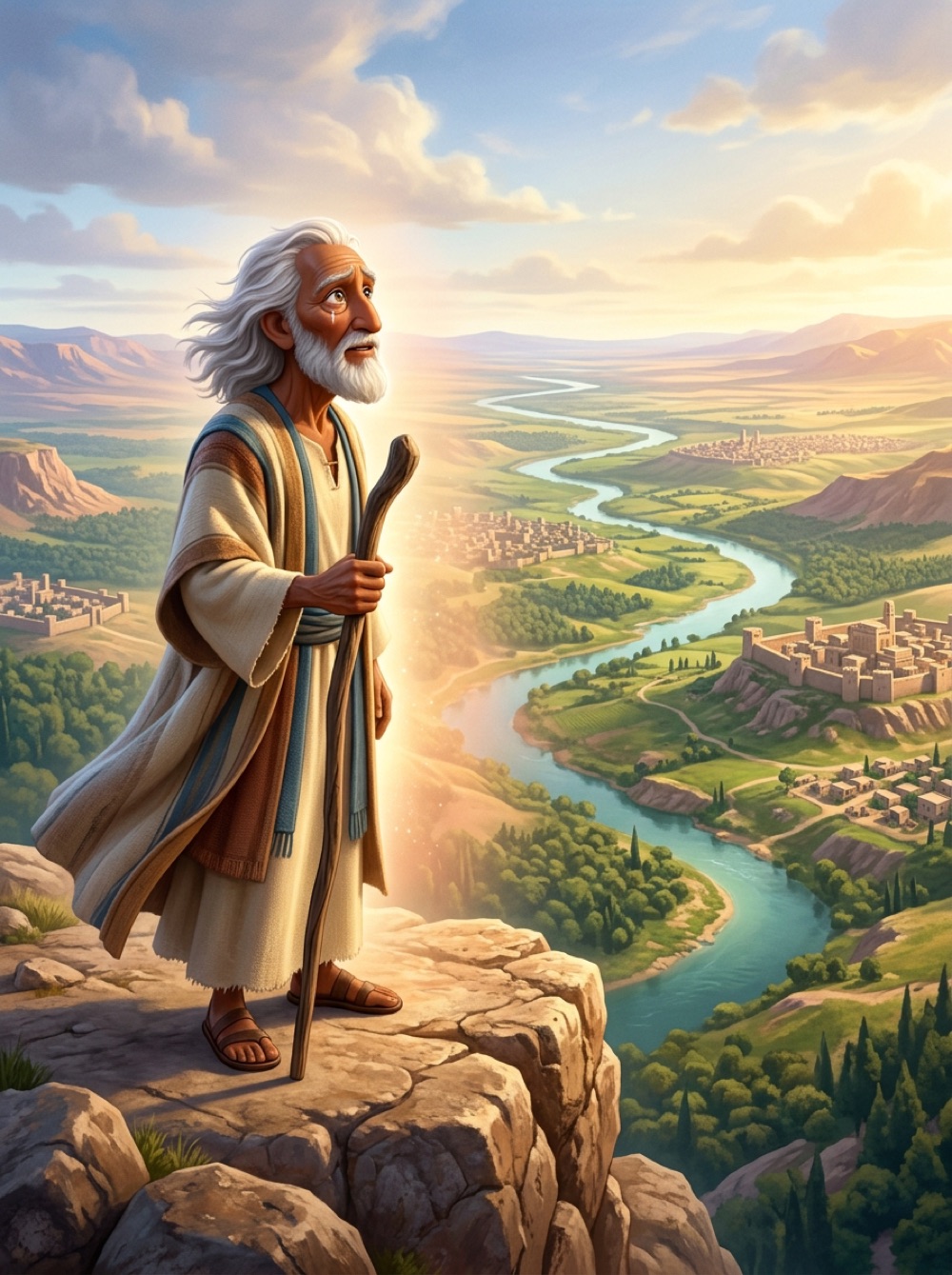
Moses Sees the Land
God told Moses to climb to the top of Mount Nebo and look out over the land. Moses climbed — one hundred and twenty years old, eyes still clear, strength still undiminished — and God showed him the whole promised land spread out before him. Every region, every valley, every hill. "This is the land I promised Abraham, Isaac, and Jacob," God said. "I have let you see it with your eyes."
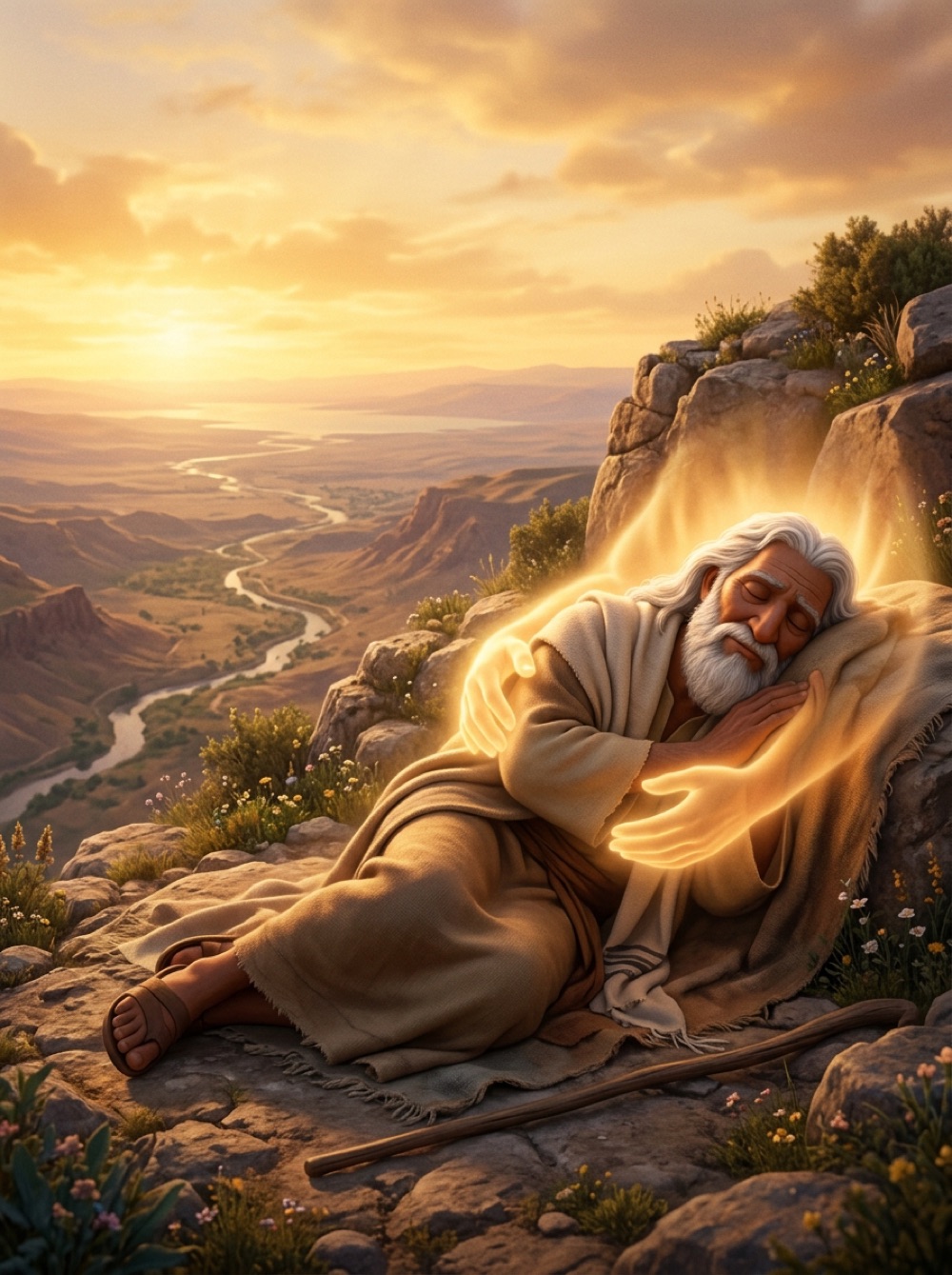
Moses Dies on the Mountain
Moses died there on the mountain — in the presence of God, looking out over the land he had spent his whole life journeying toward. God Himself buried him, and no one has ever found his grave. The Bible says there has never been a prophet in Israel like Moses — whom God knew face to face. He had started life in a basket on the Nile. He ended it in the arms of God.
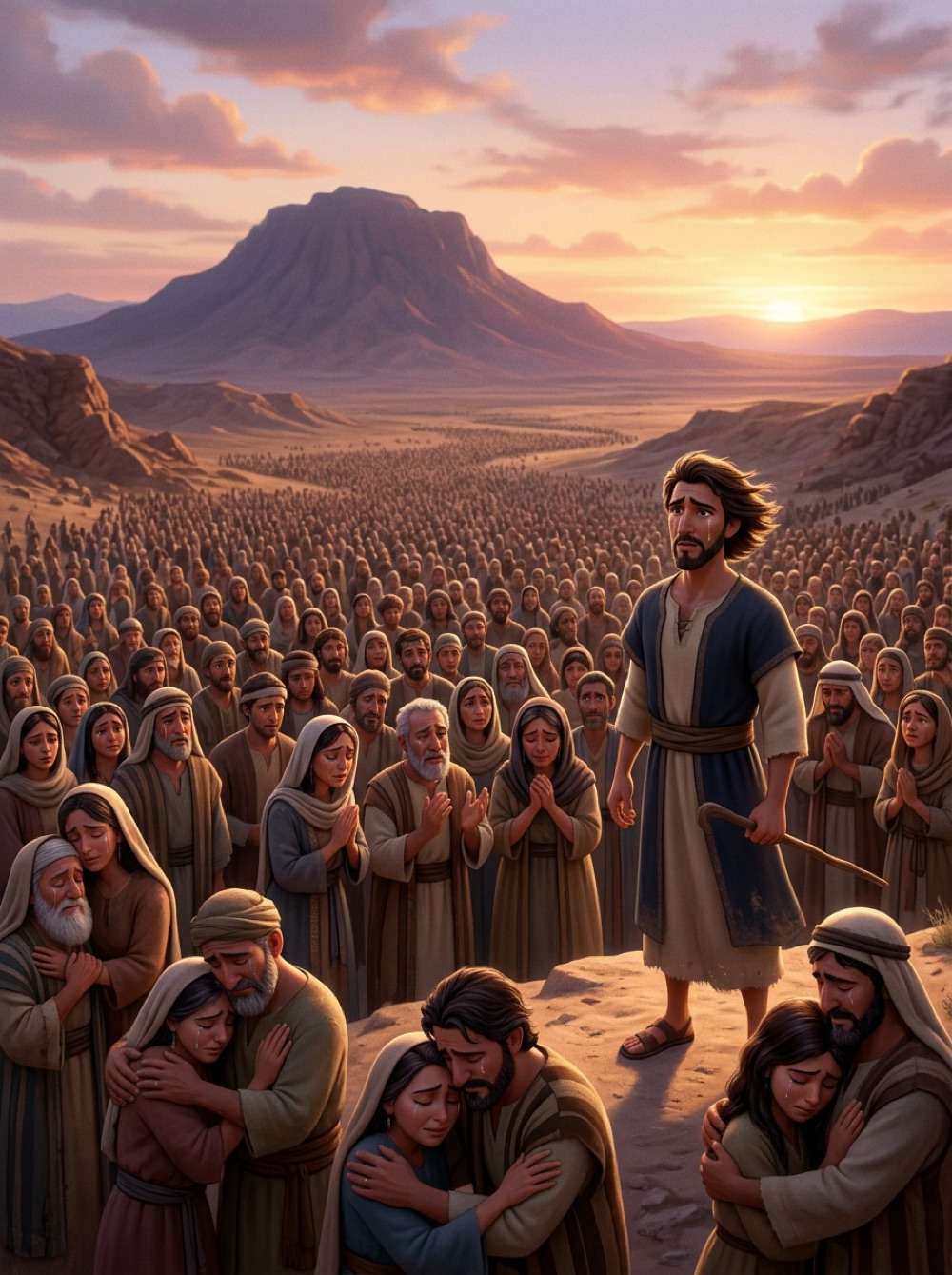
A Nation in Mourning
Israel wept for Moses for thirty days in the plains of Moab. Then the mourning ended — because the journey wasn't over. Joshua son of Nun was filled with the spirit of wisdom and the Israelites listened to him. The greatest leader Israel had ever known was gone. But the God who had been with Moses was still there — and He was still moving forward.
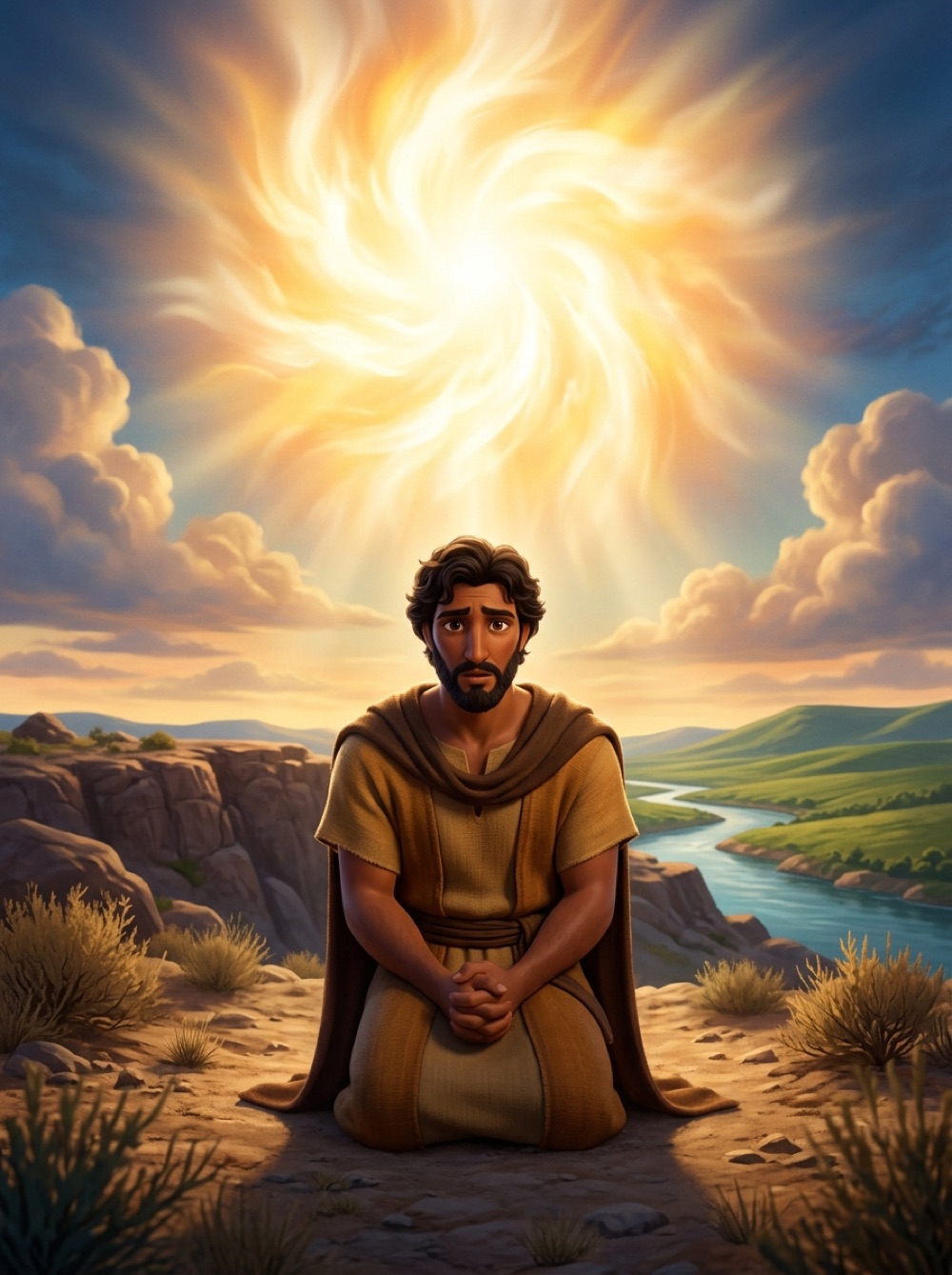
Be Strong and Courageous
After Moses died, God spoke to Joshua. "Moses my servant is dead. Now get ready — cross the Jordan River and go into the land I am giving you. Be strong and courageous. Do not be afraid. Do not be discouraged. For the Lord your God will be with you wherever you go." God said it three times. Some things need to be said more than once before they sink in.
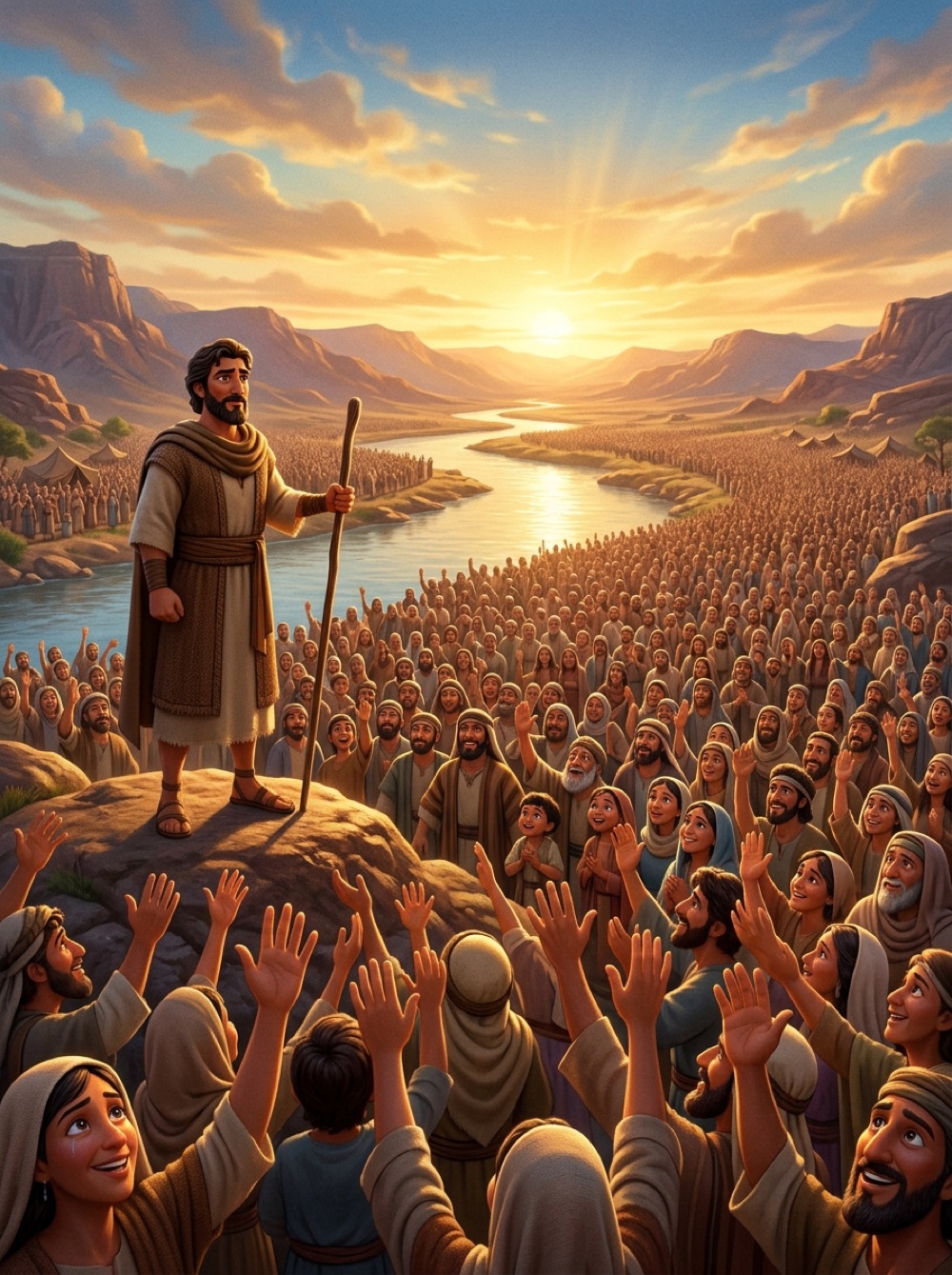
The People Answer Joshua
Joshua told the people to get ready to cross the Jordan in three days. The people answered him with words that must have strengthened his heart. "Whatever you command us we will do. Wherever you send us we will go. Just as we obeyed Moses in everything, so we will obey you. Only be strong and courageous." The new leader was not alone.
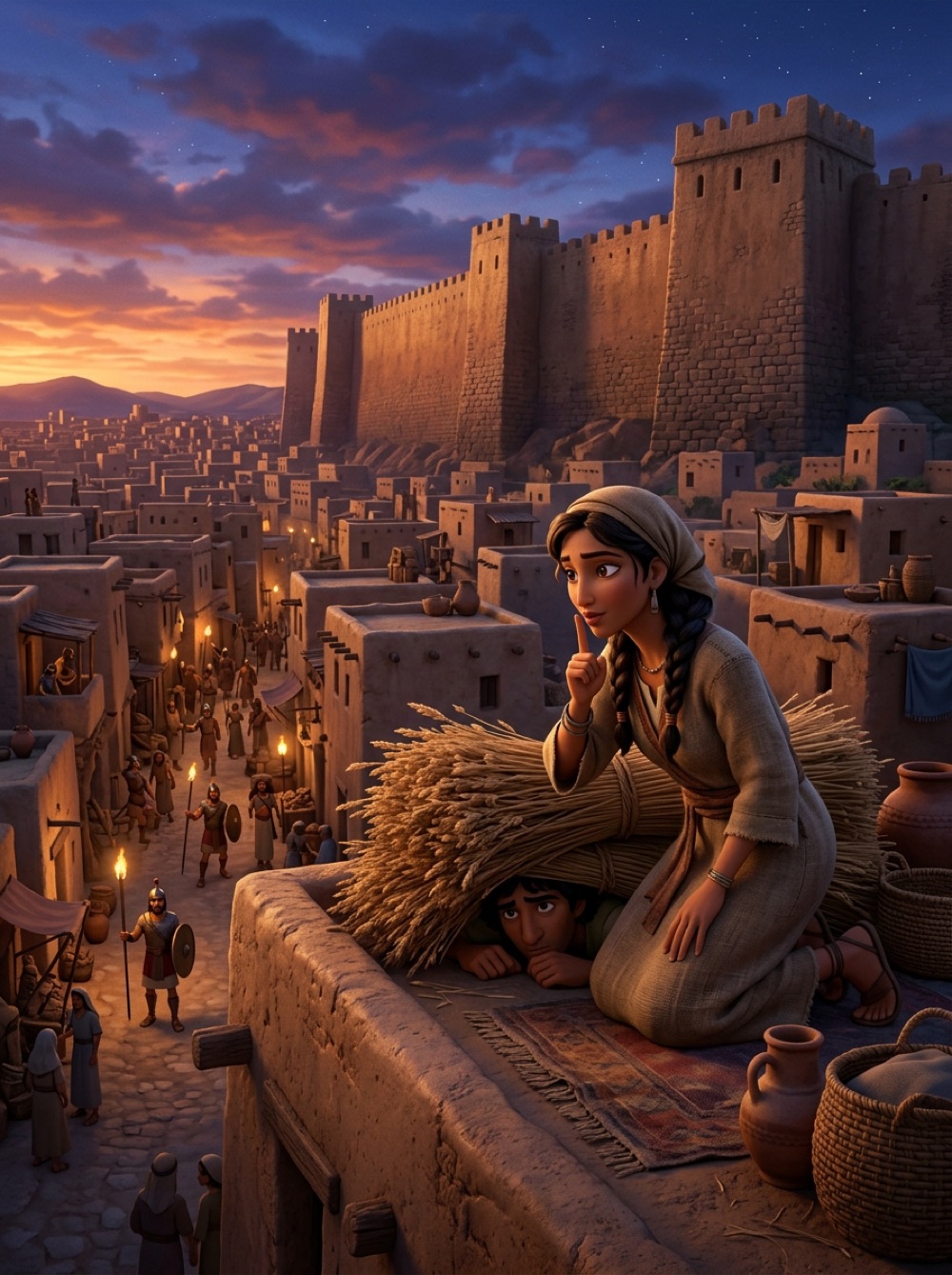
Rahab Hides the Spies
Joshua sent two spies into Jericho. A woman named Rahab hid them on her roof under stalks of flax when the king's men came looking for them. She was not an Israelite — she was a Canaanite woman who ran an inn. But she had heard what God had done for Israel. And she had made up her mind whose side she was on.
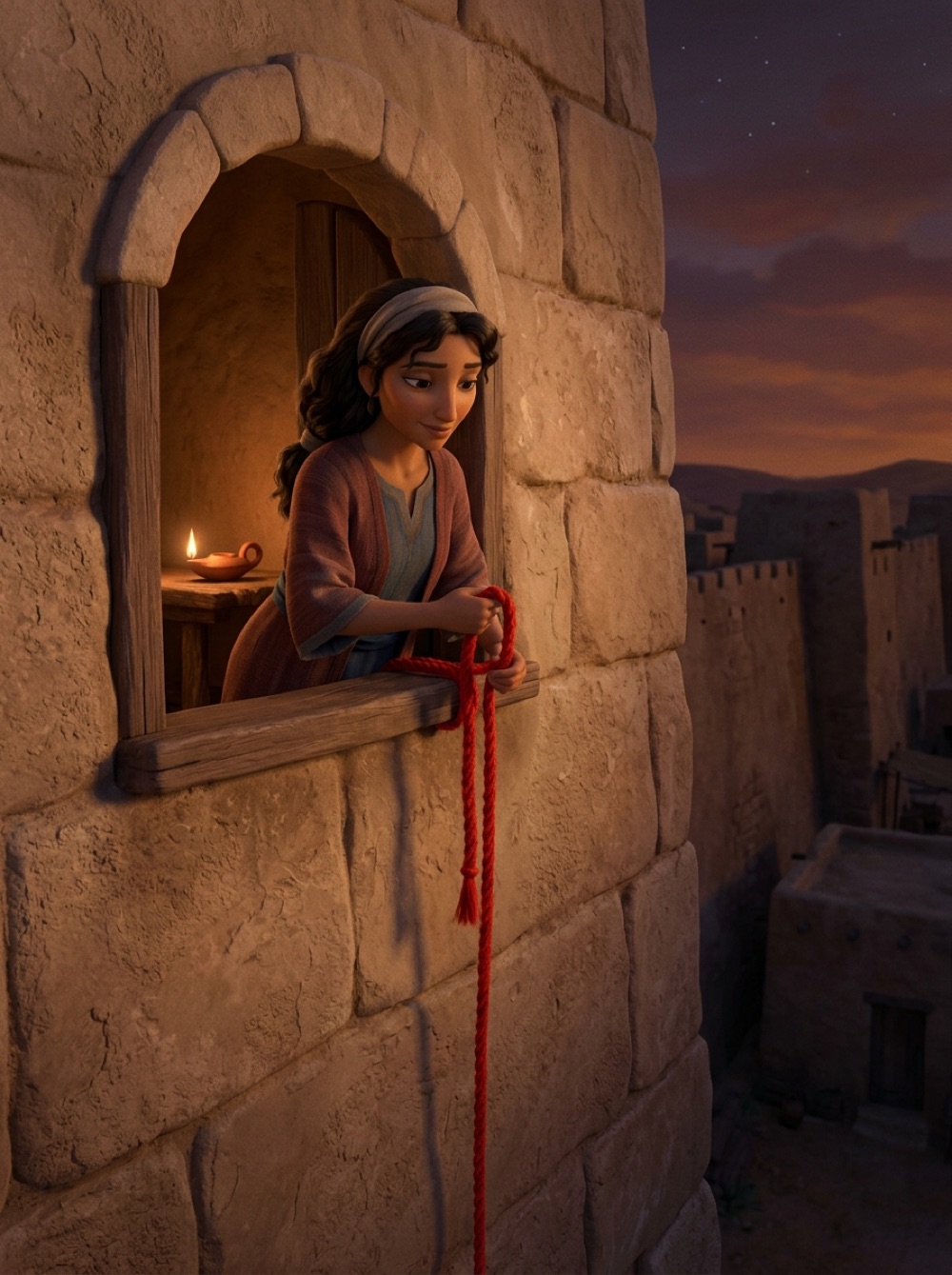
The Scarlet Cord
Rahab helped the spies escape through her window by a rope. In return they promised her that when Israel attacked Jericho, she and her whole family would be kept safe — on one condition. She had to tie a scarlet cord in the window where she had let them down. The cord would mark her house for protection. Rahab tied it immediately.
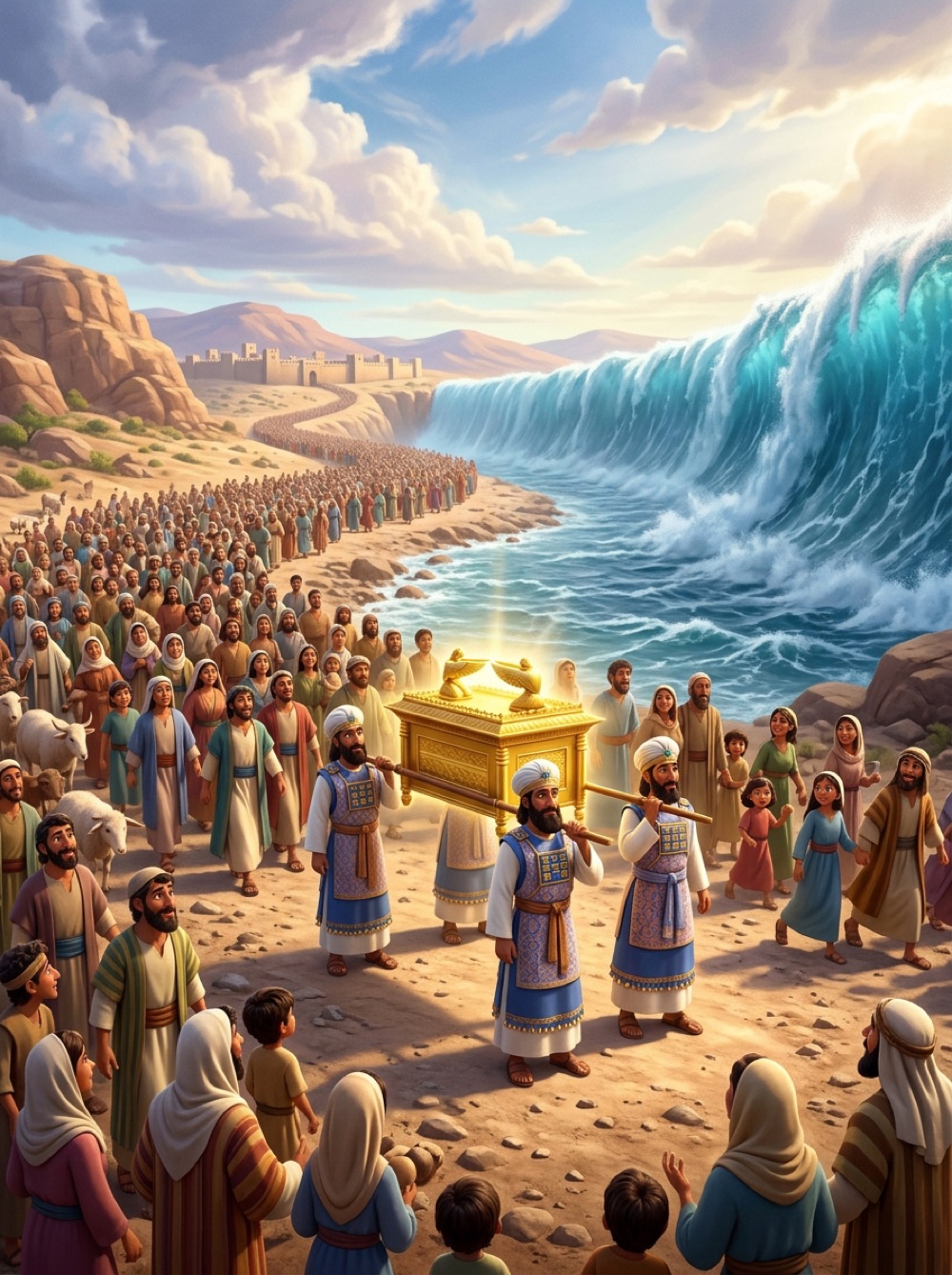
The Jordan Parts
God told Joshua that the moment the priests carrying the Ark of the Covenant stepped into the Jordan River, the water would stop flowing. It was flood season — the river was at its highest. The priests stepped in — and the water stopped, piling up in a heap far upstream. The whole nation crossed over on dry ground, just like the Red Sea forty years before.
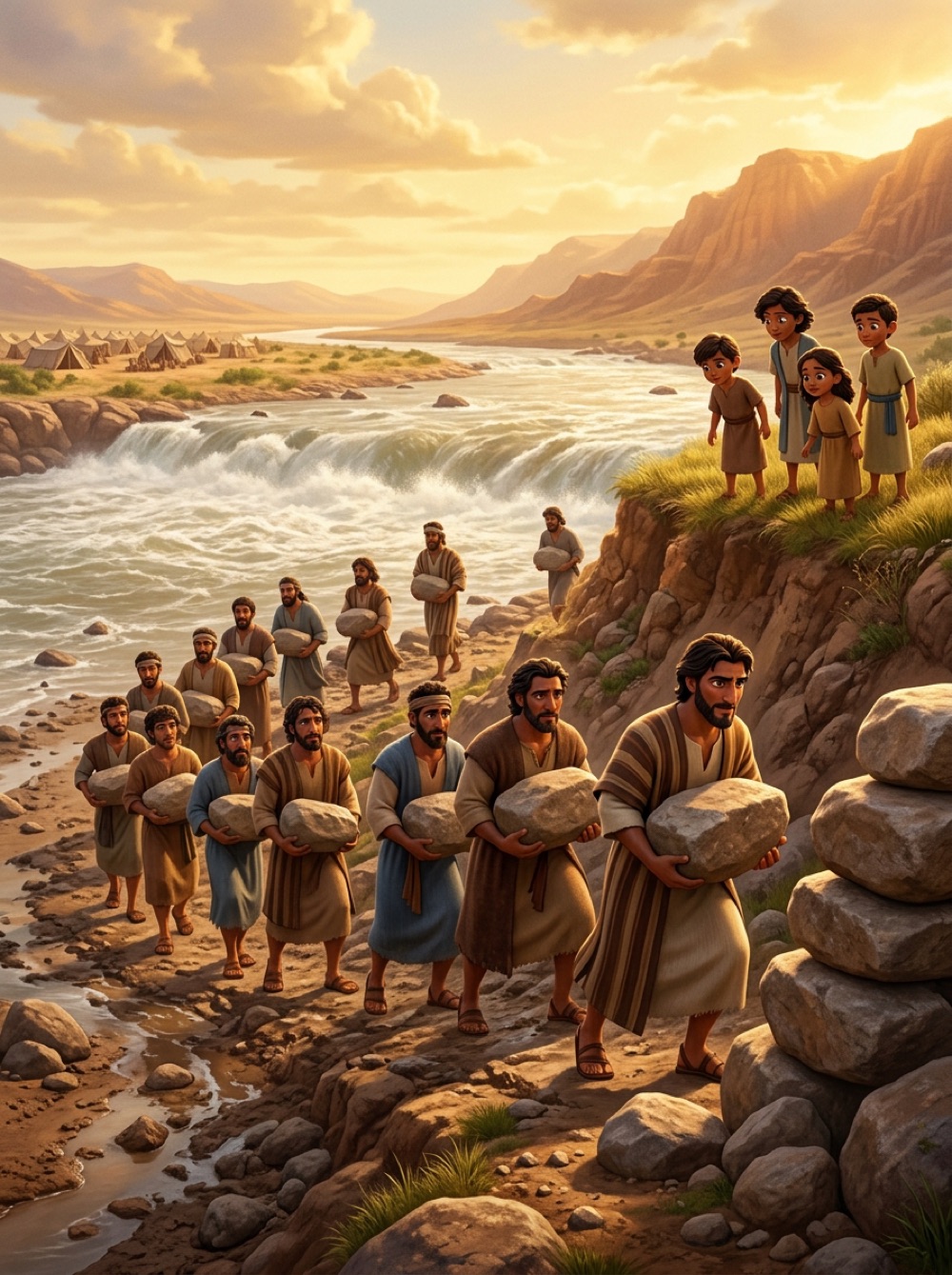
Twelve Stones of Remembrance
God told Joshua to have twelve men — one from each tribe — pick up a large stone from the middle of the Jordan riverbed and carry it to the camp. These twelve stones became a memorial. "When your children ask what these stones mean," God said, "tell them the Jordan stopped flowing when the Ark crossed over." Memory matters. Build things that make you remember.
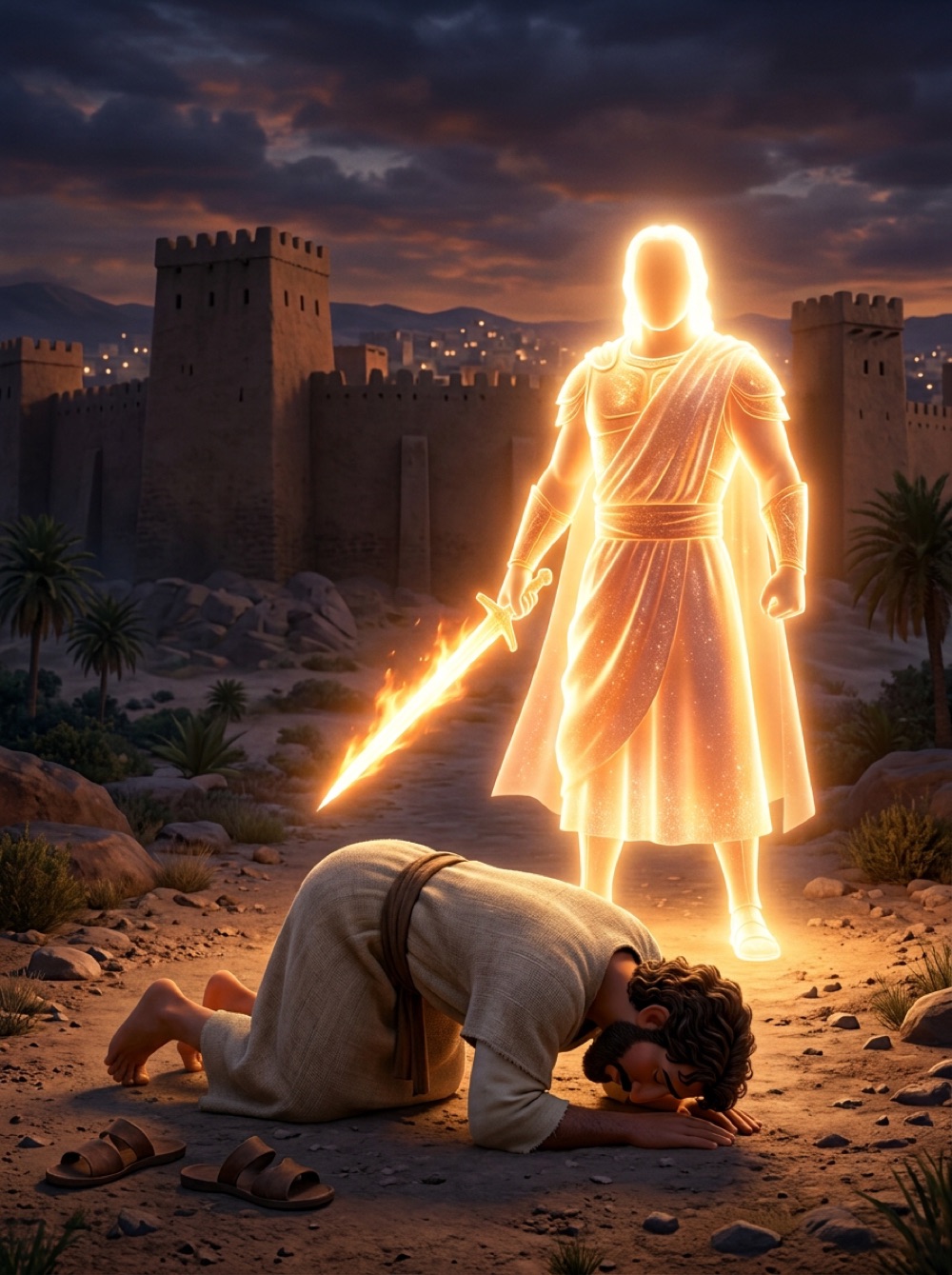
The Commander of God's Army
Near Jericho, Joshua looked up and saw a man standing with a drawn sword. Joshua approached him and asked, "Are you for us or for our enemies?" The man answered, "Neither — I am the commander of the army of the Lord." Joshua fell face down immediately. "What message does my Lord have for me?" he asked. He had just met someone far greater than himself.
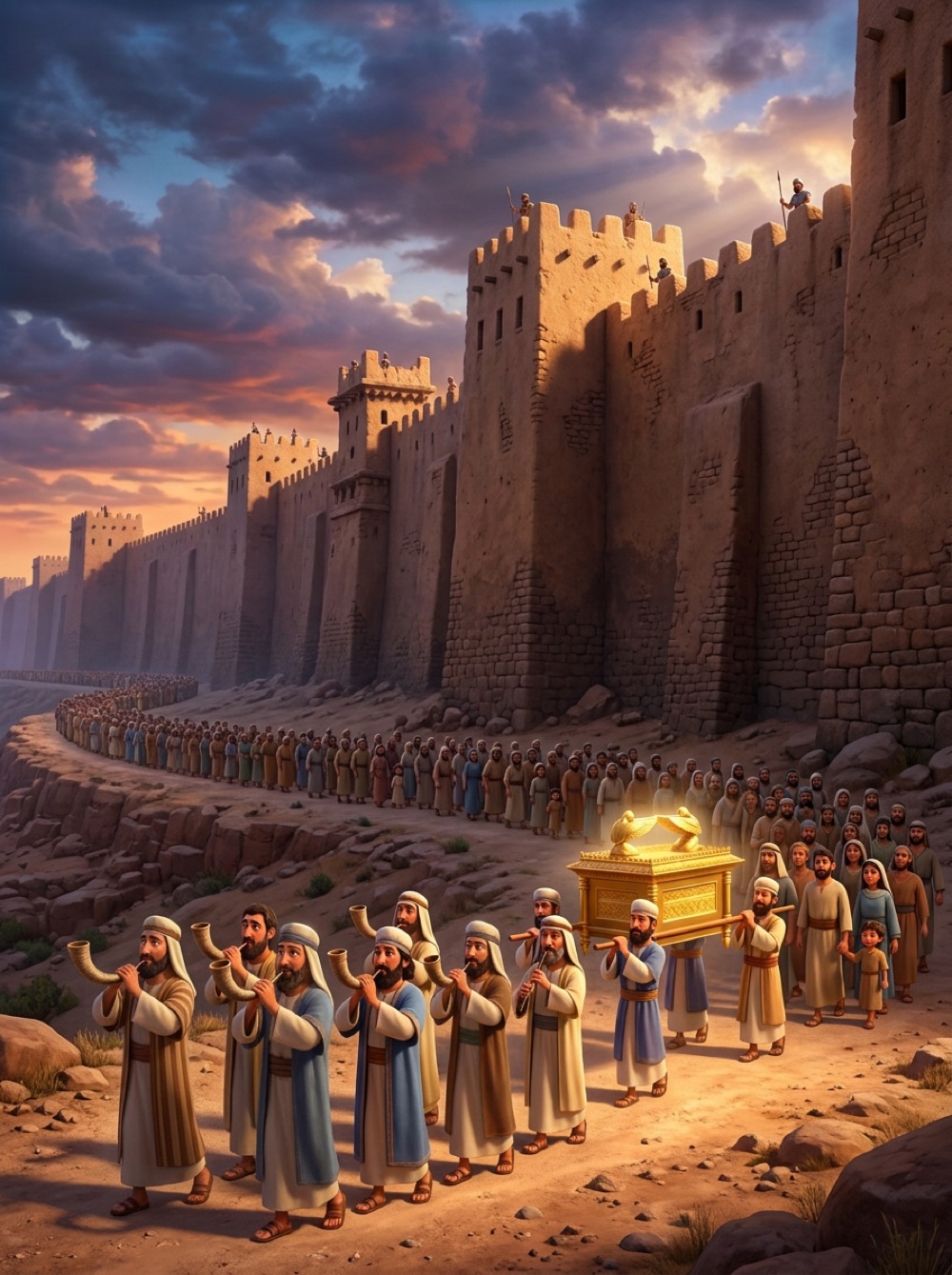
March Around the Walls
God gave Joshua the strangest battle plan anyone had ever heard. March around Jericho once a day for six days. Seven priests carrying trumpets made of rams' horns were to walk ahead of the Ark. Don't shout. Don't say a word. On the seventh day, march around seven times, the priests blow the trumpets — then the whole army shouts with a great shout.
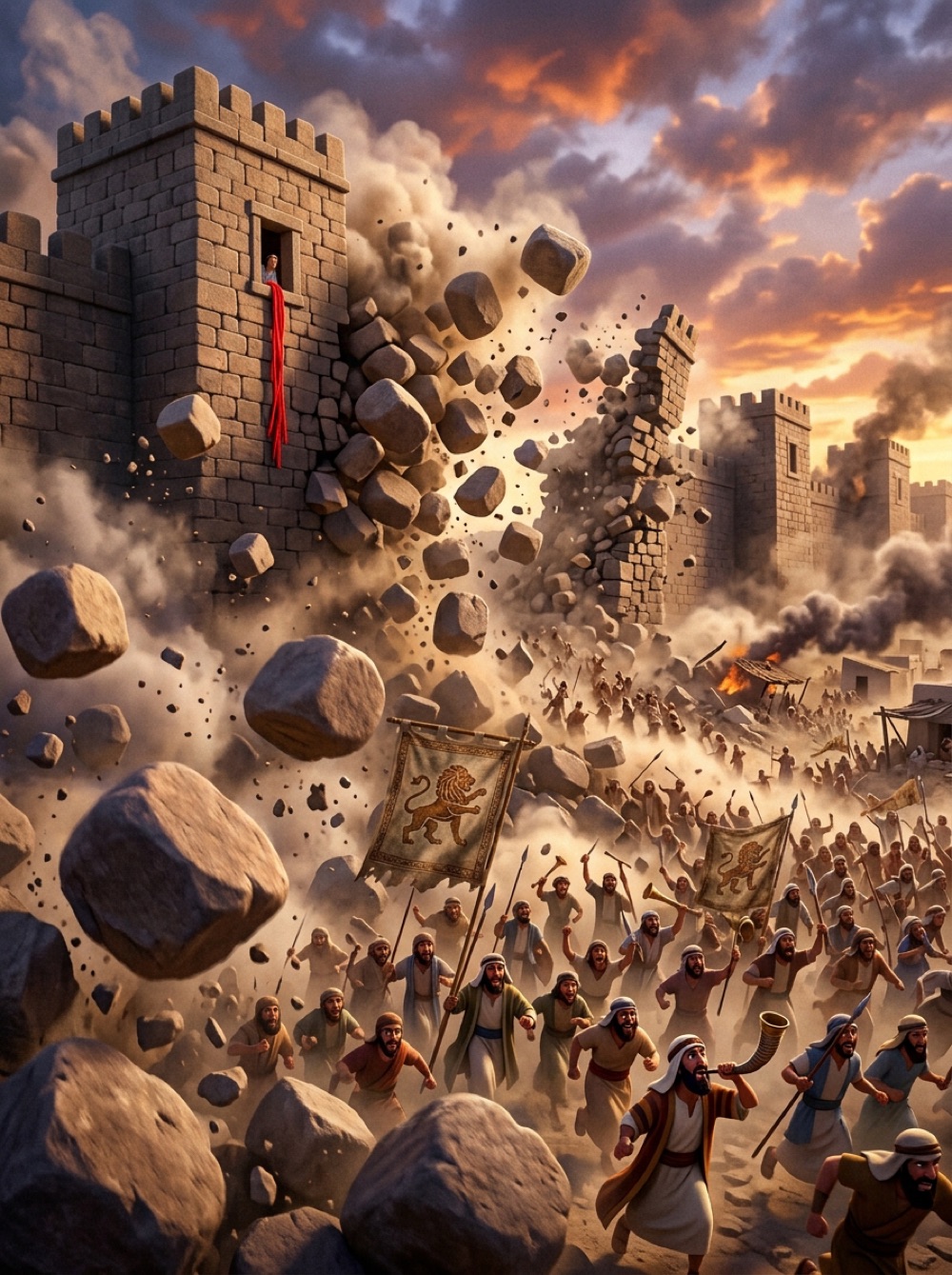
The Walls Come Down
On the seventh day, the seventh time around, the trumpets sounded and Joshua said, "Shout — because God has given you the city!" The people shouted — and the walls of Jericho collapsed completely. The army went straight in and took the city. And Rahab and her whole family were brought out safely, just as the spies had promised. The scarlet cord had worked.
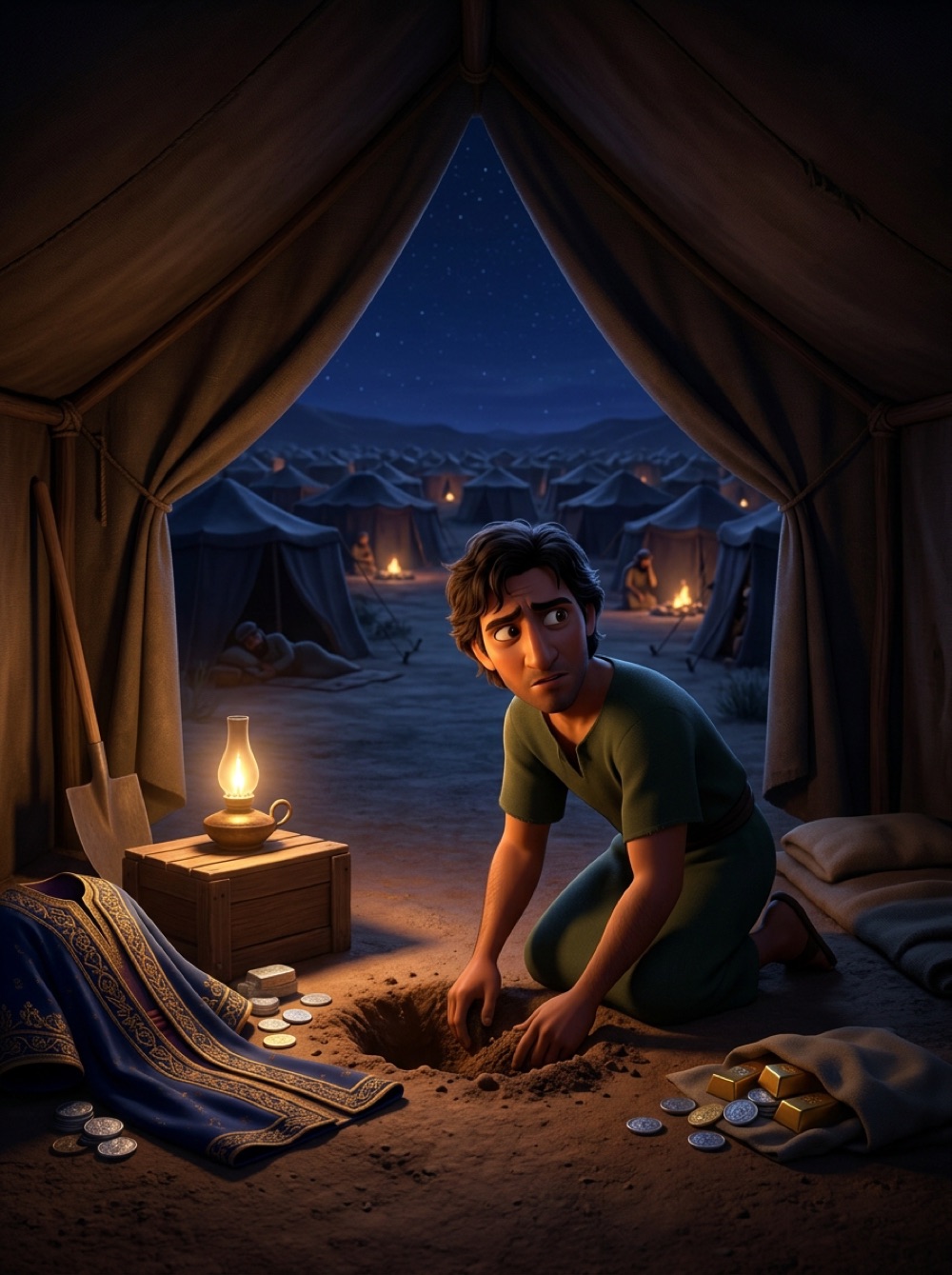
Achan's Hidden Sin
God had commanded that everything in Jericho belonged to Him — nothing was to be taken for personal use. But a man named Achan secretly took a beautiful robe, some silver, and a wedge of gold and hid them under his tent. Israel's next battle — at a small city called Ai — ended in defeat. God told Joshua why. One man's secret sin had affected the whole community.
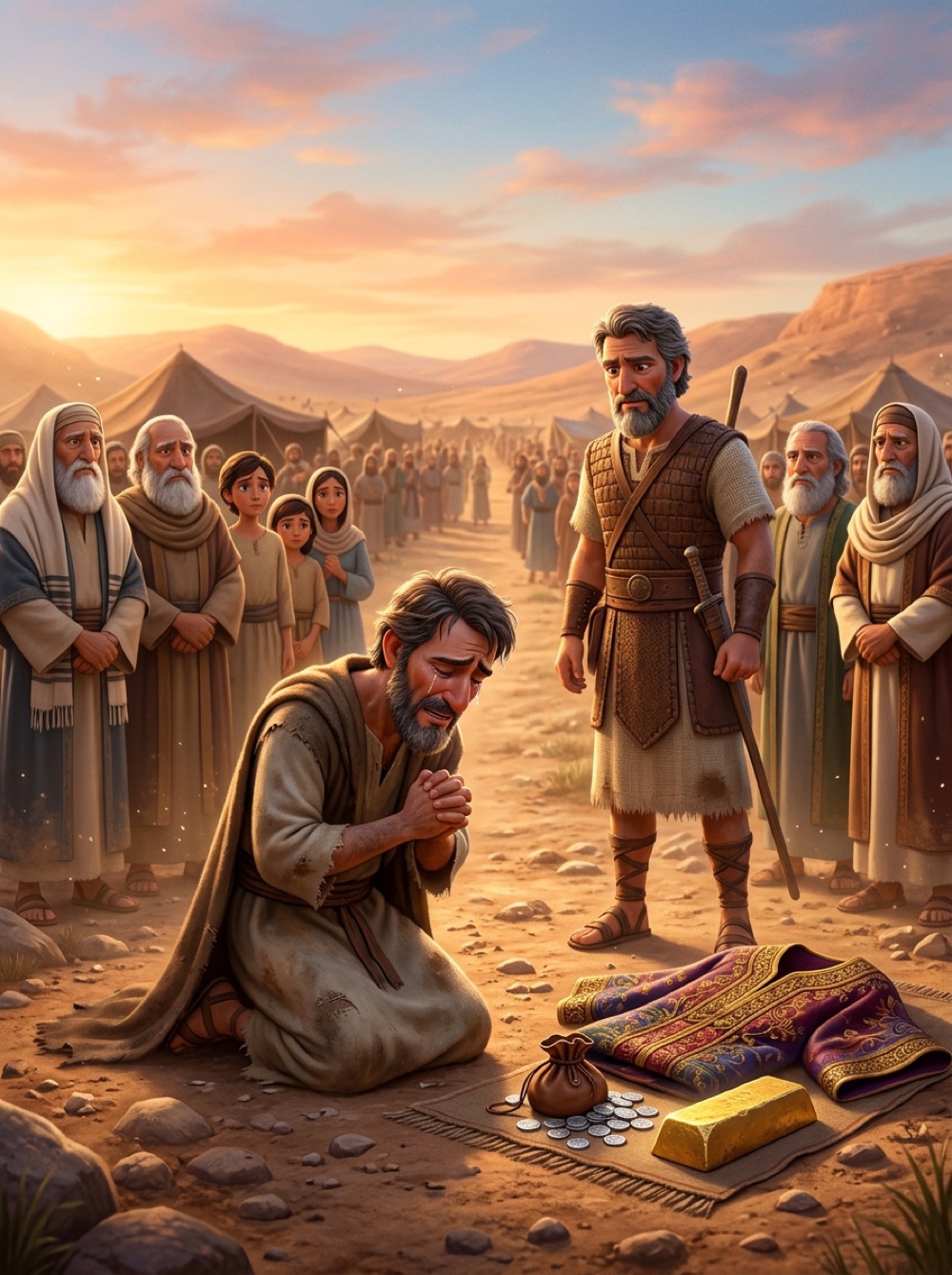
Sin Found Out
God identified Achan through a process of elimination before the whole assembly. When it came to Achan, Joshua said, "My son, give glory to God and tell me what you have done." Achan confessed everything. The hidden robe, the silver, the gold — all buried under his tent. Sin has a way of being found out. What is hidden from people is never hidden from God.
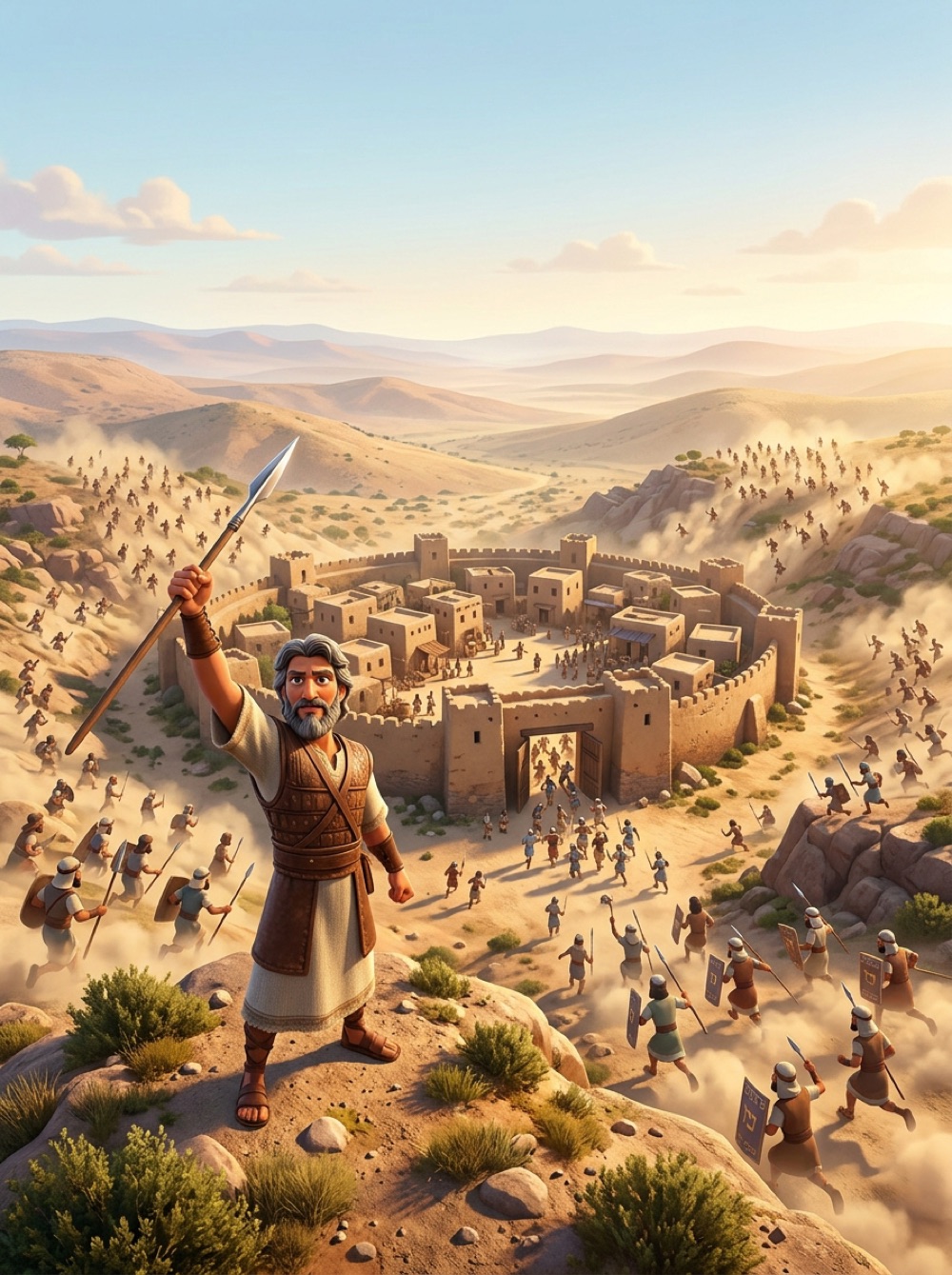
Ai Is Defeated
After Achan's sin was dealt with, God told Joshua to go back and attack Ai. This time God gave him a specific strategy — an ambush. Half the army hid behind the city while Joshua led the rest in a fake retreat, drawing the men of Ai out. Then the hidden soldiers rushed in and took the city. When the community was right with God, the battle turned.
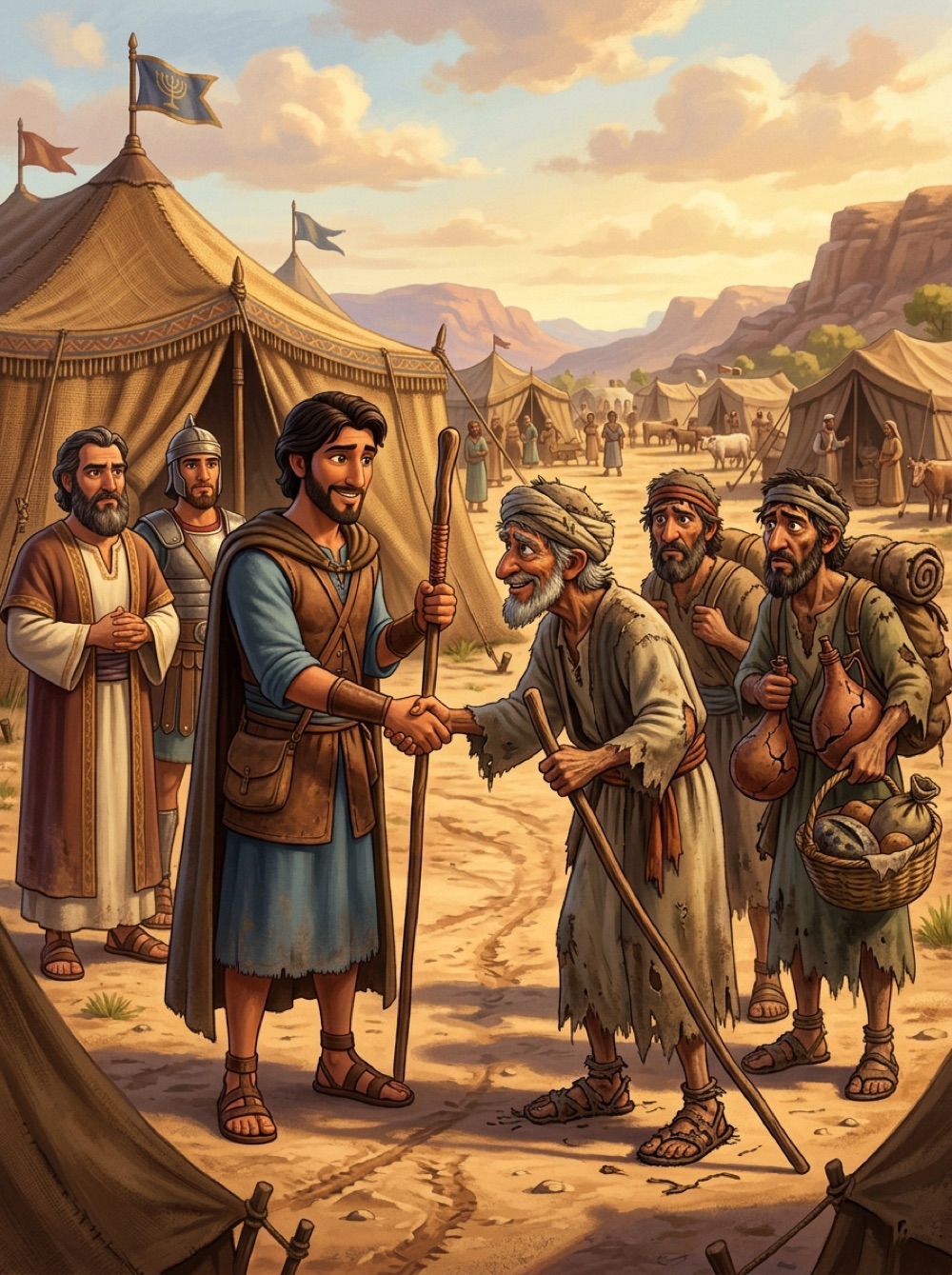
The Gibeonite Trick
The people of Gibeon heard what Joshua had done and were afraid. They came to him in disguise — wearing worn-out clothes and carrying dry, moldy bread — pretending to have traveled from a faraway land. They asked Joshua for a peace treaty. Joshua and the leaders looked at the evidence — but did not ask God what to do. They made the treaty. Three days later they discovered the Gibeonites were neighbors, not foreigners. Joshua had been tricked because he hadn't stopped to pray.
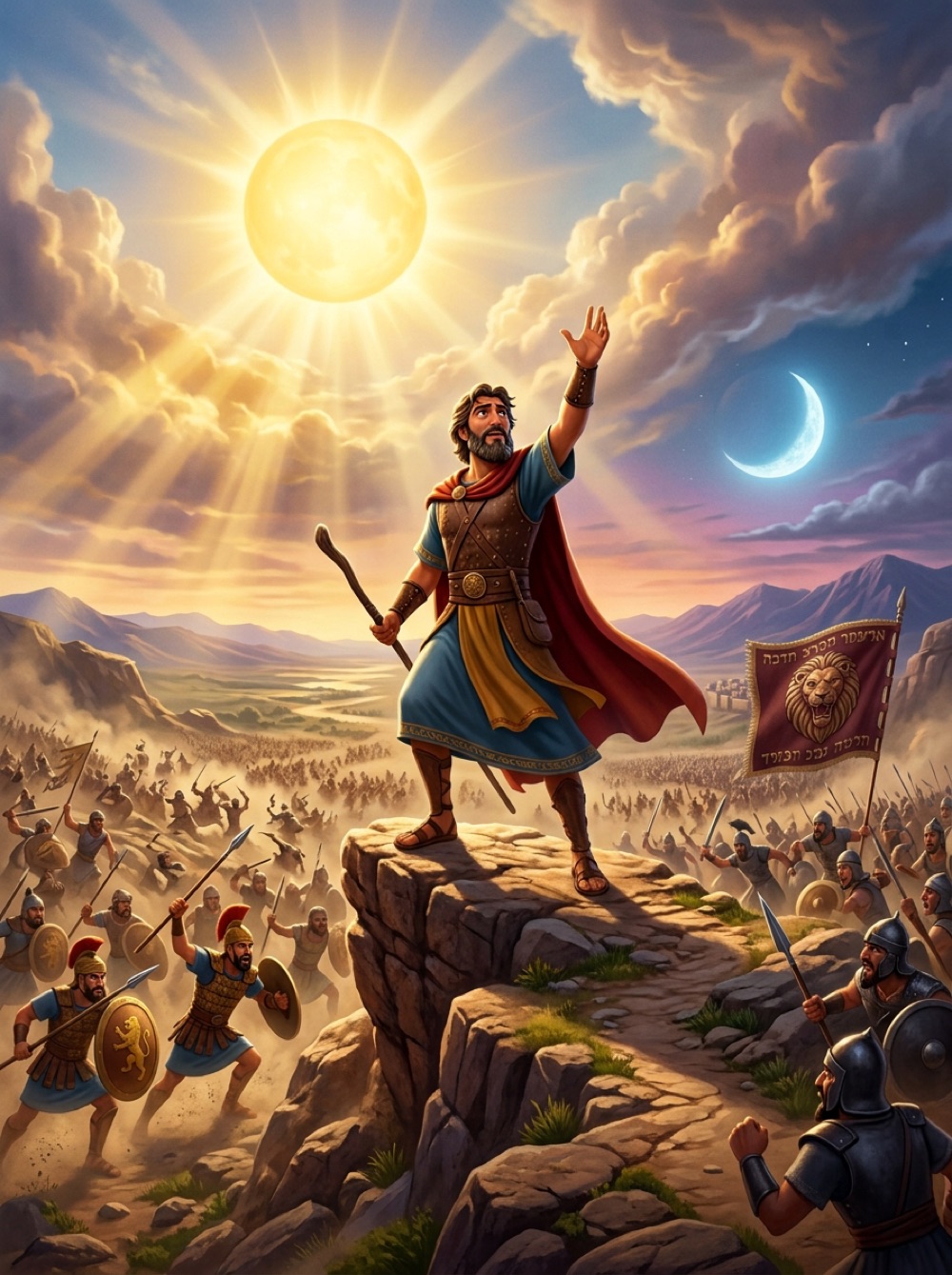
The Sun Stands Still
Five kings attacked Gibeon because of their treaty with Israel. Joshua marched his army through the night and launched a surprise attack. As Israel was winning, Joshua prayed the most extraordinary battlefield prayer in history. "Sun, stand still over Gibeon. Moon, stand still over the valley." And the sun stopped. The moon held its place. There was enough daylight to finish the battle. The Lord was fighting for Israel.
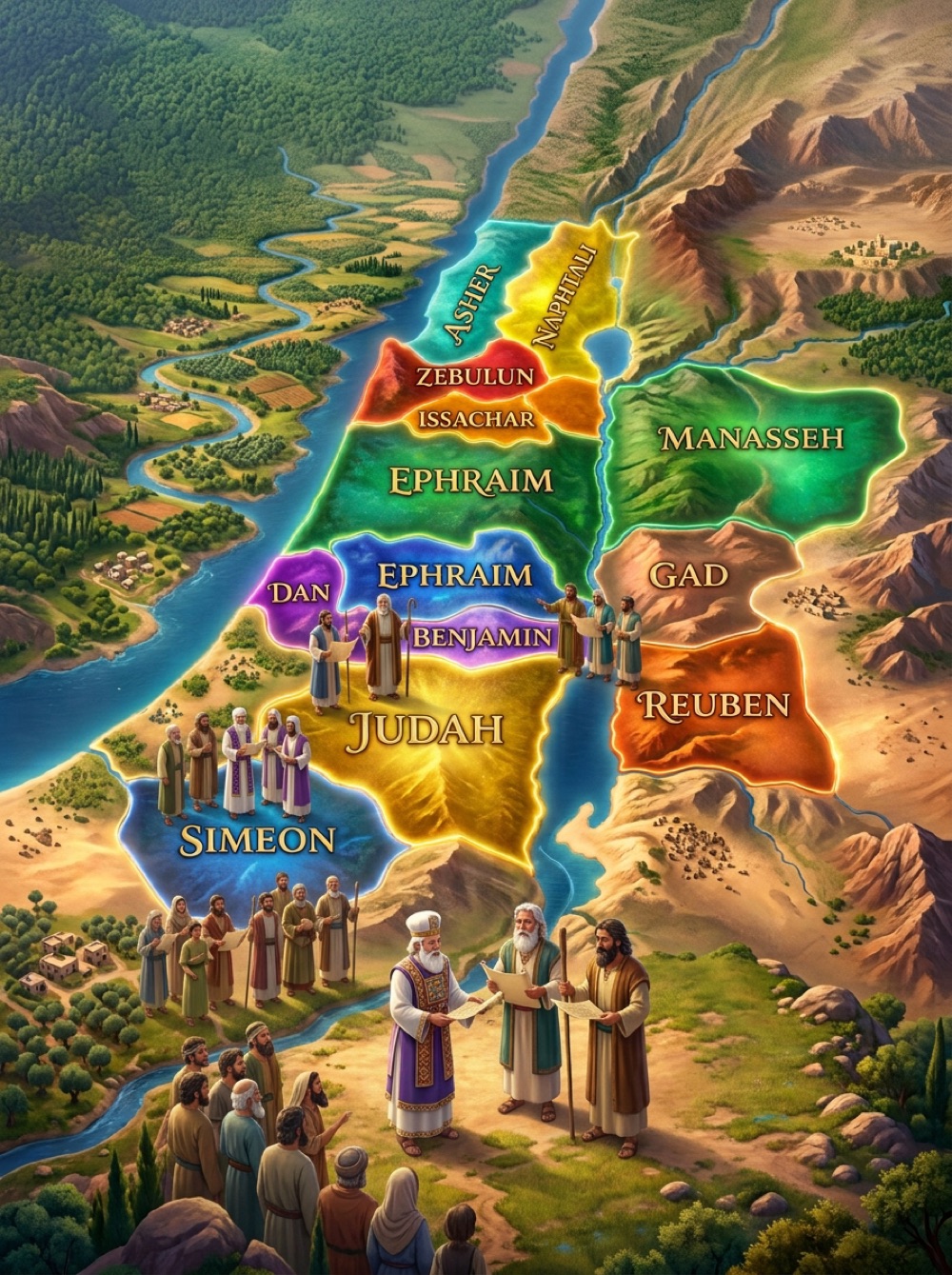
The Land Is Divided
After many battles, Joshua conquered the land of Canaan and divided it among the twelve tribes of Israel. Each tribe received its territory — boundaries, cities, and land to settle. It had taken years of fighting. It was not easy and not without cost. But God's promise to Abraham — that his family would have a land of their own — was finally, actually coming true.
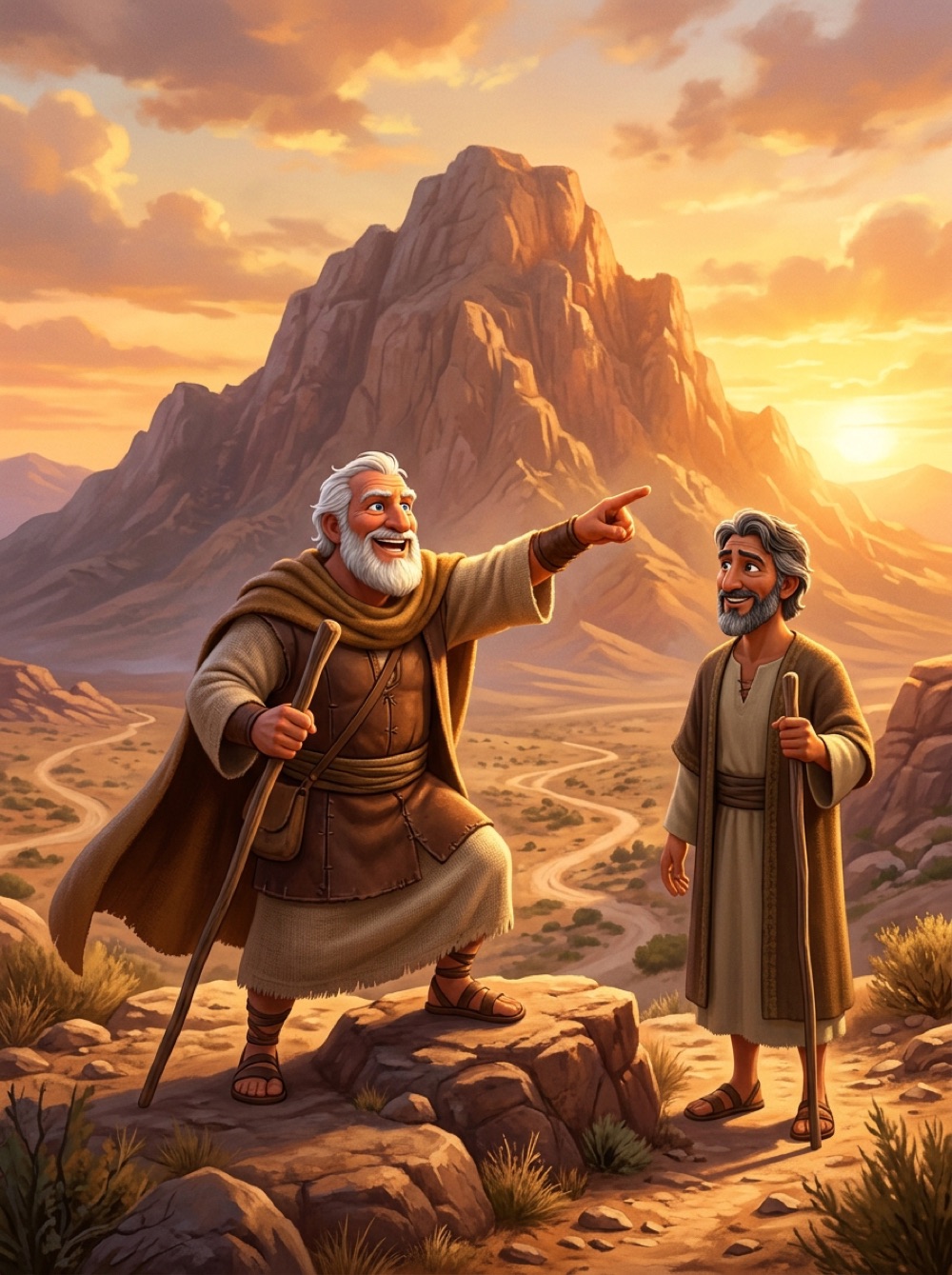
Caleb's Mountain
Caleb — one of the two faithful spies who had trusted God forty-five years before — came to Joshua and said, "I was forty years old when Moses sent me to spy out the land. I followed God wholeheartedly then. Now I am eighty-five — and I am just as strong today. Give me this mountain." Faithfulness across a lifetime has its own reward. Caleb got his mountain.
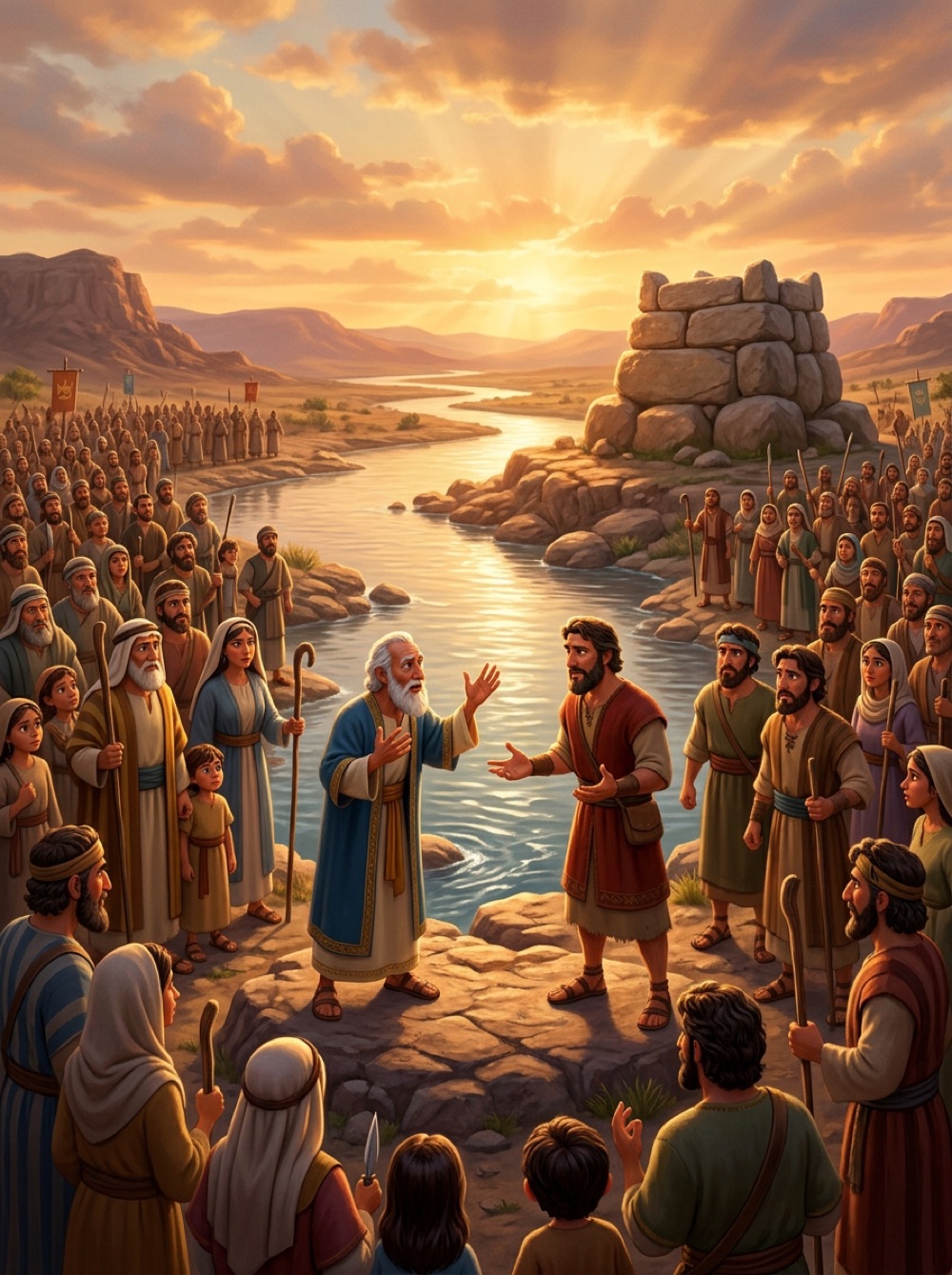
Almost a Civil War
The eastern tribes who had helped conquer Canaan went home across the Jordan — but first they built a large altar by the river. The other tribes thought they were setting up a rival worship site and almost went to war over it. But when they sat down to talk, they discovered the altar was meant as a witness between the two groups — not for sacrifices but for remembrance. Talking prevented a disaster.
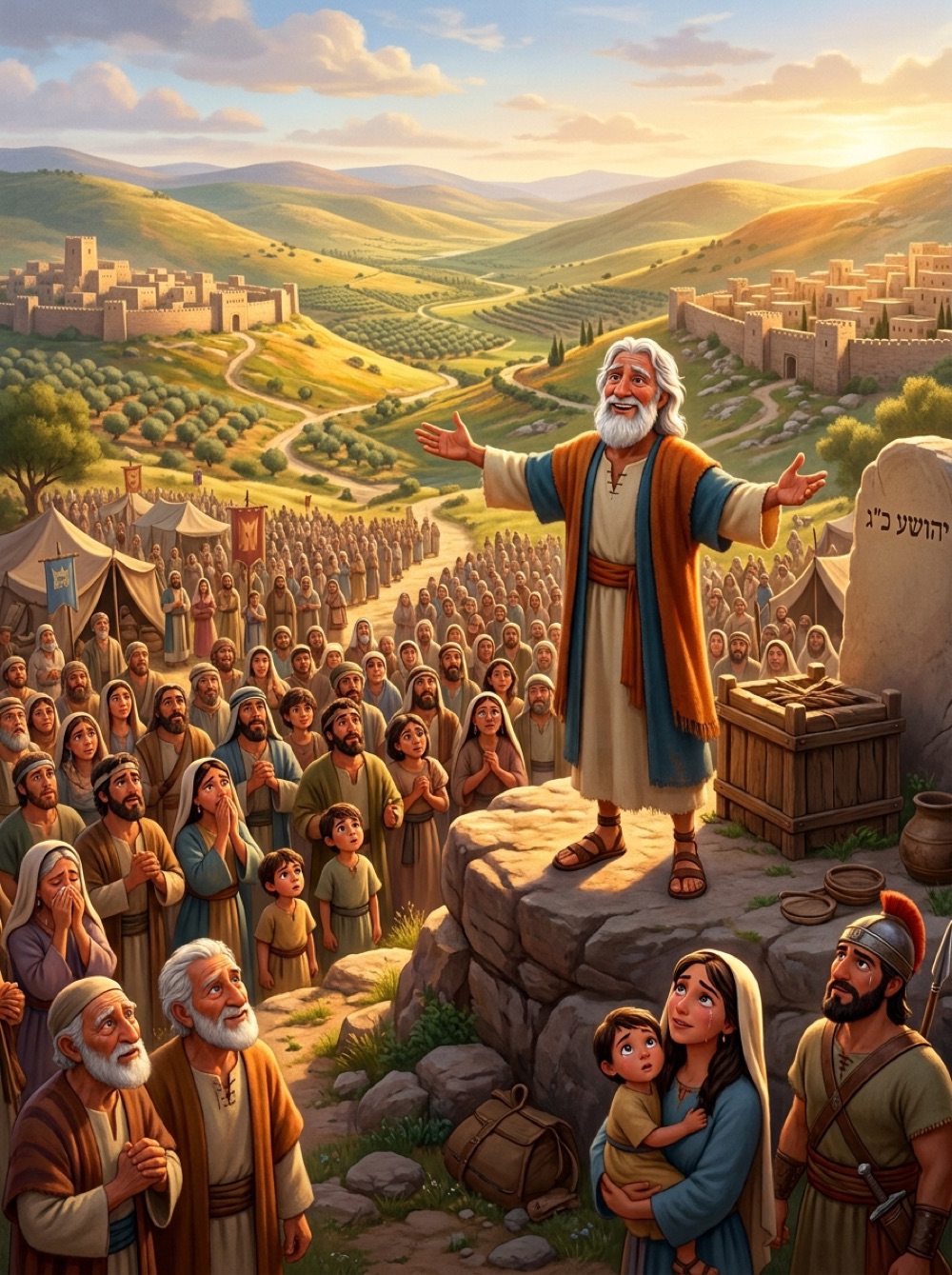
Joshua's Farewell
Joshua was old and knew his time was short. He gathered all Israel together and reminded them of everything God had done — from Abraham right through to the land they now stood in. "Not one of God's good promises has failed," he said. "Every single one has come true." Then he gave them the challenge of his life — a choice that every generation has to make for themselves.
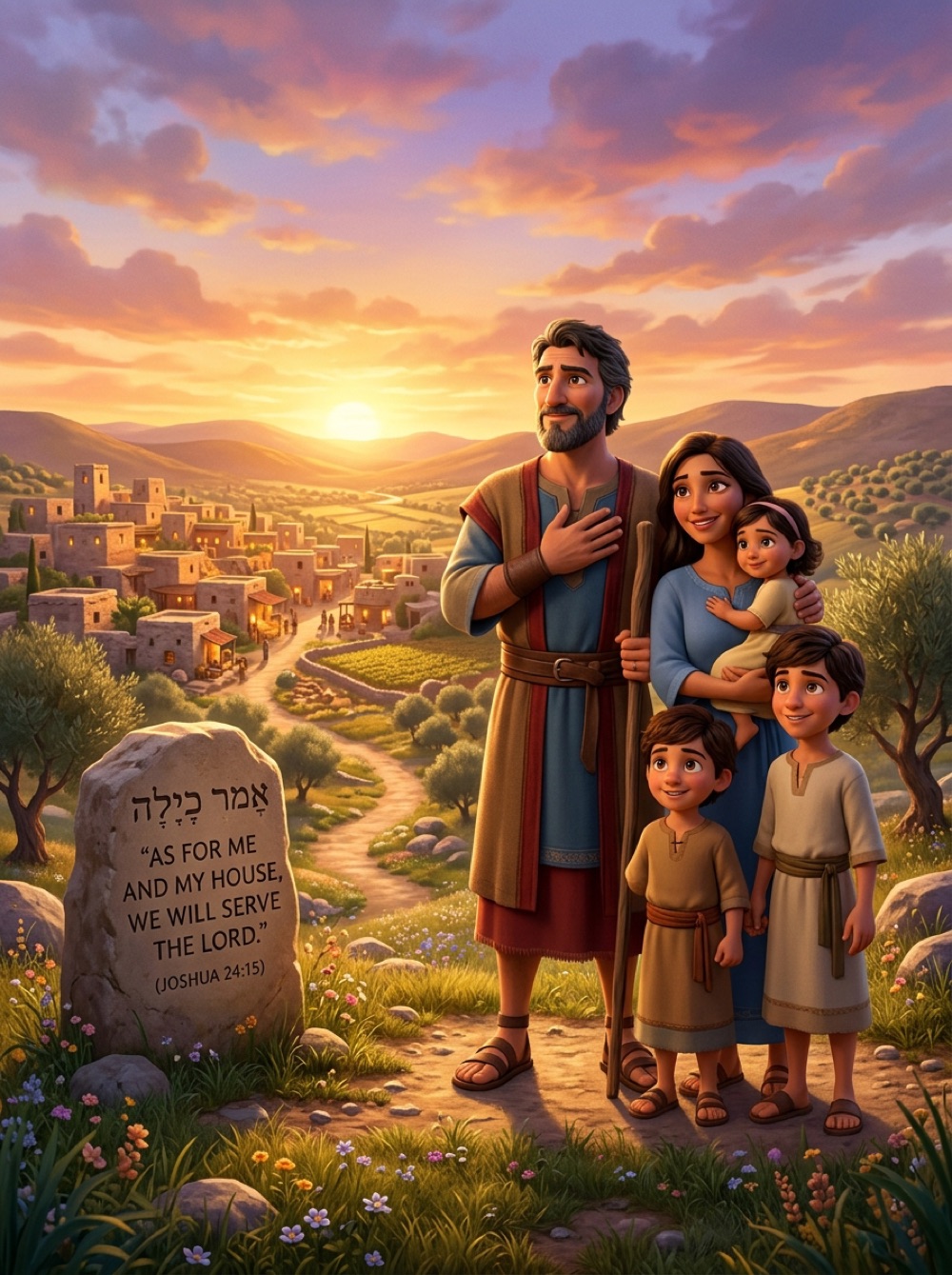
As for Me and My House
Joshua put the choice before the people one final time. "Choose for yourselves this day whom you will serve. As for me and my household — we will serve the Lord." The people answered, "We will serve the Lord our God and obey Him." Joshua set up a large stone as a witness to the covenant they had made that day. Then Joshua died, one hundred and ten years old — faithful to the end.
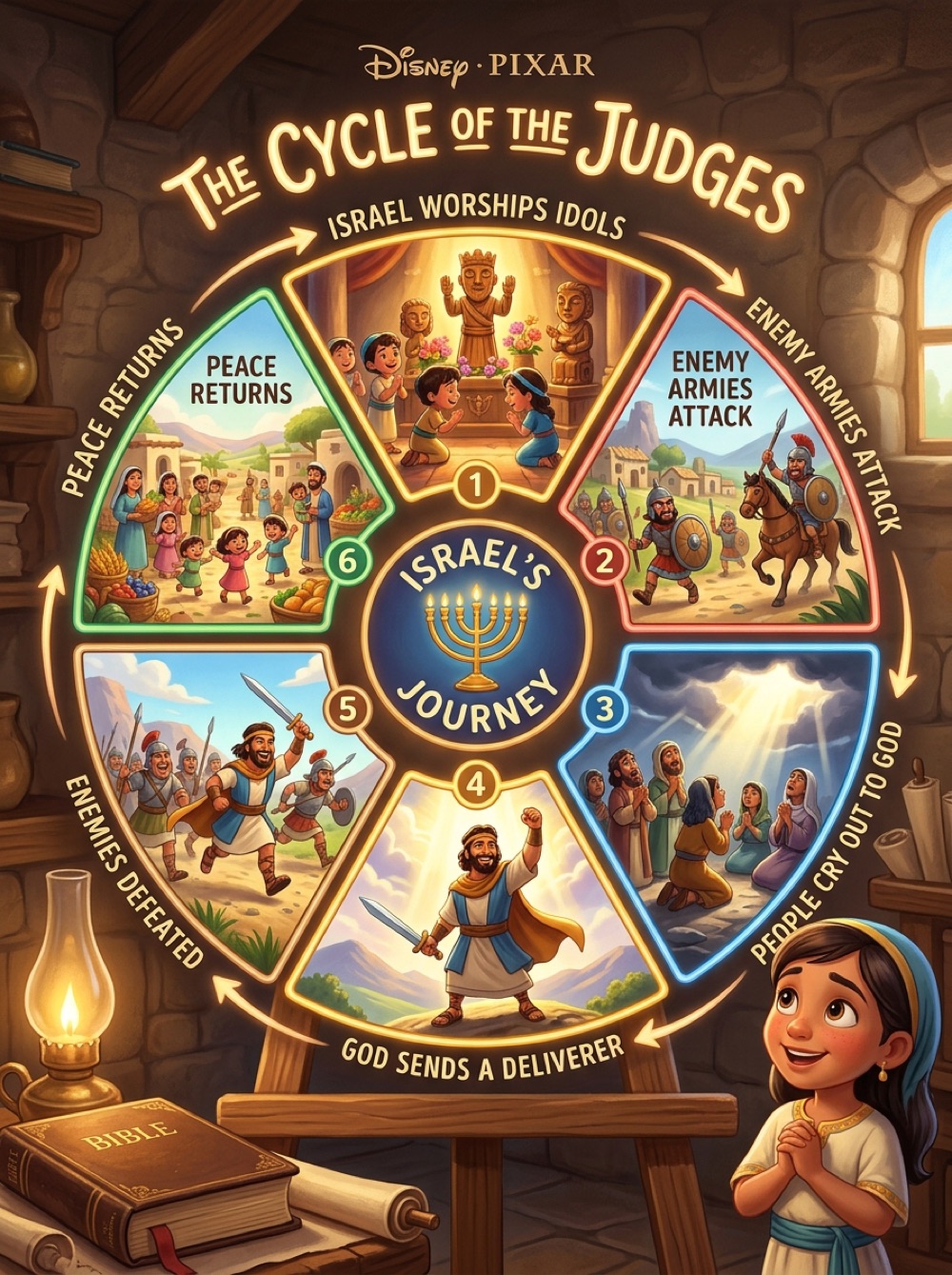
The Cycle Begins
After Joshua died, the Israelites began to forget God. They stopped driving out the people of the land and started worshipping their gods instead. So God allowed their enemies to overpower them. When things got bad enough, the people cried out to God. God sent a leader — called a judge — to rescue them. Peace would follow. Then the whole cycle would start again. This pattern repeated itself for hundreds of years.
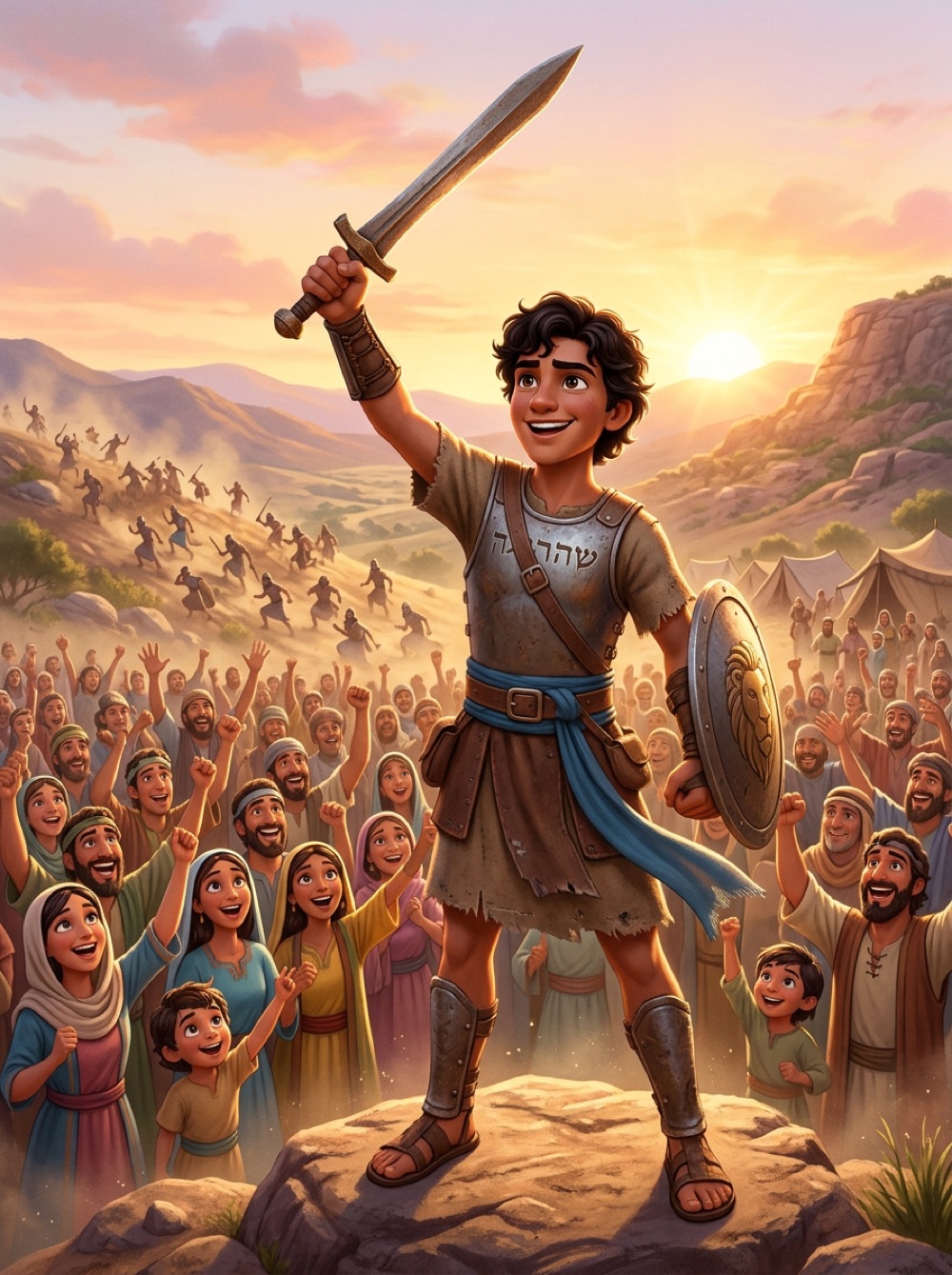
Othniel — The First Judge
The first judge God raised up was a man named Othniel — Caleb's nephew, the same family line as the man who had trusted God at the border of Canaan. The Spirit of God came on Othniel and he led Israel to victory over their oppressors. The land had peace for forty years. Then Othniel died — and the cycle began again.
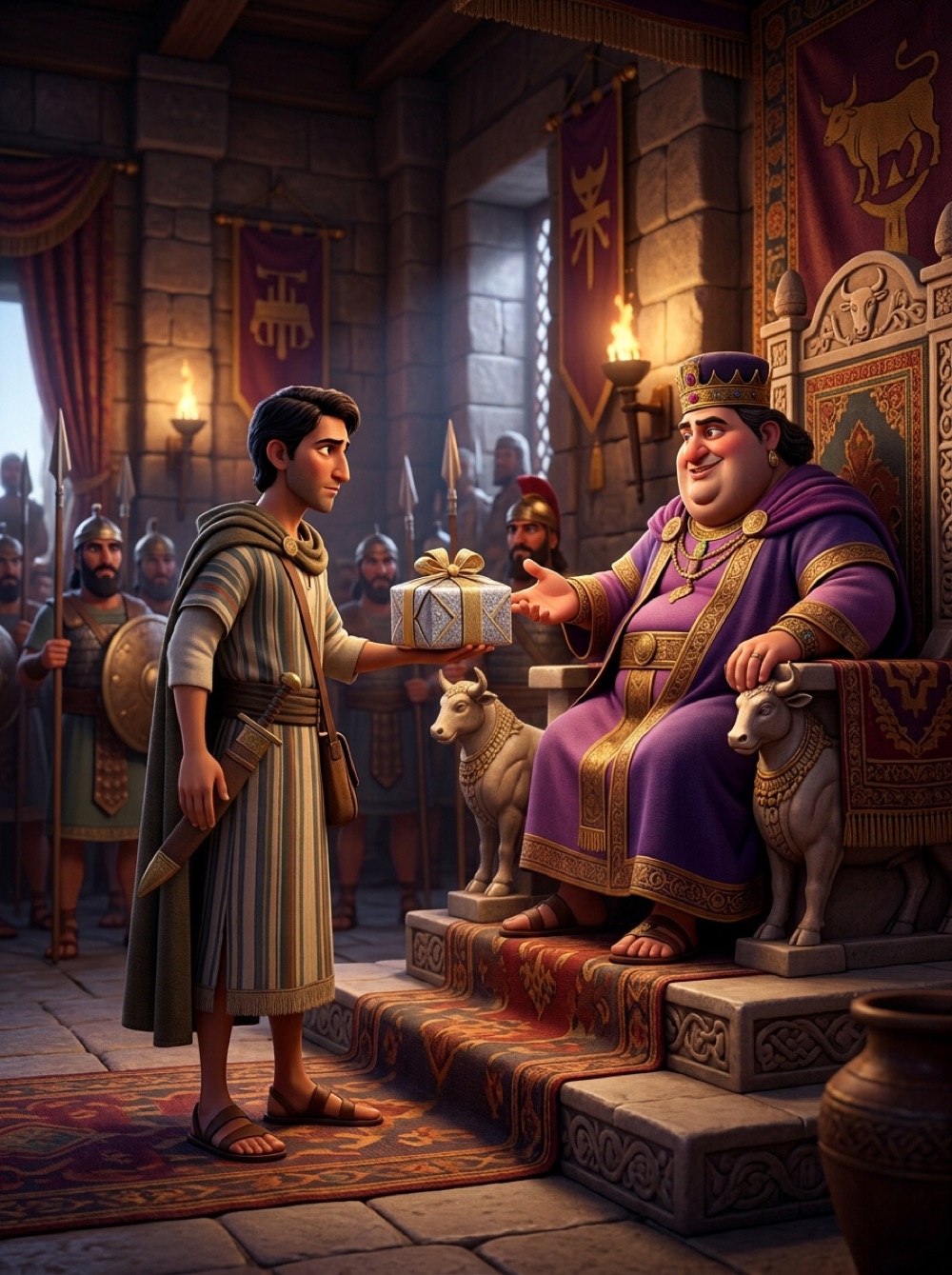
Ehud and the Left Hand
Israel's next oppressor was a very fat king named Eglon of Moab. God raised up a left-handed man named Ehud to deliver Israel. Ehud made a double-edged sword and strapped it to his right thigh — hidden under his clothing. He told Eglon he had a secret message from God. When they were alone, Ehud drew his sword and killed the king. Israel was free again for eighty years.
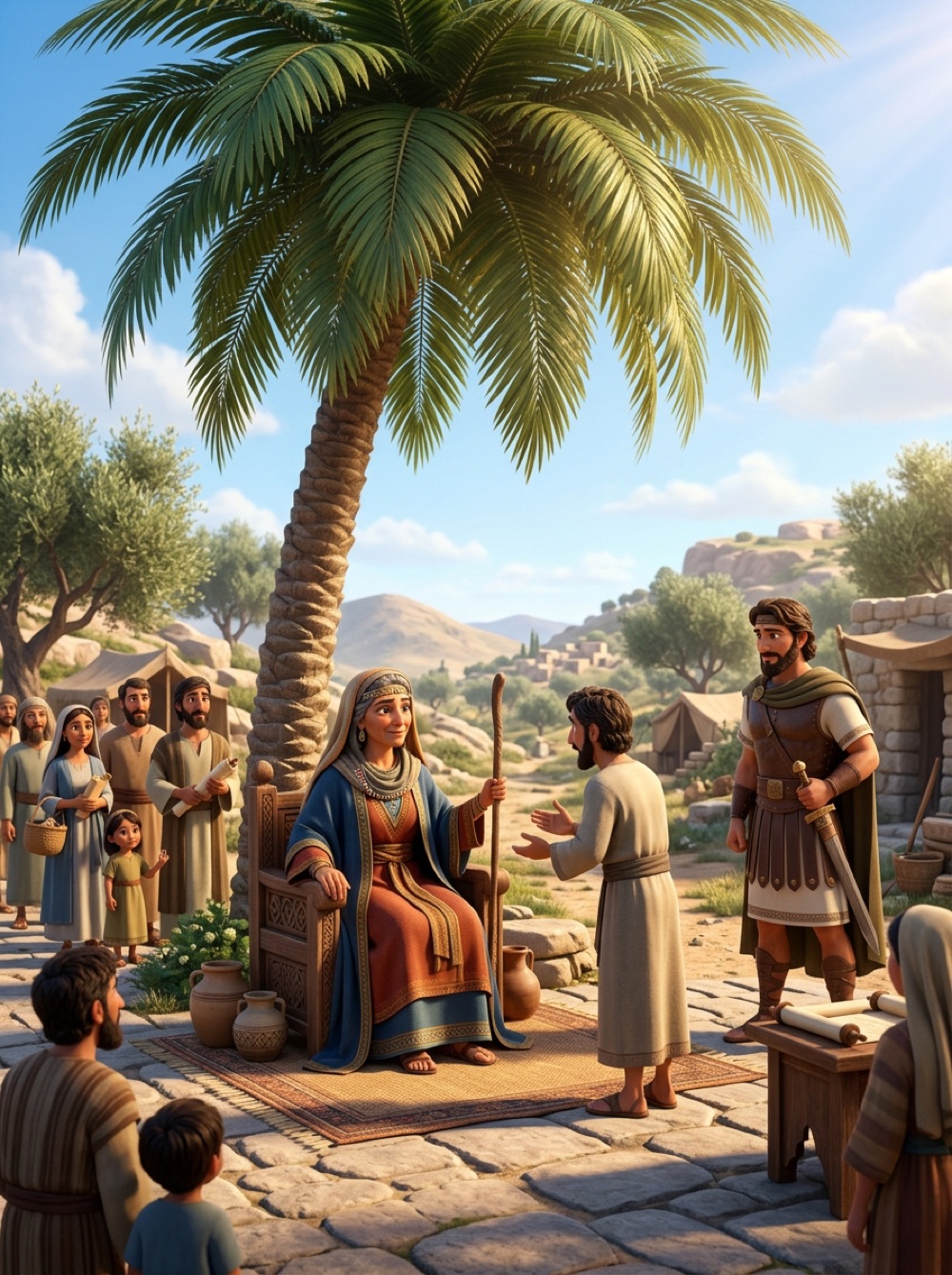
Deborah — Judge and Prophet
The next judge was unlike any before — a woman named Deborah who was both a prophet and a judge, settling disputes for Israel under a palm tree. When God called Israel to battle against the Canaanite commander Sisera, Deborah was the one who gave the command. She told the military commander Barak exactly what God had said — and went with him into battle herself.
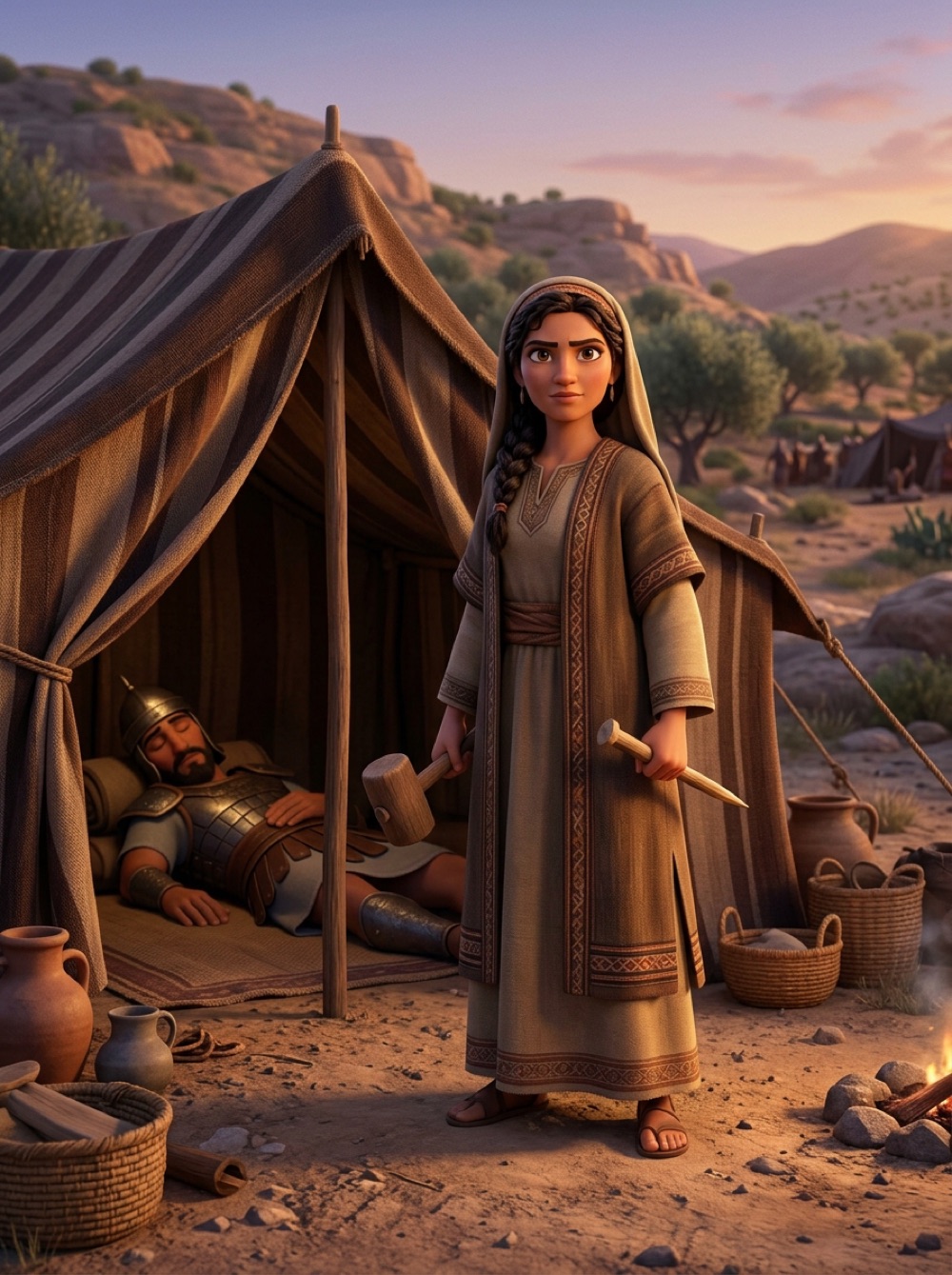
Jael's Courage
Sisera — the enemy commander — fled the battle on foot and hid in the tent of a woman named Jael. She welcomed him in, gave him milk, and covered him with a blanket. When he fell into an exhausted sleep, Jael drove a tent peg through his head — and Israel's enemy was defeated. God used two unexpected women to win the battle that day.

The Song of Deborah
After the victory, Deborah and Barak sang a song of celebration — one of the oldest poems in the Bible. They praised God for fighting for His people and called out the tribes that had helped and those that had stayed home when they were needed. The song ended with a prayer: "So may all your enemies perish, Lord — but may all who love you be like the sun when it rises in its strength."
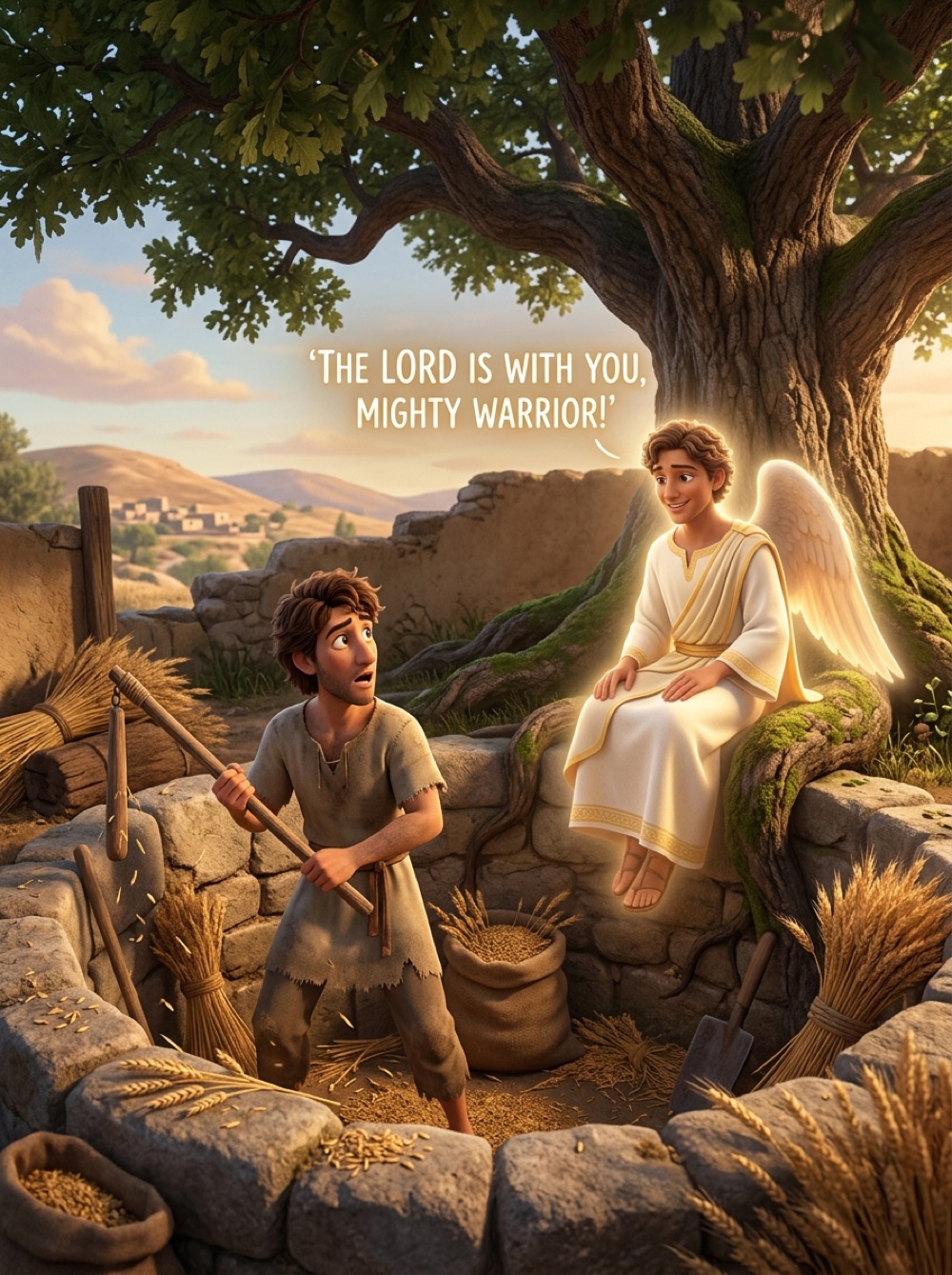
Gideon Threshing Wheat
The cycle repeated. This time the Midianites were so powerful that the Israelites hid in caves and tunnels. They destroyed Israel's crops every harvest season until the people were desperately poor. Then an angel of God appeared to a man named Gideon — who was secretly threshing wheat in a winepress to hide it from the Midianites. The angel said, "The Lord is with you, mighty warrior."
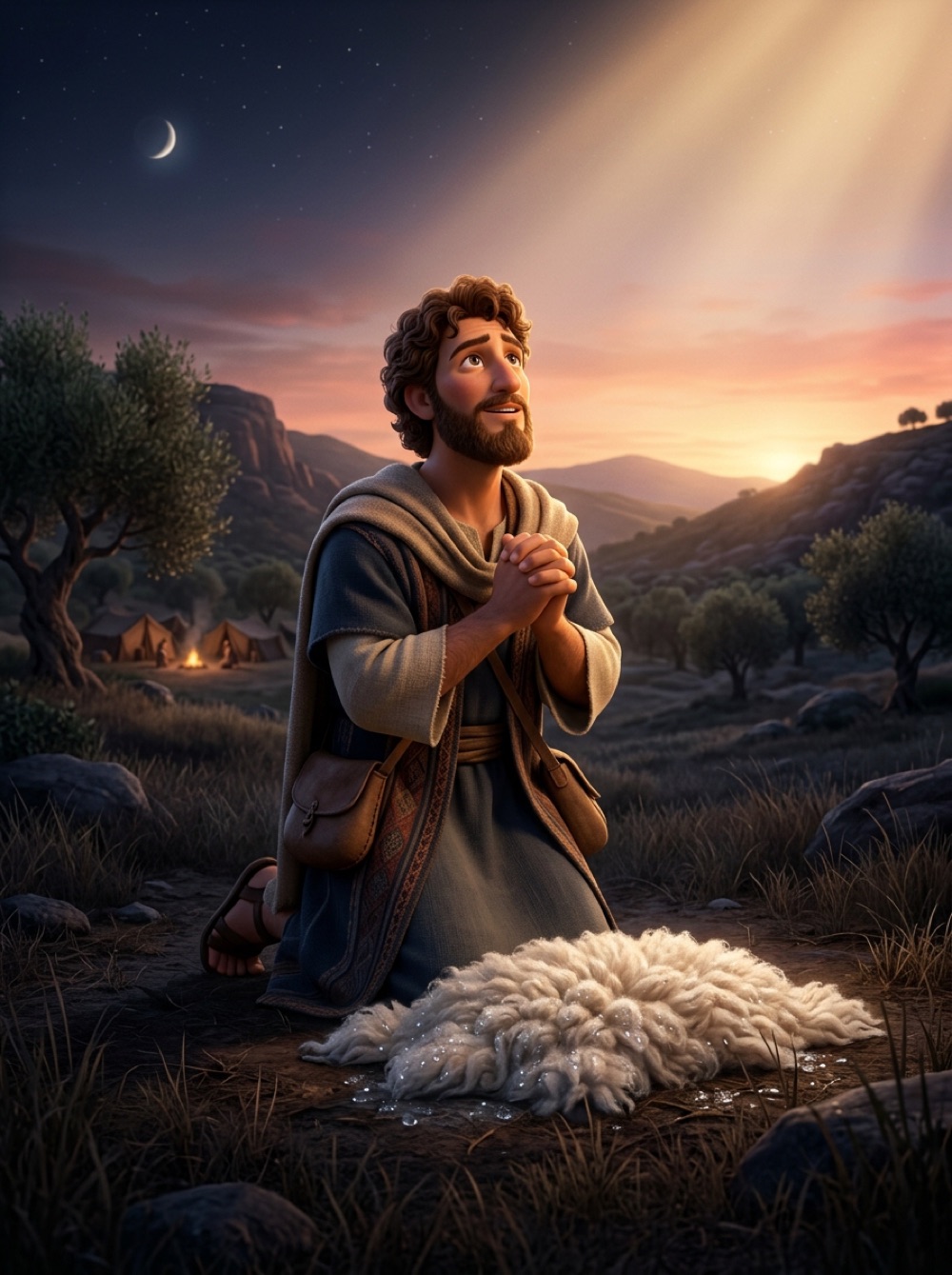
Gideon's Fleece
Gideon was not convinced he was the right person. He asked God for a sign — twice. First he put a fleece of wool on the ground and asked for the fleece to be wet with dew while the ground stayed dry. God did it. Then he asked for the opposite — dry fleece, wet ground. God did that too. God was patient with Gideon's uncertainty. But the time for signs was ending.
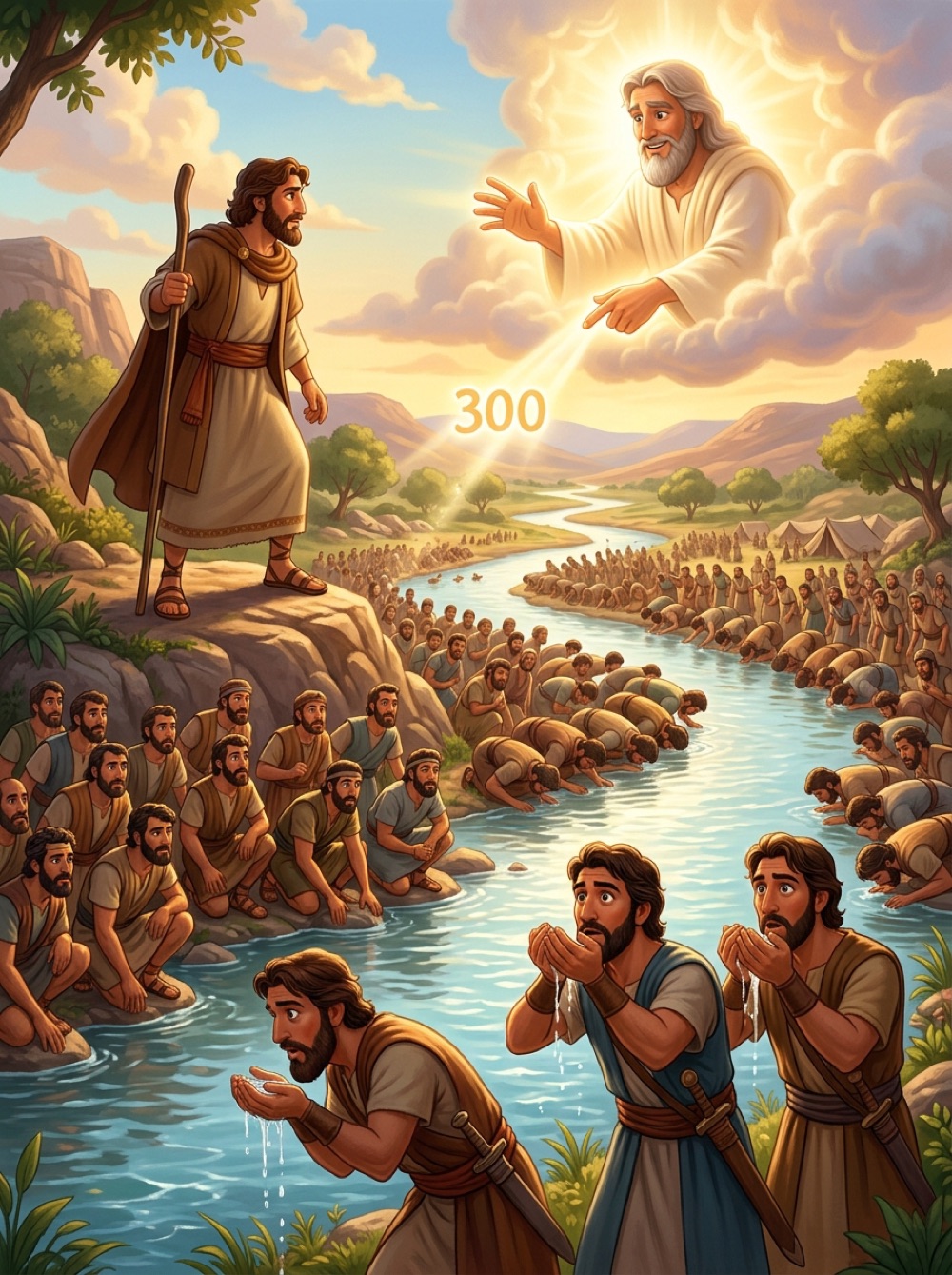
Too Many Soldiers
Gideon gathered an army of thirty-two thousand men to fight the Midianites. But God said the army was too big. "If Israel wins with this many soldiers, they will think they did it themselves." God reduced the army first to ten thousand, then down to just three hundred men. Three hundred against a Midianite army described as thick as locusts. That was exactly how God wanted it.
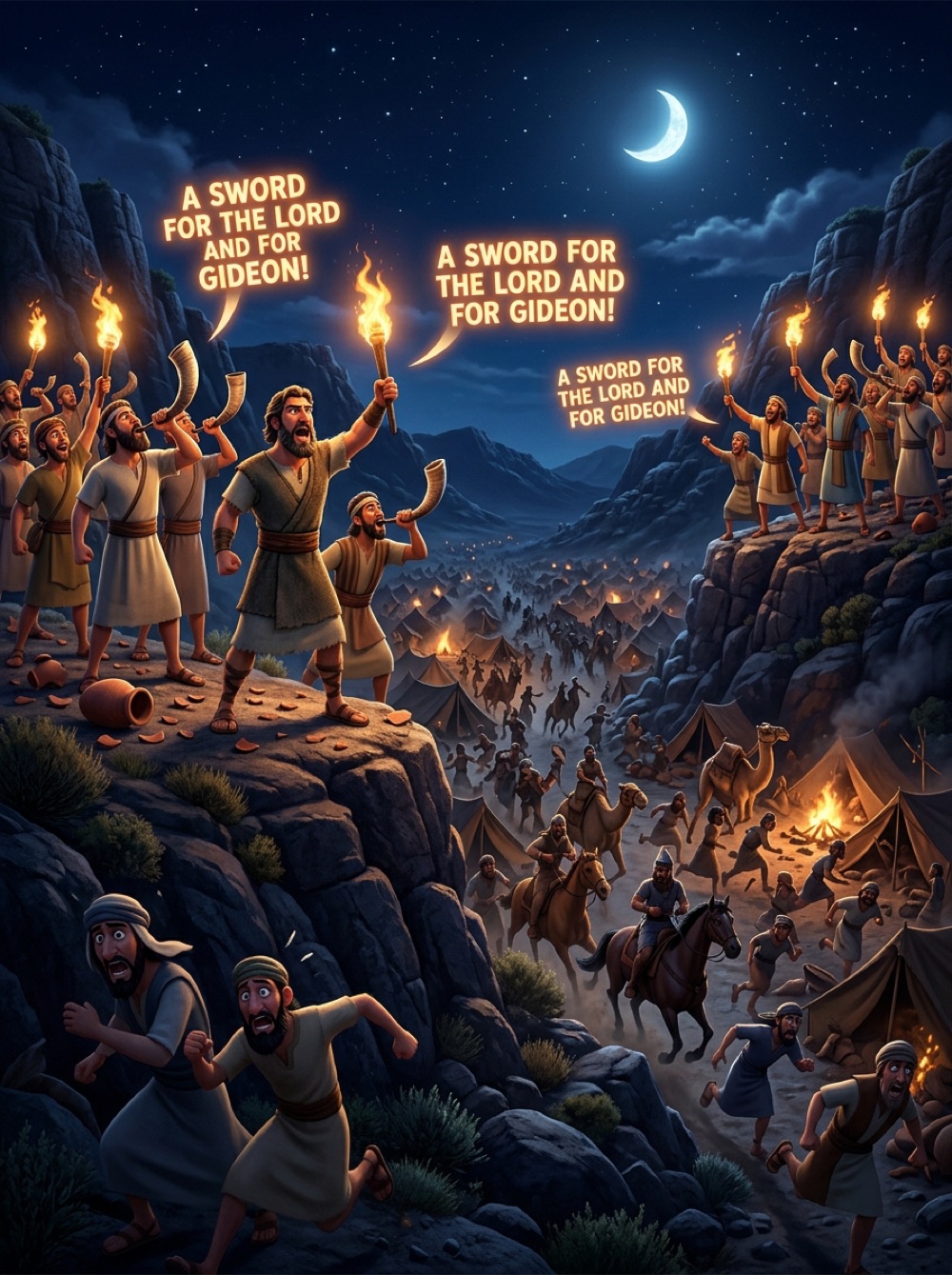
Torches, Trumpets, and Jars
Gideon gave each of his three hundred men a trumpet, an empty jar, and a torch hidden inside the jar. In the middle of the night they surrounded the Midianite camp, then all at once — smashed the jars, held up the blazing torches, and blew the trumpets, shouting "A sword for the Lord and for Gideon!" The Midianites woke in total panic and turned on each other. The battle was won without a single sword swing from Israel.
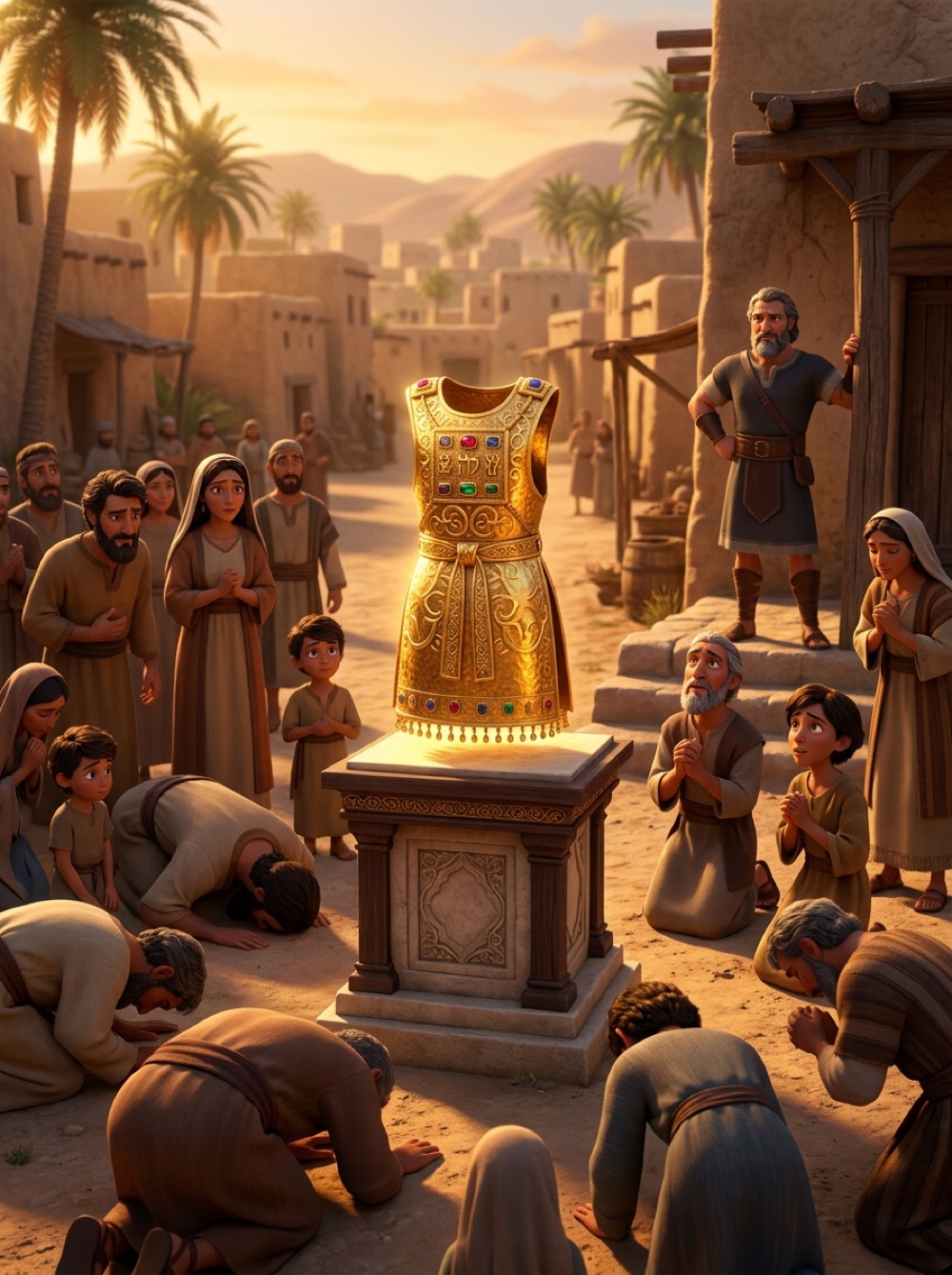
Gideon's Fatal Mistake
After the great victory, Gideon made a golden ephod — a sacred object — from the captured gold and put it in his hometown. The whole of Israel came to worship it like an idol. The Bible says it became a trap for Gideon and his family. The man God had called a mighty warrior ended his life having led Israel back into the very thing God had called him to fight against.
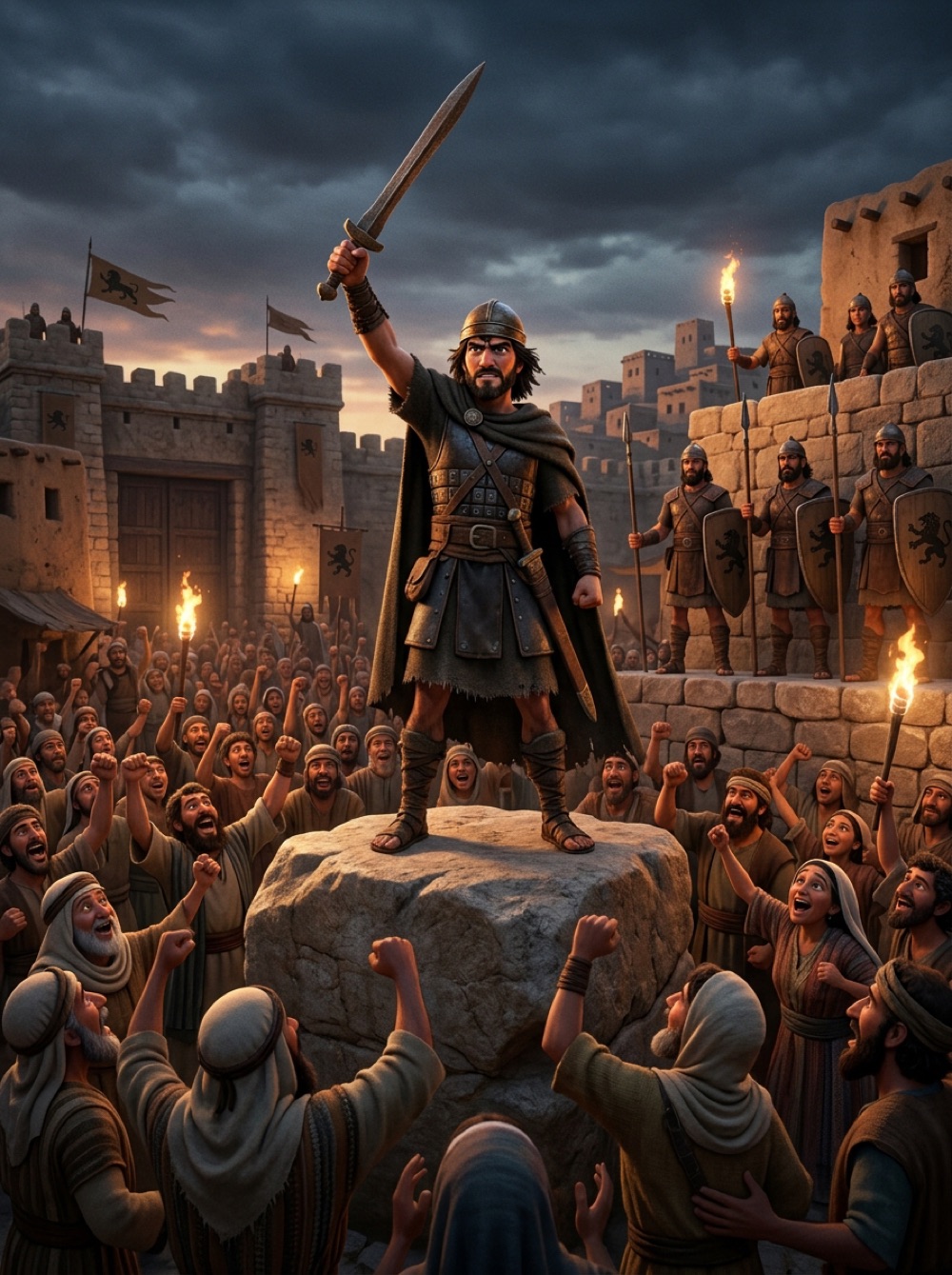
Abimelech's Violent Ambition
After Gideon died, his son Abimelech wanted to be king. He killed seventy of his brothers on a single stone to eliminate any competition — only the youngest, Jotham, escaped. Abimelech ruled for three years before his own violence caught up with him. A woman dropped a millstone on his head during a battle, and rather than be remembered as killed by a woman, he had his armor-bearer run him through. Violence always circles back.
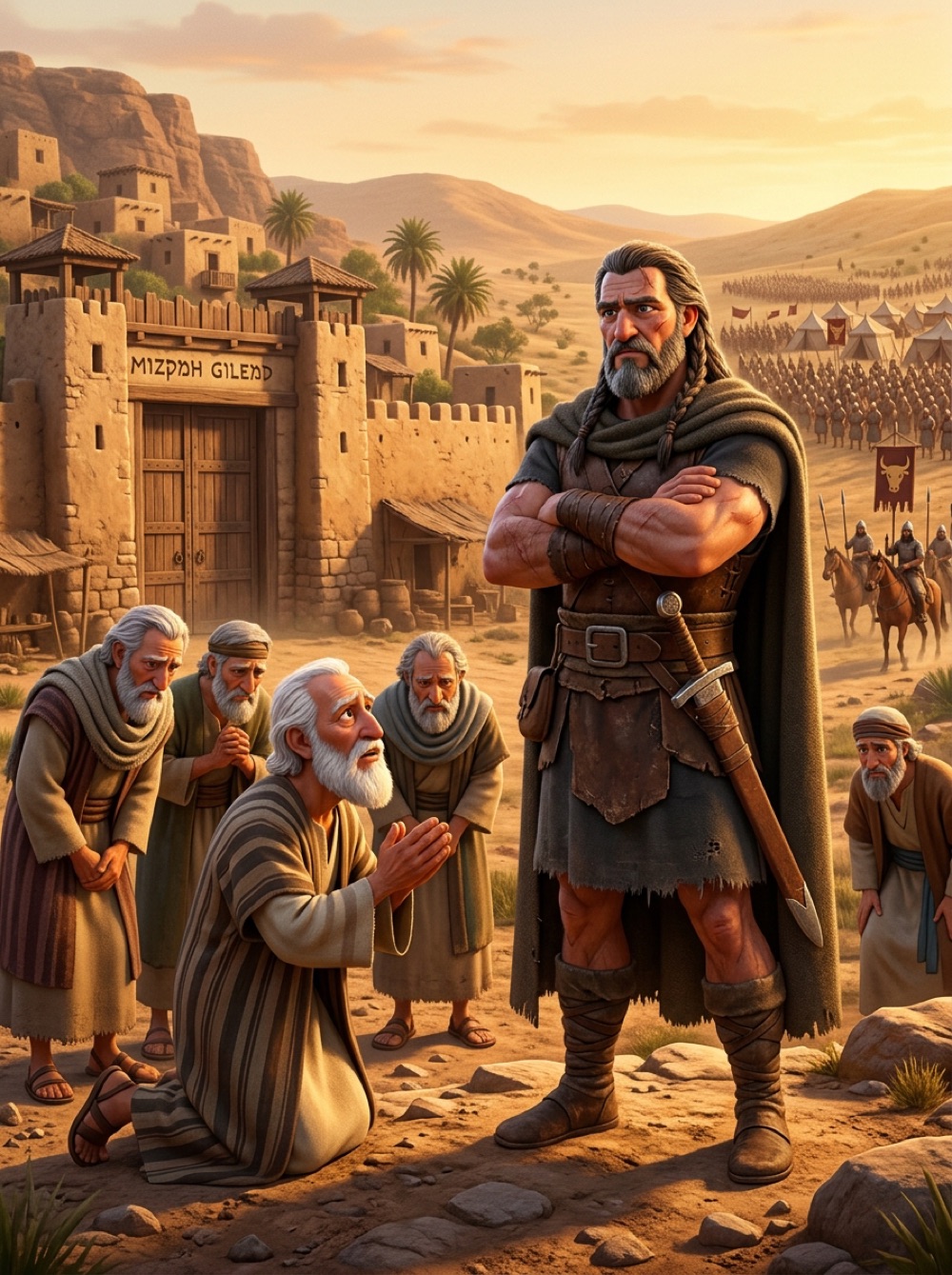
Jephthah's Rash Vow
Jephthah was a mighty warrior called by Israel to fight the Ammonites. Before the battle he made a vow to God — whatever came out of his house first to greet him when he returned home would be given to God as an offering. He won the battle. When he came home, his only daughter ran out to meet him with dancing and music. Jephthah tore his clothes in grief. His words could not be taken back. It was a painful lesson in the danger of making promises to God without thinking them through.
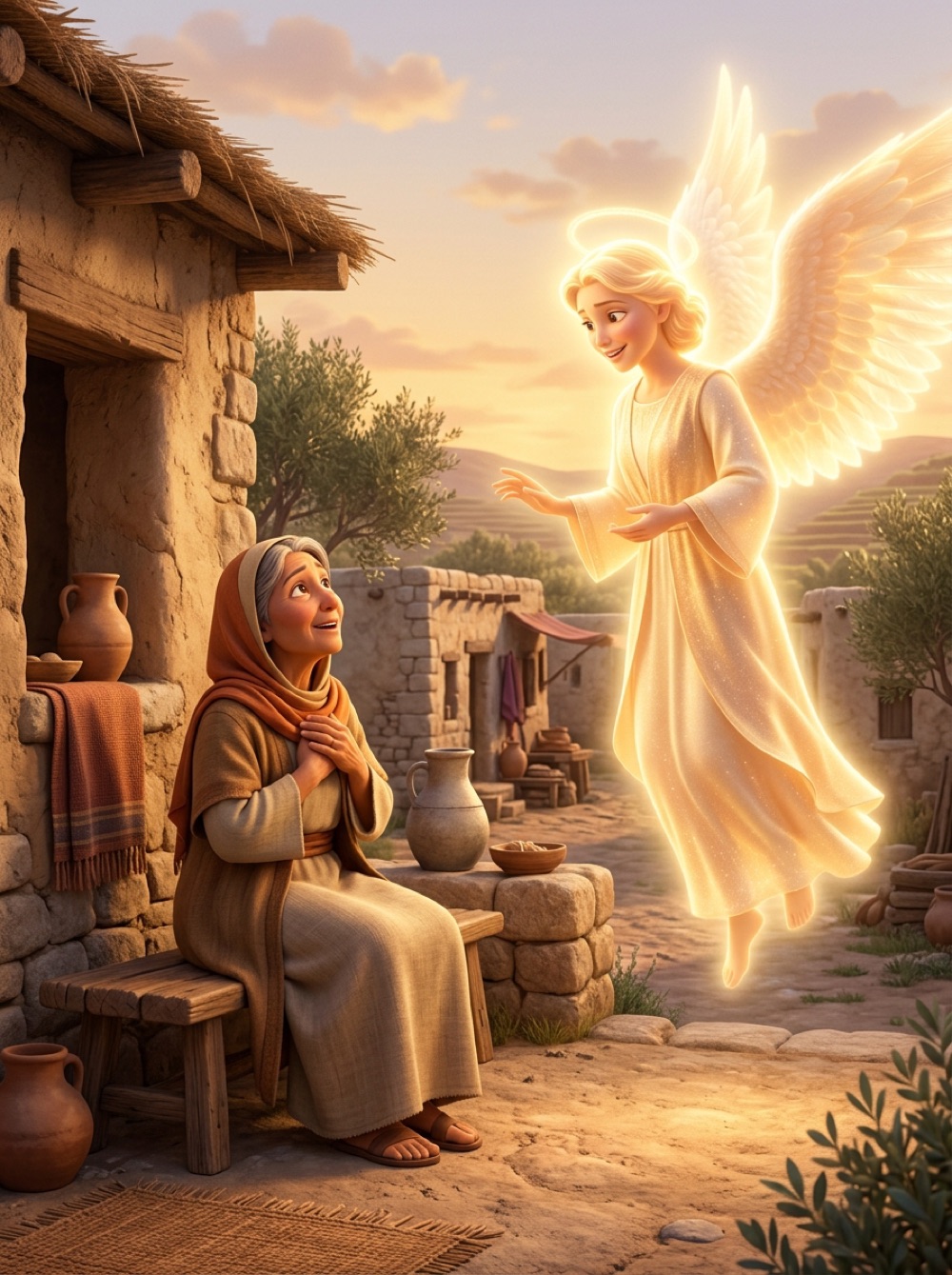
Samson Is Born
Israel fell into the cycle again — this time oppressed by the Philistines for forty years. Then an angel appeared to a woman who had never been able to have children and told her she would have a son. He was to be set apart for God from birth — a Nazirite, which meant he would never cut his hair as a sign of his dedication. His name would be Samson, and he would begin to deliver Israel from the Philistines.
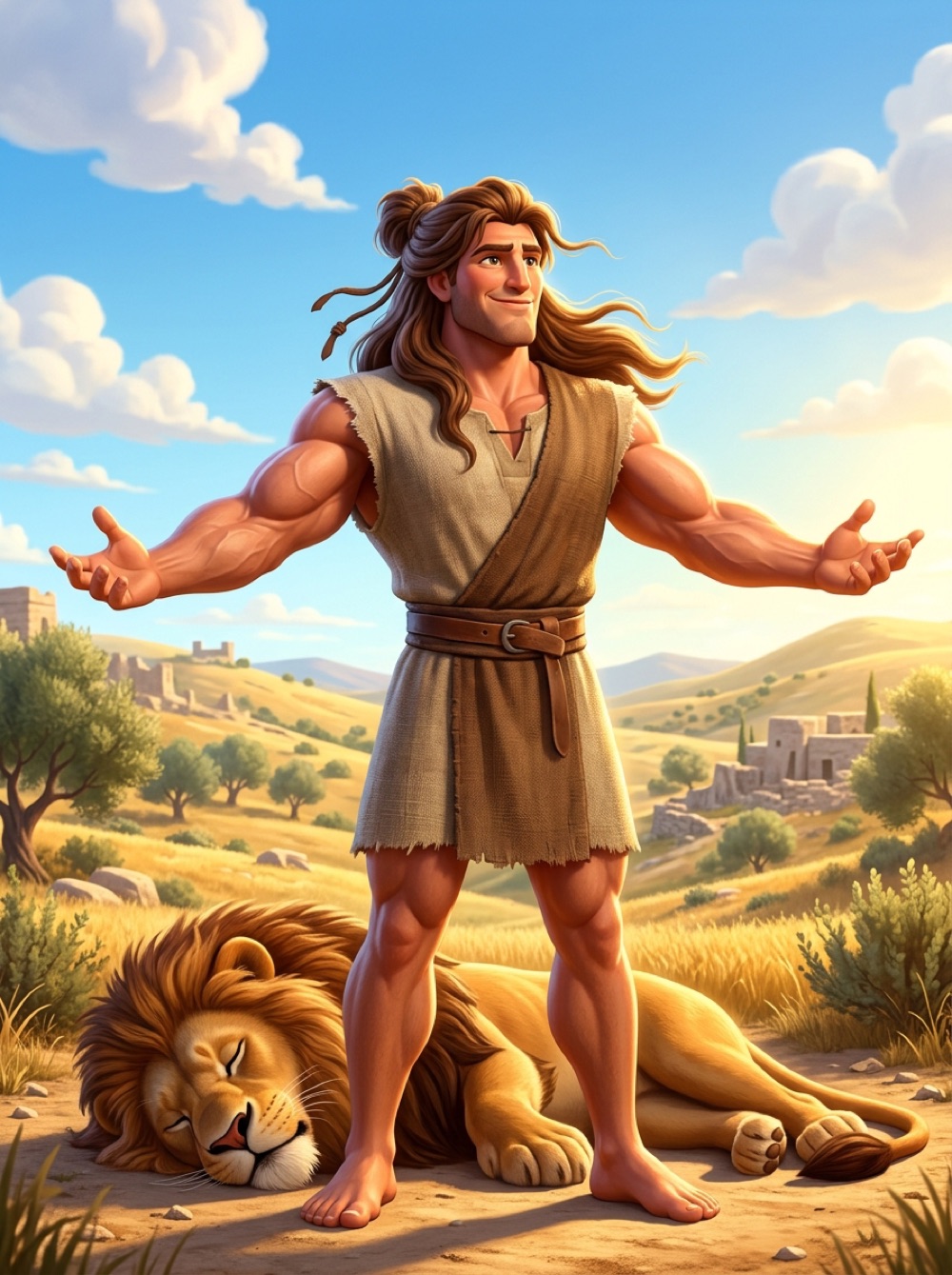
Samson's Extraordinary Strength
Samson grew up and God's Spirit gave him extraordinary physical strength. He tore a lion apart with his bare hands. He struck down thirty Philistines alone. He caught three hundred foxes, tied torches to their tails, and sent them through the Philistines' grain fields. He broke ropes like they were burned thread. No one could hold him when God's Spirit came on him. But Samson's greatest weakness was not his enemies — it was his own choices.
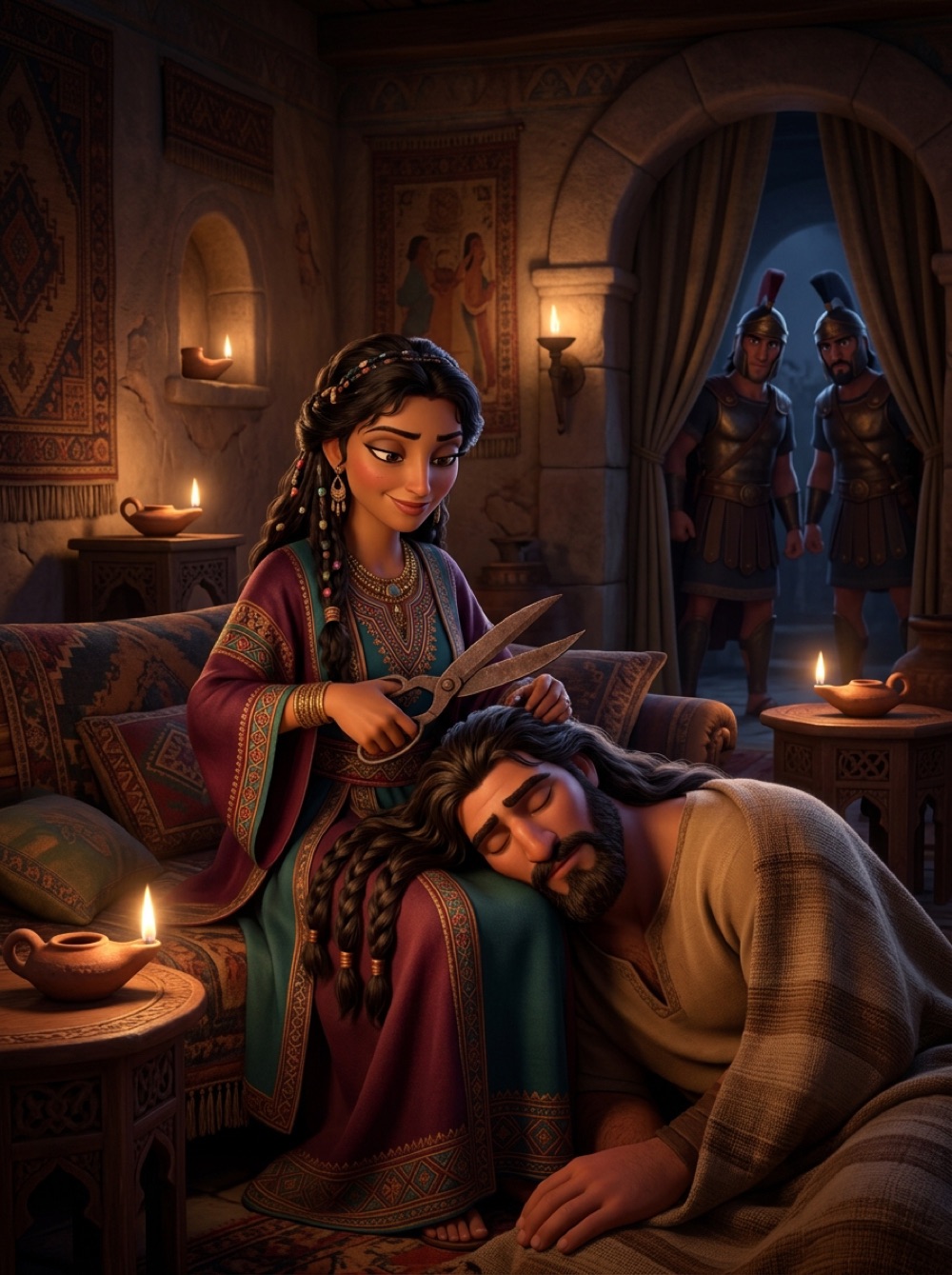
Delilah
Samson fell in love with a woman named Delilah. The Philistine rulers paid her to find the secret of his strength. Three times she asked him and he gave her false answers. Three times she tried to trap him and failed. But she kept pushing — day after day — until Samson was so tired of it that he finally told her the truth. His hair had never been cut. That was where his strength came from.
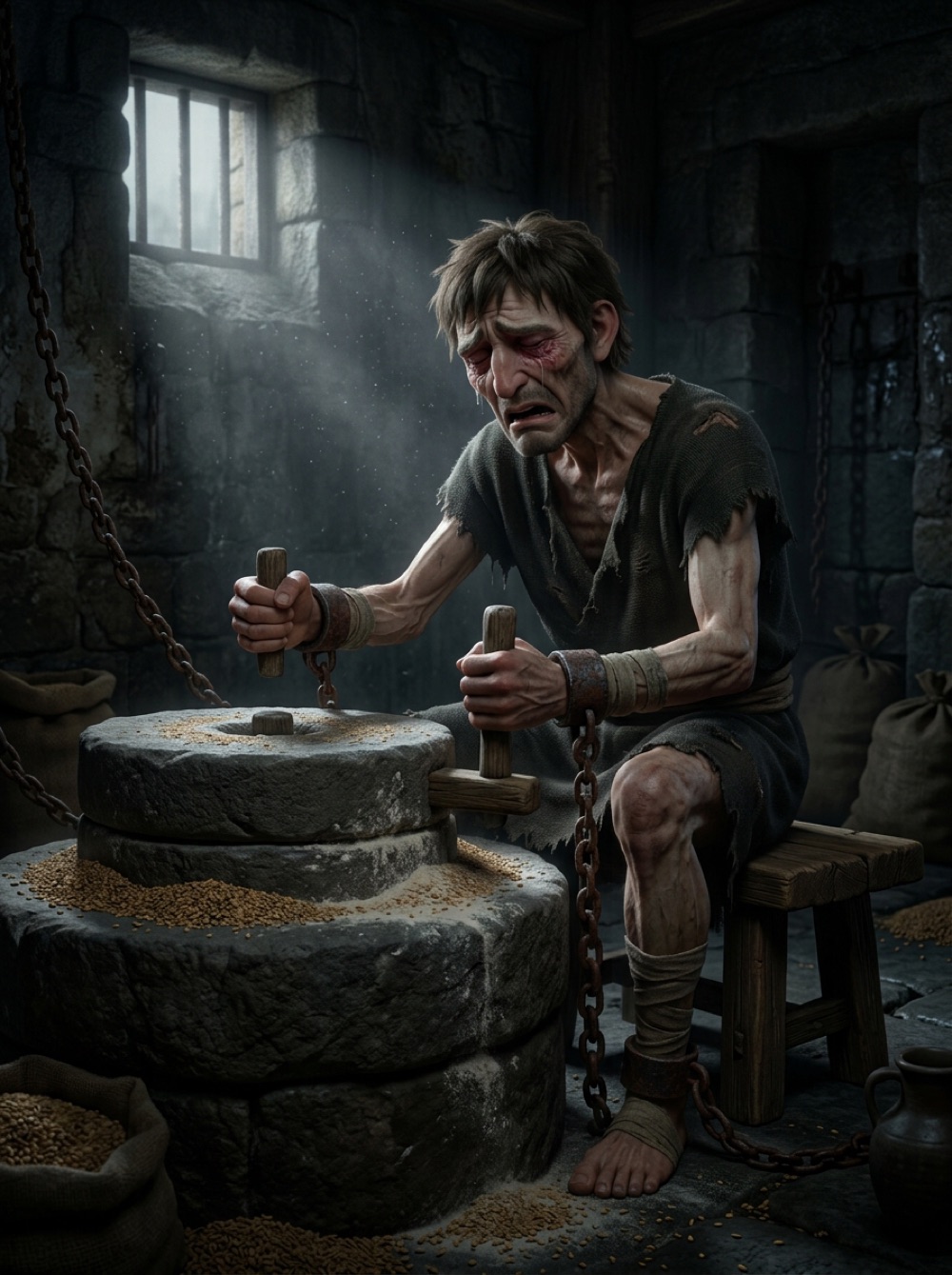
Samson's Hair Is Cut
While Samson slept, Delilah had someone shave his head. She woke him and said, "The Philistines are here, Samson!" He got up thinking he would shake himself free as before — but he did not know that God had left him. The Philistines seized him, blinded him, and put him in prison to grind grain. The strongest man in Israel had been brought down by one bad choice kept long enough.
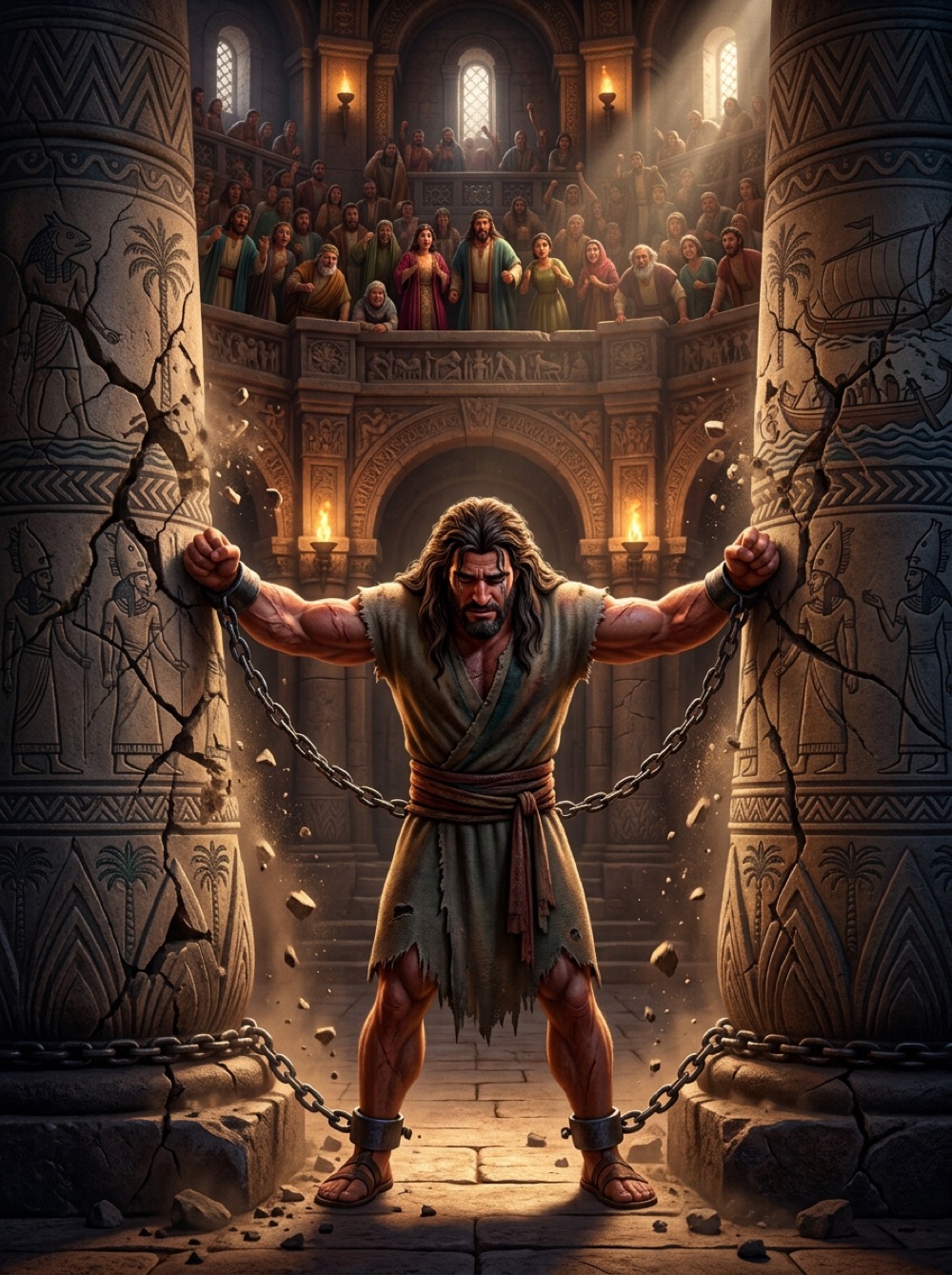
Samson's Final Moment
In prison, Samson's hair began to grow back. The Philistines brought him to their temple to mock him before thousands of people. Samson asked the young man guiding him to put his hands on the two central pillars of the temple. Then he prayed one final prayer — "God, strengthen me one more time." He pushed with all his strength and the temple collapsed, killing more in his death than he had in his life.
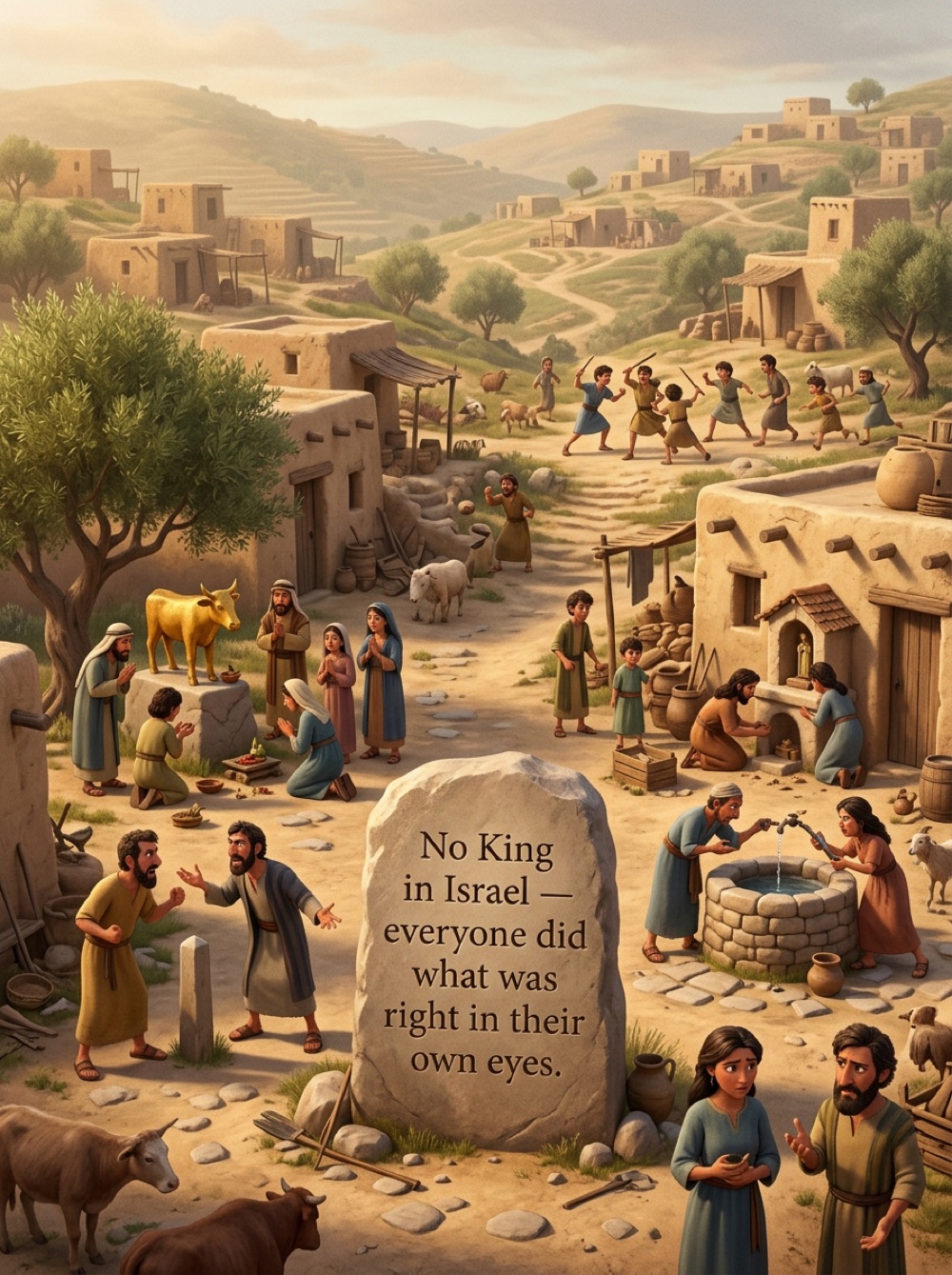
Everyone Did What Was Right in Their Own Eyes
The book of Judges ends with two dark stories showing just how far Israel had wandered from God. There was no king in Israel — and everyone did whatever seemed right to them. Idols were set up. Priests were bought and sold. One tribe stole from another. It was a nation that had forgotten everything Joshua had taught them. The cycle of forgetting had reached its lowest point.
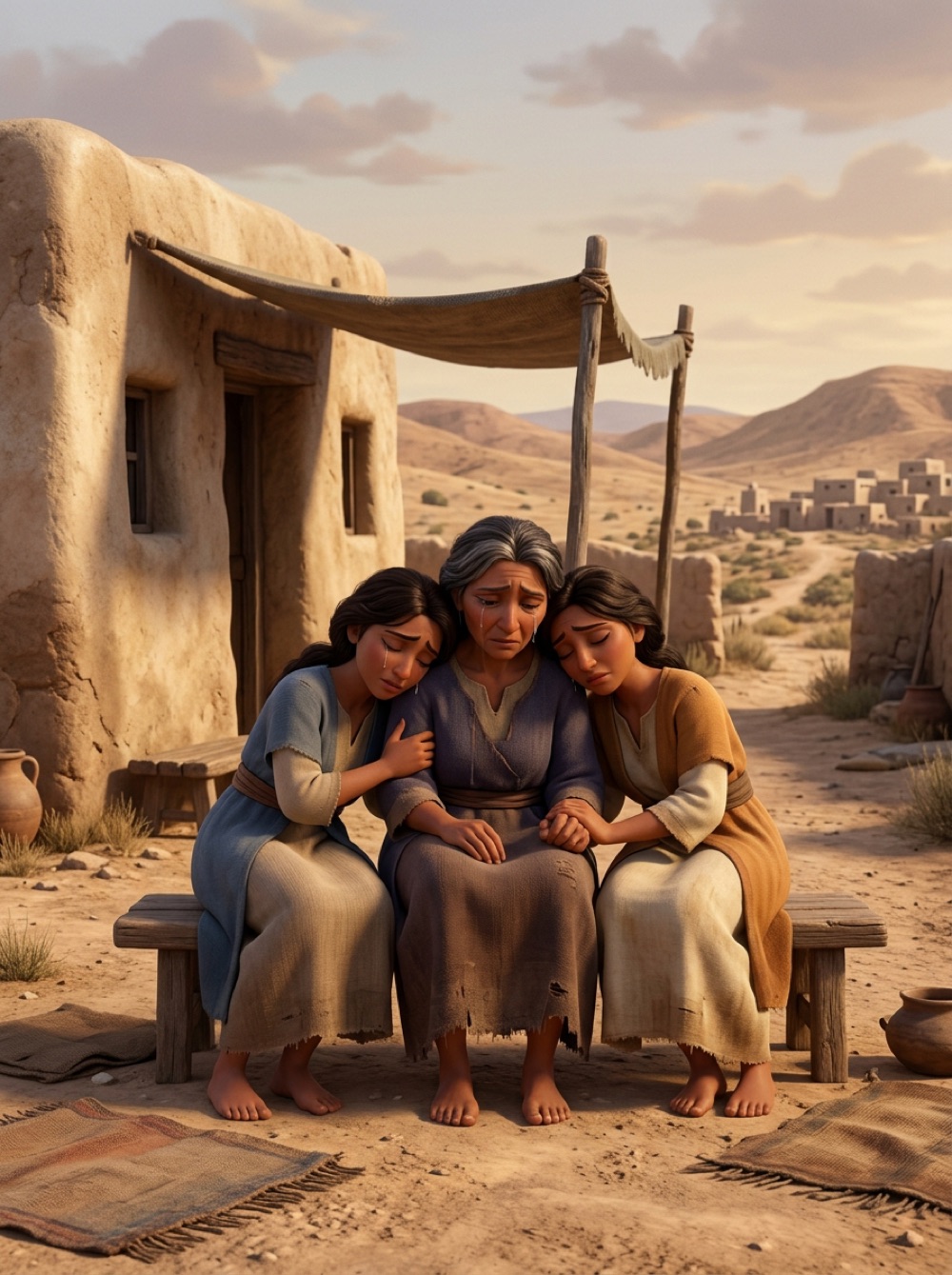
Naomi's Loss
A woman named Naomi had left Israel with her husband and two sons during a famine, settling in the land of Moab. Her sons married Moabite women — one named Orpah and one named Ruth. Then Naomi's husband died. Then both sons died. Naomi was left in a foreign land with two daughters-in-law and no one to provide for any of them.
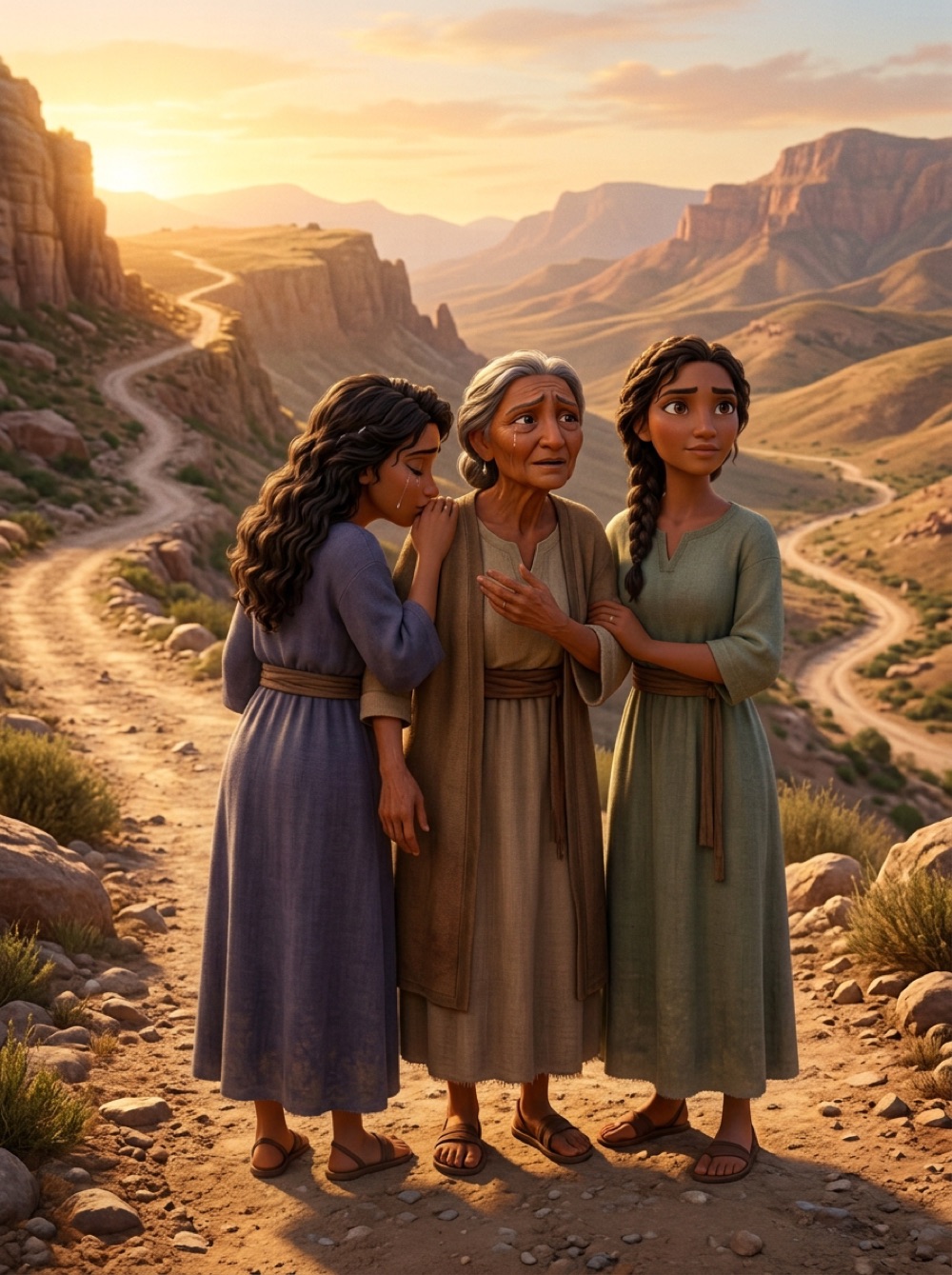
Go Back to Your People
Naomi decided to return to Israel. She urged both daughters-in-law to go back to their own families and find new husbands. Orpah wept and kissed her goodbye. But Ruth refused to leave. No matter what Naomi said, Ruth would not go. She held on to her mother-in-law and would not let go.
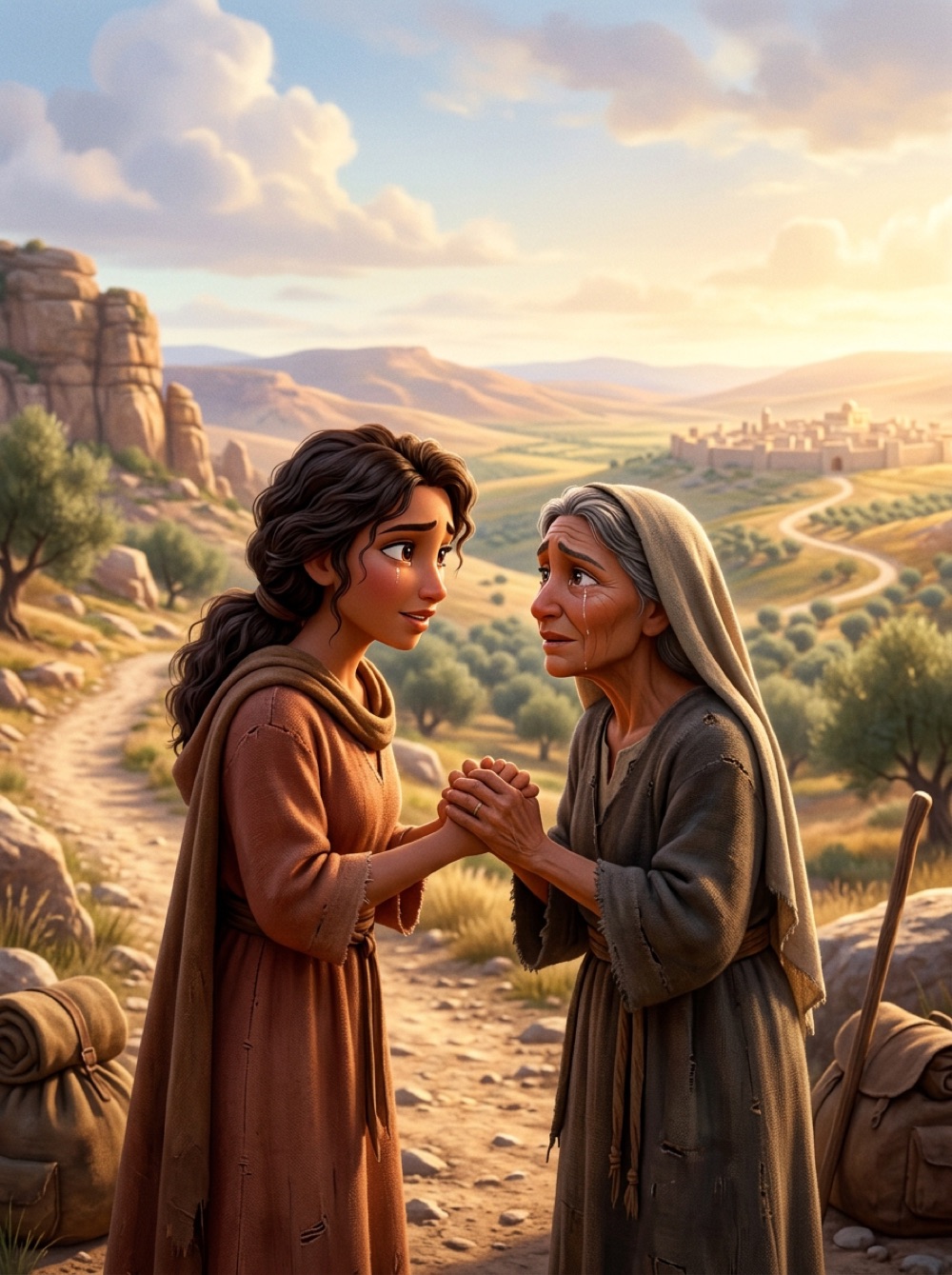
Where You Go I Will Go
Ruth said words that have been remembered for thousands of years. "Don't ask me to leave you or turn back from following you. Where you go I will go. Where you stay I will stay. Your people will be my people. Your God will be my God. Where you die I will die — and there I will be buried. Nothing but death will separate us." Naomi stopped arguing. They walked to Bethlehem together.
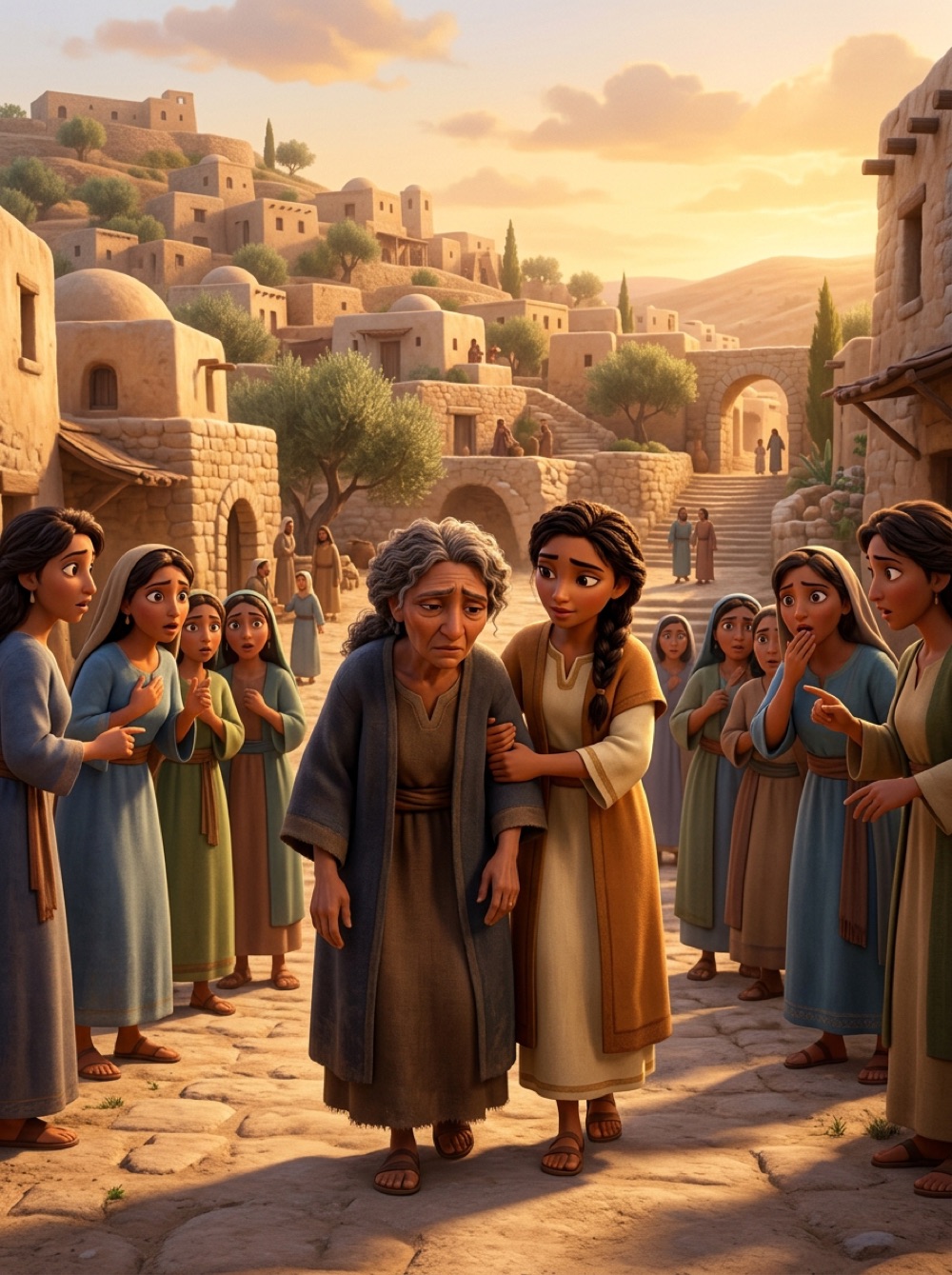
Naomi Returns Bitter
When they arrived in Bethlehem the whole town stirred. "Is this Naomi?" the women asked. Naomi answered, "Don't call me Naomi — call me Mara, which means bitter. I went away full and the Lord has brought me back empty." She had lost everything. She couldn't see yet that God had brought her home with something more valuable than she realized — a daughter-in-law whose loyalty would change everything.
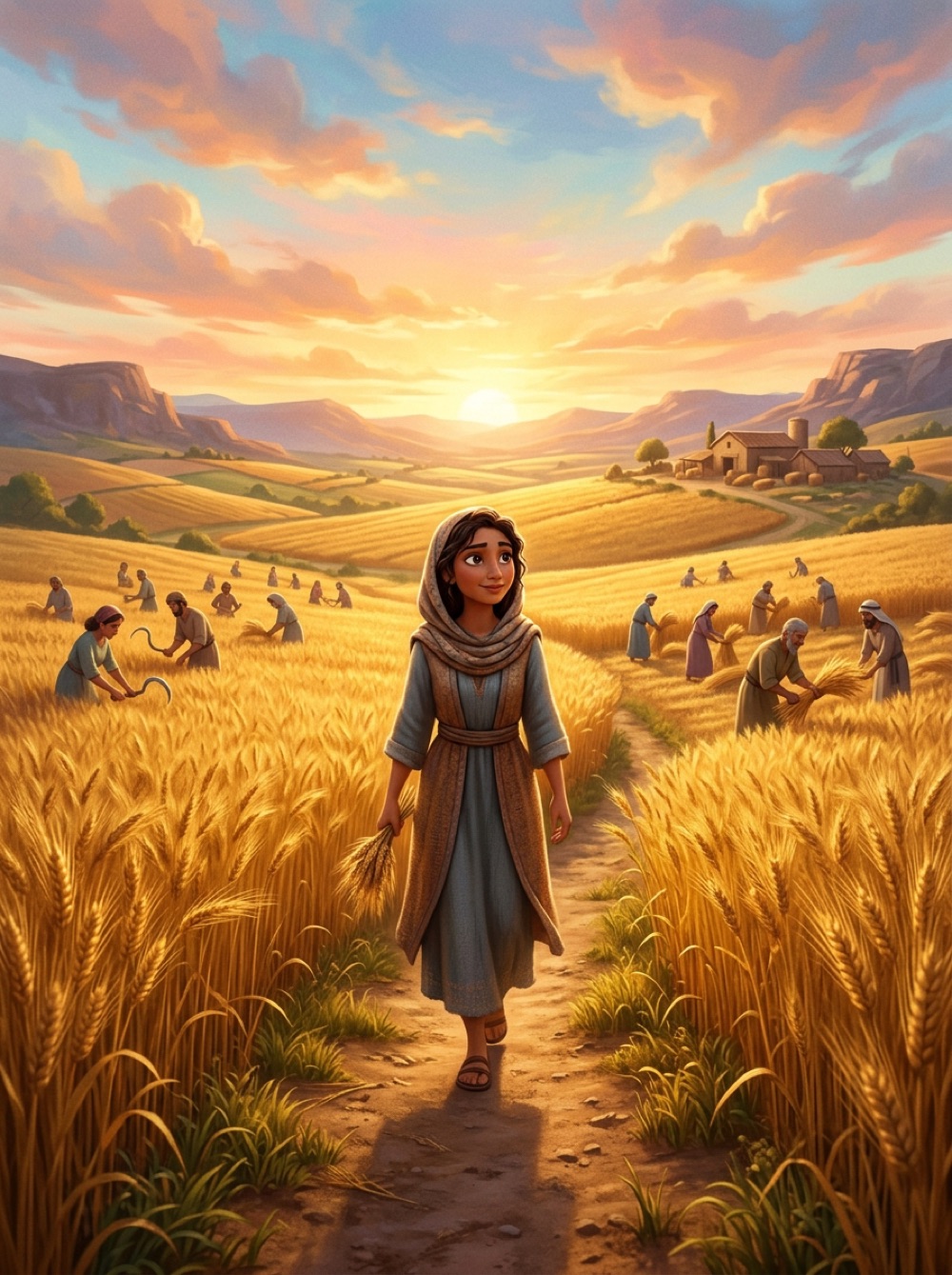
Ruth Goes to the Fields
Ruth told Naomi she would go to the harvest fields and pick up the leftover grain behind the workers — a practice called gleaning that God had built into Israel's law to provide for the poor. She happened to end up in the field of a man named Boaz — a wealthy and honorable man who was also a relative of Naomi's late husband. There are no accidents in God's economy.
Boaz Notices Ruth
Boaz came from Bethlehem to check on his harvest workers and noticed Ruth working in the field. He asked his foreman who she was. "She is the Moabite woman who came back with Naomi," the foreman said. "She asked permission to glean and has worked hard all morning without stopping." Boaz went straight to Ruth. He had already heard everything she had done for Naomi.
Boaz's Kindness
Boaz told Ruth to stay in his field, drink from his water jars, and stay close to his women workers for safety. Ruth bowed and asked why he was being so kind to a foreigner. Boaz said, "I have heard everything you did for your mother-in-law — how you left your family and your land to come with her. May God reward you fully for what you have done."
More Than She Could Carry
At mealtime Boaz invited Ruth to eat with his workers and gave her more food than she could finish. Then he quietly told his men to deliberately leave extra grain in the field for her to find. Ruth gleaned all day and came home to Naomi with far more grain than a day of gleaning should produce. Naomi asked where she had been. When she heard the name Boaz, her eyes came alive.
A Kinsman Redeemer
Naomi explained to Ruth who Boaz was. "He is one of our closest relatives — he is our kinsman redeemer." Under Israel's law, a close male relative could redeem a widow by marrying her and caring for her family. God had built a rescue system right into His law — and Ruth had walked straight into the field of the one man in Bethlehem who could use it for them.

Naomi's Plan
Naomi had a plan. She told Ruth to wash, put on her best clothes, and go to the threshing floor where Boaz would be working that night. Ruth was to approach him quietly and ask him to spread the corner of his garment over her — a way of asking him to be her kinsman redeemer. It was a bold, vulnerable thing to ask. Ruth said she would do exactly as Naomi said.
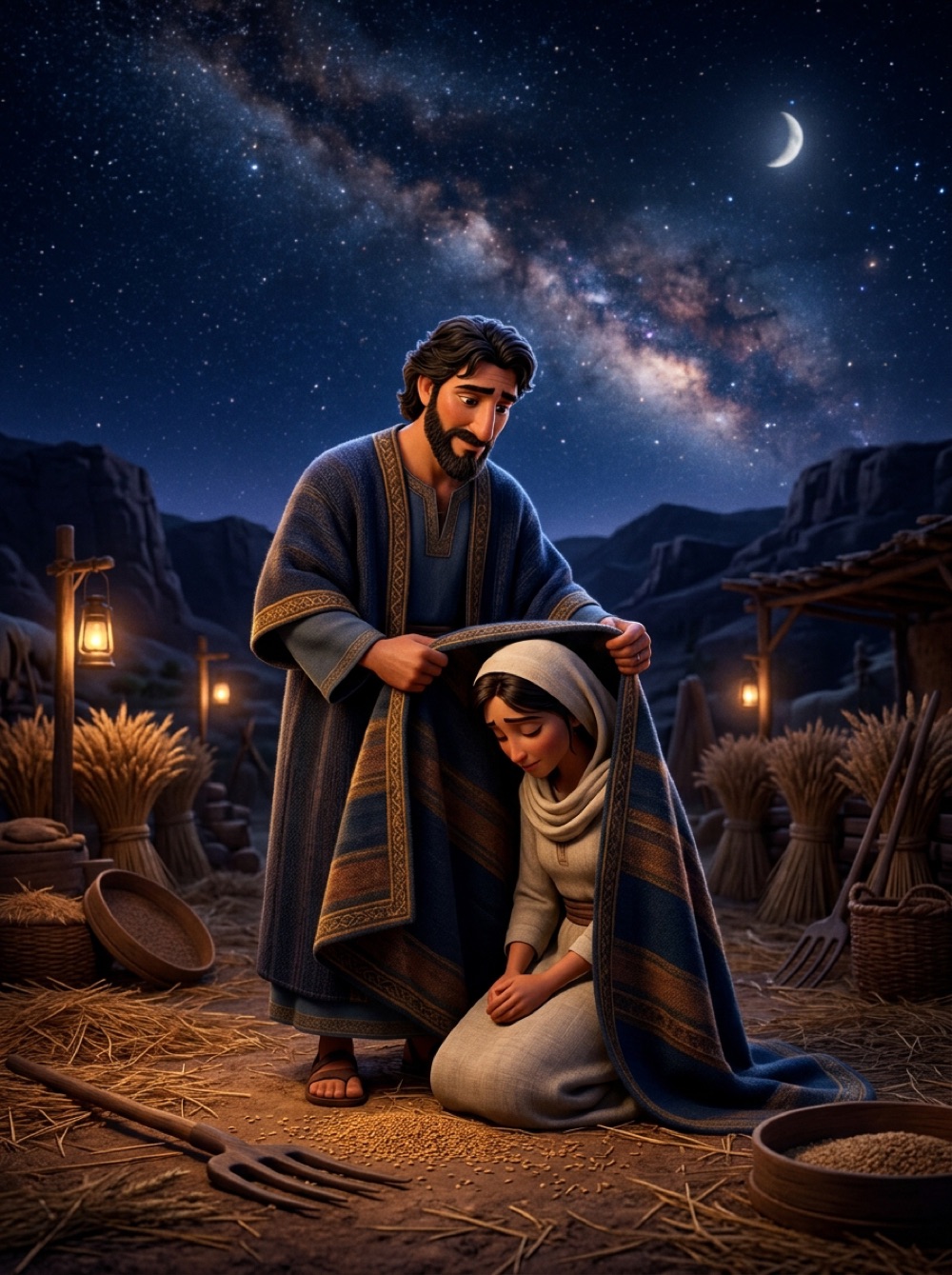
Boaz's Honorable Response
Boaz woke in the night and found Ruth at his feet. He was moved and honored rather than offended. "May you be blessed by God," he said. "This kindness you are showing is even greater than what you showed Naomi. Everyone in town knows you are a woman of noble character." But he told her honestly there was one relative closer than him who had the first right. He would settle it in the morning.
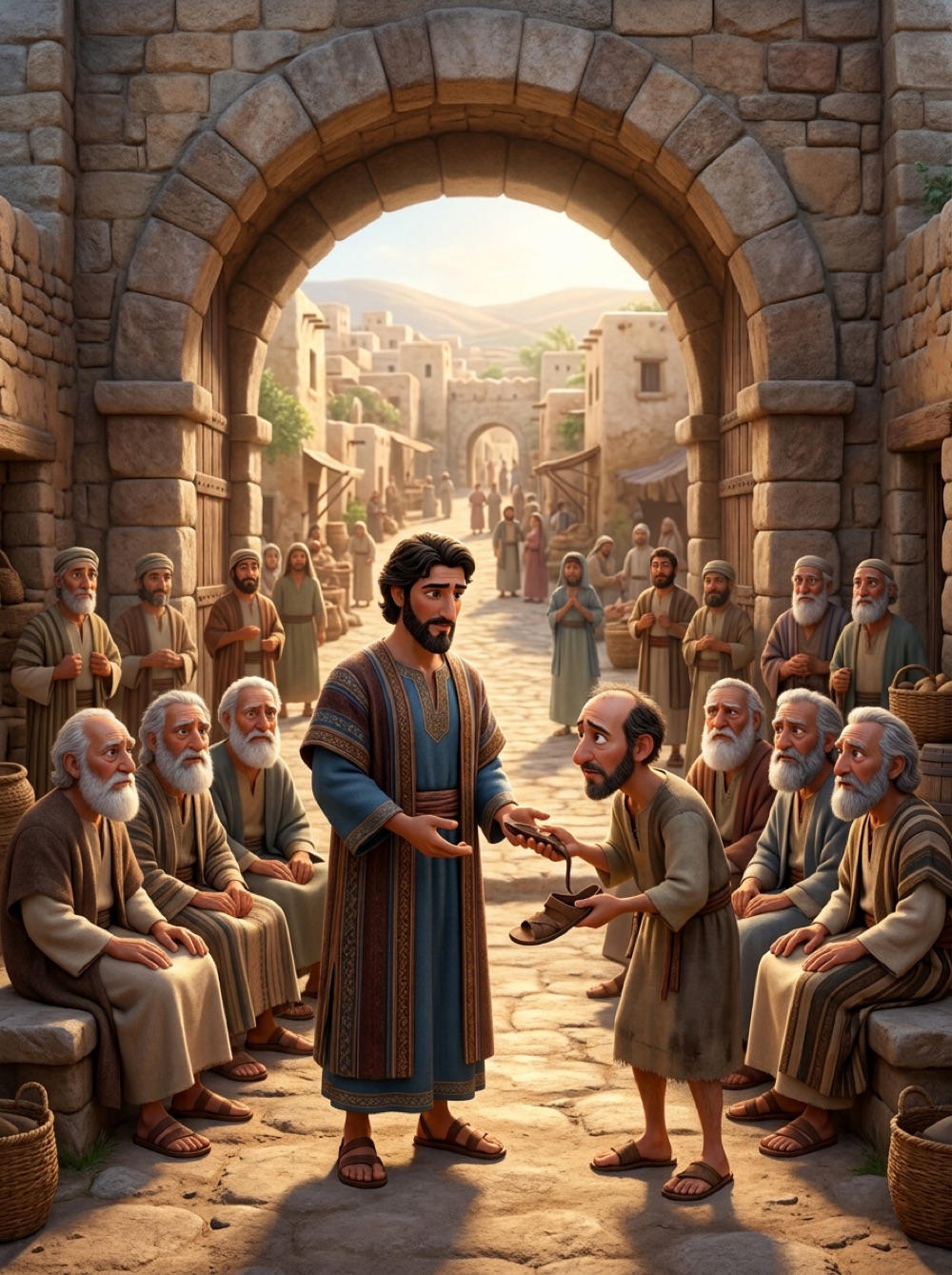
The Gate Decision
Boaz went to the town gate — the place where legal decisions were made — and waited for the closer relative to pass by. When he arrived, Boaz gathered ten elders and laid out the situation. The relative was willing to redeem Naomi's land — until he heard it meant also marrying Ruth. He declined. He took off his sandal and handed it to Boaz as a legal seal. Ruth was free for Boaz to redeem.
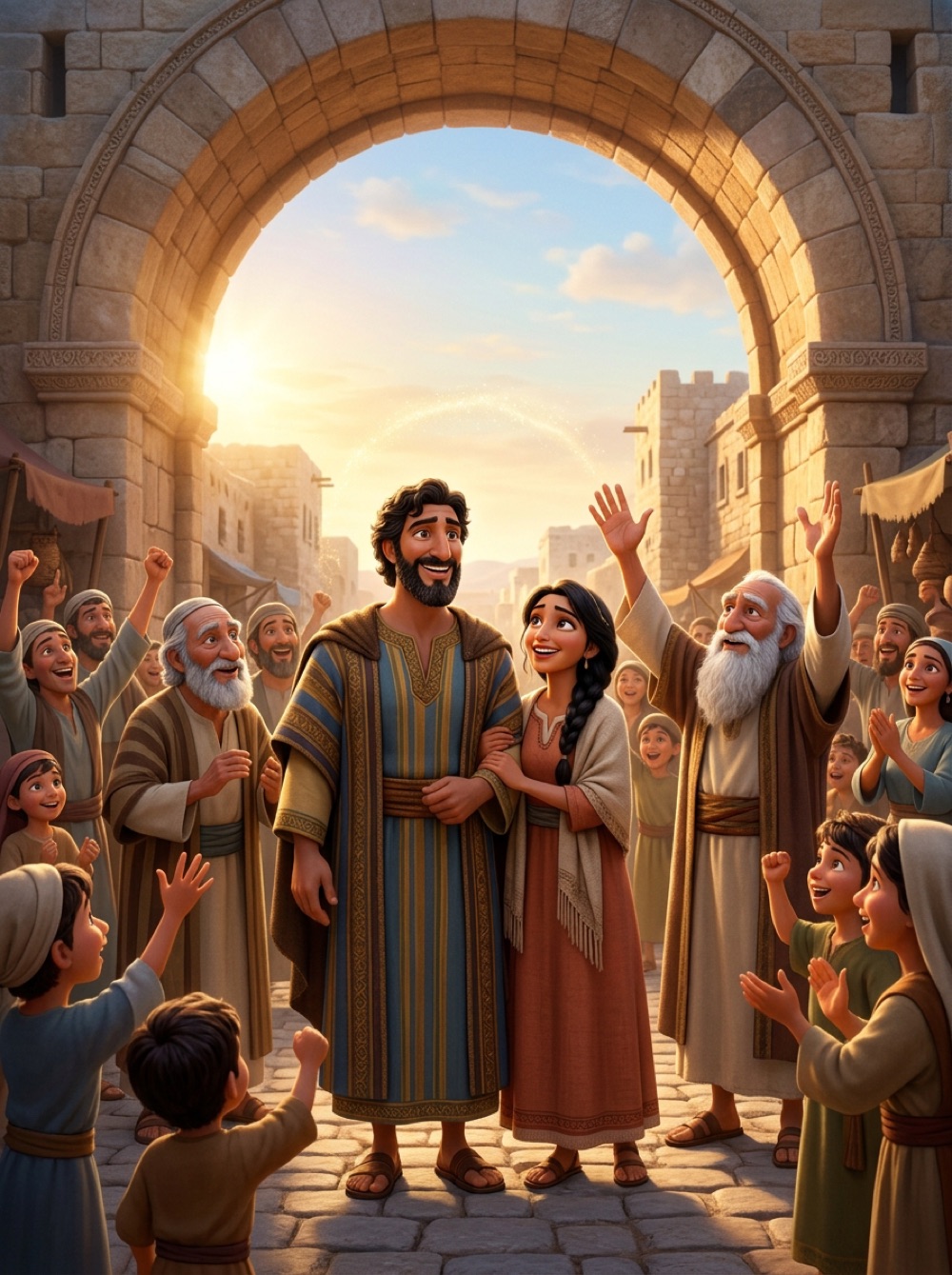
Boaz Redeems Ruth
Before the elders at the gate, Boaz declared that he was taking Ruth the Moabite as his wife, to carry on the name of her late husband and provide for Naomi. The elders witnessed it and blessed them both. "May your family be like the family of Perez," they said. Ruth and Boaz were married. And Naomi — who had come home calling herself bitter — found herself full again.
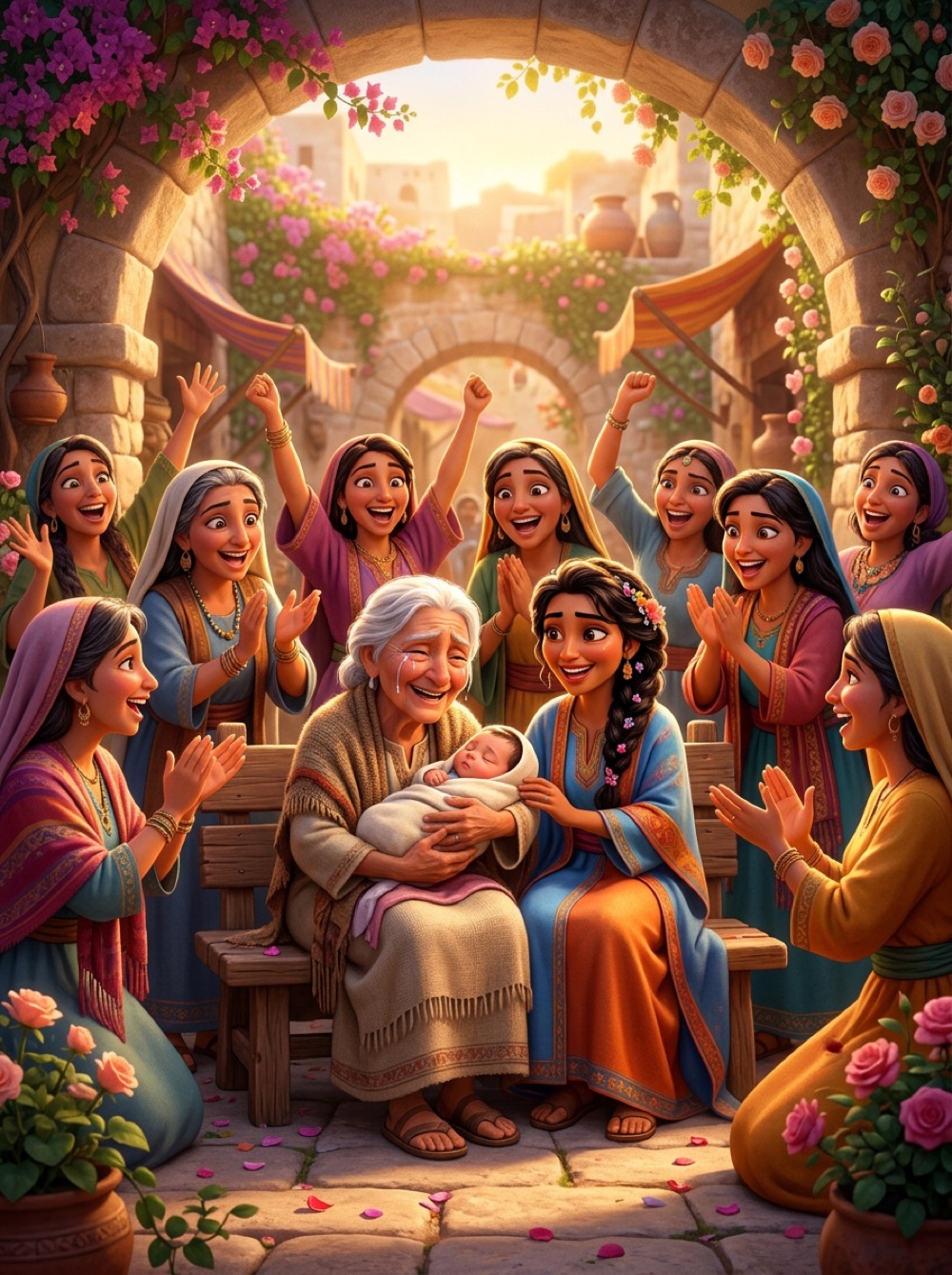
A Son Is Born
Ruth and Boaz had a son. The women of Bethlehem gathered around Naomi and celebrated with her. "Praise God, who has not left you without a kinsman redeemer," they said. "May this child restore your life and care for you in your old age." Naomi took the baby and held him close. The child's name was Obed. Obed would become the father of Jesse. Jesse would become the father of David.

Ruth in the Family Line
The book of Ruth ends with a family line — from Perez all the way down to David. A Moabite woman who had chosen loyalty over comfort, faithfulness over familiarity, and a foreign God over her own people's gods — had been woven permanently into the family line that would one day produce the greatest king Israel ever had, and after him, the King of all kings.
Hannah's Tears
A woman named Hannah desperately wanted a child but could not have one. Year after year she went to the Tabernacle and wept before God. One year her grief was so deep that she prayed silently, lips moving but no sound coming out. The priest Eli thought she was drunk. But Hannah was doing something far more powerful than crying — she was bringing her deepest pain directly to God.
Hannah's Vow
Hannah made God a vow. "Lord Almighty, if you give me a son, I will give him back to you for his whole life. No razor will ever touch his head." Then she got up, ate her food, and her face was no longer sad. She had handed her impossible situation to God — and something had changed before anything had actually changed yet.
Samuel Is Born
God remembered Hannah. She became pregnant and gave birth to a son. She named him Samuel — which sounds like the Hebrew for "heard by God" — because she said, "I asked the Lord for him." She nursed him and cared for him until he was weaned. Then, as she had promised, she took him to the Tabernacle and gave him to Eli the priest to serve God there for the rest of his life.
Hannah's Song
Hannah prayed one of the most powerful prayers in the Bible before she left Samuel at the Tabernacle. "My heart rejoices in the Lord. There is no one holy like the Lord. The Lord brings death and makes alive. He lifts the poor from the dust and raises the needy from the ash heap. He gives them a place among princes." She had given her most precious thing to God — and found herself full of praise.
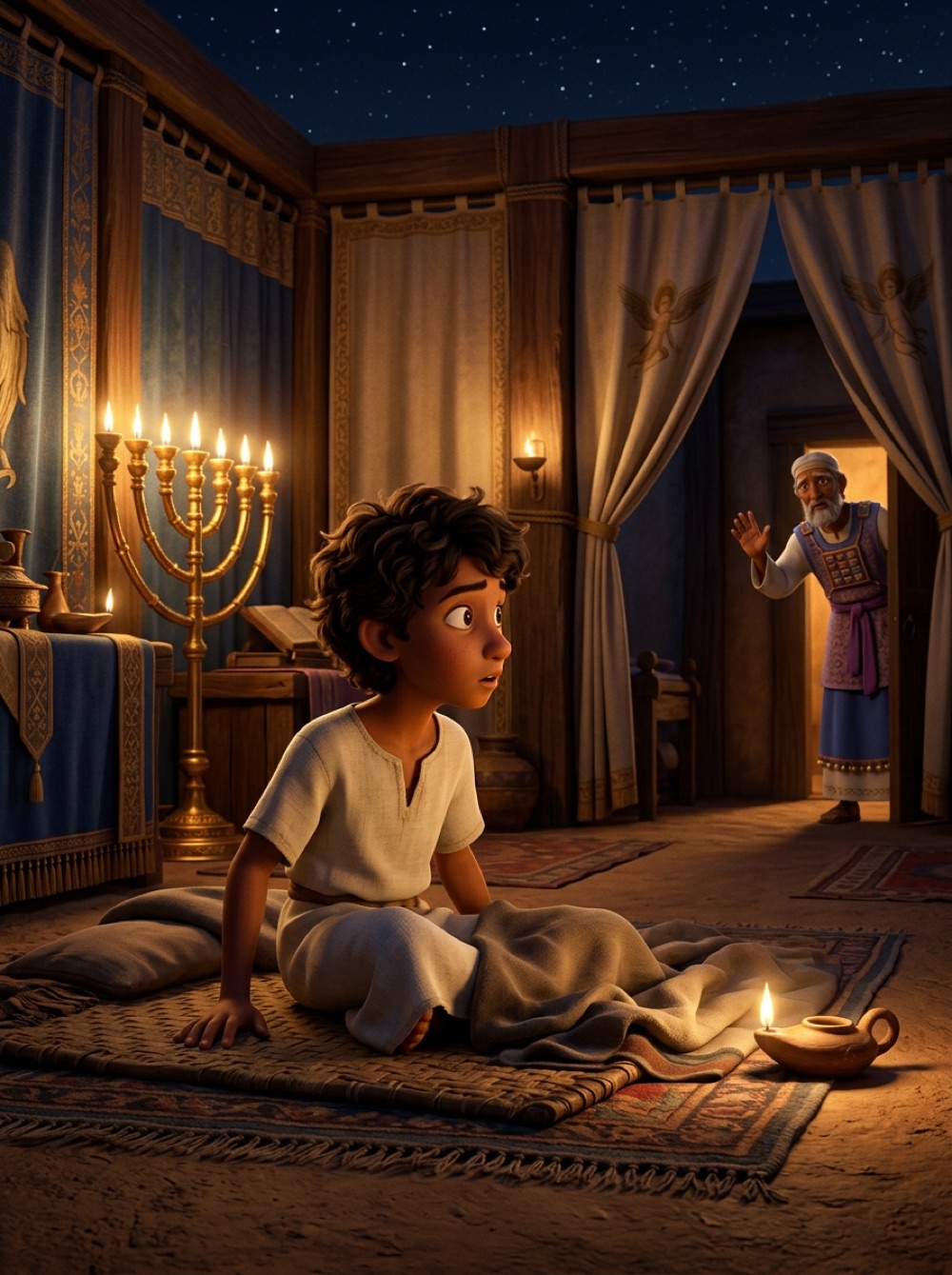
Samuel, Samuel
Samuel grew up serving at the Tabernacle under Eli. One night, after everyone had gone to sleep, God called out — "Samuel!" The boy ran to Eli thinking the old priest had called him. "I didn't call you — go back to sleep," Eli said. This happened three times. The third time, Eli realized what was happening. "Go lie down," he told Samuel. "If He calls again, say — Speak, Lord. Your servant is listening."
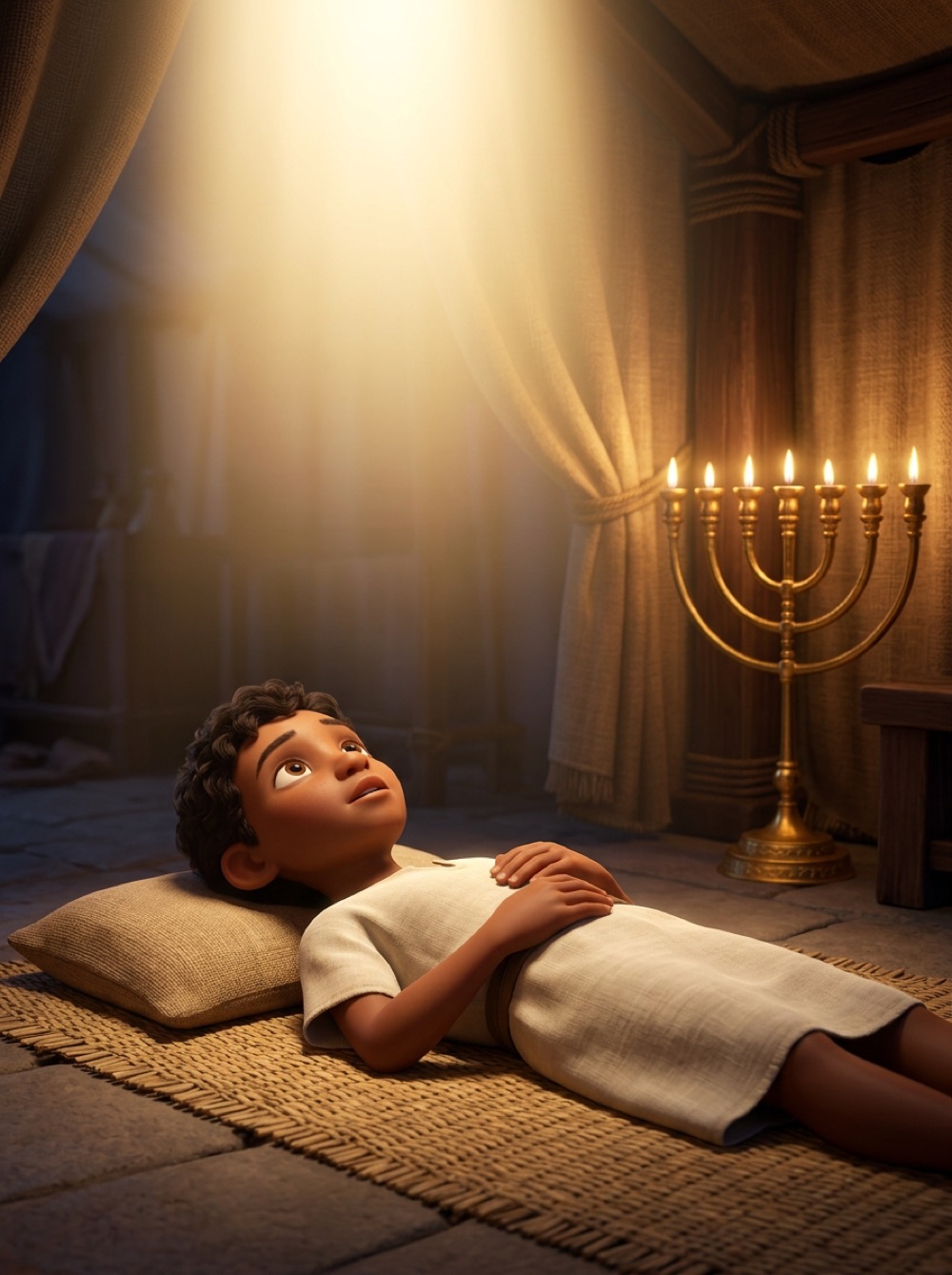
God Speaks to the Boy
God came and stood there and called as before — "Samuel! Samuel!" And Samuel answered, "Speak — your servant is listening." God gave Samuel a serious and difficult message about Eli's family. Samuel was afraid to tell Eli in the morning. But Eli asked him directly and made him promise to hold nothing back. Samuel told him everything. And Eli said, "He is the Lord. Let Him do what is good in His eyes."
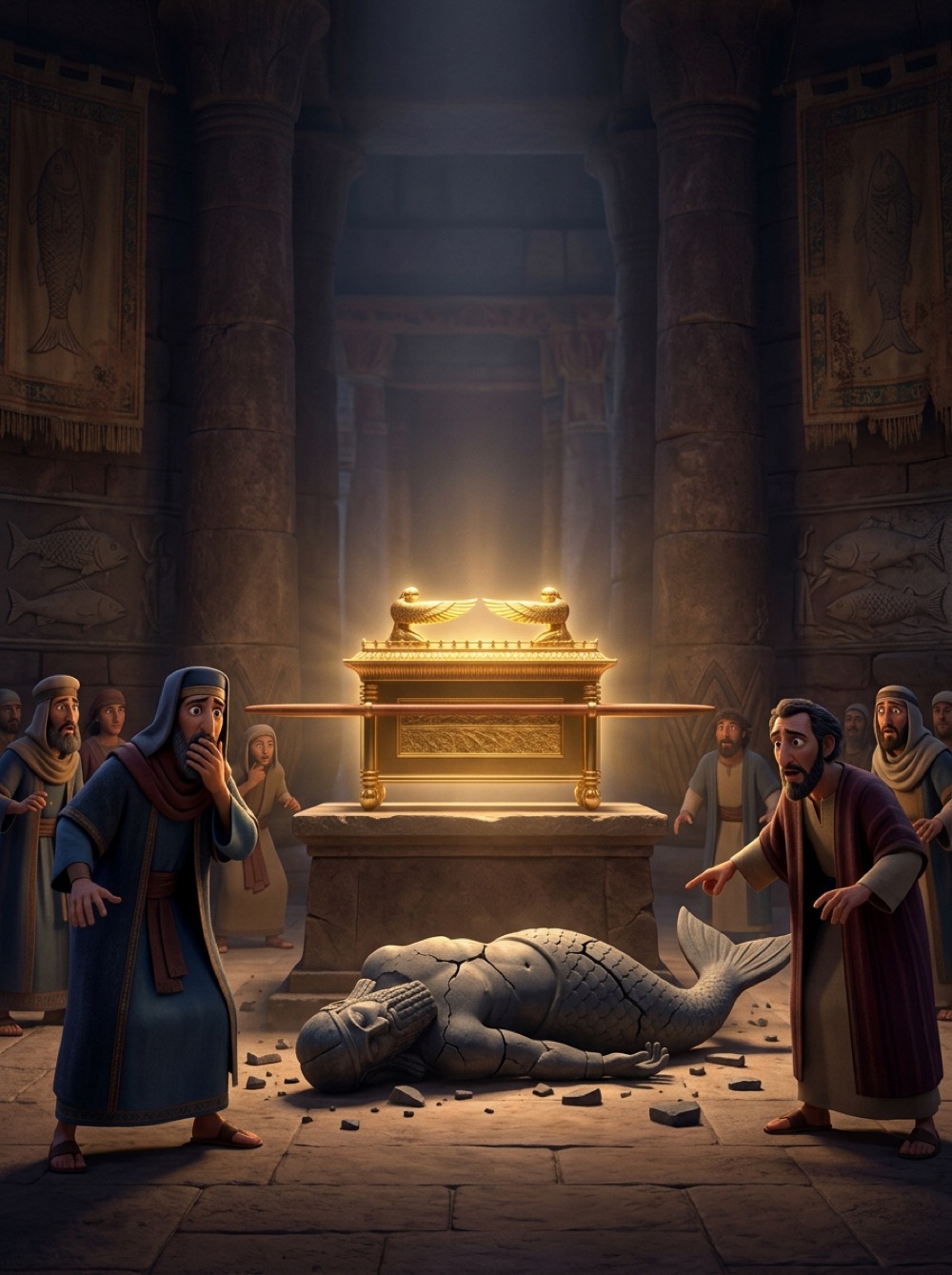
The Ark Is Captured
The Philistines defeated Israel in battle and captured the Ark of the Covenant — the most sacred object in all of Israel. But everywhere the Ark went in Philistine territory, disaster followed. Their idol fell on its face before it. Their people broke out in disease. After seven months the Philistines sent the Ark back to Israel on a cart pulled by two cows, with gold offerings as payment for their suffering. You cannot capture God.
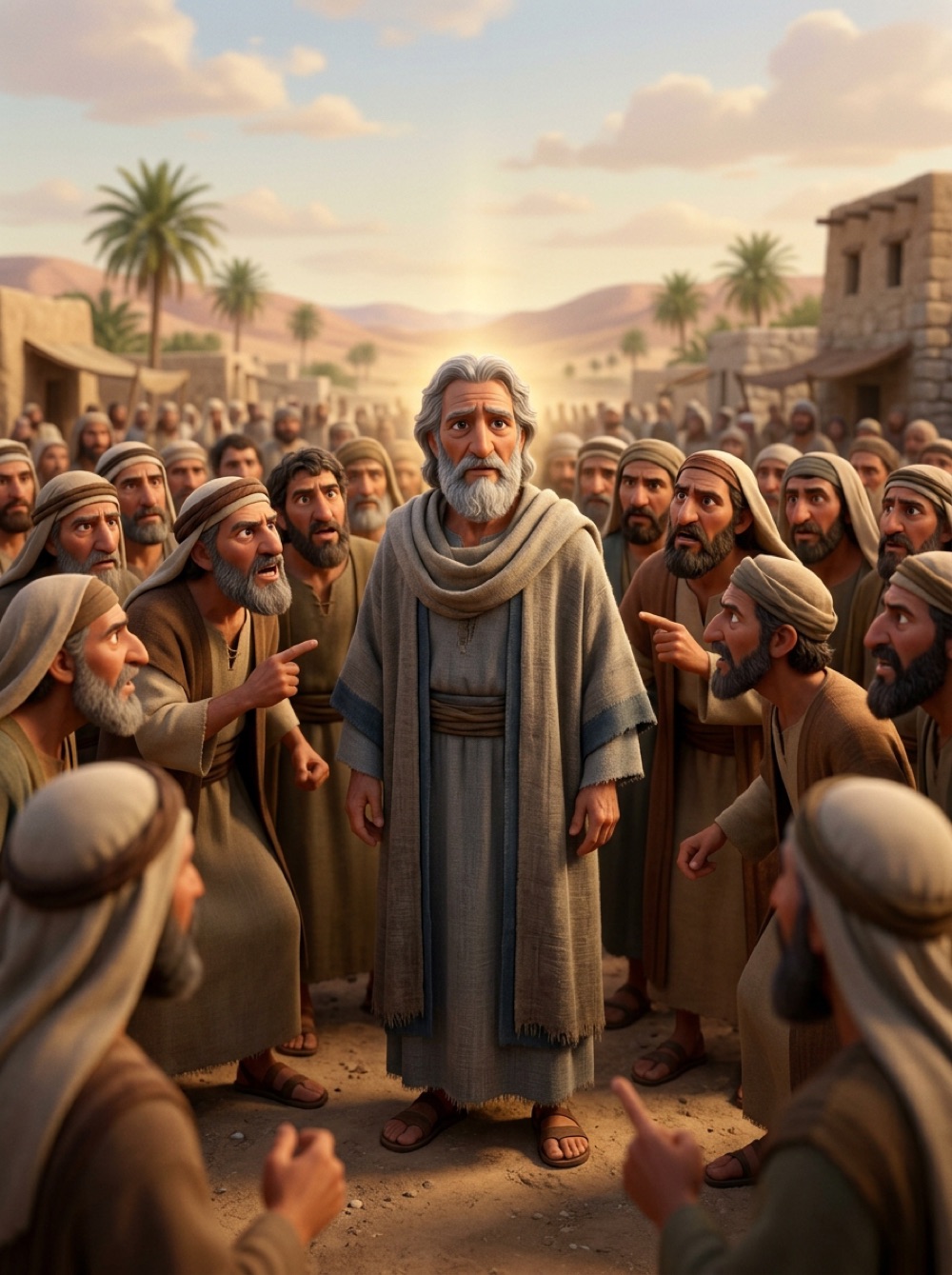
Give Us a King
Samuel led Israel faithfully for many years. But when he was old his sons were corrupt judges. The elders of Israel came to Samuel and said, "Give us a king to lead us — like all the other nations have." Samuel was upset. God told him, "They have not rejected you. They have rejected me as their king." God warned them what a king would cost. They insisted anyway. So God gave them what they asked for.
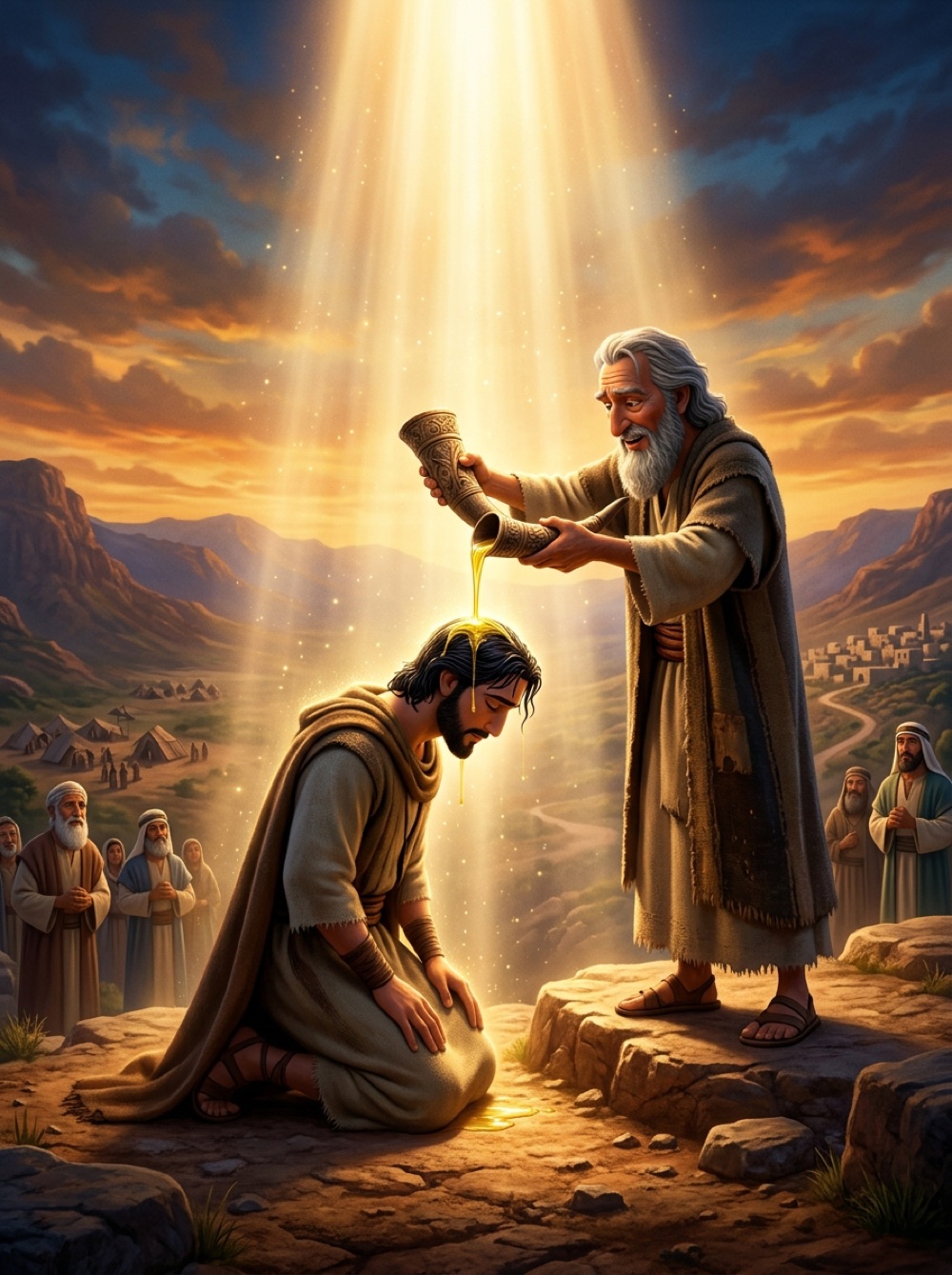
Saul Is Chosen
A tall, handsome young man named Saul from the tribe of Benjamin went looking for his father's lost donkeys and ended up finding a kingdom instead. God told Samuel the day before, "Tomorrow I will send you a man from Benjamin. Anoint him as ruler over my people." When Saul arrived, God said to Samuel, "This is the man I told you about. He will govern my people." Saul stood head and shoulders above everyone around him.
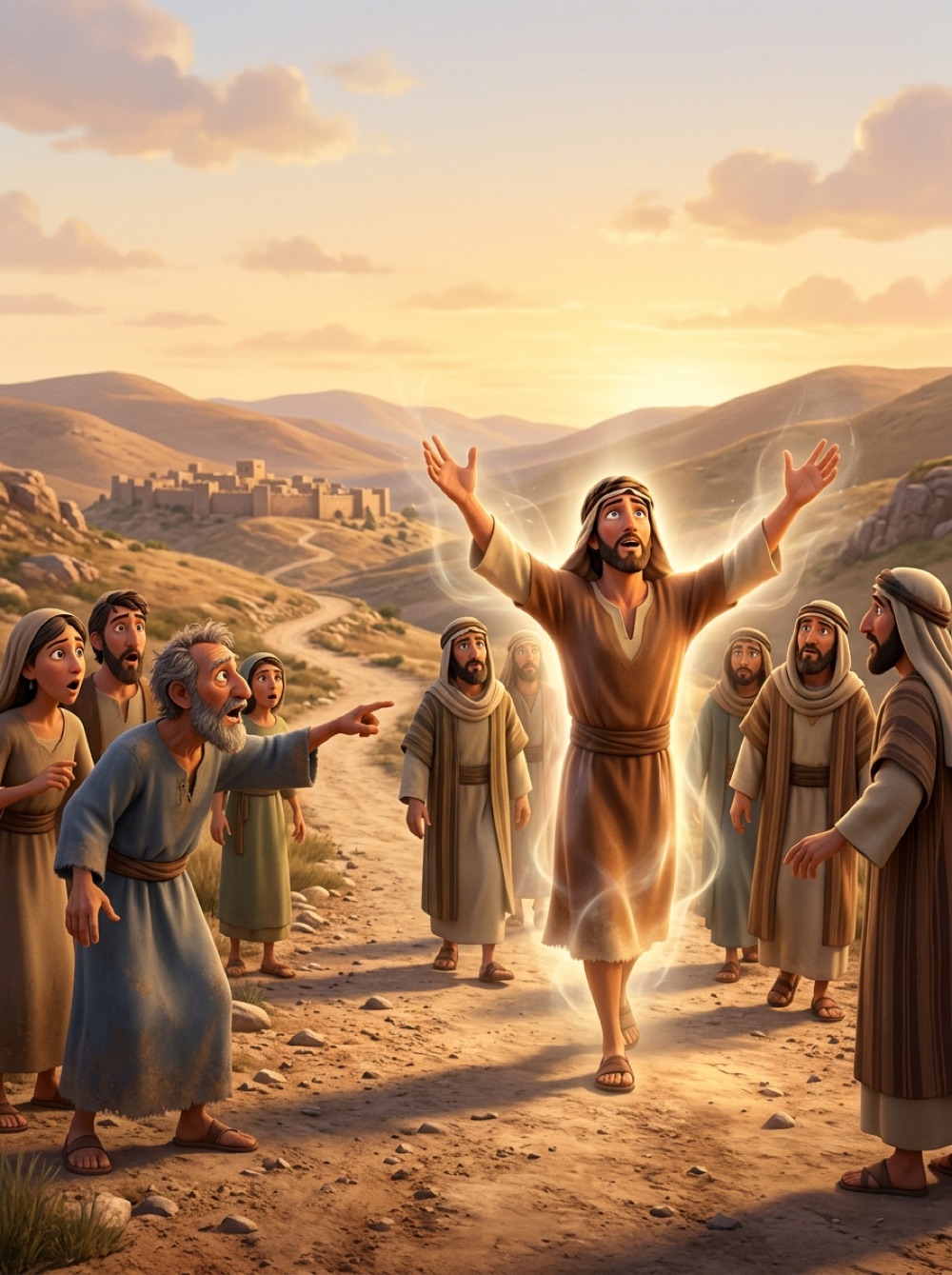
The Spirit Comes on Saul
Samuel anointed Saul with oil and told him what would happen on the road home — and every sign came true exactly as Samuel had said. When Saul met a group of prophets, the Spirit of God came on him powerfully and he prophesied with them. The people who knew him from before were astonished. "What has happened to Saul?" they asked. "Is Saul also among the prophets?" Something new had begun.
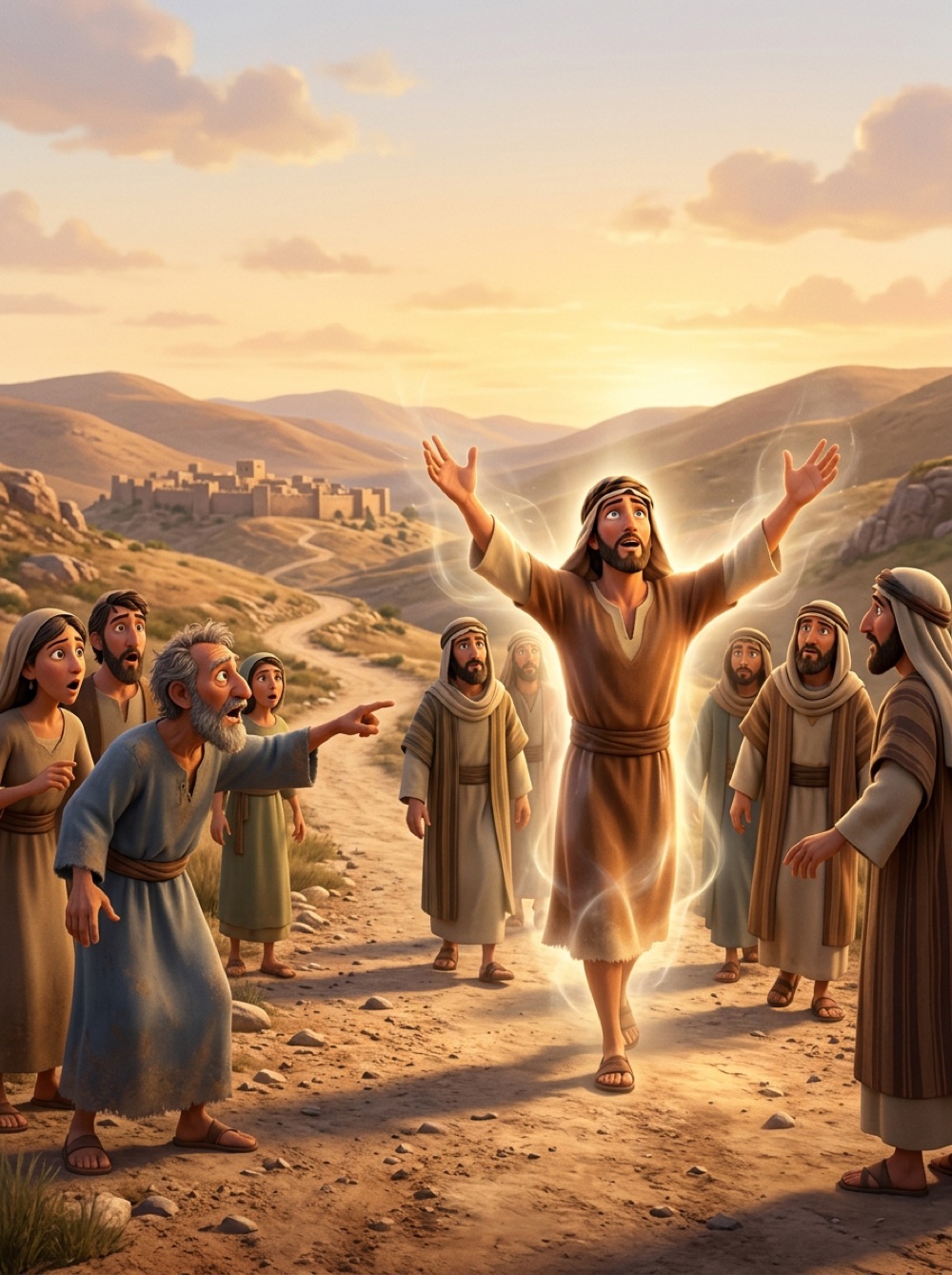
Saul's Impatience
Before a crucial battle, Samuel told Saul to wait seven days for him to come and offer the sacrifices. On the seventh day, Samuel still hadn't come. The soldiers were deserting. The Philistines were gathering. Saul panicked and offered the sacrifices himself — something only a priest was permitted to do. The moment he finished, Samuel arrived. "You have done a foolish thing," Samuel said. "Your kingdom will not endure."
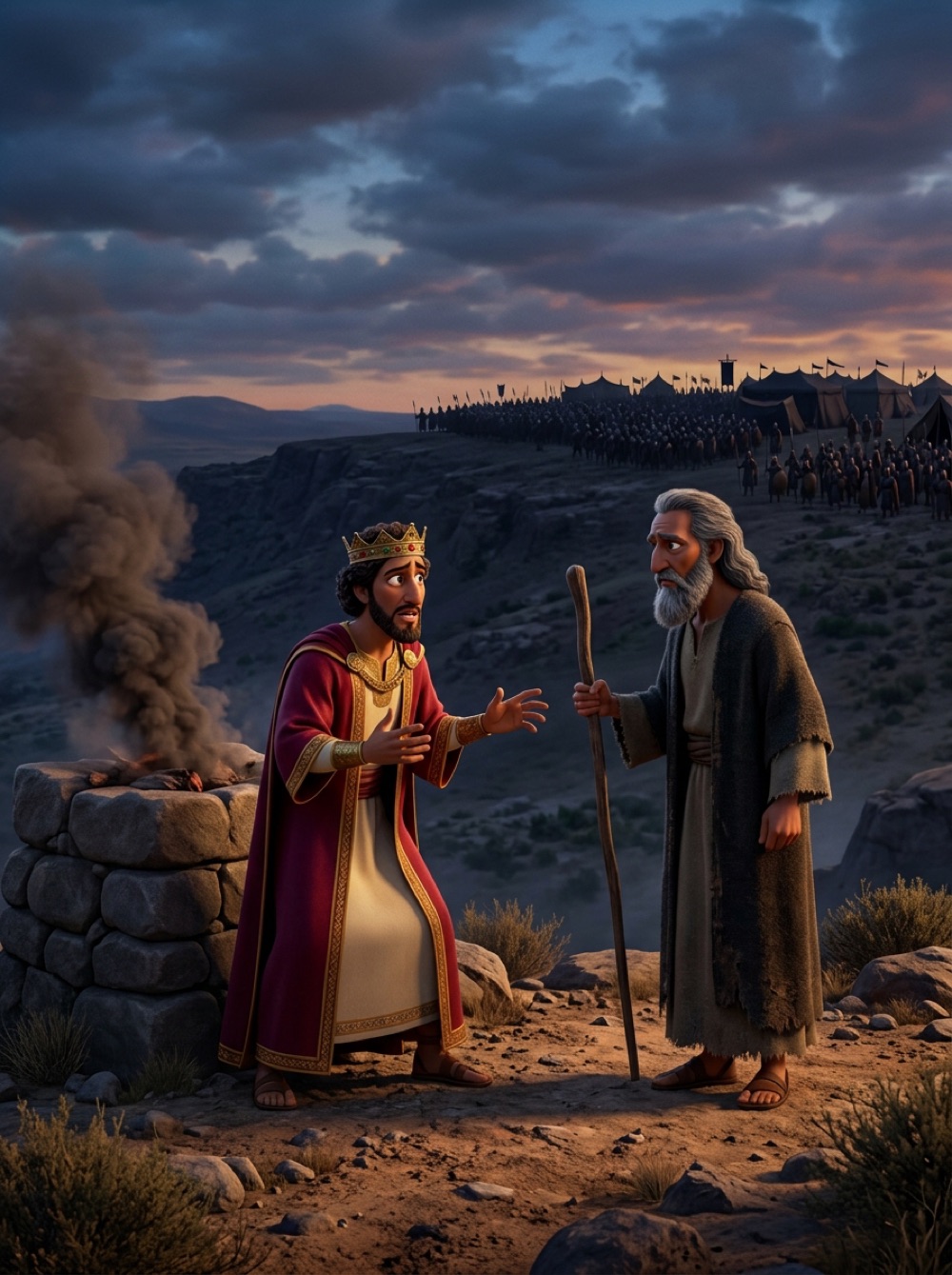
Jonathan's Courage
While Saul sat under a tree making plans, his son Jonathan had a different idea. Without telling his father, Jonathan and his armor-bearer climbed up a rocky cliff to attack a Philistine outpost alone. "Perhaps God will act for us," Jonathan said. "Nothing can stop God from saving, whether by many or by few." The Philistine outpost panicked at their approach and God sent an earthquake — and Israel routed the whole enemy army.

To Obey Is Better Than Sacrifice
God told Saul to completely destroy the Amalekites and everything they owned. Saul won the battle — but kept the best animals and spared the enemy king. When Samuel arrived, Saul said, "I have obeyed God's command." Samuel said, "Then what is this bleating of sheep I hear?" Saul made excuses. Samuel answered with words that have echoed through history. "To obey is better than sacrifice. Because you rejected God's word, God has rejected you as king."
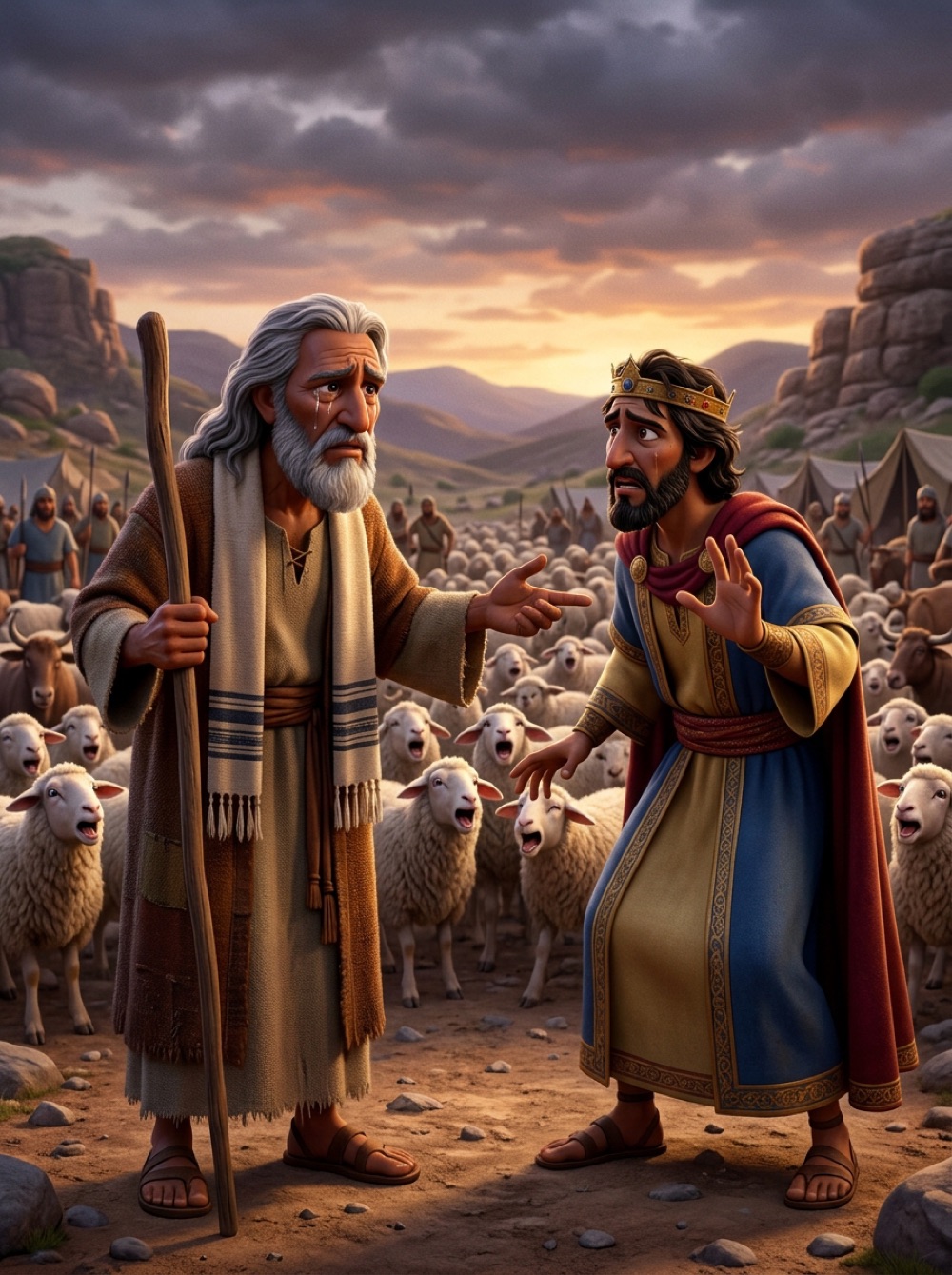
Samuel Mourns for Saul
Samuel turned to leave and Saul grabbed the hem of his robe — and it tore. Samuel said, "God has torn the kingdom of Israel from you today and given it to someone better." Samuel never went to see Saul again. But until the day Samuel died, he mourned for Saul. And God was grieved that He had made Saul king. It was not a victory to celebrate — it was a tragedy of wasted potential.
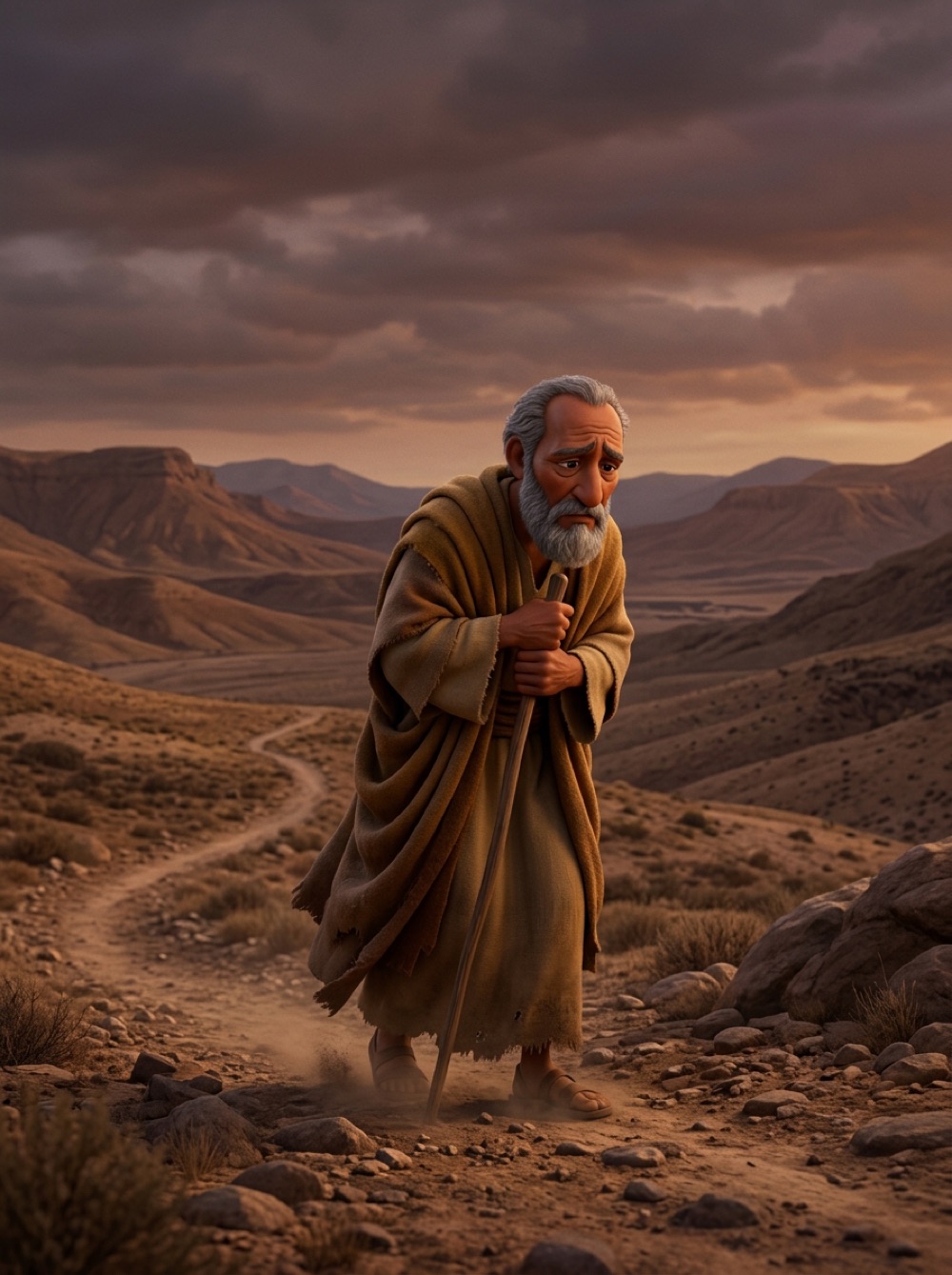
God Looks at the Heart
God told Samuel to stop grieving and go to Bethlehem to anoint a new king from the family of a man named Jesse. Samuel looked at Jesse's sons one by one — tall, impressive, kingly-looking men. But God kept saying no. God said to Samuel, "Don't look at his appearance or height. People look at the outward appearance. The Lord looks at the heart." Seven sons passed by. None of them was the one.
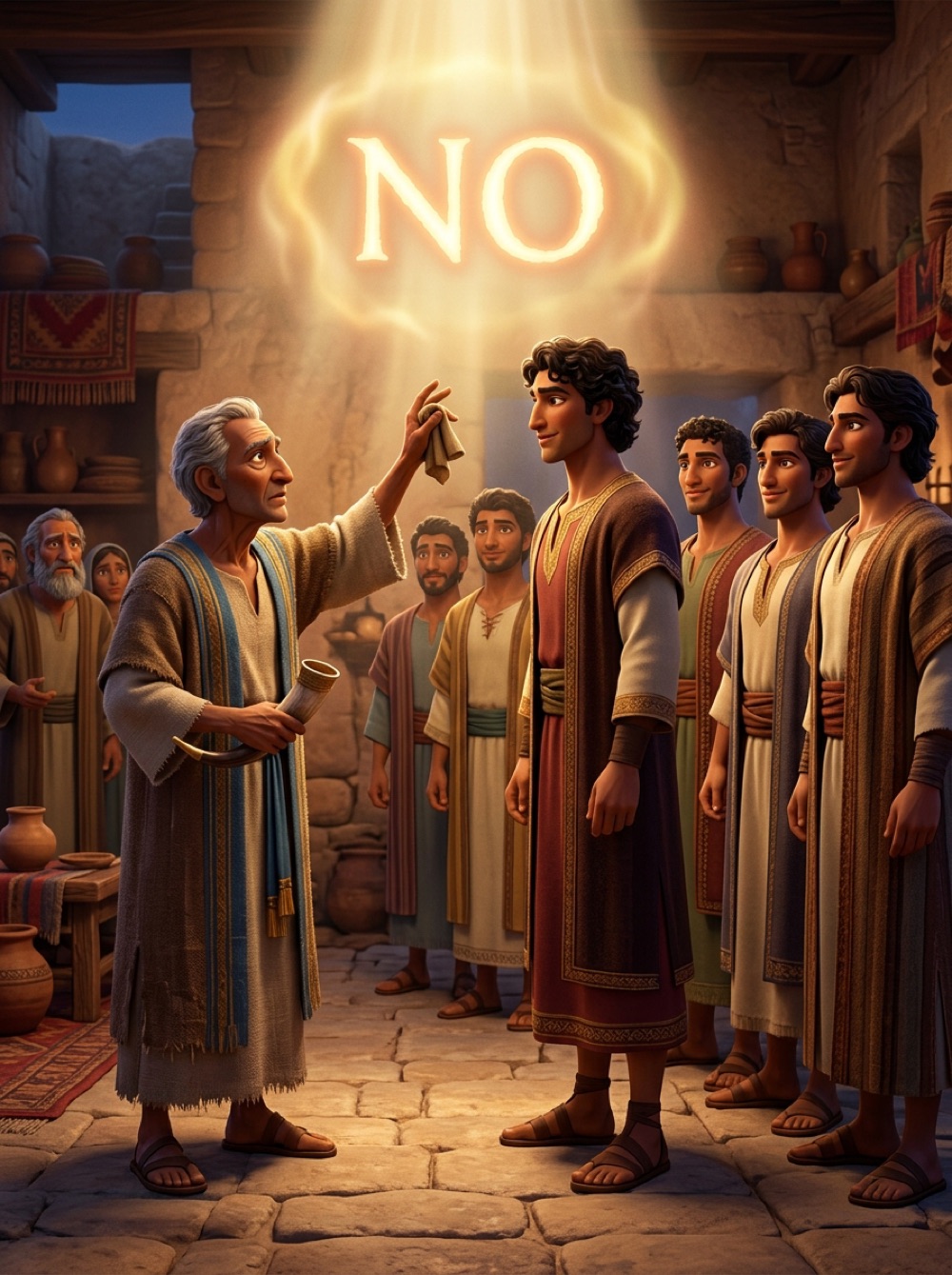
The Youngest Son
Samuel asked Jesse, "Are these all your sons?" Jesse said there was one more — the youngest, out in the fields looking after the sheep. They sent for him. When David walked in — a young man with a healthy appearance and beautiful eyes — God said to Samuel, "Rise and anoint him. He is the one." Samuel anointed David with oil right there in front of his brothers — and the Spirit of God came on David powerfully from that day on.
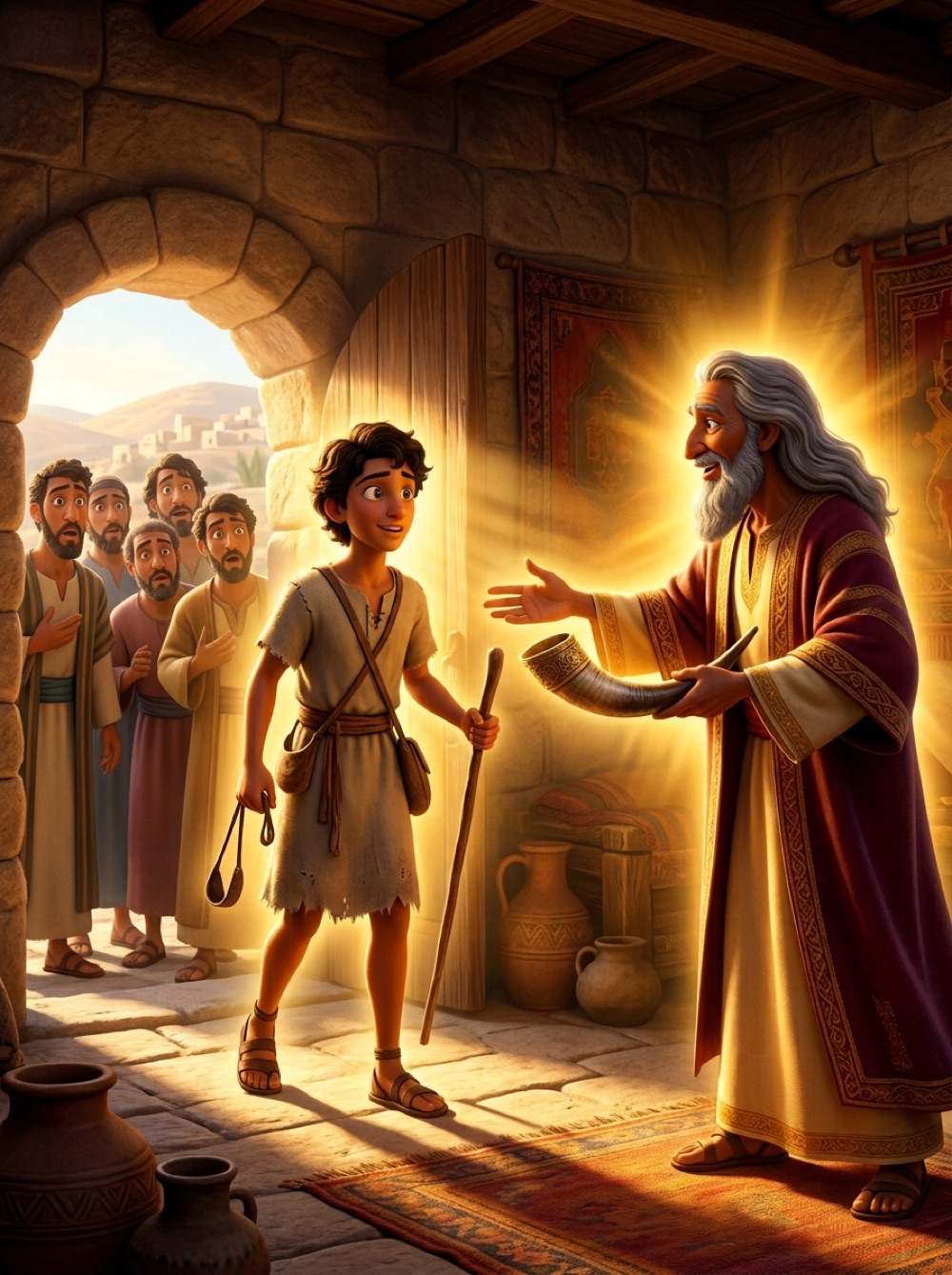
David Plays for Saul
Saul was tormented by a troubled spirit and his servants suggested music might help. One of them said, "I know a son of Jesse of Bethlehem who is skilled in playing the harp — and he is also brave, a warrior, wise, and God is with him." Saul sent for David. Whenever the troubled spirit came on Saul, David would play — and Saul would feel better. Saul loved him greatly and made him his armor-bearer.
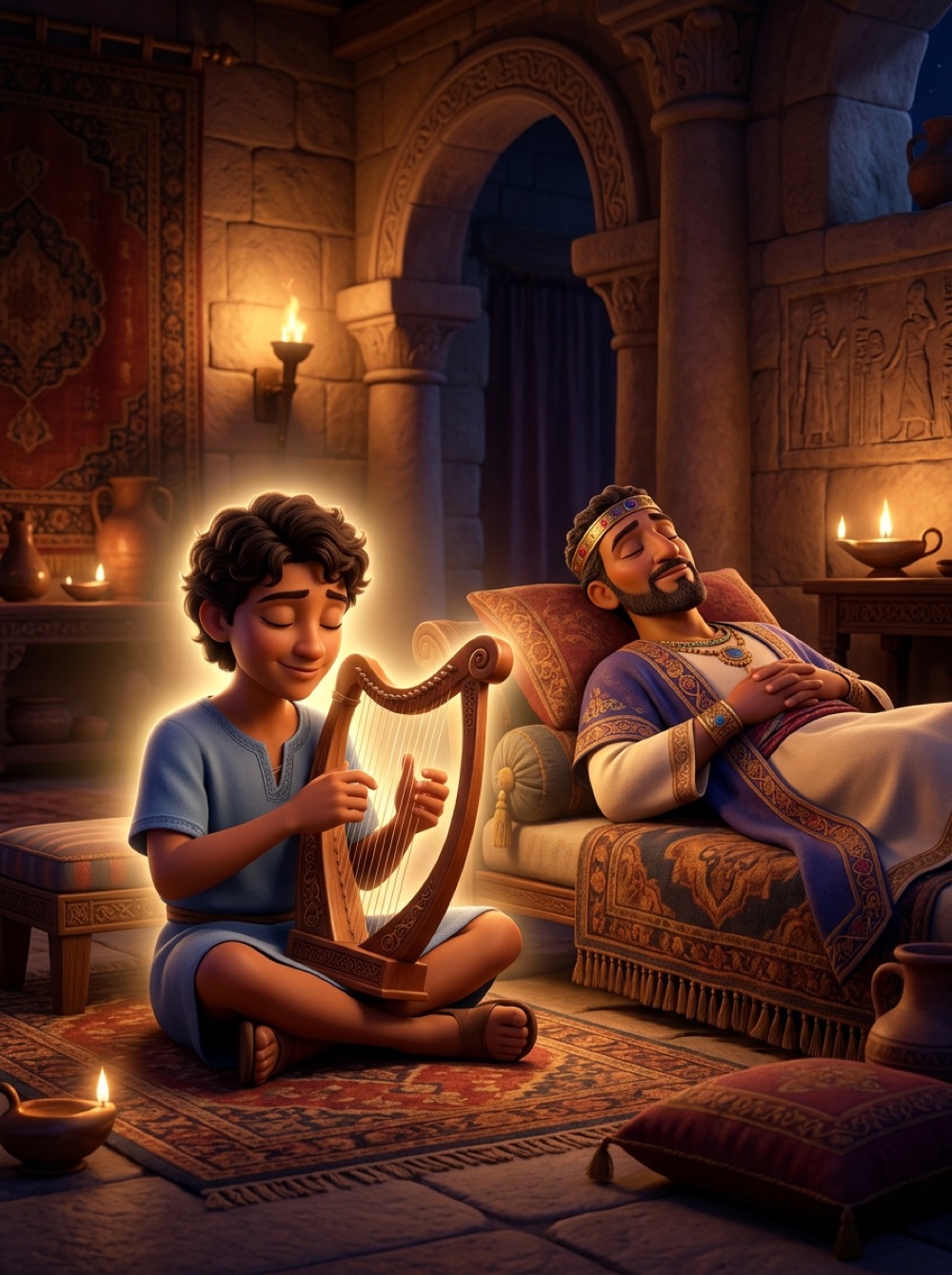
Goliath's Challenge
The Philistines and Israelites faced each other across a valley. Every day for forty days a giant named Goliath — over nine feet tall, in full armor — came out and bellowed a challenge. "Choose a man and let him fight me. If he beats me, we will be your slaves. If I beat him, you will be our slaves." Every morning and evening he came. And every time, the Israelite army ran away in fear.
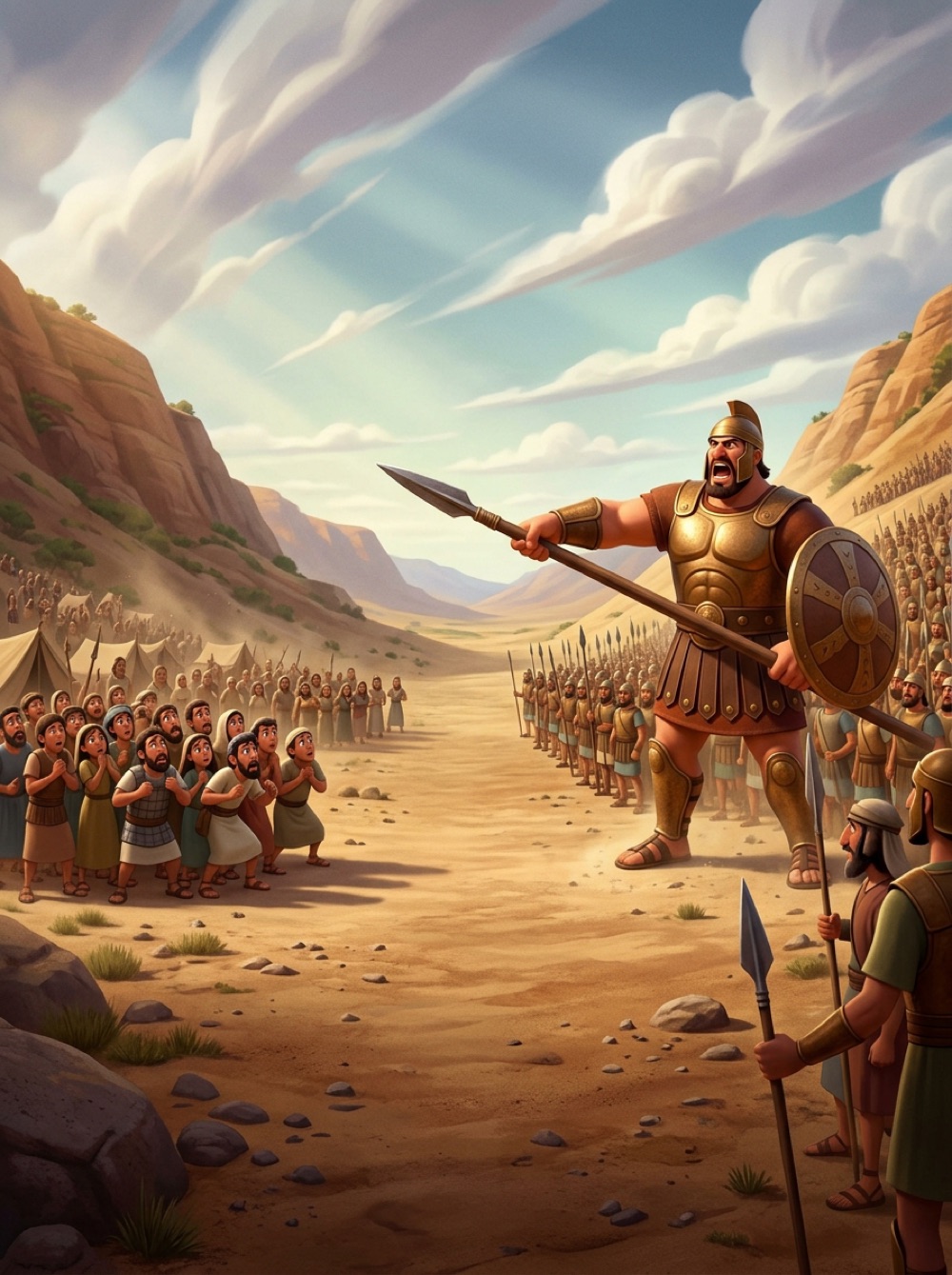
Who Is This Philistine?
David came to the battlefield to bring food to his brothers. He heard Goliath's challenge and looked around at the terrified Israelite soldiers. "Who is this uncircumcised Philistine that he should defy the armies of the living God?" David's brothers were embarrassed and told him to go home. But David's question had reached the ears of King Saul — who sent for the young shepherd boy.
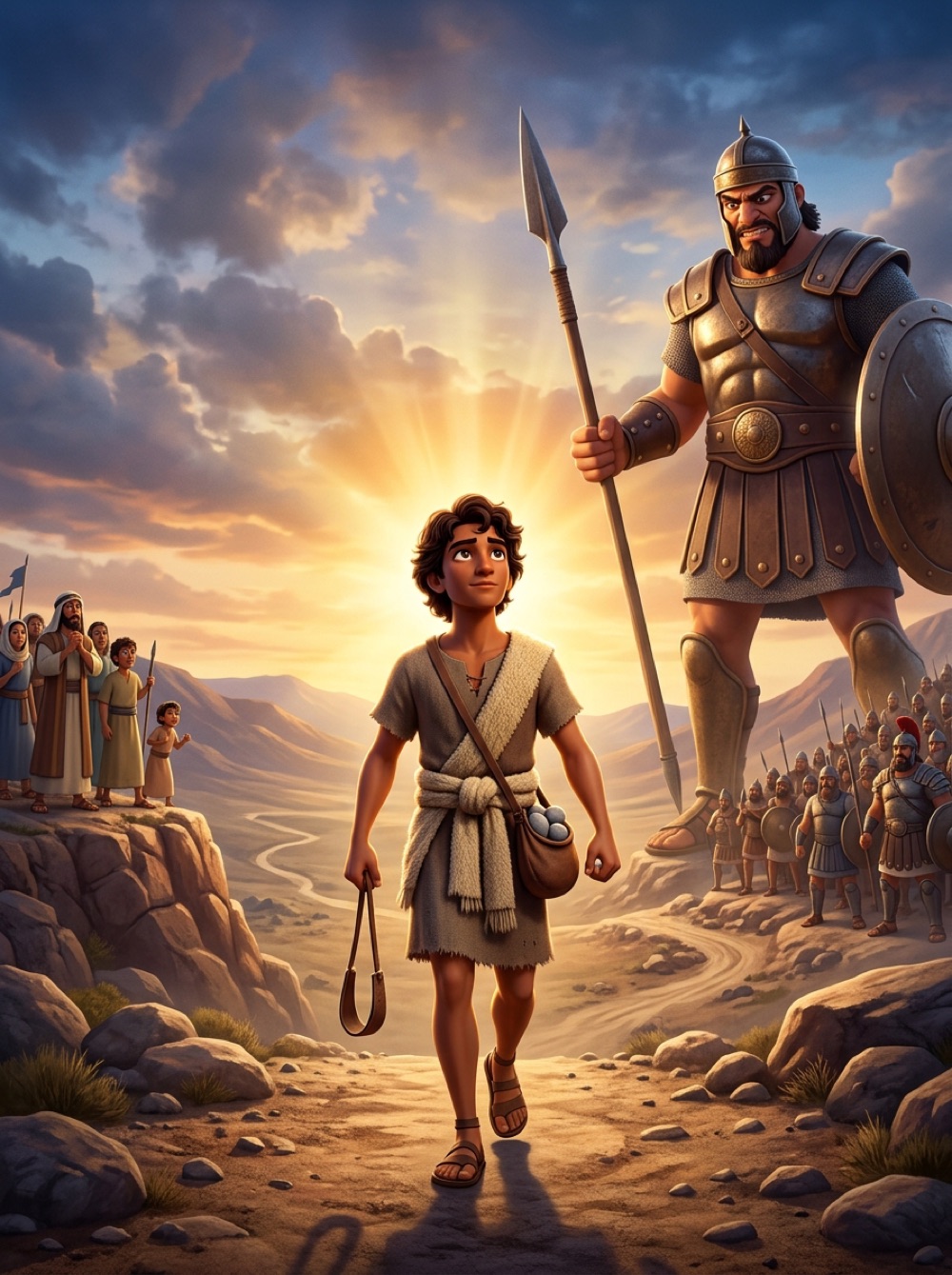
The Lord Will Deliver You
Saul tried to put his own armor on David — but David couldn't walk in it. He took it off. He picked up five smooth stones from a stream and put them in his shepherd's bag. With just his sling in his hand he walked toward Goliath. The giant looked at him with contempt. "Am I a dog that you come at me with sticks?" David answered, "You come against me with sword and spear. I come against you in the name of the Lord."
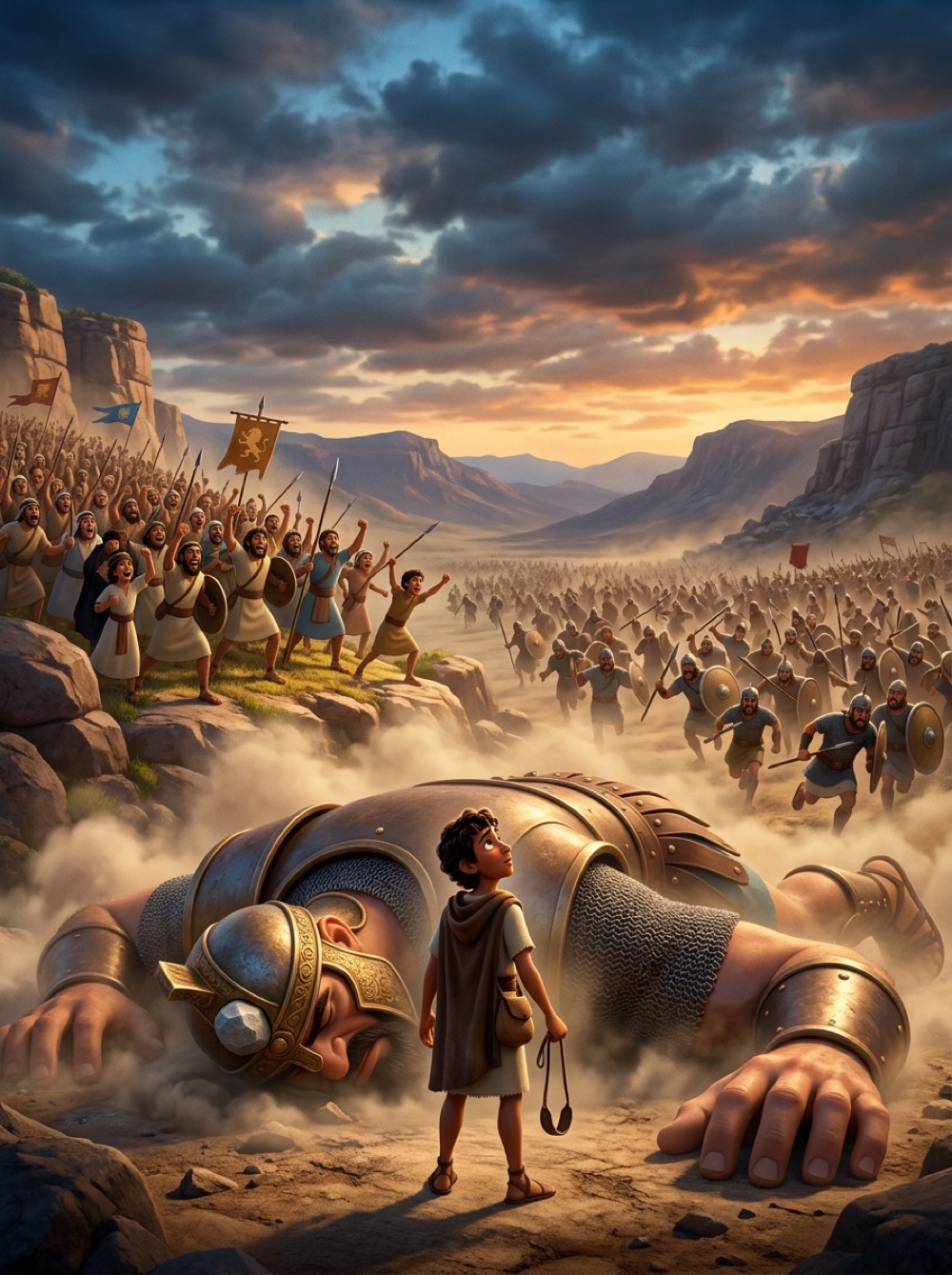
One Stone
David ran toward Goliath, reached into his bag, took out a stone, and slung it. The stone struck the giant in the forehead and he fell face down on the ground. The whole Philistine army saw their champion fall — and they turned and ran. The Israelite army roared and chased after them. A shepherd boy with a sling and a stone had done what the whole army of Israel was too afraid to try.
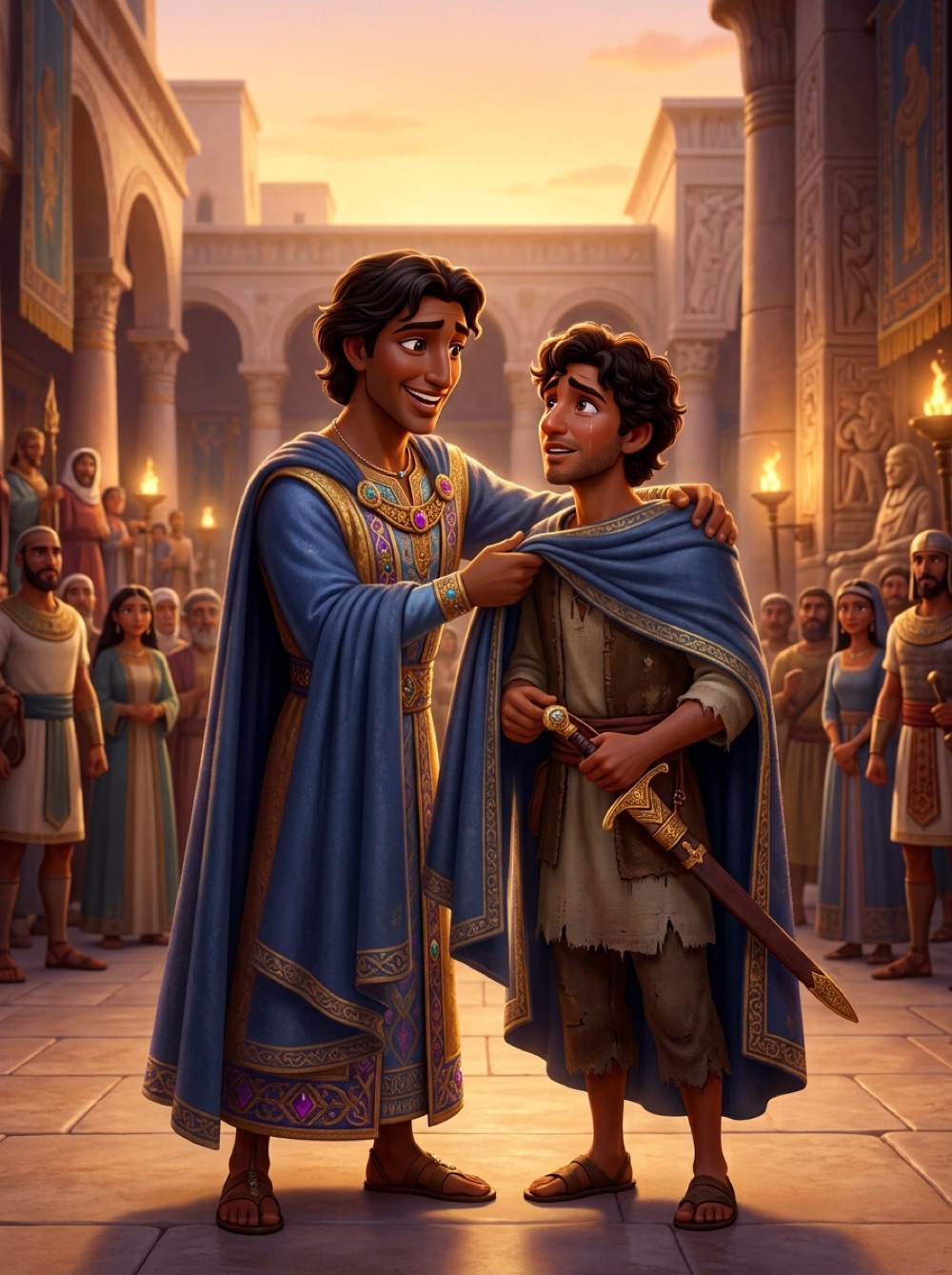
Jonathan and David
After the victory over Goliath, Jonathan — Saul's son — made a covenant of friendship with David. He loved David as himself and gave him his robe, his tunic, his sword, his bow, and his belt. It was the most generous gift a prince could give — stripping himself of his own symbols of status to honor his friend. Jonathan and David's friendship would become one of the most celebrated in all of history.
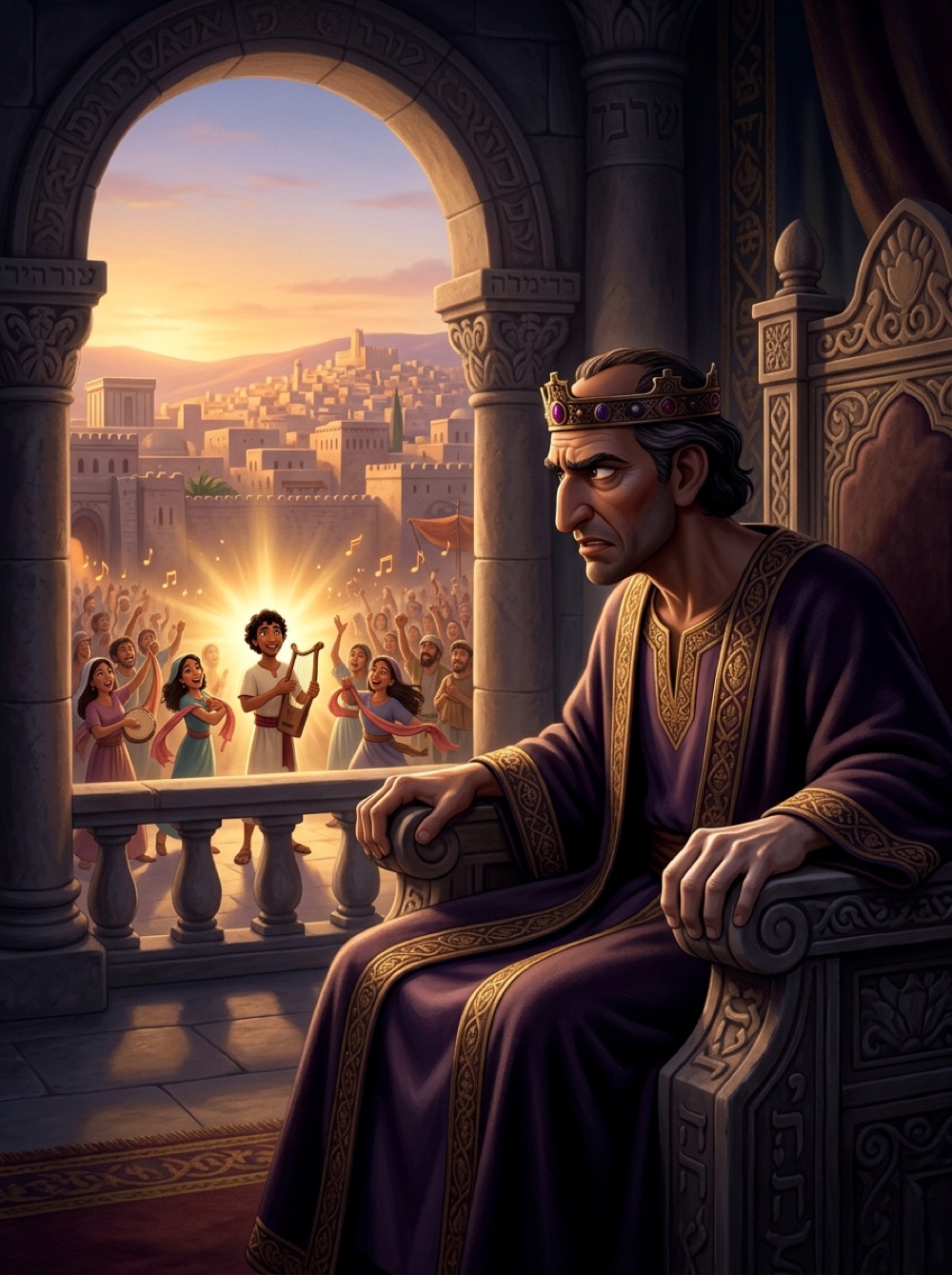
Saul's Jealousy
When the army returned from battle, the women came out singing and dancing. "Saul has killed his thousands," they sang, "and David his tens of thousands." From that day on, Saul watched David with jealousy and suspicion. The next day an evil spirit came on Saul and he hurled a spear at David while David was playing the harp. David dodged it twice. Saul was afraid of David — because God was with David and had left Saul.
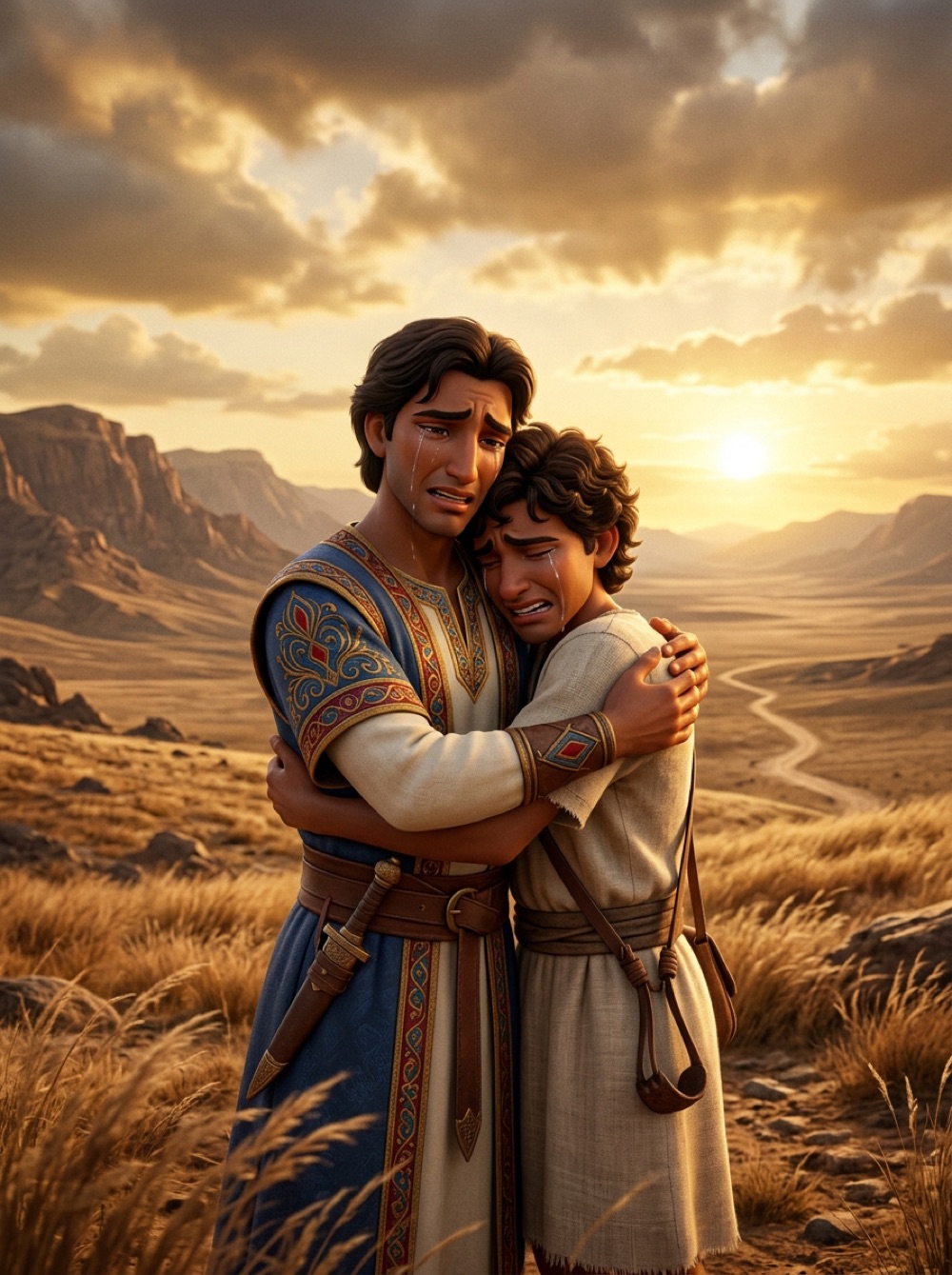
Jonathan Protects David
Saul ordered Jonathan and all his servants to kill David. Jonathan warned David and then went to his father and spoke up for his friend — reminding Saul of everything David had done for him. Saul temporarily relented. But the jealousy kept returning. Jonathan eventually had to warn David that his life was in real danger. When they said goodbye, both of them wept — David most of all. They both knew it might be the last time.
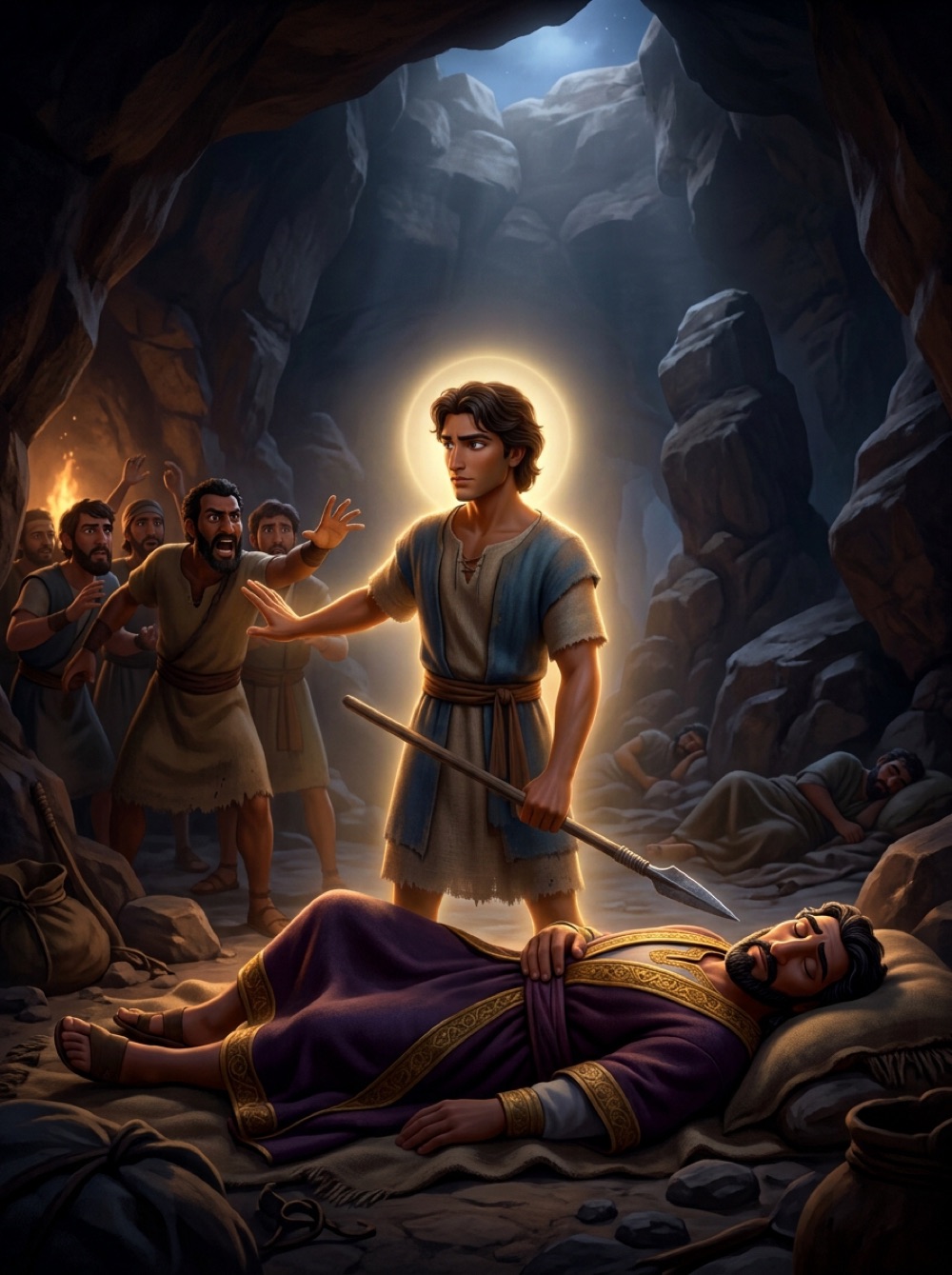
David on the Run
For years David lived as a fugitive — hunted by Saul across the wilderness of Judah. Hundreds of men who were in trouble or in debt gathered around him and he became their leader. Twice David had the chance to kill Saul and refused — once cutting off the corner of Saul's robe while he slept in a cave, once taking his spear and water jug from beside his sleeping head. "I will not harm the Lord's anointed," David said both times.
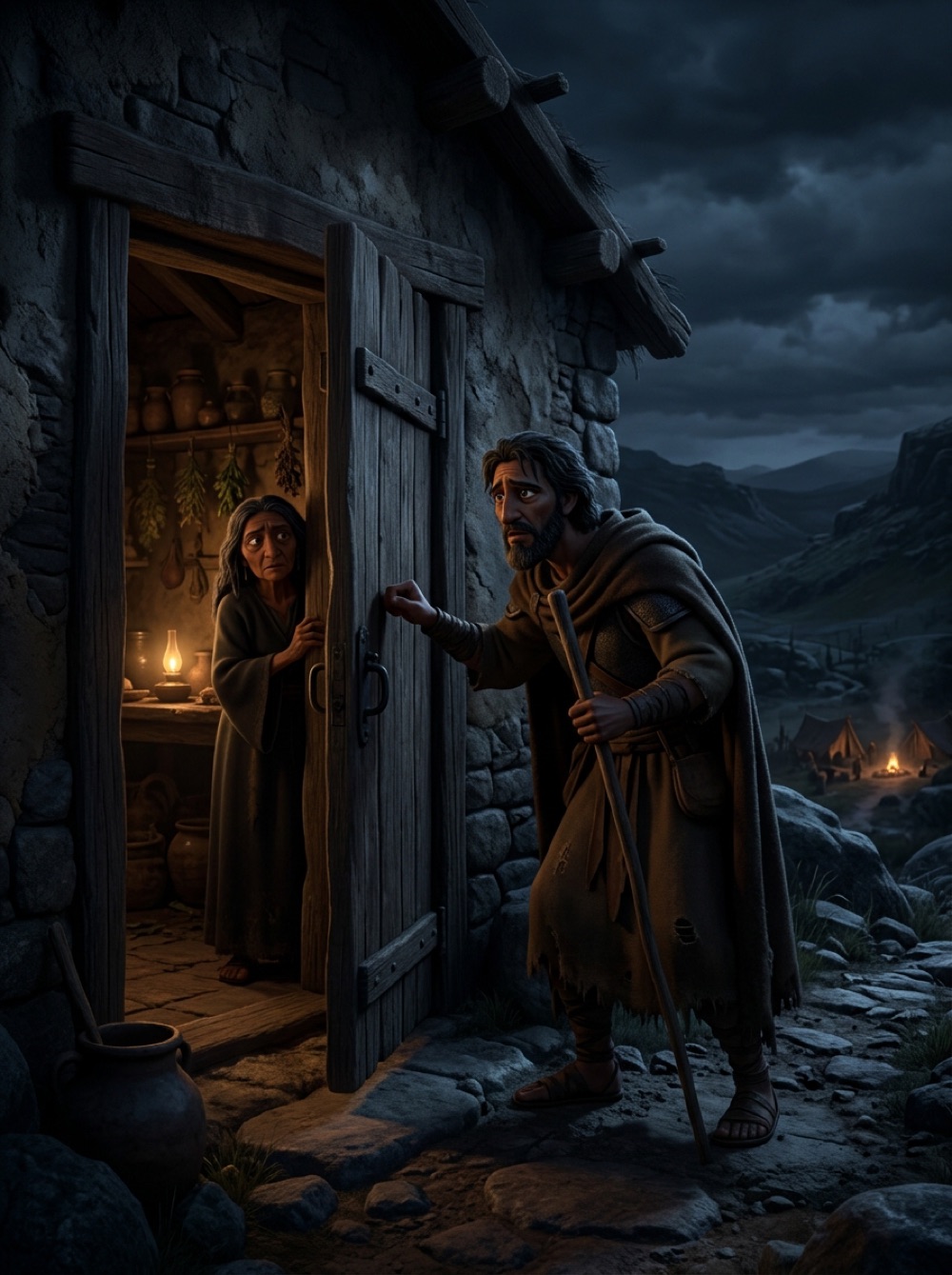
Saul Seeks a Medium
With a massive Philistine army approaching and Samuel dead, Saul was terrified. He tried to hear from God — but God did not answer him by dreams, or prophets, or any means. So Saul did something God had strictly forbidden. He disguised himself and went to consult a medium — a woman who claimed to speak with the dead. When you cut yourself off from God's voice, the temptation is to look anywhere else. No other voice can replace His.
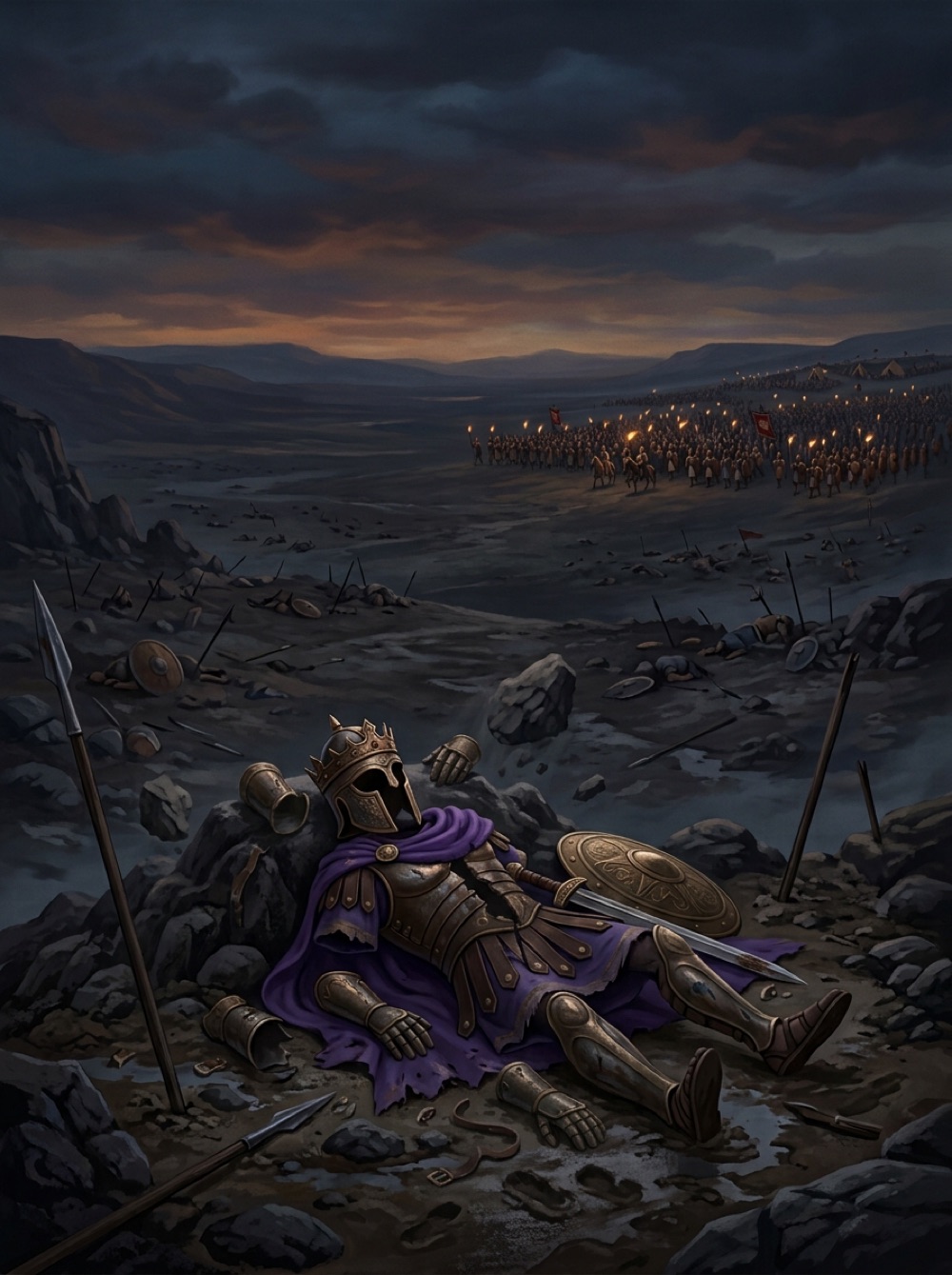
Saul's End
The Philistines attacked Israel and the battle went badly. Saul's sons died in the fighting including Jonathan. Saul himself was badly wounded by arrows and fell on his own sword rather than be captured. The man who had started his story looking for lost donkeys and been given a kingdom ended it having lost everything — his obedience, God's favor, his sons, and finally his own life. The first king of Israel was gone.
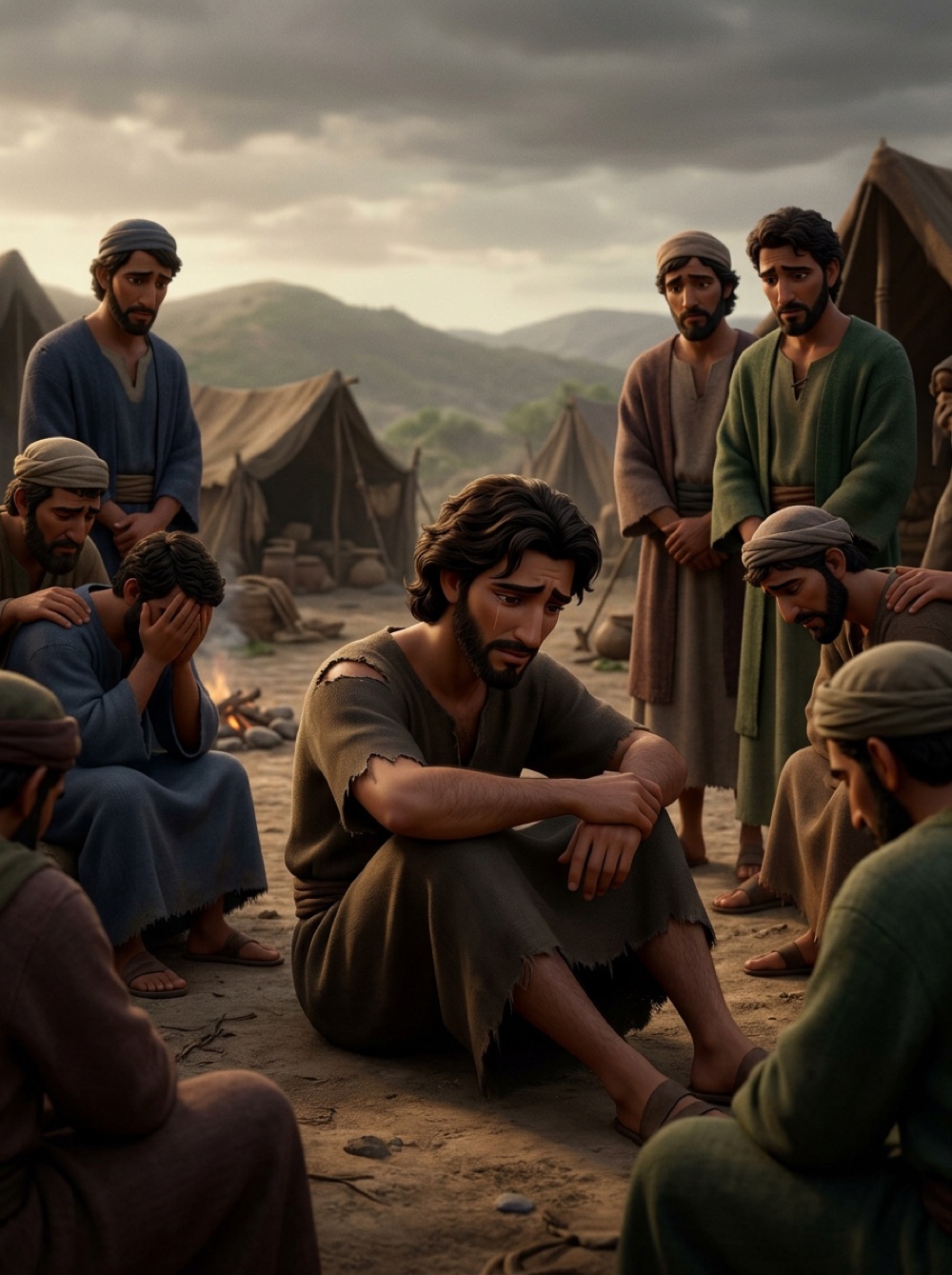
David Mourns
When David heard that Saul and Jonathan were dead, he tore his clothes and wept and fasted until evening — he and all the men with him. Then David composed a lament for Saul and Jonathan. "How the mighty have fallen," he sang. For Jonathan he saved his deepest grief. "I am distressed for you, my brother Jonathan. Your love to me was wonderful — more wonderful than the love of women." David mourned the man who had tried to kill him and the friend who had protected his life.
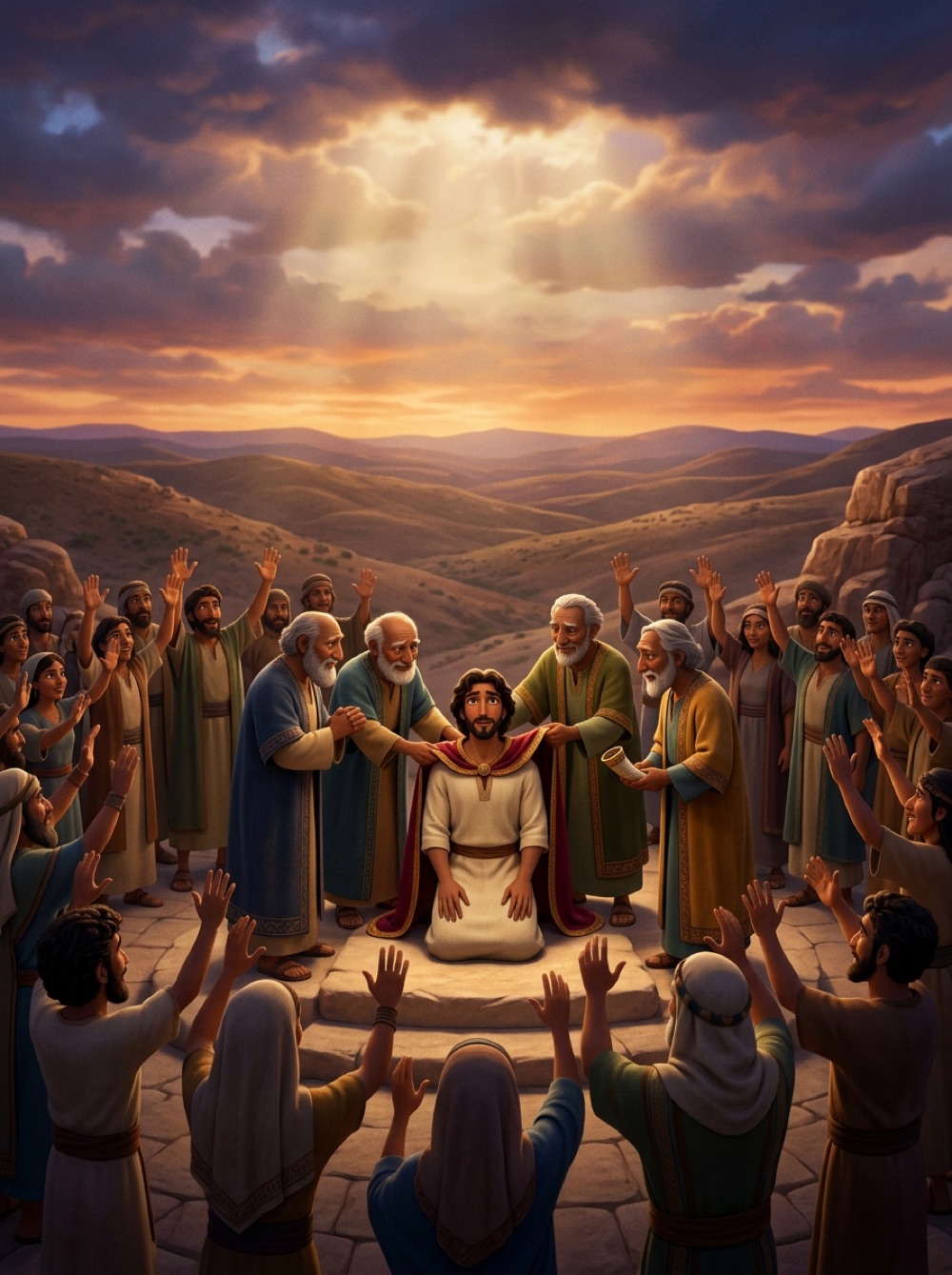
David Becomes King
After Saul's death, David was anointed king over the tribe of Judah first. For seven years there was conflict between David's followers and the remaining supporters of Saul's house. Then one by one the other tribes came to David at Hebron and pledged their loyalty. David was anointed king over all of Israel — just as God had promised Samuel all those years ago in Jesse's house in Bethlehem.
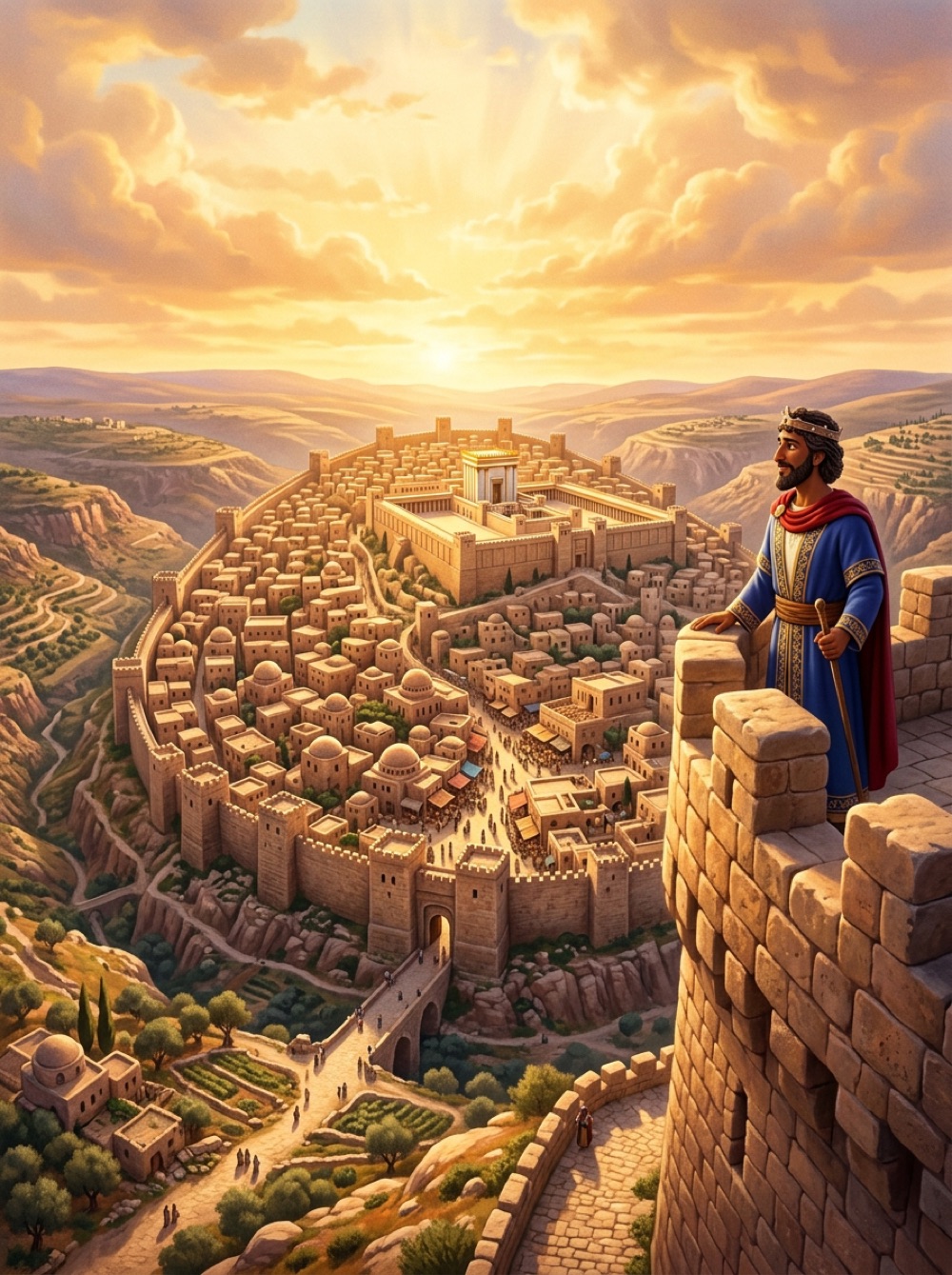
Jerusalem — The City of David
David captured the fortress city of Jerusalem from the Jebusites and made it his capital. The city sat on a hill that was considered impossible to take — but David's men found a water shaft and climbed up through it. David called it the City of David and made it the political and spiritual center of his kingdom. Jerusalem would become the most significant city in all of human history.
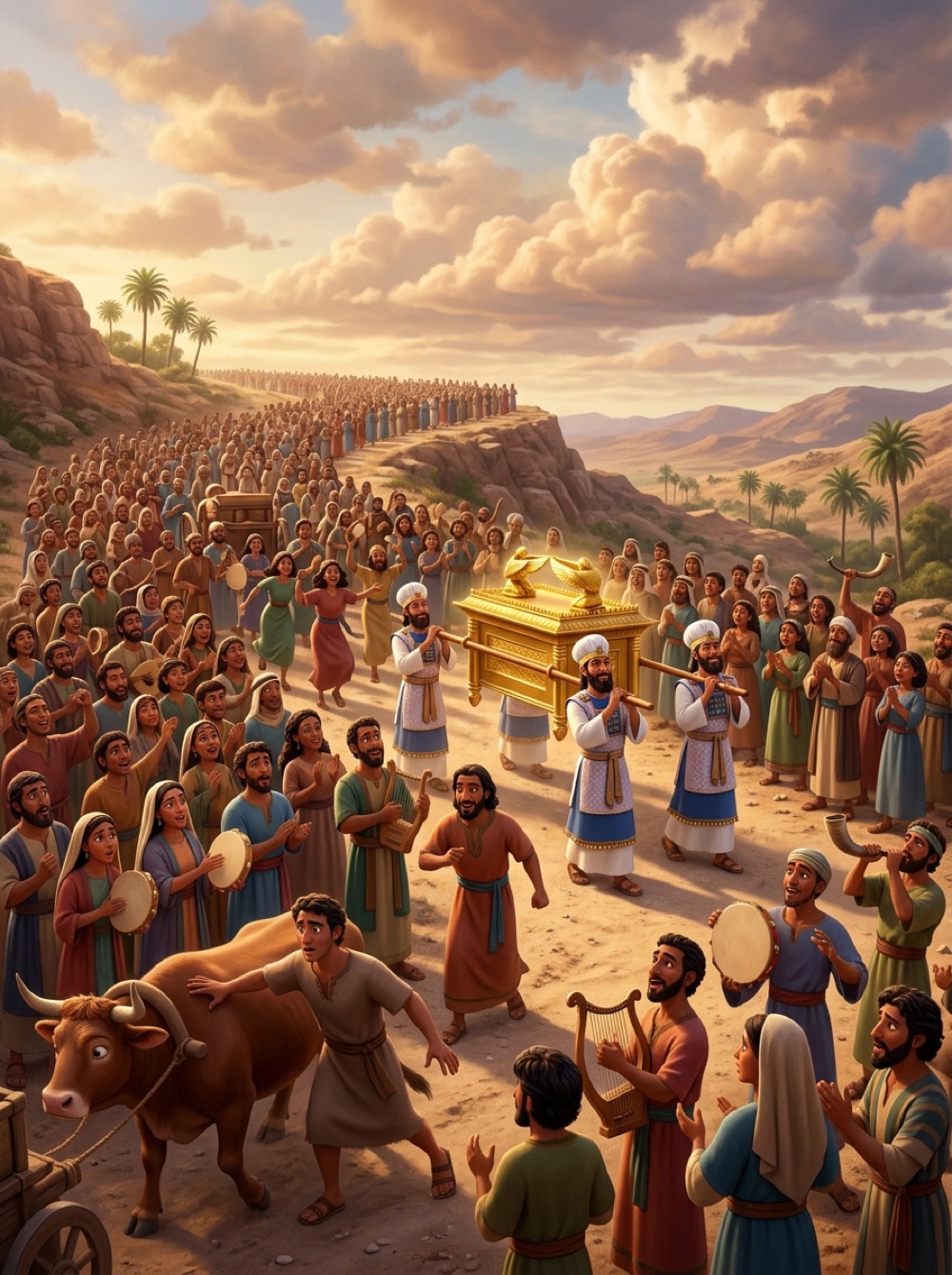
The Ark Comes to Jerusalem
David brought the Ark of the Covenant to Jerusalem with great celebration — thirty thousand men accompanying it. But on the way, a man named Uzzah reached out and touched the Ark to steady it when the oxen stumbled — and died immediately. David was afraid and angry and left the Ark at a nearby house for three months. When he heard God had blessed that household, he brought it the rest of the way.
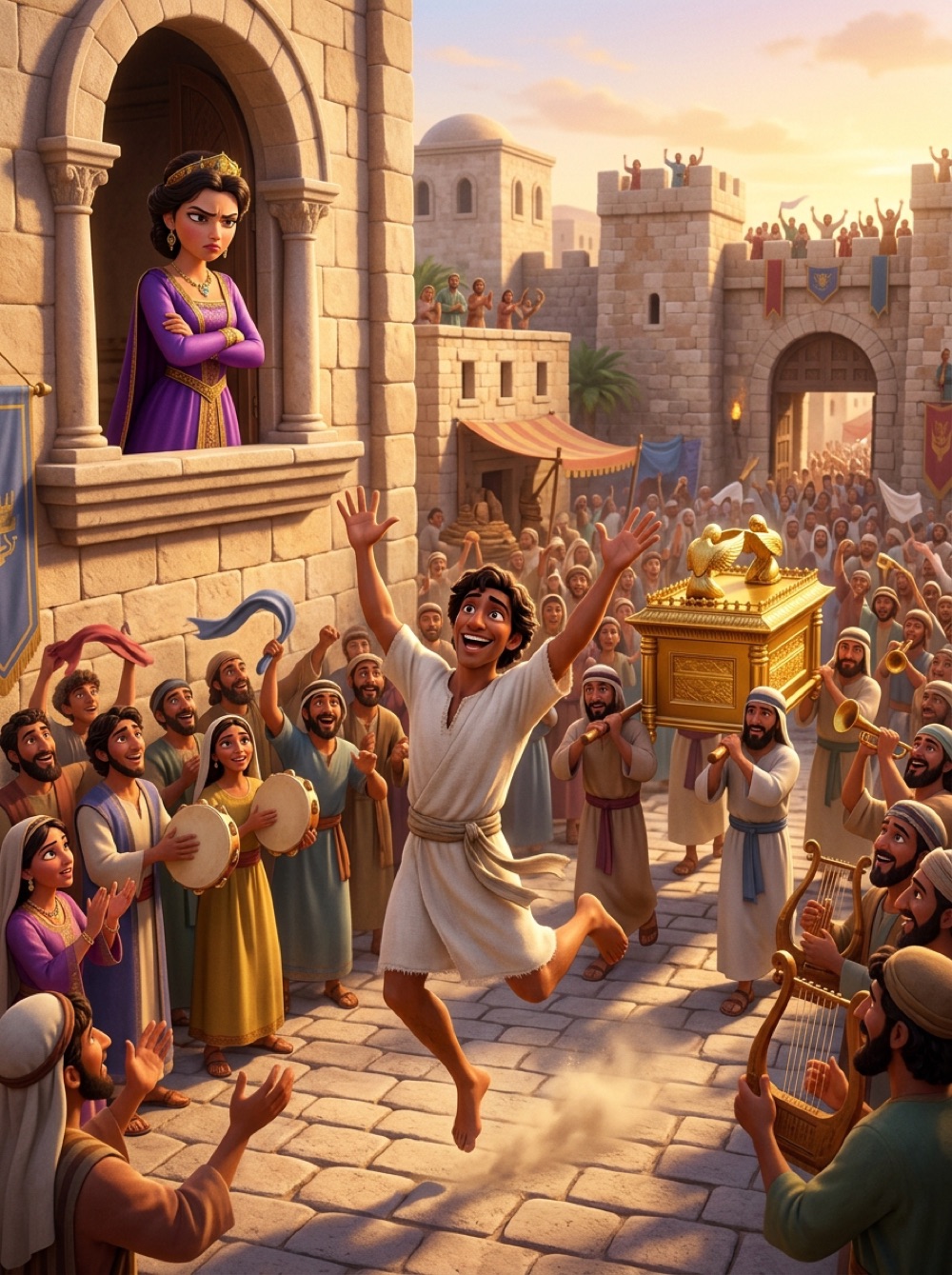
David Dances Before the Lord
When the Ark entered Jerusalem, David danced before the Lord with all his strength — leaping and celebrating with complete abandon. His wife Michal watched from a window and despised him for it. David told her, "I will celebrate before the Lord. I will become even more undignified than this — and I will be humiliated in my own eyes." Some worship is too important to be self-conscious about.
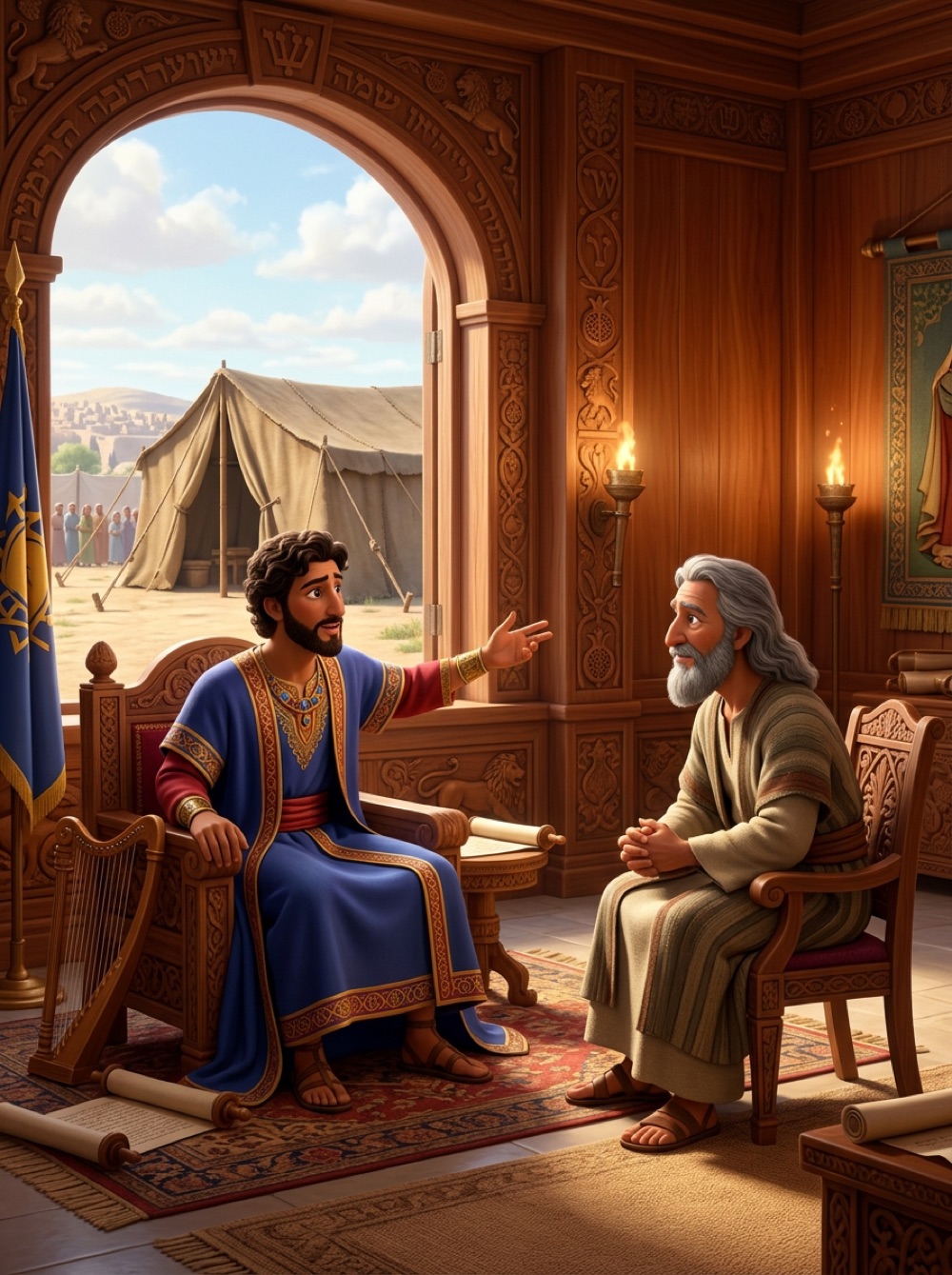
David Wants to Build God a House
David was settled in his palace and said to the prophet Nathan, "Here I am living in a beautiful cedar house while the Ark of God sits in a tent." He wanted to build God a proper temple. Nathan initially said yes — but that night God spoke to Nathan. "Tell David — are you the one to build me a house? I have never asked for a house. But I will build a house for you."
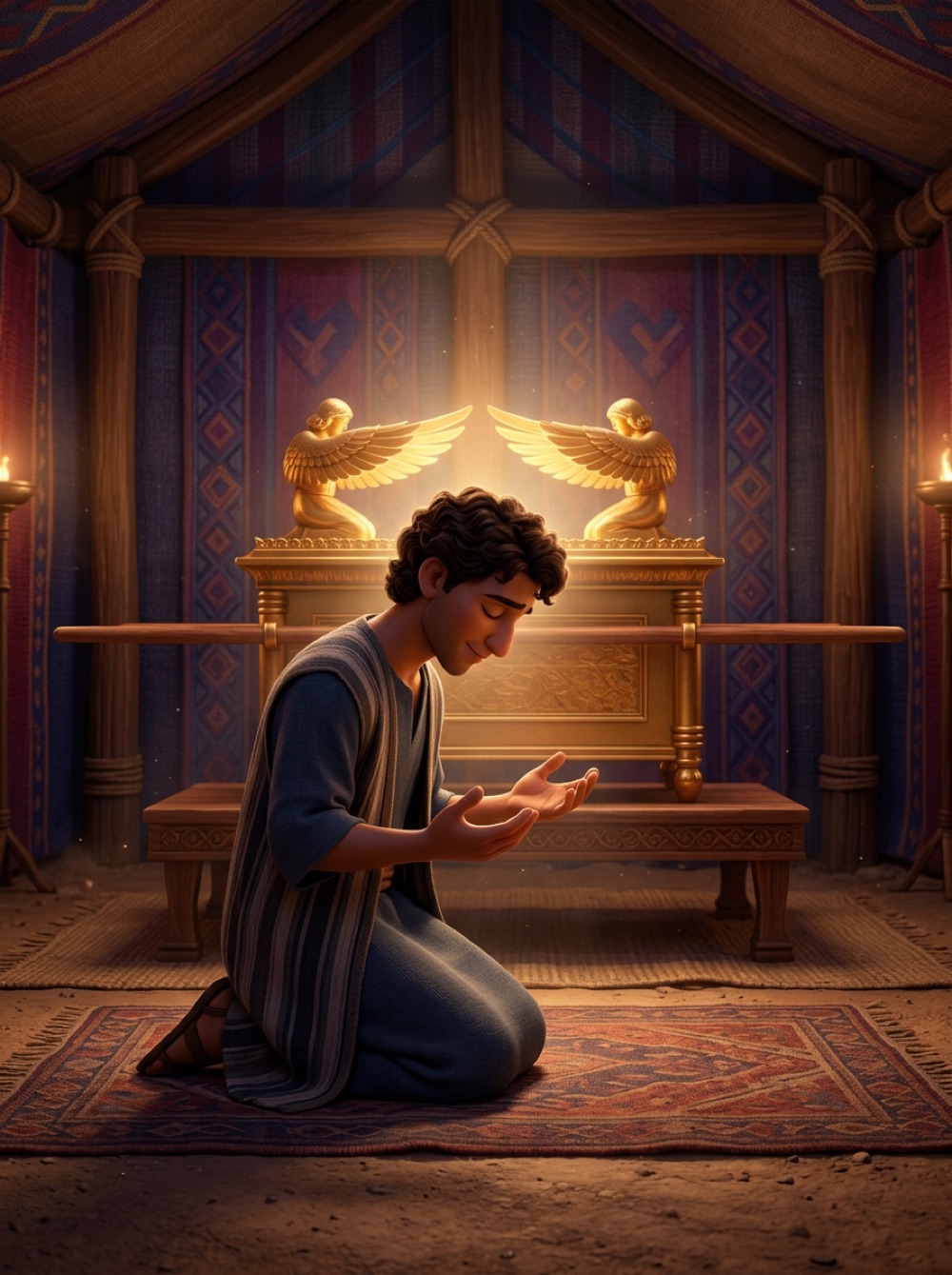
The Davidic Covenant
God made David an extraordinary promise. "Your house and your kingdom will endure forever before me. Your throne will be established forever." God was not just talking about a dynasty — He was pointing to something beyond David, a descendant who would reign forever. David went in and sat before the Lord and prayed one of the most humble prayers in the Bible. "Who am I, Lord God, and what is my family, that you have brought me this far?"
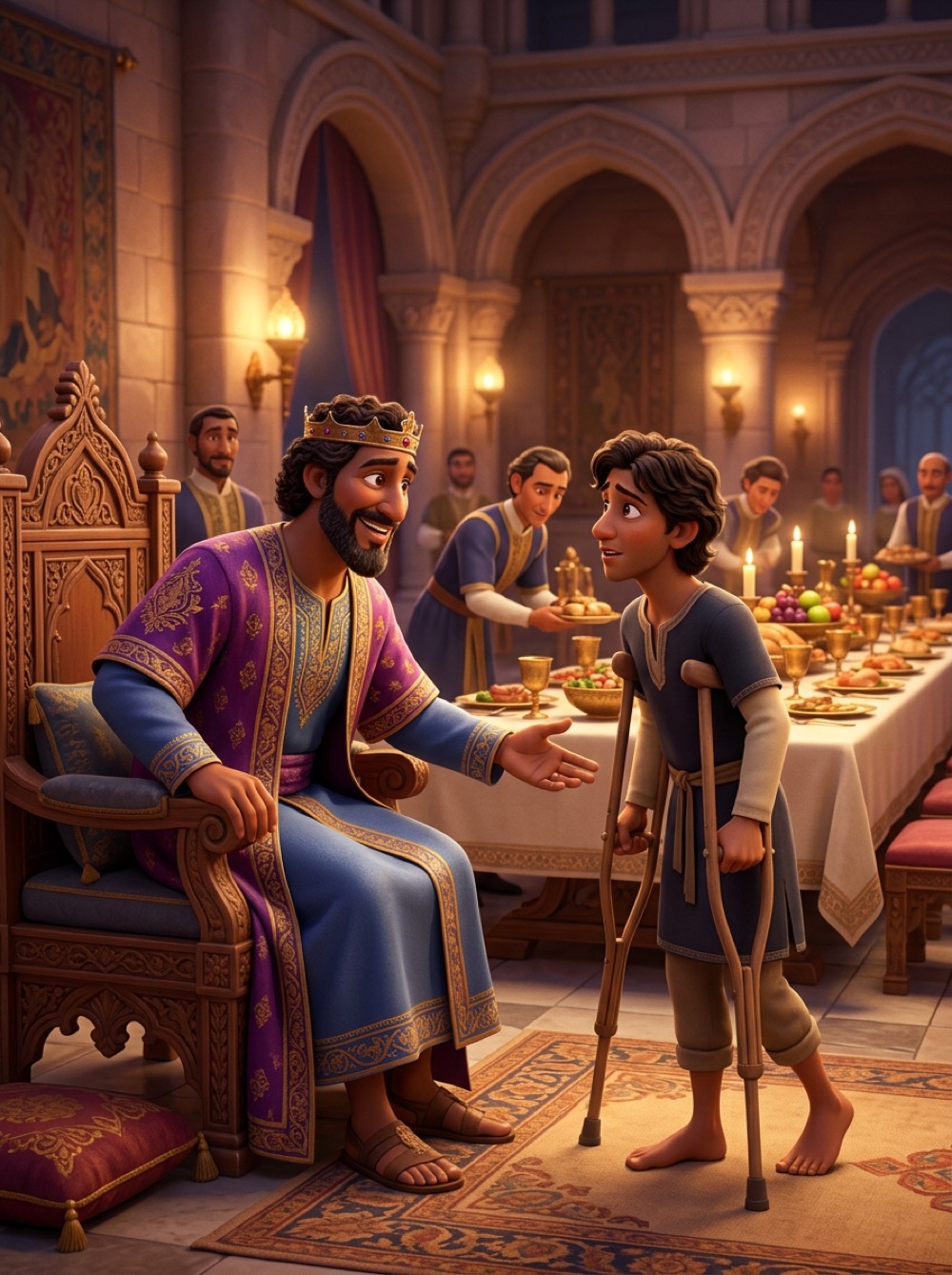
Kindness to Mephibosheth
David asked if anyone from Saul's family was still alive, so he could show them kindness for Jonathan's sake. He was told about Mephibosheth — Jonathan's son, who was crippled in both feet after being dropped by his nurse as a child when news came of Saul and Jonathan's deaths. David sent for him. Mephibosheth came trembling, expecting judgment. Instead David gave him all of Saul's land and invited him to eat at the king's table for the rest of his life.
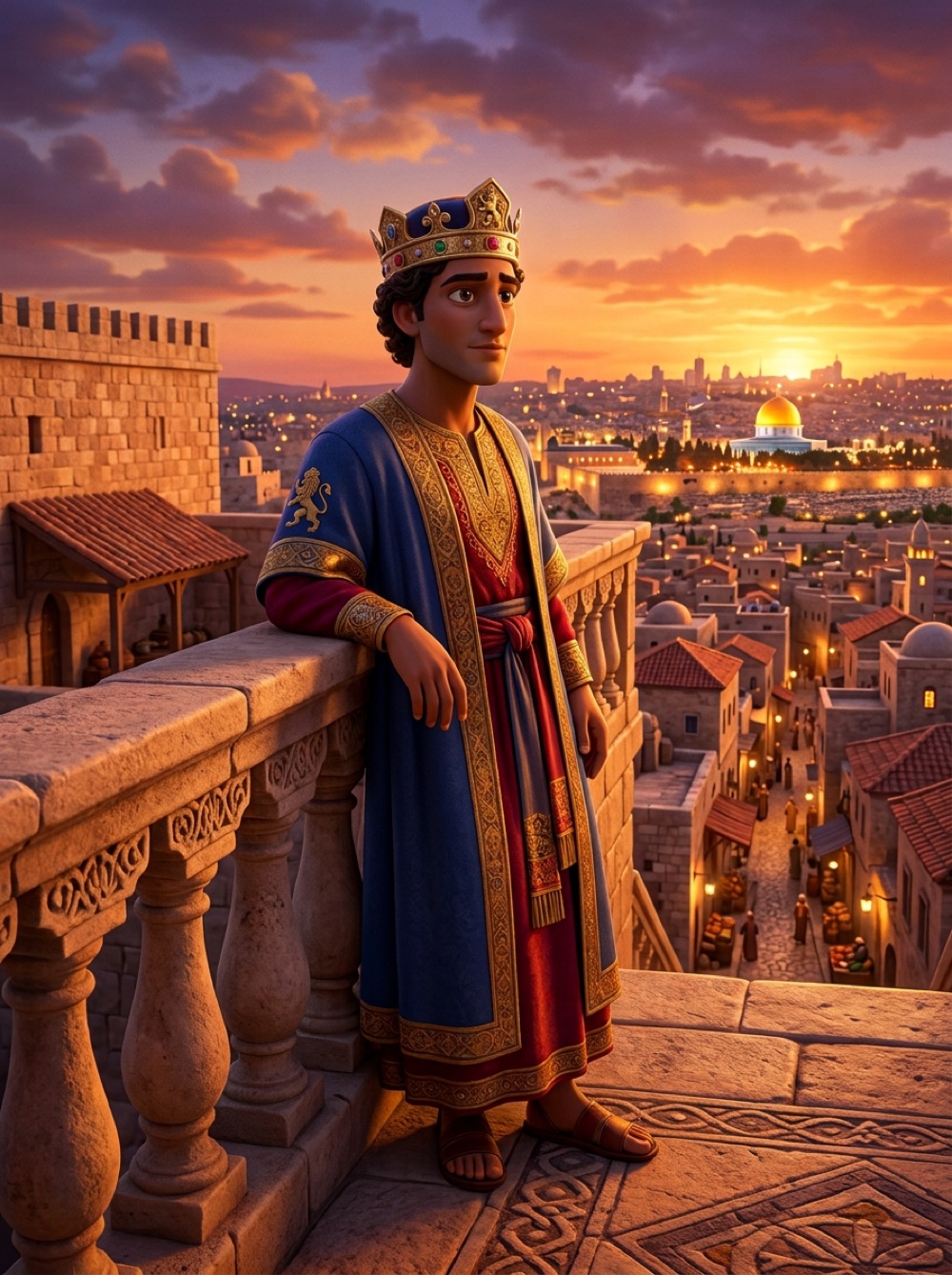
David's Great Sin
It was spring — the time when kings go to war. But David stayed in Jerusalem while his army fought. One evening he was walking on his palace roof and saw a beautiful woman bathing. He sent someone to find out who she was. She was Bathsheba — the wife of Uriah, one of David's most loyal soldiers fighting at the front. David sent for her anyway. He took what belonged to someone else — and the consequences would follow him for the rest of his life.
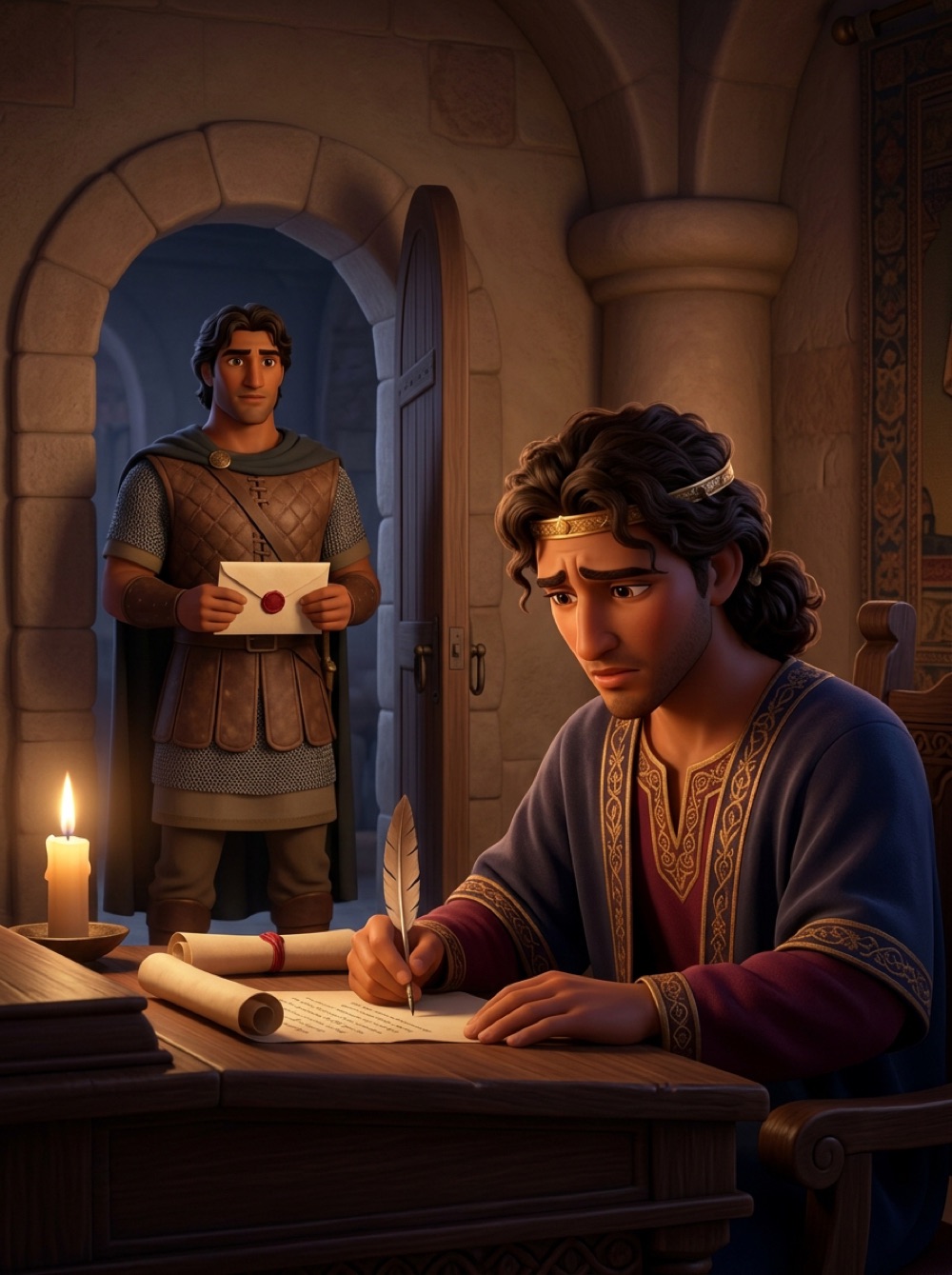
David Covers His Sin
Bathsheba sent word that she was pregnant. David called Uriah back from battle hoping he would go home to his wife and the pregnancy would be hidden. But Uriah was too honorable — he refused to sleep in his own house while his fellow soldiers were sleeping in the field. David then sent a letter with Uriah ordering him placed in the front of the fiercest fighting. Uriah was killed. David had started with one sin and ended with murder. Sin never stays the size it started.
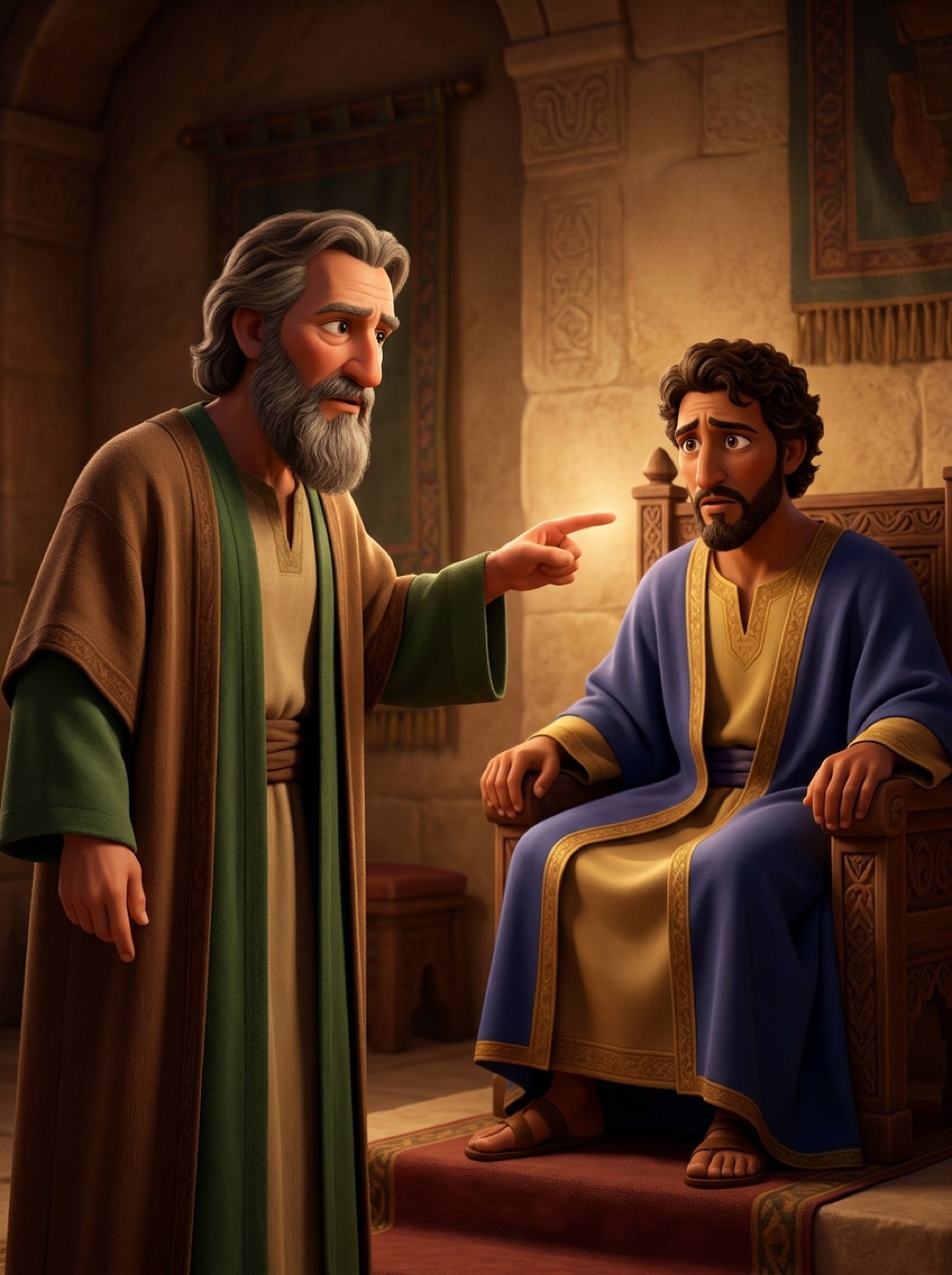
Nathan's Story
God sent the prophet Nathan to David. Nathan told him a story — a rich man with many flocks who stole the one beloved lamb of a poor man to feed a guest. David's anger blazed. "The man who did this must die and pay back four times over!" Nathan looked at David and said four words that have echoed through history. "You are the man."
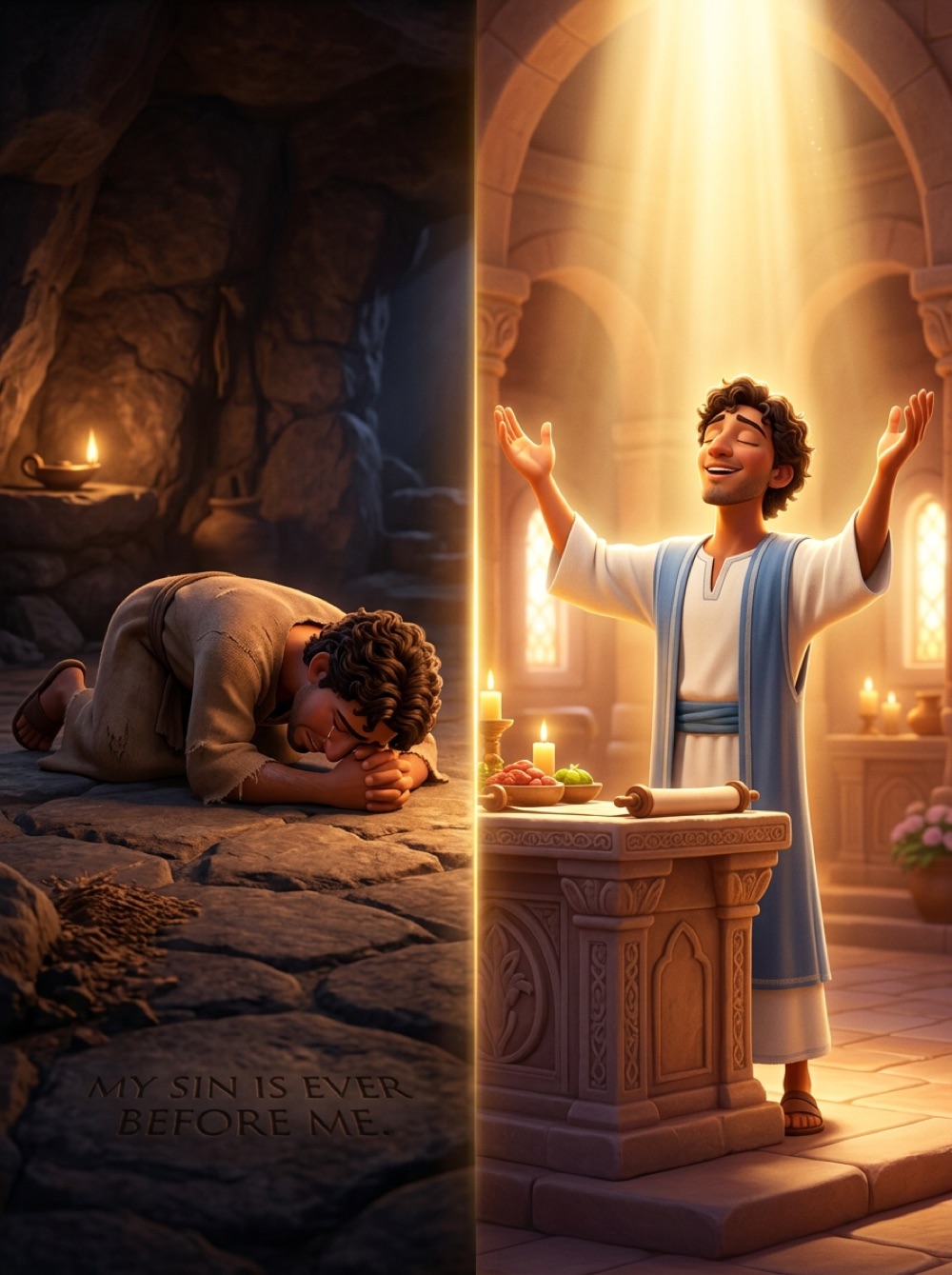
David's Broken Heart
Nathan told David everything God had seen. David didn't argue or make excuses. He said simply, "I have sinned against the Lord." Nathan told him God had forgiven him — but the consequences could not be removed. The child Bathsheba was carrying would die. David fasted and prayed for seven days. When the child died, he got up, washed, worshipped God, and ate. His servants were confused. David said, "Can I bring him back? I will go to him — but he cannot come back to me."

Wrong Done in David's House
David's son Amnon became obsessed with his half-sister Tamar. With the help of a scheming friend he arranged to be alone with her — and forced himself on her. What he had claimed was love became contempt the moment he got what he wanted. He threw her out. Tamar's life was shattered. She went to live in desolation in her full brother Absalom's house. David heard what had happened and was furious — but said nothing and did nothing. His silence made everything worse.

Absalom's Revenge
Absalom hated Amnon for what he had done to Tamar. For two years he said nothing — waiting. Then he invited all the king's sons to a celebration and had Amnon killed. Absalom fled and lived in exile for three years. David mourned for Amnon. He longed to go to Absalom — but did not. Three people were destroyed. A family was broken. This was the fruit of David's own sin coming back through his children.
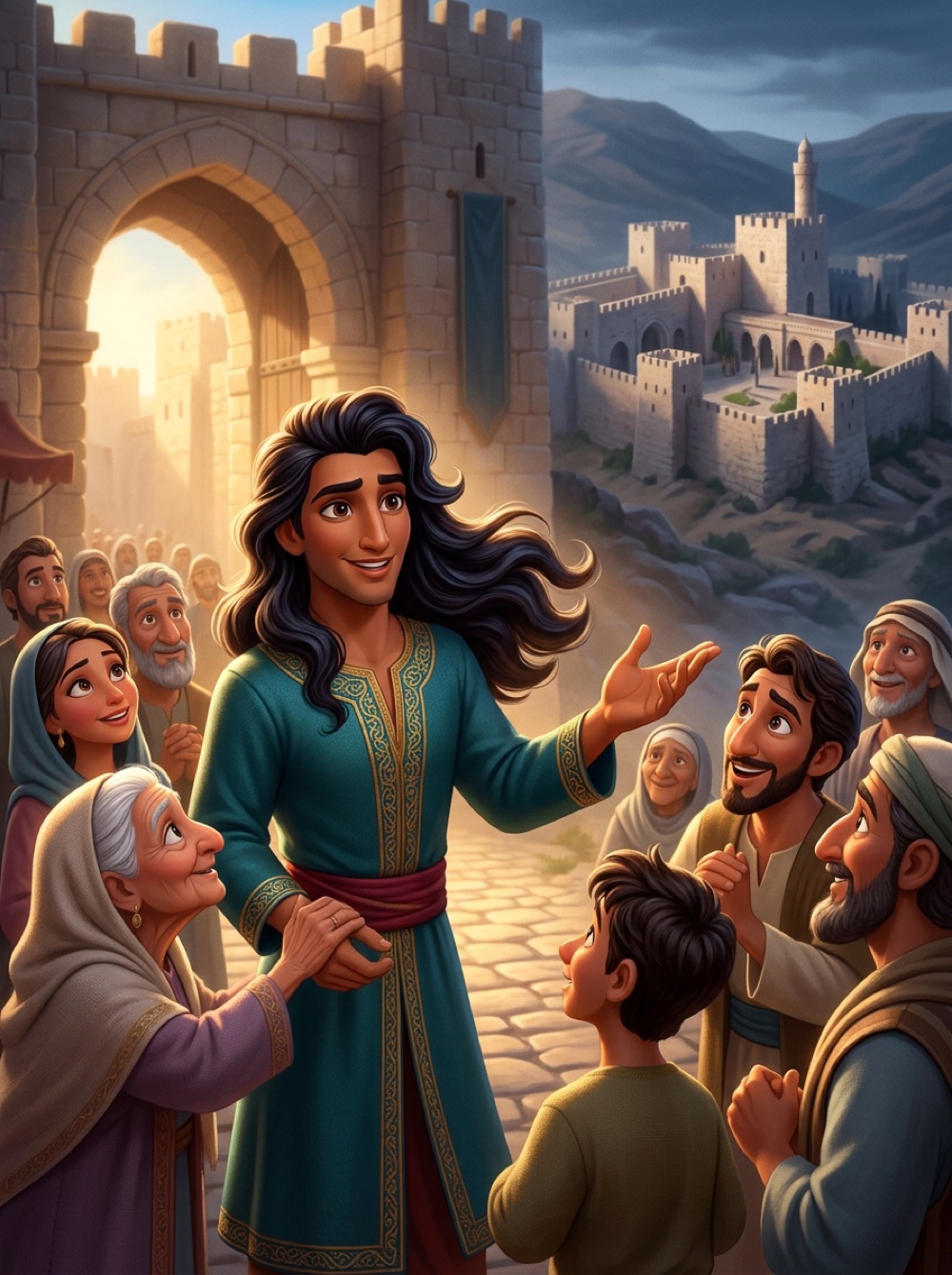
Absalom Returns
After three years, David's commander Joab arranged for Absalom to return to Jerusalem. But David refused to see him for two more years — Absalom lived in Jerusalem without being allowed into his father's presence. The distance between them grew into something dangerous. Absalom began to win the hearts of the people by sitting at the city gate, listening to their complaints, and saying, "If only I were king — I would give you justice." He was preparing a rebellion.
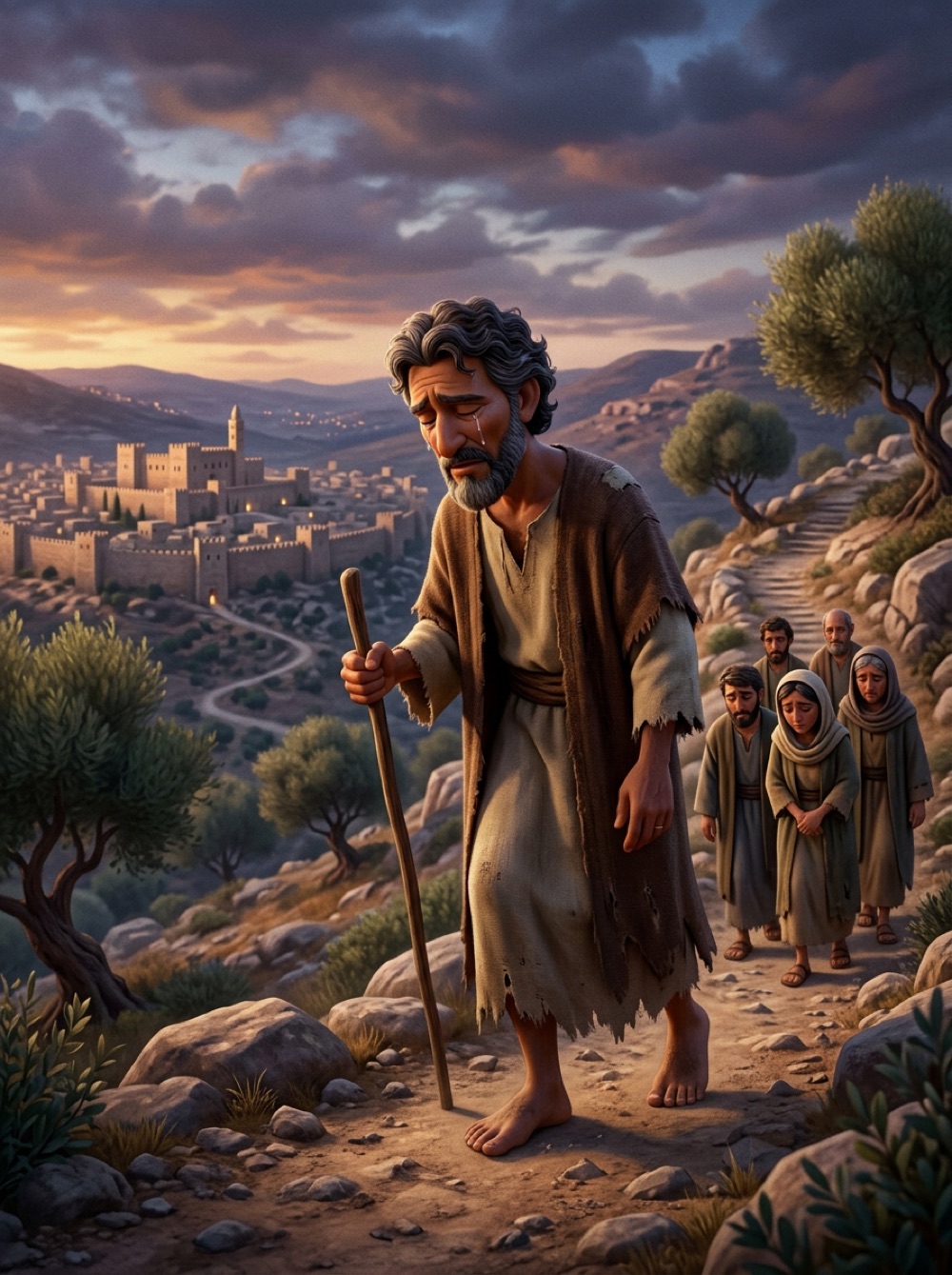
David Flees Jerusalem
Absalom declared himself king in Hebron and a conspiracy swept through Israel. David received the news and immediately said, "We must flee, or Absalom will come and put the city to the sword." David left Jerusalem on foot — weeping, barefoot, his head covered in grief. As he climbed the Mount of Olives, his people wept with him. The king who had danced before the Lord into Jerusalem was now leaving it in tears.

Absalom's Defeat
The battle between Absalom's forces and David's loyal army took place in a forest. David's men won decisively. Absalom himself fled on a mule that ran under a large oak tree — and Absalom's long hair caught in the branches, leaving him hanging between heaven and earth while the mule kept going. Joab found him there and killed him despite David's orders to deal gently with him.
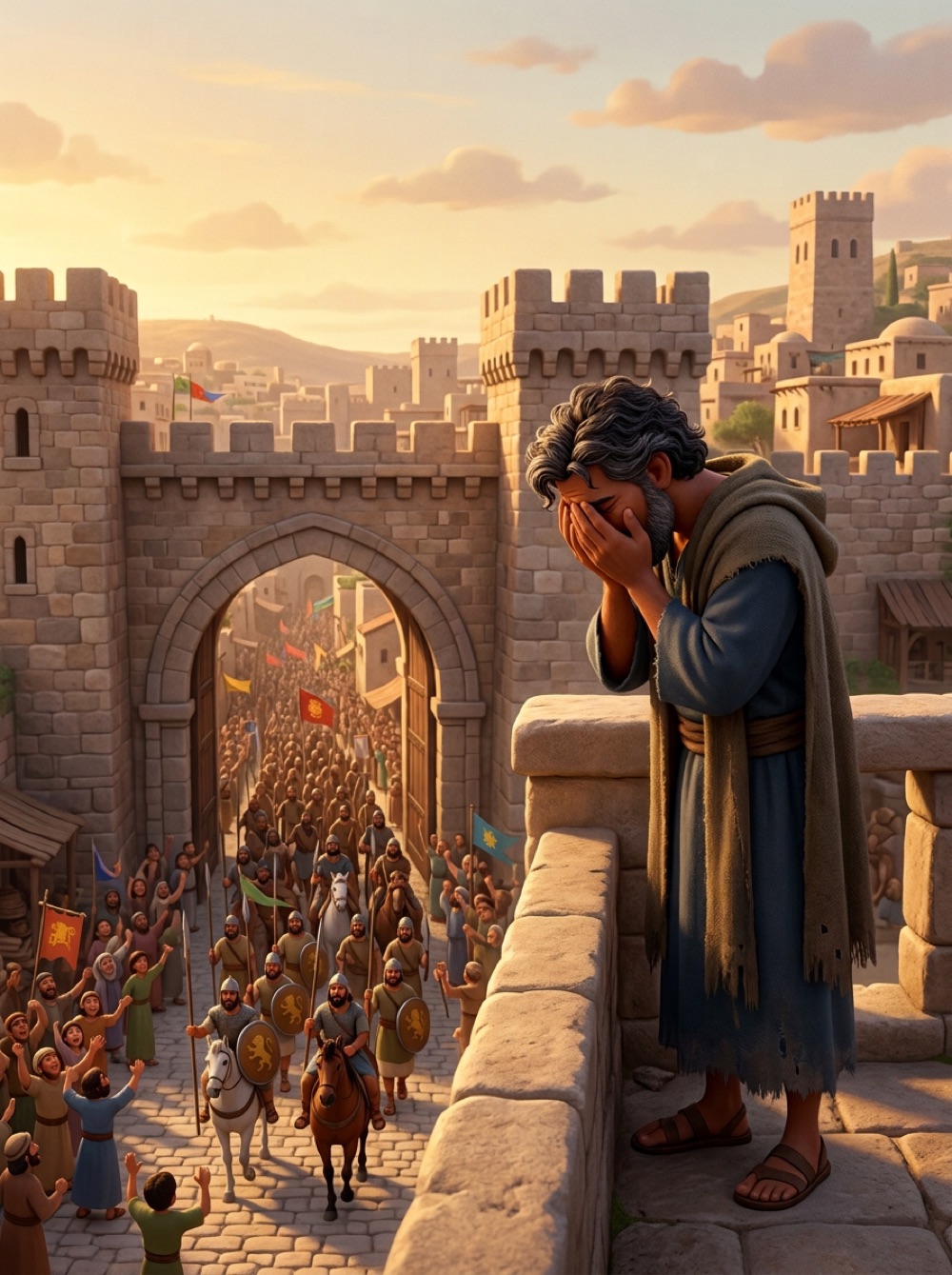
O Absalom, My Son
David had posted watchmen at the gate and saw the messengers coming from a distance. His first question was not "Did we win?" but "Is the young man Absalom safe?" When he heard that Absalom was dead, David went up to the room over the gate and wept. "O my son Absalom — my son, my son Absalom. If only I had died instead of you. O Absalom, my son, my son." No victory tastes good when it costs you your child.
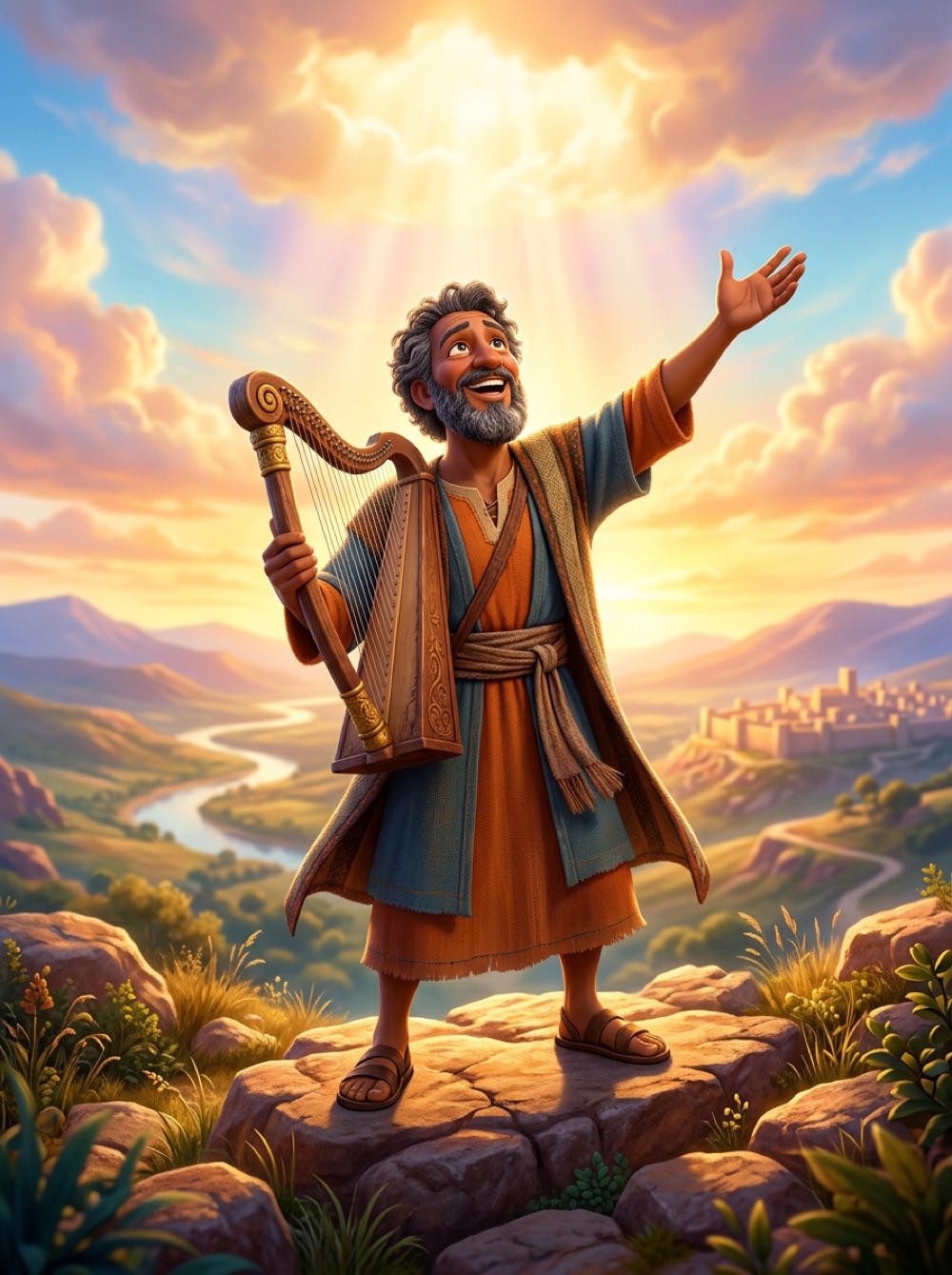
David's Song of Praise
After God had delivered him from all his enemies, David sang a great song of praise. "The Lord is my rock, my fortress, my deliverer. My God is my rock in whom I take refuge. He reached down from on high and took hold of me. He drew me out of deep waters. He rescued me because He delighted in me." The man who had sinned greatly and suffered greatly praised God greatly. None of it had been wasted.
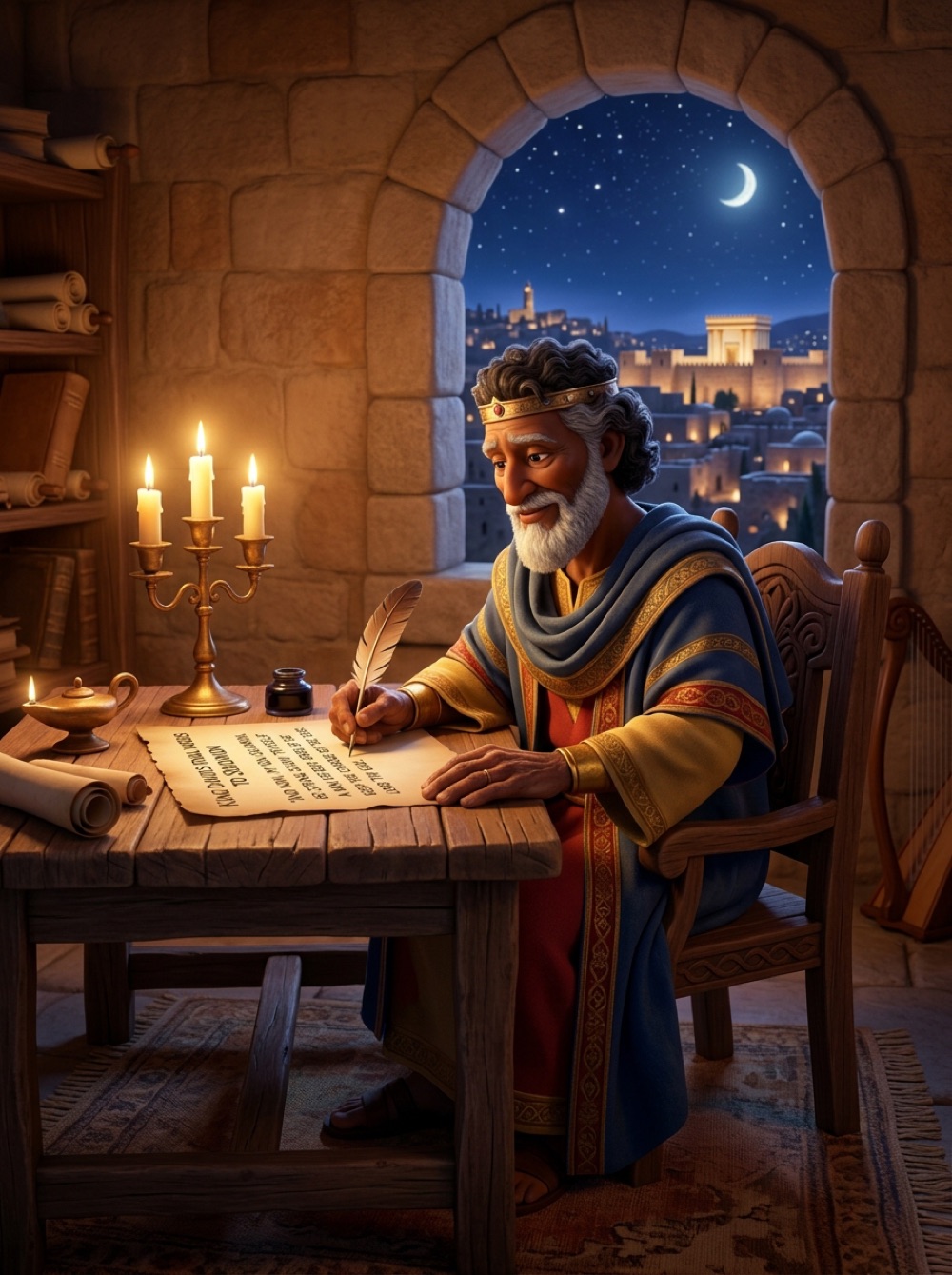
David's Last Words and Final Failure
David's last recorded words called him "the man exalted by the Most High, the man anointed by the God of Jacob, Israel's singer of songs." But even at the end, David made one more mistake — he ordered a census of Israel out of pride, trusting in the size of his army rather than in God. God gave him a choice of three punishments. David chose to fall into God's hands rather than human hands. A plague came and seventy thousand died. David built an altar and cried out to God. Even his failures pointed him back to worship.
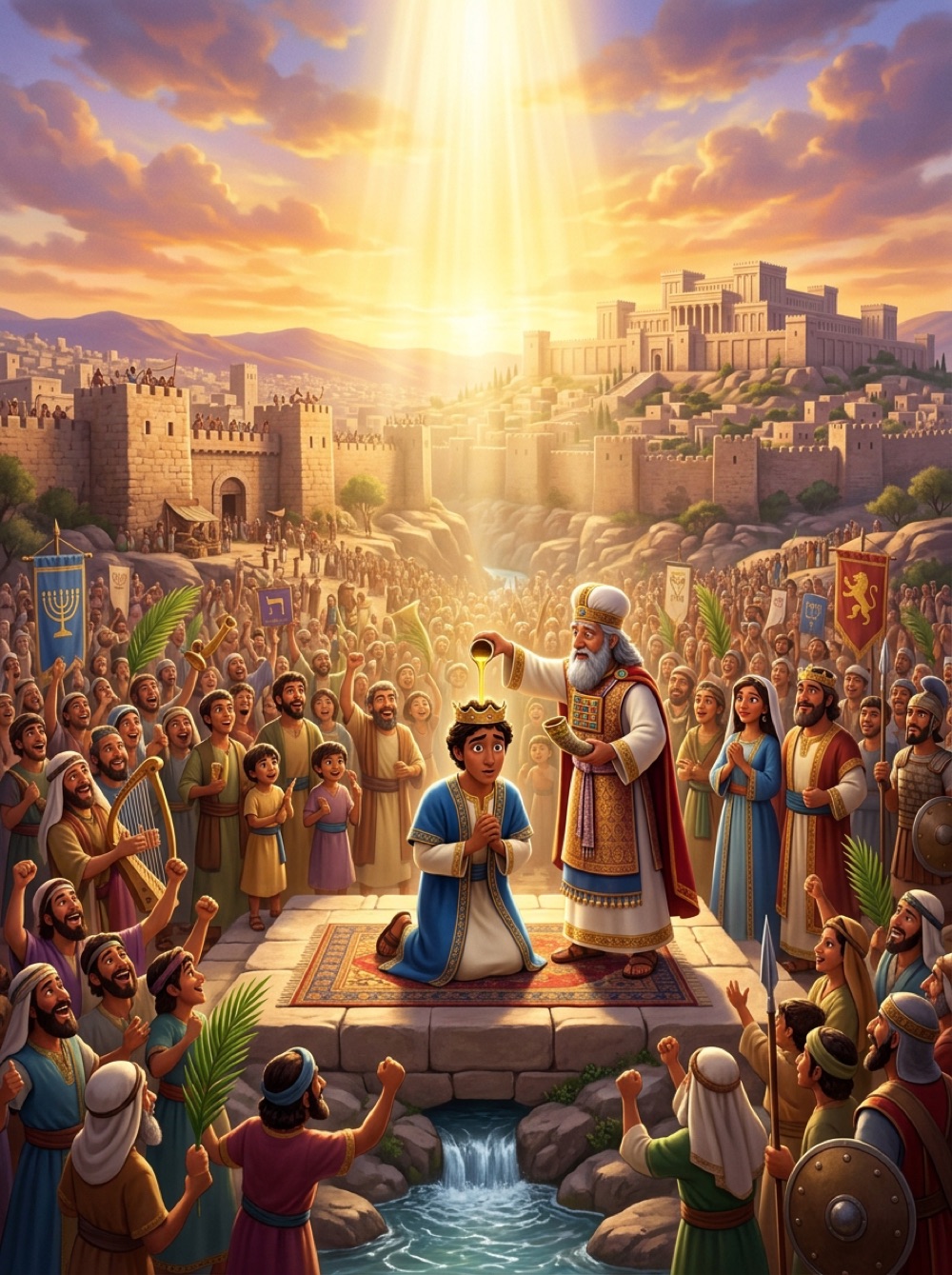
Solomon Becomes King
David was old and his son Adonijah tried to make himself king without David's knowledge. But David had promised Bathsheba that Solomon would be king. He acted quickly — Solomon was anointed at the Gihon spring while Adonijah's celebration was still happening. When the noise reached them, Adonijah's guests scattered. Solomon sat on the throne of his father David. Before David died he gave Solomon one charge above all others — be strong, walk in God's ways, keep His commands.

Solomon's One Request
God appeared to Solomon in a dream and said, "Ask for whatever you want me to give you." Solomon could have asked for wealth, long life, or victory over his enemies. Instead he said, "I am only a little child and don't know how to carry out my duties. Give me a discerning heart to govern your people and to distinguish between right and wrong." God was so pleased He gave Solomon wisdom — and everything else besides.
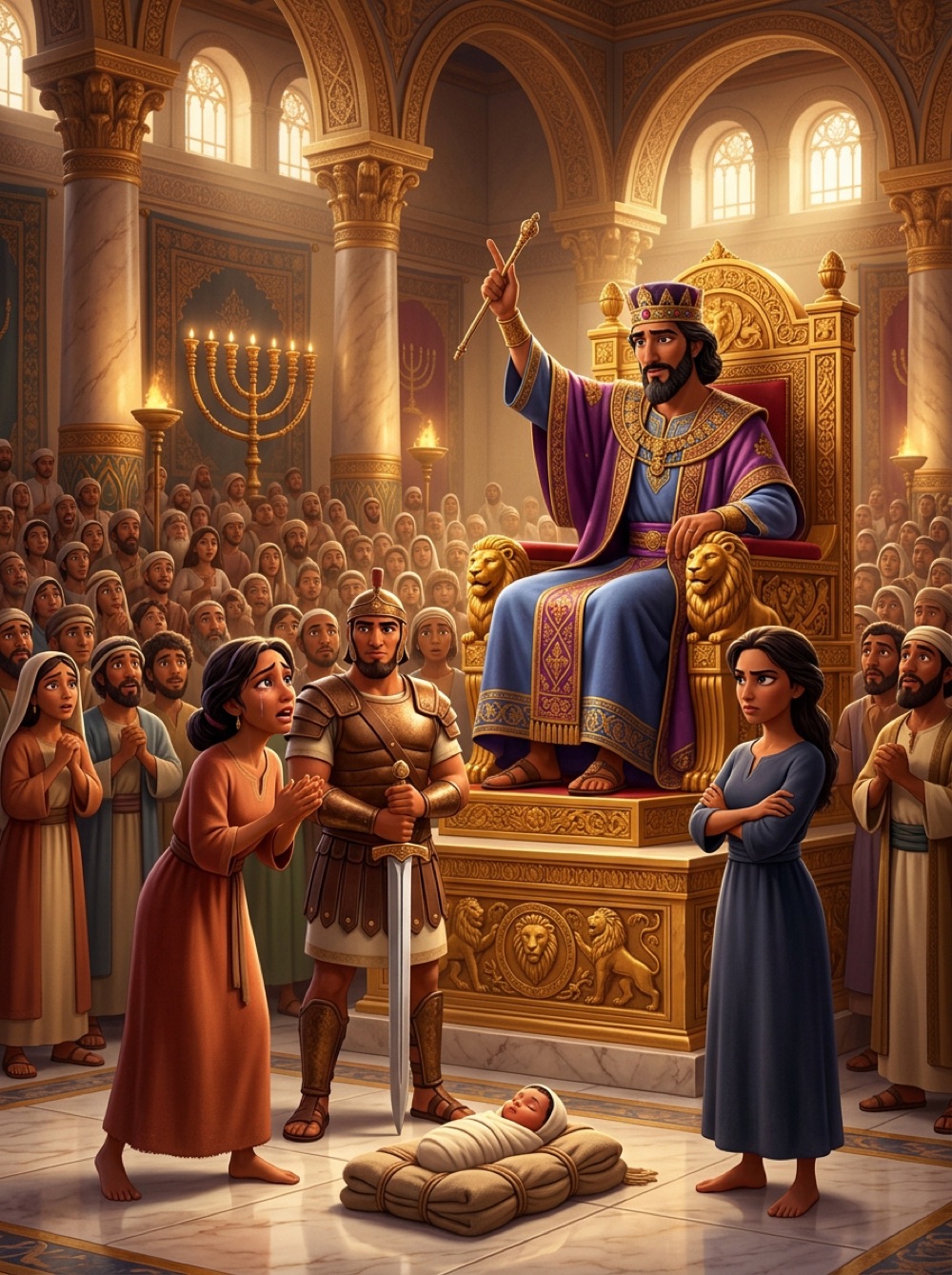
The Wisdom of Solomon
Two women came to Solomon with one living baby and one dead baby — each claiming the living child was hers. Solomon called for a sword and said, "Cut the living child in two and give half to each woman." One woman said "Yes — divide him." The other cried out, "No — give him to her, just don't kill him." Solomon gave the baby to the one who wanted him to live. She was clearly the mother. All Israel heard the verdict and stood in awe of the king.
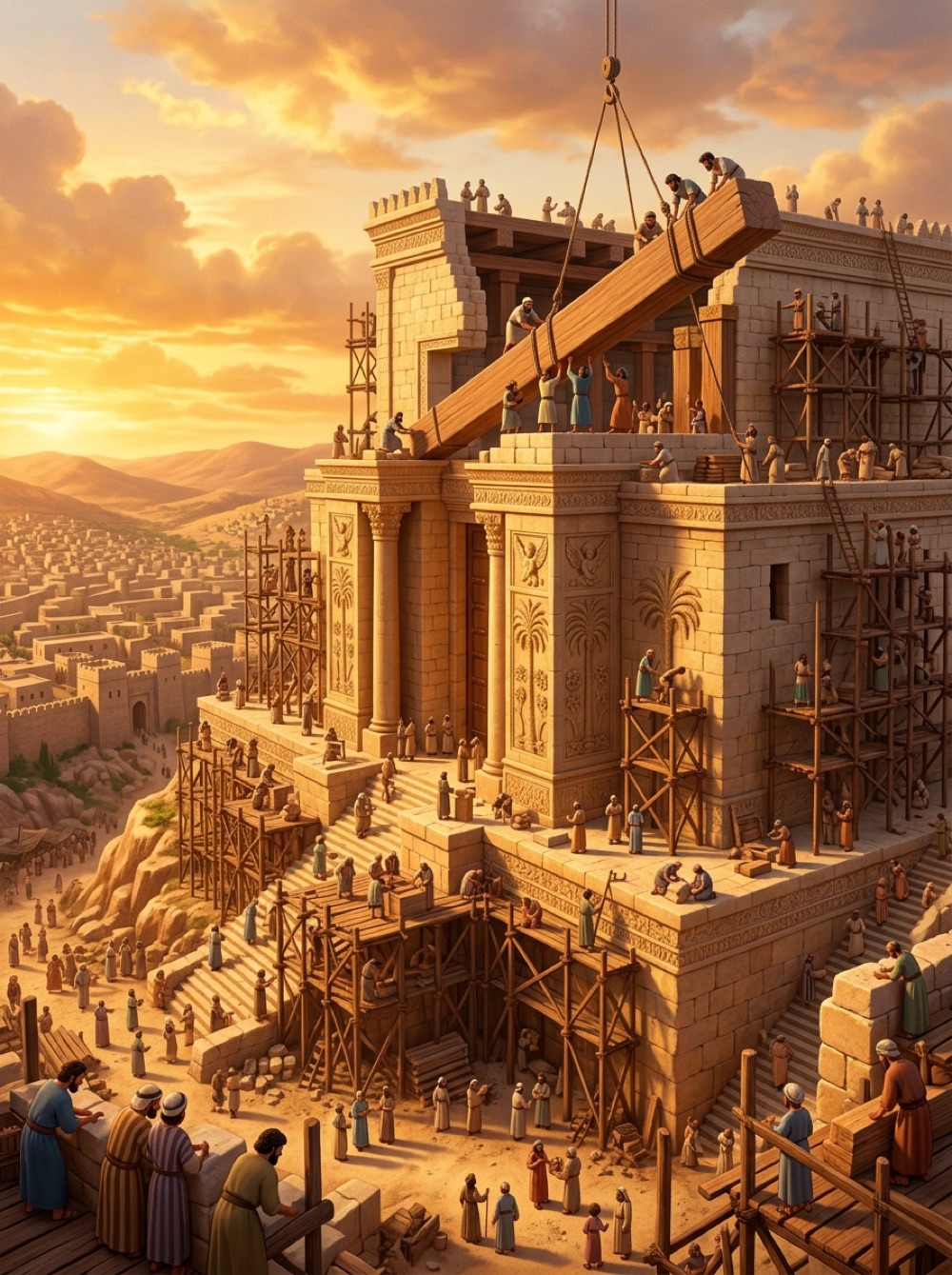
Building the Temple
Solomon began building the Temple in Jerusalem — the house for God that David had dreamed of but was not permitted to build. Cedar wood came from Lebanon. Skilled craftsmen came from Tyre. Thousands of workers quarried stone. The whole structure was built in silence — no hammer, chisel, or iron tool was heard at the building site, because every stone was cut to size before it arrived. It took seven years to complete.
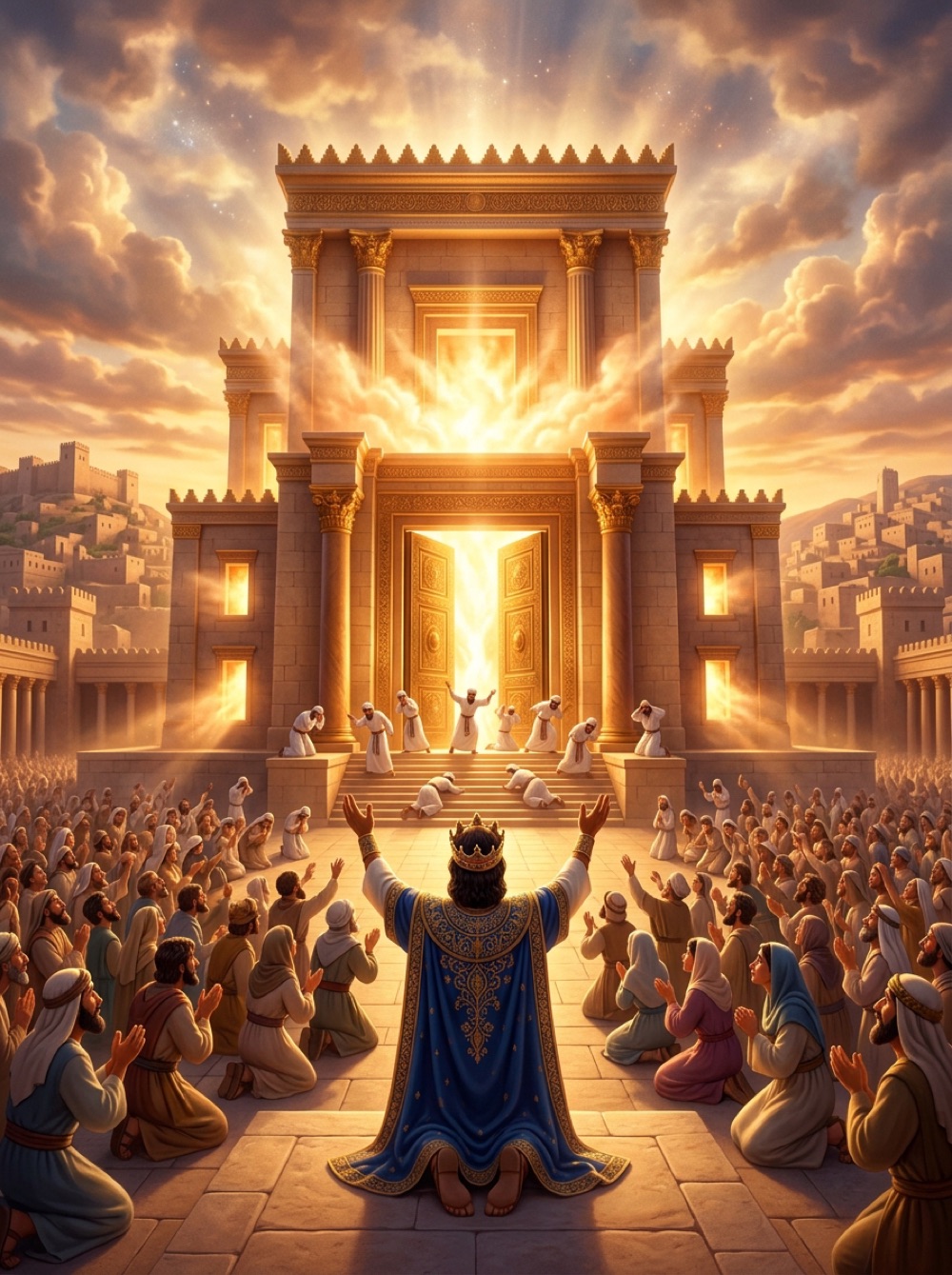
The Temple Is Dedicated
When the Temple was finished, Solomon brought the Ark of the Covenant into the Most Holy Place. Then the cloud of God's glory filled the Temple so completely that the priests could not perform their service — they could not even stand. Solomon stood before the whole assembly and prayed a prayer of extraordinary humility. "Will God really dwell on earth? The heavens cannot contain you — how much less this Temple I have built."
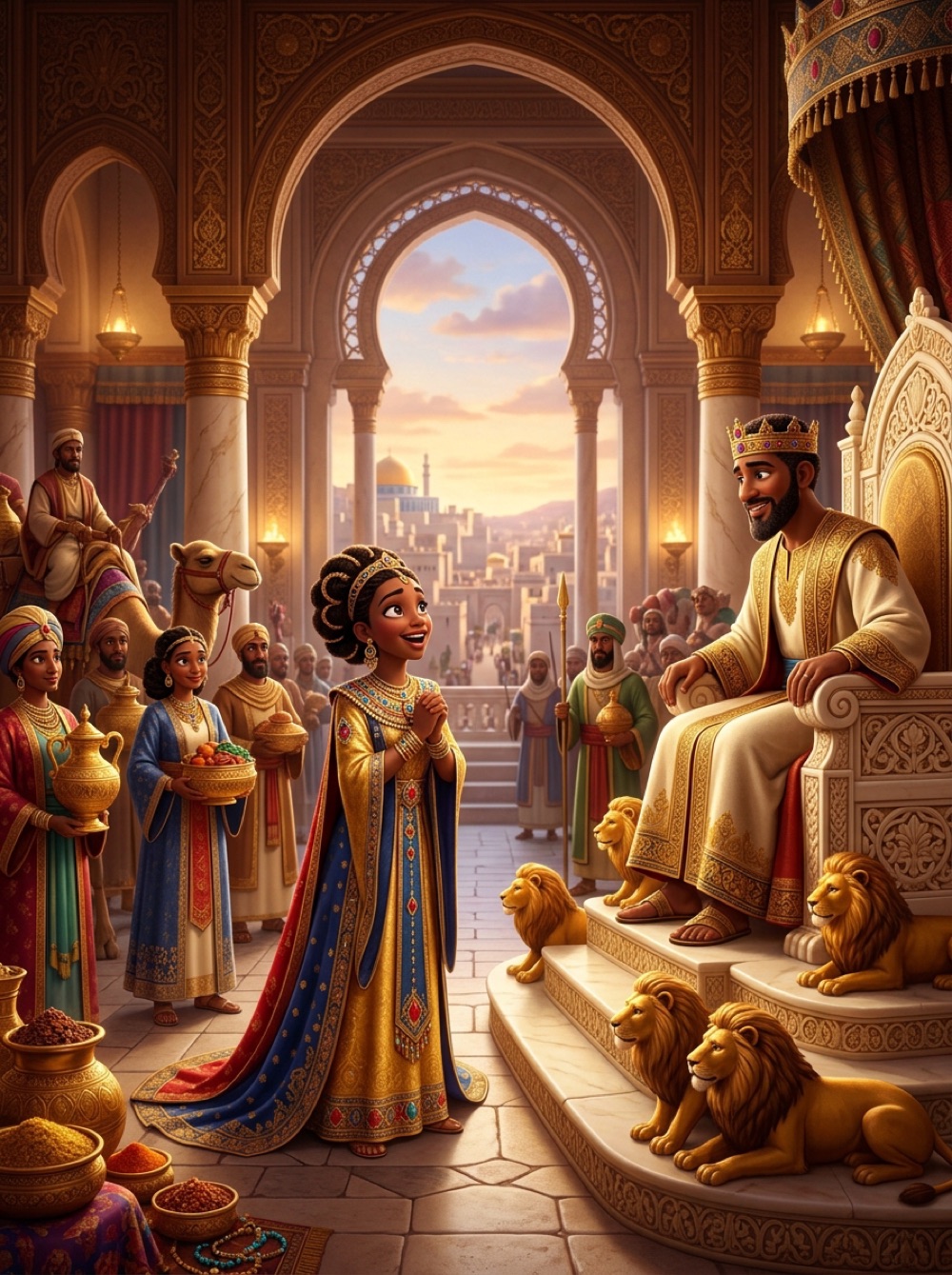
Solomon's Fame Spreads
God appeared to Solomon a second time and confirmed the covenant — if Solomon walked faithfully, his throne would be established forever. Solomon's fame spread to every nation. The Queen of Sheba heard reports of his wisdom and came to test him with hard questions. After he answered every one she said, "The half was not told me. Your wisdom and wealth far exceed the report I heard. How happy your people must be." But clouds were already forming.
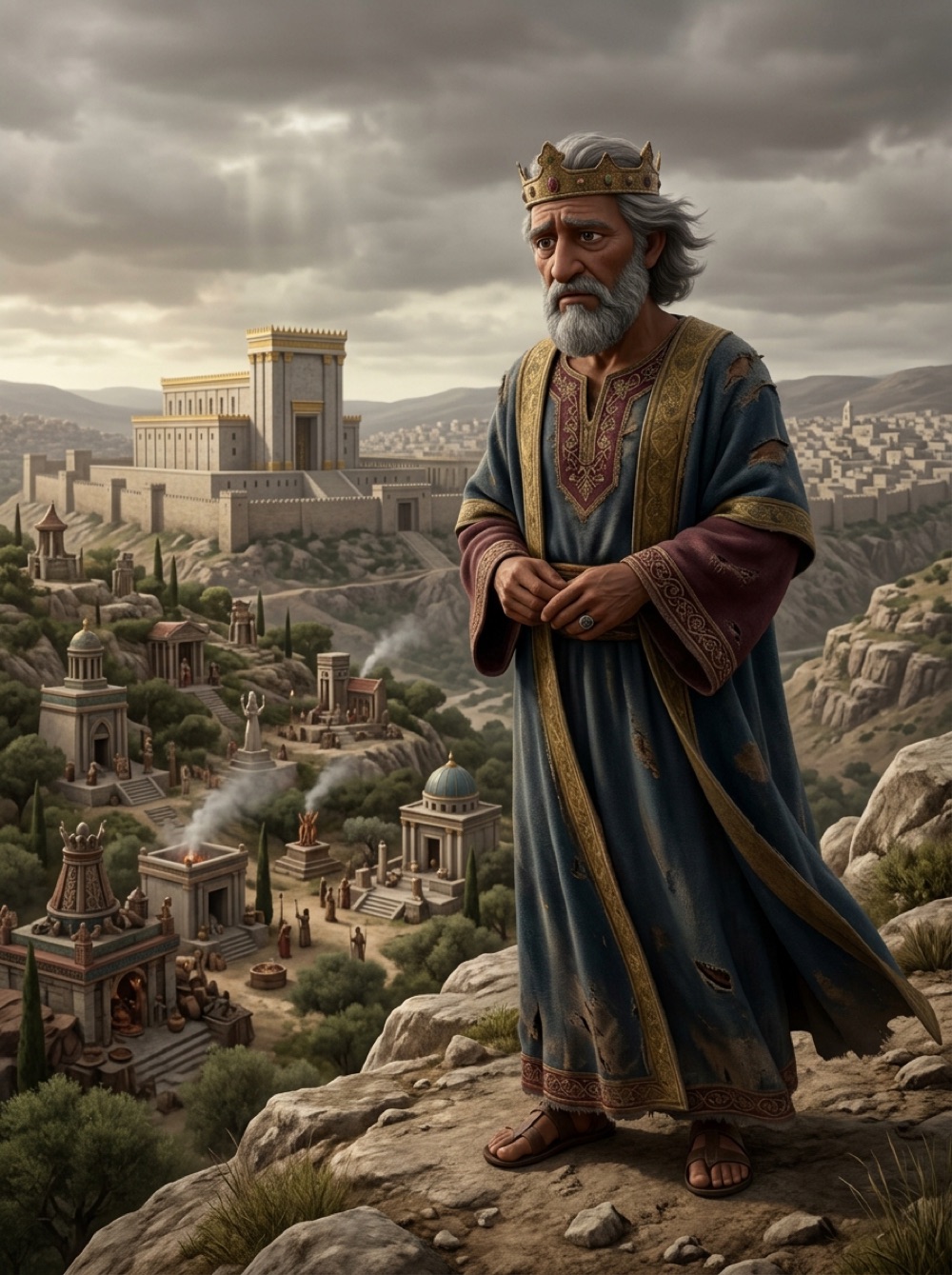
Solomon's Divided Heart
Solomon loved many foreign women — seven hundred wives and three hundred concubines. As he grew old, his wives turned his heart after other gods. He built high places for their idols on the hill east of Jerusalem. God was angry. "Since you have not kept my covenant, I will tear the kingdom away from your son — though for David's sake I will leave him one tribe." The wisest man who ever lived had made the most foolish choice of his life.
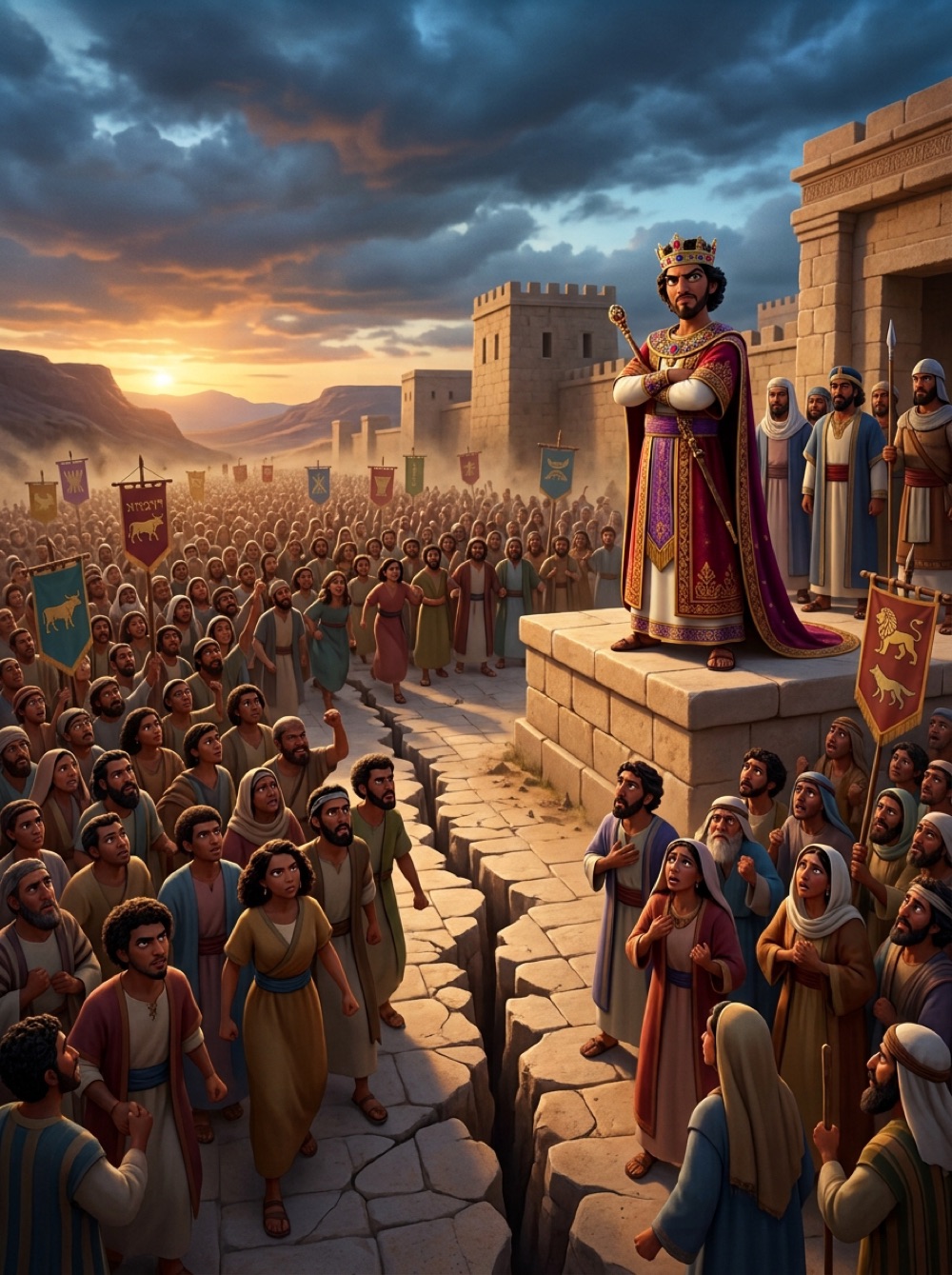
The Kingdom Splits
After Solomon died, his son Rehoboam became king. The people asked him to lighten the heavy workload Solomon had imposed. His older advisors said — listen to them and serve them. His young advisors said — make it even harder. Rehoboam listened to the young men. Ten tribes immediately rejected him. The united kingdom of Israel, built by Saul, consolidated by David, and brought to its peak by Solomon — split in two and never came back together.
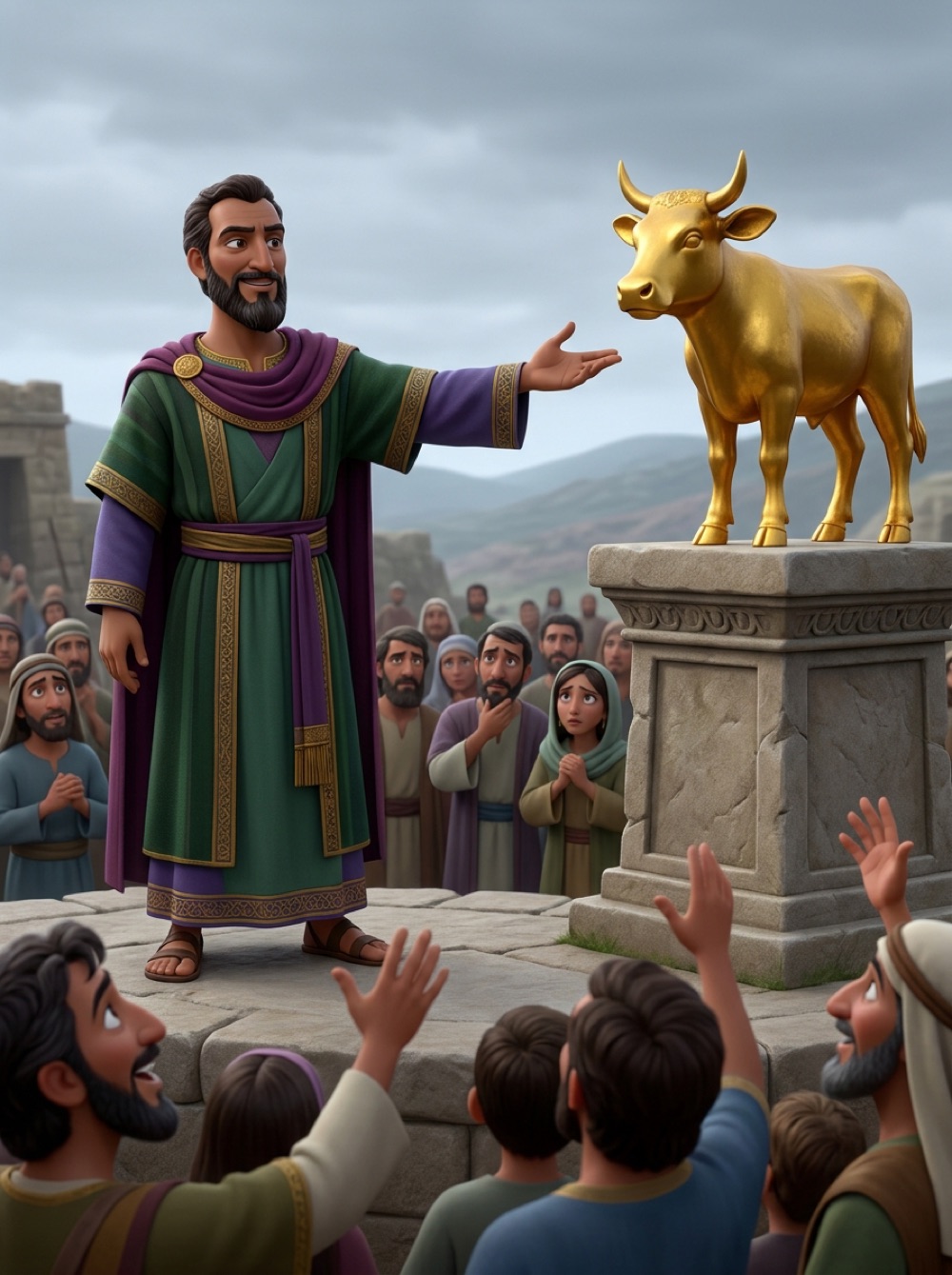
Jeroboam's Golden Calves
Jeroboam became king over the ten northern tribes — called Israel. He was afraid that if his people kept going to Jerusalem to worship, their hearts would return to Rehoboam. So he made two golden calves and set them up in Bethel and Dan. "Here are your gods who brought you up out of Egypt," he said — almost the exact same words as the golden calf at Sinai. Israel's first king set a pattern of idolatry that every king after him followed.
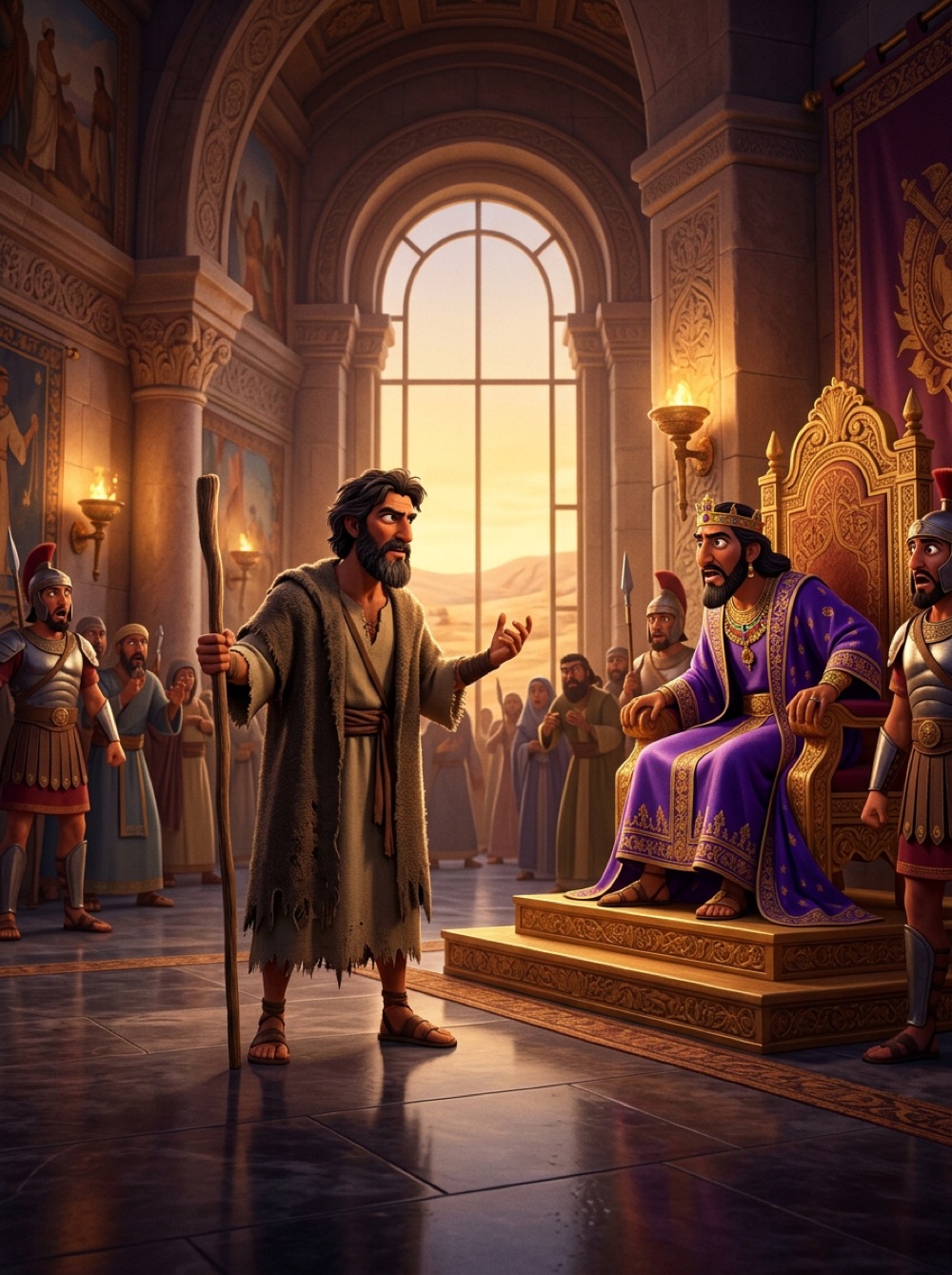
Elijah Appears
Many wicked kings came and went. Then the prophet Elijah appeared — one of the most dramatic figures in the entire Bible. He walked straight into King Ahab's presence and announced, "As the Lord God of Israel lives — there will be no rain in Israel except at my word." Then God told Elijah to hide by a brook. Ravens brought him bread and meat morning and evening. The brook eventually dried up — and God sent him somewhere unexpected.
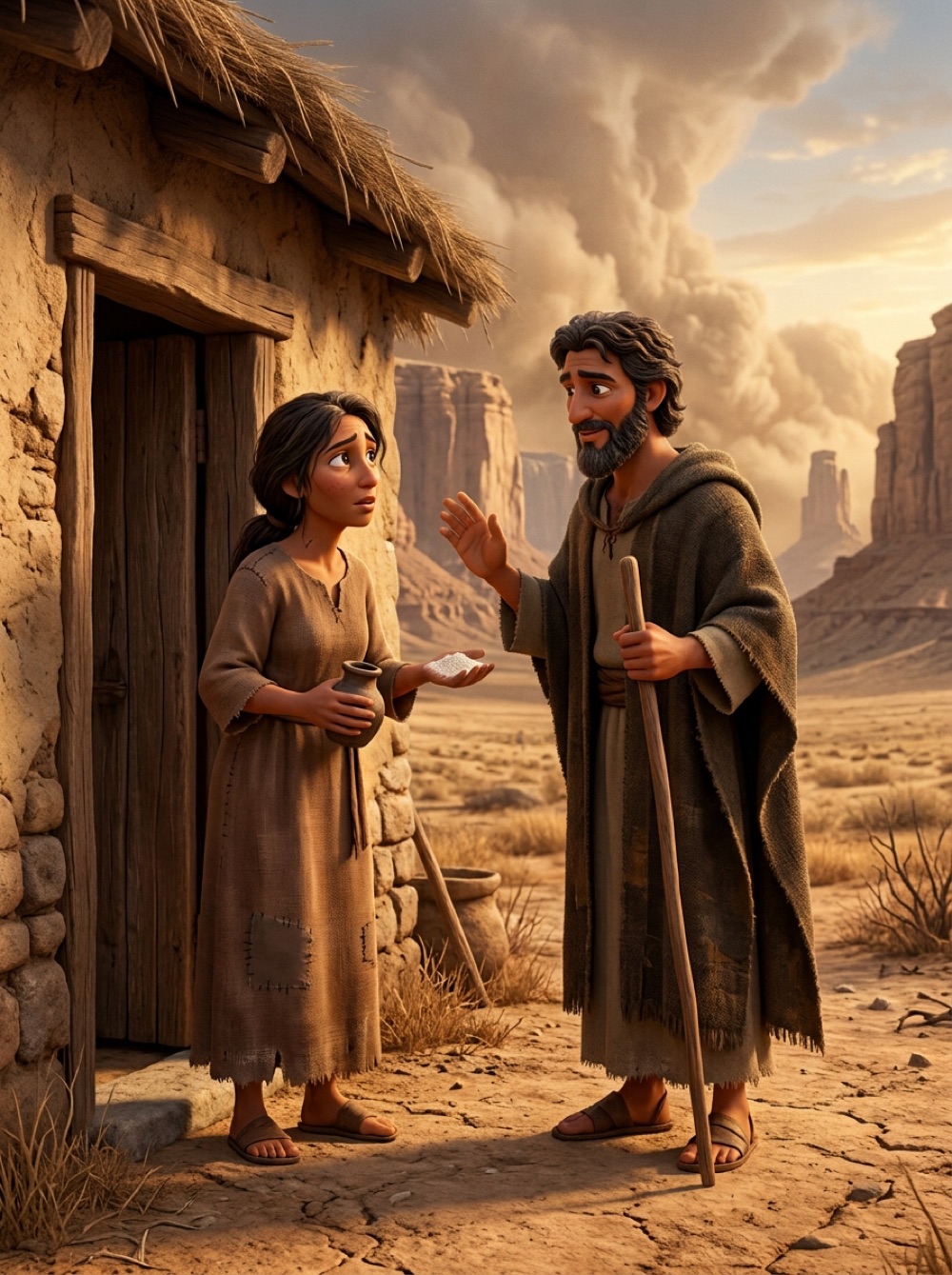
The Widow at Zarephath
God sent Elijah to a widow in Zarephath. When he arrived she was gathering sticks to make a last meal for herself and her son before they died of starvation. Elijah asked her for bread and water first. She said she had only a handful of flour and a little oil — enough for one last meal. Elijah told her to make his bread first and trust God. She did — and the flour and oil never ran out until the drought ended.
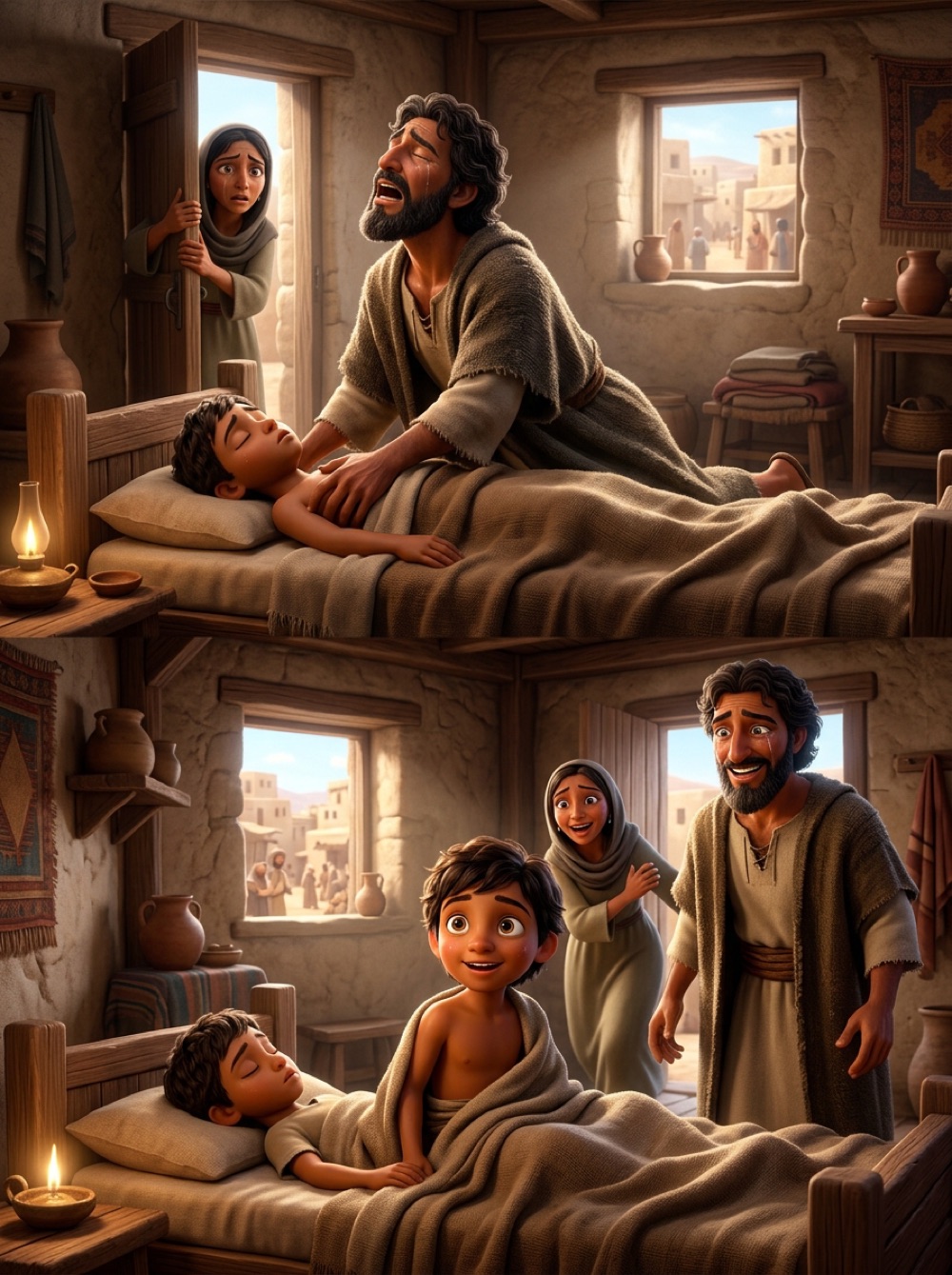
The Son Who Died and Lived
Later the widow's son became so ill he stopped breathing. She brought him to Elijah. Elijah carried the boy to his room, laid him on his bed, and cried out to God. "Lord my God, let this boy's life return to him." He stretched himself over the boy three times. God heard Elijah's cry — and the boy's life returned. The widow said, "Now I know you are a man of God and the word of the Lord in your mouth is truth."
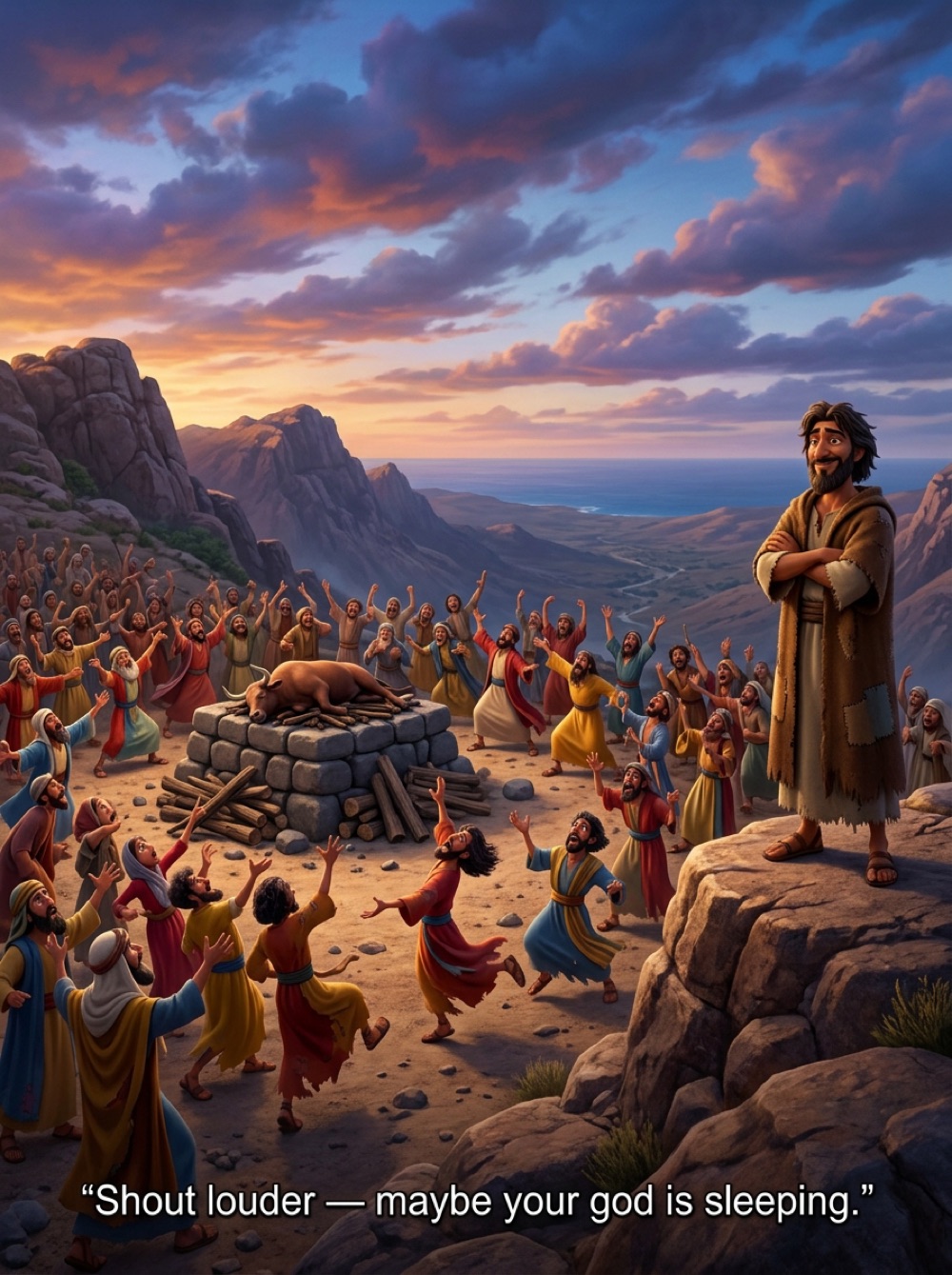
Elijah and the Prophets of Baal
After three years of drought, Elijah confronted King Ahab and challenged the four hundred and fifty prophets of Baal to a contest on Mount Carmel. Two altars — one for Baal, one for God. Whichever god answered by fire was the true God. The prophets of Baal called on their god from morning to noon. Elijah mocked them. "Shout louder — maybe your god is sleeping, or traveling, or busy." No fire came.
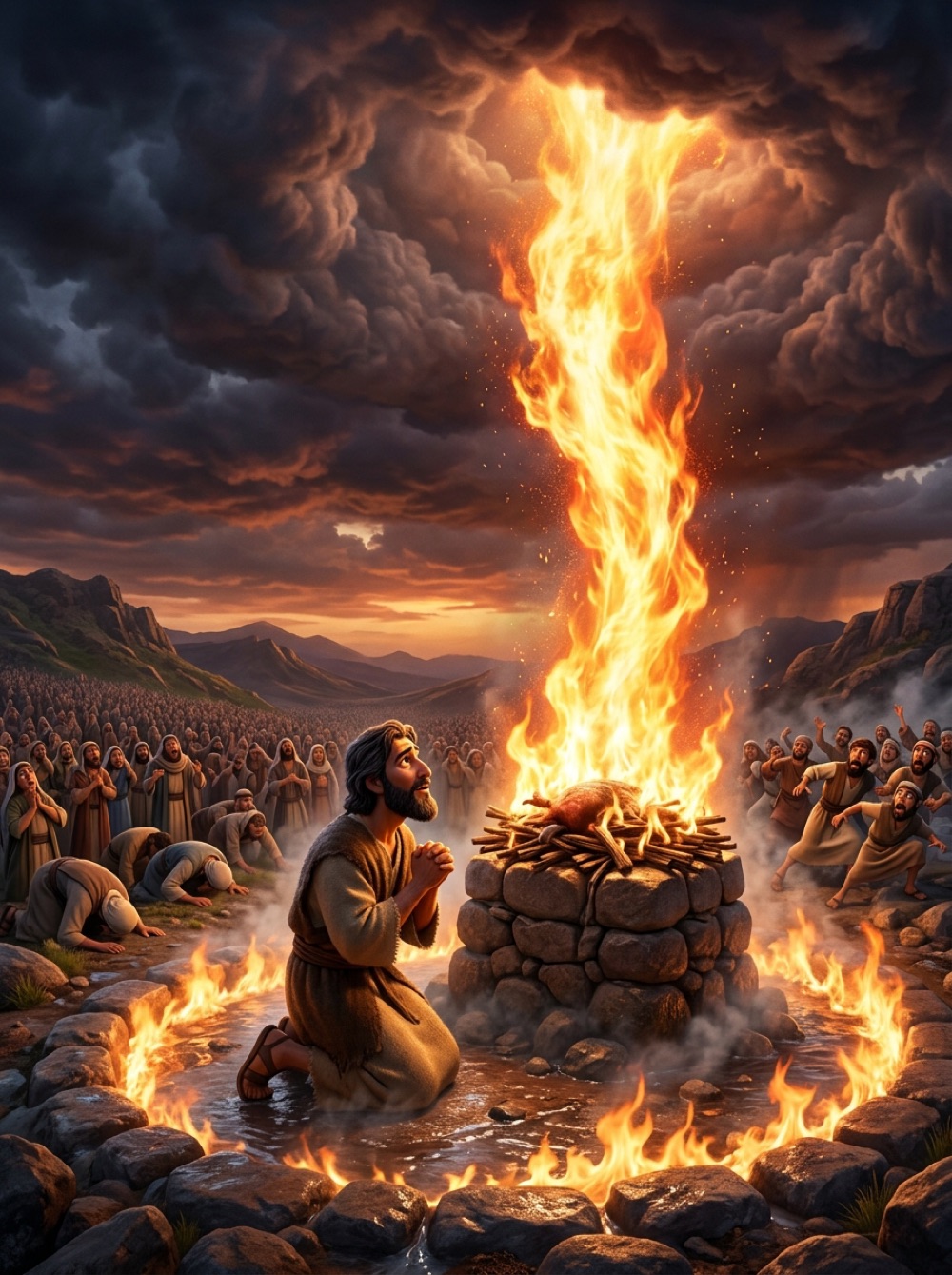
The Fire Falls
Then Elijah rebuilt God's altar, dug a trench around it, and soaked everything with twelve large jars of water until the water ran down and filled the trench. Then he prayed one simple prayer. "Lord, let it be known today that you are God in Israel and that I am your servant." Fire fell from heaven and consumed the burnt offering, the wood, the stones, the soil — and licked up all the water in the trench. When the people saw it, they fell on their faces and cried, "The Lord — He is God!"
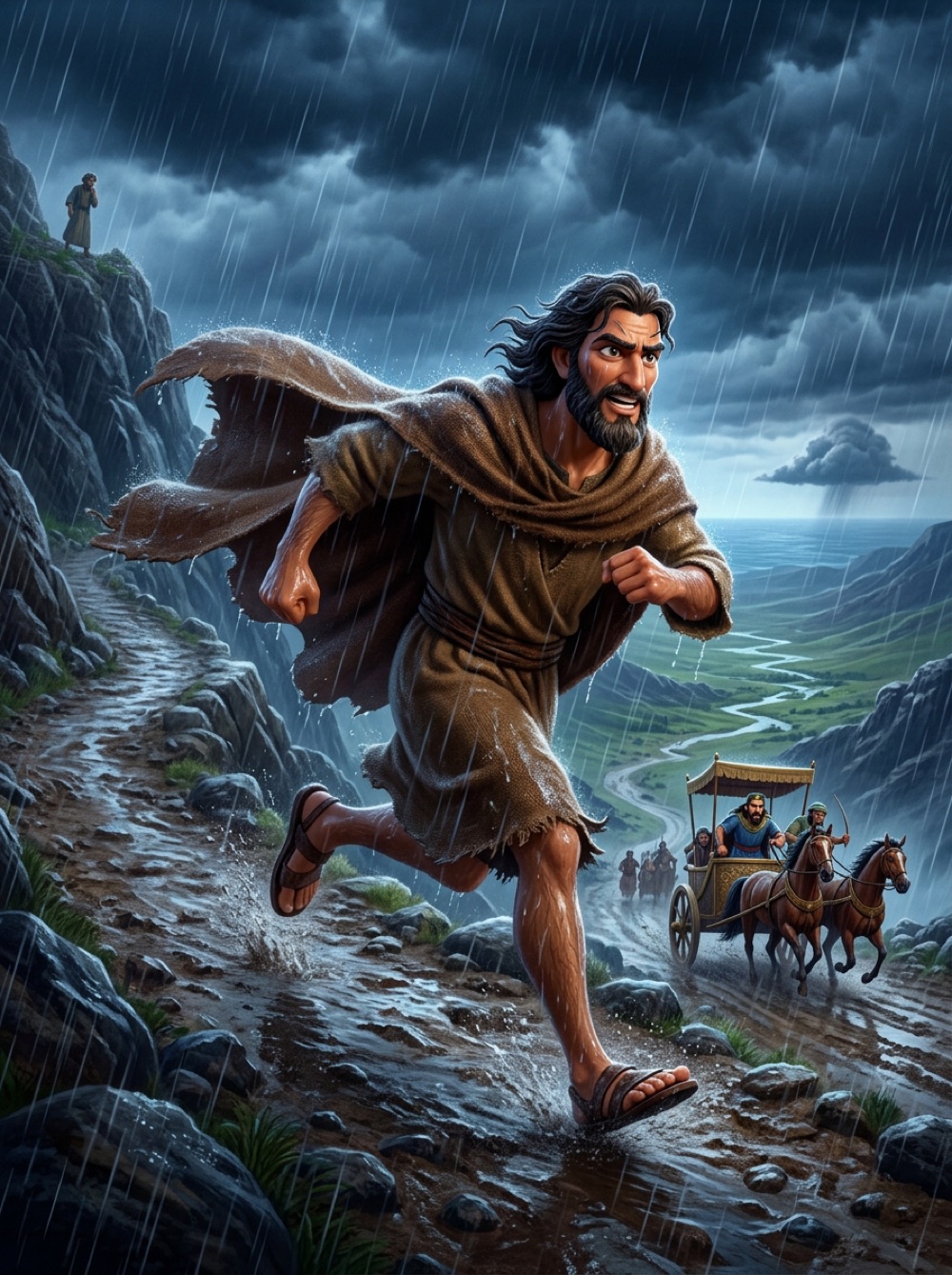
The Rain Returns
After the fire, Elijah told Ahab to eat and drink — rain was coming. He climbed to the top of Carmel and bent down to the ground with his face between his knees and prayed. He sent his servant to look toward the sea seven times. The seventh time the servant said, "A cloud as small as a man's hand is rising from the sea." Elijah sent word — the rain is coming. The sky grew dark, the wind rose, and the heavy rain began.
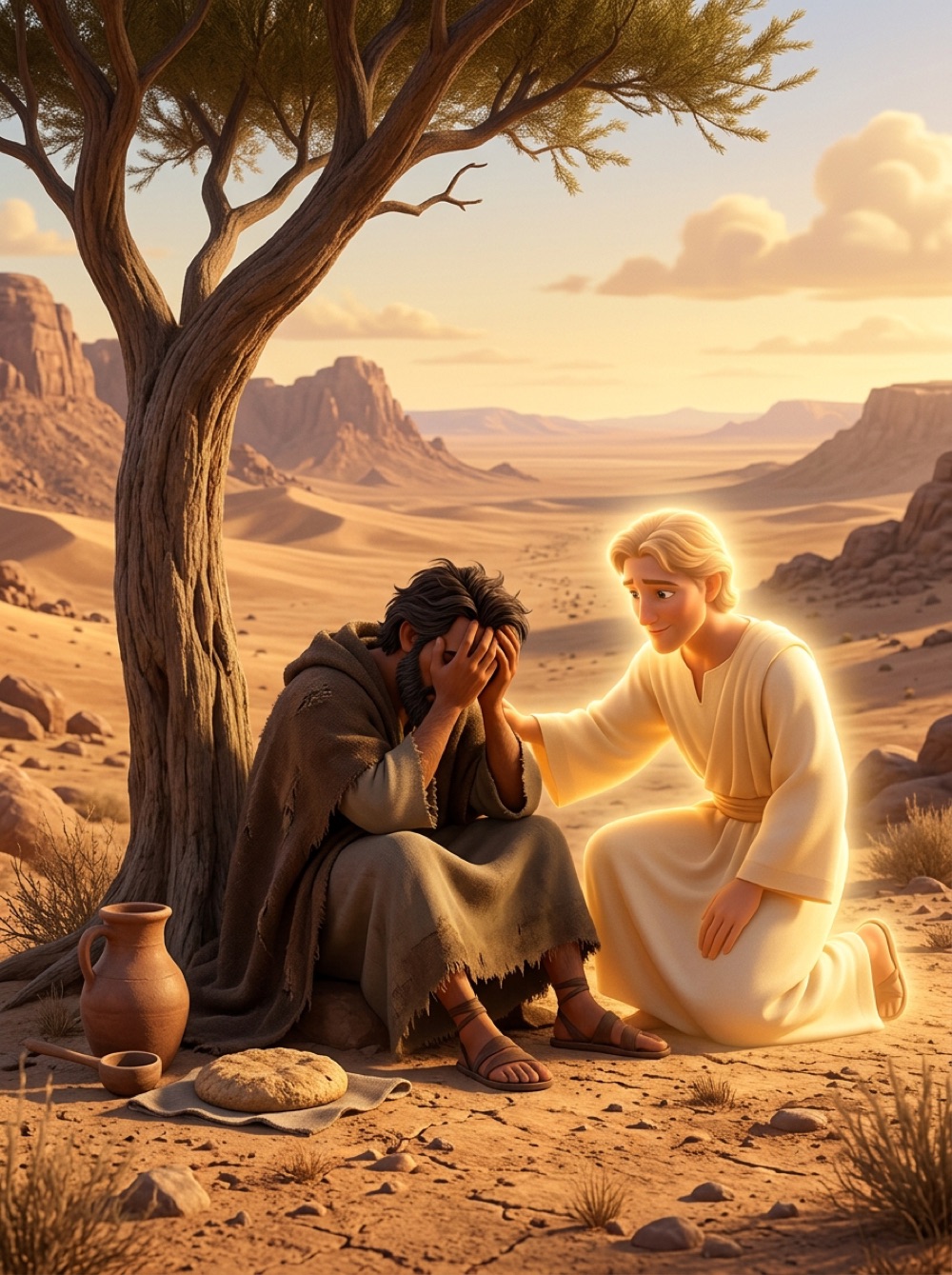
Elijah Under the Broom Tree
Queen Jezebel sent Elijah a message — she would have him killed within a day. The same man who had just called down fire from heaven ran for his life into the desert, sat down under a broom tree, and asked God to let him die. "I have had enough, Lord. Take my life." An angel touched him twice — providing cake and water. "The journey is too much for you," the angel said. Even the greatest prophets have days when the broom tree wins. God knew what to do.
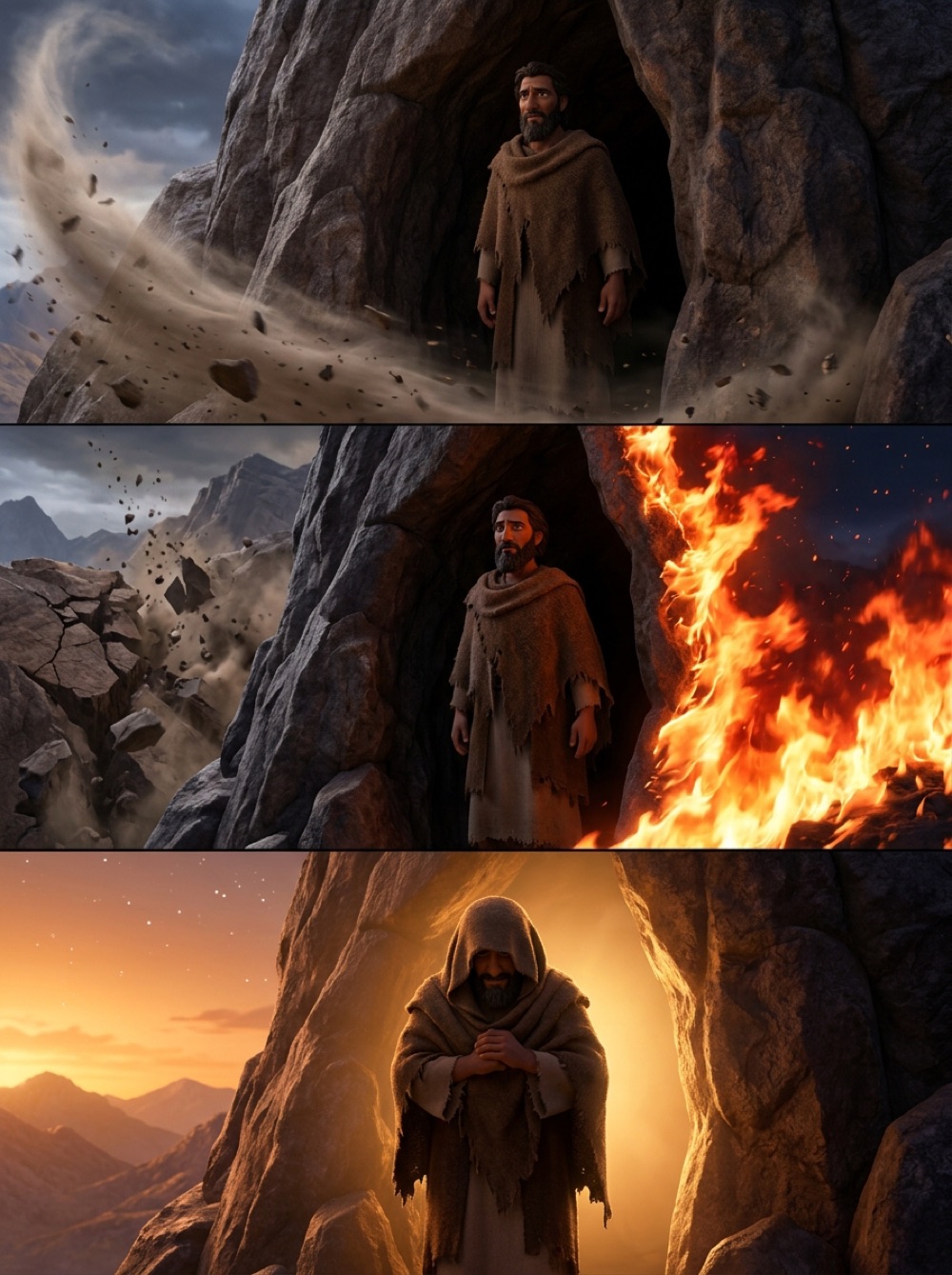
The Still Small Voice
God told Elijah to stand on the mountain. A powerful wind tore the mountains apart — but God was not in the wind. An earthquake came — but God was not in the earthquake. Fire came — but God was not in the fire. And after the fire, a still small voice. God asked Elijah, "What are you doing here?" Then He gave him new work to do and told him he was not alone — seven thousand in Israel had never bowed to Baal. Depression lies about how alone you are.

Naboth's Vineyard
King Ahab wanted Naboth's vineyard which was next to his palace. Naboth refused to sell his family inheritance. Ahab went home sulking and refused to eat. Jezebel found him and said, "Is this how you act as king? Get up and eat — I will get you the vineyard." She arranged false witnesses to accuse Naboth of cursing God and the king. Naboth was stoned to death. Ahab went to take possession of the vineyard — and found Elijah already waiting for him there.
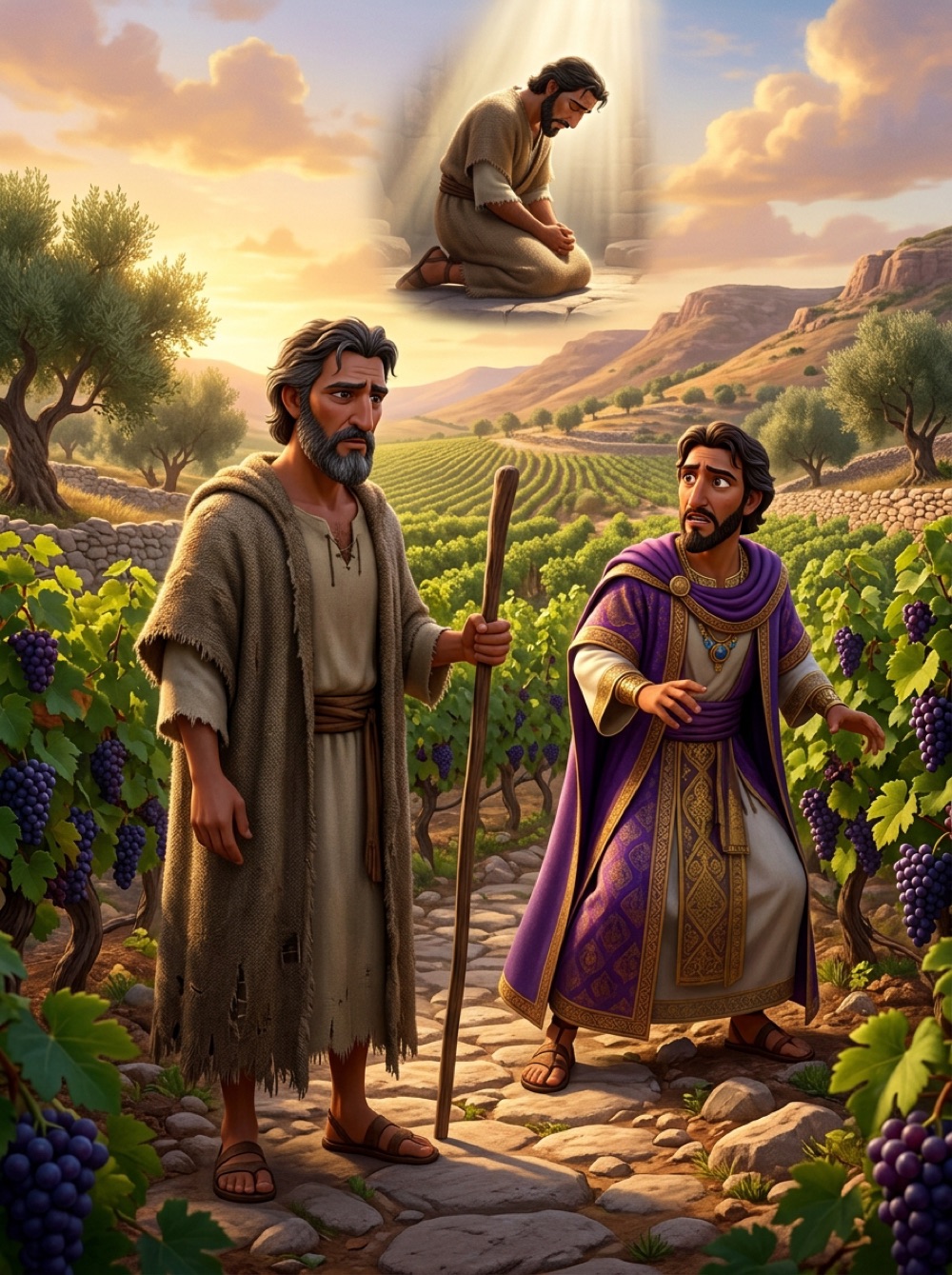
You Have Sold Yourself to Do Evil
Elijah confronted Ahab in Naboth's vineyard. "I have found you — because you have sold yourself to do evil in the eyes of the Lord." God pronounced judgment on Ahab and Jezebel both. Ahab tore his clothes, put on sackcloth, and fasted — and genuinely humbled himself. God said to Elijah, "Because he has humbled himself, I will not bring disaster in his day." Even Ahab's partial repentance was noticed. God is paying attention to every heart that turns toward Him.
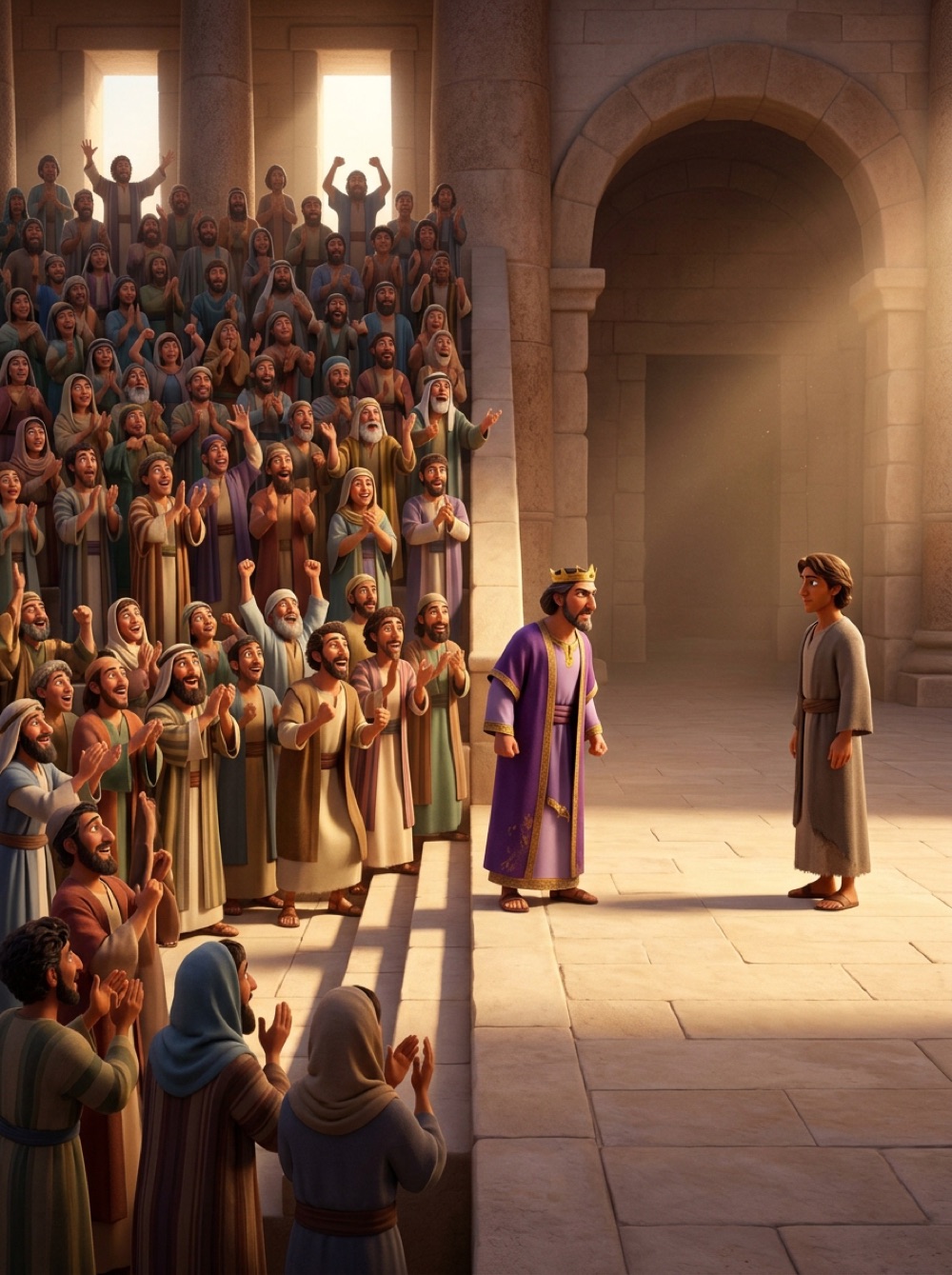
The False Prophets and Micaiah
Ahab wanted to go to war and consulted four hundred prophets — every one of them told him what he wanted to hear. But the king of Judah asked, "Is there no other prophet?" There was one — Micaiah, who always prophesied trouble for Ahab. Ahab hated him for it. Micaiah told the truth anyway, was struck and imprisoned for it, and Ahab went to battle and was killed — just as Micaiah had said. Telling the truth is always worth it, even when no one wants to hear it.
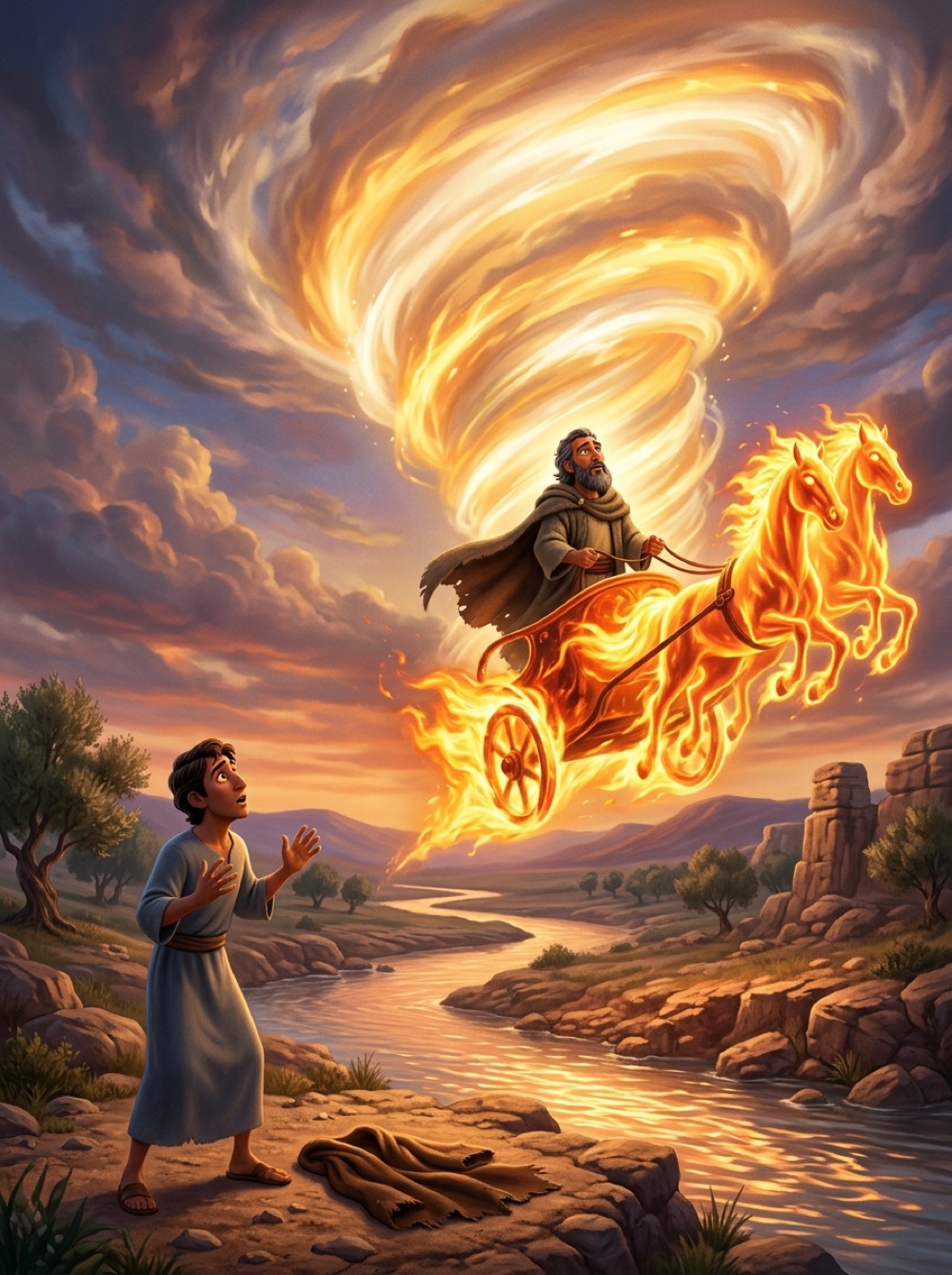
Elijah Is Taken Up
The time came for Elijah to leave the earth. Elisha — his chosen successor — followed him everywhere that day and refused to leave his side. At the Jordan River, Elijah struck the water with his cloak and it divided. They crossed on dry ground. Then a chariot of fire and horses of fire appeared and separated them — and Elijah went up to heaven in a whirlwind. Elisha watched and cried out, "My father! My father!" Then he picked up Elijah's cloak from the ground.
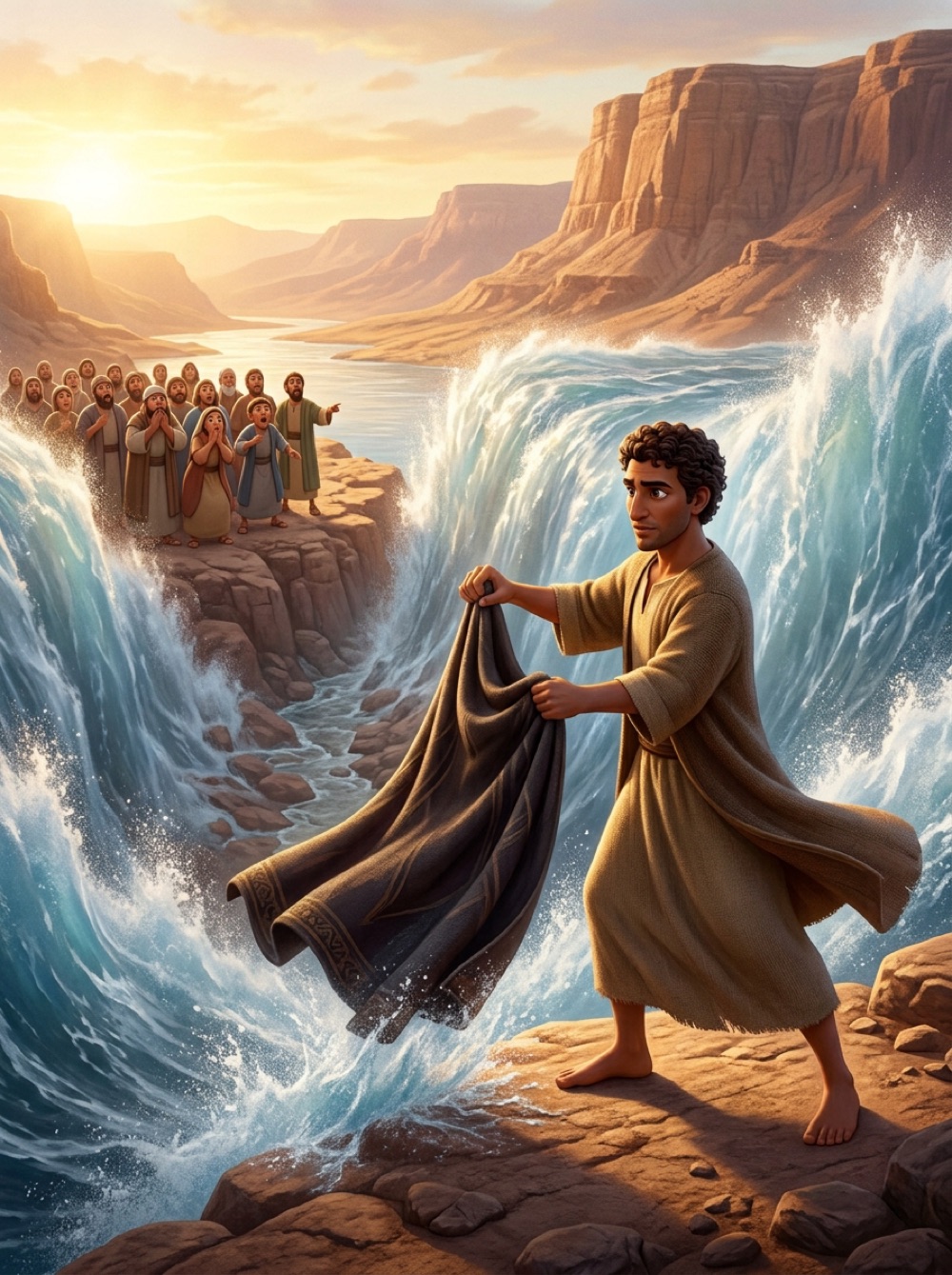
Elisha Takes the Cloak
Elisha struck the Jordan with Elijah's cloak and said, "Where is the God of Elijah?" The water divided and he crossed back. The company of prophets who had been watching said, "The spirit of Elijah rests on Elisha." Then he went to Jericho where the water was bad and people were getting sick. He threw salt into the spring and declared God's healing over it — and the water became pure and has remained so to this day.
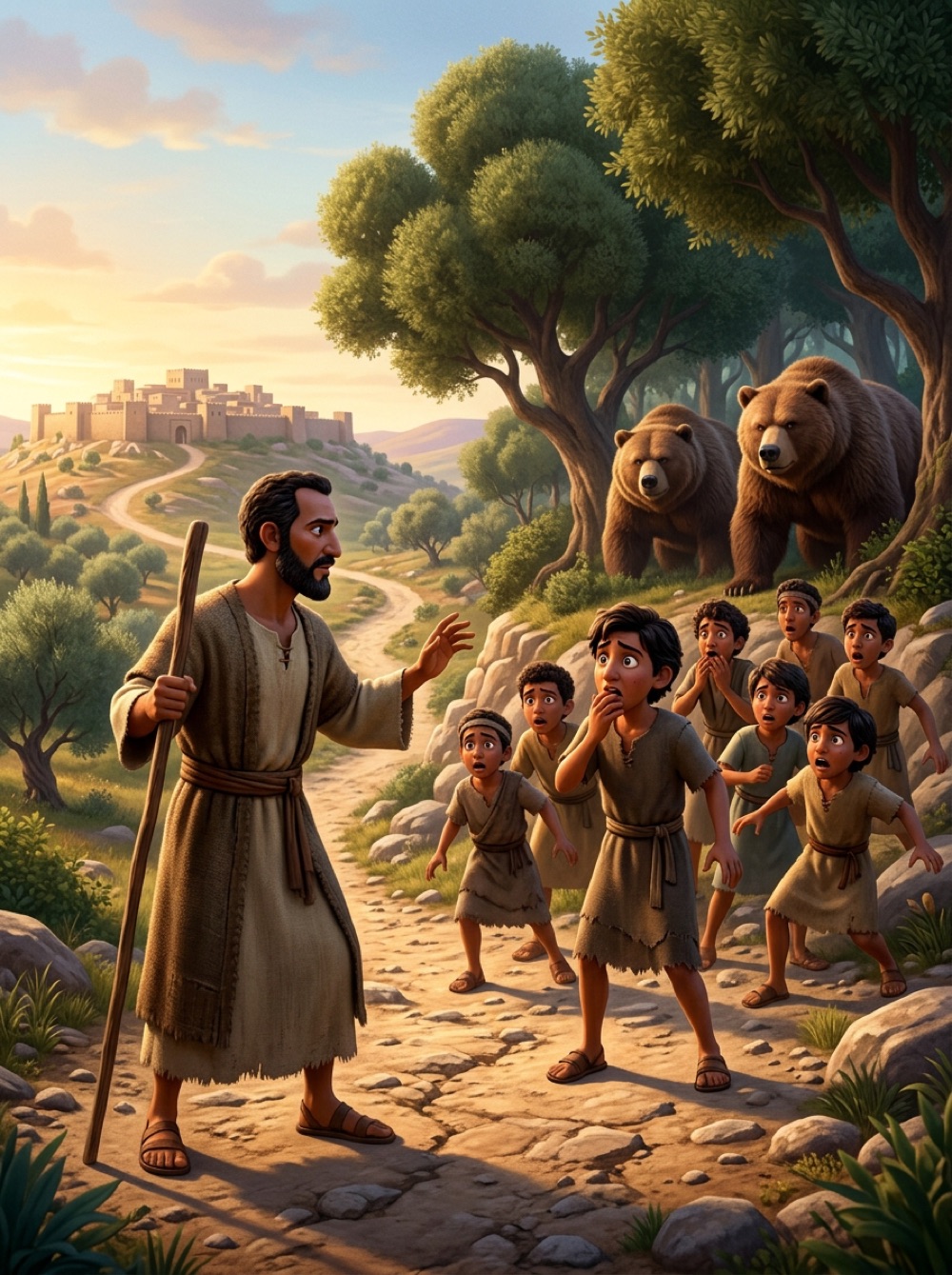
The Bears and the Boys
Elisha was walking to Bethel when a group of youths came out of the city and mocked him. "Get out of here, bald head!" they taunted — again and again. Elisha turned and called down a curse in God's name. Two bears came out of the woods and mauled forty-two of them. Mocking God's prophet is not a small thing. What you say about God's servants reflects what you think about God Himself. Words carry weight — always.
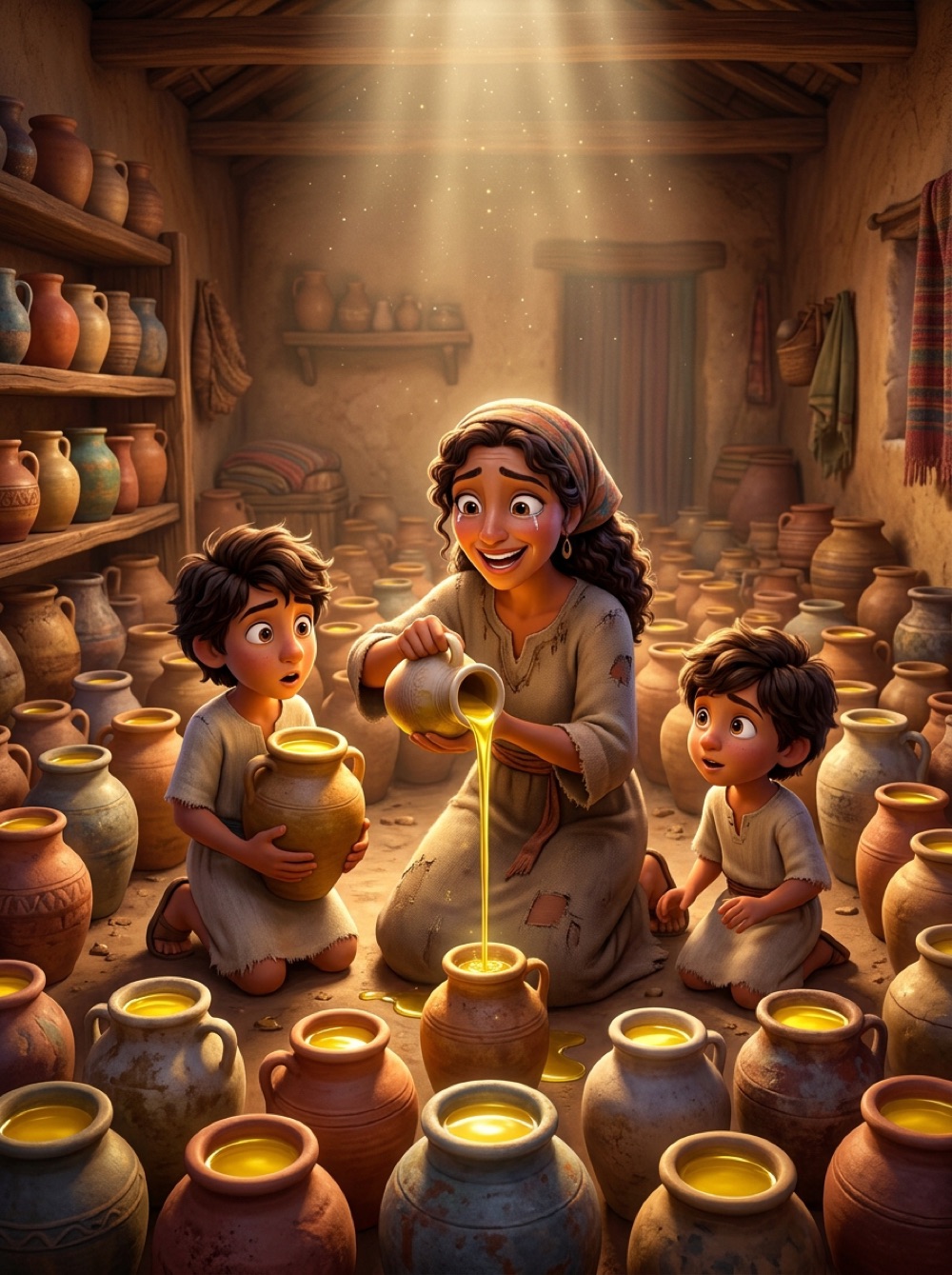
The Widow's Oil
A widow whose husband had been one of the prophets came to Elisha in desperate debt — creditors were coming to take her two sons as slaves. All she had was a small jar of oil. Elisha told her to borrow as many empty jars as she could from her neighbors and start pouring. She poured and poured — filling jar after jar after jar until there were no empty jars left. The oil stopped when the jars ran out. She sold the oil, paid the debt, and had enough left to live on.
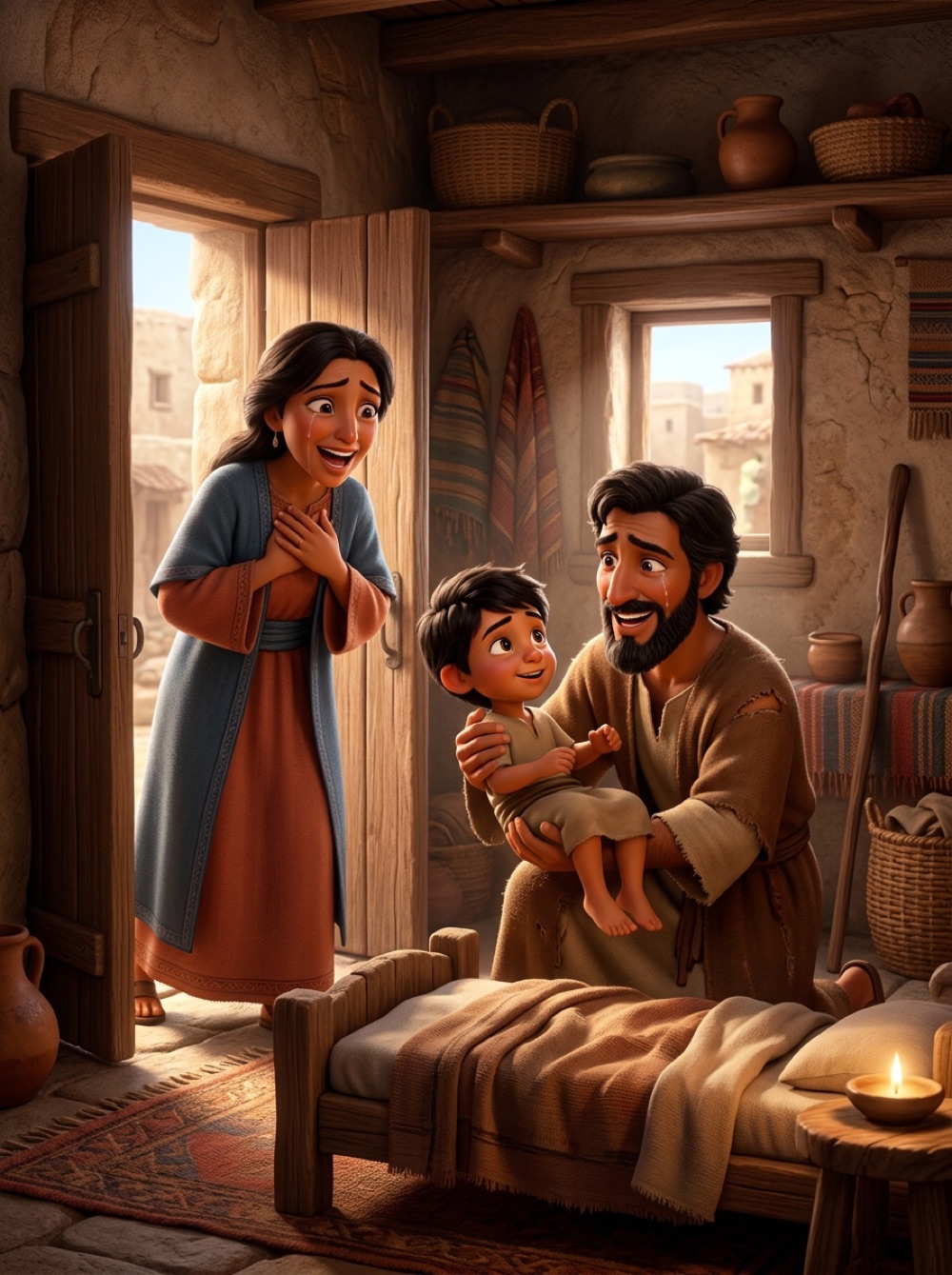
The Shunammite's Son
A wealthy woman in Shunem regularly provided meals and a room for Elisha. He asked what he could do for her in return — and learned she had no son. Elisha promised her that by this time next year she would hold a son in her arms. It happened exactly as he said. Years later the boy died suddenly. The woman rode to Elisha, fell at his feet, and refused to leave without him. Elisha came, prayed over the boy, and the boy sneezed seven times and opened his eyes.
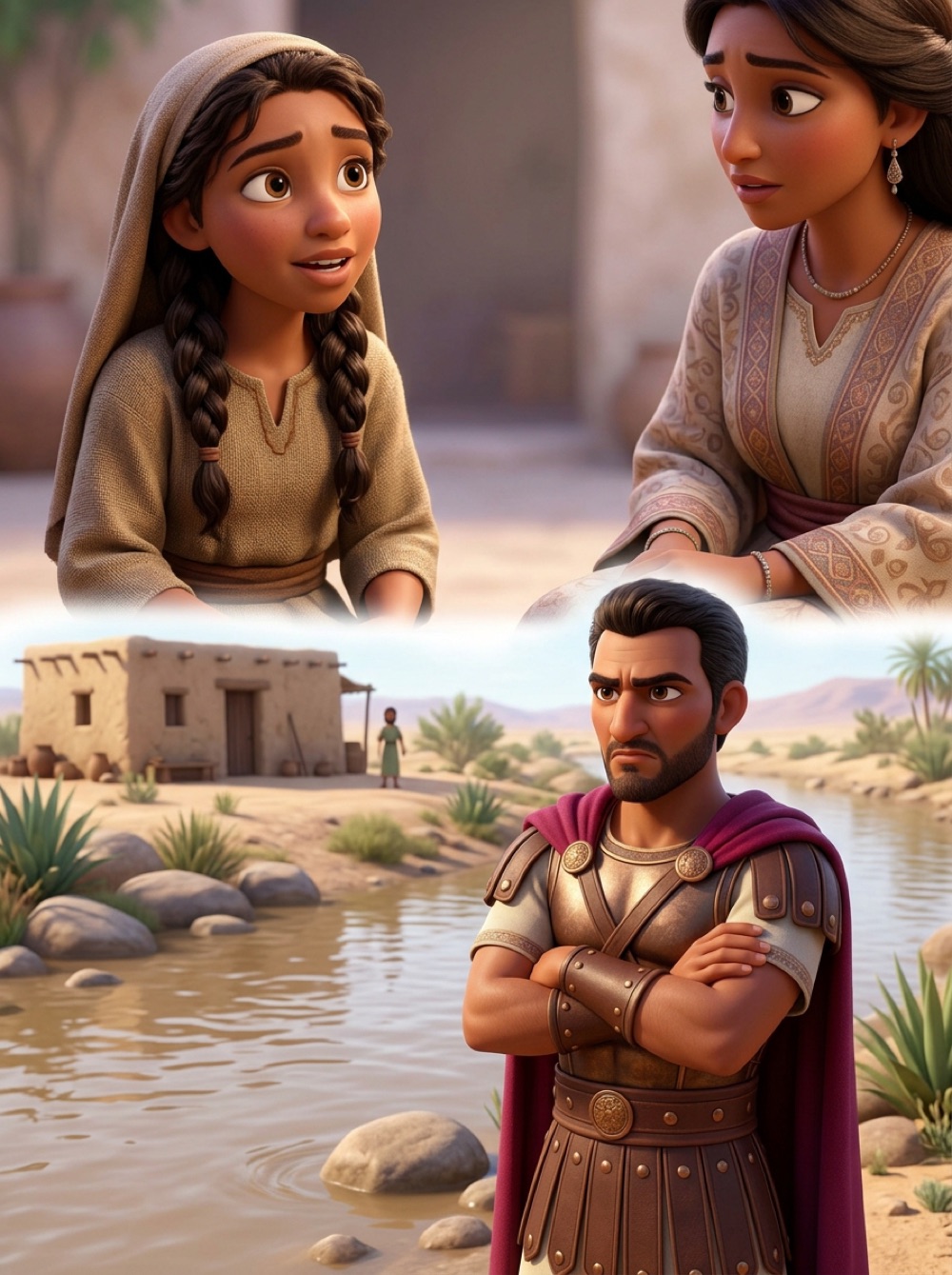
Naaman the Leper
Naaman was commander of the Aramean army — a great man, highly honored. But he had leprosy. A young Israelite girl who worked as his wife's servant said, "If only my master would go to the prophet in Samaria — he would heal him." Naaman went to Elisha. Elisha sent a messenger out saying, "Go wash in the Jordan seven times and you will be healed." Naaman was furious. He had expected something more impressive than washing in a river.
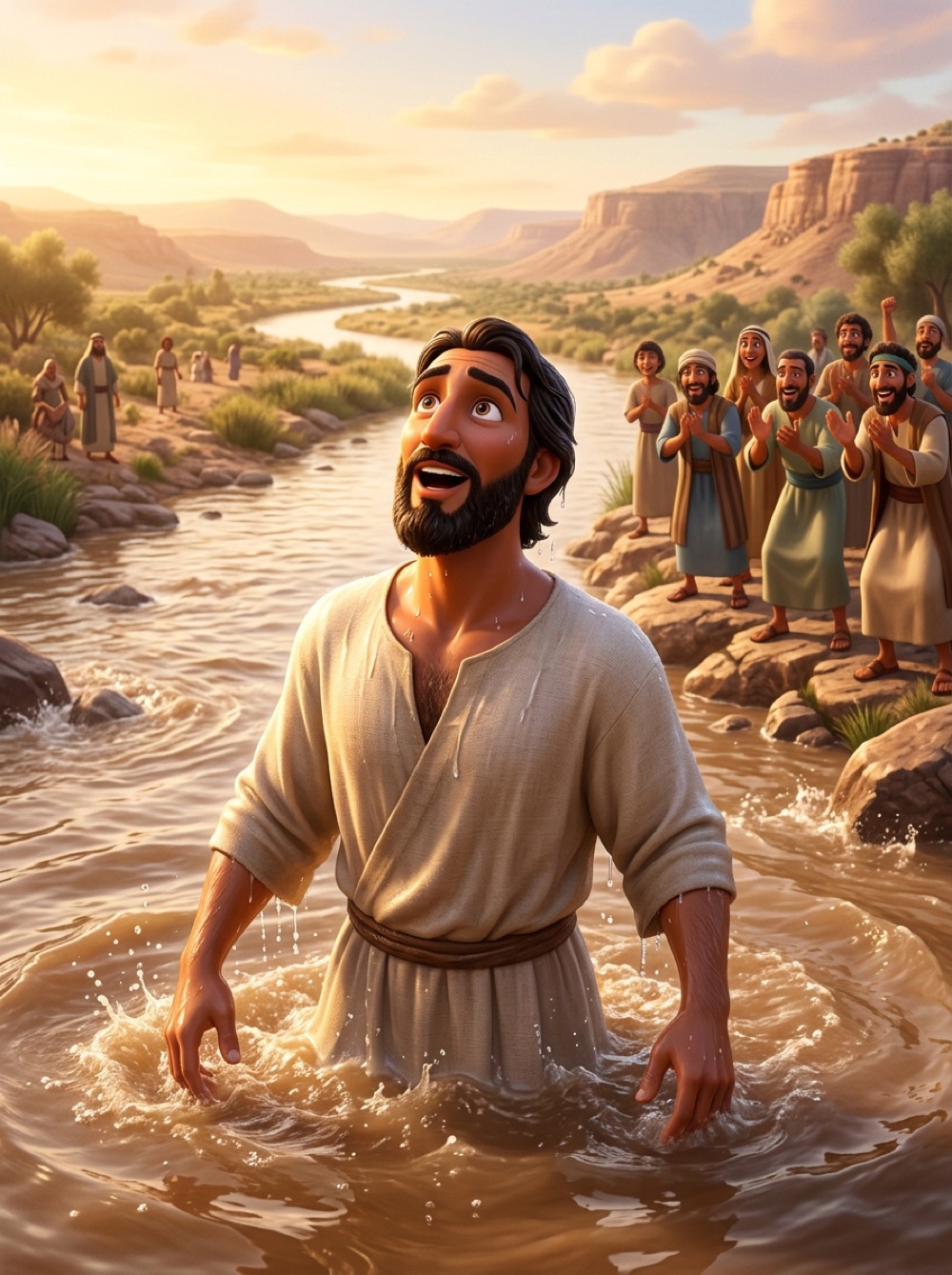
Seven Times in the River
Naaman's servants persuaded him. "If the prophet had asked you to do something great, wouldn't you have done it? How much easier to just wash and be healed?" Naaman went down and dipped himself seven times in the Jordan. On the seventh time his skin became clean — like a little child's skin. He went back to Elisha and said, "Now I know there is no God in all the earth except the God of Israel." A great foreign commander came to faith through seven dips in a muddy river.
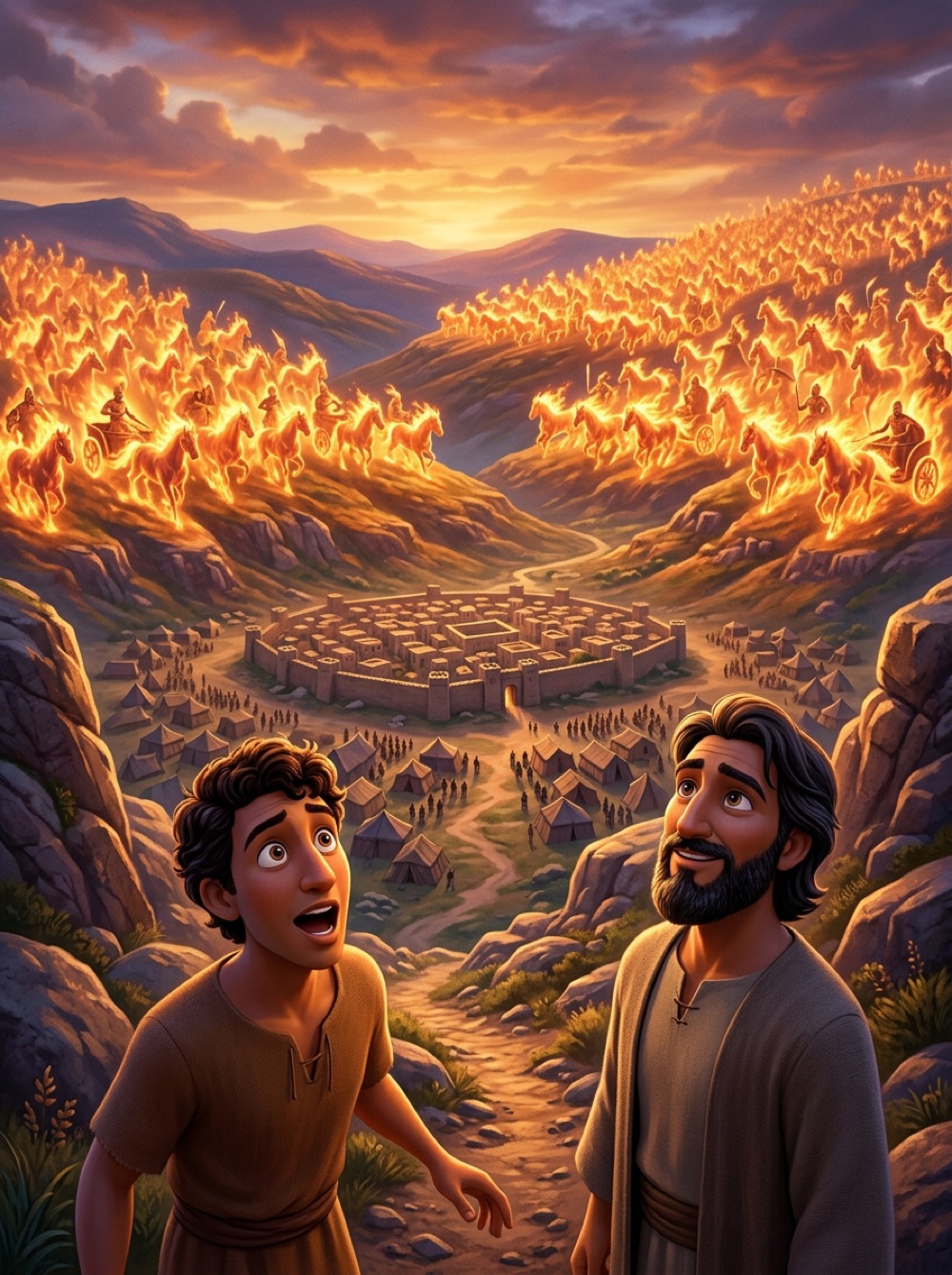
Chariots of Fire
The king of Aram was furious that Elisha kept warning Israel about his plans. He surrounded the city of Dothan with a great army to capture the prophet. Elisha's servant saw the army and panicked. "What shall we do?" he cried. Elisha said, "Don't be afraid. Those who are with us are more than those who are with them." Then Elisha prayed that his servant's eyes would be opened — and he saw the hills full of horses and chariots of fire surrounding Elisha.
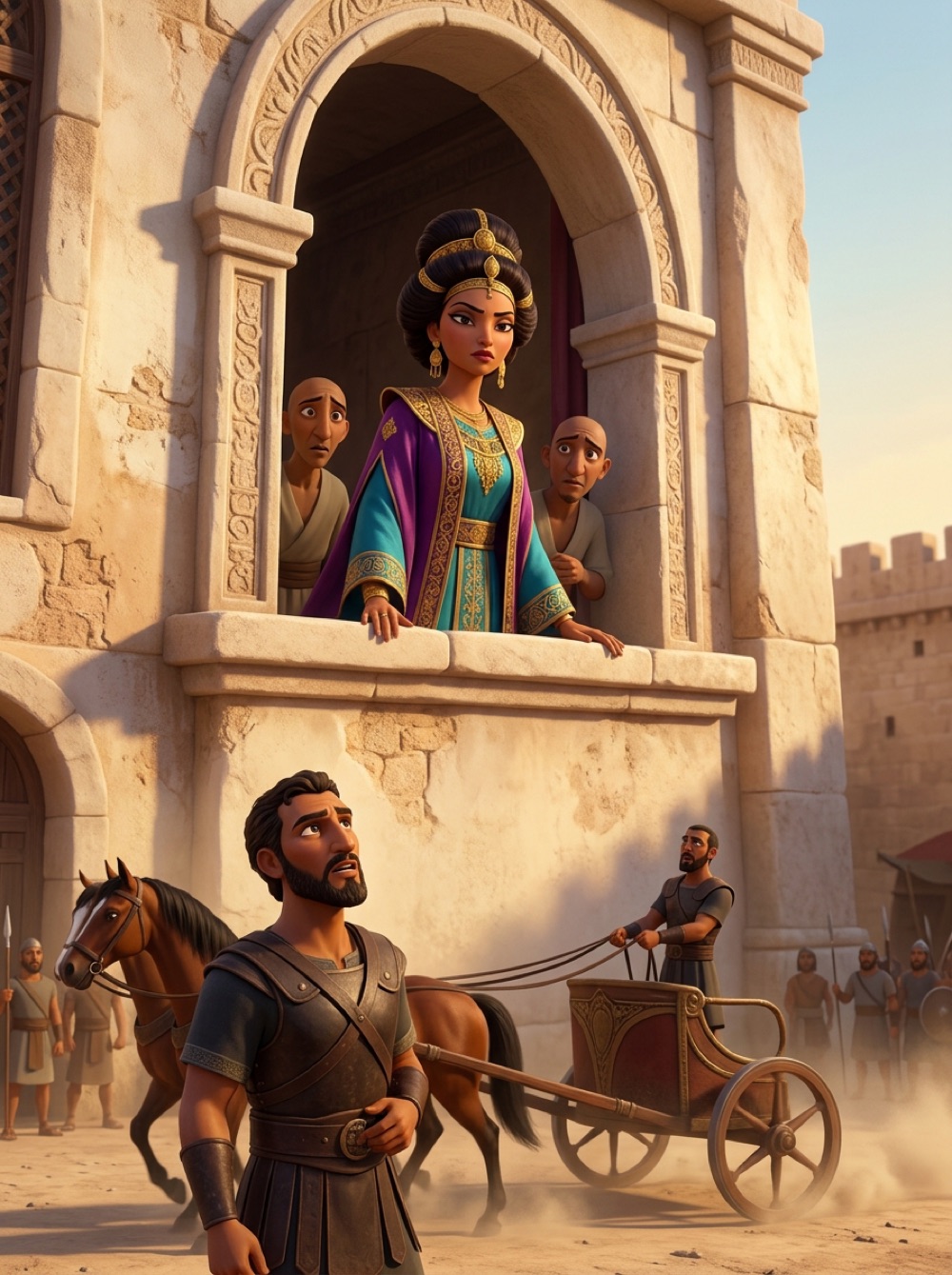
Jezebel's End
Jehu was anointed king over Israel and immediately drove his chariot toward Jezreel to carry out God's judgment on Ahab's house. When Jezebel heard he was coming, she painted her eyes, arranged her hair, and looked down from a window — defiant to the end. Jehu called out to the servants with her — and they threw her down. She died as Elijah had prophesied in Naboth's vineyard years before. The woman who had stolen a life by false accusation could not escape the God who sees everything.
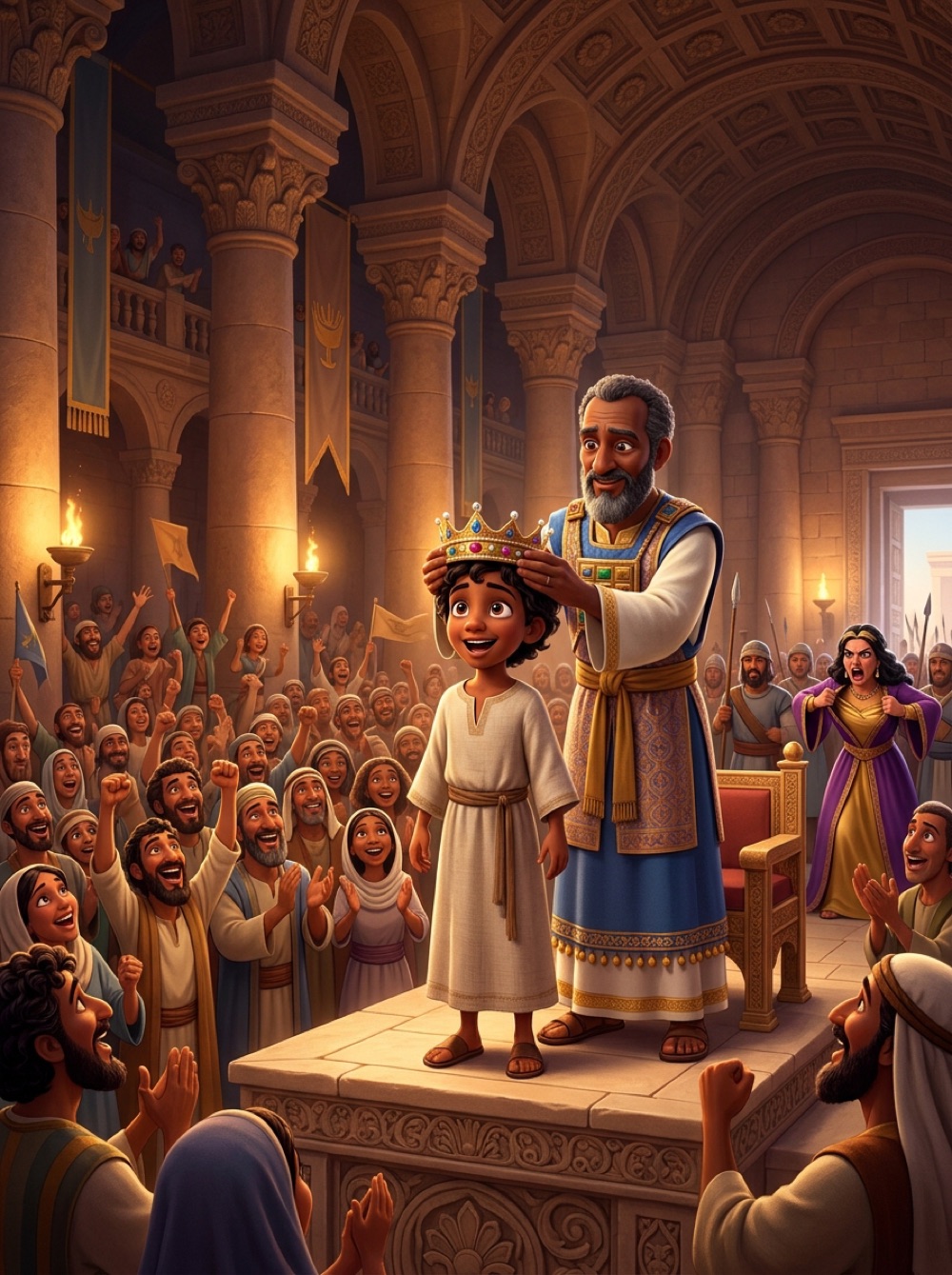
Young King Joash
When wicked Queen Athaliah tried to kill all the royal family and seize the throne, one baby boy was hidden in the Temple for six years — Joash, the rightful heir. When he was seven, the priest Jehoiada brought him out, crowned him, and the people celebrated. Athaliah tore her clothes and cried "Treason!" but it was too late. Joash became king and as long as Jehoiada the priest lived and guided him, Joash did what was right. Good mentors matter enormously.
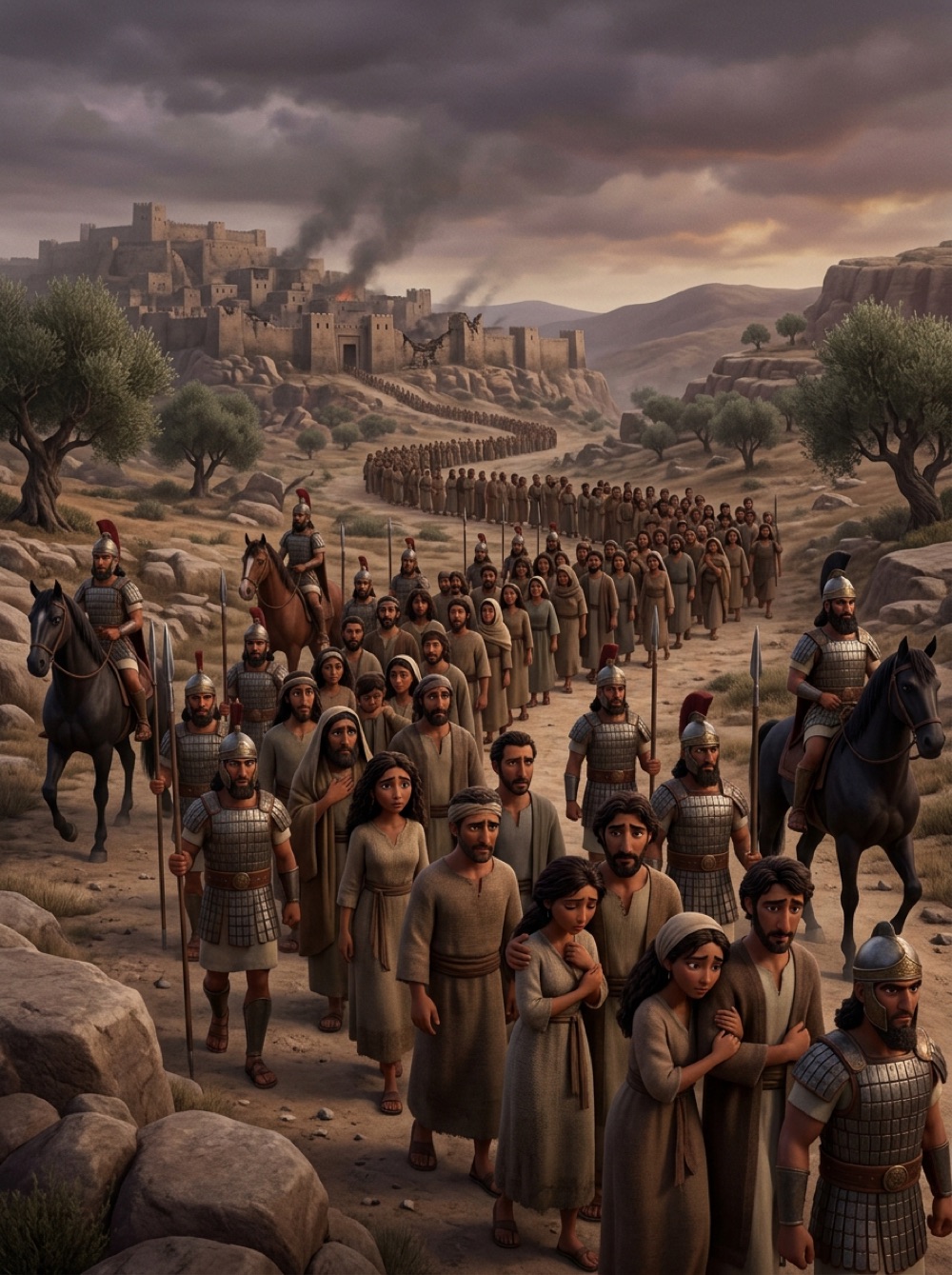
Israel Falls to Assyria
After nearly two hundred years of mostly wicked kings, the northern kingdom of Israel finally fell. The king of Assyria invaded, captured Samaria, and carried Israel away into exile — scattering them across the Assyrian empire. The Bible gives the reason clearly: "This happened because the Israelites had sinned against the Lord their God who had brought them out of Egypt. They worshipped other gods, followed the practices of the nations God had driven out, and did not listen to the prophets God sent them."
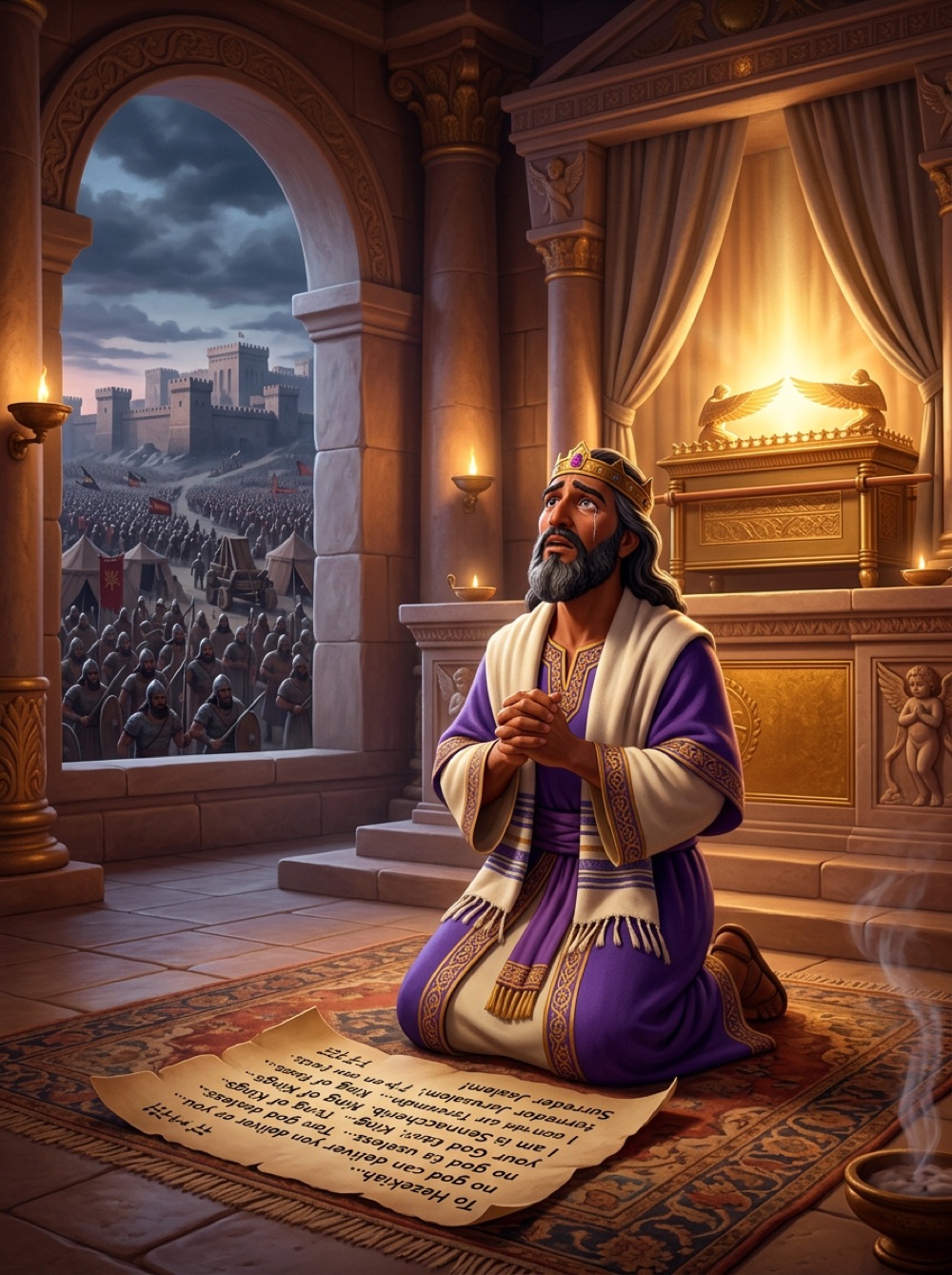
Hezekiah Trusts God
The southern kingdom of Judah had some good kings. Hezekiah was one of the best. When the massive Assyrian army threatened Jerusalem and their commander stood outside the walls mocking God, Hezekiah went straight to the Temple and spread the threatening letter before God. "Lord, you alone are God. Look at this letter. Deliver us so all kingdoms may know that you alone are Lord." God answered through Isaiah — "I will defend this city."
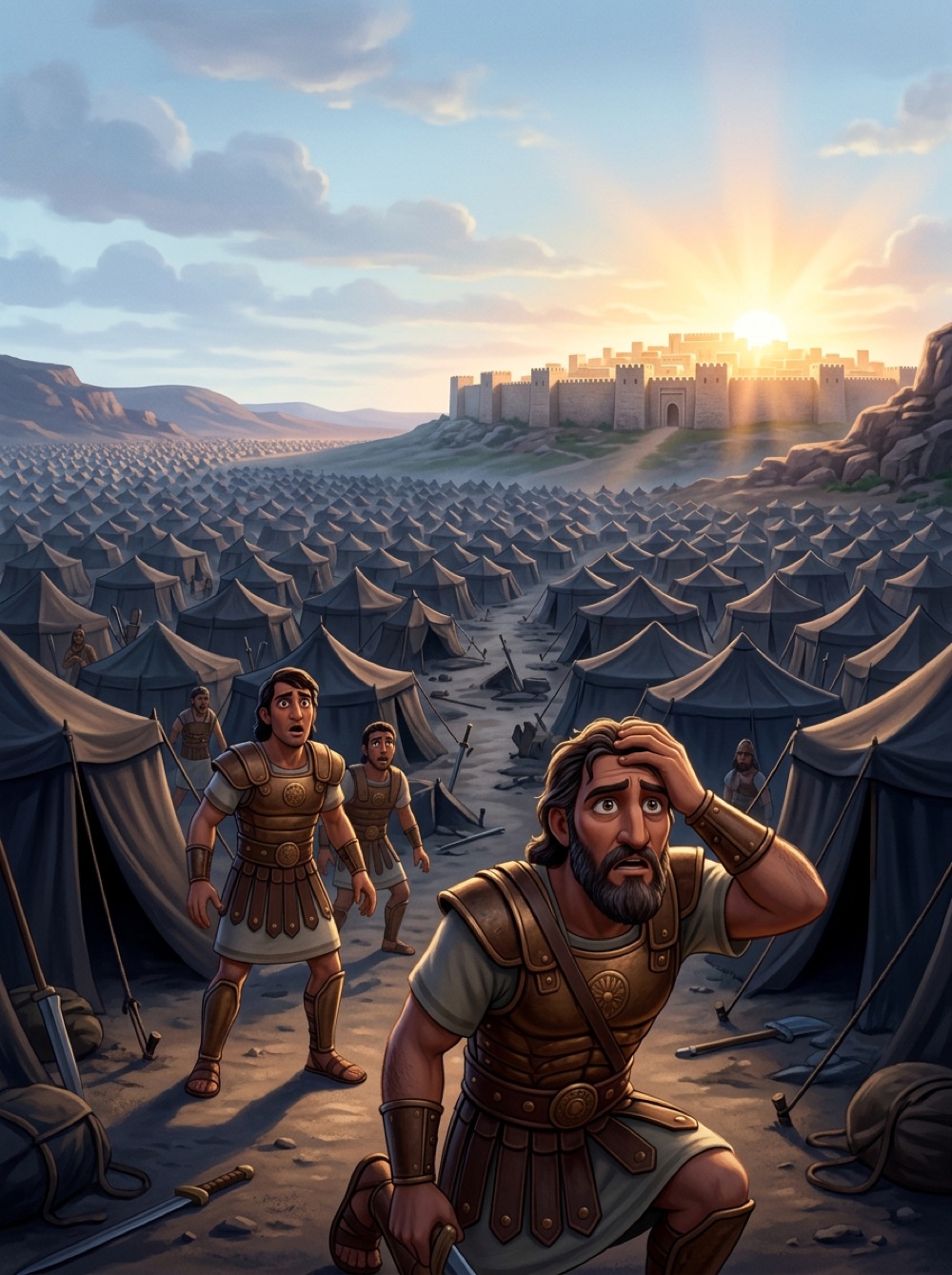
The Angel of the Lord
That night the angel of the Lord went through the Assyrian camp and one hundred and eighty-five thousand soldiers were dead by morning. When the survivors woke up, they were surrounded by corpses. The Assyrian king Sennacherib broke camp and withdrew. He went home to Nineveh and was later killed by his own sons while worshipping in his temple. The God whom he had mocked had the final word — as He always does.
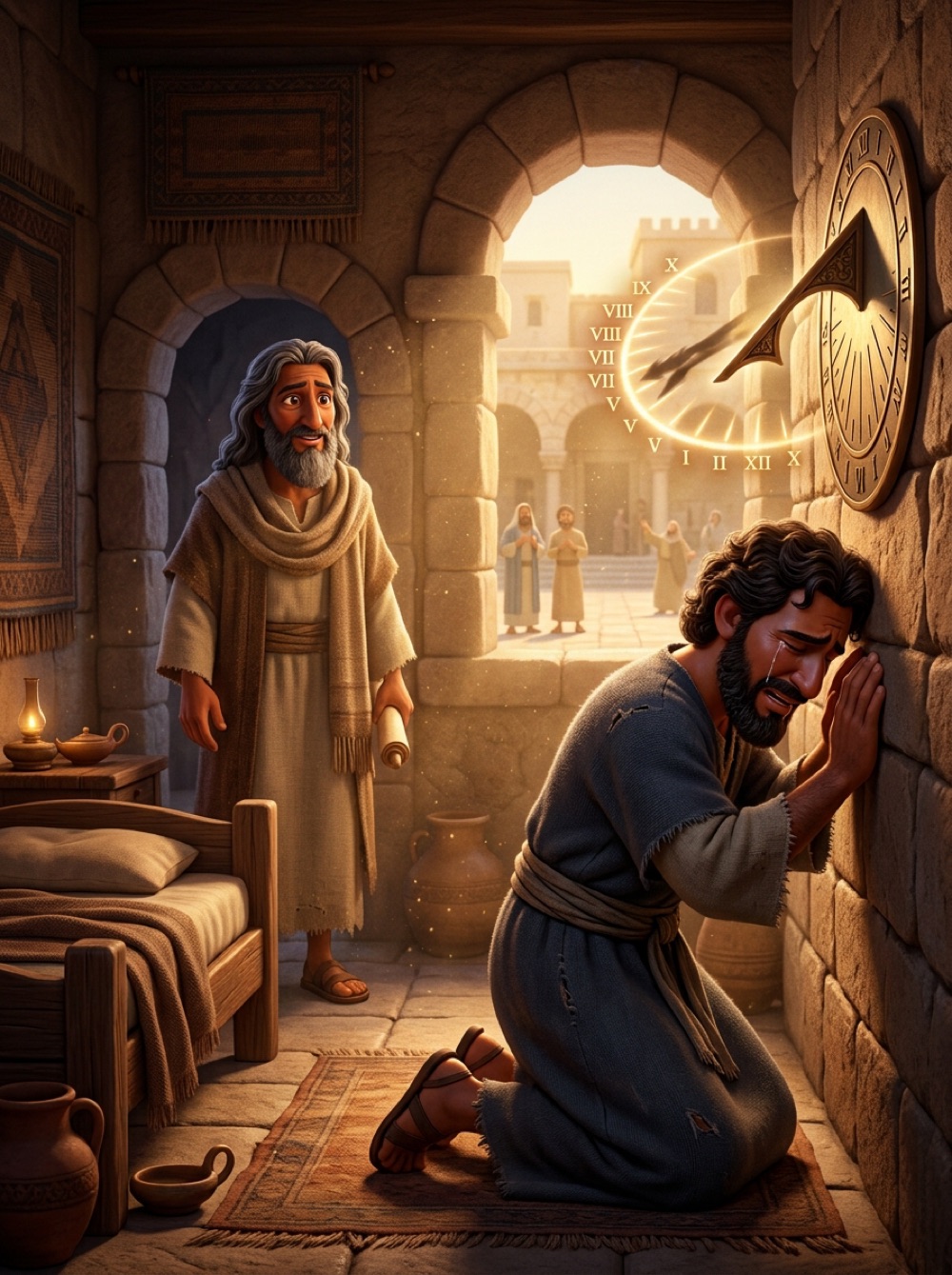
Hezekiah's Extra Years
Hezekiah became terminally ill and Isaiah told him to put his house in order — he would die. Hezekiah turned his face to the wall and prayed. "Remember, Lord, how I have walked before you faithfully." God told Isaiah to go back with a new message — Hezekiah would live fifteen more years. As a sign, the shadow on the sundial went backward ten steps. God heard one man's prayer and added fifteen years to his life.
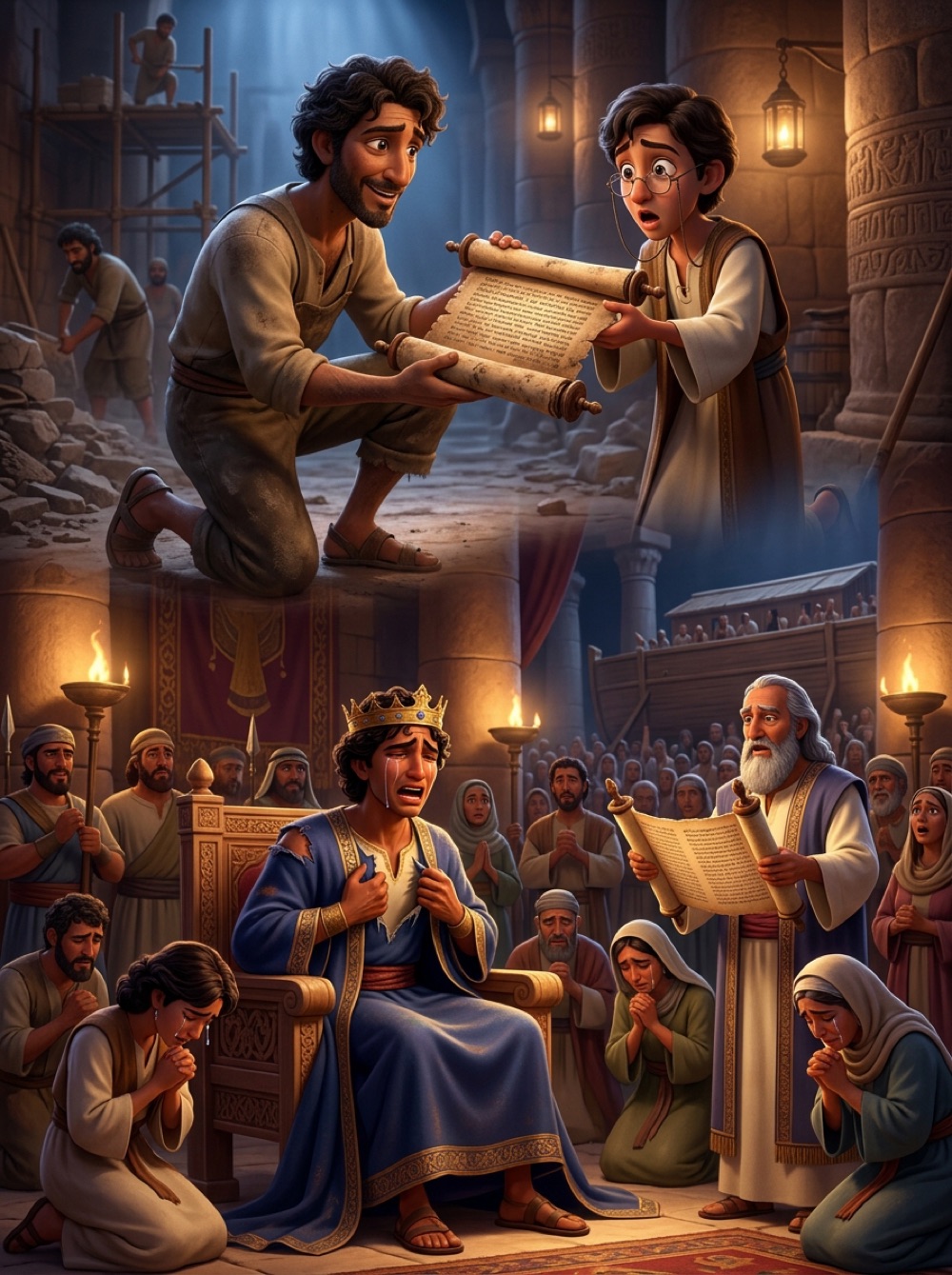
Josiah Finds the Book
King Josiah was one of Judah's greatest kings — he became king at eight years old and followed God with his whole heart. During Temple repairs, the Book of the Law was found — it had been so neglected it had been lost entirely. When Josiah heard it read, he tore his clothes in grief. He gathered all the people and read the whole Book to them. Then he led the most thorough religious reform Judah had ever seen — tearing down every idol, every high place, every altar to false gods.
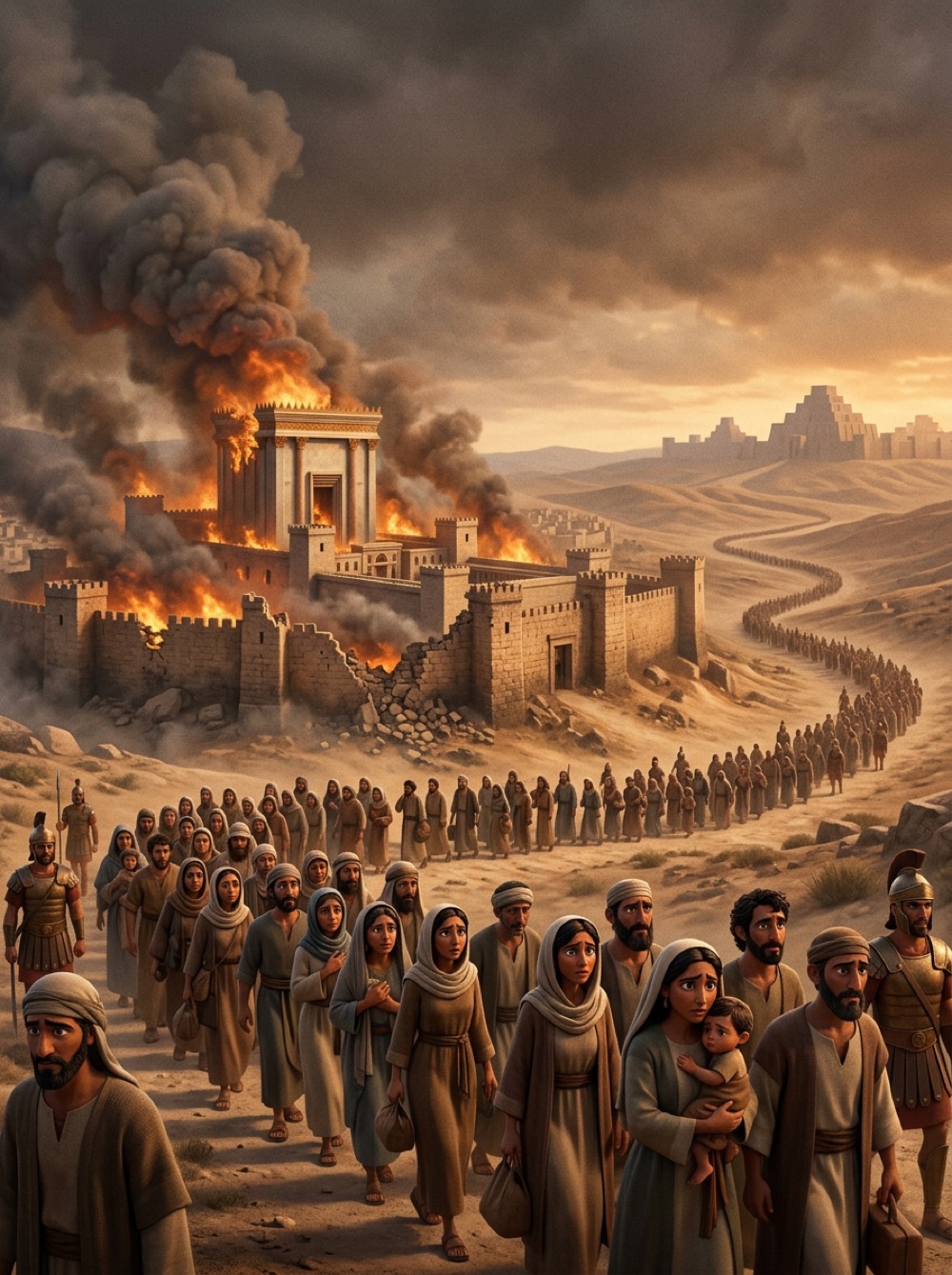
Judah Falls to Babylon
After Josiah died, Judah's kings returned to evil. King Nebuchadnezzar of Babylon came and besieged Jerusalem. He carried off the Temple treasures, the king, the officials, the craftsmen — all the best people of the land. Then he came back again — and this time burned the Temple, broke down Jerusalem's walls, and took the rest of the people into exile in Babylon. The city David had built, the Temple Solomon had constructed — both gone. The kingdom God had established through Abraham, Moses, and David was in ruins.
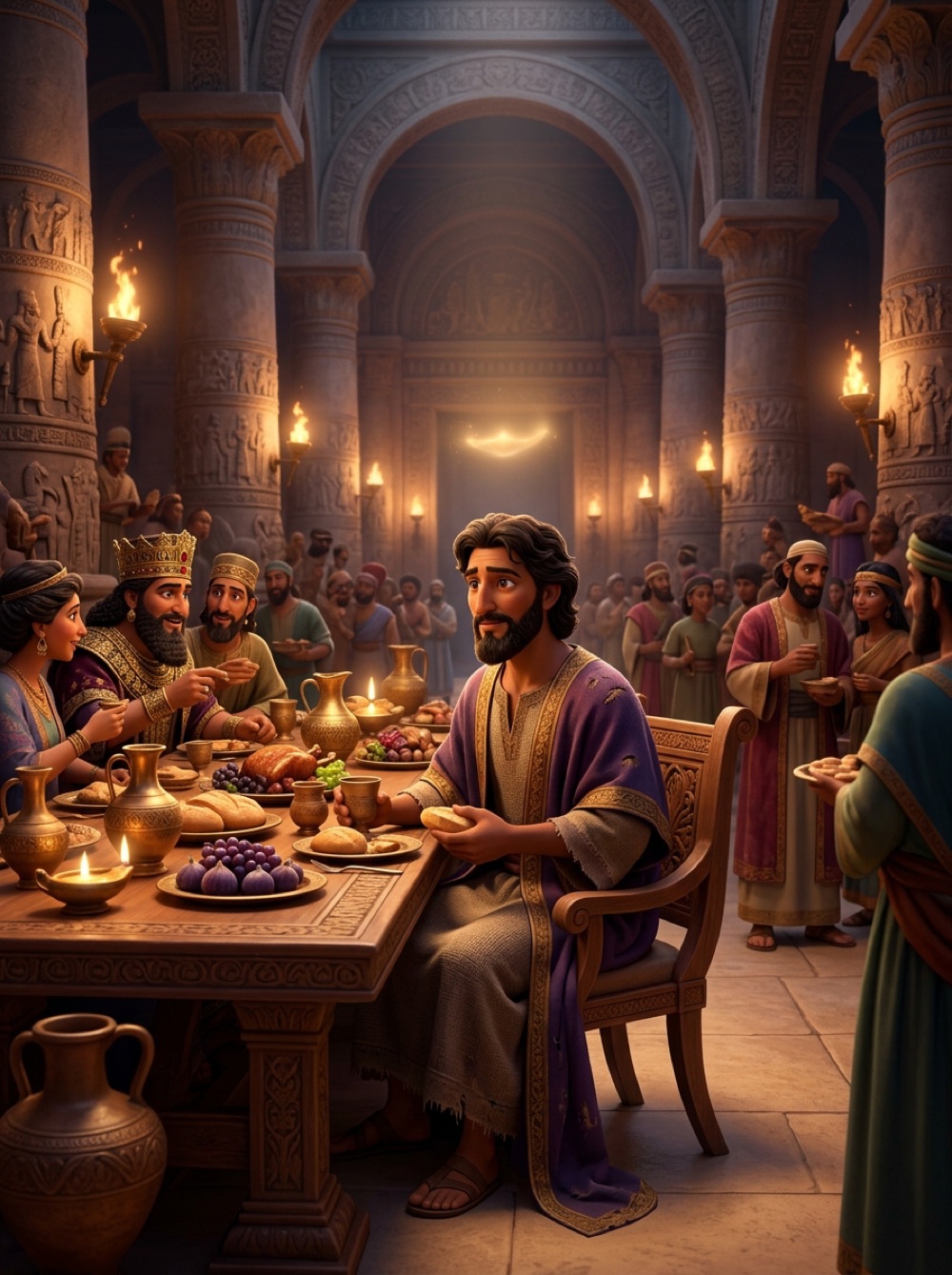
But Hope Was Not Gone
The book of Kings ends with a quiet, almost hidden sign of hope. The exiled king of Judah — Jehoiachin — was released from prison by the new king of Babylon, given a seat of honor above other captured kings, and provided food at the king's table every day for the rest of his life. The royal line was not dead. God's promises to David were not cancelled. The story was not over. It was only resting — waiting for what came next.

The Family Lines
The book of Chronicles begins with a long list of family lines — from Adam all the way down to the people who returned from exile in Babylon. It may seem like just a list of names. But every name represents a person God knew. The family line that carried God's promise from Adam to Abraham to David to the exiles and back again — was never broken, never lost, never forgotten. God keeps track of every generation.
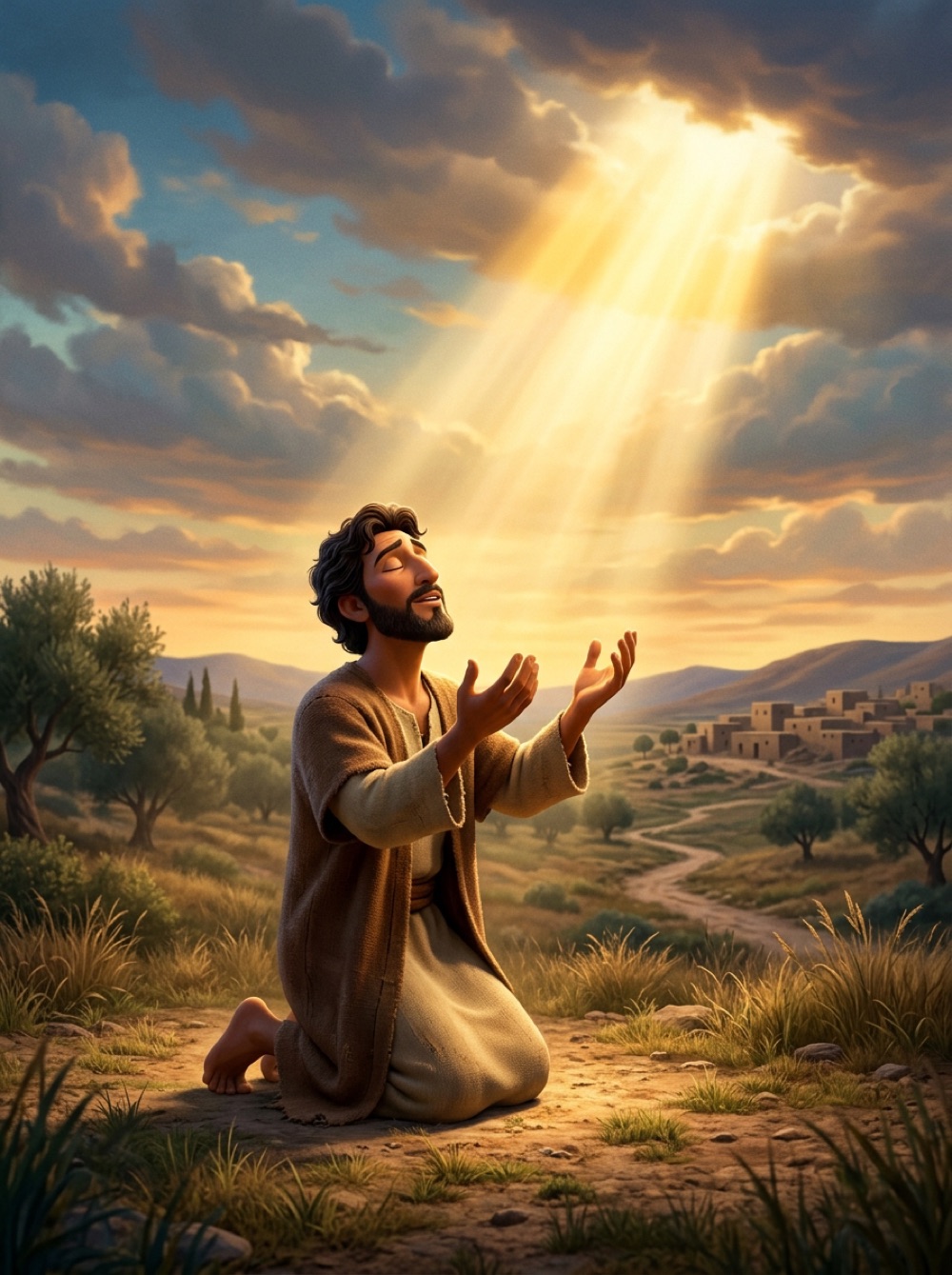
The Prayer of Jabez
Hidden in the middle of all the family lists is one small prayer from a man named Jabez. "Oh that you would bless me and enlarge my territory. Let your hand be with me and keep me from harm so that I will be free from pain." The Bible says God granted his request. One honest prayer in the middle of an ordinary life — and God answered it. You don't have to be famous for God to hear you.
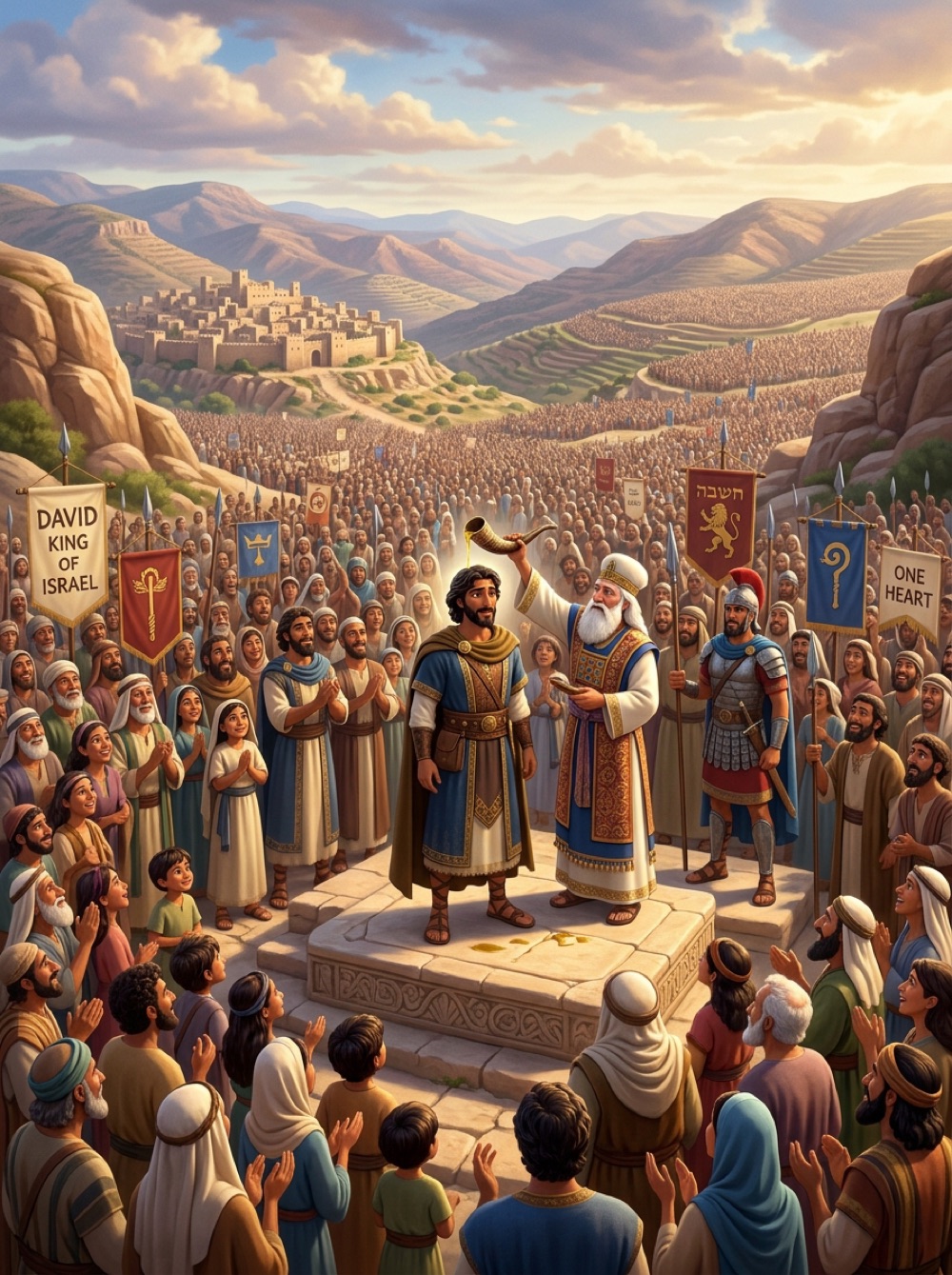
David Becomes King — God's Way
Chronicles picks up the story at Saul's death and David's rise — but tells it differently. Where Samuel focused on the drama and conflict, Chronicles focuses on the unity. All Israel came to David at Hebron with one heart to make him king. David's mighty warriors are listed by name — each one honored, each one remembered. God's kingdom was being built by real people with real names who chose to be part of something bigger than themselves.
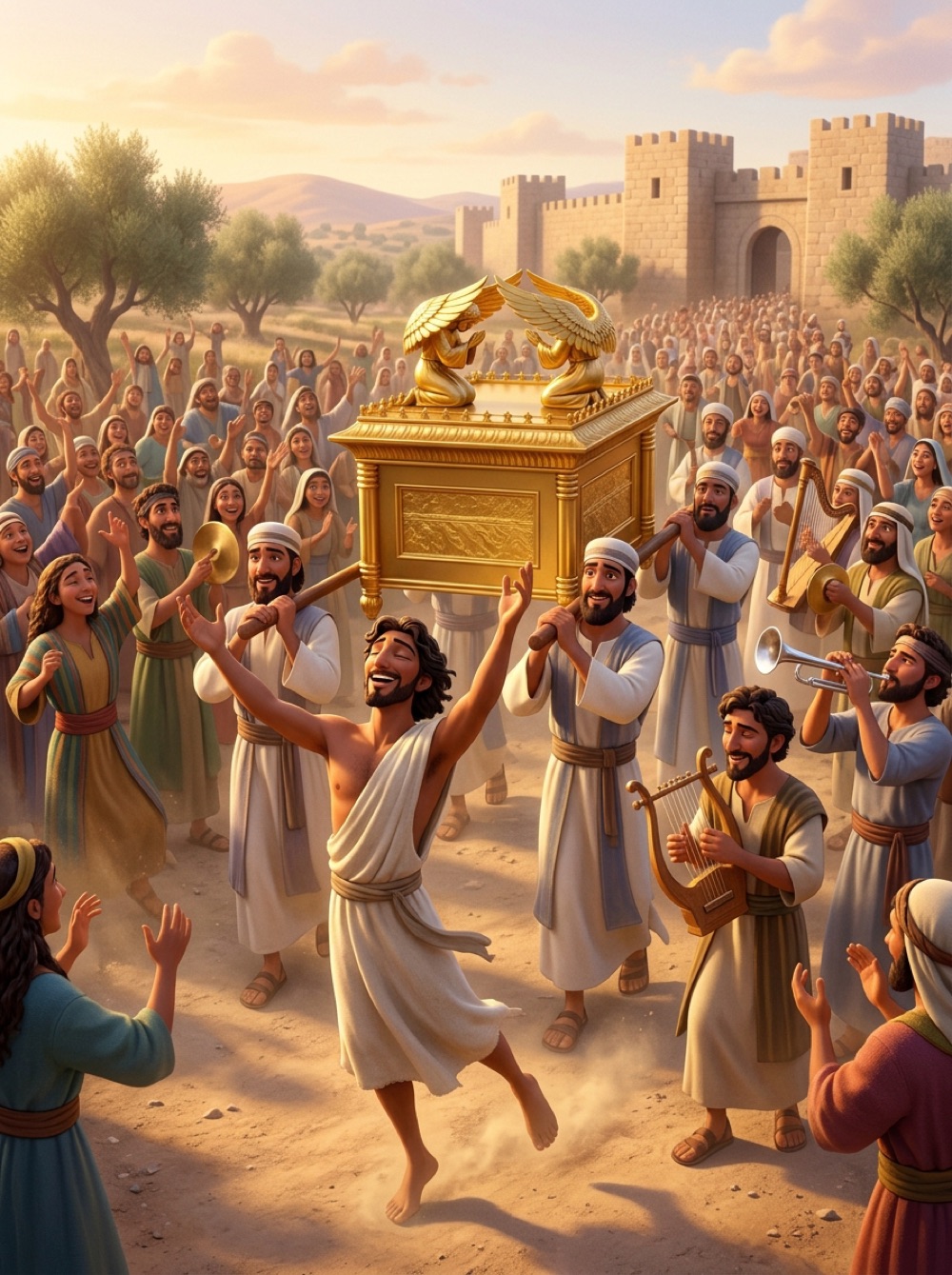
David Brings the Ark Home
David's first great act as king was to bring the Ark of the Covenant to Jerusalem. After the tragic death of Uzzah when the Ark was carried incorrectly, David waited and prepared. The second time he made sure the Levites carried it as God had instructed. When the Ark entered Jerusalem there was music, singing, dancing, and celebration. David appointed Levites to minister before the Ark continually — giving thanks, seeking God, declaring His works among the nations.
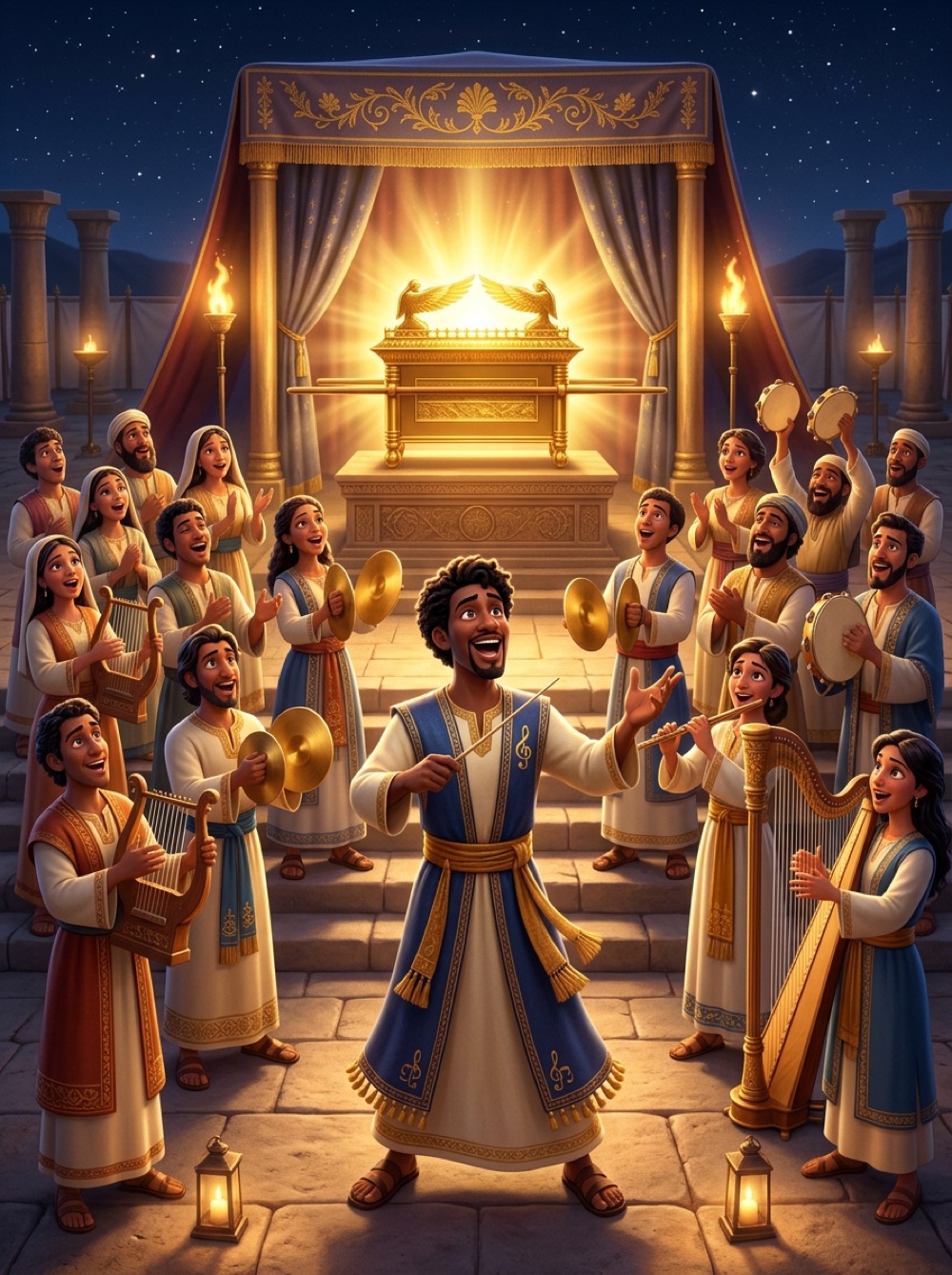
David's Song of Thanks
On the day the Ark arrived, David gave Asaph and the other Levites a song of thanksgiving to sing before God. "Give praise to the Lord, proclaim His name, make known among the nations what He has done. Sing to Him, sing praise to Him, tell of all His wonderful acts. Glory in His holy name. Look to the Lord and His strength, seek His face always." Worship was not an afterthought in David's kingdom — it was the heartbeat of everything.
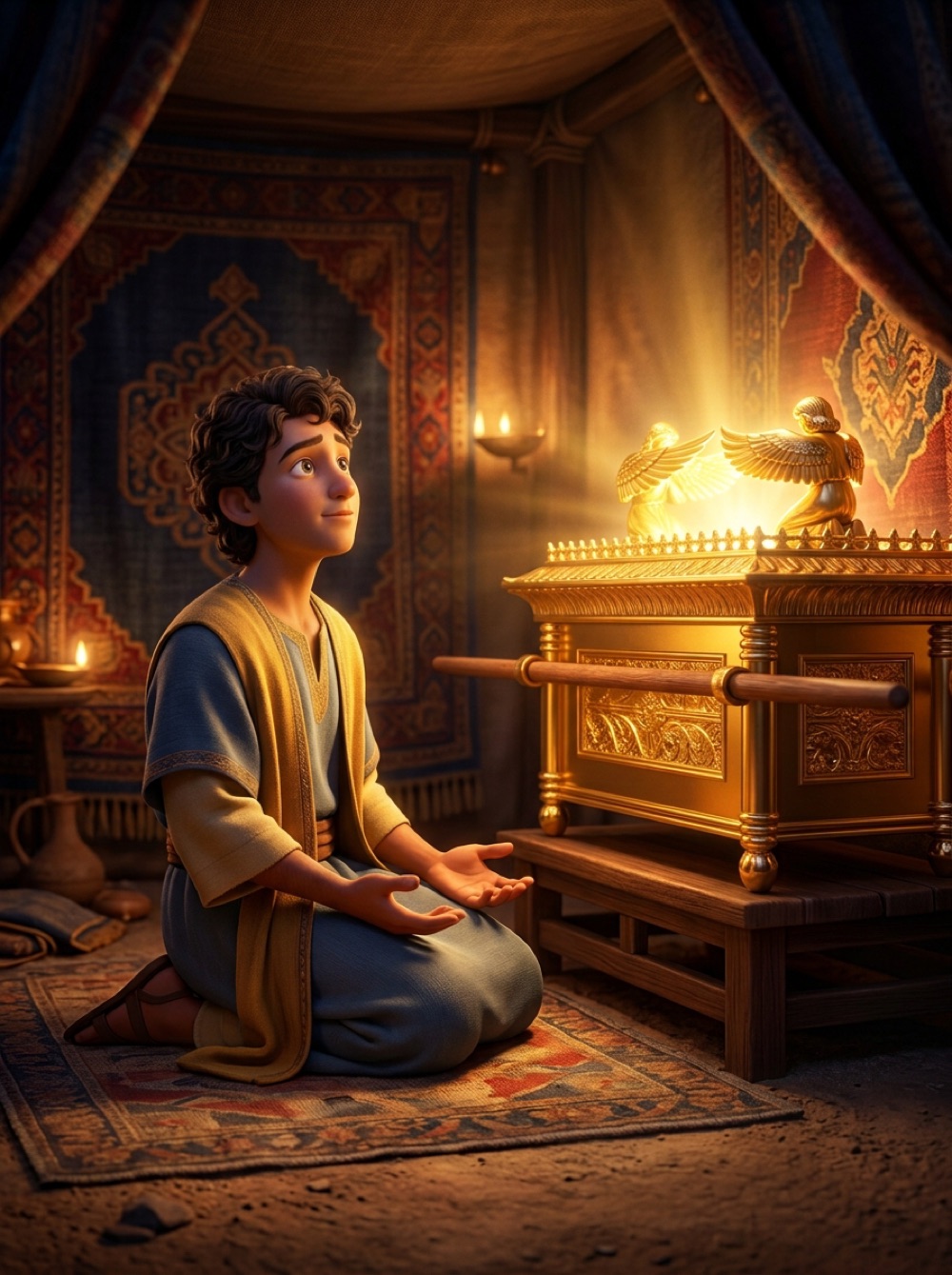
God's Promise to David
God spoke to David through Nathan the prophet with the same extraordinary covenant we saw in 2 Samuel — but Chronicles emphasizes the eternal nature of the promise even more clearly. "I will set him over my house and my kingdom forever. His throne will be established forever." David sat before God and prayed, "There is no one like you, Lord, and there is no God but you." The promise was not just for David's lifetime — it pointed far beyond him.
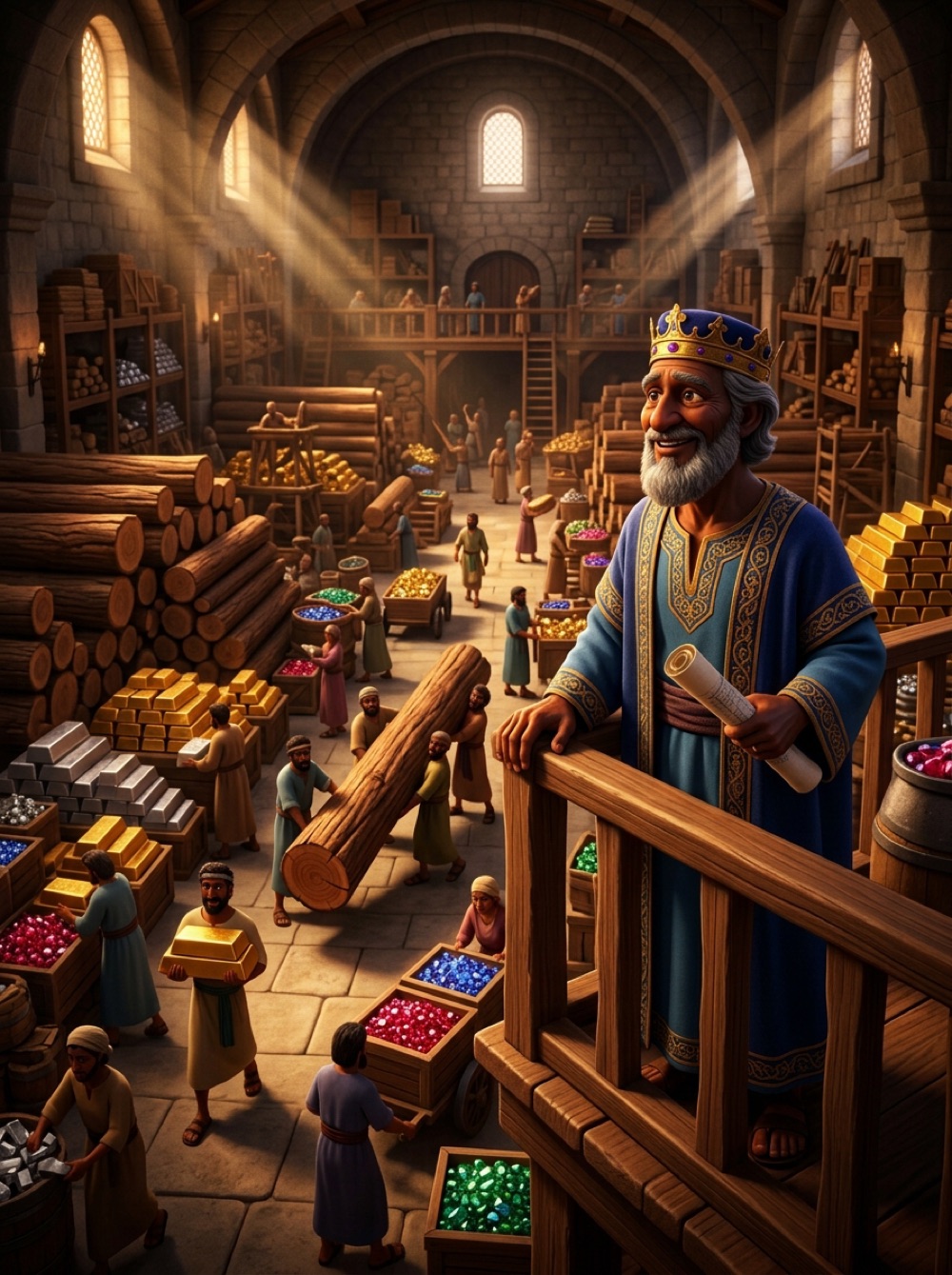
David Prepares for the Temple
David knew he would not build the Temple himself — God had told him Solomon would build it. But David refused to leave his son unprepared. He gathered materials on an extraordinary scale — more gold, silver, bronze, iron, and timber than could be measured. He organized the priests and Levites, assigned their duties, and prepared the plans God had given him. "Solomon my son is young. The work is great. I will make preparation for it." He gave everything he had for something he would never see completed.
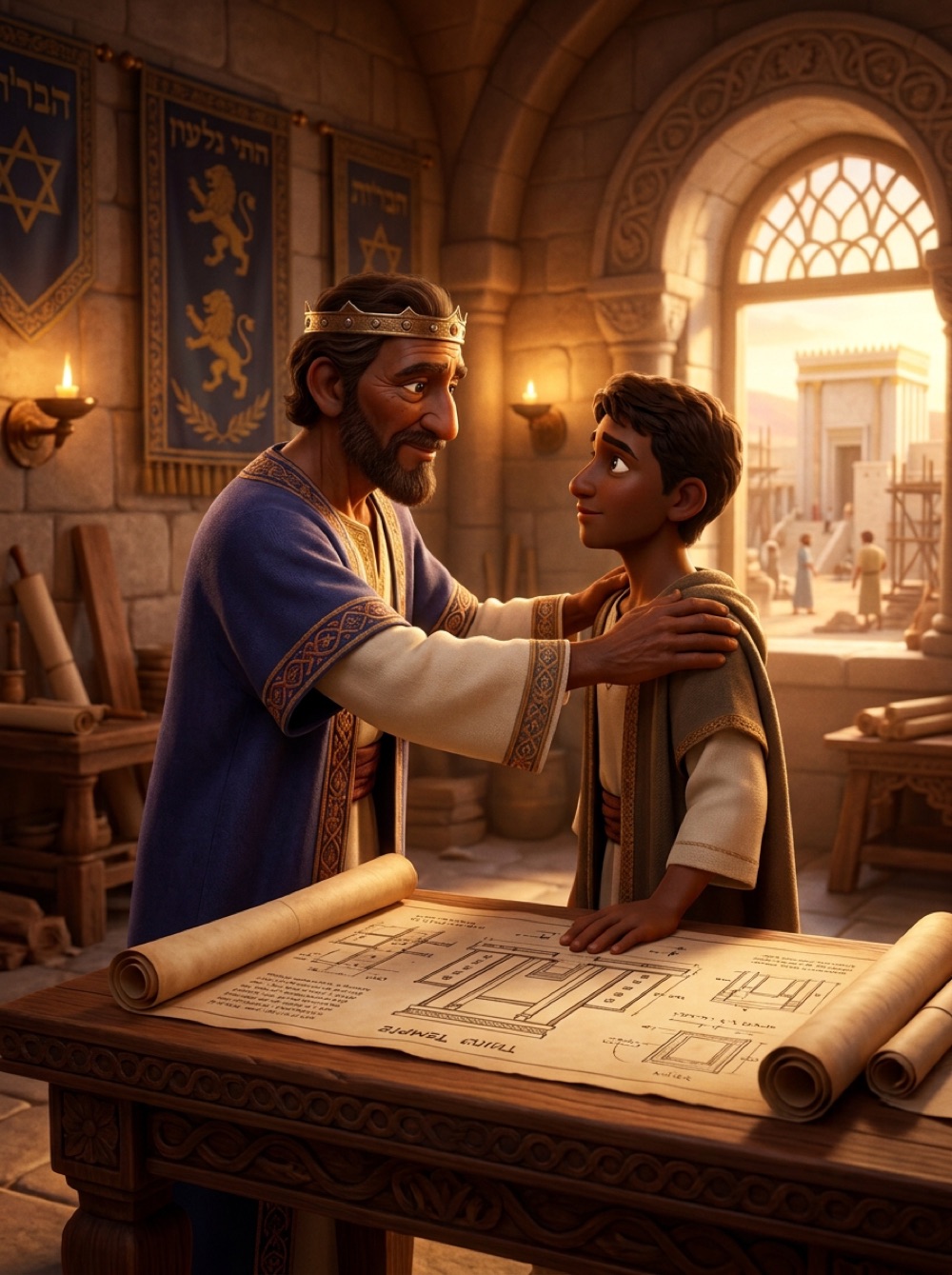
David's Charge to Solomon
David called Solomon privately and charged him with the task of building the Temple. "Be strong and courageous. Do not be afraid or discouraged. The Lord God is with you. He will not fail you or forsake you until all the work for the Temple is finished." Then he gave Solomon all the plans — for every room, every piece of furniture, every detail. The plans had come from God. The task was Solomon's. The preparation was David's gift.
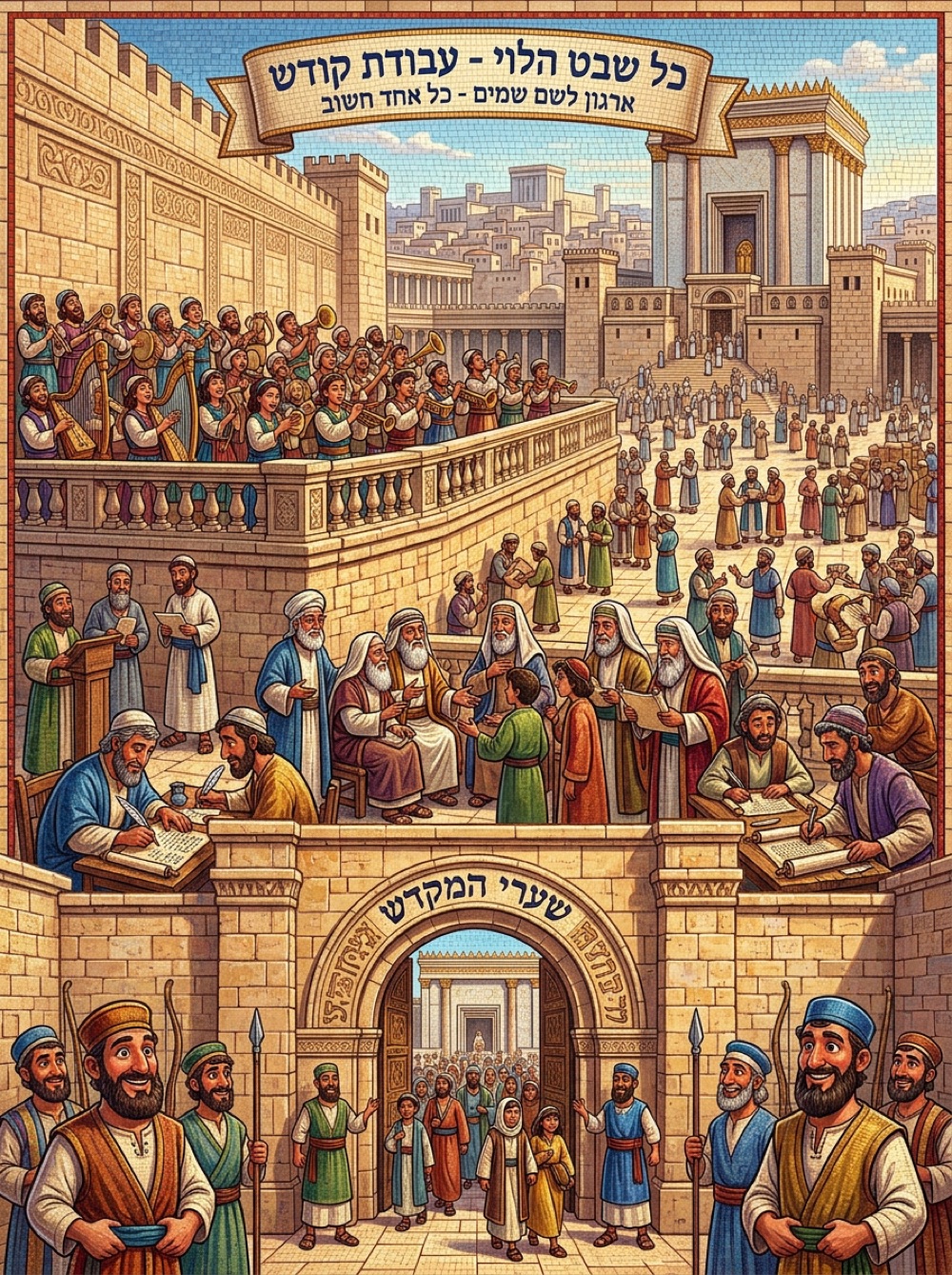
Everyone Has a Role
David organized thousands of Levites into specific roles — some to oversee the work of the Temple, some to be officials and judges, some to be gatekeepers, some to be musicians and singers. Every person had a specific assignment. Every role mattered. David understood that a great work requires organized, willing people — each one doing their part faithfully. God's house was not built by one man but by thousands of people each contributing what they had been given.
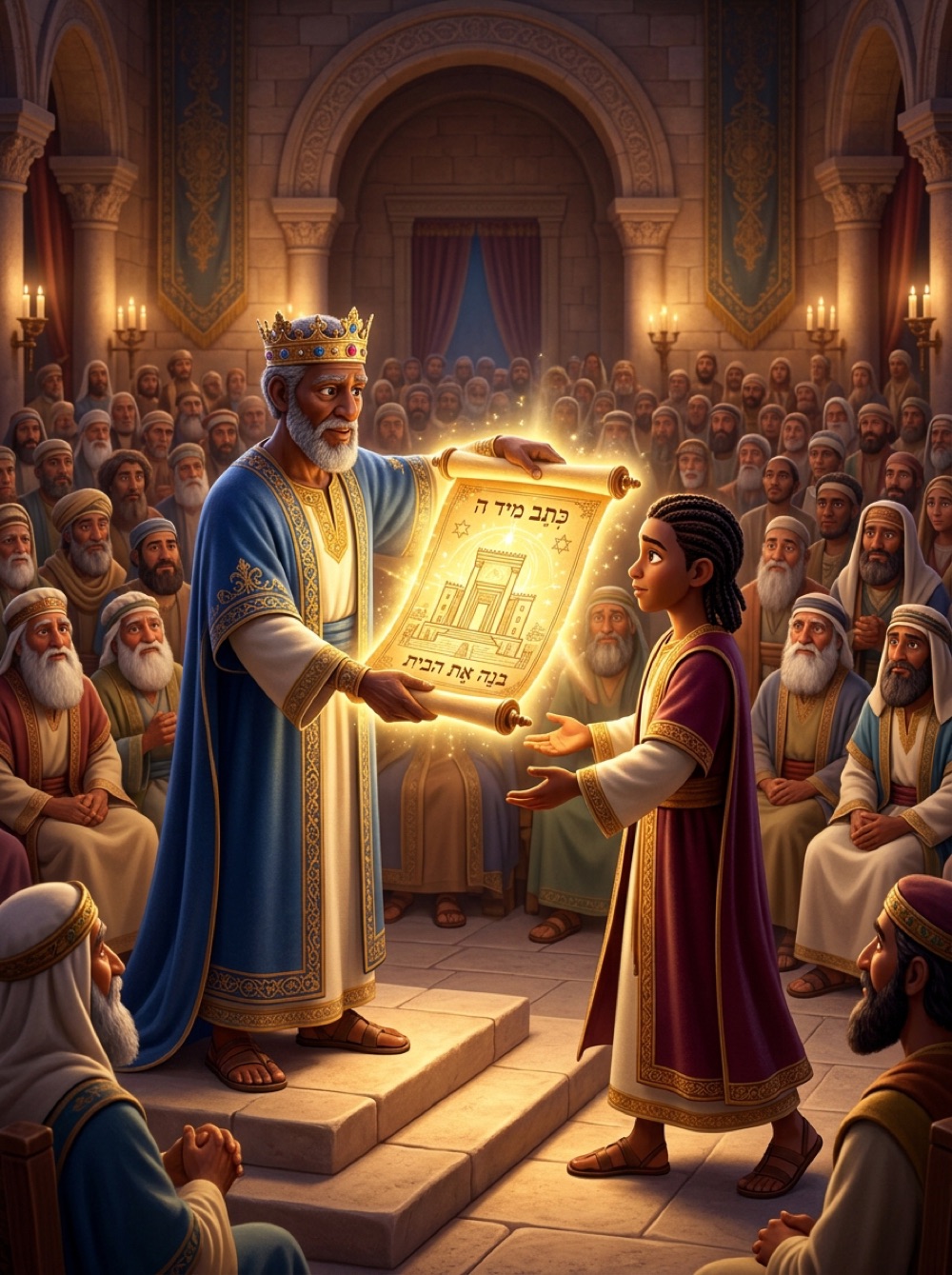
The Plans From God's Hand
David assembled all of Israel's leaders and gave Solomon the Temple plans publicly. Then he said something remarkable — "All this I have in writing from the hand of the Lord upon me, and He gave me understanding in all the details of the plan." The Temple was not David's design or Solomon's — it was God's own blueprint, given to David by divine inspiration. Then David said to Solomon before everyone, "Be strong and courageous and do the work. Do not be afraid — God will not fail you."
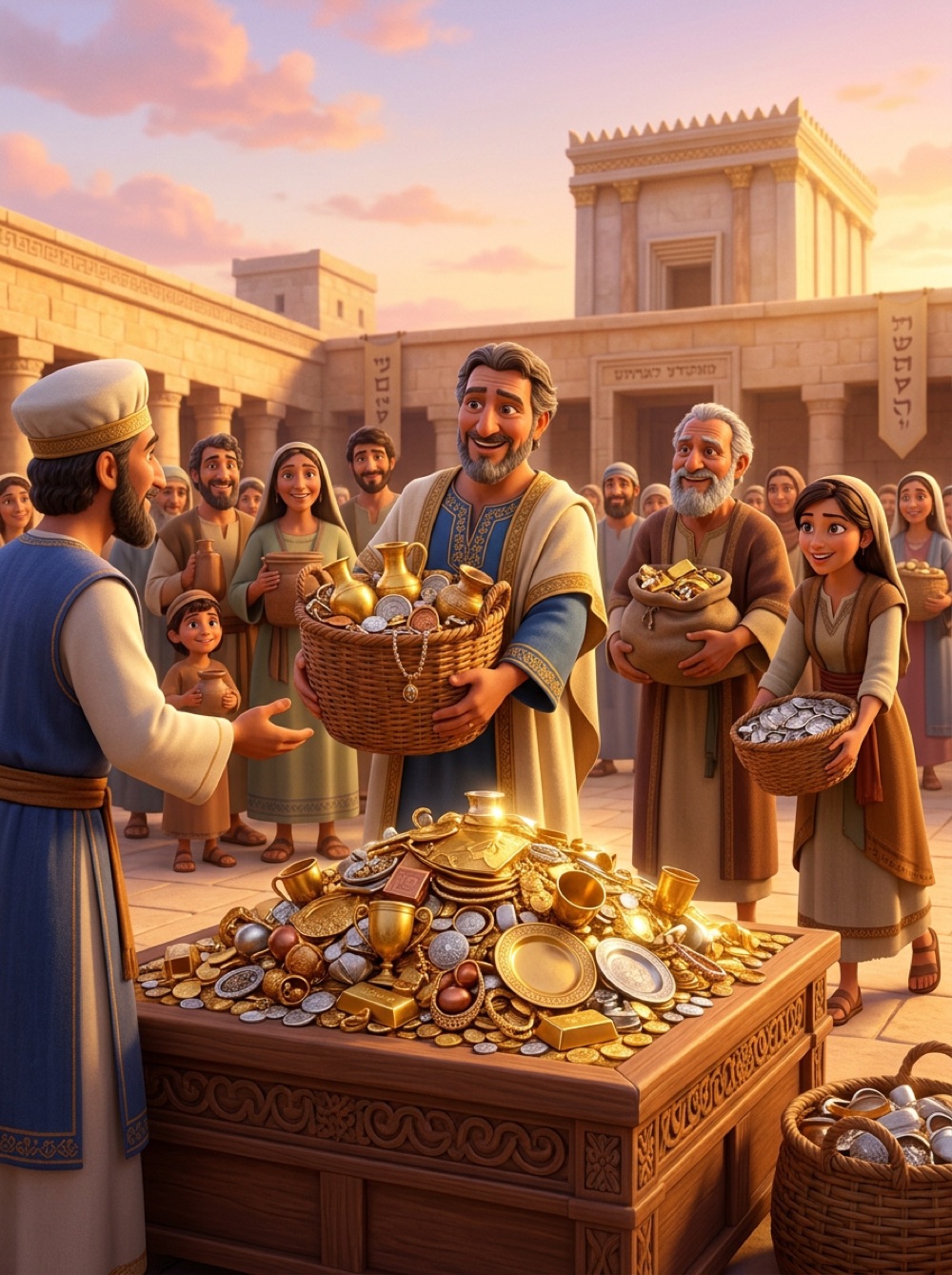
The Offering of a Lifetime
David gave from his personal treasury for the Temple — three thousand talents of gold and seven thousand talents of silver from his own wealth alone. Then he asked the leaders of Israel to give willingly. They responded with extraordinary generosity — gold, silver, bronze, iron, and precious stones poured in. David prayed before all the assembly. "Who am I, and who are my people, that we should be able to give as generously as this? Everything comes from you, and we have given you only what comes from your hand."
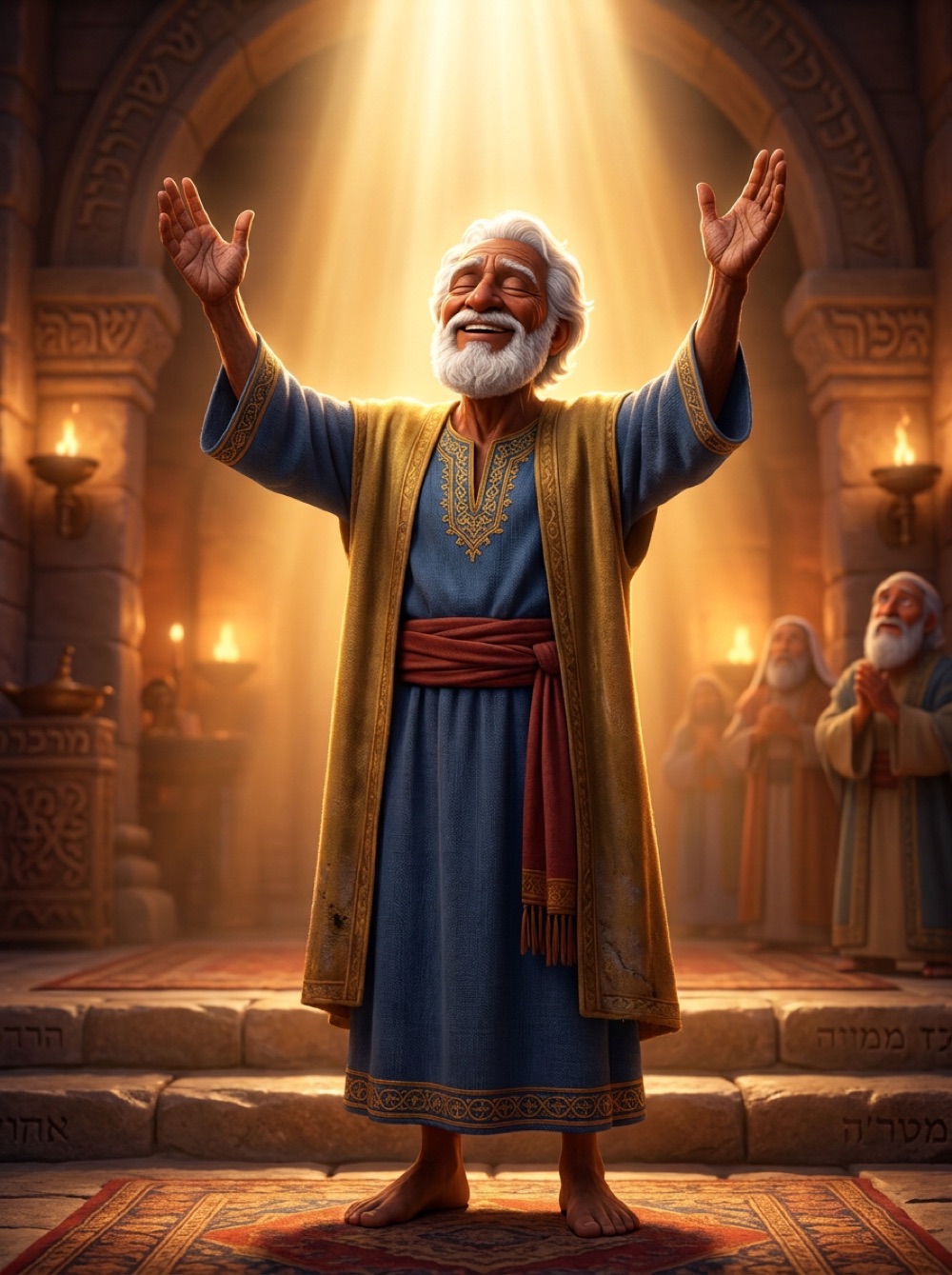
David's Final Prayer
David's last recorded prayer in Chronicles is one of the most beautiful in the Bible. "Yours, Lord, is the greatness and the power and the glory and the majesty and the splendor — for everything in heaven and earth is yours. Yours, Lord, is the kingdom. You are exalted as head over all. Wealth and honor come from you. You are the ruler of all things. In your hands are strength and power to exalt and give strength to all." Then the people bowed and worshipped. Then they celebrated with great joy.

Solomon Asks for Wisdom Again
Chronicles retells Solomon's request for wisdom — but emphasizes what Solomon said about the enormousness of the task ahead. "You have made me king over a people as numerous as the dust of the earth. Give me wisdom and knowledge that I may lead them — for who is able to govern this great people of yours?" God's answer was the same as before — because you asked for wisdom and not wealth, you will have wisdom — and wealth besides. Solomon started right.
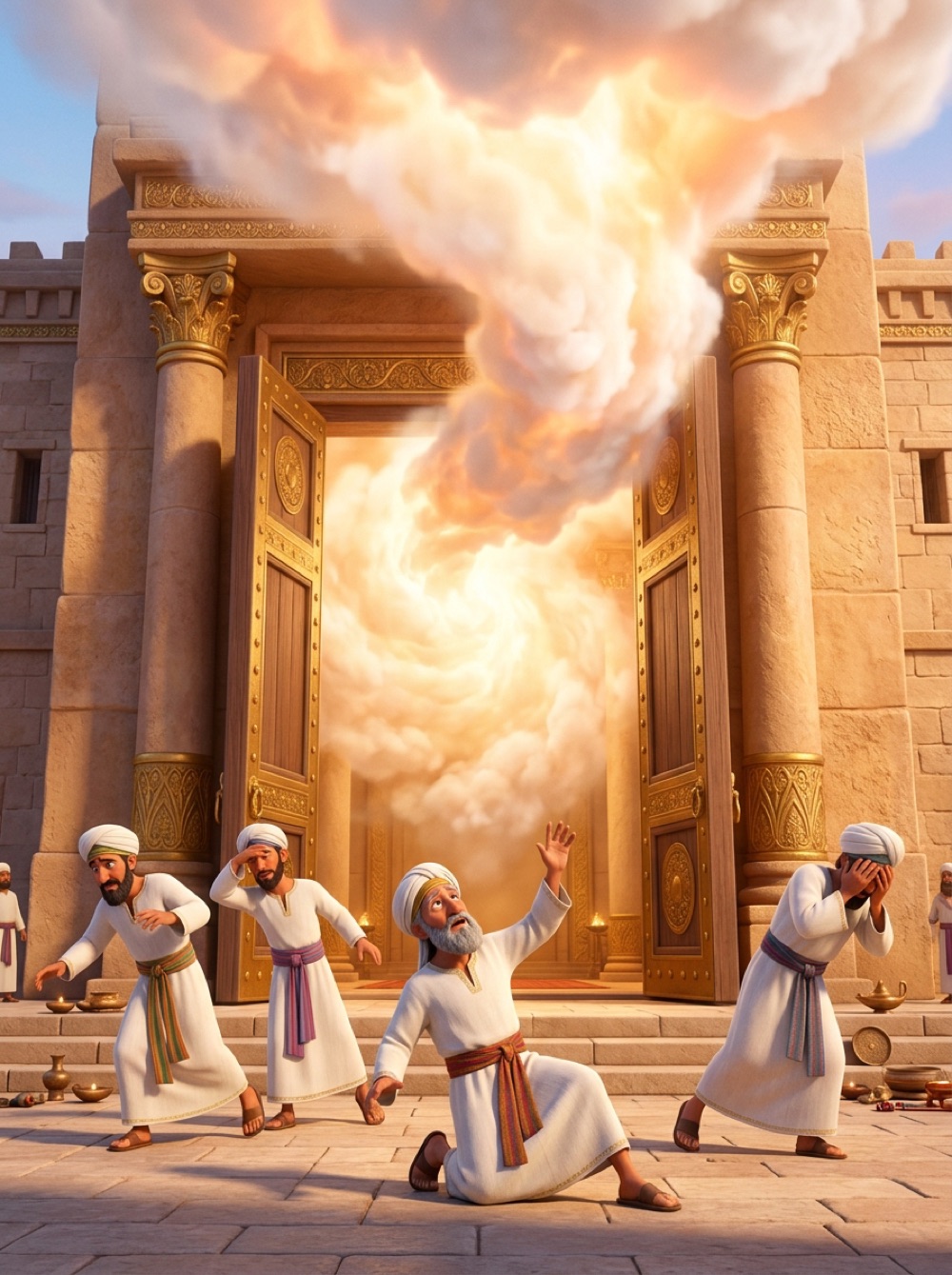
The Temple Is Built and Filled
Solomon built the Temple exactly as David had prepared and God had planned. When it was finished and the Ark was brought in, the same extraordinary thing happened as when the Tabernacle was completed in the wilderness — the cloud of God's glory filled the Temple so completely that the priests could not stand to minister. What Moses had seen in the desert, Solomon now saw in Jerusalem. God had moved into the house His people built for Him.
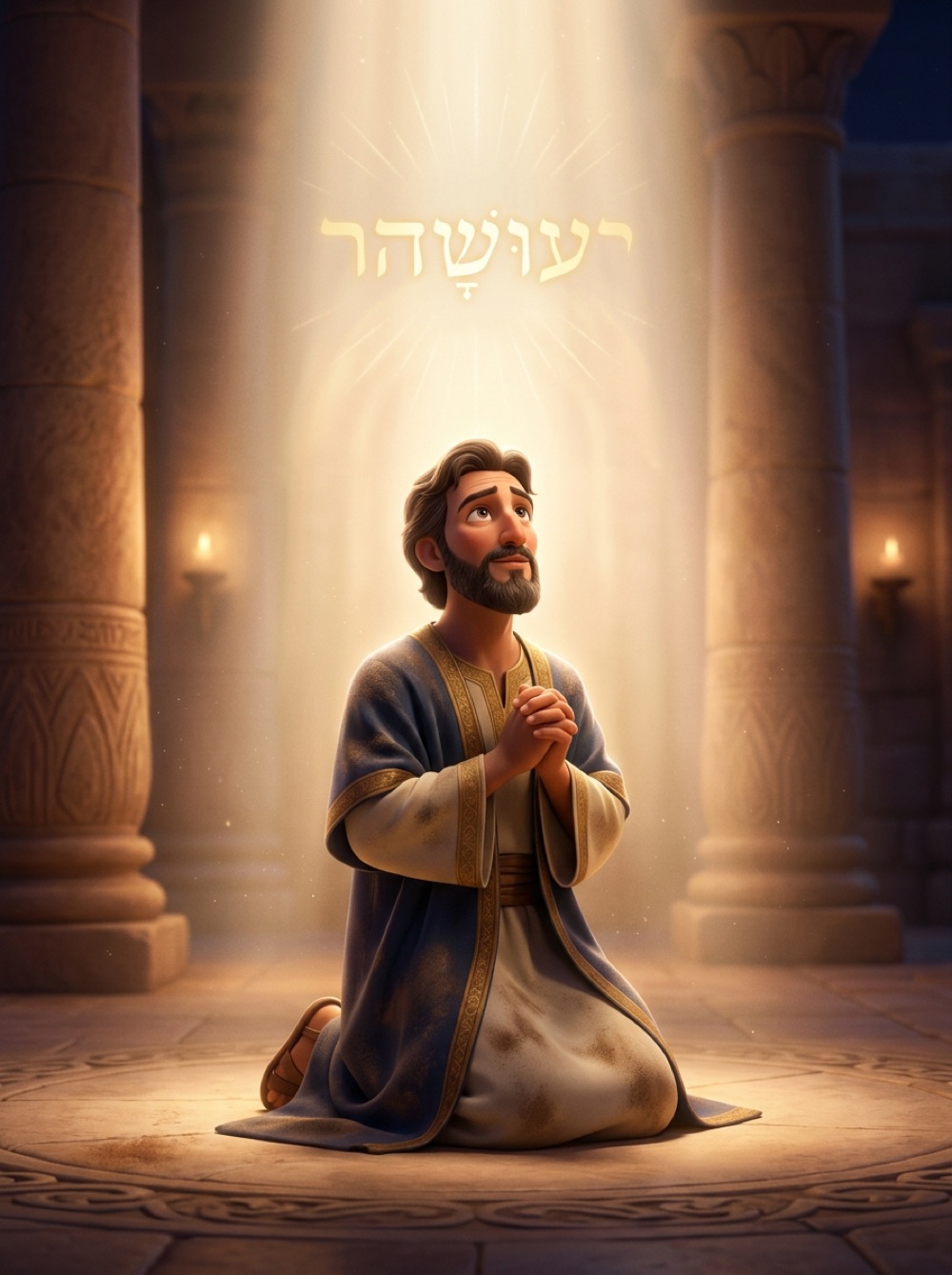
If My People
God appeared to Solomon at night after the Temple dedication with one of the most important conditional promises in the Bible. "If my people who are called by my name will humble themselves and pray and seek my face and turn from their wicked ways — then I will hear from heaven and will forgive their sin and will heal their land." Four conditions. Four responses from God. This promise has been claimed by God's people in every generation since Solomon first heard it.
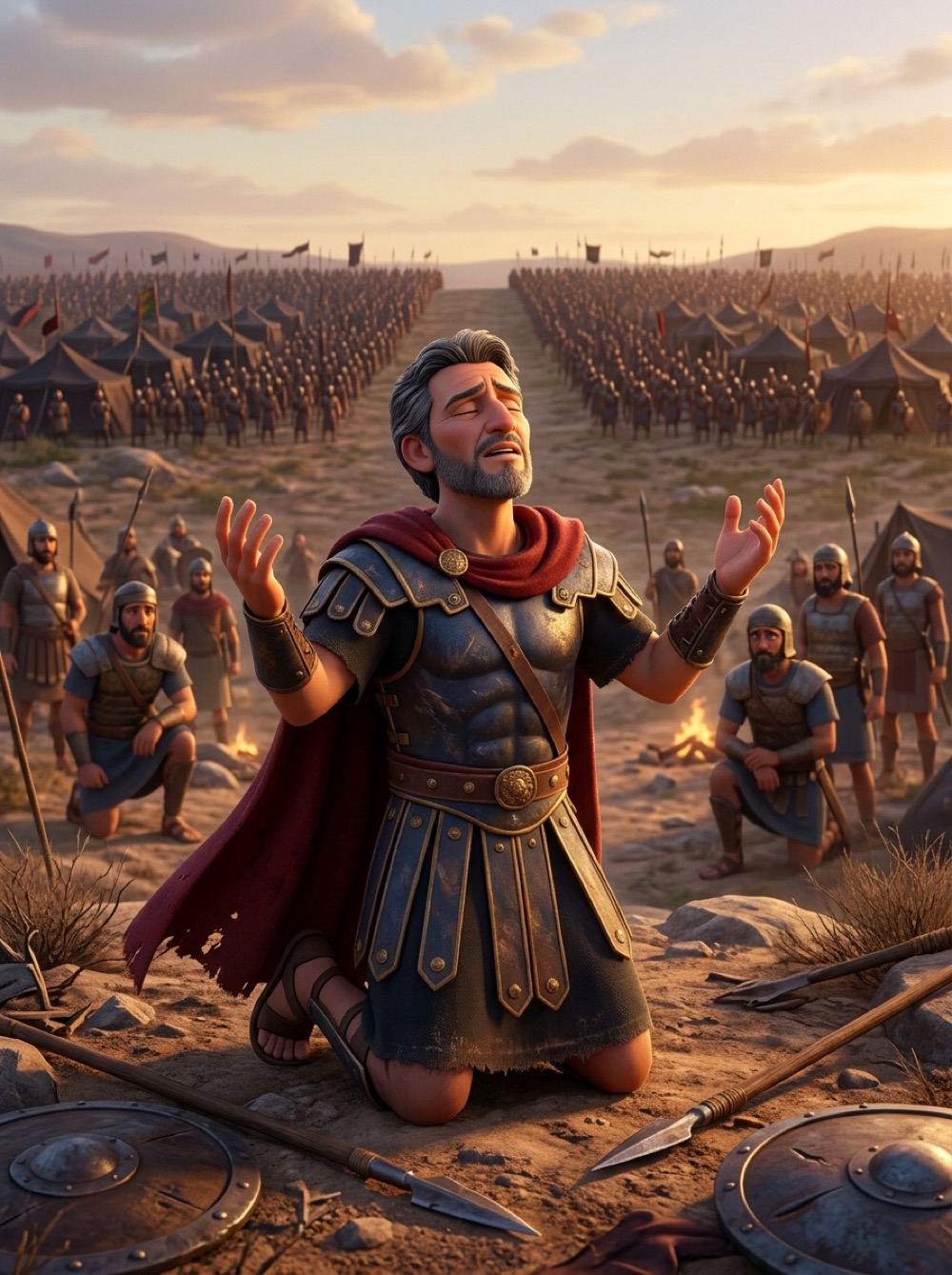
King Asa's Faith
Asa was one of Judah's good kings. When a massive Cushite army of a million men came against him, Asa prayed one of the most direct battlefield prayers in the Bible. "Lord, there is no one like you to help the powerless against the mighty. Help us, Lord our God, for we rely on you." God struck the Cushite army and Asa's forces won a complete victory. But in his later years Asa stopped trusting God and relied on foreign alliances instead. Even good men can drift.
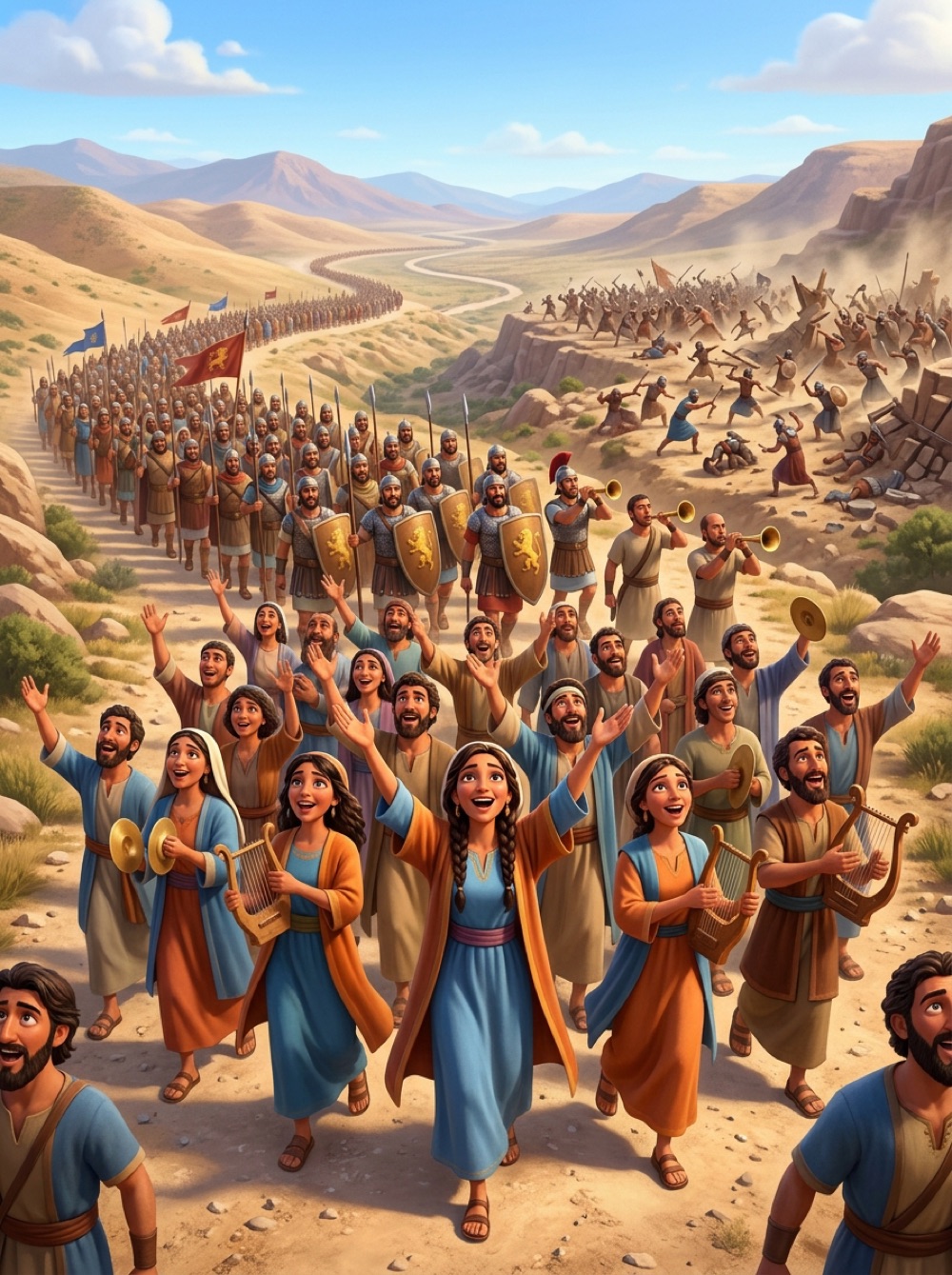
Jehoshaphat and the Choir Army
King Jehoshaphat faced a vast alliance of enemy armies. He called all Judah to fast and seek God. A prophet spoke — "Do not be afraid. The battle is not yours but God's. You will not need to fight — take up your positions, stand firm, and see the deliverance of the Lord." Jehoshaphat appointed singers to go ahead of the army praising God. As they began to sing, God set ambushes against the enemy armies and they destroyed each other. Judah arrived to find only dead bodies and plunder.
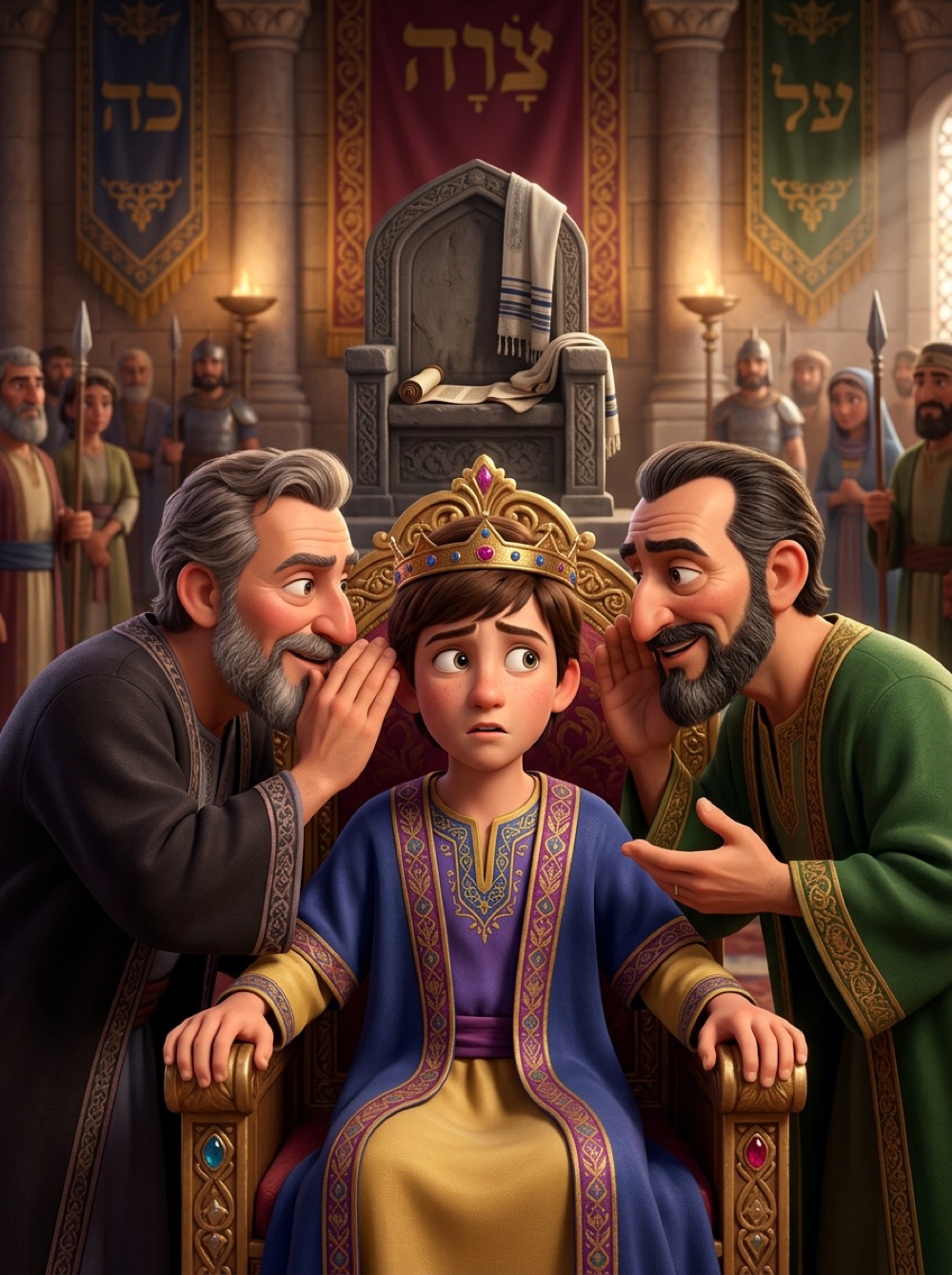
Joash Forgets His Mentor
Joash — the boy king hidden in the Temple for six years — did well while his mentor Jehoiada the priest lived. But when Jehoiada died at the age of one hundred and thirty, Joash listened to officials who led him away from God. When Jehoiada's own son Zechariah prophesied against them, Joash had him stoned to death in the Temple courtyard. Zechariah's last words were, "May the Lord see this and call you to account." Joash had forgotten the man who saved his life.
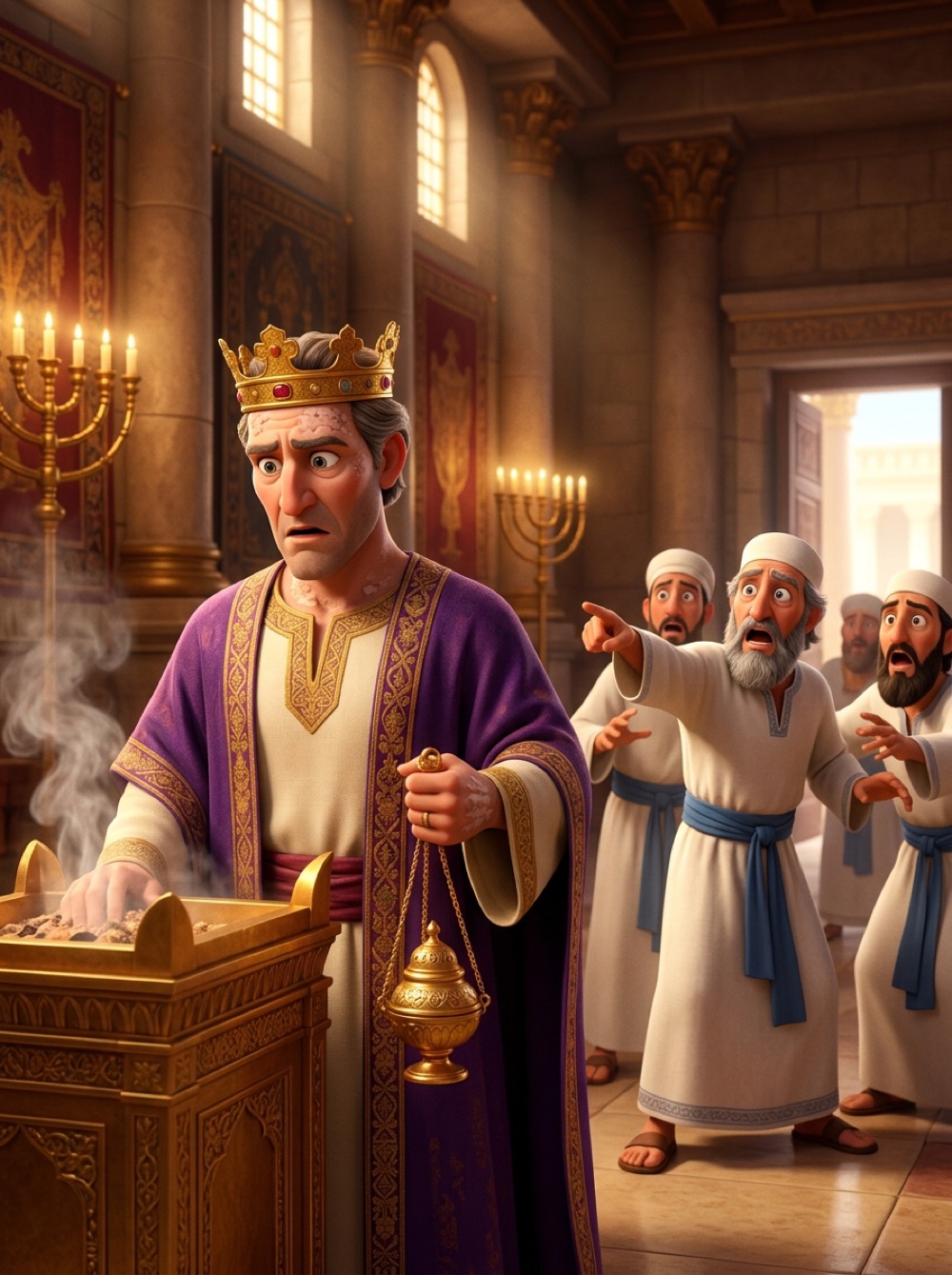
Uzziah's Pride
King Uzziah reigned for fifty-two years and did what was right before God. He was extraordinarily successful — in battle, in building, in agriculture. But when he became powerful, his pride destroyed him. He entered the Temple to burn incense — something only priests were permitted to do. When the priests confronted him, he raged at them. In that instant leprosy broke out on his forehead. He was a leper until the day he died. The very success God gave him became the thing that made him forget God.
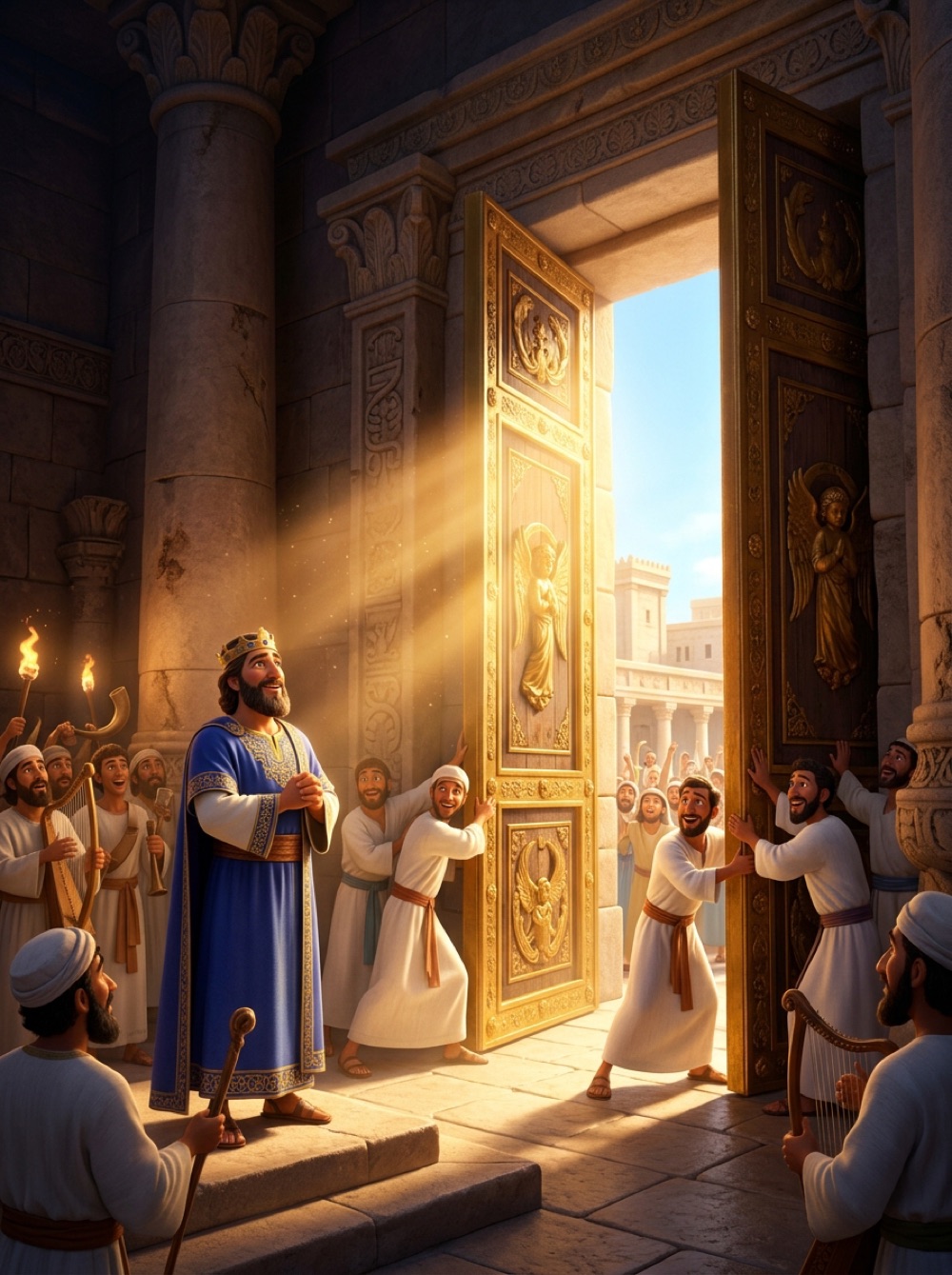
Hezekiah Reopens the Temple
When Hezekiah became king, the Temple had been shut and its lamps extinguished by his wicked father Ahaz. In the first month of his reign, Hezekiah opened the Temple doors, had it cleansed, and restored worship. Then he invited all of Israel and Judah to come to Jerusalem to celebrate Passover — the first great national Passover since Solomon's time. "Return to the Lord," his letter said. "He will not turn his face from you if you return to him." The Temple blazed with light again.
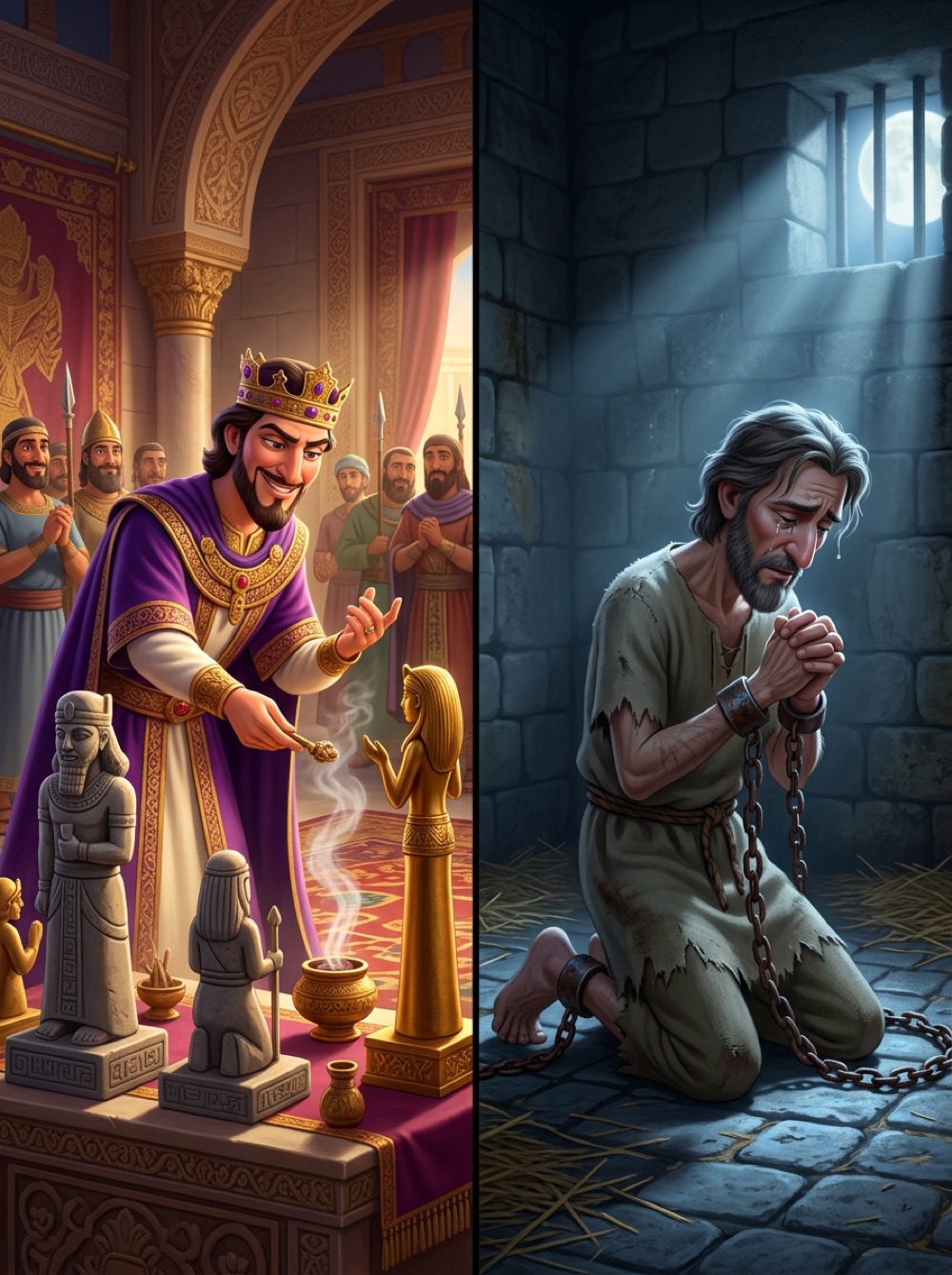
Manasseh — The Worst King Who Repented
Manasseh was the most wicked king Judah ever had — he rebuilt every idol Hezekiah had torn down, sacrificed his own sons in fire, practiced sorcery, and filled Jerusalem with innocent blood. God spoke to him but he refused to listen. Then the Assyrians took him captive to Babylon in chains. In his distress he humbled himself and cried out to God. And God heard him and restored him to Jerusalem and his throne. Even the worst king in Judah's history found that God would hear a genuinely repentant heart.
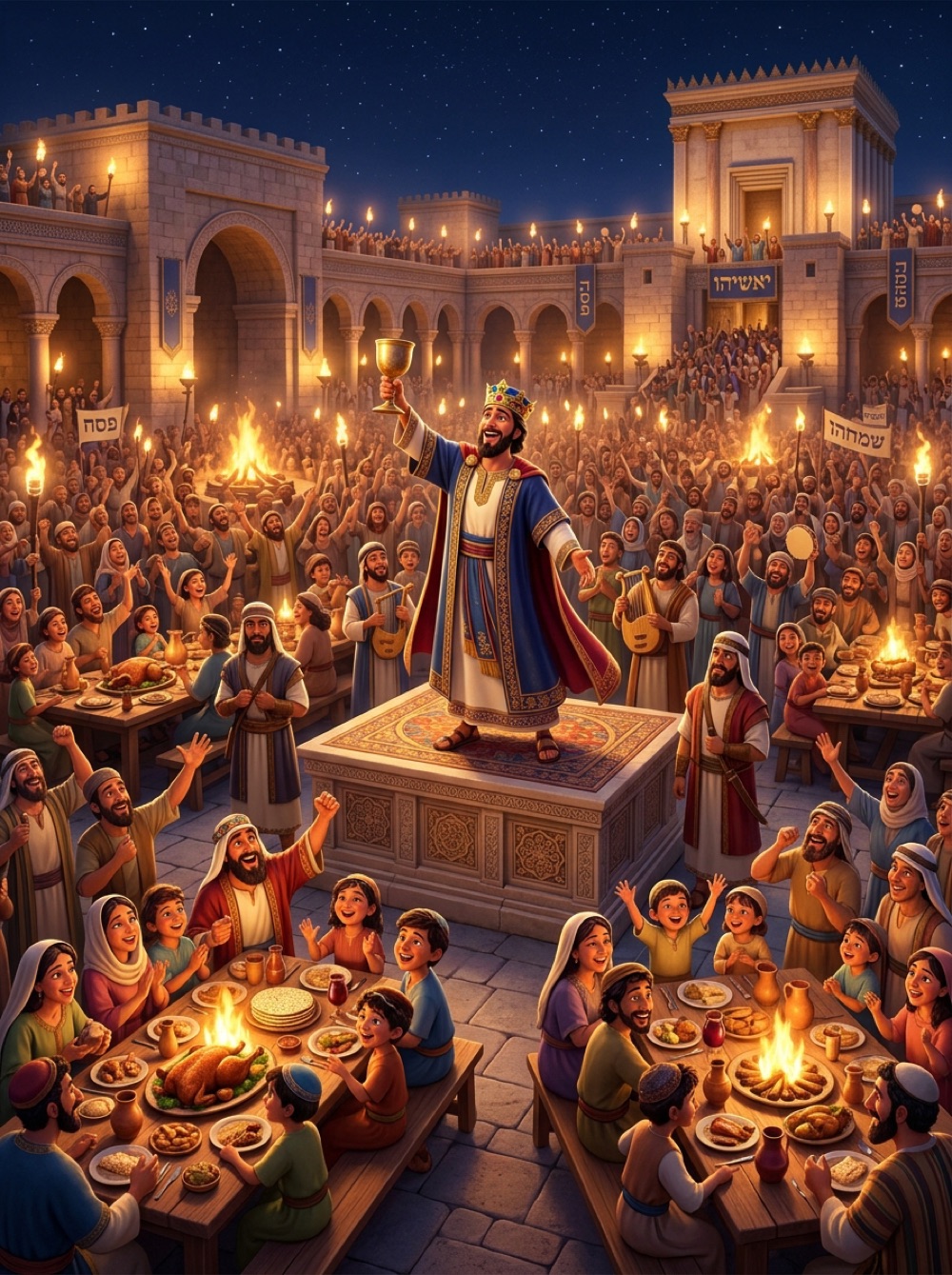
Josiah's Great Passover
Chronicles gives Josiah's reign more space than Kings does — especially his extraordinary Passover celebration. It was the greatest Passover since the days of Samuel the prophet — more organized, more attended, more celebrated than any in generations. Josiah personally contributed thirty thousand lambs and goats and three thousand cattle from his own resources for the people. A king who gave everything to help his people worship God. There had been no Passover like it in all of Israel's history.
The Land Enjoys Its Rest
After Jerusalem fell and the people were taken to Babylon, Chronicles adds a detail Kings doesn't emphasize — the land lay desolate for seventy years to fulfill the word of God through Jeremiah. For all the years Israel had not kept the Sabbath rest for the land, the land now rested — silent and empty. Even in judgment, God's word was being fulfilled precisely. Not one thing He had said had been forgotten.
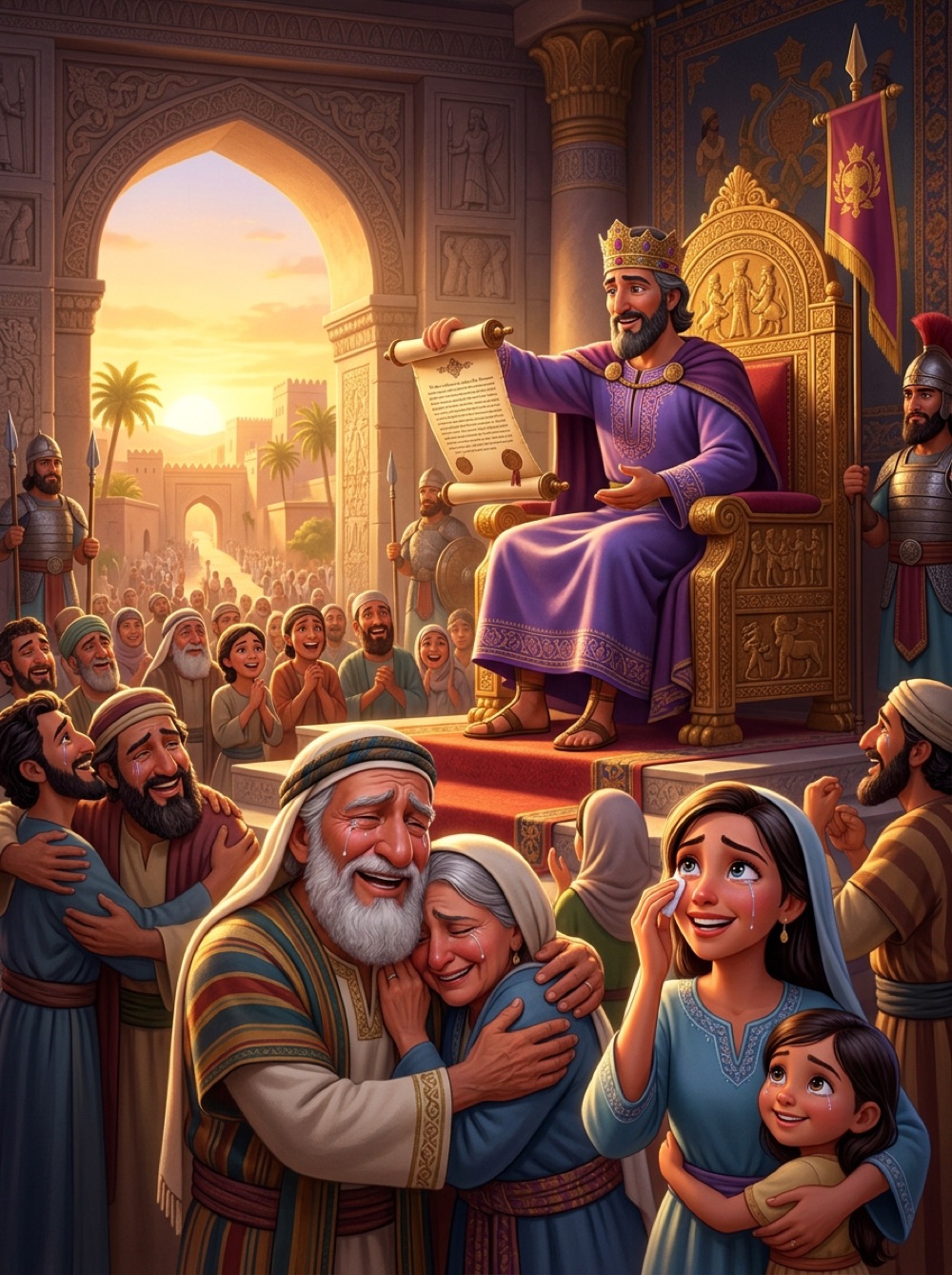
Cyrus Opens the Door
Chronicles ends with one of the most extraordinary moments in all of Scripture — a pagan Persian king named Cyrus making a proclamation. "The Lord, the God of heaven, has given me all the kingdoms of the earth and He has appointed me to build a temple for Him at Jerusalem in Judah. Any of His people among you may go up — and may the Lord their God be with them." God had used a foreign king to open the door home. The exile was over. The story was continuing.
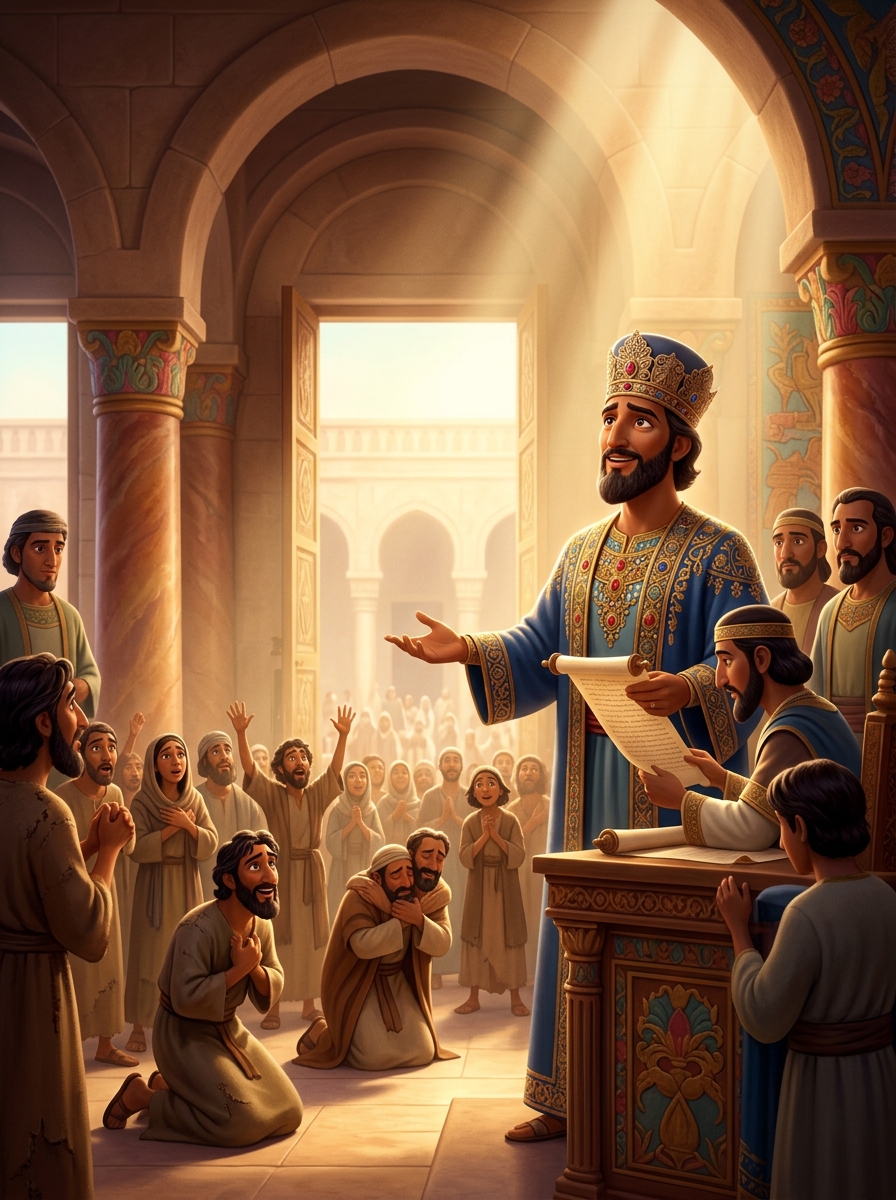
Cyrus Sets the Exiles Free
In the first year of King Cyrus of Persia, God moved the king's heart to make a proclamation across his whole kingdom. "The Lord, the God of heaven, has appointed me to build a temple for Him in Jerusalem. Any of His people among you may go up to Jerusalem and build the Temple. And their neighbors are to provide them with silver, gold, goods, and livestock." God had used a pagan king to open the door home — and to fund the journey.
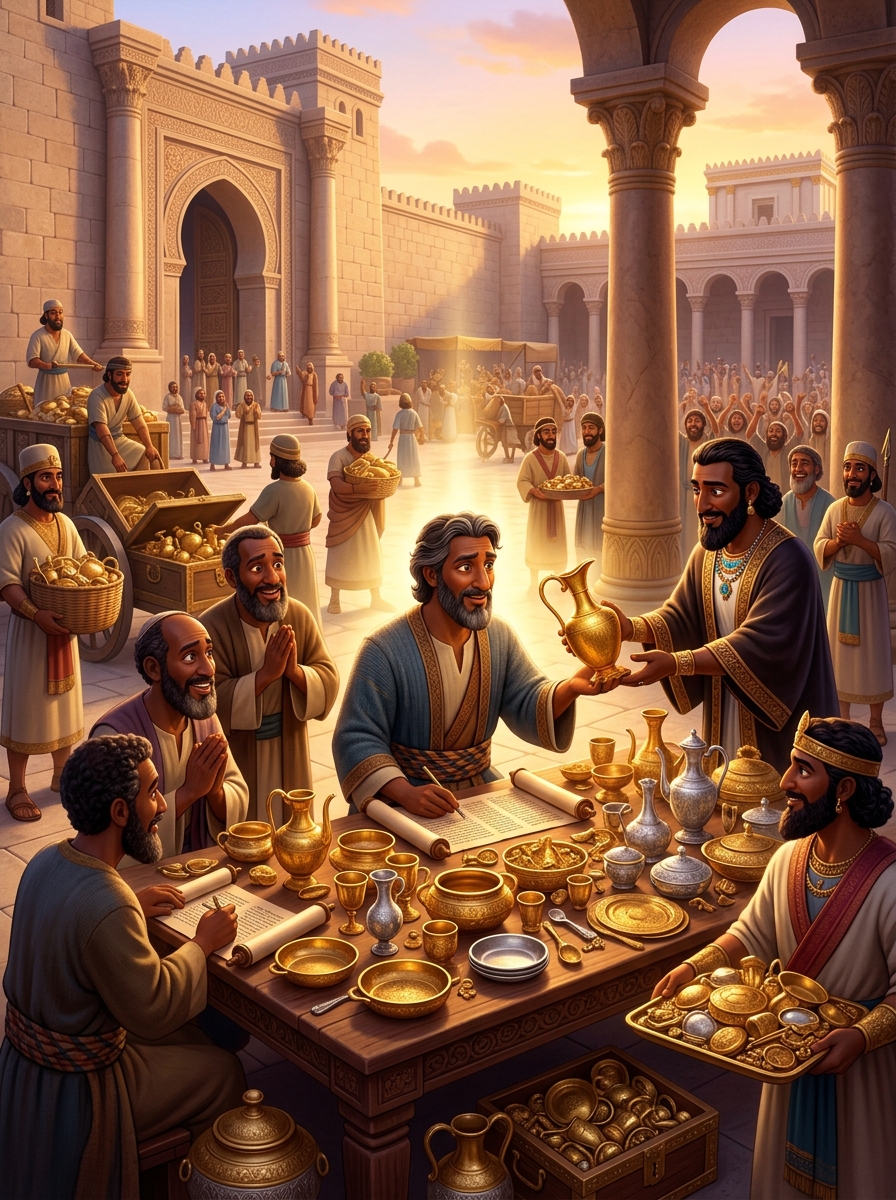
The Treasures Return
Cyrus brought out all the articles that Nebuchadnezzar had taken from the Temple in Jerusalem — gold dishes, silver dishes, silver pans, gold and silver bowls — five thousand four hundred items in total. Everything that had been stolen was being returned. Sheshbazzar, the prince of Judah, carried all of it back with the returning exiles. What the enemy had taken, God recovered. What had been stolen from the house of God was going home.
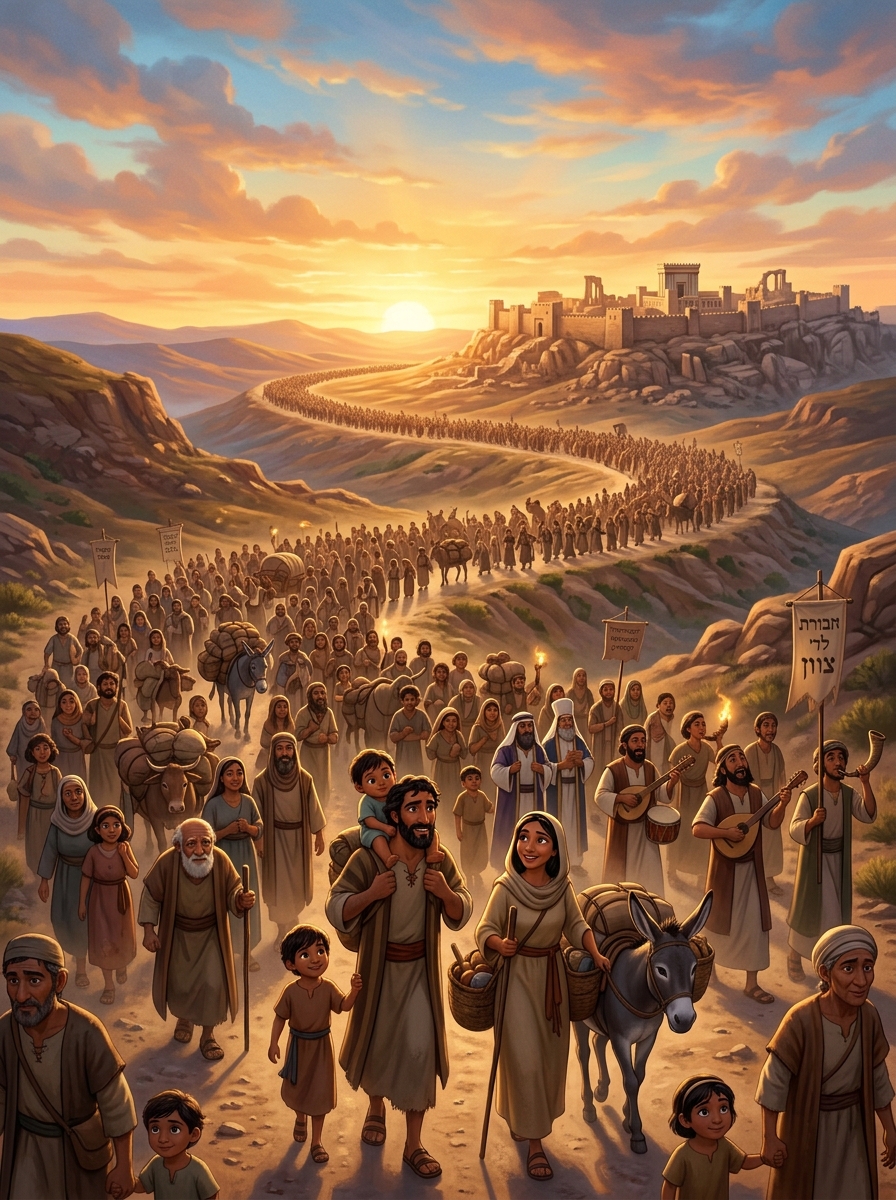
The People Who Came Home
The list of exiles who returned to Jerusalem reads like a roll call of faith — families, priests, Levites, singers, gatekeepers, Temple servants — forty-two thousand three hundred and sixty people in all, plus their servants and animals. Each one had chosen to leave the familiar life they had built in Babylon and travel hundreds of miles back to a ruined city they may never have seen. They went because it was home. They went because God had called them back.
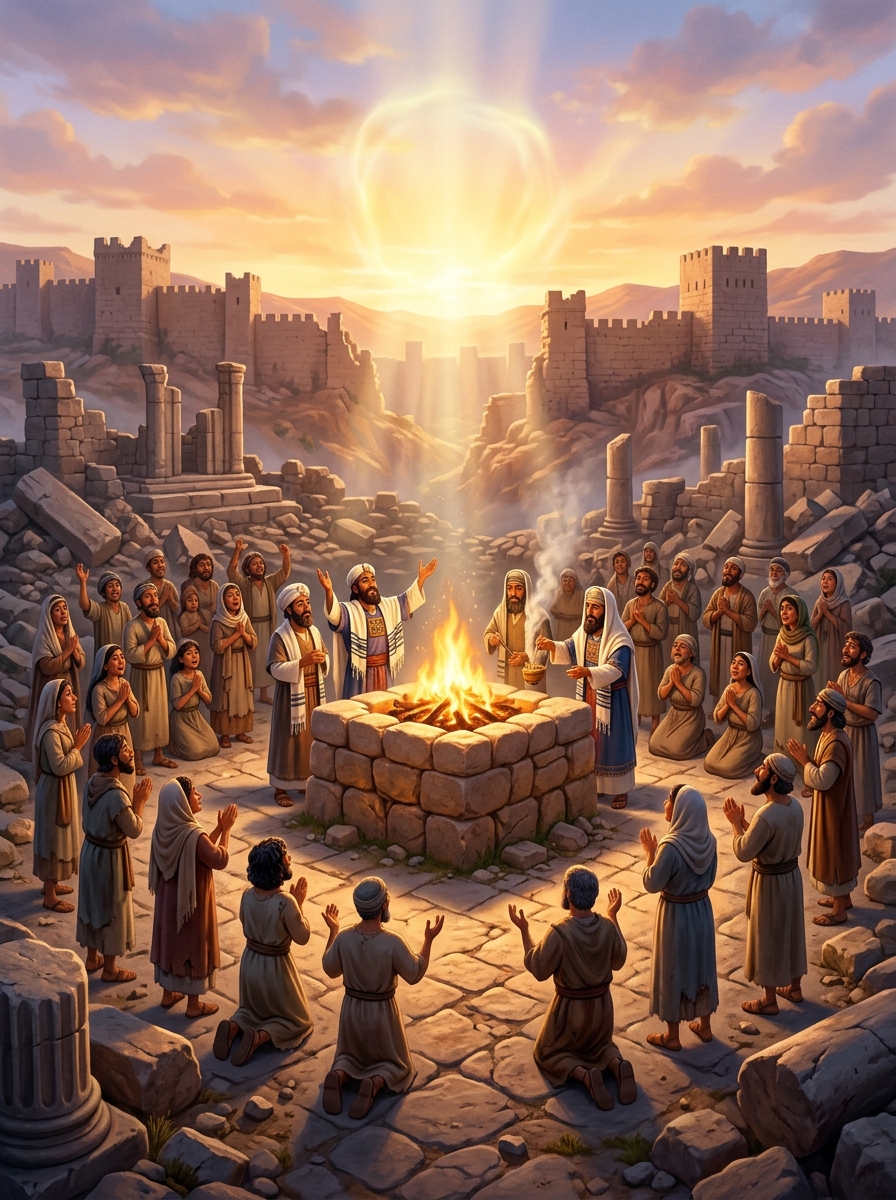
The Altar Is Rebuilt First
When the people arrived in Jerusalem, the first thing they did was rebuild the altar — even before the Temple foundations were laid, even though they were afraid of the peoples around them. They offered burnt offerings morning and evening, celebrated the Festival of Tabernacles, and began rebuilding from the very first day. They started with worship. Before the building, before the walls, before anything else — the altar. The right priorities in exactly the right order.
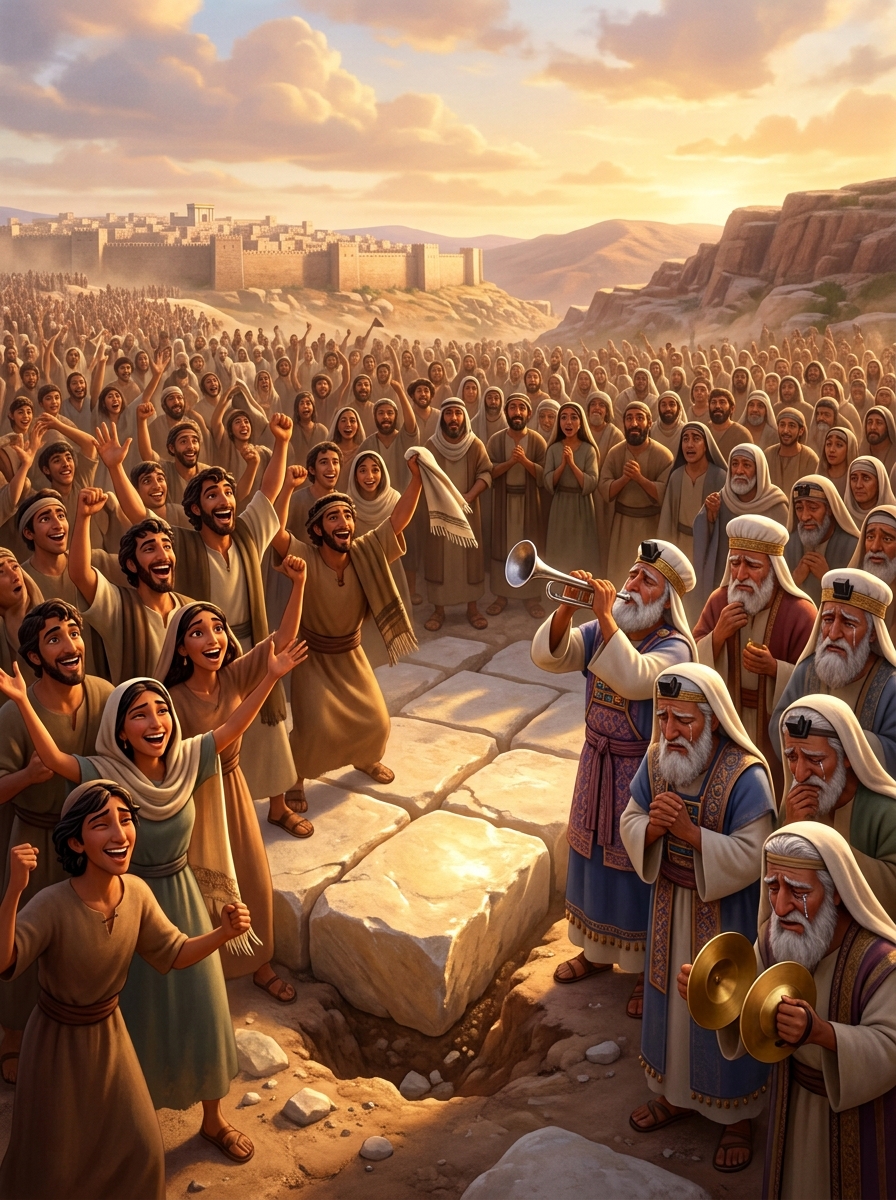
Tears and Shouts Together
When the builders laid the Temple foundation, the priests blew trumpets and the Levites clashed cymbals and all the people gave a great shout of praise. But many of the older priests and Levites who had seen the first Temple wept aloud — because this foundation was nothing compared to what Solomon had built. The sound of joy and the sound of weeping were so mixed together that no one could tell them apart. New beginnings always carry both grief and hope.
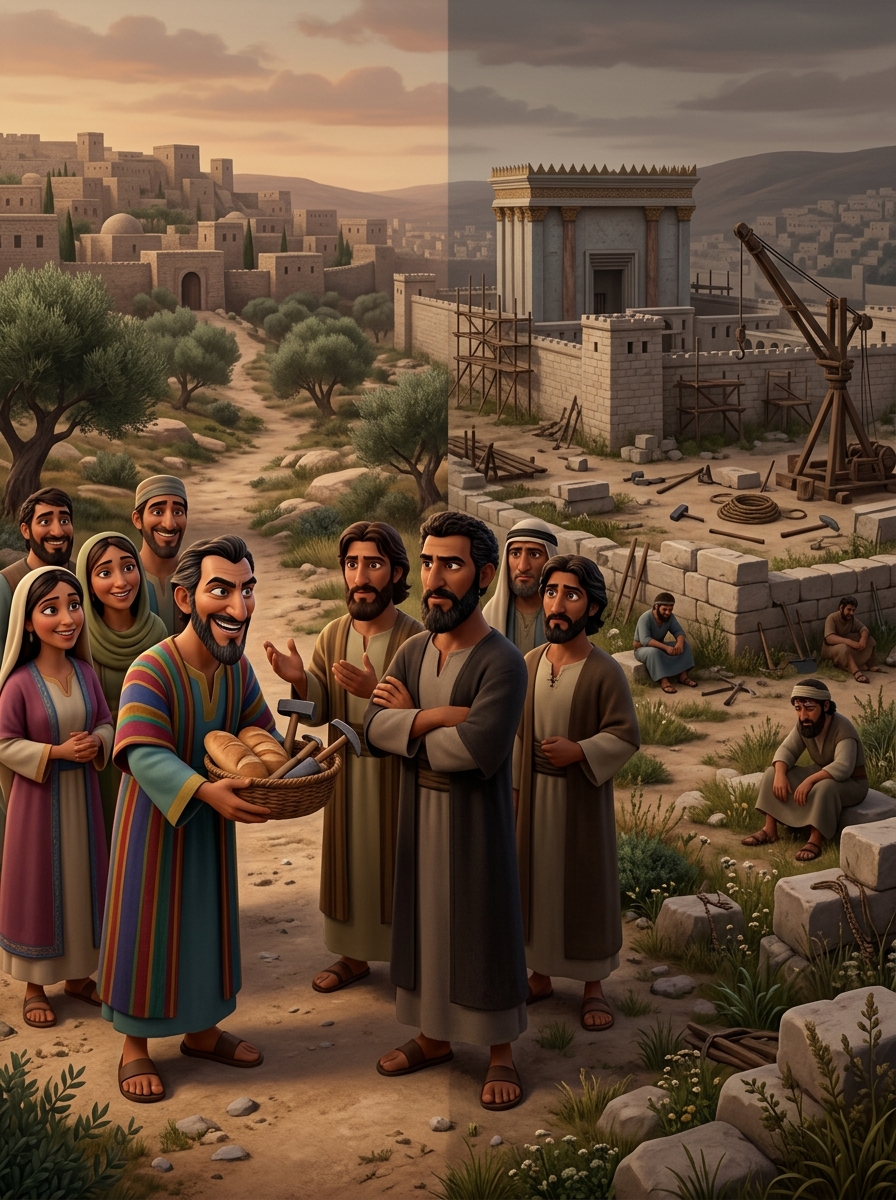
The Opposition Begins
When the enemies of Judah heard that the exiles were rebuilding, they offered to help — but their motives were not pure. When the leaders refused their help, they hired counselors to work against the builders and frustrated their plans for years. They sent letters to the Persian king accusing the Jews of rebellion. The king ordered the work to stop. The Temple building halted for fifteen years. Opposition rarely announces itself honestly — it often comes disguised as help.
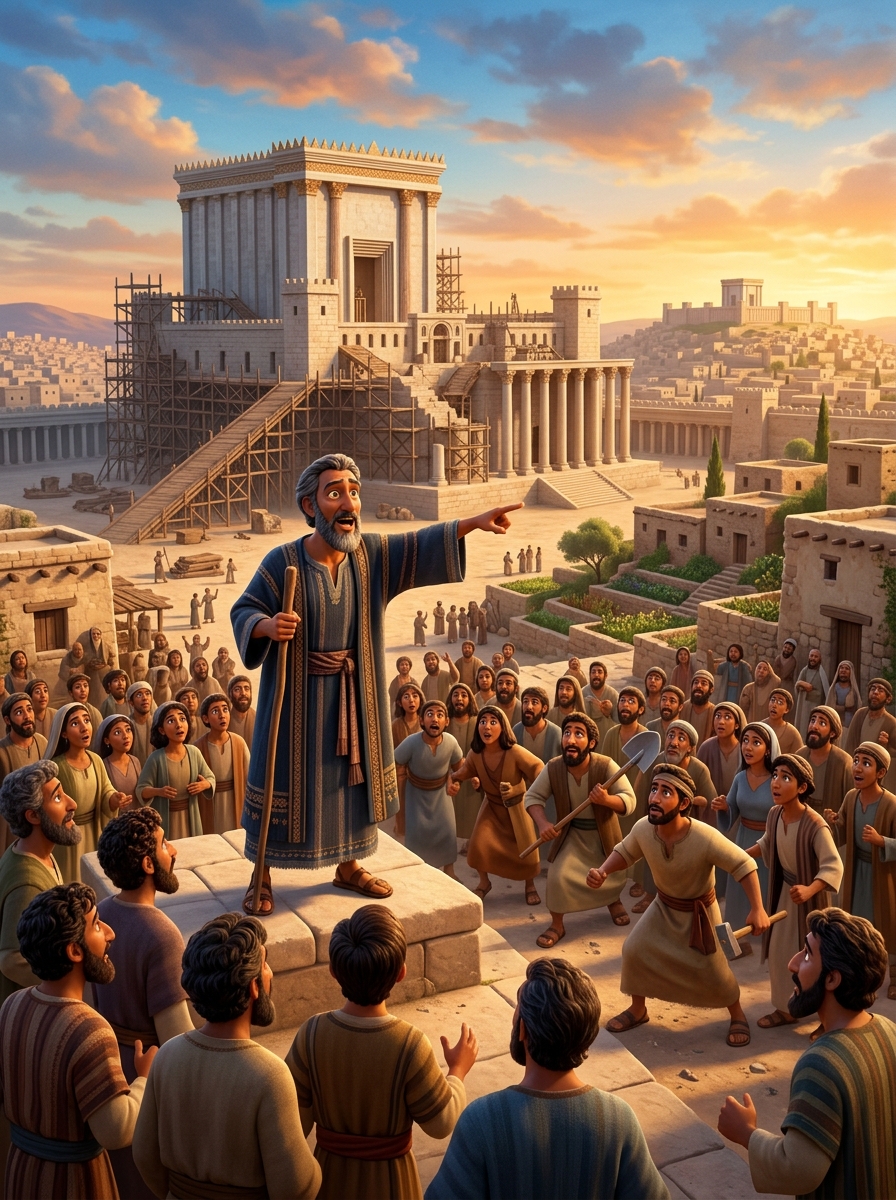
The Prophets Stir Them Up
After fifteen years of stoppage, God sent the prophets Haggai and Zechariah to stir the people up. "Why are you living in your own paneled houses while God's house lies in ruins?" Haggai asked. The people listened and began building again. The Persian governor wrote to King Darius asking what to do. Darius searched the archives, found Cyrus's original decree, and not only allowed the building to continue but ordered that all costs be paid from the royal treasury. God turned the opposition into funding.
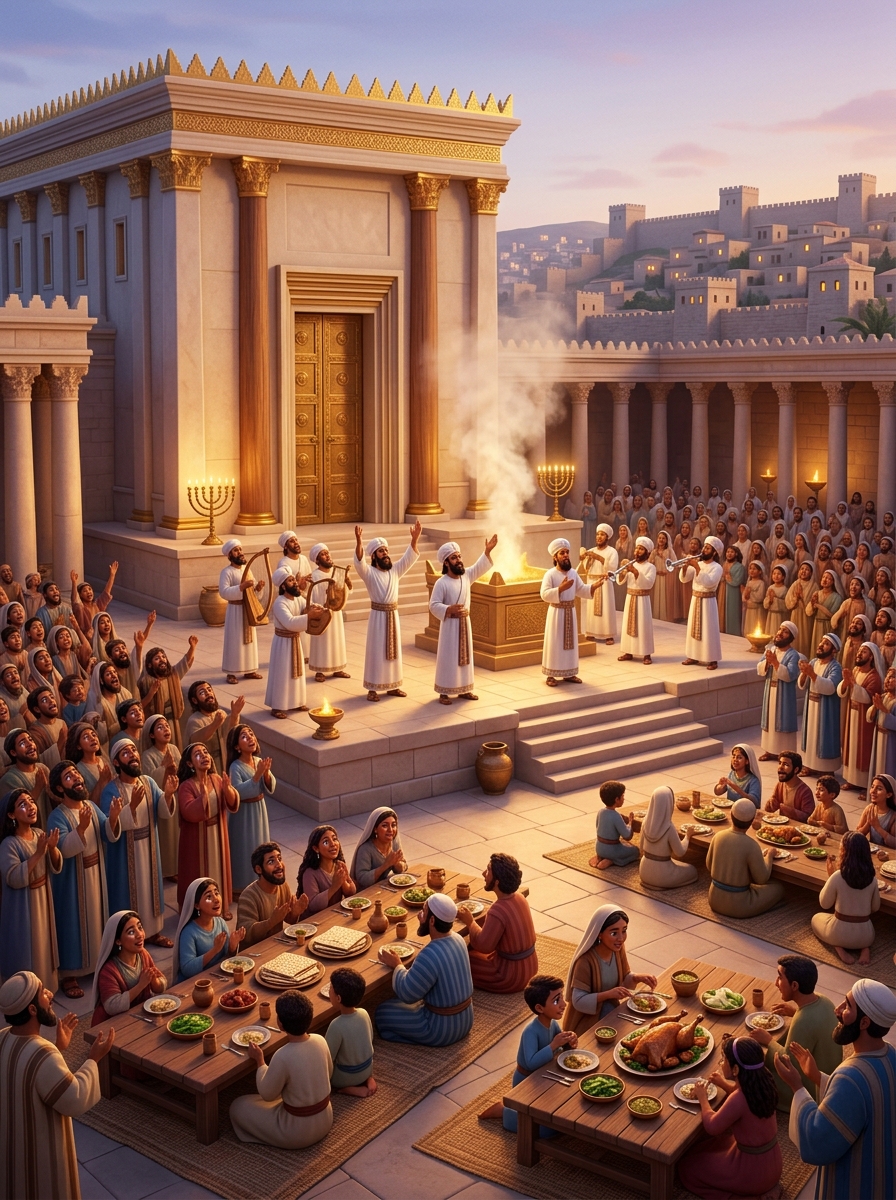
The Temple Is Finished
The Temple was completed on the third day of the month of Adar in the sixth year of King Darius — four years after building restarted, twenty years after the first return. The people of Israel celebrated the dedication with joy. Then they celebrated Passover — the first Passover in the restored Temple. The priests and Levites had purified themselves, the exiles had returned, and for the first time since Nebuchadnezzar burned it down, God's house stood again in Jerusalem.
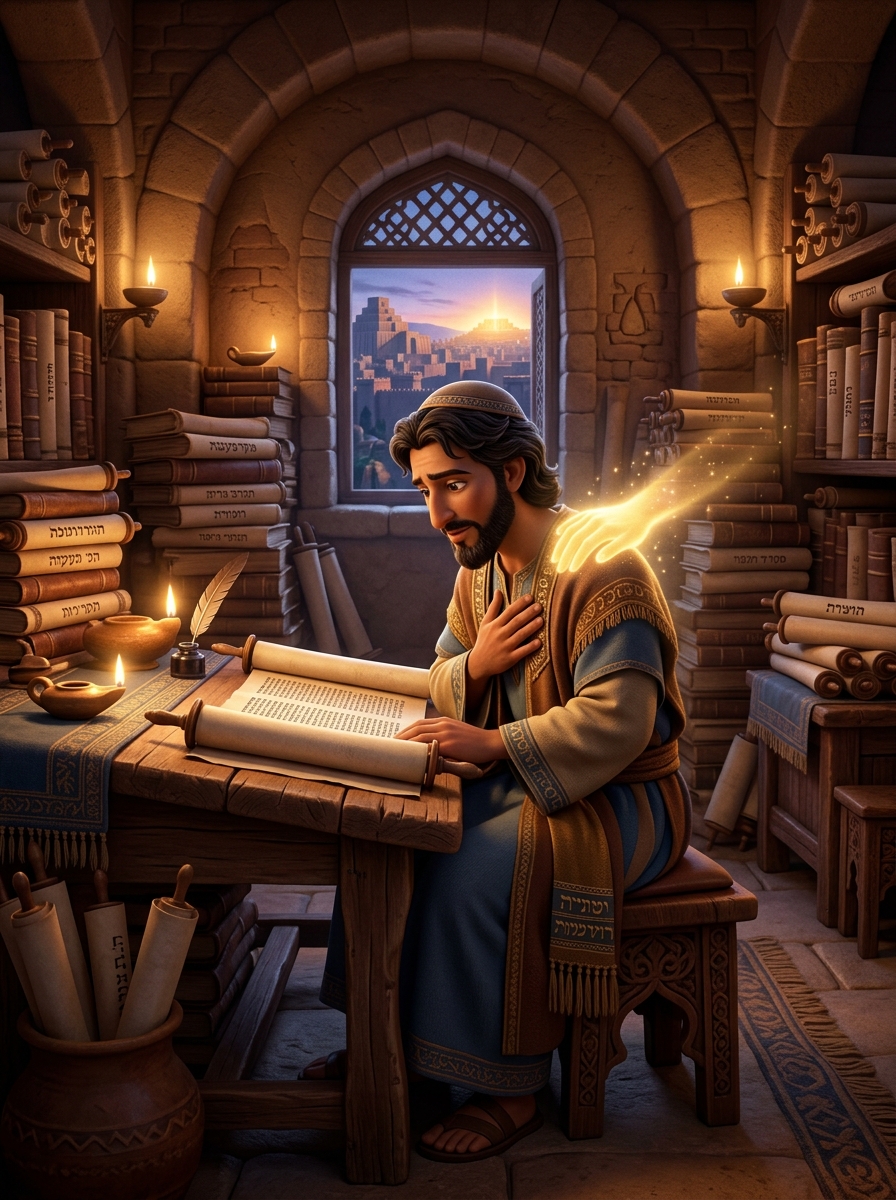
Ezra the Teacher
Sixty years after the Temple was completed, a man named Ezra left Babylon to go to Jerusalem. He was a teacher — a scribe skilled in the law of Moses. The king of Persia gave him everything he asked for because the hand of the Lord his God was on him. Ezra had devoted himself to three things — studying the law, obeying it, and teaching it to others. He arrived in Jerusalem and found a community that had drifted from everything he had devoted his life to.
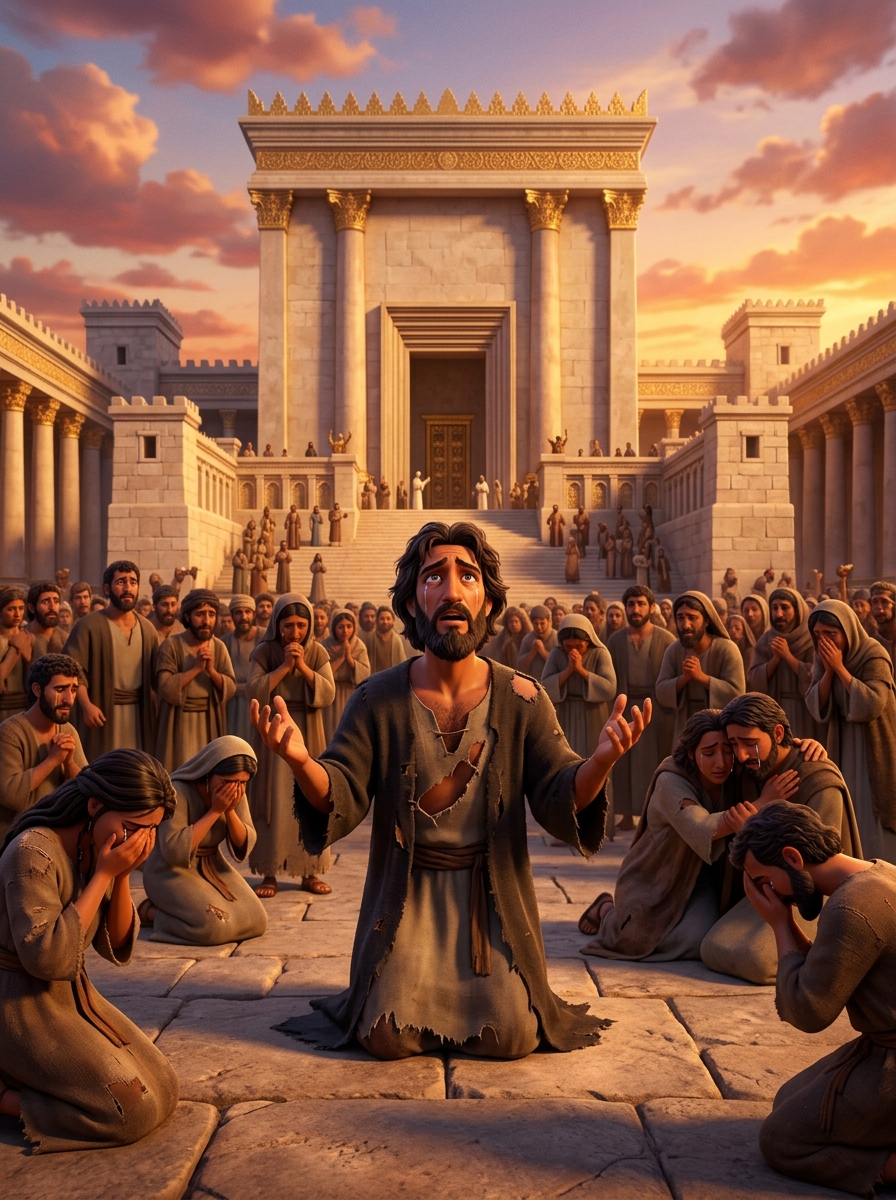
Ezra's Grief
When Ezra heard that the people of Israel — including the priests and Levites — had intermarried with the surrounding nations and their gods, he tore his robe and his cloak, pulled hair from his head and beard, and sat appalled until the evening sacrifice. Then he fell on his knees with his hands spread out to the Lord and prayed a prayer of communal confession — taking the sin of his people on himself as if it were his own. A leader who weeps over his community's sin is a rare and precious thing.
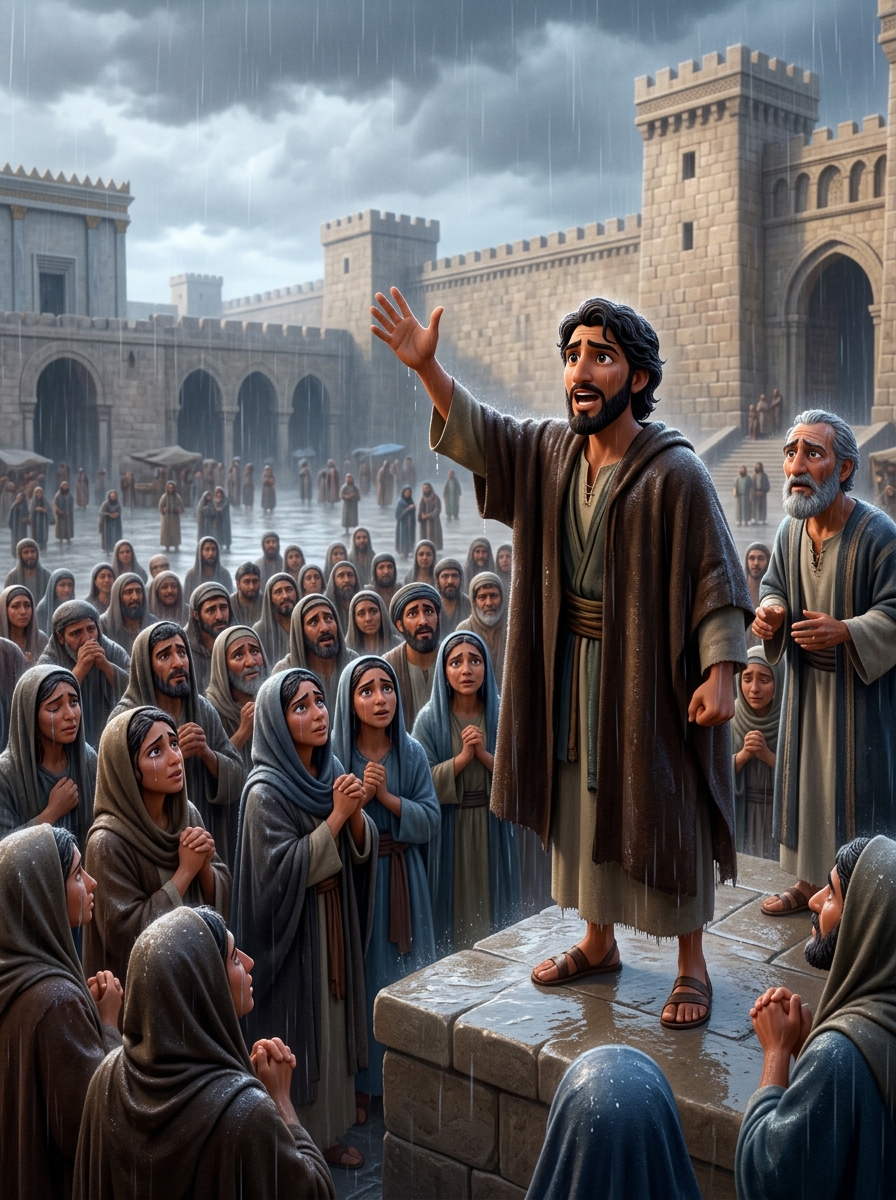
The People Respond
While Ezra prayed and wept, a large crowd of Israelites gathered around him — men, women, and children — and they wept bitterly too. A man named Shecaniah spoke up. "We have been unfaithful to God — but even now there is hope for Israel. Let us make a covenant to do what is right." The people stood in the rain and made their commitment. Real repentance is not just feeling sorry — it is changing direction. The community turned back to God together.
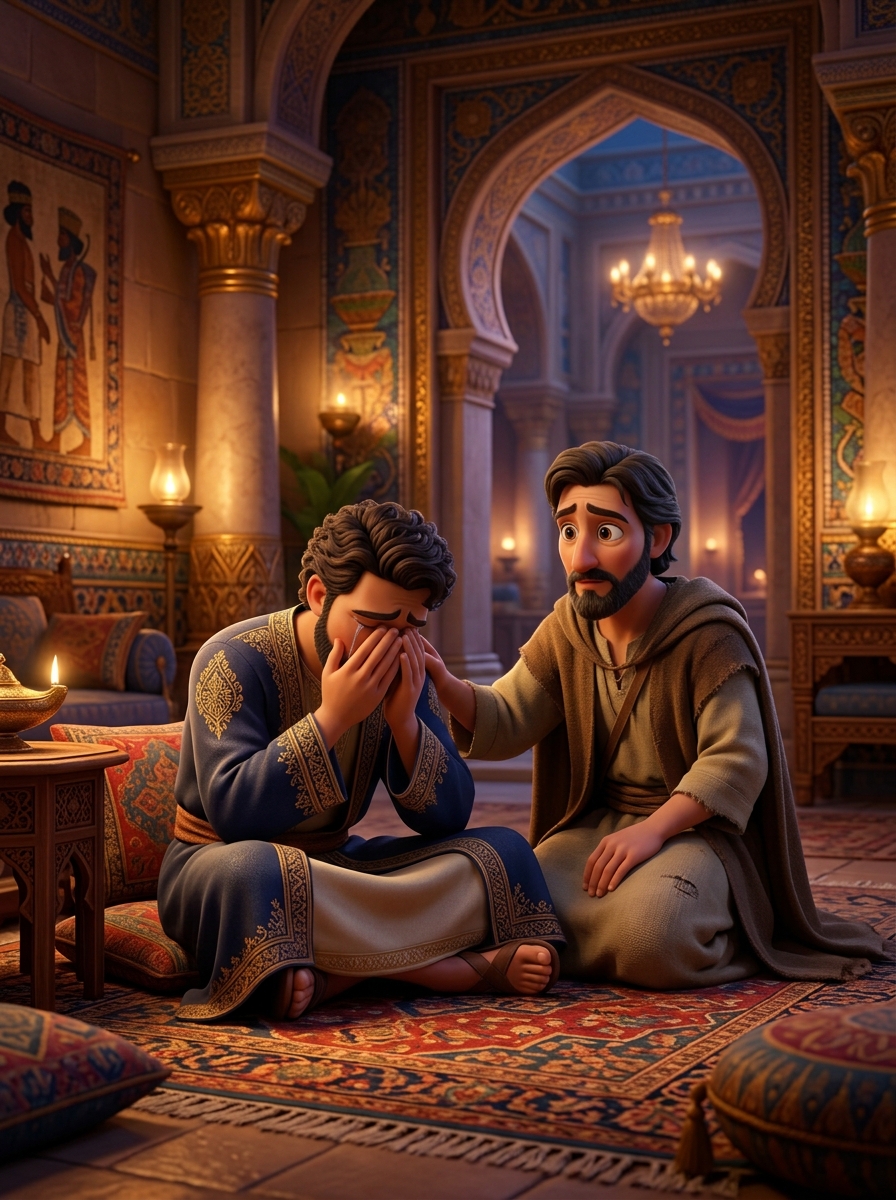
Nehemiah Hears the News
Nehemiah was the cupbearer to King Artaxerxes of Persia — a trusted, honored position in the most powerful court in the world. When his brother came from Jerusalem, Nehemiah asked how things were. The answer broke him. "The survivors are in great trouble. The wall of Jerusalem is broken down and its gates have been burned." Nehemiah sat down and wept. He mourned for days, fasting and praying. The news of God's city in ruins was not information to him — it was a personal grief.
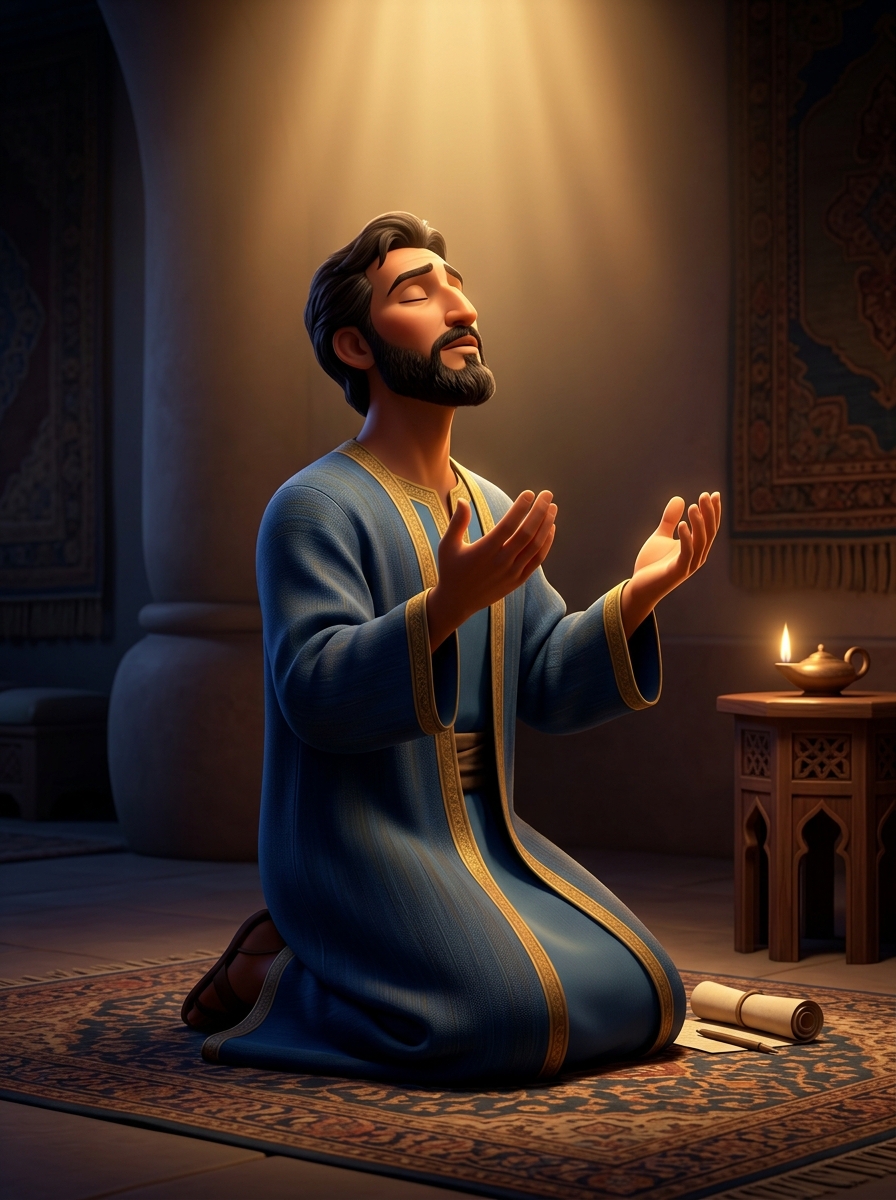
Nehemiah's Prayer
Nehemiah prayed one of the most carefully structured prayers in the Bible. He praised God's greatness. He confessed Israel's sin — including his own family's. He reminded God of His promise to gather His scattered people. And then he asked for one specific thing — "Give your servant success today and grant him favor in the presence of this man." He already had a plan. He already knew what he was going to ask the king. The prayer was the first step of the plan.
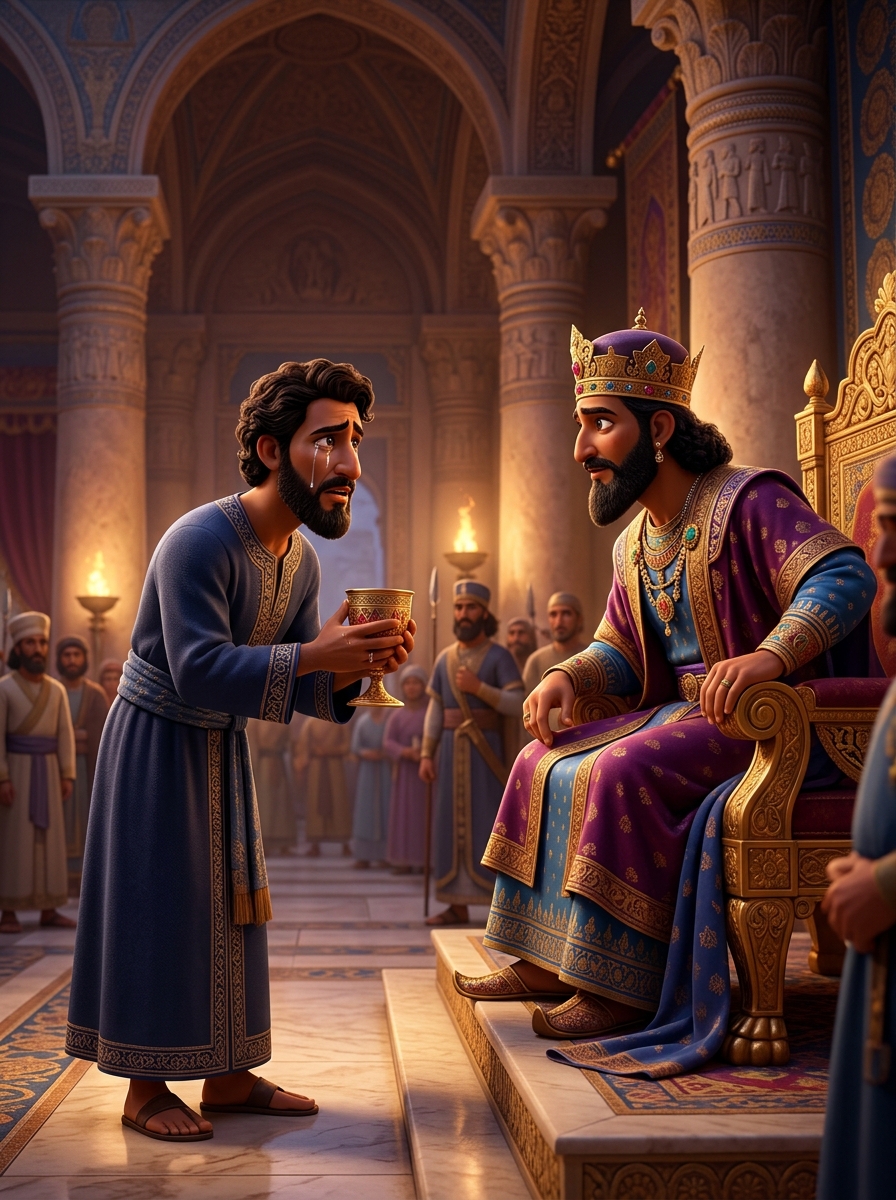
The King Notices
Nehemiah had never let his sadness show before the king — it was dangerous to appear sad in a king's presence. But one day his grief showed on his face. Artaxerxes asked, "Why does your face look so sad? You are not ill — this must be sadness of heart." Nehemiah was very afraid. But he told the king the truth. Then the king asked the question Nehemiah had been praying for. "What is it you want?"
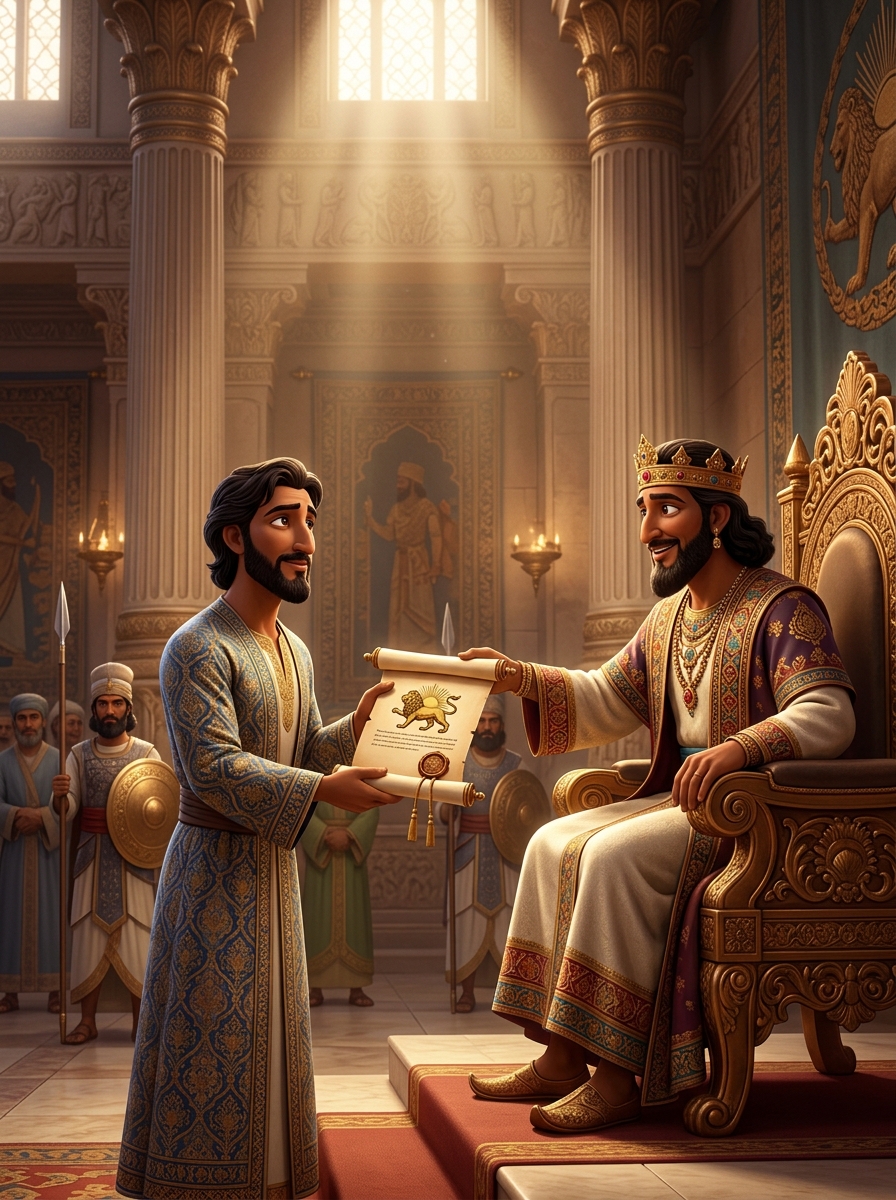
Nehemiah's Request
Before he answered, Nehemiah prayed silently — right there in front of the king, in a split second between the question and his answer. Then he asked for permission to go to Jerusalem and rebuild the walls. He asked for letters of safe passage. He asked for timber from the royal forest. The king granted every request — because the gracious hand of God was on Nehemiah. Four months of prayer had led to one conversation that changed everything.
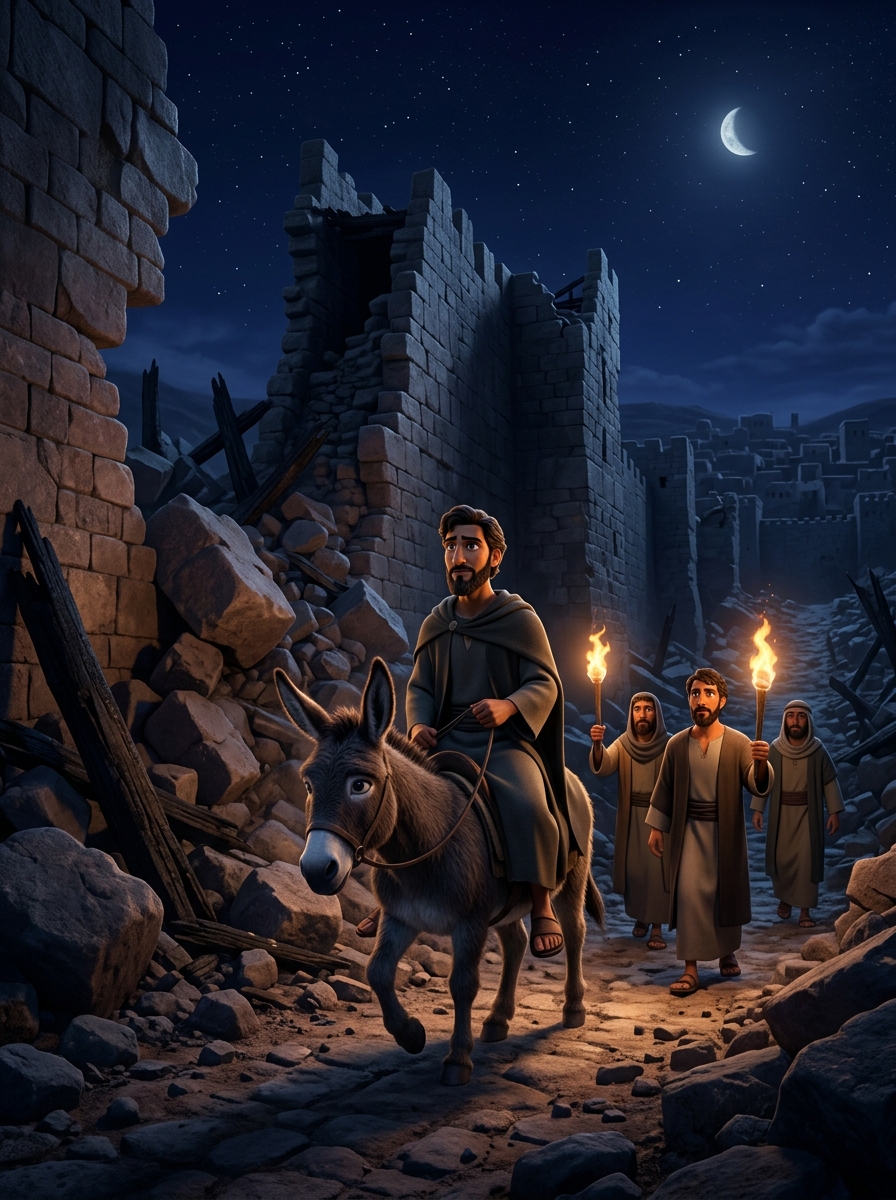
Nehemiah Inspects the Walls
Nehemiah arrived in Jerusalem but told no one what God had put in his heart to do. At night, with a few men and the animal he was riding, he went out and inspected the broken walls and burned gates in secret. He went around the whole city in the darkness — looking, assessing, planning. Then he gathered the leaders and said, "You see the trouble we are in. Come — let us rebuild the wall of Jerusalem and we will no longer be in disgrace." They said, "Let us start rebuilding."
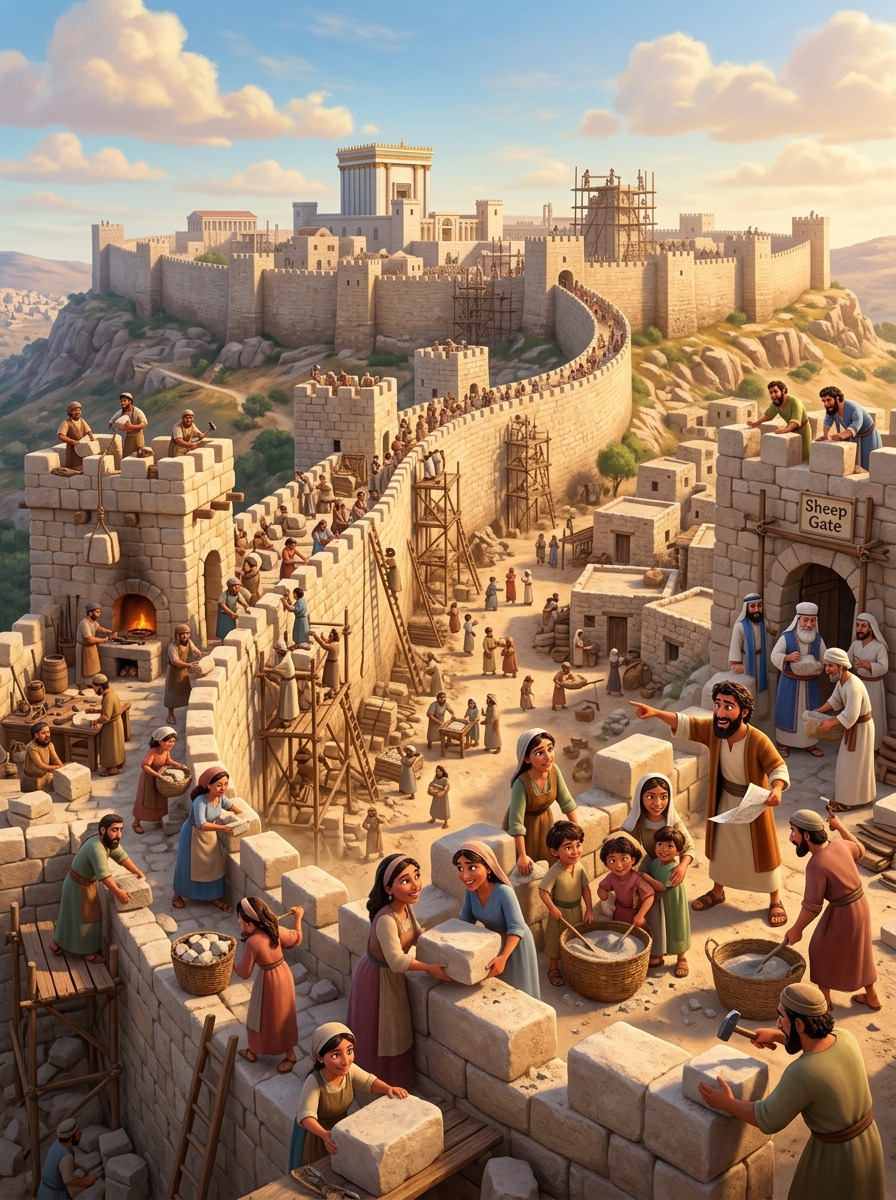
Everyone Builds Their Section
The wall was divided into sections and every family, every guild, every group was assigned their own part to rebuild — priests, goldsmiths, perfume-makers, merchants, rulers of districts, Levites. Each one built the section nearest their own house. The whole community working simultaneously on every part of the wall at once. One person noted with approval that Shallum's daughters worked alongside him. Another noted with mild disapproval that the nobles of Tekoa refused to help. Everyone's contribution — or lack of it — was being recorded.
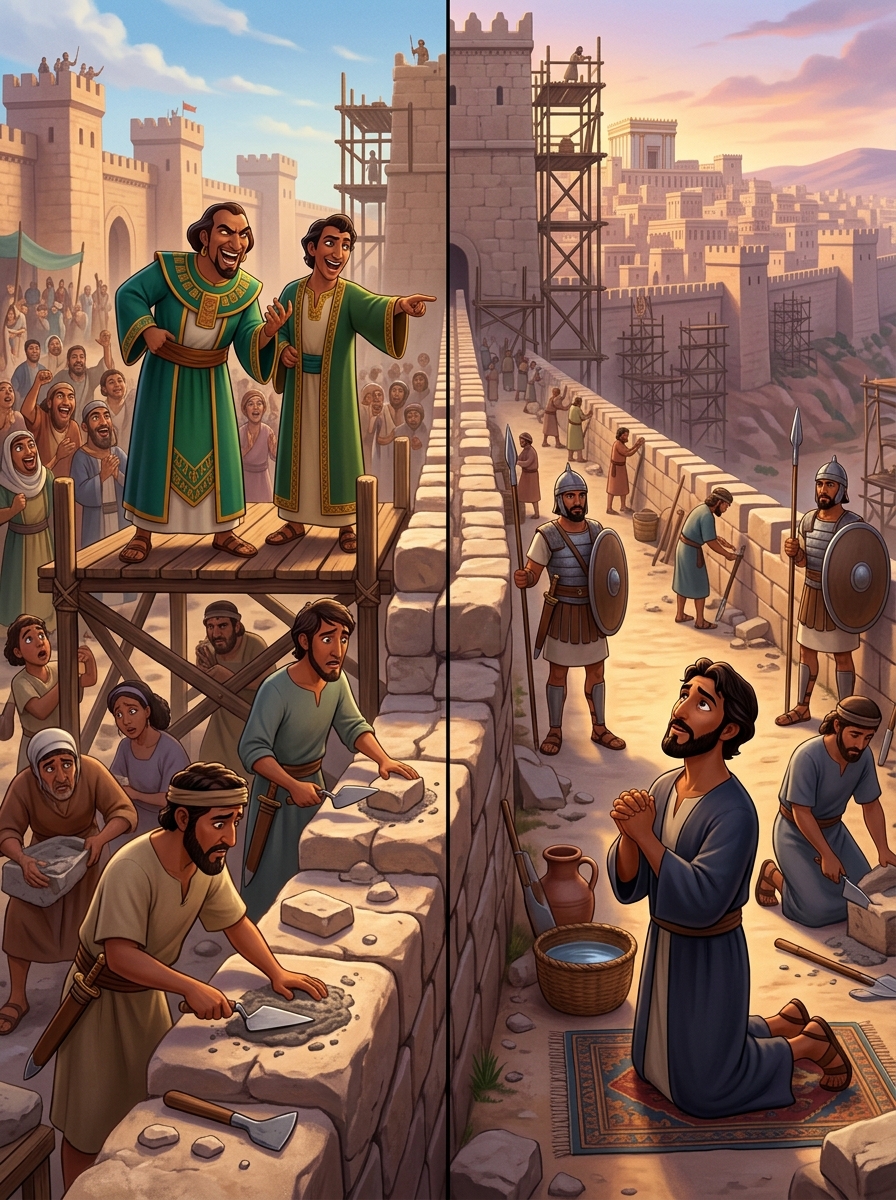
Sanballat Mocks and Threatens
When Sanballat and Tobiah heard that the rebuilding was going well, they were furious. Sanballat mocked publicly — "What are these feeble Jews doing? Can they make stones from the rubble?" Tobiah added, "Even a fox climbing on their wall would break it down." Then they plotted to attack Jerusalem and cause confusion. Nehemiah's response to the mockery was prayer. His response to the threat was practical — he posted guards and armed the workers.
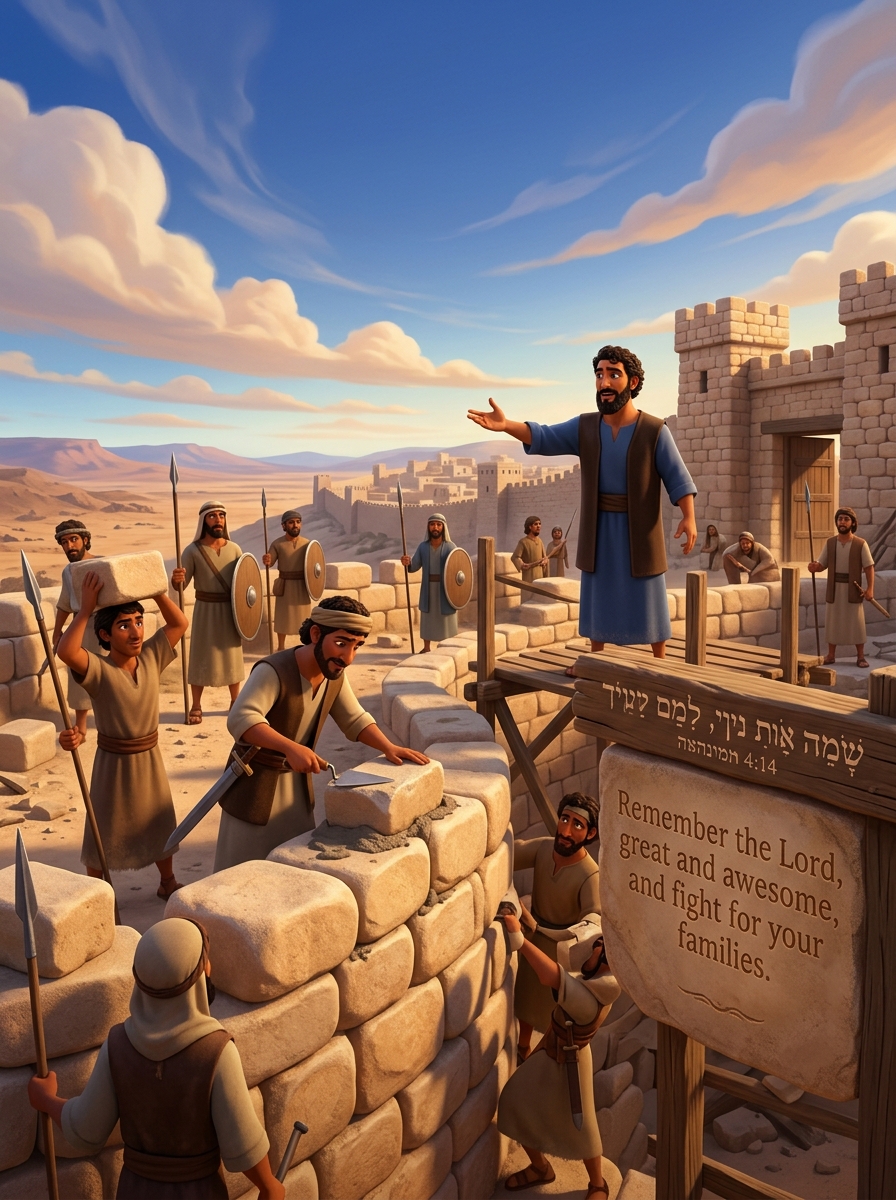
Building With One Hand, Fighting With the Other
From that day on, half the men did the work while the other half held spears, shields, bows, and armor. Even the builders had their swords strapped to their sides while they worked. Nehemiah stationed people behind the lowest points of the wall with swords, spears, and bows. Then he said to the nobles and officials and the rest of the people, "Don't be afraid of them. Remember the Lord who is great and awesome — and fight for your families."
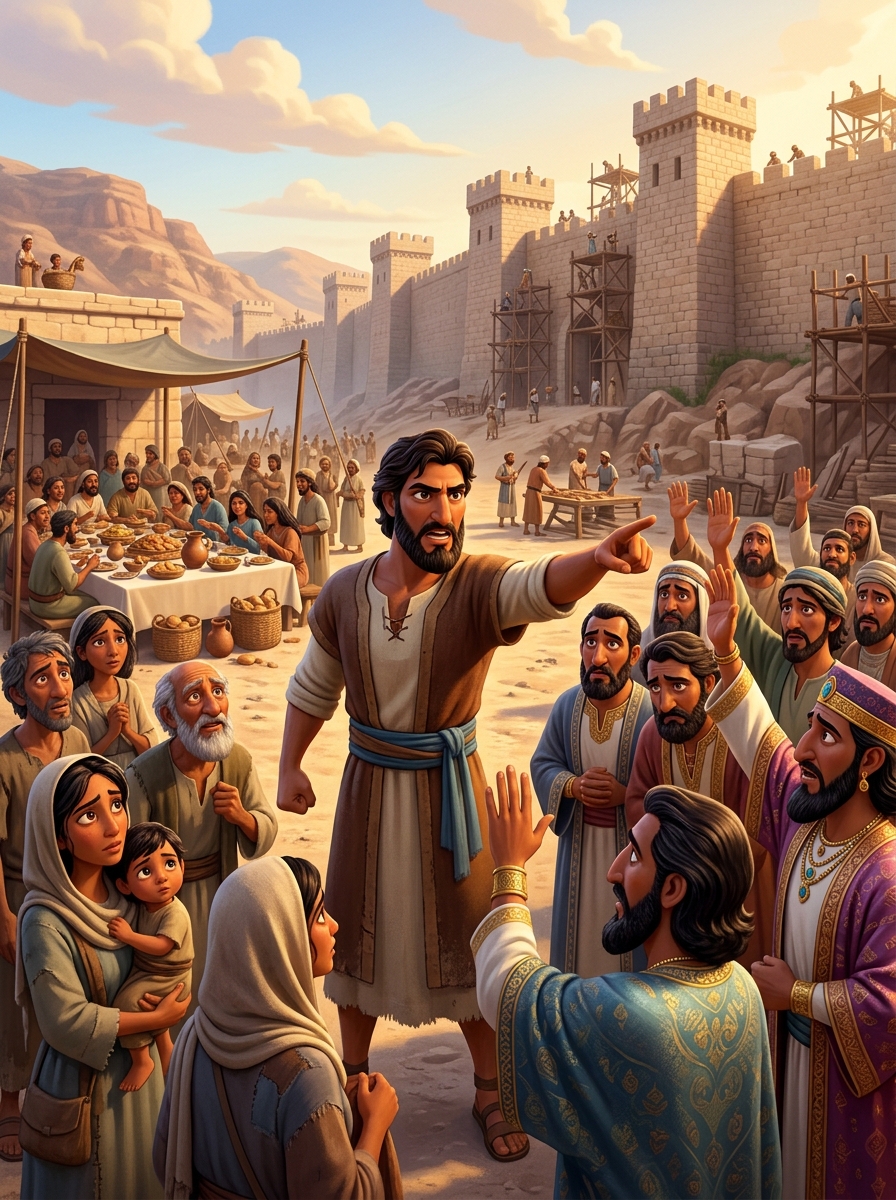
Nehemiah Confronts Injustice
While the wall was being built, the poor people of Jerusalem cried out against their fellow Jews. Some were mortgaging their fields and homes to buy food during the famine. Some were borrowing money and their children were being taken as slaves to pay the debt. Nehemiah was furious. He confronted the nobles and officials publicly and made them promise to return everything they had taken. He set a personal example — as governor he never took the governor's food allowance but fed one hundred and fifty people at his own table every day.
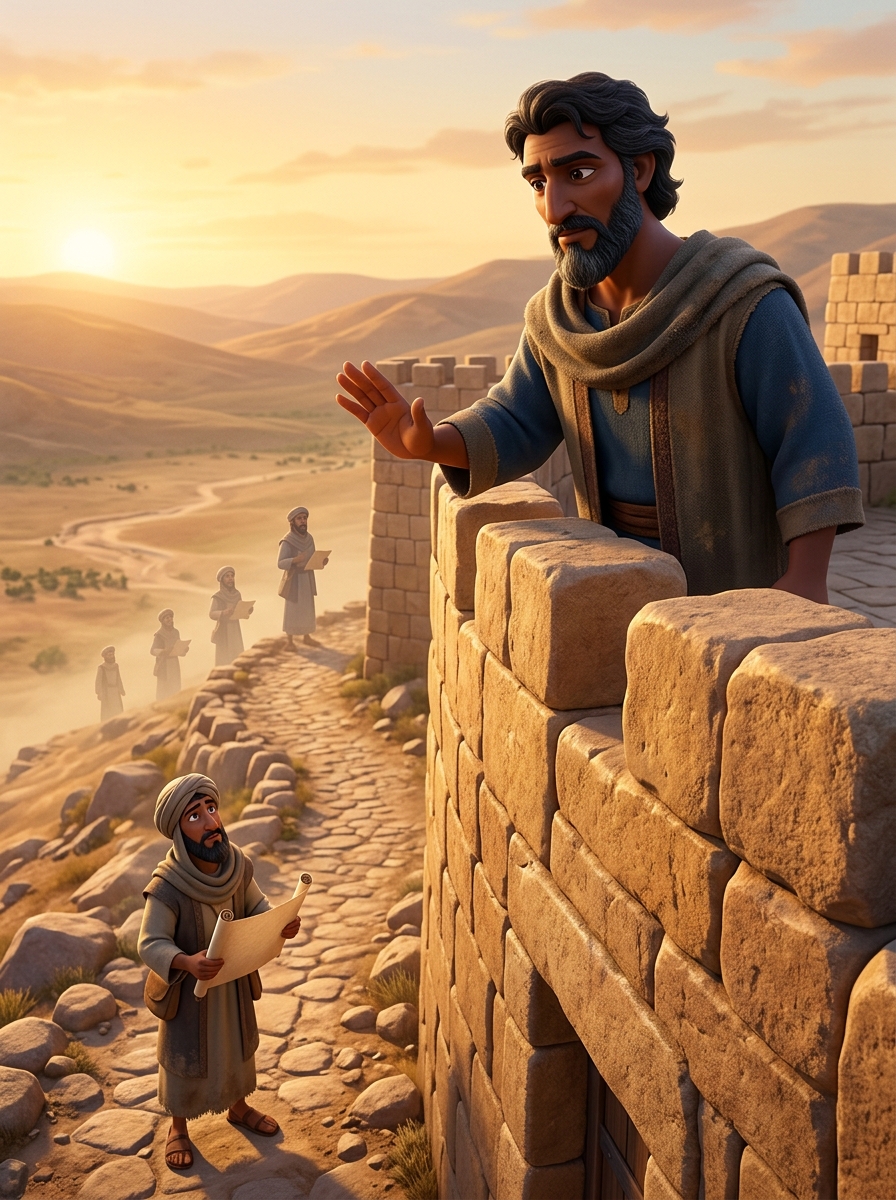
Plots Against Nehemiah
When Sanballat heard the wall was almost finished with only the gates left to hang, he tried four times to lure Nehemiah to a meeting in the plain of Ono — planning to harm him. Four times Nehemiah sent the same answer. "I am doing a great work and I cannot come down. Why should the work stop while I leave it?" Then they sent a false prophet to frighten him into hiding in the Temple. Nehemiah refused. "Should a man like me run away? I will not go in."
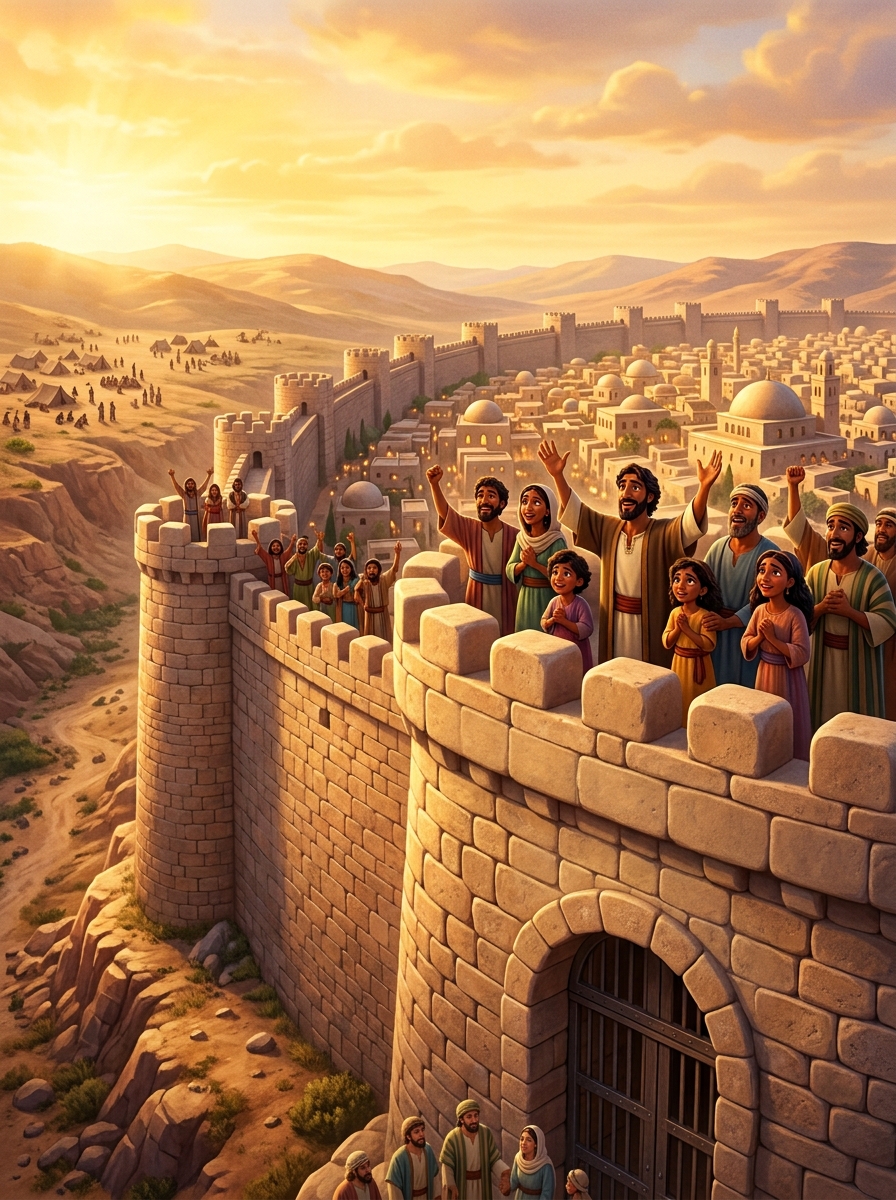
Fifty-Two Days
The wall of Jerusalem was completed on the twenty-fifth day of the month of Elul — fifty-two days after the work began. When all the enemies heard about it and all the surrounding nations saw it, they lost their confidence because they realized this work had been done with the help of God. A wall that had lain in ruins for over a hundred and fifty years was rebuilt by ordinary people working together in fifty-two days. Nothing is too hard when God is in it.
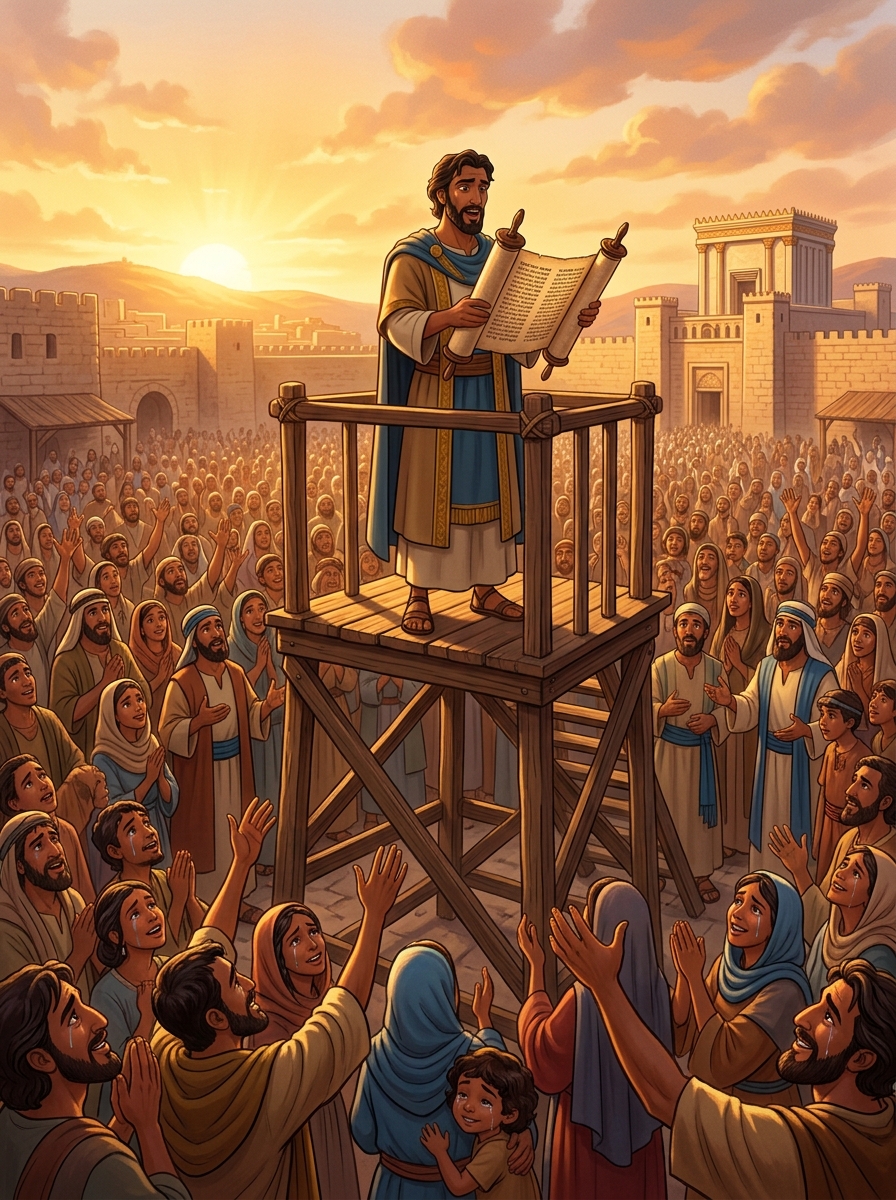
Ezra Reads the Law
With the wall complete, Nehemiah turned to the spiritual restoration of the community. He gathered all the people in the square before the Water Gate and asked Ezra to bring the Book of the Law. From daybreak to noon, Ezra read aloud while the Levites moved through the crowd explaining what was being read so everyone could understand it. When the people heard the words of the Law they wept. Ezra and Nehemiah said, "Do not weep — this day is holy. The joy of the Lord is your strength."
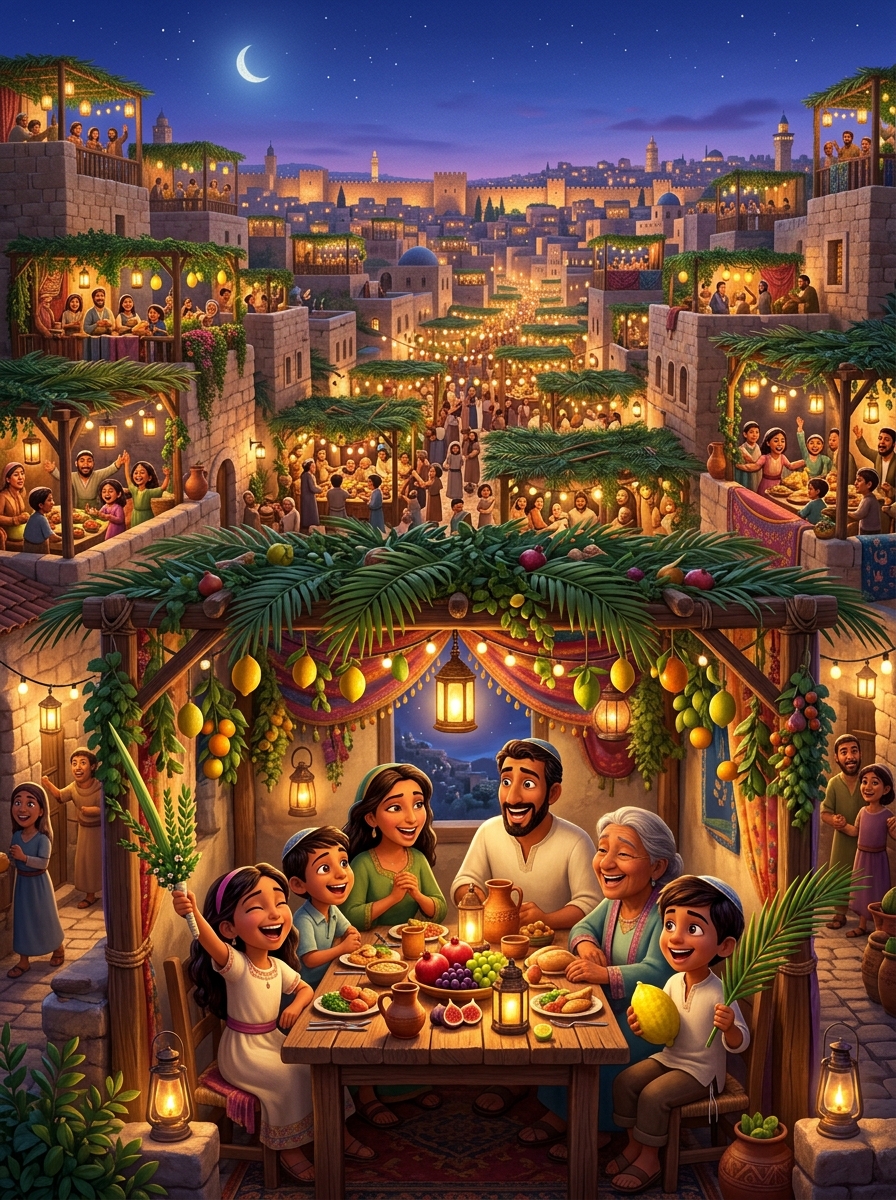
The Festival of Booths
The people discovered in the Law that they were supposed to celebrate the Festival of Booths in the seventh month. They immediately began cutting branches and building shelters on their rooftops, in their courtyards, and in the city squares. The whole community lived in booths for seven days, reading the Law every day. It was the greatest celebration of this festival since the days of Joshua. When people encounter God's word and obey it immediately — joy follows.
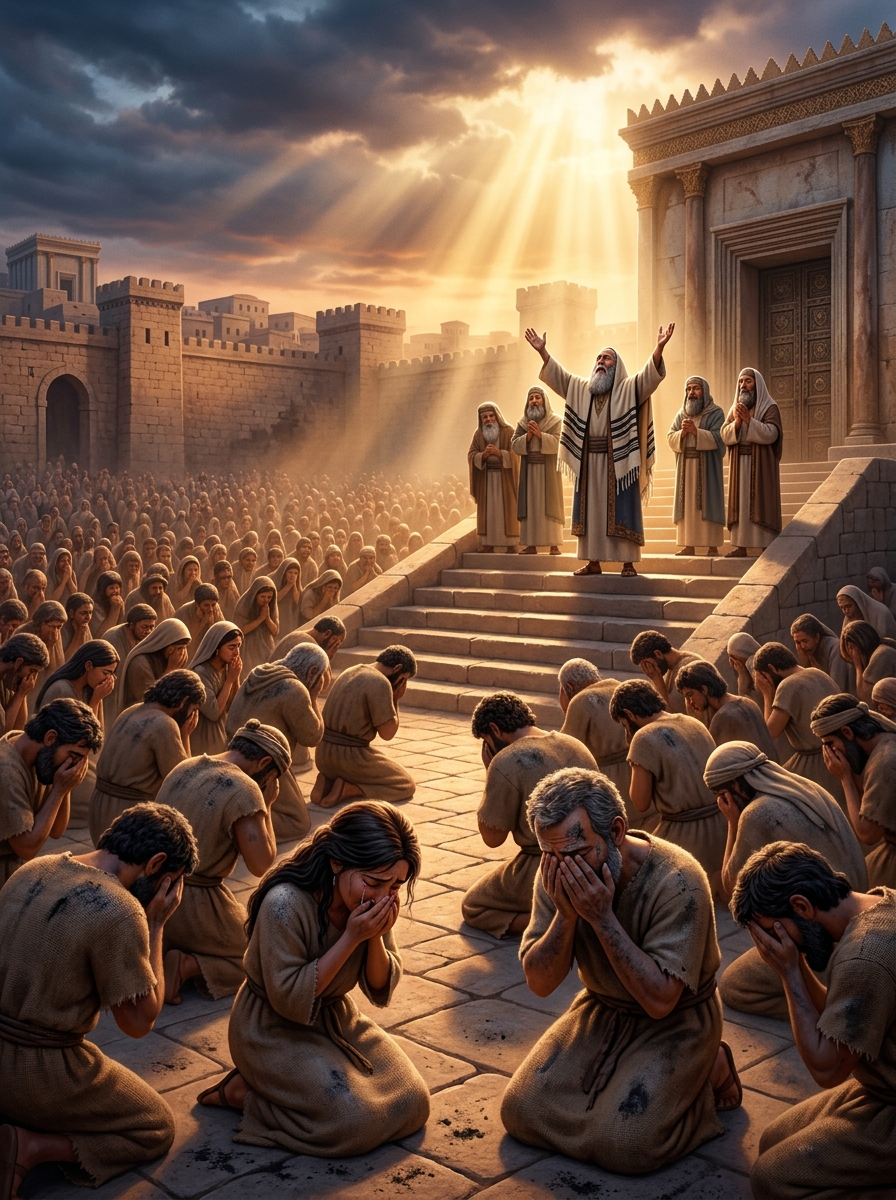
The Great Confession
The Israelites gathered for a day of fasting and confession — wearing sackcloth and having dust on their heads. They stood and confessed their sins and the sins of their ancestors for a quarter of the day, then spent another quarter worshipping God. The Levites led a great prayer that recounted the whole story of Israel — creation, Abraham, Egypt, the wilderness, the land, the disobedience, the exile — and declared God faithful through all of it. "In all that has happened to us, you have been just — while we have acted wickedly."
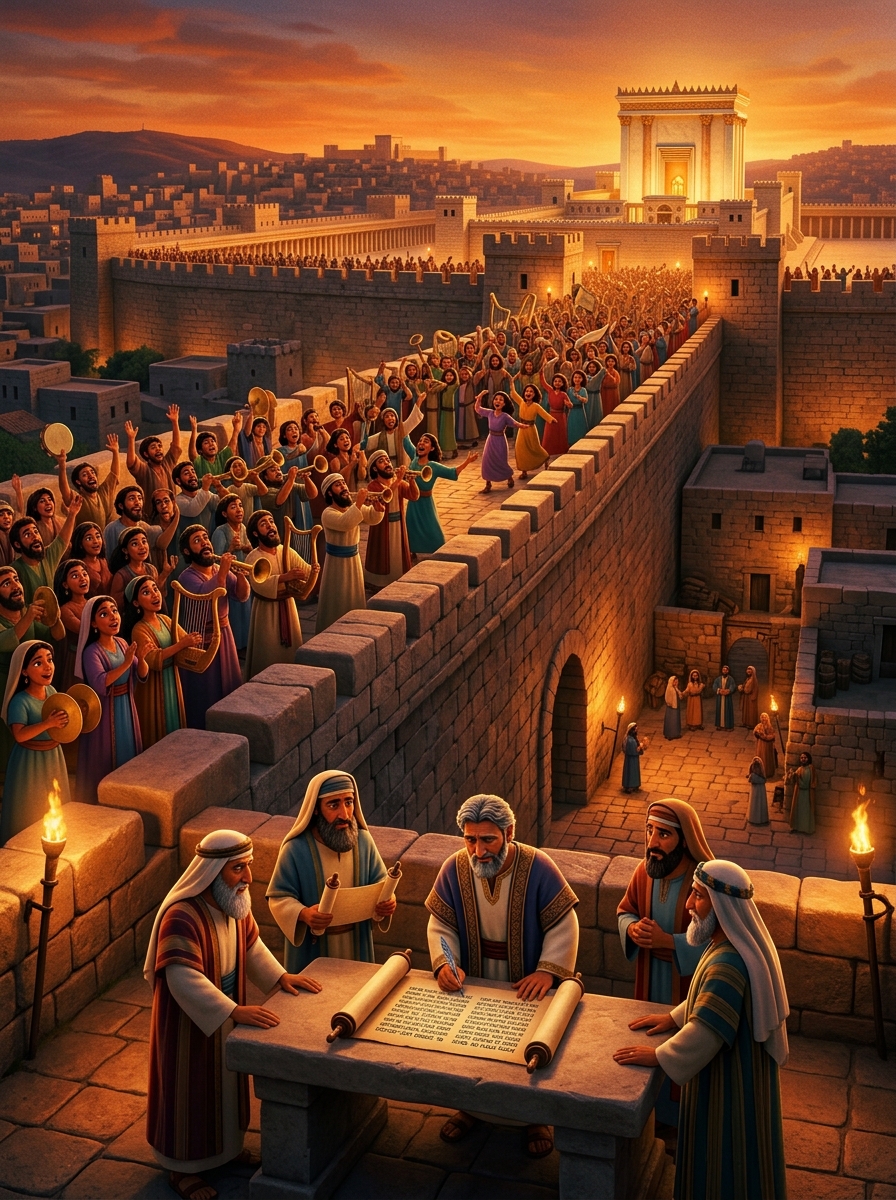
The People Make a Covenant
The leaders, Levites, and priests signed a binding covenant — committing to walk in God's law, not to intermarry with surrounding peoples, to keep the Sabbath, to care for the Temple, and to bring their firstfruits and tithes. The people cast lots to decide who would live in Jerusalem — one in ten would move into the holy city while the others remained in their own towns. When the wall was dedicated, two great choirs processed around the top of the completed wall in opposite directions, meeting at the Temple in a great celebration of praise.
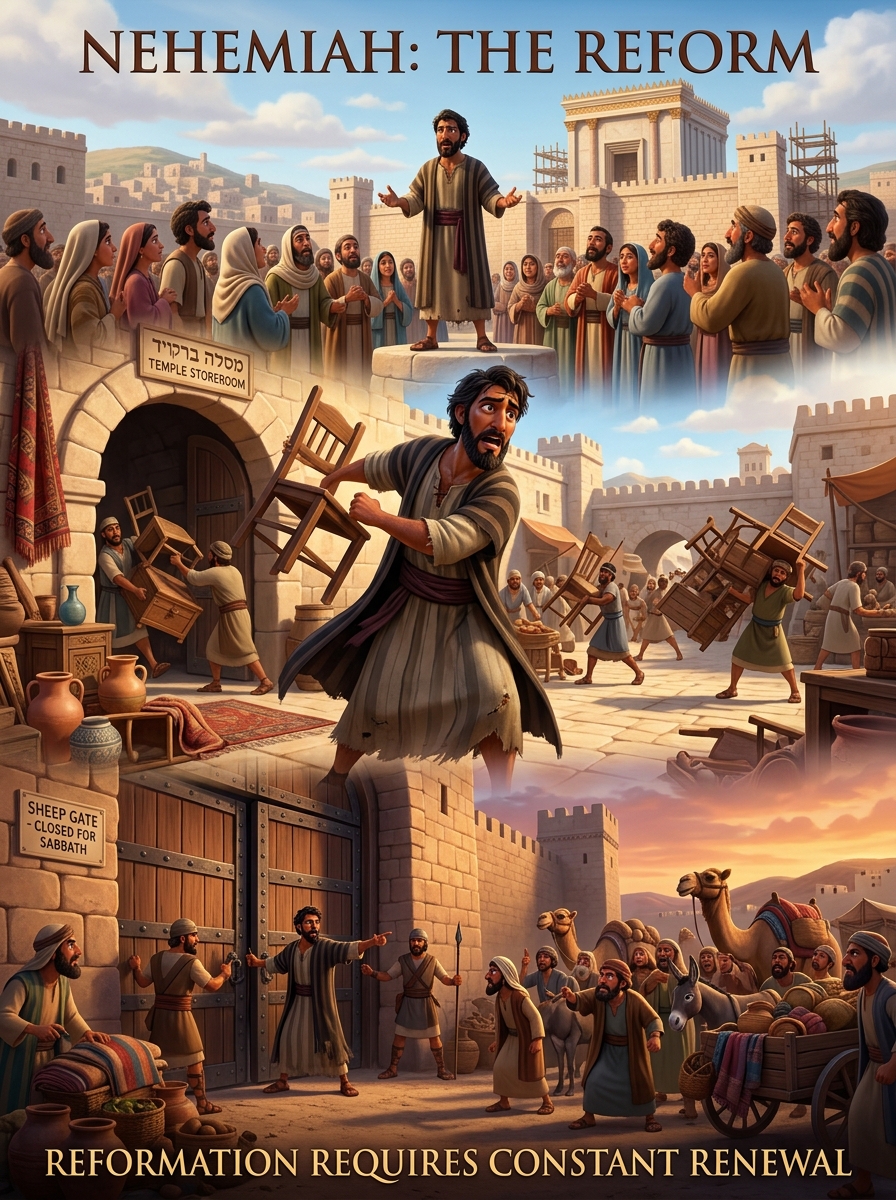
Nehemiah Returns and Reforms Again
Nehemiah returned to Persia after some years and then came back to Jerusalem — and found that things had slipped badly in his absence. Tobiah had been given a room in the Temple courts. The Levites had not received their portions so they had gone back to their fields. The Sabbath was being broken openly. Intermarriage had returned. Nehemiah confronted every problem directly — throwing Tobiah's furniture out of the Temple, restoring the Levites' portions, shutting the city gates on the Sabbath. Reformation requires constant renewal. The work is never finally done.
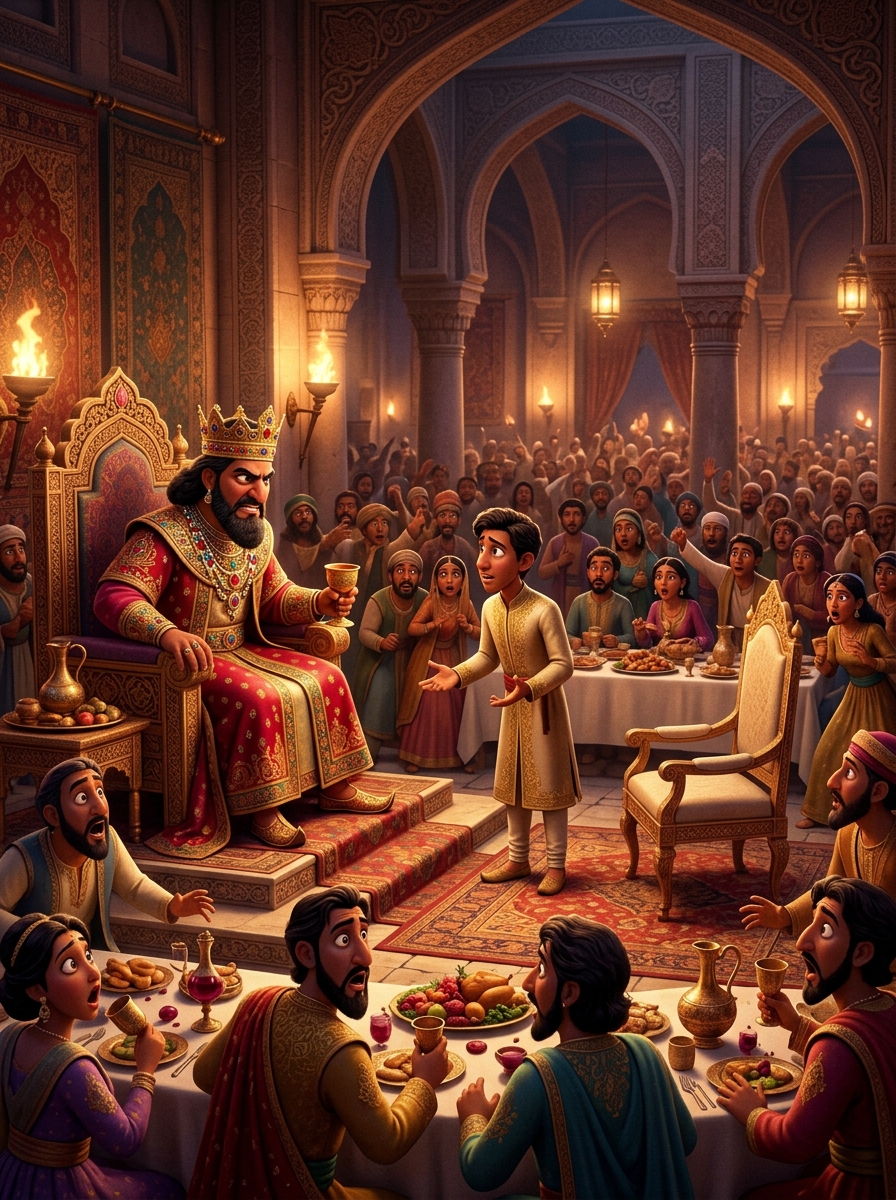
Queen Vashti Refuses
King Ahasuerus of Persia threw an enormous banquet that lasted one hundred and eighty days — showing off the wealth and glory of his kingdom. On the last day, drunk with wine, he sent for his queen Vashti to come and display her beauty before his guests. Queen Vashti refused to come. The king was furious. His advisors panicked — if the queen could refuse the king, every wife in Persia would start refusing their husbands. Vashti was removed as queen. A new queen would be chosen.
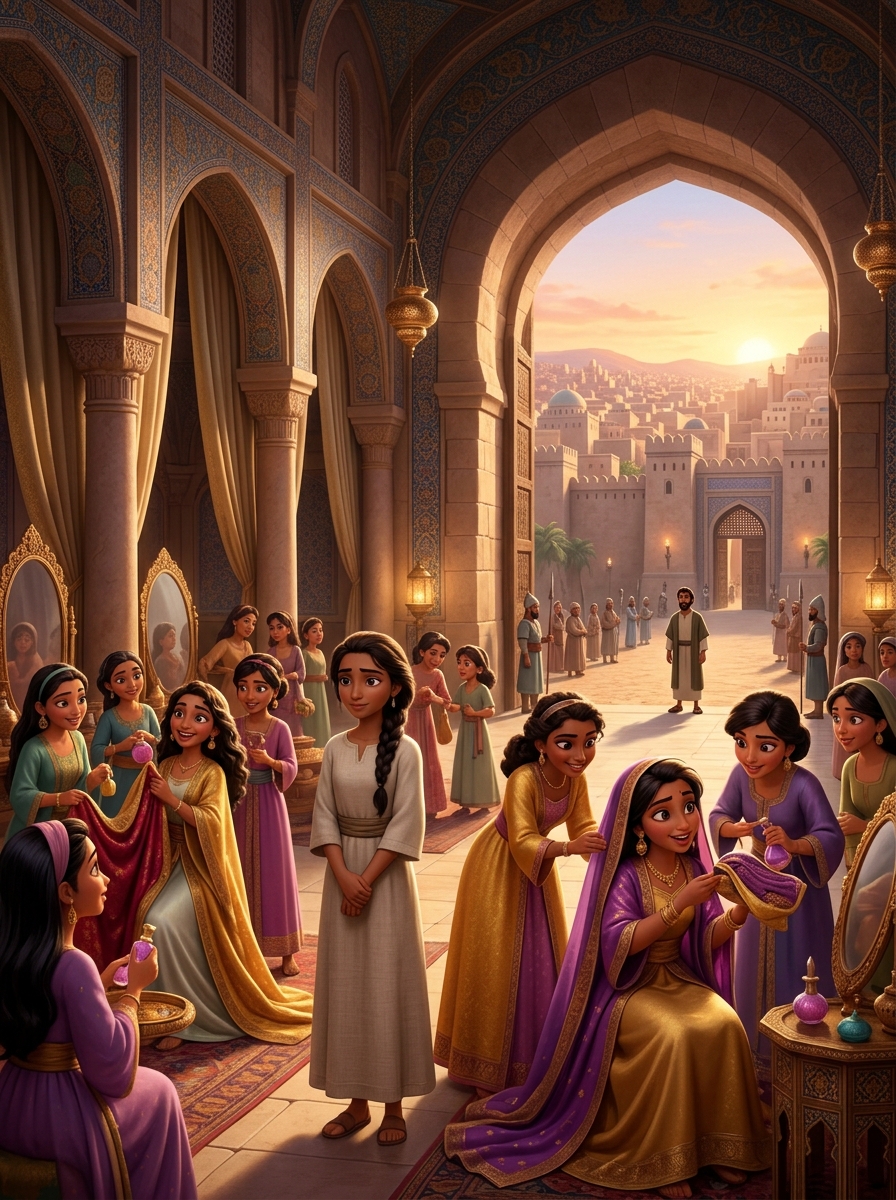
Esther Is Chosen
A search went out across the kingdom for beautiful young women to be brought to the palace. Among them was a Jewish girl named Esther — an orphan raised by her older cousin Mordecai. Esther was beautiful and had a quality that went beyond appearance — she won the favor of everyone who met her. Mordecai told her not to reveal that she was Jewish. Esther listened to Mordecai in everything, just as she had when he raised her.

Esther Becomes Queen
When Esther went before the king, he was attracted to her more than to any of the other women. She found grace and favor in his sight more than any of the other virgins. He set the royal crown on her head and made her queen. A Jewish orphan girl — hidden in plain sight in the most powerful palace in the world — was now queen of Persia. She didn't know yet why. But God had been placing her exactly where she needed to be.
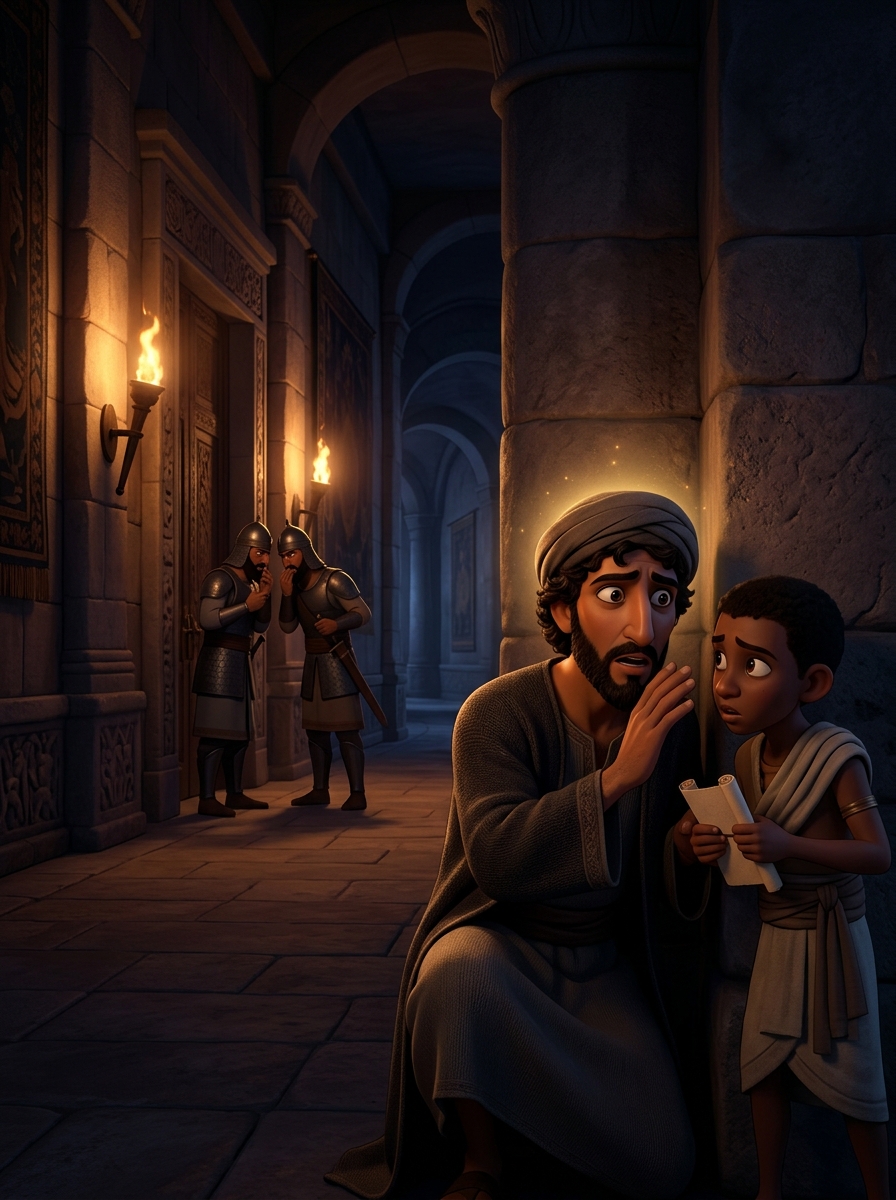
Mordecai Saves the King
While Mordecai sat at the king's gate every day watching over Esther, he overheard two of the king's officers plotting to assassinate the king. He told Esther who reported it to the king in Mordecai's name. The plot was investigated, the men were executed, and the account was written in the king's chronicles. Mordecai's loyalty was recorded. It would matter later — at exactly the right moment — in a way no one could have planned.
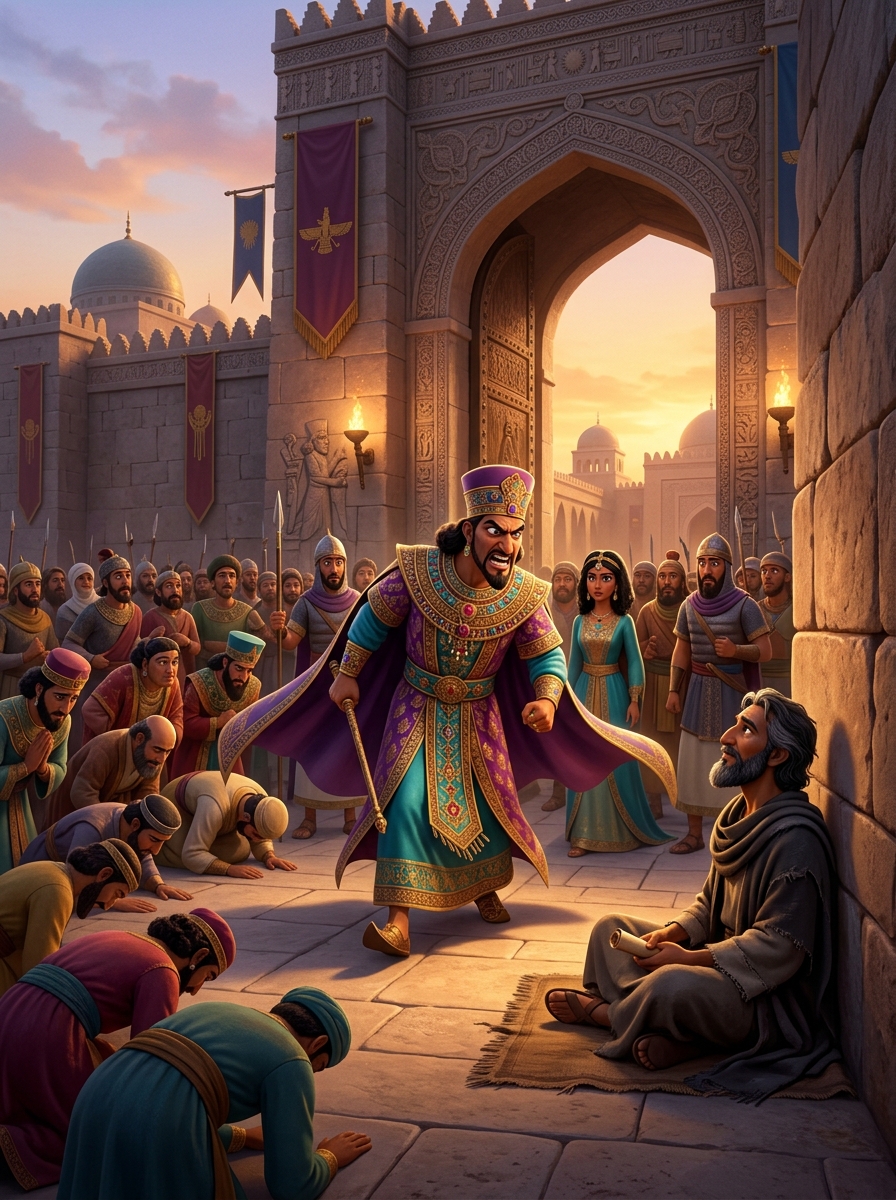
Haman's Hatred
King Ahasuerus elevated a man named Haman above all the other nobles and ordered everyone to bow down to him. Every official at the king's gate bowed — except Mordecai. Day after day the other officials asked why he refused. Mordecai told them he was Jewish. When Haman saw that Mordecai would not bow, he was filled with rage. But killing one man was not enough for Haman. He decided to destroy every Jewish person in the entire Persian empire.
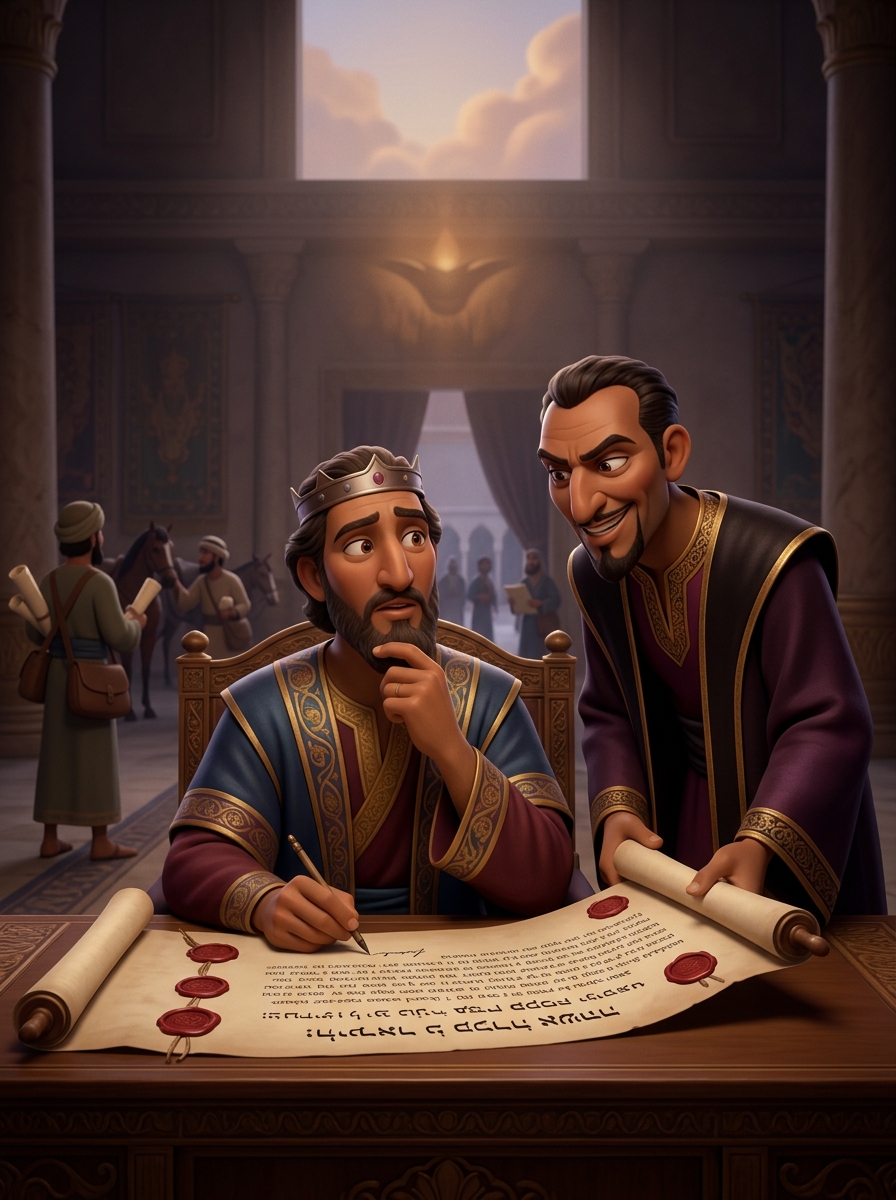
The Edict of Death
Haman went to the king and said, "There is a certain people scattered among your provinces who do not obey the king's laws. It is not in the king's interest to tolerate them. Let a decree be issued to destroy them." The king gave Haman his signet ring — the authority to do whatever he wanted. Haman cast lots to choose the date and issued a decree across every province — on a single day, all Jewish people, young and old, men, women, and children, were to be killed.
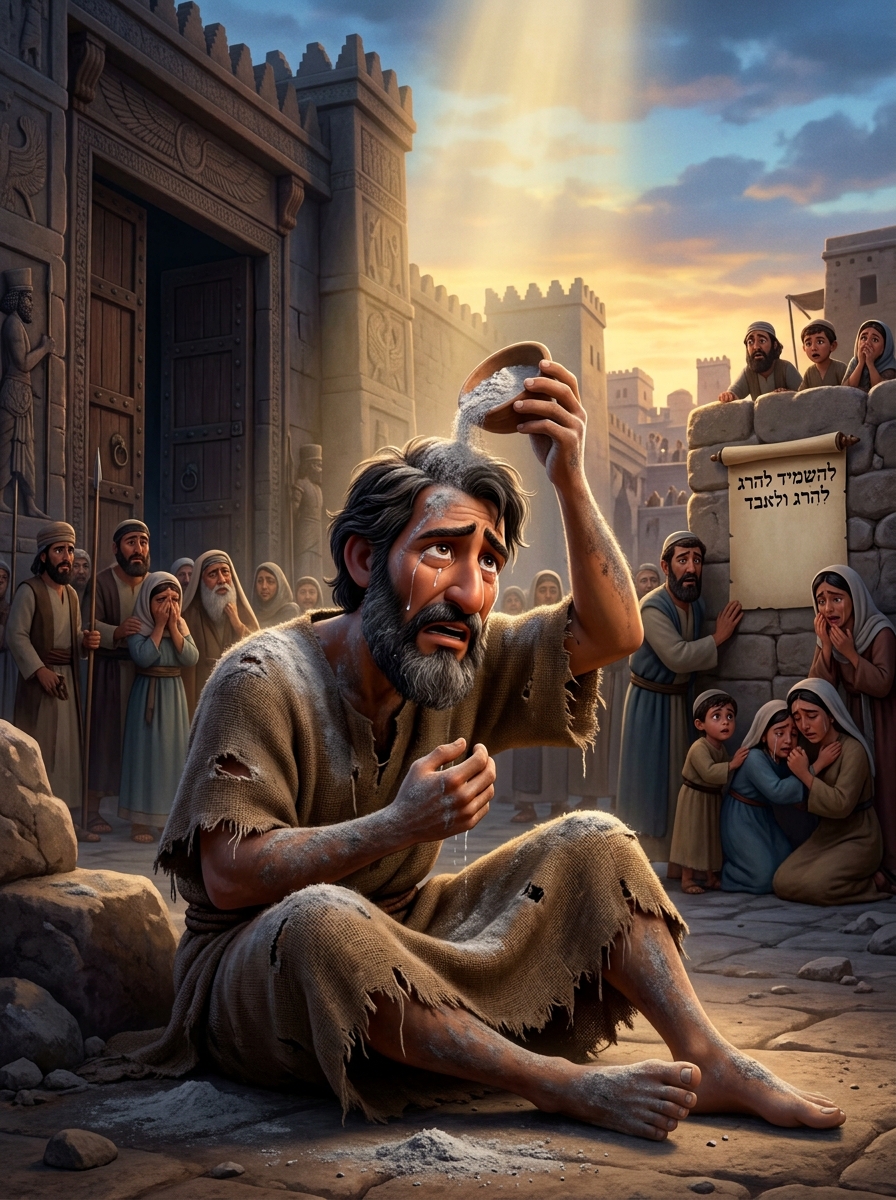
Mordecai Mourns
When Mordecai learned of the decree, he tore his clothes, put on sackcloth and ashes, and went into the city wailing loudly and bitterly. In every province where the decree arrived, there was great mourning among the Jews — fasting, weeping, and wailing. Esther heard that Mordecai was in mourning and sent clothes for him — but he refused them. Then she sent a trusted servant to find out what was wrong. What Mordecai told him changed everything.
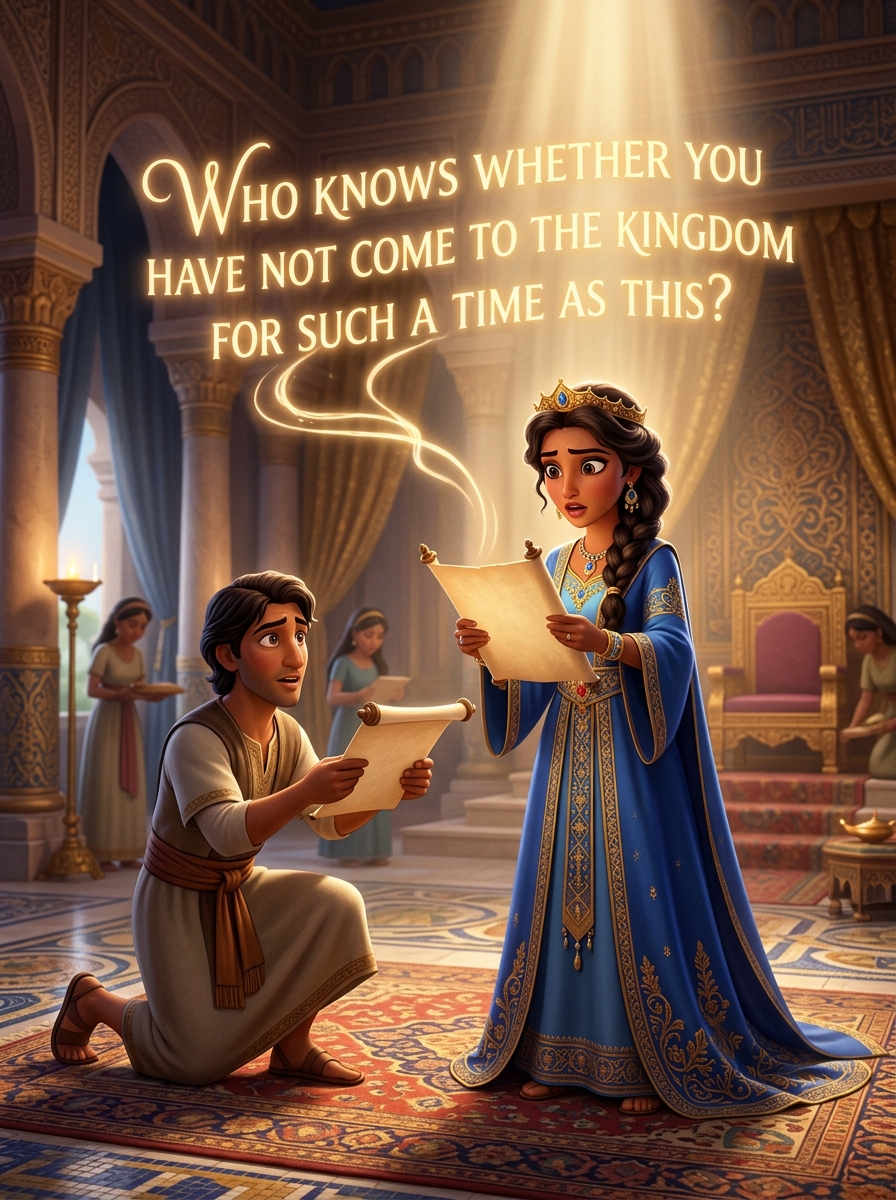
For Such a Time as This
Mordecai sent Esther a copy of the decree and urged her to go to the king and beg for mercy for her people. Esther sent back word — no one could approach the king without being summoned, on pain of death. Even the queen. Mordecai answered, "Do not think that because you are in the king's house you will escape. If you remain silent at this time, relief will come from another place — but you and your family will perish. And who knows — perhaps you have come to your royal position for such a time as this."

Esther's Decision
Esther sent her answer back to Mordecai. "Go and gather all the Jews in Susa and fast for me. Do not eat or drink for three days, night and day. My servants and I will fast the same way. And then — though it is against the law — I will go to the king. And if I perish, I perish." The girl who had been told to stay hidden had decided to step forward. She did not know if she would survive. She went anyway.
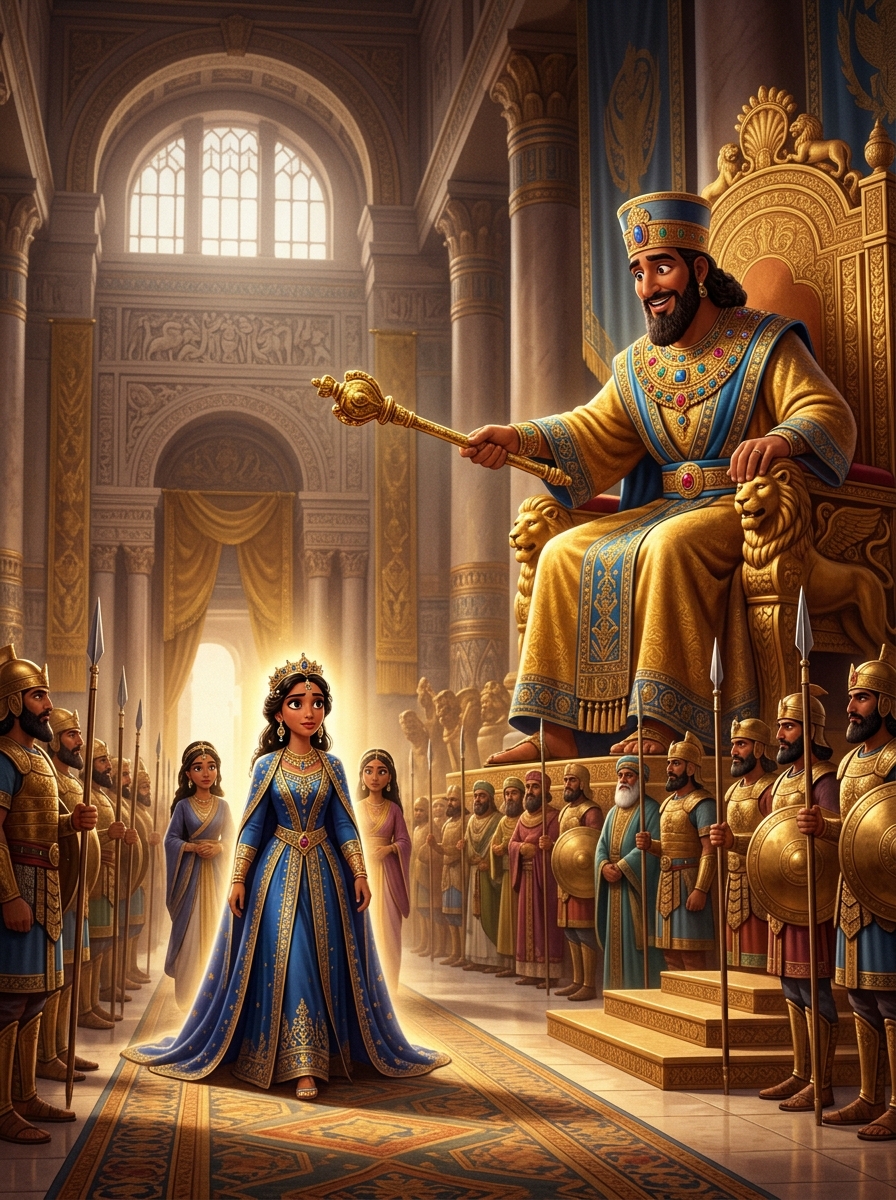
Esther Approaches the King
On the third day Esther put on her royal robes and stood in the inner court of the palace, opposite the king's hall. The king was sitting on his royal throne, facing the entrance. When he saw Queen Esther standing in the court, he was pleased with her and held out to her the golden scepter that was in his hand. Esther approached and touched the tip of the scepter. She was safe. The king asked, "What is it, Queen Esther? What is your request? Even up to half the kingdom, it will be given to you."

Esther's Banquet Strategy
Esther did not ask for what she needed yet. Instead she invited the king and Haman to a banquet she had prepared. At the banquet the king again asked what she wanted. Still Esther waited — inviting them to a second banquet the next day. She was biding her time, waiting for exactly the right moment. Meanwhile Haman left the banquet full of joy — until he passed Mordecai at the gate, who still refused to bow. His joy curdled immediately into rage. His wife suggested building a gallows to hang Mordecai on.
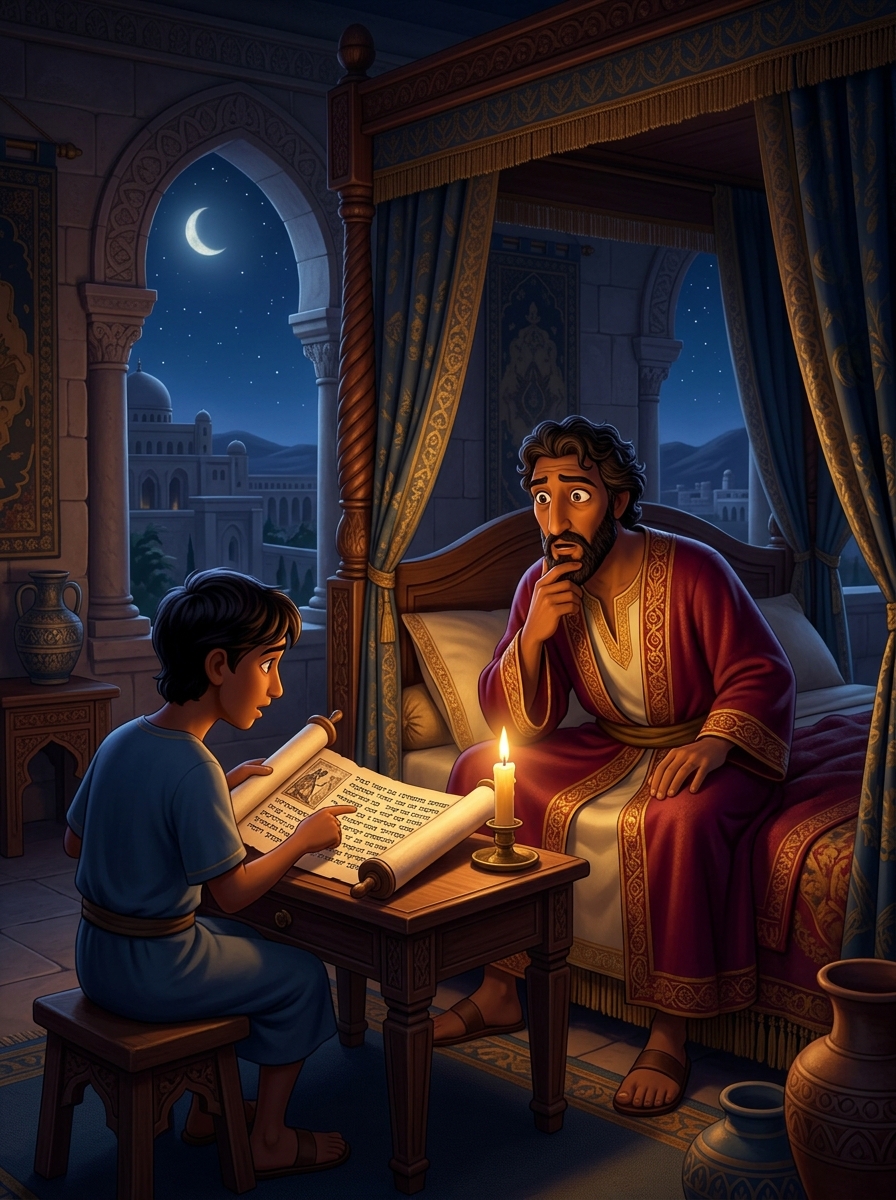
The King Cannot Sleep
That night the king could not sleep. He ordered the book of chronicles to be read aloud to him. The reader happened to read the account of Mordecai uncovering the assassination plot. The king asked, "What honor has been given to Mordecai for this?" Nothing had been done. At that exact moment, Haman arrived at the palace to ask the king's permission to hang Mordecai on the gallows he had built. Before he could speak, the king asked him, "What should be done for the man the king wants to honor?"
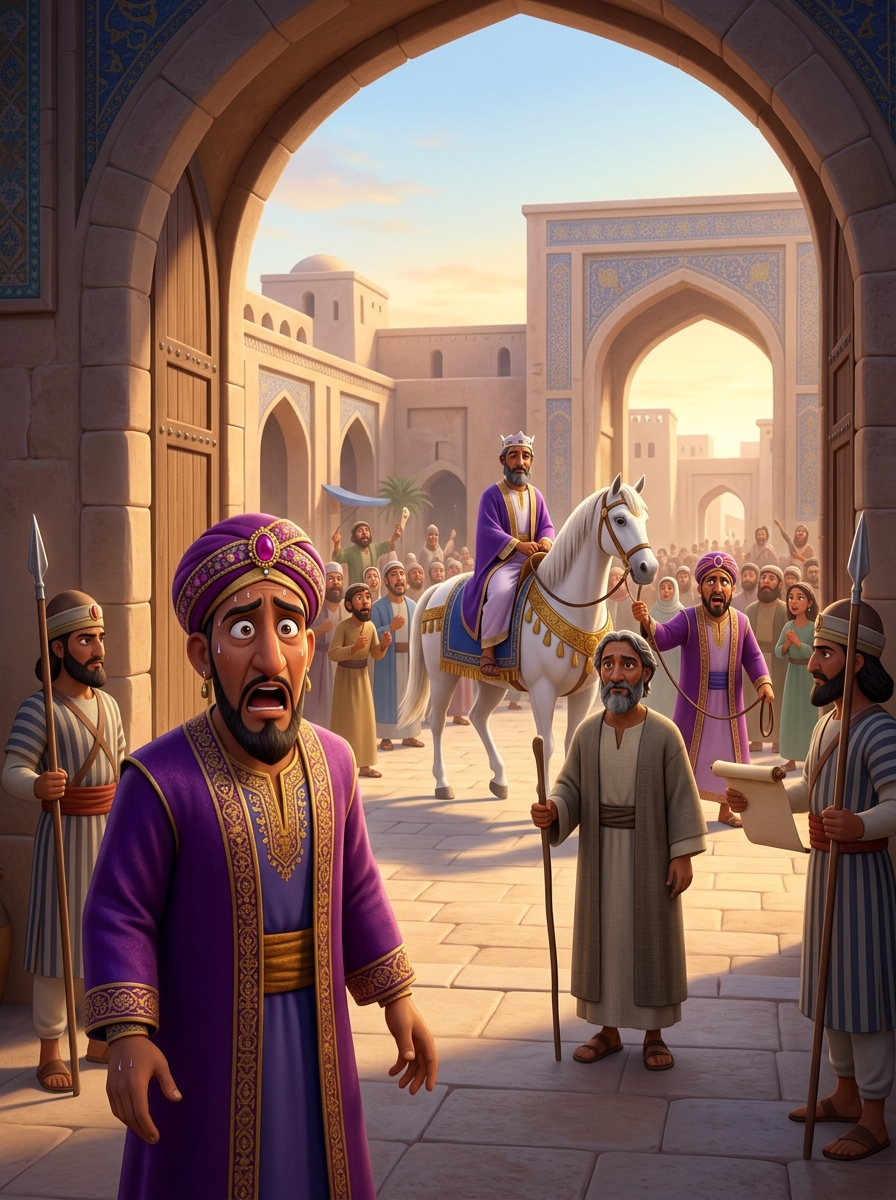
Haman Honors Mordecai
Haman assumed the king meant to honor him — so he described the most lavish honor he could imagine. The king said, "Go at once. Take the robe and the horse and do just as you have suggested — for Mordecai the Jew who sits at the king's gate. Do not neglect anything you have recommended." Haman had no choice. He led Mordecai through the city streets on the king's own horse, announcing that this was what was done for the man the king wanted to honor. Then Haman went home and wept.

Esther Reveals the Plot
At the second banquet the king asked again what Esther wanted. This time she answered. "If I have found favor with you, Your Majesty — grant me my life. That is my petition. And spare my people. We have been sold to be destroyed, killed, and annihilated." The king's face darkened. "Who is he — where is he — who has dared to do such a thing?" Esther said, "The adversary and enemy is this wicked Haman."
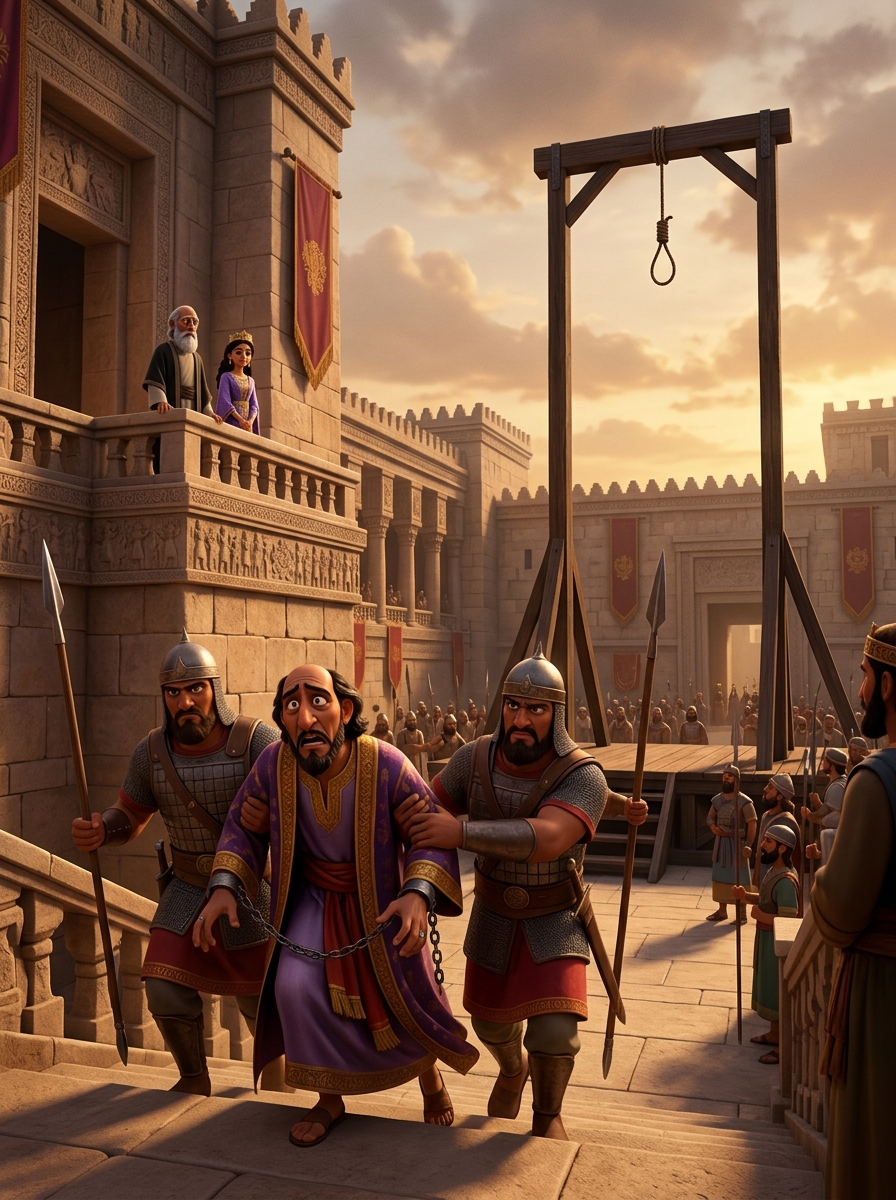
Haman's End
The king stormed out into the garden in fury. Haman threw himself on the couch where Esther was reclining to beg for his life. When the king came back in, he saw Haman on Esther's couch and said, "Will he even assault the queen in my own house?" At that, the servants covered Haman's face. One of the king's attendants said, "Haman has already built a gallows fifty cubits high to hang Mordecai on." The king said, "Hang him on it." Haman was hanged on the very gallows he had built for Mordecai.
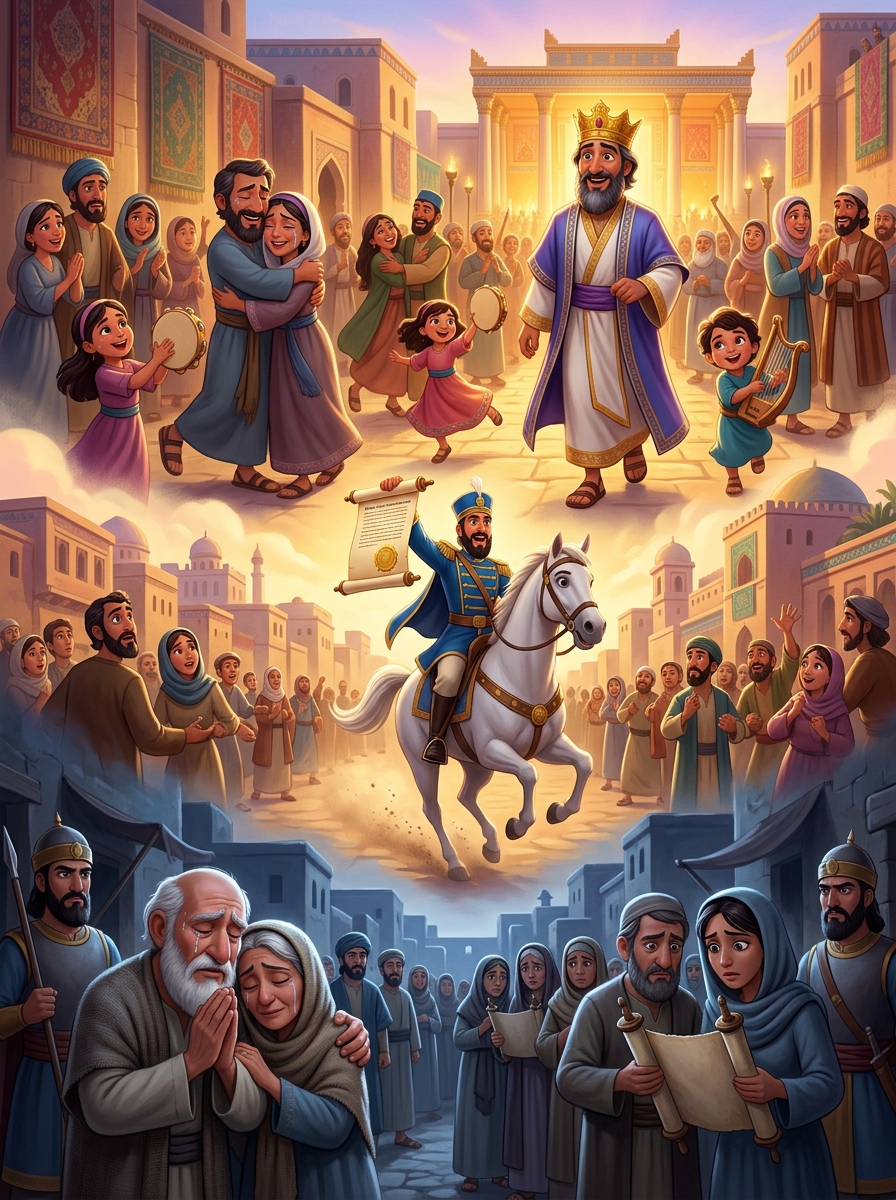
The Reversal
That same day the king gave Esther Haman's estate. Mordecai came before the king because Esther had revealed their relationship — and the king took off his signet ring, which he had taken back from Haman, and gave it to Mordecai. Esther fell at the king's feet weeping and begged him to stop Haman's decree. The king told Esther and Mordecai — write another decree in the king's name and seal it with the king's ring. No decree written in the king's name could be cancelled. A new decree could counter it.
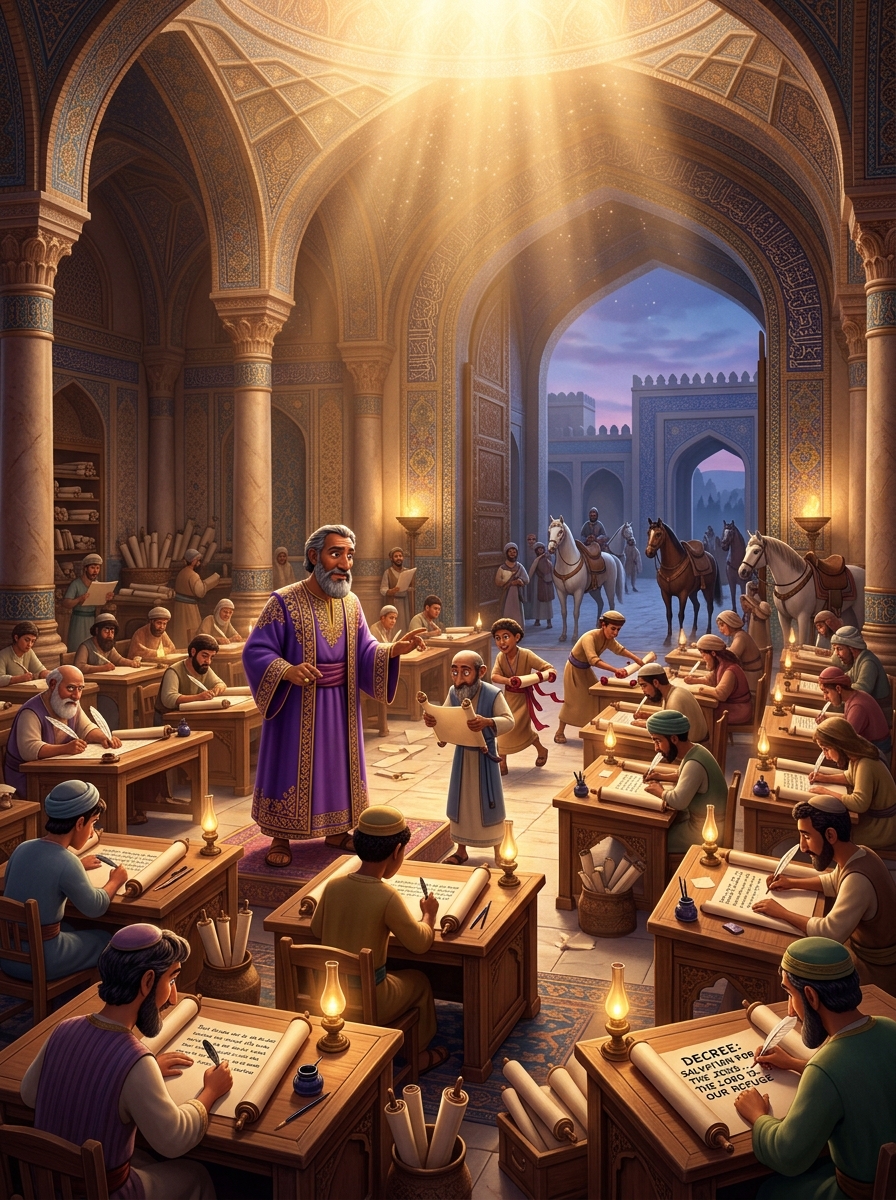
The New Decree
Mordecai wrote a new decree — giving the Jews in every city the right to assemble and protect themselves, to destroy any armed force that attacked them, and to plunder their enemies' goods. The decree was sent by fast horses to every province. When it arrived in Susa, the city broke into celebration. For the Jews there was light and gladness, joy and honor. In every province and city where the decree arrived, there was joy and feasting and celebrating — and many people from other nations declared themselves Jewish because fear of the Jews had seized them.

The Day of Victory
On the day Haman had chosen by lot to destroy the Jews, the situation was completely reversed. The Jews throughout the provinces assembled to defend themselves and no one could stand against them — because the fear of Mordecai had fallen on them. In Susa the Jews killed the ten sons of Haman. Mordecai recorded these events and sent letters establishing an annual celebration called Purim — named after the lot Haman had cast. What Haman intended as a day of destruction became a day of celebration forever.

Mordecai the Great
The book of Esther ends simply and powerfully. Mordecai the Jew was second in rank to King Ahasuerus, preeminent among the Jews, and held in high esteem by his many fellow Jews — because he worked for the good of his people and spoke up for the welfare of all the Jews. An orphan girl and her cousin — hidden, displaced, seemingly powerless — had saved an entire people. God had been in every detail of the story. His name was never mentioned. His fingerprints were on every page.
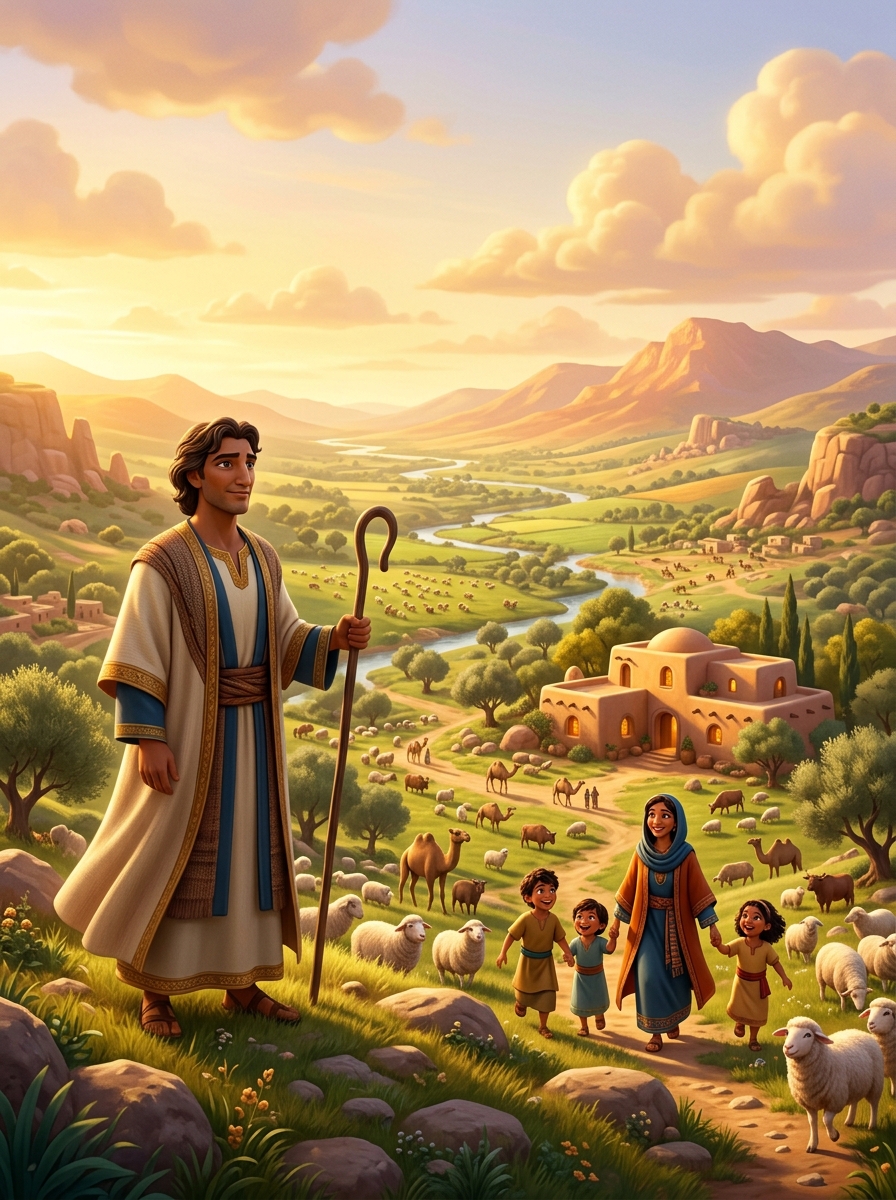
A Man Named Job
In the land of Uz lived a man named Job. He loved God with his whole heart. He was honest and kind. He had a large family, many animals, and a peaceful home. Everyone who knew Job said there was no one like him on earth.
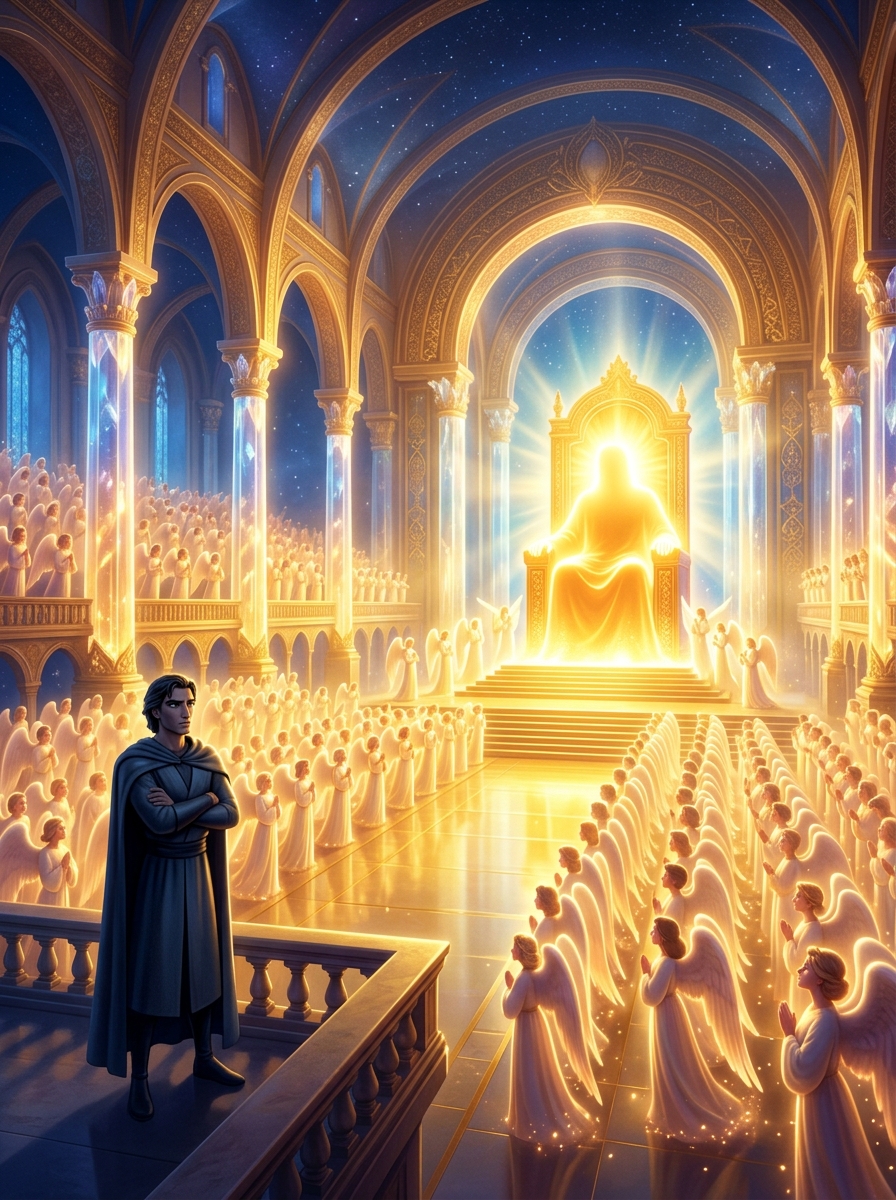
A Meeting in Heaven
One day in heaven, God's angels gathered before Him. Among them came the Adversary — a spirit who tested people. God said, "Have you seen my servant Job? There is no one like him." The Adversary said, "Job only loves you because you protect him. Take away what he has, and he will curse you." God said, "Very well. His life you must not touch."
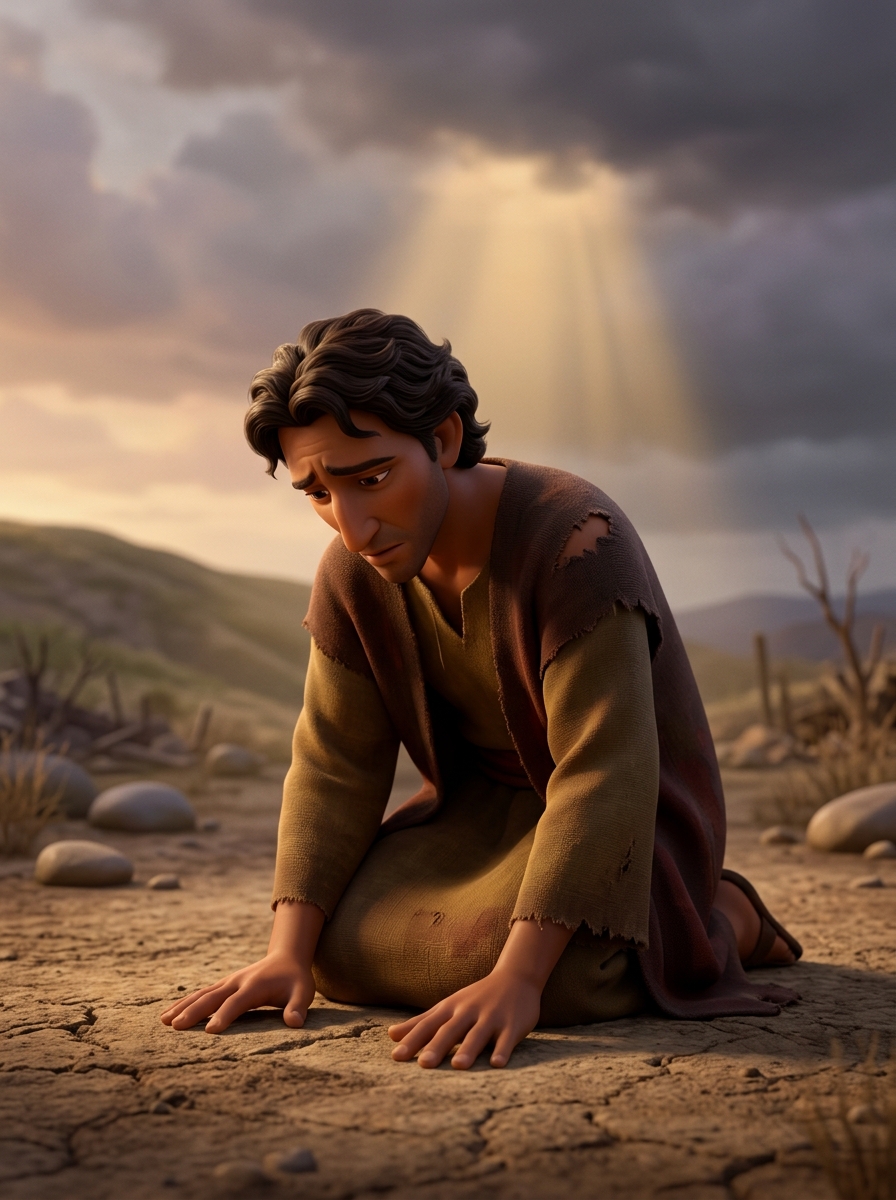
Everything Is Taken Away
Then terrible things happened to Job, one after another. His animals were gone. His servants were dead. His children had all been together in one house when it fell. Job's whole world collapsed in a single day. He tore his robe and fell to the ground. But he did not curse God. He said, "The Lord gives and the Lord takes away. Blessed be the name of the Lord."
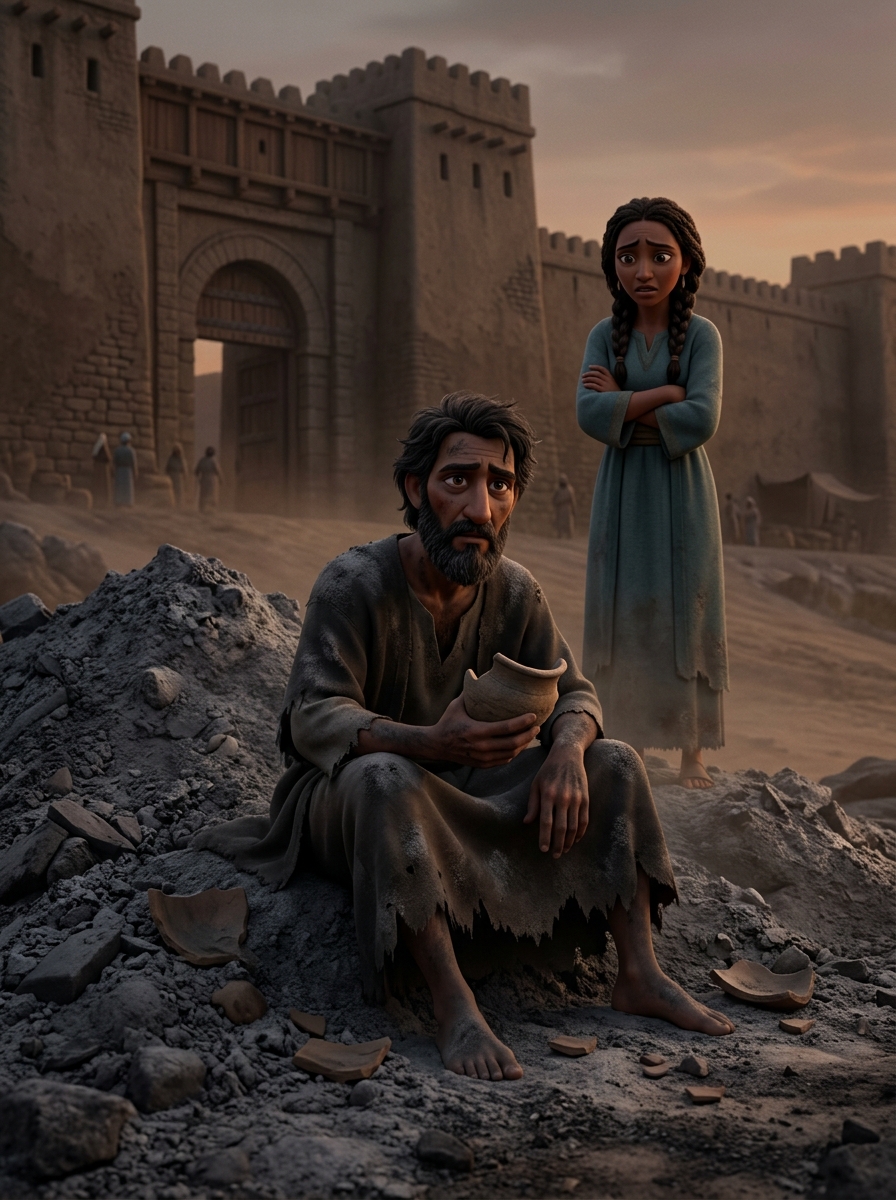
One More Test
The Adversary returned and said, "A man will give anything to save his own life. Strike his body and he will curse you." God allowed it — but his life must not be taken. Job was struck with terrible sores from his head to his feet. He sat in the ashes in great pain. His wife said, "Curse God and die." Job answered, "Should we only accept good from God, and not trouble?" Even now, Job did not sin.
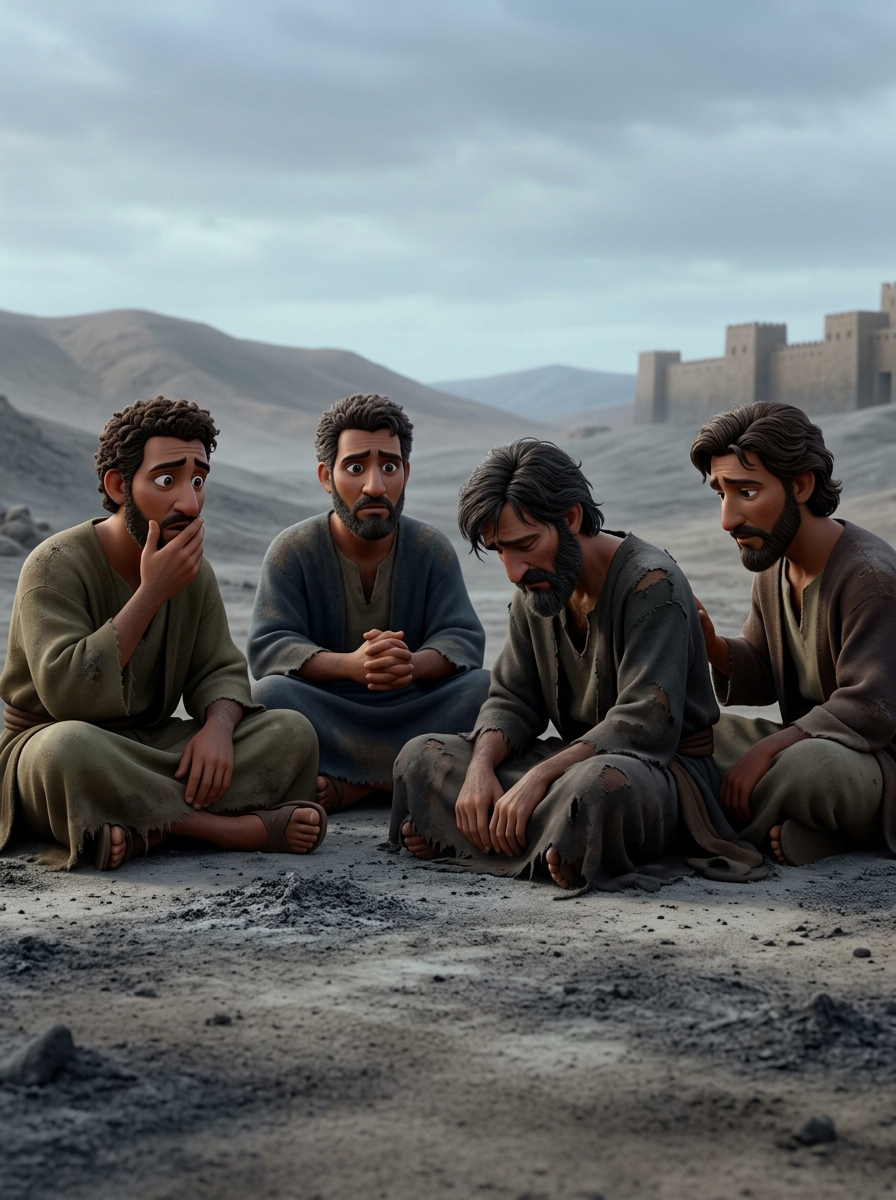
Three Friends Arrive
Job had three friends — Eliphaz, Bildad, and Zophar. When they heard what had happened, they traveled from far away to be with him. When they saw Job, they could hardly recognize him. They sat on the ground with him for seven days and seven nights without saying a word. They could see how great his suffering was.
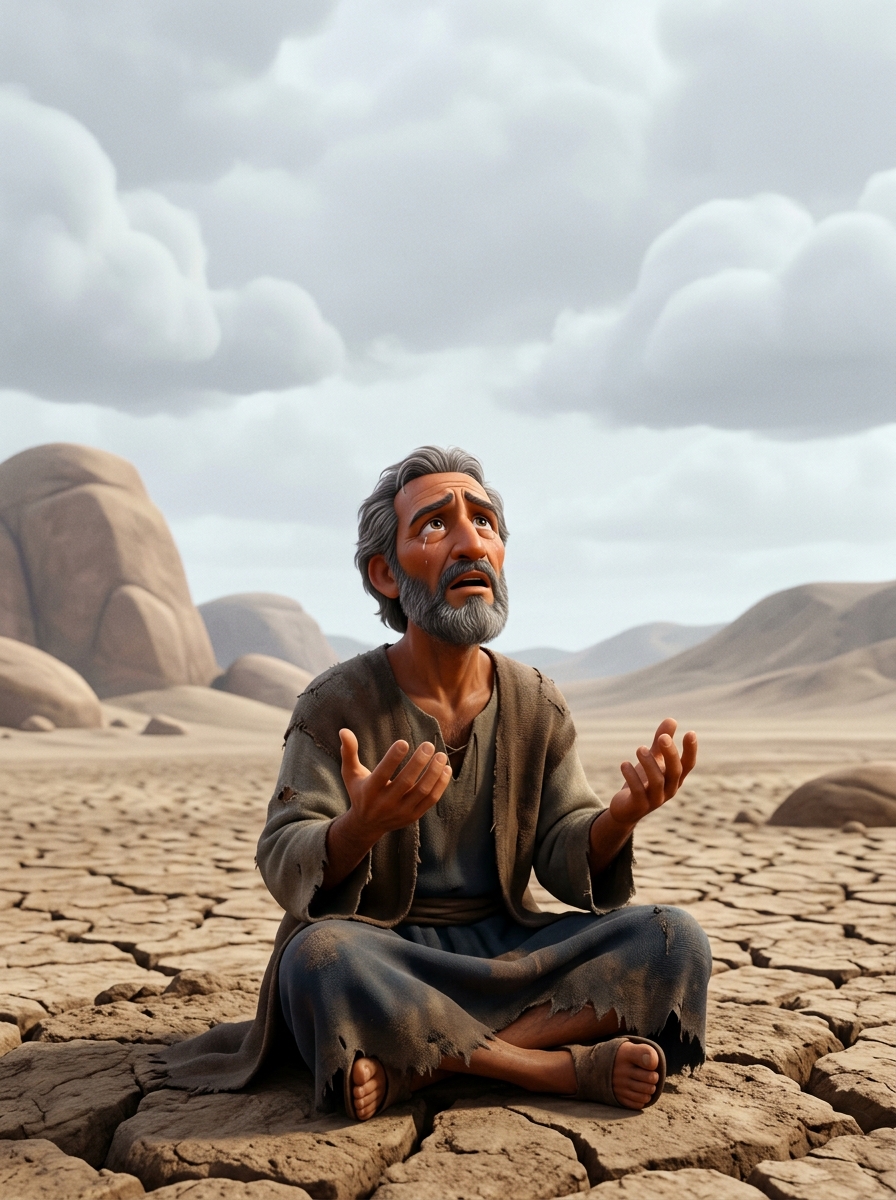
Job Cries Out
After seven days, Job began to speak. He poured out his pain honestly. He said he wished he had never been born. He did not understand why this was happening. He asked God the hard questions that people ask when life feels unbearable. Job was not pretending to be fine. He told God exactly how he felt.
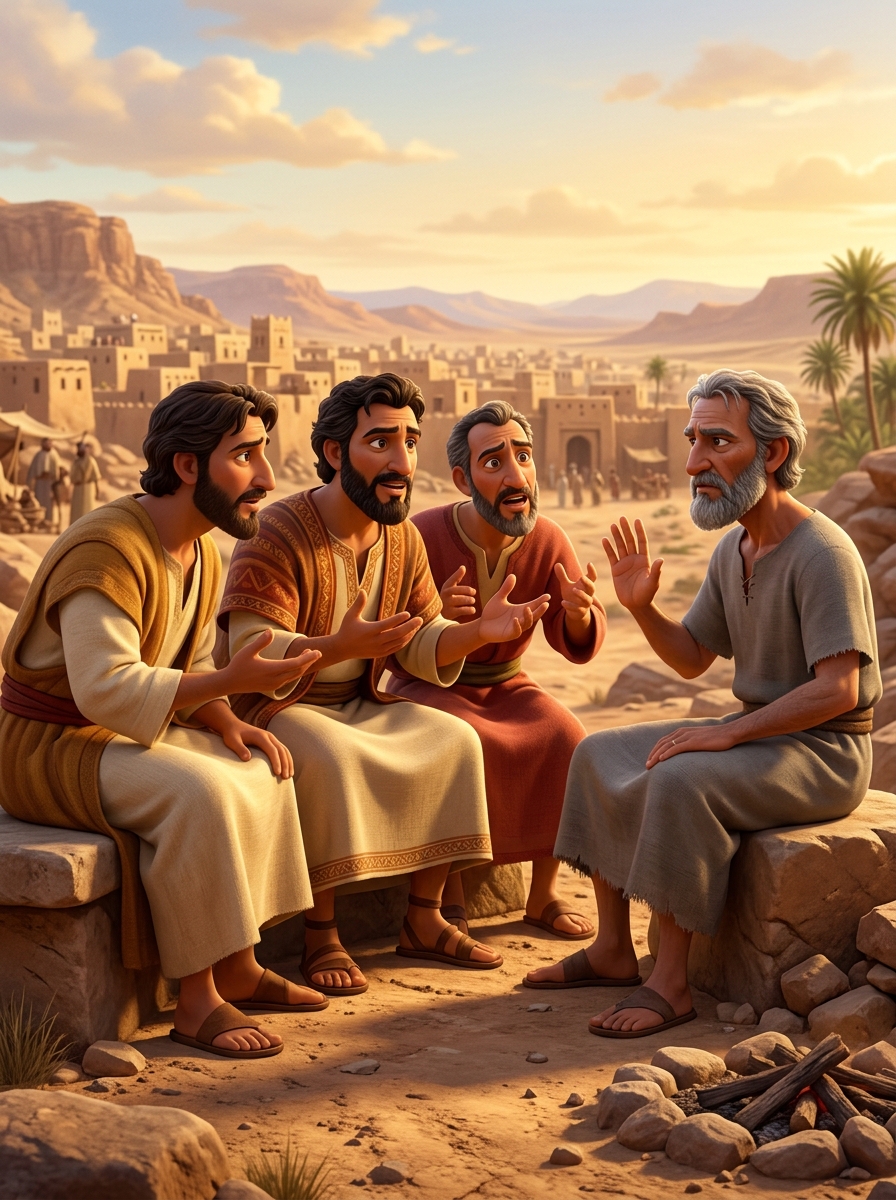
His Friends Give Wrong Answers
Job's three friends began to speak. They were trying to help, but they got it wrong. They said, "Job, you must have sinned. God always punishes the wicked and rewards the good. If you are suffering this badly, you must have done something to deserve it." Job knew that was not true. He pushed back firmly. He had done nothing to deserve this, and he would not pretend otherwise.
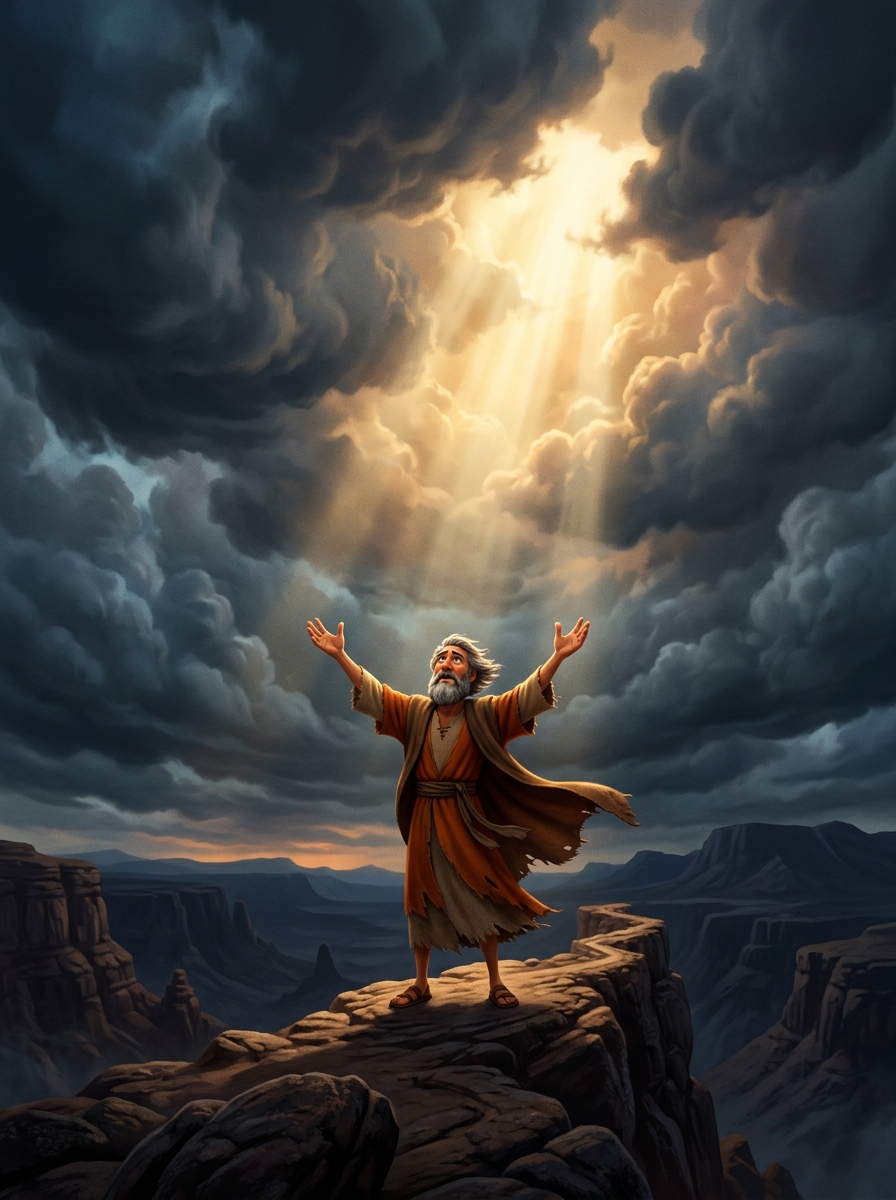
Job Wants to Speak to God
Through all the long arguments, Job kept saying one thing: "I want to speak to God myself. I want to bring my case before Him. I know He is there and He will hear me." Job never stopped believing in God — even when he was angry. Even when he did not understand. He held on.
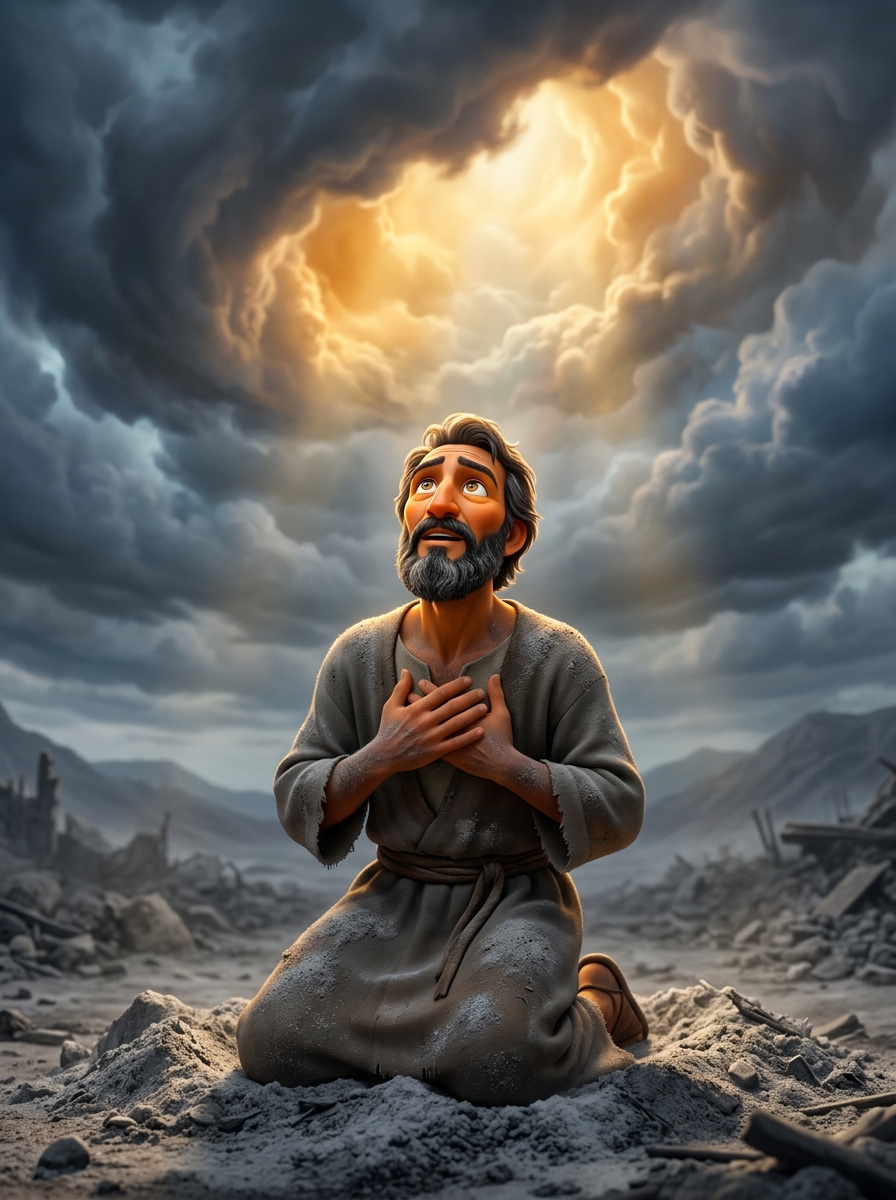
"I Know My Redeemer Lives"
In the middle of his suffering, Job said something extraordinary. "I know that my Redeemer lives. One day I will see God with my own eyes. Even if my body is destroyed, I will still see Him." It was one of the most powerful things anyone in the Old Testament ever said. Job's faith did not disappear in the dark. It burned brighter.
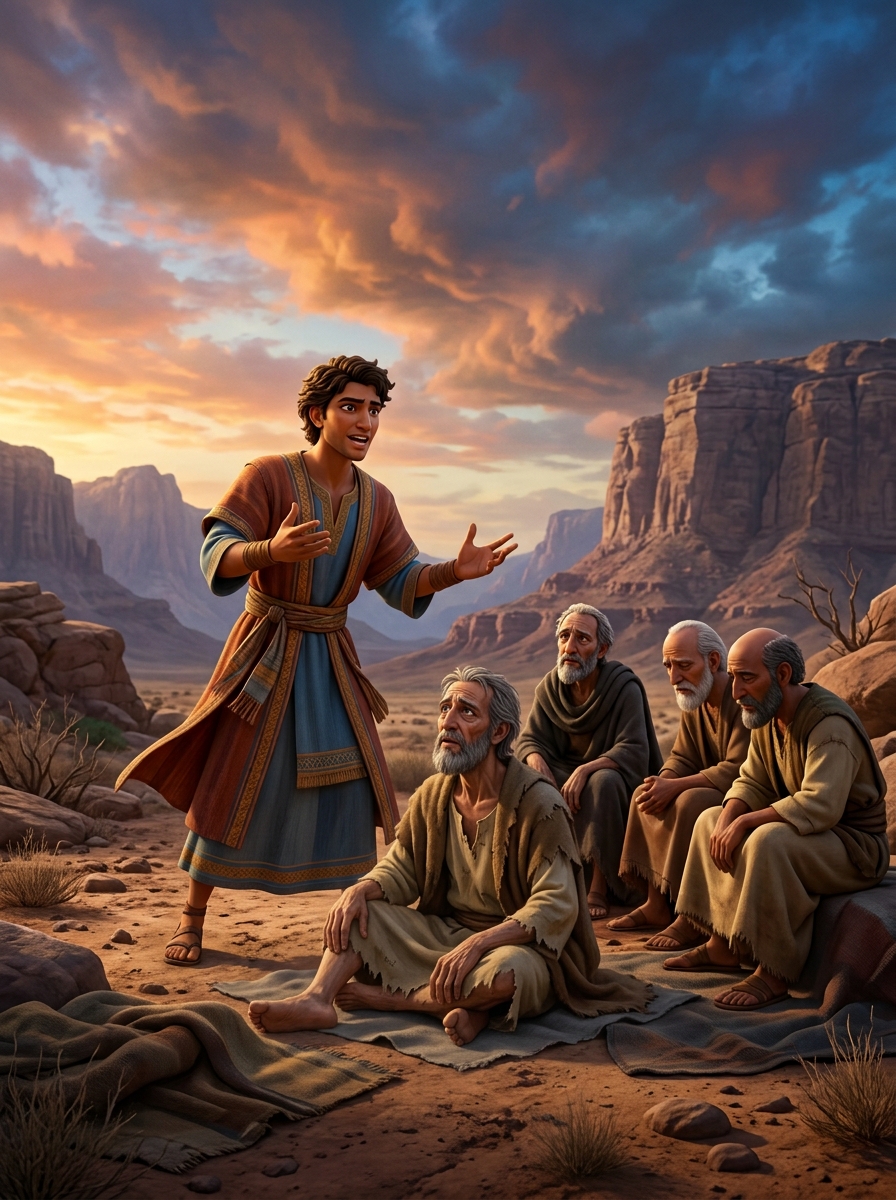
A Young Man Speaks
A young man named Elihu had been listening to the whole argument. He was angry — not at Job, but because the three friends had given wrong answers and none of them had truly explained why suffering happens. Elihu said God sometimes uses hard times to teach, to refine, and to draw people closer to Him. His words were closer to the truth — but even he did not have the whole picture.

God Speaks from the Storm
Then something happened that changed everything. God Himself spoke — out of a great whirlwind. He did not answer Job's questions directly. Instead He asked questions of His own. "Where were you when I made the earth? Who holds the stars in place? Who feeds the lion cubs in the wilderness?" Question after question — not to shame Job, but to show him how vast and wise God truly is.

Creation Answers Job
God kept speaking. He described the morning stars singing. He showed Job the wild animals — the mountain goat, the horse, the eagle. He asked, "Can you hold the Pleiades stars together? Can you command the morning?" Every question was a reminder: God made everything. He holds everything. His wisdom goes far beyond what any person can fully understand. Job listened in silence.
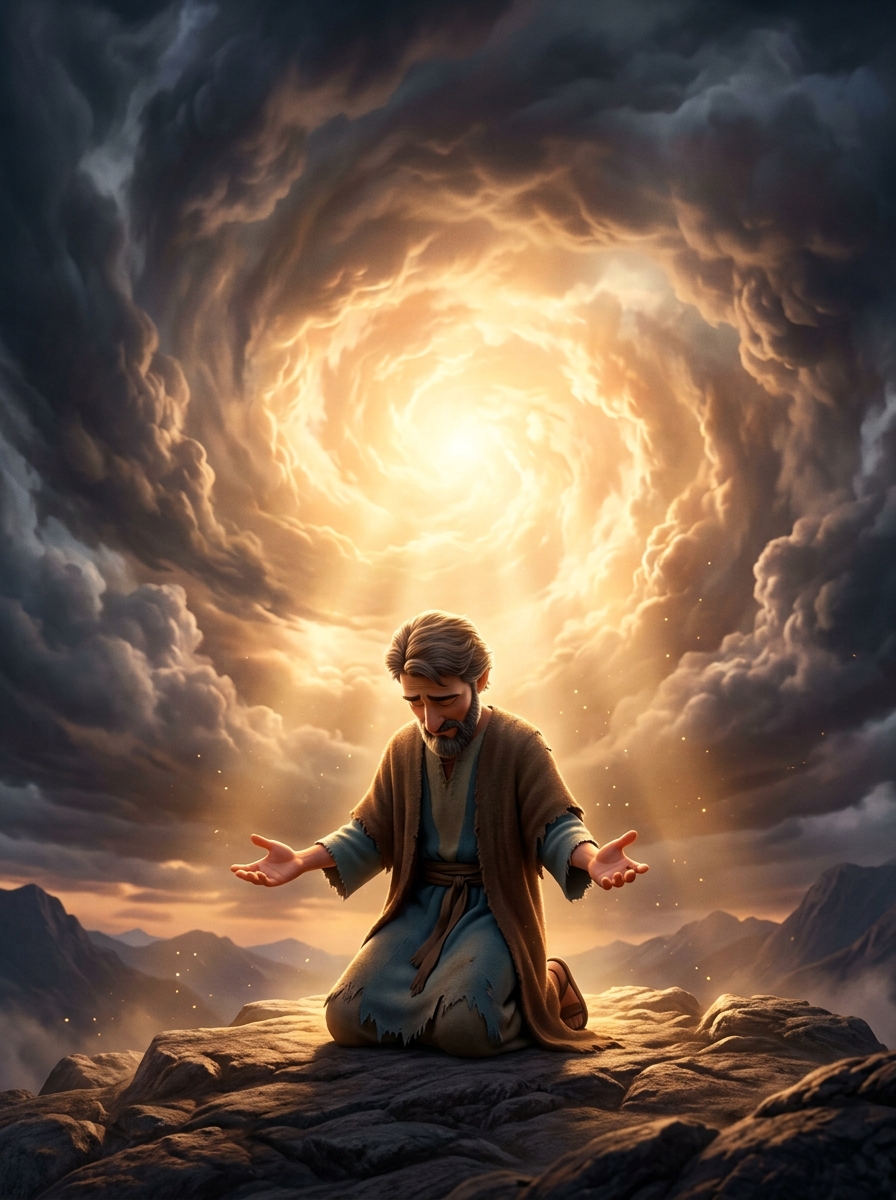
Job Answers God
When God finished speaking, Job was quiet. He said, "I had heard of you with my ears. But now my eyes have seen you." Job understood. He had not been wrong to cry out honestly. But now he could see something he could not see before — how great God truly is, and how much he could trust Him even without all the answers.
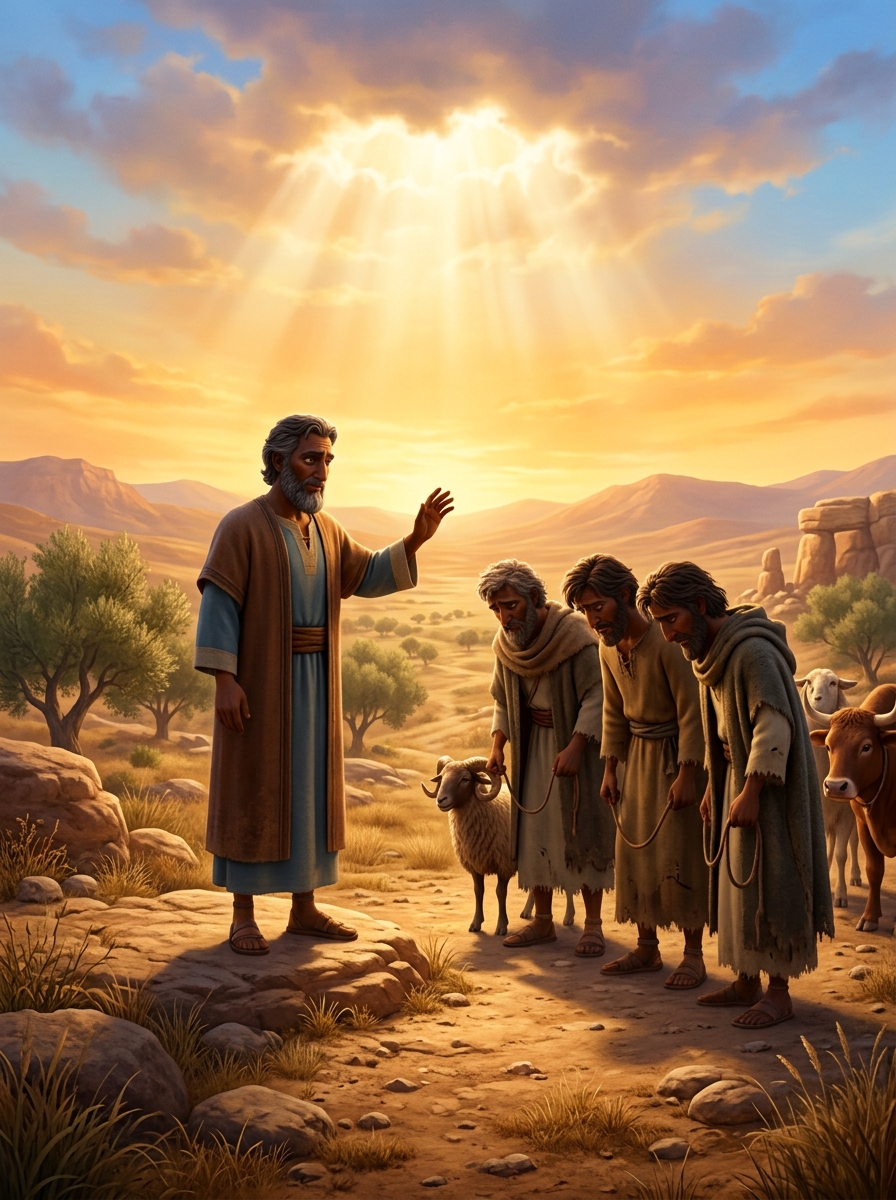
The Friends Are Corrected
After God spoke to Job, He turned to the three friends. "You did not speak the truth about me the way my servant Job did." They had said suffering always means sin. That was wrong, and God was displeased. He told them to go to Job and ask him to pray for them. The man they had lectured would now pray on their behalf. And Job did. He forgave them.
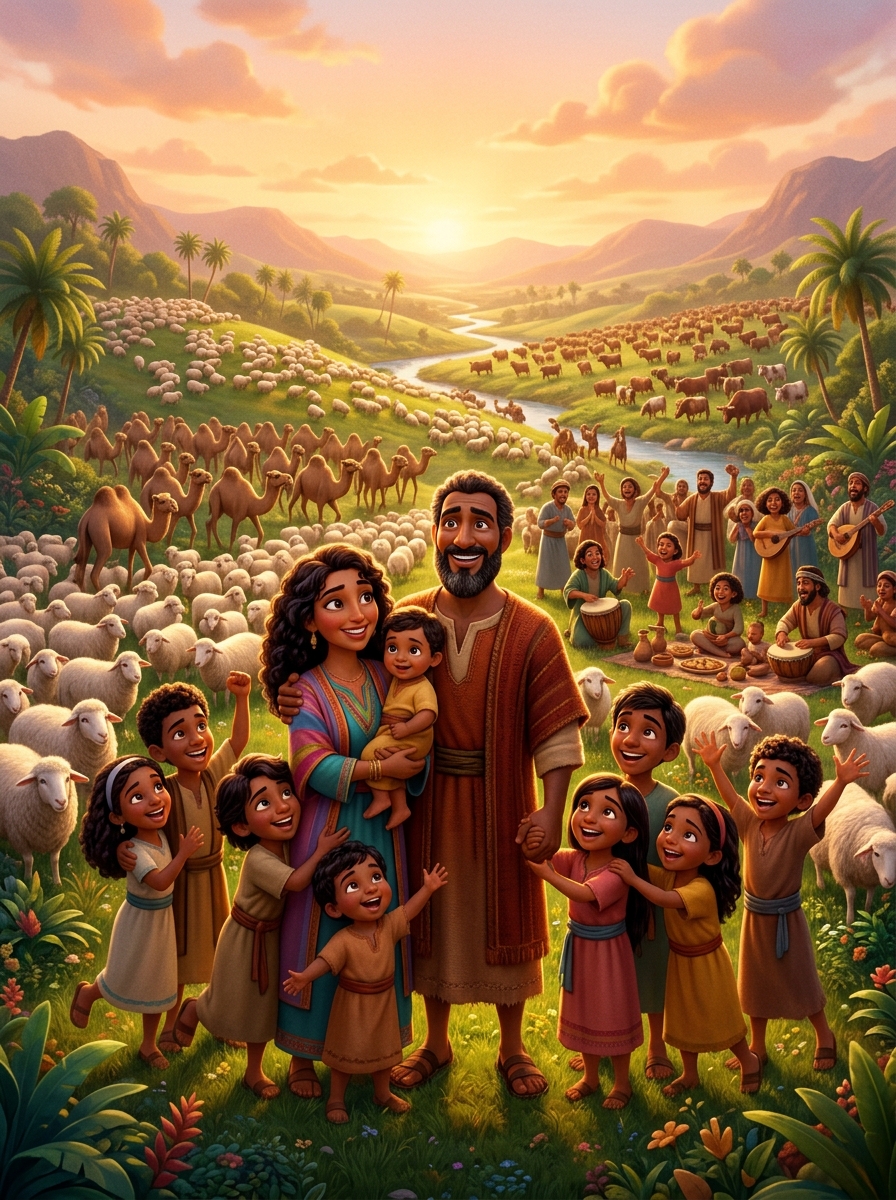
Everything Restored
Then God restored everything Job had lost — and gave him twice as much. His family and old friends returned. He received more animals than before. He had seven sons and three daughters — his daughters said to be the most beautiful in the land. Job lived to be very old. He saw his grandchildren and great-grandchildren. He died full of years and at peace.
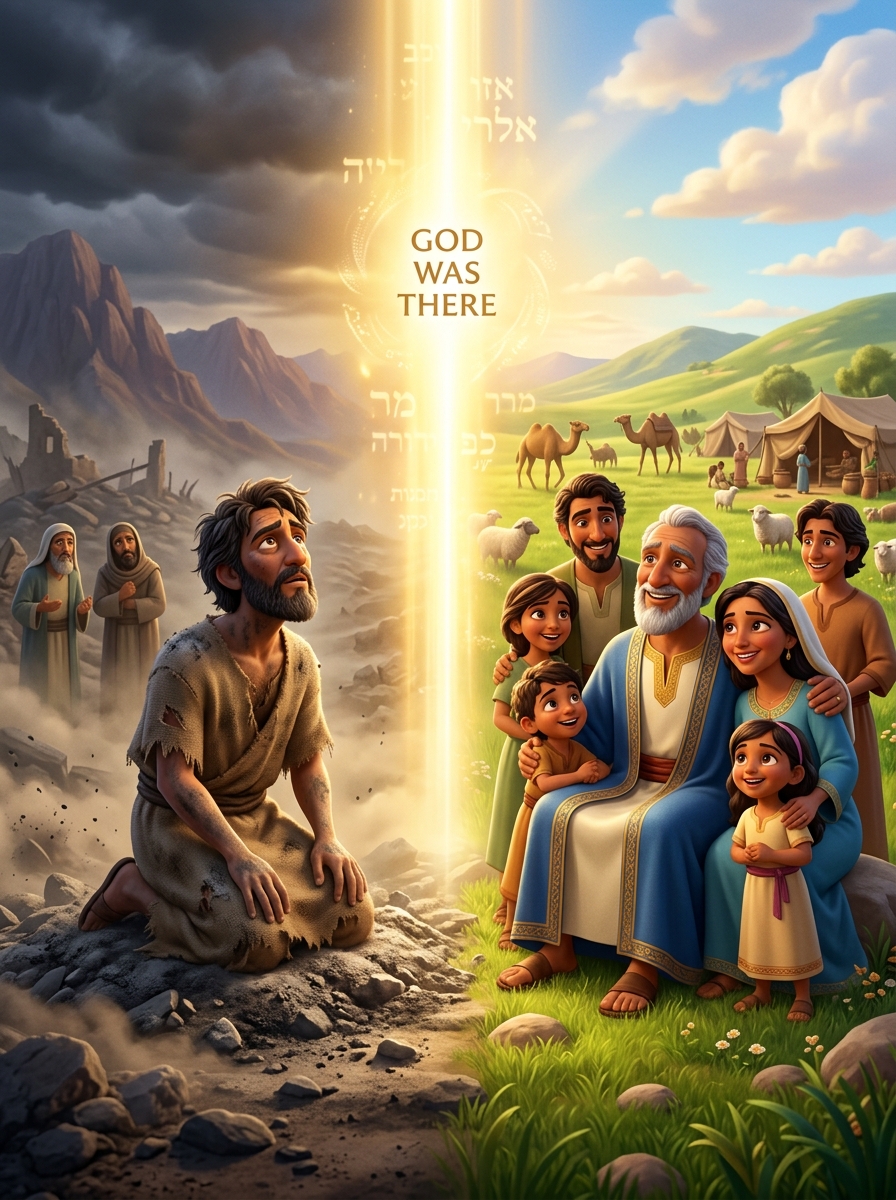
What Job Teaches Us
Job's story is one of the hardest in the Bible — and one of the most honest. It teaches us that good people can suffer. It teaches us that "you must have sinned" is not always the right answer. It teaches us that God can handle our real feelings. And it teaches us that God is so much bigger than our questions — and still worth trusting when we don't have all the answers.
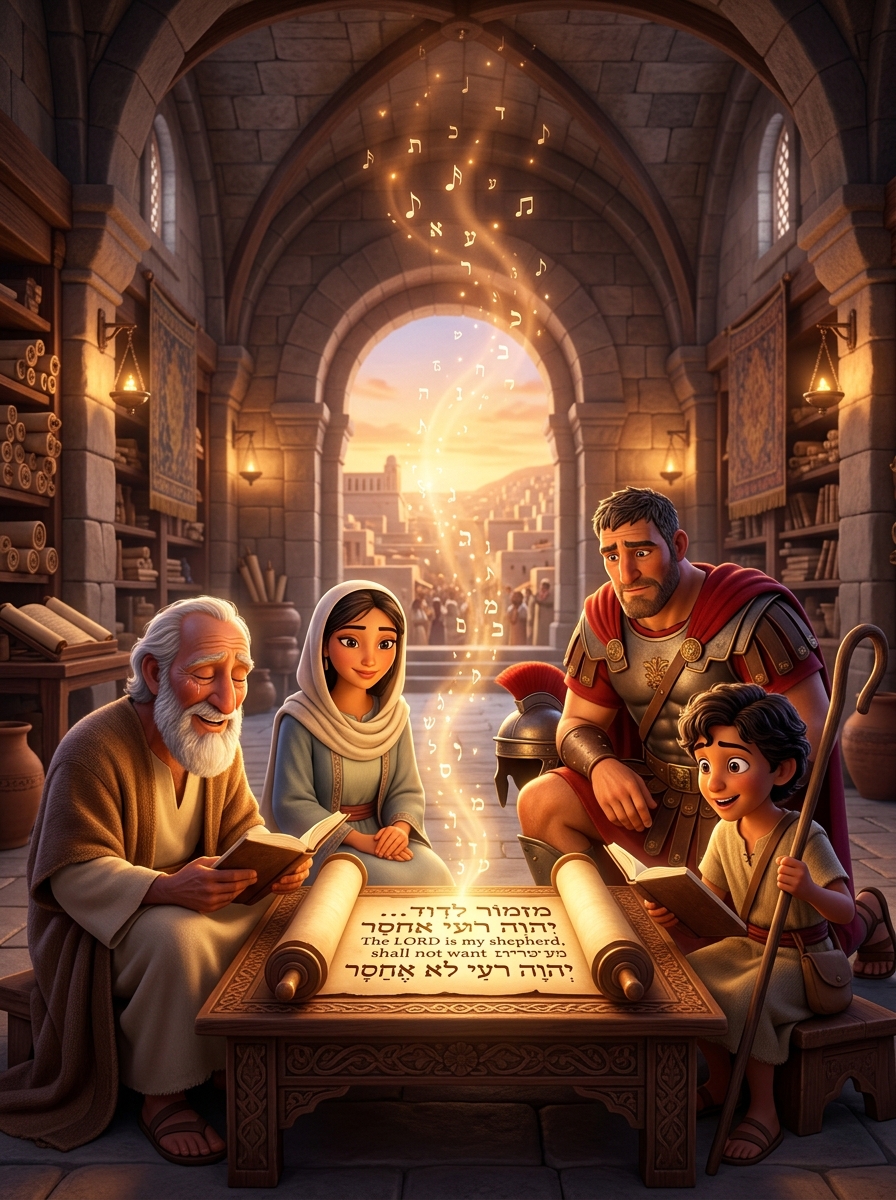
The Book of Songs
The book of Psalms is the songbook of the Bible. It has one hundred and fifty songs — called psalms — written over hundreds of years by many different people. King David wrote most of them. Others were written by Asaph, the Sons of Korah, Moses, and Solomon. Some psalms are full of joy. Some are full of pain. Some are prayers of confession. Some are shouts of praise. Together they cover every feeling a human heart can have — and show that God welcomes all of it. The Psalms are divided into five books, like five collections in one great songbook. Whatever you are feeling today, there is a psalm for it.

Book One — Blessed Is the One
The first book of Psalms runs from Psalm 1 to Psalm 41. It opens with a picture of two paths — the path of the righteous and the path of the wicked — and asks which one we will walk. Many of these psalms were written by David during hard times — when he was being chased by enemies, when he felt alone, when he cried out to God in the night. But again and again, they turn toward trust. Psalm 8 marvels at the stars and asks why God would care about people at all. Psalm 19 says the heavens shout God's glory without using a single word. Psalm 34 says, "Taste and see that the Lord is good." Book One teaches us that the life of faith is not always easy — but God is always near.

Psalm 23 — The Lord Is My Shepherd
Psalm 23 is the most loved song in the whole Bible. David wrote it thinking about how a shepherd cares for his sheep. He said God is his shepherd — the one who leads him to green fields and quiet water, who restores his soul when he is tired, who guides him on the right path. Even in the darkest valley, David said he would not be afraid — because God was with him. His rod and staff were comfort, not threat. God prepares a table even in the middle of enemies. Goodness and mercy follow every single day. And one day David would live in God's house forever.
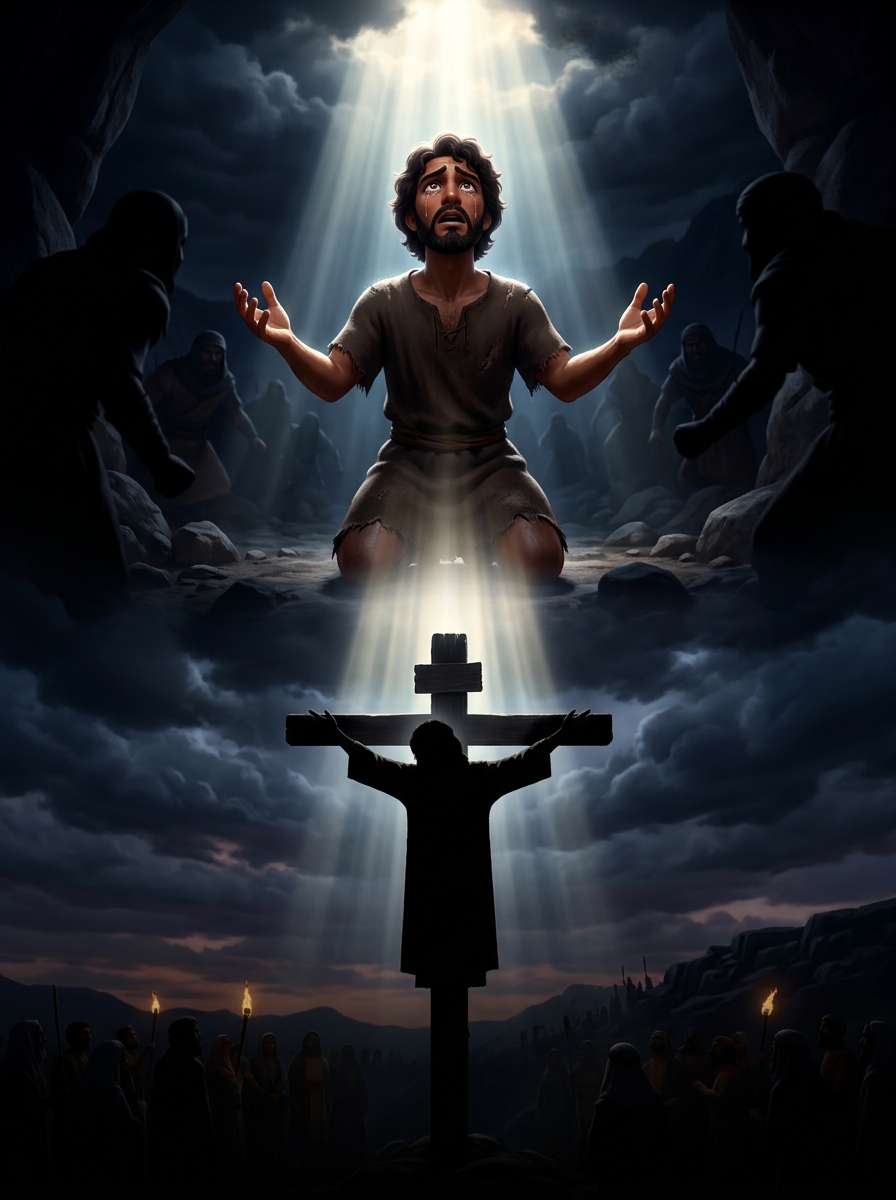
Psalm 22 — My God, My God, Why?
Psalm 22 is one of the most extraordinary psalms in the Bible — because it describes something David felt, but also something that would happen to Jesus one thousand years later. David cried out, "My God, my God, why have you forsaken me?" He described people mocking him, his hands and feet pierced, soldiers dividing his clothing by lot. David wrote these words about his own suffering — but they became a prophecy. When Jesus hung on the cross, he cried out the very first line of this psalm. God hears even the darkest cry. And He answers.
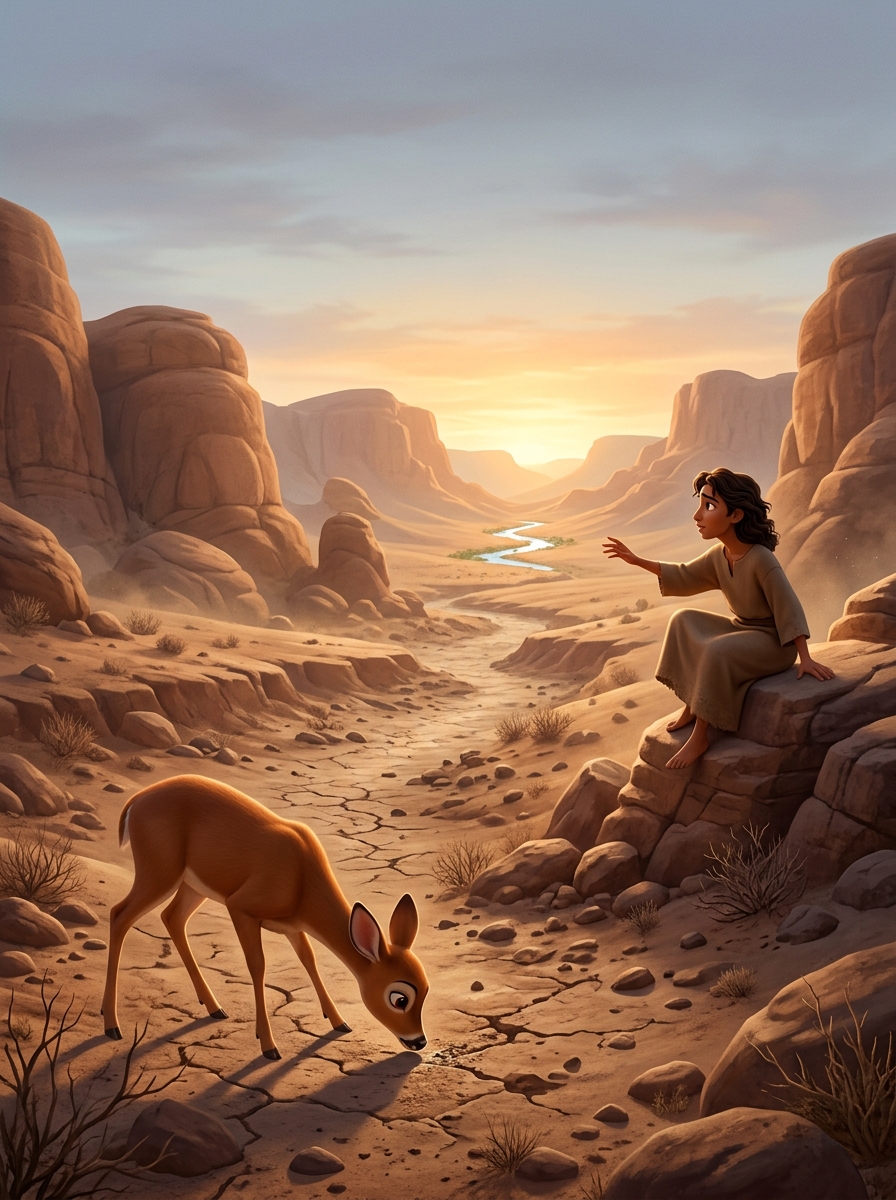
Book Two — As the Deer Longs
The second book of Psalms runs from Psalm 42 to Psalm 72. It opens with one of the most honest lines in all of Scripture — "As the deer pants for streams of water, so my soul pants for you, my God." These psalms were written in exile, in longing, in the deep ache of feeling far from God. Psalm 46 says God is a refuge and strength — an ever-present help in trouble. Psalm 63 says longing for God is like thirsting in a dry desert. Book Two does not pretend that faith is always full of joy. Sometimes it is a thirst. Sometimes it is a reaching. And God meets us there too.
Psalm 51 — Create in Me a Clean Heart
Psalm 51 is David's prayer of repentance after the worst thing he ever did. He had sinned against Bathsheba and her husband Uriah, and when the prophet Nathan confronted him, David did not make excuses. He brought his full shame to God. He said, "Have mercy on me, God, according to your unfailing love. Wash away all my wrongdoing." He asked God not to cast him away. He asked for a clean heart — a new spirit. God did not throw David away. He forgave him. Psalm 51 teaches us that no sin is too great for God's mercy, and that honest confession opens the door to restoration.

Book Three — How Long, O Lord?
The third book of Psalms runs from Psalm 73 to Psalm 89. These are some of the hardest psalms in the Bible. Psalm 73 opens with a writer who almost lost his faith — watching wicked people succeed and wondering if following God was worth it. Psalm 88 is the darkest psalm in the whole book — it ends with the word "darkness" and no resolution. Not every psalm ends with praise. Some end with the question still hanging in the air. Book Three teaches us something important — that the Bible is honest. God is not afraid of our hardest questions. He does not require us to pretend.

Psalm 91 — Under His Wings
Psalm 91 is a psalm of shelter and protection. It pictures God as a great bird spreading wings over those who trust Him — a place to hide from every storm. "He who dwells in the shelter of the Most High will rest in the shadow of the Almighty." It promises that God will command His angels to guard those who love Him. It does not promise that nothing hard will ever happen — but it promises that God will be with us through it. A thousand may fall at our side, but we will not face any of it alone. This psalm has been prayed by God's people in every danger, in every century, all the way to today.

Book Four — From Everlasting to Everlasting
The fourth book of Psalms runs from Psalm 90 to Psalm 106. It opens with the only psalm written by Moses — Psalm 90 — one of the oldest songs in the Bible. Moses wrote about how short human life is compared to God's eternity. "A thousand years in your sight are like a watch in the night." Book Four also contains Psalm 100 — the great shout of joy: "Shout for joy to the Lord, all the earth!" And Psalm 105 retells the whole story of Israel from Abraham to the Promised Land — reminding the people of everything God has done. Book Four lifts our eyes from our short lives to God's eternal faithfulness.
Psalm 103 — Bless the Lord, O My Soul
Psalm 103 is David's great song of gratitude. He begins by telling his own soul to wake up and remember what God has done. "Bless the Lord, O my soul, and forget not all His benefits." God forgives every sin. God heals. God redeems life from destruction. God crowns us with love and compassion. He does not treat us as our sins deserve. As far as the east is from the west — that is how far He has removed our wrongdoing from us. He knows we are dust. He loves us anyway. Psalm 103 is a prescription for a forgetful heart — a command to remember, and be grateful.
Book Five — Give Thanks to the Lord
The fifth and final book of Psalms runs from Psalm 107 to Psalm 150. It is the longest and most celebratory of the five books. It opens with, "Give thanks to the Lord, for He is good — His love endures forever." Psalm 110 is the most quoted psalm in the New Testament — a prophecy about a coming king who is also a priest. The Songs of Ascent (Psalms 120–134) were sung by pilgrims walking up to Jerusalem for the great feasts. Book Five builds and builds toward one great climax — a final explosion of praise that ends the entire book.

Psalm 119 — Your Word Is a Lamp
Psalm 119 is the longest chapter in the entire Bible — 176 verses. Every section is devoted to one theme: the word of God. The writer loved God's commands, His laws, His promises. He said God's word was a lamp to his feet and a light to his path — when he did not know what was ahead, the word showed him the next step. He hid God's word in his heart so he would not sin. He meditated on it day and night. Psalm 119 teaches us that Scripture is not just information — it is a living companion for the journey, available to anyone who will read it.

Psalm 139 — You Knew Me Before I Was Born
Psalm 139 is one of the most personal psalms in the Bible. David marvelled that God knew everything about him — when he sat down, when he stood up, every word before he spoke it. He said there was nowhere in all of creation he could go to escape God's presence — not the highest heaven, not the deepest sea, not the darkest night. And then he said something extraordinary — God knew him before he was born. While he was still being formed, God saw him. Every day of his life was written in God's book before a single one of them arrived. We are not accidents. We are known.
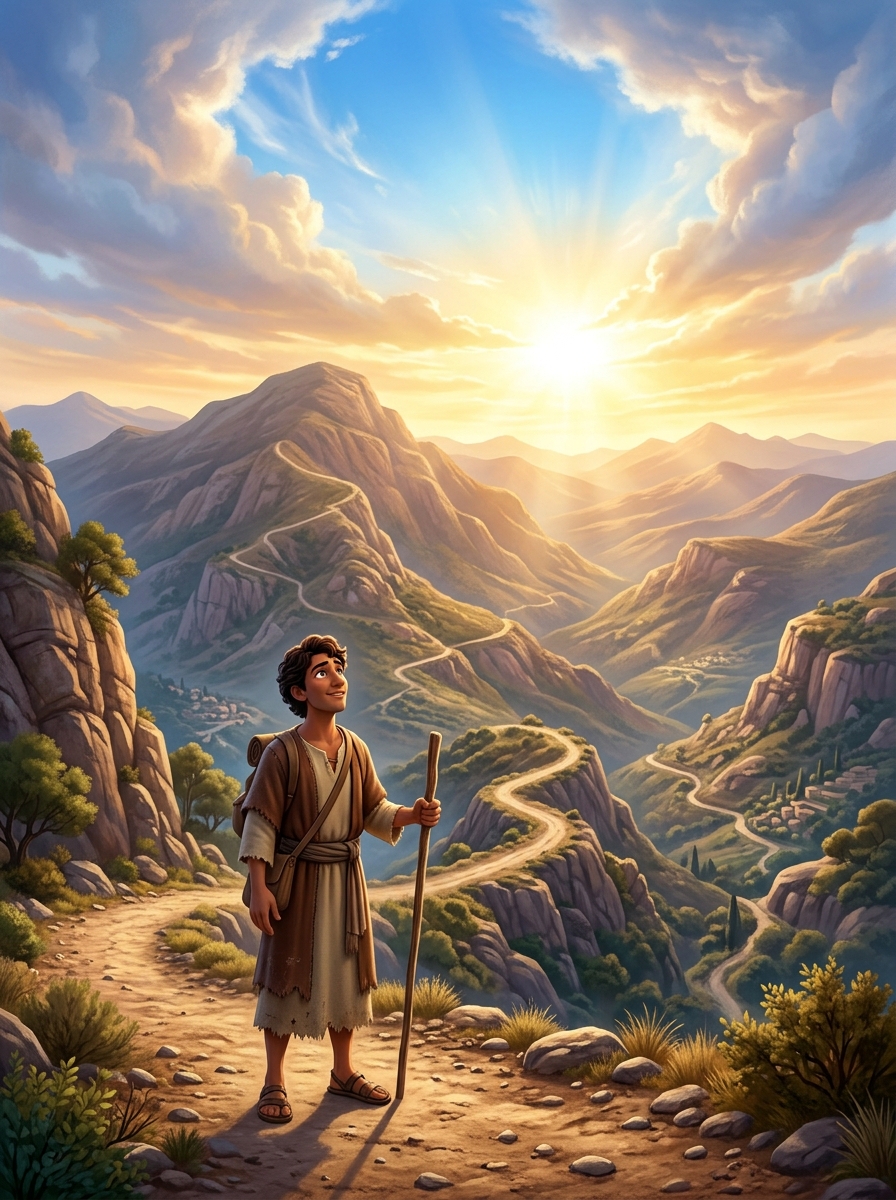
Psalm 121 — I Lift My Eyes to the Hills
Psalm 121 was one of the Songs of Ascent — sung by pilgrims walking toward Jerusalem. The hills were both beautiful and dangerous — bandits hid in them, the journey was long. David lifted his eyes to the hills and asked, "Where does my help come from?" Then he answered his own question: "My help comes from the Lord, the Maker of heaven and earth." God does not sleep. He does not slumber. He watches over every step — going out and coming in — now and forever. It is a short psalm. It is a complete psalm. Everything a traveller needs to know is in eight verses.
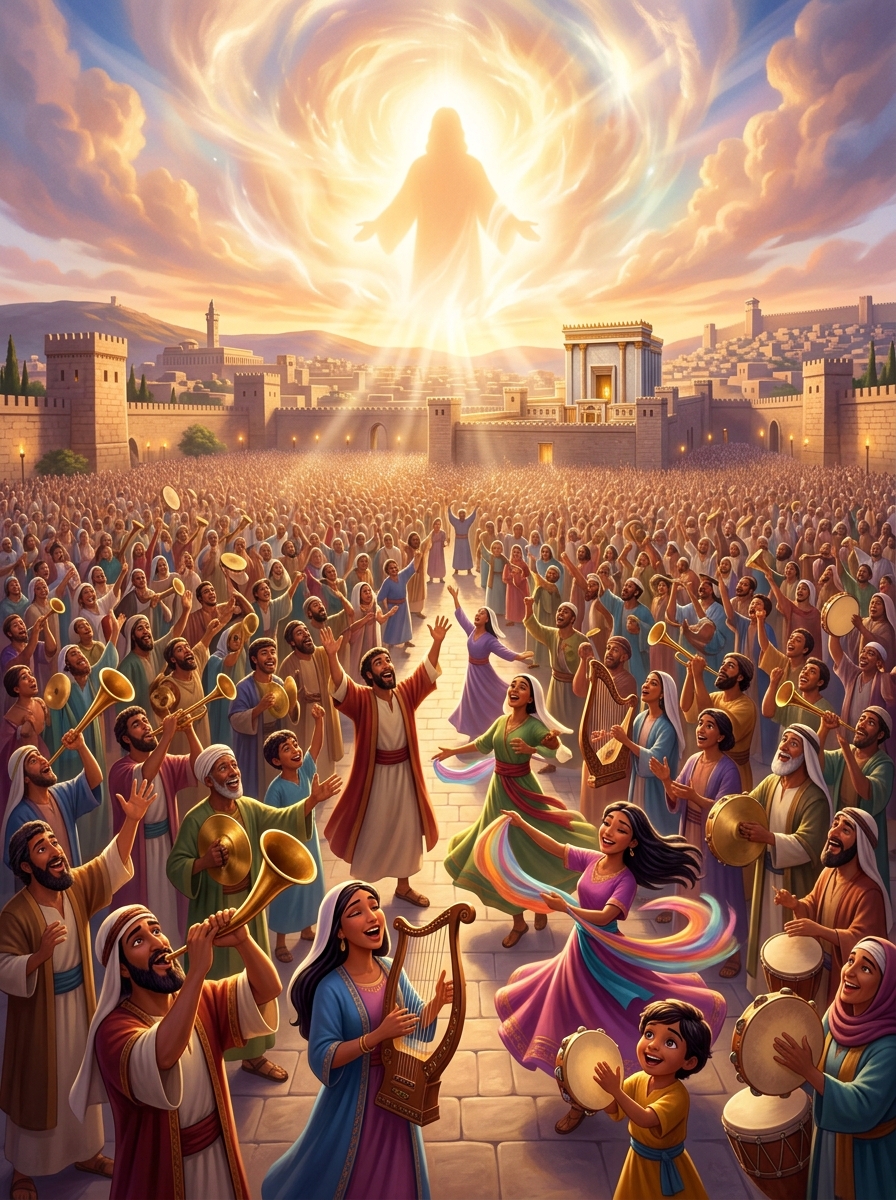
Psalm 150 — Let Everything Praise the Lord
The book of Psalms ends the way it was always building toward — a final, full, unstoppable explosion of praise. Psalm 150 says praise God in His sanctuary. Praise Him in the mighty heavens. Praise Him for His acts of power. Praise Him with trumpet and harp, with dancing and strings, with clash of cymbal. Then the last line of the last psalm of the whole book: "Let everything that has breath praise the Lord." Every instrument. Every voice. Every creature that breathes. The book that began with one man on a quiet path ends with the whole creation singing. This is where all worship leads.
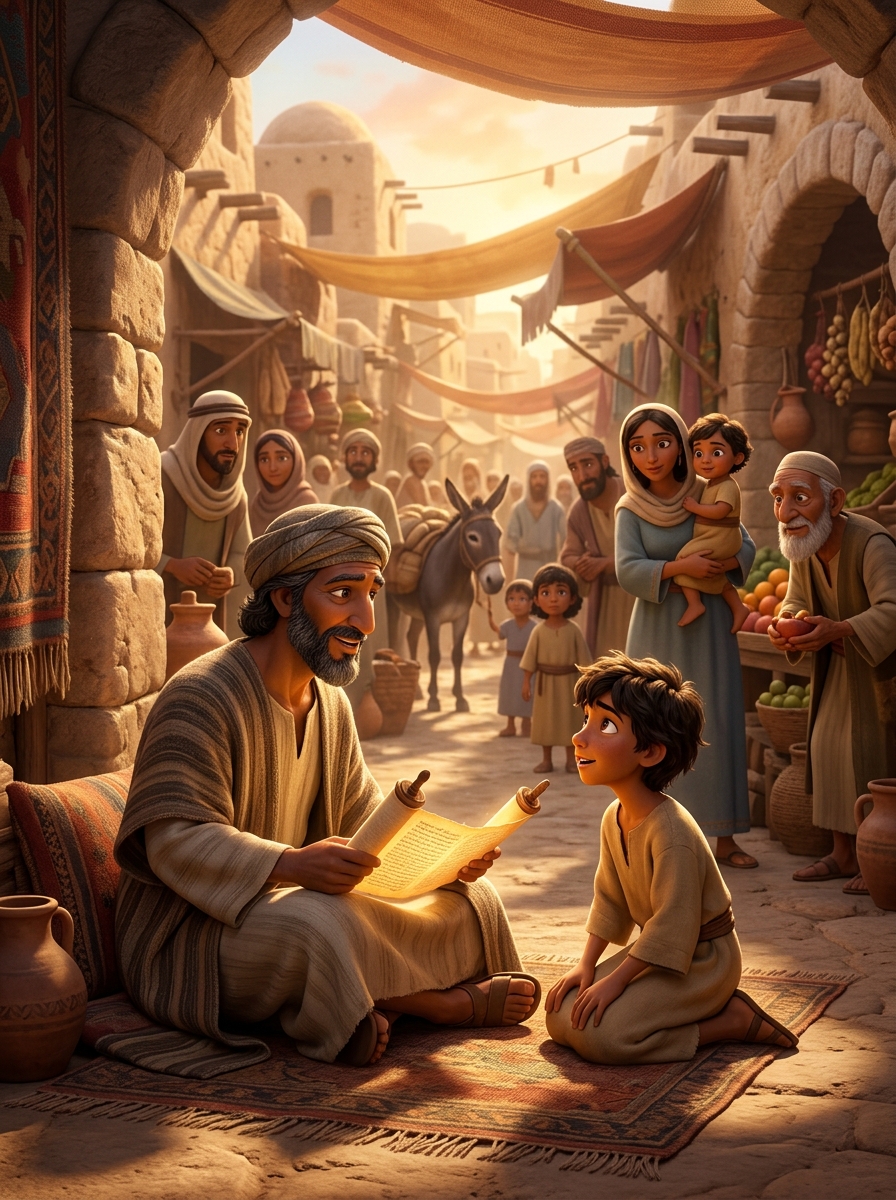
The Book of Wisdom
The book of Proverbs is the Bible's collection of wisdom — short, sharp sayings about how to live well. Most of it was written by King Solomon, the wisest man who ever lived. Some was written by men named Agur and King Lemuel. Proverbs is not a story with a beginning and an end. It is more like a toolbox — full of practical tools for real life. How to speak. How to work. How to treat people. How to handle money. How to make good decisions. The book opens with a promise: wisdom is available to anyone who wants it. All you have to do is begin.
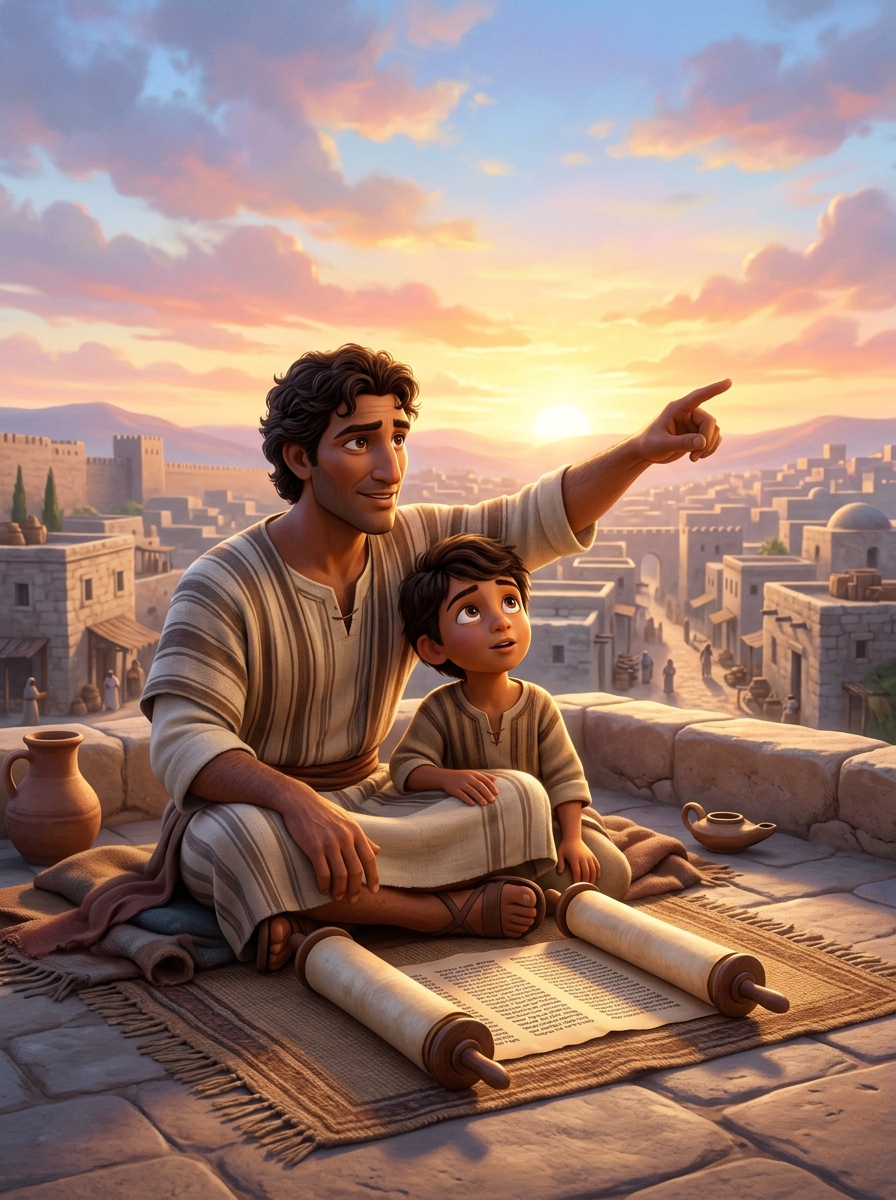
The Fear of the Lord
Proverbs opens with the most important line in the whole book: "The fear of the Lord is the beginning of wisdom." This does not mean being terrified of God. It means taking God seriously. Treating Him as real. Living as if He is watching — because He is. Solomon wrote these opening chapters as a father speaking to his son. He said: get wisdom above everything else. Love wisdom the way you love something precious. Guard her. She will protect you all your life. The person who ignores wisdom is like someone walking off a cliff in the dark. The person who listens is like someone walking in full daylight.
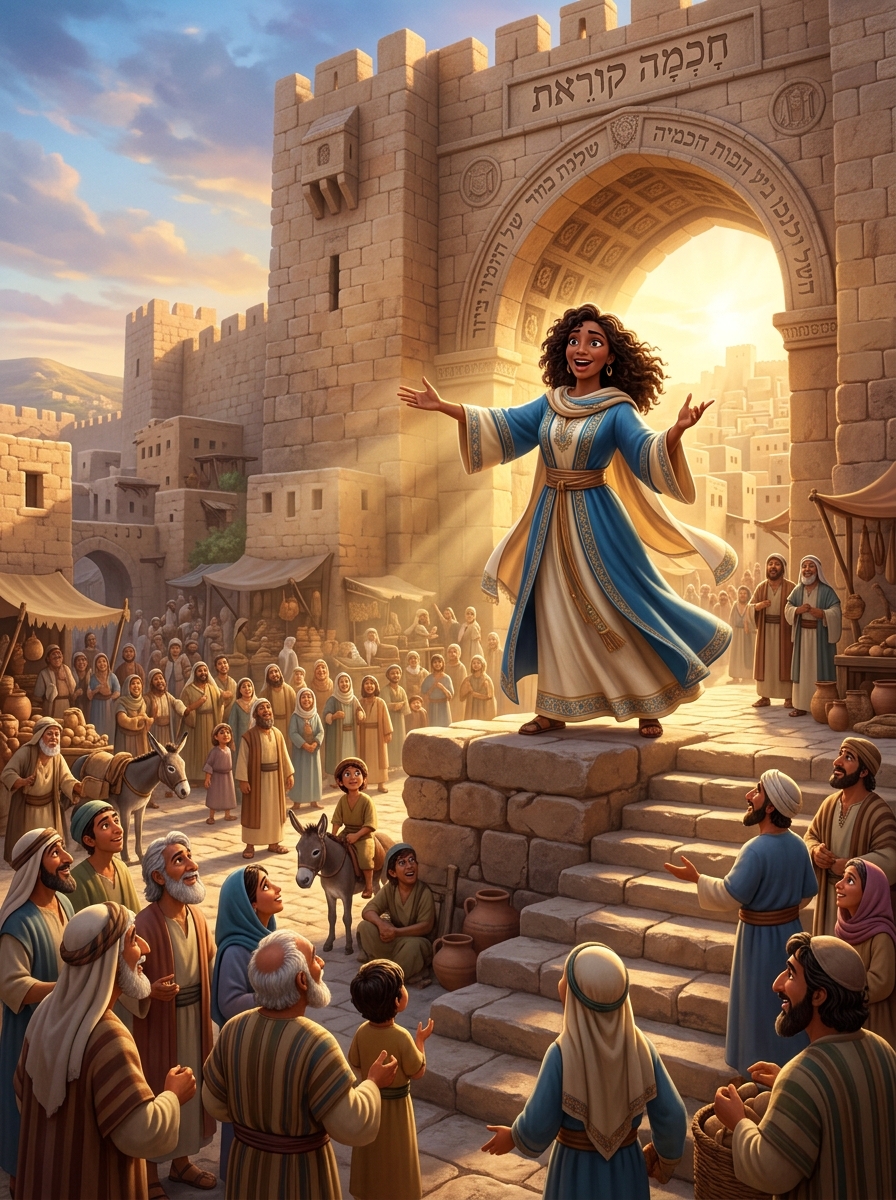
Wisdom Calls Out
In Proverbs 8, wisdom is pictured as a woman standing in the most public place in the city — at the gates, at the crossroads — calling out to anyone who will listen. She is not hiding. She is not hard to find. She is shouting. She says, "I love those who love me. Those who seek me find me." She says she was there at the very beginning — when God made the world, she was beside Him. Wisdom is not a human invention. It comes from God Himself. And it is offered freely to anyone willing to stop and listen.

Watch Your Words
More proverbs deal with the tongue than almost any other topic. Solomon said the tongue has the power of life and death. Kind words are like honey — sweet and healing. Harsh words crush a spirit. A lie destroys trust. A gentle answer turns away anger but a harsh word stirs up a fight. Gossip spreads like fire and burns everything it touches. The person who guards their mouth guards their life. And the wisest thing a person can sometimes do is stay completely quiet. Even a fool seems wise when they stop talking.
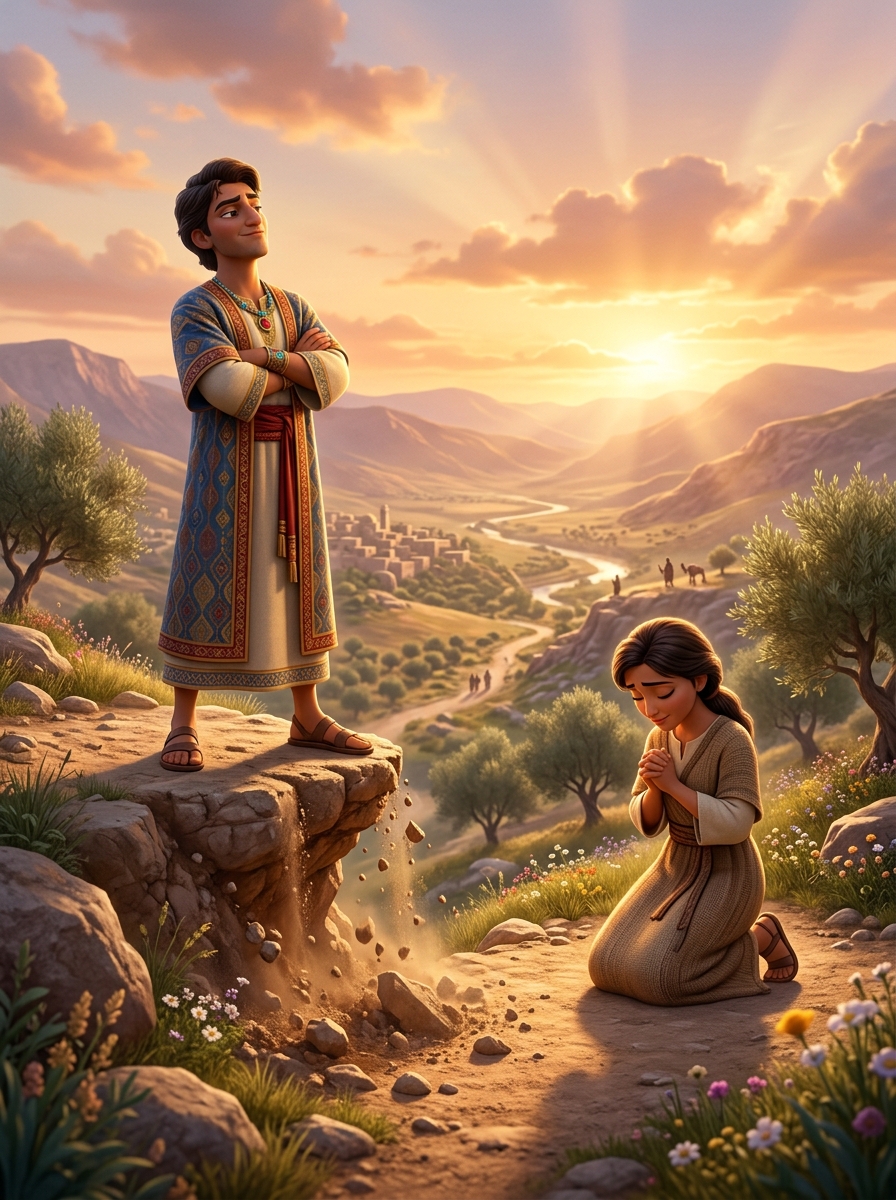
Pride and Humility
Proverbs is very clear about pride. "Pride goes before destruction, and a haughty spirit before a fall." The person who thinks they are better than everyone else is heading for a crash. But humility — knowing your own limits, being willing to learn, not needing to be the most important person in the room — that is where wisdom lives. Solomon said it is better to be lowly among the poor than to divide the spoils with the proud. God opposes the proud. He gives grace to the humble. Proverbs says this in many different ways because people need to hear it many different times.
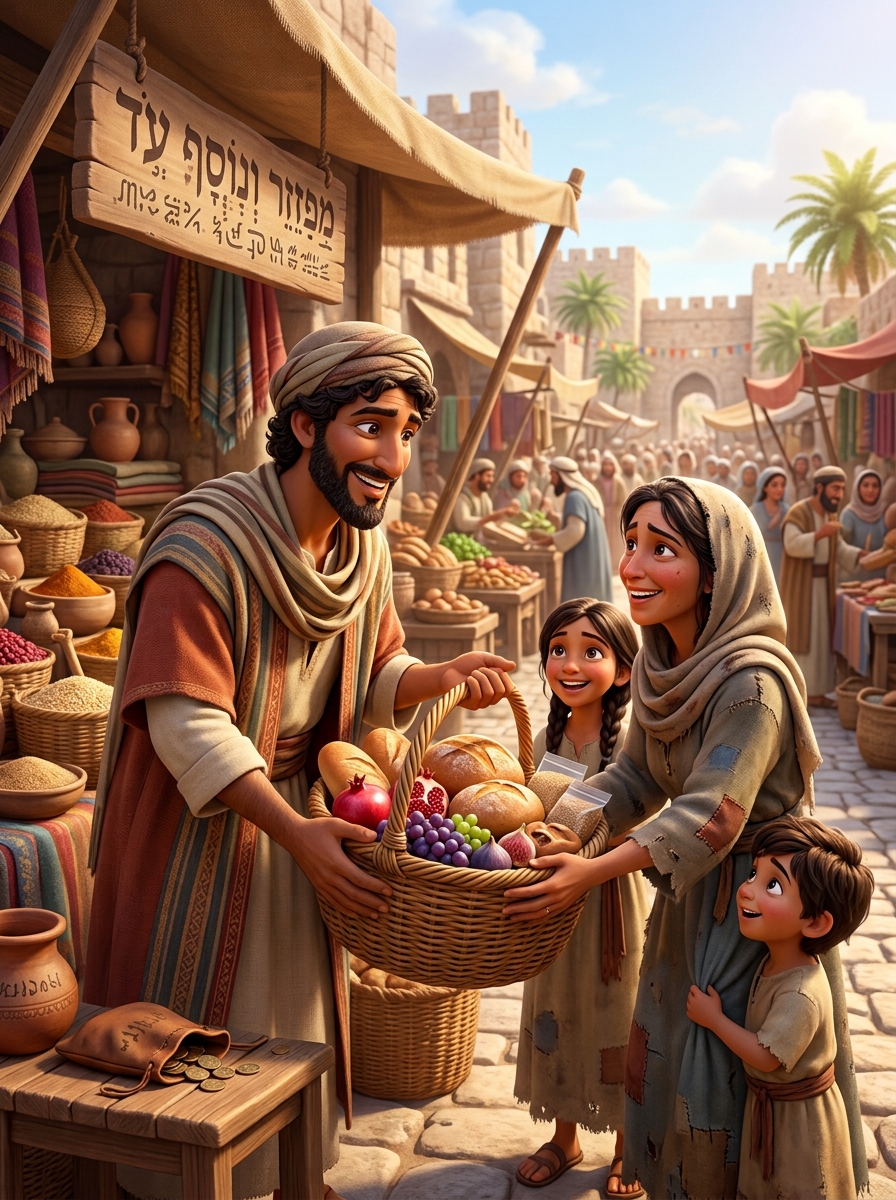
Money and Generosity
Proverbs has a lot to say about money — and almost none of it is about getting more. Solomon said wealth gained dishonestly disappears fast, but what is earned slowly and honestly grows. He said the generous person will prosper — the one who gives freely ends up with more, not less. He said do not wear yourself out chasing riches. He said it is better to have little with integrity than great wealth with injustice. And he said if you ignore the poor when they cry for help, one day you will cry for help and no one will answer. Generosity is wisdom made visible.
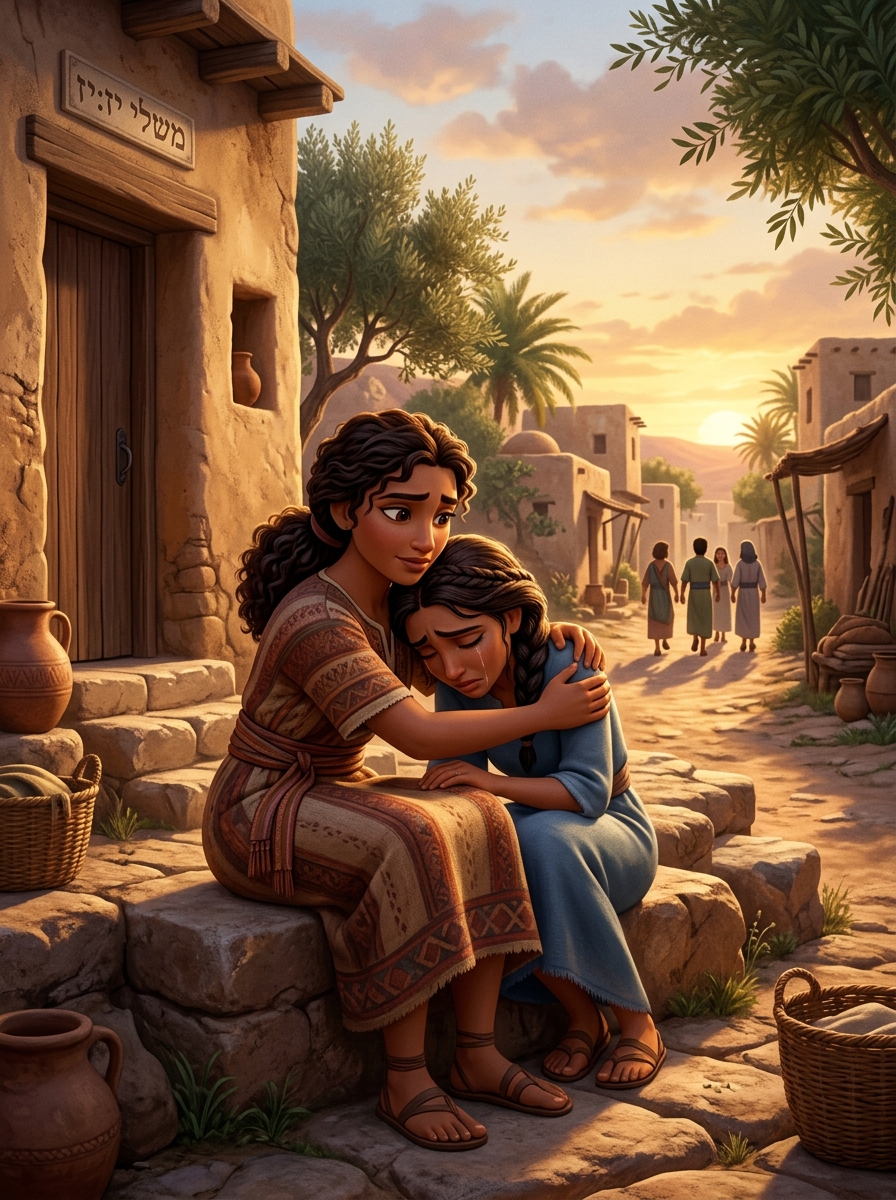
True Friendship
Proverbs says a true friend loves at all times — not just when life is easy. A brother is born for a time of trouble. The person who has one truly loyal friend is wealthy in the way that matters. But Proverbs also warns about bad company. "Walk with the wise and become wise — the companion of fools suffers harm." Do not make friends with someone given to anger or you will learn their ways and set a trap for yourself. The people around you shape who you become. Choose them carefully. And be the kind of friend you wish you had.

Work and the Ant
Proverbs sends lazy people to watch an ant. The ant has no commander, no overseer, no boss standing over it — and yet it stores food in summer and gathers its harvest in autumn. It does what needs doing without being told. Solomon said the person who sleeps when they should be working, who folds their hands and says "just a little more rest," will find poverty arriving like a thief. But hard, honest, diligent work builds a life. Proverbs does not say work is everything — it says work is part of wisdom. Do your part. Do it well. Trust God with the rest.
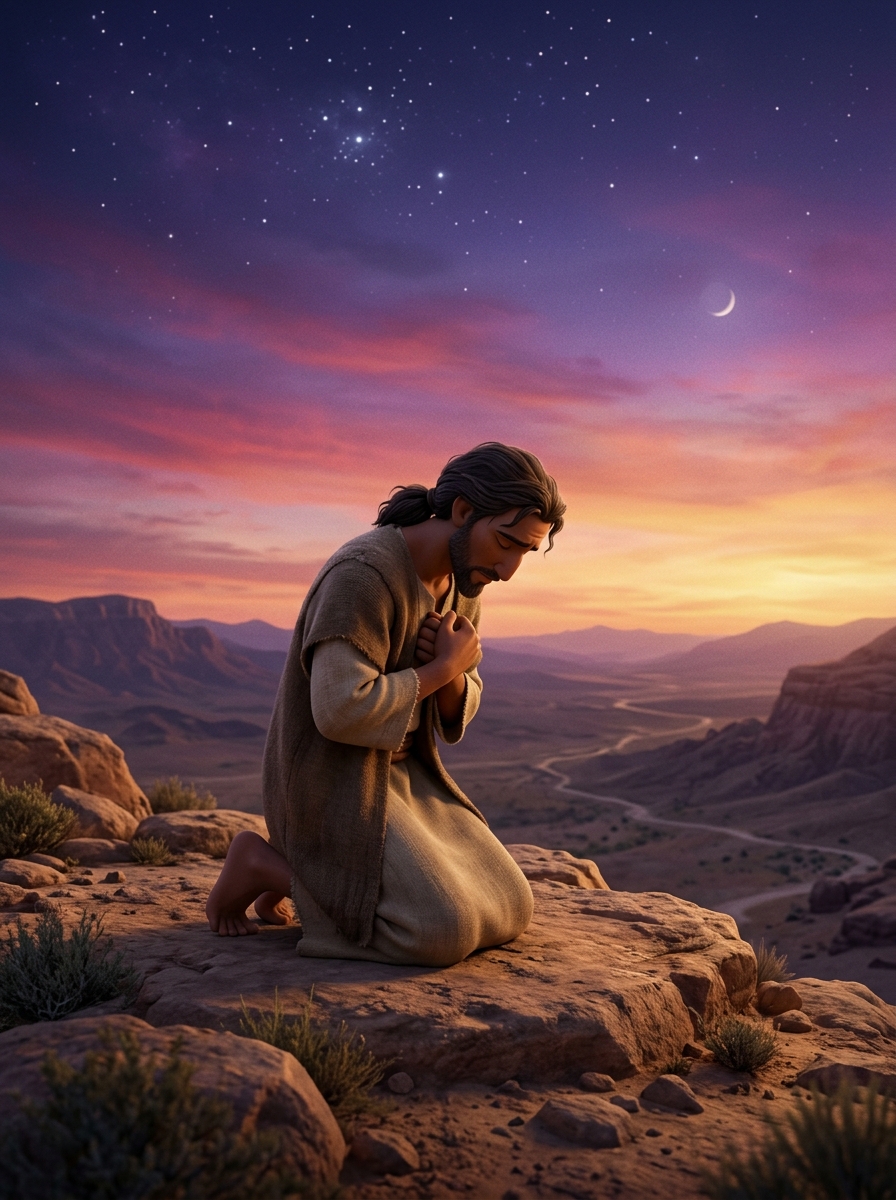
The Words of Agur
Near the end of Proverbs, a man named Agur wrote a prayer so honest it stops you in your tracks. He said, "I am the most ignorant of men. I have not learned wisdom. I do not have knowledge of the Holy One." Then he asked for just two things before he died — keep lies far from him, and give him neither too much nor too little. "If I have too much, I might forget you. If I am too poor, I might steal and dishonor your name." It is one of the most humble, wise prayers in the entire Bible. Agur knew what he did not know. That is where wisdom starts.
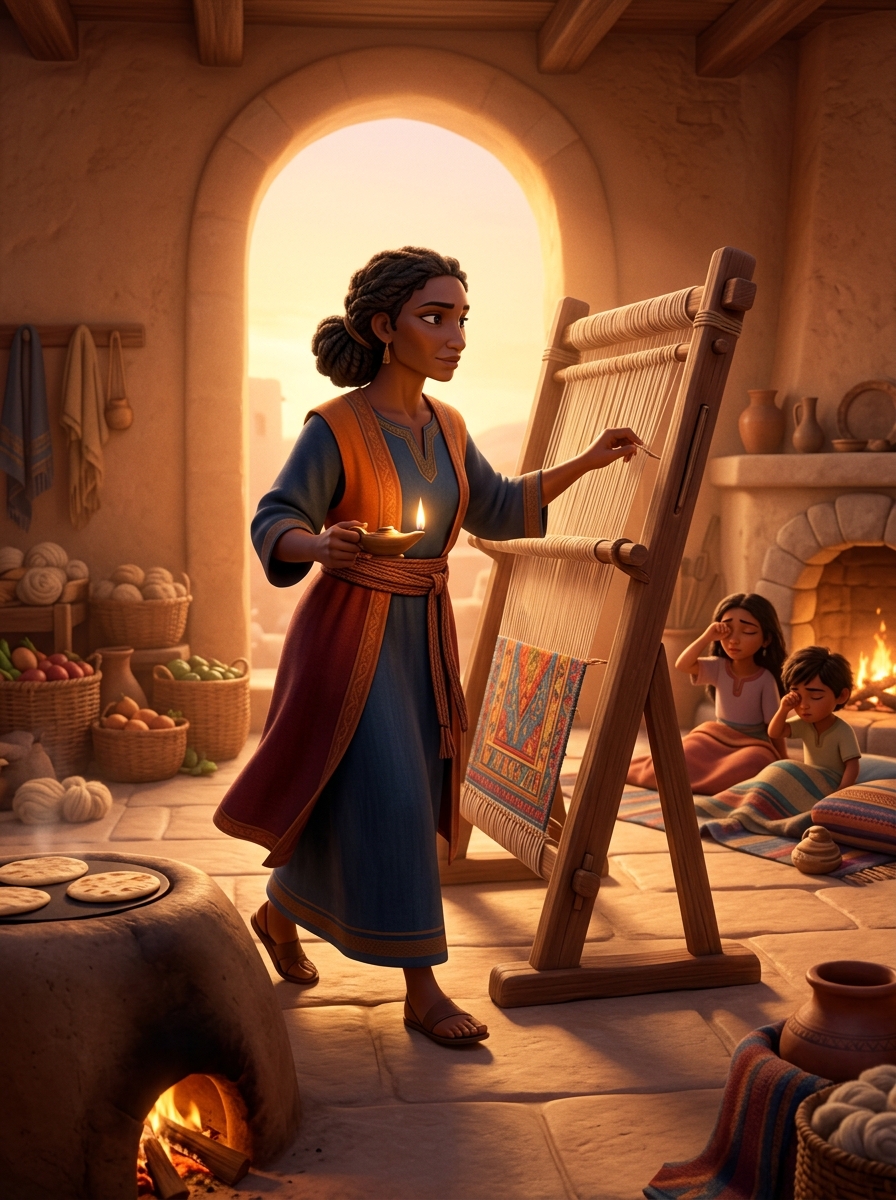
The Wife of Noble Character
Proverbs ends with a poem about a woman of noble character. She works hard with her hands. She gets up before dawn. She provides for her family and gives generously to the poor. She is strong and dignified. She speaks with wisdom and kindness. Her children call her blessed. Her husband praises her. The poem ends with this: beauty fades and charm can be hollow — but a woman who fears the Lord is to be praised. This closing poem is Proverbs saying plainly what wisdom looks like when it is fully lived. It looks like this woman. It looks like love, in action, every single day.
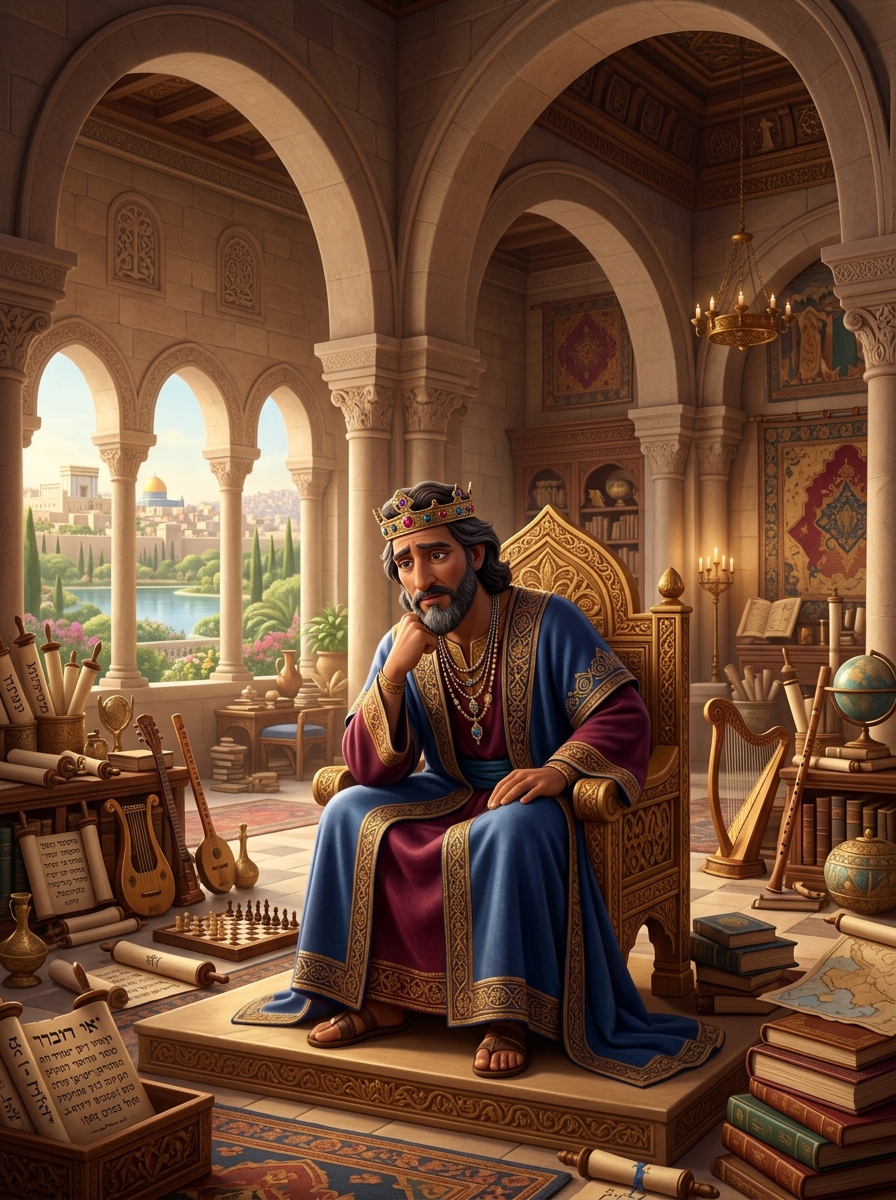
The Teacher Who Had Everything
The book of Ecclesiastes was written by a teacher — a philosopher king who had tried everything life could offer. He was wise beyond measure. He was rich beyond imagination. He built great projects, planted vineyards, filled his house with music and pleasure. He tried hard work. He tried laziness. He tried wisdom and he tried foolishness. And at the end of all of it he sat down and wrote honestly about what he found. This book is not comfortable. It asks the hardest questions a person can ask. But it asks them inside the Bible — which means God is not afraid of the questions. Neither should we be.

Chasing the Wind
The Teacher's first conclusion was brutal and honest. "Meaningless, meaningless — everything is meaningless." He watched the sun rise and set, rise and set. Rivers run to the sea but the sea is never full. Generations come and go and nothing changes. He tried filling his life with pleasure — it was empty. He tried great building projects — empty. He tried accumulating wisdom — also painful, because the wiser you are, the more clearly you see how much goes wrong. He called all of it chasing the wind. You cannot catch wind. You cannot hold it. You cannot keep it. And yet people spend their whole lives trying.
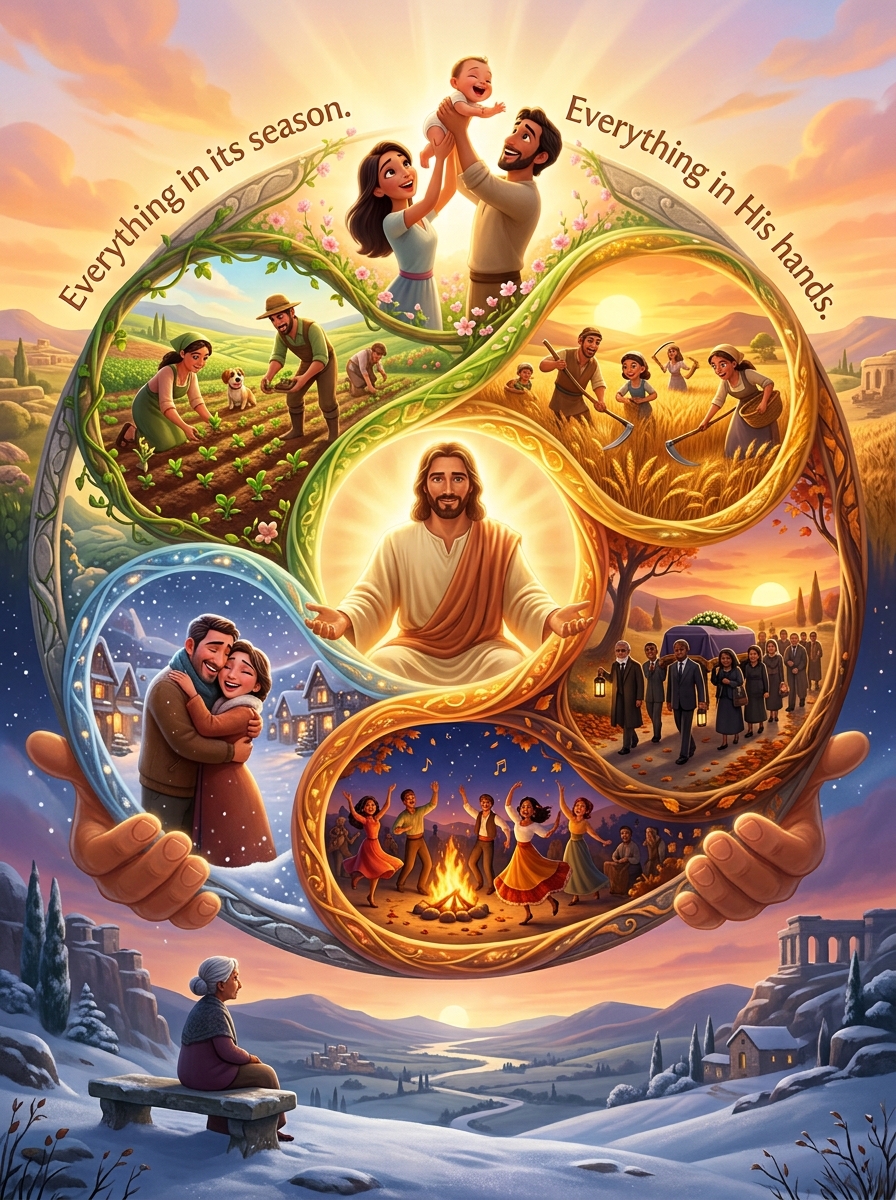
A Time for Everything
Then the Teacher wrote one of the most beautiful poems in the Bible. There is a time for everything, he said — a season for every activity under heaven. A time to be born and a time to die. A time to plant and a time to uproot. A time to weep and a time to laugh. A time to mourn and a time to dance. A time to be silent and a time to speak. He was saying — life is not random. There is a rhythm to it. God has set eternity in the human heart. We cannot fully understand what God is doing from beginning to end. But we can trust that He is doing something.

Better Together
The Teacher looked at people striving alone and said it was meaningless. Two are better than one, he said — because if one falls, the other can help them up. But pity the person who falls with no one to lift them. Two people keeping warm together can survive a cold night alone they could not. And a rope of three strands is not easily broken. In the middle of a book about emptiness, the Teacher stopped to say this — people need each other. Loneliness is its own kind of poverty. Community is its own kind of wisdom. This has never stopped being true.
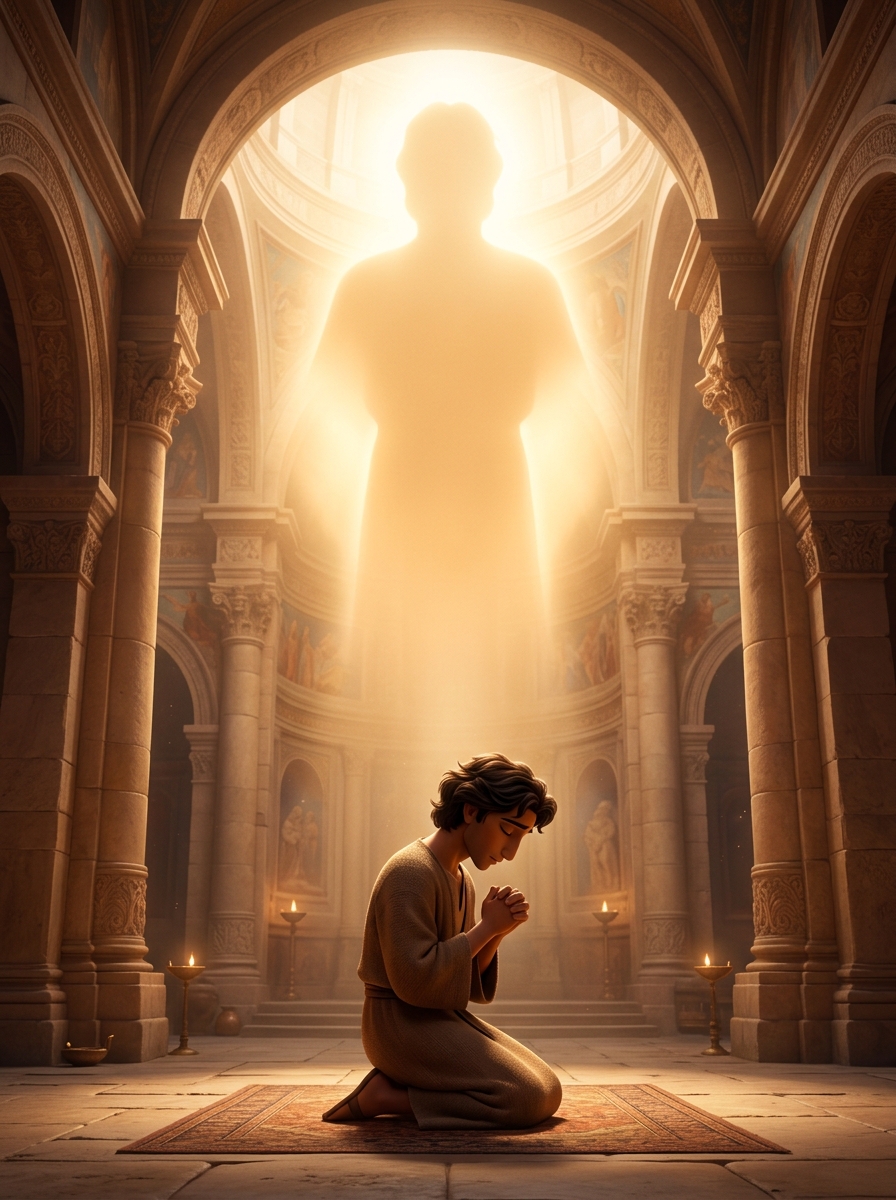
Watch Your Words with God
The Teacher gave careful advice about approaching God. Do not rush. Do not come with a flood of words. God is in heaven and you are on earth — so let your words be few. If you make a vow to God, keep it. Better not to make a vow at all than to make one and not fulfill it. Do not let your mouth lead you into sin. The person who talks too much to God without listening, who makes promises they never intend to keep — that person has not understood who God is. Come quietly. Come honestly. Mean what you say.
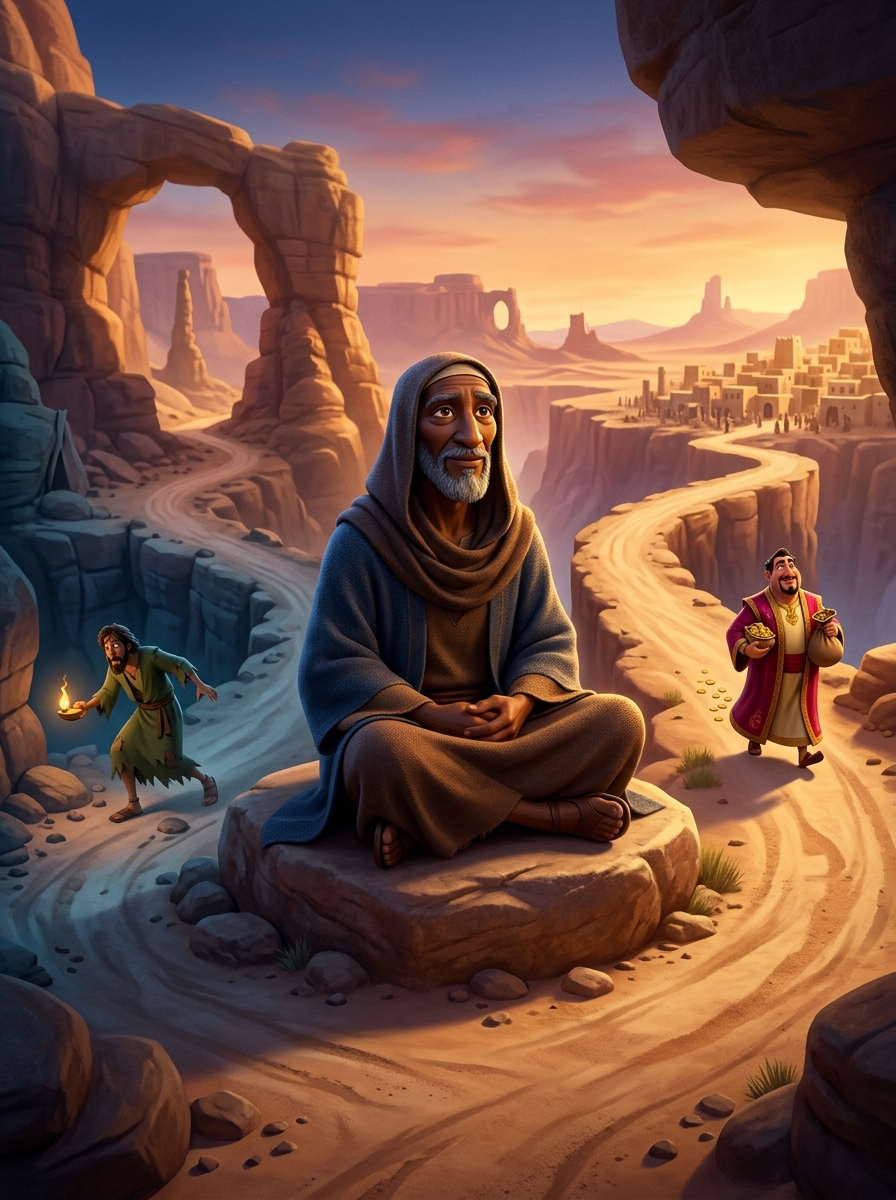
Wisdom Is Still Better
The Teacher kept wrestling. He saw wicked people living long lives and righteous people dying young. He saw criminals getting away with their crimes. It troubled him deeply. But he did not throw wisdom away because of it. Wisdom still lights up a person's face, he said. Wisdom gives strength that ten rulers cannot match. The wise person knows that every situation has a right time and a right way — even when life seems unfair. He could not explain everything he saw. But he held on. Wisdom is still better than foolishness — even when the full picture is not yet visible.

Remember Your Creator
Near the end of the book the Teacher turned to young people specifically. Remember your Creator while you are young, he said — before the hard years come, before your body grows old and the things you enjoyed no longer bring pleasure. Youth is a gift. Energy is a gift. Do not waste them. Cast your bread on the water. Plant your seeds in the morning and do not stop in the evening. You do not know which effort will succeed — maybe both will. Live fully. Give generously. And remember who made you, before you forget how to remember.
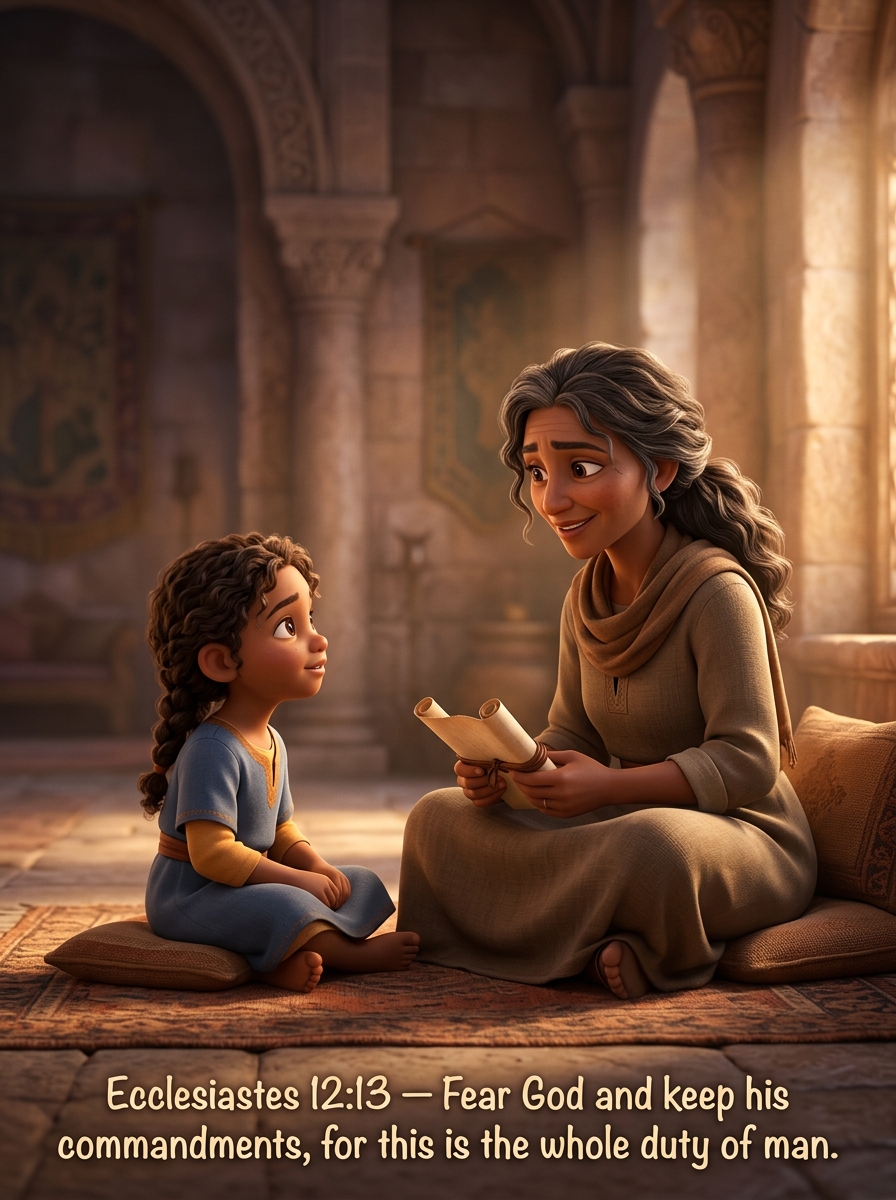
The Conclusion of the Matter
After all the questioning, all the wrestling, all the honest looking at hard things — the Teacher arrived at one final answer. "Here is the conclusion of the matter — fear God and keep His commandments, for this is the duty of every human being." Everything else he had tried had been wind. This was the one thing that was not. Not wealth. Not pleasure. Not wisdom for its own sake. Not great achievements. Just this — take God seriously, and live the way He says. The whole long search ended in something a child could understand. The deepest wisdom is also the simplest.

The Song of Songs
The Song of Solomon is unlike any other book in the Bible. It is a love poem — a collection of songs about the love between a man and a woman. It was written by Solomon and is sometimes called the Song of Songs, meaning the greatest song of all. The Bible includes this book because love between a husband and wife is not something God is embarrassed about — He invented it. Throughout history, readers have also seen this book as a picture of the love between God and His people — the deep, devoted, seeking love that does not let go. It is a book about what love looks and feels like when it is real.

My Beloved Is Mine
The Song opens with two voices — a young woman and a young man — speaking their love for each other. She says he is like a young deer leaping over mountains to find her. He says she is like a lily among thorns. She says his love is better than wine. They delight in each other — in being known and chosen and wanted. The young woman says, "My beloved is mine and I am his." This is what love sounds like when it is new and full and unguarded. The Bible includes these words because real love — the kind God designed — is worth celebrating.

Love That Seeks
In the middle of the Song, the young woman describes searching for the one she loves. She looked for him and could not find him. She went through the city streets, searching. When she found him she would not let him go. This picture of love that searches, that refuses to give up, that goes looking even at personal cost — this is what devoted love does. It does not wait passively. It seeks. Throughout the Bible, God is pictured the same way — a God who comes looking for His people, who does not stop, who finds them and holds on.

Love Is as Strong as Death
The Song of Solomon ends with one of the most powerful descriptions of love in all of Scripture. "Place me like a seal over your heart. For love is as strong as death. Its passion burns like blazing fire — like a mighty flame." Many waters cannot quench love. Rivers cannot wash it away. If someone offered everything they owned in exchange for love, it would be utterly scorned — because love cannot be bought. It can only be given. The Song ends with the woman calling her beloved to come to her. Love, at its truest, is always an invitation. Come. Be here. Stay.
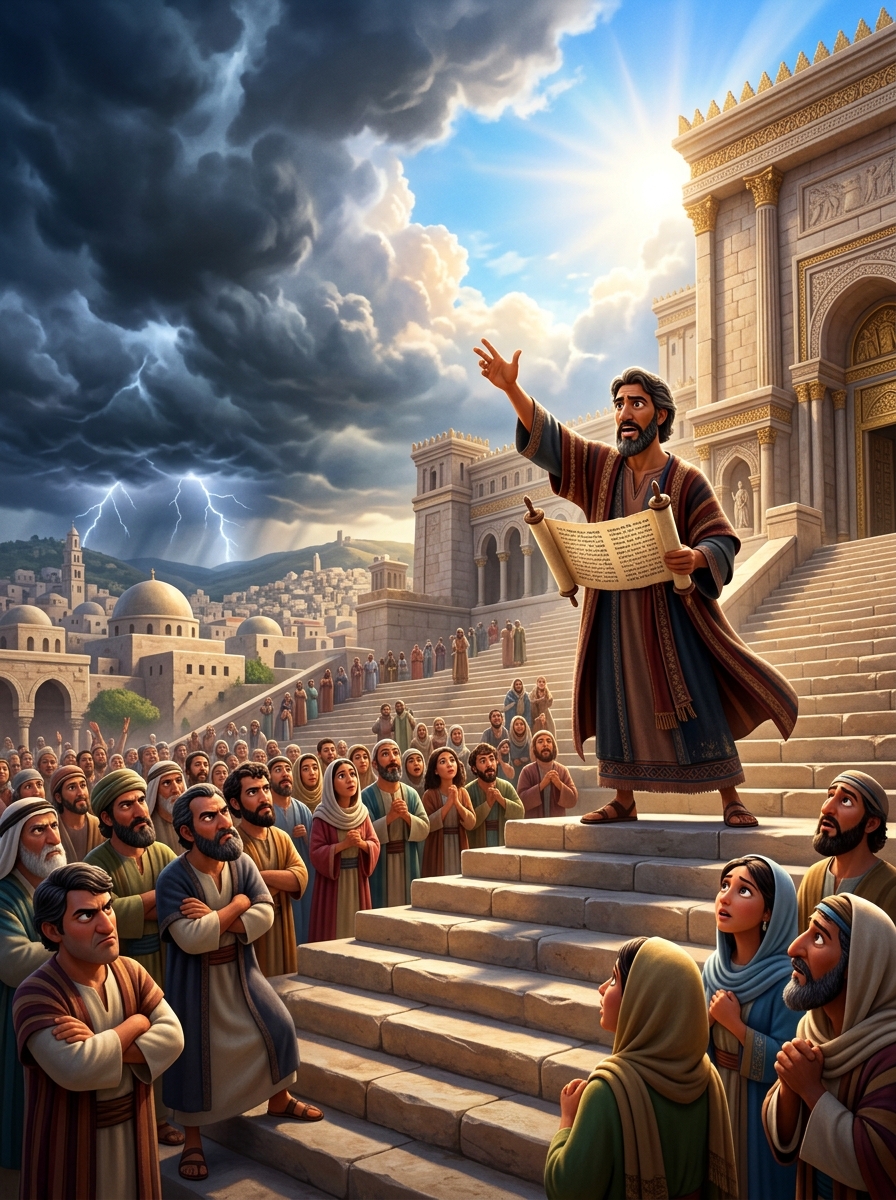
The Greatest Prophet
Isaiah was a prophet in Jerusalem who spoke for God for over forty years. He lived during a time when Israel had forgotten God and was heading toward disaster. God sent Isaiah to warn them — but also to comfort them. The book of Isaiah has sixty-six chapters, just as the Bible has sixty-six books. The first thirty-nine chapters are mostly warning and judgment — like the Old Testament. The last twenty-seven chapters are mostly comfort and hope — like the New Testament. Isaiah saw further into the future than almost any other prophet. He described the coming of Jesus with such detail that some call him the fifth Gospel writer.
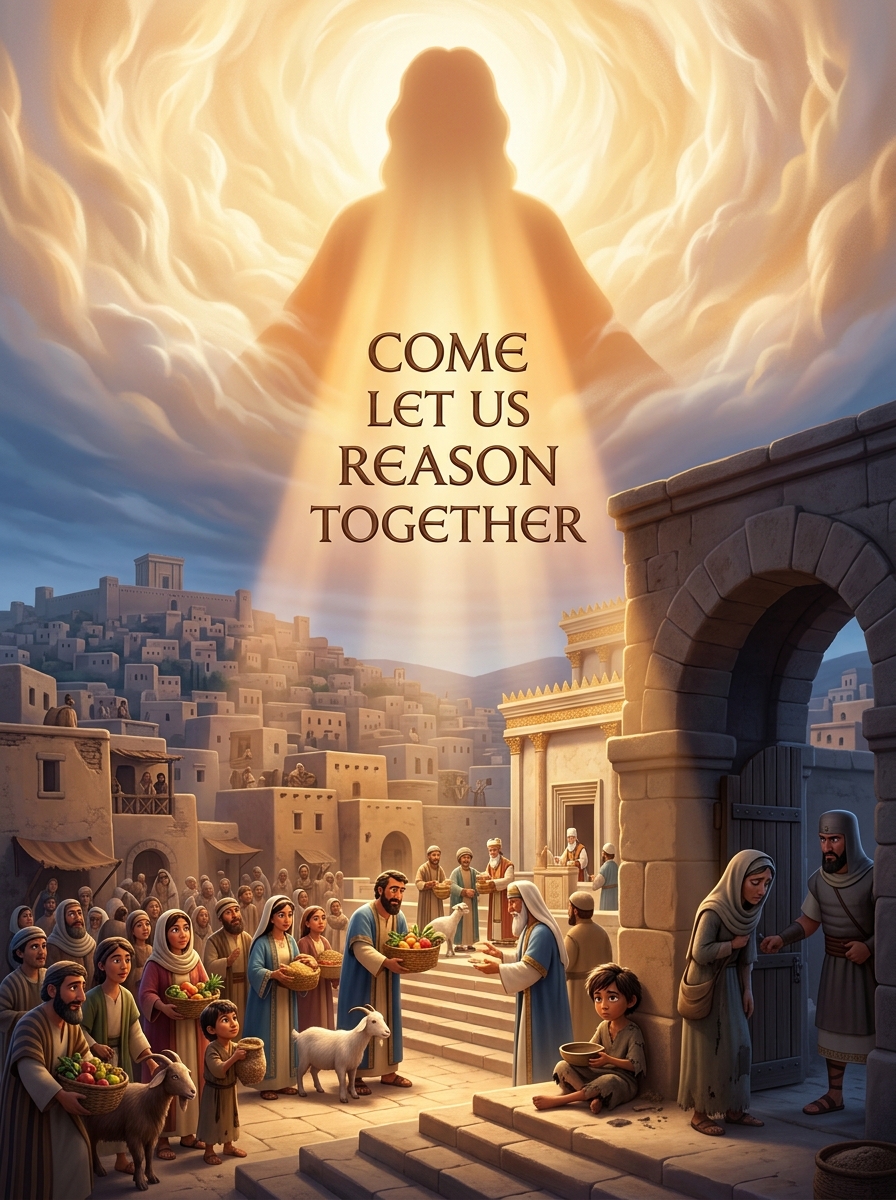
A Nation Gone Wrong
God opened His case against Israel like a courtroom. He called heaven and earth as witnesses. "I raised children and they rebelled against me. The ox knows its owner and the donkey knows its master's crib — but Israel does not know me." The people were bringing offerings and observing festivals — but their hands were full of injustice. They were oppressing the poor, ignoring widows, turning away orphans. God said their worship meant nothing while they lived this way. He said, "Come, let us reason together. Though your sins are like scarlet, they shall be as white as snow." The door was still open. But they had to choose.
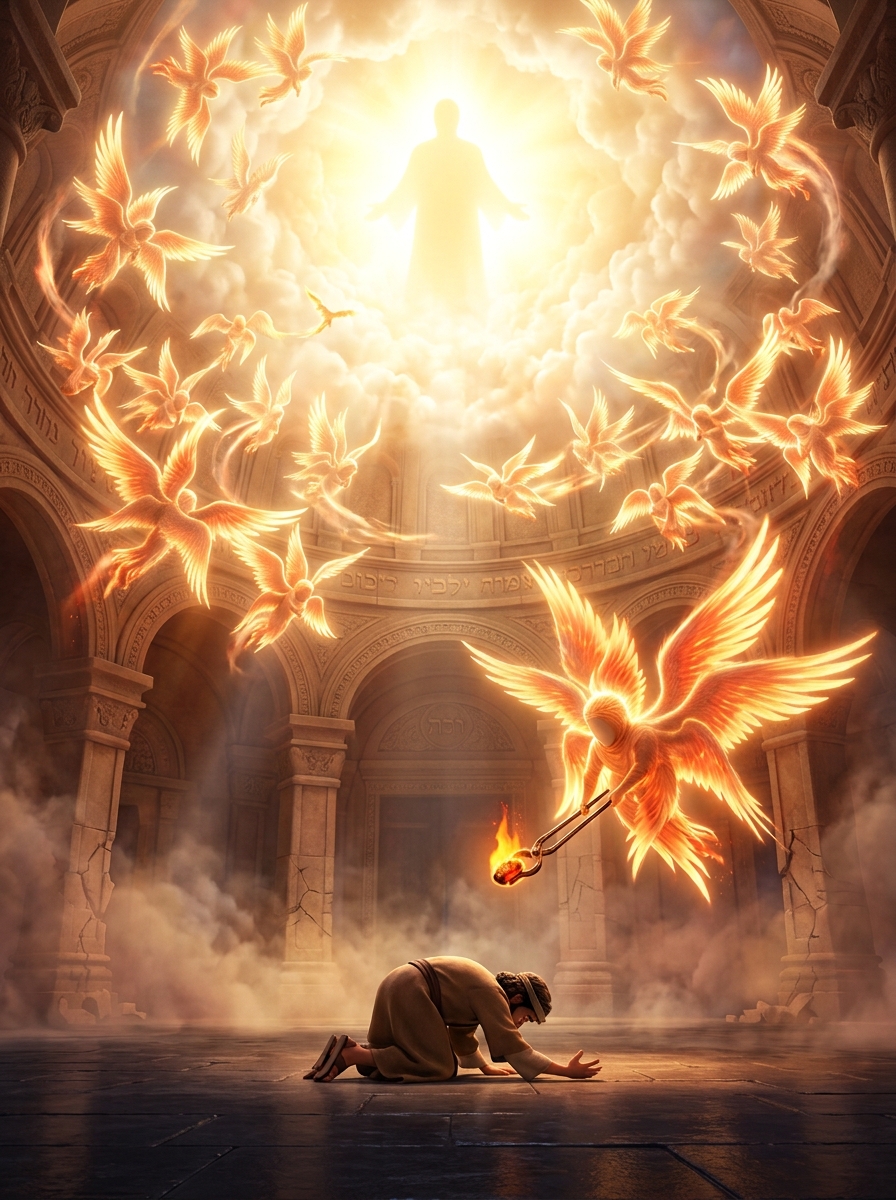
Isaiah's Call
In the year that King Uzziah died, Isaiah saw a vision of God. He was in the temple and suddenly the whole space was filled — God high and lifted up on His throne, His robe filling the temple. Seraphim — burning angelic beings — flew above Him, each with six wings, crying out: "Holy, holy, holy is the Lord Almighty — the whole earth is full of His glory." The doorposts shook. The temple filled with smoke. Isaiah collapsed. "I am ruined — I am a man of unclean lips." A seraph flew to him with a burning coal and touched his mouth. "Your guilt is taken away." Then God asked, "Who will go for us?" Isaiah answered, "Here am I. Send me."
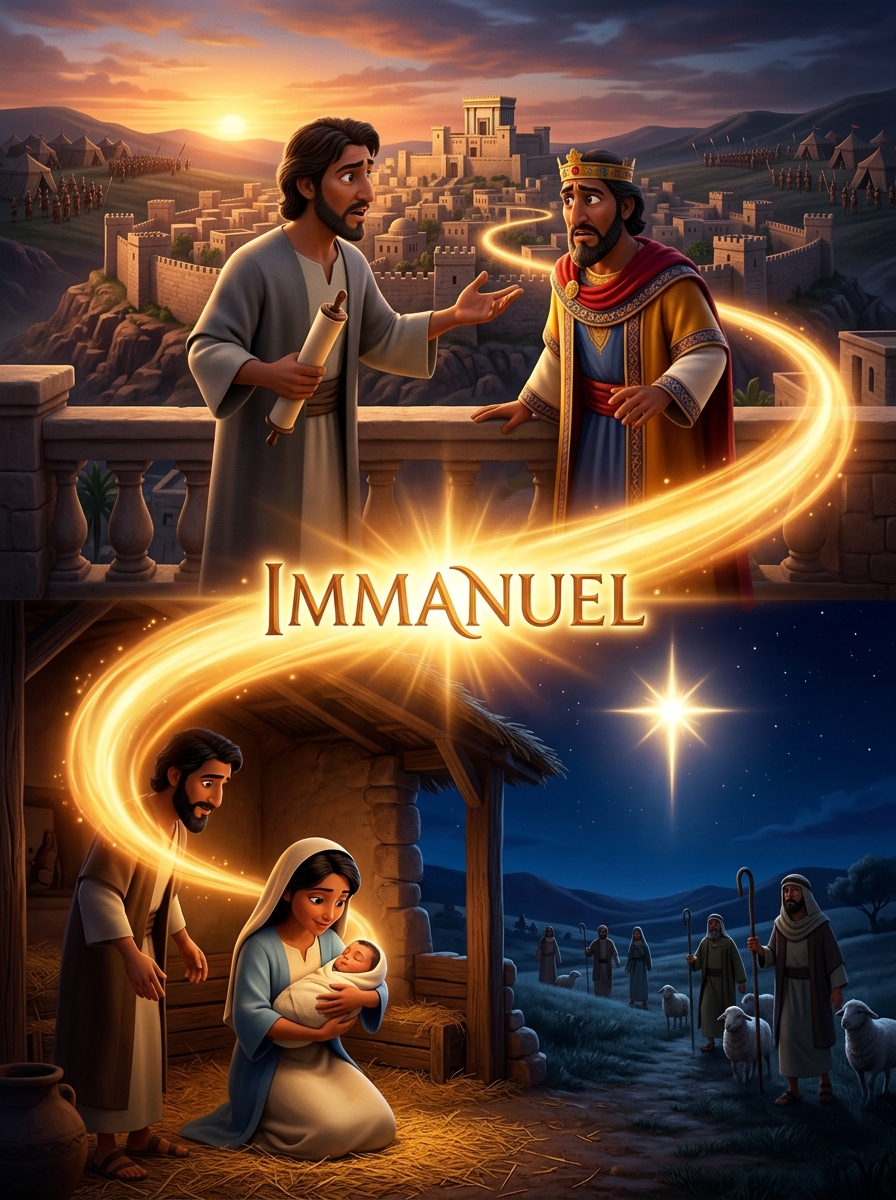
Immanuel — God With Us
When the kingdom of Judah was threatened by enemy nations, God sent Isaiah to King Ahaz with a message of reassurance. He told the king to ask for a sign. Ahaz refused — he said he would not test God. So God gave a sign anyway. "The virgin will conceive and give birth to a son, and will call him Immanuel." Immanuel means God with us. Isaiah spoke these words to his own generation — but they pointed forward seven hundred years to a night in Bethlehem when a young woman named Mary would give birth to a son, and the angels would announce that God had come to be with His people at last.
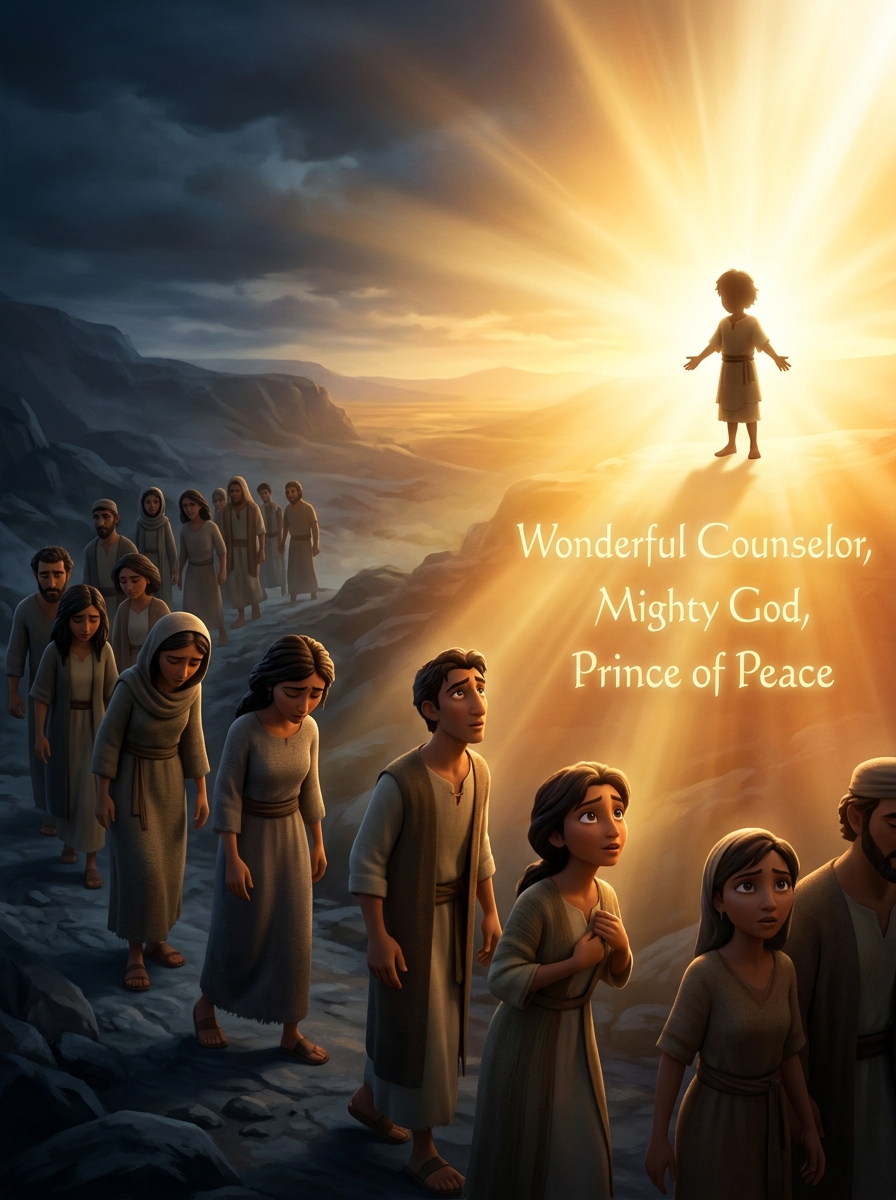
The Prince of Peace
Isaiah spoke into the darkness of his time — and described a light coming. "The people walking in darkness have seen a great light." Then he announced a birth that would change everything. "For to us a child is born, to us a son is given. The government will be on his shoulders. And he will be called Wonderful Counselor, Mighty God, Everlasting Father, Prince of Peace." These were not ordinary names for an ordinary king. Isaiah was describing someone no ordinary king could ever be. He was describing Jesus — seven hundred years before Jesus was born.

The Peaceable Kingdom
Isaiah described what the world will look like when the promised king finally reigns. The wolf will live with the lamb. The leopard will lie down with the goat. The calf and the lion will feed together and a little child will lead them. The infant will play near the cobra's hole and the young child will put its hand into the viper's nest. Nothing will harm or destroy in all God's holy mountain — because the earth will be full of the knowledge of the Lord as the waters cover the sea. It is a picture of the world completely healed — creation restored to what it was always meant to be.

Comfort, Comfort My People
At chapter 40 the whole book of Isaiah turns. The tone shifts completely. After thirty-nine chapters of warning, God opens His mouth and says — "Comfort, comfort my people." Speak tenderly to Jerusalem. Her hard service is completed. Her sin is paid for. Then the great announcement: a voice crying in the wilderness — prepare the way of the Lord. Every valley will be raised up, every mountain brought low. The glory of the Lord will be revealed. And then the most beautiful promise: "Those who hope in the Lord will renew their strength. They will soar on wings like eagles. They will run and not grow weary. They will walk and not be faint."

Behold My Servant
Four times in Isaiah, God describes a coming servant. "Here is my servant whom I uphold — my chosen one in whom I delight. I will put my Spirit on him and he will bring justice to the nations. He will not shout or cry out or raise his voice in the streets. A bruised reed he will not break and a smoldering wick he will not snuff out." This servant is gentle with broken people. He does not crush what is already damaged. He carries the weak. He brings light to the nations — not just to Israel but to the whole world. Christians reading Isaiah see Jesus on every page of these servant songs.

You Are Mine
God spoke directly and personally to His people. "Do not fear, for I have redeemed you. I have called you by name — you are mine. When you pass through the waters, I will be with you. When you pass through the rivers, they will not sweep over you. When you walk through the fire, you will not be burned." He was not promising that hard things would never happen. He was promising something better — that He would be present in every hard thing. Then He said something extraordinary: "You are precious and honored in my sight — and I love you." God saying I love you to His people, plainly, in the middle of their worst season.

The Suffering Servant
Isaiah 53 is the most important chapter in the book — and one of the most important in the entire Old Testament. Written seven hundred years before Jesus, it describes His suffering with extraordinary precision. The servant had no beauty that we should desire him. He was despised and rejected. He was a man of sorrows, acquainted with grief. He was pierced for our transgressions and crushed for our iniquities. The punishment that brought us peace was on him and by his wounds we are healed. We had all gone astray like sheep — and God laid on him the sin of us all. Every word came true on a Friday afternoon outside Jerusalem.
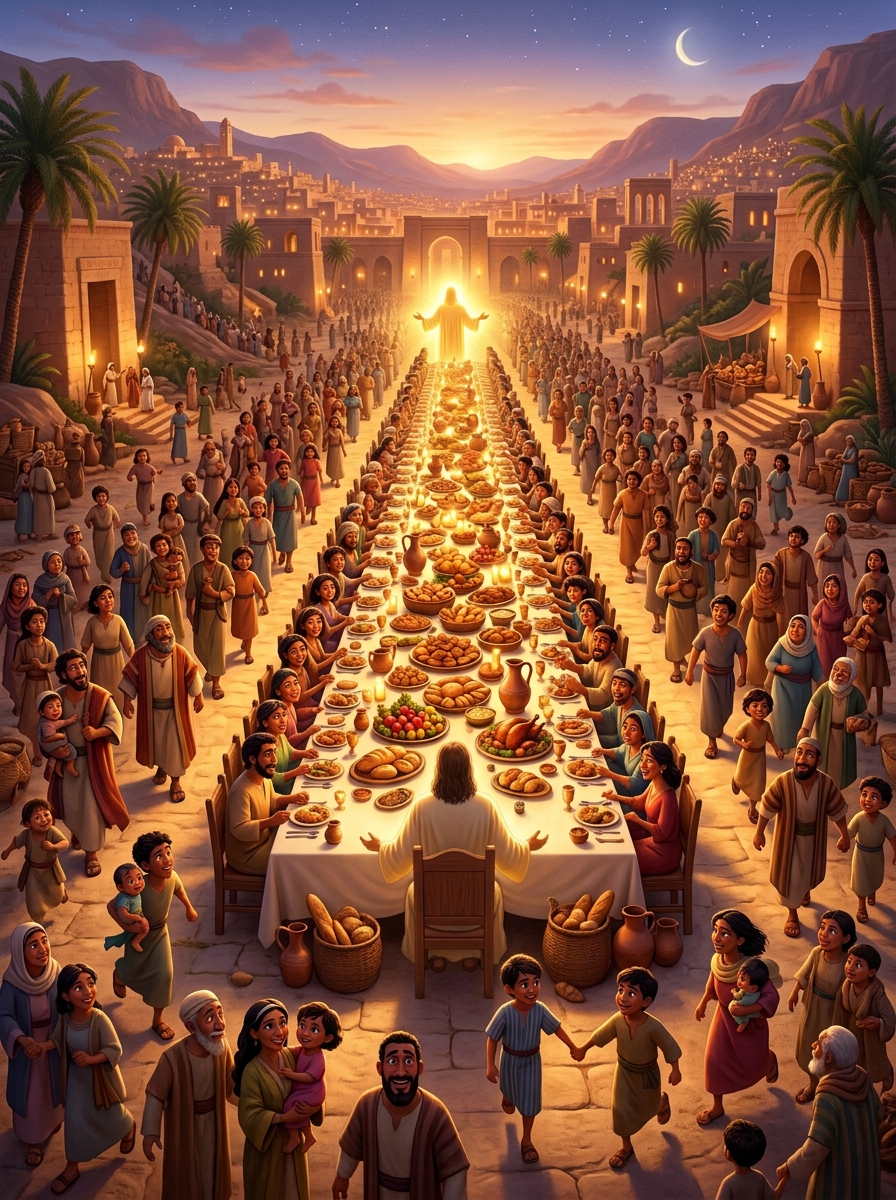
Come, Everyone Who Thirsts
God issued one of the greatest invitations in the entire Bible. "Come, all you who are thirsty — come to the waters. You who have no money, come and eat. Come and buy wine and milk without money and without cost." He asked why people spend their money on what does not satisfy, their labor on what does not fill them. Then He said — listen to me and eat what is good. Come to me. Seek the Lord while He may be found. Call on Him while He is near. My word that goes out from my mouth will not return to me empty — it will accomplish what I desire and achieve the purpose for which I sent it. The door is open. The table is set. Come.

The New Creation
Isaiah ended with a vision of the world completely remade. God said, "See, I will create new heavens and a new earth. The former things will not be remembered." In this new creation, people will build houses and live in them, plant vineyards and eat their fruit. They will not labor in vain. The wolf and the lamb will feed together. The lion will eat straw like the ox. Nothing will hurt or destroy anywhere in God's holy mountain. It is the same picture Isaiah painted in chapter 11 — the world healed, creation restored, God with His people at last. Isaiah began with a broken world. He ended with a new one.
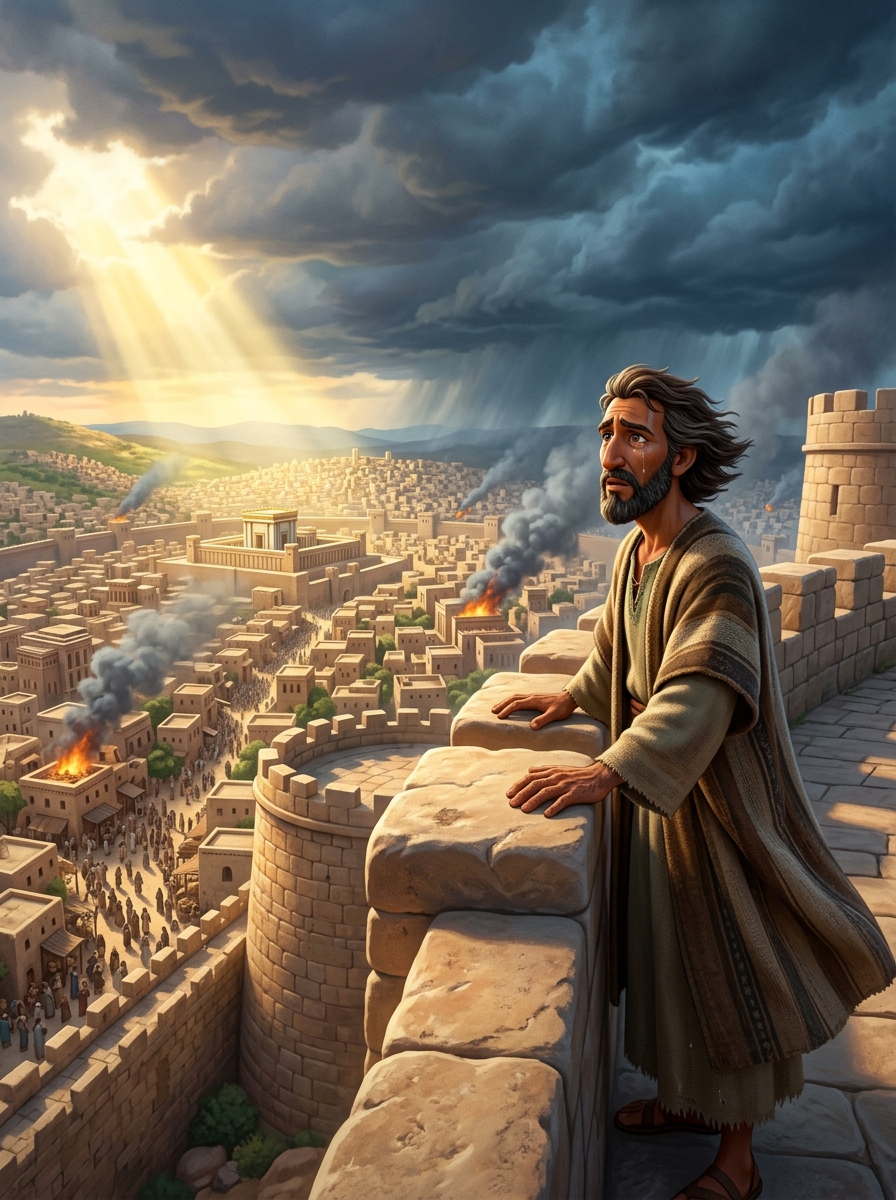
The Weeping Prophet
Jeremiah was a priest from a small town called Anathoth, near Jerusalem. God called him to be a prophet when he was still young — and Jeremiah tried to talk his way out of it. He said he did not know how to speak, that he was too young. God would not accept the excuses. He touched Jeremiah's mouth and said — I have put my words in your mouth. Jeremiah preached for over forty years. He watched his nation ignore every warning. He watched Jerusalem fall. He wept over his people more than any other prophet in the Bible. He is called the weeping prophet — not because he was weak, but because he loved deeply and saw clearly what was coming.
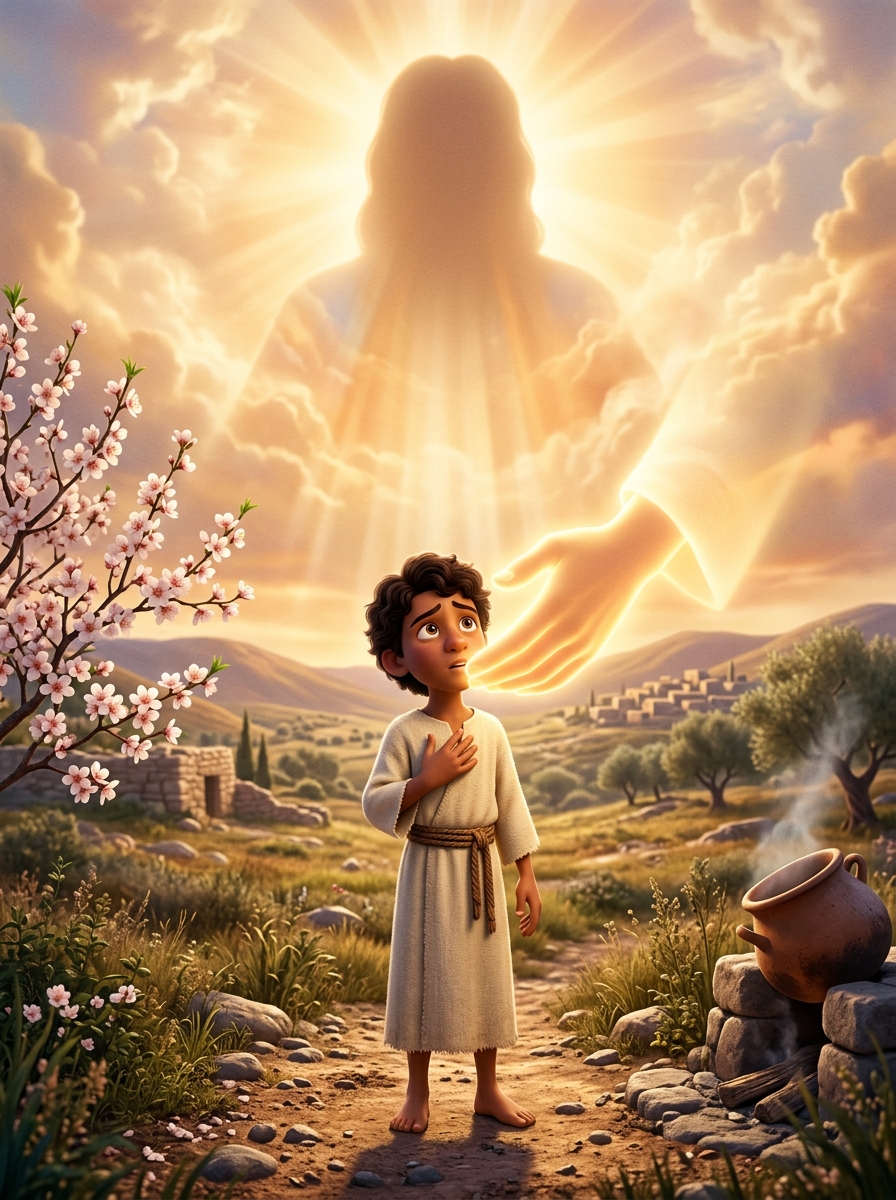
I Knew You Before You Were Born
When God called Jeremiah, He said something that stopped him completely. "Before I formed you in the womb I knew you. Before you were born I set you apart. I appointed you as a prophet to the nations." Jeremiah protested — he was too young, he did not know how to speak. God answered plainly: do not say you are too young. Go where I send you. Say what I command. Then God reached out and touched Jeremiah's mouth. "I have put my words in your mouth." And then God showed him two visions — an almond branch and a boiling pot — to tell him that judgment was coming from the north, and it was coming soon.
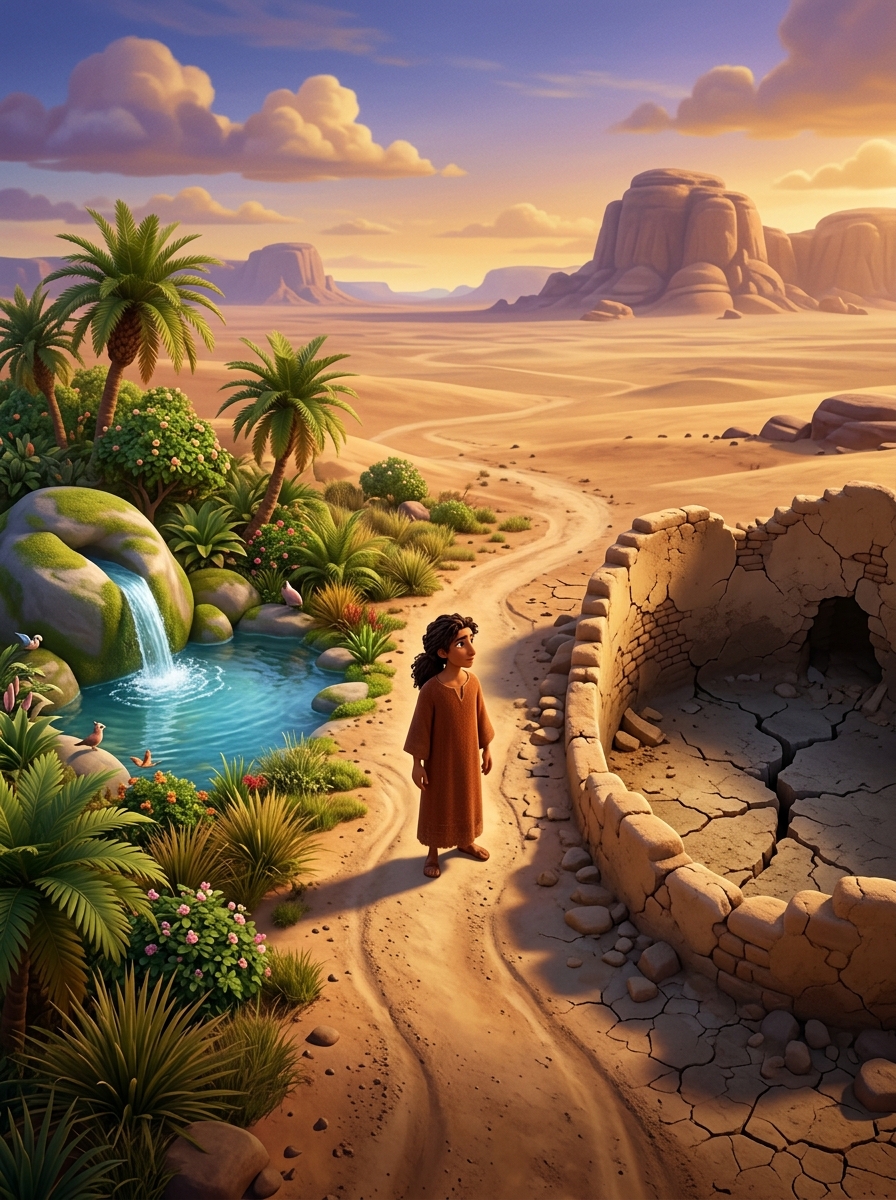
Broken Cisterns
God described what Israel had done in one devastating image. They had abandoned Him — the spring of living water — and had dug their own cisterns instead. Broken cisterns that could hold no water at all. They had traded the real thing for something that could not sustain them. They had run after other gods — gods of wood and stone, gods that their own hands had made. God said — has any nation ever changed its gods? And their gods were not even real. But Israel had exchanged their real God, the living God, for things that were worthless. The broken cisterns are still empty. They always will be.
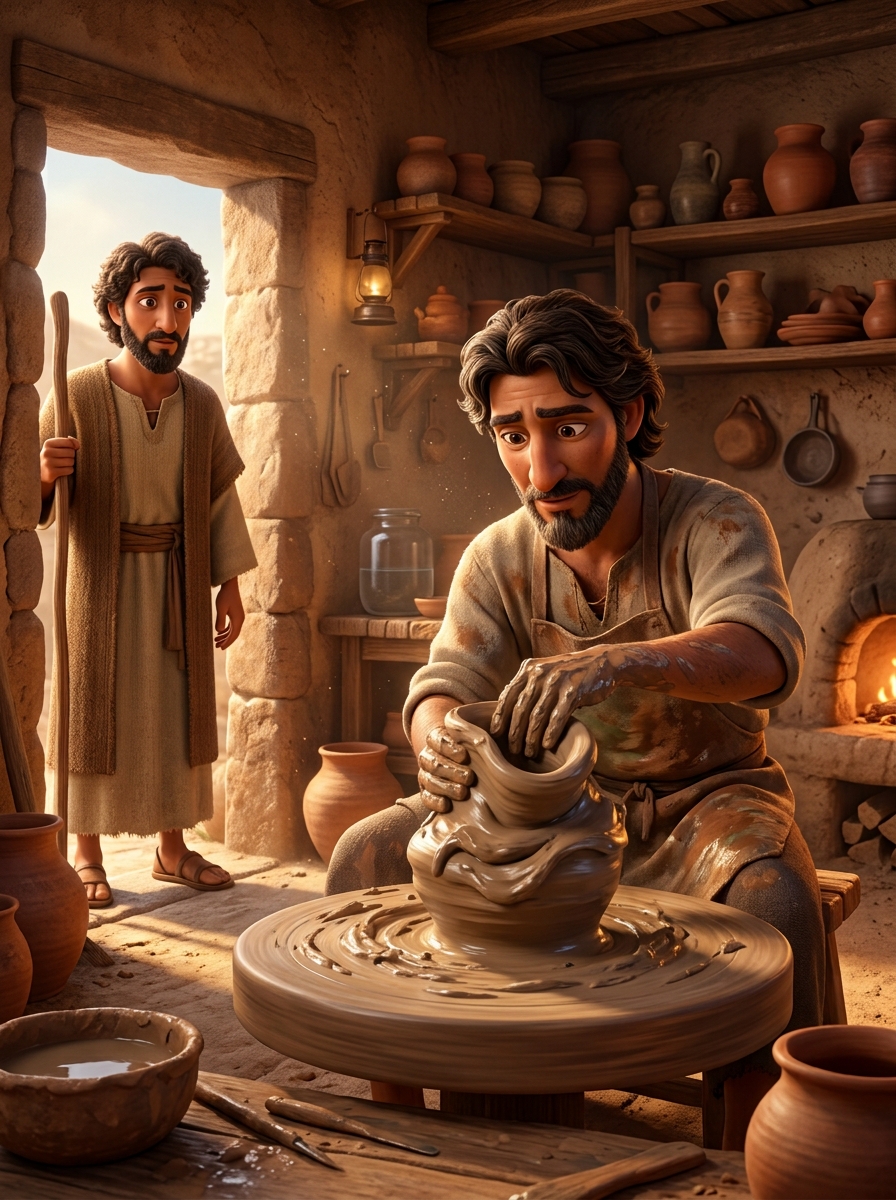
The Potter and the Clay
God sent Jeremiah to a potter's house to watch him work. The potter was shaping a pot on the wheel — and the clay was marred. It went wrong in his hands. So the potter did not throw it away. He simply reshaped it into another pot, the kind that seemed best to him. Then God said — can I not do with you as this potter does? You are in my hands like the clay. If a nation turns from its evil, I will relent from the disaster I planned. If a nation does evil, I will reconsider the good I intended. The door is never permanently closed. The potter never stops working.
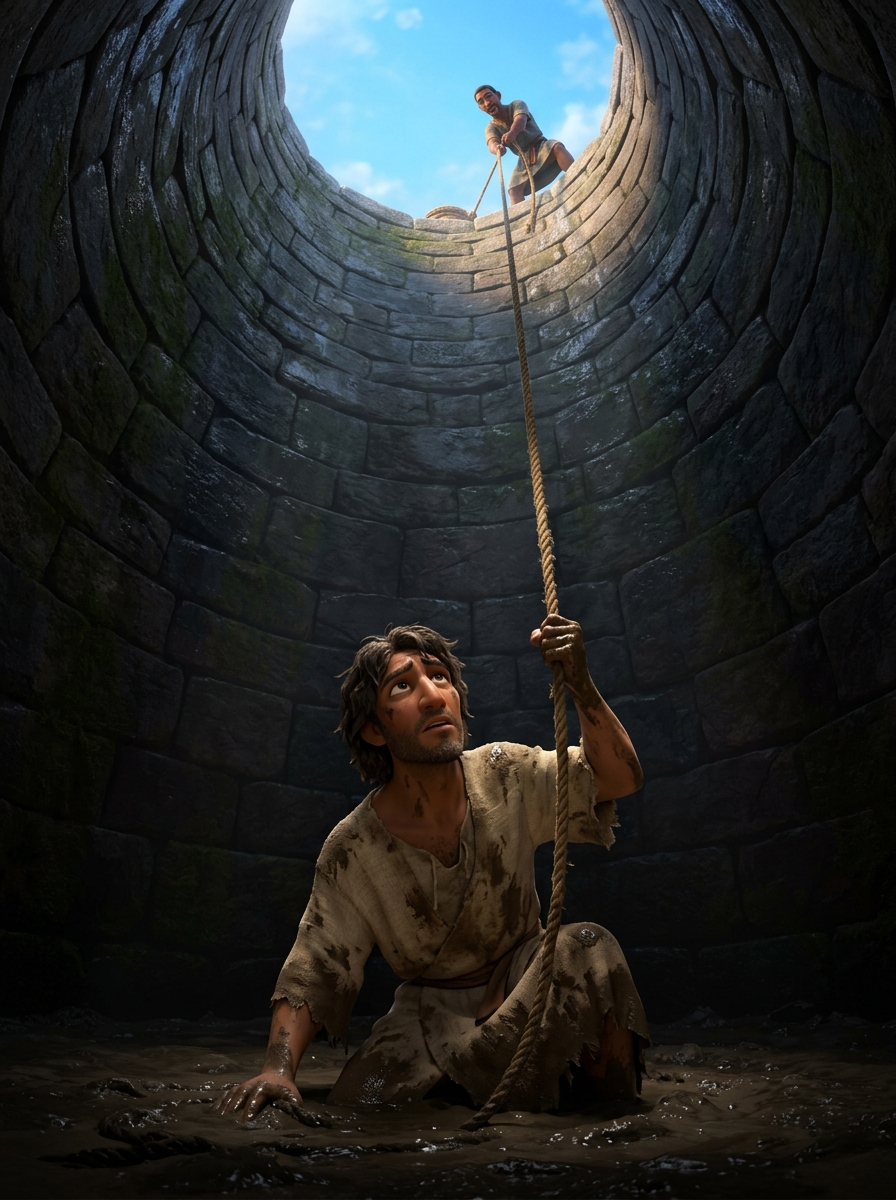
Jeremiah's Suffering
Jeremiah suffered more than almost any other prophet. He was mocked and called a liar. He was beaten and put in stocks. He was thrown into a muddy cistern and left to sink. He cried out to God in raw, honest prayer — saying he wished he had never been born, that the day of his birth was cursed. But every time he tried to stop speaking, the word of God was like a fire shut up in his bones — he could not hold it in. He kept going. Not because it was easy. Not because anyone listened. But because God had called him and the fire would not go out.
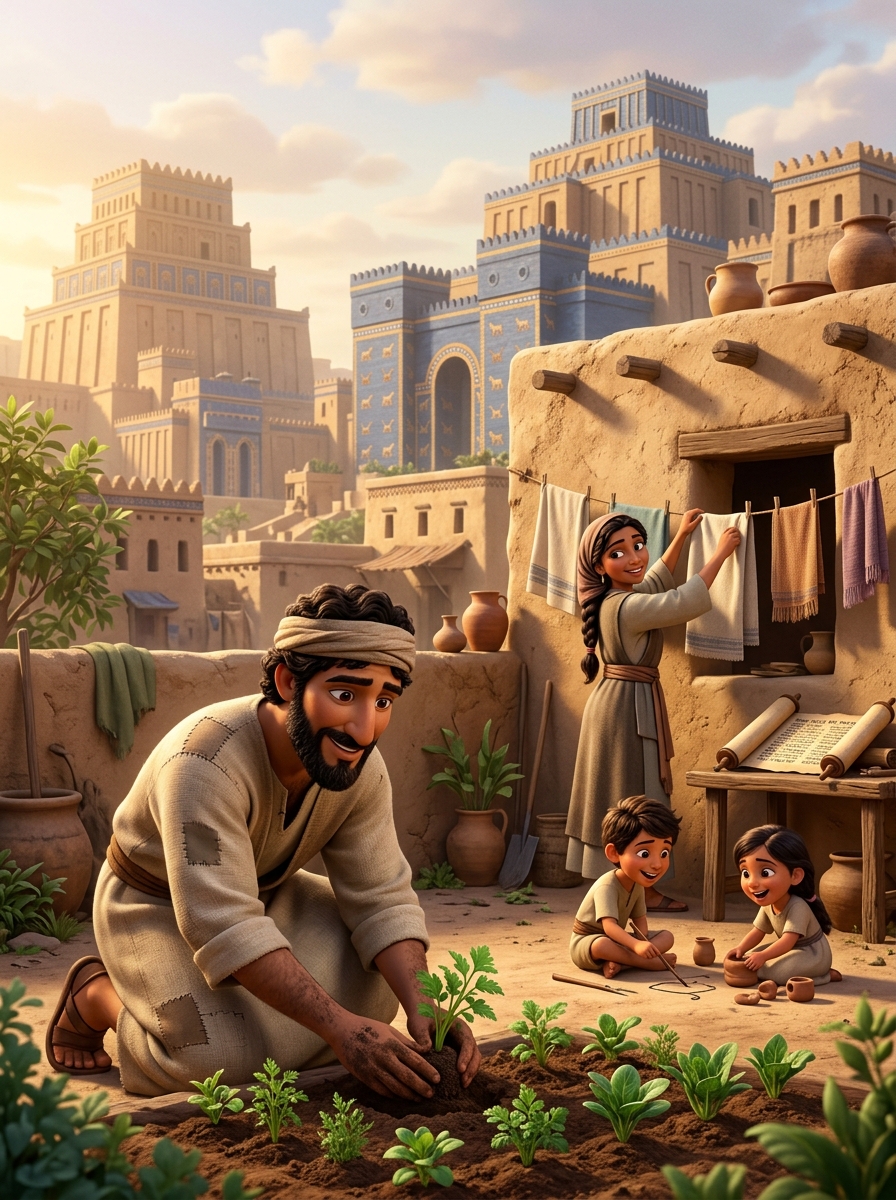
A Letter to the Exiles
When the first group of Israelites was taken to Babylon, Jeremiah sent them a letter. It was not what anyone expected. He told them to build houses and settle down. Plant gardens. Get married. Have children. Seek the peace and prosperity of the city where they had been sent — because if it prospered, they would prosper too. He told them not to listen to false prophets who said they would come home quickly. And then came the words that have carried God's people through every exile since: "For I know the plans I have for you — plans to prosper you and not to harm you, plans to give you a hope and a future."
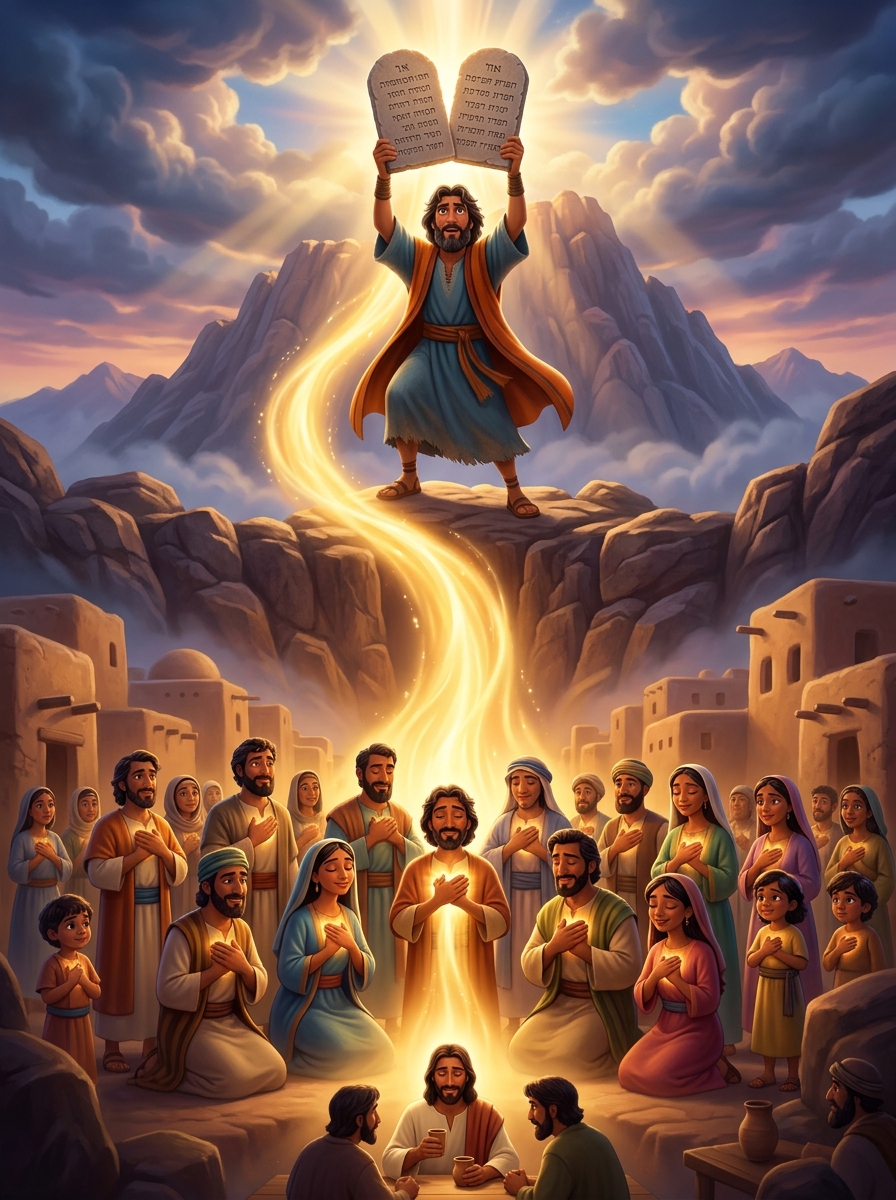
The New Covenant
In the middle of all the judgment and sorrow, God made a promise that changed everything. He said the days were coming when He would make a new covenant with His people. Not like the covenant He made at Sinai, which they had broken. This one would be different. "I will put my law in their minds and write it on their hearts. I will be their God and they will be my people. No longer will they teach their neighbor saying know the Lord — because they will all know me, from the least to the greatest." This was the promise that Jesus would fulfill at the Last Supper, holding a cup and saying — this is the new covenant in my blood.
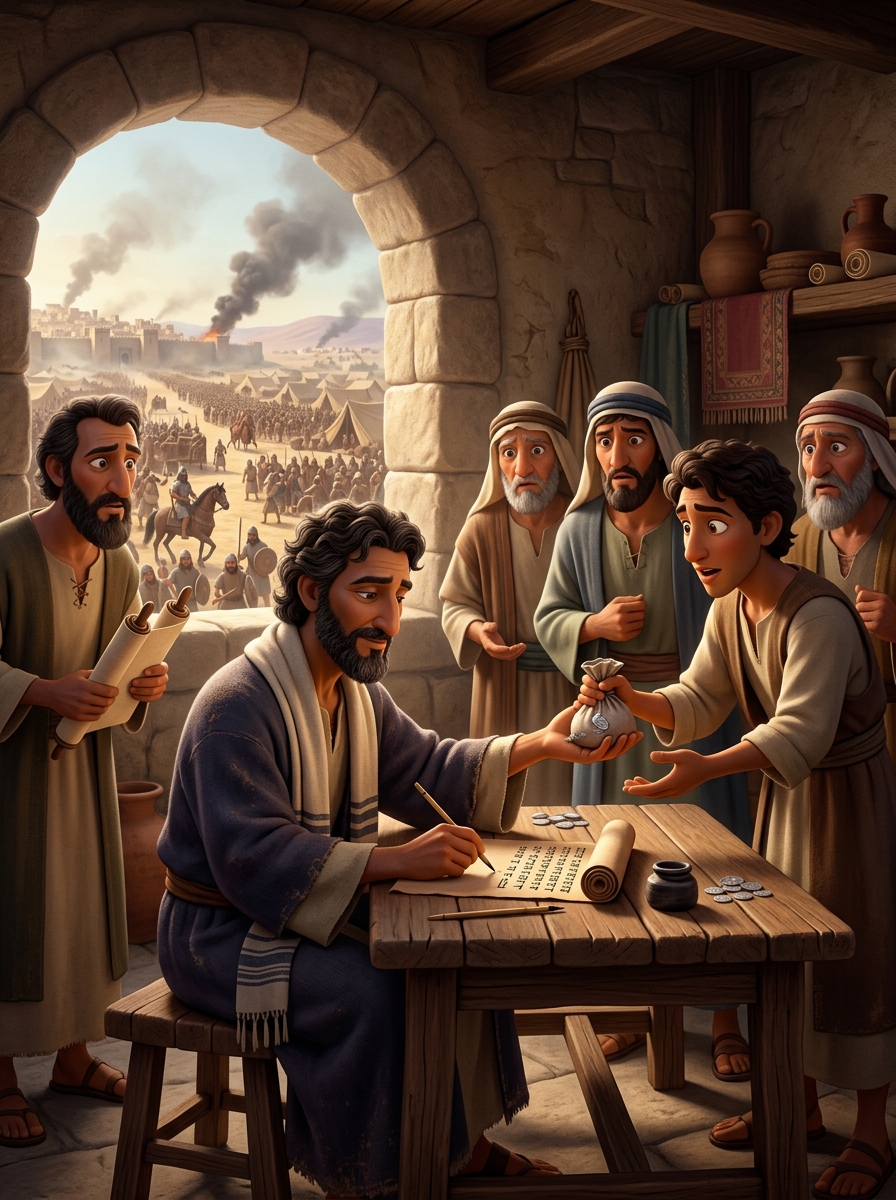
Jeremiah Buys a Field
One of the strangest moments in Jeremiah came while Jerusalem was under siege — the Babylonian army surrounding the city, the end clearly near. God told Jeremiah to buy a field from his cousin. Jeremiah did it. He weighed out the silver, signed the deed, and had it sealed and witnessed. Then he prayed — God, you told me to buy this field while the army is literally outside the walls. Why? God answered: houses and fields and vineyards will again be bought in this land. The purchase was an act of faith. A prophet buying real estate in a city about to fall — because he believed God's promise that his people would one day return.
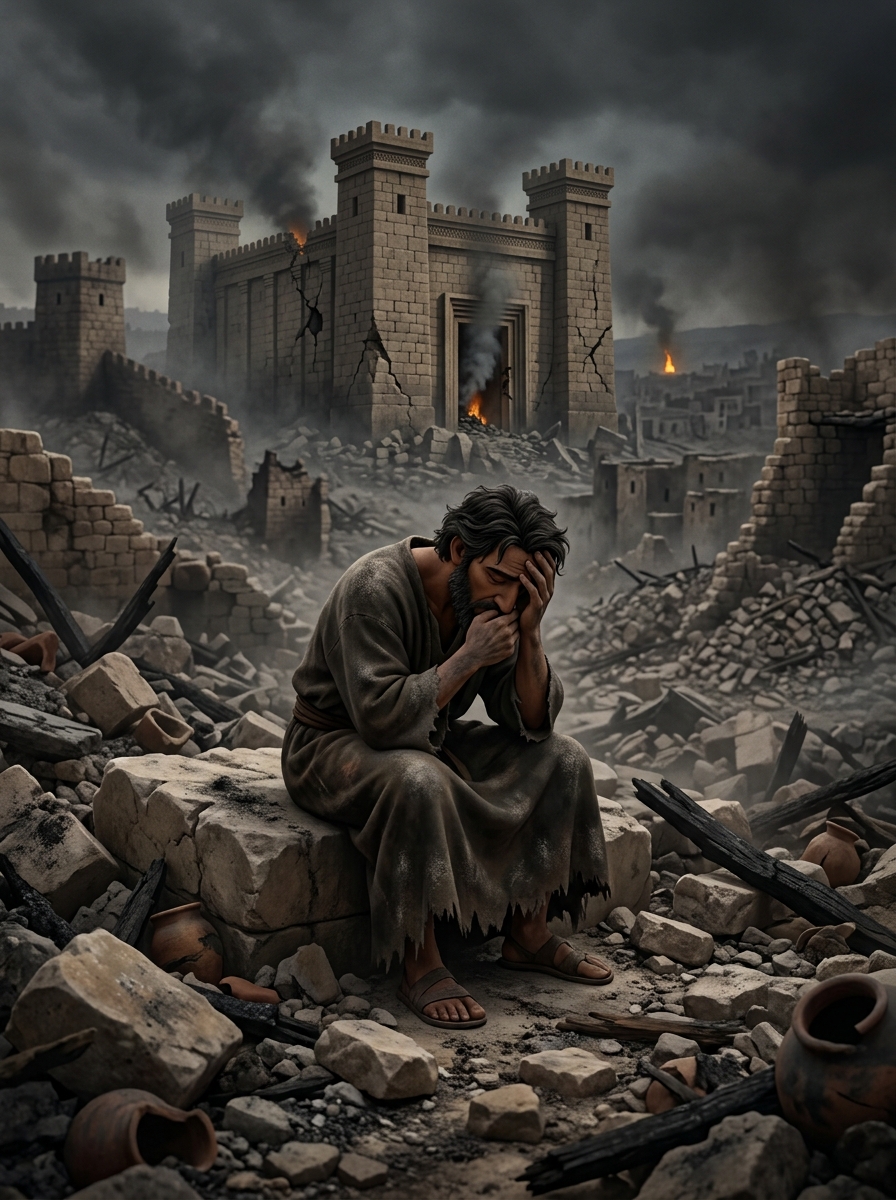
The Fall of Jerusalem
Everything Jeremiah had warned about for forty years finally happened. The Babylonian army broke through Jerusalem's walls. King Zedekiah tried to flee but was captured. His sons were killed in front of him — then his eyes were put out, so the last thing he ever saw was the death of his children. The temple — the house God had dwelt in since Solomon built it — was burned to the ground. The walls of Jerusalem were torn down. The city that David had made great was rubble. Jeremiah sat among the ruins and wept. He had spoken the truth for forty years. No one had wanted to hear it. Now everyone could see it.
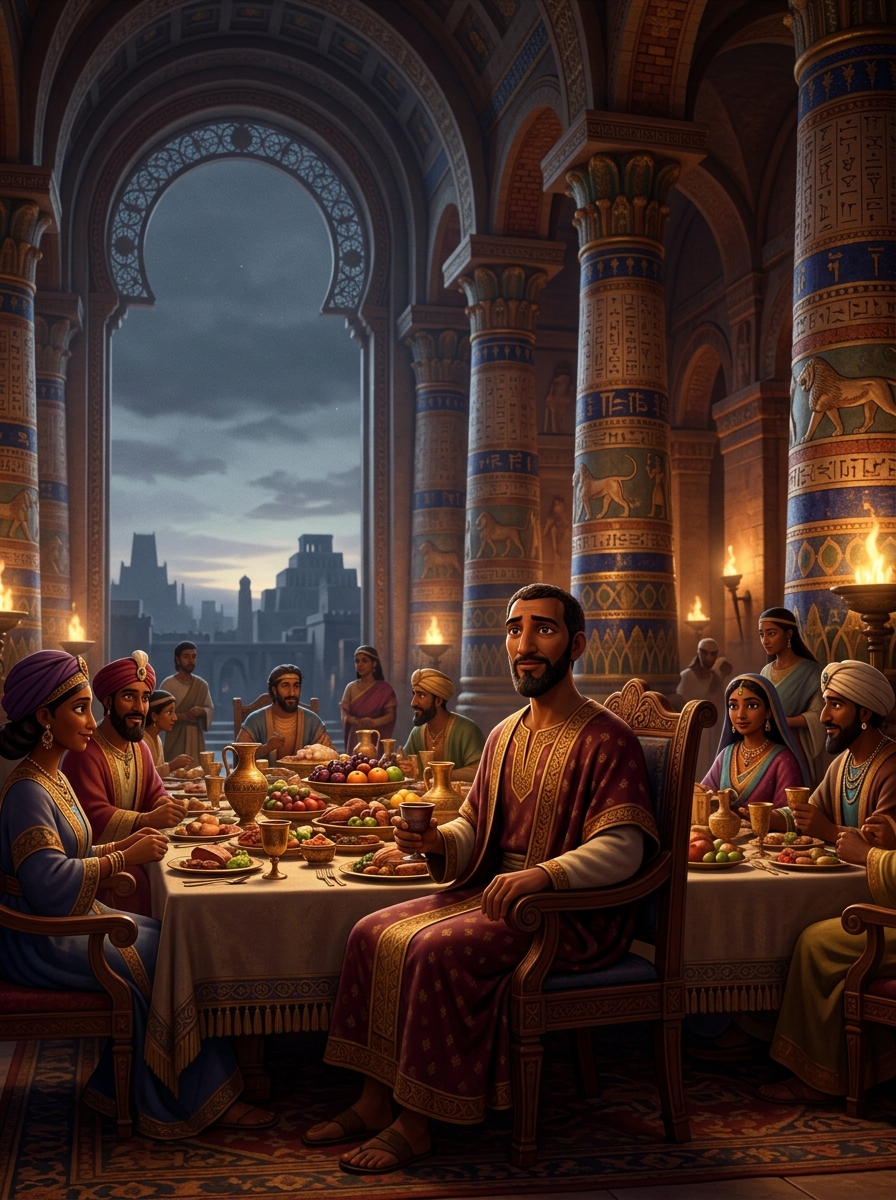
Still Hope in the Ruins
The book of Jeremiah ends in ruins — but not without hope. In the very last verses, something small and significant happens. Jehoiachin, the king of Judah who had been taken to Babylon, was released from prison after thirty-seven years. The king of Babylon spoke kindly to him, gave him a seat of honor above other kings, and provided for him every day for the rest of his life. It is a small flame in a great darkness. The line of David was not dead. A king of Judah was still alive and provided for. God had not forgotten His promise. The next book — Lamentations — will sit in the ruins. But even ruins are not the end of the story.
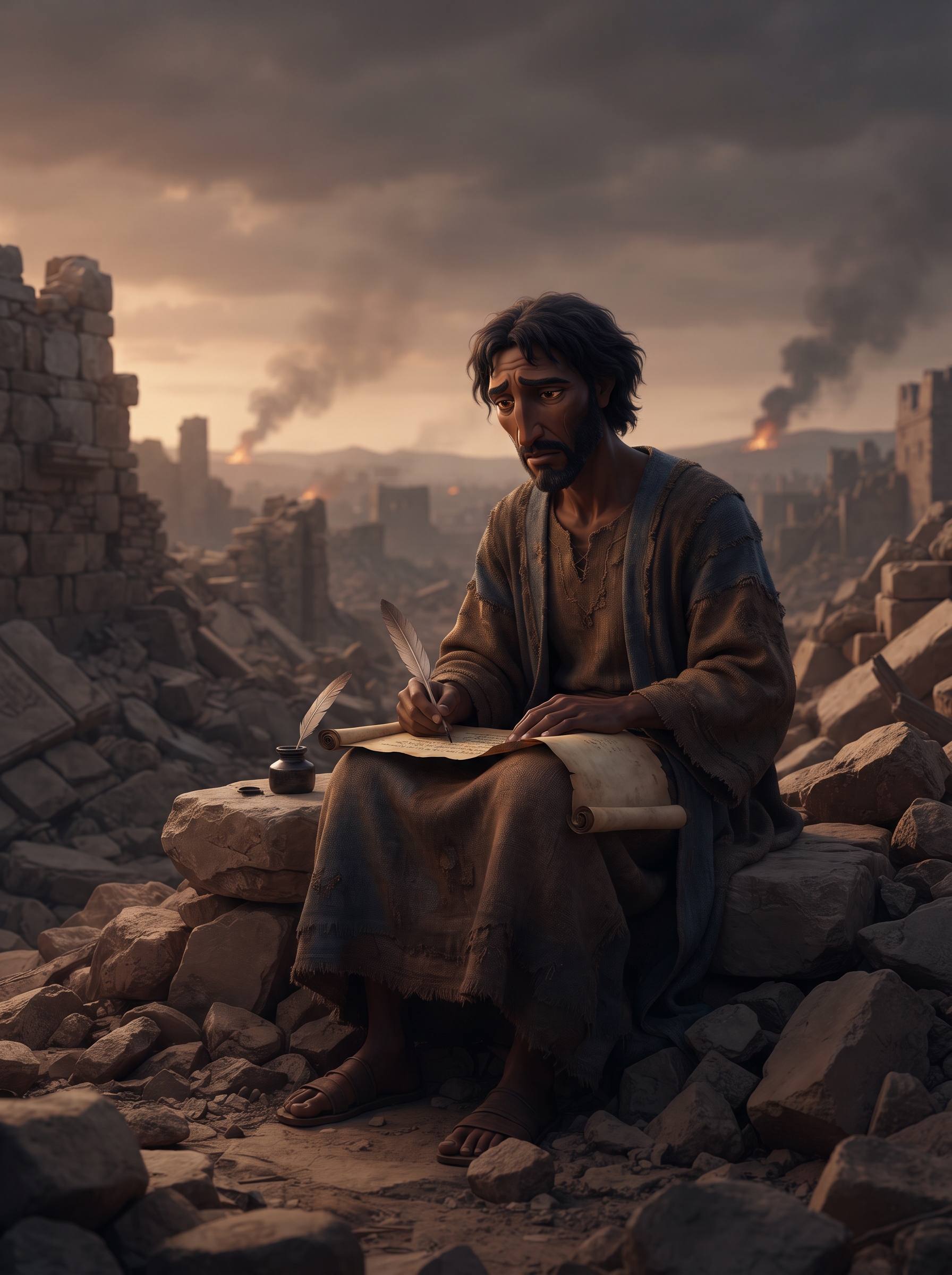
Sitting in the Ruins
The book of Lamentations is exactly what its name says — a collection of laments. Five poems of grief written in the rubble of Jerusalem after the Babylonians destroyed it. Jeremiah sat in the ruins of the city he had spent his whole life trying to save and wrote down his sorrow. He did not pretend the destruction had not happened. He did not rush to the happy ending. He sat in the grief and described it honestly — the empty streets, the broken gates, the people gone into exile. Lamentations teaches us something important: grief is not faithlessness. Sitting in the ruins and telling the truth about what you see is itself an act of faith.
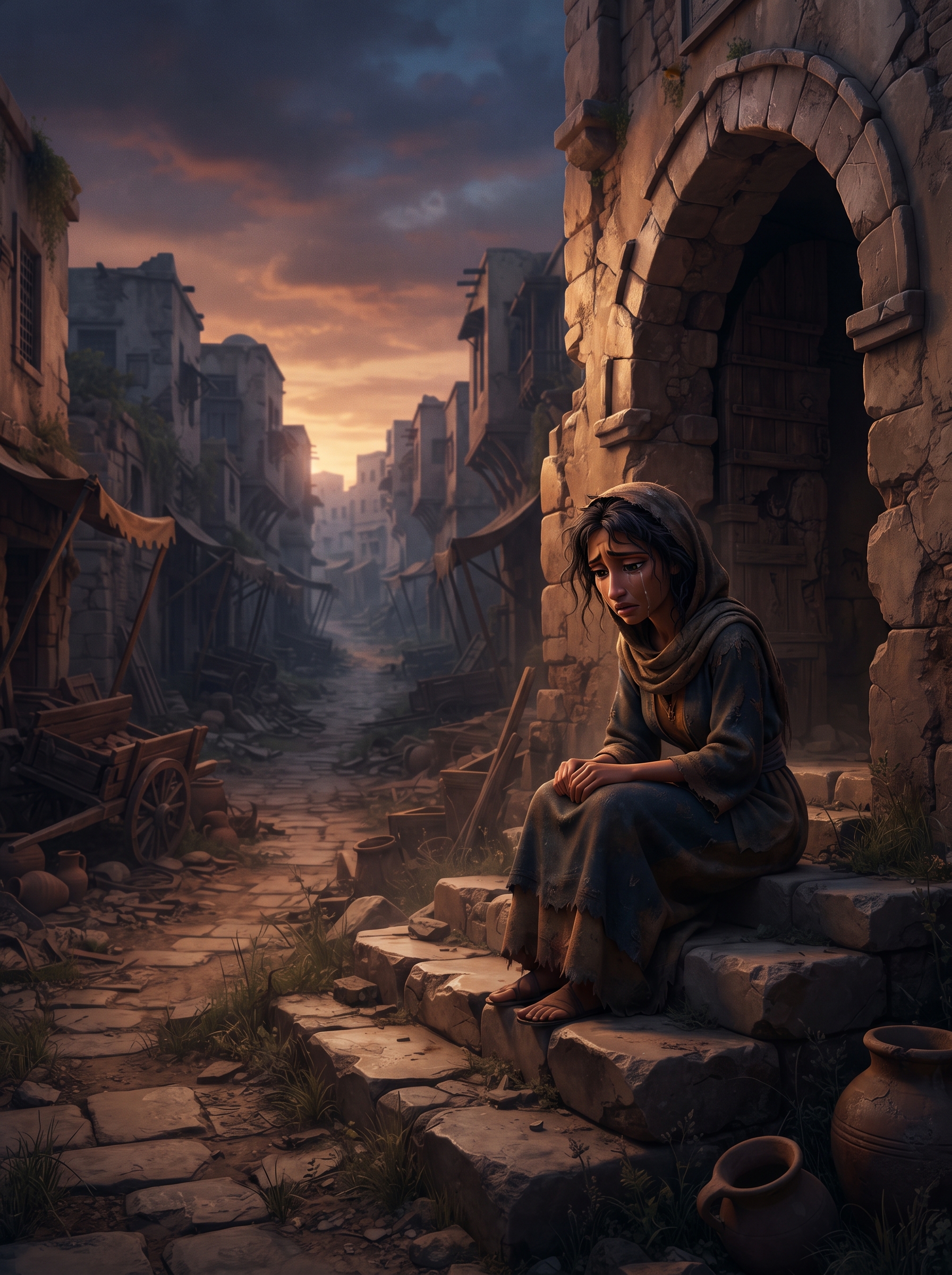
How Deserted Lies the City
The book opens with one of the saddest lines in all of Scripture. "How deserted lies the city, once so full of people." Jerusalem — the city of David, the city of God — was empty. Her roads were in mourning because no one came to her feasts anymore. All her gates were desolate. Her priests groaned, her young women grieved, and she was in bitter anguish. Jeremiah described the city itself as weeping in the night, tears running down her cheeks. All who had honored her now despised her because they had seen her shame. She had fallen from greatness into ruin. And the prophet sat with her in it.
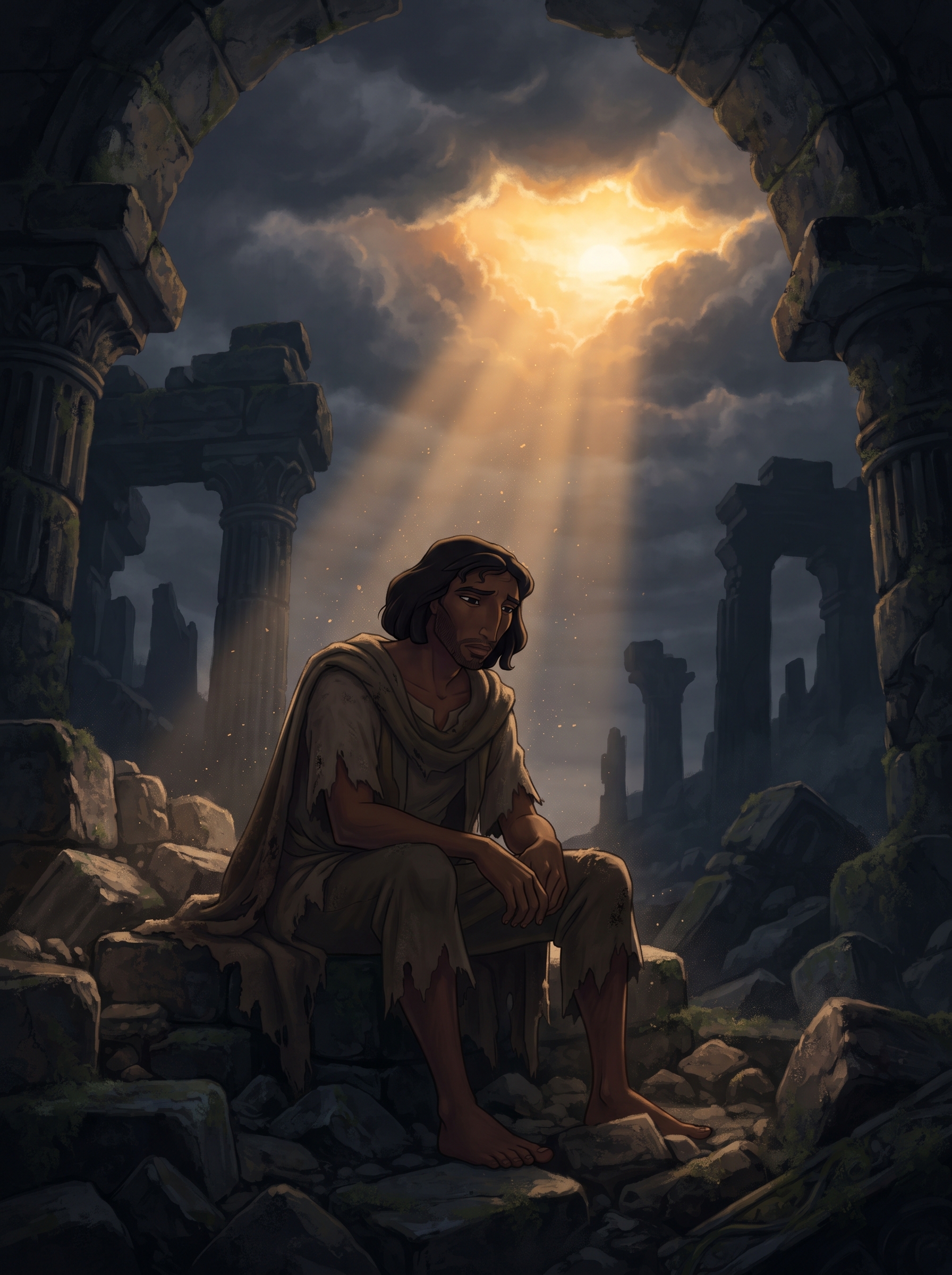
Great Is Your Faithfulness
In the very center of the book — in the middle of the deepest grief — something extraordinary happens. The writer described being driven into darkness, being walled in, having his path blocked. He said his strength and hope were gone. Then he remembered something. "Yet this I call to mind and therefore I have hope — because of the Lord's great love we are not consumed, for his compassions never fail. They are new every morning. Great is your faithfulness." He had not left the ruins. Nothing had changed around him. But he remembered who God was — and that remembering became the hinge on which his whole grief turned. This is the most famous passage in Lamentations. It was born in the darkest moment.
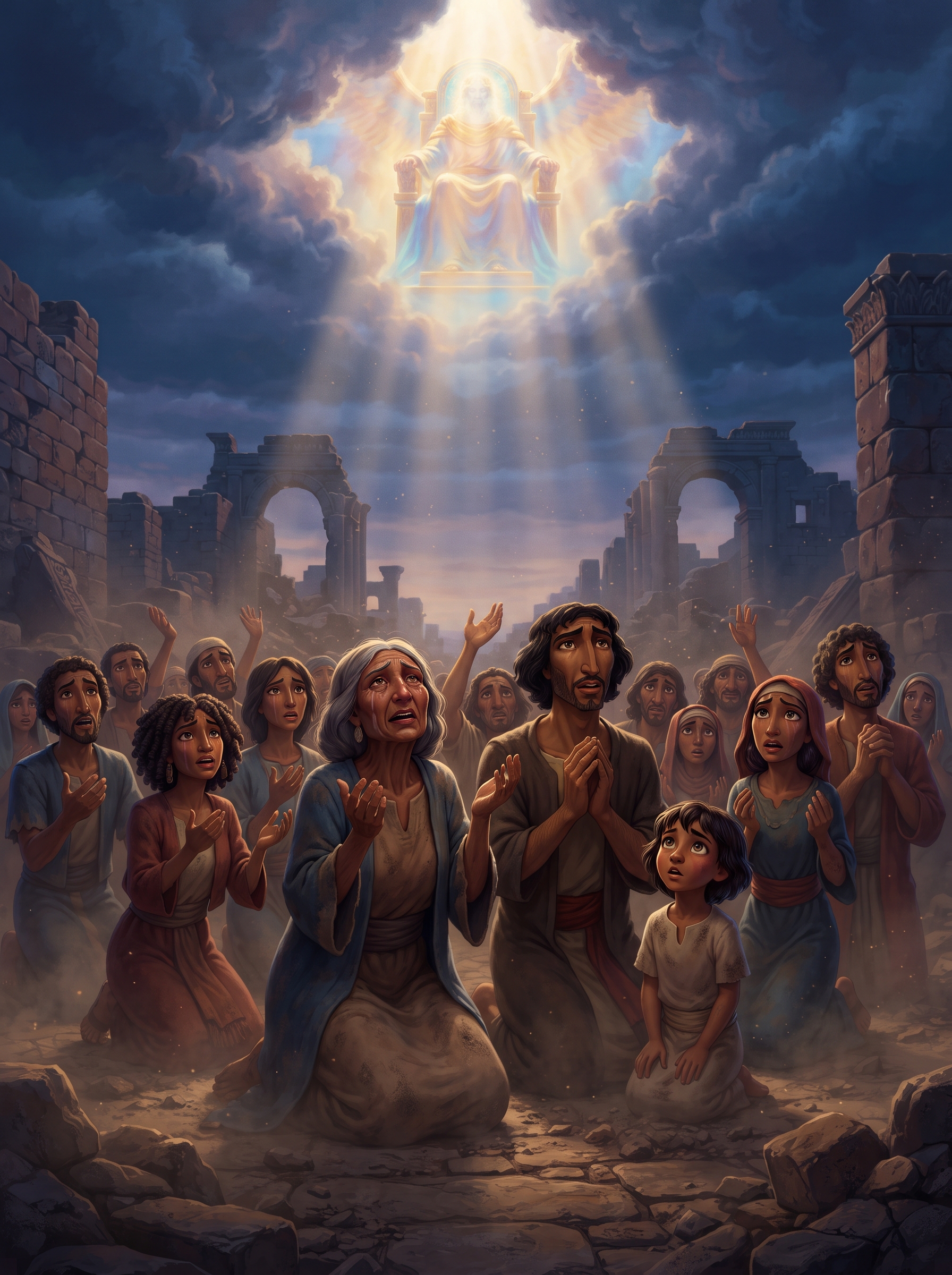
Restore Us, Lord
The book of Lamentations ends with an honest, unresolved cry. The people confessed that their suffering had come because of their sin — they did not pretend otherwise. But they also cried out to God: "You, Lord, reign forever. Your throne endures from generation to generation. Why do you always forget us? Why do you forsake us so long?" And then the final plea: "Restore us to yourself, Lord, that we may return. Renew our days as of old." The book does not end with the restoration. It ends with the asking. Sometimes that is where we are — in the asking, waiting for the answer that has not yet come.
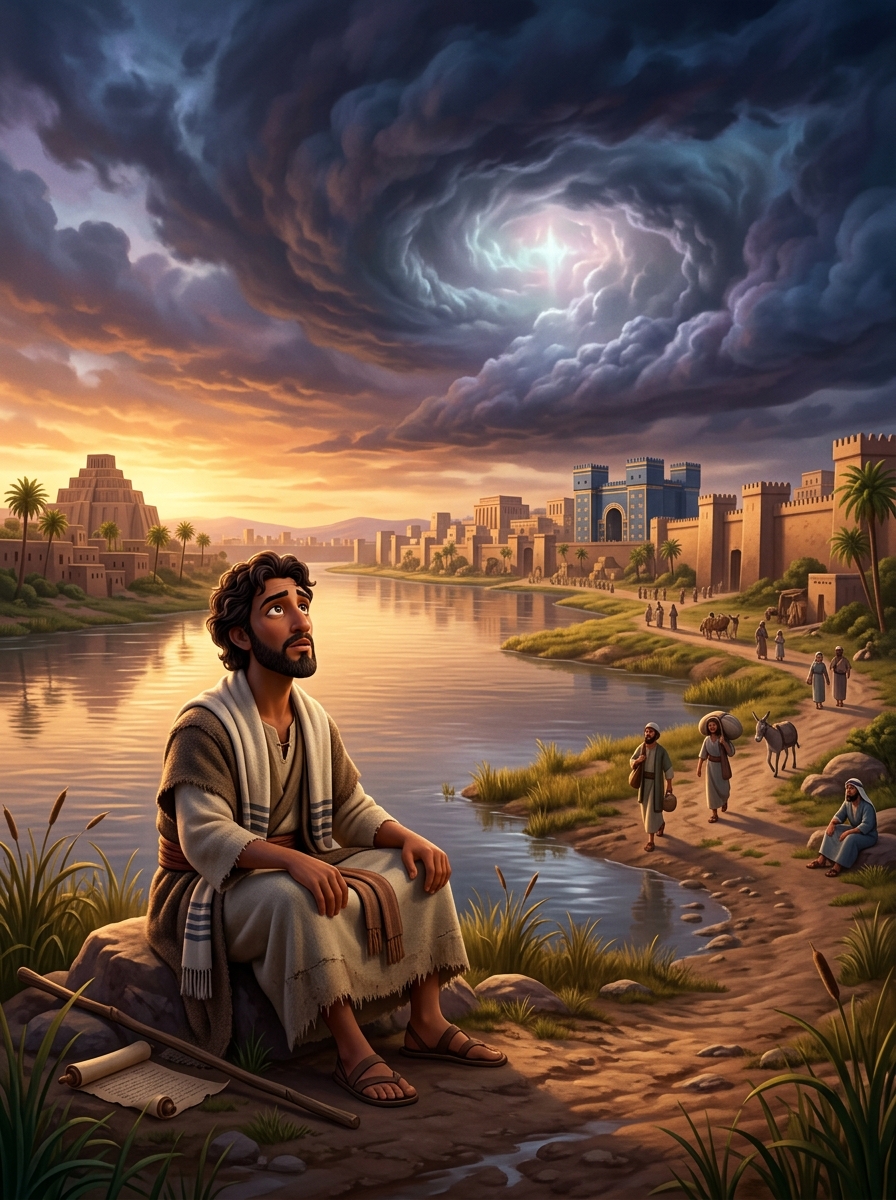
The Prophet by the River
Ezekiel was a priest who was taken to Babylon in the first wave of exiles — before Jerusalem even fell. He lived among his people by the Chebar River and God called him there, far from home, to be a prophet. Ezekiel is one of the most unusual books in the Bible — full of visions so vivid and strange that readers have marvelled at them for thousands of years. He saw things no human eye should be able to see. He acted out prophecies with his whole body. He spoke to dry bones. He measured a temple that did not yet exist. God called him "son of man" — a name Jesus would later take for himself.
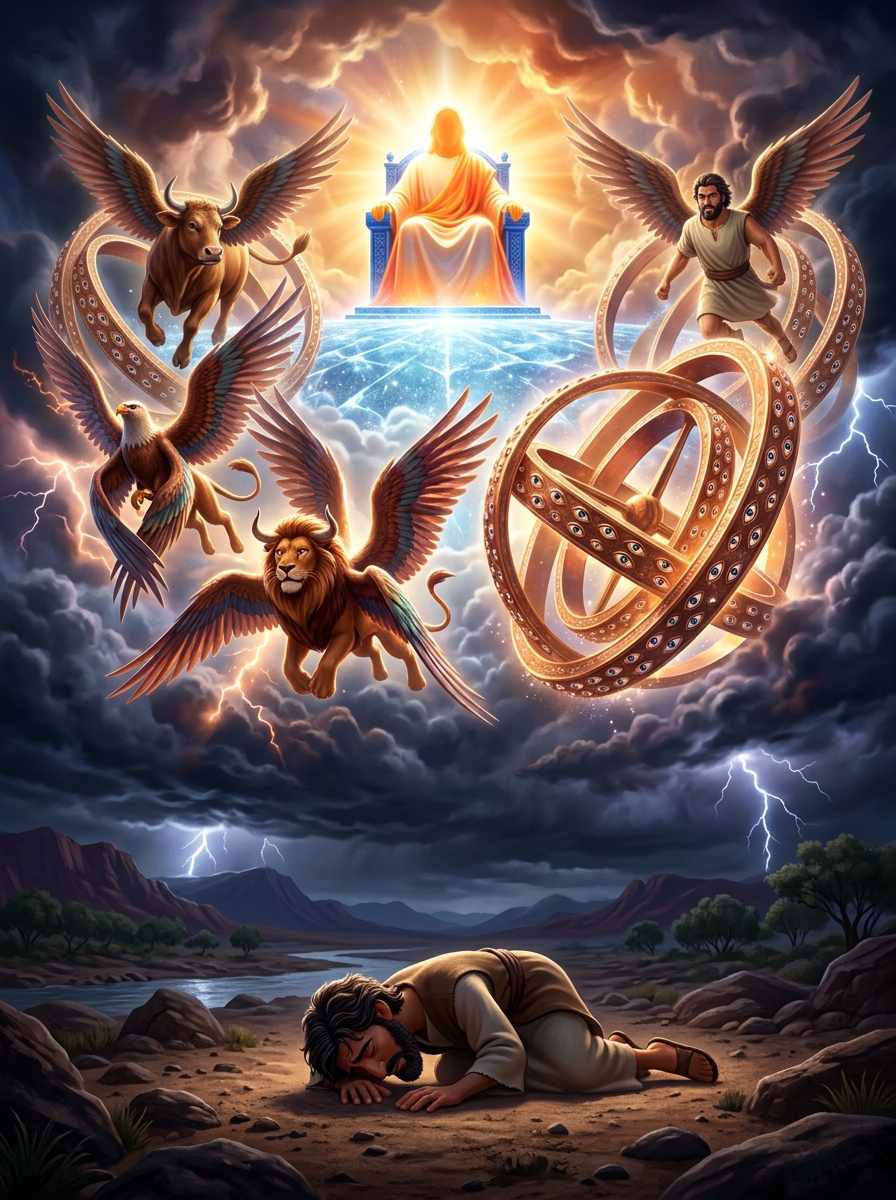
The Vision of the Wheels
Ezekiel's first vision was overwhelming. He saw a great storm cloud coming from the north, flashing lightning, surrounded by brilliant light. In the fire were four living creatures — each with four faces and four wings, their legs straight, their feet like gleaming bronze. Beside each creature was a wheel intersecting another wheel, and the rims of the wheels were covered with eyes all around. Wherever the spirit went the wheels went. Above the creatures was something like a vast expanse, sparkling like ice. Above that, a throne of sapphire blue. And on the throne — the likeness of the glory of God. Ezekiel fell face down. This is how the book begins.
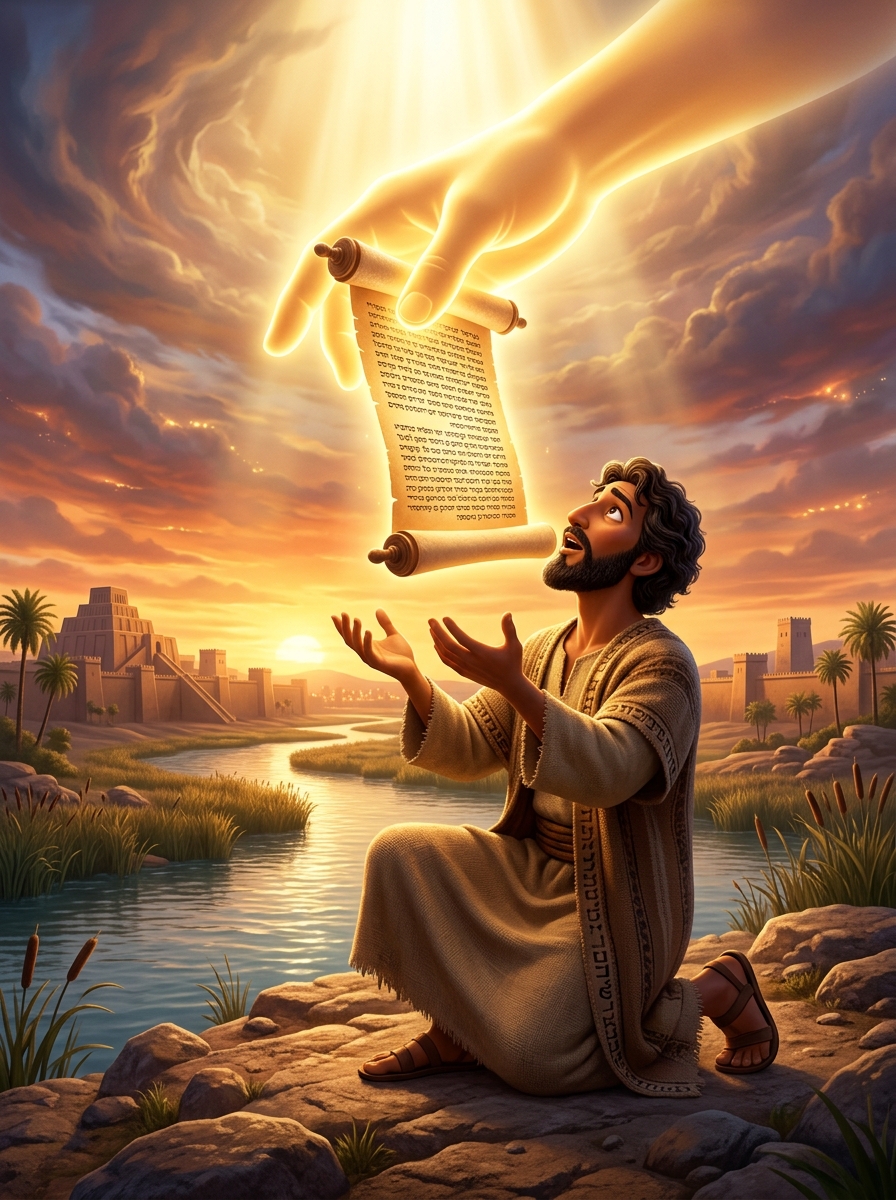
Eat This Scroll
After the vision, God spoke to Ezekiel. He called him "son of man" — a mortal human standing before the eternal God. He told him to go to the rebellious house of Israel — a stubborn and obstinate people. Whether they listened or not, they would know a prophet had been among them. Then God held out a scroll covered in writing on both sides — lament and mourning and woe. He told Ezekiel to eat it. Ezekiel ate the scroll. And it tasted sweet as honey in his mouth. The word of God — even the hard word, even the word of judgment — is nourishment. It sustains the prophet who carries it, even when the message is painful.
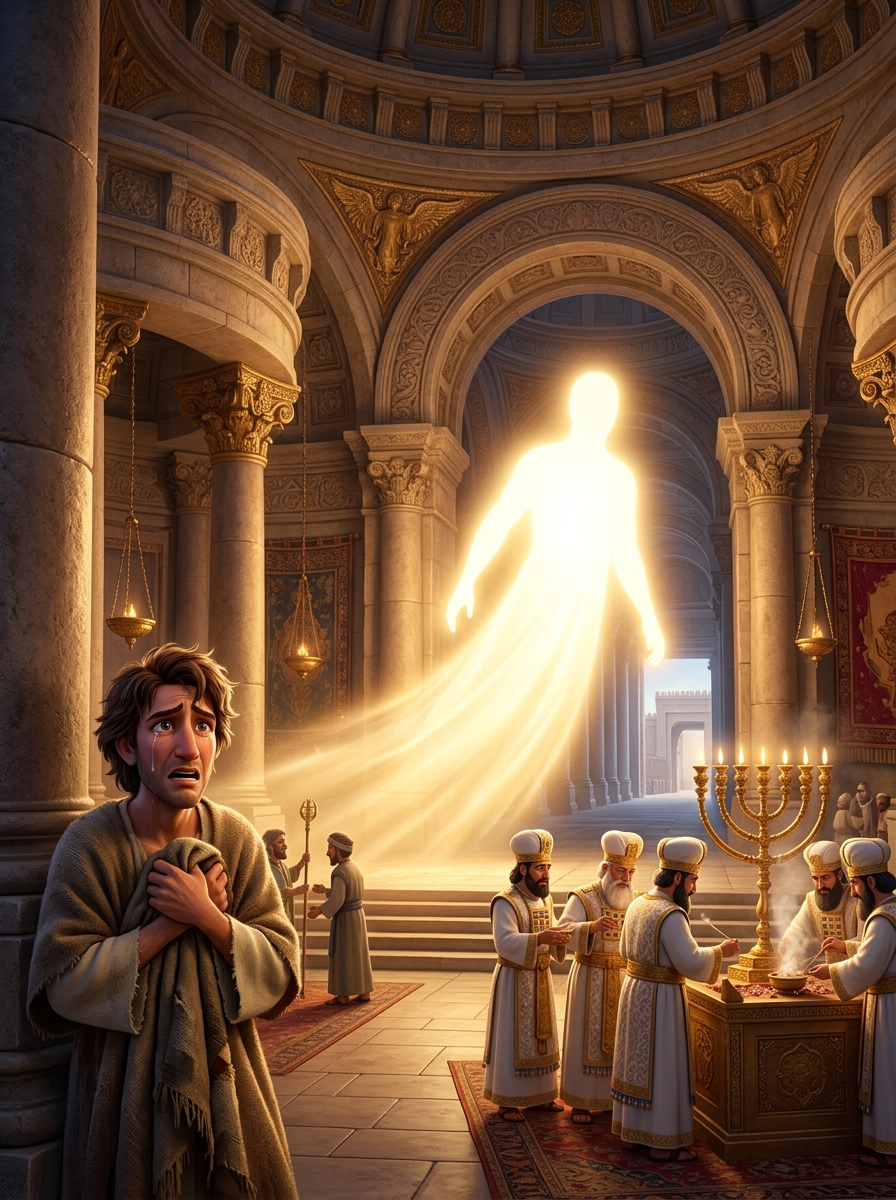
The Glory Departs
One of the most heartbreaking moments in Ezekiel is also one of the most important. God showed him a vision of Jerusalem — and then showed him what was happening in the temple. The people were worshipping idols in the very house of God. Ezekiel watched as the glory of God — the great radiant presence that had filled the temple since Solomon dedicated it — slowly rose up from the inner sanctuary. It moved to the threshold. Then it moved to the east gate. Then it rose above the city and stopped at the mountain to the east. The glory of God left the temple. The house was empty. The people had driven Him out — and most of them did not even notice.
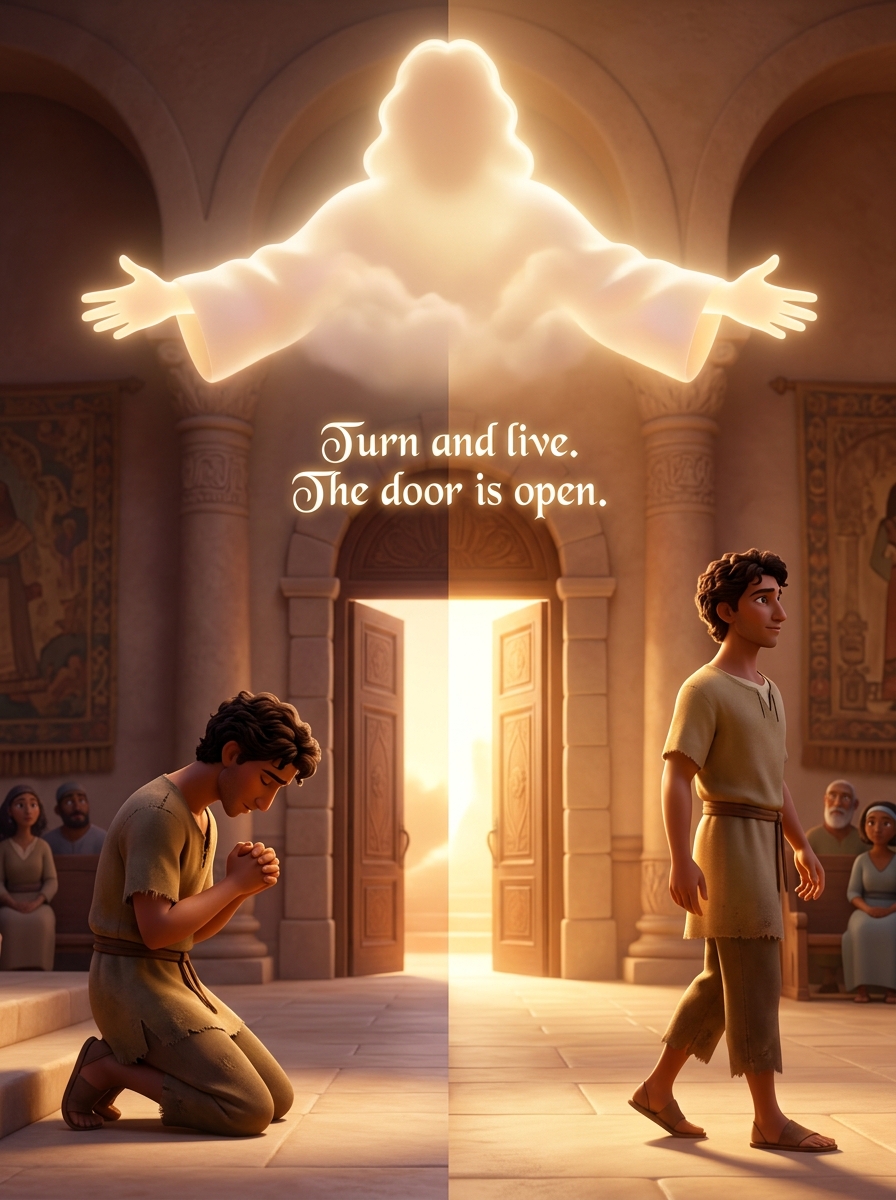
The Soul Who Sins
In Babylon the exiles were using a proverb to avoid responsibility. They said, "The parents eat sour grapes and the children's teeth are set on edge." They meant — we are suffering for what our parents did, not for anything we did ourselves. God rejected this completely through Ezekiel. He said every soul belongs to Him — the soul of the parent and the soul of the child alike. The person who sins is the one who will die. But also — if a wicked person turns from their sin and does what is right, they will live and not die. God takes no pleasure in the death of anyone. He wants people to turn and live.
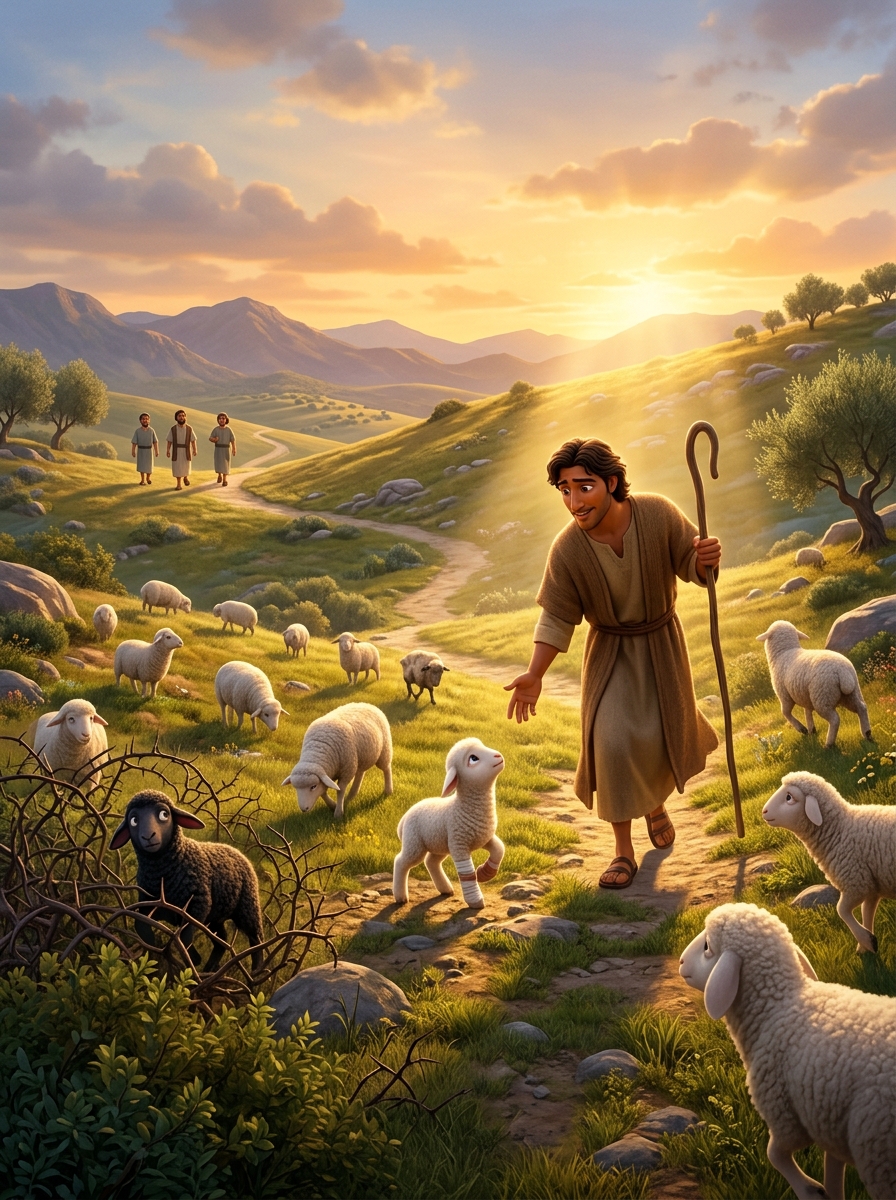
The Good Shepherd
God delivered a devastating judgment against the leaders of Israel — the shepherds who had been supposed to care for the flock. They had fed themselves instead of the sheep. They had not strengthened the weak, healed the sick, or searched for the lost. So God said He would remove them. And then He made a promise that pointed directly to Jesus: "I myself will search for my sheep and look after them. I will rescue them from all the places where they were scattered. I will tend them in a good pasture. I will bind up the injured and strengthen the weak." God Himself would be the shepherd His people had never had. Jesus heard this passage and said — I am the good shepherd.
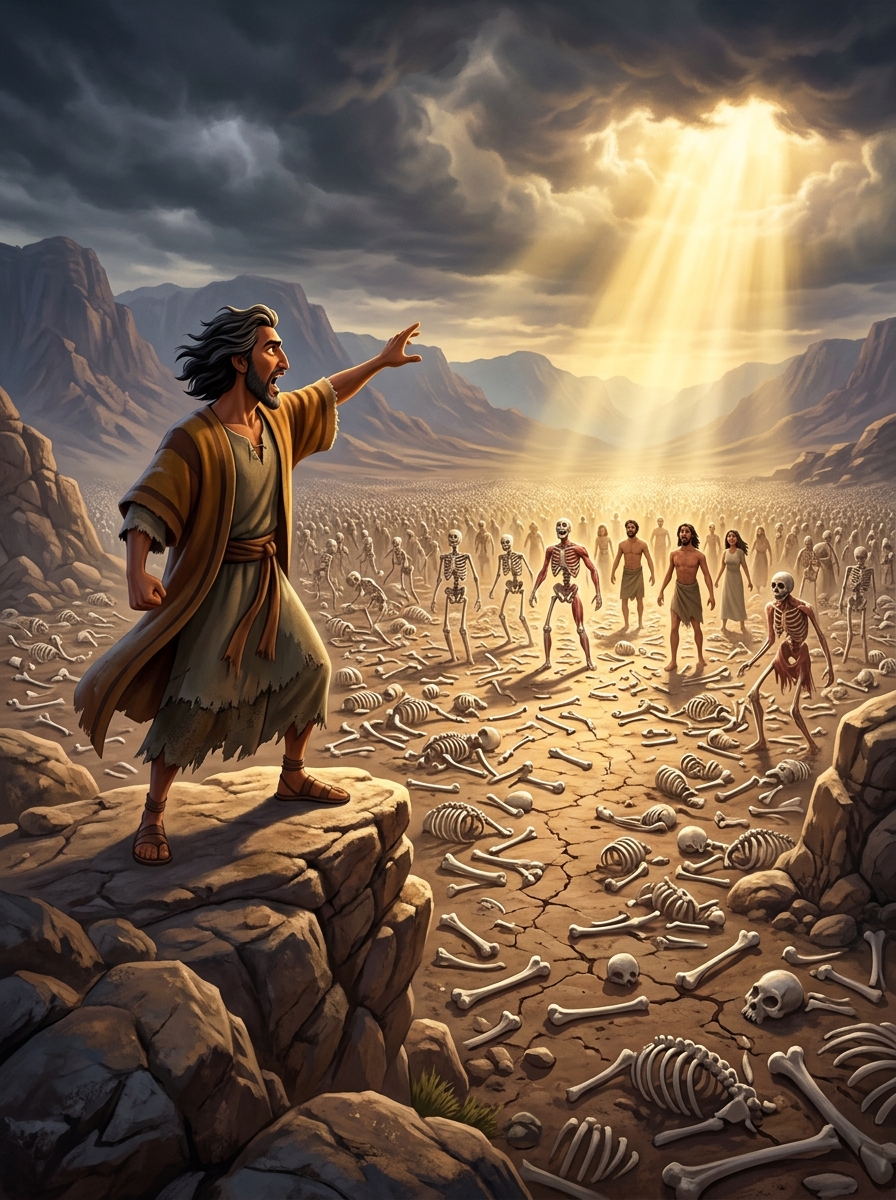
The Valley of Dry Bones
God took Ezekiel in a vision to a valley full of dry bones — the bones of a great army, very dry, completely dead. God asked him: "Son of man, can these bones live?" Ezekiel answered carefully — only you know, Lord. God told him to prophesy to the bones. Ezekiel spoke, and there was a rattling sound as the bones came together. Tendons and flesh appeared. Skin covered them. But there was no breath. God told him to prophesy to the breath — and the breath came, and the vast army stood on its feet. God said: these bones are the whole house of Israel. They say our bones are dried up, our hope is gone. But I will open your graves and bring you back.
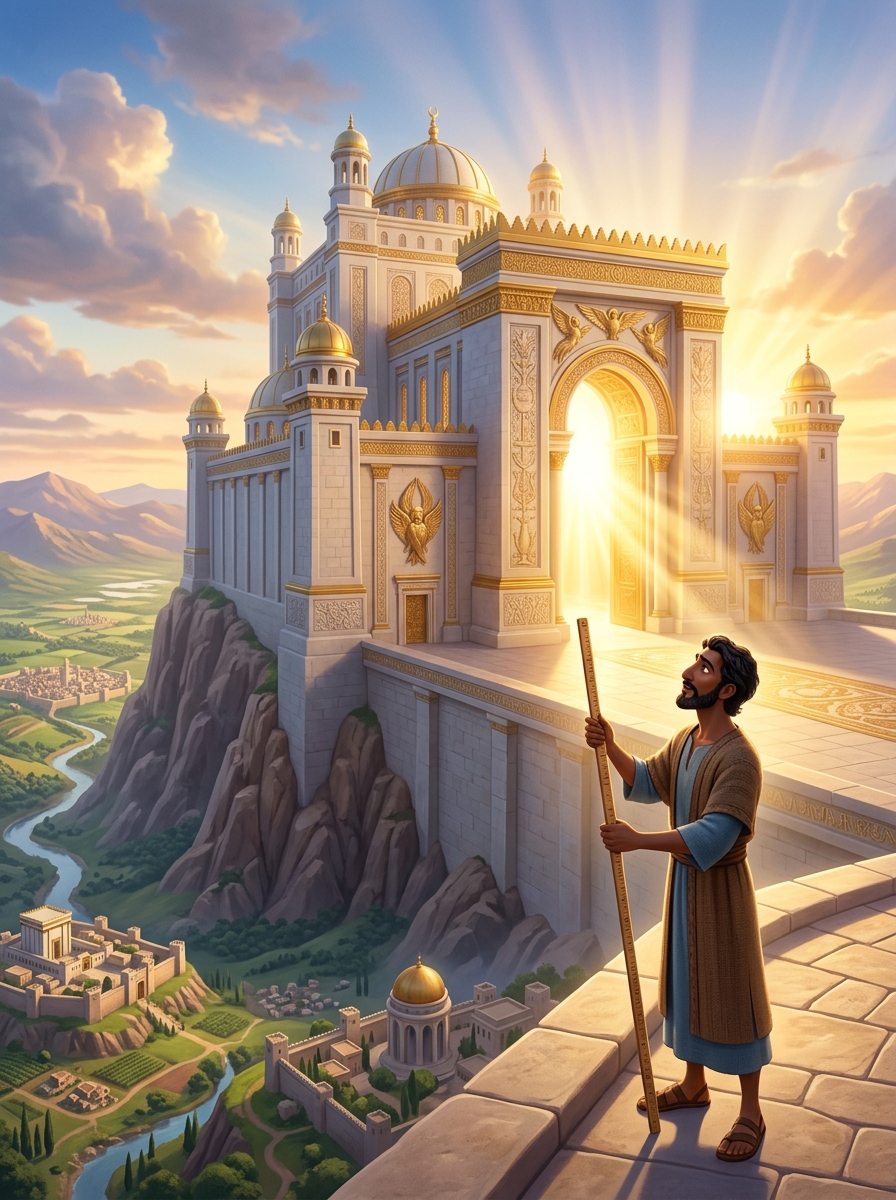
The New Temple
In the twenty-fifth year of exile, God took Ezekiel in a vision to a very high mountain in Israel and showed him a man with a measuring rod — measuring a great temple that did not yet exist. Every measurement was precise. Every gate, every court, every wall recorded exactly. Ezekiel walked through the entire structure. And then the most extraordinary thing happened — the glory of God returned. Coming from the east, the direction it had left from. It entered the temple through the east gate and filled the house. God said: this is where I will live among the Israelites forever. What had departed came back. The empty house was full again.
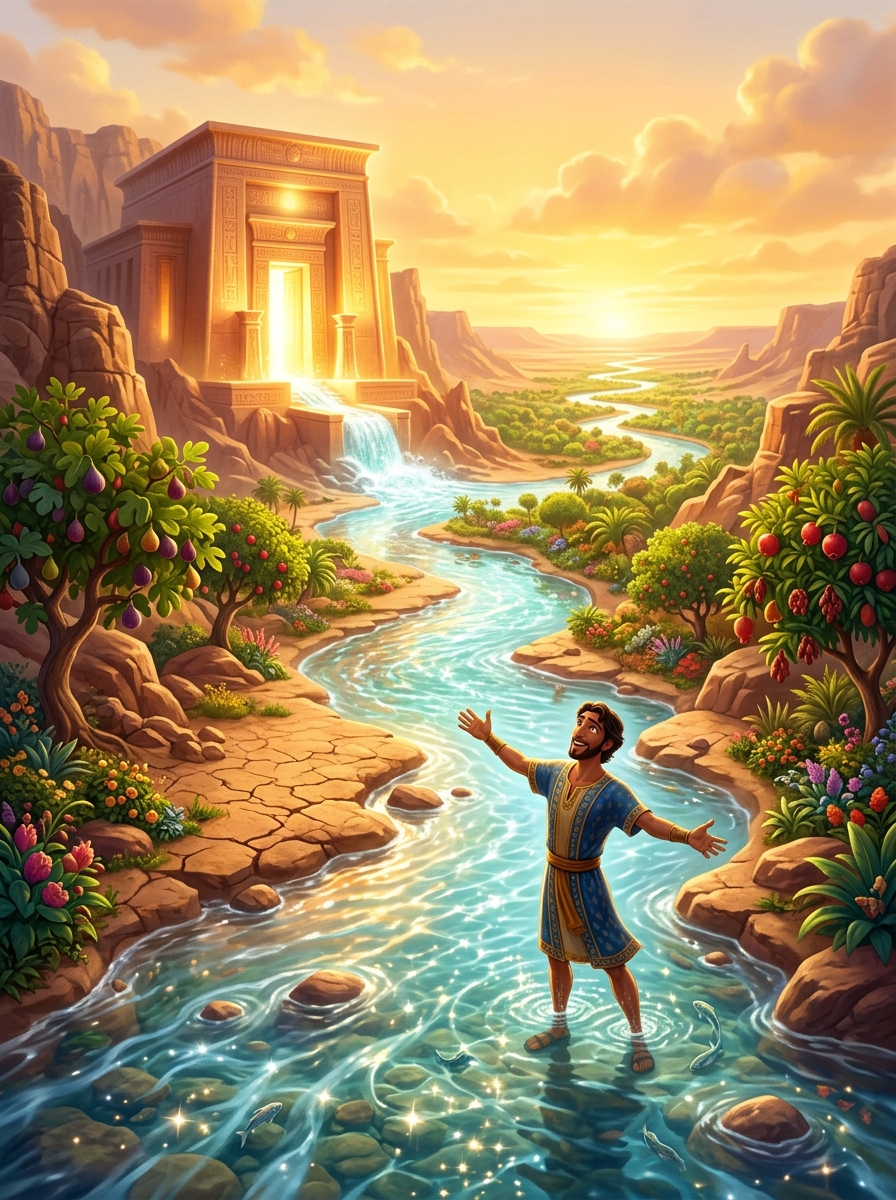
The River from the Temple
In his vision of the new temple, Ezekiel saw something that took his breath away. Water was trickling from under the threshold of the temple — from the south side. A man led him along the bank of the river. A thousand cubits out, the water was ankle deep. Another thousand, knee deep. Another thousand, waist deep. Another thousand — a river too deep to cross. And everywhere the river flowed, everything lived. Trees grew on both banks. Fish filled the water. The Dead Sea became fresh. Every living creature that moved wherever the river went lived. The river of God — flowing from His house, bringing life to everything it touches.

The Lord Is There
The book of Ezekiel ends with the vision of the new land divided among the tribes and a great city at the center. The city is given measurements and gates — twelve gates named for the twelve tribes of Israel. And the final line of the entire book — the name of the city. Not Jerusalem. Not Zion. Just this: "The Lord Is There." That is the whole promise of the book in three words. The glory that departed in chapter 10 has returned. God is with His people again. The name of the city says everything that needed to be said. The Lord is there. He always intended to come back.
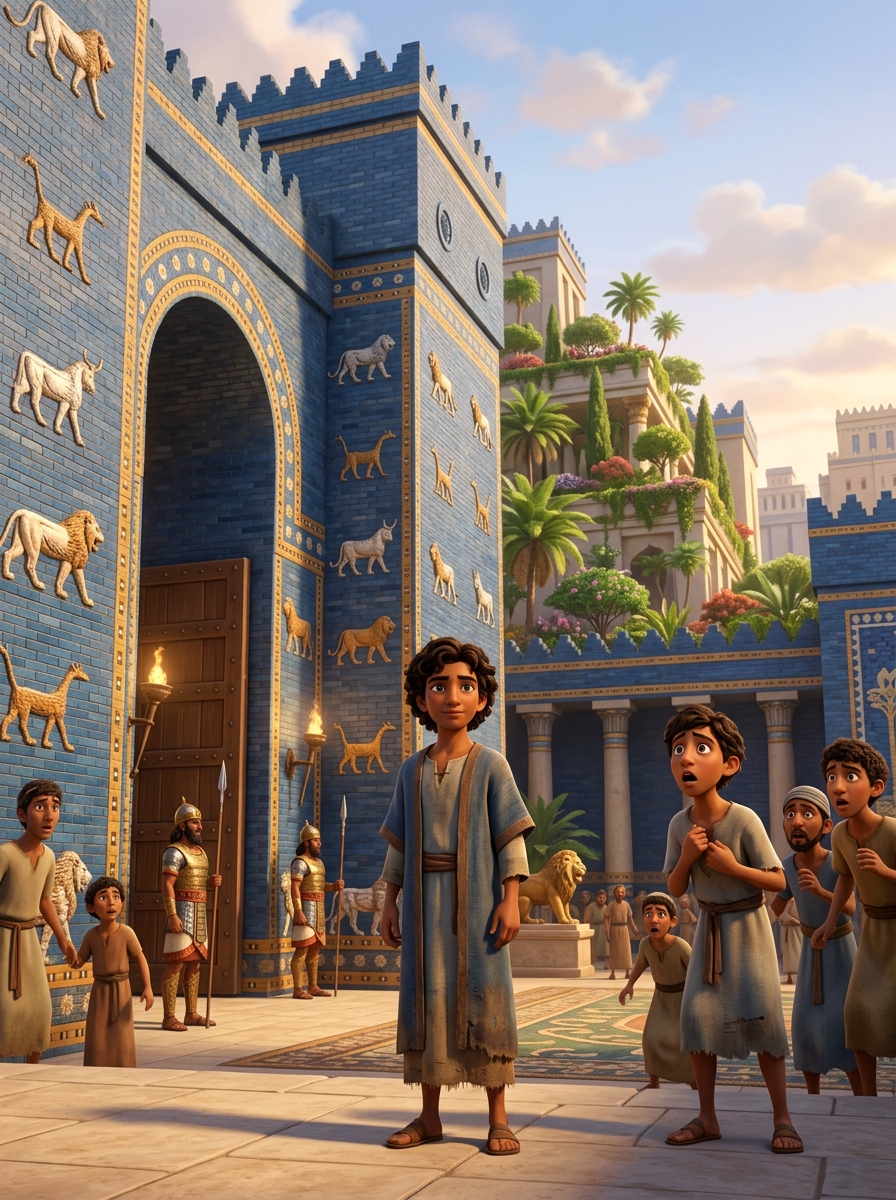
Faithful in a Foreign Land
Daniel was a young man from Jerusalem taken to Babylon when he was just a teenager. He was chosen for the king's service because he was intelligent, capable, and handsome. But Daniel made a decision early — he would not compromise who he was or who he served, no matter what the most powerful empire in the world demanded of him. The book of Daniel has two parts — the first six chapters are stories of Daniel and his friends staying faithful under pressure. The last six chapters are visions of the future that still puzzle and amaze readers today. Daniel lived into his eighties, serving kings across empires, never once forgetting his God.
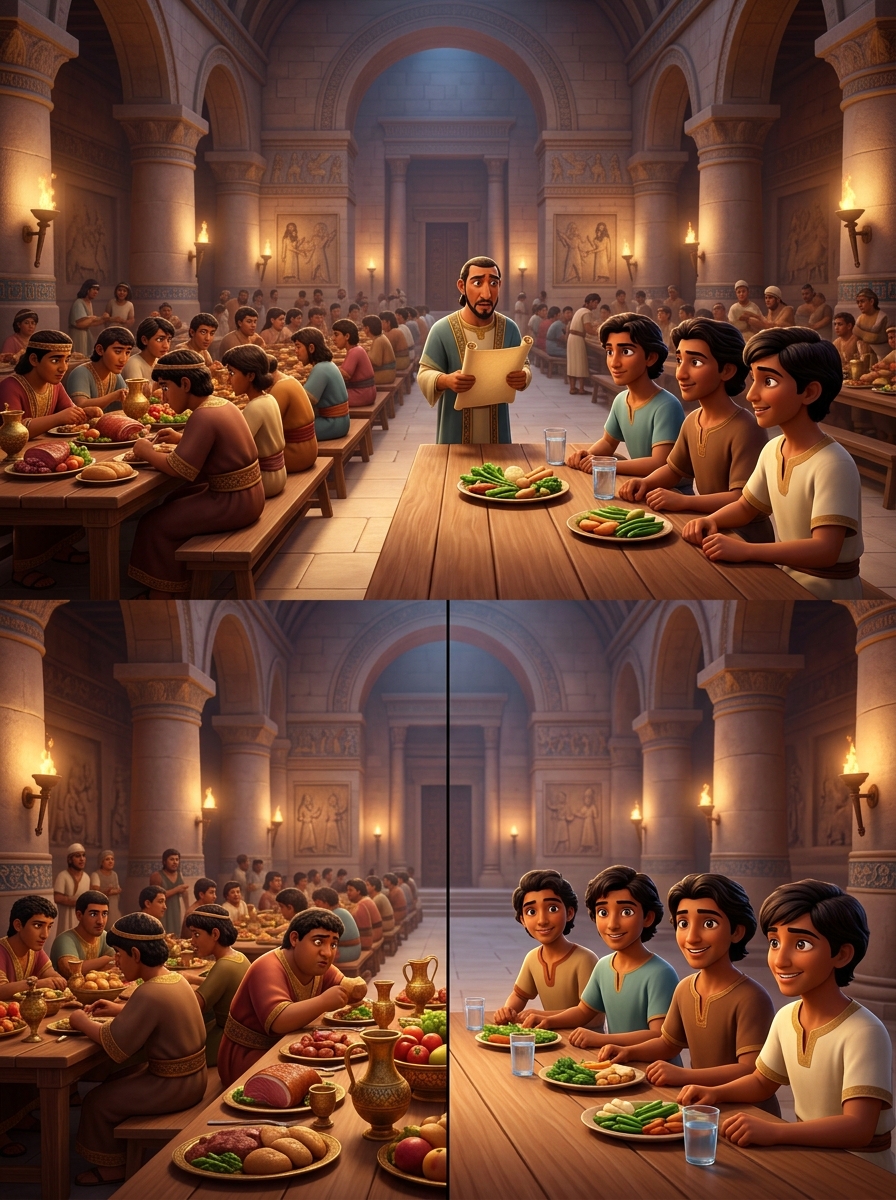
The Food Test
When Daniel and his three friends arrived in Babylon, the king ordered them to eat from his royal table — rich food and wine that had been offered to Babylonian idols. Daniel quietly asked the official in charge if they could eat vegetables and water instead. The official was nervous — what if they looked worse than the other young men? Daniel suggested a ten day test. After ten days Daniel and his friends looked healthier and better nourished than all the others who had eaten the royal food. God gave them knowledge, understanding, and wisdom. And Daniel could understand visions and dreams. Their faithfulness in a small thing opened doors that no compromise could have opened.
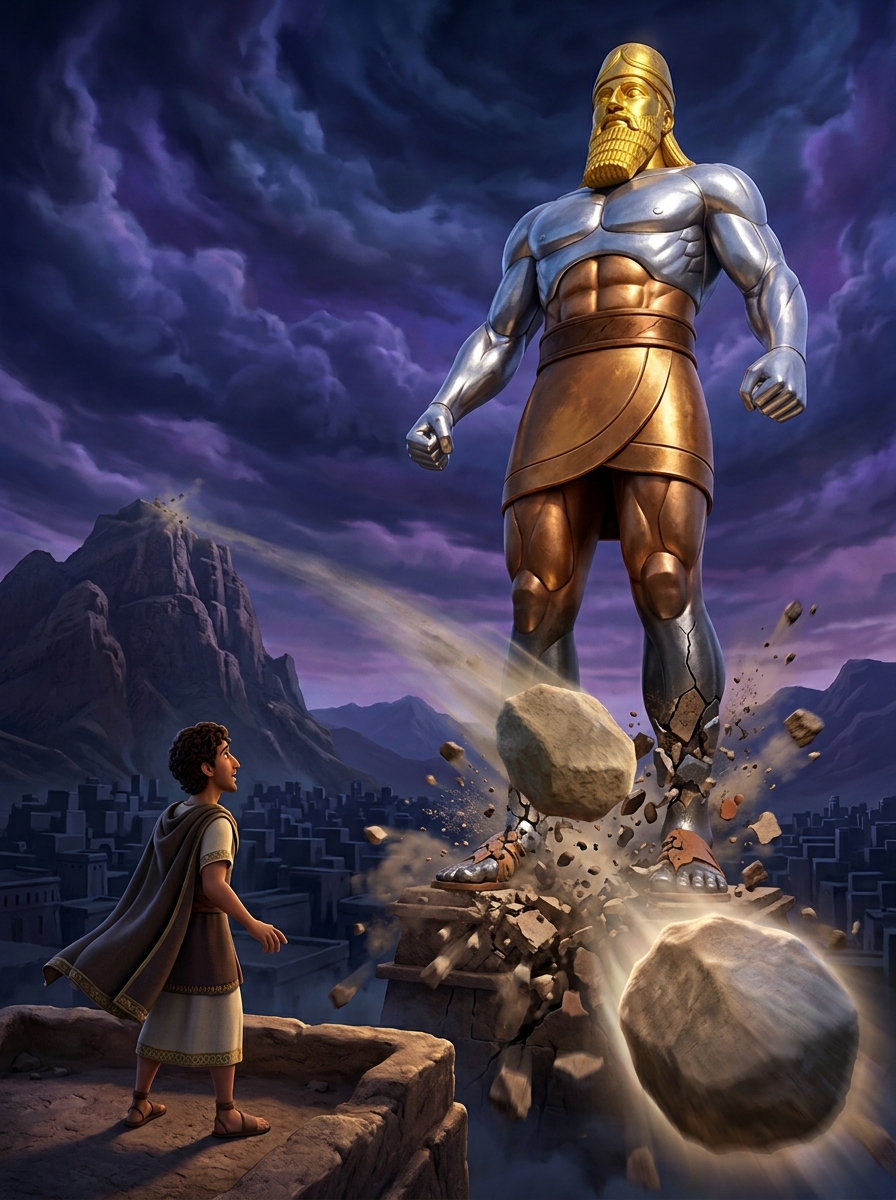
The Statue and the Stone
King Nebuchadnezzar had a dream that troubled him deeply — but he could not remember it. He demanded that his wise men tell him both the dream and its meaning. When they could not, he ordered all the wise men of Babylon killed — including Daniel. Daniel asked for time and prayed with his friends. That night God revealed the dream. Daniel went to the king and described it: a great statue with a head of gold, chest of silver, belly of bronze, legs of iron, feet of mixed iron and clay. Then a stone cut without human hands struck the feet, destroyed the whole statue, and became a great mountain filling the whole earth. Daniel told the king — your kingdom is the head of gold. But God's kingdom will outlast them all.
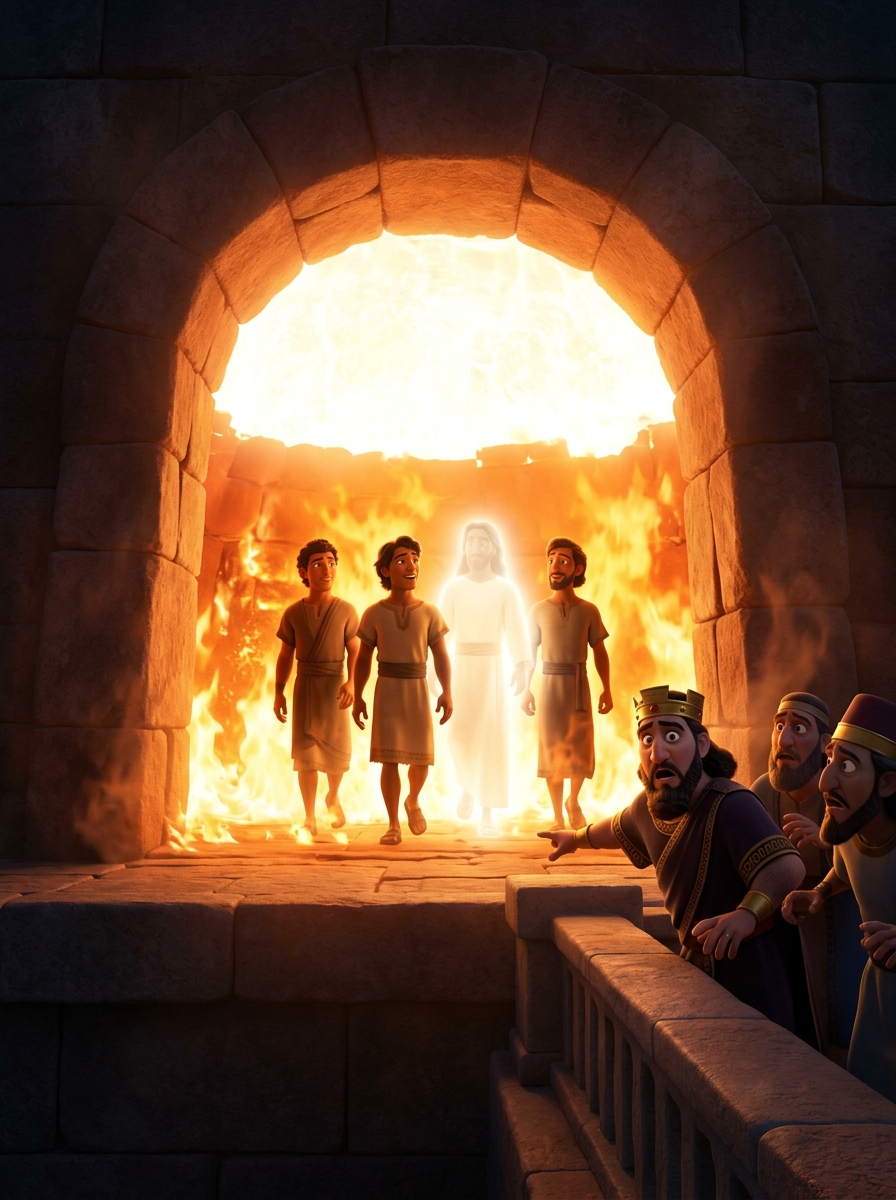
The Fiery Furnace
Nebuchadnezzar built an enormous gold statue and commanded everyone to bow down to it when the music played. Daniel's three friends — Shadrach, Meshach, and Abednego — refused. The king was furious and had the furnace heated seven times hotter than usual. He asked them — what god can rescue you from my hand? They answered calmly: our God is able to rescue us. But even if he does not — we will not serve your gods or worship your statue. They were thrown in. The king looked into the furnace and leapt to his feet. "Were there not three men we threw in? I see four men walking around in the fire — and the fourth looks like a son of the gods."
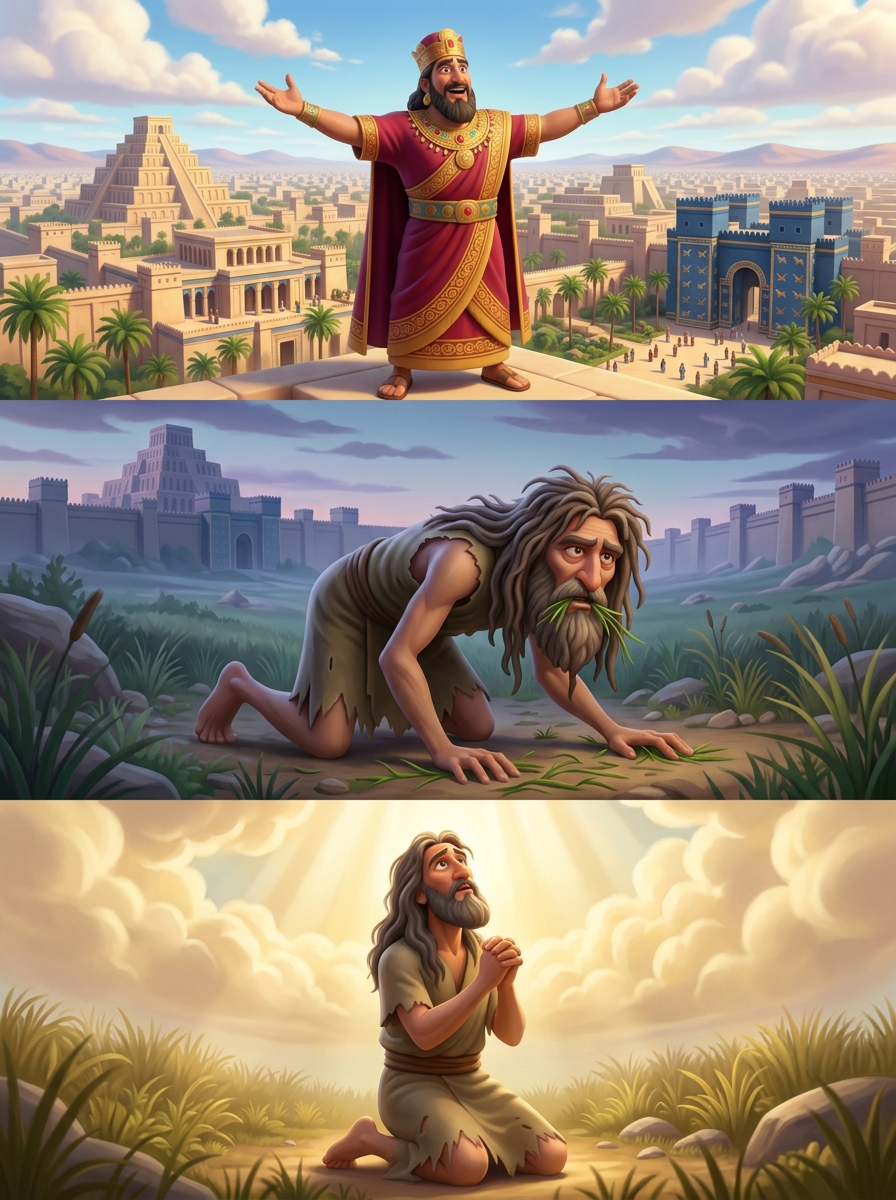
The King Who Ate Grass
Nebuchadnezzar had another dream — a great tree reaching to the sky, full of fruit, giving shelter to every creature. Then a messenger from heaven cried out — cut down the tree. Leave only the stump. Let the king live like a wild animal for seven seasons until he acknowledges that the Most High rules over all kingdoms. Daniel interpreted the dream with sorrow — it was about the king himself. One year later, while Nebuchadnezzar was walking on his palace roof boasting about his own greatness, a voice came from heaven. Immediately he was driven out, ate grass like cattle, and lived in the fields until his hair grew like eagles' feathers. Then he lifted his eyes to heaven — and his reason returned.
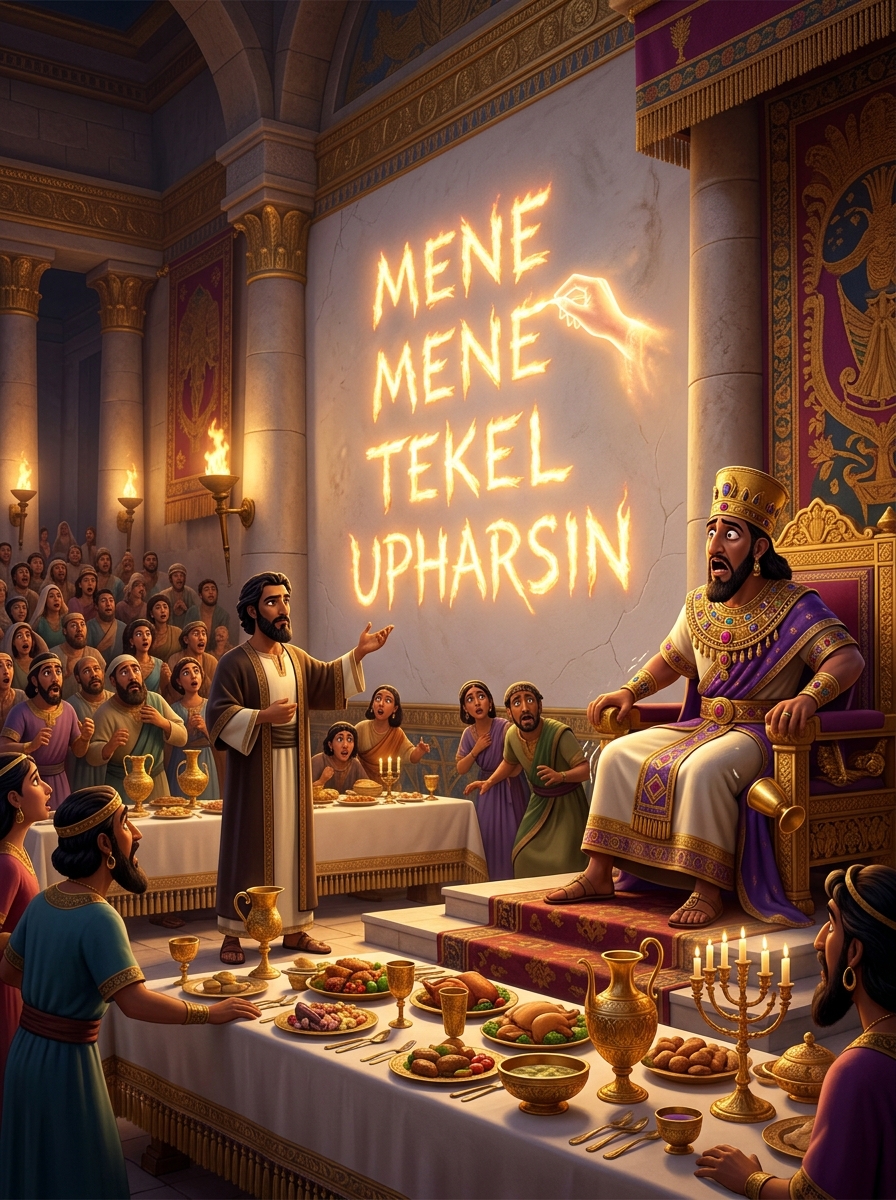
The Writing on the Wall
Nebuchadnezzar's son Belshazzar threw a great feast and used the gold cups taken from God's temple in Jerusalem to drink wine and praise his idols. In that same hour, the fingers of a human hand appeared and wrote on the plaster wall of the palace. The king's face turned pale. His knees knocked together. Daniel was brought in and read the writing — Mene, Mene, Tekel, Parsin. God has numbered your kingdom and brought it to an end. You have been weighed and found wanting. Your kingdom is divided and given to others. That very night Belshazzar was killed and Darius the Mede took the kingdom. Borrowed cups and borrowed time had run out.
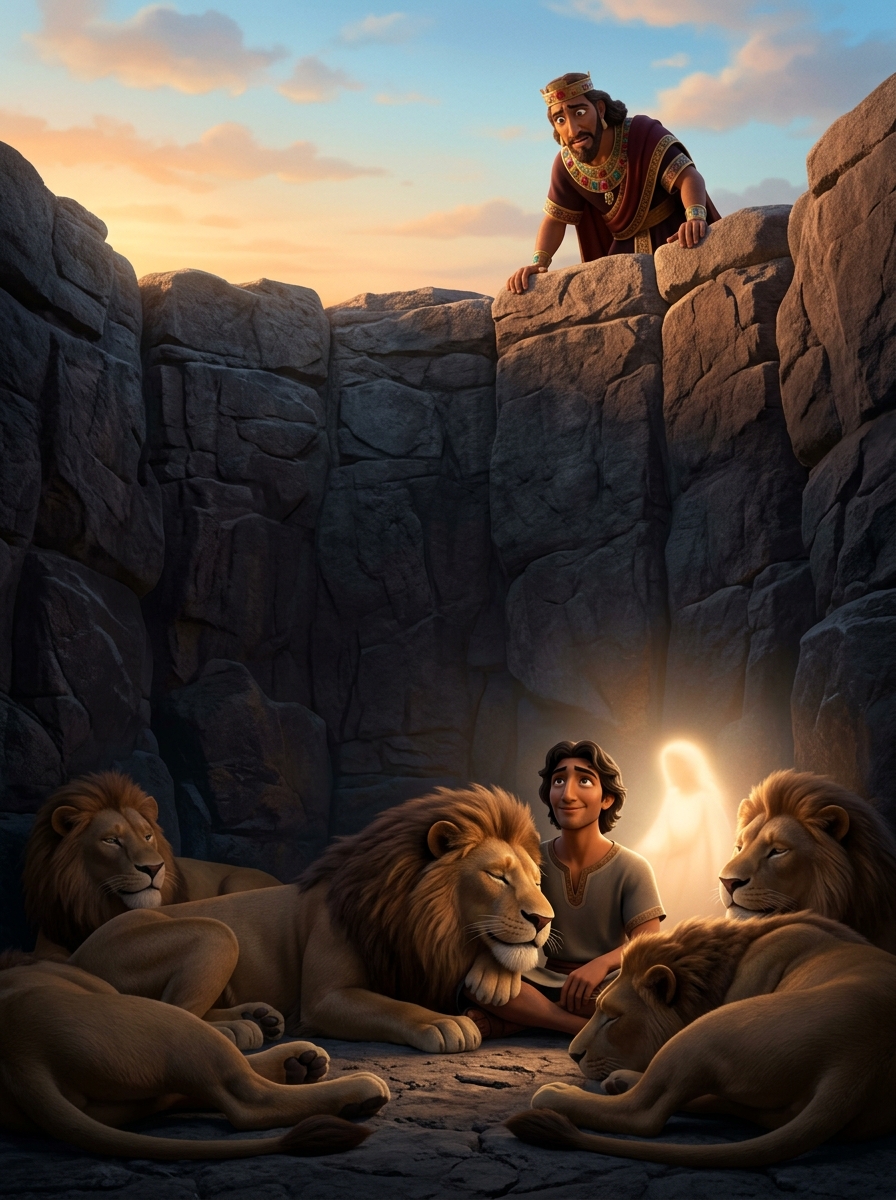
The Lions' Den
Daniel served so faithfully under King Darius that the other officials were jealous. They could find no fault in him — except that he prayed to his God three times a day. They convinced the king to make a law — no one could pray to any god except the king for thirty days. Daniel knew about the law and went home and prayed anyway, three times that day, just as he always had. He was thrown into the lions' den. The king spent the night fasting and in the morning ran to the den and called out — Daniel, has your God been able to rescue you? Daniel answered from the darkness — my God sent his angel and shut the mouths of the lions.
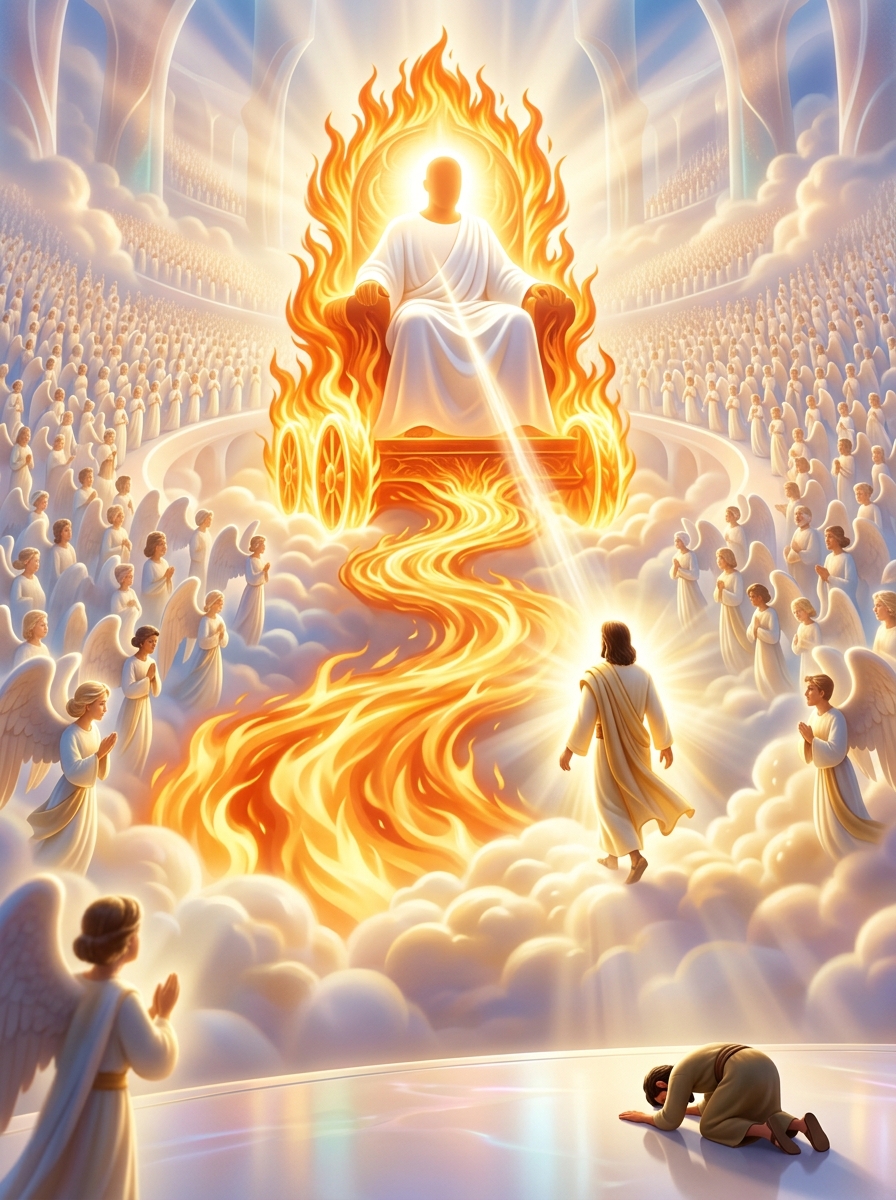
The Ancient of Days
In the later chapters of Daniel, God gave him visions of the future. In one vision Daniel saw four great beasts rising from a stormy sea — each one representing a great empire. Then the scene shifted to heaven. The Ancient of Days — God Himself — sat on a throne of fire, his clothing white as snow, his hair white as wool. Thousands upon thousands attended him. The court was seated and the books were opened. Then one like a son of man came on the clouds of heaven and approached the Ancient of Days. He was given authority, glory, and power. All peoples and nations worshipped him. His kingdom would never be destroyed. Jesus used this title — Son of Man — for himself more than any other.
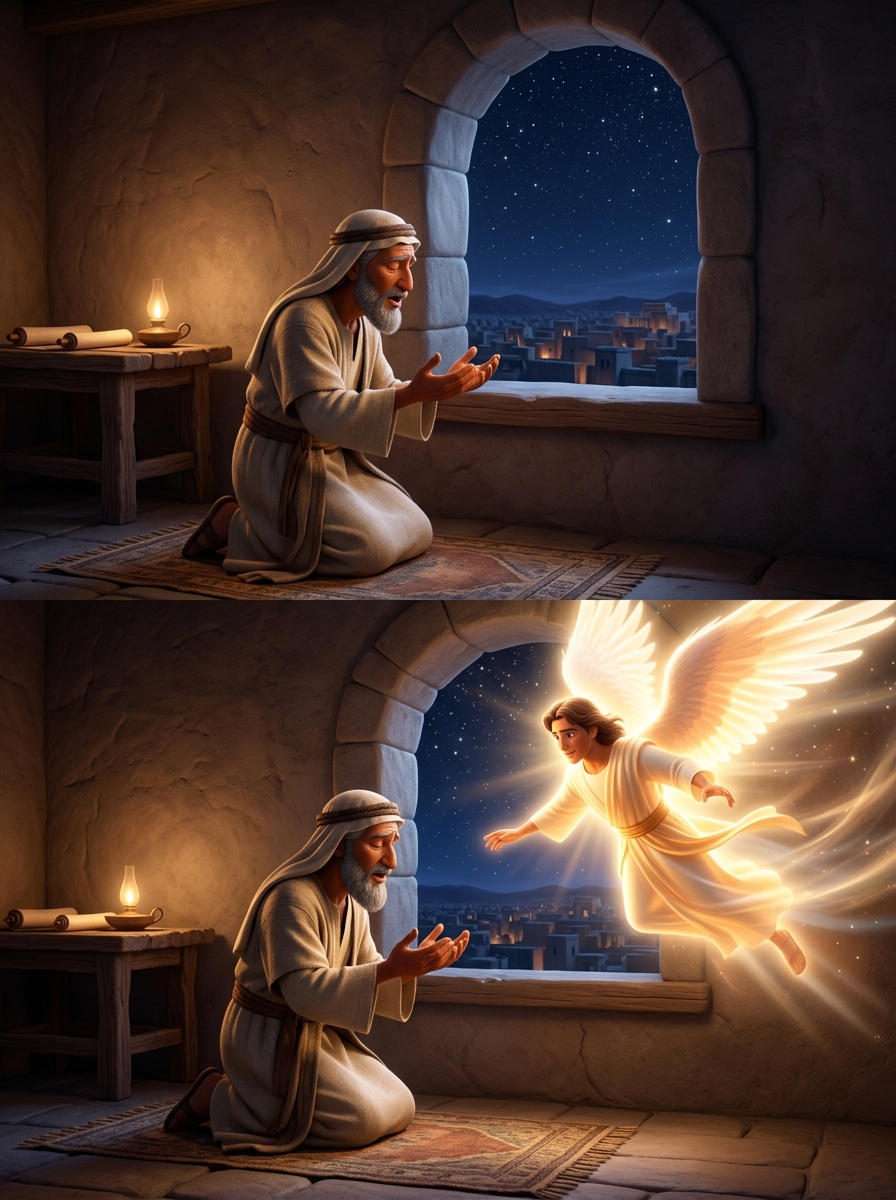
Daniel's Great Prayer
When Daniel understood from the scrolls of Jeremiah that the seventy years of exile were almost complete, he turned to God in prayer — not with requests but with confession. He prayed on behalf of his whole people. We have sinned and done wrong. We have been wicked and rebellious. We have not listened to your servants the prophets. We do not come before you because we are righteous but because of your great mercy. Then while he was still praying the angel Gabriel came to him swiftly and said — I have come to give you insight and understanding. You are highly esteemed. Daniel's prayer moved heaven. It still does.

Stand Firm to the End
In Daniel's final visions an angel came to him — a figure of extraordinary appearance, face like lightning, eyes like flaming torches. He told Daniel about great conflicts between kingdoms, about a time of distress greater than any before it, about the resurrection of the dead — some to everlasting life, some to shame. He said those who are wise will shine like the brightness of the heavens, and those who lead many to righteousness will shine like the stars forever and ever. Then Daniel was told to seal up the scroll until the time of the end. The final word to Daniel personally: go your way until the end. You will rest and then rise to receive your inheritance.
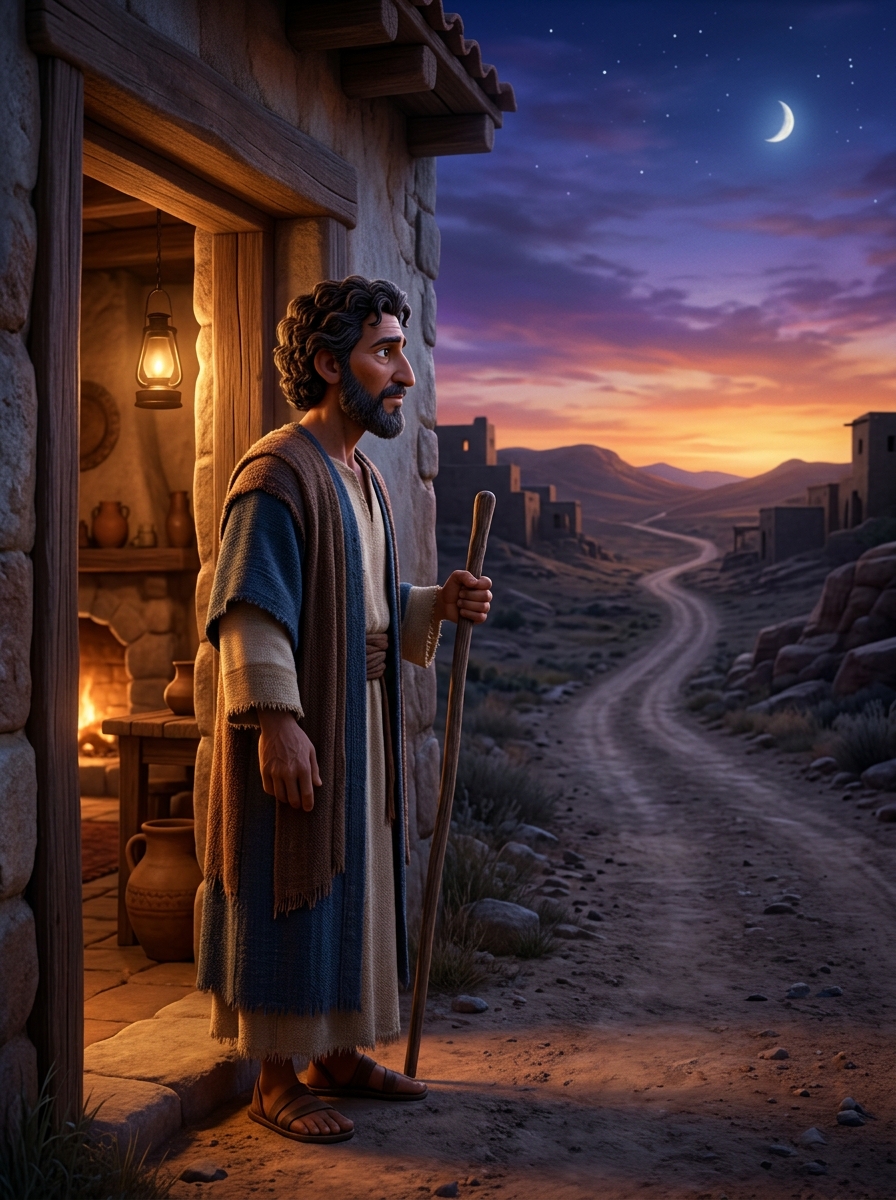
The Prophet Who Lived His Message
Hosea was a prophet in Israel during a time of great unfaithfulness. God told him to do something no prophet had been asked to do before — marry a woman who would be unfaithful to him. Her name was Gomer. God did this to make a living picture of His relationship with Israel. Just as Gomer kept leaving Hosea for other men, Israel kept leaving God for other gods. And just as Hosea kept pursuing Gomer, kept loving her, kept bringing her back — God kept pursuing Israel. Hosea's whole life was the sermon. His pain was the message. And his love — costly, humiliated, refusing to stop — was the picture of God's love for people who keep walking away.

I Will Betroth You to Me Forever
God spoke through Hosea about what He would do for Israel even after all their unfaithfulness. He said He would lead her into the wilderness and speak tenderly to her. He would give back her vineyards. She would call him my husband again instead of my master. And then came a promise so tender it is hard to take in fully — "I will betroth you to me forever. I will betroth you in righteousness and justice, in love and compassion. I will betroth you in faithfulness, and you will acknowledge the Lord." God proposing again to the people who had abandoned Him. That is not justice. That is something better than justice. That is love.
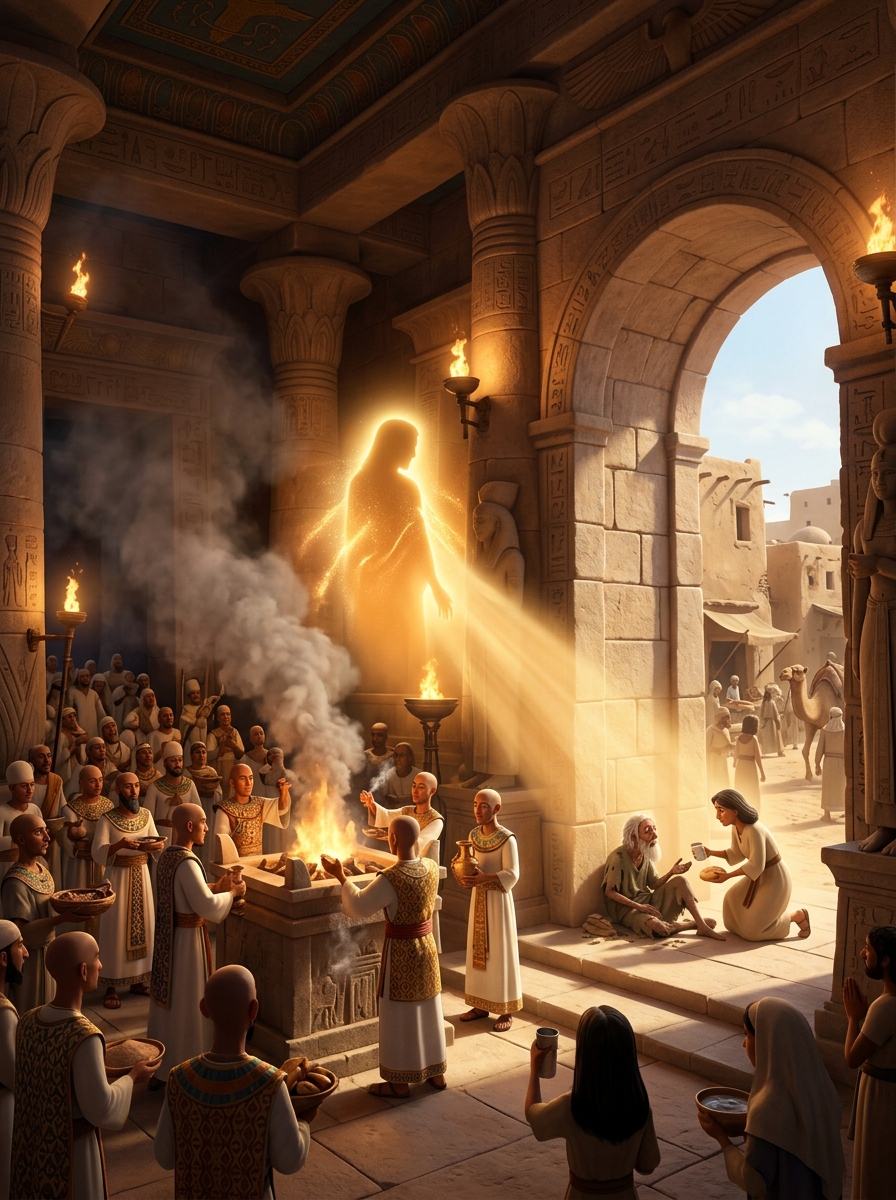
What God Wants
Through Hosea, God said something that stopped Israel's religious leaders in their tracks. "I desire mercy, not sacrifice — and acknowledgment of God rather than burnt offerings." The people were performing all the right rituals. The temples were busy. The offerings were being made. But their hearts were somewhere else entirely. God was not interested in religious performance from people who had no loyalty to Him. He wanted faithfulness. He wanted them to know Him — really know Him, not just know about Him. This is one of the lines Jesus would quote when the Pharisees criticized him for eating with sinners. Mercy first. Always mercy first.

Return to the Lord
The book of Hosea ends with an invitation — one of the most beautiful closing calls in all the prophets. "Return, Israel, to the Lord your God. Your sins have been your downfall. Take words with you and return to the Lord. Say to him — forgive all our sins and receive us graciously." And then God answered with a cascade of promises. I will heal their waywardness. I will love them freely. I will be like the dew to Israel — they will blossom like a lily. Their fame will spread. They will flourish like a garden. Whoever is wise, let them realize these things. The ways of the Lord are right — the righteous walk in them.
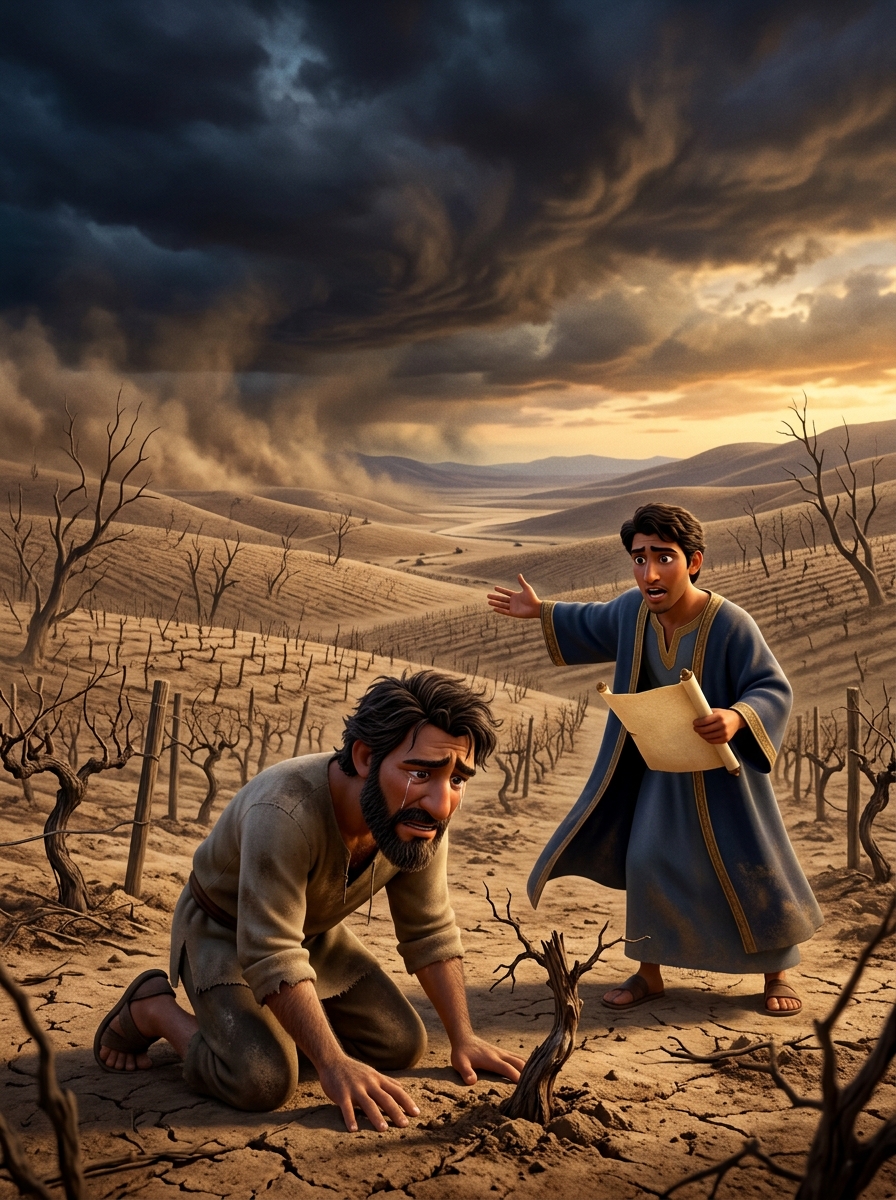
The Day of the Locusts
Joel was a prophet who spoke to Judah after a devastating event — a plague of locusts had stripped the land bare. Every crop was gone. The fields were ruined. The people were in shock. Joel used this catastrophe as a warning — if a locust plague can do this, imagine what the day of the Lord will be like. But Joel was not only a prophet of warning. He was also a prophet of extraordinary promise. In the middle of the devastation, he called the people to return to God with their whole hearts. And then God spoke one of the greatest promises in the Old Testament — a promise the apostle Peter would stand up and quote on the day of Pentecost.
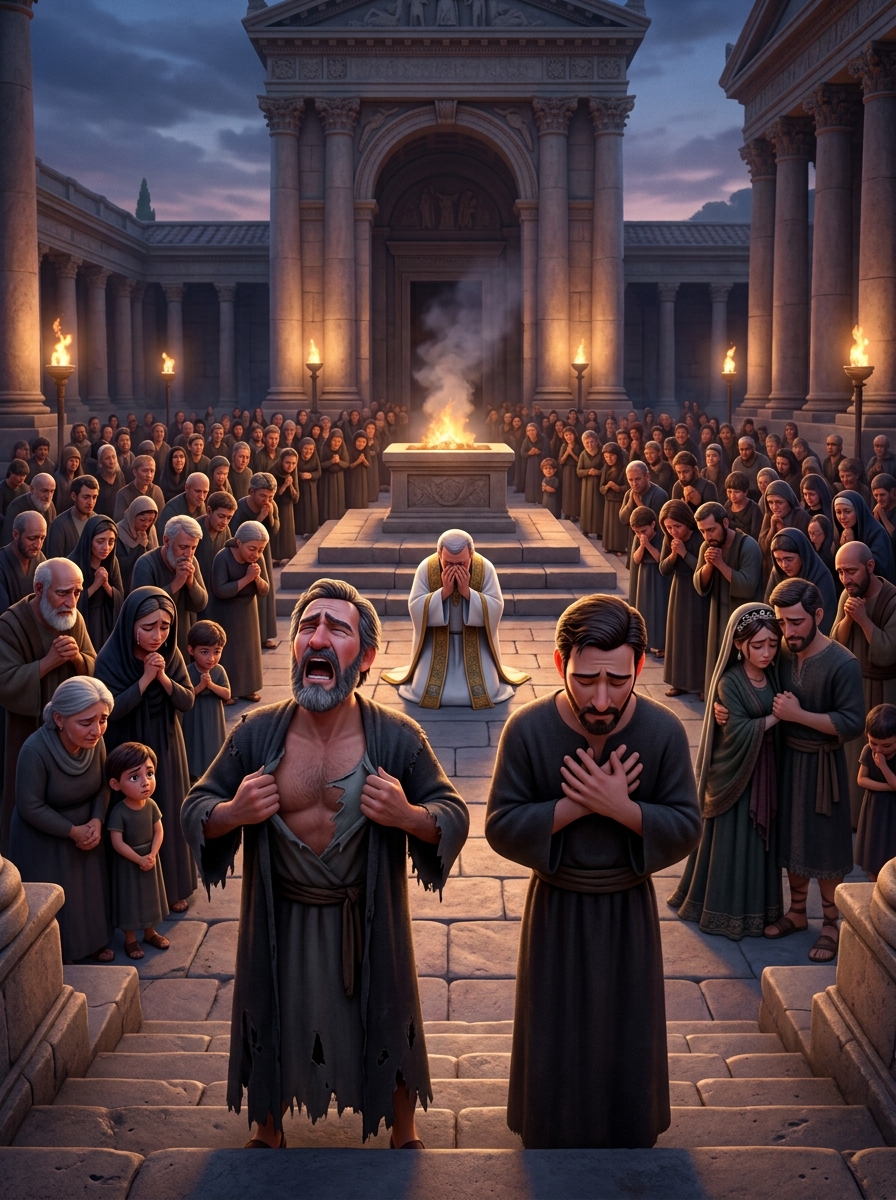
Rend Your Hearts
God called the people to gather — everyone. Blow the trumpet. Call a sacred assembly. Bring together the elders, the children, even the nursing babies. Let the bridegroom leave his room and the bride her chamber. Let the priests weep between the temple porch and the altar. And then the call to each individual heart: "Rend your heart and not your garments." Tearing your clothes was the outward sign of grief — anyone could do that. But God wanted something harder and realer — a heart genuinely broken over sin, genuinely turned back to Him. Then God said He was gracious and compassionate, slow to anger, abounding in love. He relents from sending disaster. Return to Him. He will receive you.
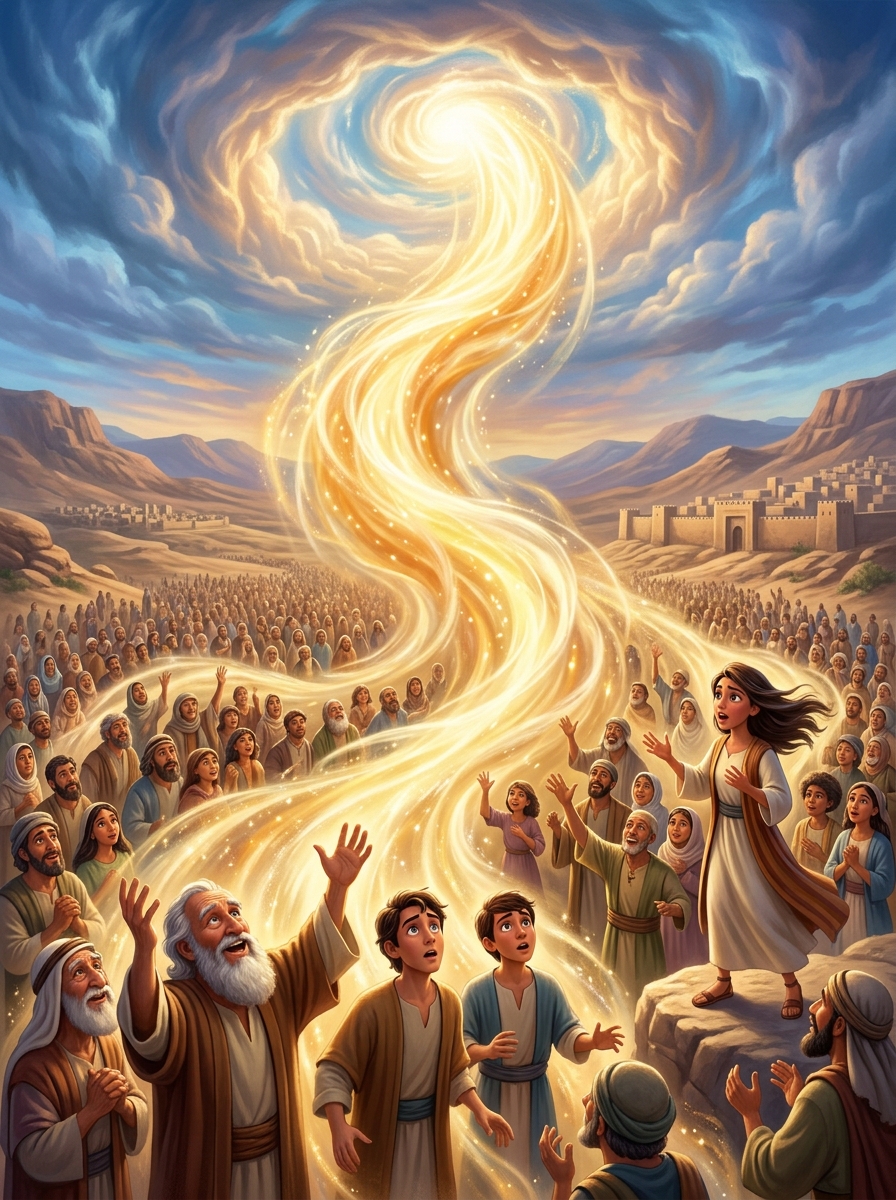
I Will Pour Out My Spirit
After the call to return, God made a promise that reached far beyond Joel's own generation. "And afterward, I will pour out my Spirit on all people. Your sons and daughters will prophesy. Your old men will dream dreams. Your young men will see visions. Even on my servants, both men and women, I will pour out my Spirit in those days." This was a new thing — in the Old Testament, the Spirit of God came on certain people at certain times for certain tasks. Joel was describing something different — the Spirit poured out on everyone. On the day of Pentecost, three thousand years later, Peter stood up and said — this is what Joel was talking about. That day had come.
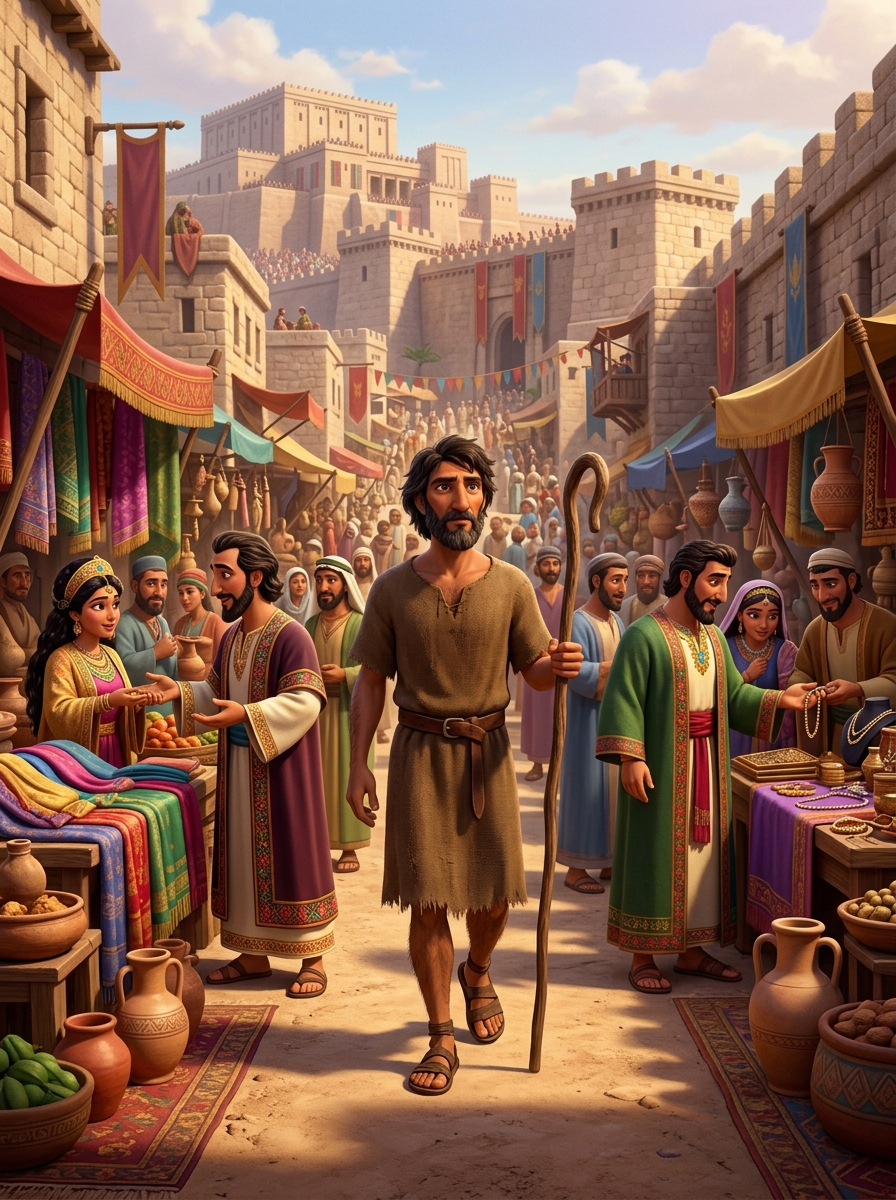
The Shepherd Who Became a Prophet
Amos was not a professional prophet. He was a shepherd and a fig tree farmer from a small southern town called Tekoa. God called him to go north to Israel and speak. He arrived in a time of prosperity — Israel was wealthy, the markets were busy, the temples were full. But underneath the prosperity something was rotten. The rich were crushing the poor. Merchants were cheating with dishonest scales. The needy were being sold for the price of a pair of sandals. Amos walked into this comfortable, prosperous, religious society and said — God sees everything you are doing. And He is not impressed by your worship while your neighbor is starving.
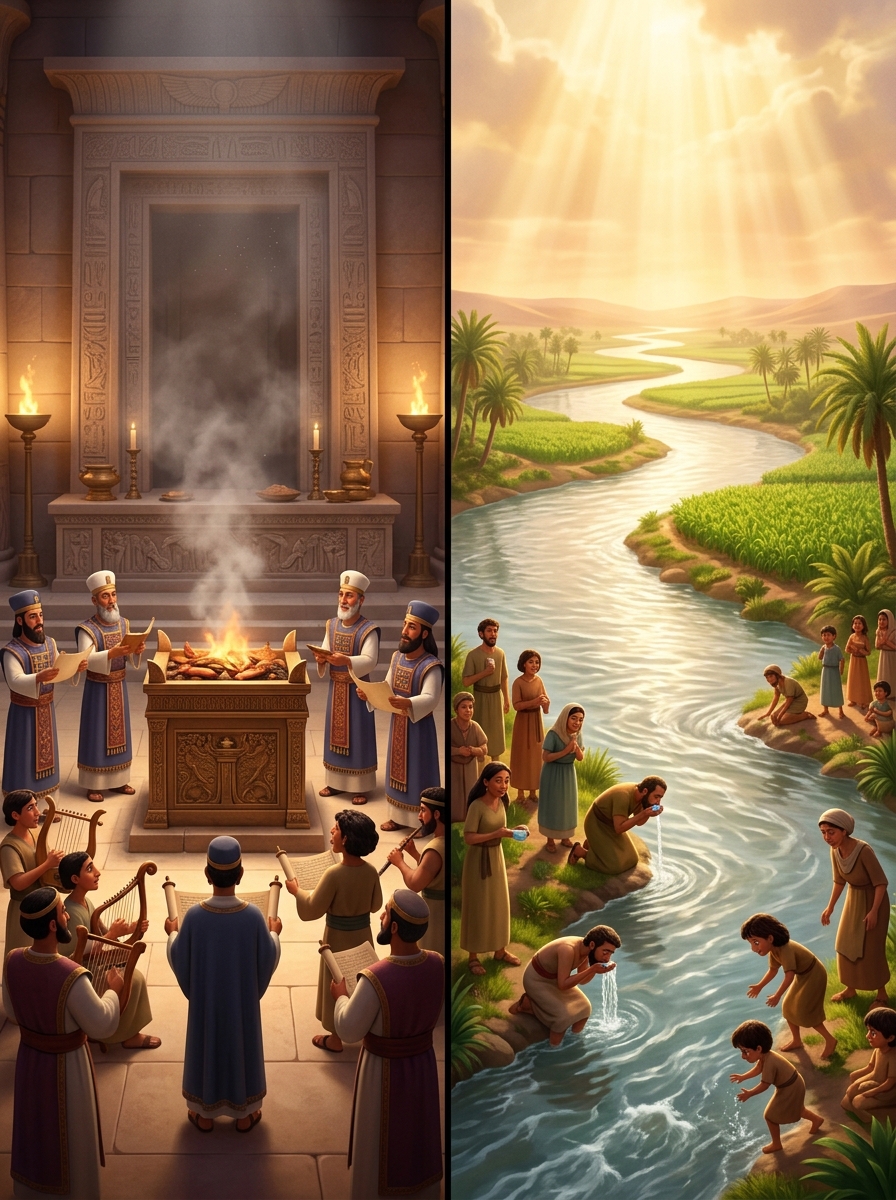
Let Justice Roll
God spoke through Amos with devastating clarity about what He thought of Israel's worship. "I hate, I despise your religious festivals. I cannot stand your assemblies. Even though you bring me burnt offerings and grain offerings, I will not accept them. Away with the noise of your songs — I will not listen to the music of your harps." They were doing all the right religious things while trampling the poor, denying justice to the oppressed, taking bribes, pushing the needy aside. God said one thing would change all of this: "But let justice roll on like a river, righteousness like a never-failing stream." Worship and justice are not separate things. God will not accept one without the other.
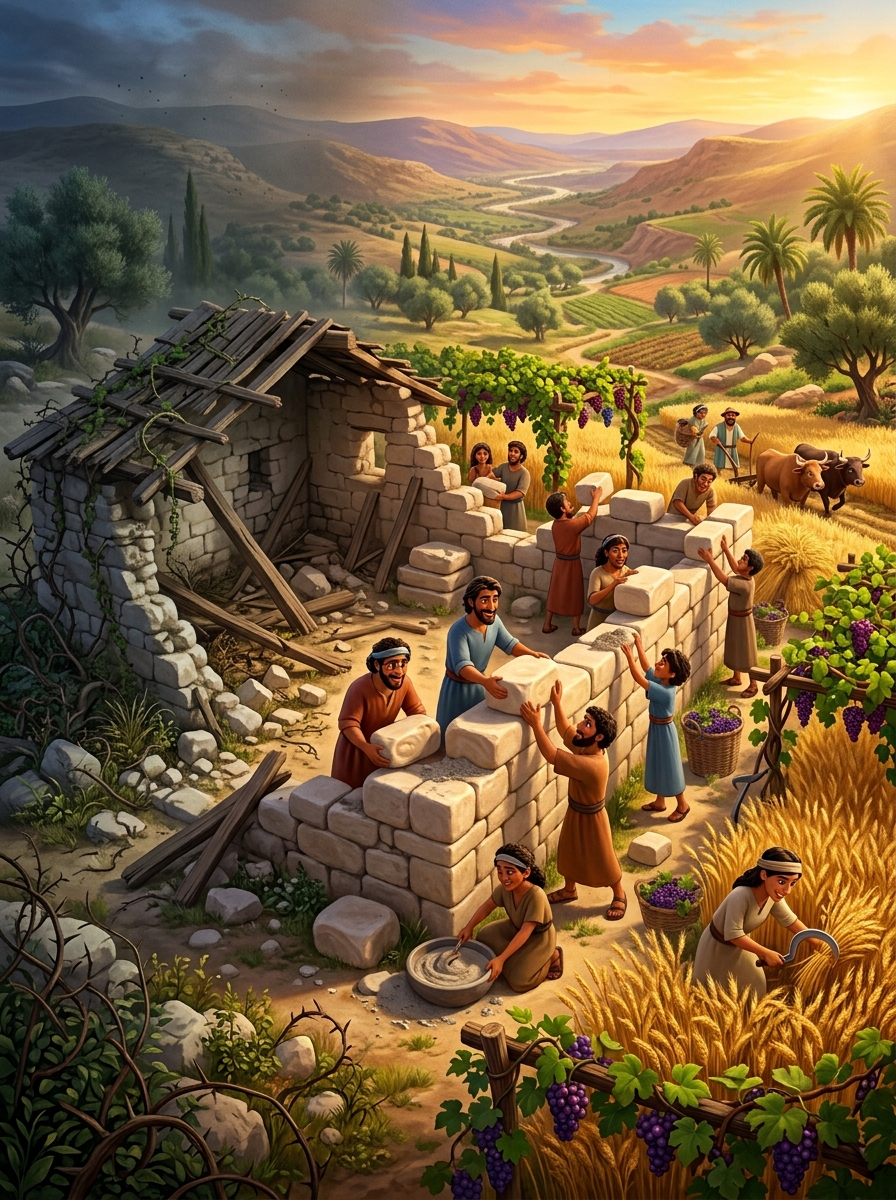
The Booth of David
After all the judgment, the book of Amos ends with hope. God promised that in that day He would restore David's fallen shelter — the booth of David that had fallen into ruin. He would repair its broken walls and restore its ruins and rebuild it as it used to be. The land would be so fertile that the ploughman would overtake the reaper — harvests so abundant the next planting would begin before the last one was finished. Ruined cities would be rebuilt and inhabited. The people would be planted in their own land and never again uprooted. Even Amos — the prophet of fierce justice — ended where all the prophets end. With God's unfailing intention to restore.
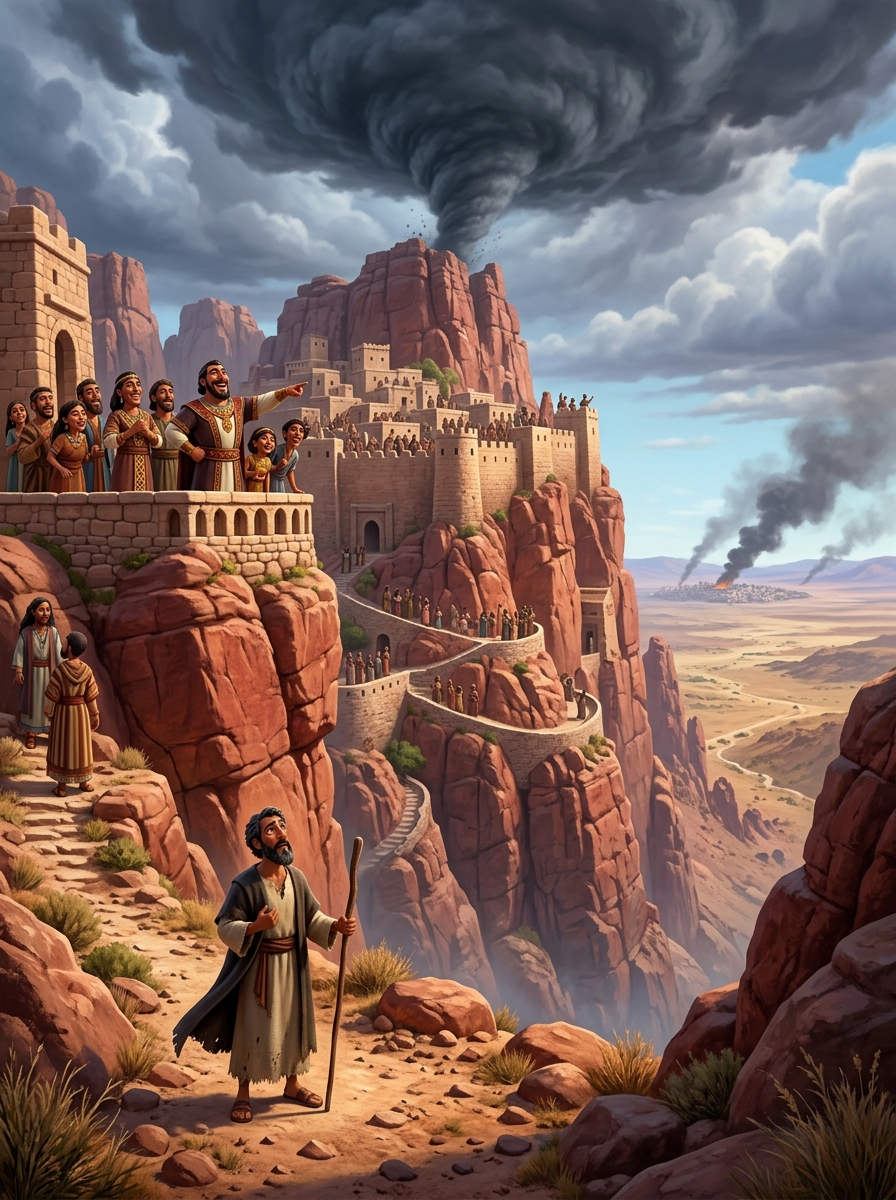
The Smallest Book, the Biggest Warning
Obadiah is the shortest book in the Old Testament — just twenty-one verses. It is a prophecy against Edom, the nation descended from Esau, Jacob's brother. When Jerusalem fell to Babylon, the Edomites did not help — they stood aside, gloated, and even helped capture fleeing Israelites. God saw it all. Obadiah said the pride of Edom's heart had deceived them. They lived in the clefts of the rock, on the heights, and thought no one could touch them. But as you have done, it will be done to you, God said. Your deeds will return on your own head. The day of the Lord is near for all nations. And the kingdom will be the Lord's.
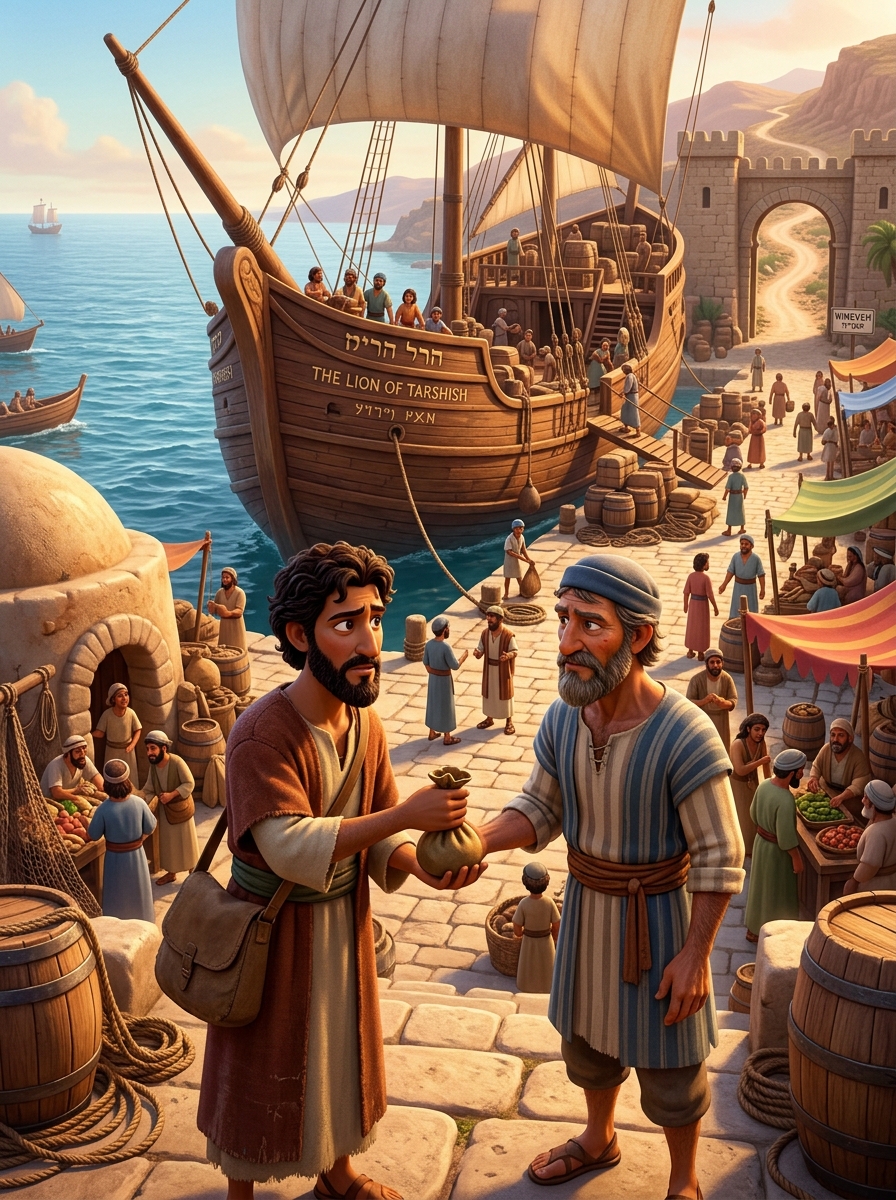
The Prophet Who Ran Away
Jonah was a prophet from Israel — and one of the most honest stories in the Bible, because its hero spends most of the book getting things wrong. God told Jonah to go to Nineveh — the great capital of Assyria, Israel's enemy — and preach against it. Jonah did not want to go. He did not want Nineveh to repent. He did not want God to forgive them. So he went to the port of Joppa, bought a ticket for a ship, and sailed in exactly the opposite direction. You cannot outrun God. Jonah would learn this in the most memorable way in the entire Bible.

The Great Fish
God sent a violent storm that threatened to break the ship apart. The sailors threw cargo overboard and prayed to their gods. Jonah was asleep below deck. When they woke him and cast lots to find who was responsible for the storm, the lot fell on Jonah. He told them — I am a Hebrew. I worship the Lord, the God of heaven, who made the sea and the dry land. Throw me into the sea. The sailors tried to row back to shore but could not. They threw Jonah in. The storm stopped immediately. And God provided a great fish that swallowed Jonah — and he was in the belly of the fish for three days and three nights. From inside the fish, Jonah prayed.
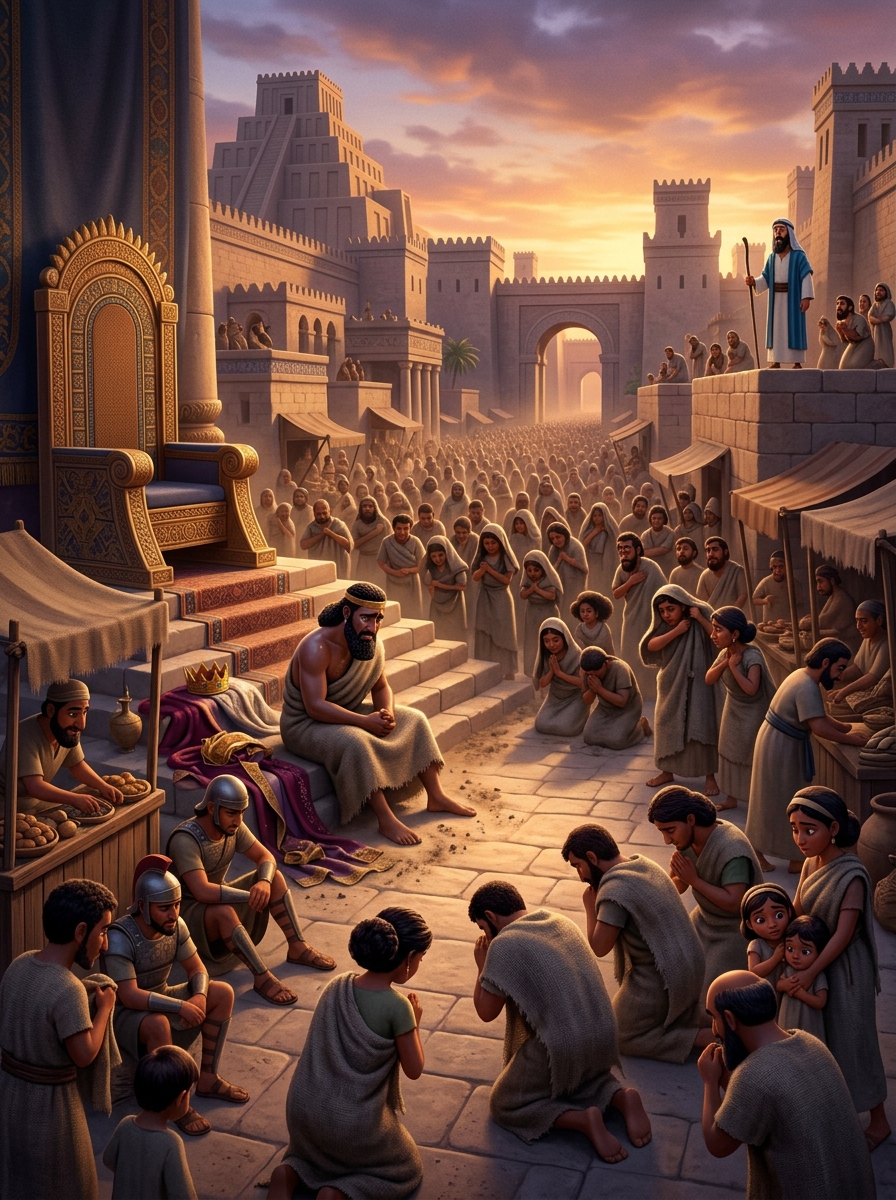
Nineveh Repents
The fish vomited Jonah onto dry land. God spoke to him a second time — go to Nineveh. This time Jonah went. Nineveh was enormous — it took three days to walk through it. Jonah walked one day into the city and preached eight words: "Forty more days and Nineveh will be overthrown." And something extraordinary happened. The people of Nineveh believed God. They declared a fast. From the greatest to the least they put on sackcloth. When the news reached the king he got up from his throne, took off his royal robes, put on sackcloth, and sat in the dust. He issued a decree — everyone must fast and call urgently on God and give up their evil ways. And God relented.
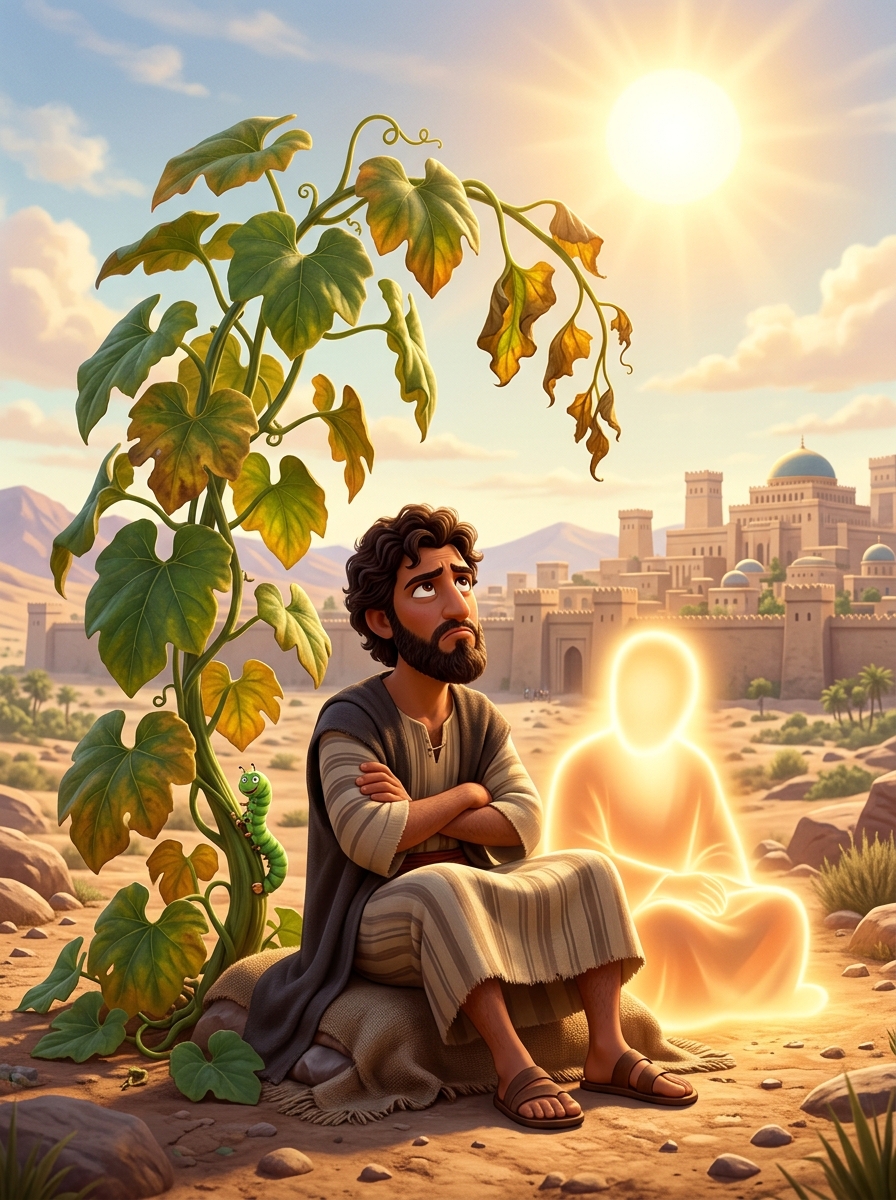
Jonah's Lesson
Jonah was furious. He sat outside the city and sulked. He told God — this is exactly why I ran away. I knew you were gracious and compassionate, slow to anger, abounding in love, and that you would relent from sending disaster. I would rather die than watch you forgive them. God caused a leafy plant to grow over Jonah to shade him — and Jonah was very happy about the plant. The next day God sent a worm to eat the plant and it withered. Jonah was furious about the plant. God said — you cared about a plant you did not make and that lasted one day. Should I not care about Nineveh — a great city with more than a hundred and twenty thousand people? The book ends with that question hanging in the air.
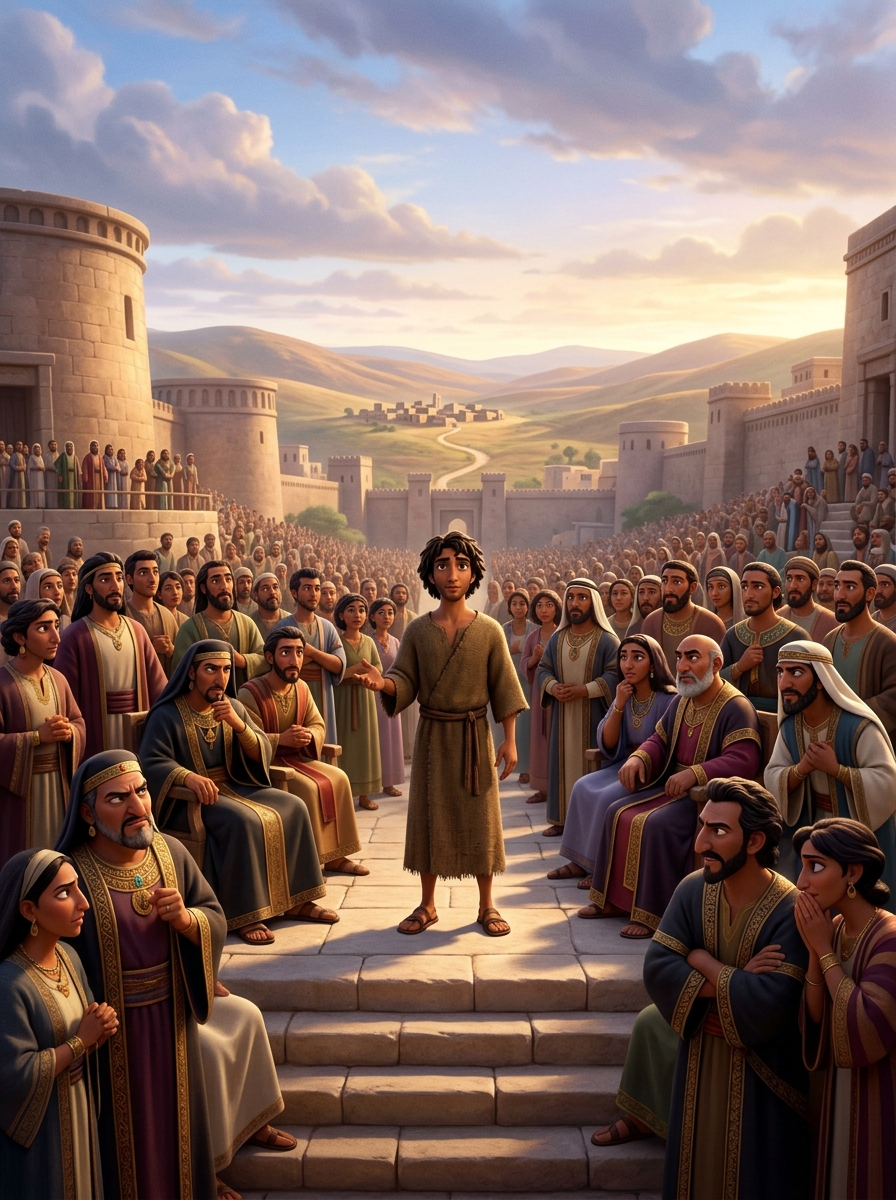
What Does the Lord Require?
Micah was a prophet from a small village who spoke to both the northern kingdom of Israel and the southern kingdom of Judah. He saw the same problems Amos saw — the rich oppressing the poor, leaders taking bribes, prophets preaching whatever people paid them to say. He spoke with fierce, plain honesty. But Micah also contains some of the most beautiful prophecies in the Old Testament — including the exact location of the Messiah's birth, named seven hundred years before it happened. And one of the clearest definitions of what God actually wants from human beings anywhere in Scripture.
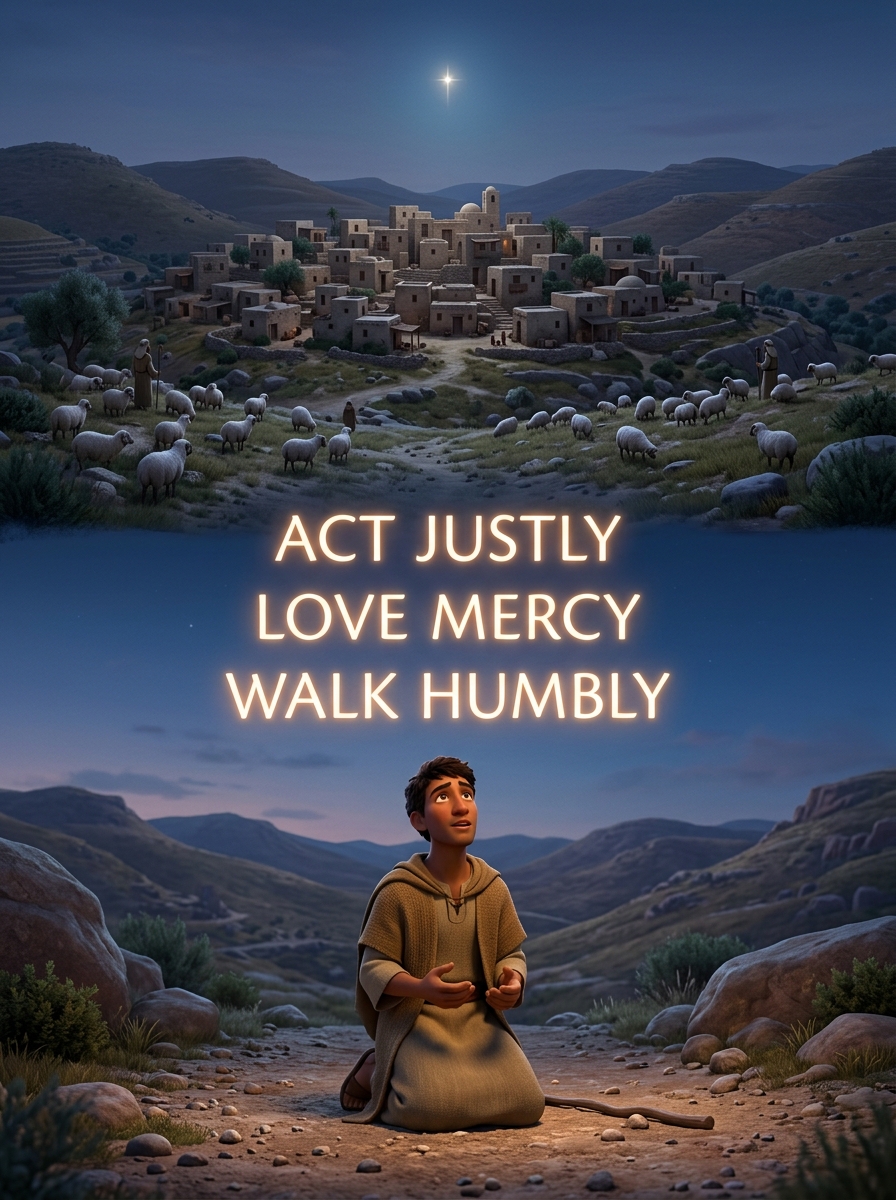
Bethlehem and the Question
Micah named the birthplace of the coming ruler seven hundred years before Jesus was born. "But you, Bethlehem Ephrathah, though you are small among the clans of Judah, out of you will come for me one who will be ruler over Israel, whose origins are from of old, from ancient times." When the wise men came to Jerusalem asking where the king of the Jews had been born, the chief priests and teachers of the law quoted this verse immediately — Bethlehem. Then Micah asked the great question: "What does the Lord require of you?" And answered it in one sentence: "To act justly and to love mercy and to walk humbly with your God."
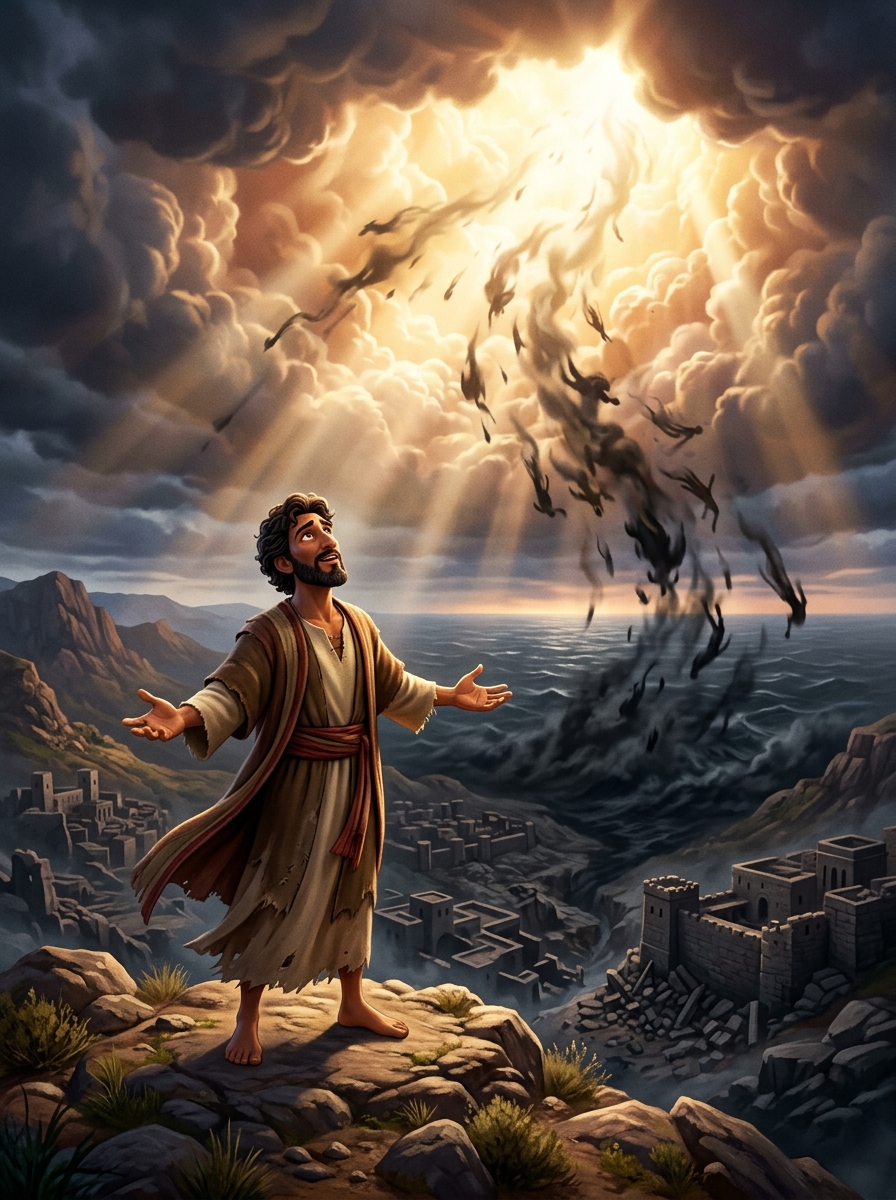
Who Is a God Like You?
The book of Micah ends with one of the greatest expressions of trust in God's mercy anywhere in the Old Testament. Micah looked at the brokenness around him — the corruption, the injustice, the unfaithfulness. And he chose to wait and watch for God. He said — do not gloat over me, my enemy. Though I have fallen I will rise. Though I sit in darkness the Lord will be my light. Then he turned to God directly: "Who is a God like you, who pardons sin and forgives transgression? You do not stay angry forever but delight to show mercy. You will again have compassion on us — you will tread our sins underfoot and hurl all our iniquities into the depths of the sea."
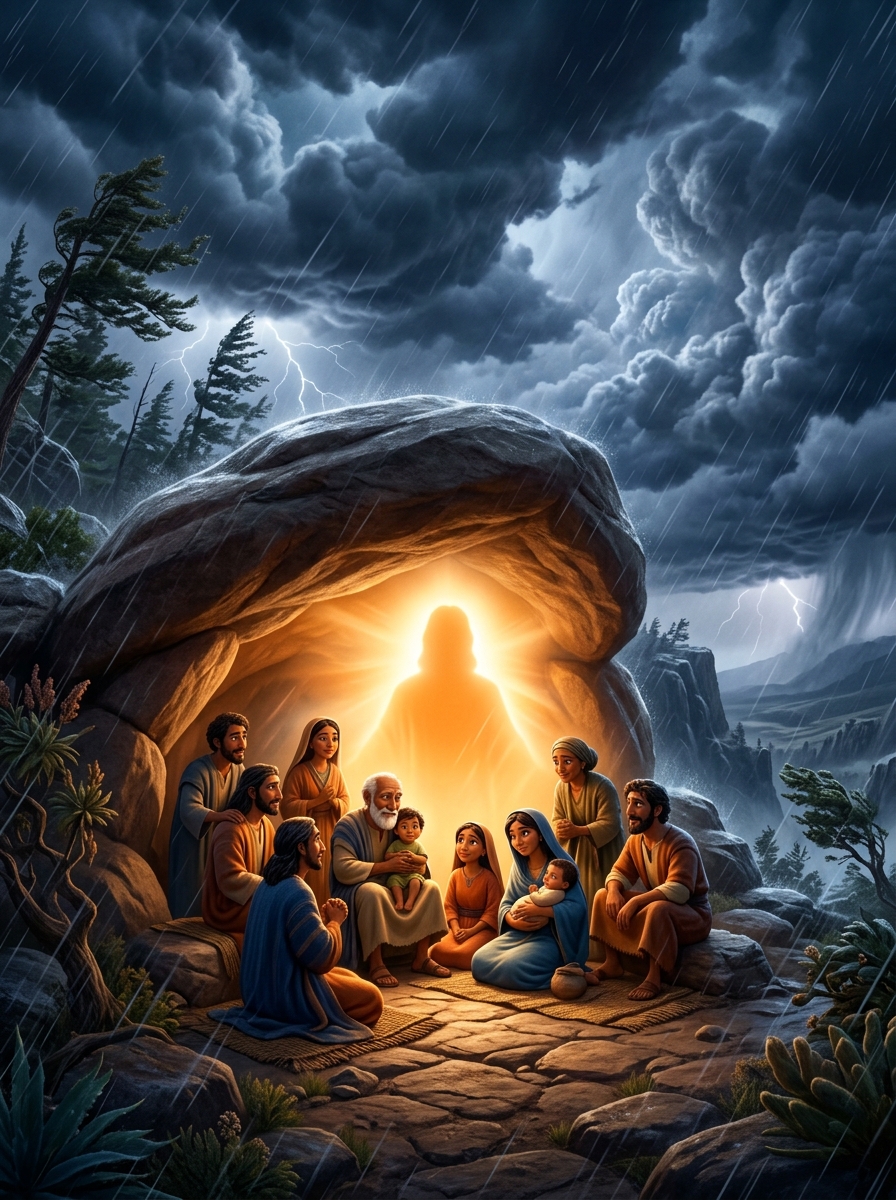
The Lord Is Good
Nahum prophesied about the fall of Nineveh — the same city Jonah had gone to one hundred and fifty years earlier. After Jonah's visit Nineveh had repented — but that repentance did not last. The Assyrian empire grew cruel again, conquering and destroying other nations with brutal efficiency. Nahum opened with a picture of God that is both comforting and sobering. "The Lord is good, a refuge in times of trouble. He cares for those who trust in him." But also — He will not leave the guilty unpunished. His way is in the whirlwind and the storm. Nahum delivered his message of judgment — but before the judgment he named who God is. Good. A refuge. Caring. The judgment comes from the same God as the comfort.
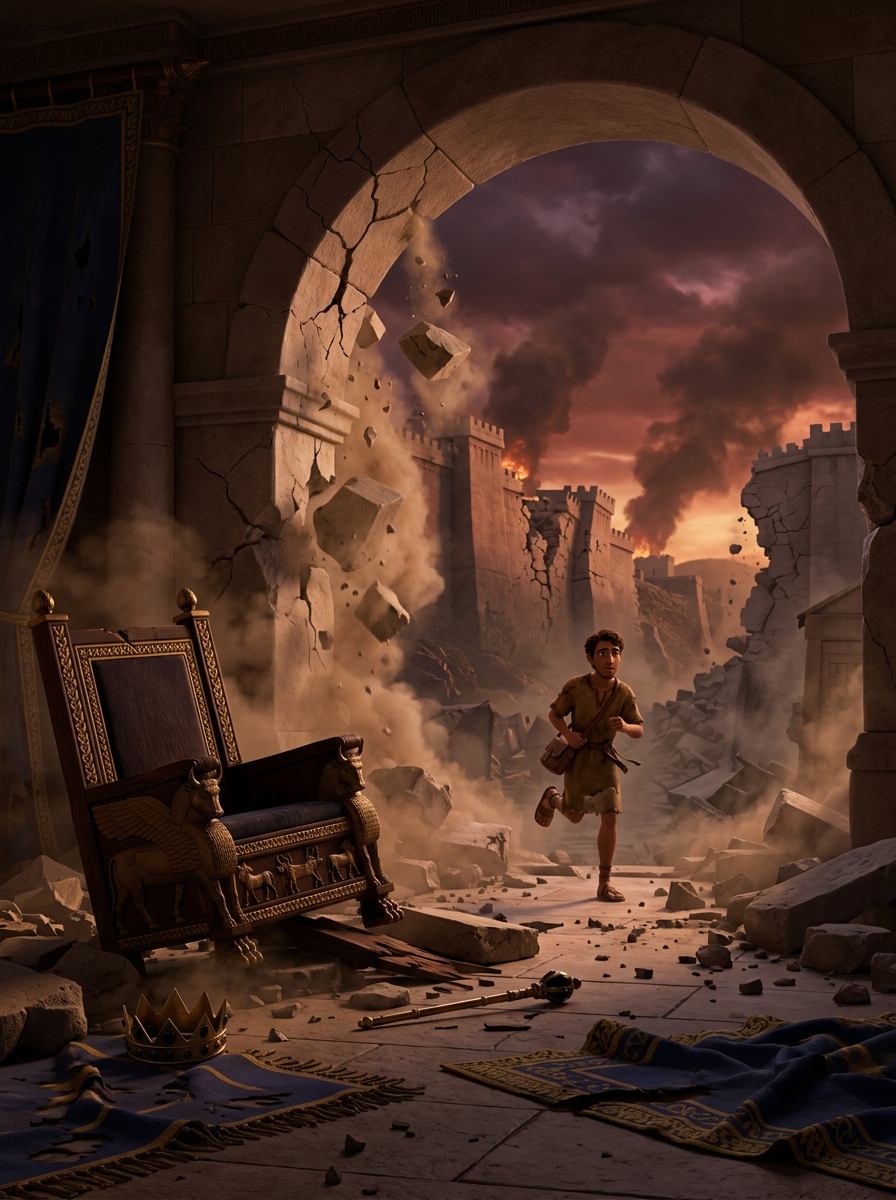
Nineveh Falls
Nahum described the fall of Nineveh with vivid detail — the attacking army, the confusion, the great city that had seemed invincible crumbling. He said look at your troops — they are all women, meaning they had lost all strength and courage. Your shepherds sleep. Your people are scattered. There is no healing for your wound — your injury is fatal. Everyone who hears the news about you will clap their hands at your fall, because who has not felt your endless cruelty? History confirmed every word. In 612 BC the great city of Nineveh was destroyed by a coalition of armies and never rebuilt. The city that had seemed eternal lasted only as long as God permitted.
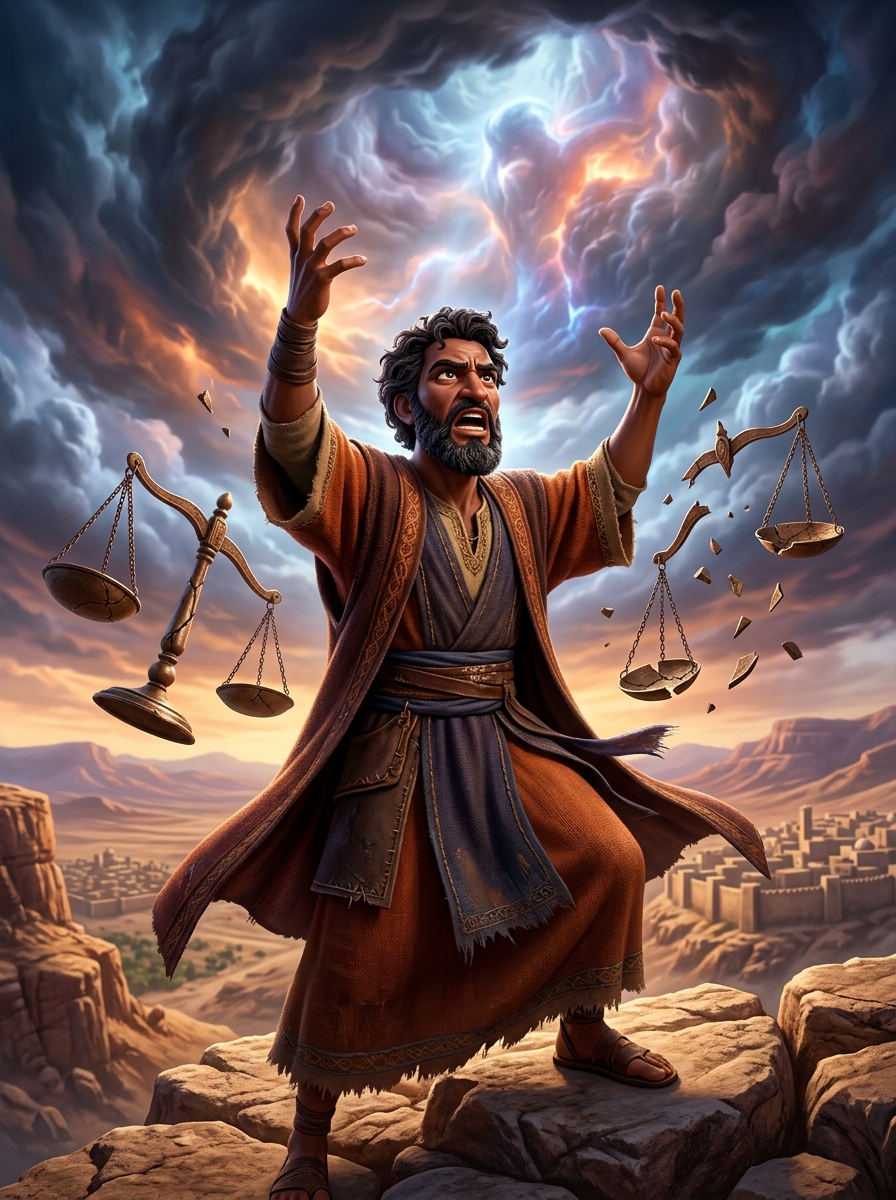
The Prophet Who Argued with God
Habakkuk was a prophet who did something unusual — instead of delivering God's message to the people, he argued directly with God. He looked at the injustice and violence around him in Judah and asked God plainly — why are you not doing anything? How long do I have to cry for help before you listen? God answered — I am doing something. I am raising up the Babylonians to judge Judah. Habakkuk's response was immediate — but Lord, the Babylonians are worse than we are. How can a holy God use wicked people to punish less wicked people? It is one of the most honest dialogues between a human being and God in the entire Bible. And God answered him.
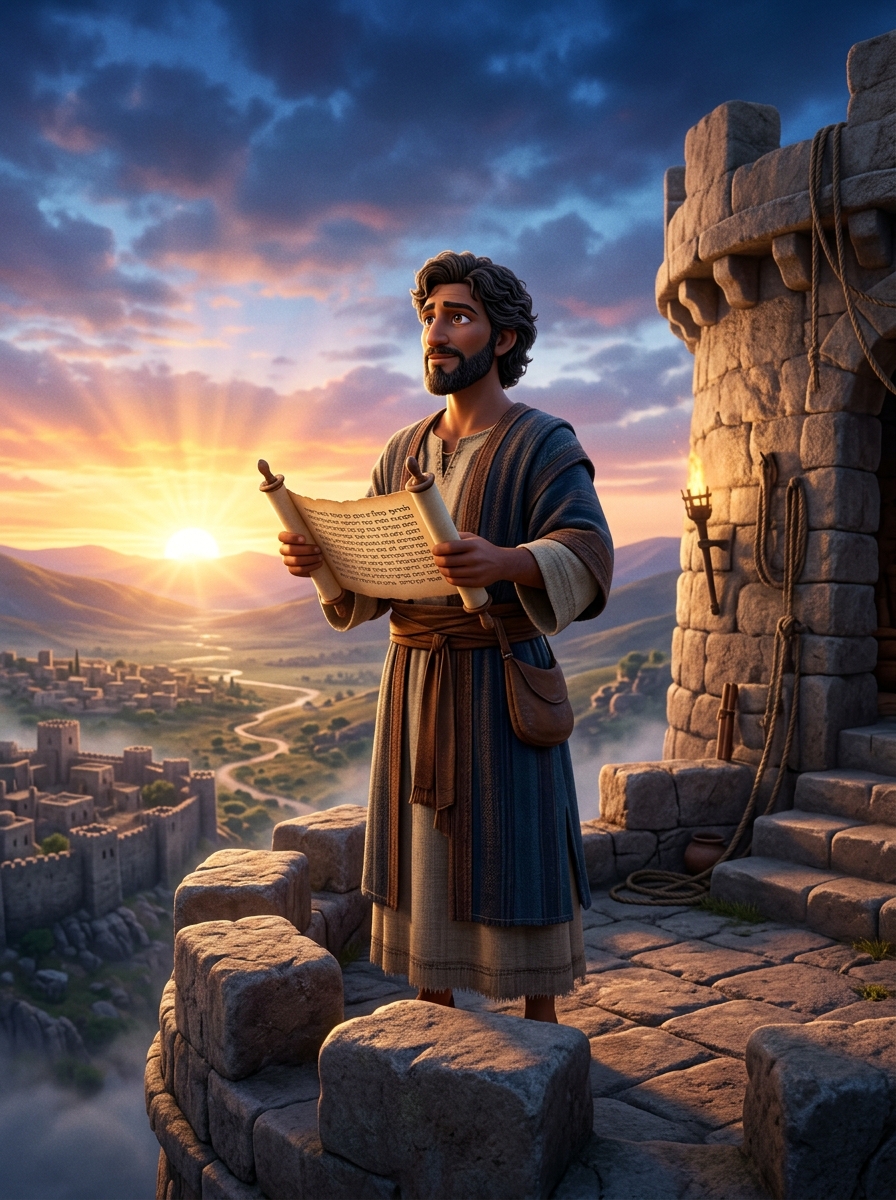
The Righteous Will Live by Faith
Habakkuk said he would stand at his watch and wait to see what God would answer him. God told him to write the vision down clearly so that a herald could run with it. "For the revelation awaits an appointed time. It speaks of the end and will not prove false. Though it linger, wait for it — it will certainly come and will not delay." Then God said the single most important line in the book — a line Paul would later quote in Romans and Galatians, a line that became the foundation of the Reformation: "The righteous person will live by their faithfulness." Not by their achievements. Not by their performance. By faith. By trusting God in the dark.
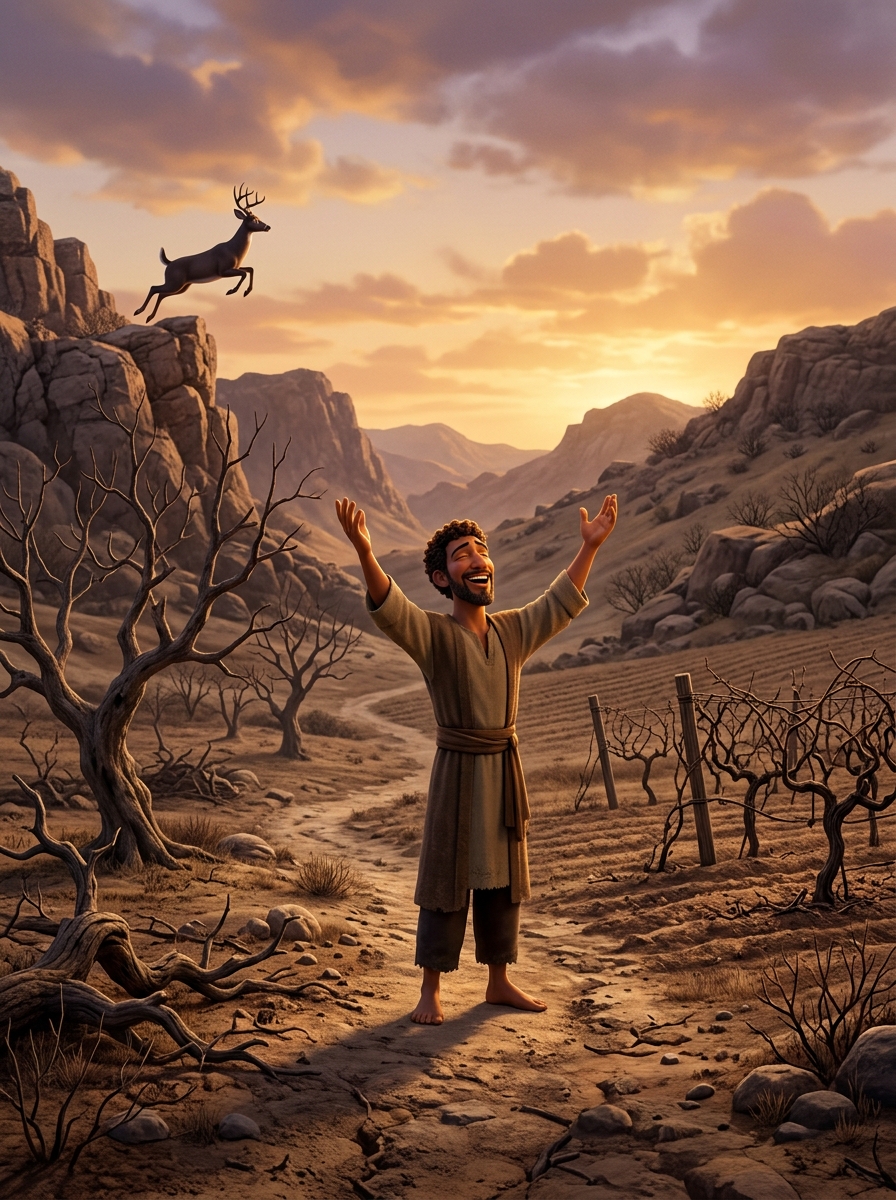
Yet I Will Rejoice
Habakkuk ended his book with one of the most extraordinary statements of faith in Scripture. He described terrible things coming — fig trees not blossoming, vines producing no grapes, olive crops failing, fields producing no food, flocks cut off, no cattle in the stalls. Everything going wrong. Every source of provision failing. And then — this: "Yet I will rejoice in the Lord. I will be joyful in God my Savior. The Sovereign Lord is my strength. He makes my feet like the feet of a deer. He enables me to tread on the heights." Joy not because of circumstances. Joy in spite of them. Not performed joy — chosen joy, rooted in who God is when everything else is gone.
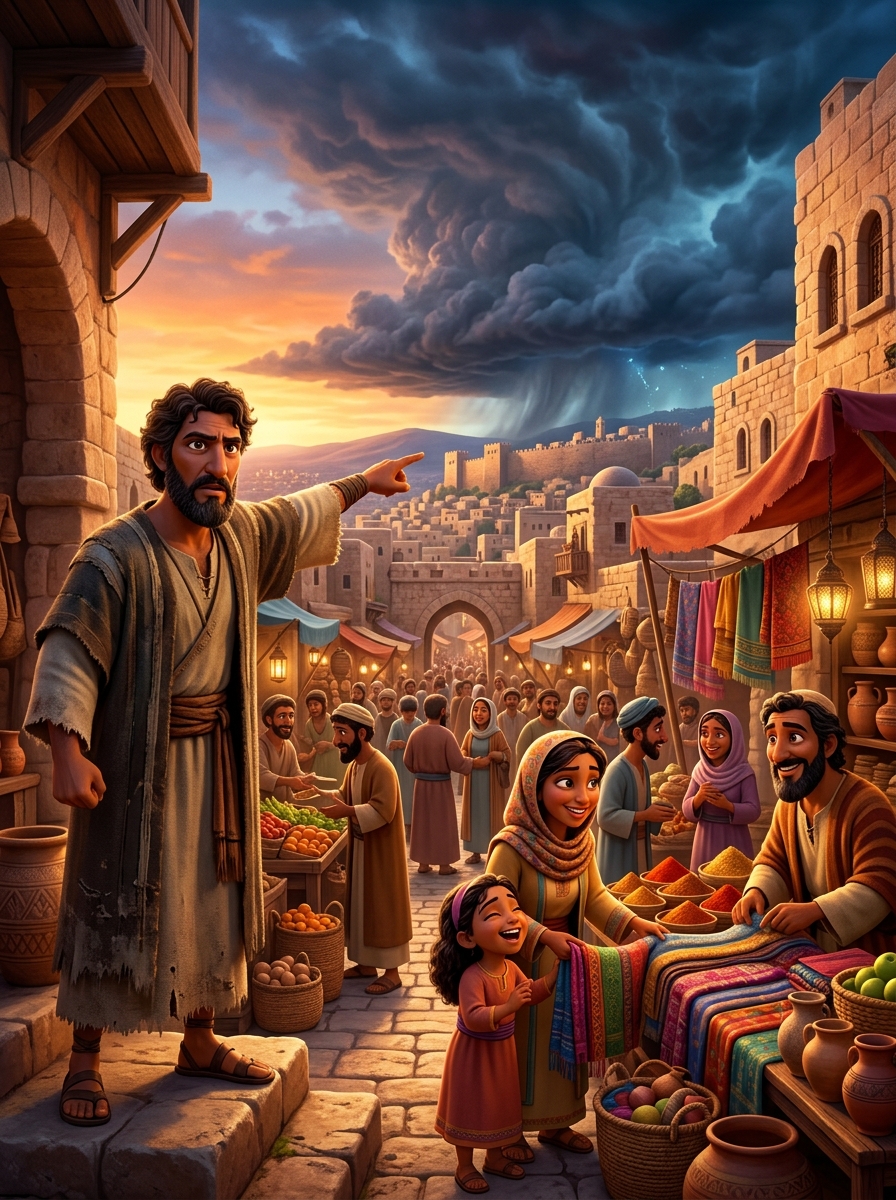
The Day of the Lord Is Near
Zephaniah prophesied during the reign of good King Josiah — a time of religious reform in Judah. But Zephaniah looked beneath the surface reforms and saw a people still deeply compromised. He announced the coming day of the Lord — a day of wrath, distress, and anguish, a day of trouble and ruin. He called out the complacent ones who said in their hearts — the Lord will do nothing, either good or bad. God sees the comfortable indifference of people who have decided He is irrelevant. Zephaniah also called for a gathering of the humble — seek the Lord, seek righteousness, seek humility. Perhaps you will be sheltered on the day of his anger.
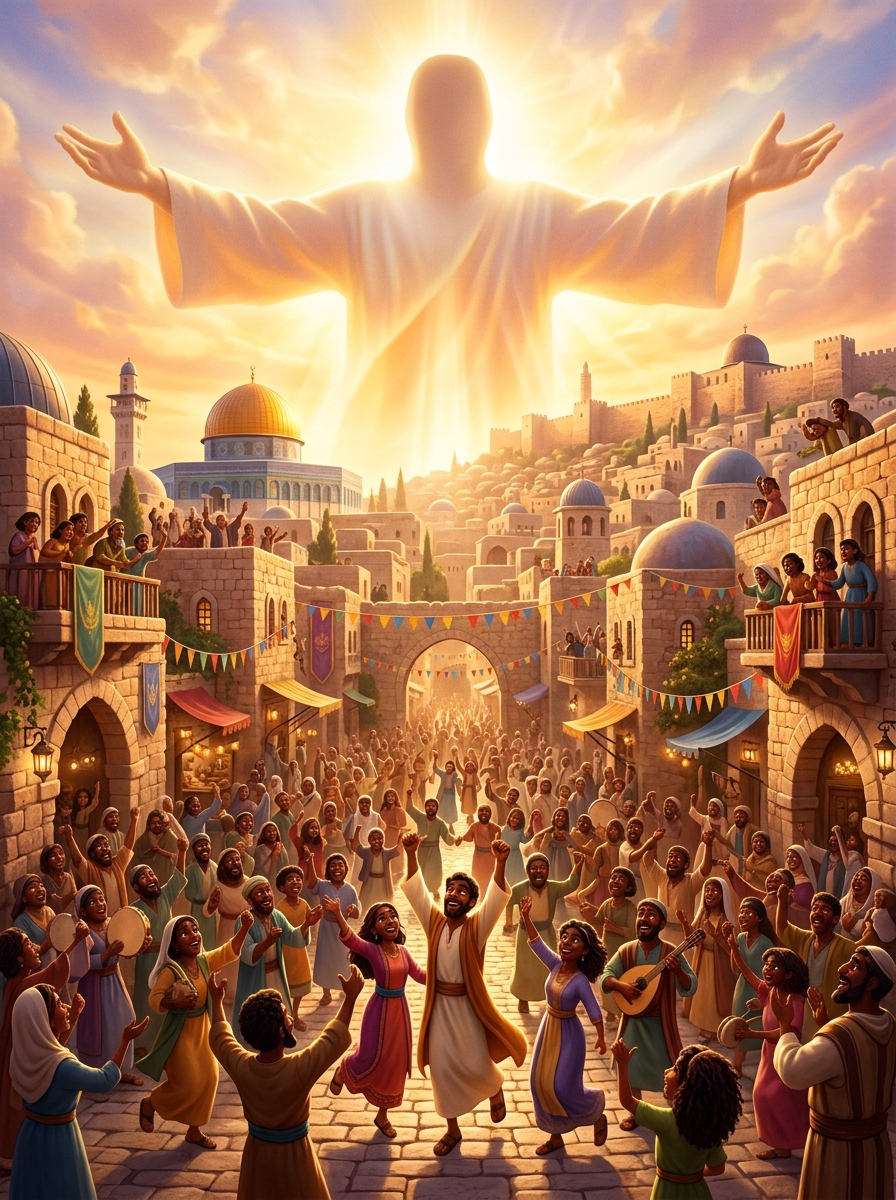
The Lord Your God Is with You
After all the warning, Zephaniah ended with a song so joyful it feels like the sun breaking through after a storm. "Sing, Daughter Zion — shout aloud, Israel. Be glad and rejoice with all your heart, Daughter Jerusalem." The Lord has taken away your punishment. He has turned back your enemy. The Lord your God is with you — He is mighty to save. He will take great delight in you. In his love he will no longer rebuke you but will rejoice over you with singing. God singing over His people. God rejoicing over them. Not in spite of everything that happened — after it. The book that began with judgment ended with God singing.
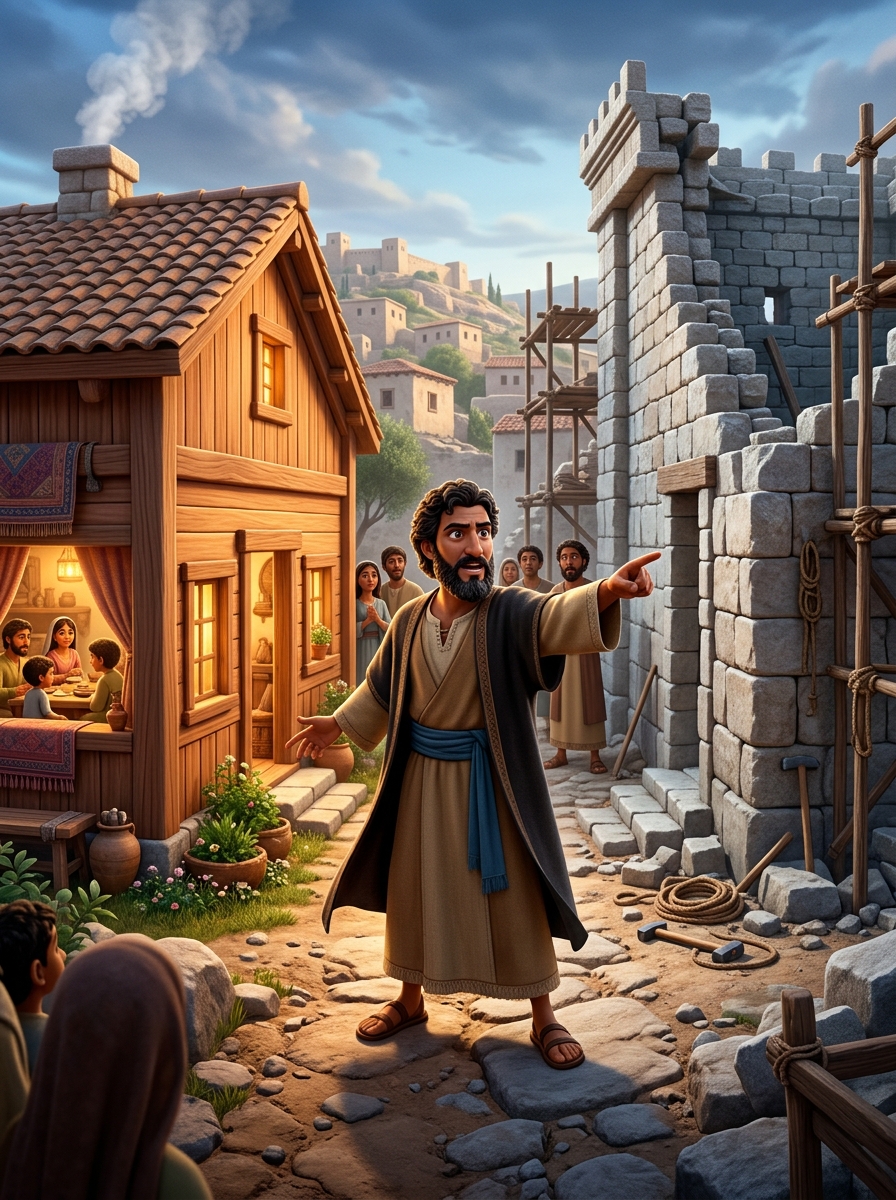
Is It Time for You to Live in Paneled Houses?
After the exile ended and the people returned to Jerusalem, they started rebuilding the temple — then stopped. Opposition arose, discouragement set in, and they decided to focus on their own houses instead. They paneled their own homes with fine wood while God's house lay in ruins. Haggai was the prophet God sent to wake them up. He said — you have planted much but harvested little. You eat but never have enough. You drink but never have your fill. You put on clothes but are never warm. Your wages disappear into a purse with holes in it. Why? Because my house lies in ruins while each of you is busy with your own house. Consider your ways. And build.
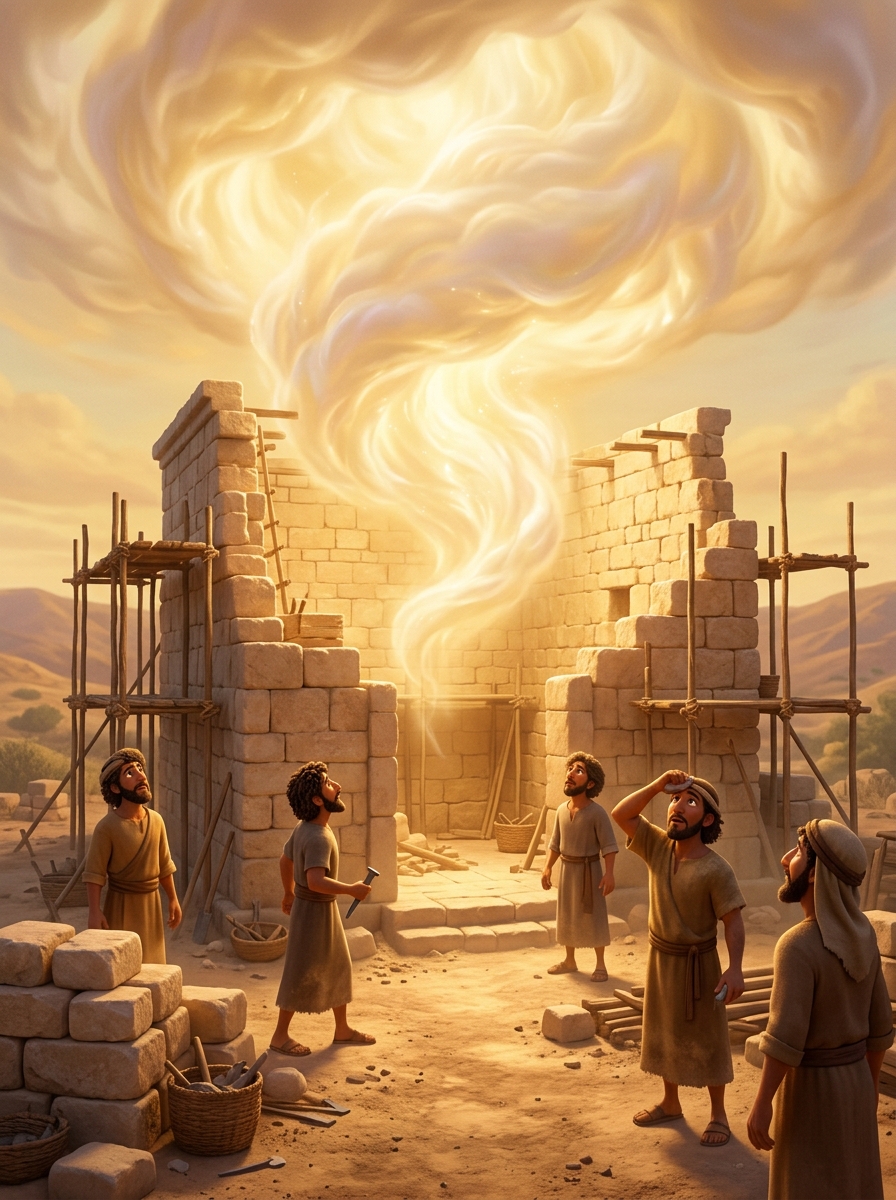
The Glory of This House
When the people began rebuilding the temple, some of the older ones who had seen Solomon's magnificent temple wept — because the new one looked so small and simple by comparison. Haggai brought a message for them directly from God. "Who of you is left who saw this house in its former glory? How does it look to you now? Does it not seem to you like nothing?" But then God said — be strong. Work. I am with you. The glory of this present house will be greater than the glory of the former house. Because one day the desired of all nations will come — and I will fill this house with glory. The most glorious moment in the temple's history would not be Solomon's dedication. It would be the day Jesus walked through its courts.
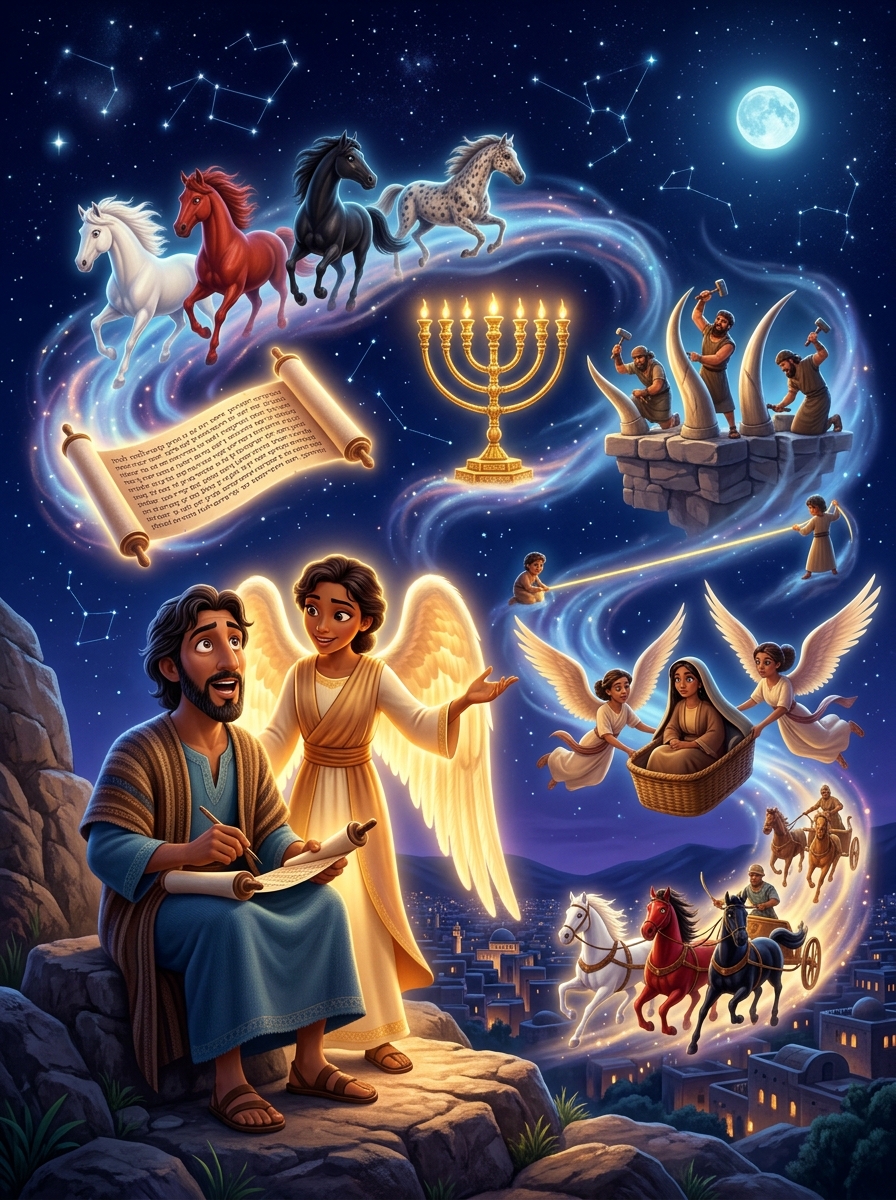
Eight Visions in the Night
Zechariah was a prophet who ministered alongside Haggai, encouraging the returned exiles to rebuild the temple. But where Haggai was direct and practical, Zechariah was visionary — he received eight night visions full of vivid imagery. Horses, lampstands, a flying scroll, a woman in a basket, four chariots. Zechariah also contains some of the most detailed Messianic prophecies in the Old Testament — the king coming on a donkey, thirty pieces of silver, the shepherd struck and the sheep scattered, looking on the one they have pierced. Reading Zechariah alongside the Gospels, the connections are extraordinary. He was seeing the life of Jesus in detail, five hundred years before it happened.
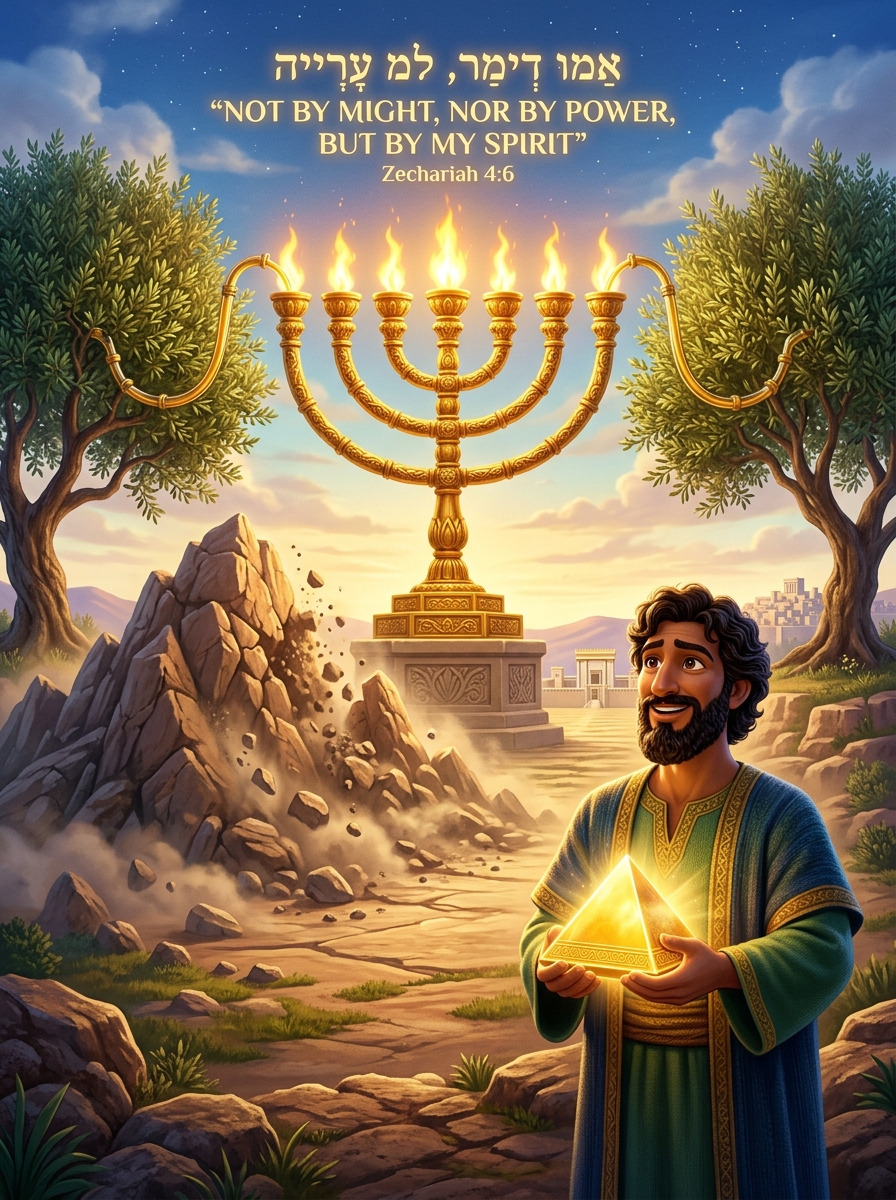
The Golden Lampstand
In one of Zechariah's visions he saw a solid gold lampstand with seven lights — and two olive trees on either side of it, supplying oil constantly. He asked the angel what it meant. The angel said — this is the word of the Lord to Zerubbabel, the leader rebuilding the temple. "Not by might, not by power, but by my Spirit, says the Lord Almighty." The great mountain of obstacles before him — it would become level ground. His hands had laid the foundation of the temple and his hands would complete it. People would shout "grace, grace" over it. What God begins, God finishes. Not by human strength or resources — by the constant supply of His Spirit, flowing like oil into the lamp.
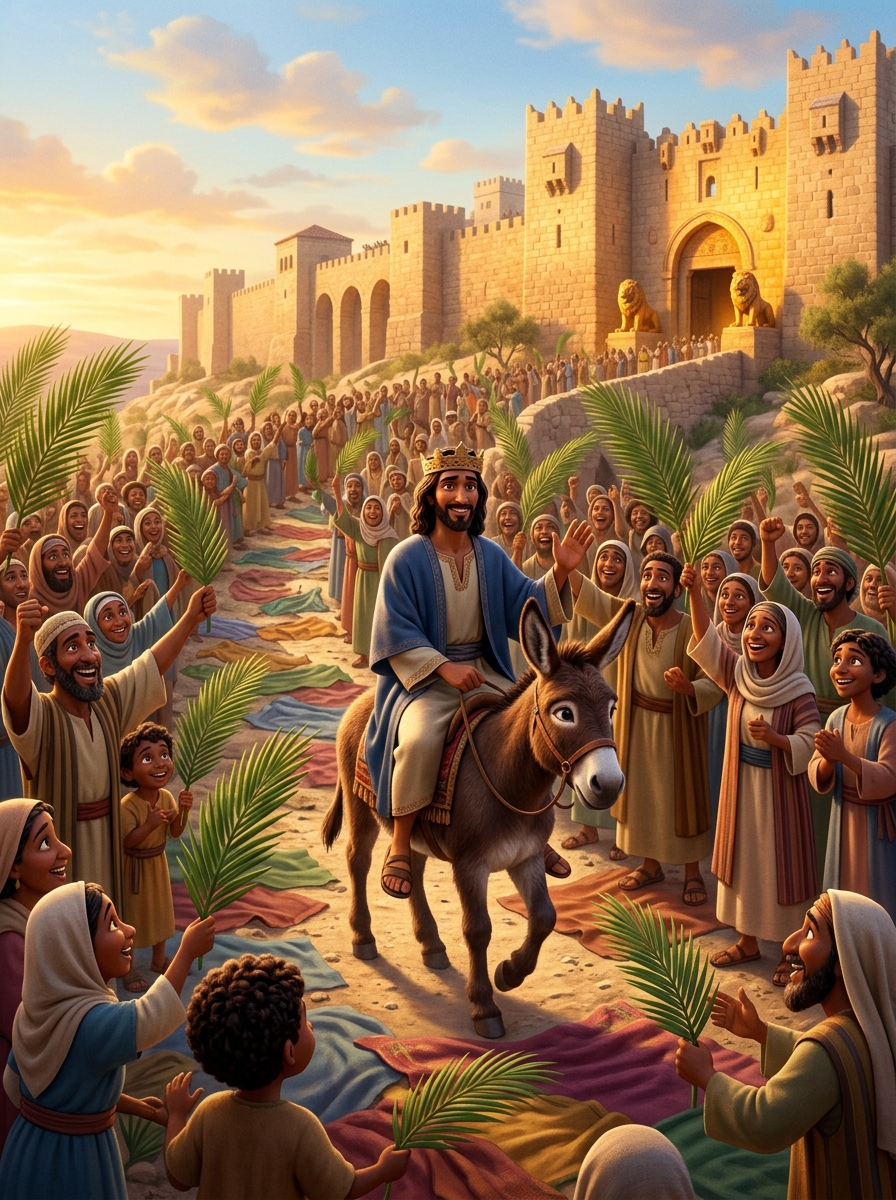
Your King Comes to You
Five hundred years before Palm Sunday, Zechariah described it precisely. "Rejoice greatly, Daughter Zion — shout, Daughter Jerusalem. See, your king comes to you, righteous and victorious, lowly and riding on a donkey, on a colt, the foal of a donkey." This king would not come on a war horse. He would not come with an army. He would come humble, on a donkey — a king whose kingdom would bring peace to the nations. His rule would extend from sea to sea. When Jesus rode into Jerusalem on Palm Sunday the crowd was quoting Psalm 118 — but the animal beneath him was fulfilling Zechariah. The prophet had seen this day half a millennium before it arrived.
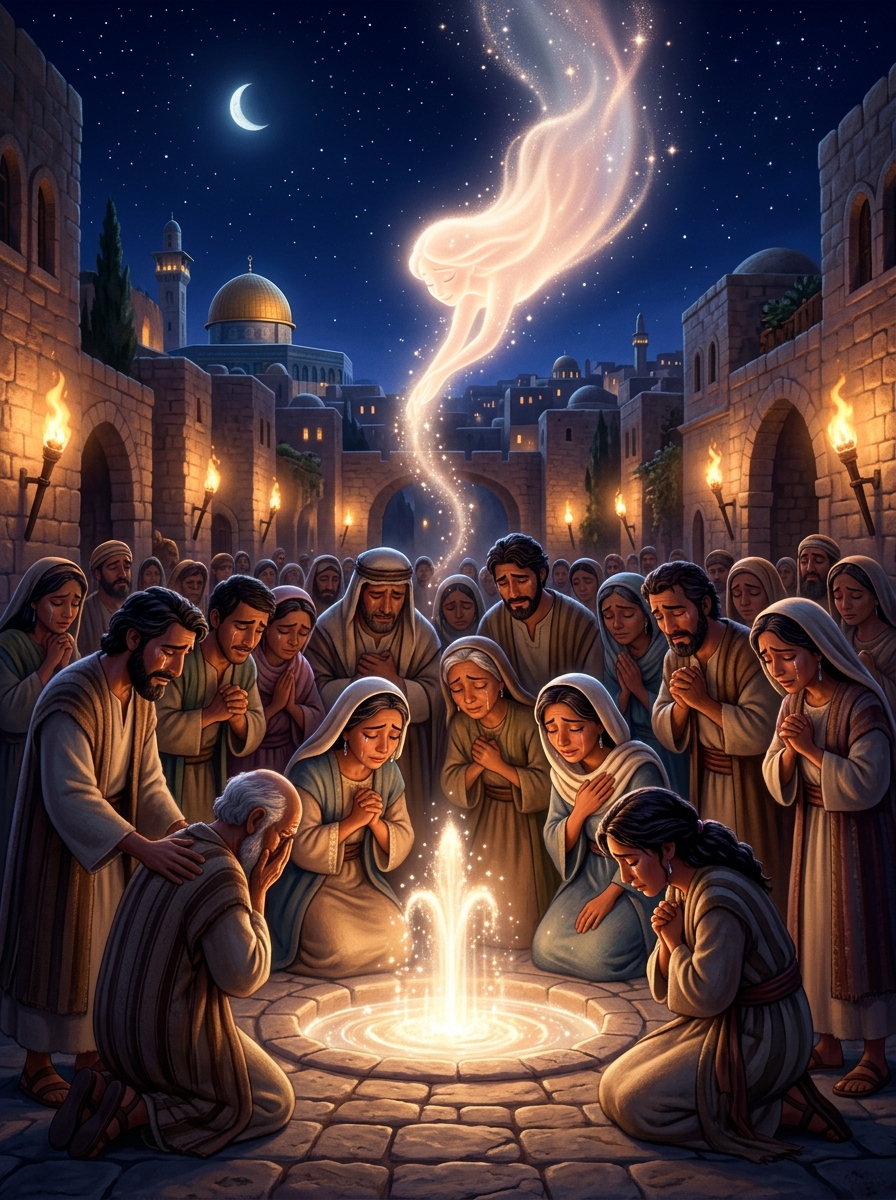
The One They Pierced
Zechariah saw something that only made full sense after the crucifixion. God said He would pour out a spirit of grace and supplication on the house of David and Jerusalem — and they will look on me, the one they have pierced, and they will mourn for him as one mourns for an only child. A fountain will be opened for the house of David — to cleanse them from sin and impurity. Strike the shepherd and the sheep will be scattered. These words were written five hundred years before Jesus died. On the night of his arrest Jesus quoted the shepherd verse himself. John, watching the crucifixion, remembered the one they pierced. Every detail landed exactly where Zechariah had placed it.
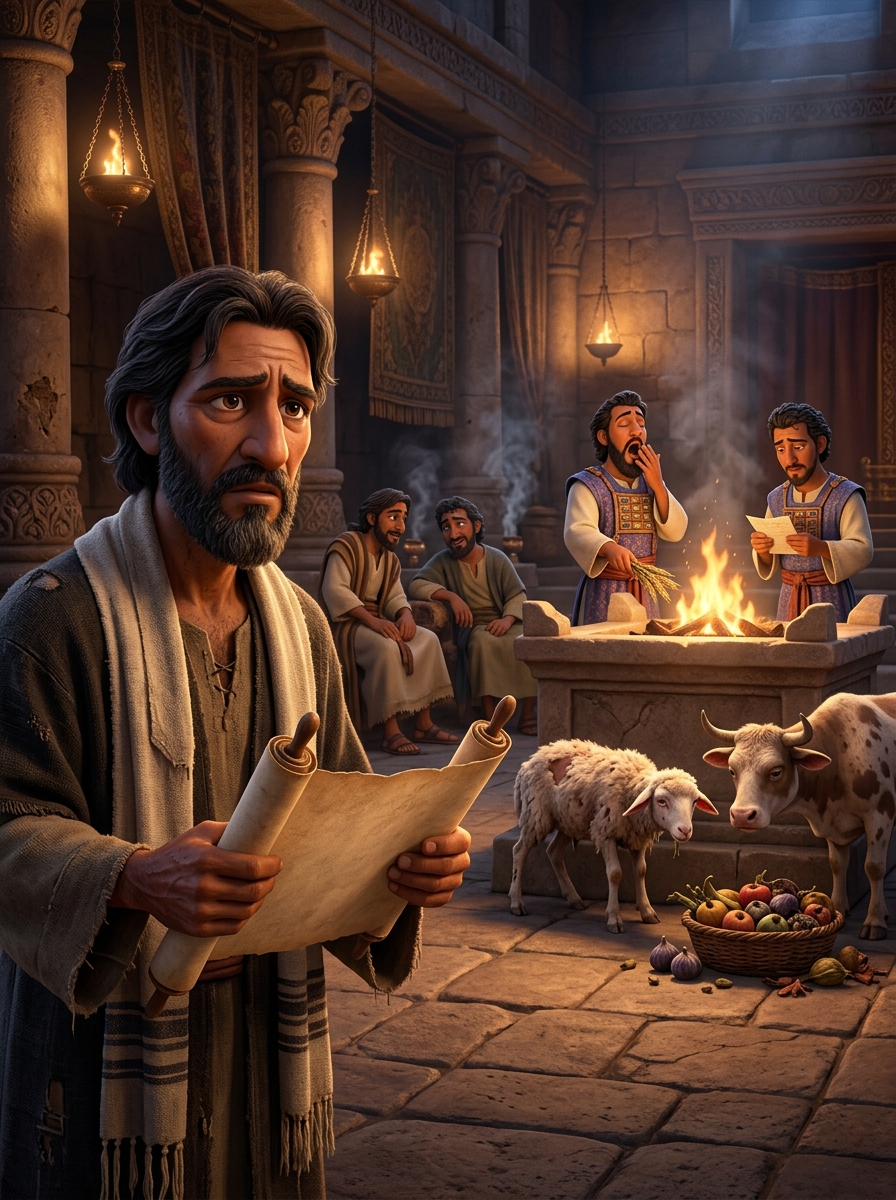
The Last Prophet
Malachi was the last prophet of the Old Testament — the final voice before four hundred years of silence. The people had returned from exile, the temple had been rebuilt, life had gone back to something like normal. And in the comfort of normal, something had gone quiet in their hearts. The priests were offering blemished animals on the altar — the leftovers, the second-best. The people were robbing God of tithes and offerings. Men were being unfaithful to the wives of their youth. They were saying — it is pointless to serve God. What do we gain from it? Malachi arrived with a question from God that cut through all of it: "I have loved you — but you say, how have you loved us?"
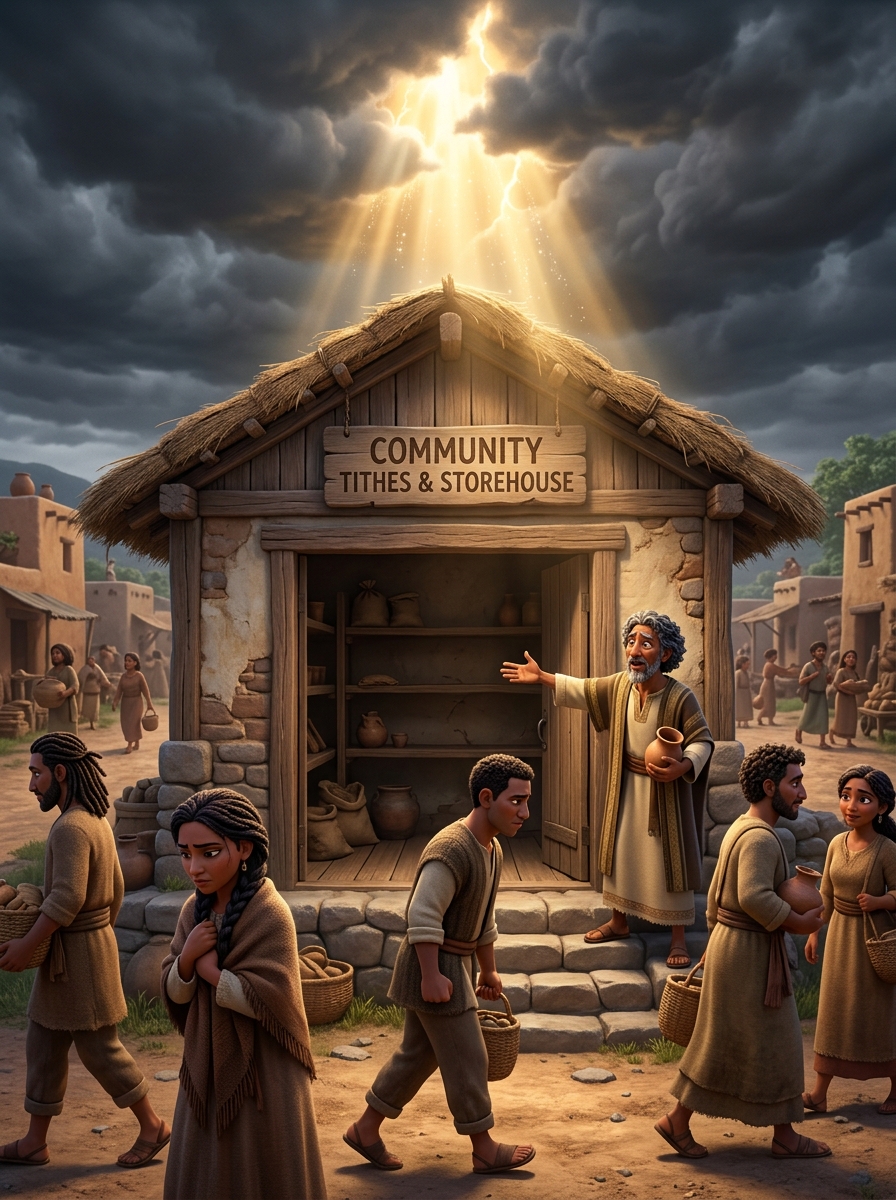
Will a Man Rob God?
God made a startling accusation through Malachi — you are robbing me. The people asked — how are we robbing you? God answered — in tithes and offerings. The whole nation was robbing Him. Then He made an extraordinary offer. "Bring the whole tithe into the storehouse, that there may be food in my house. Test me in this — and see if I will not throw open the floodgates of heaven and pour out so much blessing that there will not be room enough to store it." God inviting people to test His generosity. He also promised to send a messenger who would prepare the way before Him — a voice crying out, making the road straight. That messenger would be John the Baptist.
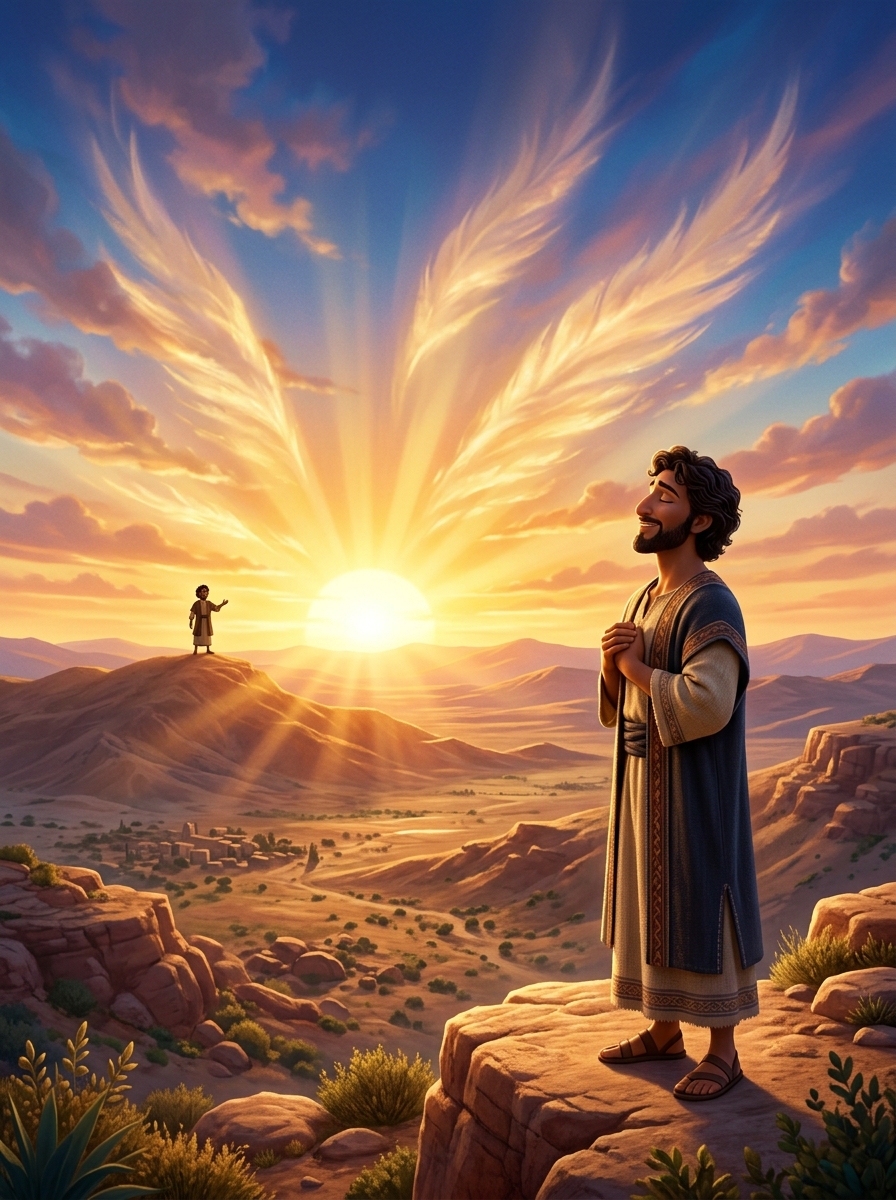
The Sun of Righteousness
The Old Testament ends with a promise and a warning. God said the day is coming that will burn like a furnace — the arrogant and evildoer will be like stubble. But for those who revere His name, the sun of righteousness will rise with healing in its rays. They will go out and leap like calves released from the stall. Then God gave a final instruction — remember the law of Moses. And a final promise — I will send the prophet Elijah before the great day of the Lord. He will turn the hearts of parents to their children and children to their parents. The Old Testament ends looking forward — to a messenger coming, to a great day arriving, to a healing sun rising. Four hundred years of silence followed. Then a voice in the wilderness said — prepare the way of the Lord.
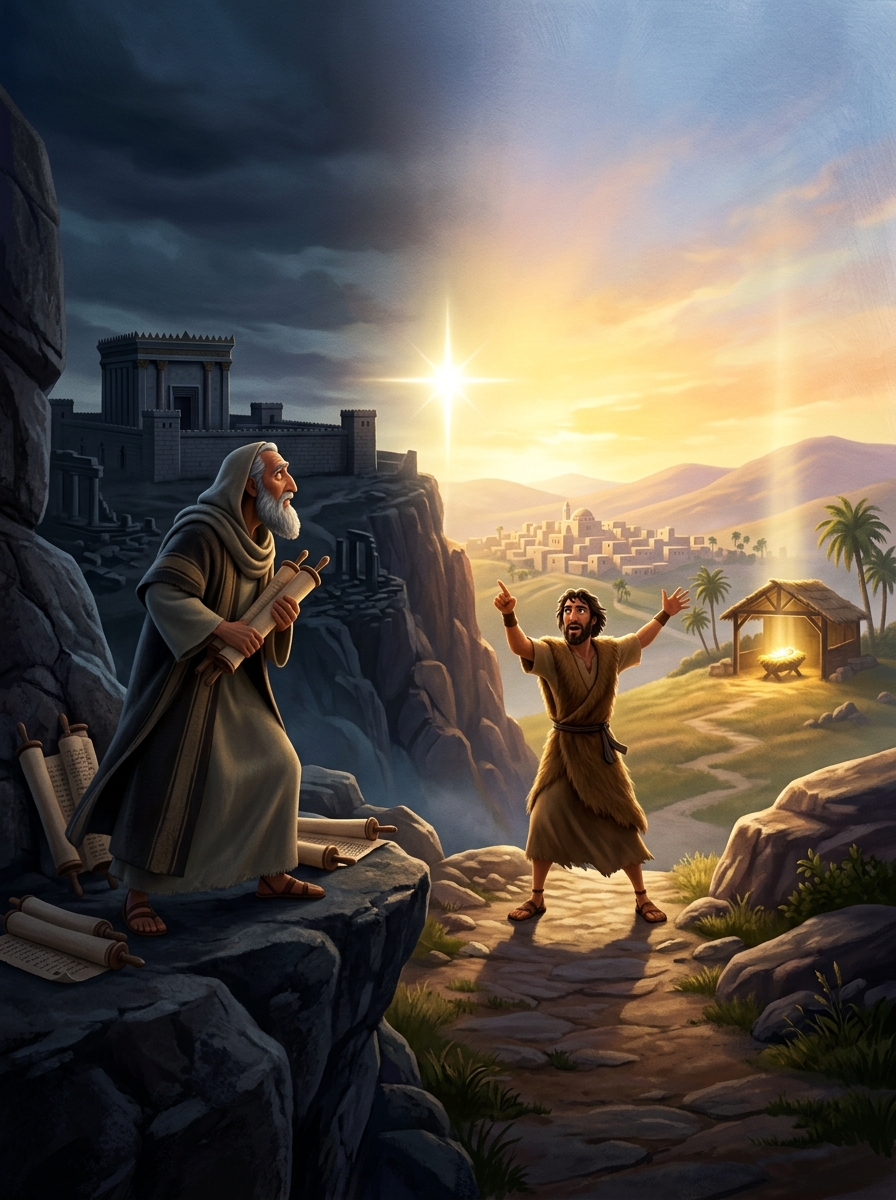
Matthew — Introduction
Matthew was a tax collector who became one of Jesus' twelve disciples. He wrote his Gospel to show Jewish readers that Jesus is the promised Messiah, the fulfillment of everything the Old Testament foretold. His account begins with a royal genealogy — tracing Jesus' lineage all the way back to Abraham and David — proving that this child born in Bethlehem carries the blood of kings and the hope of a nation.
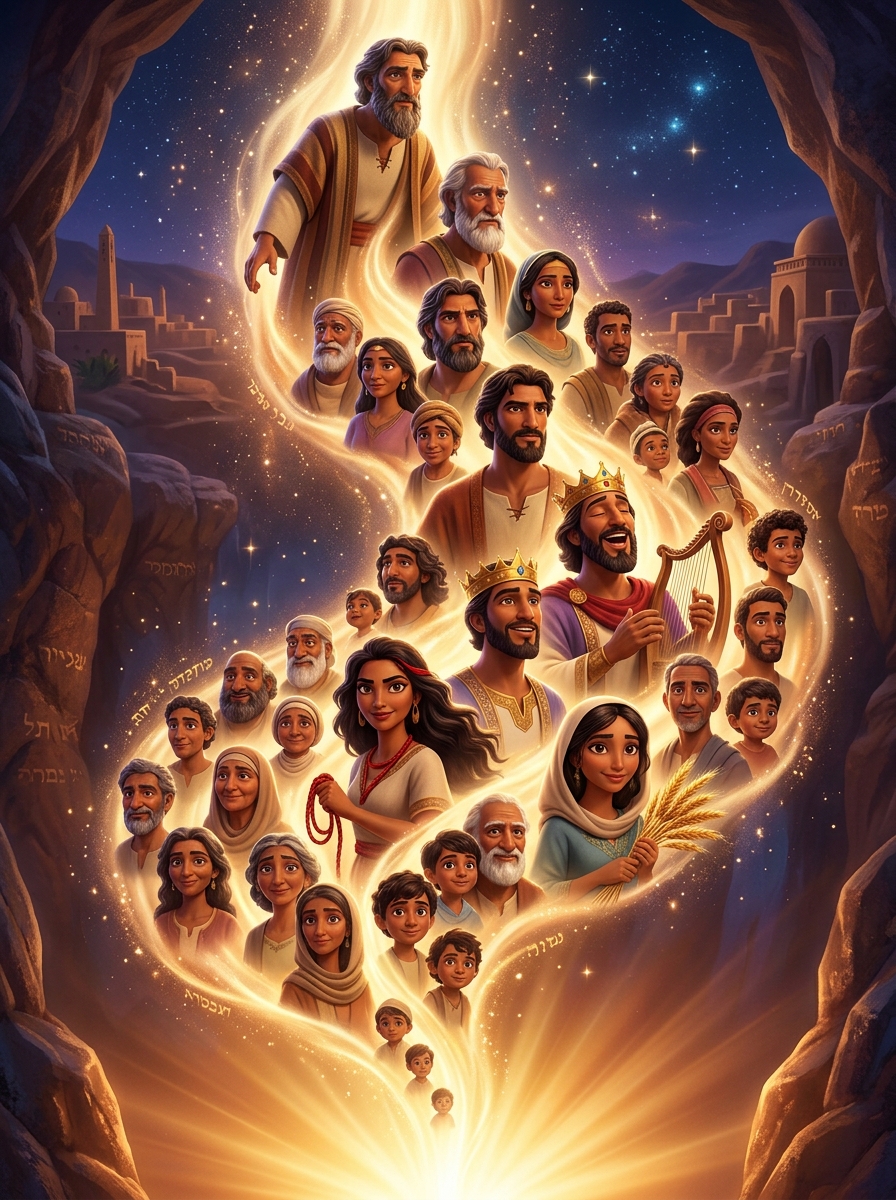
Matthew 1 — The Family Line
The angel Gabriel appeared to Joseph in a dream, telling him not to be afraid to take Mary as his wife. The child she carried was conceived by the Holy Spirit. He would be born Emmanuel — 'God with us.' Joseph woke and obeyed, and in a cold stable in Bethlehem, the Son of God entered the world wrapped in cloth, laid in a manger, while angels filled the sky with glory.
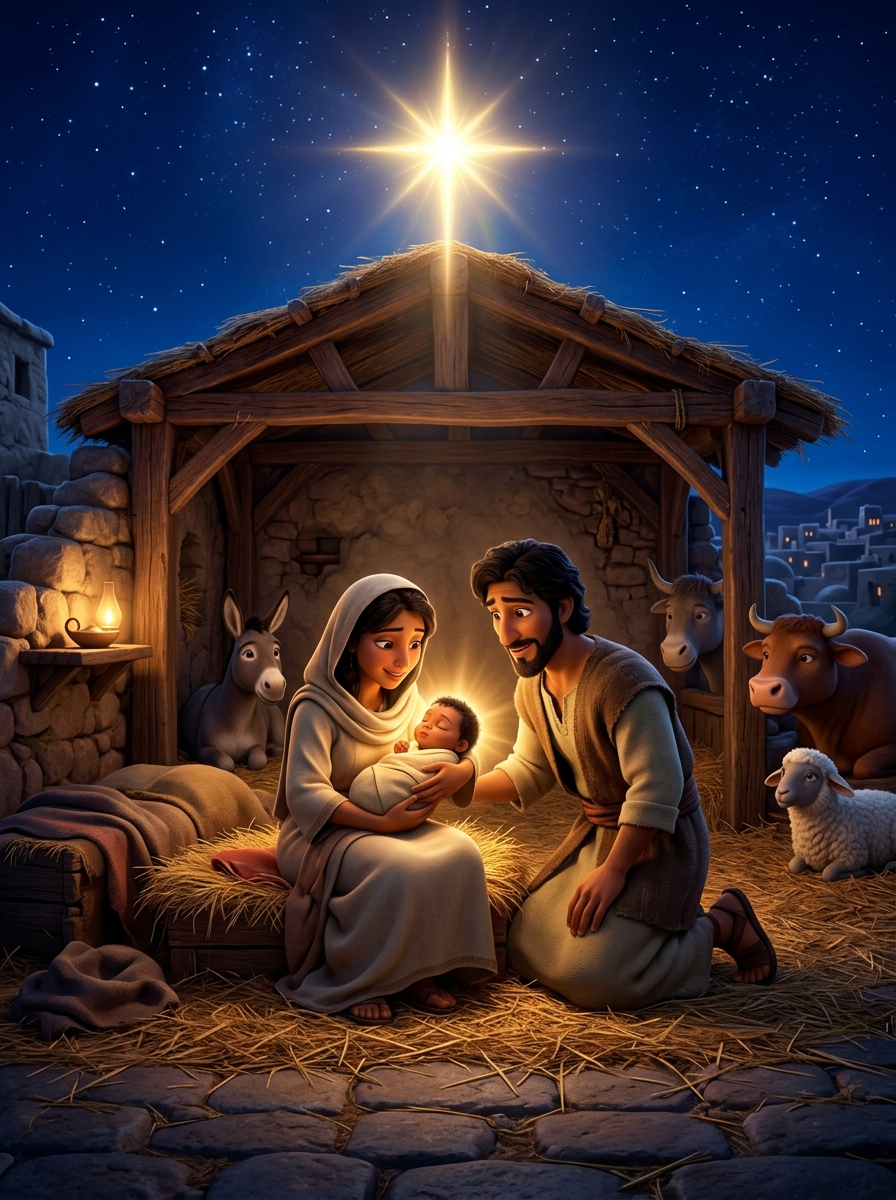
Matthew 2 — The Wise Men
Magi from the east followed a brilliant star across desert and mountain, seeking the newborn King of the Jews. They arrived in Jerusalem, alarming King Herod. The star led them to Bethlehem, where they bowed before the child Jesus and offered gifts of gold, frankincense, and myrrh. Warned in a dream, they returned home another way — and an angel warned Joseph to flee to Egypt.
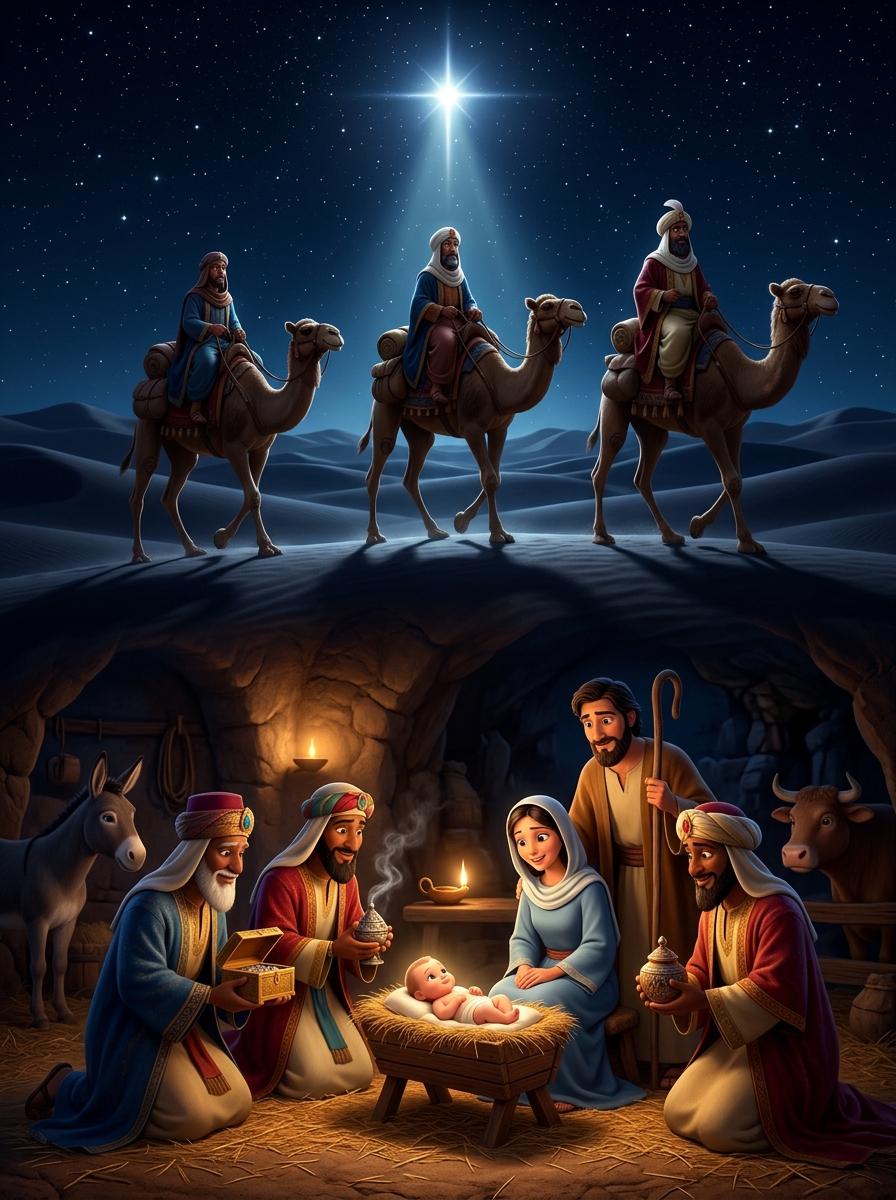
Matthew 3 — John the Baptist
John the Baptist thundered through the Judean wilderness in camel's hair and leather, preaching repentance and baptizing crowds in the Jordan River. He called Israel to prepare for the One coming after him — One whose sandals he was not worthy to carry. When Jesus came to be baptized, John hesitated, but Jesus insisted. The moment He rose from the water, the heavens split open and a voice declared: 'This is my beloved Son.'
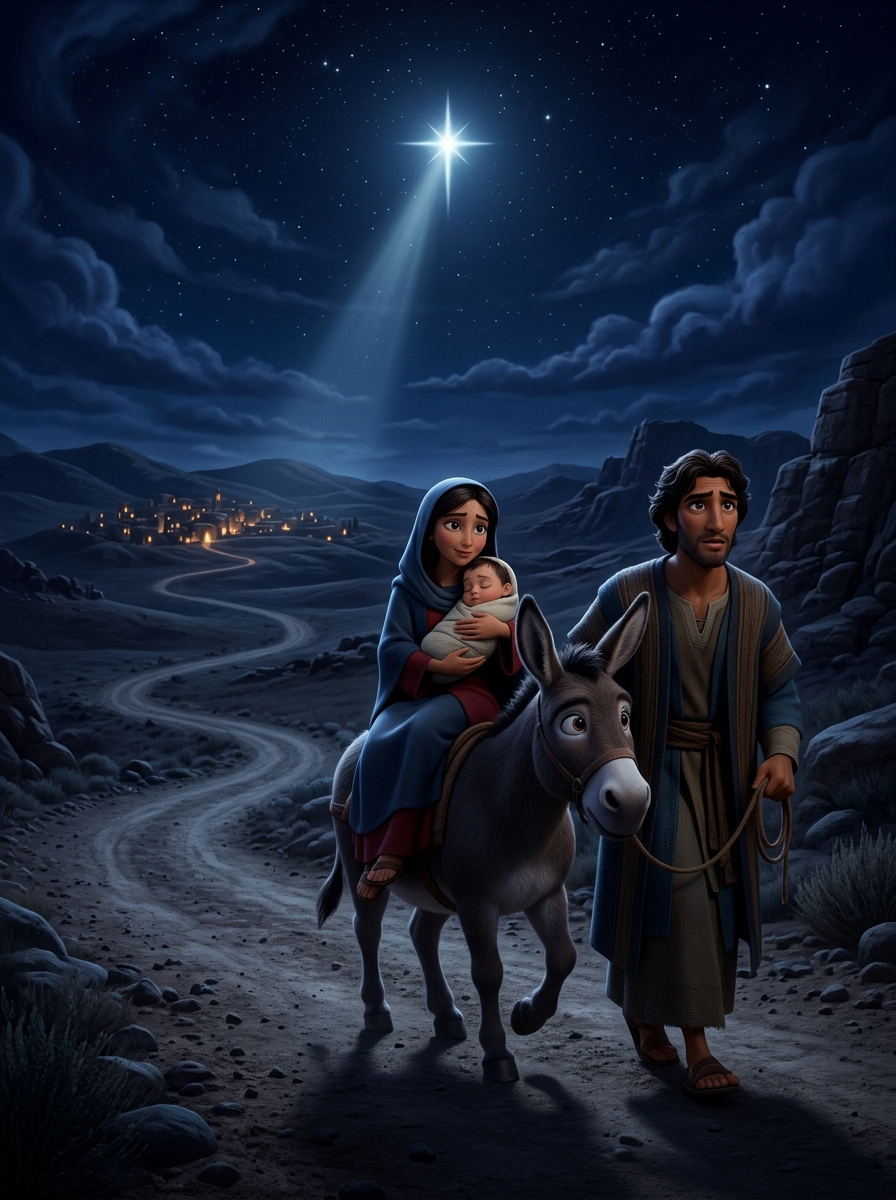
Matthew 4 — The Temptation
The Spirit led Jesus into the wilderness for forty days of fasting and prayer. Satan came with three cunning temptations — bread from stones, a leap from the Temple, and all the kingdoms of the world. Three times Jesus answered with Scripture. Three times the enemy failed. Angels came and ministered to Him. Then Jesus returned to Galilee, calling fishermen from their nets with two words that changed everything: 'Follow me.'
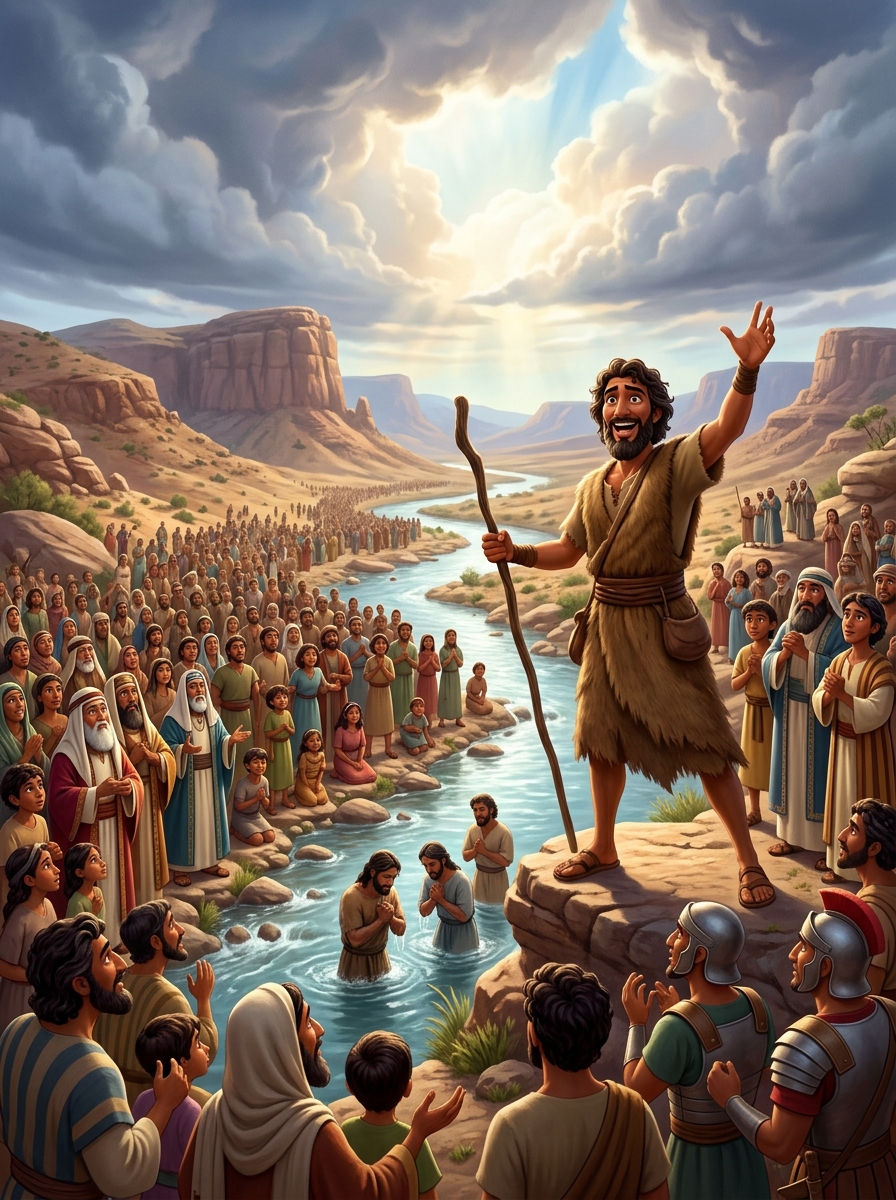
Matthew 5 — The Sermon on the Mount
Jesus climbed a hillside and sat down to teach. Crowds gathered around Him, and He opened His mouth and turned the world's values upside down. Blessed are the poor in spirit. Blessed are the meek. Blessed are the peacemakers. You are the salt of the earth; you are the light of the world. Love your enemies. Give in secret. The crowds were astonished — He taught with authority unlike any scribe or Pharisee.
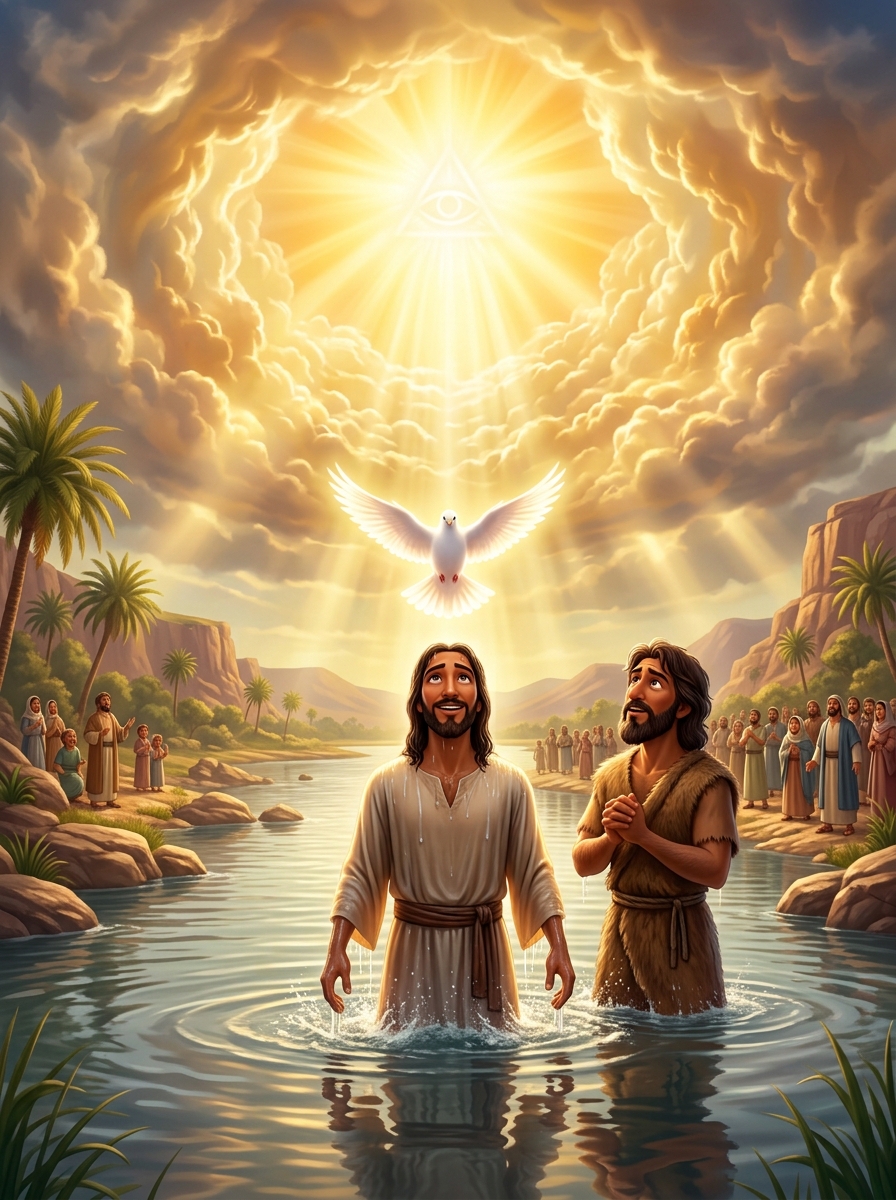
Matthew 6 — The Lord's Prayer
Jesus warned against doing righteous acts to be seen by others. Real prayer isn't a performance — go into your room, close the door, and pray to your Father in secret. Then He taught them how to pray: Our Father in heaven, hallowed be your name. Your kingdom come, your will be done on earth as it is in heaven. Give us today our daily bread. Forgive us as we forgive others. Deliver us from evil.
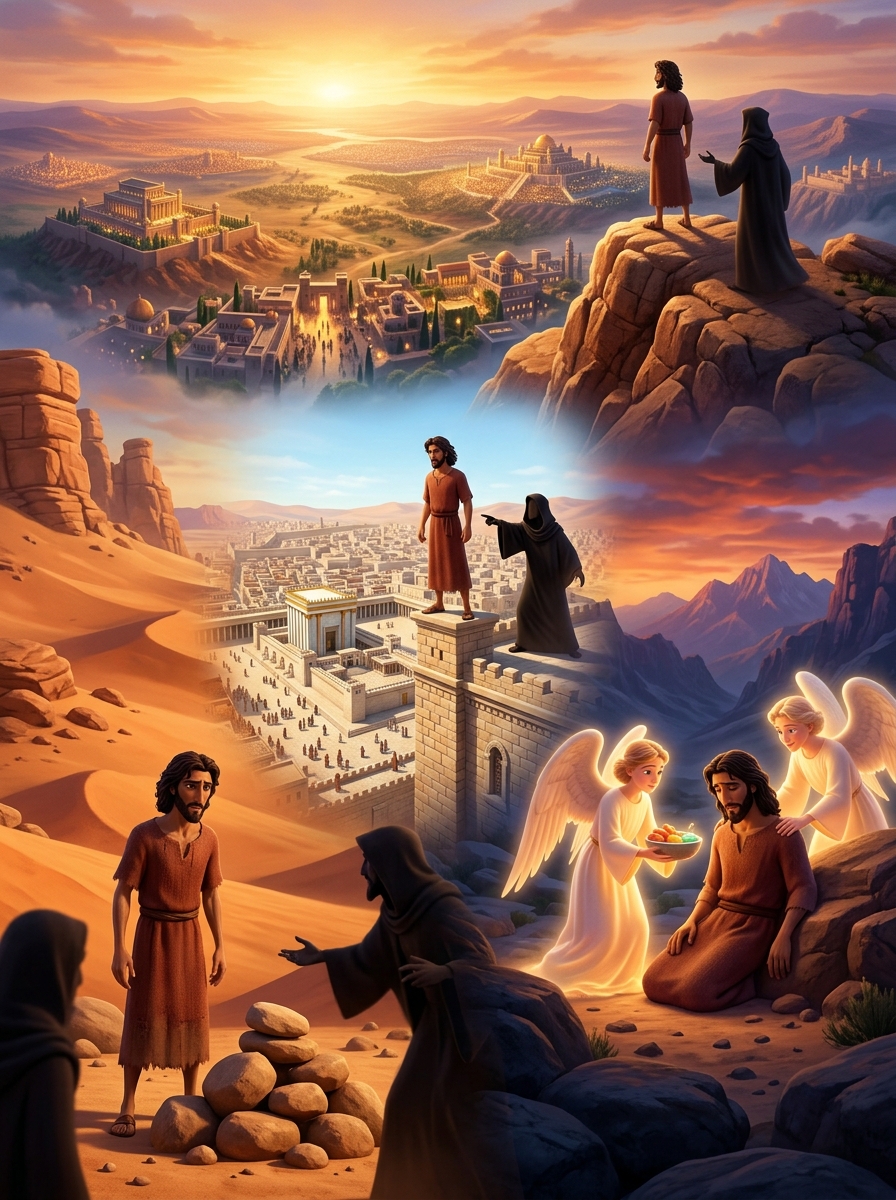
Matthew 7 — Ask, Seek, Knock
Jesus told His disciples not to judge others harshly while ignoring their own faults. Ask and it will be given. Seek and you will find. Knock and the door will be opened. Do to others what you would have them do to you. Enter through the narrow gate. Build your life on the rock of His words, not on sand. When He finished, the crowd was stunned — He spoke as one who had all authority.
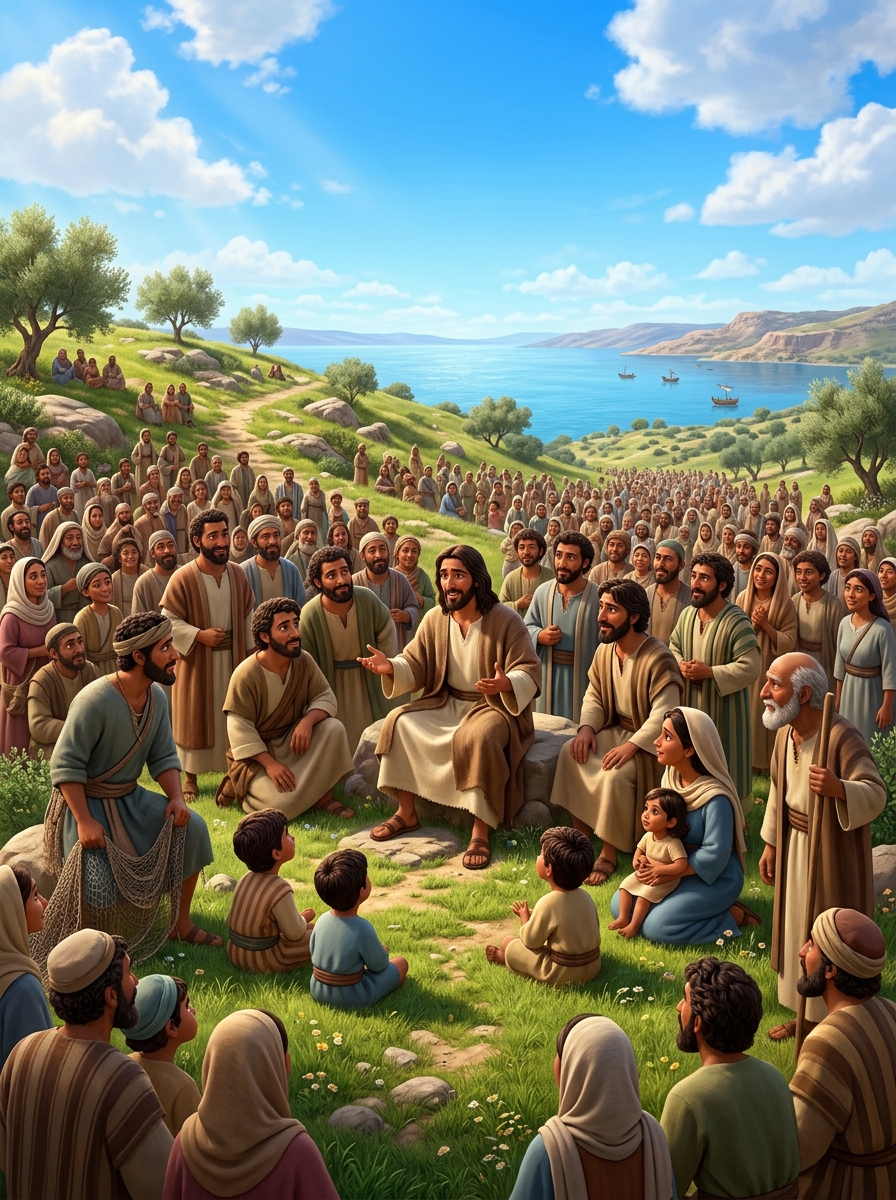
Matthew 8 — Miracles of Healing
A man covered in leprosy knelt before Jesus. 'Lord, if you are willing, you can make me clean.' Jesus reached out and touched him — a thing no one dared do — and said, 'I am willing. Be clean.' Instantly the disease vanished. A Roman centurion asked Jesus to heal his servant from a distance. Jesus marveled at his faith and spoke the word. The servant was healed that very hour.
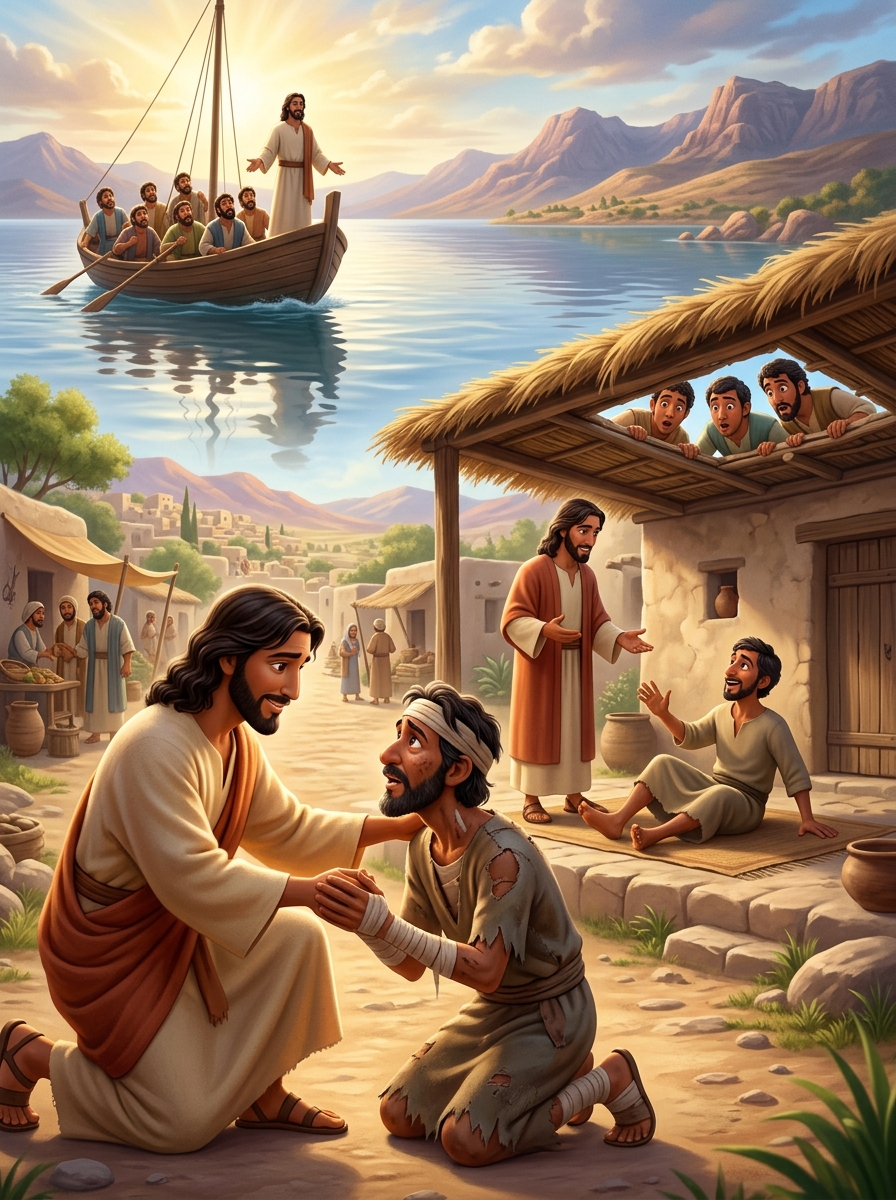
Matthew 9 — Calling Matthew
Jesus saw a tax collector named Matthew sitting at his booth and said simply, 'Follow me.' Matthew got up and followed. At dinner with Jesus that night, Pharisees grumbled about the company He kept. Jesus replied: 'It is not the healthy who need a doctor, but the sick. I have not come to call the righteous, but sinners.' He healed the blind, the mute, the paralyzed — and crowds marveled at what God was doing.
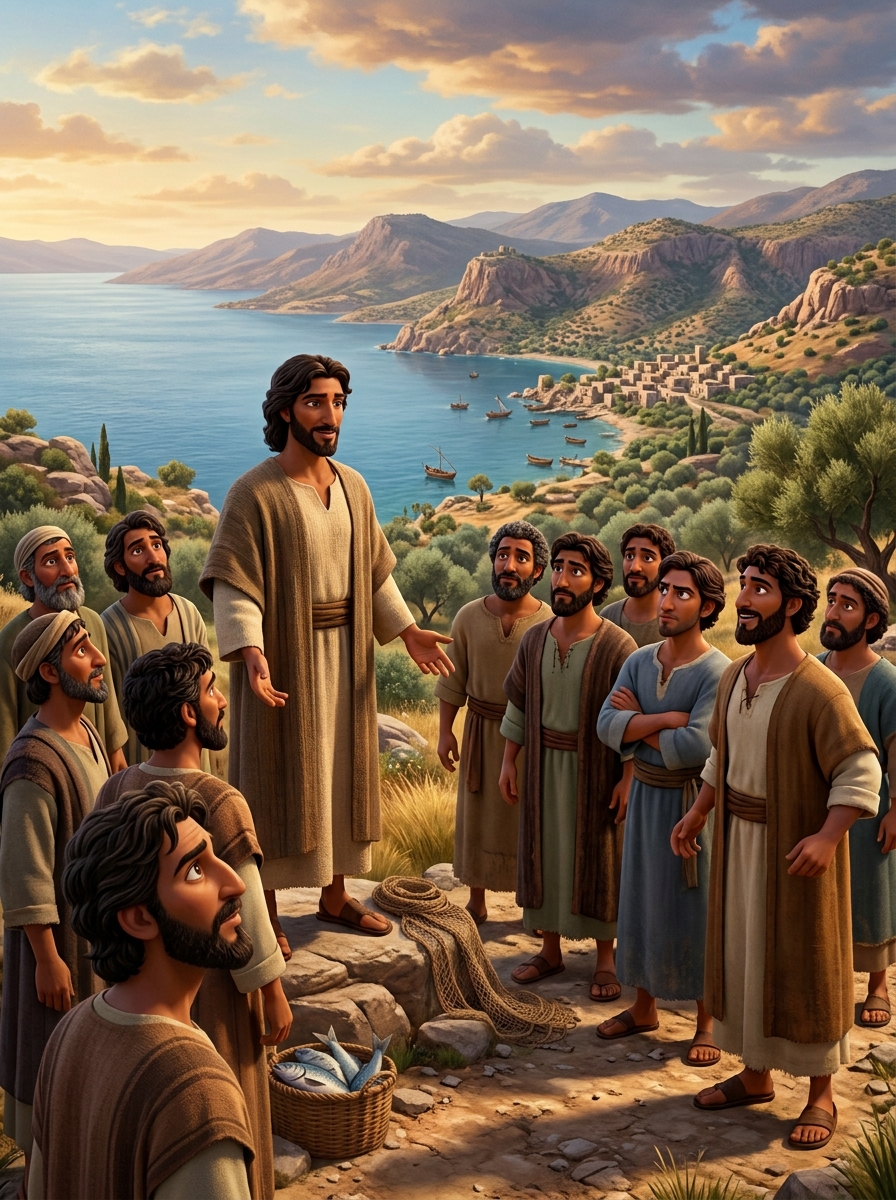
Matthew 10 — The Twelve Sent Out
Jesus called His twelve disciples together, gave them authority over evil spirits and disease, and sent them out two by two. Don't take gold or silver or a bag for the journey. Whatever town welcomes you, let your peace rest on it. You will face opposition — but don't be afraid. Even the hairs of your head are numbered. Whoever acknowledges me before others, I will acknowledge before my Father in heaven.
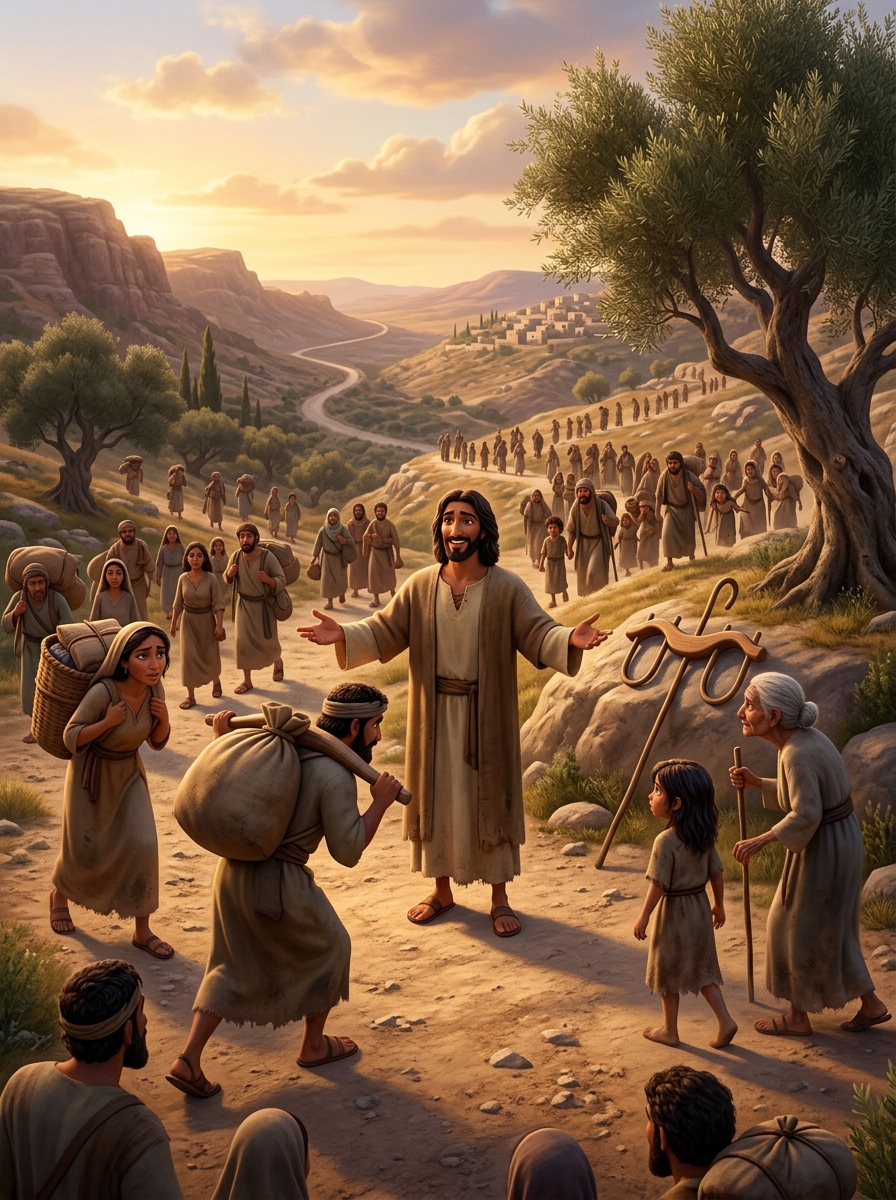
Matthew 11 — Come to Me
John the Baptist, imprisoned by Herod, sent his disciples to ask Jesus: 'Are you the one who is to come?' Jesus replied: 'Tell John what you hear and see — the blind see, the lame walk, the deaf hear, the dead are raised, the poor have good news.' Then Jesus called out to the weary crowds: 'Come to me, all you who are tired and burdened, and I will give you rest. My yoke is easy. My burden is light.'
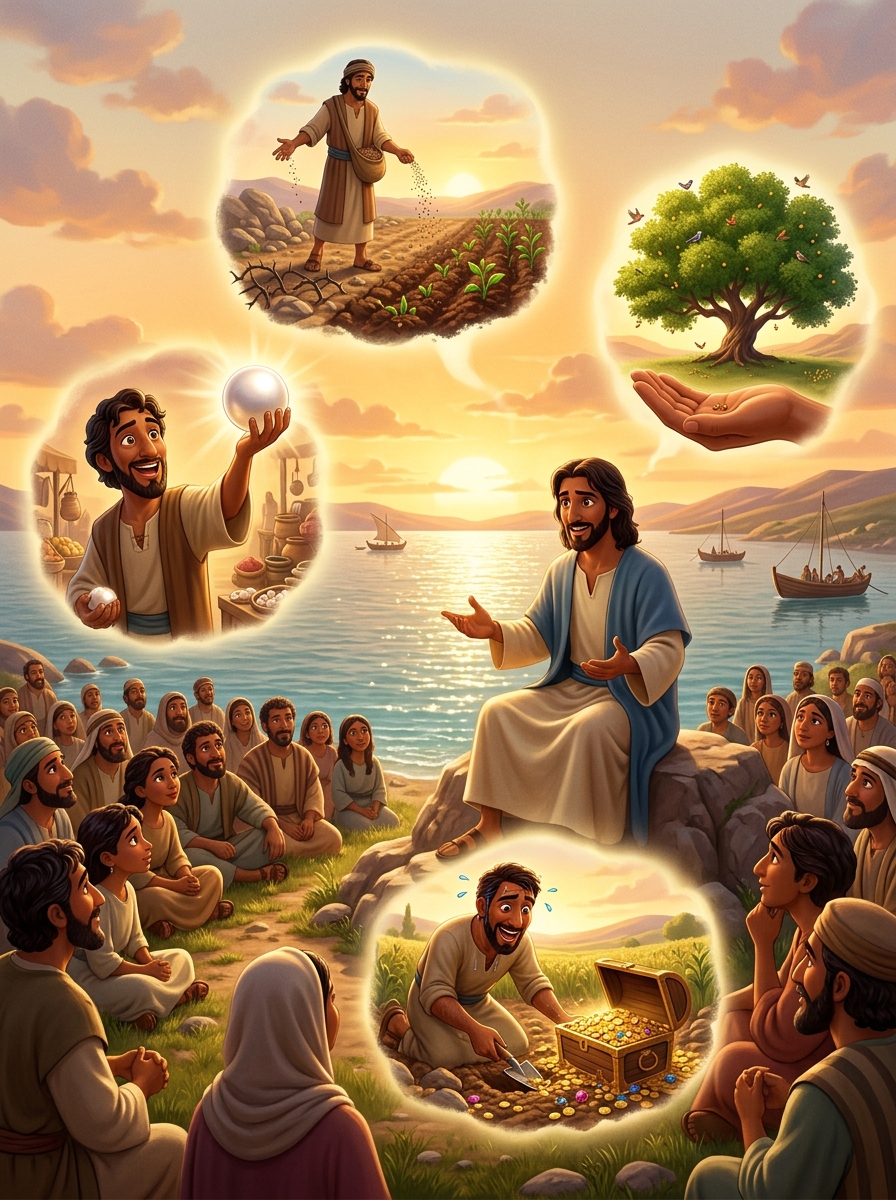
Matthew 12 — Lord of the Sabbath
The Pharisees challenged Jesus when His disciples plucked grain on the Sabbath. Jesus reminded them that the Son of Man is Lord of the Sabbath. In a synagogue He healed a man's withered hand. The Pharisees began plotting to destroy Him. He warned that a house divided against itself cannot stand. Calling a crowd around Him, He said: 'Whoever does the will of my Father in heaven is my brother, sister, and mother.'
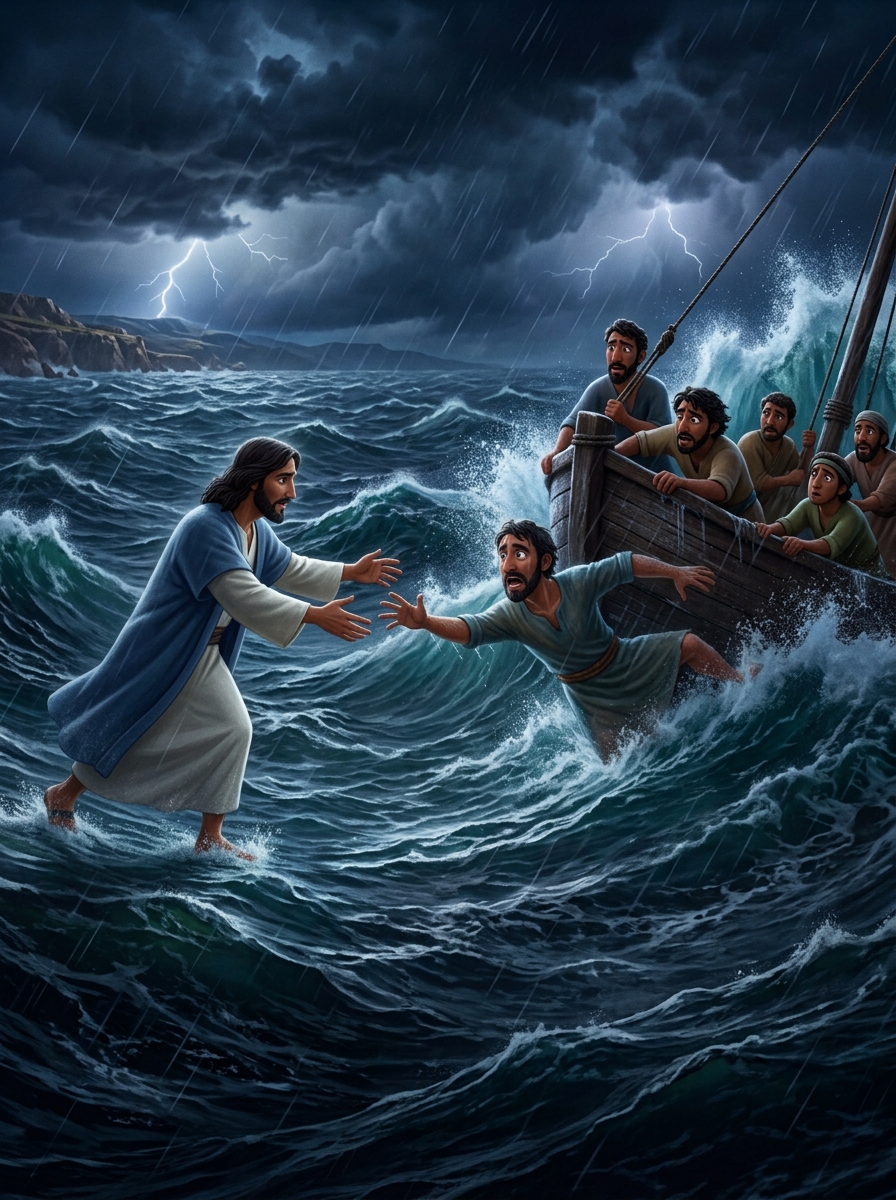
Matthew 13 — Parables of the Kingdom
Jesus sat by the lake and taught in parables. A farmer sowed seed on four kinds of soil. A tiny mustard seed grew into a great tree. A merchant sold everything for one perfect pearl. The kingdom of heaven is like treasure hidden in a field. Later He explained the parables to His disciples privately — these mysteries were given to them to understand, but others saw without seeing and heard without hearing.
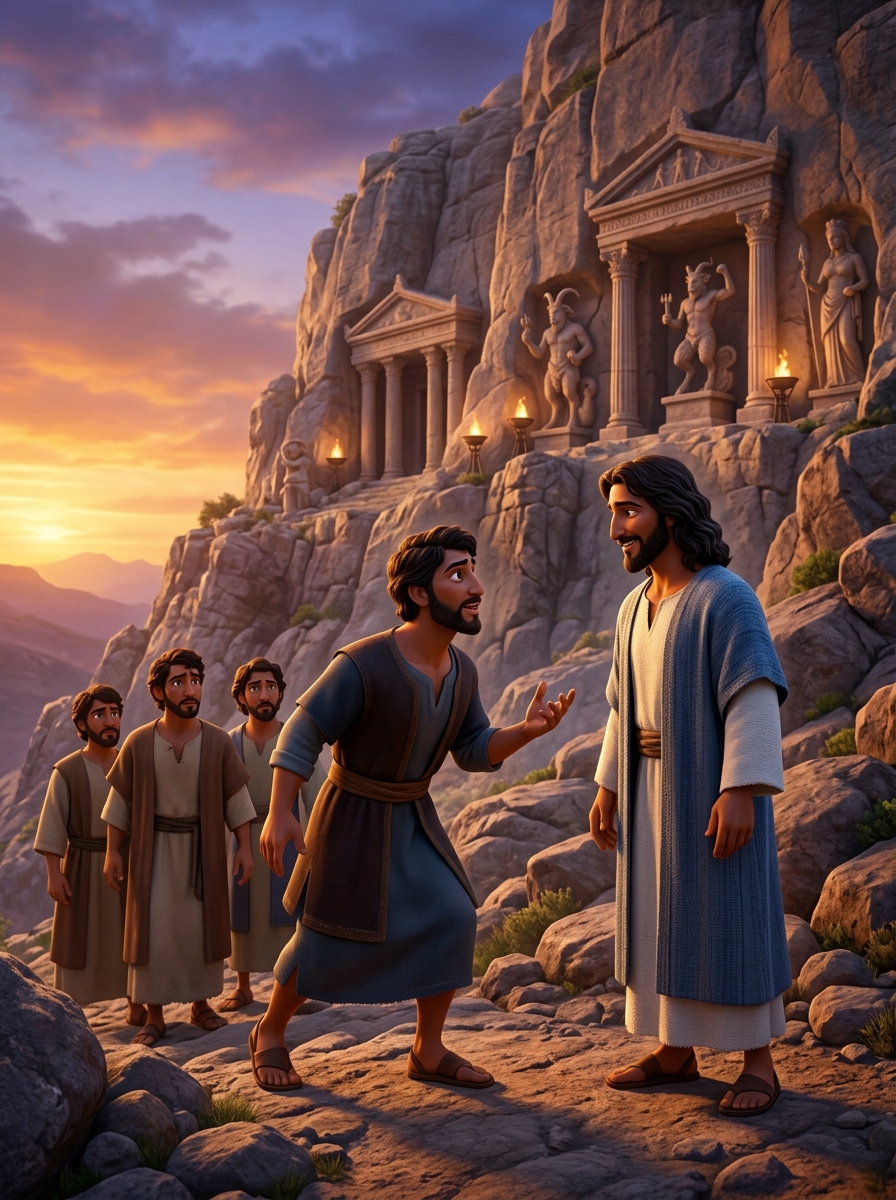
Matthew 14 — Walking on Water
Jesus had just learned that John the Baptist was beheaded by Herod. He withdrew to a quiet place — but the crowds followed. With compassion He healed them, then fed five thousand people with five loaves and two fish, with twelve basketfuls left over. That night He sent the disciples ahead by boat and walked out to them on the water through a storm. Peter stepped out and walked too — until fear made him sink. Jesus caught him.
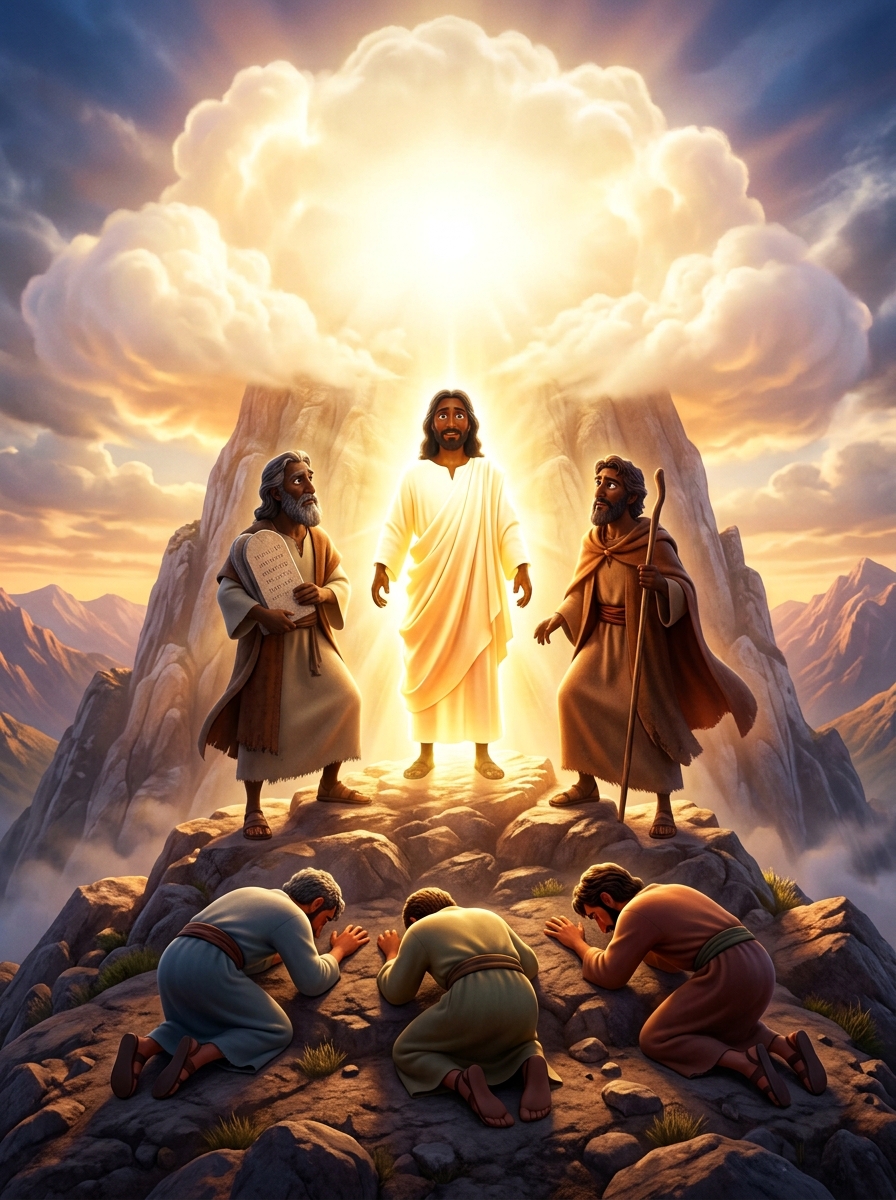
Matthew 15 — Faith of a Canaanite Woman
A Canaanite woman cried out to Jesus persistently: 'Lord, Son of David, have mercy on me! My daughter is tormented by a demon.' His disciples urged Him to send her away. She knelt before Him and would not stop. Jesus answered her: 'Woman, great is your faith! Let it be done as you wish.' At that moment her daughter was healed. Jesus then went to a hillside and fed four thousand more people with seven loaves and a few fish.
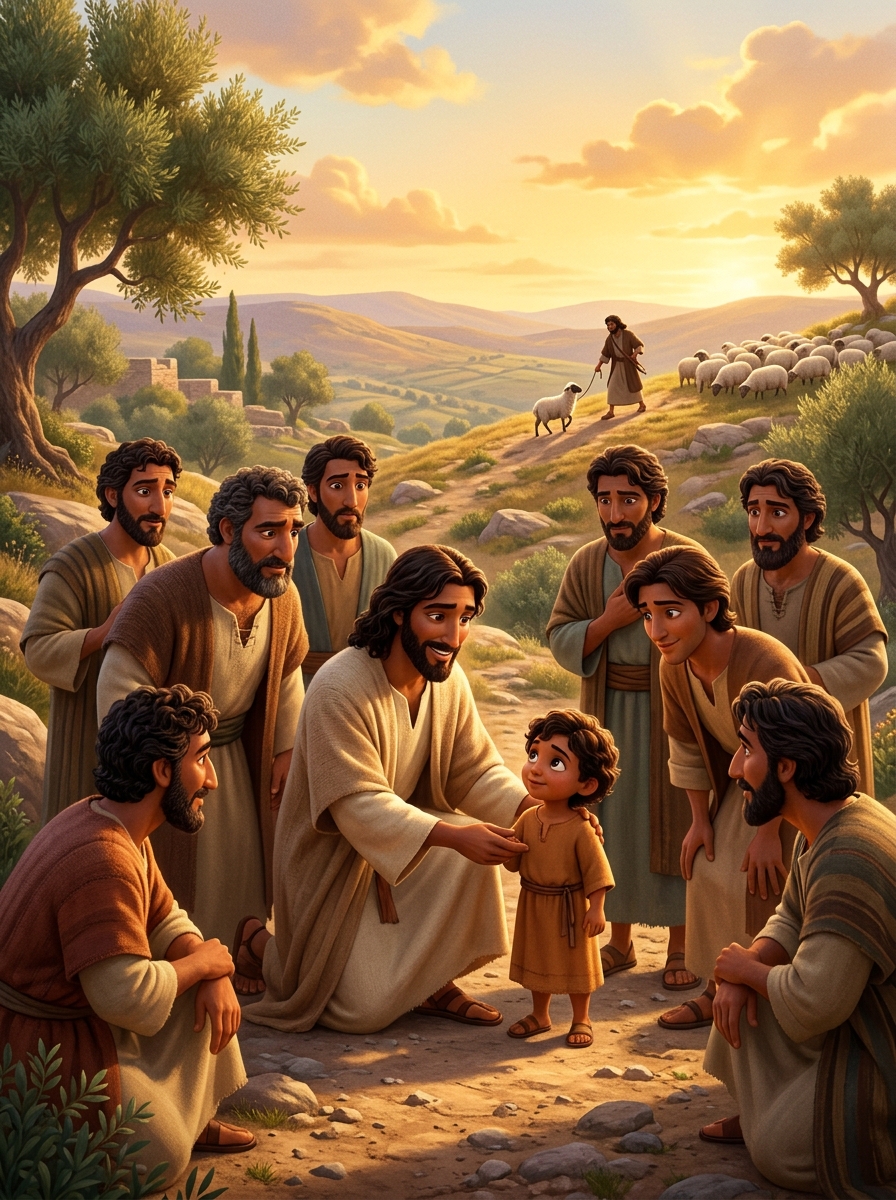
Matthew 16 — Peter's Confession
Jesus asked His disciples: 'Who do you say I am?' Simon Peter answered immediately: 'You are the Messiah, the Son of the living God.' Jesus told him this truth was revealed by the Father, and He would build His church on this rock — and the gates of hell would not overcome it. Then He began to tell them plainly: the Son of Man must suffer, be killed, and on the third day be raised. The disciples were shaken.
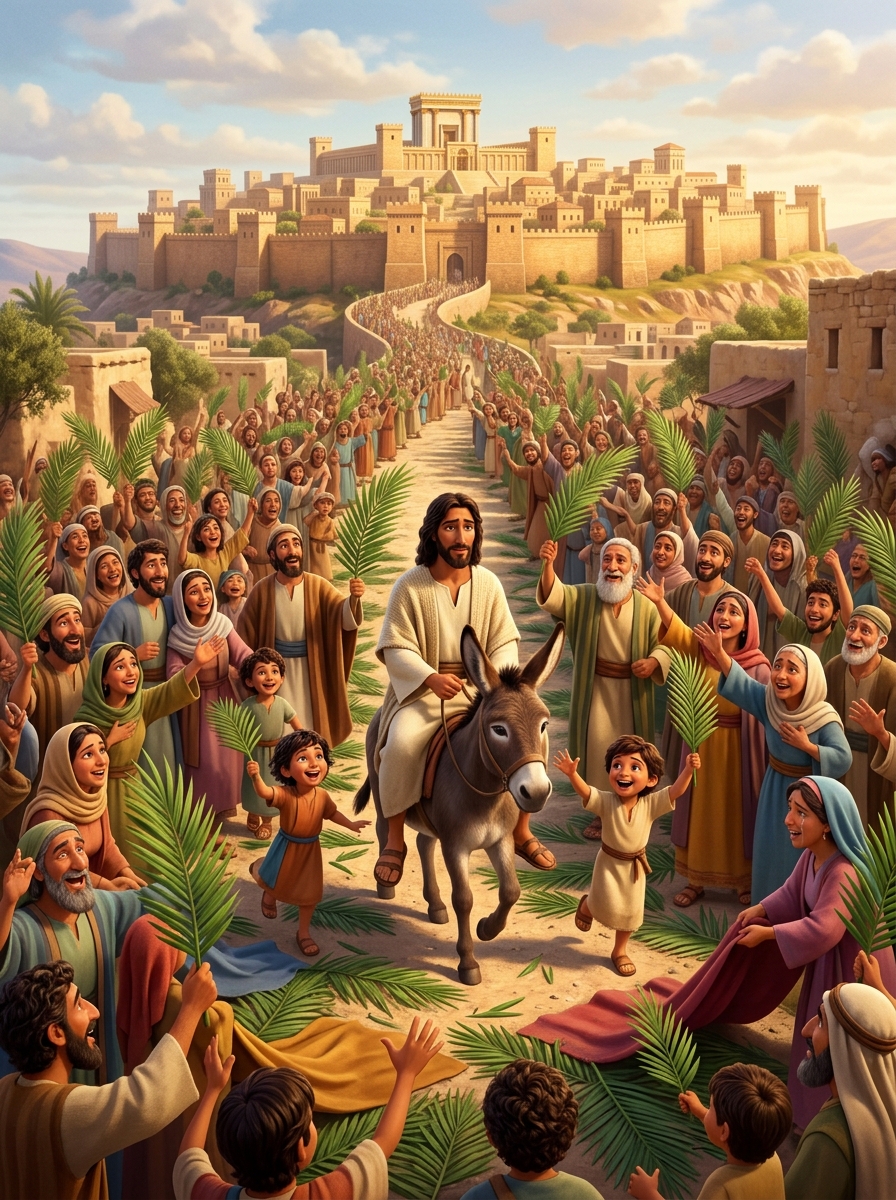
Matthew 17 — The Transfiguration
Jesus took Peter, James, and John up a high mountain alone. Before their eyes He was transfigured — His face shone like the sun, His clothes blazed white as light. Moses and Elijah appeared and spoke with Him. Then a bright cloud covered them and the voice of God declared: 'This is my Son, whom I love — listen to Him!' The disciples fell on their faces in awe. Jesus touched them: 'Get up. Don't be afraid.'
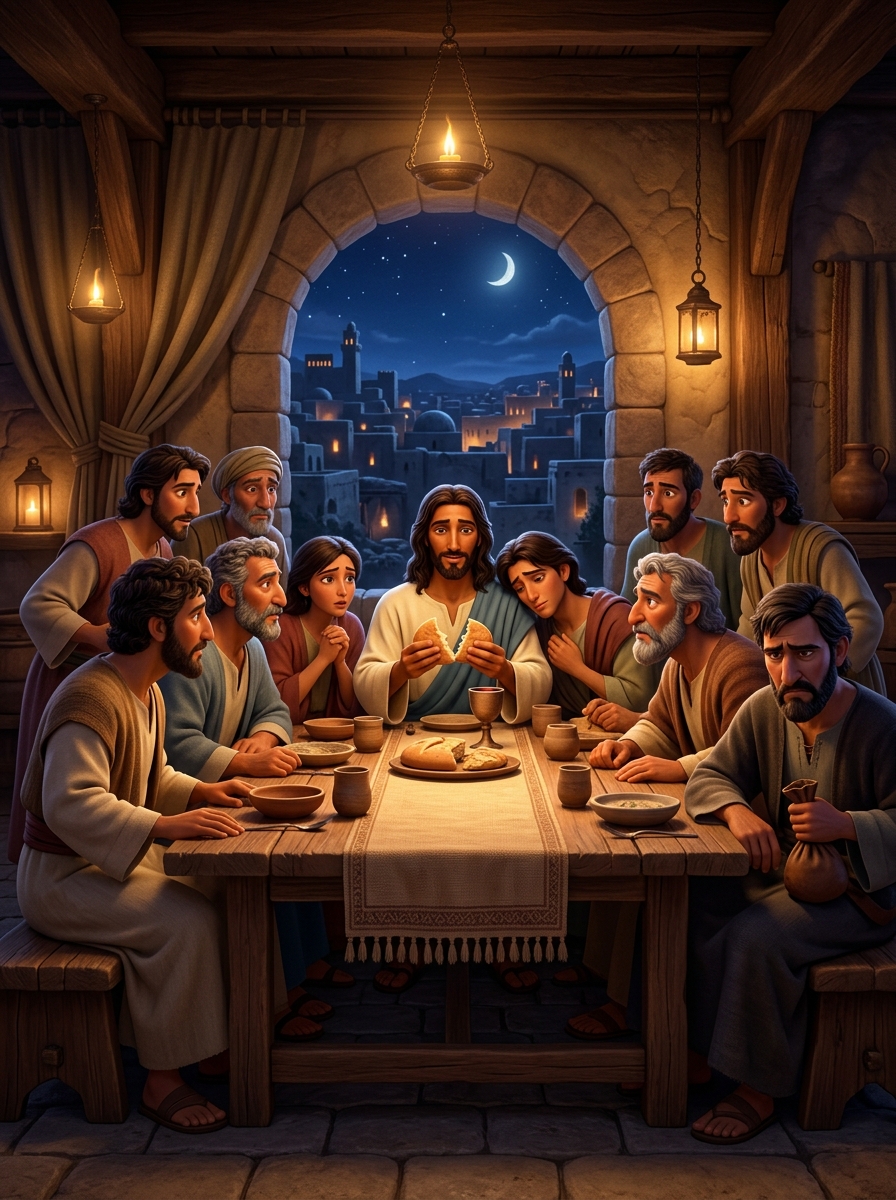
Matthew 18 — Forgiveness
Jesus placed a little child in the center of the disciples and said: unless you change and become like children, you will never enter the kingdom of heaven. The greatest in the kingdom is the one who humbles themselves like this child. He told the parable of the lost sheep — leaving ninety-nine to find one. And Peter asked: 'How many times shall I forgive my brother — seven times?' Jesus answered: 'Not seven, but seventy-seven times.'
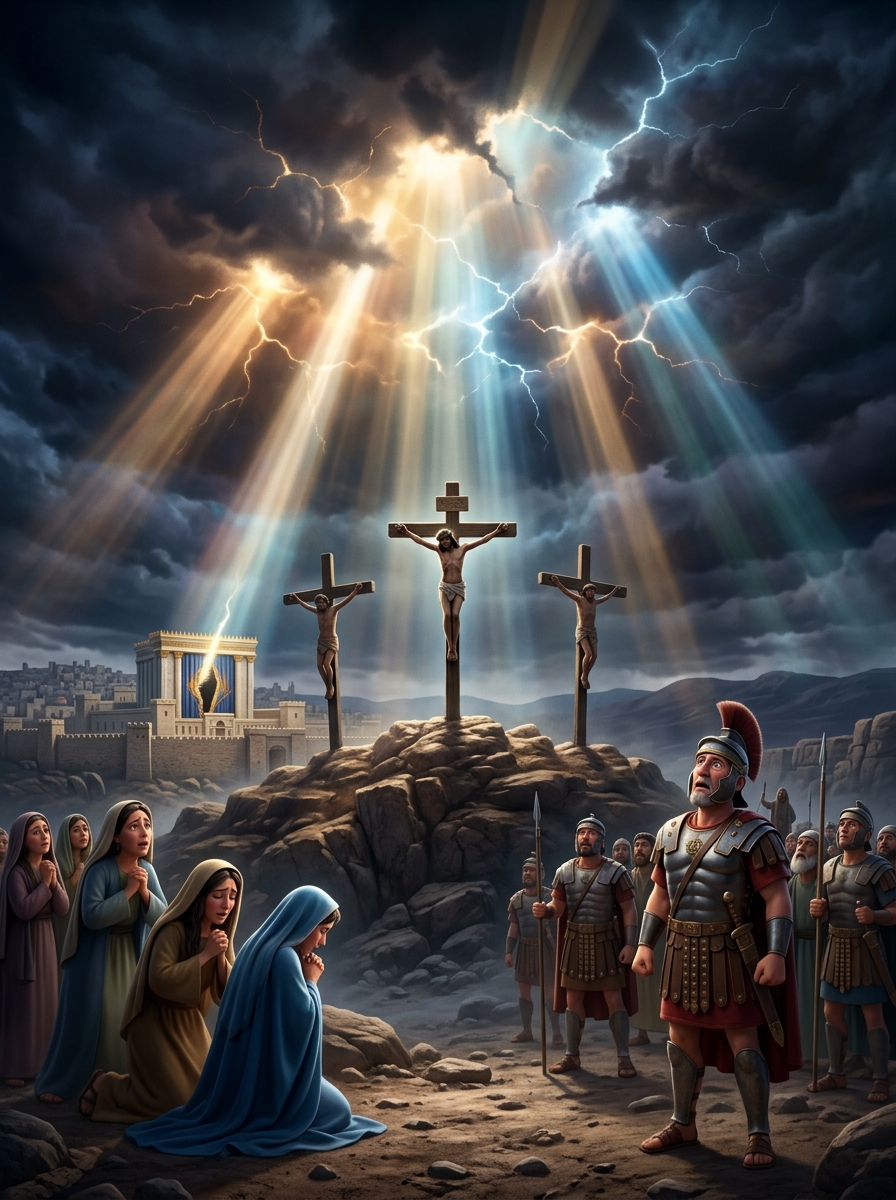
Matthew 19–20 — Servants and Masters
Rich young man came asking how to inherit eternal life. He had kept the commandments since youth. Jesus said: 'Sell your possessions, give to the poor, and follow me.' The man walked away sad. Then Jesus said the first would be last and the last first. The mother of James and John asked for her sons to sit at Jesus' right and left. Jesus gathered them: 'Whoever wants to be great must be servant of all. The Son of Man came to serve, not to be served.'
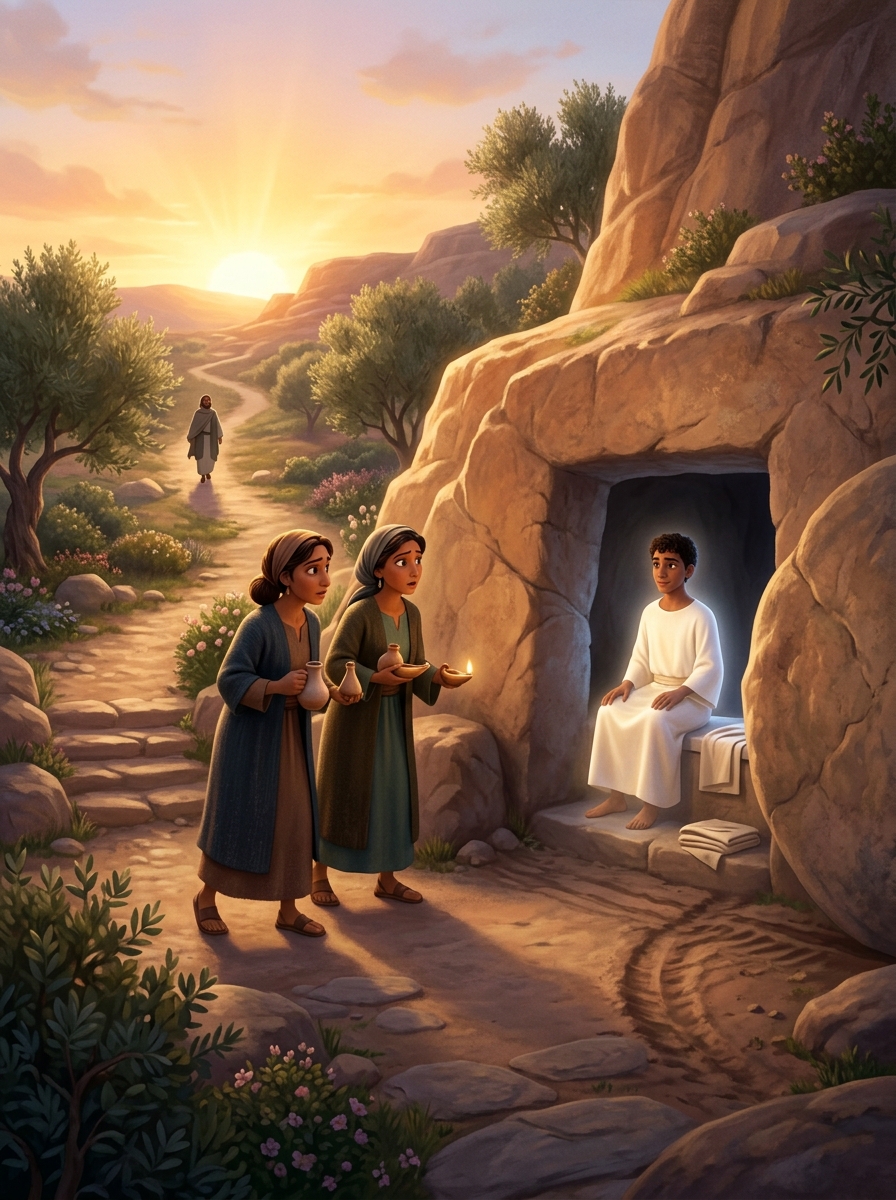
Matthew 21–28 — Passion Week
Jesus rode into Jerusalem on a donkey as crowds waved palm branches shouting 'Hosanna!' He cleansed the Temple, debated the religious leaders, and taught His disciples about the end of the age. At the Last Supper He took bread and cup, saying, 'This is my body — my blood.' In Gethsemane He prayed in anguish. Judas betrayed Him. He was arrested, tried, crucified — but on the third day the tomb was empty. He appeared to His disciples and commanded them: 'Go and make disciples of all nations.'
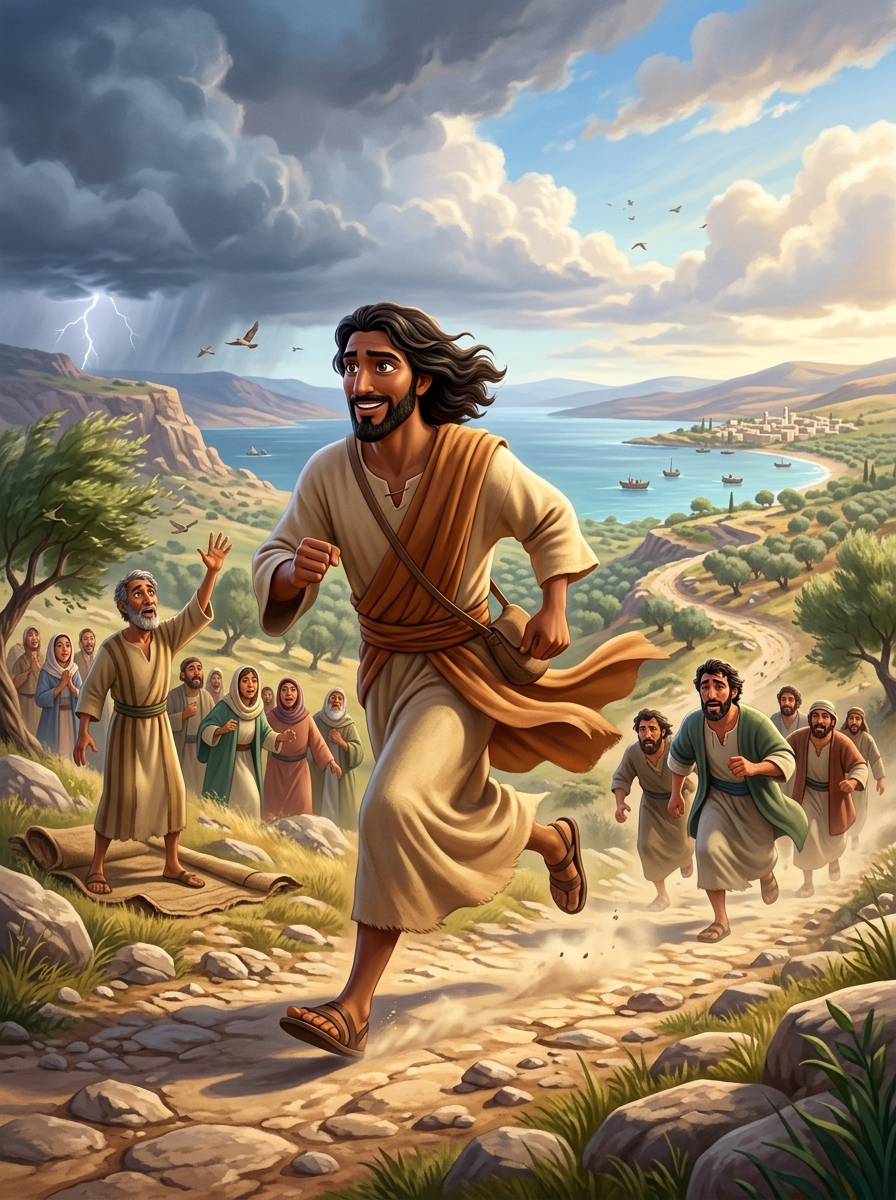
Mark — Introduction
Mark's Gospel moves fast. The word 'immediately' appears over and over — Jesus healing, casting out demons, calling disciples, crossing the sea. Written likely for Roman readers, Mark skips the birth narrative and goes straight to action. Jesus is the powerful, authoritative Son of God who came not to be served but to serve, and to give His life as a ransom for many. Every chapter pulses with urgency.
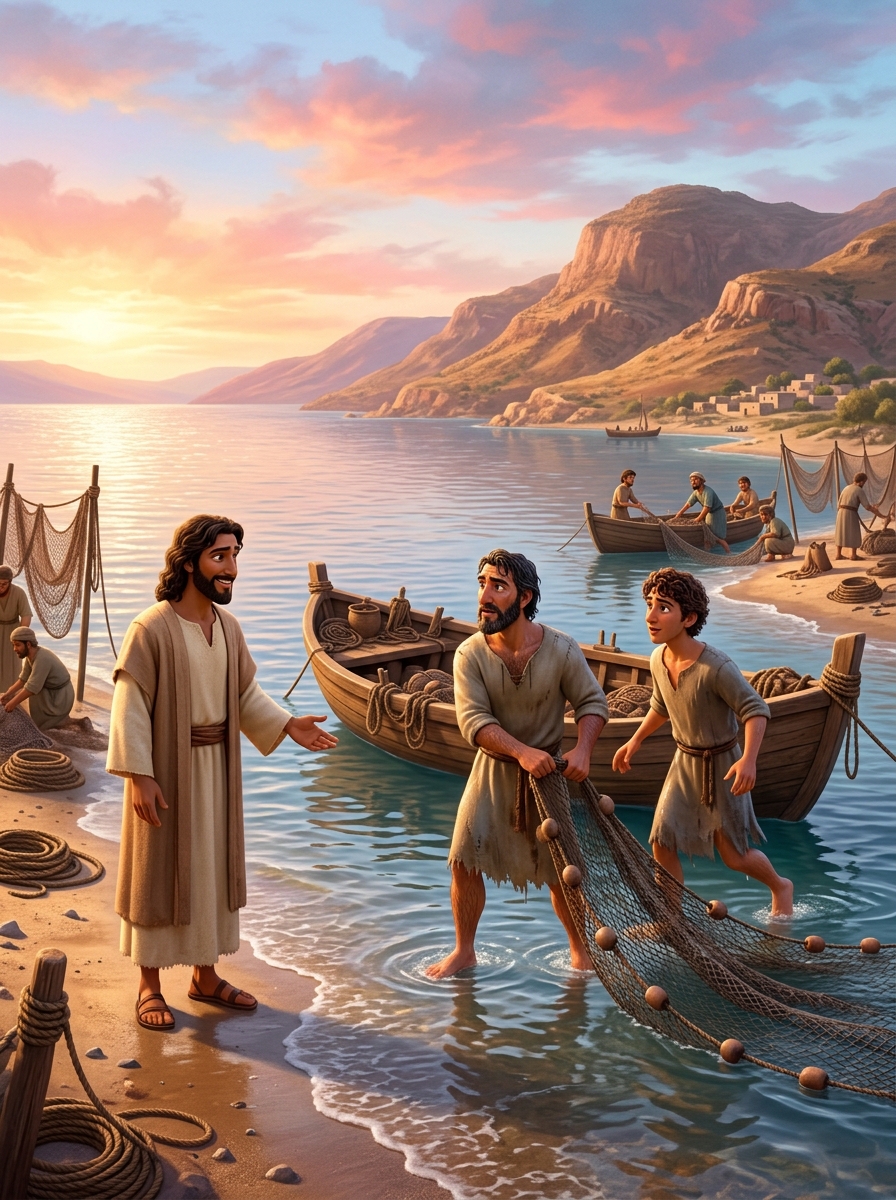
Mark 1 — Immediately
John baptized in the wilderness. Immediately after Jesus was baptized, He was driven into the desert by the Spirit. Immediately He called fishermen: 'Follow me.' Immediately they left their nets. In the Capernaum synagogue He drove out a demon with a word. Immediately the news spread. He healed Peter's mother-in-law of fever. That evening the whole town came to the door. He healed many and drove out many demons. Very early the next morning He slipped away to pray.
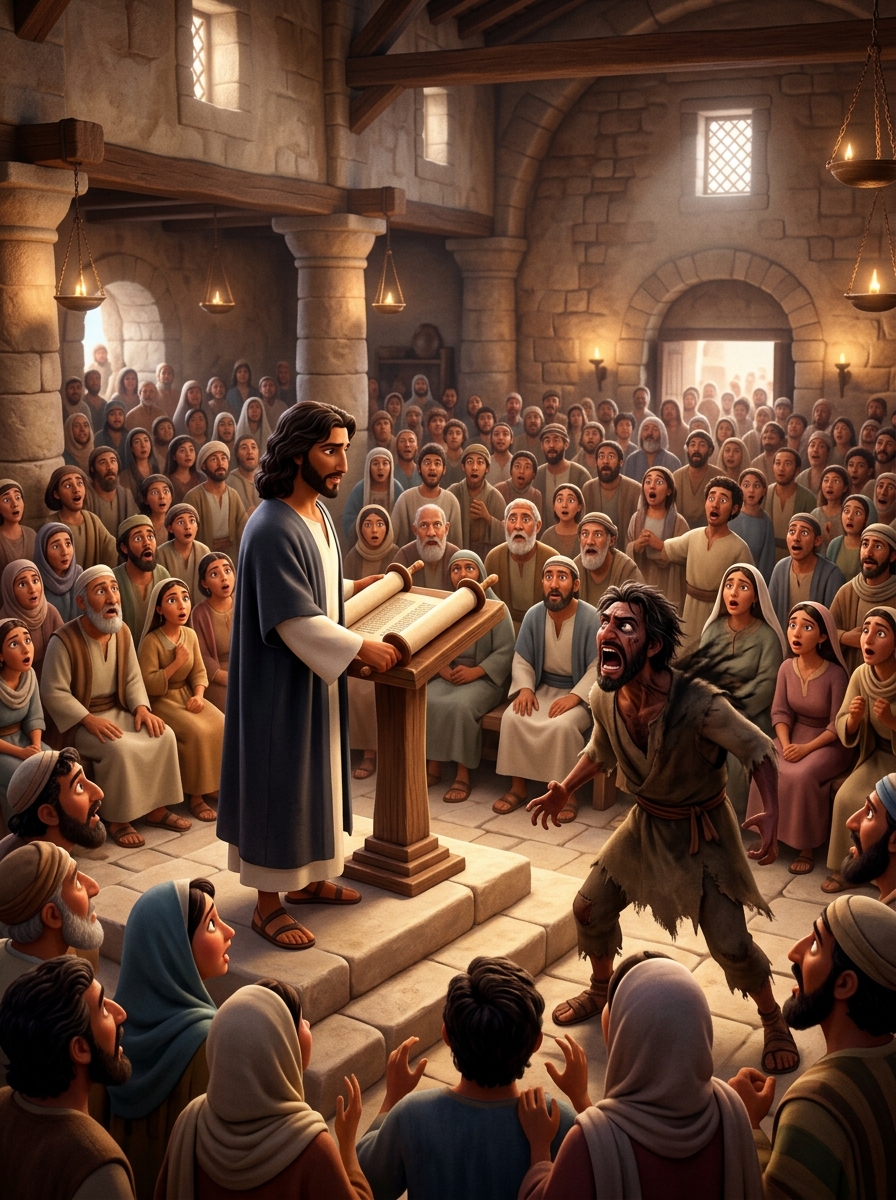
Mark 2 — The Paralyzed Man
Four friends carried a paralyzed man to Jesus, but the house was so packed they couldn't get in. They climbed to the roof, cut through it, and lowered their friend on a mat right before Jesus. When Jesus saw their faith, He said to the paralyzed man: 'Son, your sins are forgiven.' The religious leaders muttered — 'Who can forgive sins but God alone?' Jesus read their thoughts, then said: 'Take up your mat and walk.' He did.
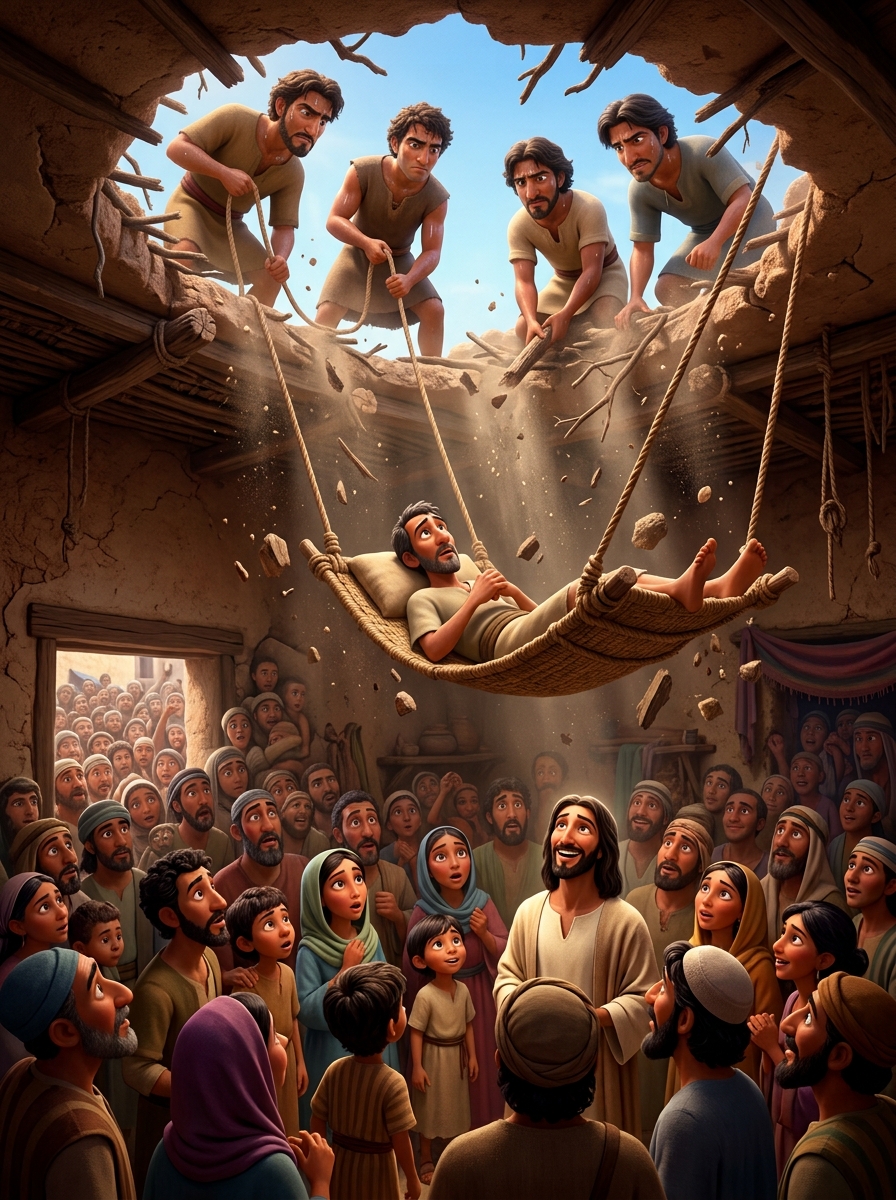
Mark 3–4 — Calming the Storm
Jesus appointed twelve apostles to be with Him and to preach. He taught in parables: a farmer scattered seed and it grew in different soils. The kingdom of God is like a mustard seed — smallest of all, yet becoming the greatest tree. That evening He told His disciples to cross the lake. A furious storm arose. Jesus was asleep on a cushion. They woke Him in panic. He stood, rebuked the wind, and said to the waves, 'Quiet! Be still!' Complete calm.
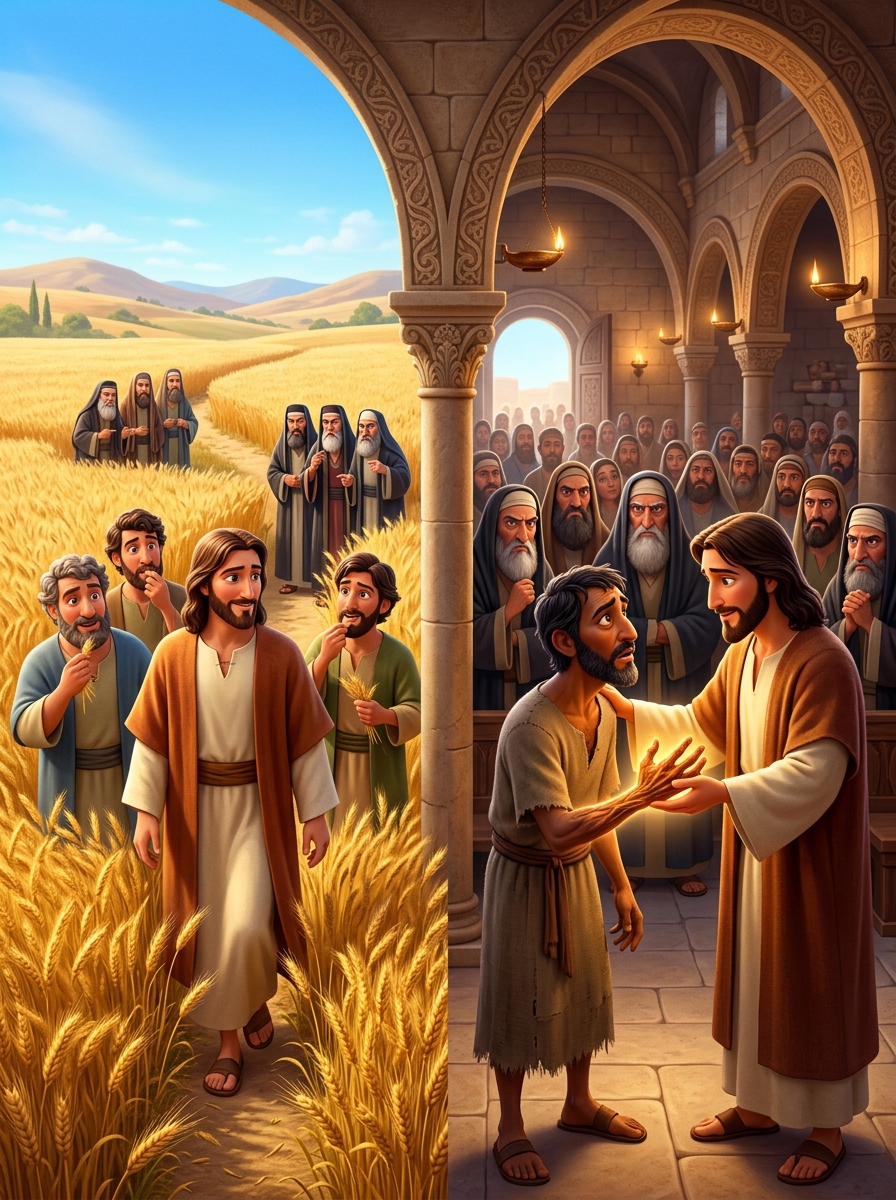
Mark 5 — Legion and the Little Girl
A demon-possessed man lived among tombs, too wild to be chained. He ran to Jesus and the demons cried out. Jesus commanded them out — they entered a herd of pigs that rushed into the sea. The man sat clothed and calm. Then Jairus, a synagogue leader, fell at Jesus' feet — his daughter was dying. On the way, a woman who had bled for twelve years touched Jesus' cloak and was instantly healed. He pressed on to Jairus's house. 'Little girl, get up.' She arose.
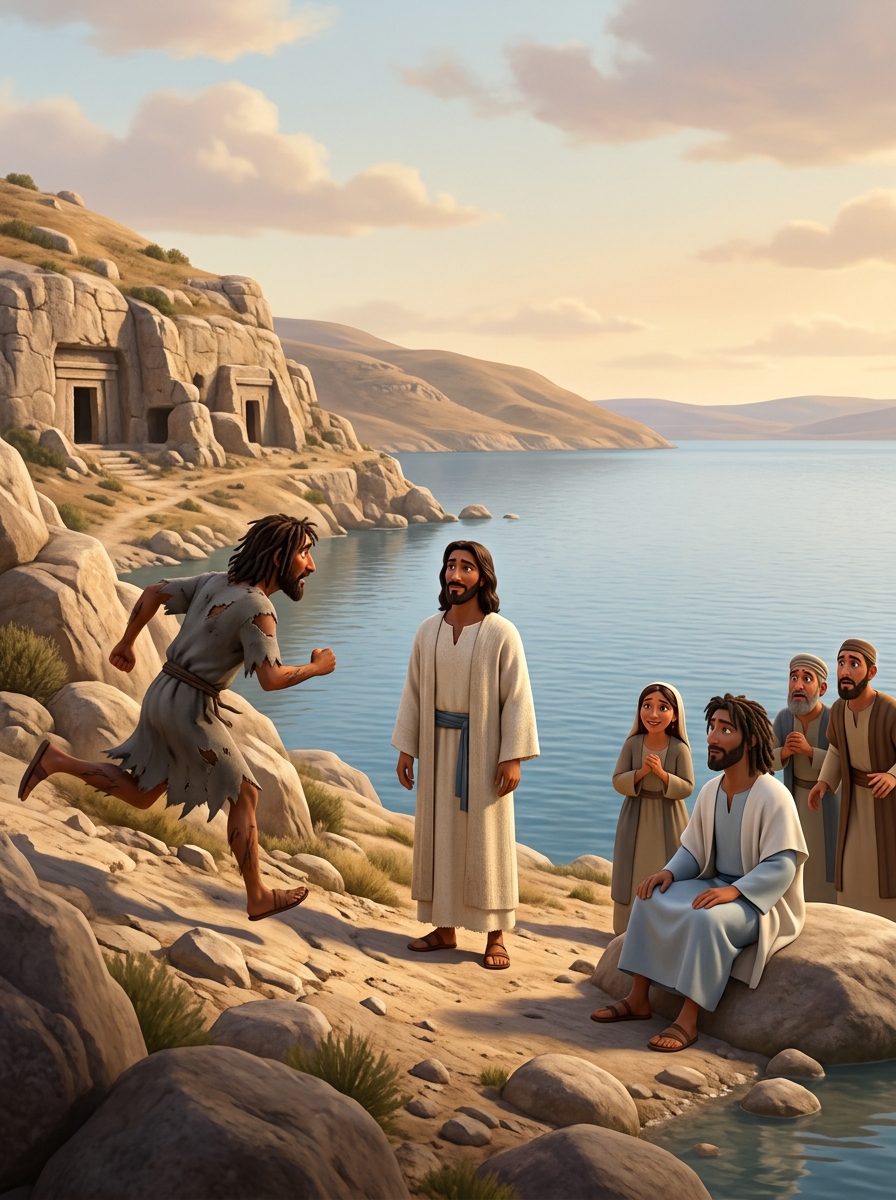
Mark 6 — Five Thousand Fed
Jesus sent the twelve out two by two with authority over evil spirits. When they returned, He tried to take them to a quiet place — but five thousand people had followed. Late in the day His disciples urged Him to send the crowds away for food. Jesus said: 'You give them something to eat.' With five loaves and two fish He looked up to heaven, gave thanks, broke the bread, and kept distributing to all. Everyone ate and was satisfied. Twelve baskets of leftovers.
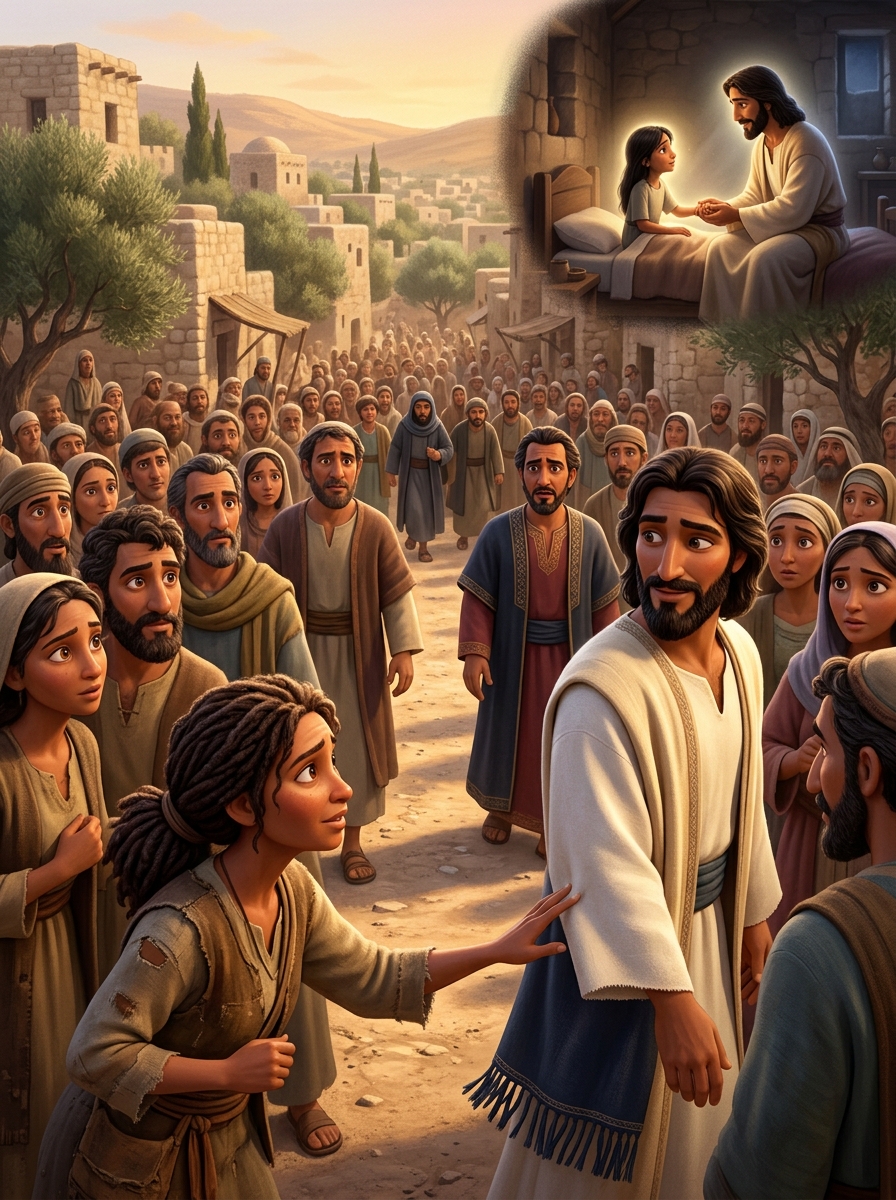
Mark 7–8 — Bread and Sight
A Gentile woman begged Jesus to drive a demon from her daughter. Jesus said it wasn't right to give the children's bread to dogs. She replied: 'Even the dogs eat the crumbs under the table.' Jesus told her the demon had left. Then He fed four thousand with seven loaves. The Pharisees demanded a sign. Jesus sighed deeply and refused. He asked His disciples: 'Who do people say I am?' Then: 'Who do you say I am?' Peter declared: 'You are the Messiah.'
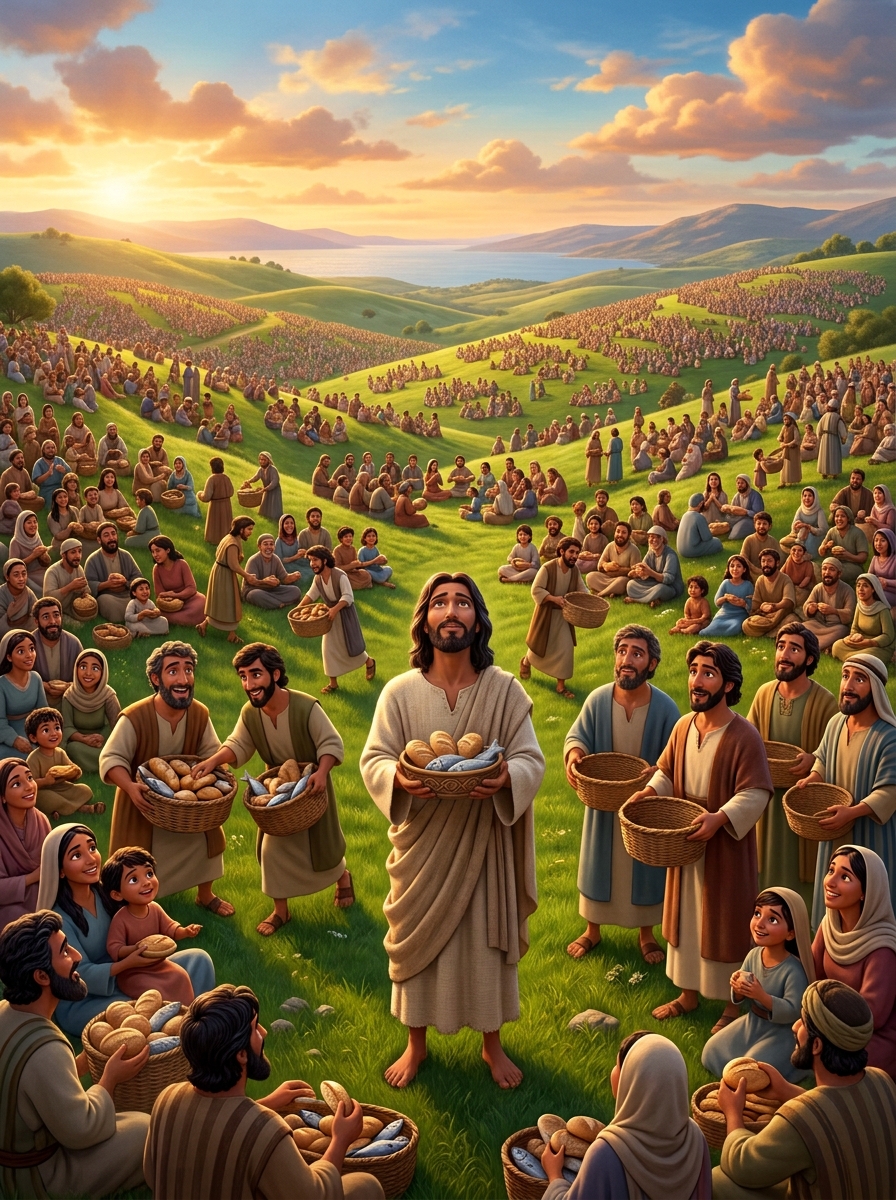
Mark 9 — The Transfiguration
Jesus took Peter, James, and John up a mountain. He was transfigured before them — dazzling white. Elijah and Moses appeared. A voice from the cloud: 'This is my Son — listen to Him!' Coming down, He healed a boy with seizures that the disciples couldn't help. He told them: 'This kind only comes out by prayer.' He then warned again about His coming death and resurrection. The disciples argued about who was greatest. Jesus took a child in His arms: 'Whoever welcomes this child welcomes me.'
Mark 10 — Servant of All
Jesus blessed the children the disciples tried to turn away: 'Let the little children come to me.' A rich man ran and knelt before Jesus, asking how to inherit eternal life. Jesus told him to sell everything and follow. He went away sad. 'It is easier for a camel to go through the eye of a needle than for a rich man to enter the kingdom,' said Jesus. James and John asked for the seats of honor. Jesus said the Son of Man came to serve — and to give His life as a ransom for many.
Mark 11–16 — Death and Resurrection
Jesus rode into Jerusalem as crowds shouted 'Hosanna!' He cleared the Temple. Religious leaders tried to trap Him with trick questions — He answered them all with wisdom. He warned His disciples about the coming destruction and the end of the age. At Passover He took bread and cup: 'This is my body — my blood.' He prayed in Gethsemane until sweat fell like drops. Arrested, tried, and crucified — 'My God, my God, why have you forsaken me?' Three days later, the stone was rolled away. 'He has risen!'
Luke — Introduction
Luke, a physician and companion of Paul, wrote the most thorough account of Jesus' life — tracing His story from before birth to ascension, and then continuing in the book of Acts. His Gospel focuses especially on the poor, the outcast, women, and those society overlooked. His opening words promise an orderly account based on careful research, from eyewitnesses. Luke's Jesus is full of compassion, reaching the last, the least, and the lost.
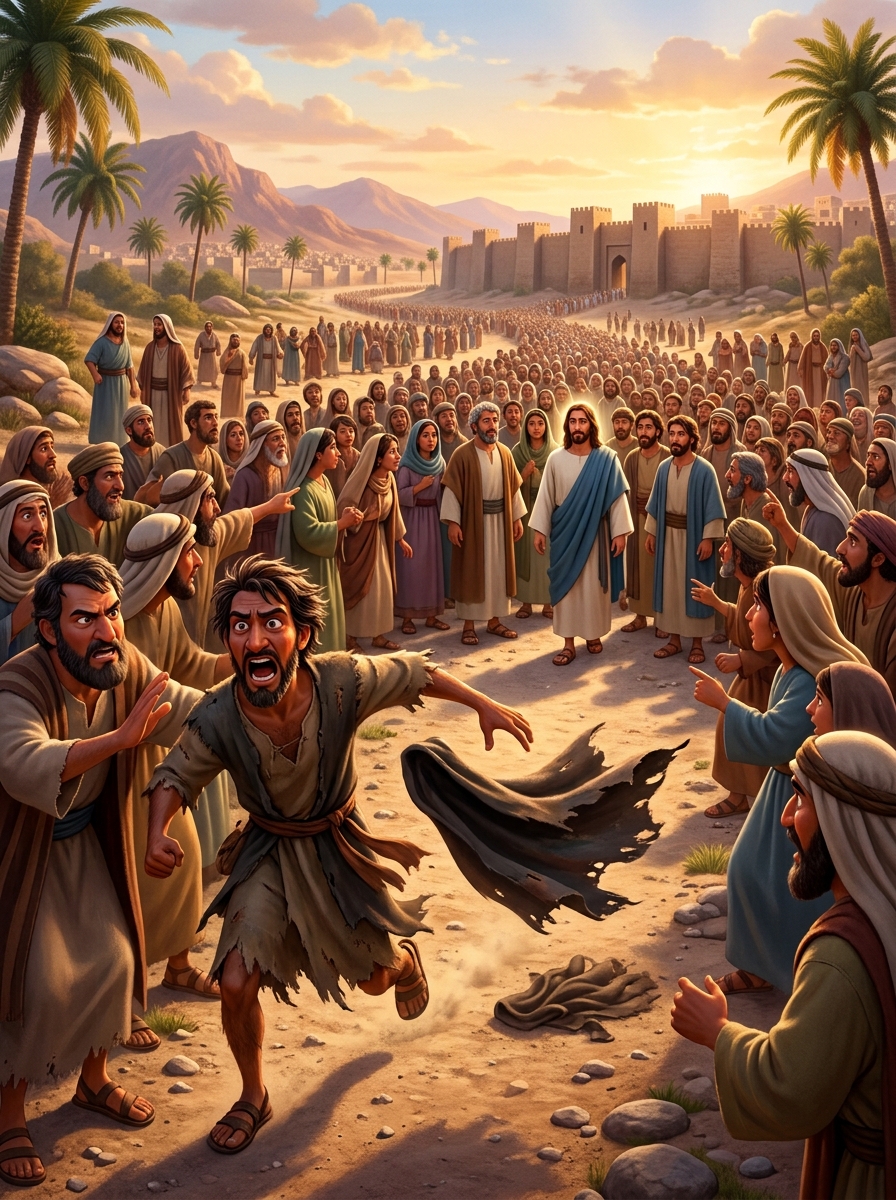
Luke 1 — Gabriel's Announcement
The angel Gabriel visited an elderly priest named Zechariah while he burned incense in the Temple, announcing that his barren wife Elizabeth would bear a son named John. Zechariah doubted — and was struck mute. Six months later, Gabriel appeared to a young virgin named Mary in Galilee: 'You will conceive and give birth to the Son of the Most High. His kingdom will never end.' Mary replied: 'I am the Lord's servant. Let it be as you say.' And she sang a glorious song of praise.
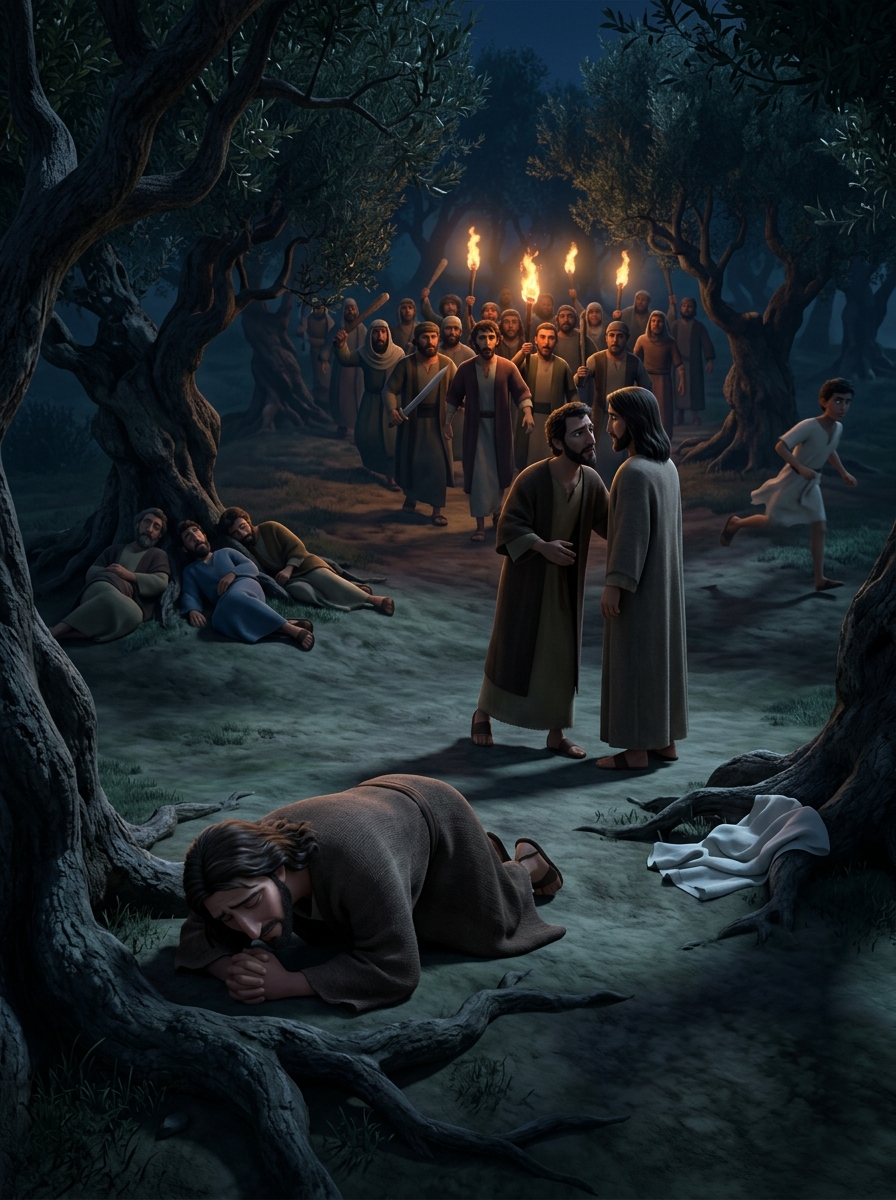
Luke 2 — Born in Bethlehem
Caesar Augustus ordered a census, and everyone went to their hometown to register. Joseph traveled with Mary from Nazareth to Bethlehem. There was no room for them in the inn, and so Jesus was born in a stable and laid in a manger. That same night, angels blazed across the sky above shepherds: 'Do not be afraid — today in the city of David a Savior has been born.' The shepherds ran to find the child and returned glorifying God.
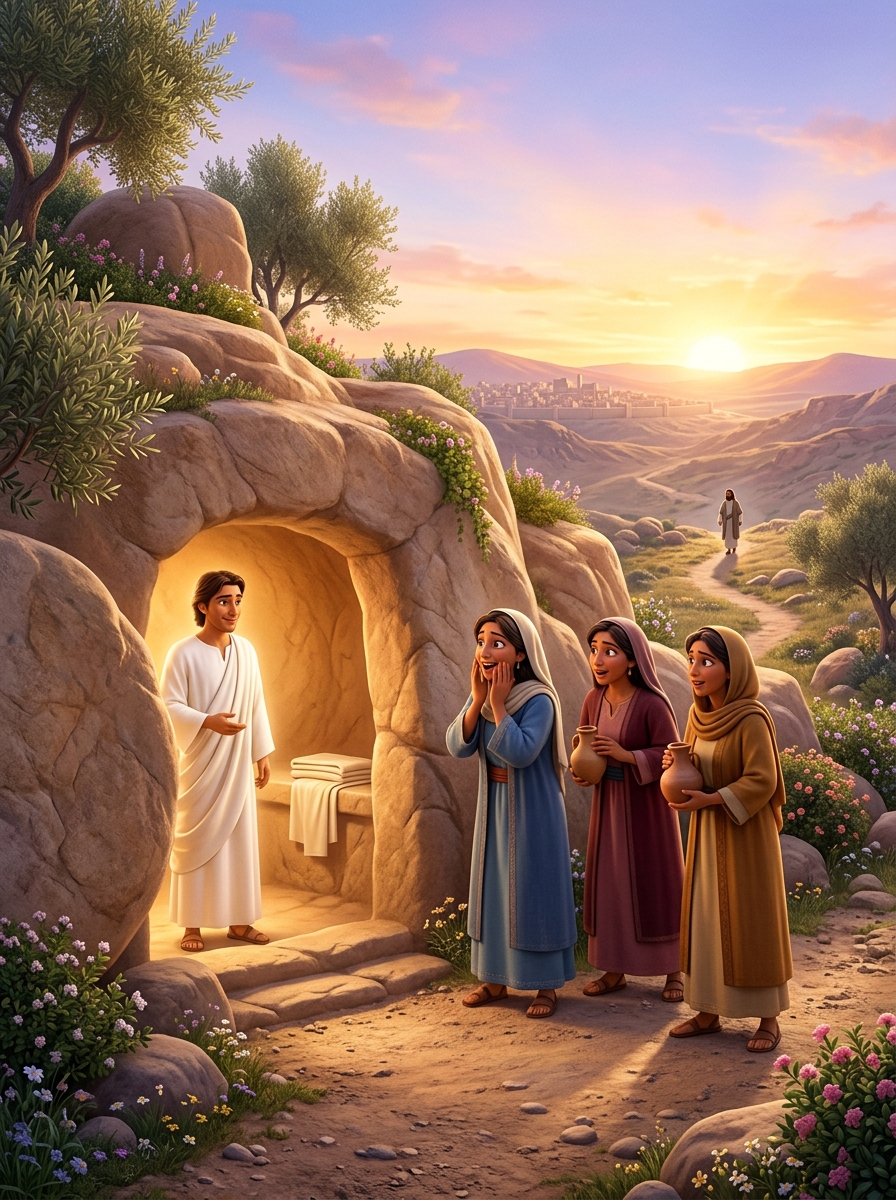
Luke 3–4 — Tempted and Tested
John baptized multitudes in the Jordan, calling people to repentance. Jesus was baptized too, and as He prayed the Spirit descended like a dove and the Father spoke. Then the Spirit led Jesus into the wilderness for forty days. Satan tempted Him three times — bread, power, a great fall. Jesus answered each with Scripture. He returned to Galilee and stood up in His hometown synagogue, read from Isaiah — 'The Spirit of the Lord is on me to proclaim good news to the poor' — and declared it fulfilled.
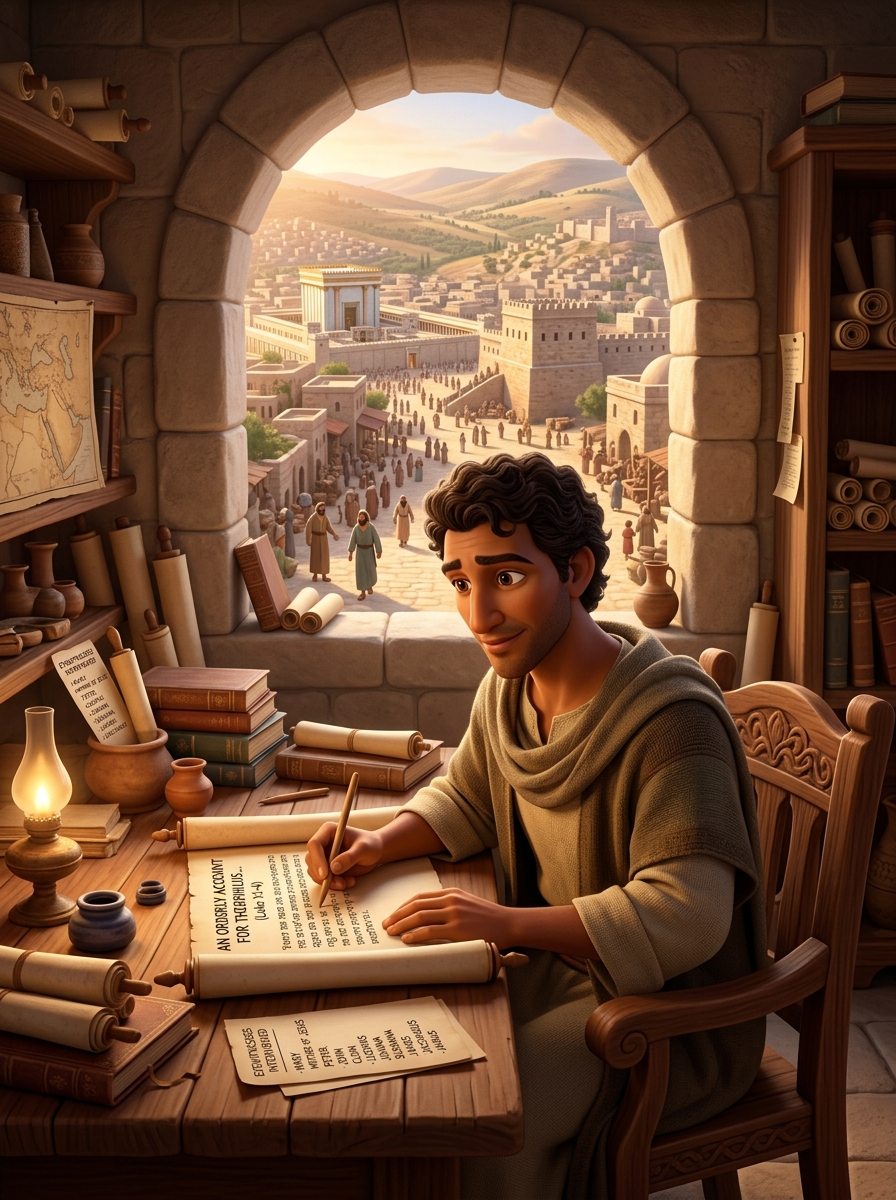
Luke 5 — The Great Catch
Simon Peter had fished all night and caught nothing. Jesus asked to use his boat as a platform, then told him to put out into deep water and let down the nets. Peter obeyed — and the nets filled so full they began to break. He called for help and both boats were nearly sinking. Peter fell at Jesus' knees: 'Go away from me, Lord — I am a sinful man!' Jesus replied: 'Don't be afraid. From now on you will fish for people.' They left everything and followed.
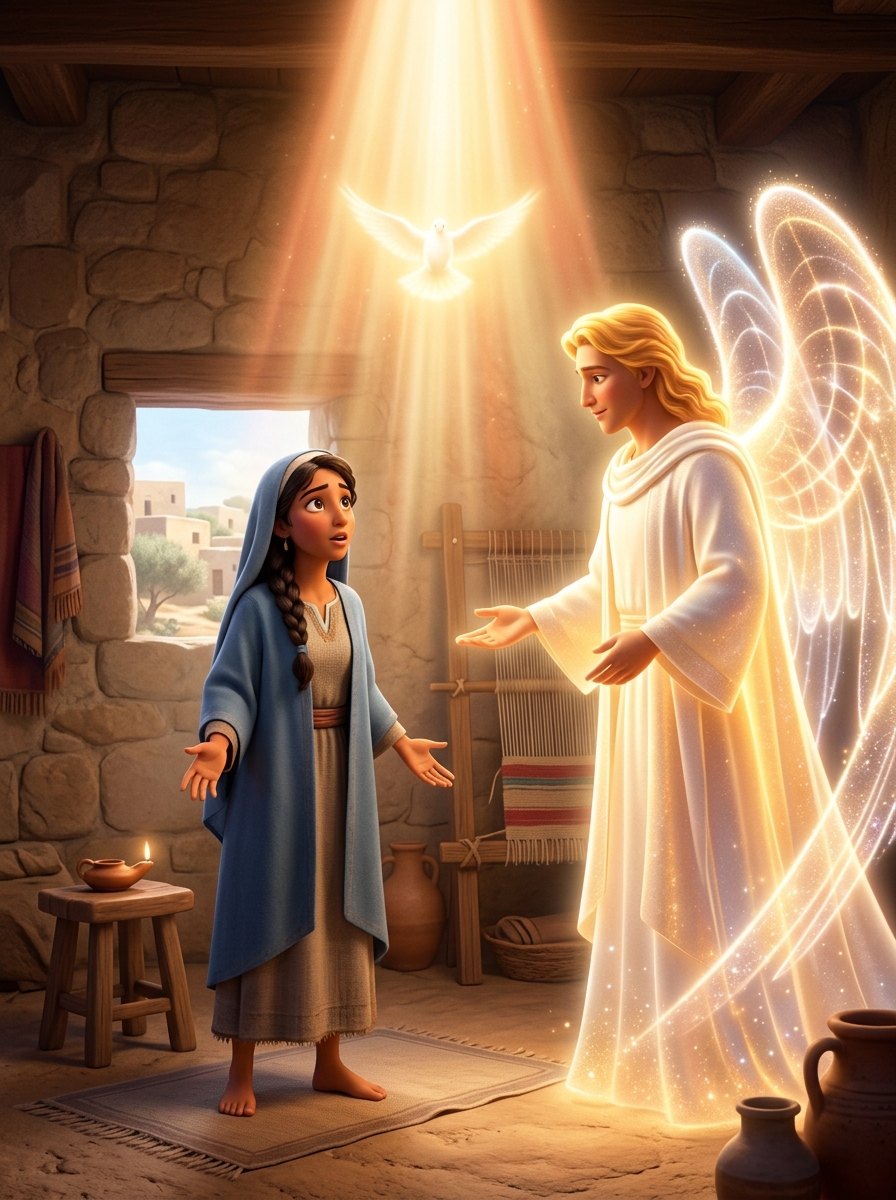
Luke 6 — Blessings and Woes
Jesus spent the night in prayer, then chose His twelve apostles at dawn. He came down with them and faced a great crowd of people — and He healed them all. Then He lifted His eyes to His disciples and spoke: Blessed are the poor, the hungry, the weeping, the persecuted. Woe to the rich, the full, those who laugh now. Love your enemies. Do good to those who hate you. Pray for those who mistreat you. Give and it will be given to you — pressed down, shaken together, running over.
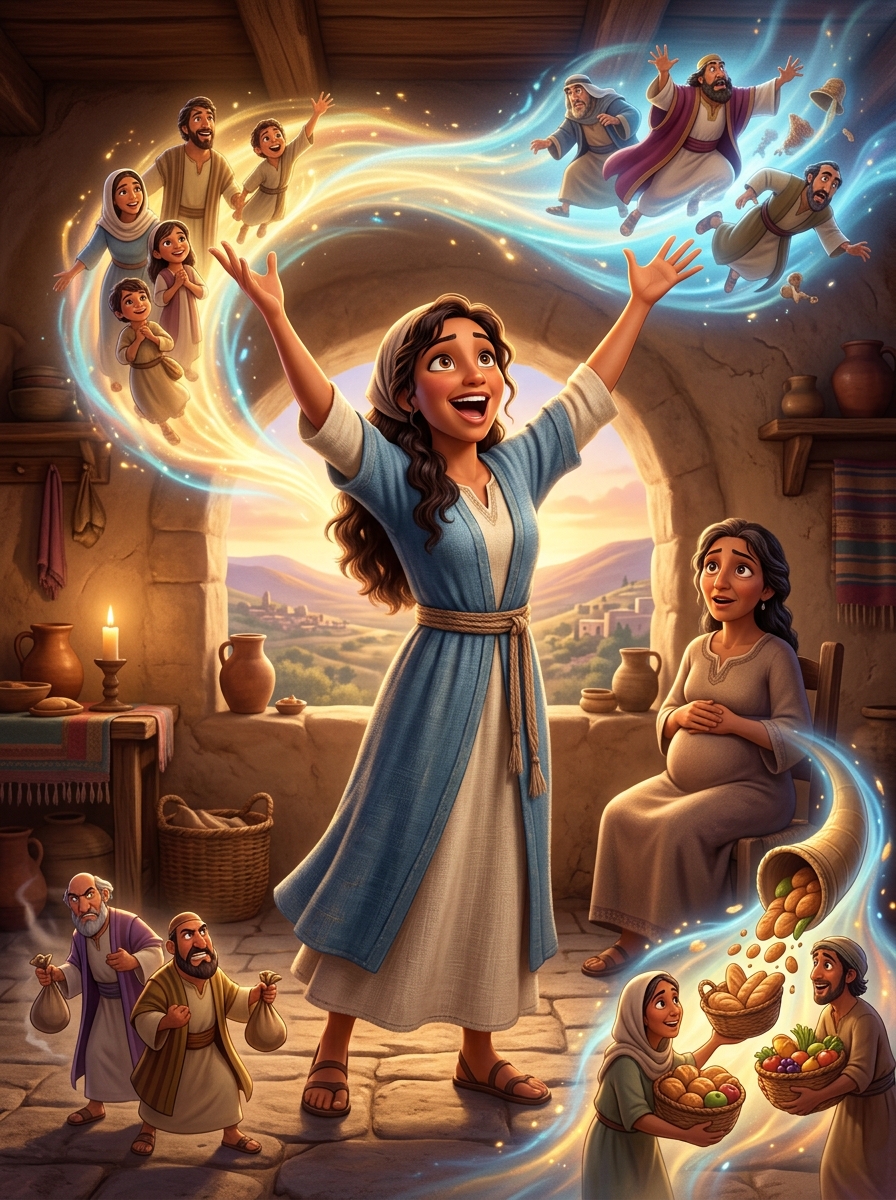
Luke 7 — The Sinful Woman
A Roman centurion sent elders to Jesus asking for his dying servant to be healed. 'I am not worthy for you to come under my roof,' he said — 'just say the word.' Jesus marveled: 'I have not found such great faith even in Israel.' The servant was healed. Jesus raised a widow's dead son at Nain. Then at a Pharisee's dinner, a sinful woman wept at Jesus' feet, pouring perfume and wiping her tears with her hair. Jesus said her many sins were forgiven — her great love showed it.
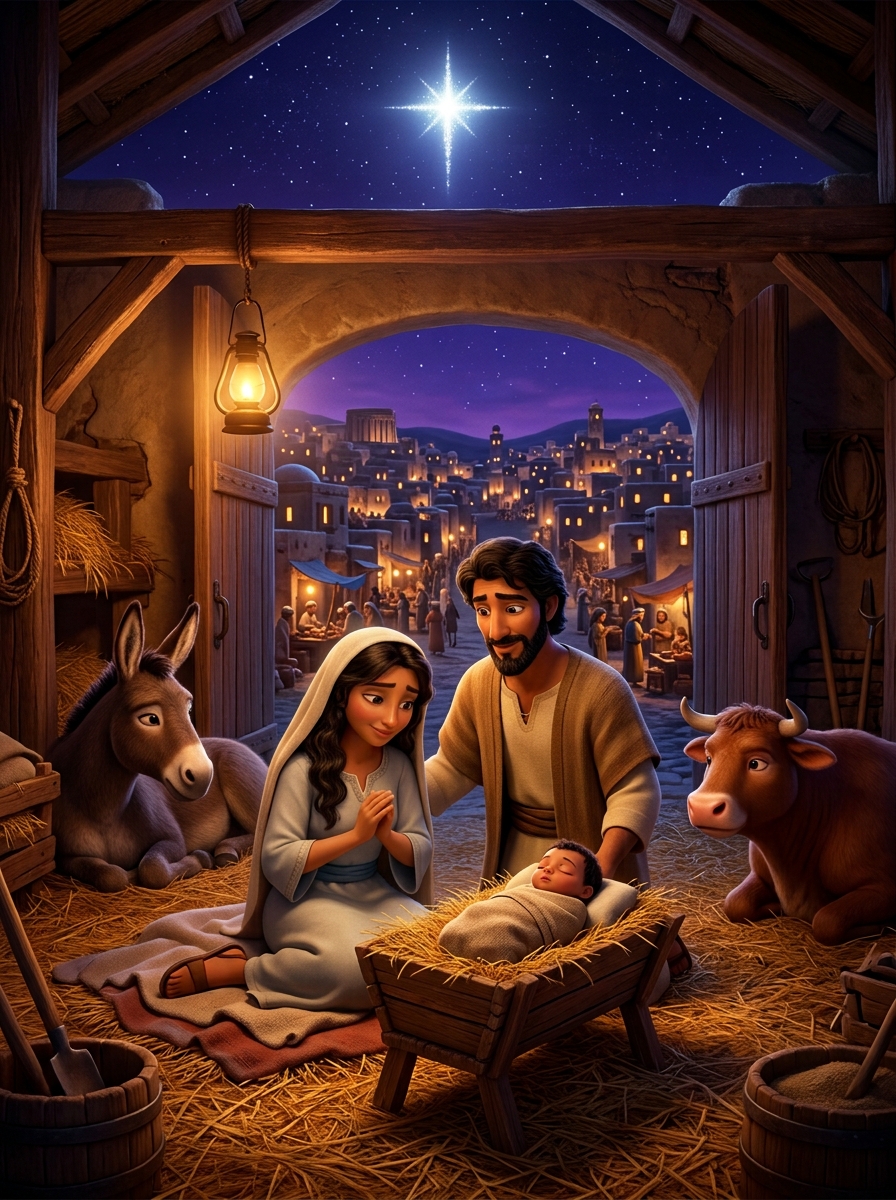
Luke 8 — The Prodigal Parables
Jesus traveled with His twelve disciples and several women who supported them. He taught the parable of the sower — four soils, four responses to the Word. He stilled a storm on the lake. He drove a legion of demons out of a tormented man. He healed the woman who touched His cloak. He raised Jairus's daughter from the dead. Each miracle revealed who He was — the one with authority over nature, sickness, demons, and death. 'Who is this?' the disciples asked one another.
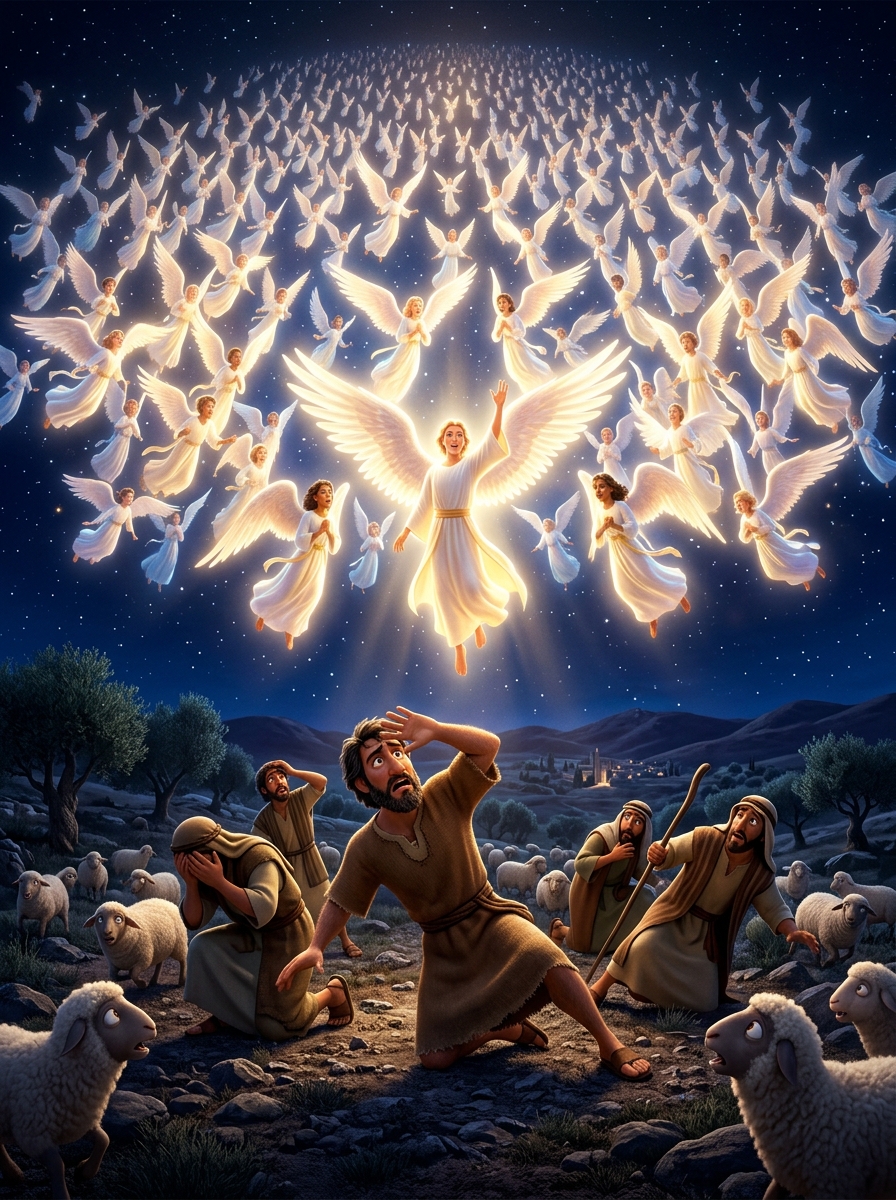
Luke 9 — Take Up Your Cross
Jesus fed five thousand with five loaves and two fish. He asked His disciples who people said He was. Peter declared: 'God's Messiah.' Jesus told them He must suffer, be rejected, be killed, and rise. Then He said: 'Whoever wants to follow me must deny themselves, take up their cross daily, and follow me.' He was transfigured on a mountain before Peter, James, and John. He began His journey toward Jerusalem, resolutely setting His face toward the cross.
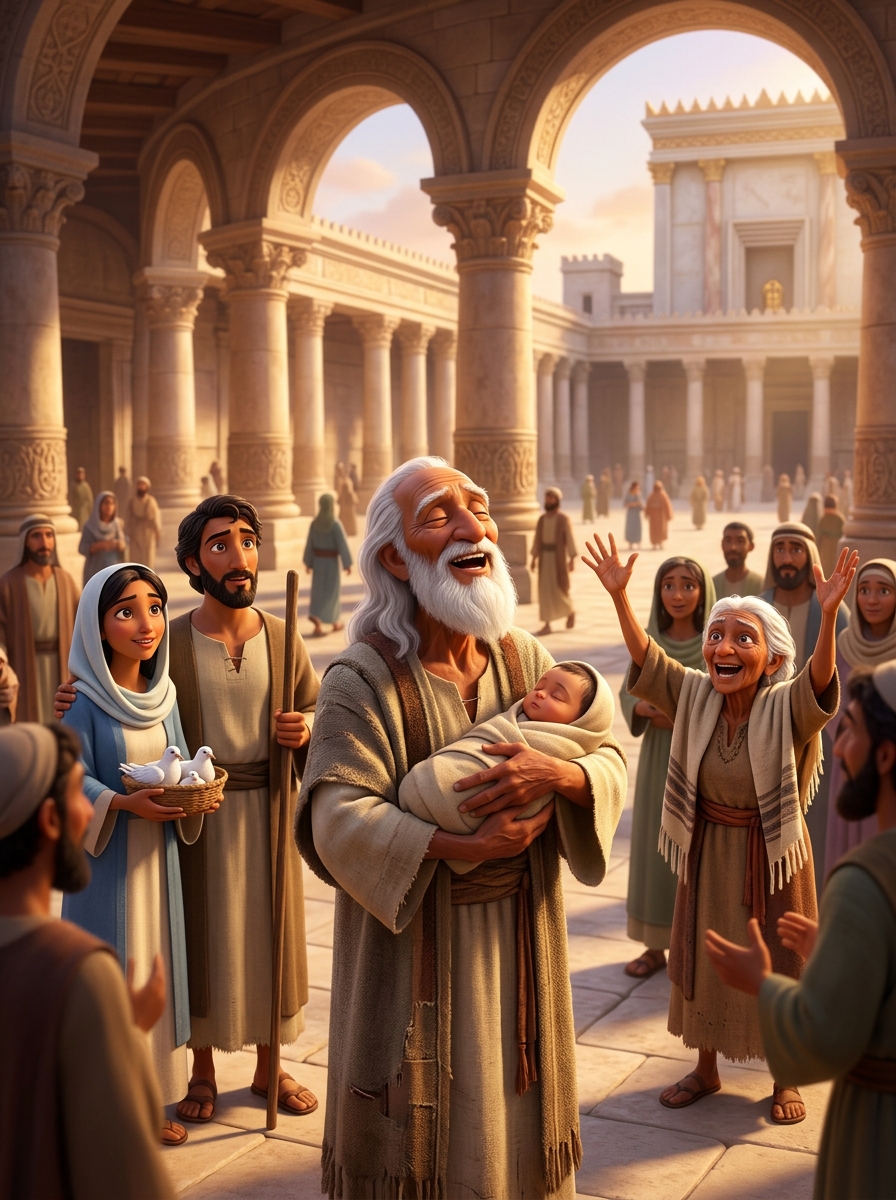
Luke 10 — The Good Samaritan
Jesus sent seventy-two disciples ahead of Him to every town He planned to visit. They returned with joy, marveling that even demons submitted to them in His name. Then a lawyer stood up to test Jesus: 'What must I do to inherit eternal life?' Jesus asked what the Law said. 'Love God. Love your neighbor.' 'Correct — do this and you will live.' 'But who is my neighbor?' Jesus answered with a story: a man beaten on the road, ignored by priest and Levite, saved by the despised Samaritan.
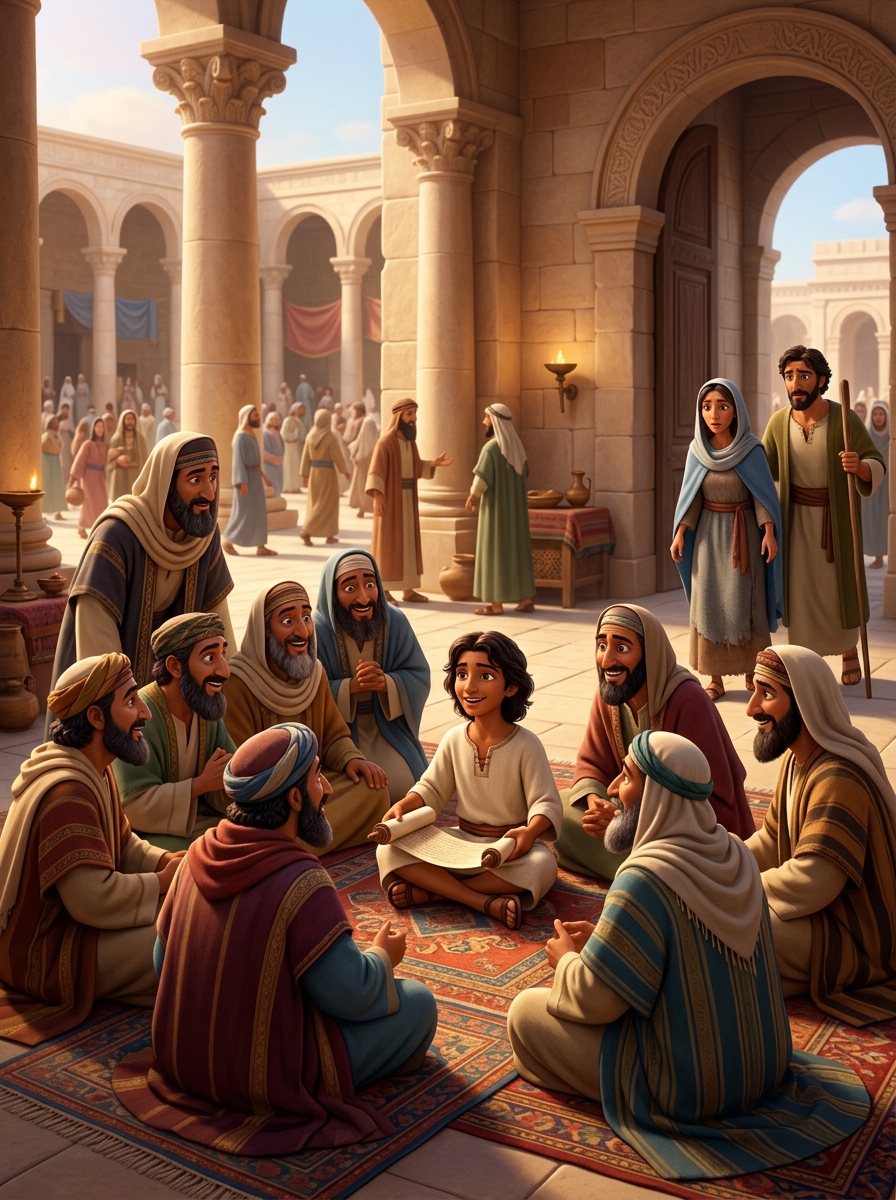
Luke 11 — Persistent Prayer
Jesus was praying in a certain place. When He finished, a disciple asked: 'Lord, teach us to pray.' He gave them the Lord's Prayer, then told them a story: a man knocked on his neighbor's door at midnight needing bread for a guest. The neighbor grumbled — but the persistent knocking finally got him up. Ask and it will be given. Seek and you will find. Knock and the door will be opened. What father would give his son a snake when he asked for a fish?
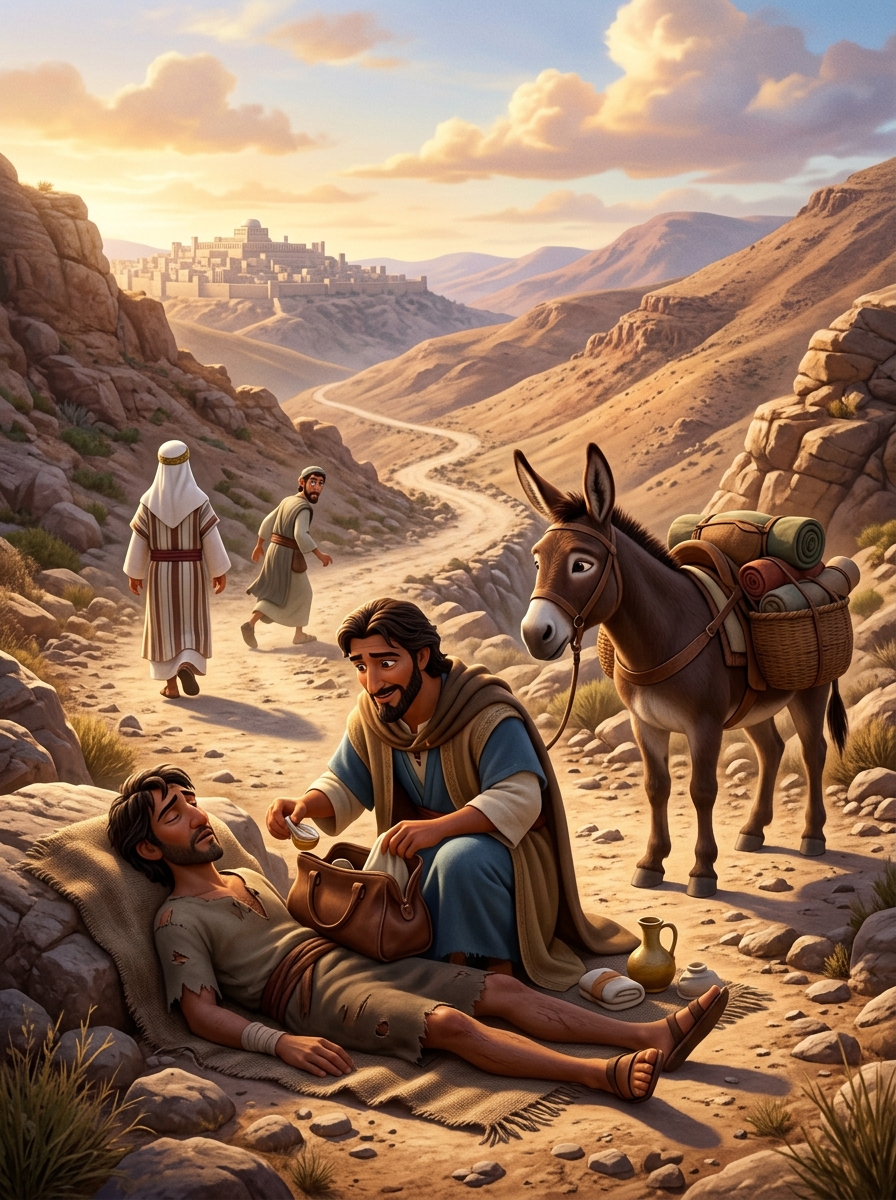
Luke 12 — Treasure in Heaven
Jesus warned against hypocrisy and greed. A man asked Him to settle an inheritance dispute. Jesus refused: 'Watch out — life does not consist in an abundance of possessions.' He told the parable of the rich fool who built bigger barns for his surplus — and died that night. 'You cannot serve both God and money.' He called His followers not to worry about food or clothing — the Father who clothes the flowers of the field and feeds the birds knows exactly what you need.
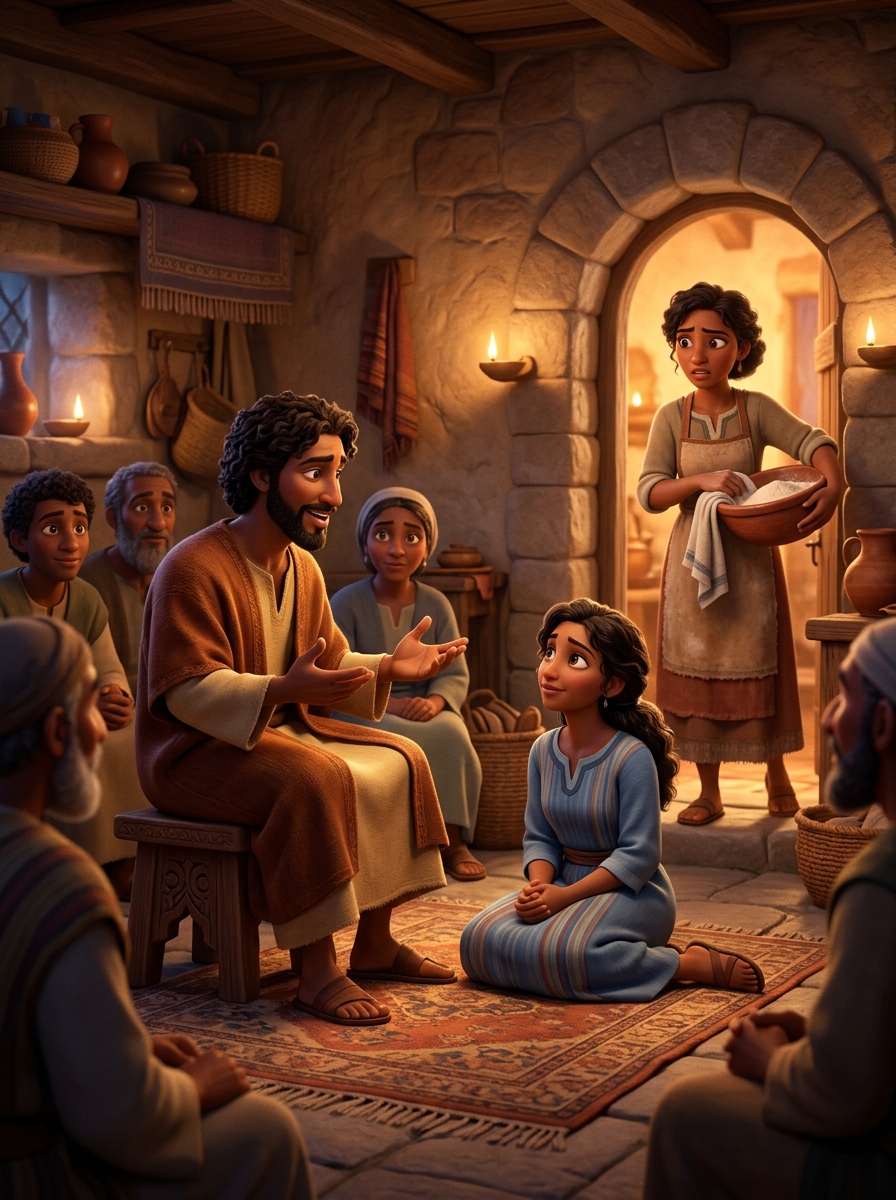
Luke 13–14 — The Great Banquet
Jesus healed a crippled woman on the Sabbath — eighteen years bent double, instantly made straight. The synagogue ruler objected. Jesus called him a hypocrite. He spoke of the mustard seed and the yeast working through the whole batch of dough. He told the parable of the great banquet: the host invited many, but they all made excuses. So the master sent his servants into the streets to invite the poor, the crippled, the blind — and the house was filled.
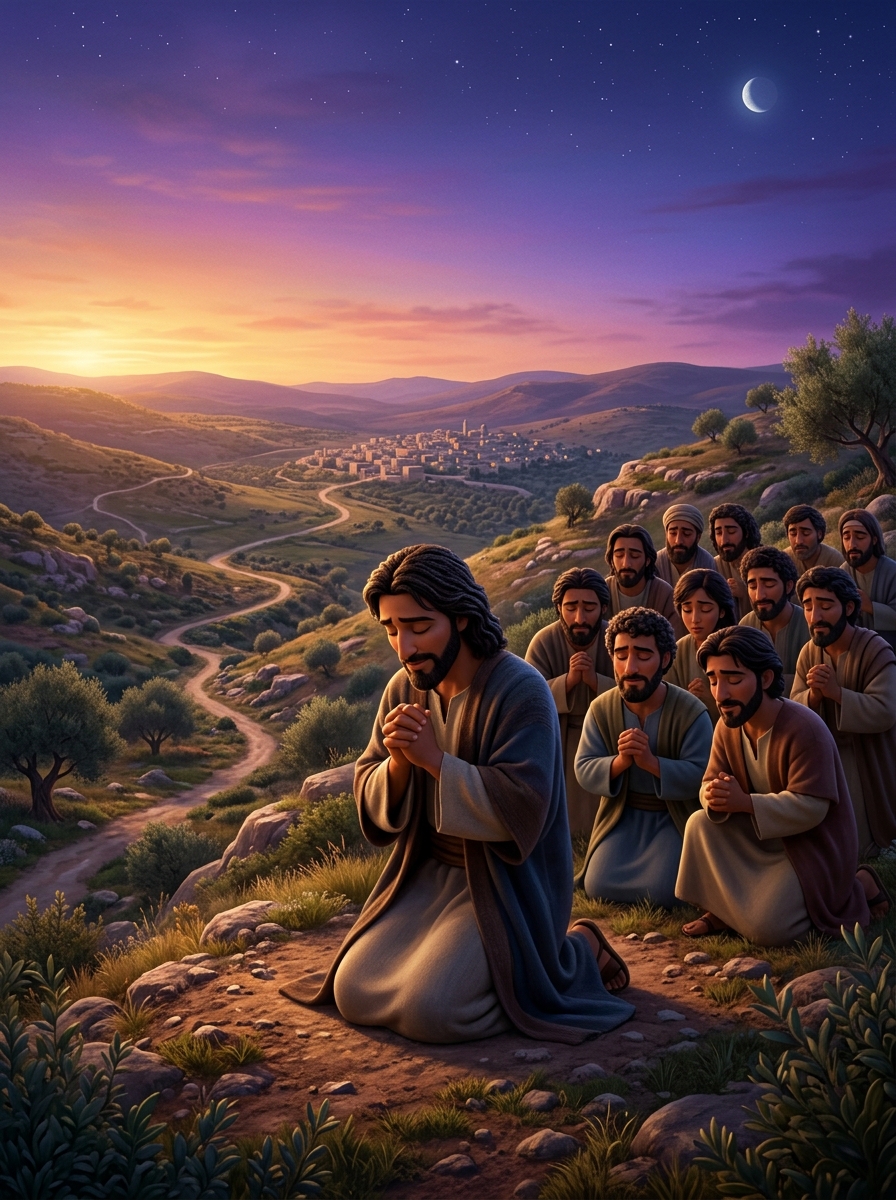
Luke 15 — The Prodigal Son
Jesus told three parables about things that were lost and found. A lost sheep. A lost coin. A lost son. The younger son took his inheritance, left home, and squandered everything in wild living. When famine came he was starving, feeding pigs in a field. He came to his senses: 'My father's servants eat better than this. I'll go back and ask to be made a servant.' While he was still a long way off, his father saw him and ran — and threw his arms around him in joy.
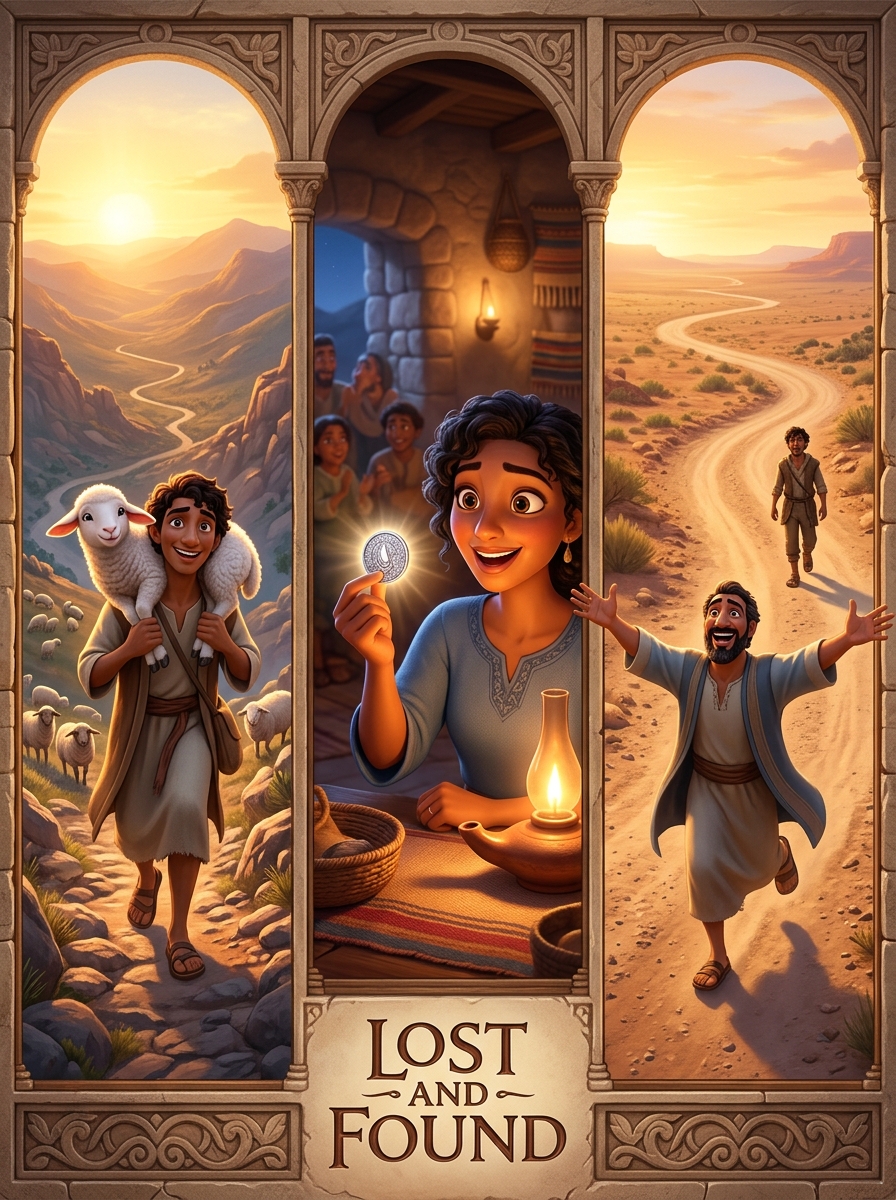
Luke 16 — Lazarus and the Rich Man
Jesus told the story of a rich man feasting in luxury and Lazarus, a poor man covered in sores, who lay at his gate longing for crumbs. Both died. The rich man went to torment; Lazarus was carried to Abraham's side. The rich man begged Abraham to send Lazarus with water — even just a drop. Abraham said a great chasm divided them and could not be crossed. 'If they do not listen to Moses and the Prophets, they will not be convinced even if someone rises from the dead.'
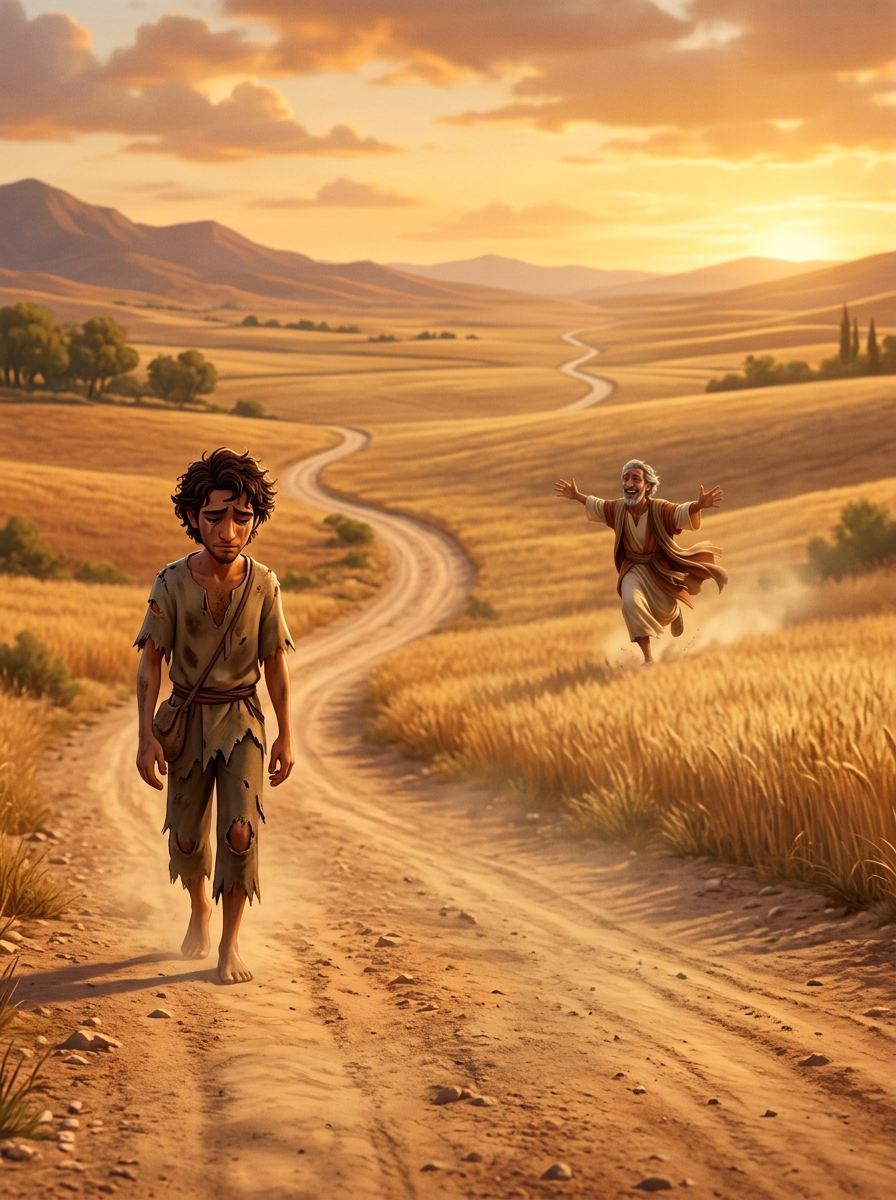
Luke 17 — Ten Lepers Healed
Ten men with leprosy stood at a distance and called out to Jesus: 'Jesus, Master, have pity on us!' He sent them to show themselves to the priests. As they went, they were cleansed. One turned back, threw himself at Jesus' feet, and thanked Him — and he was a Samaritan. 'Were not all ten cleansed?' Jesus asked. 'Where are the other nine?' He told him to rise and go: 'Your faith has made you well.' He then warned His disciples about the days of the Son of Man coming suddenly.
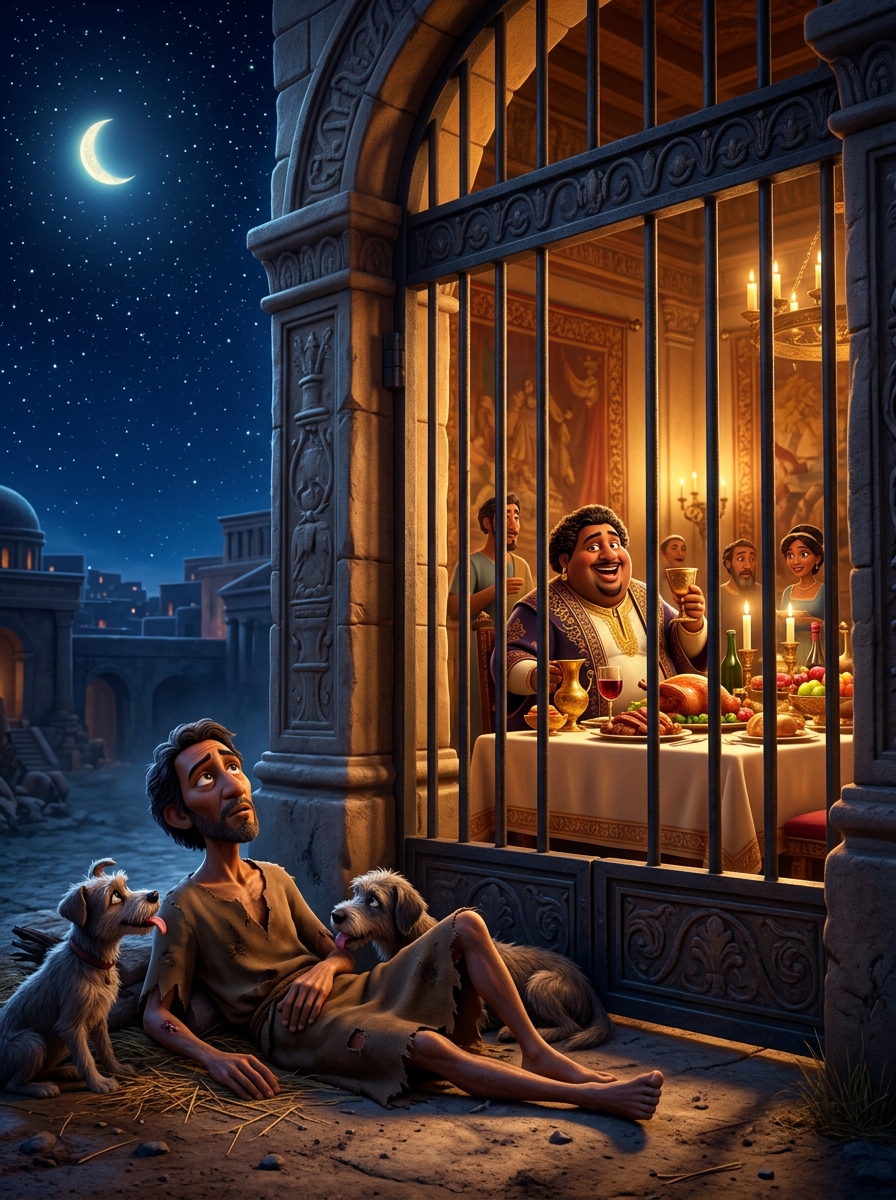
Luke 18 — The Persistent Widow
Jesus told a parable about a widow who kept coming to an unjust judge for justice against her adversary. The judge finally granted it just to stop her persistence. Will not God bring justice to His chosen ones who cry out day and night? Then Jesus told another parable — a Pharisee and a tax collector both went to the Temple to pray. The Pharisee boasted; the tax collector beat his breast: 'God, have mercy on me, a sinner.' Jesus said the tax collector went home justified.
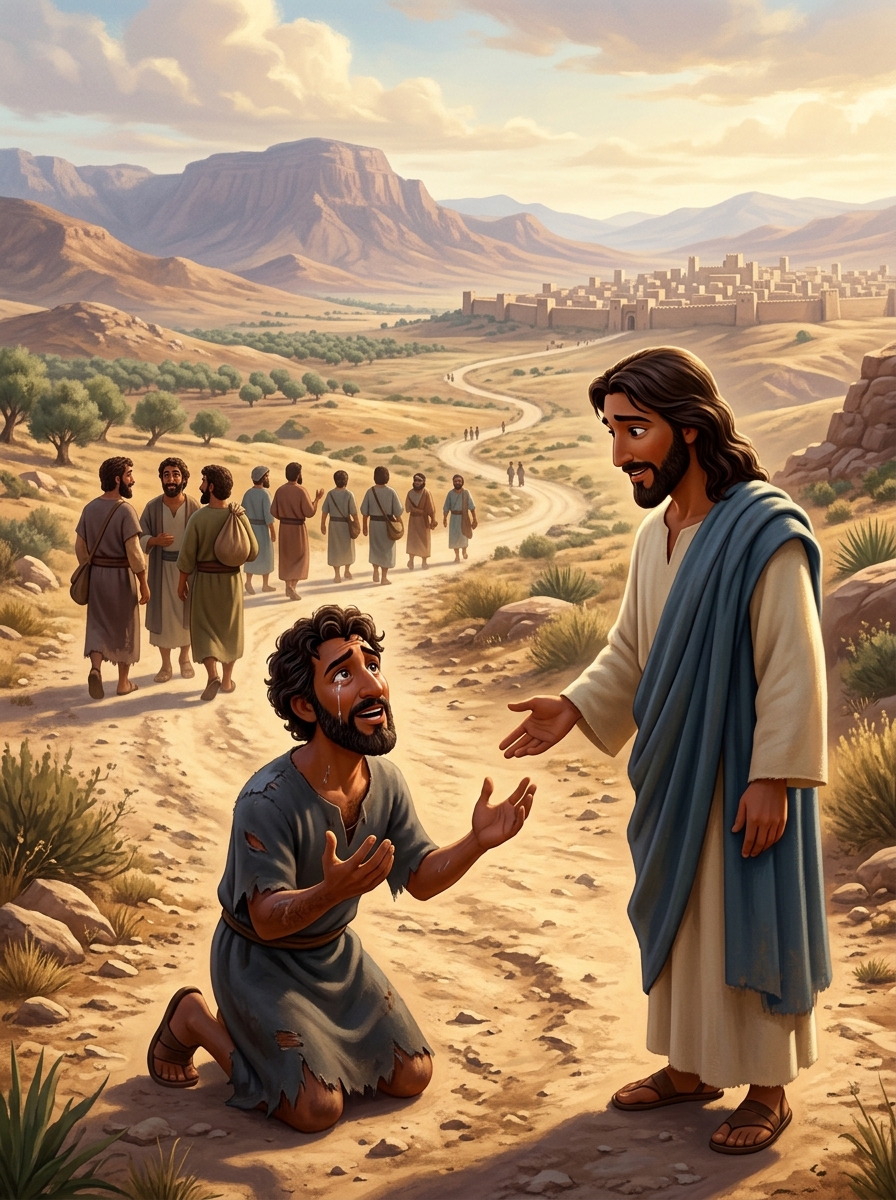
Luke 19 — Zacchaeus
Jesus was passing through Jericho. A wealthy chief tax collector named Zacchaeus was too short to see over the crowd, so he ran ahead and climbed a sycamore tree. Jesus stopped under it: 'Zacchaeus, come down — I must stay at your house today.' Zacchaeus scrambled down in delight. The crowd grumbled about Jesus visiting a sinner. Zacchaeus stood and promised to give half of everything he owned to the poor and repay anyone he'd cheated four times over. 'Today salvation has come to this house,' said Jesus.
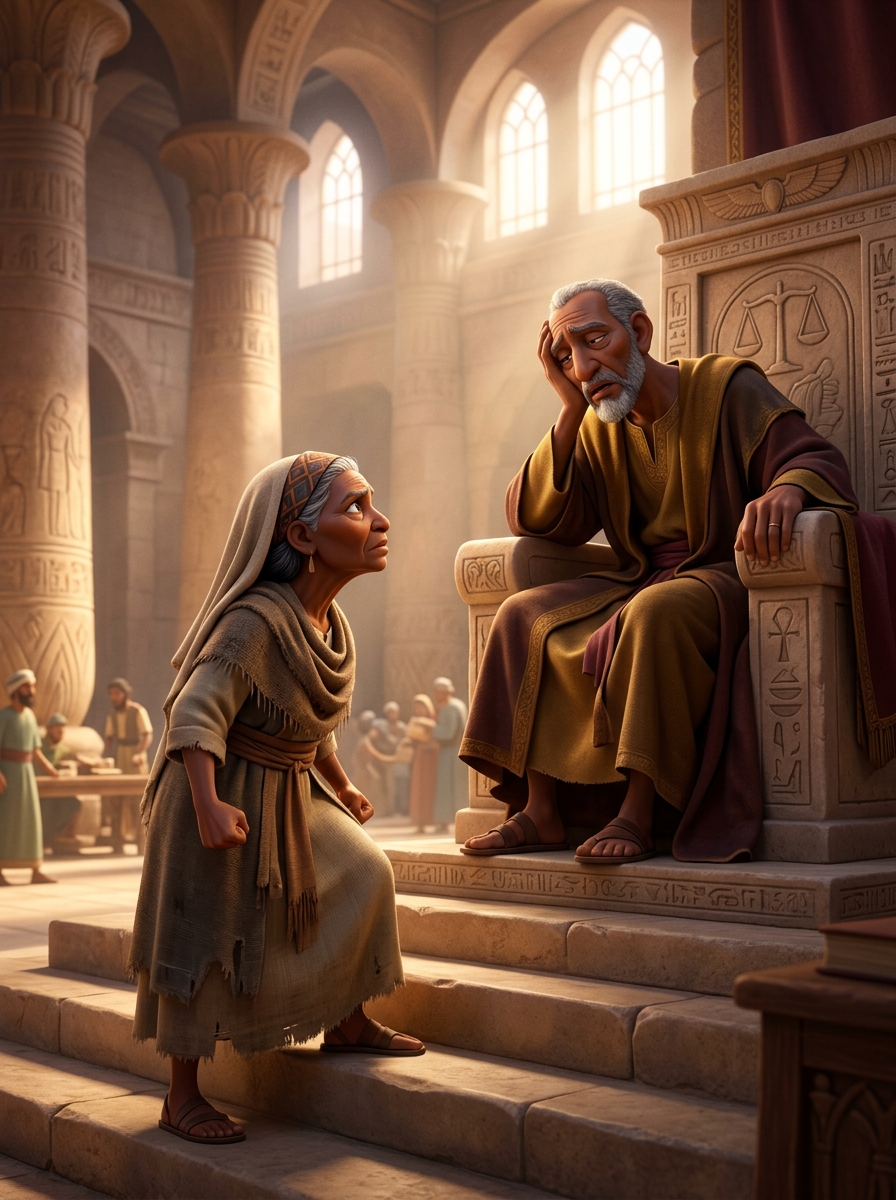
Luke 20–21 — Signs of the End
In the Temple courts, religious leaders challenged Jesus' authority. He silenced them with a question about John's baptism they refused to answer. He told the parable of the wicked tenants. They tried to trap Him with questions about taxes — 'Give to Caesar what is Caesar's and to God what is God's.' His disciples admired the Temple's beauty. Jesus said: 'The time will come when not one stone will be left on another.' He warned about wars, earthquakes, persecution — and the coming of the Son of Man in glory.
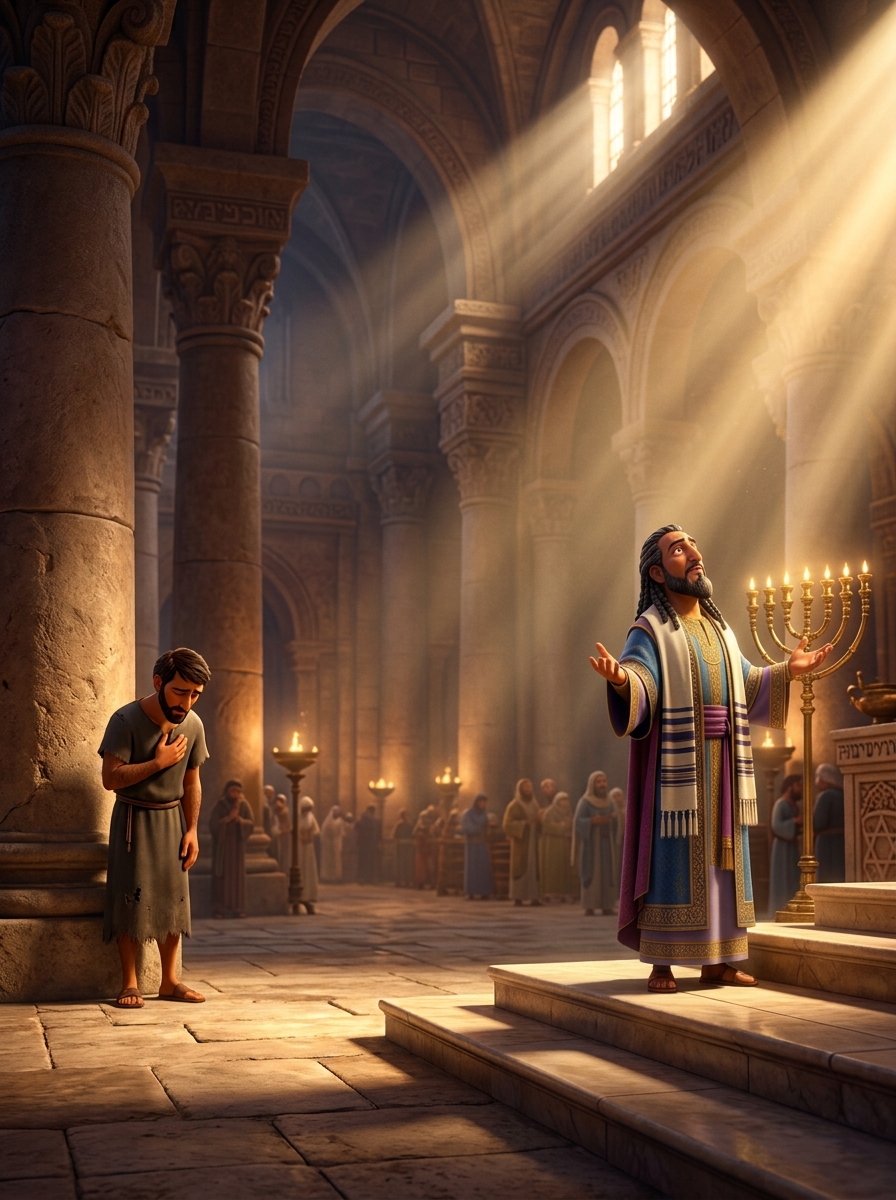
Luke 22 — The Last Supper
Satan entered Judas, who went to the chief priests to arrange the betrayal. Jesus sent Peter and John to prepare the Passover. At the table He took bread, gave thanks, broke it: 'This is my body given for you.' He took the cup: 'This is my blood poured out for you.' After dinner they went to the Mount of Olives. In Gethsemane Jesus prayed: 'Father, if you are willing, take this cup from me. Yet not my will, but yours.' An angel appeared and strengthened Him. His sweat became like drops of blood.
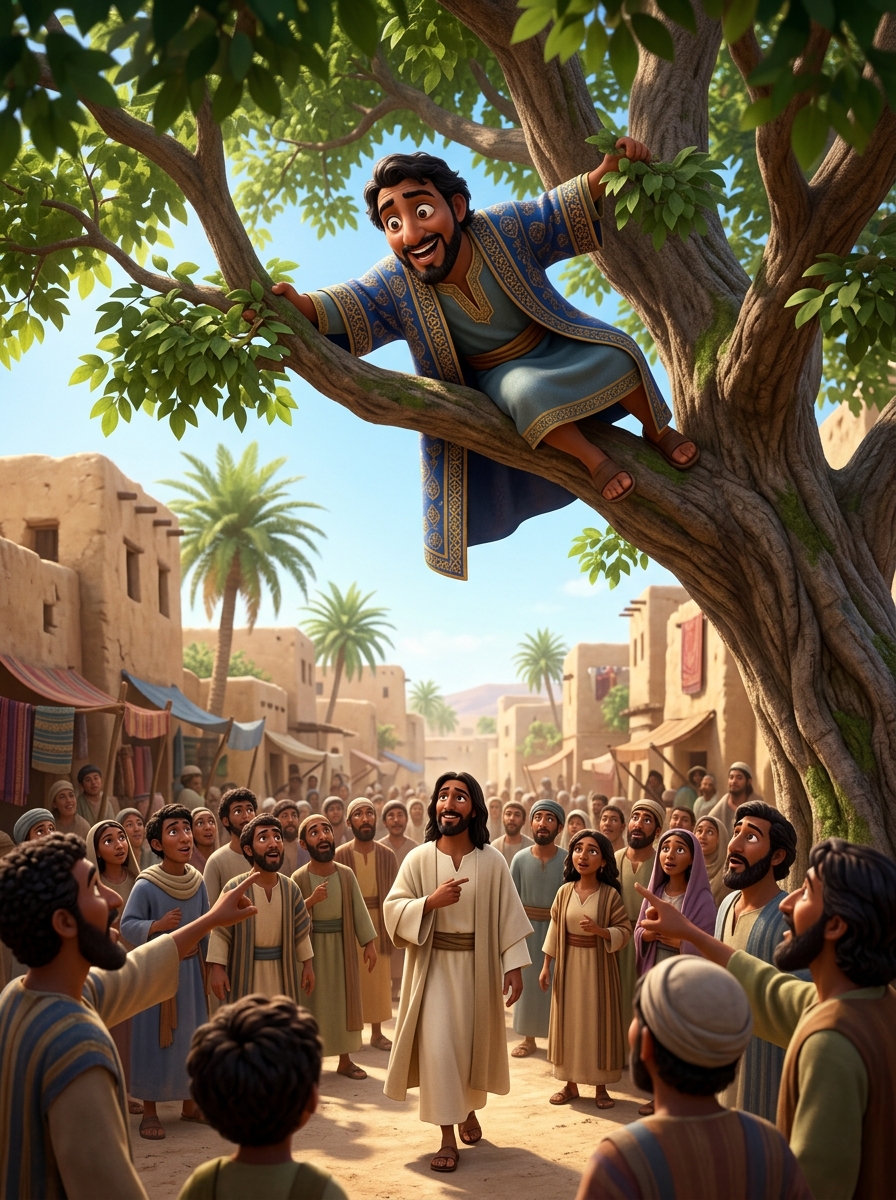
Luke 23 — The Cross
Pilate found no basis for charges against Jesus but handed Him over to satisfy the crowd. Jesus was led to Golgotha. Two criminals were crucified alongside Him. One mocked Him; the other said: 'Remember me when you come into your kingdom.' Jesus answered: 'Today you will be with me in paradise.' At noon, darkness covered the land for three hours. Jesus cried out: 'Father, into your hands I commit my spirit.' He breathed His last. The curtain of the Temple tore in two.
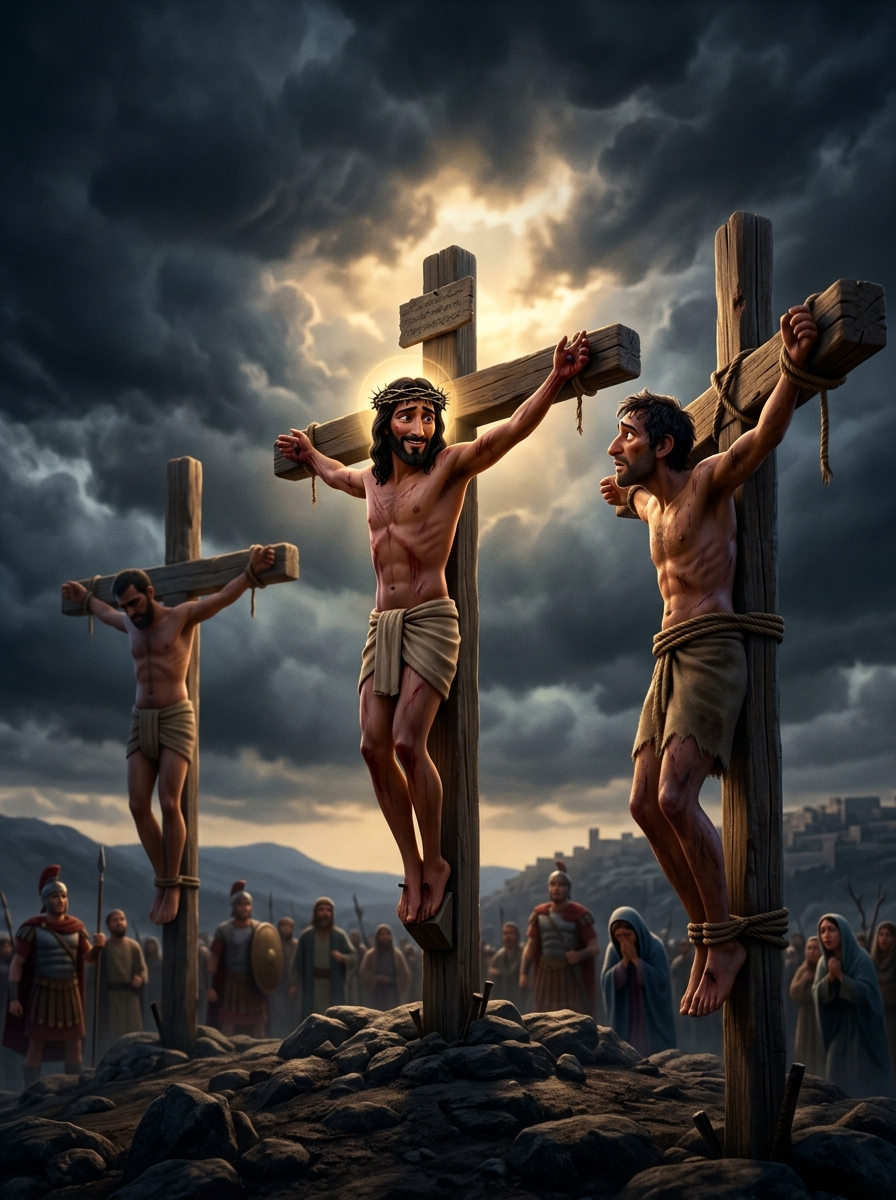
Luke 24 — He Has Risen
On the first day of the week, the women came to the tomb with spices. The stone was rolled away. Two men in gleaming robes stood there: 'He is not here — He has risen!' That day two disciples walked to Emmaus, talking about all that had happened. A stranger joined them and explained the Scriptures. At dinner He broke bread — and they recognized Him. He vanished. They rushed back to Jerusalem. Jesus appeared among the disciples, showed His hands and feet, ate fish with them — then led them out and ascended into heaven.
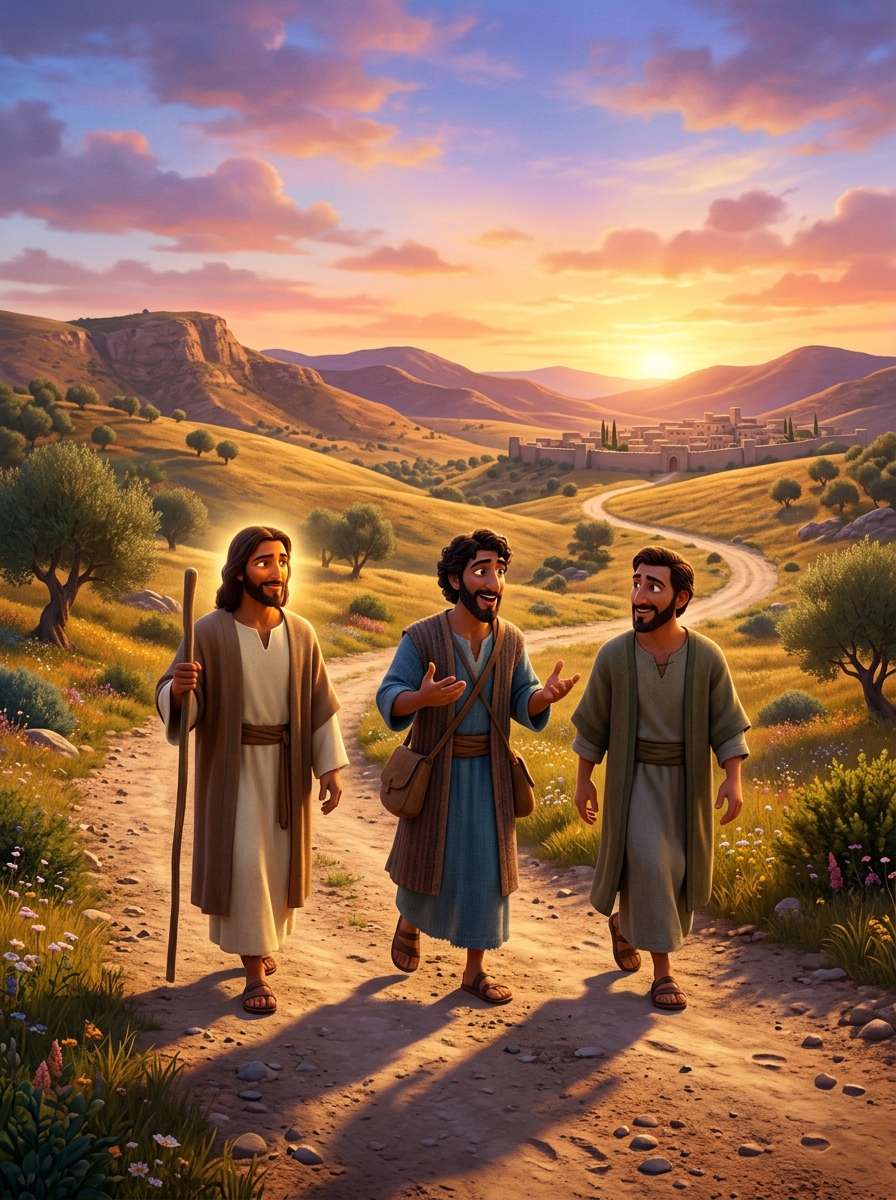
John — Introduction
John's Gospel opens not in Bethlehem but in eternity: 'In the beginning was the Word, and the Word was with God, and the Word was God.' Written last of the four Gospels, John's account is deeply theological, focusing on the divine identity of Jesus through seven 'I Am' statements and seven miraculous signs. His stated purpose: 'These are written so that you may believe that Jesus is the Messiah, the Son of God, and that by believing you may have life in his name.'
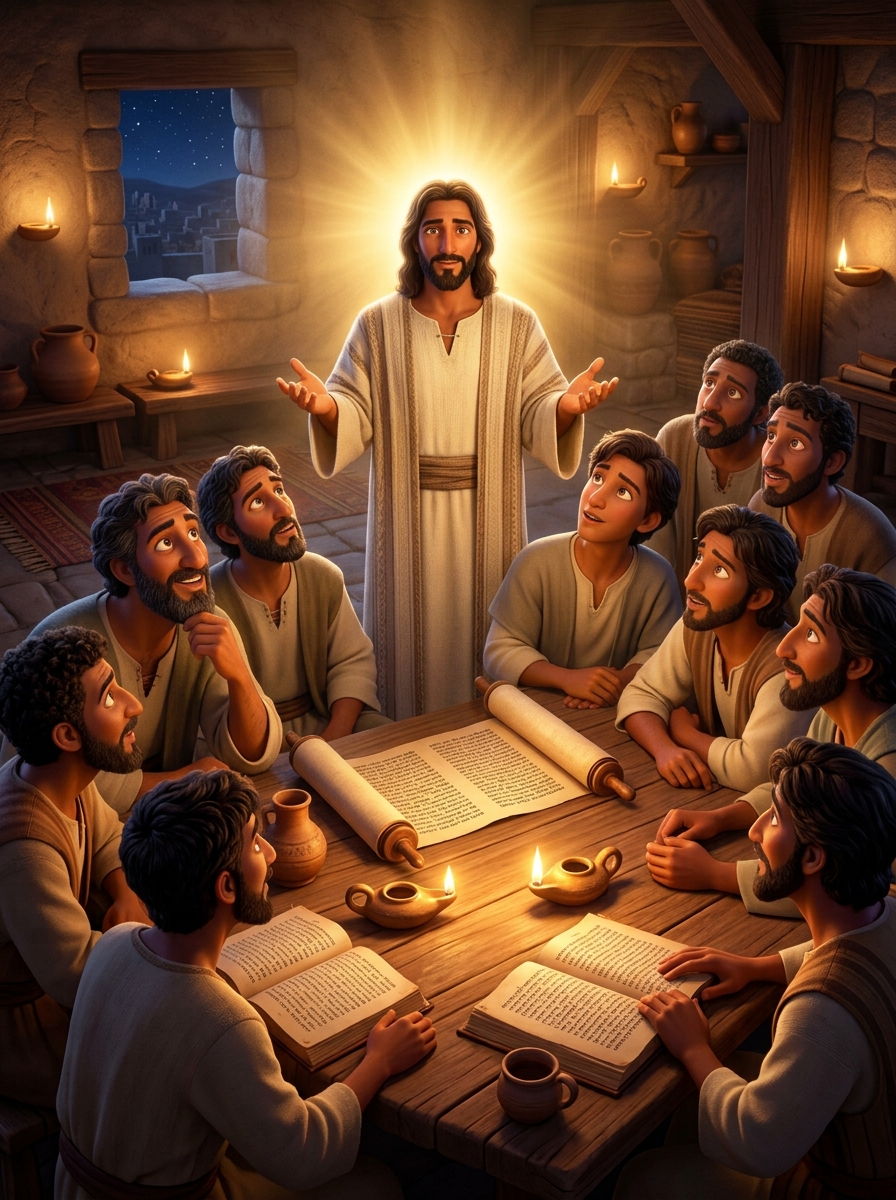
John 1 — The Word Became Flesh
In the beginning was the Word. The Word was with God. The Word was God. Through Him all things were made. In Him was life, and that life was the light of all people. The light shines in the darkness, and the darkness has not overcome it. John the Baptist came to testify about the light. Then the Word became flesh and made His dwelling among us — and those who received Him were given the right to become children of God. 'Behold, the Lamb of God who takes away the sin of the world!'
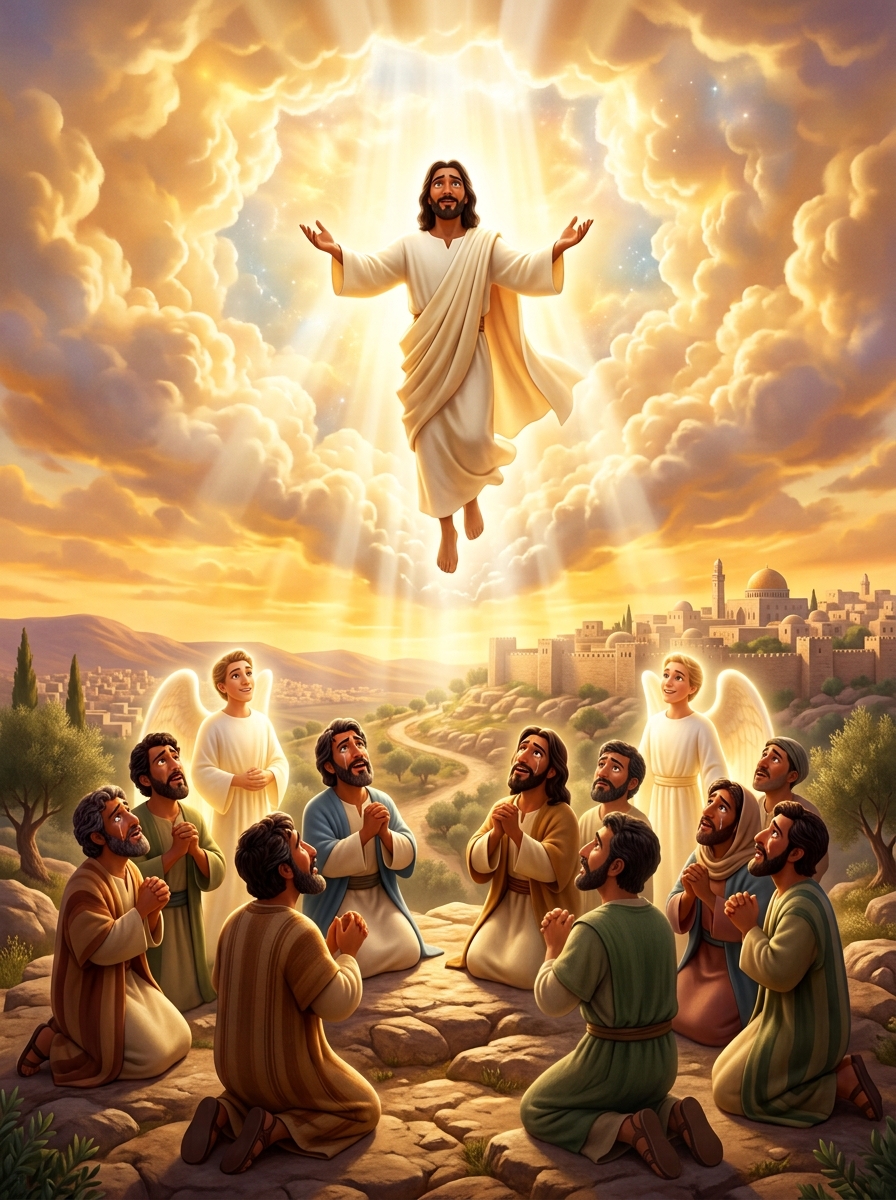
John 2–3 — Water into Wine
At a wedding in Cana, the wine ran out. Mary told Jesus. He ordered the servants to fill six stone jars — each holding eighty liters — with water. He told them to draw some and take it to the master of the banquet. It had become wine — the finest of the night. This was Jesus' first miracle, and His disciples believed in Him. He then cleansed the Temple. A Pharisee named Nicodemus came at night: 'You must be born again.' 'For God so loved the world that He gave His one and only Son.'
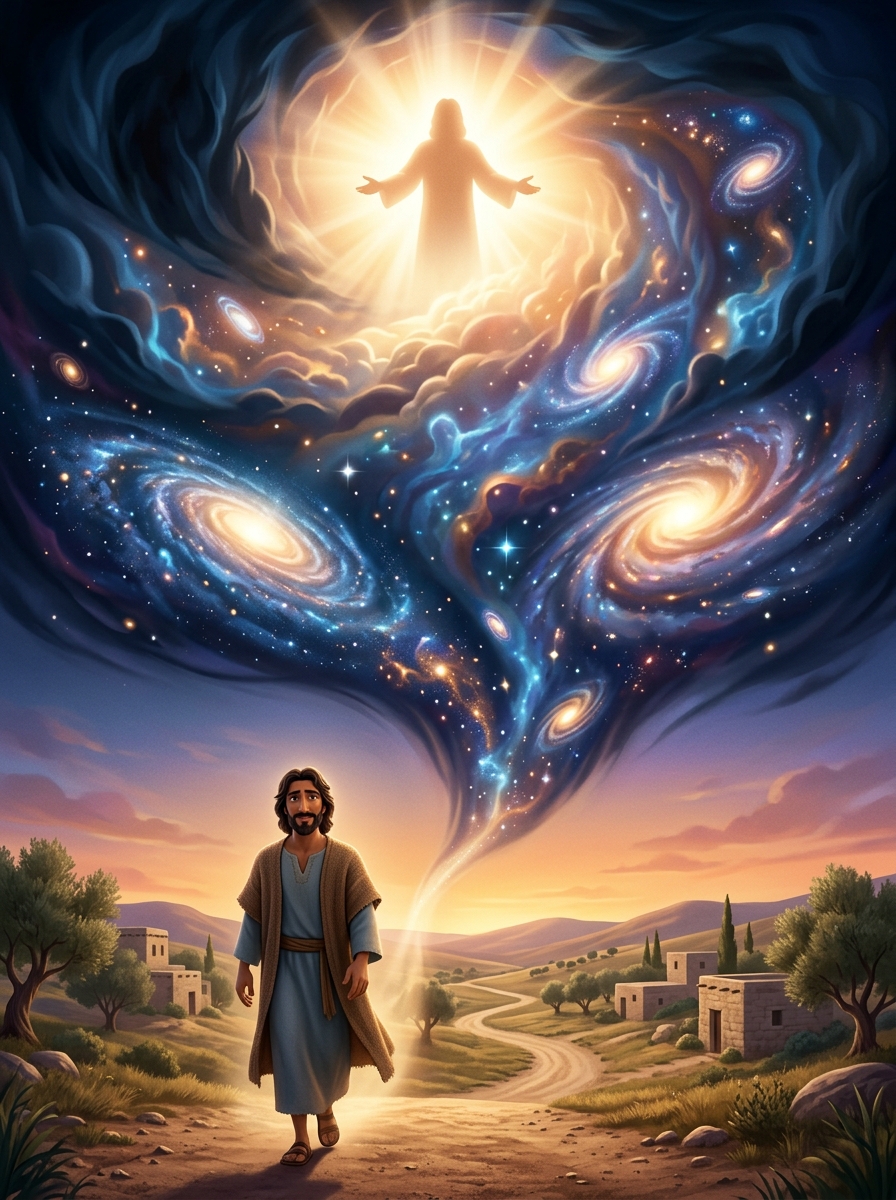
John 4 — Woman at the Well
Jesus traveled through Samaria and stopped at a well. A Samaritan woman came to draw water. 'Will you give me a drink?' She was shocked — Jews didn't speak with Samaritans, let alone women. Jesus said He could give her living water — water that would become a spring welling up to eternal life. He knew her whole history. She ran back to town: 'Come see a man who told me everything I ever did!' Many Samaritans believed. Jesus declared: 'The fields are ripe for harvest.'
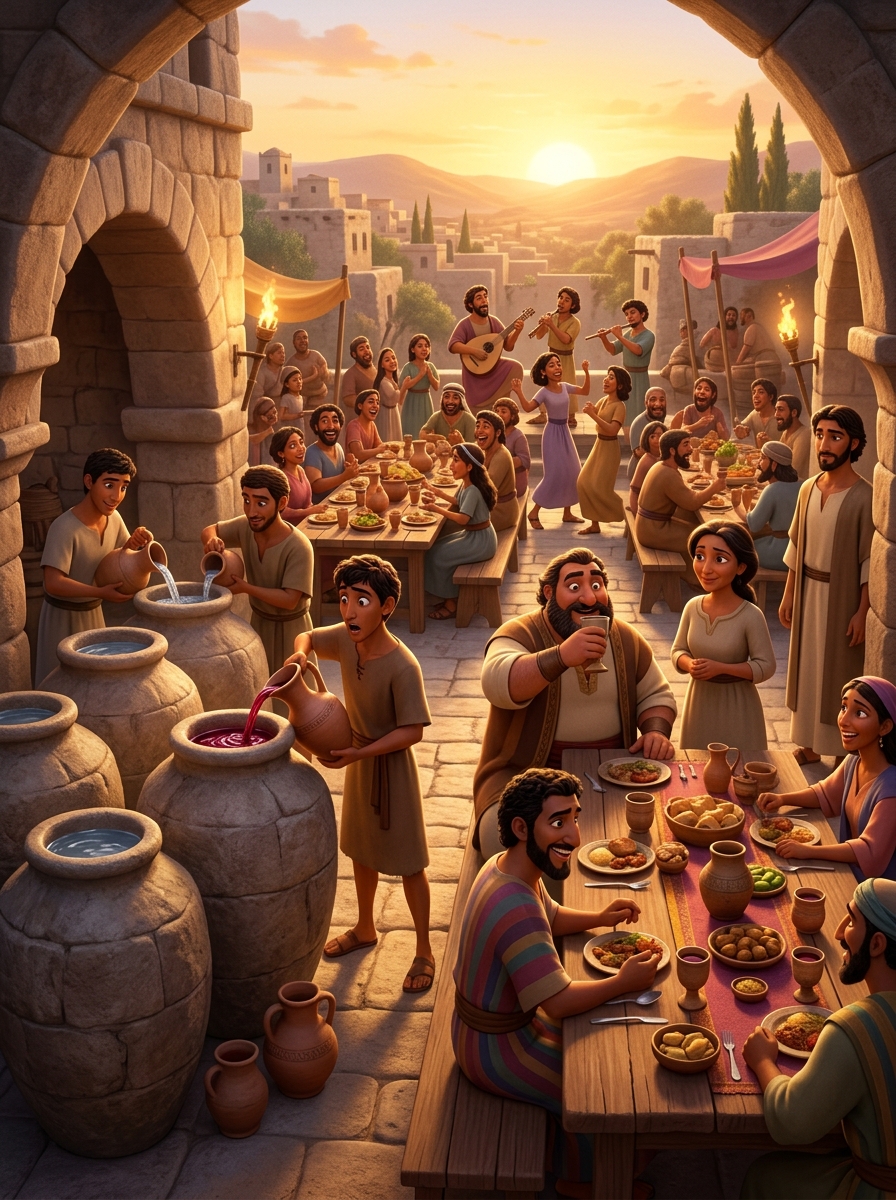
John 5 — Healing at the Pool
At a pool in Jerusalem called Bethesda, crowds of sick people lay waiting for the water to stir. A man had been an invalid for thirty-eight years. Jesus asked: 'Do you want to get well?' The man explained he had no one to help him. Jesus said: 'Get up, pick up your mat and walk.' Immediately the man was healed. The religious leaders objected — it was the Sabbath. Jesus replied: 'My Father is always working and I too am working.' He claimed equality with God, and they sought to kill Him.
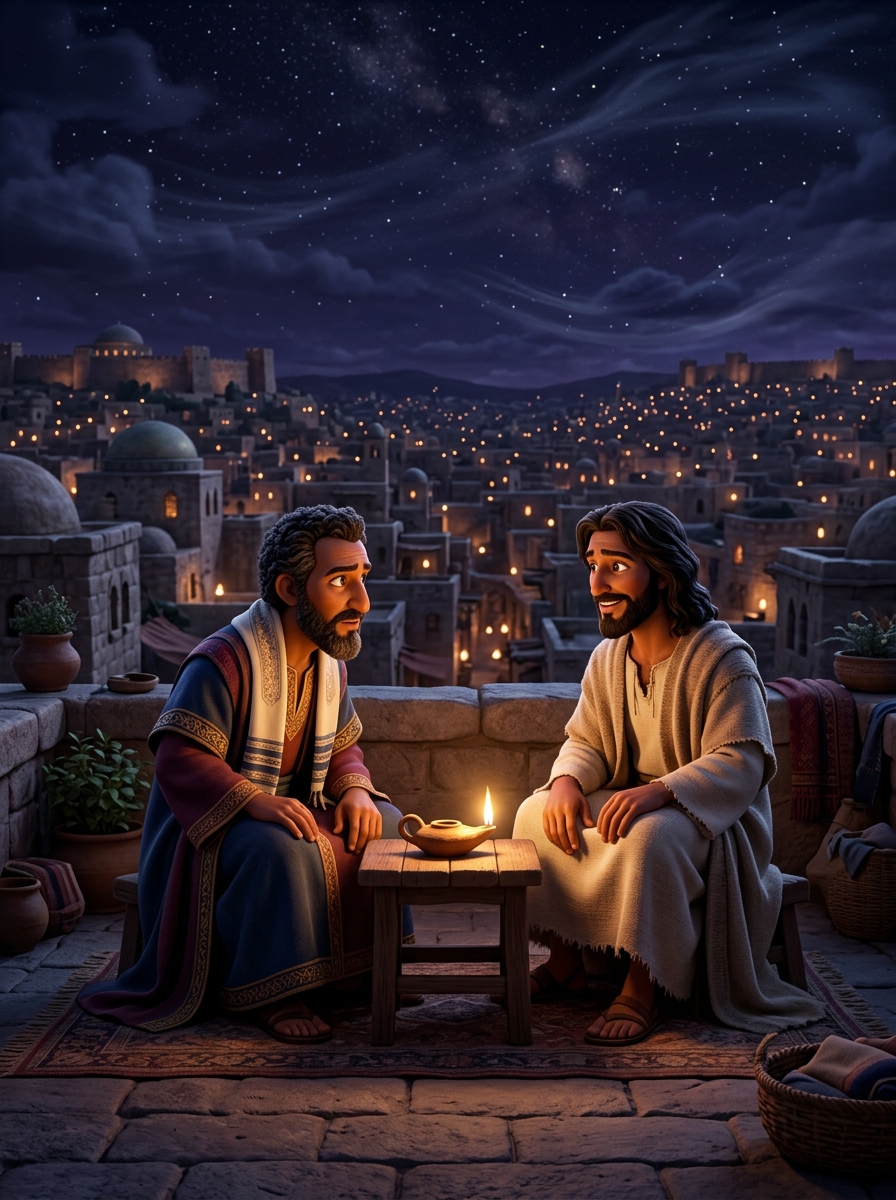
John 6 — Bread of Life
After feeding five thousand, Jesus walked on water to His disciples in a storm. The next day the crowd found Him on the other shore. He told them: 'Do not work for food that perishes, but for food that endures to eternal life.' They asked for a sign like manna. Jesus declared: 'I am the bread of life. Whoever comes to me will never go hungry. Whoever believes in me will never be thirsty. I am the living bread that came down from heaven — whoever eats this bread will live forever.'
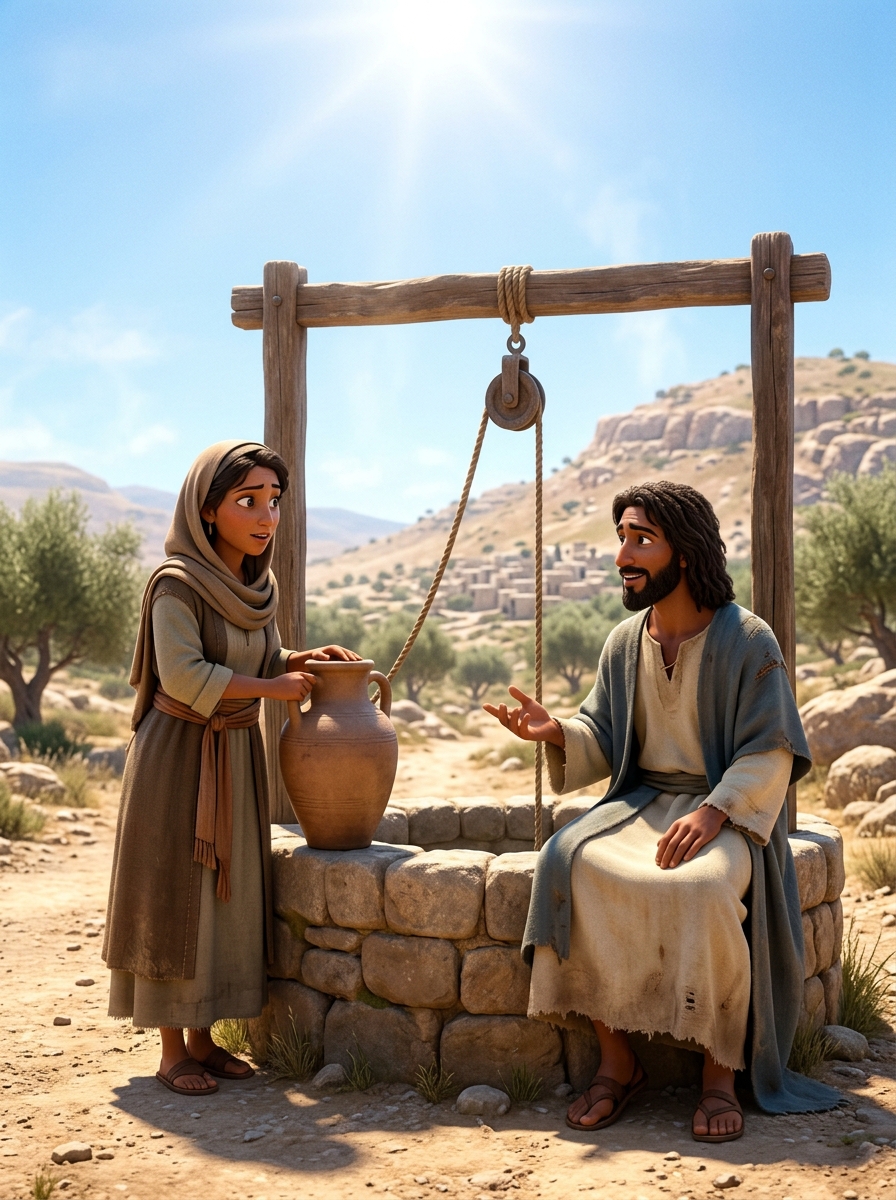
John 7–8 — Light of the World
Jesus went up to Jerusalem for the Feast of Tabernacles. On the last great day of the feast He stood and called out: 'If anyone is thirsty, let them come to me and drink — rivers of living water will flow from within them.' He caught a woman brought to Him in the act of adultery — the crowd ready to stone her. He said: 'Let anyone without sin throw the first stone.' One by one they left. Jesus said: 'Neither do I condemn you. Go and sin no more. I am the light of the world.'
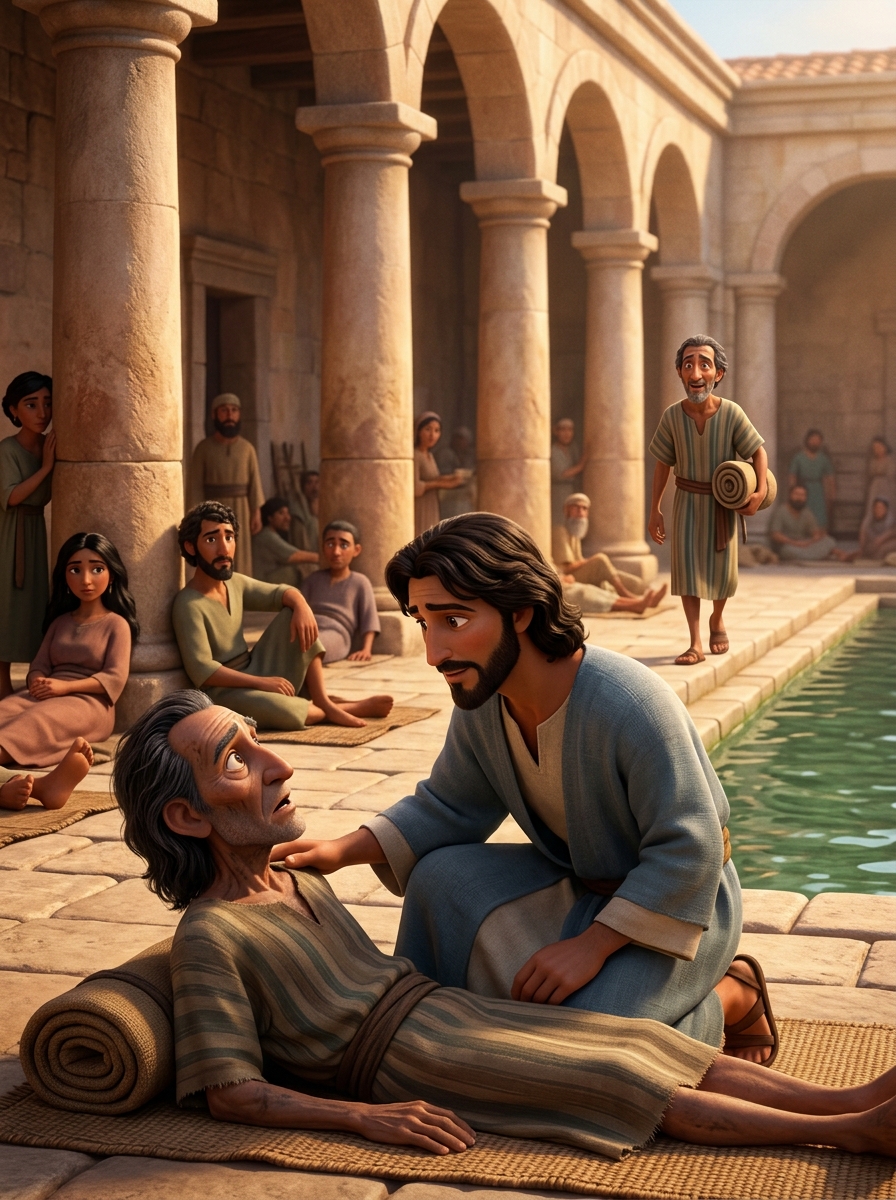
John 9 — Man Born Blind
As Jesus passed a man blind from birth, His disciples asked whose sin caused this. Jesus replied: 'Neither — this happened so the works of God might be displayed in him.' He spat on the ground, made mud, spread it on the man's eyes: 'Go wash in the Pool of Siloam.' He went, washed, and came back seeing. The religious leaders interrogated him, then his parents, then him again — unable to accept the miracle. Jesus found the man again and asked: 'Do you believe in the Son of Man?' He worshiped Him.
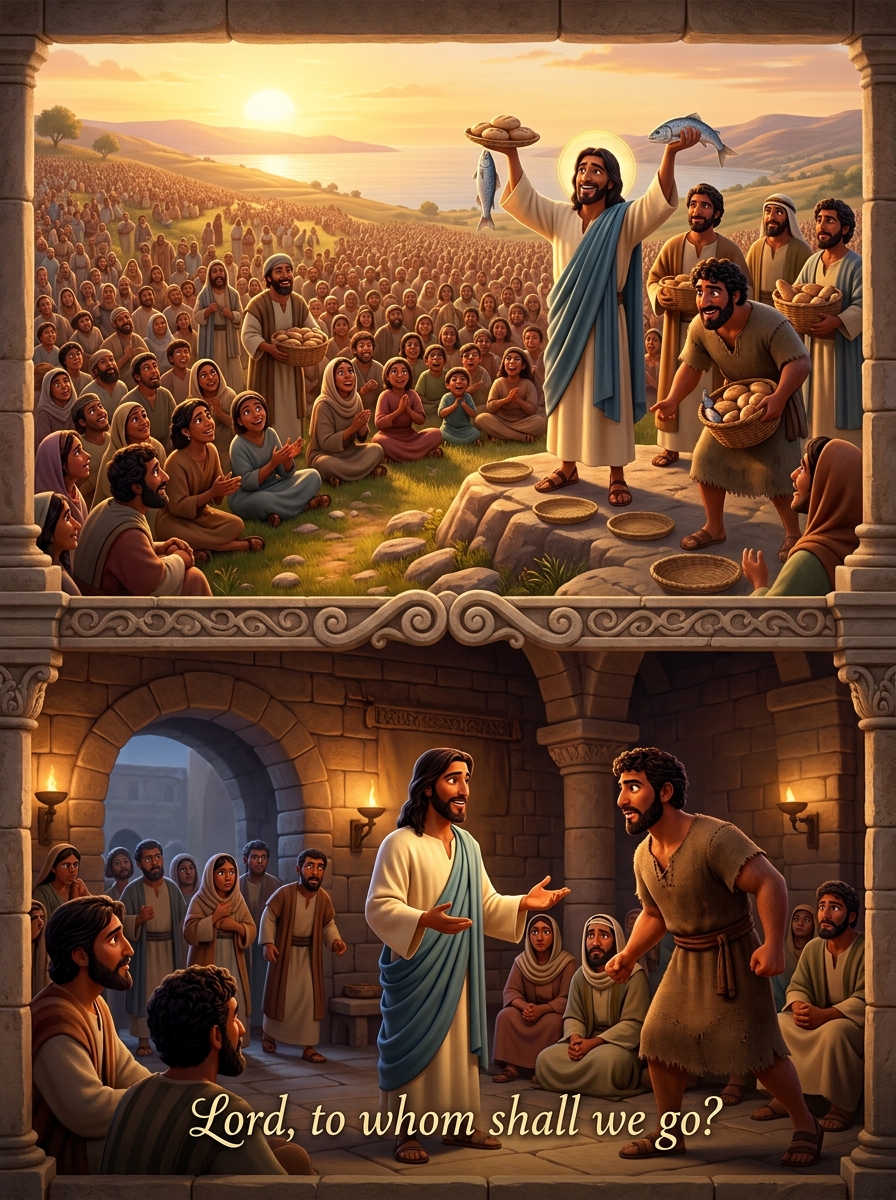
John 10 — The Good Shepherd
Jesus declared: 'I am the good shepherd. The good shepherd lays down his life for the sheep. I know my sheep and my sheep know me, just as the Father knows me and I know the Father.' He spoke of a thief who comes only to steal and destroy — but He came that they may have life, and have it to the full. 'My sheep listen to my voice. No one can snatch them out of my hand. The Father and I are one.' The Jews picked up stones — 'You, a mere man, claim to be God.'
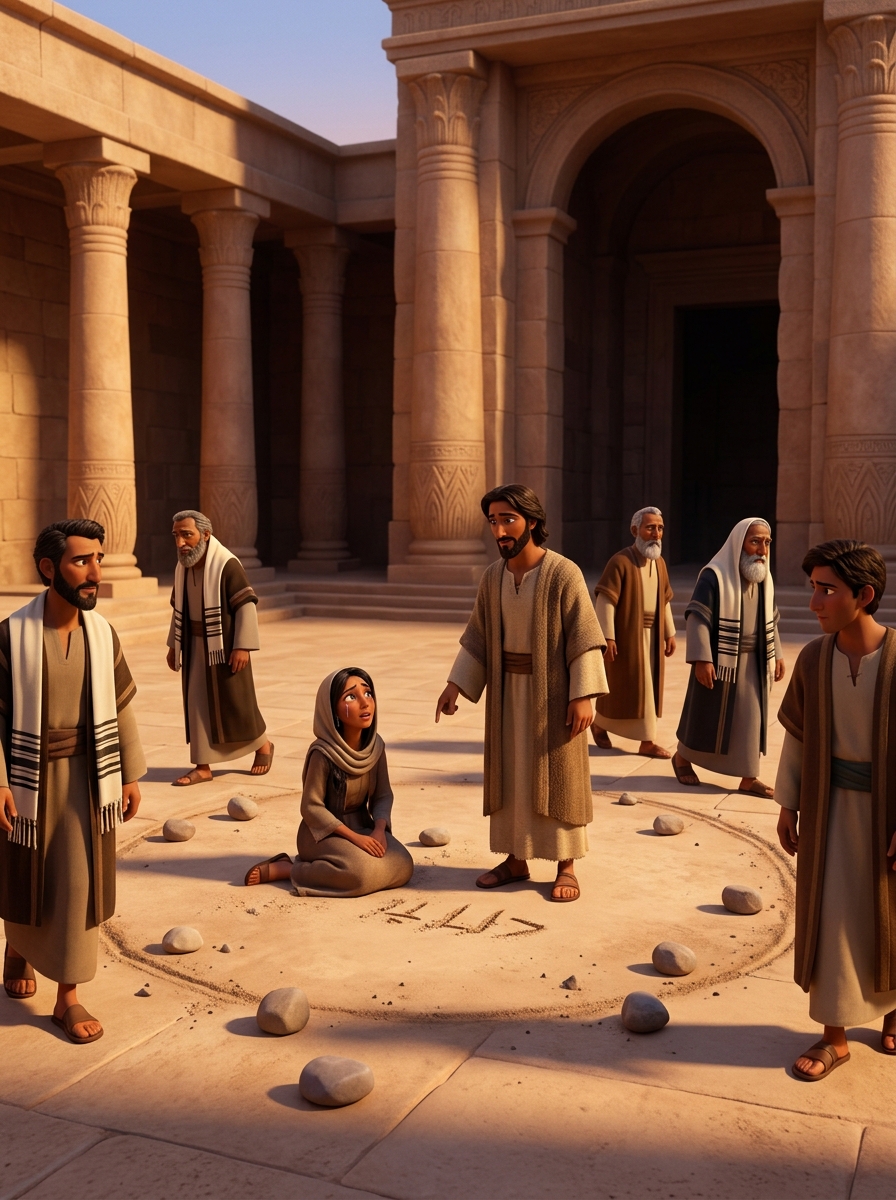
John 11 — Lazarus Raised
Lazarus, a close friend of Jesus, became gravely ill. His sisters sent word, but Jesus waited two days before going. By the time He arrived, Lazarus had been in the tomb four days. Martha met Him: 'Lord, if you had been here, my brother would not have died.' Mary fell at His feet weeping. Jesus wept too. Then He stood before the sealed tomb: 'Lazarus, come out!' The dead man came out, still wrapped in grave clothes. 'Take off the grave clothes and let him go.' Many believed. Others ran to the Pharisees.
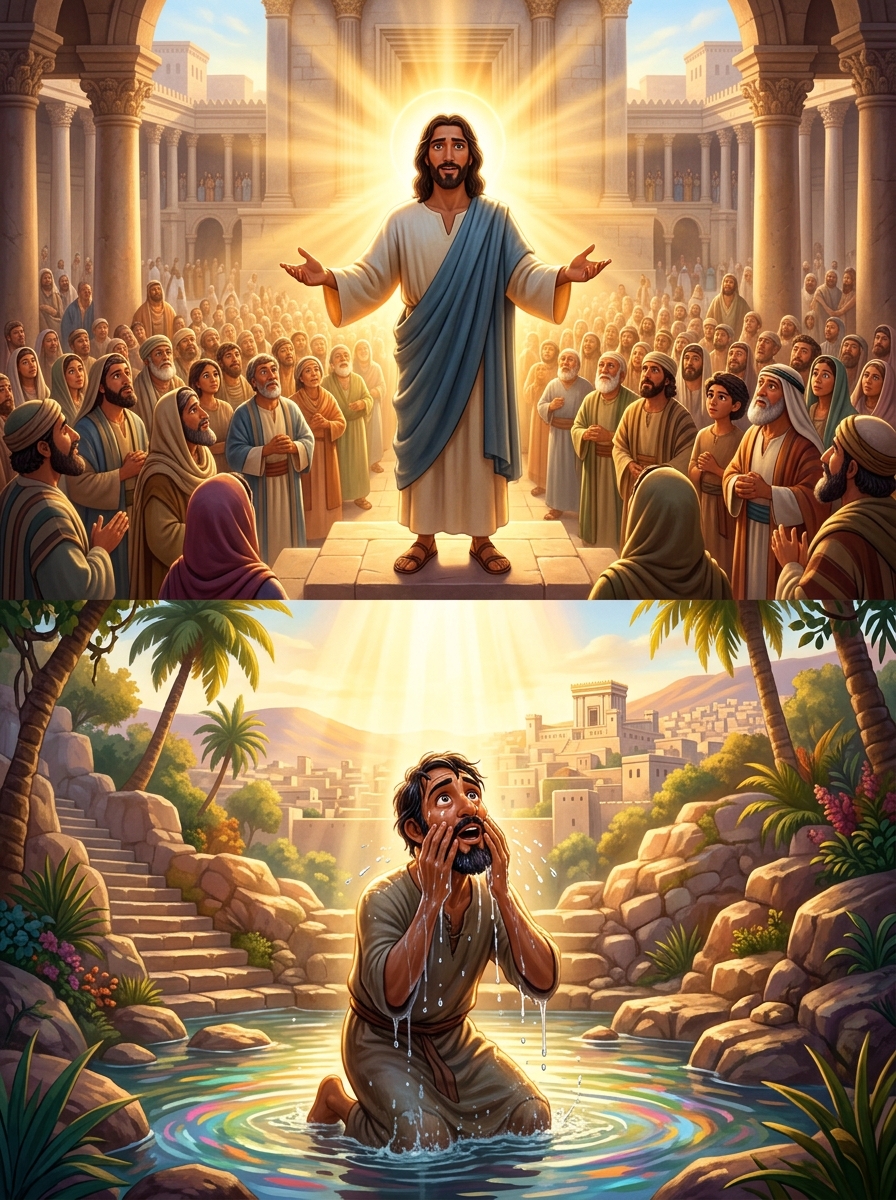
John 12 — The Triumphal Entry
Mary anointed Jesus' feet with expensive perfume and wiped them with her hair. Judas Iscariot objected — 'This could have been sold and given to the poor' — but he only wanted it for himself. Jesus said she had anointed Him for burial. The next day Jesus rode into Jerusalem on a donkey as crowds waved palm branches: 'Blessed is the King of Israel!' The Pharisees lamented: 'The whole world has gone after Him!' Some Greeks sought Jesus, and He said: 'The hour has come for the Son of Man to be glorified. Unless a grain of wheat falls into the earth and dies, it remains alone — but if it dies, it produces much fruit.'
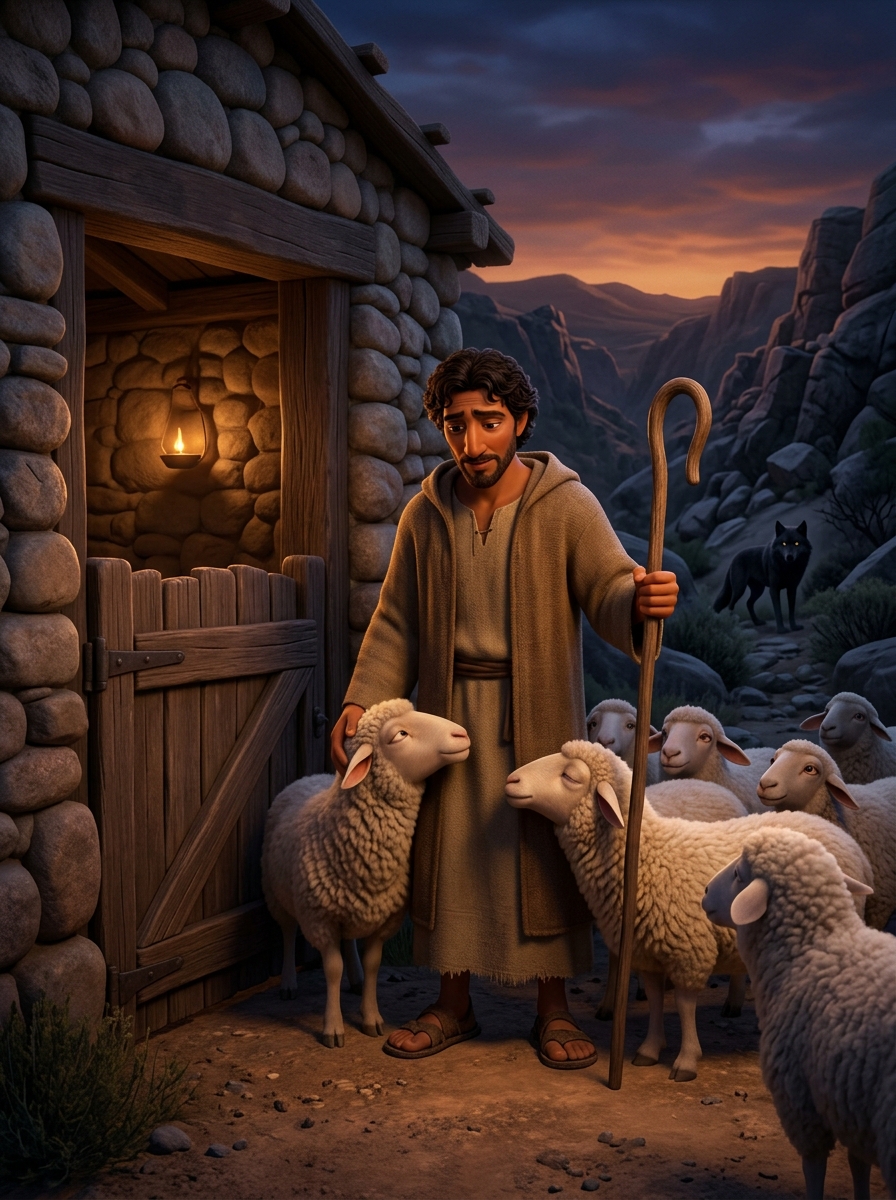
John 13 — Washing Feet
Before the Passover feast, knowing the hour had come, Jesus rose from the table, wrapped a towel around His waist, and began washing His disciples' feet. Peter protested. Jesus said: 'Unless I wash you, you have no part with me.' Then He sat back down: 'Do you understand what I have done? You call me Teacher and Lord — rightly so. Now I, your Lord and Teacher, have washed your feet. You should do as I have done.' He announced that one of them would betray Him, and dipped a piece of bread for Judas: 'What you are about to do, do quickly.'
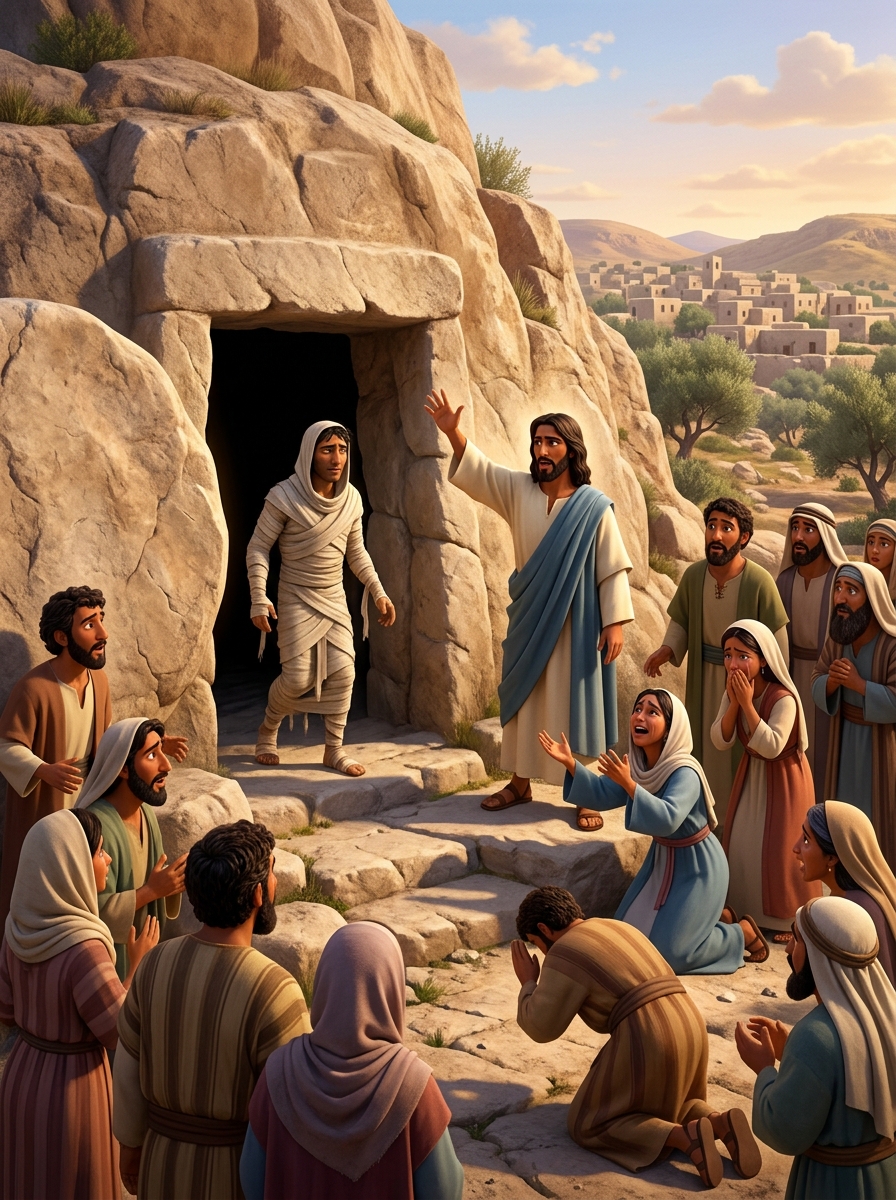
John 14 — I Am the Way
Jesus told His troubled disciples: 'Do not let your hearts be troubled. Trust in God — trust also in me. In my Father's house are many rooms. I am going to prepare a place for you.' Thomas asked how they could know the way. Jesus replied: 'I am the way and the truth and the life. No one comes to the Father except through me.' He promised to send the Holy Spirit — the Advocate, the Spirit of truth — who would be with them forever, teaching them all things and reminding them of everything He had said.
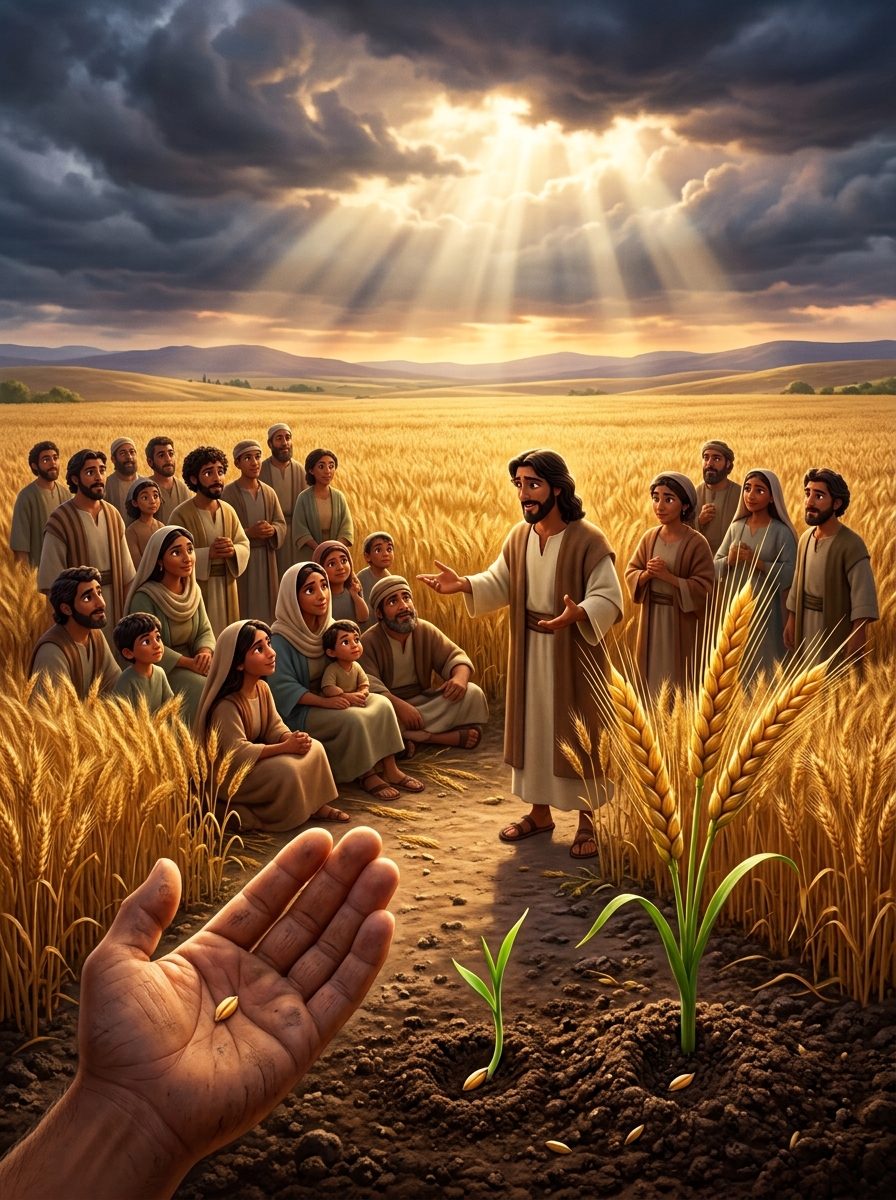
John 15 — The Vine and Branches
Jesus said: 'I am the true vine and my Father is the gardener. Remain in me, and I will remain in you. No branch can bear fruit by itself; it must remain in the vine. I am the vine; you are the branches. If you remain in me and I in you, you will bear much fruit. Apart from me you can do nothing.' He commanded them to love one another as He had loved them. 'Greater love has no one than this: to lay down one's life for one's friends. I have called you friends.'
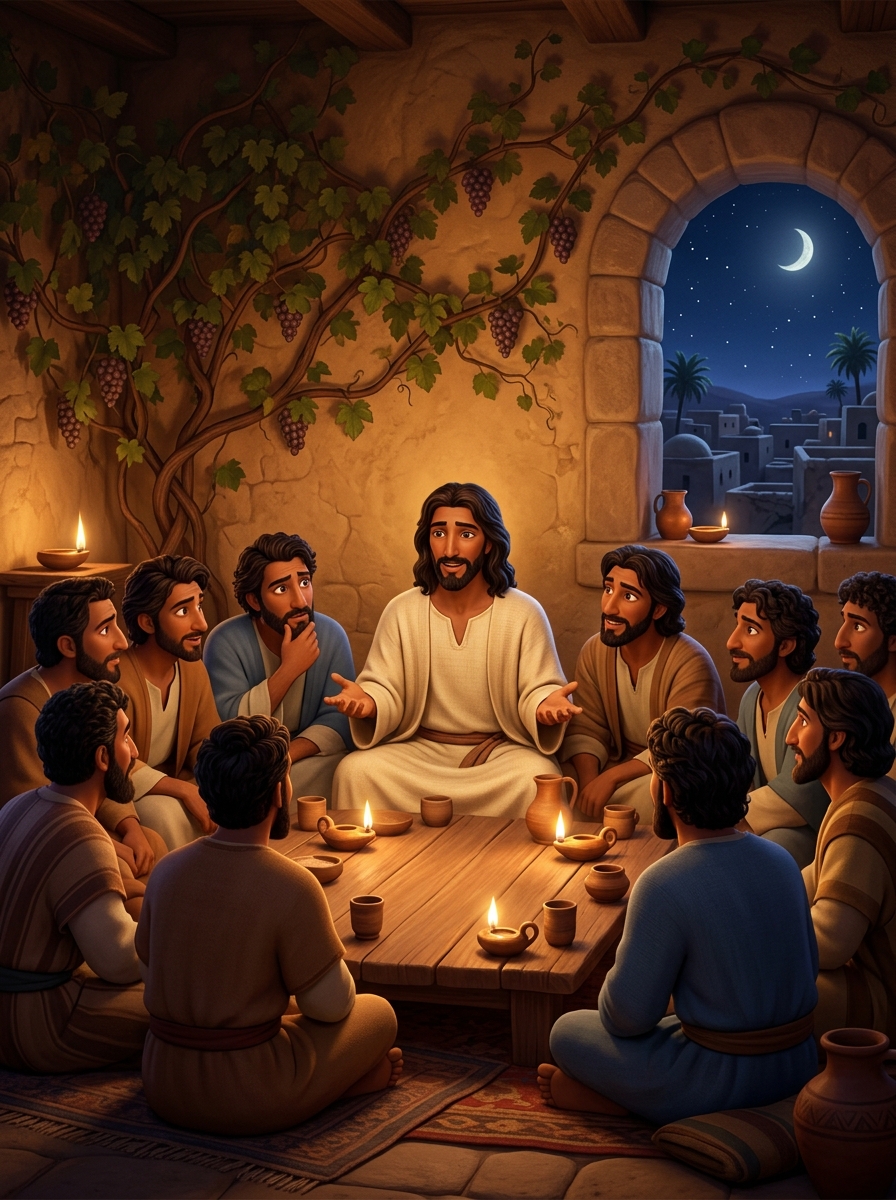
John 16 — The Holy Spirit Comes
Jesus told His disciples that it was for their good that He was going away — because only then could the Advocate come. The Holy Spirit would convict the world of sin, righteousness, and judgment. He would guide them into all truth. 'Very truly I tell you, you will weep and mourn while the world rejoices. You will grieve — but your grief will turn to joy.' As a woman forgets her labor pains when a child is born, their sorrow would turn to lasting joy that no one could take from them.
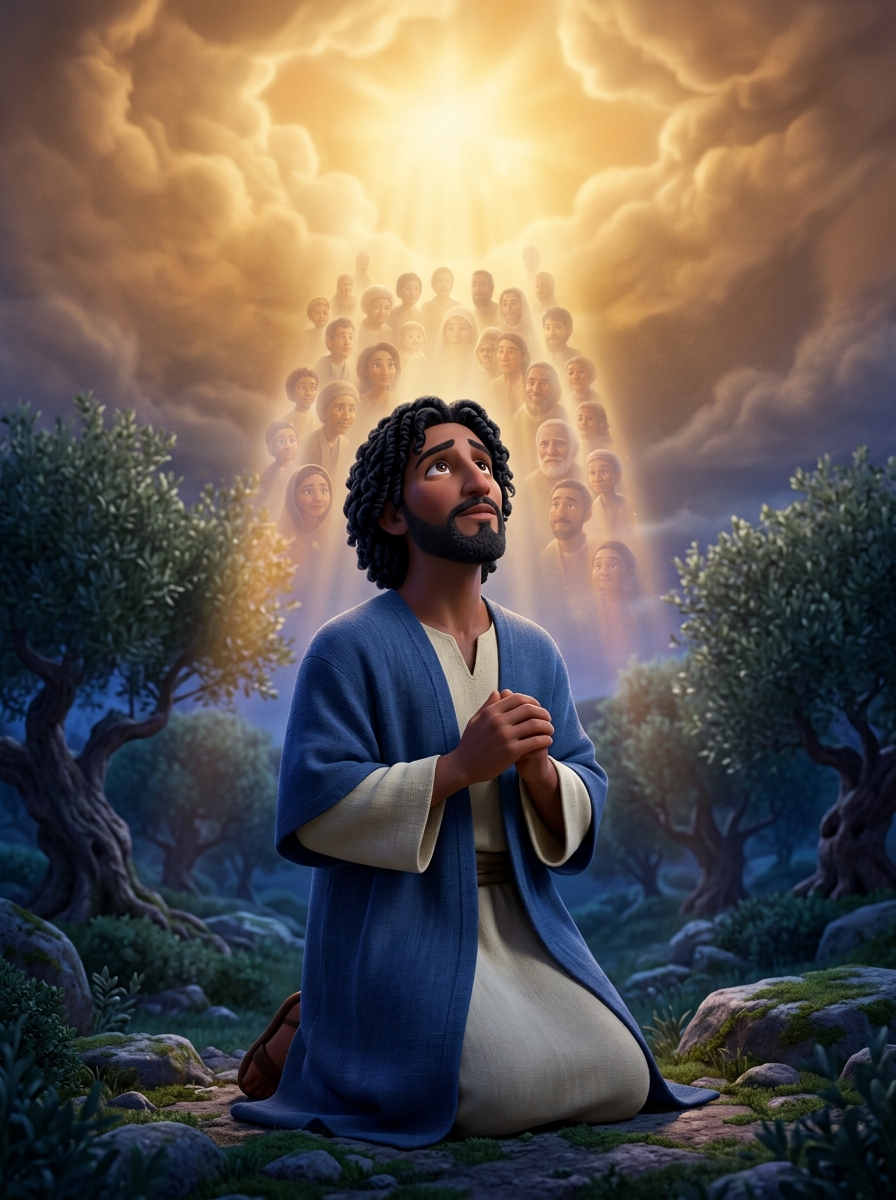
John 17 — Jesus' High Priestly Prayer
After the Last Supper, Jesus lifted His eyes to heaven and prayed. He prayed for Himself — that the Father would glorify Him. He prayed for His disciples — protect them, sanctify them in the truth. Then He prayed for all believers throughout all time: 'My prayer is not for them alone. I pray also for those who will believe in me through their message, that all of them may be one — so that the world may believe that you sent me.' It is the most intimate prayer in all of Scripture.
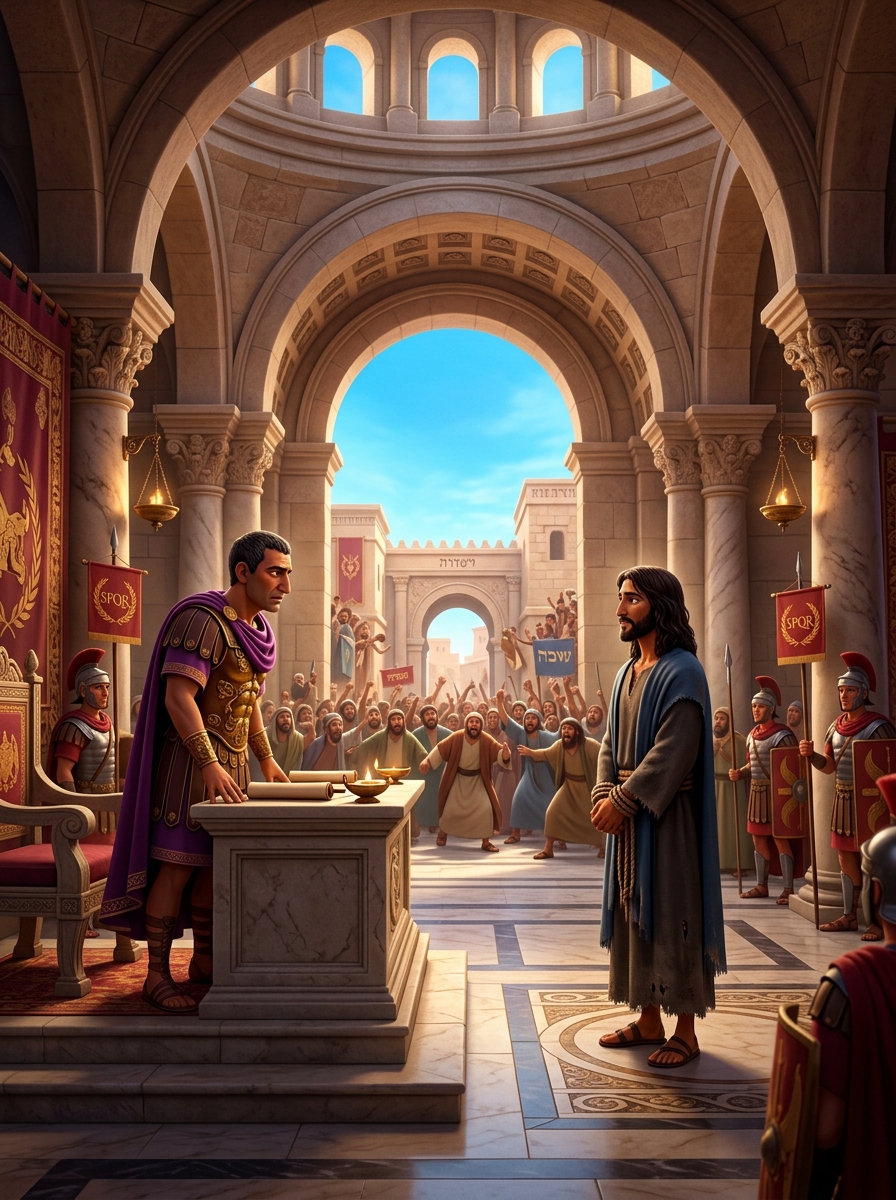
John 18 — The Arrest
Jesus went with His disciples to a garden across the Kidron Valley. Judas arrived with a crowd of soldiers and officials carrying torches and weapons. When they said they were looking for Jesus of Nazareth, Jesus stepped forward: 'I am he.' They drew back and fell to the ground. Peter drew a sword and cut off the high priest's servant's ear. Jesus said: 'Put your sword away — shall I not drink the cup the Father has given me?' He was bound and led away. Peter followed — and denied knowing Him three times.
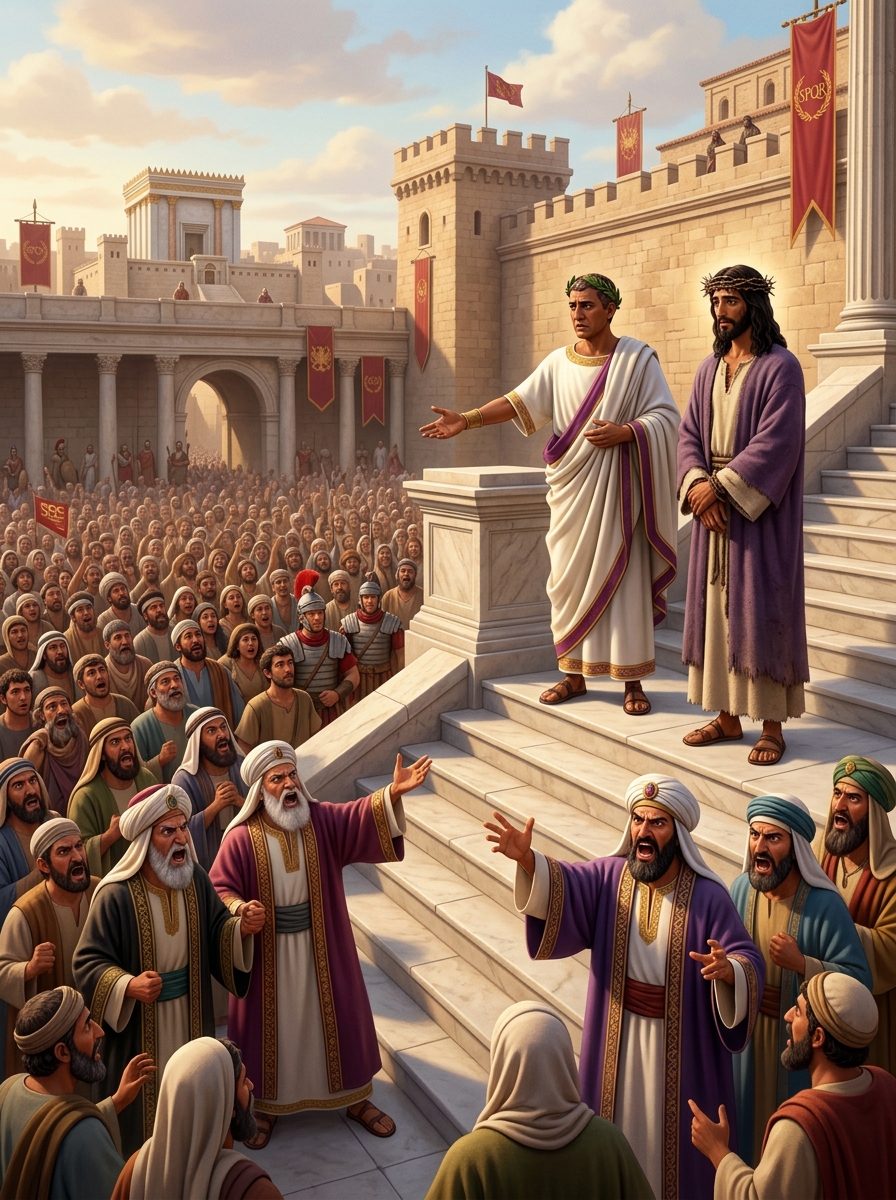
John 19 — The Crucifixion
Pilate tried to release Jesus — finding no basis for charges — but the crowd cried out: 'Crucify him!' Pilate washed his hands of it. Soldiers mocked Jesus with a crown of thorns and purple robe. He carried His cross to Golgotha. They crucified Him with the inscription: 'Jesus of Nazareth, King of the Jews.' From the cross He commended His mother to the care of the beloved disciple. He cried out: 'I am thirsty.' They offered sour wine. He said: 'It is finished.' He bowed His head and gave up His spirit.
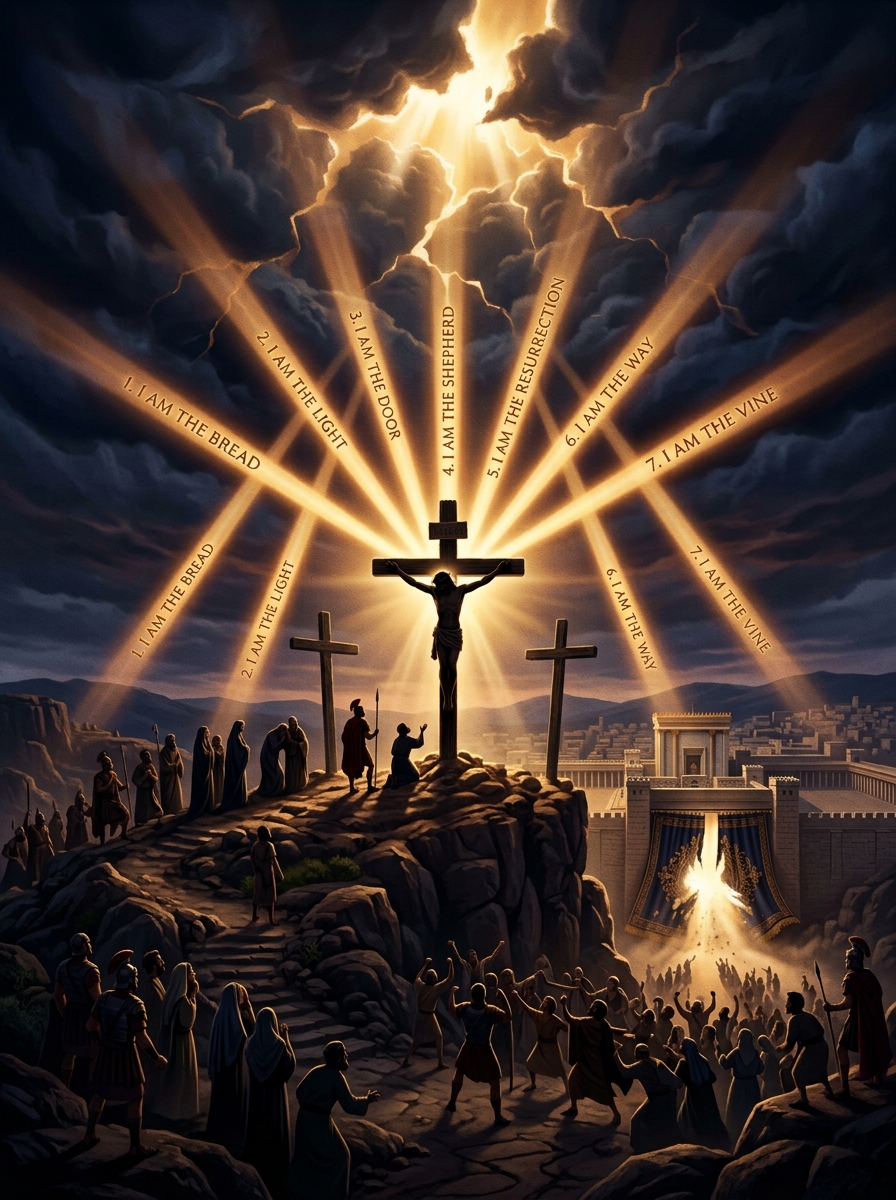
John 20 — Resurrection Morning
Early on the first day of the week, Mary Magdalene ran to the tomb and found it empty. Peter and John ran — the burial cloths lay there, the face cloth folded separately. They didn't yet understand. Mary stood outside weeping. She looked in and saw two angels. Then a man: 'Why are you crying? Who are you looking for?' She thought He was the gardener. Then He said: 'Mary.' She turned: 'Rabboni!' Jesus said: 'Do not hold on to me — go and tell the others.' That evening He appeared in the locked room: 'Peace be with you.'
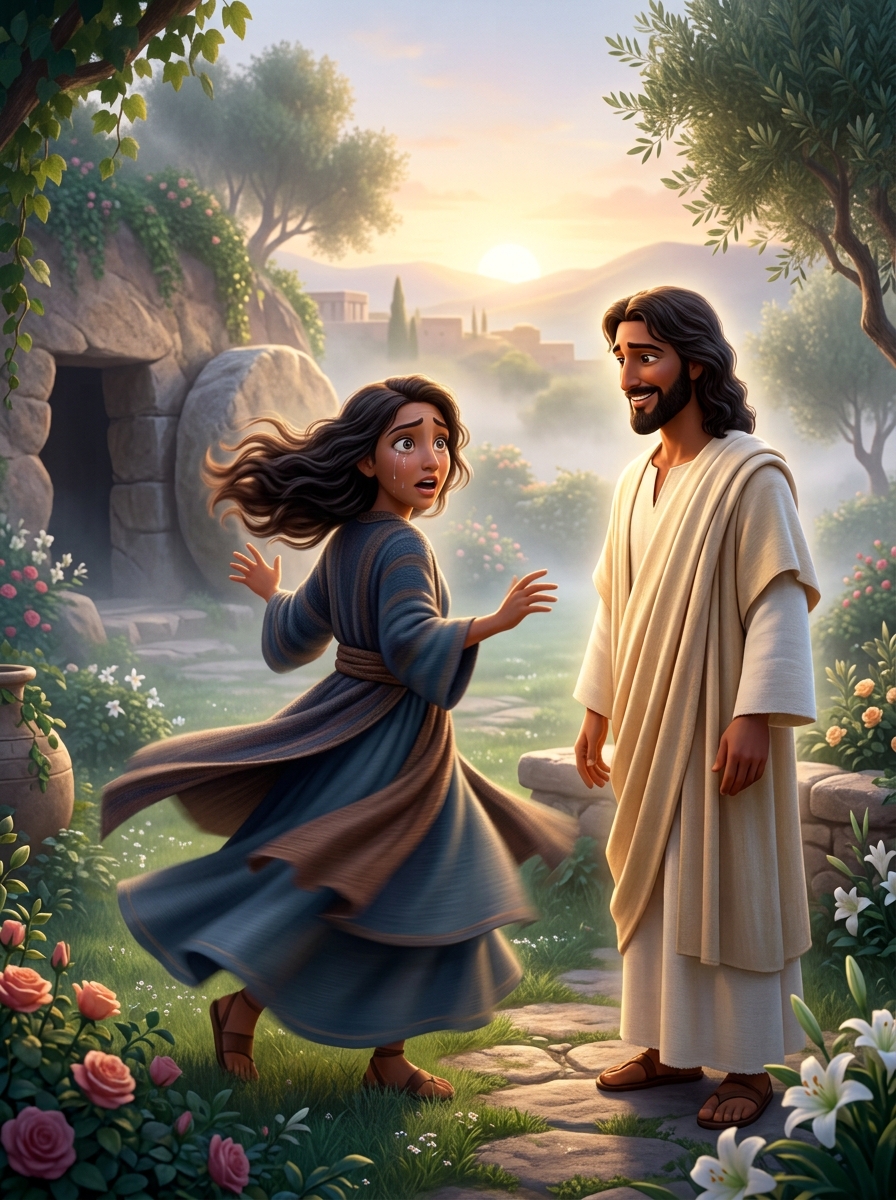
John 21 — Breakfast on the Shore
Jesus appeared to His disciples by the Sea of Galilee. They had fished all night and caught nothing. He called from the shore: 'Throw your net on the right side.' It filled so heavily they couldn't haul it in. John said: 'It is the Lord!' Peter leaped into the water. Jesus had charcoal fire and fish and bread ready. After breakfast He turned to Peter: 'Do you love me?' Three times He asked — once for each denial. Three times Peter answered yes. Three times Jesus said: 'Feed my sheep.' 'Follow me.'
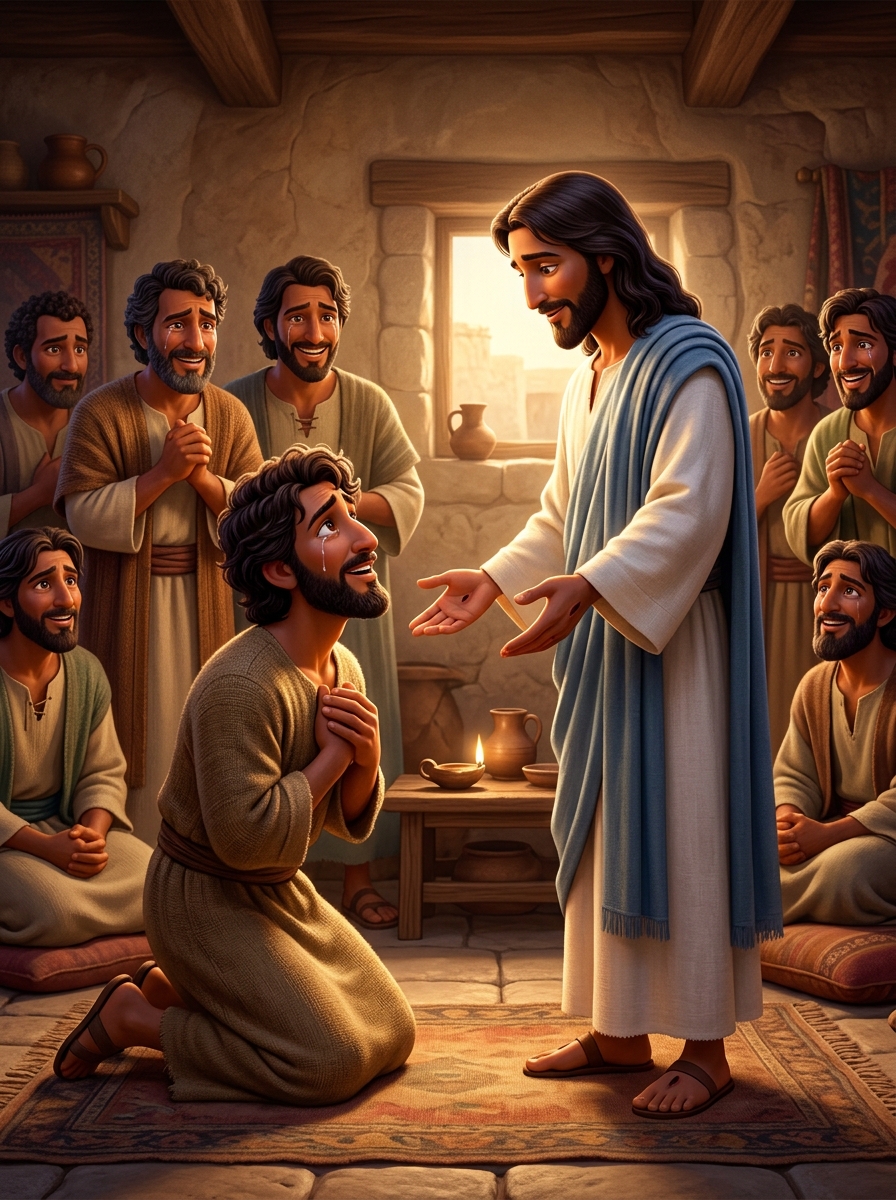
Acts — Introduction
Luke wrote Acts as a sequel to his Gospel — picking up exactly where the story left off and following the explosive growth of the early church from Jerusalem to Rome. The Holy Spirit is the central character, driving, empowering, and guiding the apostles into all the world. Acts records the first sermons, the first miracles, the first persecution, the first Gentile converts, and the first missionary journeys — the birth of Christianity as a global movement.
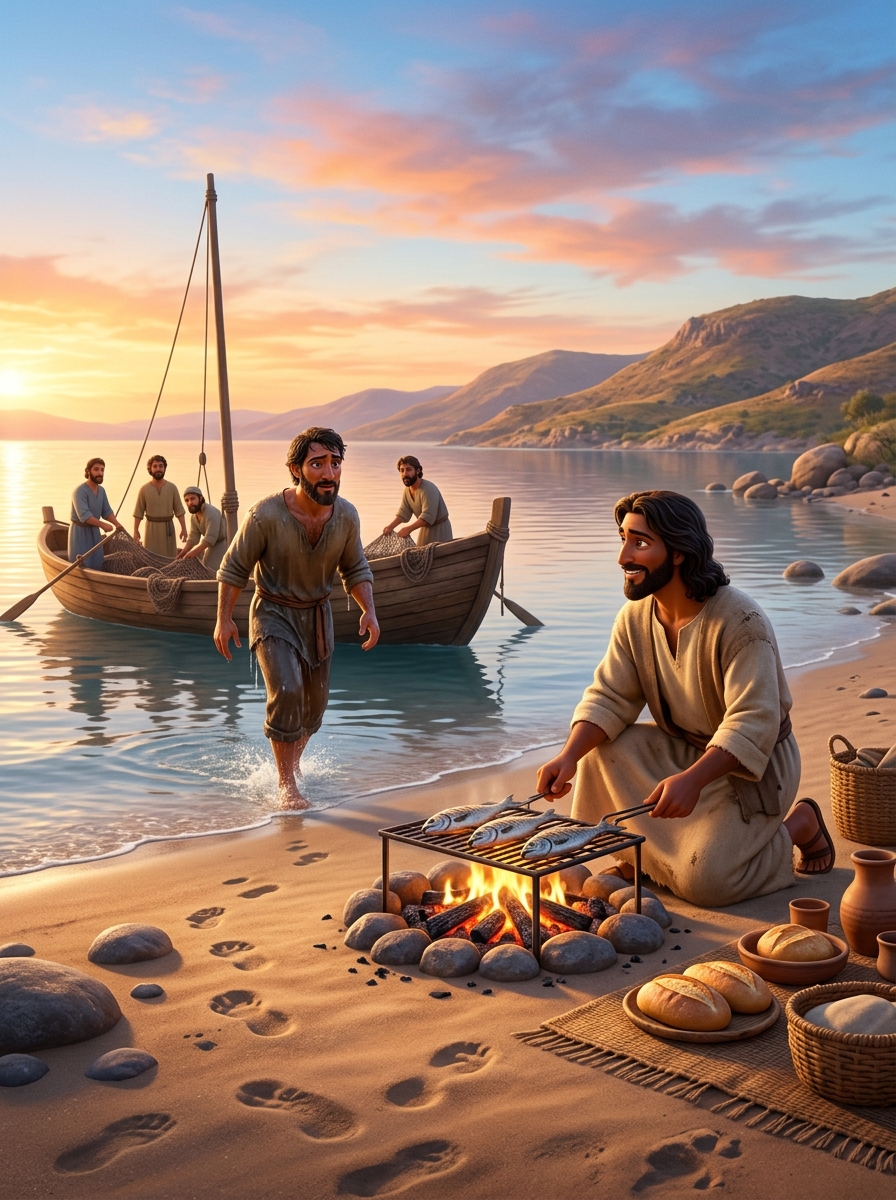
Acts 1–2 — Pentecost
Jesus appeared to His apostles for forty days after the resurrection, then ascended into heaven. Ten days later, on Pentecost, a sound like a rushing wind filled the house. Tongues of fire rested on each person. They were all filled with the Holy Spirit and began speaking in other languages. Crowds gathered from across the Roman world and heard the gospel in their own language. Peter stood and preached: 'This Jesus whom you crucified — God has made Him both Lord and Messiah.' Three thousand people believed that day.

Acts 3–4 — Bold Witness
Peter and John healed a man lame from birth at the Temple gate. He leaped and walked and praised God. A crowd gathered and Peter preached — you handed over and killed Jesus, but God raised Him from the dead. Many believed; the number of believers grew to five thousand. The priests arrested Peter and John and demanded to know by what power they had healed the man. Peter, filled with the Holy Spirit, declared: 'Salvation is found in no one else — there is no other name under heaven by which we must be saved.'

Acts 5–7 — Stephen the Martyr
Ananias and Sapphira lied to God about their offering and fell dead. Fear gripped the church. The apostles performed many signs and wonders. They were arrested but an angel freed them. A deacon named Stephen, full of grace and power, was brought before the Sanhedrin. He gave a sweeping speech through all of Israel's history, then declared they were stiff-necked people who always resisted the Holy Spirit. The crowd covered their ears and rushed him. They stoned Stephen to death as he said: 'Lord, do not hold this sin against them.'
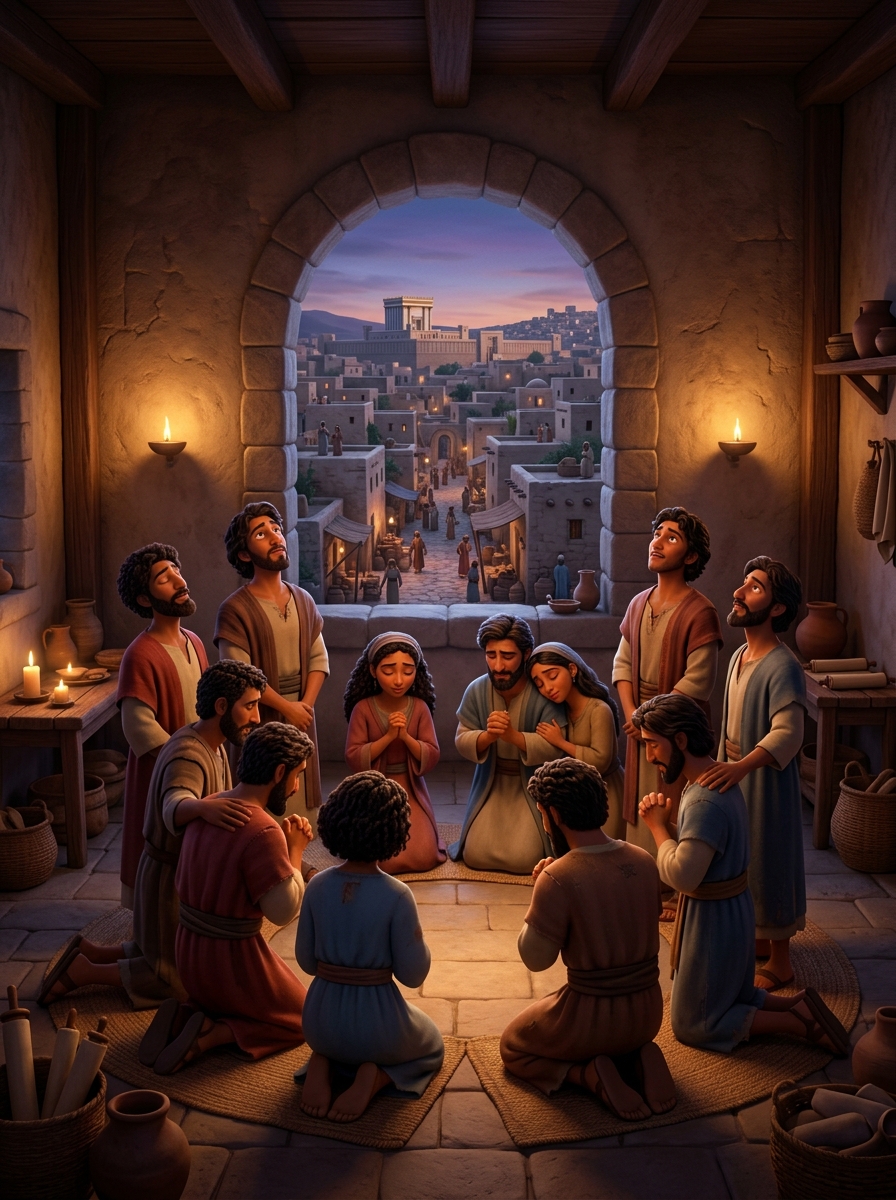
Acts 8 — Philip and the Ethiopian
A great persecution scattered believers from Jerusalem across Judea and Samaria. Philip went to Samaria and preached Christ — crowds listened, many were healed, and the city had great joy. An angel directed Philip south to a desert road. There he found an Ethiopian court official sitting in his chariot, reading from Isaiah 53. Philip ran alongside: 'Do you understand what you are reading?' 'How can I, unless someone helps me?' Philip explained that the passage was about Jesus. The man believed and was baptized.
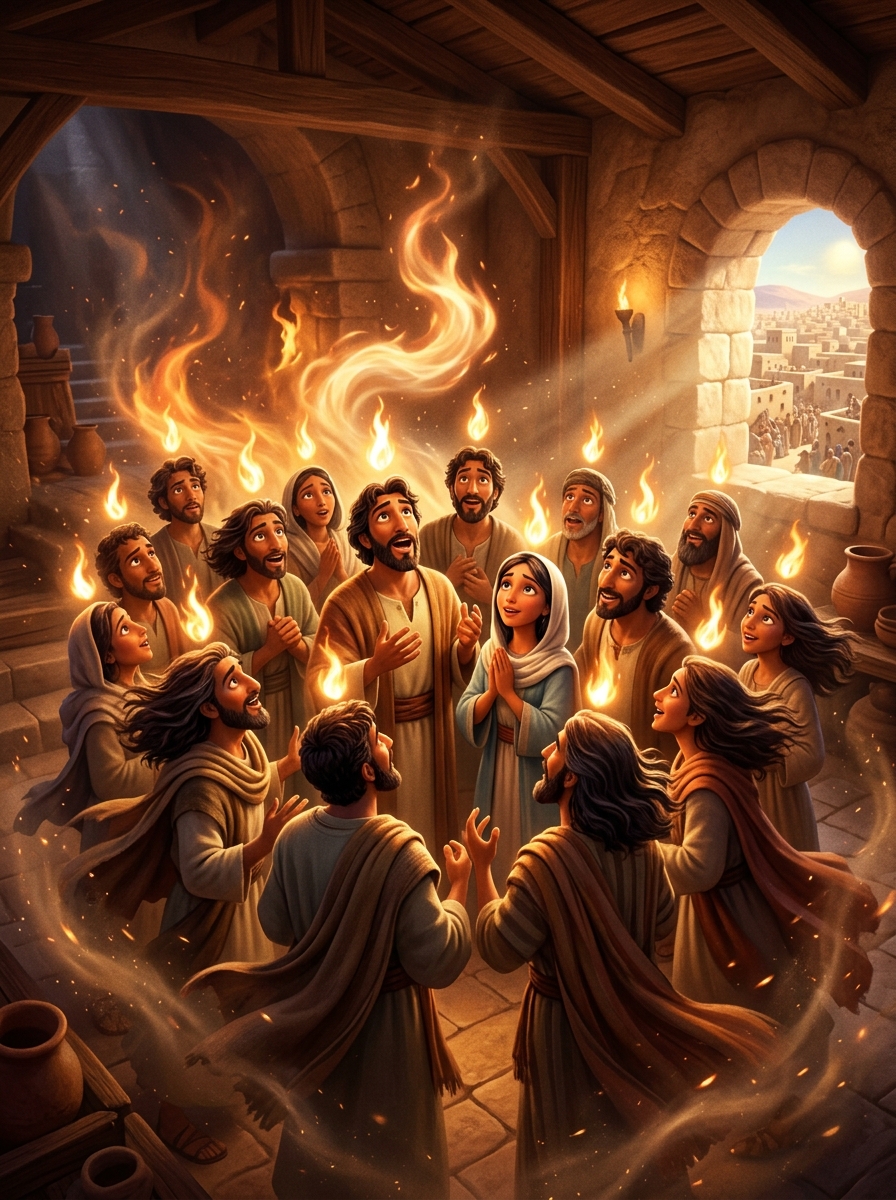
Acts 9 — Paul on the Road
Saul of Tarsus was breathing murderous threats against the disciples and traveling to Damascus to arrest followers of the Way. Suddenly a light blazed from heaven and knocked him to the ground. A voice: 'Saul, Saul, why are you persecuting me?' 'Who are you, Lord?' 'I am Jesus, whom you are persecuting.' He was blind for three days. A disciple named Ananias came and prayed for him. His sight was restored. Saul was baptized and immediately began preaching in the synagogues — and the same people who had sent him were now his targets.
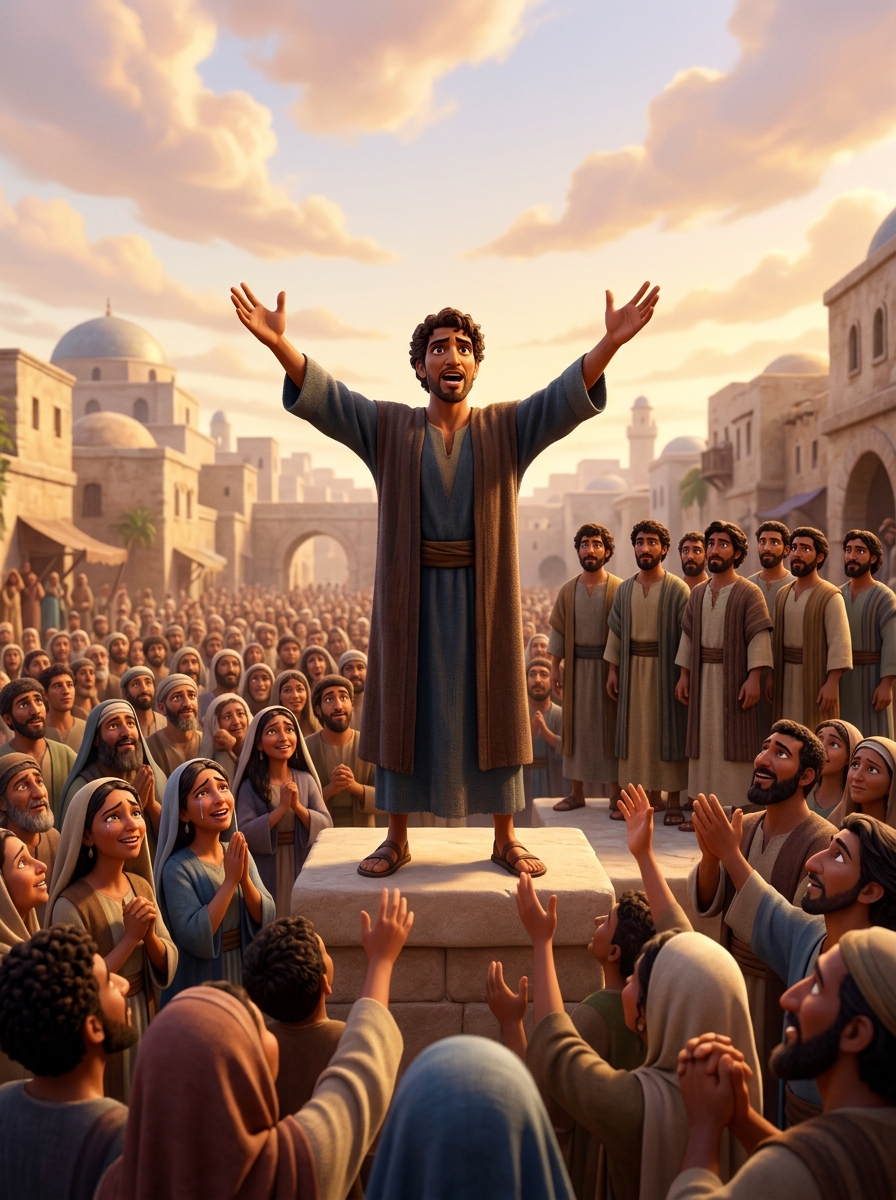
Acts 10 — Cornelius the Centurion
A Roman centurion named Cornelius, a devout man who prayed regularly, received a vision from an angel telling him to send for Peter. Meanwhile Peter had a vision too — a sheet full of animals declared clean that he'd always considered unclean. Three times he refused; three times he heard: 'Do not call anything impure that God has made clean.' The messengers arrived. Peter went, preached Christ to the whole Gentile household — and the Holy Spirit fell on everyone listening. Peter baptized them all. The gospel was breaking every barrier.
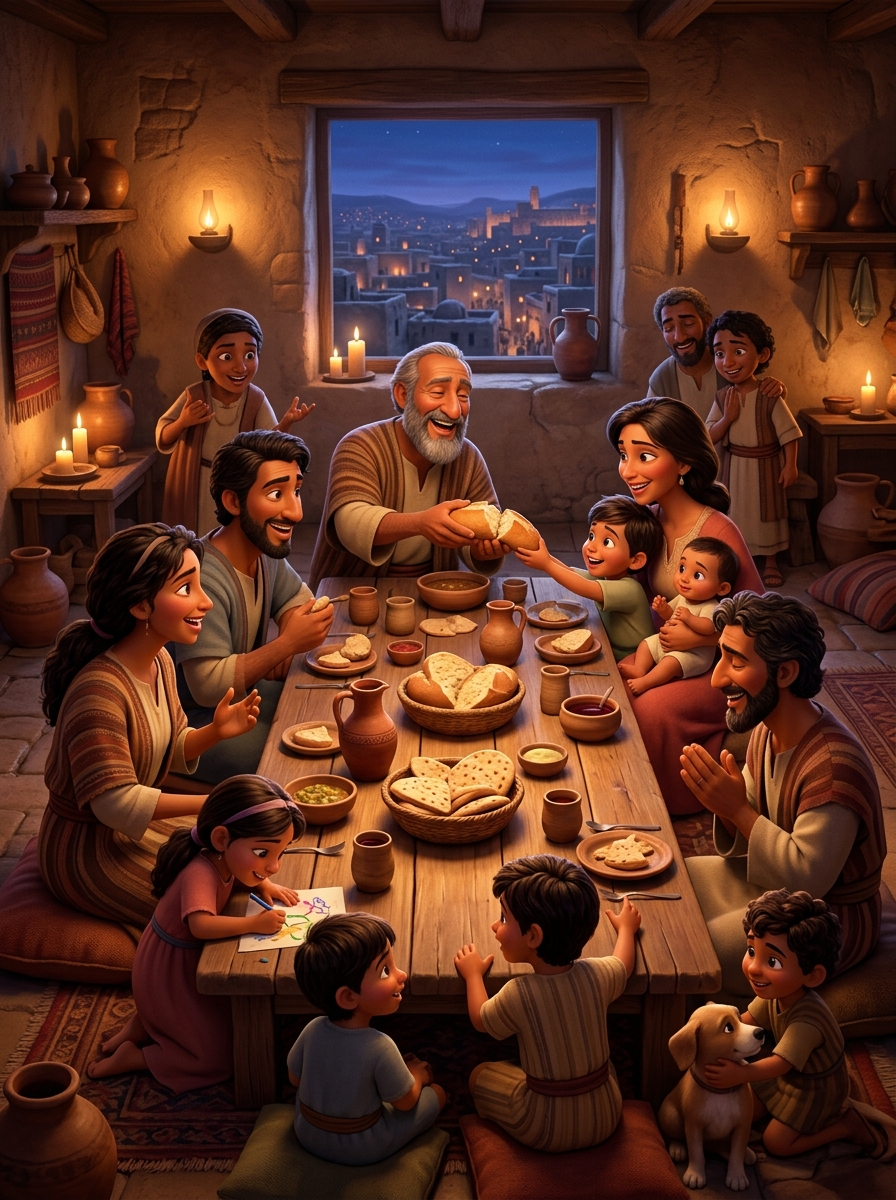
Acts 11–12 — Peter's Escape
Peter reported the Cornelius event to skeptical Jewish believers in Jerusalem. When he described the Spirit falling on the Gentiles, they were silenced and praised God: 'So then, even to Gentiles God has granted repentance that leads to life.' Meanwhile Herod arrested some believers and had James the brother of John put to death. He then imprisoned Peter, intending the same fate. The night before the trial, Peter was sleeping in chains — and an angel appeared, freed him, and led him out. He went to the believers praying for him and knocked on the door.
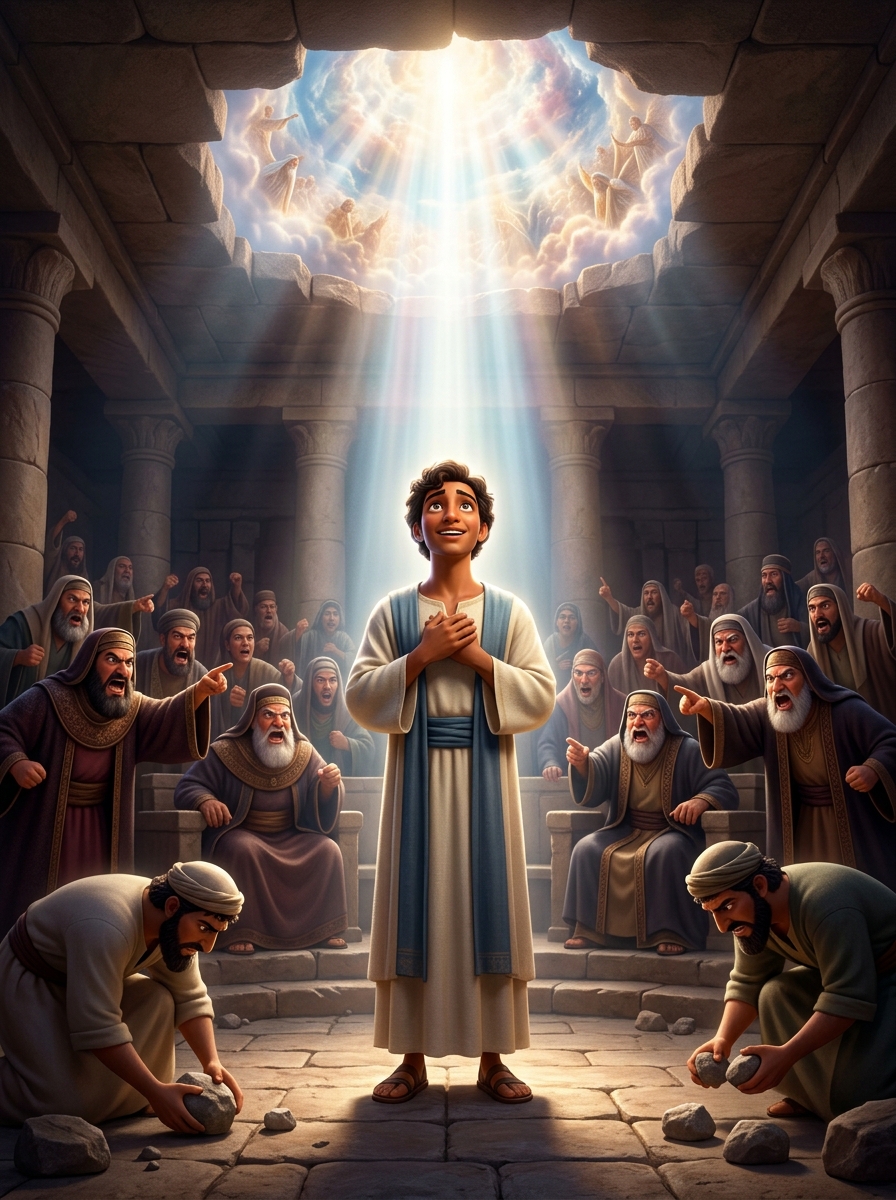
Acts 13–14 — First Missionary Journey
The Holy Spirit told the church at Antioch to set apart Barnabas and Saul for the work He had called them to. They sailed to Cyprus, then to what is now Turkey, preaching in synagogues and to Gentiles. In Pisidian Antioch Paul preached the good news of Jesus — crucified, buried, raised. When the Jews rejected the message, Paul declared: 'We now turn to the Gentiles.' In Lystra crowds tried to worship them as gods after a healing. Paul and Barnabas tore their clothes in horror: 'We are only human beings like you!'
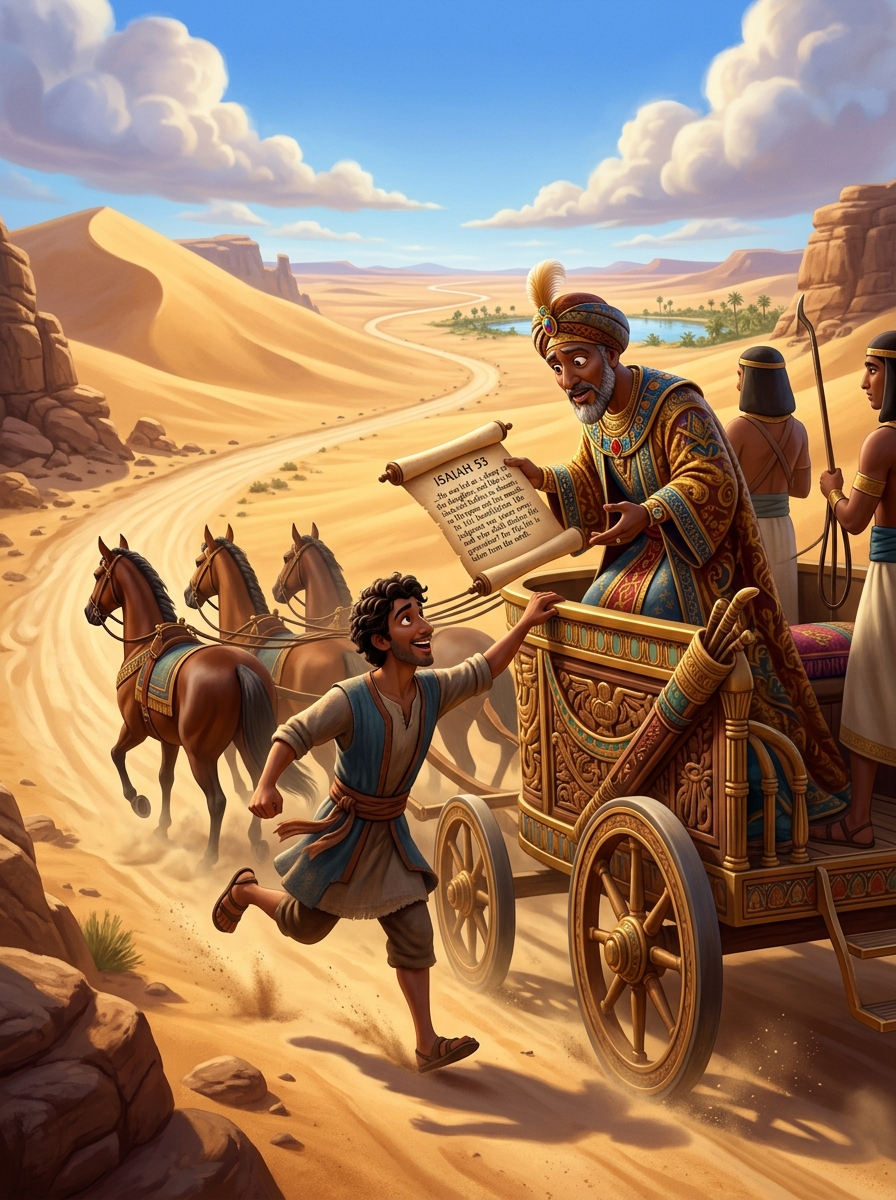
Acts 15 — The Jerusalem Council
A controversy shook the early church: some believers from Judea taught that Gentiles had to be circumcised and follow the Law of Moses to be saved. Paul and Barnabas went to Jerusalem to settle the question. After much debate, Peter stood: 'God showed no distinction between us and them, purifying their hearts by faith. Why do we put a yoke on their necks that we ourselves couldn't bear? We believe it is through the grace of the Lord Jesus that we are saved — just as they are.' The council sent a letter of freedom to the Gentile churches.
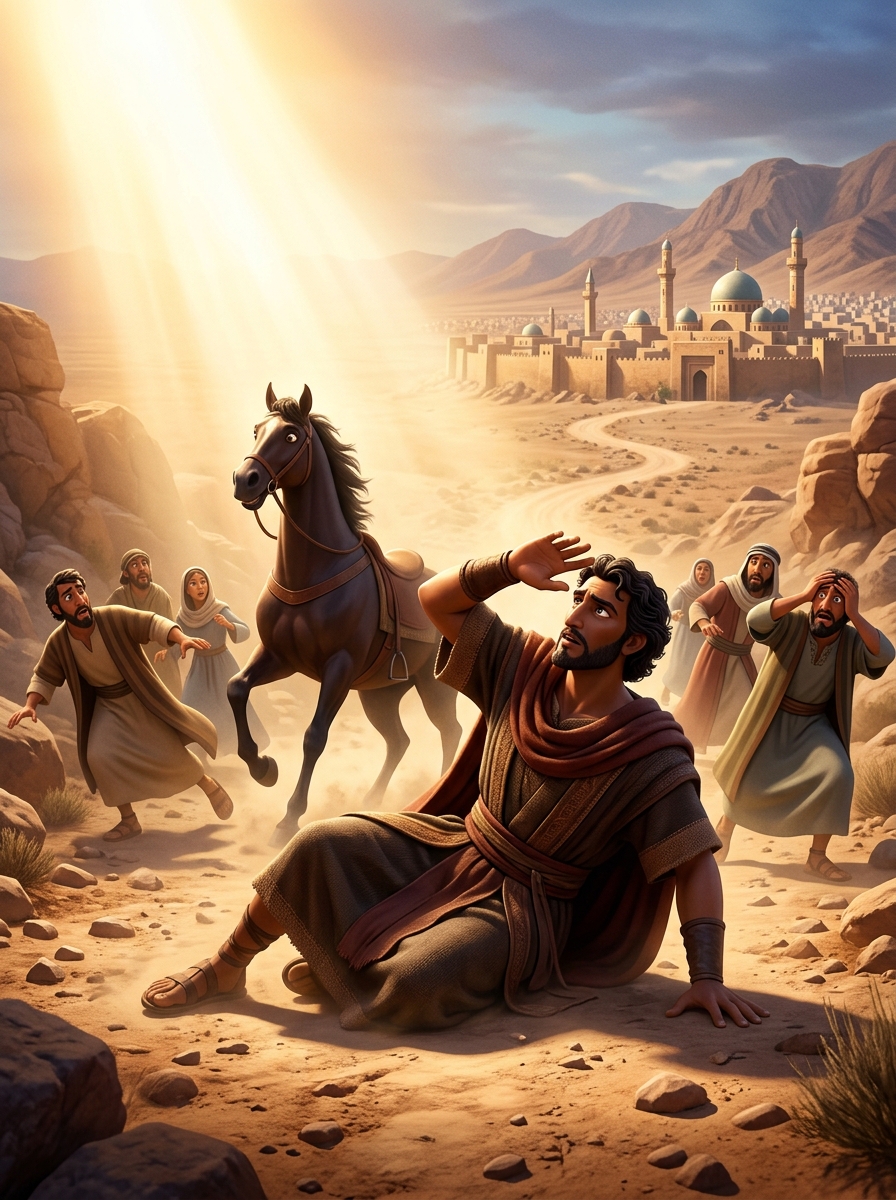
Acts 16 — Lydia and the Jailer
Paul received a vision of a Macedonian man calling: 'Come over and help us!' They crossed to Europe for the first time. In Philippi they met Lydia, a seller of purple cloth. She and her household were baptized — the first European converts. Paul cast a spirit out of a slave girl — and her owners had Paul and Silas arrested, beaten, and thrown in prison. At midnight Paul and Silas prayed and sang hymns. An earthquake shook the prison open. The jailer was about to kill himself. 'Don't — we are all here!' 'What must I do to be saved?' 'Believe in the Lord Jesus.'
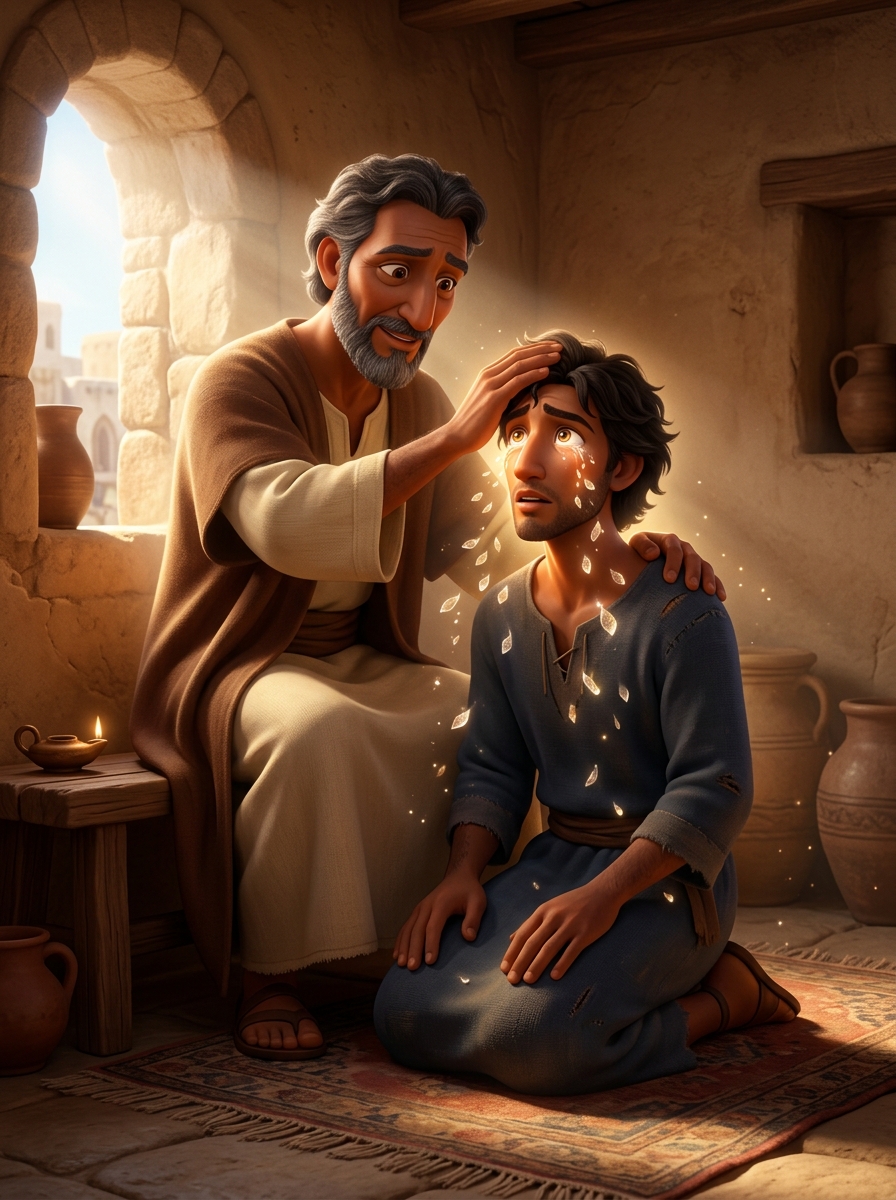
Acts 17 — Athens and the Unknown God
In Thessalonica and Berea, Paul preached in synagogues and many believed. Opponents drove him on. In Athens, Paul's spirit was provoked by the idols everywhere. He debated in the marketplace and was invited to speak at the Areopagus — Athens' intellectual forum. 'People of Athens! I see you are religious. I even found an altar inscribed: To An Unknown God. I am going to tell you about him.' He declared God as creator and Lord, who commands all people to repent, because He has set a day when the world will be judged by a man He raised from the dead.
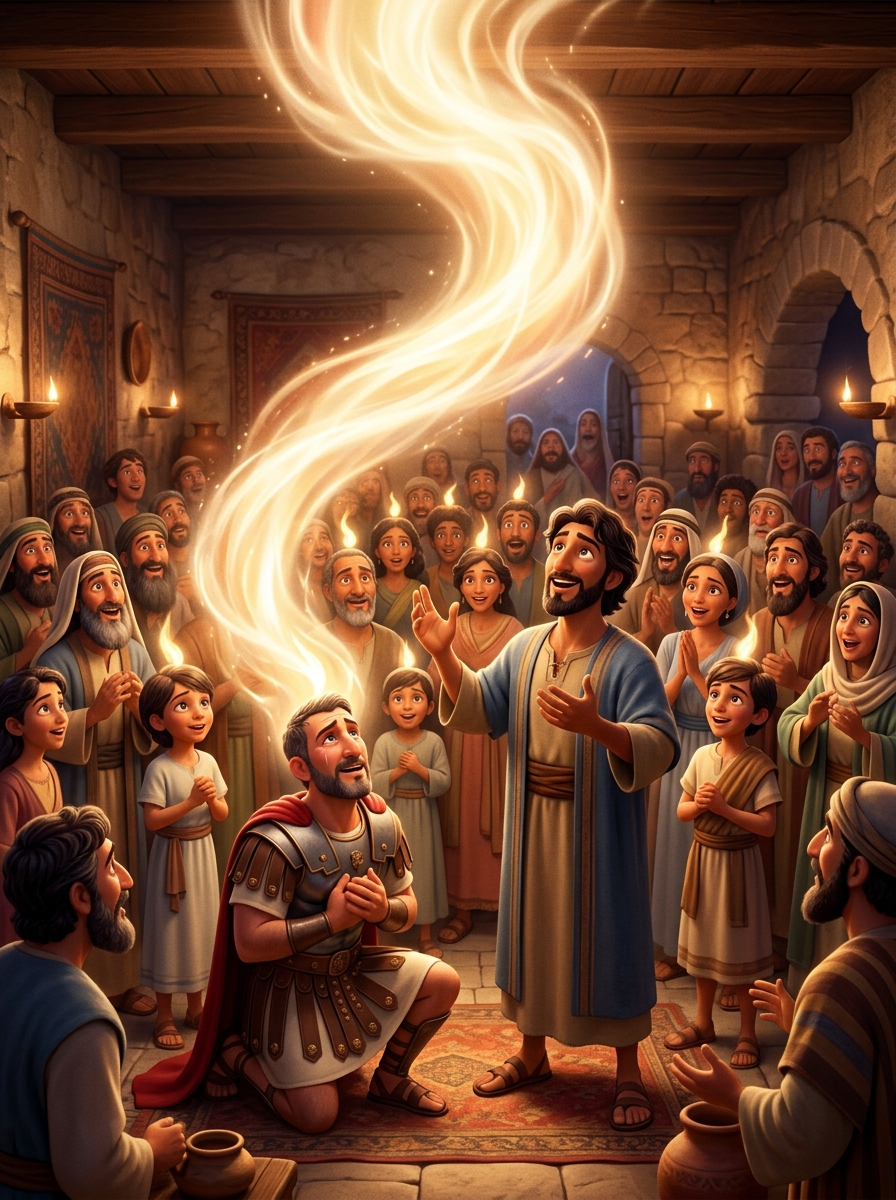
Acts 18–20 — Third Journey
Paul spent eighteen months in Corinth, then continued his journeys through Asia Minor. He worked as a tentmaker with Priscilla and Aquila. In Ephesus he taught in the school of Tyrannus for two years until all of Asia heard the word. Extraordinary miracles happened through Paul. The silversmiths who made idols of Artemis rioted — their trade was being destroyed by the gospel. In Troas Paul preached until midnight; a young man fell asleep on a window ledge and fell out. Paul went down, threw his arms around him: 'He's alive.'
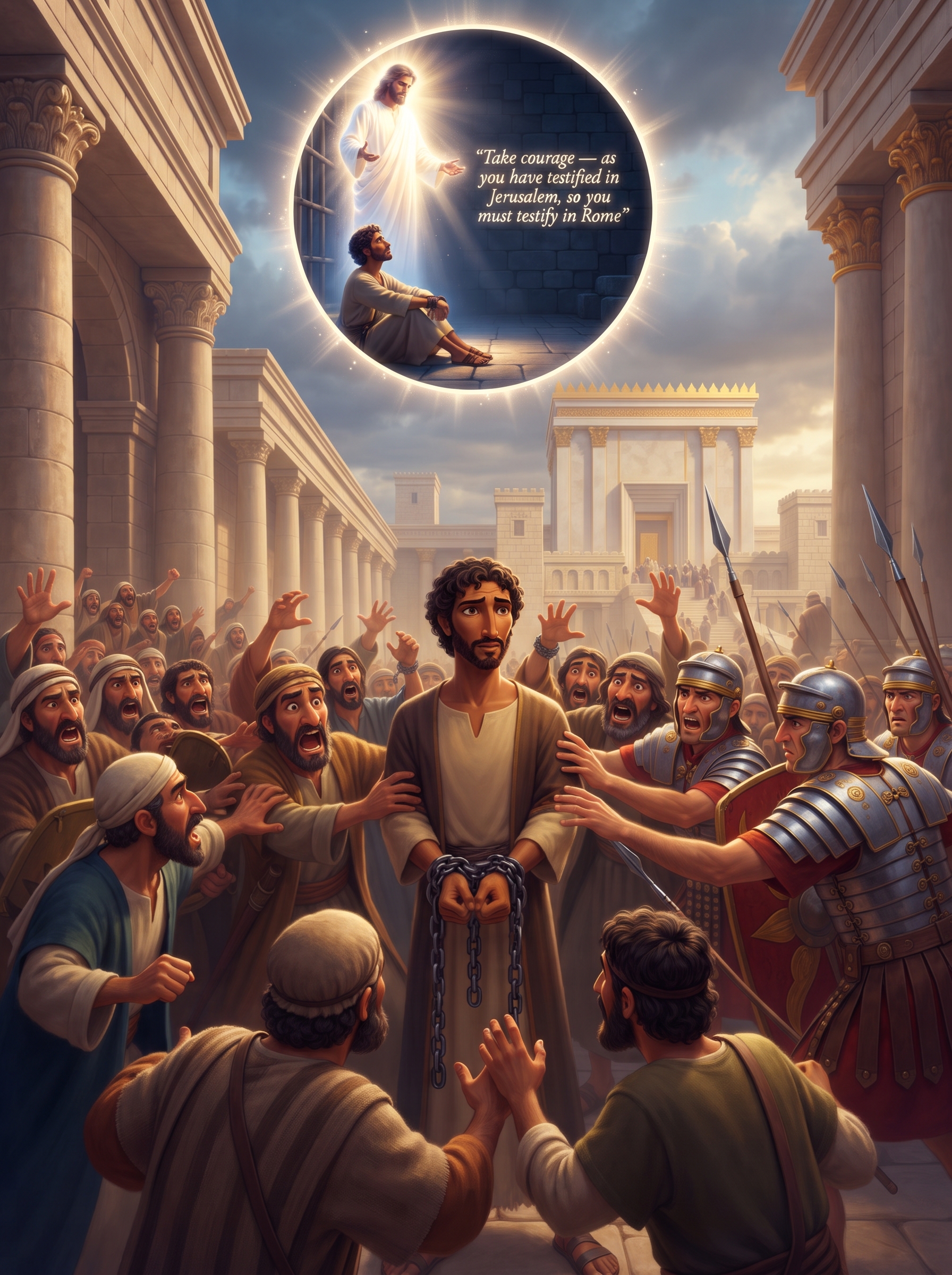
Acts 21–23 — Paul Arrested
Paul arrived in Jerusalem and was seized by a mob in the Temple. Roman soldiers arrested him to prevent his being killed. He asked to address the crowd in Hebrew — they listened as he described his conversion, then erupted again. He was taken to the barracks. The commander ordered him flogged, until Paul revealed his Roman citizenship — and the flogging stopped. Before the Sanhedrin he divided the Pharisees and Sadducees. That night the Lord stood beside him: 'Take courage! As you have testified in Jerusalem, so you must also testify in Rome.'
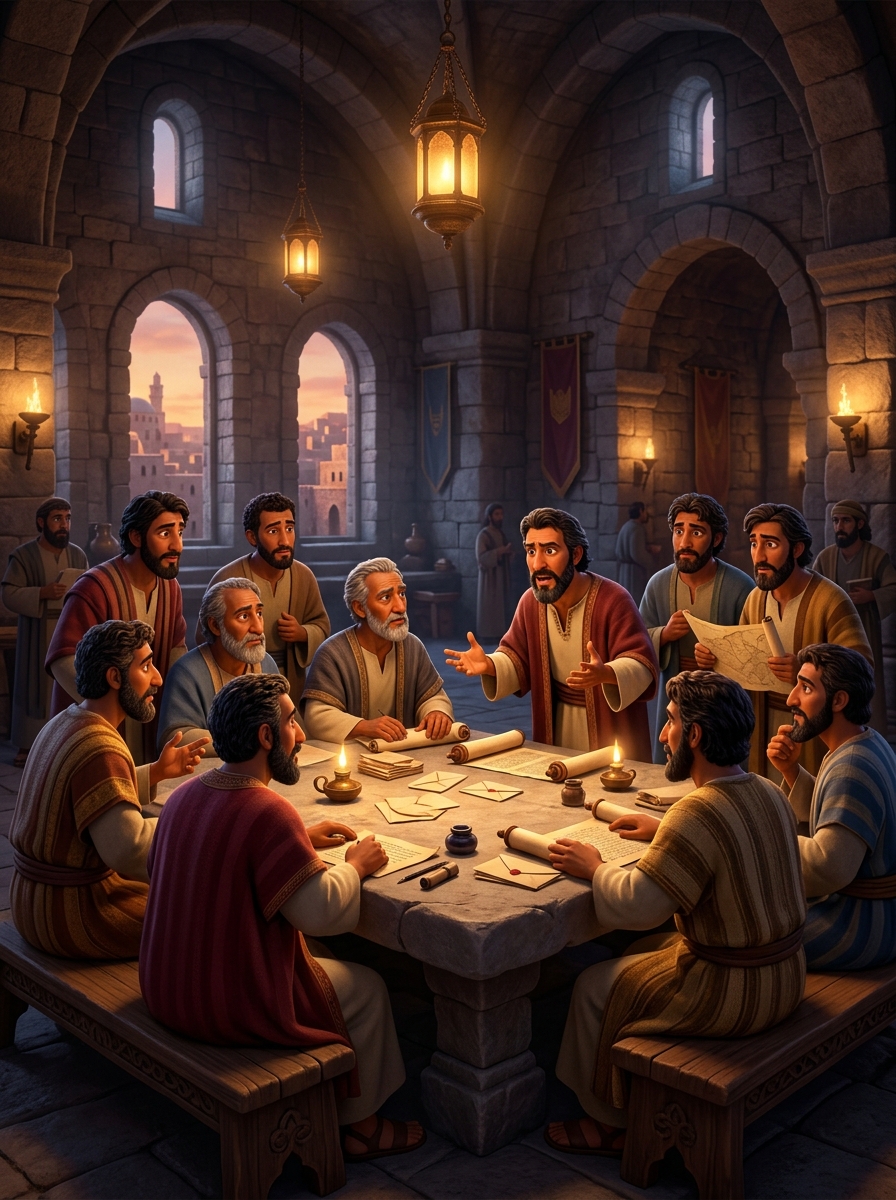
Acts 24–26 — Before Governors and Kings
Paul was kept under guard in Caesarea for two years, appearing before Felix and then Festus. When Festus suggested Paul go to Jerusalem for trial, Paul appealed to Caesar — as a Roman citizen, he had that right. King Agrippa came to hear Paul. Paul told his whole story: his persecution of Christians, his Damascus road encounter, his call to turn the Gentiles from darkness to light. Agrippa interrupted: 'Do you think in such a short time you can persuade me to be a Christian?' Paul said he wished everyone present could be what he was — except for the chains.
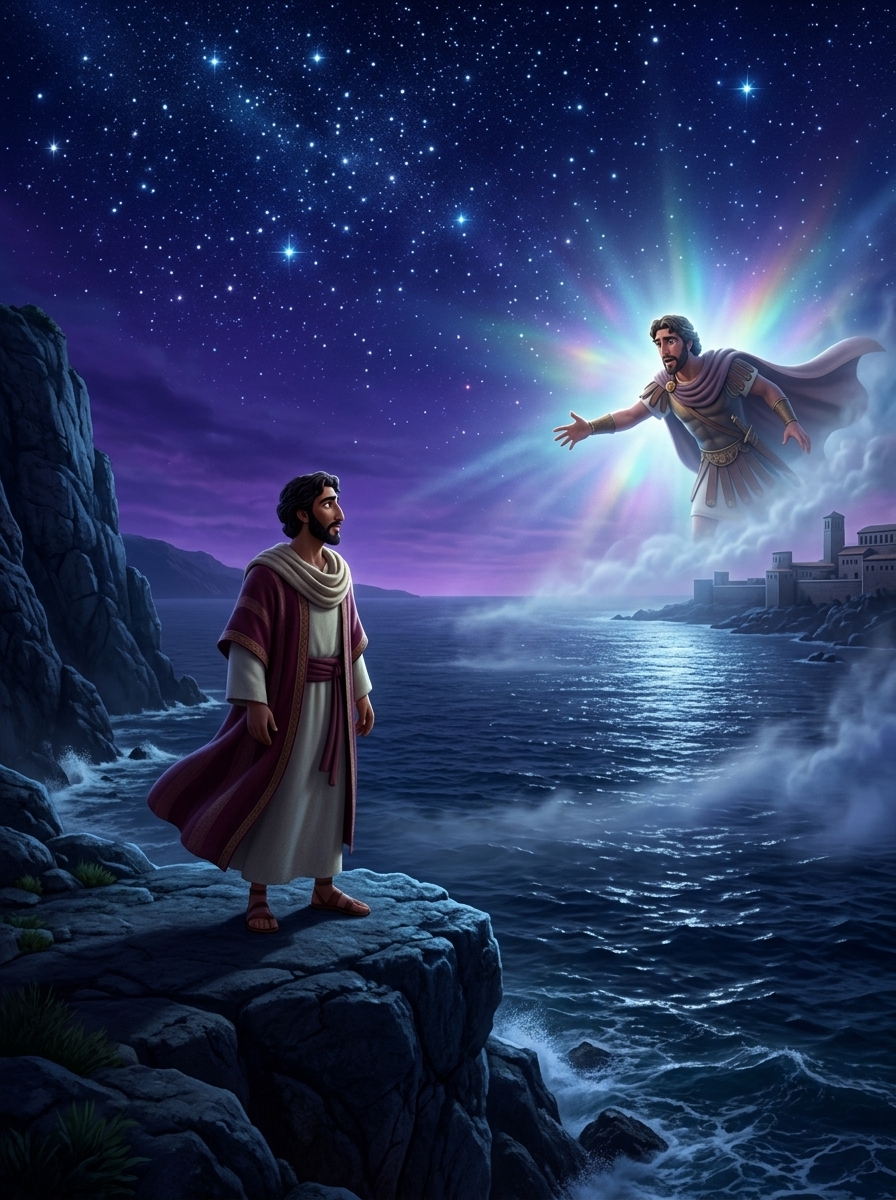
Acts 27–28 — Shipwreck and Rome
Paul sailed for Rome under guard. A violent storm hit and the ship was driven for fourteen days. Paul urged the crew not to lose hope — an angel had told him he would stand before Caesar, and all aboard would survive. The ship ran aground on Malta. Everyone escaped safely. On Malta a viper bit Paul — and nothing happened. The islanders said he must be a god. After three months they sailed on. Paul arrived in Rome and was permitted to live in his own rented house, welcoming all who came — proclaiming the kingdom of God with great boldness, unhindered.
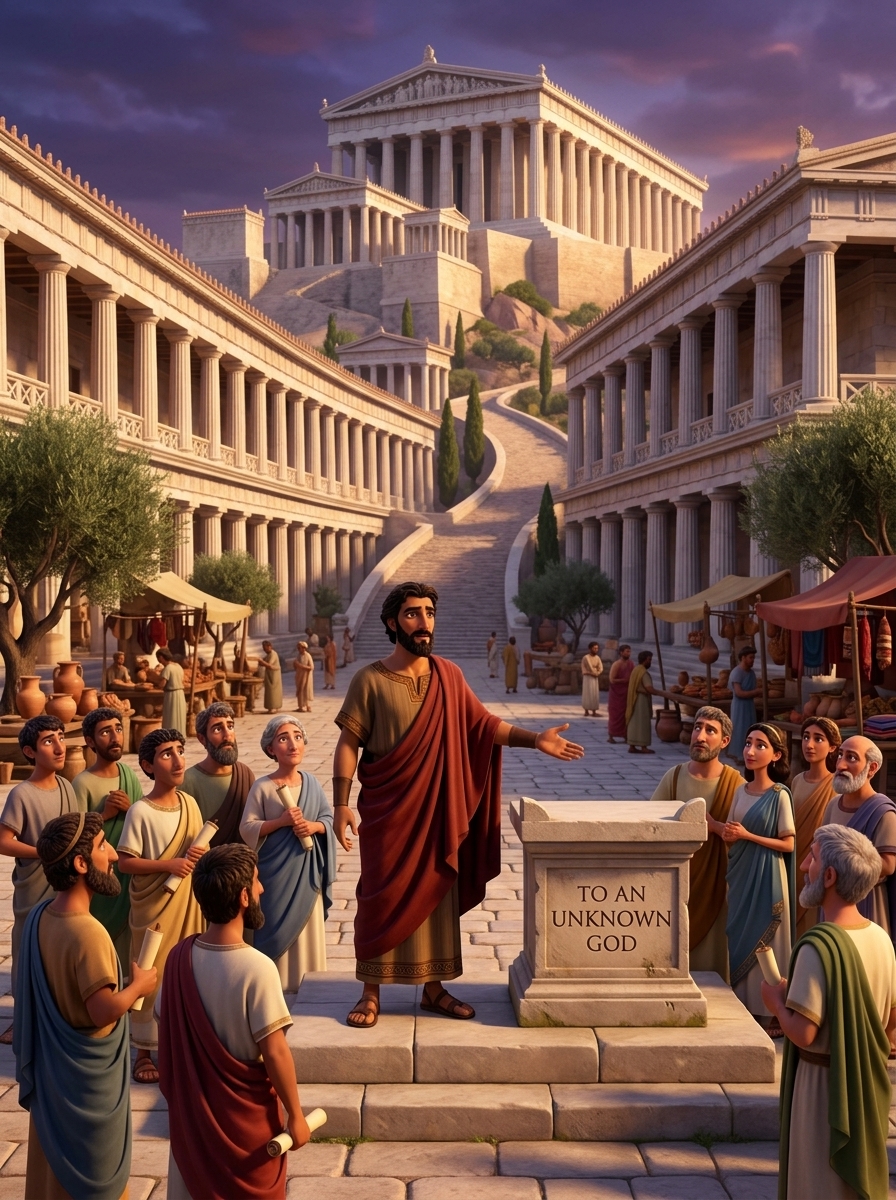
Romans — Introduction
Paul's letter to Rome is the most systematic presentation of the gospel ever written — sin, justification, sanctification, and God's purpose for Israel and the Gentiles, all woven together with breathtaking logic and passion. Written to a church Paul hadn't yet visited, it lays the theological foundation for everything: we are all under sin, justified freely by grace through faith in Christ, and called to live transformed lives as living sacrifices.
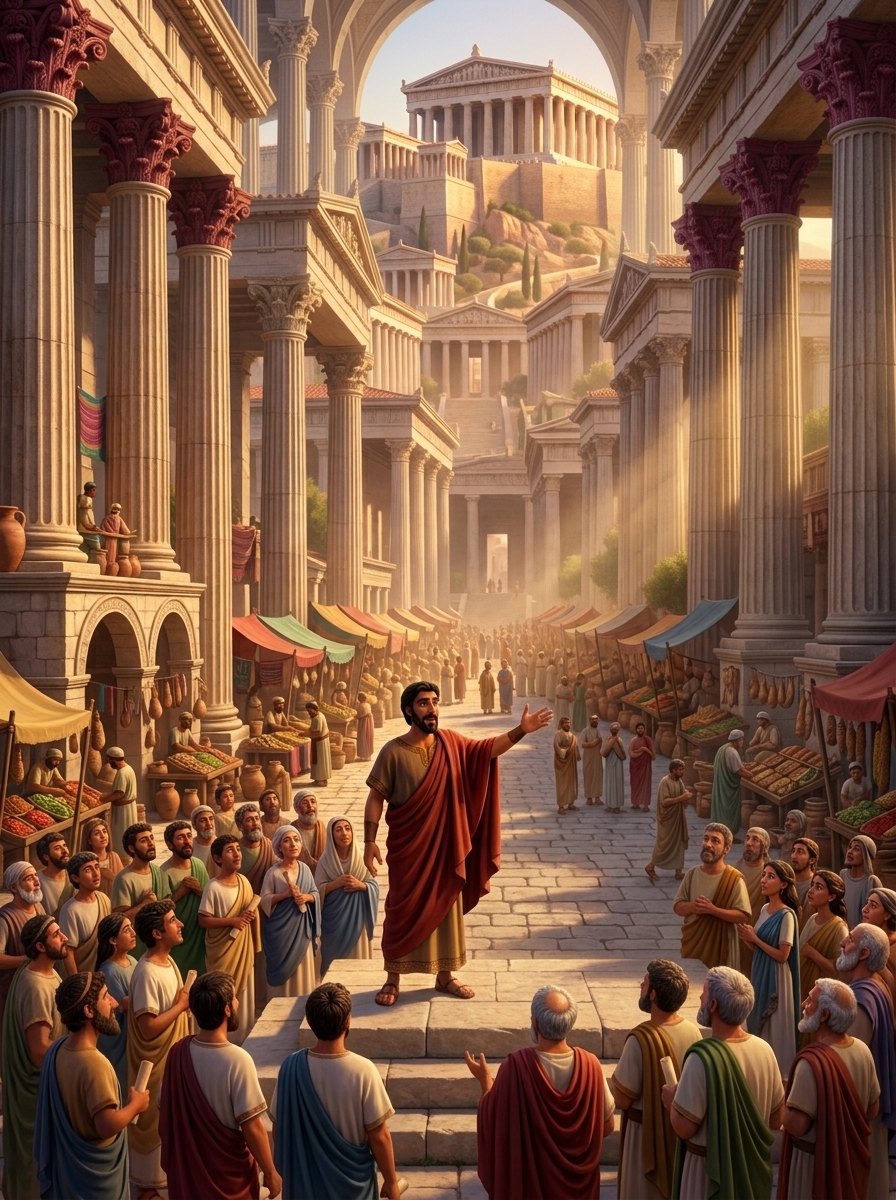
Romans 1–3 — All Have Sinned
Paul declared he was not ashamed of the gospel — it is the power of God for salvation to everyone who believes. He then demonstrated that all of humanity stands under the wrath of God: Gentiles who rejected the Creator revealed in creation; Jews who had the Law but broke it. Jew and Gentile, moral and immoral — all have sinned. 'There is no one righteous, not even one. All have turned away.' But this darkness sets the stage for the blazing light of grace.
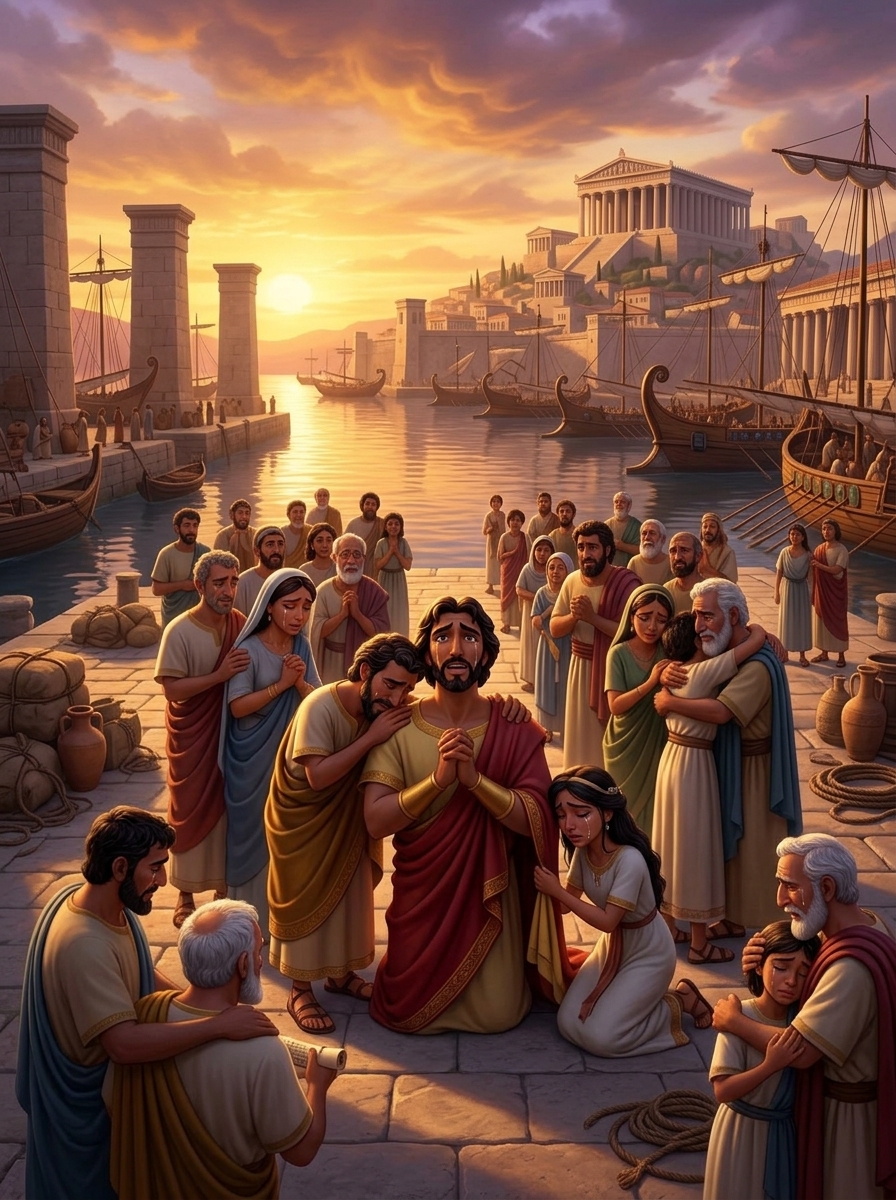
Romans 3–5 — Justified by Faith
But now — apart from the law — the righteousness of God has been made known. All who believe are justified freely by grace through the redemption that is in Christ Jesus. Abraham believed God and it was credited to him as righteousness — before circumcision, before the Law. Therefore since we have been justified through faith, we have peace with God through our Lord Jesus Christ. And not only that, we also rejoice in our sufferings, because suffering produces perseverance, character, and hope.
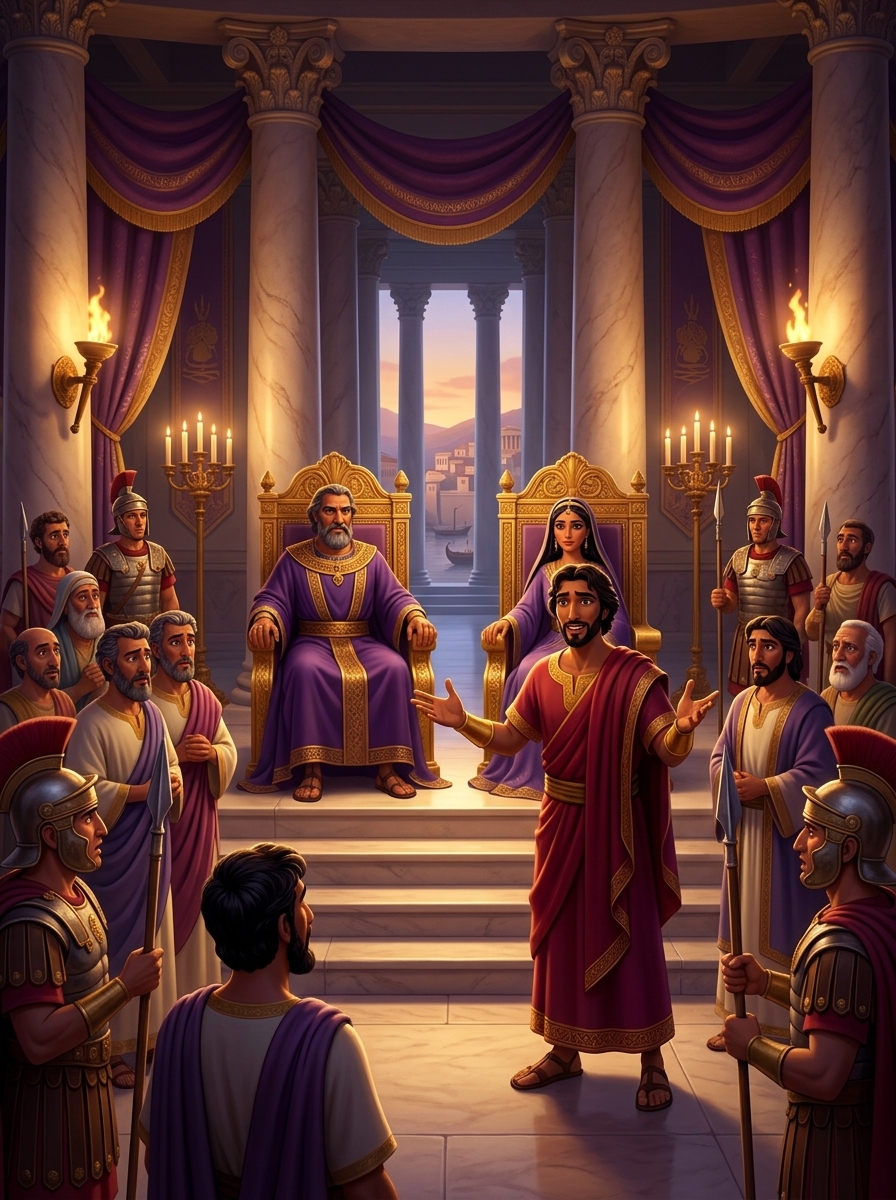
Romans 6–8 — Life in the Spirit
Shall we go on sinning so that grace may increase? By no means! We died to sin — how can we live in it any longer? We were buried with Christ and raised to new life. The wages of sin is death — but the gift of God is eternal life in Christ Jesus. There is now no condemnation for those who are in Christ Jesus. The Spirit of God who raised Jesus from the dead lives in us. And those He predestined, He called. Those He called, He justified. Those He justified, He glorified.
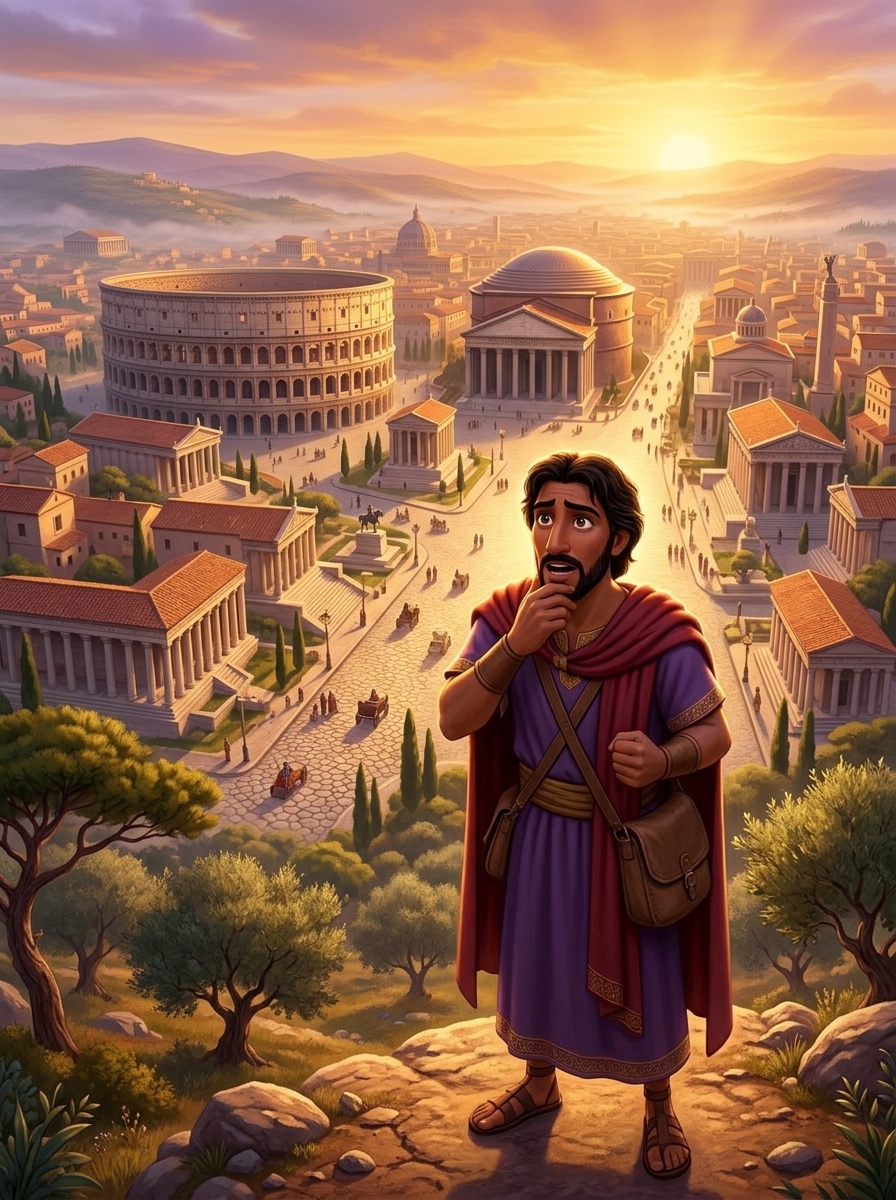
Romans 8–16 — Nothing Can Separate
Who shall separate us from the love of Christ? Trouble, hardship, persecution, famine, danger, sword? No — in all these things we are more than conquerors through Him who loved us. I am convinced that neither death nor life, neither angels nor demons, neither height nor depth, nor anything else in all creation, will be able to separate us from the love of God that is in Christ Jesus our Lord. Paul urged them to be living sacrifices — transformed minds, humble spirits, genuine love, abounding in hope.
1 Corinthians — Introduction
Paul wrote to a brilliant but troubled church in Corinth — the most cosmopolitan city in Greece. They were divided into factions, tolerating serious sin, suing each other in court, abusing the Lord's Supper, arguing about spiritual gifts, and confused about the resurrection. His letter calls them back to the cross as their only foundation: 'For I resolved to know nothing while I was with you except Jesus Christ and him crucified.'
1 Corinthians 1–6 — The Foolishness of the Cross
Paul pleaded with the Corinthians to stop dividing over personalities — 'I follow Paul,' 'I follow Apollos.' Christ is not divided. The message of the cross is foolishness to those who are perishing — but to us who are being saved, it is the power of God. God chose the foolish things to shame the wise. Paul told them a disturbing case of sexual sin was going unchecked and they were proud of themselves. He called them to judge sin within the community and to flee from sexual immorality.
1 Corinthians 7–11 — Order in the Church
Paul addressed questions the Corinthians had sent him: about marriage and celibacy, about food offered to idols, about women and head coverings in worship, about the Lord's Supper being abused. Knowledge puffs up, but love builds up. Be careful that your freedom doesn't become a stumbling block to the weak. Run in such a way as to get the prize. Discipline your body and keep it under control — so that after preaching to others you yourself will not be disqualified.
1 Corinthians 12–13 — The Body and Love
There are different gifts but the same Spirit. Just as a body has many parts — eye, ear, hand, foot — so it is with the body of Christ. Each part is needed; no part can say to another: 'I don't need you.' God arranged the parts as He wanted, placing each one. And yet Paul showed a more excellent way: If I speak in the tongues of men and angels but have not love, I am only a clanging cymbal. Love is patient, love is kind. Love never fails.
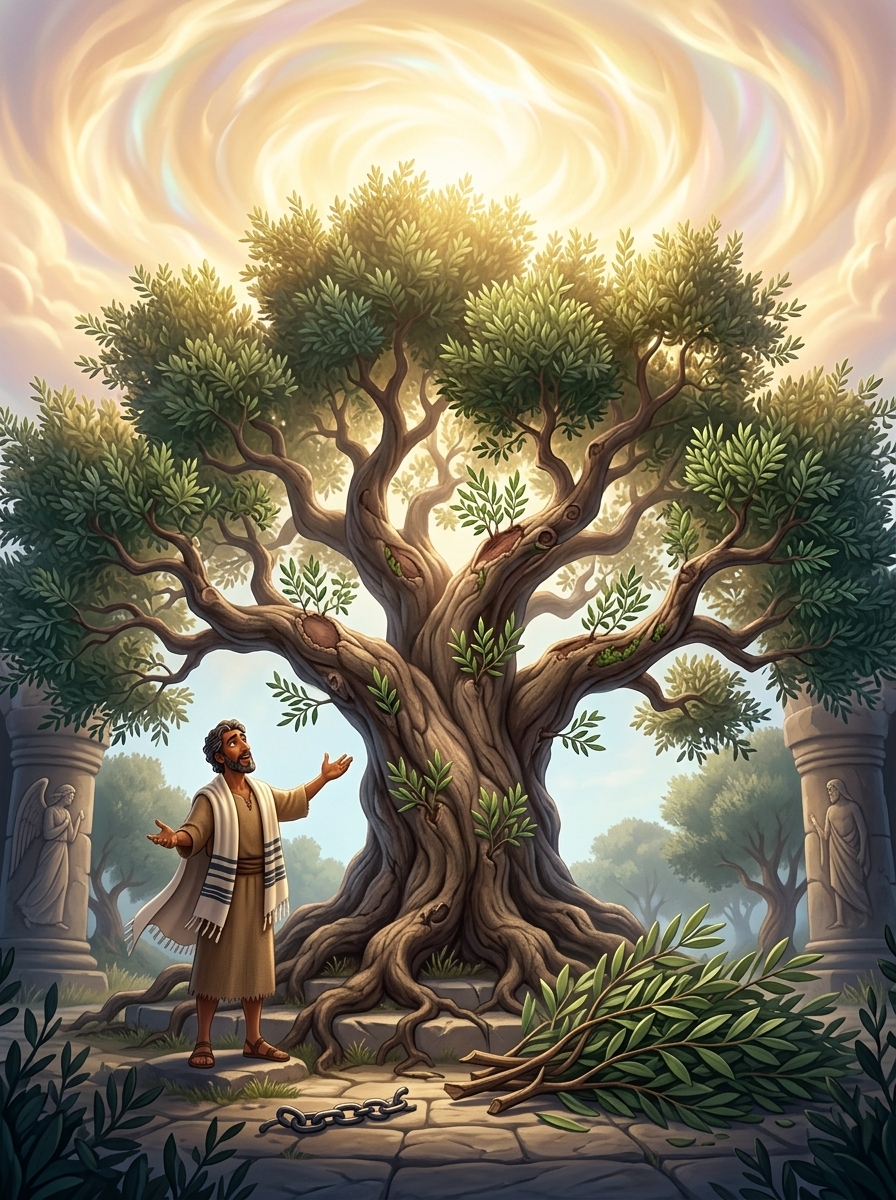
1 Corinthians 14–16 — The Resurrection
Paul urged that prophecy — building up the church — is greater than uninterpreted tongues. Everything should be done decently and in order. Then he came to the heart of everything: If Christ has not been raised, your faith is futile and you are still in your sins. But Christ has indeed been raised — the firstfruits of those who have fallen asleep. Death is swallowed up in victory. Where, O death, is your sting? Thanks be to God who gives us the victory through our Lord Jesus Christ.
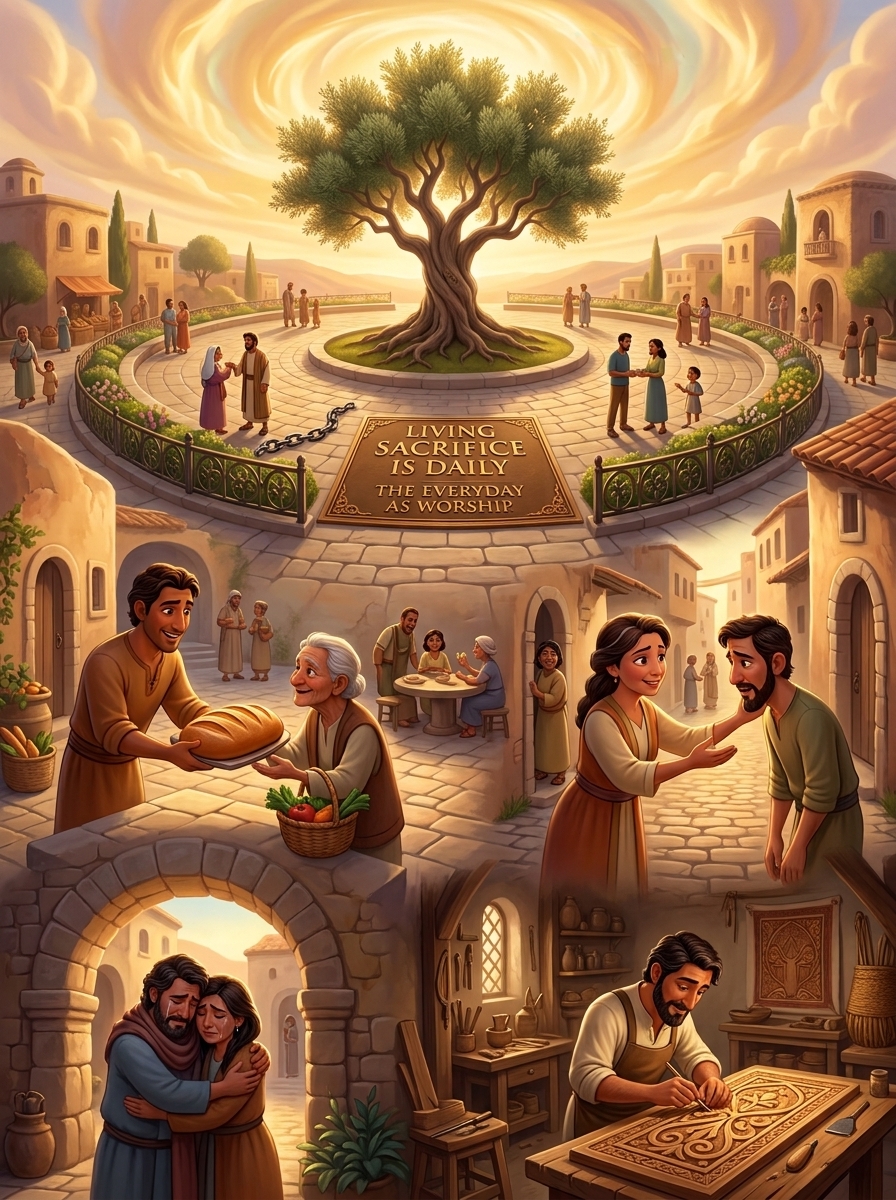
2 Corinthians — Introduction
Paul's most personal letter — raw, passionate, and vulnerable. He had been through tremendous suffering: beatings, shipwrecks, a thorn in the flesh. He had been deeply hurt by the Corinthians and was fighting for their trust. He defended his ministry against false apostles and opened his heart: 'We are hard pressed on every side, but not crushed. Perplexed, but not in despair. Struck down, but not destroyed. We always carry around in our body the death of Jesus — so that the life of Jesus may be revealed.'
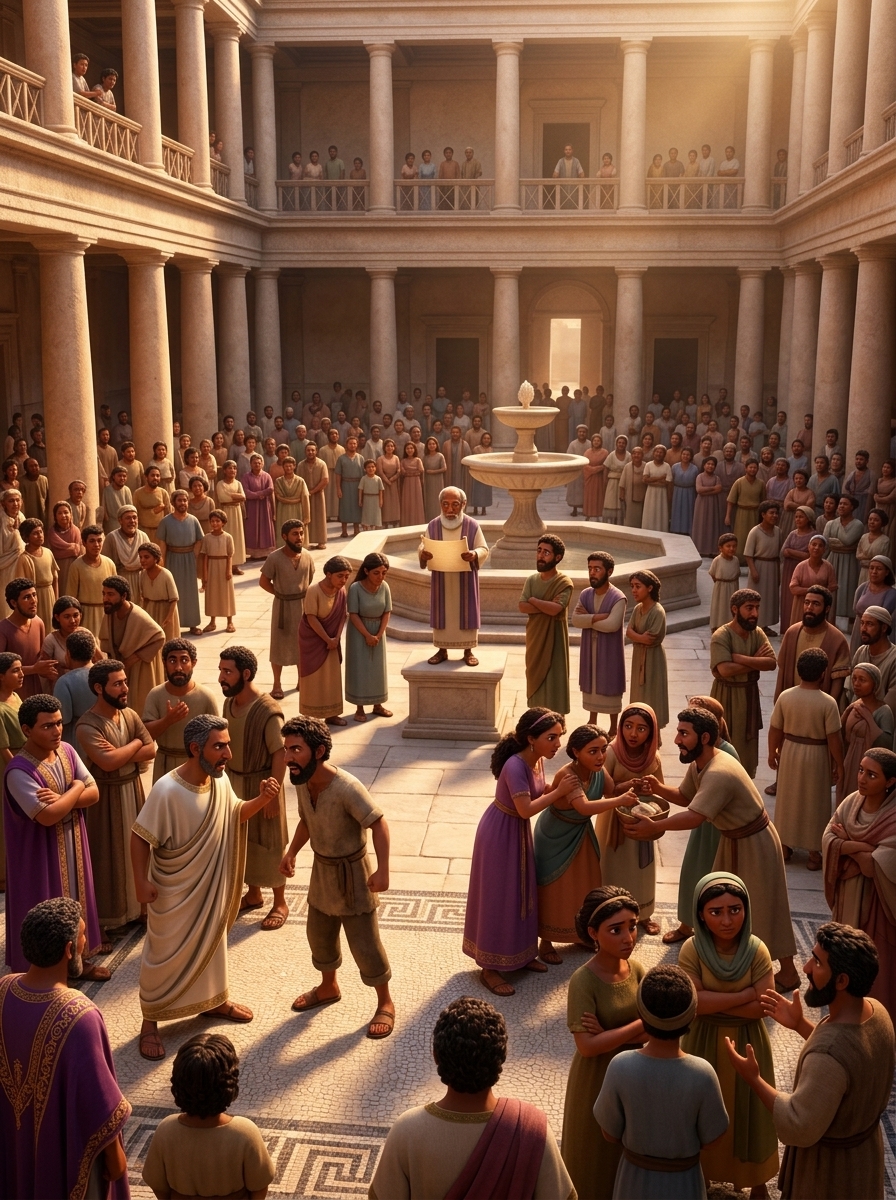
2 Corinthians 1–5 — New Creation
Paul wrote of the God who comforts us in all our troubles — so that we can comfort others. He described the ministry of the new covenant, which is far more glorious than the old. We are jars of clay — fragile, ordinary — holding an extraordinary treasure so that the power clearly belongs to God. For we know that if this earthly tent is destroyed, we have an eternal building from God. Anyone who is in Christ is a new creation — the old is gone and the new has come!
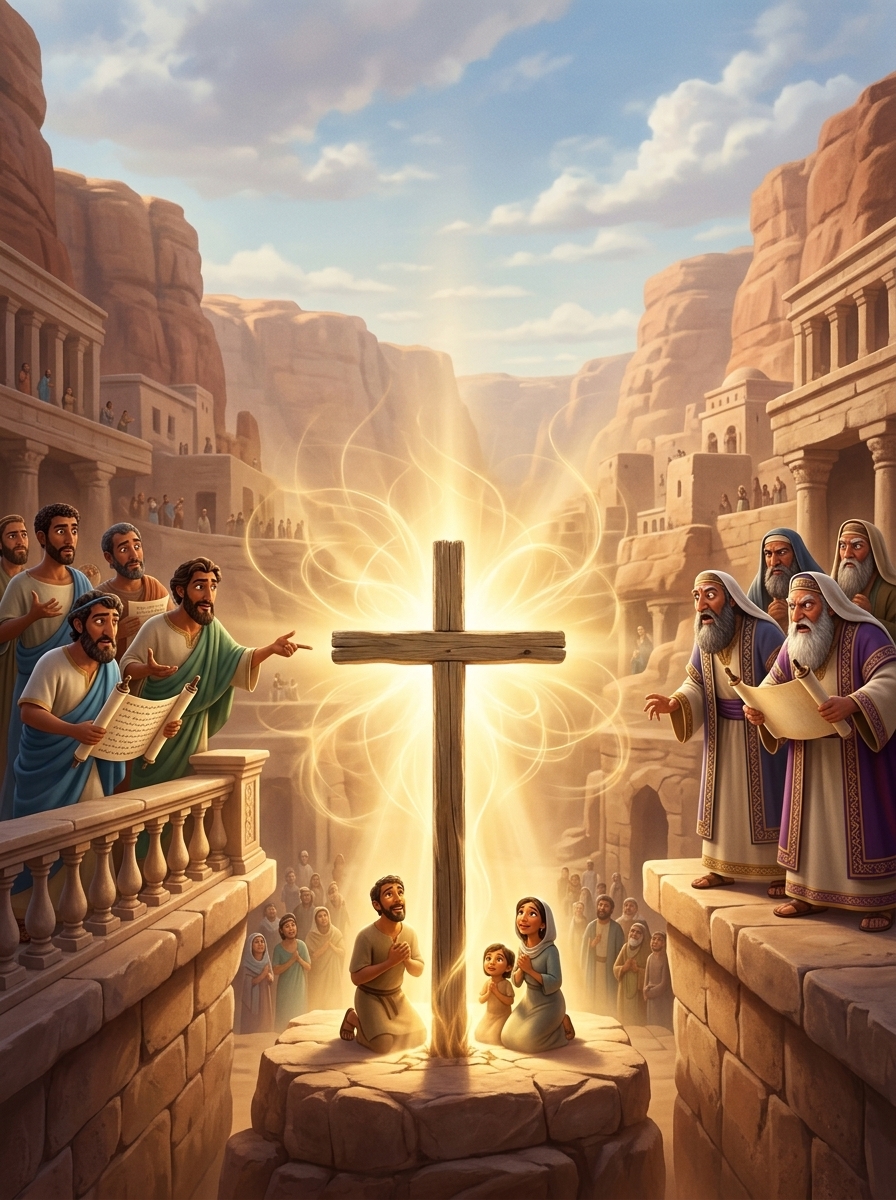
2 Corinthians 6–9 — Generous Giving
Paul urged the Corinthians to be reconciled to God and to open wide their hearts to him. He described his own hardships — beatings, imprisonments, sleepless nights, hunger — and yet his joy. He encouraged them to complete the collection for the struggling believers in Jerusalem. Whoever sows sparingly will also reap sparingly, and whoever sows generously will also reap generously. God loves a cheerful giver. His grace is sufficient. His power is made perfect in weakness.
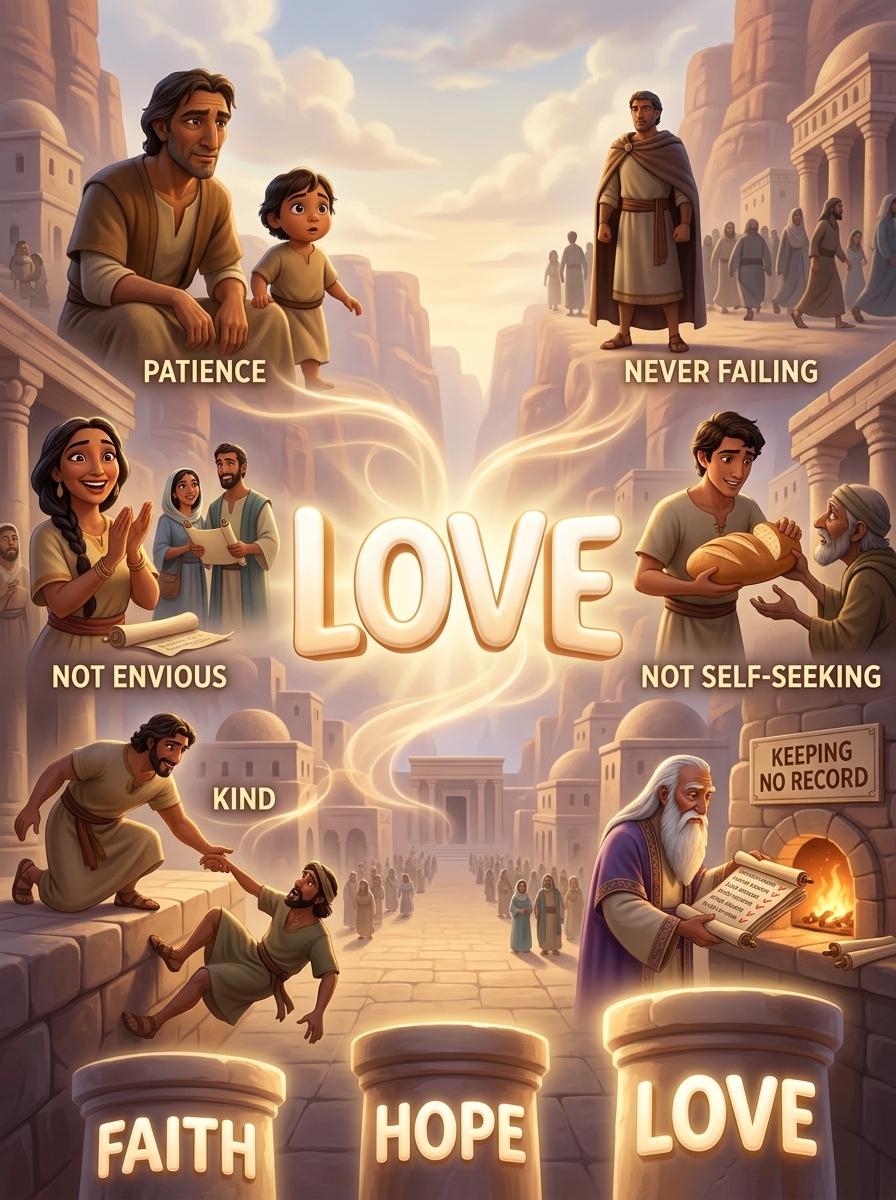
2 Corinthians 10–13 — Strength in Weakness
Paul confronted those who belittled him as impressive in letters but weak in person. He reluctantly listed his credentials — five times lashed, three times beaten with rods, three times shipwrecked — but he boasted in his weaknesses. He described a vision of paradise he wasn't able to speak of. He was given a thorn in the flesh to keep him humble. He pleaded with God to remove it. God's answer: 'My grace is sufficient for you, for my power is made perfect in weakness.' So Paul boasted gladly in his weaknesses.
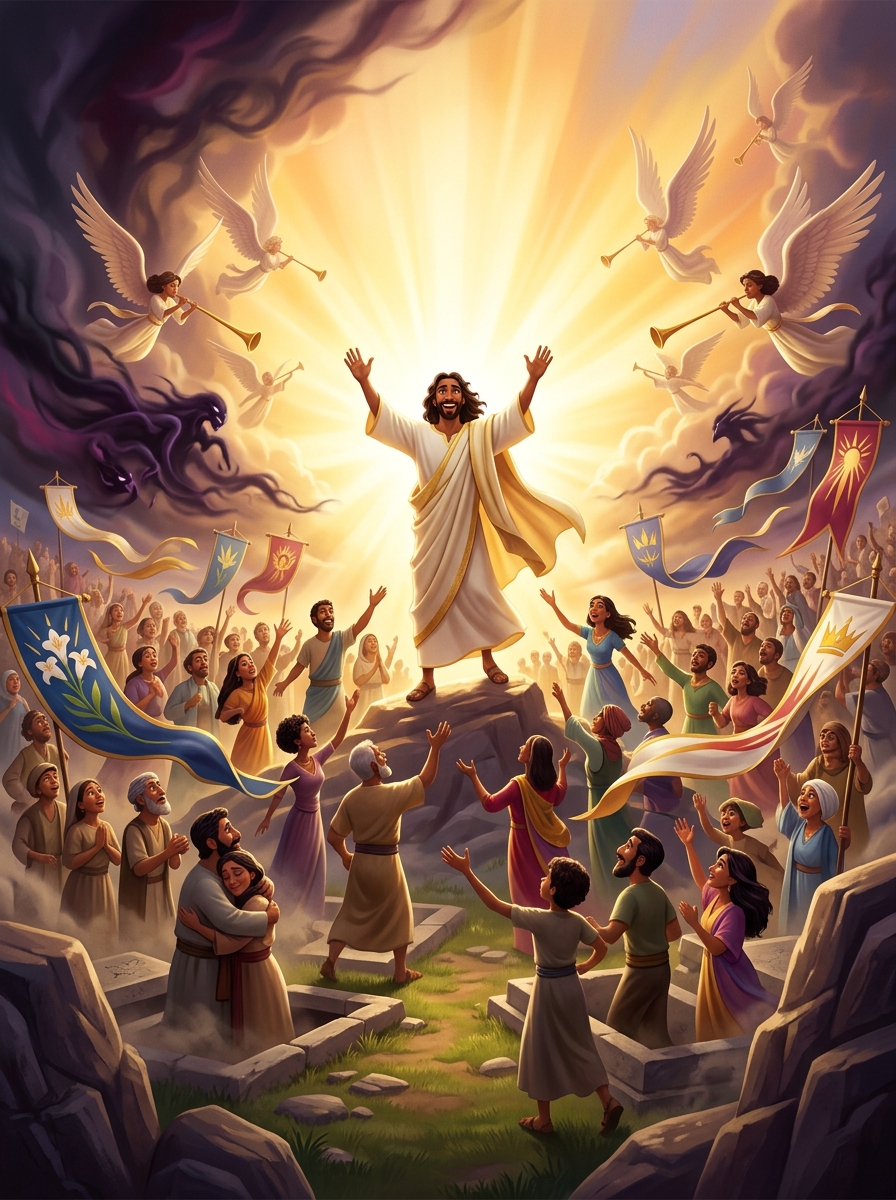
Galatians — Introduction
Paul was furious. The churches of Galatia, which he had planted, were abandoning the gospel of grace for a gospel of works — being told they must be circumcised and follow the Law of Moses to be truly saved. He opened with no greeting, just astonishment: 'I am astonished that you are so quickly deserting the one who called you by the grace of Christ and are turning to a different gospel.' His letter is a passionate defense of justification by faith alone.
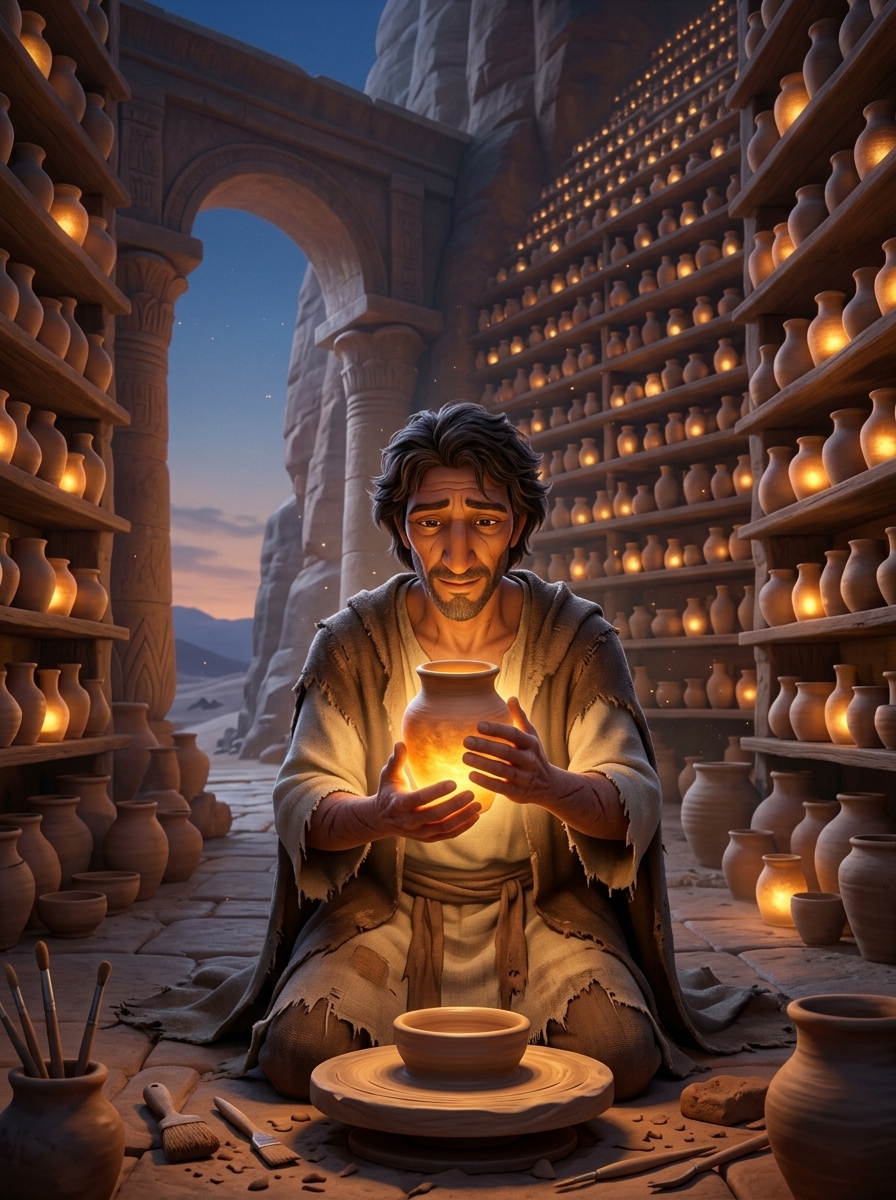
Galatians 1–3 — Faith, Not Works
Paul declared he had received his gospel not from men but directly from Jesus Christ. He publicly opposed Peter when Peter withdrew from eating with Gentiles for fear of Jewish believers. 'We know that a person is not justified by works of the Law but through faith in Jesus Christ.' He appealed to Abraham: he believed God, and it was credited to him as righteousness — before any Law existed. The Law was our guardian until Christ came. Now we are all children of God through faith in Christ.
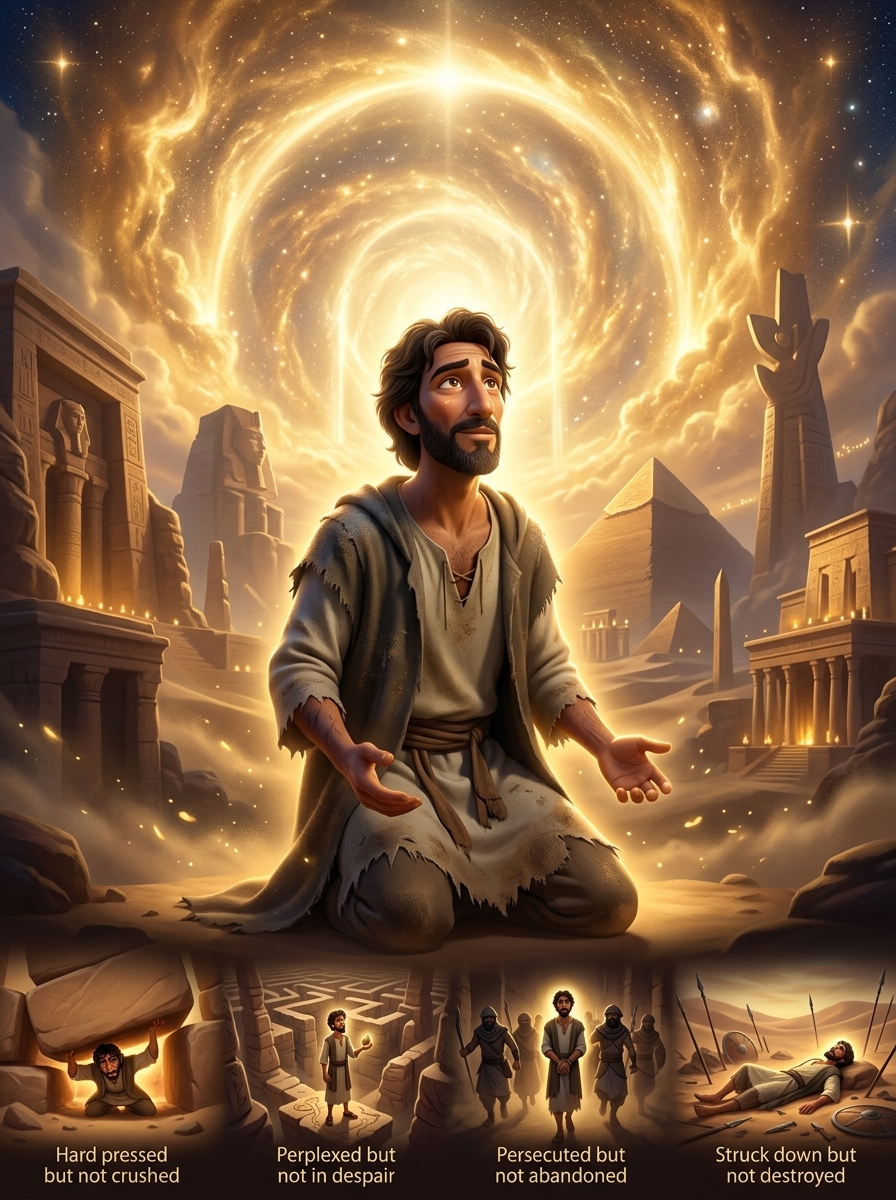
Galatians 4–6 — Freedom in Christ
God sent His Son, born of a woman, born under the Law, to redeem those under the Law, so that we might receive adoption as sons. You are no longer a slave but a son — and if a son, then an heir of God. Stand firm and do not let yourselves be burdened again by a yoke of slavery. For in Christ Jesus neither circumcision nor uncircumcision has any value — only faith working through love. The fruit of the Spirit is love, joy, peace, patience, kindness, goodness, faithfulness, gentleness, and self-control.
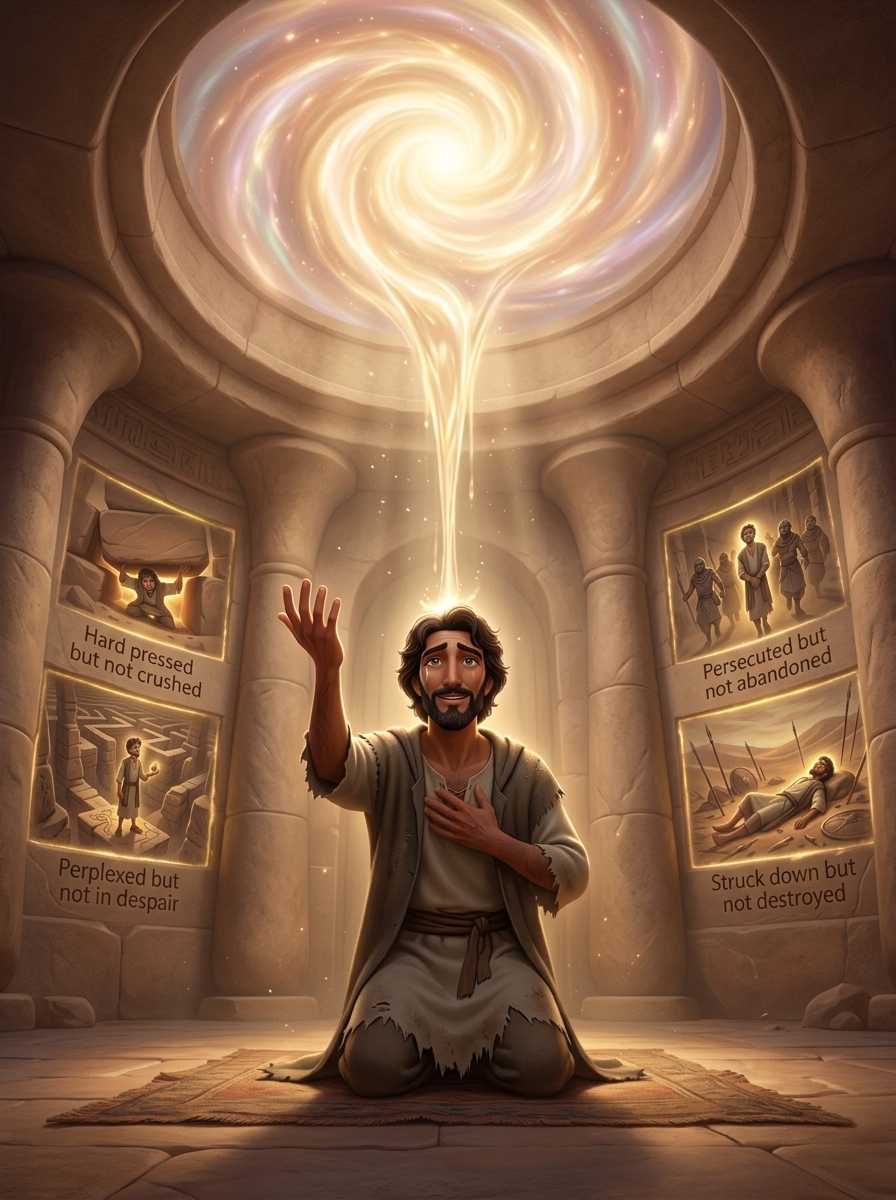
Ephesians — Introduction
Written from prison, Paul's letter to Ephesus soars with theological heights and practical depth. It opens with a stunning declaration that God chose us in Christ before the creation of the world — predestined to be adopted as sons. Paul prayed that the Ephesians' eyes would be opened to see the hope they had been called to, the riches of their inheritance, and the incomparable greatness of God's power — the same power that raised Christ from the dead and seated Him far above every ruler and authority.
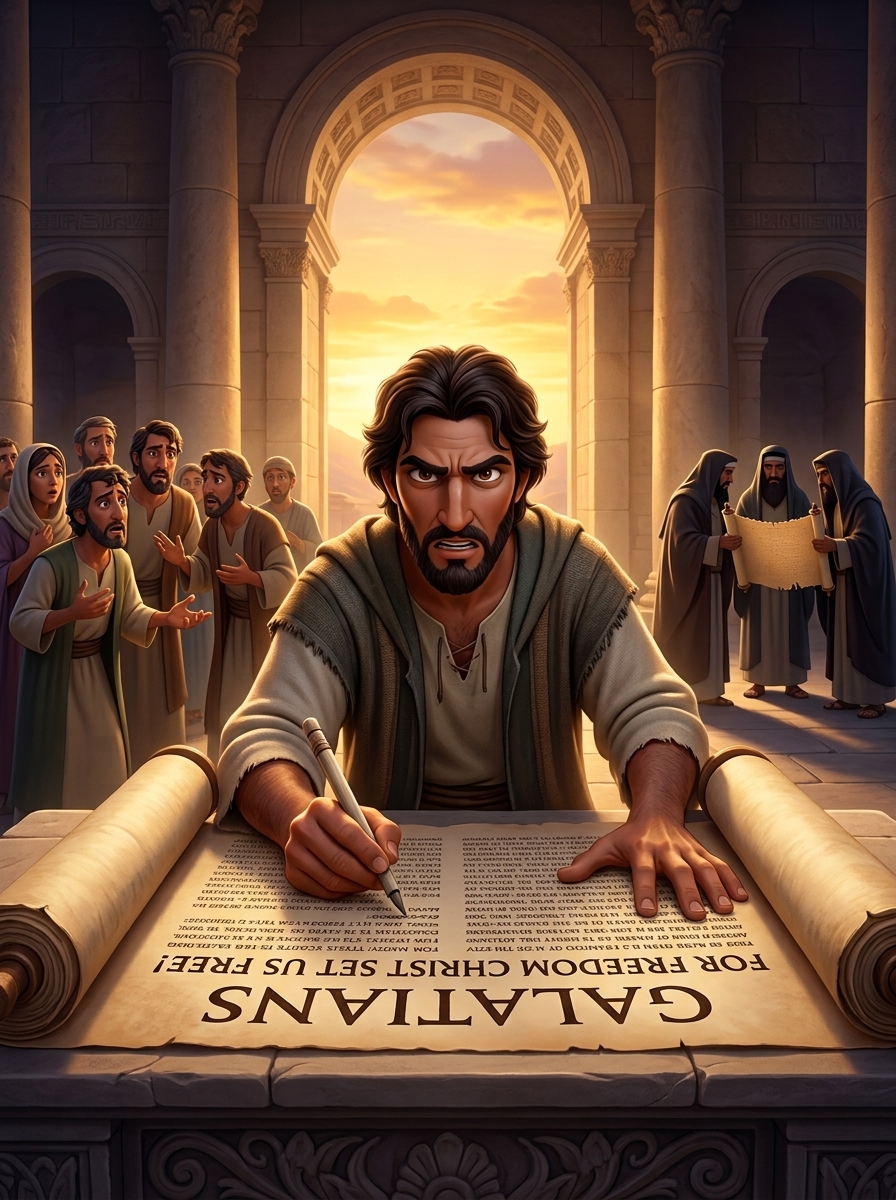
Ephesians 1–3 — Saved by Grace
You were dead in your transgressions and sins, following the ways of this world. But God, who is rich in mercy, made you alive together with Christ. By grace you have been saved through faith — and this is not from yourselves, it is the gift of God, not by works. We are God's handiwork, created in Christ Jesus for good works He prepared in advance for us to do. Paul described the mystery hidden for ages: that Gentiles are heirs together with Israel, members together of one body.
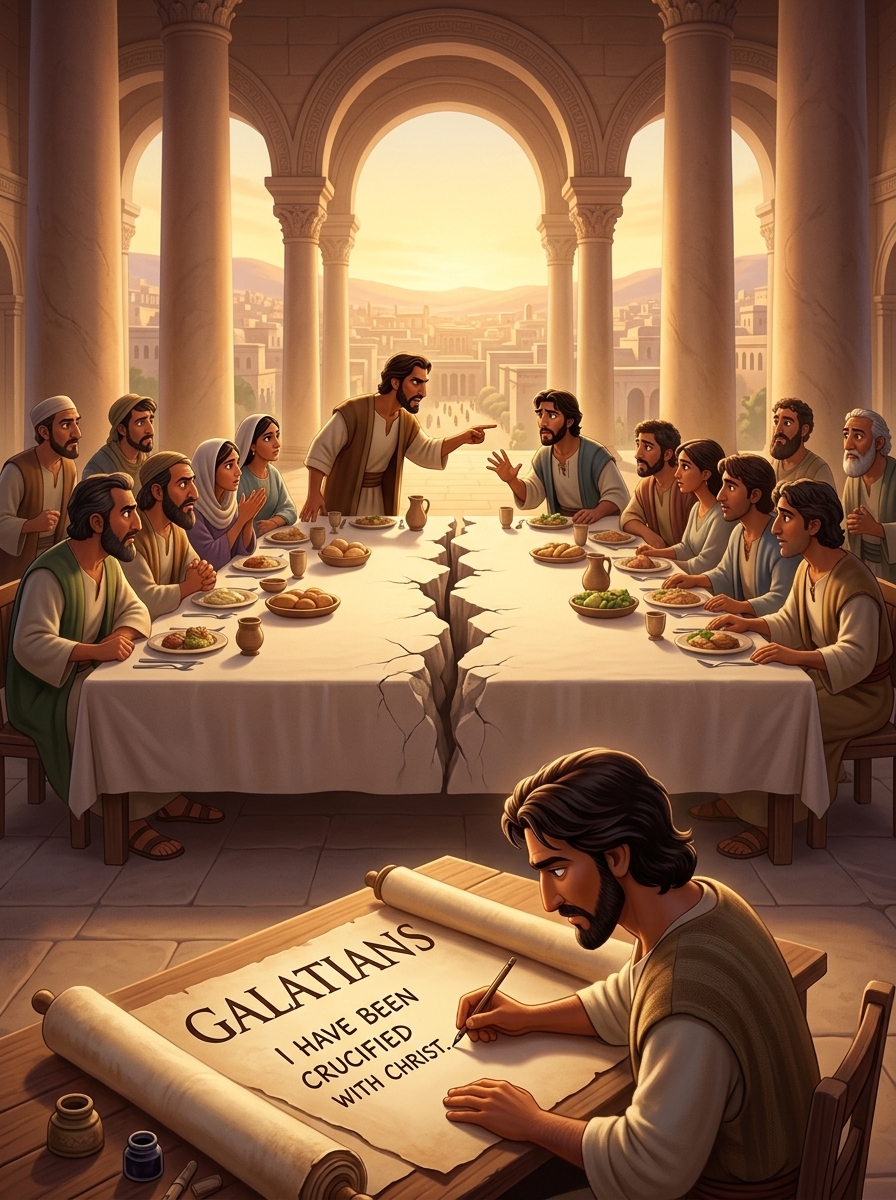
Ephesians 4–6 — The Armor of God
Paul urged them to walk worthy of the calling they had received — bearing with one another in love, maintaining unity in the Spirit. There is one body, one Spirit, one hope, one Lord, one faith, one baptism, one God and Father of all. He called them to put off the old self and put on the new. Husbands love your wives. Children obey your parents. Workers respect your masters. And finally: put on the full armor of God — the belt of truth, breastplate of righteousness, shield of faith, helmet of salvation, and sword of the Spirit.
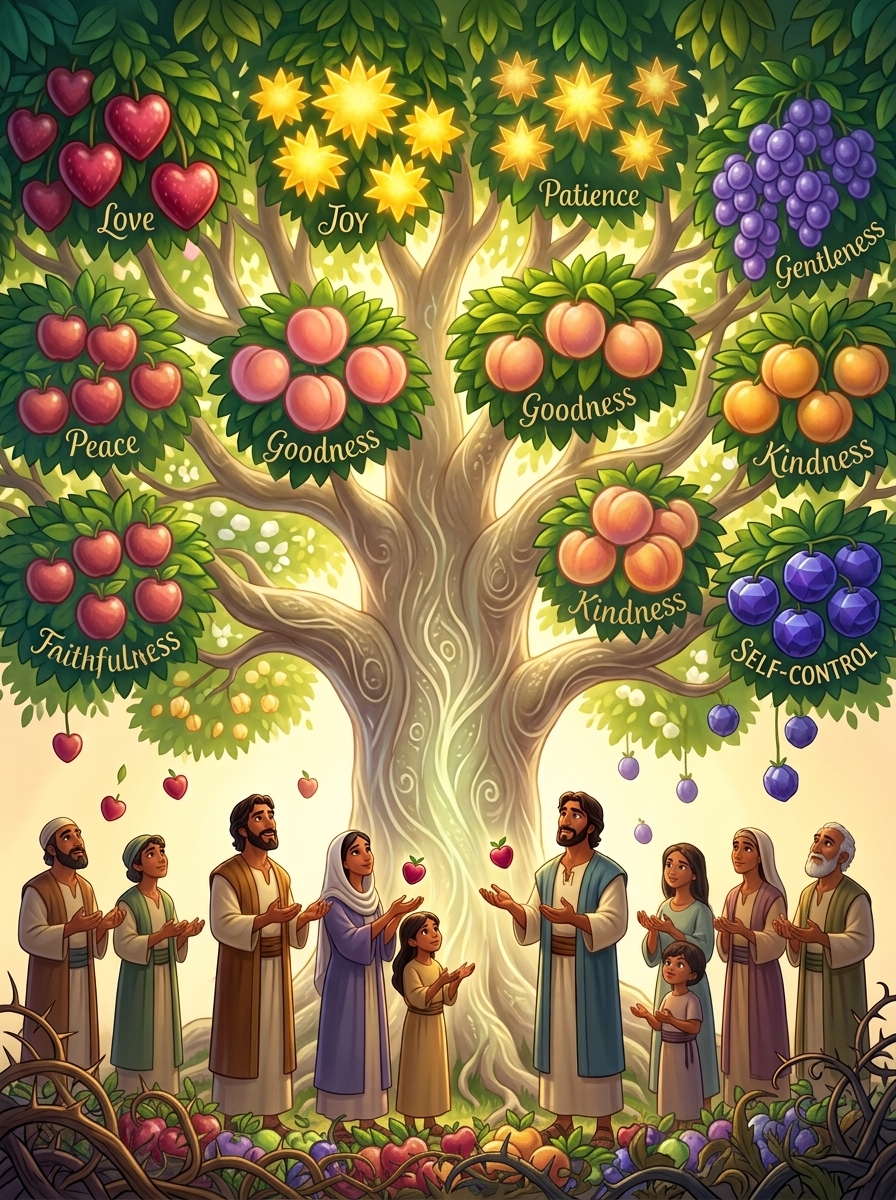
Philippians — Introduction
Paul's most joyful letter, written from prison. He called the Philippian church his crown and joy — the first European church, planted when Lydia and the jailer were baptized. Though imprisoned, he had learned contentment. Joy runs through every page: rejoice in the Lord always — I will say it again, rejoice! He described Christ humbling Himself to become a servant and die on a cross — and being exalted to the highest place. He pressed on toward the goal, forgetting what was behind.
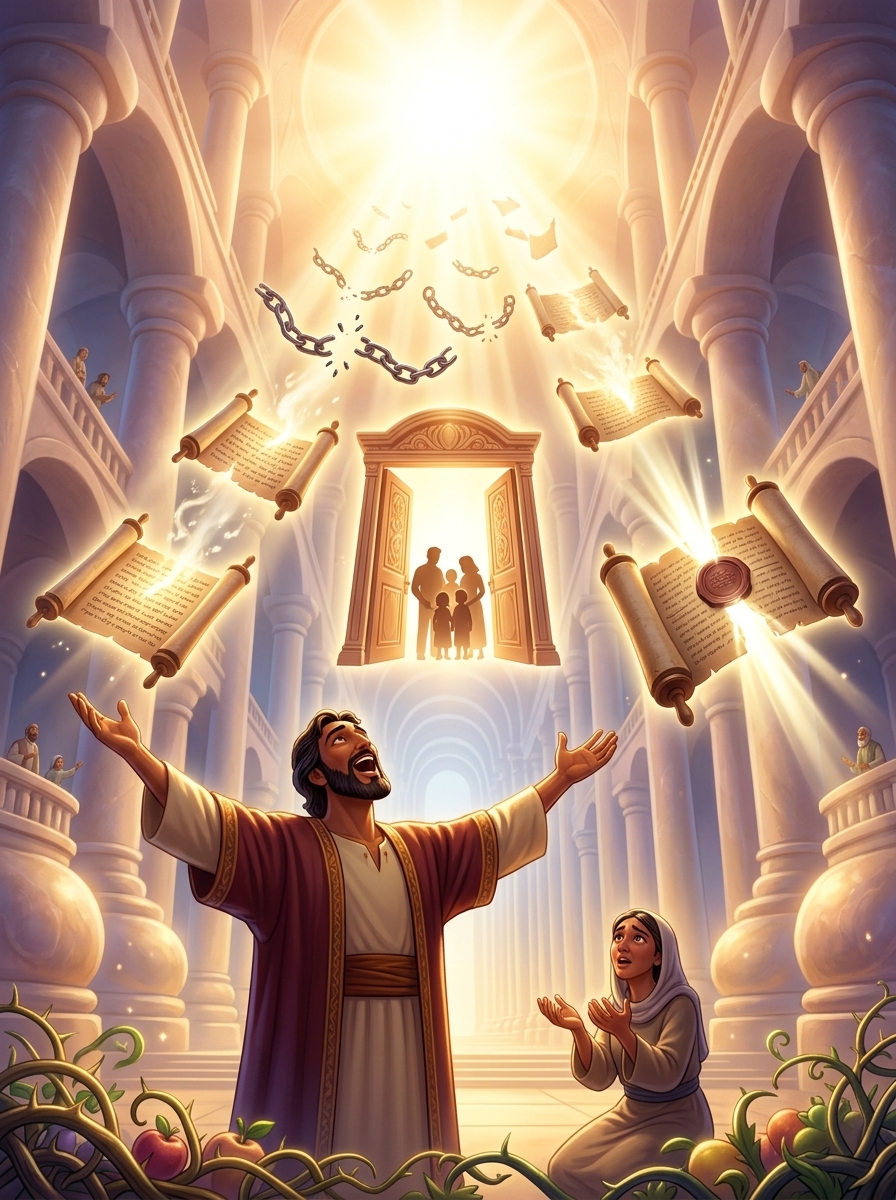
Philippians 1–4 — I Can Do All Things
Paul declared that whether he lived or died, Christ would be exalted through him. Do nothing out of selfish ambition — in humility count others as more significant than yourselves. Have the same mind as Christ, who made Himself nothing. Work out your salvation with fear and trembling — for it is God who works in you. Rejoice always. The Lord is near. Do not be anxious. Let your requests be made known to God. And the peace of God, which surpasses all understanding, will guard your hearts.
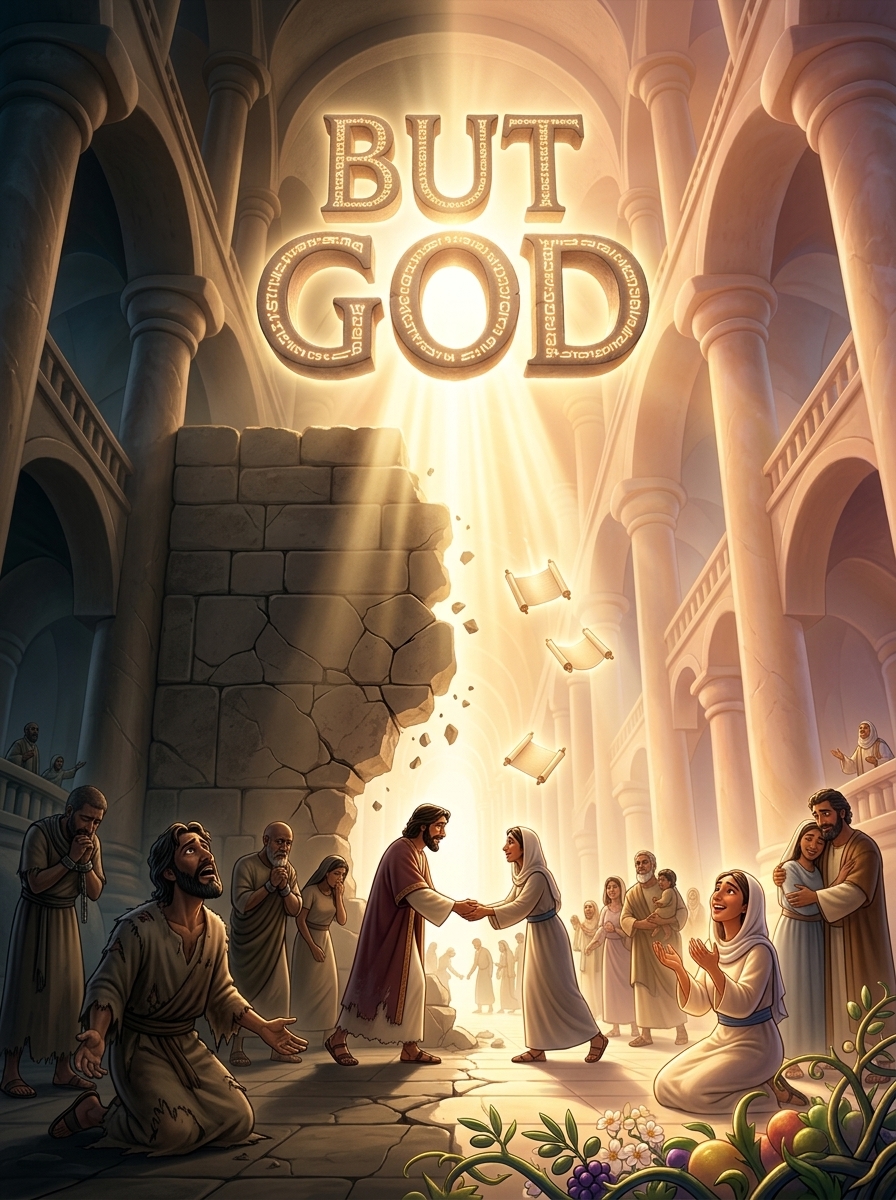
Colossians — Introduction
Paul wrote to a church he hadn't personally visited, under threat from false teaching that diminished Christ with philosophy and mysticism. His response: Christ is supreme — the image of the invisible God, the firstborn of all creation. All things were created through Him and for Him. In Him all the fullness of God dwells bodily. You have been given fullness in Him. Nothing needs to be added. No philosophy, no elemental spirit, no special diet or calendar can improve on what you already have in Christ.
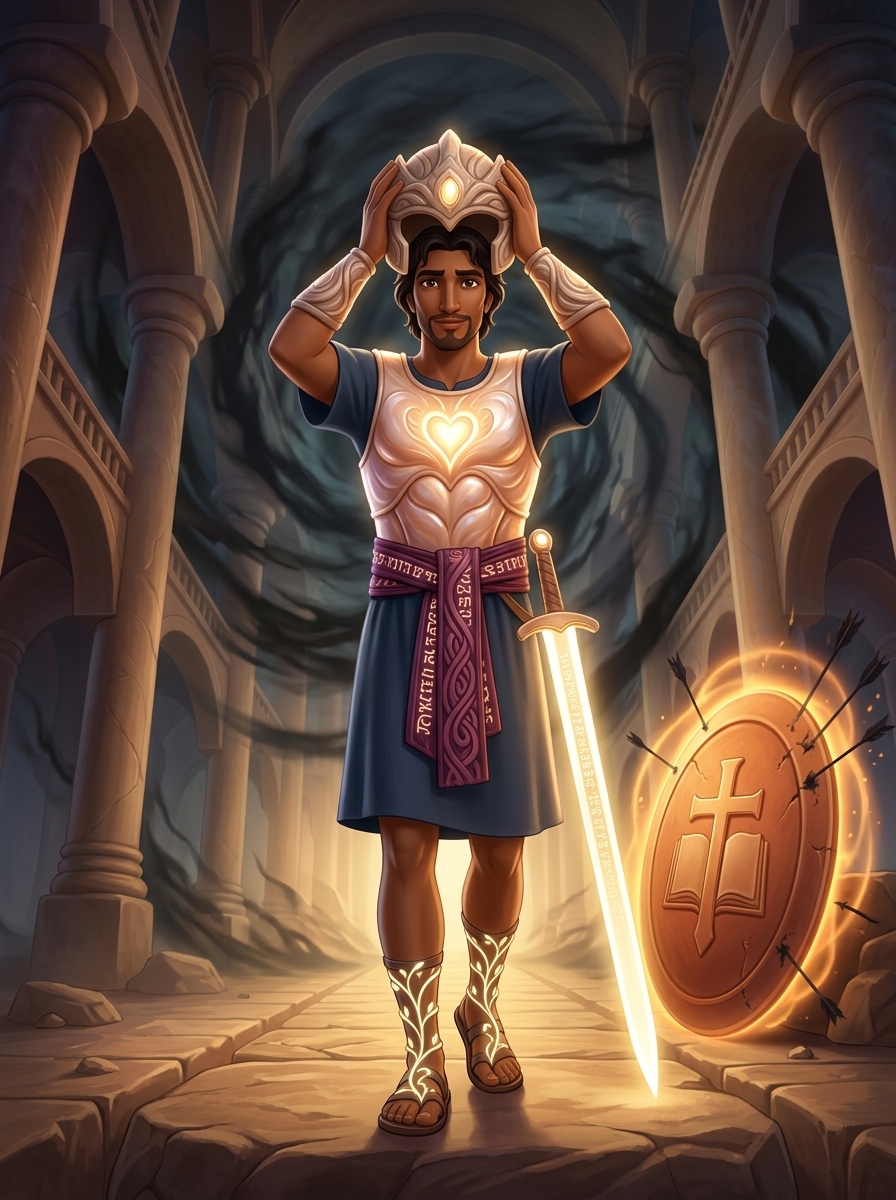
Colossians 1–4 — Christ Is All
Since you have been raised with Christ, set your hearts on things above where Christ is seated at the right hand of God. Put to death what belongs to your earthly nature. Put on the new self, which is being renewed in knowledge in the image of its Creator. Here there is no Jew or Greek, slave or free — Christ is all and is in all. Let the word of Christ dwell richly in you. Do everything in word or deed in the name of the Lord Jesus, giving thanks to God the Father.
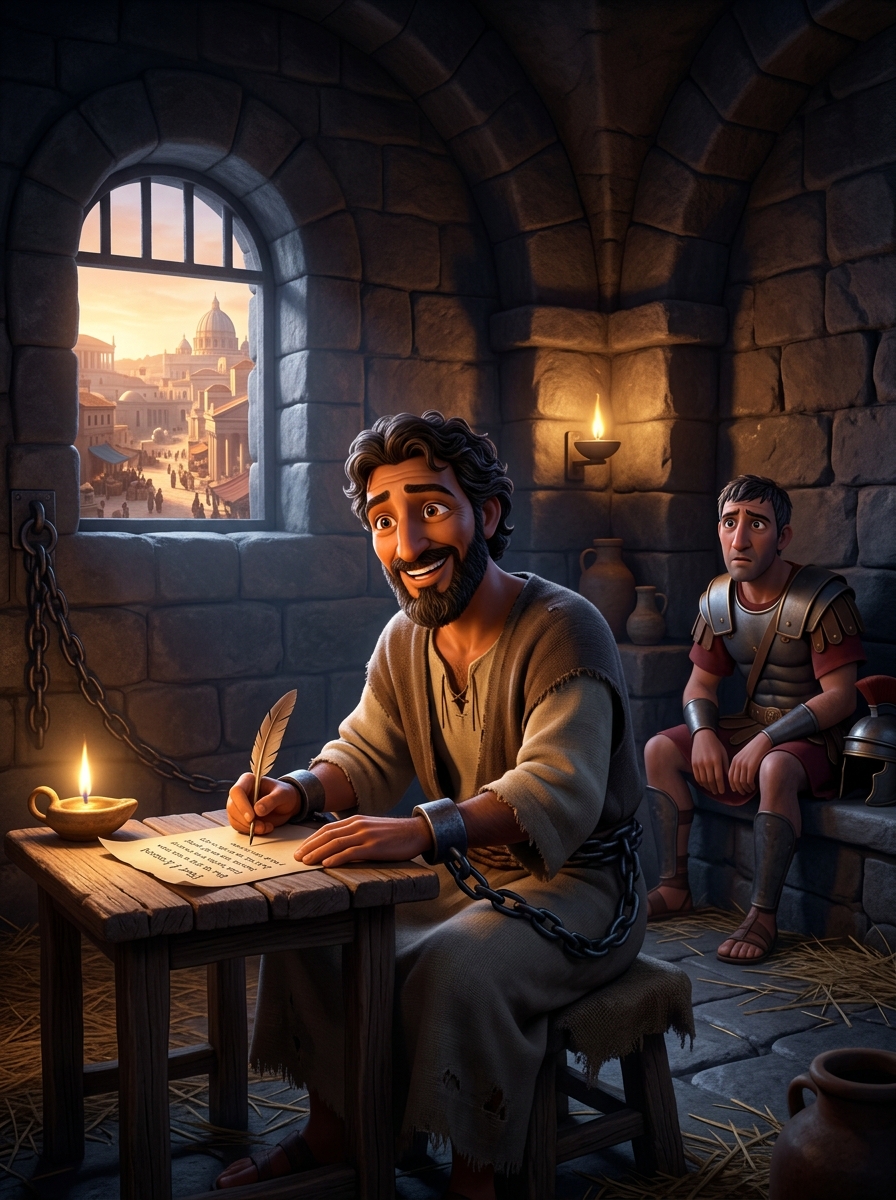
1 Thessalonians — Introduction
Paul's first letter, written to a young church he had to leave quickly due to persecution. He celebrated their faith, hope, and love — the news of their conversion had spread everywhere. He addressed their grief over believers who had died before Jesus returned. He wanted them to understand: the dead in Christ will rise first. Then those who are still alive will be caught up together with them to meet the Lord. Encourage one another with these words. Live to please God.
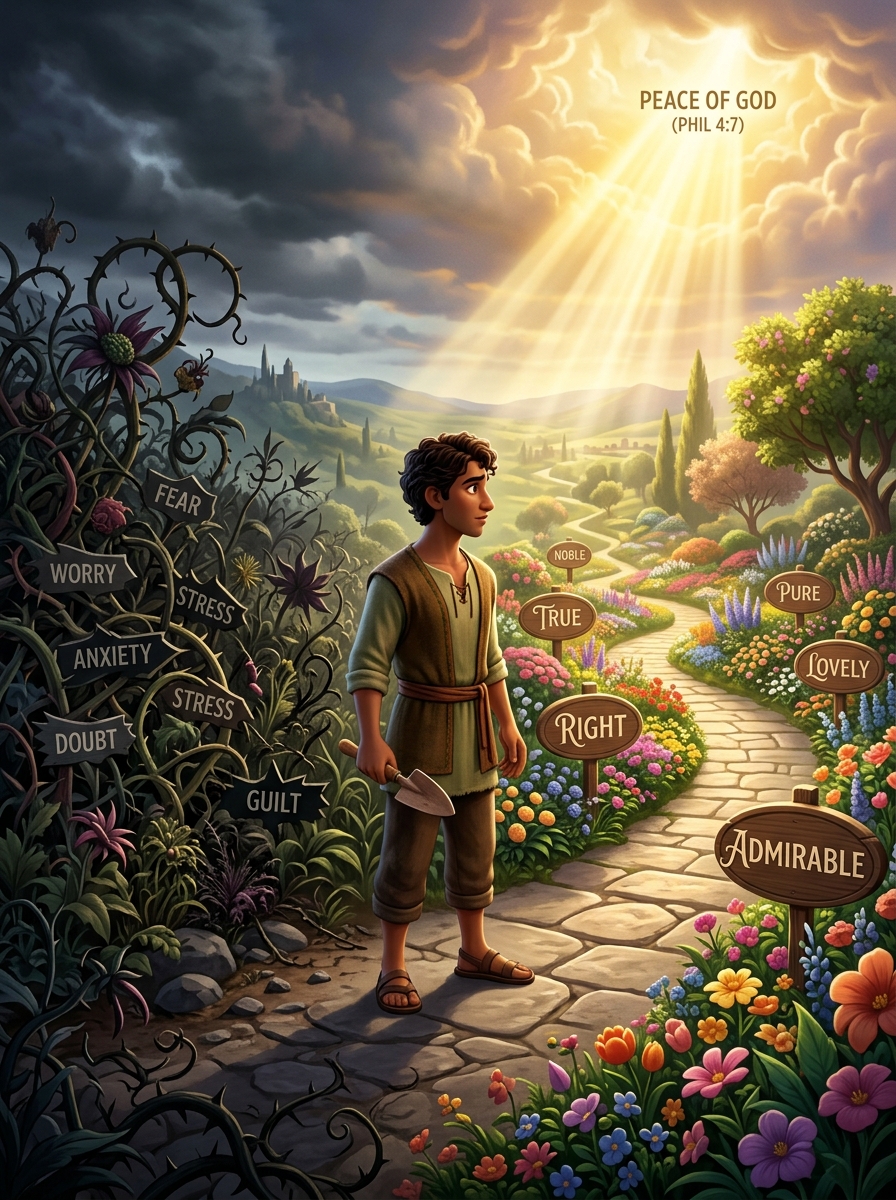
1 Thessalonians 1–5 — Be Ready
You turned from idols to serve the living and true God and to wait for His Son from heaven — whom He raised from the dead. Paul gave thanks for their faith that had become known everywhere. He urged them to live holy lives, to love one another more and more, and to do this more and more. About times and dates — you don't need a letter. The day of the Lord will come like a thief in the night. But you are not in darkness. You are children of the light. So be alert and self-controlled.
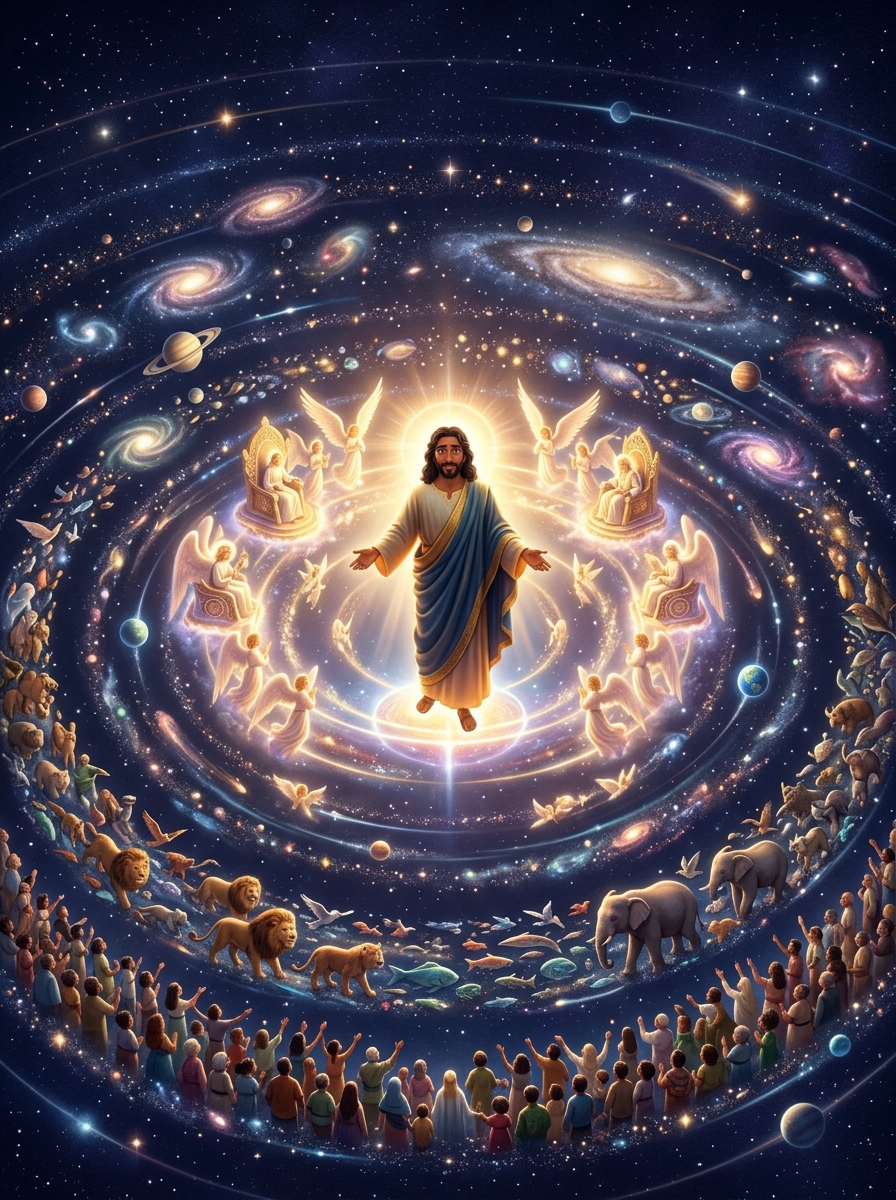
2 Thessalonians — Introduction
The Thessalonians were confused — some thought the day of the Lord had already come and were becoming idle, waiting for the end. Paul corrected them: certain things must happen first. God is just — He will repay trouble to those who trouble you and give relief to you who are troubled. He will be glorified in His holy people and admired in all who believe. Stand firm and hold to the teachings you were passed on. May the Lord direct your hearts to God's love and Christ's perseverance.
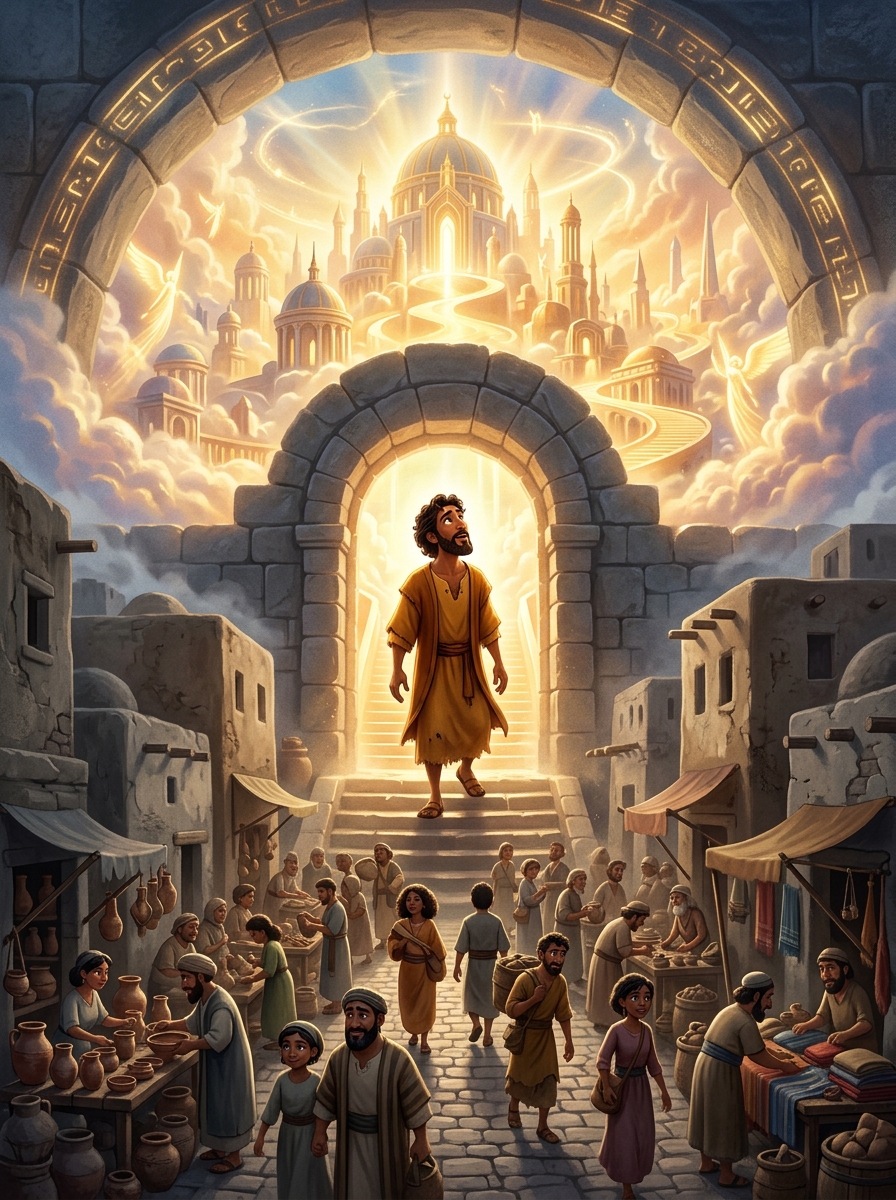
2 Thessalonians 1–3 — Stand Firm
Paul urged the Thessalonians not to be unsettled or alarmed by reports that the day of the Lord had already come. A great rebellion must come first, and the man of lawlessness must be revealed. But God chose them from the beginning to be saved through the sanctifying work of the Spirit and through belief in the truth. He commanded those who were idle to settle down and earn their own living. If anyone refuses to work, they should not eat. Do not grow weary in doing good.
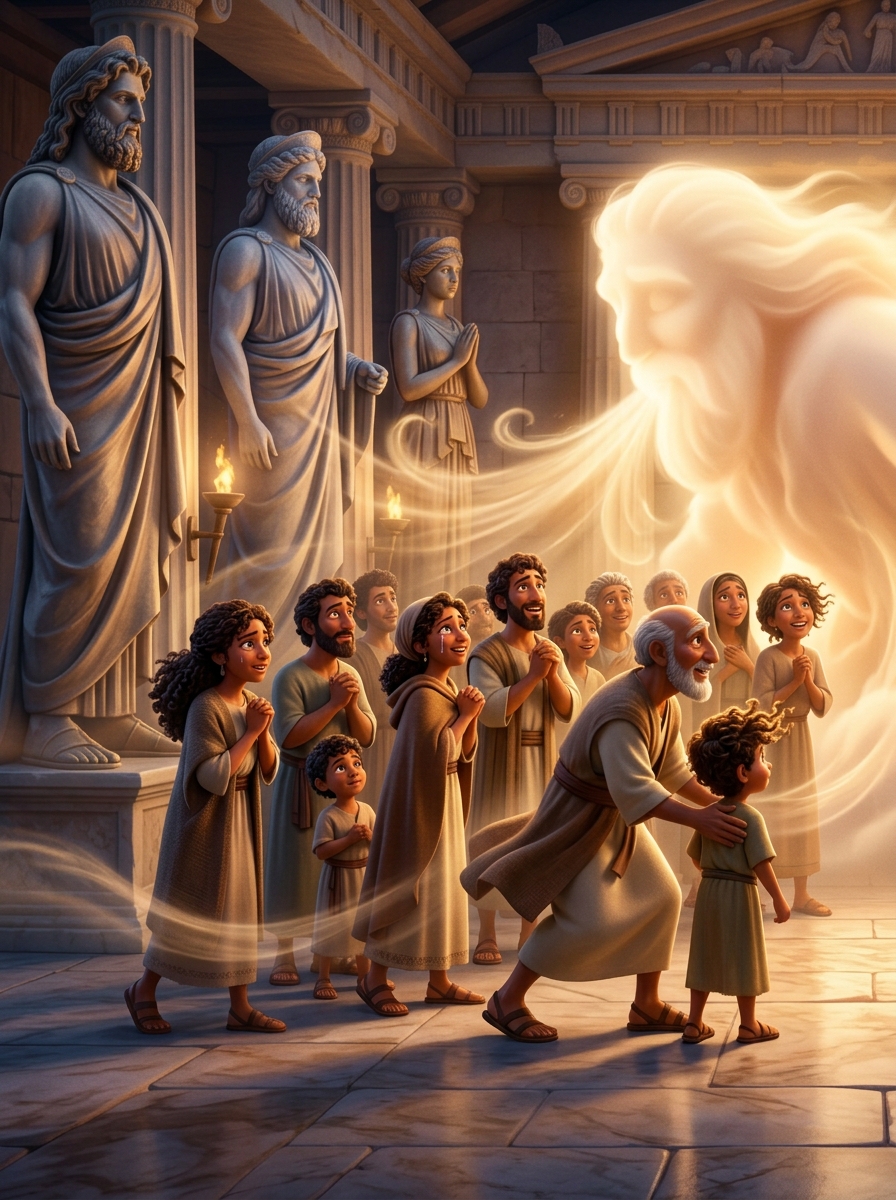
1 Timothy — Introduction
Paul wrote to his young protégé Timothy, left in Ephesus to guard the church against false teaching. He gave instructions for worship, for selecting elders and deacons, for caring for widows, and for handling false teachers. Above all he called Timothy to fight the good fight of faith, to pursue righteousness, godliness, faith, love, endurance, and gentleness. The letter is an owner's manual for the church — how to keep it healthy, holy, and on mission.
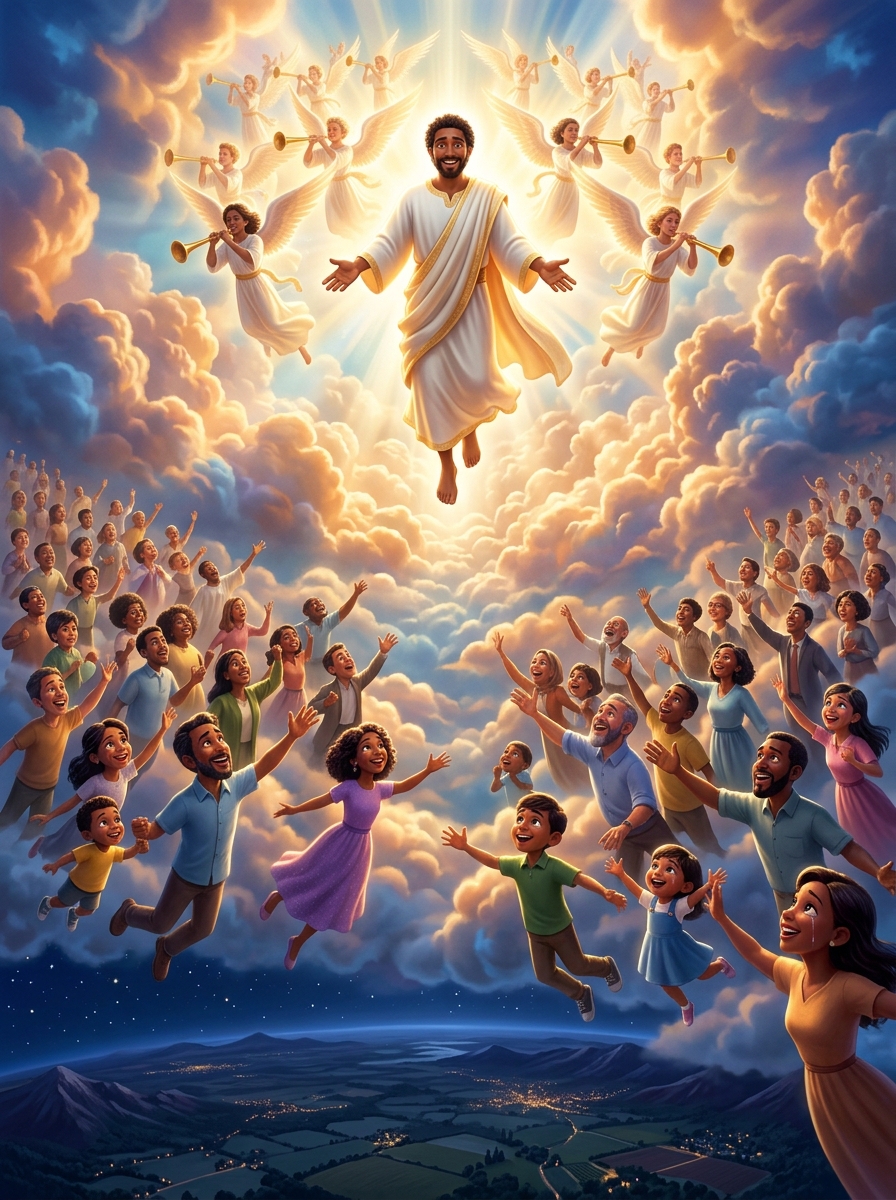
1 Timothy 1–6 — Godliness With Contentment
Paul told Timothy to command certain people not to teach false doctrines. He thanked God for considering him faithful and appointing him to service — though he had formerly been a blasphemer and persecutor. Christ Jesus came into the world to save sinners — of whom Paul called himself the worst. He gave instructions for prayer, for overseers and deacons to be above reproach, for Timothy to train himself in godliness. Godliness with contentment is great gain. Fight the good fight. Take hold of eternal life.
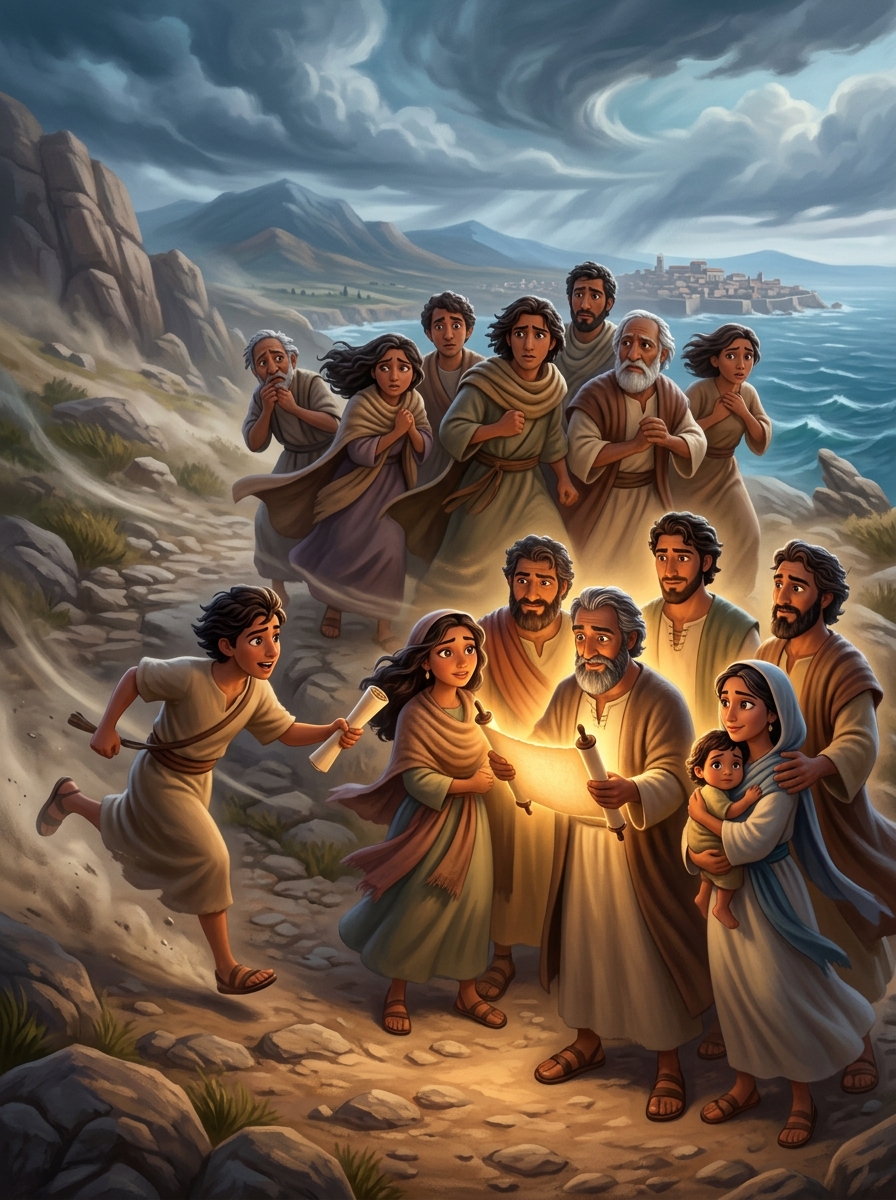
2 Timothy — Introduction
Paul's final letter — written from prison, expecting execution. He passed the baton to Timothy with urgency and warmth. 'Fan into flame the gift of God which is in you through the laying on of my hands. God did not give us a spirit of timidity, but of power, love, and self-discipline.' He told Timothy to endure hardship like a soldier, to handle the word of truth correctly, to flee youthful passions and pursue righteousness. 'I have fought the good fight. I have finished the race. I have kept the faith.'
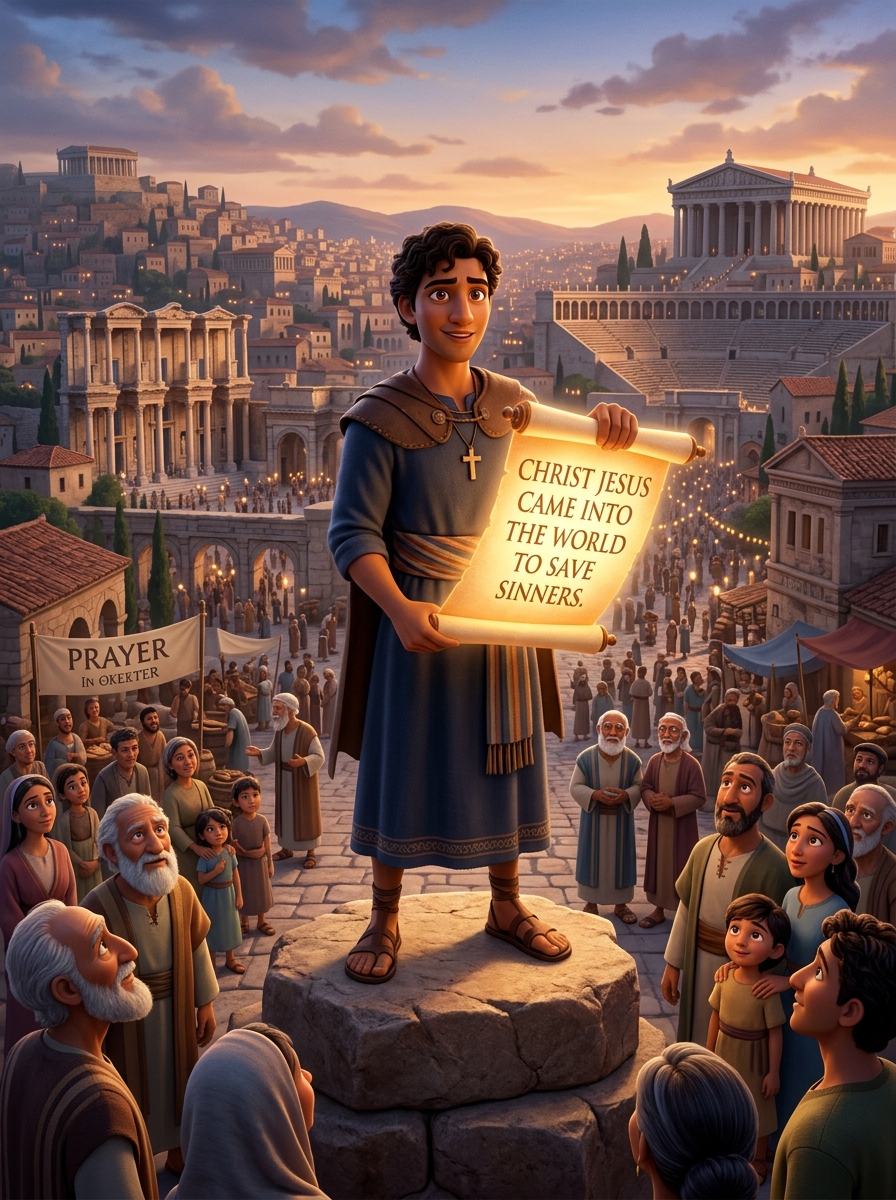
2 Timothy 1–4 — Scripture Breathed Out
All Scripture is God-breathed and useful for teaching, rebuking, correcting, and training in righteousness — so that the servant of God may be thoroughly equipped for every good work. Preach the word, in season and out of season. Correct, rebuke, and encourage with great patience. The time will come when people will not put up with sound doctrine. But you — keep your head in all situations. Endure hardship. Do the work of an evangelist. Fulfill your ministry. The Lord will rescue me and bring me safely to His heavenly kingdom.
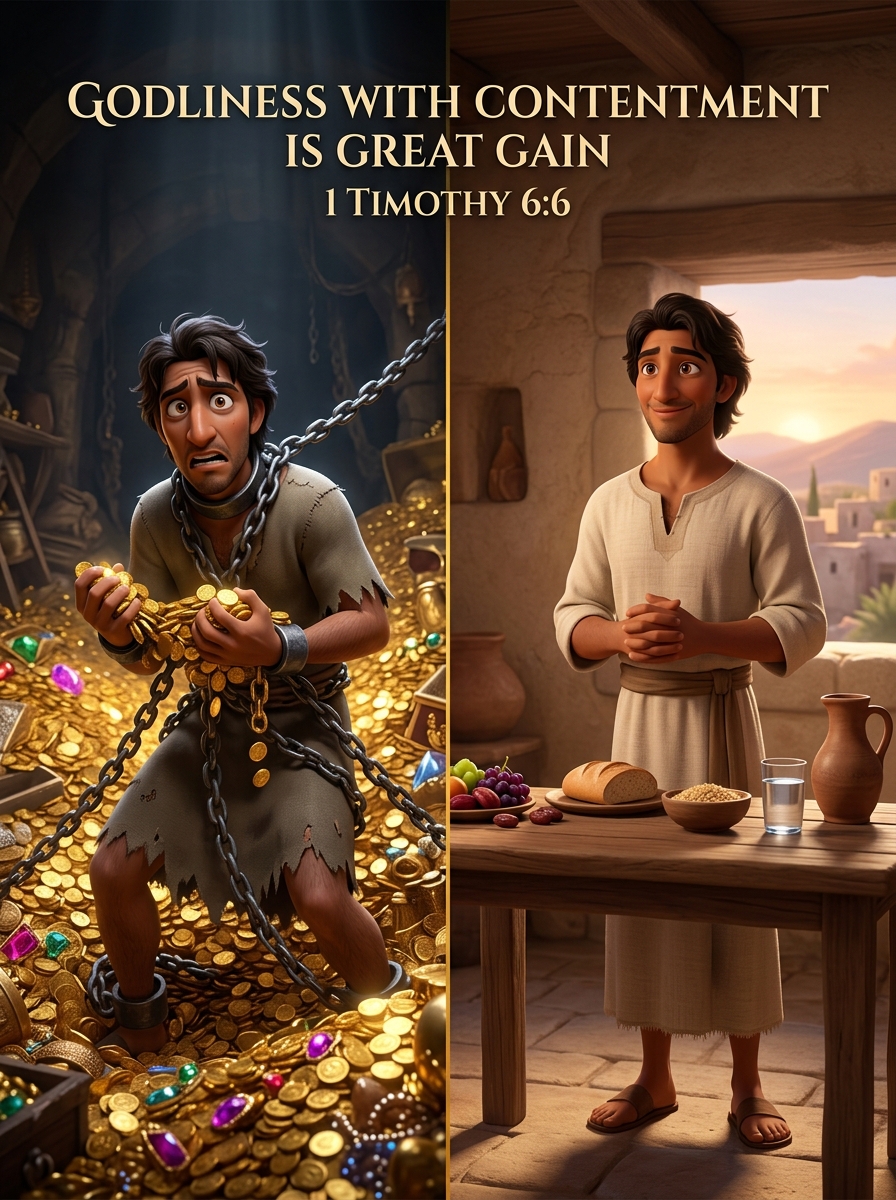
Titus — Introduction
Paul left Titus on the island of Crete to appoint elders in every town and put in order what was left unfinished. The letter addresses both church leadership and Christian conduct — elders must be above reproach, older men sober and worthy of respect, older women teaching what is good, young men self-controlled. Grace teaches us to say no to ungodliness. We are to be ready to do whatever is good, to speak evil of no one, to be peaceable and gentle, to show perfect courtesy to everyone.
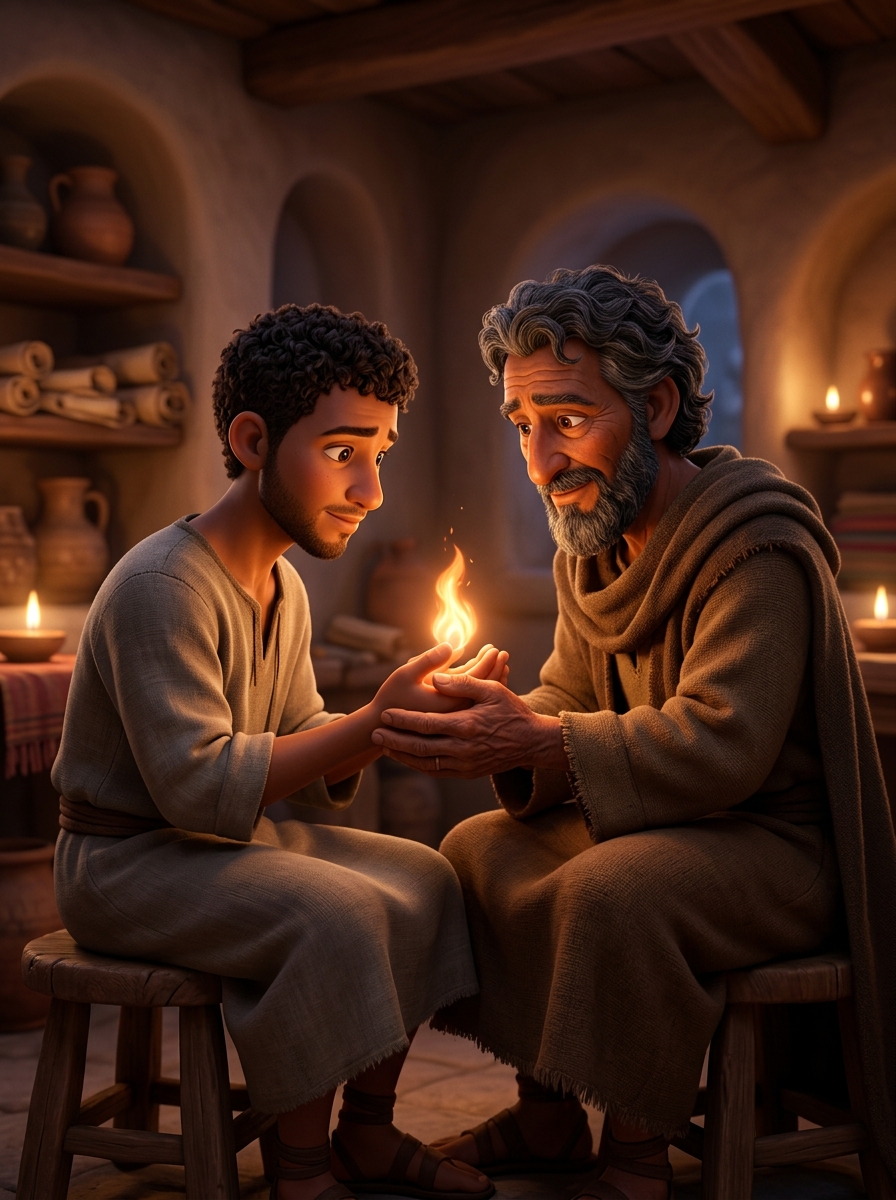
Titus 1–3 — God's Grace Appeared
For the grace of God has appeared, bringing salvation for all people — training us to renounce ungodliness and to live self-controlled, upright, and godly lives while we wait for the blessed hope — the appearing of our great God and Savior Jesus Christ, who gave Himself for us to redeem us from all lawlessness and to purify for Himself a people who are zealous for good works. He saved us not because of works done by us in righteousness, but according to His own mercy.
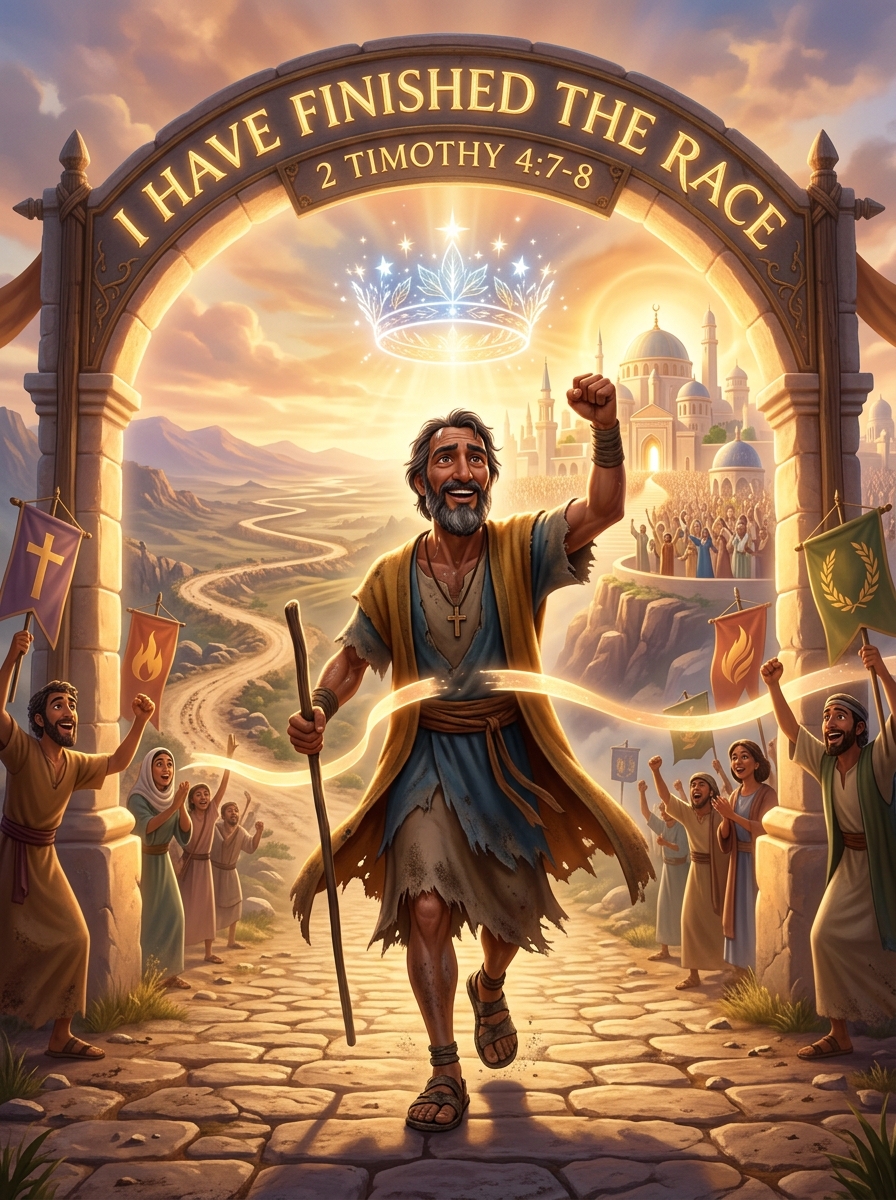
Philemon — The Runaway Slave
Paul wrote this single-chapter letter from prison on behalf of Onesimus — a runaway slave who had met Paul and become a Christian. Paul sent him back to his master Philemon, also a Christian. He made no demand, just a request saturated in grace: I appeal to you on the basis of love. Perhaps the reason Onesimus was separated from you for a little while was that you might have him back forever — no longer as a slave, but better than a slave, as a dear brother. Welcome him as you would welcome me.
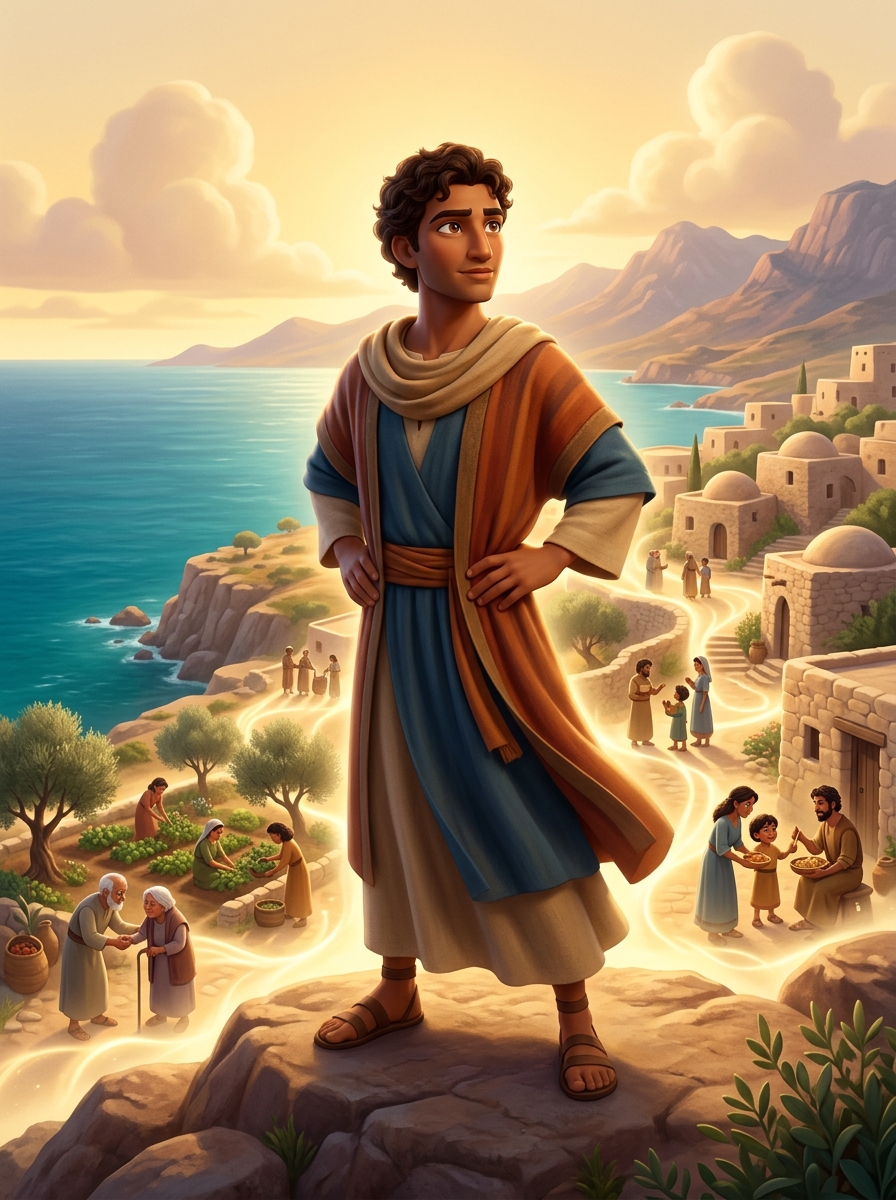
Hebrews — Introduction
The letter to the Hebrews opens with one of the most magnificent sentences in the Bible: 'In the past God spoke to our ancestors through the prophets at many times and in various ways, but in these last days he has spoken to us by his Son, whom he appointed heir of all things, and through whom also he made the universe.' Written to Jewish Christians tempted to abandon the faith, Hebrews shows that Jesus is greater than angels, Moses, the priesthood, the sacrifices — greater than everything that came before.
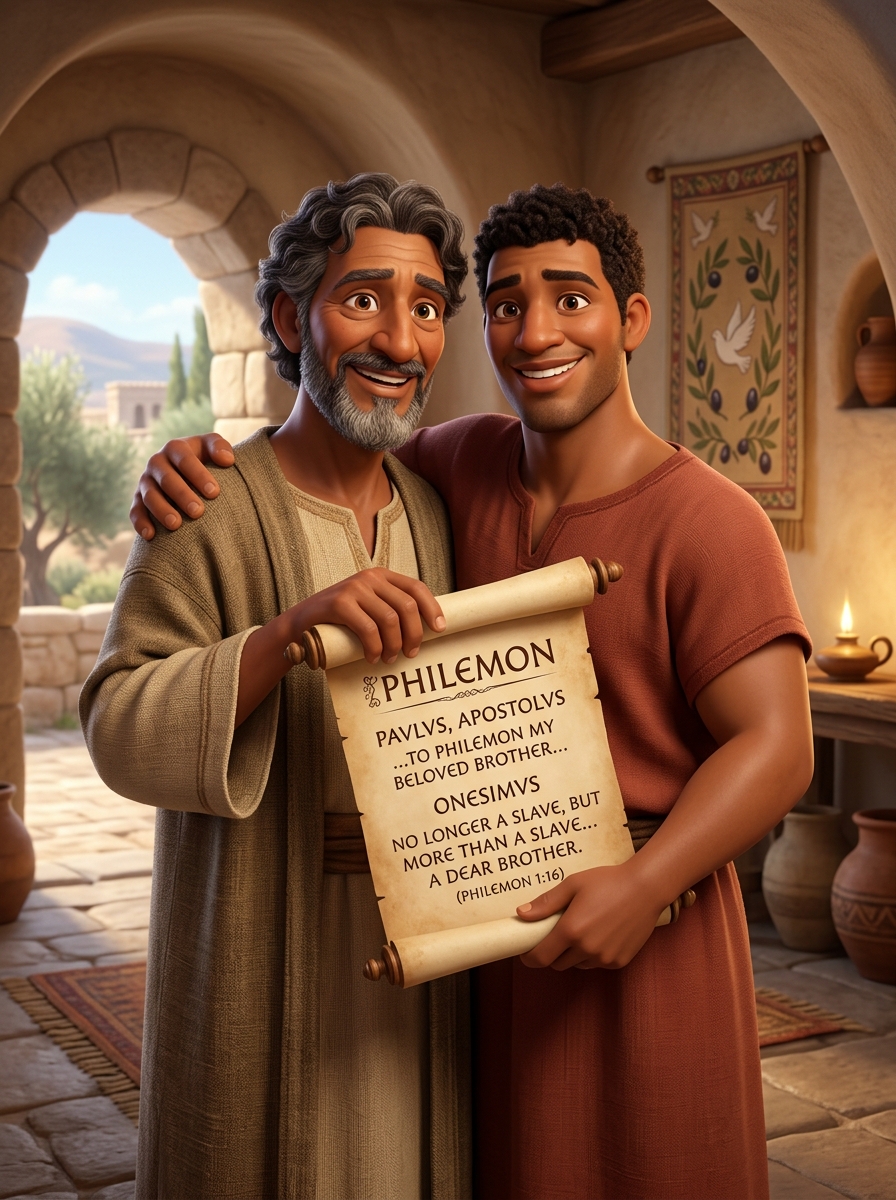
Hebrews 1–4 — Greater Than Angels
Jesus is the radiance of God's glory and the exact representation of His being — sustaining all things by His powerful word. He is superior to the angels, before whom God said: 'Your throne, O God, will last forever.' He is greater than Moses — Moses was faithful as a servant; Jesus as a Son. There remains a Sabbath rest for the people of God. Let us make every effort to enter that rest. The word of God is alive and active — sharper than any double-edged sword, dividing soul and spirit.
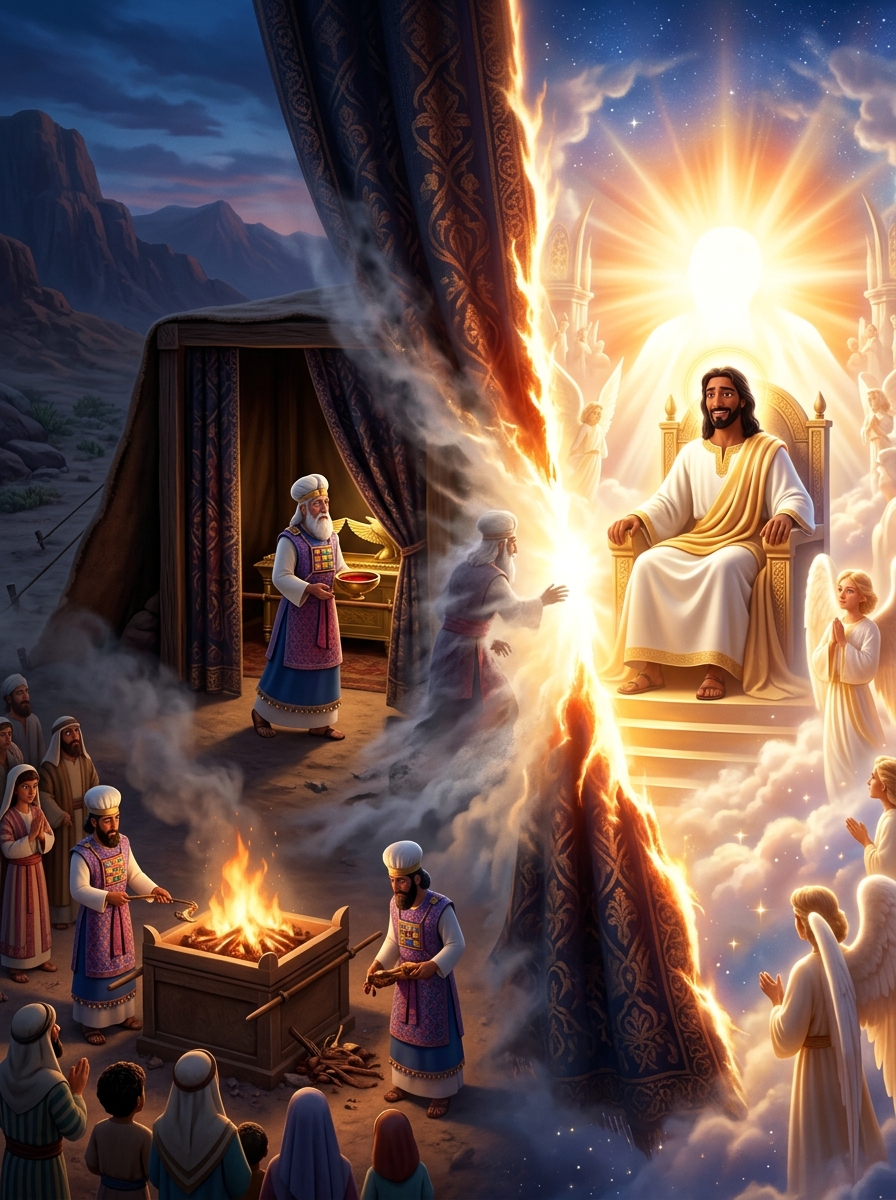
Hebrews 5–7 — The Great High Priest
Jesus is the high priest we need — holy, blameless, pure, set apart from sinners. He did not take this honor on Himself but was appointed by God who said: 'You are a priest forever, in the order of Melchizedek.' He is able to save completely those who come to God through Him, because He always lives to intercede for them. The old priesthood was weak and ineffective. But the new covenant is better, established on better promises.
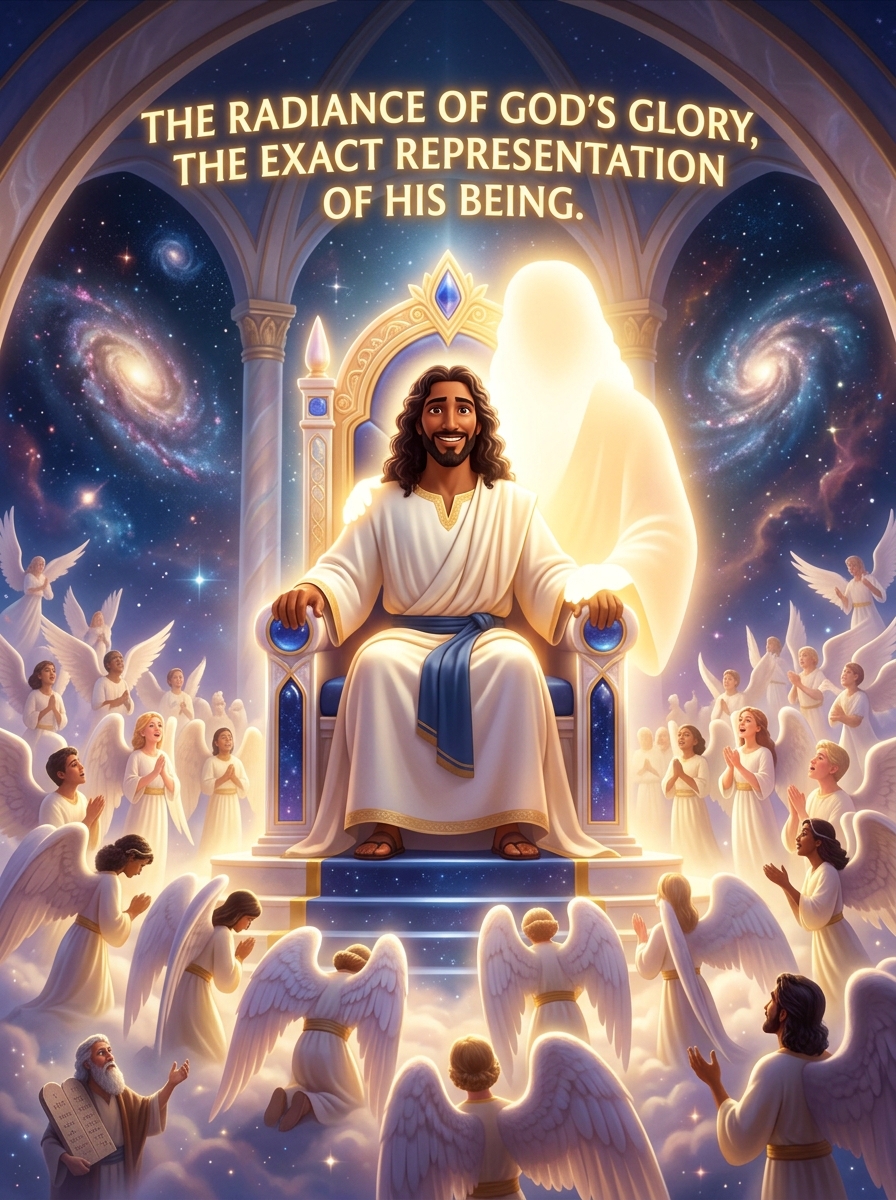
Hebrews 8–10 — The New Covenant
The law is only a shadow of the good things to come, not the realities themselves. It could never make perfect those who drew near. But Jesus offered one sacrifice for sins for all time — and then sat down at the right hand of God. By one sacrifice He has made perfect forever those who are being made holy. Therefore brothers, since we have confidence to enter the Most Holy Place by the blood of Jesus — let us draw near with a sincere heart in full assurance of faith.
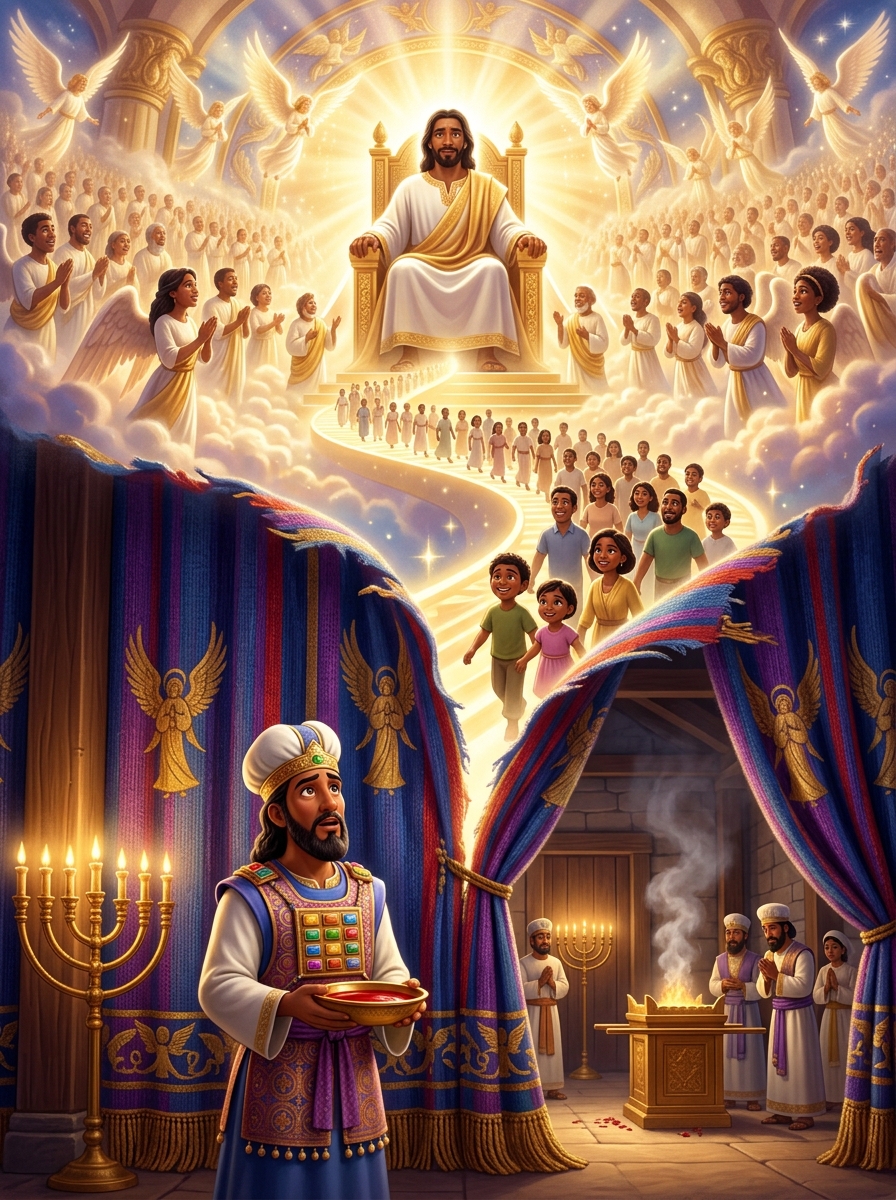
Hebrews 11 — Faith's Hall of Fame
Faith is confidence in what we hope for and assurance about what we do not see. By faith Abel offered a better sacrifice. By faith Noah built an ark. By faith Abraham left his home not knowing where he was going. By faith Sarah received power to conceive. By faith Moses refused to be called the son of Pharaoh's daughter. By faith Rahab the prostitute welcomed the spies. They were all commended for their faith — and yet they did not receive what was promised. God had planned something better for us.
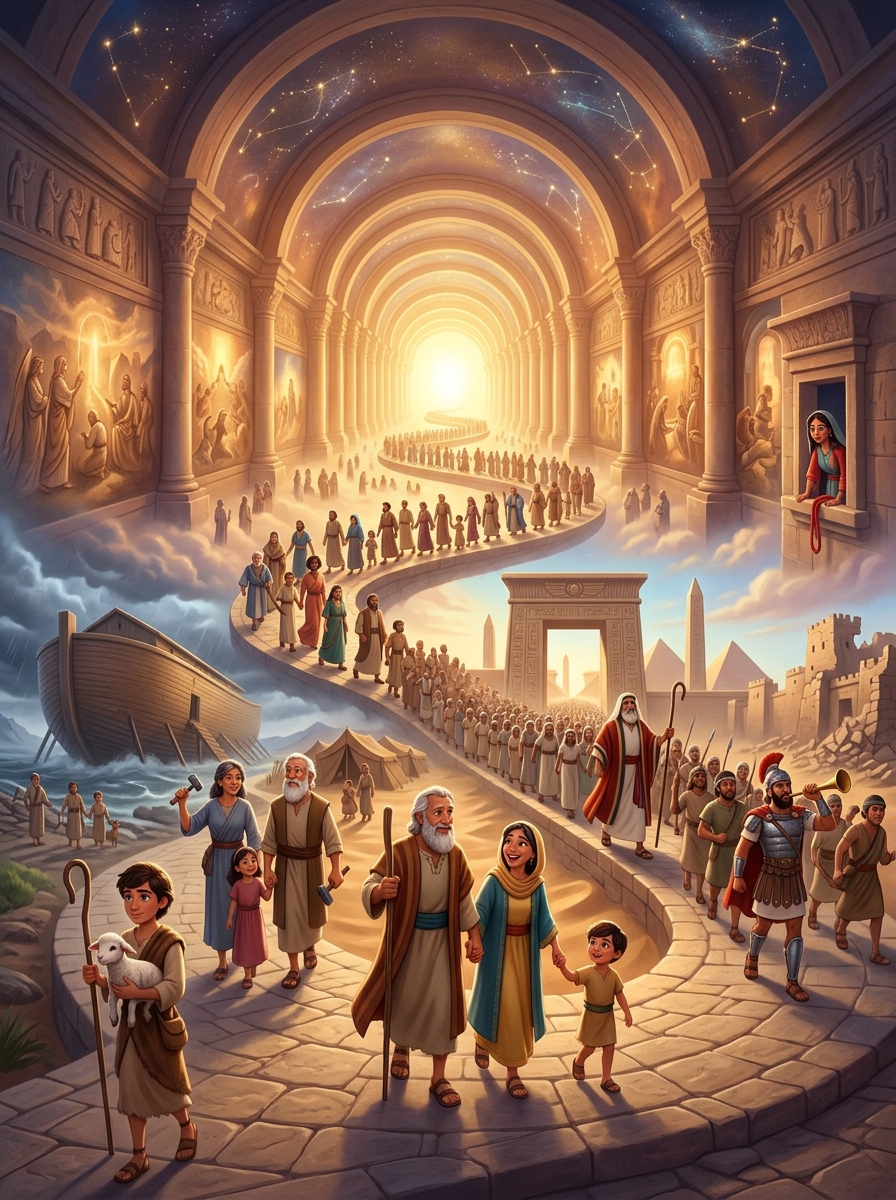
Hebrews 12 — Fixing Our Eyes on Jesus
Therefore, since we are surrounded by such a great cloud of witnesses, let us throw off everything that hinders and the sin that so easily entangles, and let us run with perseverance the race marked out for us, fixing our eyes on Jesus, the author and perfecter of faith, who for the joy set before Him endured the cross, scorning its shame, and sat down at the right hand of the throne of God. Do not lose heart. Endure hardship as discipline. God is treating you as sons.

Hebrews 13 — Final Instructions
Keep on loving one another as brothers. Welcome strangers — some have entertained angels without knowing it. Remember those in prison. Honor marriage. Keep your lives free from the love of money. Be content with what you have, for God has said: 'Never will I leave you; never will I forsake you.' Jesus also suffered outside the city gate. Let us go to Him outside the camp, bearing the disgrace He bore — for here we do not have an enduring city, but we are looking for the city that is to come.
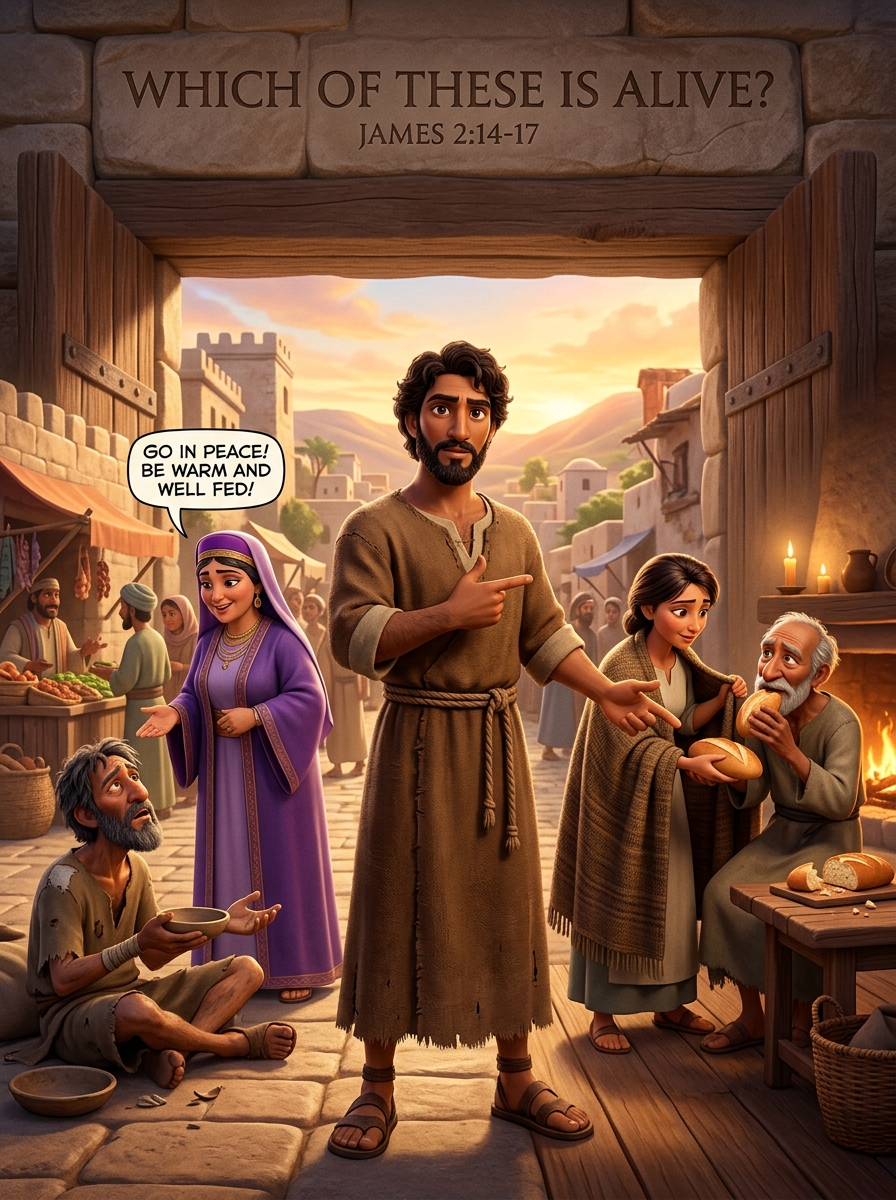
James — Introduction
James, brother of Jesus, wrote this practical letter to scattered Jewish believers. His message: faith without works is dead. Don't just listen to the word — do what it says. Do not show favoritism. Tame the tongue, which is a fire and can corrupt the whole person. Draw near to God and He will draw near to you. Resist the devil and he will flee. Come now, you who make plans and boast about tomorrow — you don't even know what will happen tomorrow.

James 1–3 — Tame Your Tongue
Count it pure joy when you face trials — because testing produces perseverance. If you lack wisdom, ask God who gives generously. Be quick to listen, slow to speak, slow to anger. Religion that God accepts is this: looking after orphans and widows in their distress. Can faith save someone if they have no deeds? Show me your faith without deeds and I will show you my faith by what I do. The tongue is a small part of the body but it makes great boasts — a fire that can set the whole course of life ablaze.
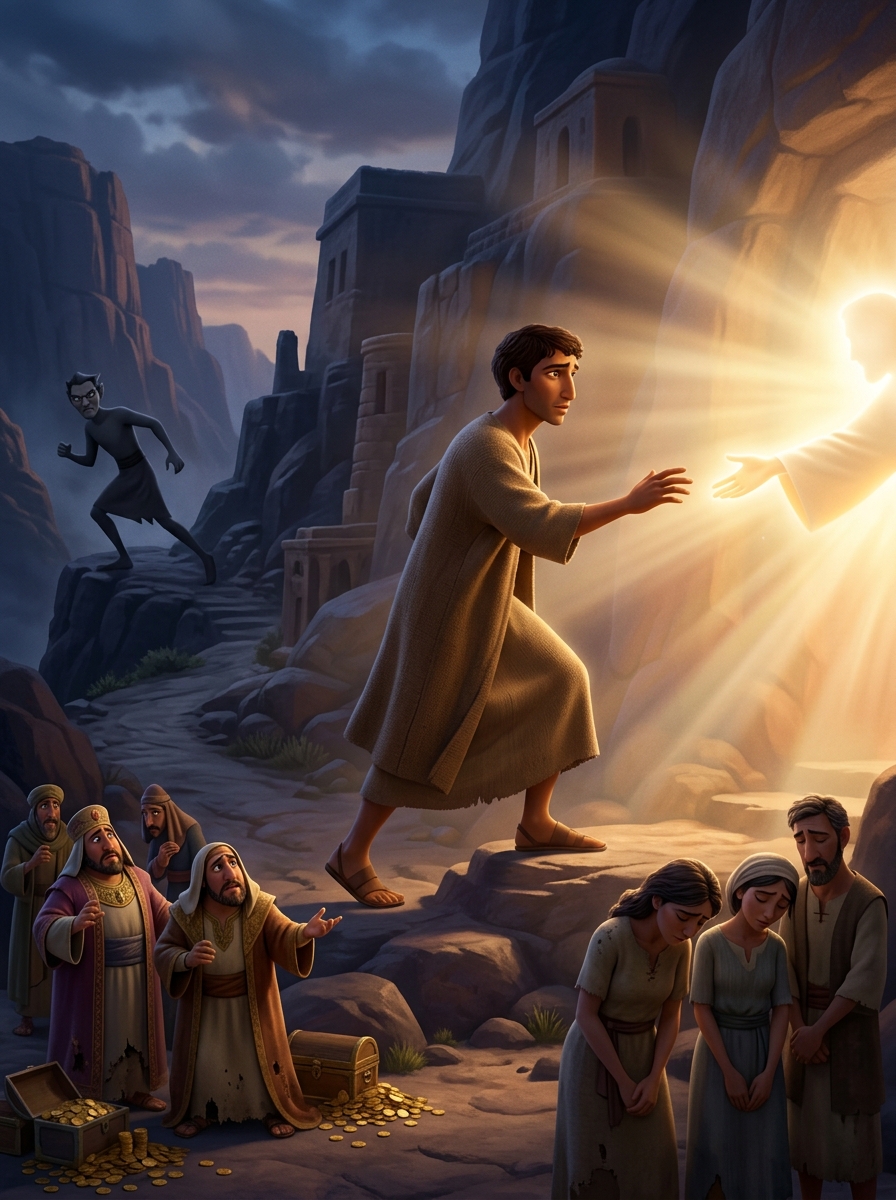
James 4–5 — Pray Without Ceasing
What causes quarrels and fights among you? Your own desires fighting within you. You do not have because you do not ask. You ask with wrong motives. Submit to God. Resist the devil. Come near to God. Humble yourselves before the Lord and He will lift you up. Is anyone among you sick? Let them call the elders of the church to pray over them and anoint them with oil in the name of the Lord. The prayer of a righteous person is powerful and effective. Elijah prayed — and it rained.
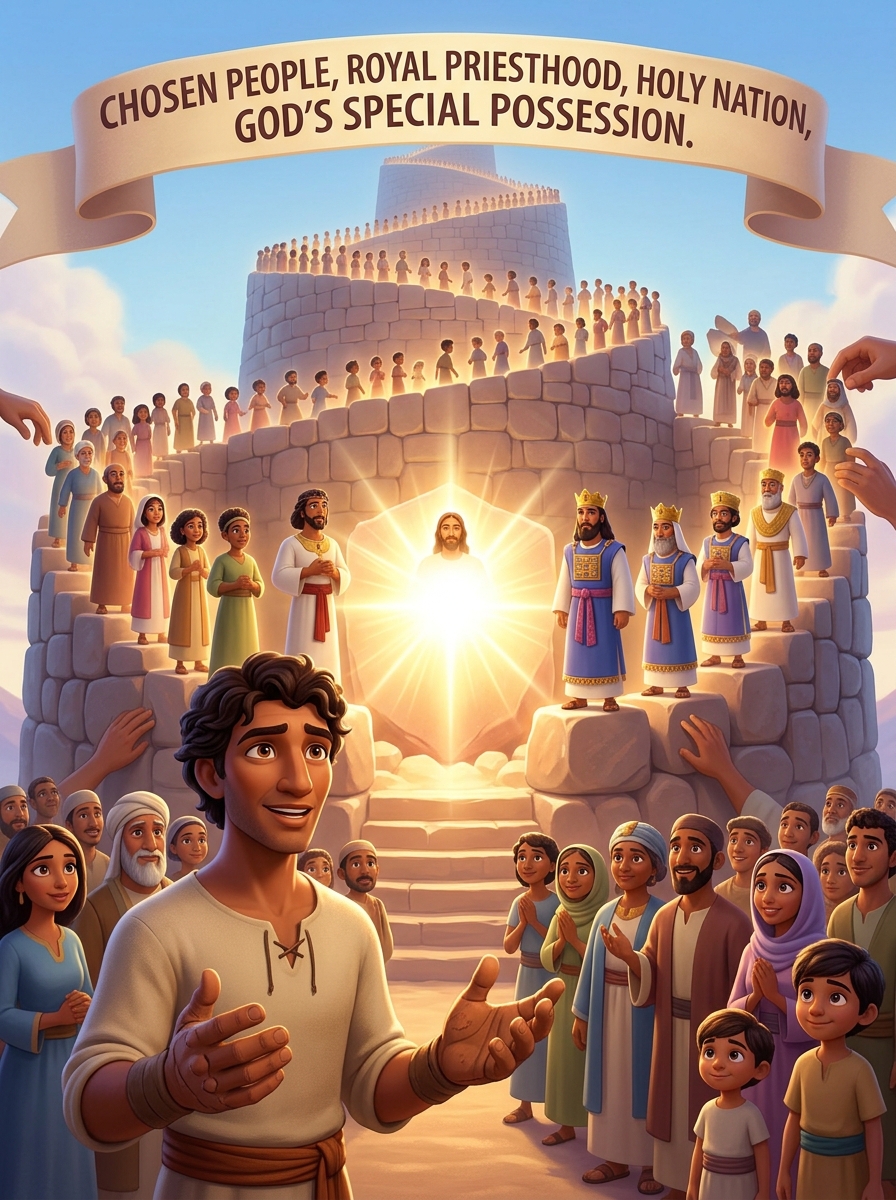
1 Peter — Introduction
Peter wrote to scattered believers across Asia Minor who were experiencing suffering and persecution. His message: don't be surprised by the fiery trial — you are strangers and exiles in this world. Praise God for the living hope through the resurrection of Jesus. This salvation prophets searched for and angels long to see. You have been born again through the living and enduring word of God. You are a chosen people, a royal priesthood, a holy nation. Declare the praises of the One who called you from darkness into light.
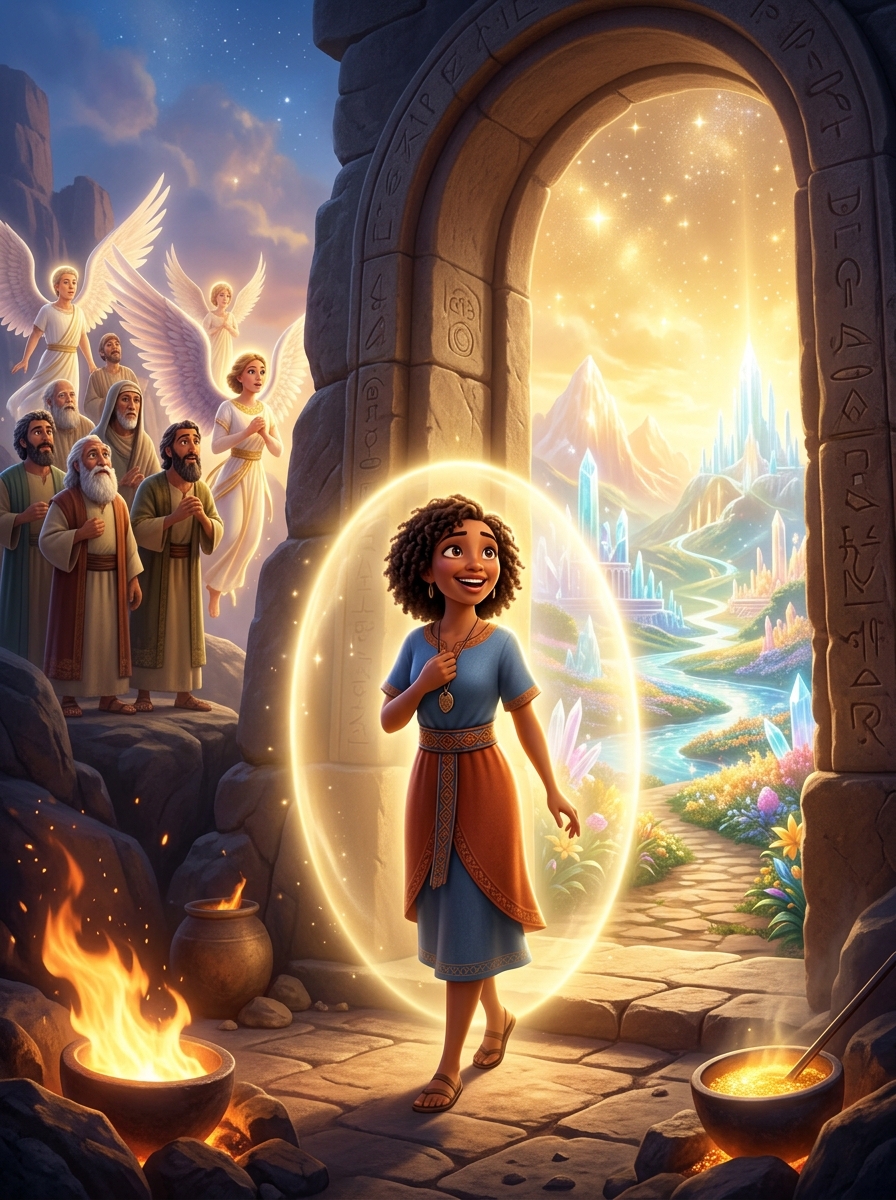
1 Peter 1–3 — Holy Living
As obedient children, do not conform to the evil desires you had in your ignorance. Be holy in all you do, for it is written: 'Be holy, because I am holy.' Now that you have purified yourselves by obeying the truth so that you have sincere love for your brothers, love one another deeply from the heart. Live such good lives among the pagans that, though they accuse you of doing wrong, they may see your good deeds and glorify God. Always be prepared to give a reason for the hope you have — with gentleness and respect.

1 Peter 4–5 — Stand Firm
Dear friends, do not be surprised at the fiery ordeal that has come upon you, as though something strange were happening to you. Rejoice inasmuch as you participate in the sufferings of Christ. Cast all your anxiety on Him because He cares for you. Be sober-minded and watchful — your adversary the devil prowls around like a roaring lion, seeking someone to devour. Resist him, firm in your faith. The God of all grace, who called you to His eternal glory in Christ, will Himself restore, confirm, strengthen, and establish you.
2 Peter — Introduction
Peter wrote his second letter knowing he would soon die. He urged believers to make every effort to confirm their calling — adding to faith, virtue; to virtue, knowledge; to knowledge, self-control; to self-control, perseverance; to perseverance, godliness; to godliness, mutual affection; to mutual affection, love. He warned about false teachers who would secretly introduce destructive heresies, exploiting believers for their own gain. He reminded them that the Lord is not slow to keep His promise — He is patient, wanting all to repent.

2 Peter 1–3 — The Day of the Lord
Above all, know this: no prophecy of Scripture comes from someone's own interpretation — holy men spoke from God as they were moved by the Holy Spirit. The day of the Lord will come like a thief — the heavens will disappear with a roar, the elements will be destroyed by fire. But since everything will be dissolved, what kind of people ought you to be? Live holy and godly lives as you look forward to a new heaven and a new earth, the home of righteousness. Grow in the grace and knowledge of our Lord Jesus Christ.
1 John — Introduction
John wrote to counter a false teaching that Jesus hadn't really come in the flesh. He returned to basics: God is light and in Him there is no darkness at all. We love because He first loved us. Whoever loves God must also love their brother. The one who says 'I know God' but does not keep His commandments is a liar. This is how we know what love is: Jesus Christ laid down His life for us. And we ought to lay down our lives for our brothers.
1 John 1–3 — Walking in the Light
If we claim to have fellowship with Him yet walk in the darkness, we lie. But if we walk in the light as He is in the light, we have fellowship with one another, and the blood of Jesus purifies us from all sin. If we confess our sins, He is faithful and just to forgive us and purify us from all unrighteousness. See what great love the Father has lavished on us — that we should be called children of God! And that is what we are! Dear children, let us not love with words or speech but with actions and in truth.
1 John 4–5 — God Is Love
Dear friends, let us love one another, for love comes from God. Everyone who loves has been born of God and knows God. Whoever does not love does not know God, because God is love. This is how God showed His love among us: He sent His one and only Son into the world that we might live through Him. This is love — not that we loved God, but that He loved us and sent His Son as an atoning sacrifice for our sins. There is no fear in love. Perfect love drives out fear.
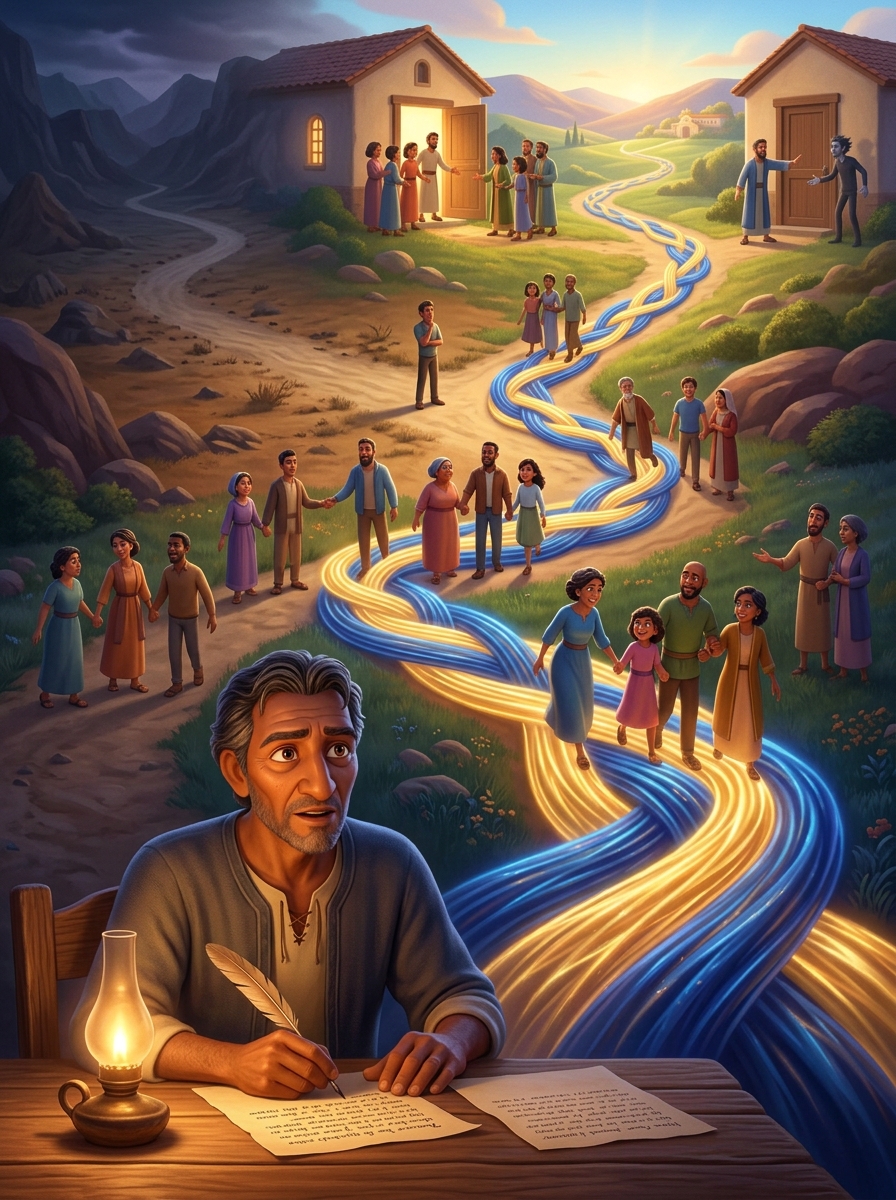
2 John — Walk in Truth
The elder wrote to the chosen lady and her children — a congregation he loved dearly. I am writing to urge that we love one another — and this is love: that we walk according to His commands. Many deceivers have gone out into the world who do not acknowledge that Jesus Christ has come in the flesh. Watch out so that you do not lose what you have worked for. Anyone who runs ahead and does not continue in the teaching of Christ does not have God. Do not welcome false teachers into your house.
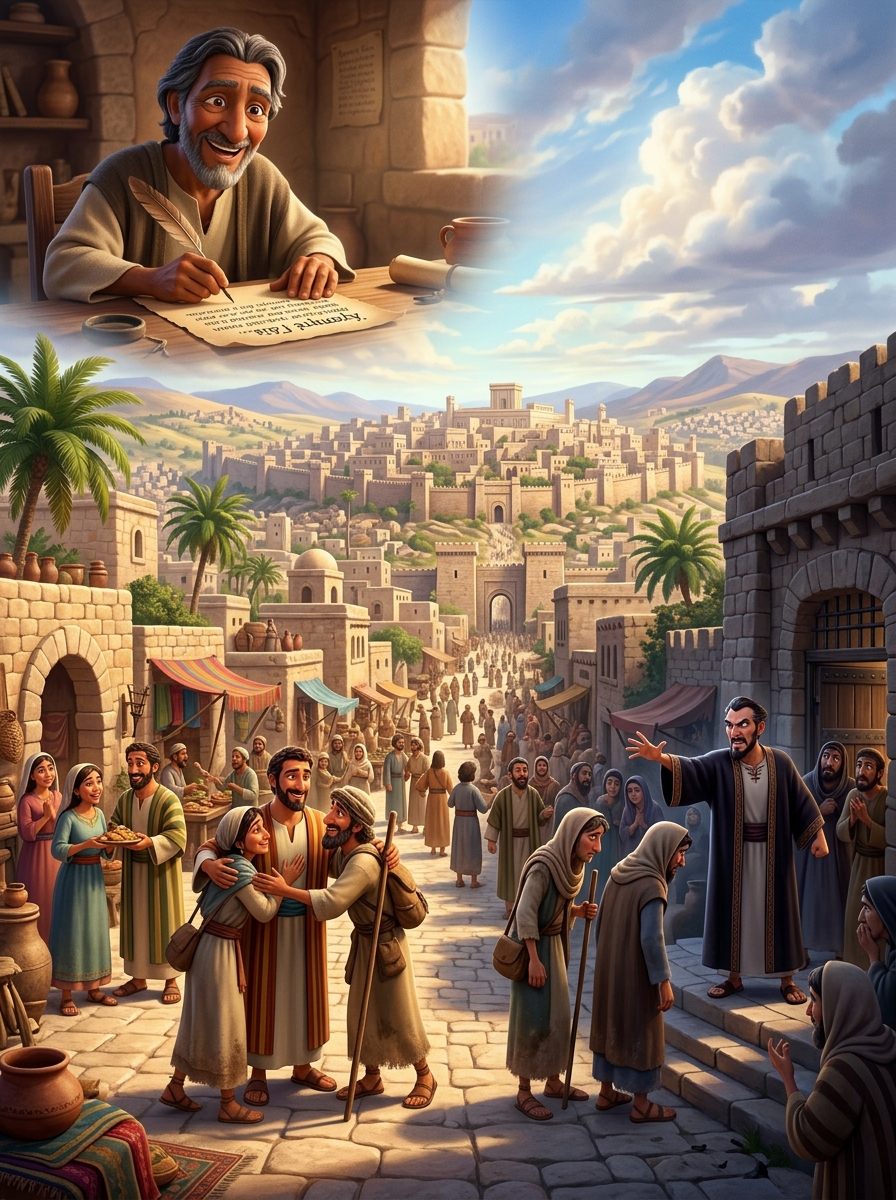
3 John — Faithful in What You Do
The elder wrote to Gaius, his dear friend, wishing above all things that he would prosper and be in health, even as his soul prospered. He commended Gaius for welcoming traveling missionaries even though they were strangers — they have told the church about your love. We ought to support people like this so we may work together for the truth. He also warned about Diotrephes, who loved to have the preeminence and refused to welcome the brothers. Imitate what is good. Do not imitate what is evil.
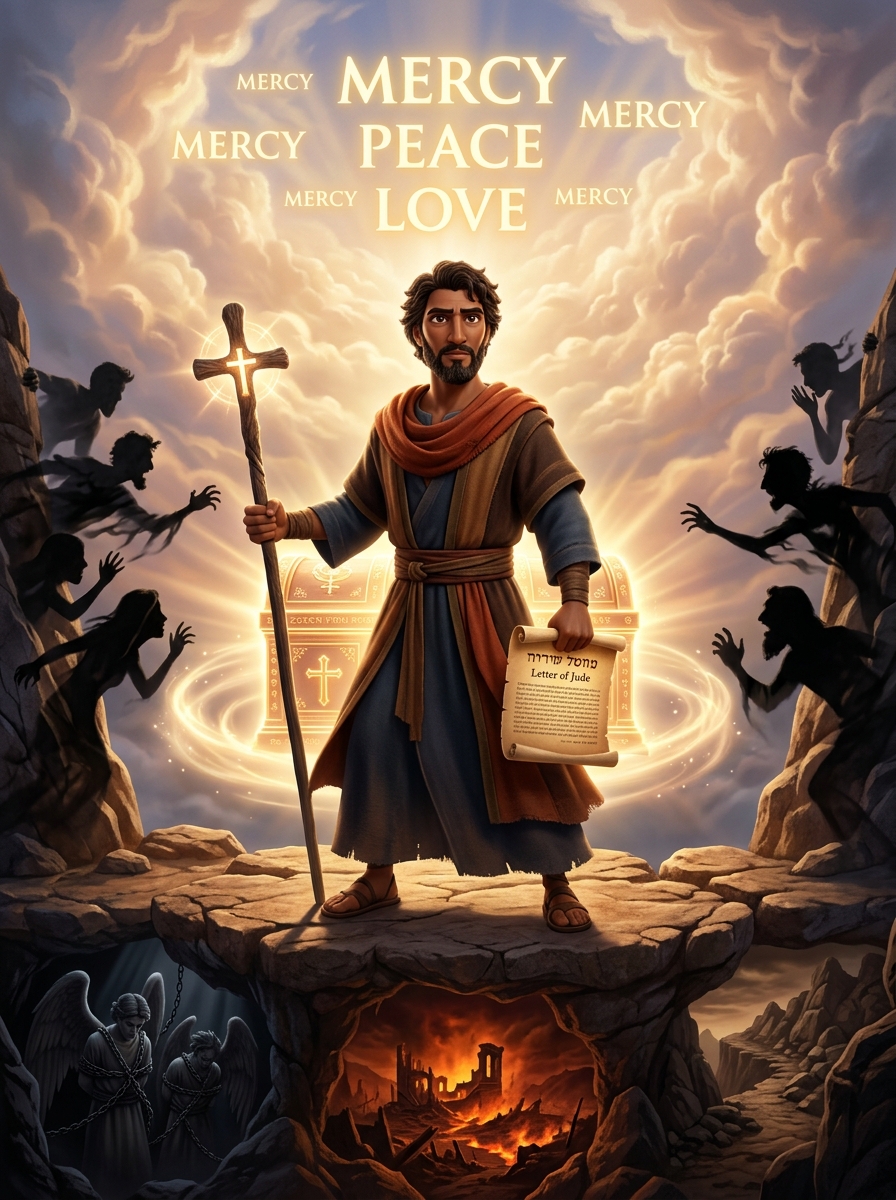
Jude — Contend for the Faith
Jude, brother of Jesus, wrote urgently to urge believers to contend for the faith that was once for all entrusted to the saints. Certain godless people had secretly slipped in — distorting grace into a license for immorality. Jude reminded them of Sodom and Gomorrah, of the angels who abandoned their proper dwelling, of Cain and Balaam and Korah. Build yourselves up in your most holy faith. Pray in the Holy Spirit. Keep yourselves in God's love. Snatch others from the fire and save them.
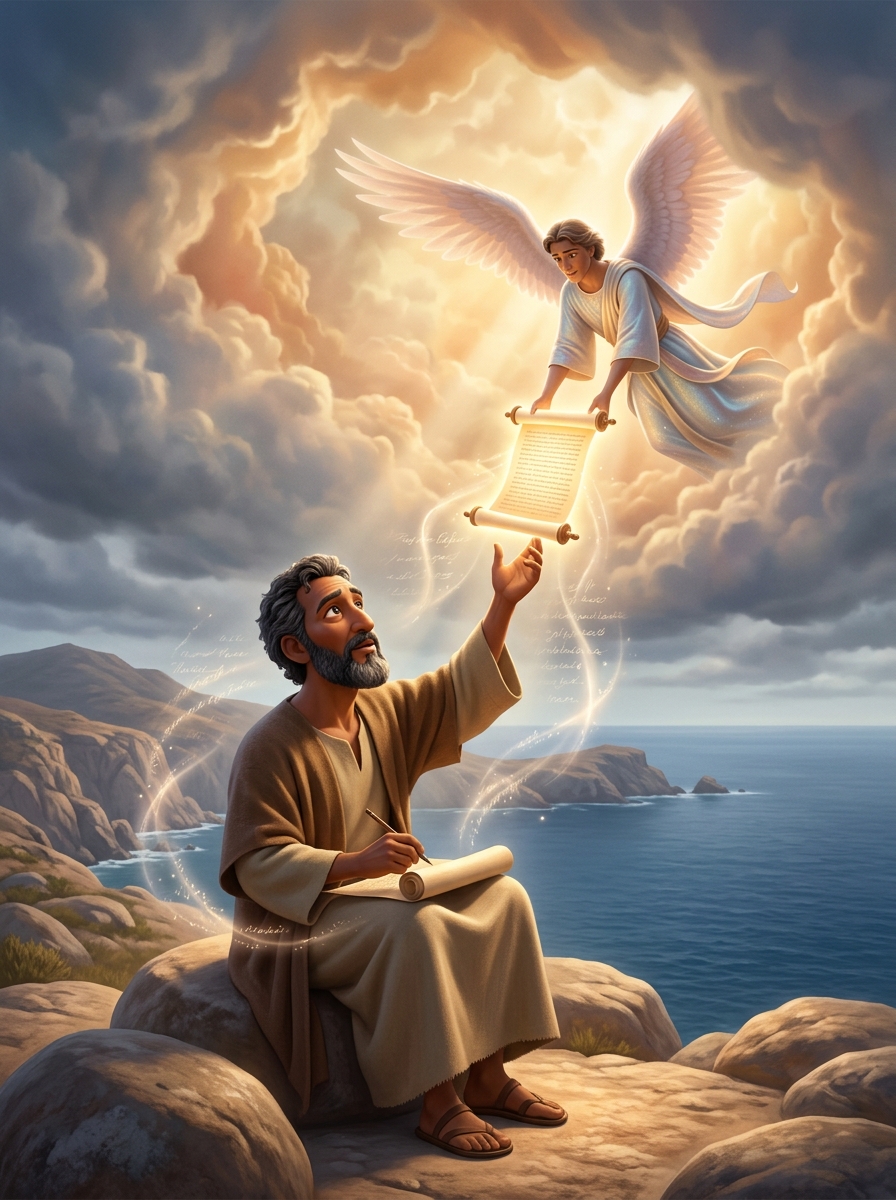
Revelation — Introduction
The Revelation of Jesus Christ — given to John on the island of Patmos. A vision of breathtaking scope: seven churches addressed by the glorified Christ, seals opened, trumpets blown, bowls poured out. The dragon, the beast, the false prophet — arrayed against the Lamb and His people. But woven through every vision is a constant refrain: the Lamb who was slain is worthy! The Lord God Almighty reigns! This is not a book of fear — it is a book of hope for those who endure.
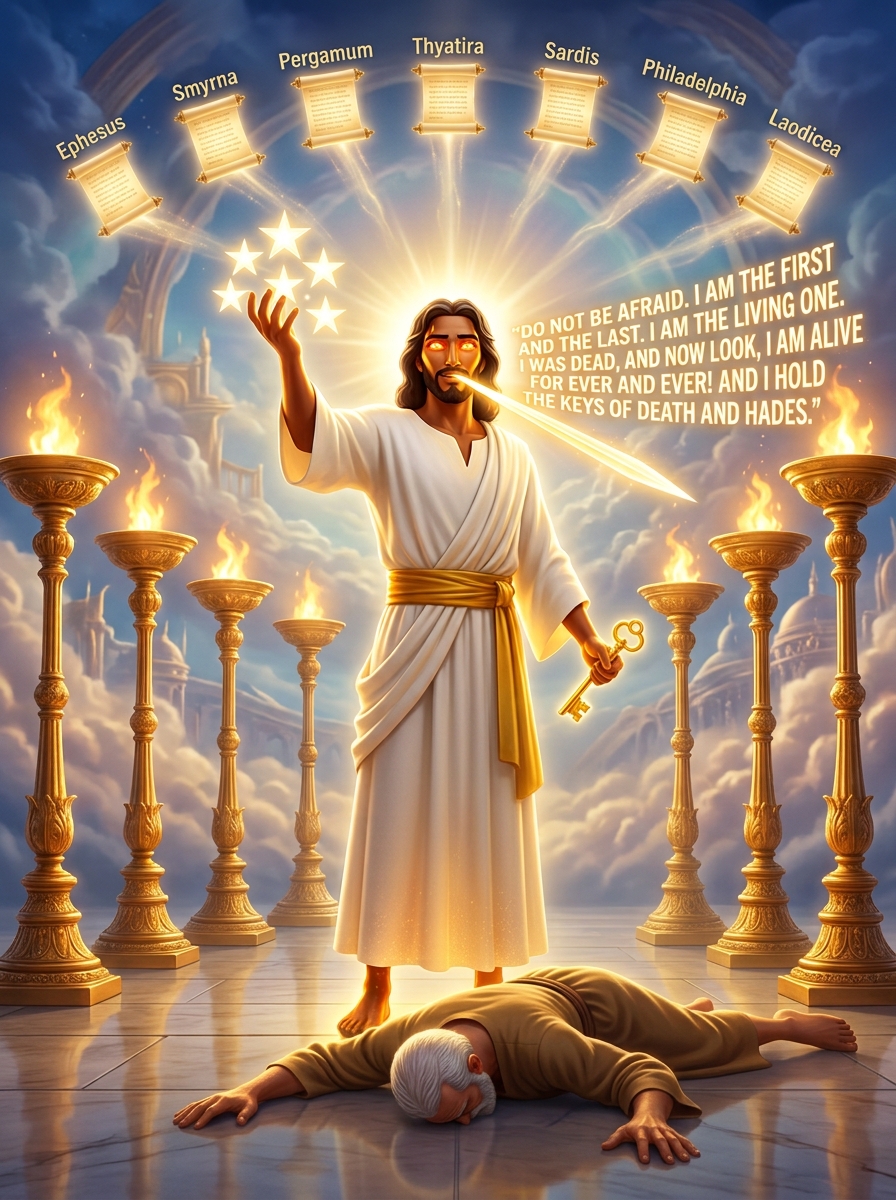
Letters to the Seven Churches
John saw a vision of the risen Jesus — not the gentle teacher of Galilee but the reigning Lord of glory. His face was like the sun shining in all its brilliance. His eyes were like blazing fire. His feet were like bronze glowing in a furnace. His voice was like the sound of rushing waters. In his right hand he held seven stars. Out of his mouth came a sharp double-edged sword. When John saw him he fell at his feet as though dead. Jesus placed his right hand on him — do not be afraid. I am the First and the Last. I am the Living One. I was dead, and now look — I am alive forever and ever. He then dictated letters to seven churches, naming their strengths and failures, calling them to repentance, endurance, and faithfulness. To the one who is victorious, he promised everything.
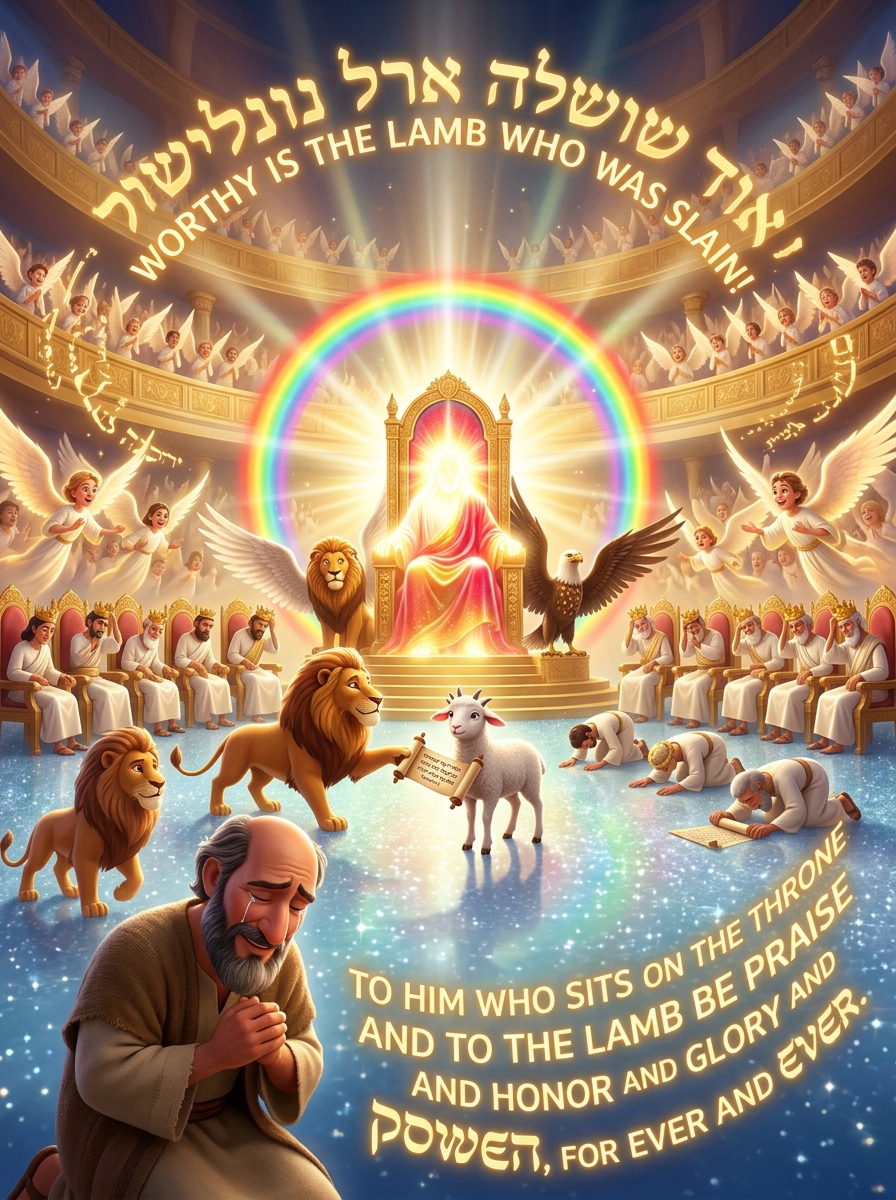
Worthy Is the Lamb
John was called up through a door standing open in heaven. Before him, a throne — and the one seated on it with the appearance of precious stones, a rainbow encircling the throne. Twenty-four elders surrounded the throne. Four living creatures — full of eyes, with six wings — never stopped saying holy, holy, holy is the Lord God Almighty. Then a scroll appeared, sealed with seven seals — and no one in all creation was worthy to open it. John wept. Then one of the elders said — do not weep. The Lion of the tribe of Judah has triumphed. John looked and saw a Lamb — looking as if it had been slain — standing at the center of the throne. He took the scroll. And the four living creatures and the twenty-four elders fell down before the Lamb and sang a new song — worthy are you.
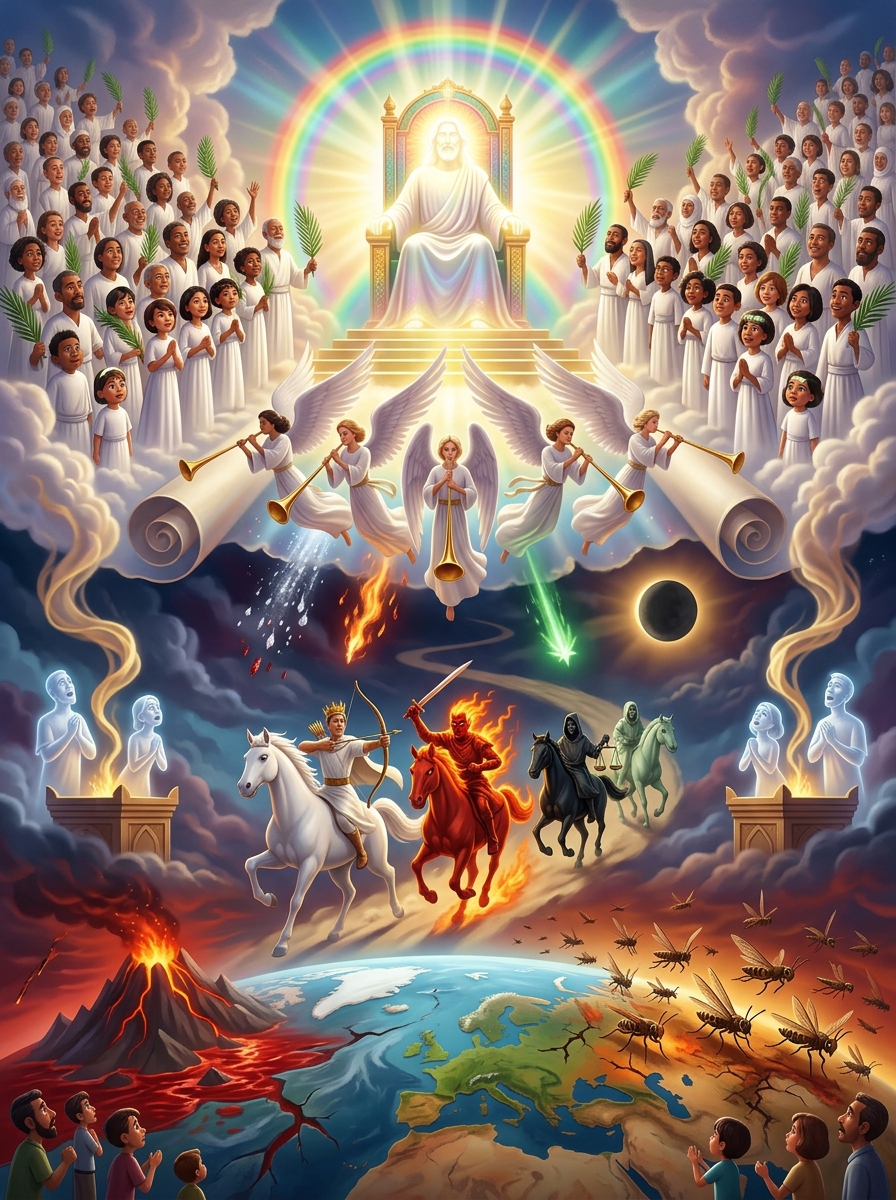
The Seals and the Trumpets
As the Lamb opened the seven seals, visions of judgment poured out on the earth — horsemen, disasters, cosmic upheaval. Between the sixth and seventh seal, John saw a vision of calm: a great multitude that no one could count, from every nation, tribe, people, and language, standing before the throne and before the Lamb. They were wearing white robes and holding palm branches. They cried out — salvation belongs to our God, who sits on the throne, and to the Lamb. An elder told John who they were — these are they who have come out of the great tribulation. They have washed their robes and made them white in the blood of the Lamb. God will wipe away every tear from their eyes. The judgment of the seals interrupted by the protection of the saints.
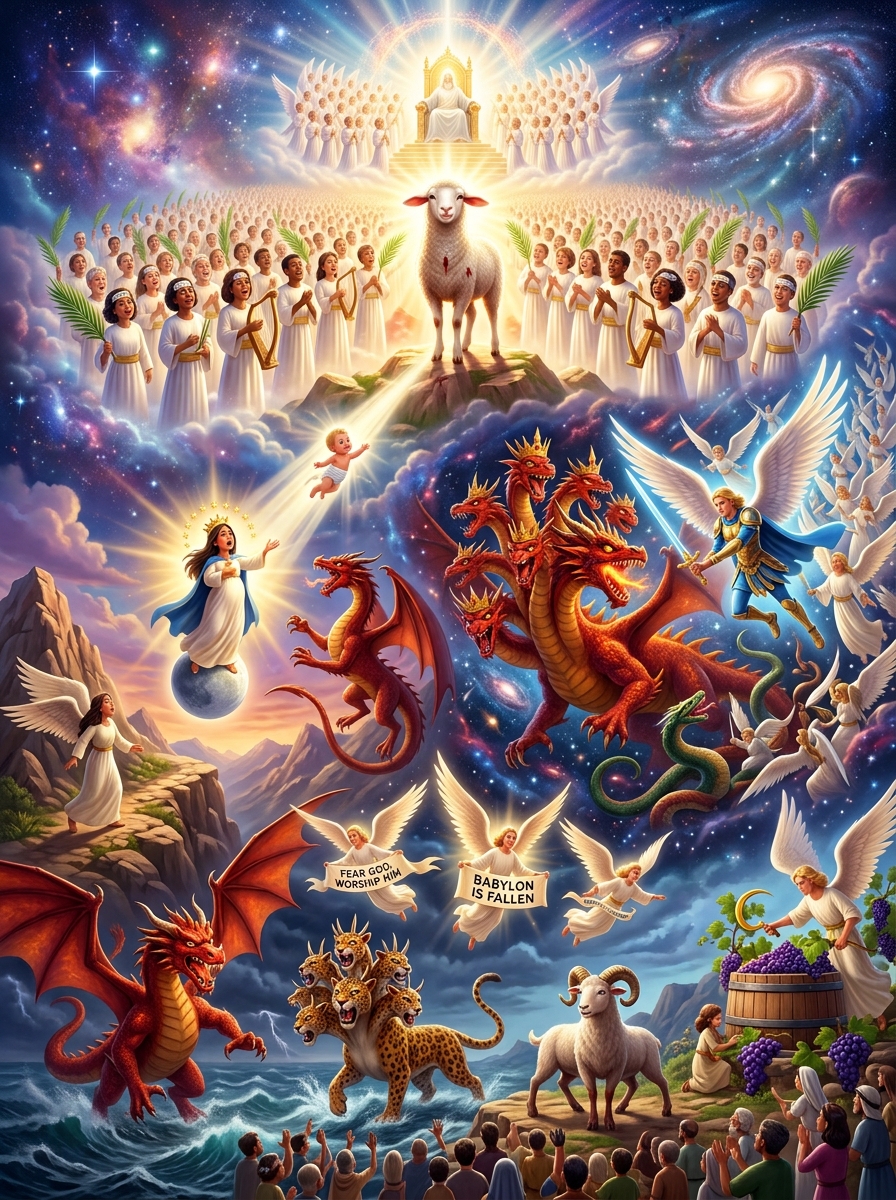
The Dragon and the Lamb
John saw a great sign in heaven — a woman clothed with the sun, with the moon under her feet and a crown of twelve stars on her head. She was pregnant and crying out in birth pains. Then another sign — a great red dragon with seven heads and ten horns. The dragon tried to devour her child the moment it was born. But the child — a son who would rule all nations — was caught up to God and to his throne. War broke out in heaven. The dragon — that ancient serpent called the devil and Satan — was hurled to the earth. Then a loud voice in heaven: now have come the salvation and the power and the kingdom of our God, and the authority of his Messiah. They triumphed over the dragon by the blood of the Lamb and by the word of their testimony.
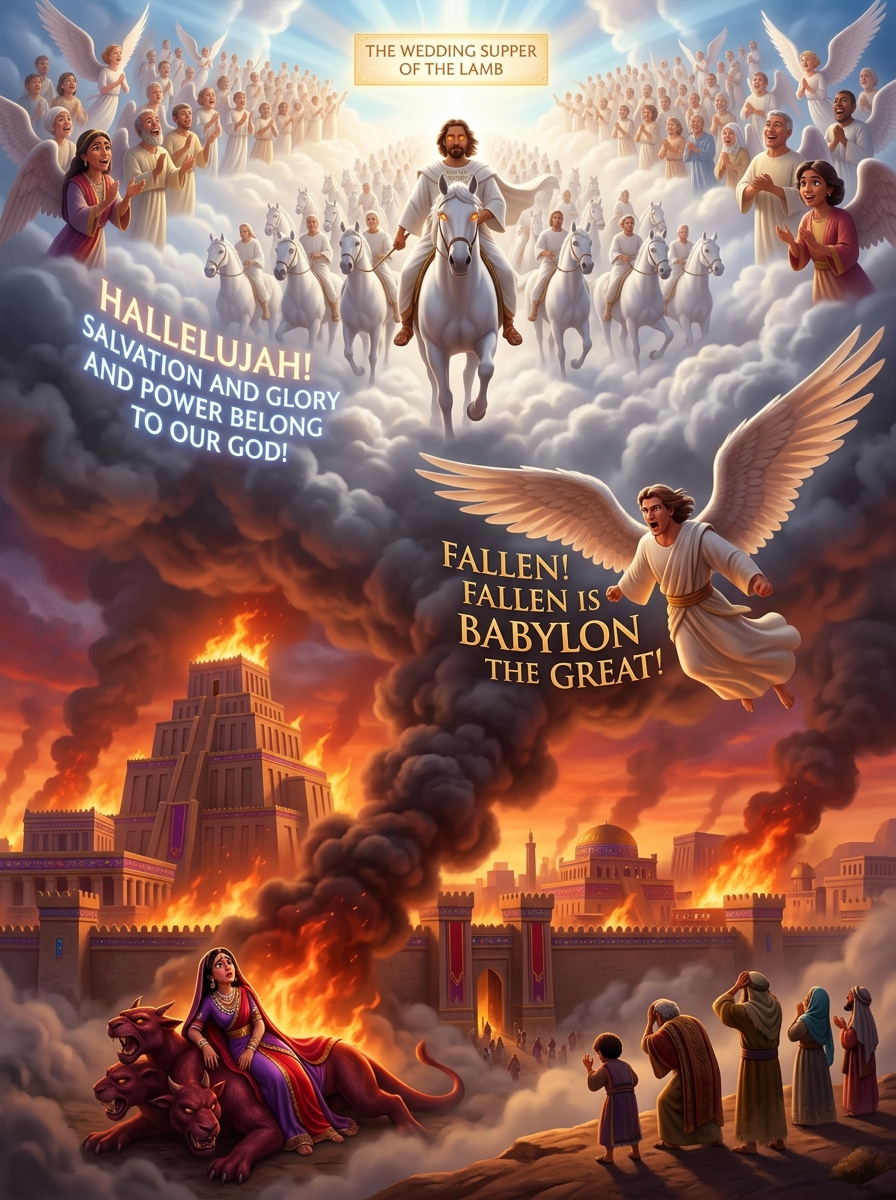
Fallen Is Babylon
John saw a vision of Babylon the Great — a symbol for every empire that sets itself up against God, drunk on the blood of the saints. He watched as her judgment came suddenly — in one hour. The merchants of the earth wept and mourned because no one bought their goods anymore. But heaven celebrated — rejoice, for God has judged her with the judgment she imposed on you. Then a sound like the roar of a great multitude in heaven shouting hallelujah — salvation and glory and power belong to our God. Then the vision of the rider on the white horse — the Word of God, faithful and true. On his robe and his thigh was written: KING OF KINGS AND LORD OF LORDS. Every power that opposes God has an ending. This is it.
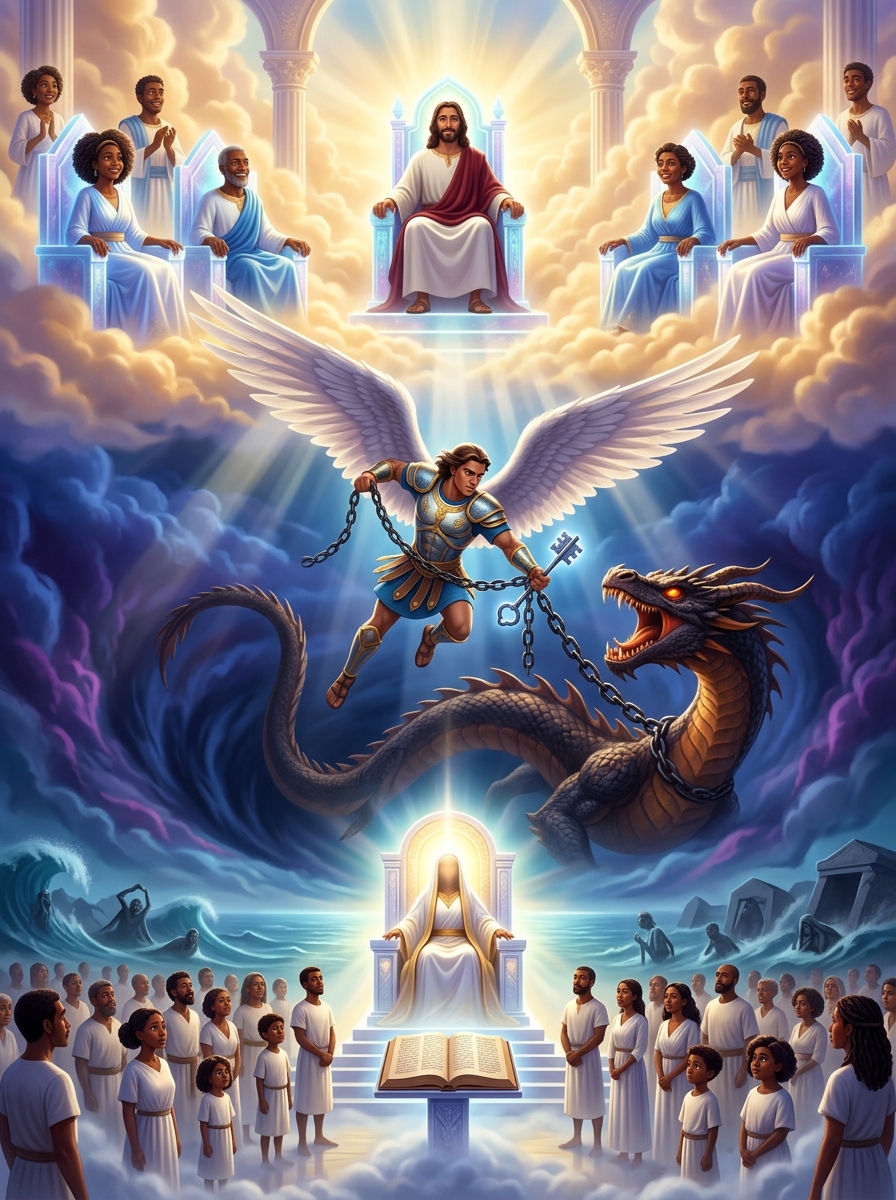
The Thousand Years and the Judgment
John saw an angel coming down from heaven with the key to the Abyss and a great chain. He seized the dragon — that ancient serpent who is the devil — and bound him for a thousand years. John then saw thrones and those seated on them who had been given authority to judge. He saw the souls of those who had been beheaded because of their testimony about Jesus. They came to life and reigned with Christ. Then John saw a great white throne and him who was seated on it. The books were opened. Another book was opened — the book of life. The dead were judged according to what they had done as recorded in the books. Death and Hades were thrown into the lake of fire. Anyone whose name was not found written in the book of life was thrown into the lake of fire.

A New Heaven and a New Earth
Then John saw a new heaven and a new earth — for the first heaven and the first earth had passed away and the sea was no more. He saw the Holy City, the new Jerusalem, coming down out of heaven from God, prepared as a bride beautifully dressed for her husband. And John heard a loud voice from the throne saying — look, God's dwelling place is now among the people, and he will dwell with them. They will be his people and God himself will be with them and be their God. He will wipe every tear from their eyes. There will be no more death or mourning or crying or pain, for the old order of things has passed away. He who was seated on the throne said — I am making everything new. Write this down, for these words are trustworthy and true.
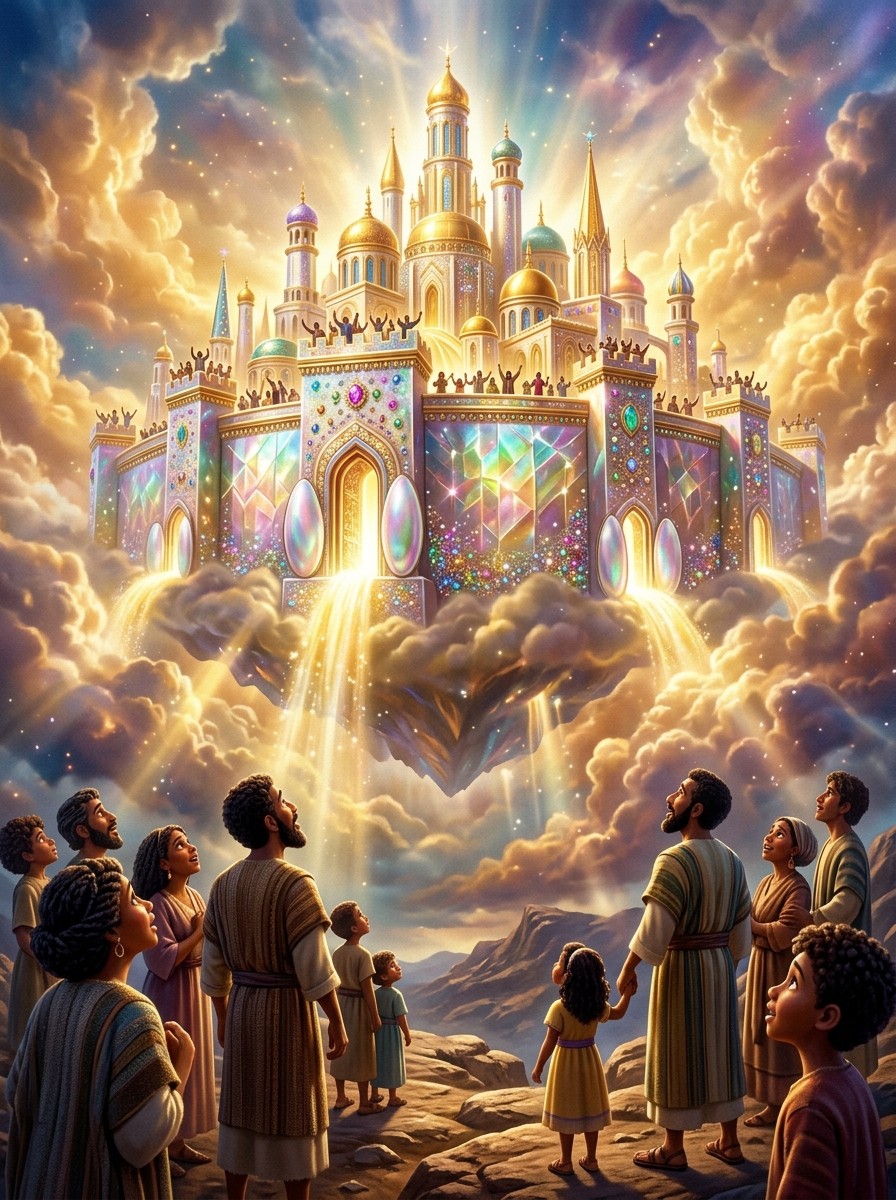
The City of God
The angel showed John the Holy City — its brilliance like that of a very precious jewel. It had a great, high wall with twelve gates, each gate made of a single pearl. The great street of the city was of pure gold, like transparent glass. John saw no temple in the city — because the Lord God Almighty and the Lamb were its temple. The city did not need the sun or the moon to shine on it, for the glory of God gave it light and the Lamb was its lamp. The nations will walk by its light and the kings of the earth will bring their splendor into it. On each side of the river stood the tree of life, bearing twelve crops of fruit, one each month. And the leaves of the tree are for the healing of the nations. No longer will there be any curse.
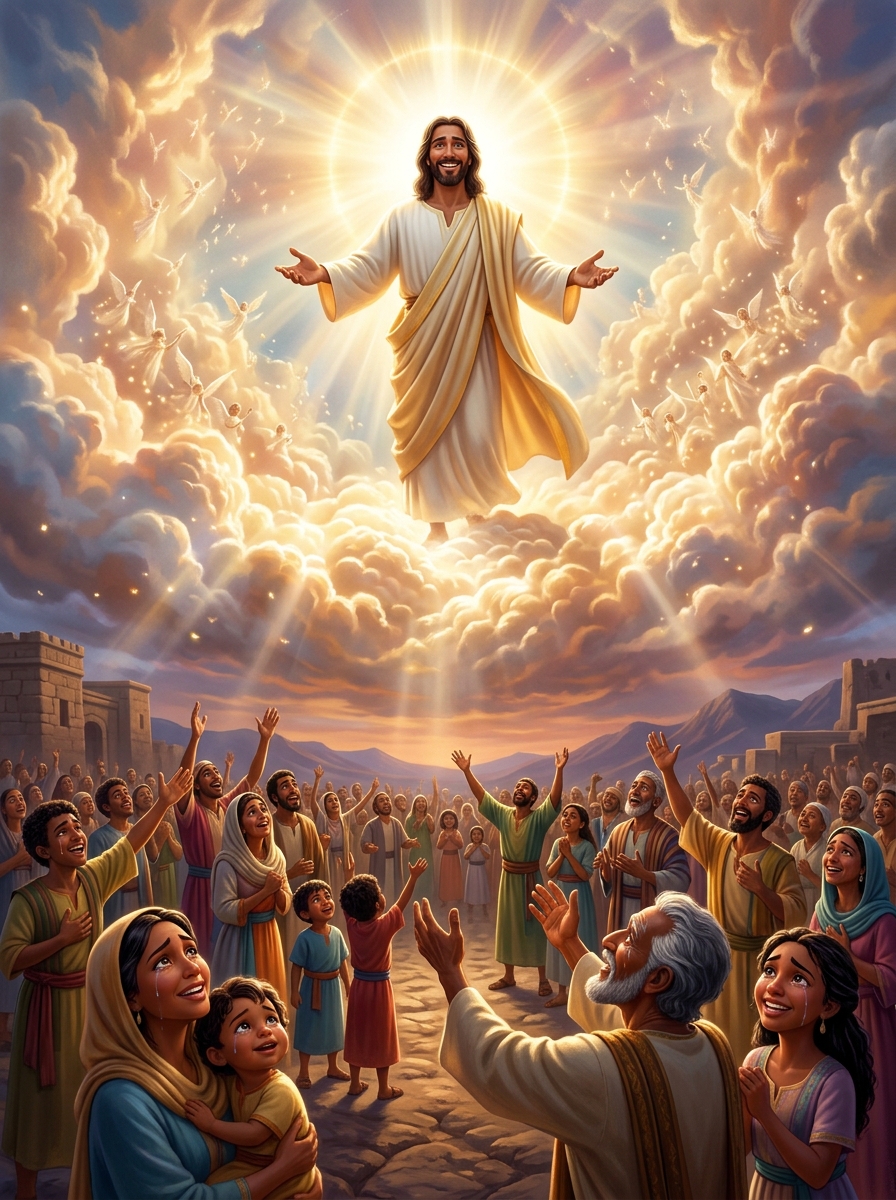
Come, Lord Jesus
The angel said to John — do not seal up the words of the prophecy of this scroll, because the time is near. Jesus spoke — look, I am coming soon. My reward is with me and I will give to each person according to what they have done. I am the Alpha and the Omega, the First and the Last, the Beginning and the End. Blessed are those who wash their robes, that they may have the right to the tree of life and may go through the gates into the city. The Spirit and the bride say come. Let the one who hears say come. Let the one who is thirsty come. Let the one who wishes take the free gift of the water of life. He who testifies to these things says — yes, I am coming soon. And John answered for every believer who has ever lived and every believer who ever will: Amen. Come, Lord Jesus.